

Mountain Cuscus Phalanger carmelitae
Extant (resident)
West Papua; Papua New Guinea
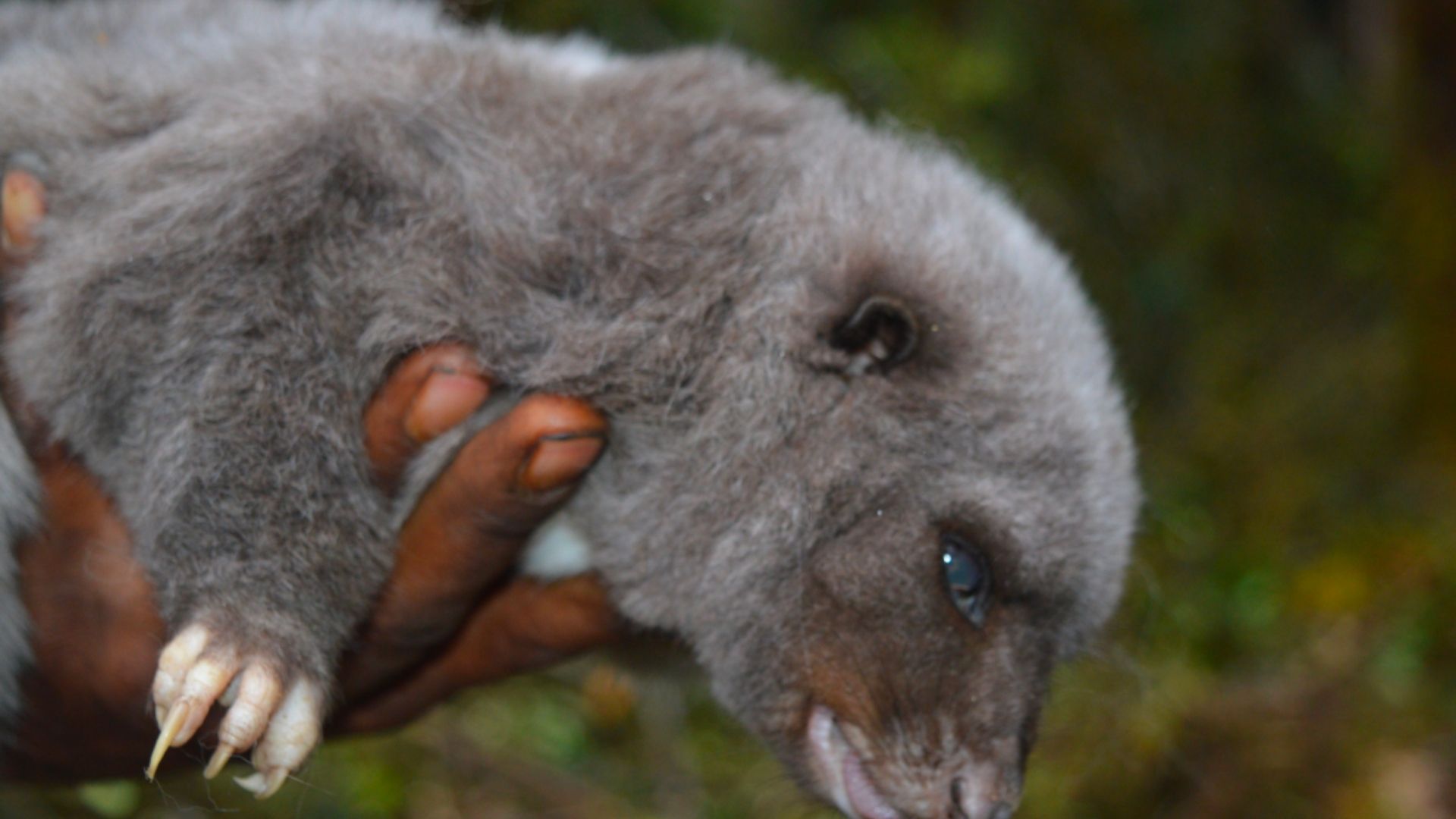
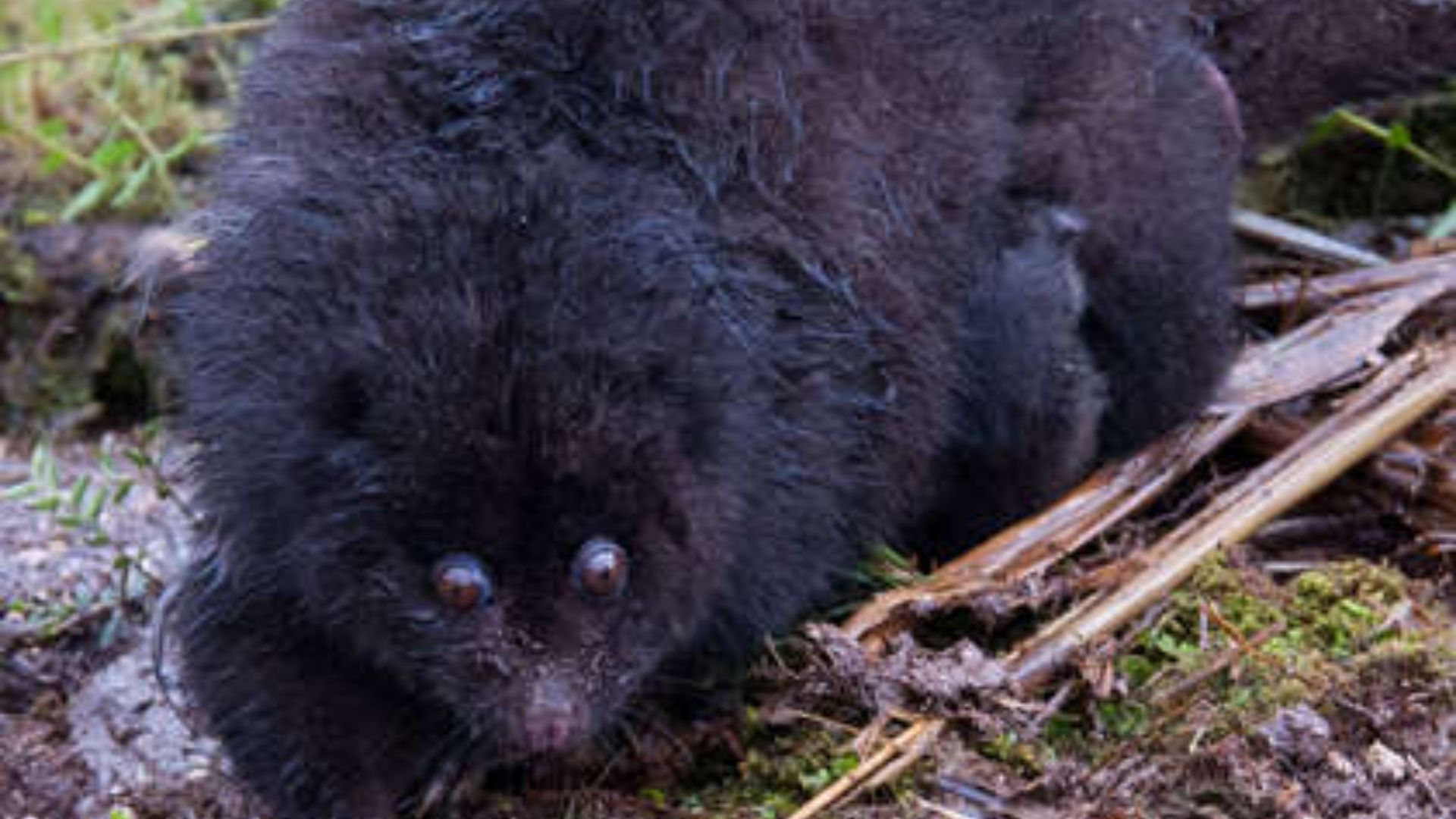
The Mountain #Cuscus are fascinating and shy creatures who live in Papua New Guinea and #WestPapua. Thick, dark, woolly fur covers most of their bodies, while their bellies are white. The Mountain Cuscus has a black tail with a rough, white tip. Their skulls are medium-sized, with a short snout, large back teeth, and three small teeth on each side of their lower jaws. It’s important to note that the Mountain Cuscus can sometimes be confused with the Silky Cuscus, which has a smooth tail without rough patches, a shorter or absent white tail tip, and fewer teeth in their lower jaw. They are threatened by massive #palmoil and #timber deforestation across West Papua and Papua New Guinea, help them every time you shop and #Boycottpalmoil #Boycott4Wildlife
Reclusive and fuzzy Mountain #Cuscus of #WestPapua are cuddly #marsupials, who prefer to snooze among the tangled vines of trees rather than move around. Help them and forests of #NewGuinea 🇵🇬 to survive #BoycottPalmOil 🌴🪔🤮☠️🚫 #Boycott4Wildlife https://wp.me/pcFhgU-6rE
Fluffy tree-dwelling #marsupials Mountain #Cuscus of #WestPapua and #PapuaNewGuinea 🇵🇬 are facing narrowing range due to #palmoil #goldmining and #timber #deforestation. Resist for their survival and #BoycottPalmOil 🌴🪔🤮☠️🚫 #Boycott4Wildlife https://wp.me/pcFhgU-6rE
Appearance & Behaviour
The reclusive and quiet Mountain Cuscus is a mostly nocturnal species. They take plenty of naps during the day in tree hollows and tangled vegetation of the Pandanus plant. At night they spend about 50% of the time eating and the rest moving around or sleeping.
Their bodies are 37-43 cm long, with tails measuring 31-36.5 cm. They weigh between 1.7-2.6 kg. Their thick, woolly fur is dark on their backs, while their bellies are white.
Male Mountain Cuscuses move at an average speed of 59 meters per hour and have a territory of about four hectares. Females travel a bit slower at around 37 meters per hour and live in areas ranging from 2 to 8 hectares. They tend to keep to themselves, with little overlap in their territories.



Threats
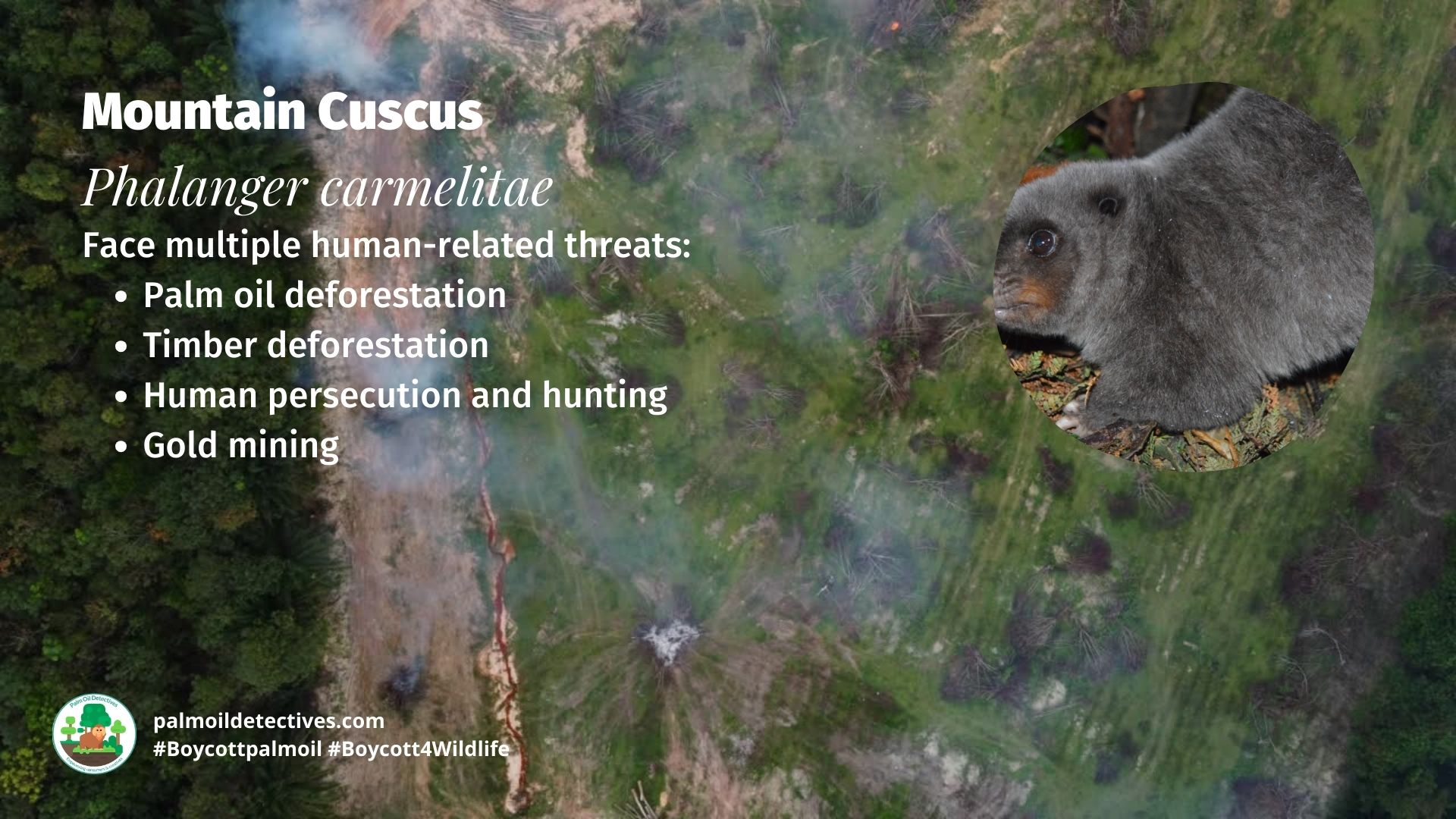
- Palm oil deforestation
- Timber deforestation
- Gold mining deforestation
- Illegal hunting and poaching
The Mountain Cuscus is classified as Least Concern on the IUCN Red List the last time they were assessed. Since their last assessment, massive deforestation for timber and palm oil has occurred throughout their range. This enormous habitat loss means an urgent reassessment is needed.
Habitat
Mountain Cuscuses live in mid-montane to upper montane primary forests in New Guinea. They prefer undisturbed areas of forest at elevations between 1,350 and 3,800 meters. Alongside the Mountain Cuscus, you can find other similar species such as the Silky Cuscus, Stein’s Cuscus, Ground Cuscus, and Telefomin Cuscus in this same habitat.
Diet
The Mountain Cuscus is an avid leaf and fruit eater. Leaves make up around 80% of their diet, with fruits comprising about 18-20%. They also consume small quantities of flowers and bark. Some of the plants they feed on include Fuodia, Freycinetia, Garcinia, Helicia, Illex, Litsea, Pandanus, Podocarpus, Sphenostemon, and Syzygium. Interestingly, captive Mountain Cuscuses have been observed eating a pet lorikeet (!!!), Acalypha leaves, and softer parts of Casuarina stems. They also enjoy consuming fruits from Pandan trees and orchids.
Mating and breeding
The Mountain Cuscus is a marsupial. Marsupials are a group of mammals that give birth to relatively undeveloped young and carry them in a pouch on their belly until they are fully developed.
The Mountain Cuscus, like other marsupials, has a unique reproductive system where the female carries and nurtures her young in a pouch after giving birth to them.
Female Mountain Cuscuses give birth to a single young. Births have been reported throughout the year, indicating year-round breeding.
Support the Mountain Cuscus by going vegan and boycotting palm oil in the supermarket, it’s the #Boycottpalmoil #Boycott4Wildlife
Support the conservation of this species
This animal has no protections in place. Read about other forgotten species here. Create art to support this forgotten animal or raise awareness about them by sharing this post and using the #Boycottpalmoil #Boycott4Wildlife hashtags on social media. Also you can boycott palm oil in the supermarket.
Further Information
Leary, T., Singadan, R., Menzies, J., Helgen, K., Wright, D., Allison, A., Salas, L. & Dickman, C. 2016. Phalanger carmelitae. The IUCN Red List of Threatened Species 2016: e.T16853A21950989. https://dx.doi.org/10.2305/IUCN.UK.2016-2.RLTS.T16853A21950989.en. Accessed on 03 June 2023.
1. Mountain cuscus Animalia.bio – https://animalia.bio/mountain-cuscus
2. Mountain cuscus on Treatment Bank – http://treatment.plazi.org/id/D344591F533107022306FD3F1513F97D
1. Mountain cuscus Wikipedia article – https://en.wikipedia.org/wiki/Mountain_cuscus

How can I help the #Boycott4Wildlife?
Take Action in Five Ways
1. Join the #Boycott4Wildlife on social media and subscribe to stay in the loop: Share posts from this website to your own network on Twitter, Mastadon, Instagram, Facebook and Youtube using the hashtags #Boycottpalmoil #Boycott4Wildlife.
2. Contribute stories: Academics, conservationists, scientists, indigenous rights advocates and animal rights advocates working to expose the corruption of the palm oil industry or to save animals can contribute stories to the website.






3. Supermarket sleuthing: Next time you’re in the supermarket, take photos of products containing palm oil. Share these to social media along with the hashtags to call out the greenwashing and ecocide of the brands who use palm oil. You can also take photos of palm oil free products and congratulate brands when they go palm oil free.
4. Take to the streets: Get in touch with Palm Oil Detectives to find out more.
5. Donate: Make a one-off or monthly donation to Palm Oil Detectives as a way of saying thank you and to help pay for ongoing running costs of the website and social media campaigns. Donate here
Discover more from Palm Oil Detectives
Subscribe to get the latest posts sent to your email.
 Palm Oil Detectives