
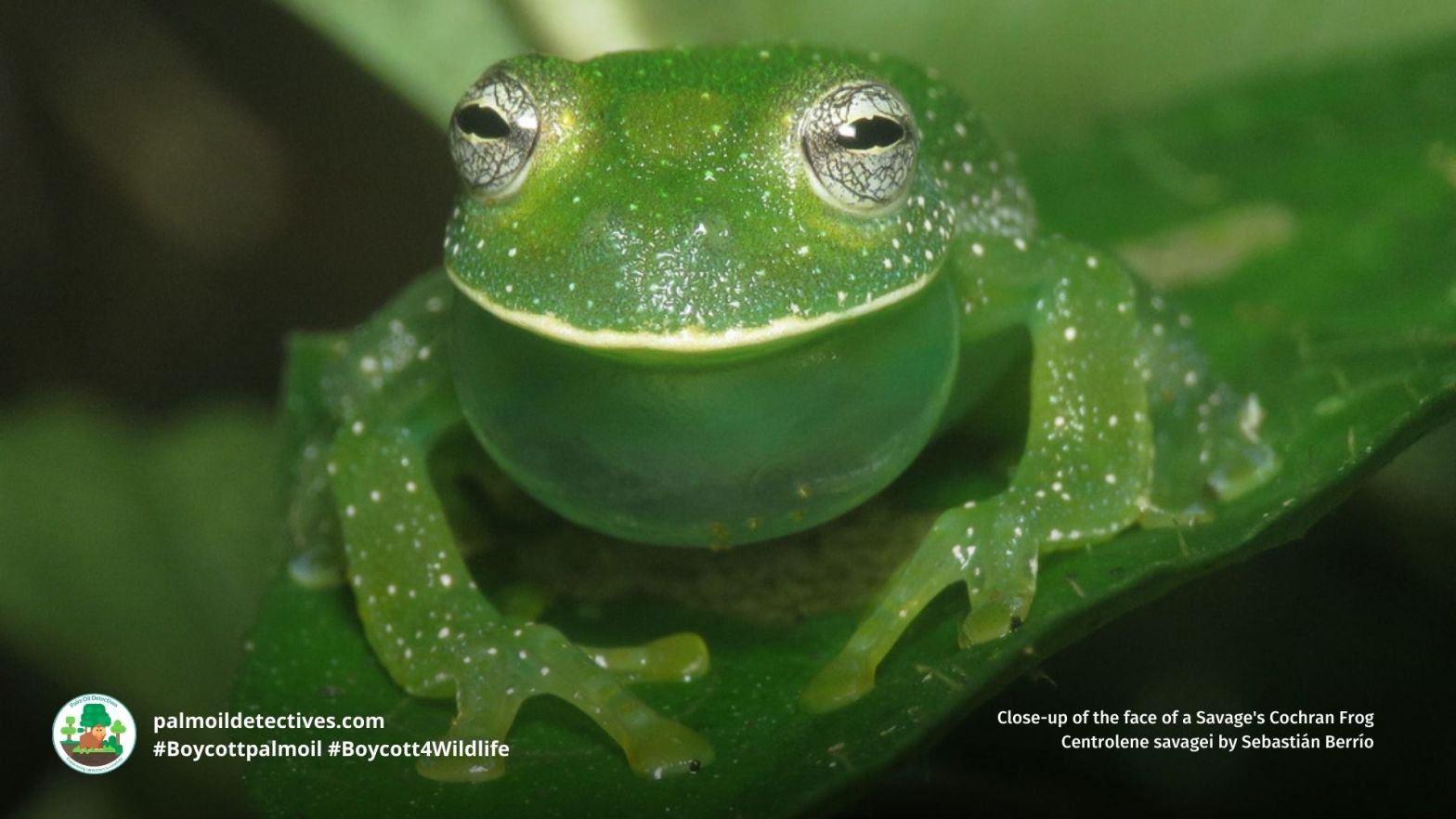
Savage’s Glass Frog Centrolene savagei
Locations: Endemic to Colombia, found in the Cordillera Central and Cordillera Occidental mountain ranges in the departments of Quindío, Risaralda, Caldas, and Valle del Cauca, between 1,400 and 2,410 metres above sea level.
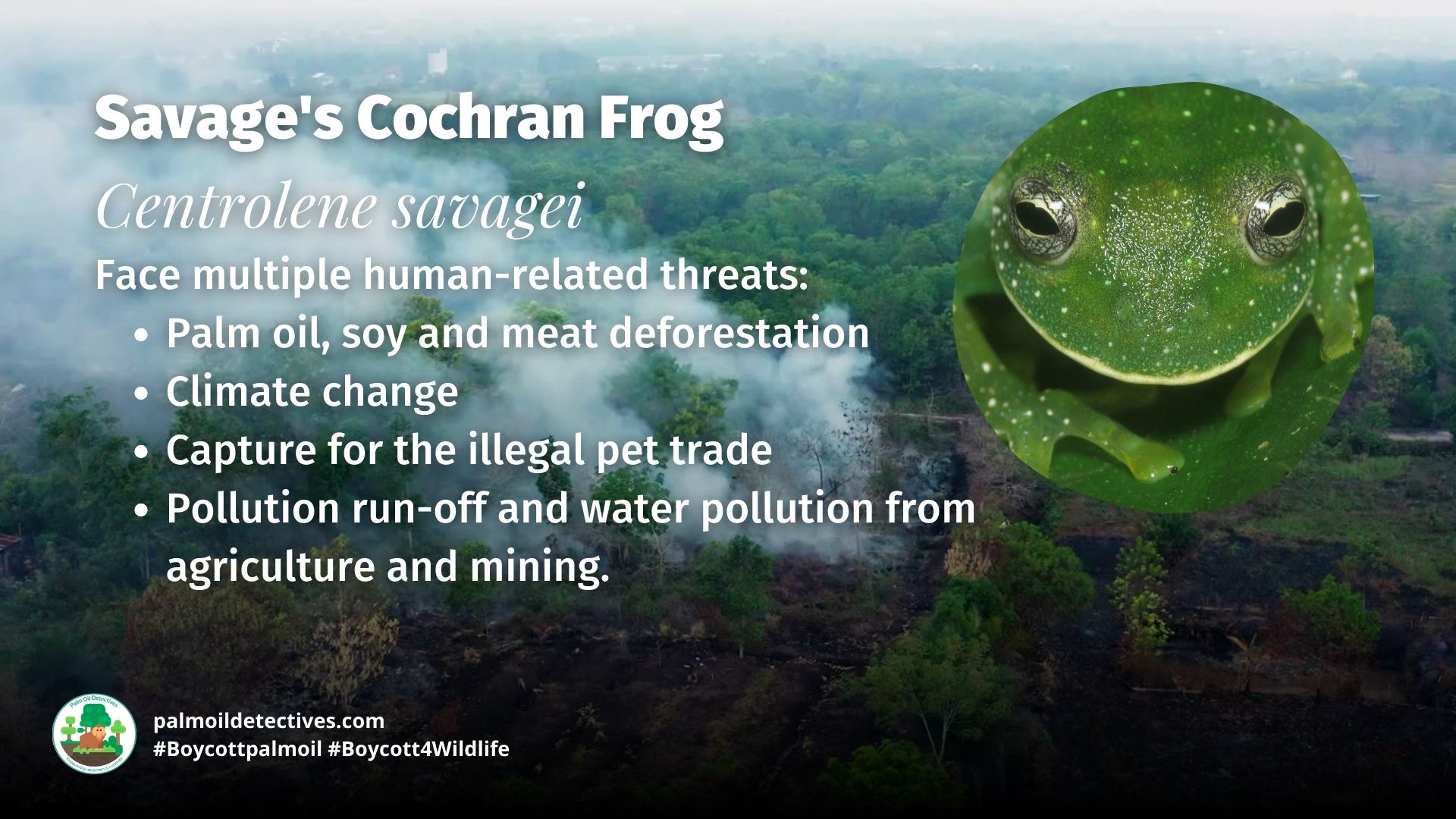
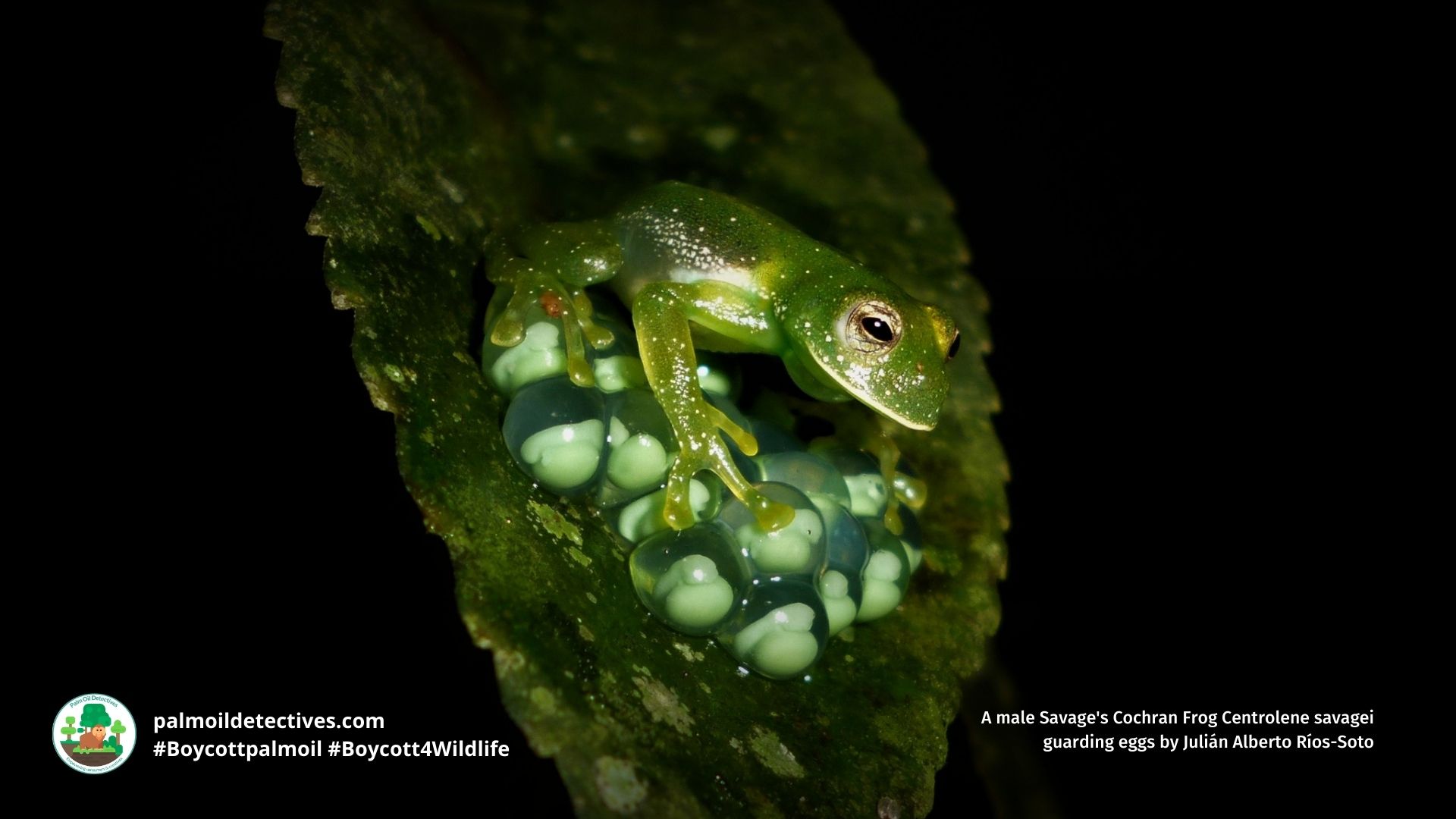
Perched on delicate leaves above rushing mountain streams, Centrolene savagei is a rare frog of wonder. The Savage’s Glass Frog, also known as the Savage’s Cochran Frog has translucent emerald skin that shimmers under moonlight, revealing a celestial map of organs and veins. These appear like a tiny universe of stars glowing beneath their skin. This remarkable adaptation serves as camouflage, allowing them to blend seamlessly into their misty rainforest habitat. Male frogs fiercely protect a clutch of around 30 eggs while females gather food. Tragically these magnificent #frogs face mounting threats from #deforestation for #palmoil #soy #meat along with #climatechange which is disrupting the delicate balance of their cloud forest home. Protecting the cloud forests of #Colombia is essential to ensuring their continued survival. #BoycottPalmOil #Boycott4Wildlife.
Savage’s Glass #Frogs of #Colombia 🇨🇴 have skin 🤯 that glows like sparkling stars 🌌 Males fiercely guard egg clutches. #PalmOil #Soy and #Meat #Deforestation are threats. Help them and be #Vegan 🥕🍆🌴🪔⛔️ #Boycottpalmoil #Boycott4Wildlife @palmoildetect https://wp.me/pcFhgU-a8R
Savage’s Glass Frogs 🐸 live in the cloud #forests of #Colombia 🇨🇴 and face threats from the #pet trade and #agriculture. Their see-through skin protects them from predators. Help them survive and #Boycottpalmoil 🌴🪔🧐🚫 #Boycott4Wildlife @palmoildetect https://wp.me/pcFhgU-a8R
Appearance & Behaviour
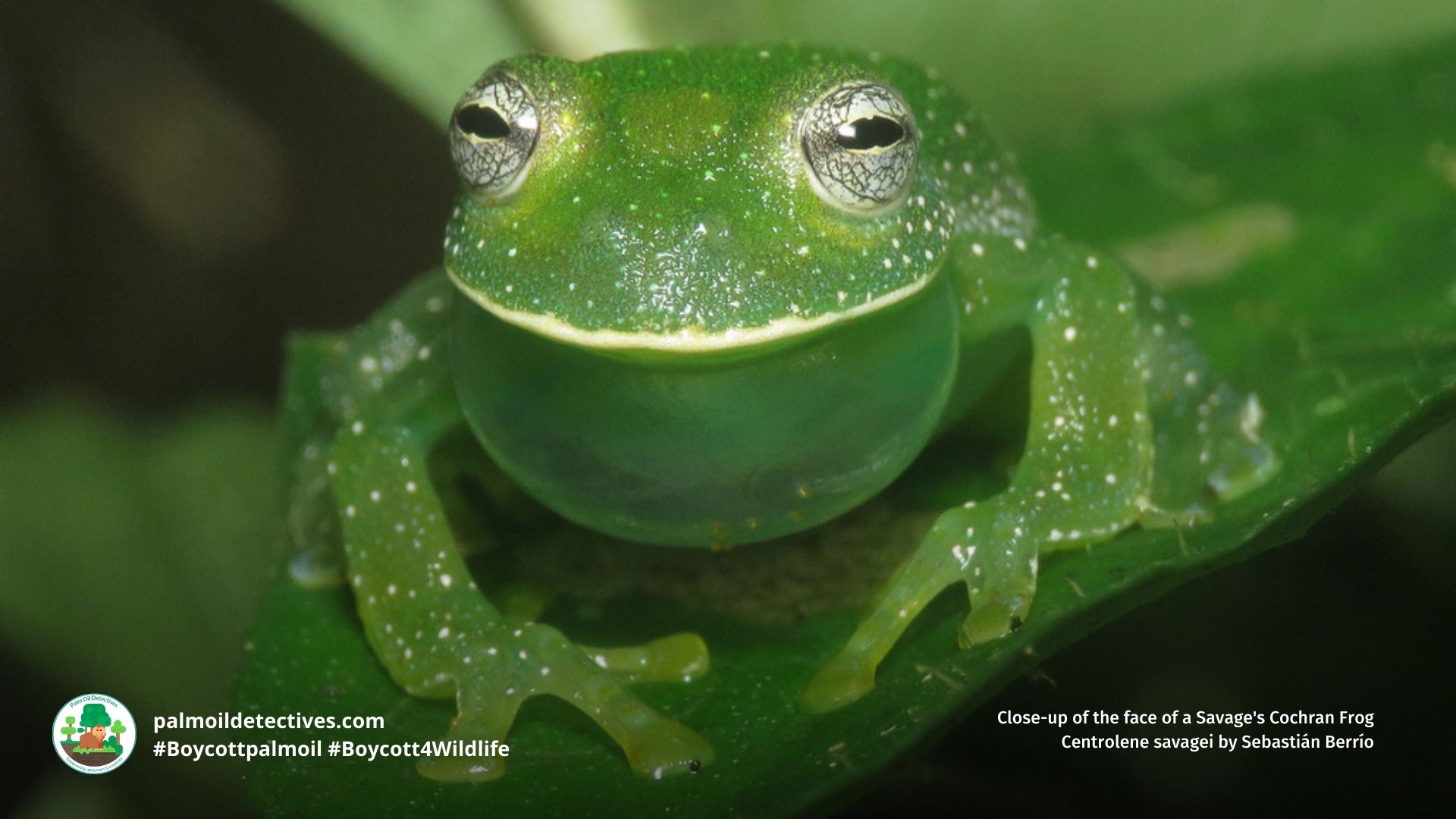
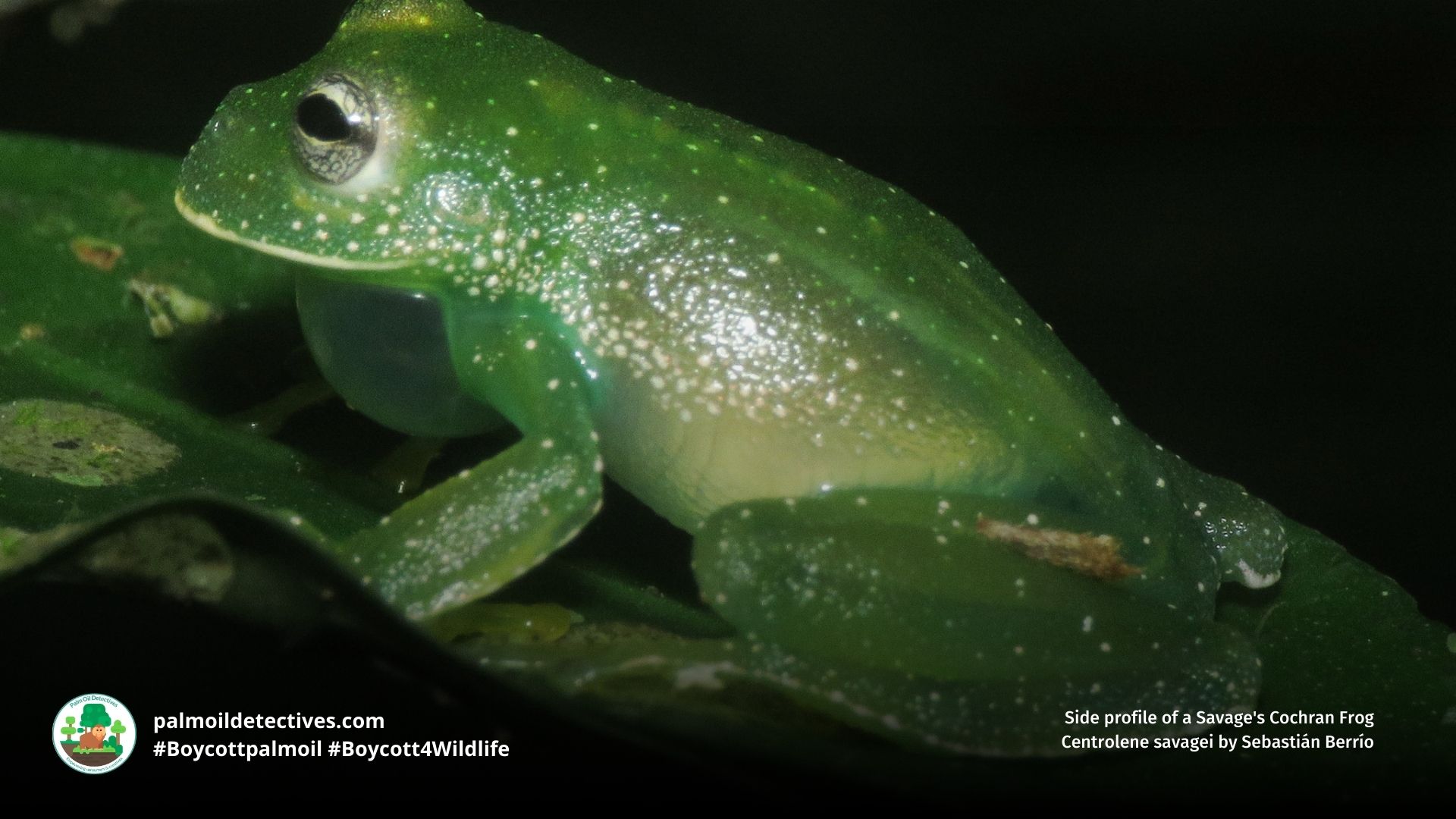
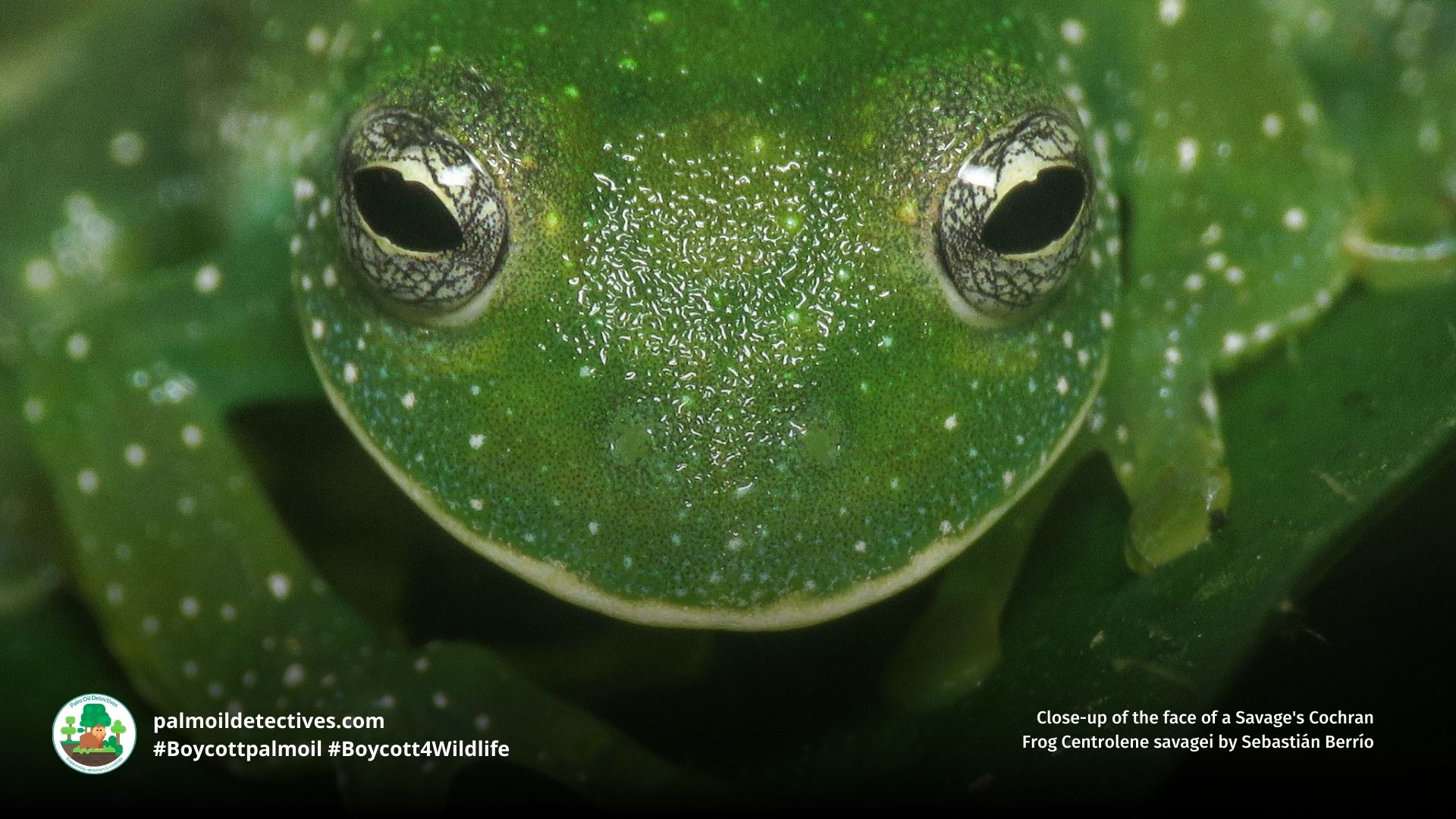
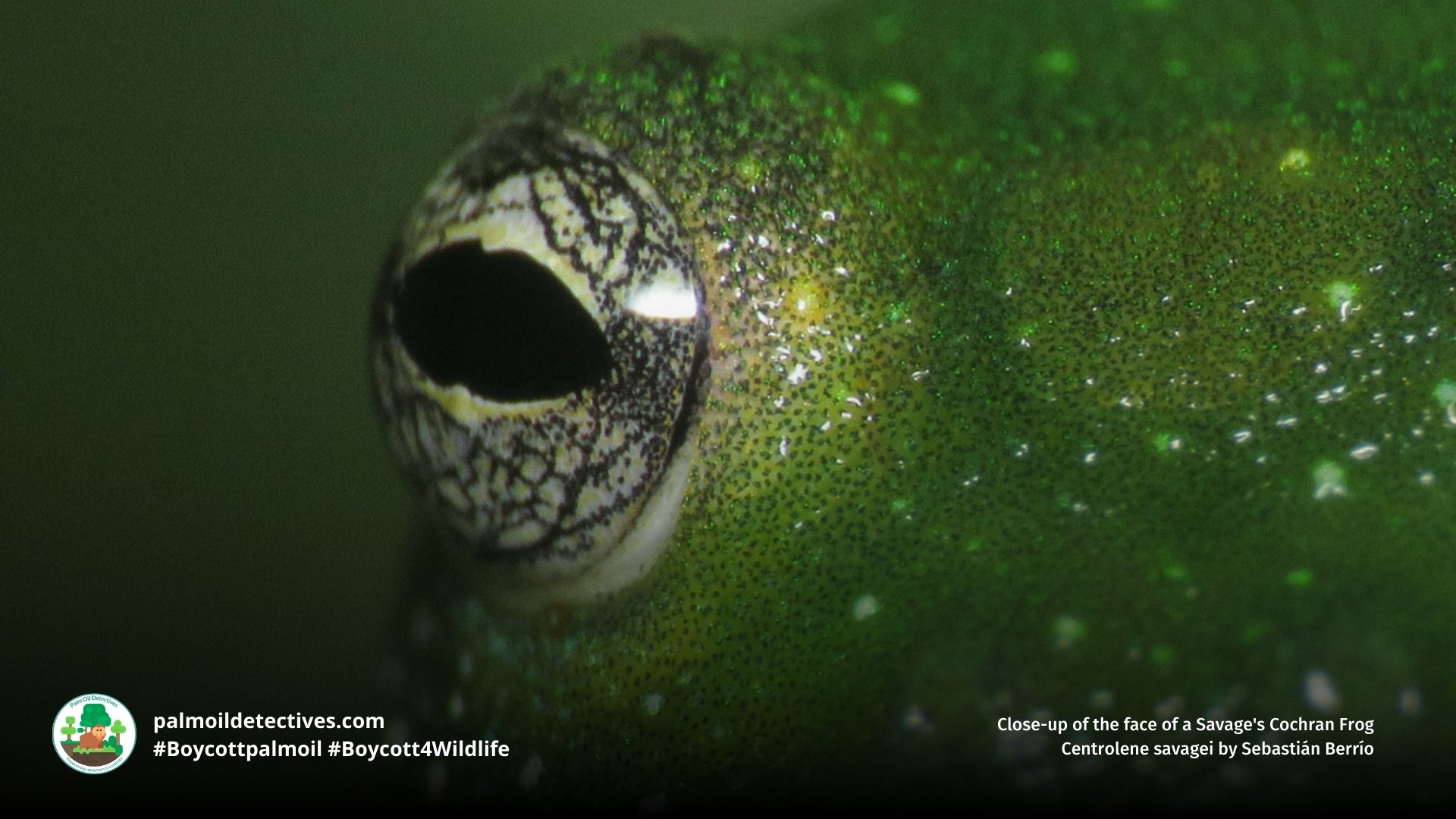
Savage’s Glass Frog is an exquisite amphibian with skin so translucent that their inner organs are visible, glowing like a hidden constellation beneath a veil of green. Their slender limbs end in sticky, webbed toes, perfectly adapted for clinging to leaves in humid forests. Their wide, golden eyes, speckled with flecks of black, provide keen night vision, allowing them to detect predators and prey under the dim glow of the forest canopy. At night, they call softly to attract mates, their gentle trills merging with the sounds of the rainforest.


Threats
Savage’s Glass Frog (Centrolene savagei) faces numerous threats that are rapidly altering their cloud forest habitat in the Colombian Andes. A study by Prado-Sañudo et al. (2020) found that the species was absent from certain locations where they had previously been recorded, suggesting population declines may already be underway. Conservation efforts must prioritise protecting Colombia’s cloud forests from further degradation.
Palm Oil and Soy Monoculture
Large-scale agricultural expansion for palm oil and soy plantations is devastating Colombia’s biodiverse rainforests. These monocultures replace native vegetation with single-crop plantations, destroying the undergrowth and streamside vegetation that Centrolene savagei relies on for shelter and breeding. As forest cover disappears, humidity levels drop, making their microhabitats drier and less suitable for egg development. The clearance of forests also leads to soil erosion, which can result in sedimentation of the clear mountain streams where these frogs lay their eggs.
Cattle Ranching
Extensive cattle ranching in the Colombian Andes is another major driver of deforestation. Forests are slashed and burned to create pastures, reducing available habitat for Centrolene savagei. The removal of trees along waterways destroys vital breeding sites, while cattle compact the soil, disrupting the natural flow of water and increasing erosion. The destruction of riparian zones reduces the availability of suitable egg-laying sites, directly impacting the frog’s ability to reproduce.
Illegal Pet Trade
Centrolene savagei is at risk of being targeted by the illegal pet trade due to their striking appearance and rarity. Glass frogs are often smuggled and sold internationally to collectors who seek out exotic species. This illegal trade removes individuals from wild populations, reducing genetic diversity and making the species more vulnerable to extinction. Additionally, captured frogs often suffer high mortality rates due to stress, improper handling, and unsuitable captive conditions.
Climate Change and Extreme Weather
Rising global temperatures are altering the delicate climatic conditions of Colombia’s montane forests. Extreme weather events, such as prolonged droughts and intense rainfall, are becoming more frequent. Droughts can dry up the small streams where Centrolene savagei reproduces, leading to egg desiccation and failed breeding seasons. Intense storms, on the other hand, cause flash floods that wash away egg clutches and displace adult frogs. Long-term shifts in temperature and precipitation could also disrupt breeding cycles and reduce the availability of insect prey.
Pesticides and Pollution Runoff into Rivers
Agricultural chemicals, including pesticides and herbicides used in large-scale farming, often wash into nearby streams and rivers. Centrolene savagei, like many amphibians, has highly permeable skin that makes them exceptionally sensitive to toxins. Pesticide exposure can lead to developmental deformities, weakened immune systems, and increased mortality rates in both tadpoles and adults. Additionally, runoff containing fertilisers can trigger algal blooms, depleting oxygen levels in the water and further degrading their habitat.
Geographic Range
Savage’s Glass Frog is endemic to Colombia’s Andean cloud forests, occupying both the Cordillera Central and Cordillera Occidental. They are found in humid montane forests, clinging to vegetation near fast-flowing streams where they breed and shelter.
Diet
These frogs are insectivorous, feeding on a diet of small invertebrates, including flies, moths, and spiders. Their sticky tongues enable them to snatch unsuspecting prey with precision, while their nocturnal hunting habits help them avoid daytime predators.
Mating and Reproduction
Male Centrolene savagei play a vital role in protecting their offspring. They guard egg clutches laid on leaves overhanging streams, keeping them hydrated by absorbing water and transferring it to the eggs with their bodies. This parental care reduces embryo desiccation and shields them from predators. Once the eggs hatch, the tiny, transparent tadpoles drop into the water below, beginning their journey to adulthood.
FAQs
Why do Savage’s Glass Frogs have transparent skin?
Their translucent skin serves as an advanced form of camouflage. By reflecting the colour and light of their surroundings, they can evade predators more effectively. This adaptation, combined with their nocturnal habits, makes them exceptionally difficult to spot in the wild.
What are the main threats to Savage’s Glass Frog?
Deforestation for agriculture and human expansion poses the greatest risk. As forests are cleared, populations become isolated, making it harder for them to find mates and maintain genetic diversity. Additionally, climate change could alter their delicate montane ecosystems, impacting their breeding success. The illegal pet trade is a growing risk as these beautiful frogs are sought out for private collections reducing their populations in the wild.
Do Glass Frogs Make Good Pets?
No, glass frogs— including Centrolene savagei—do not make good pets. Keeping them in captivity is not only unethical but also contributes to their decline in the wild. These frogs have highly specialised habitat needs that are impossible to replicate in captivity. They require pristine, high-humidity cloud forests with access to flowing, oxygen-rich streams for breeding. Even small environmental changes can stress them, leading to illness and death.
Beyond the difficulty of caring for them, removing Centrolene savagei from the wild is a major conservation issue. Every individual taken for the pet trade weakens wild populations, reducing genetic diversity and making the species more vulnerable to extinction. Many glass frogs die in transit due to improper handling, dehydration, and stress. Others perish in captivity because of unsuitable conditions or lack of knowledge about their complex dietary and breeding requirements.
If you truly care about these remarkable amphibians, the best way to help them is to never buy wild-caught glass frogs and to actively speak out against the exotic pet trade. Instead, support habitat conservation efforts and help protect the fragile ecosystems they depend on. #BoycottWildlifeTrade #BoycottPalmOil #Boycott4Wildlife
What makes Savage’s Glass Frog unique?
Their combination of transparent skin, nocturnal behaviour, and dedicated male parental care sets them apart from many other amphibians. The ability of males to hydrate and defend their eggs is a rare adaptation that improves their offspring’s chances of survival.
Are Savage’s Glass Frogs endangered?
More research is needed to determine their current population trends. However, habitat destruction and population declines in certain areas suggest that conservation efforts are needed to ensure their long-term survival.
Take Action!
Colombia’s cloud forests are disappearing at an alarming rate, threatening the survival of Centrolene savagei and countless other species. Protect their habitat by supporting indigenous-led conservation initiatives and refusing to buy products linked to deforestation. Use your voice to demand stronger environmental protections and share awareness about the importance of preserving these fragile ecosystems. Every choice matters. Go #Vegan for the animals and #BoycottPalmOil #Boycott4Wildlife.
Support Savage’s Glass Frogs by going vegan and boycotting palm oil in the supermarket, it’s the #Boycott4Wildlife
Support the conservation of this species
This animal has no protections in place. Read about other forgotten species here. Create art to support this forgotten animal or raise awareness about them by sharing this post and using the #Boycottpalmoil #Boycott4Wildlife hashtags on social media. Also you can boycott palm oil in the supermarket.
Further Information
Escobar-Lasso, S., & Rojas-Morales, J. A. (2012). Antipredatory behaviors of the Colombian endemic glassfrog Centrolene savagei (Anura: Centrolenidae). Boletín Científico. Centro de Museos. Museo de Historia Natural, 16(1), 1–10.
IUCN SSC Amphibian Specialist Group. 2017. Centrolene savagei. The IUCN Red List of Threatened Species 2017: e.T54990A63062174. https://dx.doi.org/10.2305/IUCN.UK.2017-3.RLTS.T54990A63062174.en. Accessed on 09 February 2025.
Ospina, A. M., Navarro-Salcedo, P., Rios-Soto, J. A., Duarte-Marín, S., & Vargas-Salinas, F. (2019). Temporal patterns, benefits, and defensive behaviors associated with male parental care in the glassfrog Centrolene savagei. Herpetological Journal, 162–174.
Prado-Sañudo, M. L., Giraldo, A., & Bolívar, W. (2020). Population status of Centrolene savagei in the Western and Central Andes of Colombia. Boletín Científico Centro de Museos Museo de Historia Natural, 24(2), 116–124.

How can I help the #Boycott4Wildlife?
Take Action in Five Ways
1. Join the #Boycott4Wildlife on social media and subscribe to stay in the loop: Share posts from this website to your own network on Twitter, Mastadon, Instagram, Facebook and Youtube using the hashtags #Boycottpalmoil #Boycott4Wildlife.
2. Contribute stories: Academics, conservationists, scientists, indigenous rights advocates and animal rights advocates working to expose the corruption of the palm oil industry or to save animals can contribute stories to the website.


3. Supermarket sleuthing: Next time you’re in the supermarket, take photos of products containing palm oil. Share these to social media along with the hashtags to call out the greenwashing and ecocide of the brands who use palm oil. You can also take photos of palm oil free products and congratulate brands when they go palm oil free.
4. Take to the streets: Get in touch with Palm Oil Detectives to find out more.
5. Donate: Make a one-off or monthly donation to Palm Oil Detectives as a way of saying thank you and to help pay for ongoing running costs of the website and social media campaigns. Donate here
Learn about other animals endangered by palm oil and other agriculture
Learn about “sustainable” palm oil greenwashing
Read more about RSPO greenwashing
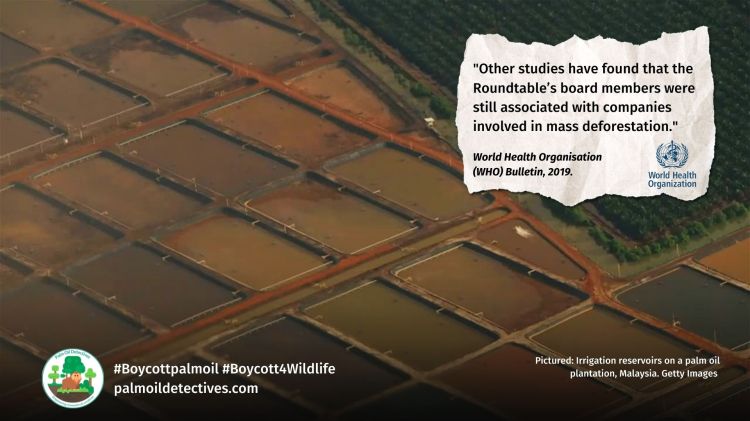
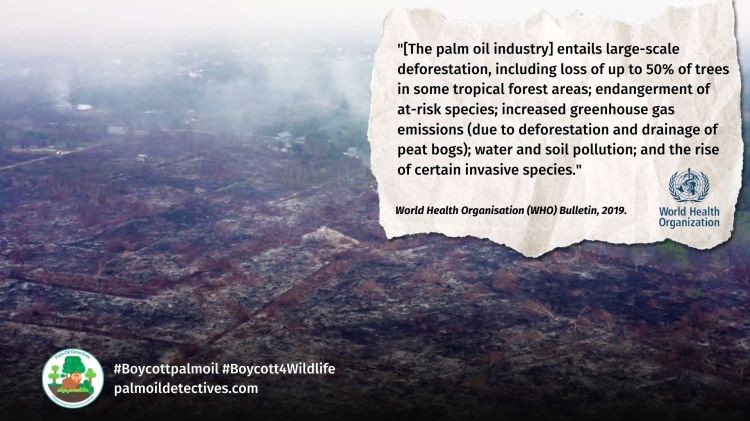
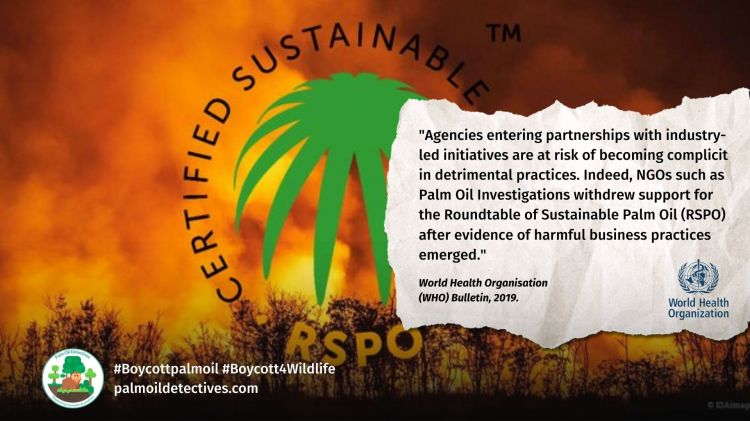
A 2019 World Health Organisation (WHO) report into the palm oil industry and RSPO finds extensive greenwashing of palm oil deforestation and the murder of endangered animals (i.e. biodiversity loss)


Discover more from Palm Oil Detectives
Subscribe to get the latest posts sent to your email.
 Palm Oil Detectives