
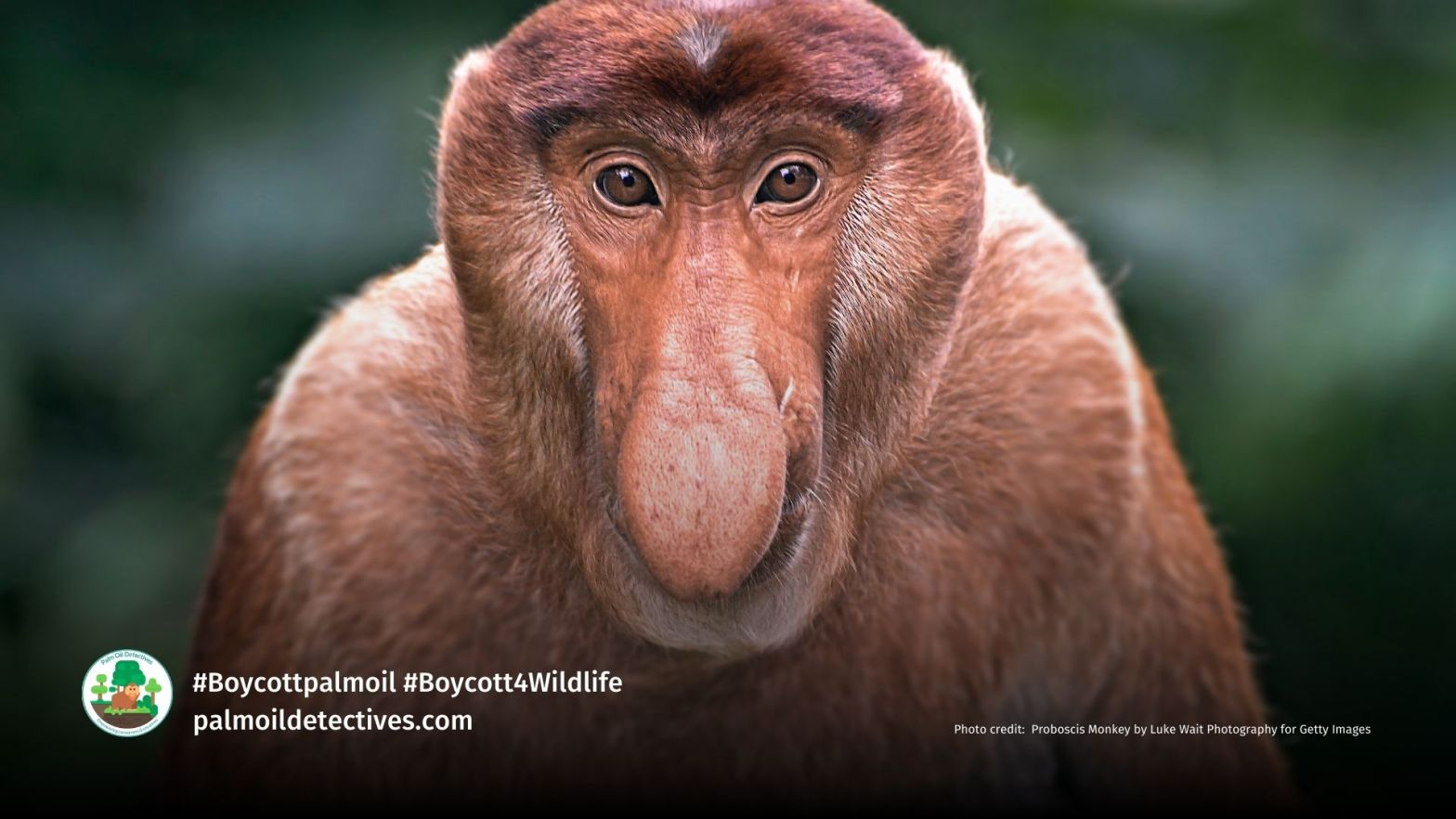
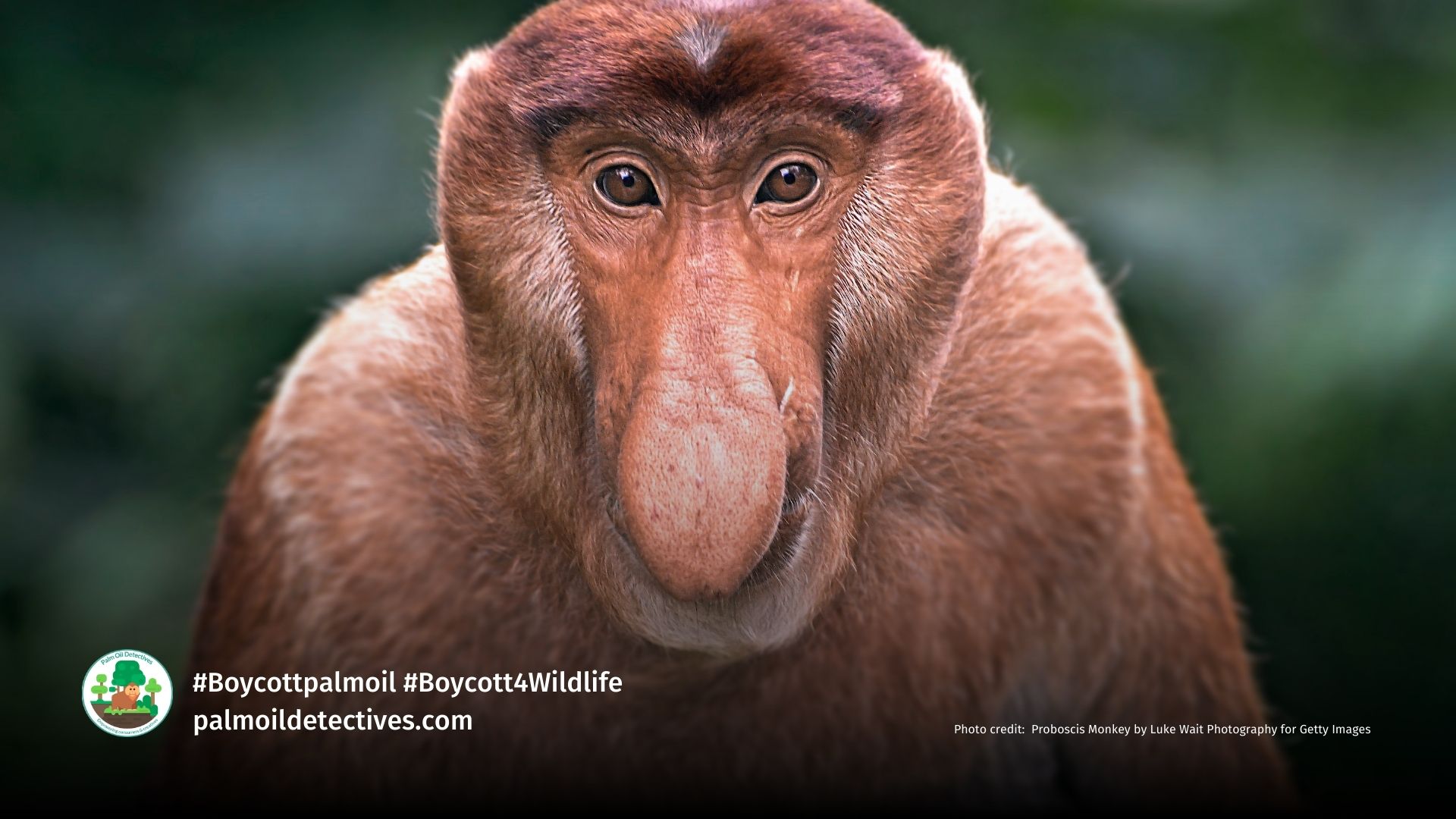
Proboscis Monkey Nasalis larvatus
Endangered
Brunei, Malaysia (Sabah, Sarawak), Indonesia (Kalimantan)
The Proboscis Monkey, distinguished by their large, pendulous noses and pot-bellied appearance, is an arboreal primate endemic to the island of Borneo. Inhabiting #mangrove forests, swamps, and riverine areas, they are exceptional swimmers, often seen leaping into water to evade predators. Unfortunately, their populations are in decline due to habitat destruction, primarily from logging and agricultural expansion, including palm oil plantations. Human pressures have led them to interbreed with other monkeys. To protect the Proboscis Monkey, we urge you to boycott products linked to deforestation. Use your wallet as a weapon to fight for their survival each time you shop. #BoycottPalmOil #Boycott4Wildlife
Gentle and shy tree-dwellers with famous long noses 👃 🐒🤎 Proboscis Monkey are #endangered in #Malaysia and #Indonesia. Their main threat is #palmoil and #mining #deforestation. Help them to survive when u #Boycottpalmoil #Boycott4Wildlife @palmoildetect.bsky.social https://wp.me/pcFhgU-mh

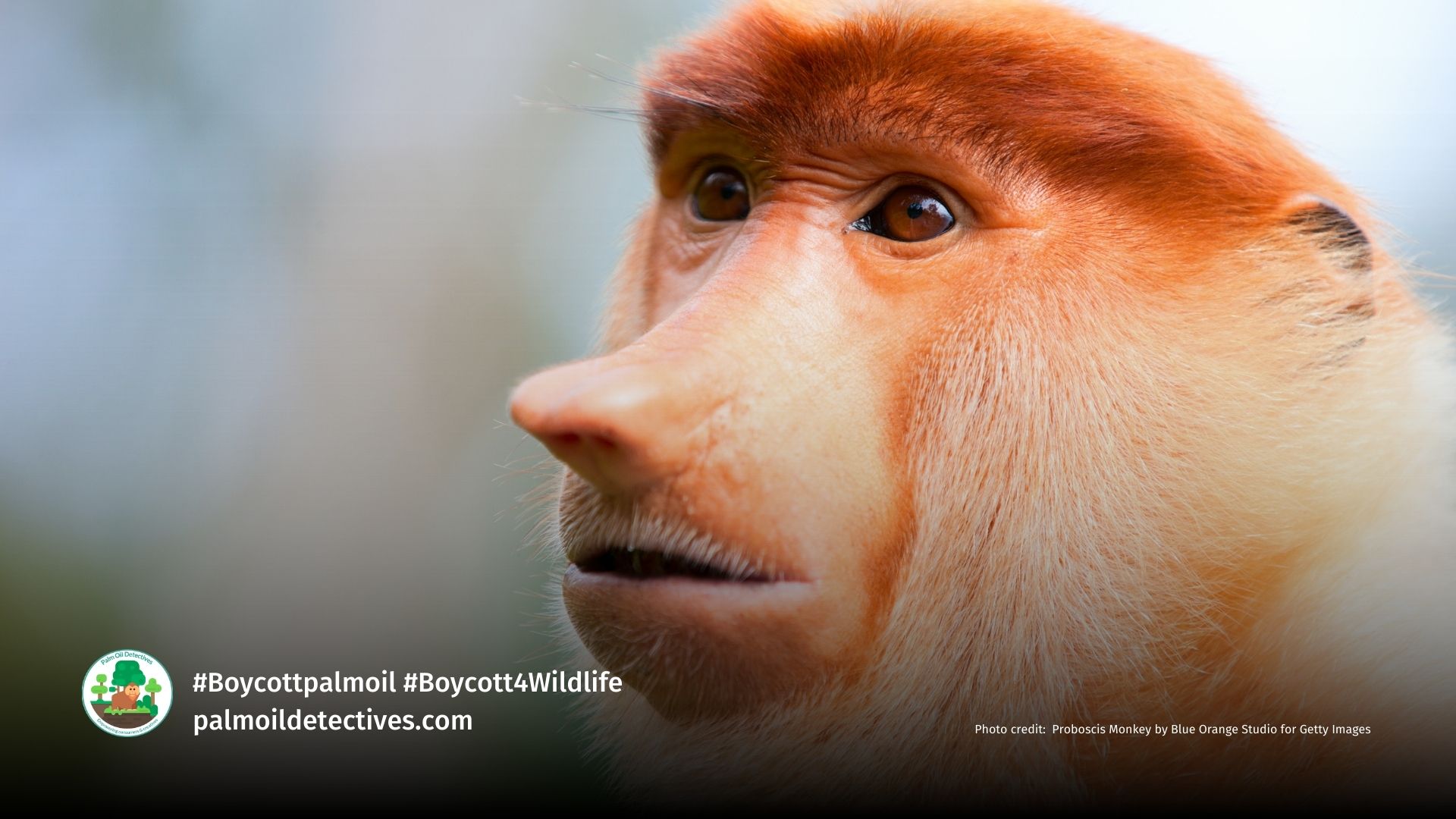
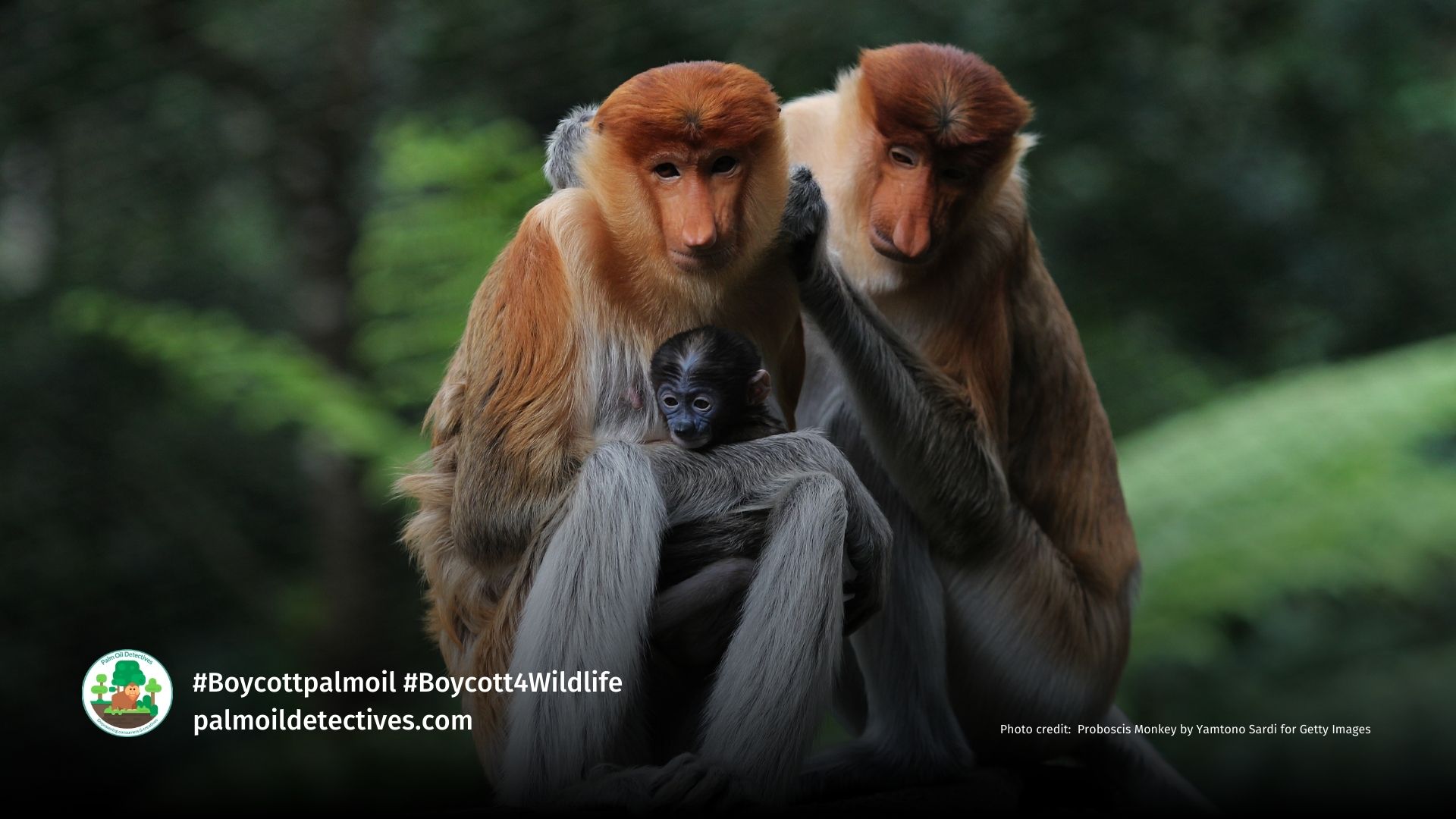
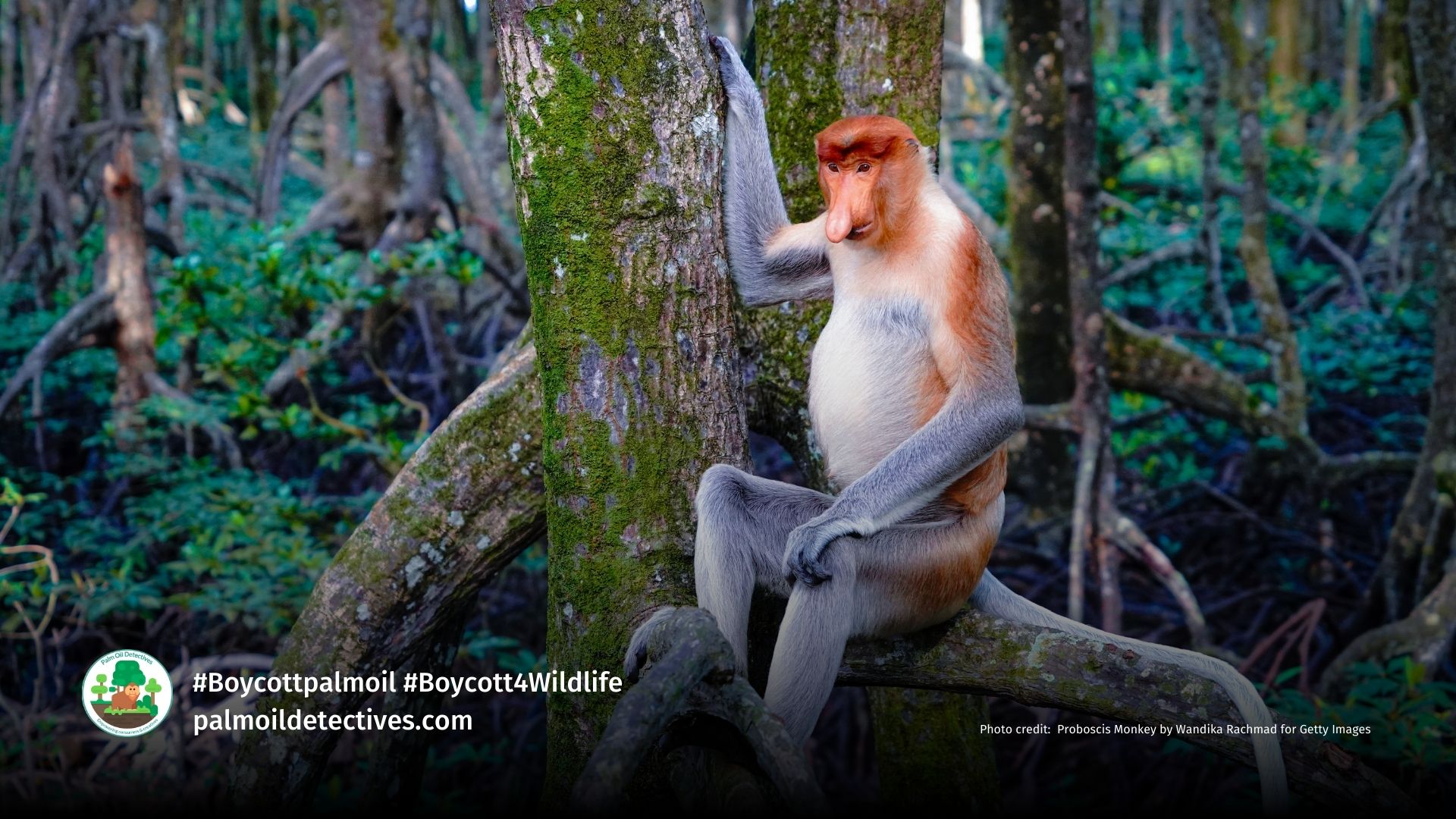
The habitat of the Proboscis Monkey is favoured for logging, cultivation, and settlement.
IUCN Red List
Appearance and Behaviour
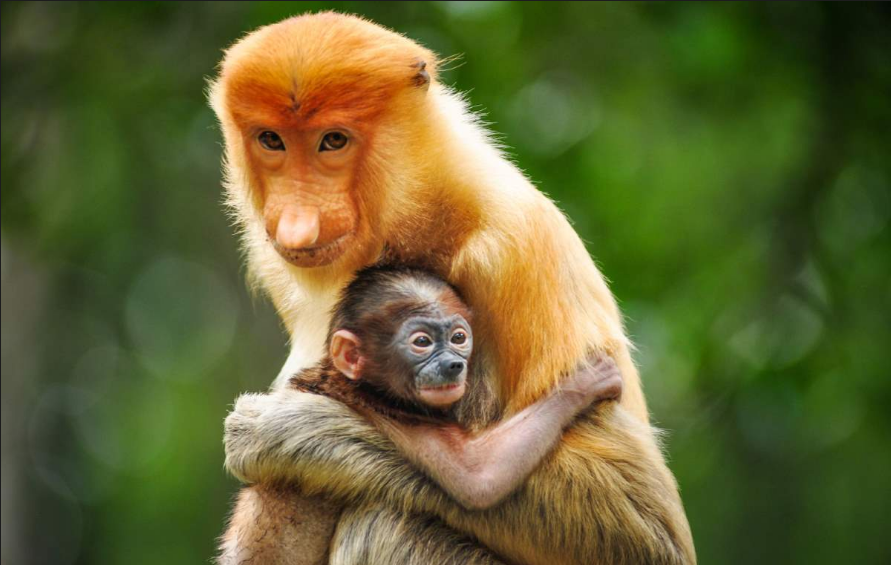
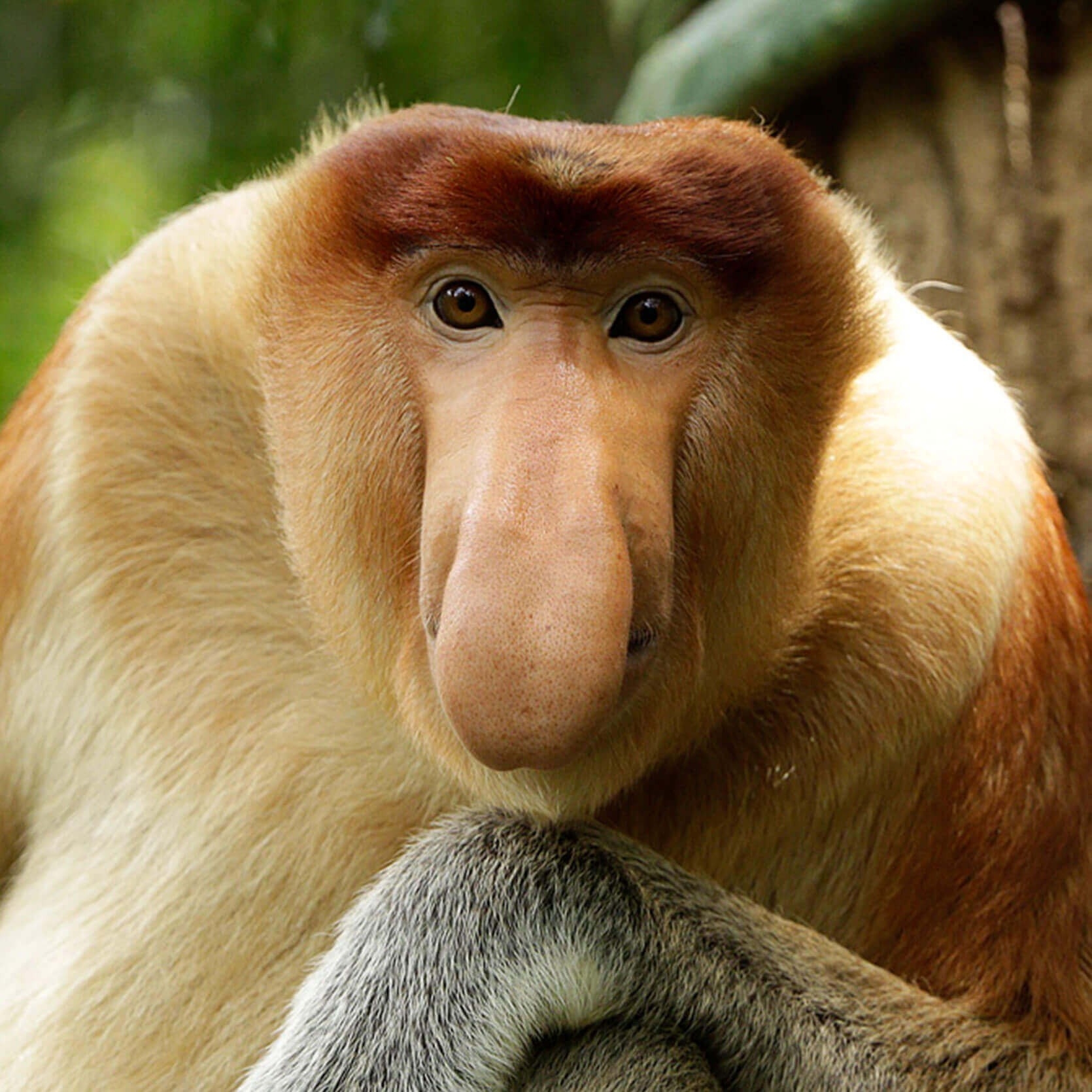
Proboscis Monkeys exhibit sexual dimorphism, with males being significantly larger than females. Males weigh between 16 to 22 kg and possess noses that can exceed 10 cm in length, while females weigh between 7 to 12 kg with smaller, upturned noses. Their reddish-brown coats contrast with greyish limbs and tails. These primates are diurnal and highly arboreal, living in cohesive groups that typically consist of one adult male, several females, and their offspring. They are known for their loud vocalisations, which serve as communication within the group and to establish territory.
Geographic Range
Endemic to Borneo, Proboscis Monkeys are found in coastal mangroves, riverine forests, and peat swamps across Brunei, Malaysia (Sabah and Sarawak), and Indonesia (Kalimantan). They prefer habitats close to water and are rarely found more than a kilometre away from rivers or coastal areas.
Diet
Primarily folivorous, Proboscis Monkeys feed on young leaves, seeds, and unripe fruits, with a preference for mangrove species. Their complex, chambered stomachs contain specialised bacteria that aid in fermenting and digesting cellulose-rich plant material. This specialised diet makes them highly susceptible to habitat changes that affect food availability.
Reproduction and Mating
Proboscis Monkeys have a polygynous mating system, with dominant males presiding over harems of females. Breeding can occur year-round, with a gestation period of approximately 166 days, resulting in the birth of a single infant. Infants are born with blue faces and develop the characteristic adult colouring as they mature. Both males and females reach sexual maturity around 4 to 5 years of age.
Threats
The Proboscis Monkey is listed as Endangered on the IUCN Red List, with populations continuing to decline due to ongoing threats. Conservation efforts include habitat protection, anti-poaching measures, and environmental education to raise awareness about the species’ plight. Protected areas and wildlife reserves play a crucial role in safeguarding remaining populations.
IUCN Status: Endangered
Palm oil deforestation: Deforestation for timber, conversion of land for agriculture (notably palm oil plantations), and urban development have led to significant habitat fragmentation and loss.
Hunting and human persecution: In some regions, Proboscis Monkeys are hunted for their meat and bezoar stones, which are used in traditional medicine.
Infrastructure development: Increasing human activities, including river traffic and ecotourism, can disrupt their natural behaviours and lead to stress.
In some cases human pressures have led the Proboscis Monkey to interbreeding with other monkeys such as the Silvery Lutung.
Take Action!
Protect the Proboscis Monkey by boycotting products linked to deforestation, such as palm oil. Use your wallet as a weapon to support ethical and eco-friendly choices. Share their story and fight for their survival with #BoycottPalmOil and #Boycott4Wildlife.
Further Information

Boonratana, R., Cheyne, S.M., Traeholt, C., Nijman, V. & Supriatna, J. 2020. Nasalis larvatus. The IUCN Red List of Threatened Species 2020: e.T14352A17945165. https://dx.doi.org/10.2305/IUCN.UK.2020-2.RLTS.T14352A17945165.en. Downloaded on 25 January 2021.
National Geographic. (n.d.). Proboscis Monkey. Retrieved from National Geographic
Britannica. (n.d.). Proboscis Monkey. Retrieved from Britannica
Wikipedia contributors. (n.d.). Proboscis Monkey. Retrieved from Wikipedia

How can I help the #Boycott4Wildlife?
Take Action in Five Ways
1. Join the #Boycott4Wildlife on social media and subscribe to stay in the loop: Share posts from this website to your own network on Twitter, Mastadon, Instagram, Facebook and Youtube using the hashtags #Boycottpalmoil #Boycott4Wildlife.
2. Contribute stories: Academics, conservationists, scientists, indigenous rights advocates and animal rights advocates working to expose the corruption of the palm oil industry or to save animals can contribute stories to the website.





3. Supermarket sleuthing: Next time you’re in the supermarket, take photos of products containing palm oil. Share these to social media along with the hashtags to call out the greenwashing and ecocide of the brands who use palm oil. You can also take photos of palm oil free products and congratulate brands when they go palm oil free.
4. Take to the streets: Get in touch with Palm Oil Detectives to find out more.
5. Donate: Make a one-off or monthly donation to Palm Oil Detectives as a way of saying thank you and to help pay for ongoing running costs of the website and social media campaigns. Donate here
Discover more from Palm Oil Detectives
Subscribe to get the latest posts sent to your email.
 Palm Oil Detectives
One thought on “Proboscis Monkey Nasalis larvatus”