
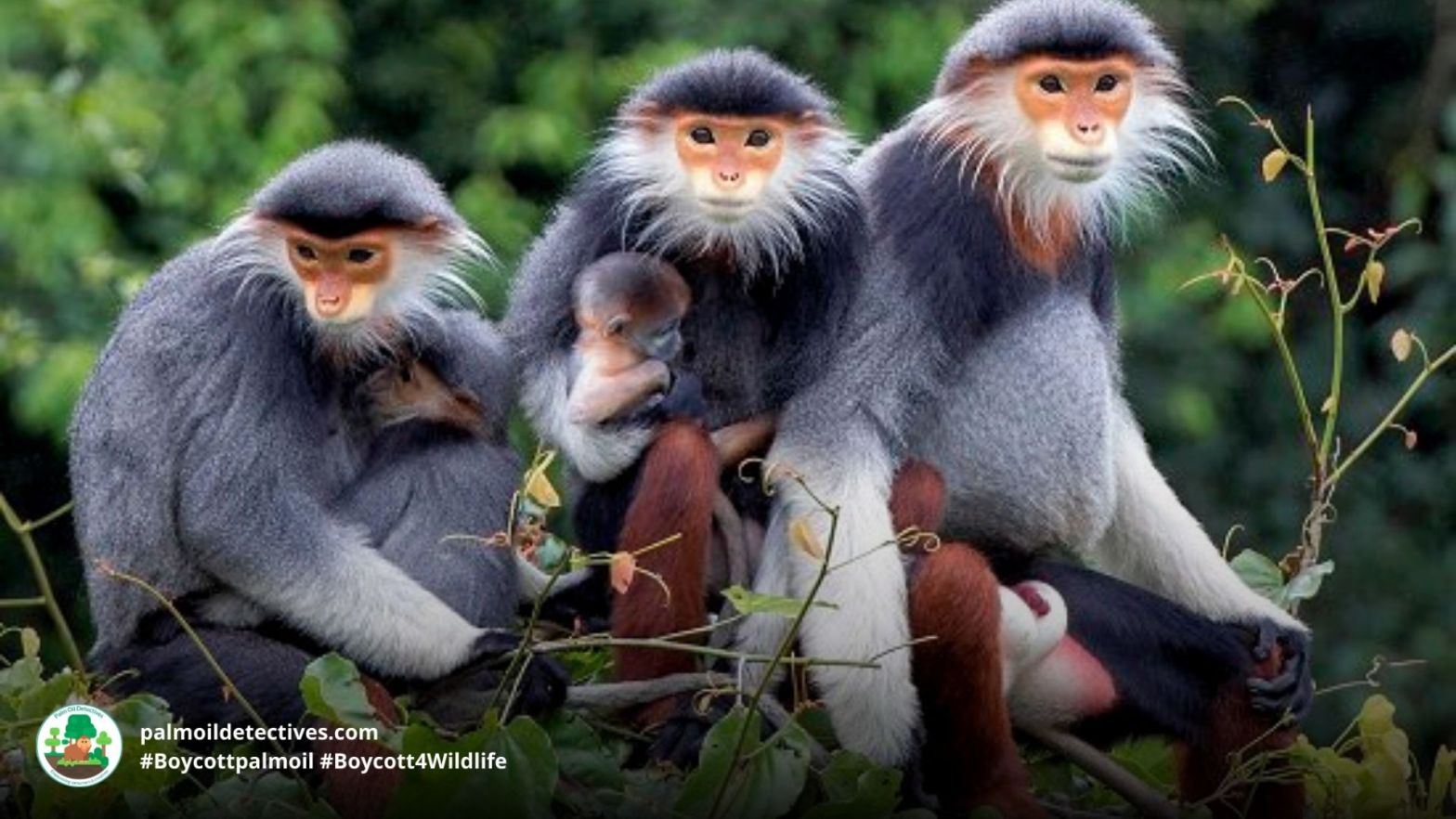
Red-shanked Douc Langur Pygathrix nemaeus
Critically Endangered
If you have never seen the Red-shanked Douc Langur, you are in for a real treat. These vividly coloured monkeys have a fairytale quality.
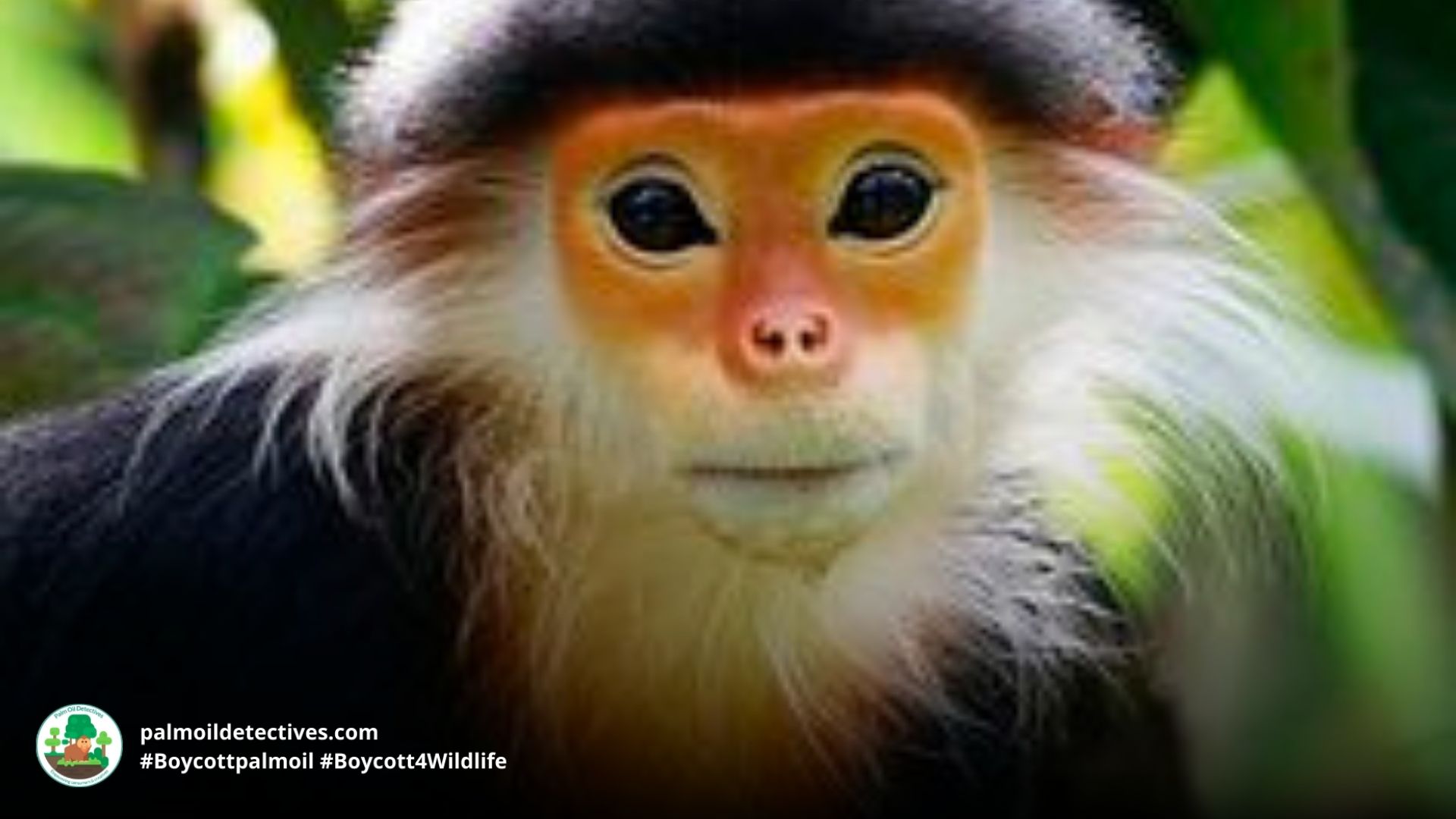
Their appearance is so vibrant it’s like looking at a living canvas. Their golden faces, framed by white whiskers, glow with intelligence and curiosity, while their crimson-red lower legs contrast with silvery thighs and a sleek black body. Found in the lush forests of Indochina, these arboreal primates are vital for maintaining their ecosystems through seed dispersal and forest regeneration.
Tragically, they face severe threats from palm oil deforestation, illegal hunting, and the pet trade. Protect their future by boycotting products linked to deforestation. Use your wallet as a weapon. #BoycottPalmOil #Boycott4Wildlife
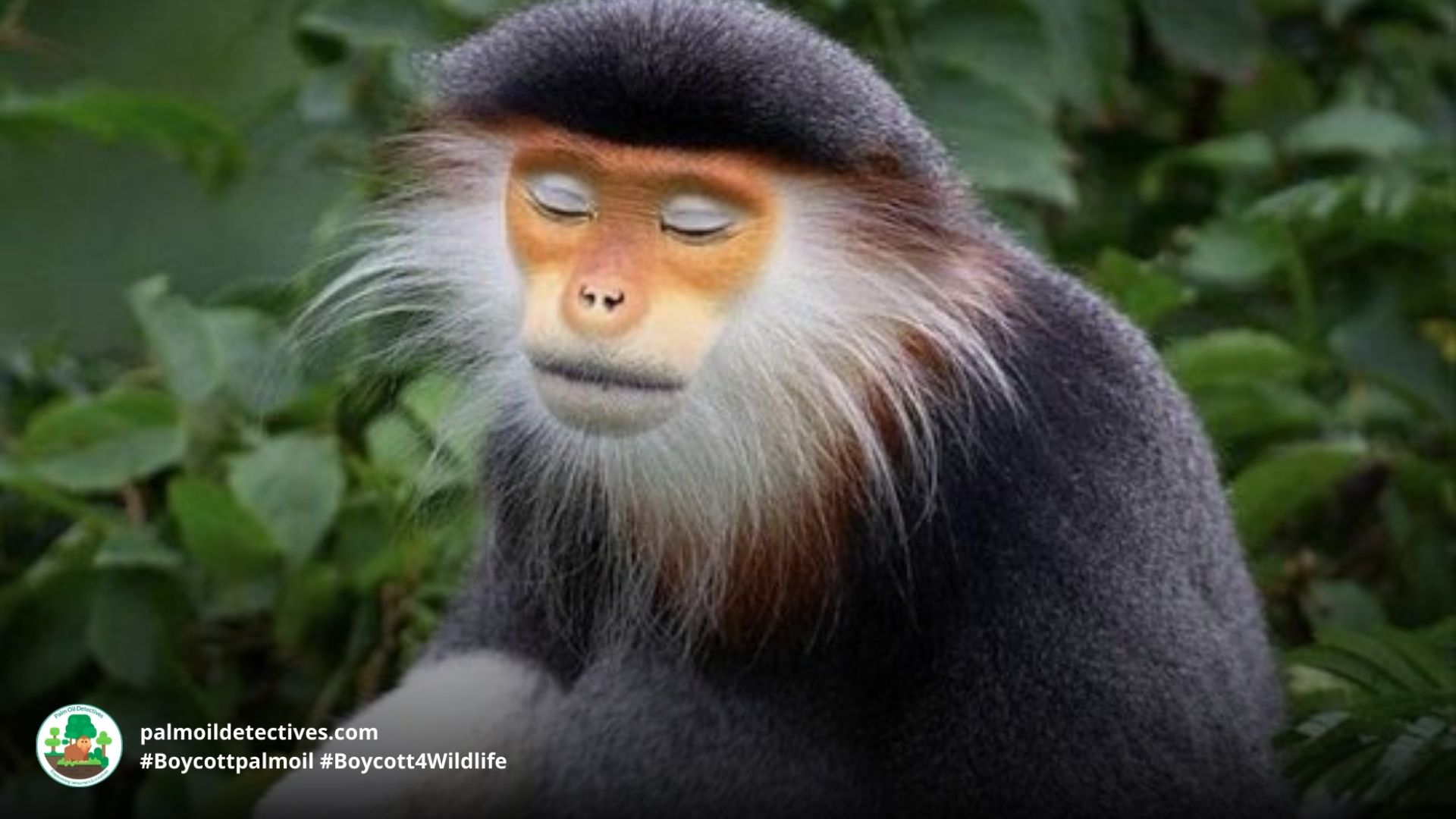
Vividly coloured and with a Zen-like calmness, Red-shanked Douc Langurs 🐒🙉 are critically endangered by #palmoil and other #deforestation and #hunting . Help them and be #vegan 🍅🌿🍃 #Boycottpalmoil 🌴⛔️🔥#Boycott4Wildlife @palmoildetect https://palmoildetectives.com/2021/01/25/red-shanked-douc-langur-pygathrix-nemaeus/
The colourful and intelligent 🤯🌈 Red-shanked Douc Langur faces many threats including #deforestation and hunting. They are critically endangered! Boycott the brands destroying their home. #Boycottpalmoil 🌴🛢️🚫🙊 #Boycott4Wildlife @palmoildetect https://palmoildetectives.com/2021/01/25/red-shanked-douc-langur-pygathrix-nemaeus/
By boycotting palm oil and embracing a vegan lifestyle, you’re not just helping them, but also our planet. The palm oil industry and meat industry directly and indirectly causes tropical deforestation, destroying the homes of countless animals, including the Red-shanked Douc Langur, #Boycottpalmoil, be #vegan and #Boycott4Wildlife





Appearance and Behaviour
Red-Shanked Douc Langurs are breathtakingly colourful. Their expressive golden faces, surrounded by delicate white whiskers, radiate intelligence and calmness. Their crimson-red lower legs and silvery thighs create a striking contrast against their sleek black torsos and long, white-tipped tails.
These diurnal primates live in the treetops, leaping gracefully from branch to branch with their powerful limbs and prehensile tails. They are highly social, often living in groups of up to 50 individuals, led by a dominant male. Communication is subtle and involves gentle vocalisations, body language, and eye contact.
Geographic Range
Red-Shanked Douc Langurs are native to Vietnam, Laos, and Cambodia, inhabiting dense tropical forests. They prefer the canopy of subtropical and tropical evergreen forests, where they remain hidden from predators. However, deforestation and habitat fragmentation have significantly reduced their range, confining them to isolated patches of forest.
Diet
Primarily folivorous, Red-Shanked Douc Langurs consume a wide variety of young leaves, which make up the bulk of their diet. They also feed on fruits, flowers, seeds, and buds, depending on seasonal availability. Their multi-chambered stomachs are specially adapted to ferment fibrous plant material, allowing them to extract essential nutrients from their diet.
Reproduction and Mating
Red-Shanked Douc Langurs have a gestation period of approximately 165–190 days, typically resulting in a single infant. Newborns are born with pale fur, which darkens as they grow. There is no fixed breeding season, and births occur year-round. Both parents are actively involved in raising their offspring, strengthening the social bonds within their group.
Threats
The Red-Shanked Douc Langur is listed as Critically Endangered on the IUCN Red List. Conservation efforts include habitat protection, anti-poaching patrols, and the rescue and rehabilitation of individuals caught in the wildlife trade. Organisations such as the Endangered Primate Rescue Center in Vietnam are at the forefront of these efforts, working tirelessly to protect these magnificent animals and their habitats.
IUCN Status: Critically Endangered
Habitat loss has also been a major threat in Vietnam with extensive logging for coffee, rubber, and cashew plantations (Nadler et al. 2004), and in Lao PDR where logging is underway at an increasing rate.
IUCN Red List
Deforestation for palm oil, timber and other agriculture: Deforestation for agriculture, logging, and infrastructure development has destroyed vast areas of their habitat. Habitat loss has also been a major threat in Vietnam with extensive logging for coffee, rubber, and cashew plantations (Nadler et al. 2004), and in Lao PDR where logging is underway at an increasing rate for mining, agriculture, forestry and hydropower projects, mostly by large Chinese and Vietnamese companies (Smirnov 2015). Habitat loss and fragmentation have led to an increase in access to remote forests for illegal hunting of the red-shanked douc, contributing to the alarming declines of the global population.
Illegal Wildlife Trade: They are heavily targeted for traditional medicine, as trophies, and for the pet trade.
Climate Change: Changes in rainfall and temperature patterns impact their food sources and habitats, further threatening their survival.
Take Action!
Protect the Red-Shanked Douc Langur by boycotting products linked to deforestation, such as palm oil. Support conservation organisations working to preserve their habitats and enforce anti-poaching laws. Share their story and advocate for their survival with #BoycottPalmOil and #Boycott4Wildlife.
Conservation efforts for this species of langur are underway
Further Information

Coudrat, C.N.Z., Quyet, L.K., Duc, H., Phiaphalath, P., Rawson, B.M., Nadler, T., Ulibarri, L. & Duckworth, J.W. 2020. Pygathrix nemaeus. The IUCN Red List of Threatened Species 2020: e.T39826A17941247. https://dx.doi.org/10.2305/IUCN.UK.2020-2.RLTS.T39826A17941247.en. Downloaded on 25 January 2021.
Endangered Primate Rescue Center. (n.d.). Red-Shanked Douc Langur. Retrieved from EPRC
Education for Nature Vietnam. (2021). The Illegal Trade of Endangered Douc Langurs. Retrieved from ENV
New England Primate Conservancy. (n.d.). Red-Shanked Douc Langur. Retrieved from New England Primate Conservancy

How can I help the #Boycott4Wildlife?
Take Action in Five Ways
1. Join the #Boycott4Wildlife on social media and subscribe to stay in the loop: Share posts from this website to your own network on Twitter, Mastadon, Instagram, Facebook and Youtube using the hashtags #Boycottpalmoil #Boycott4Wildlife.
2. Contribute stories: Academics, conservationists, scientists, indigenous rights advocates and animal rights advocates working to expose the corruption of the palm oil industry or to save animals can contribute stories to the website.



3. Supermarket sleuthing: Next time you’re in the supermarket, take photos of products containing palm oil. Share these to social media along with the hashtags to call out the greenwashing and ecocide of the brands who use palm oil. You can also take photos of palm oil free products and congratulate brands when they go palm oil free.
4. Take to the streets: Get in touch with Palm Oil Detectives to find out more.
5. Donate: Make a one-off or monthly donation to Palm Oil Detectives as a way of saying thank you and to help pay for ongoing running costs of the website and social media campaigns. Donate here
Discover more from Palm Oil Detectives
Subscribe to get the latest posts sent to your email.
 Palm Oil Detectives