
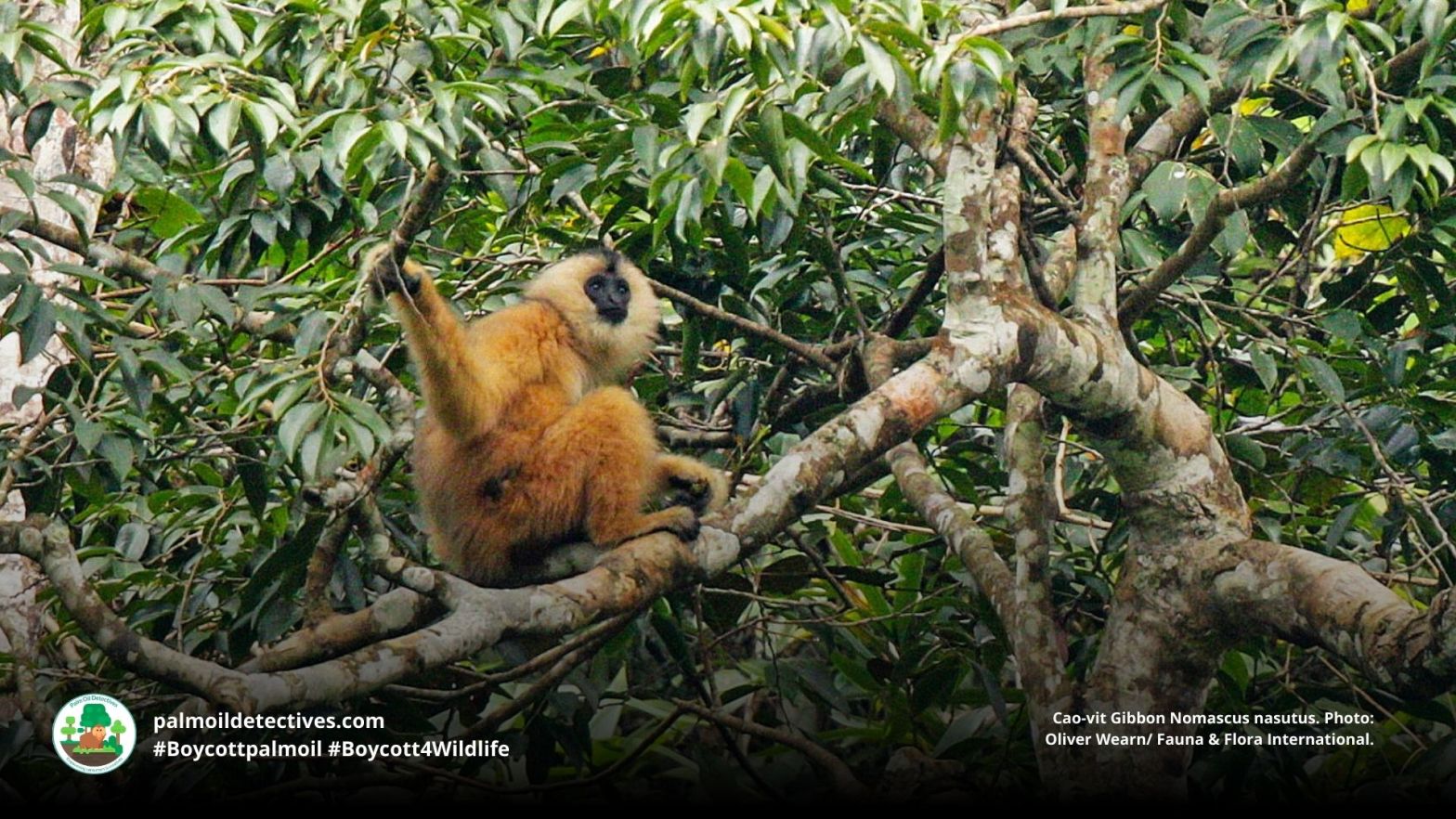
Cao-vit Gibbon Nomascus nasutus
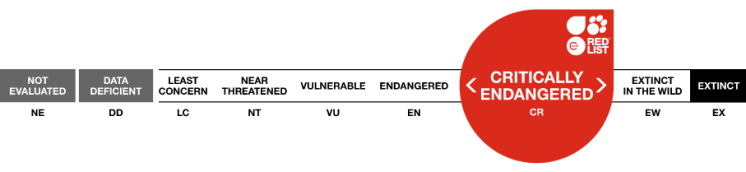
Status: Critically Endangered
Locations: Cao Vit Gibbon Conservation Area, Vietnam, and Bangliang Nature Reserve, China
Location: China, Vietnam
In 2024, Cao-vit #gibbons were revised from 110 to 74 individuals 😿 The world’s most #endangered #gibbon is on the edge of #extinction 🙊 Meat agriculture is a main threat. Help them and #BoycottMeat 🥩⛔️ be #vegan 🍆🥦and #Boycott4Wildlife @palmoildetect https://palmoildetectives.com/2021/01/29/cao-vit-gibbon-nomascus-nasutus/
The Cao-vit #gibbons melodic “cow-veet” calls 🐒🐵🎶 echo in the jungles of #Vietnam 🇻🇳 Only 75 #monkeys are left alive. Threats include #climatechange and meat #agriculture Fight for them and #BoycottMeat be #Vegan 🫛🍆 #Boycott4Wildlife @palmoildetect https://palmoildetectives.com/2021/01/29/cao-vit-gibbon-nomascus-nasutus/
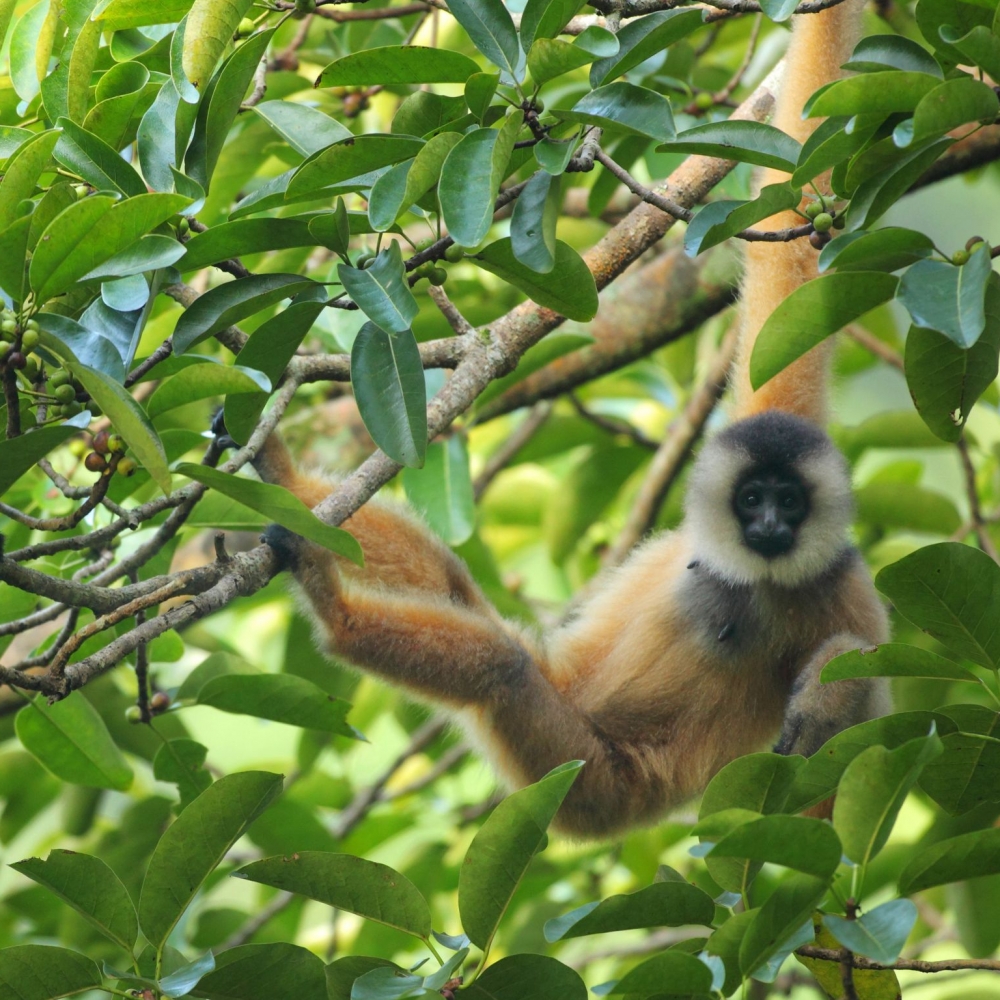
The Cao-vit gibbon, one of the world’s rarest primates, captivates the imagination with their melodic “cow-veet” calls, which echo like rainforest birdsongs. Research has found that they sing in regional accents to each other and form breeding pairs.
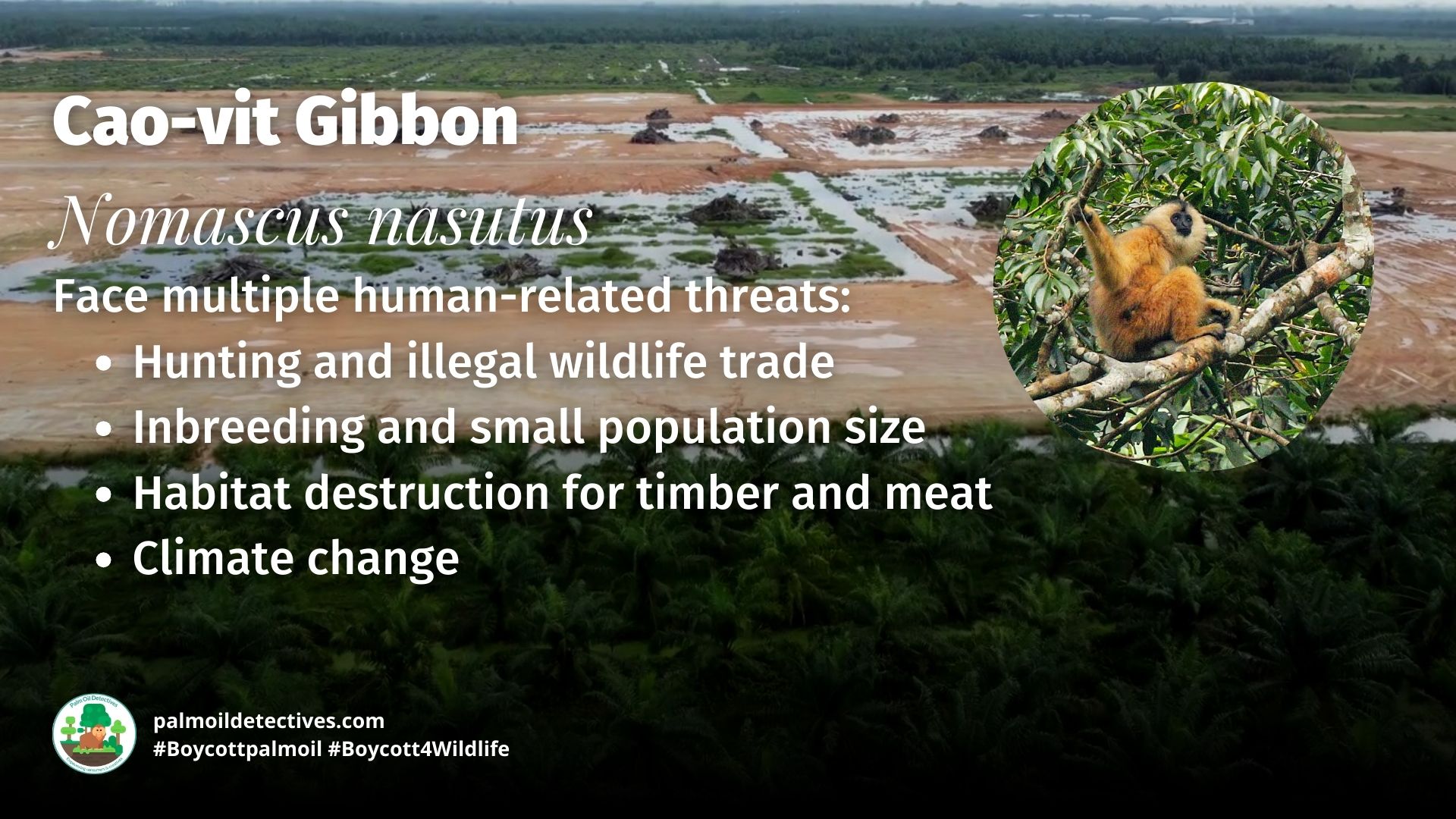
Arguably the world’s rarest gibbon they live in one forest patch straddling the Vietnam–China border. These critically endangered primates face myriad threats, including habitat destruction for timber and meat agriculture, inbreeding, and climate change. Immediate, concerted conservation action is essential to save these extraordinary gibbons from extinction.
Support indigenous-led conservation efforts to protect their habitat. Fight for their survival every time you shop. Use your wallet as a weapon and #BoycottMeat and be #Vegan #Boycott4Wildlife.
Appearance and Behaviour
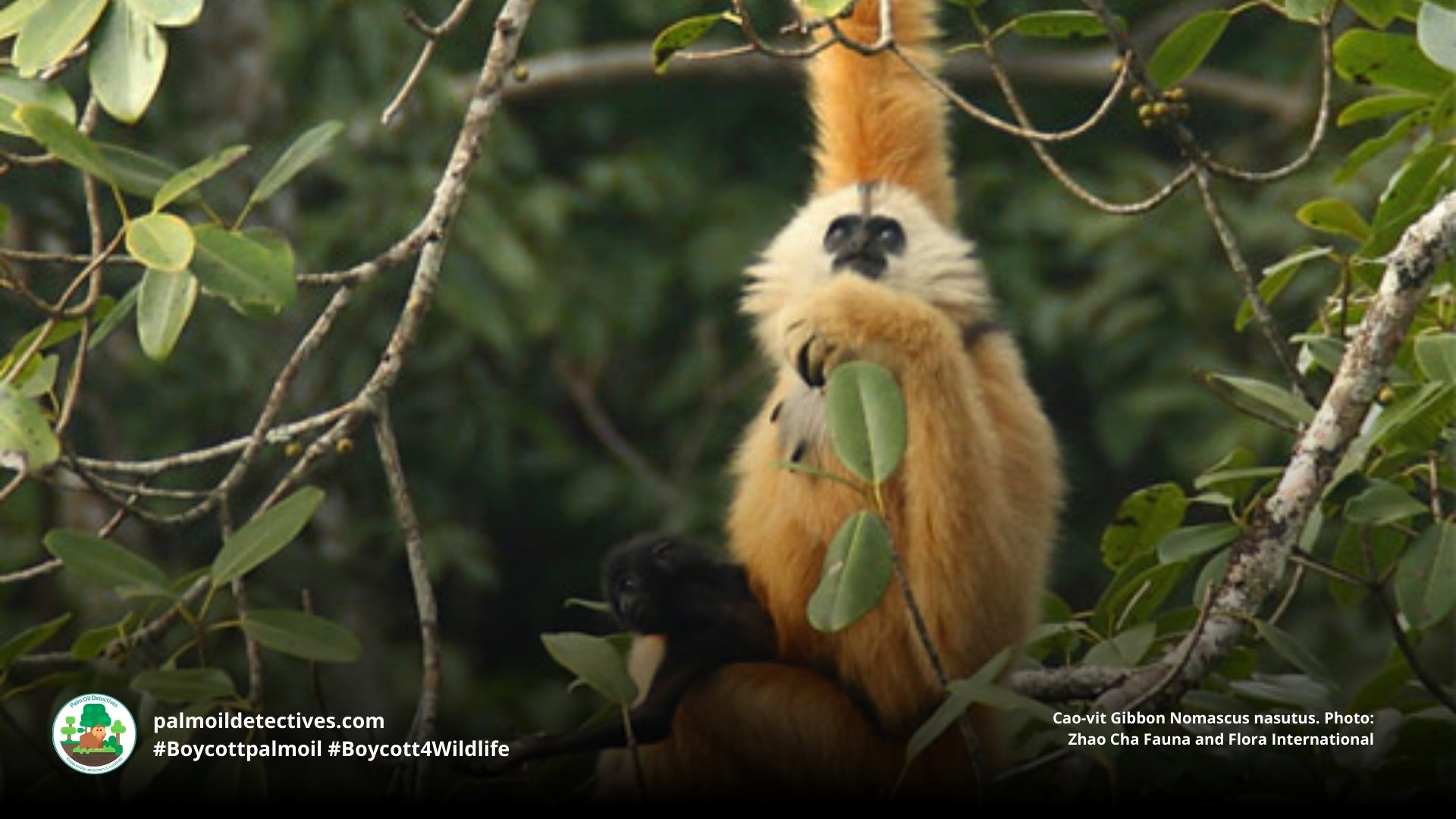
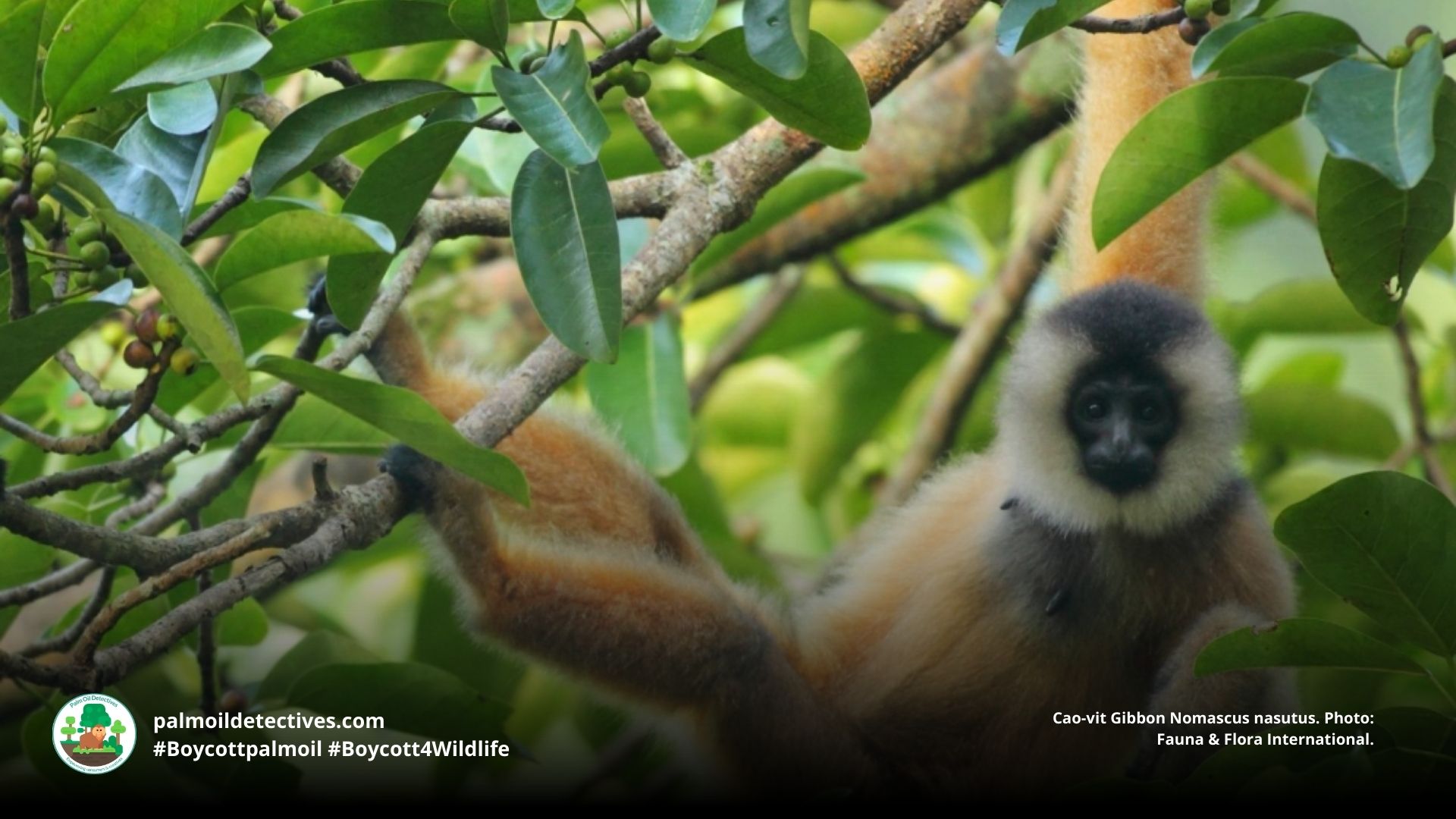
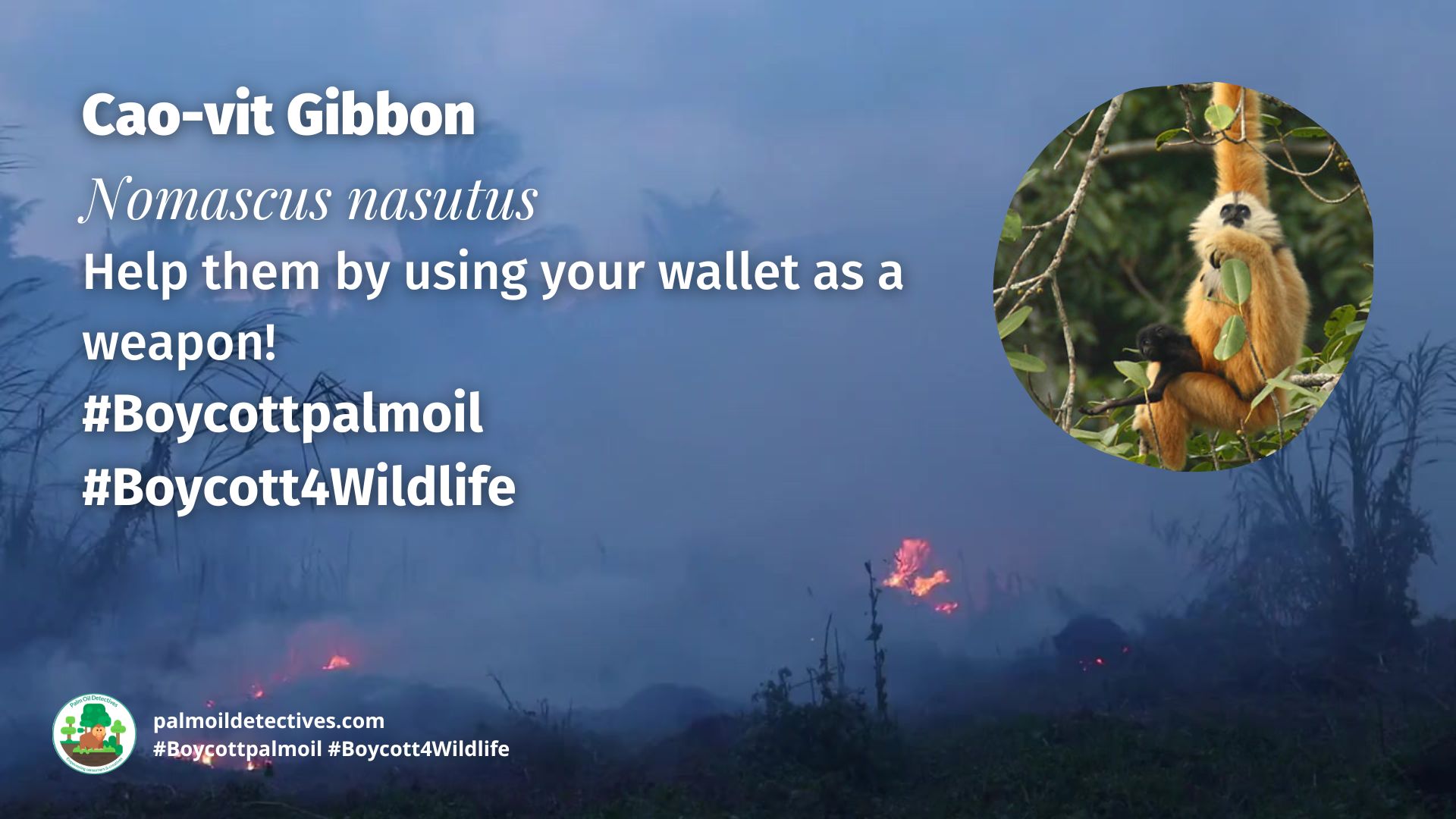
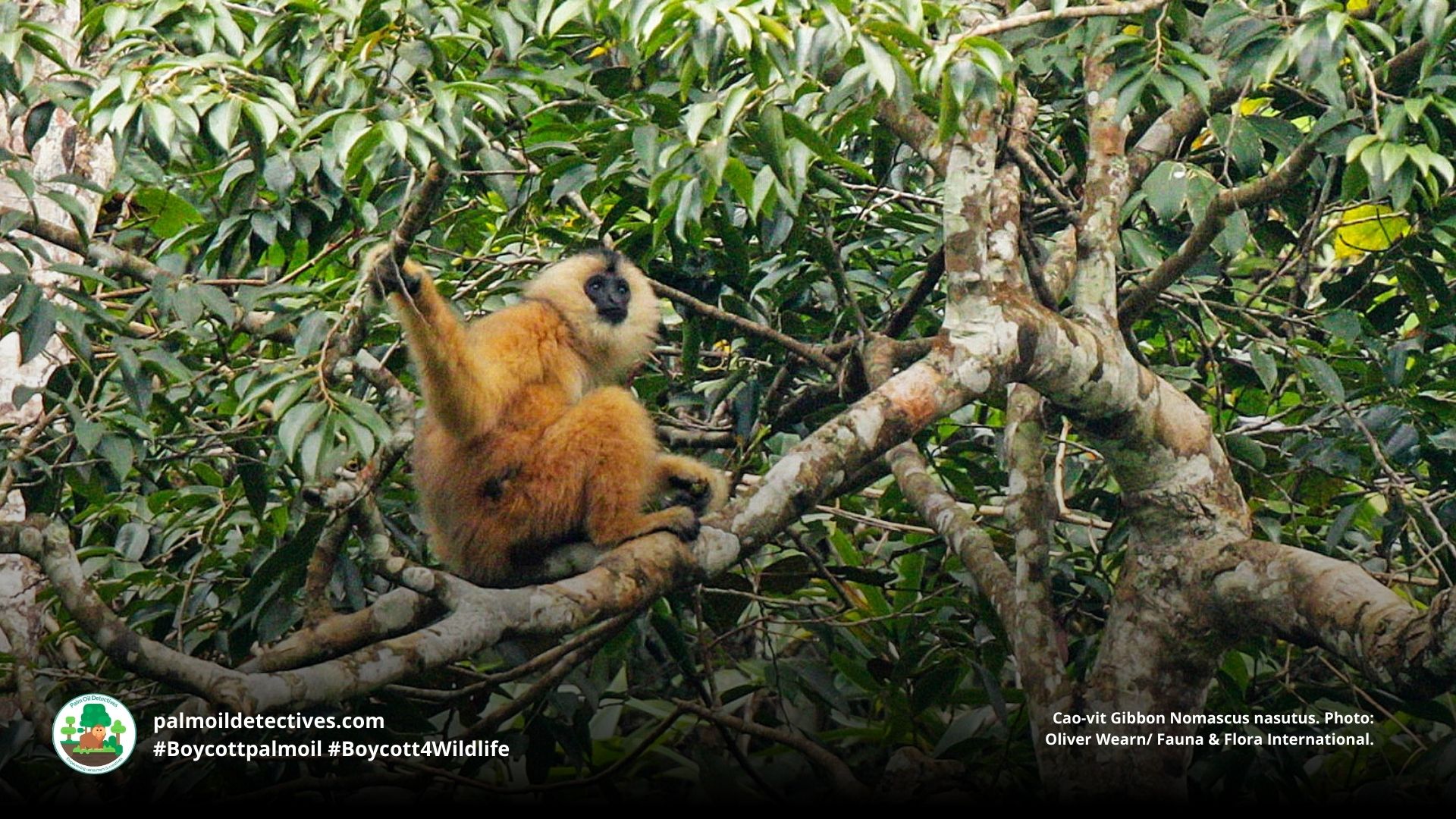
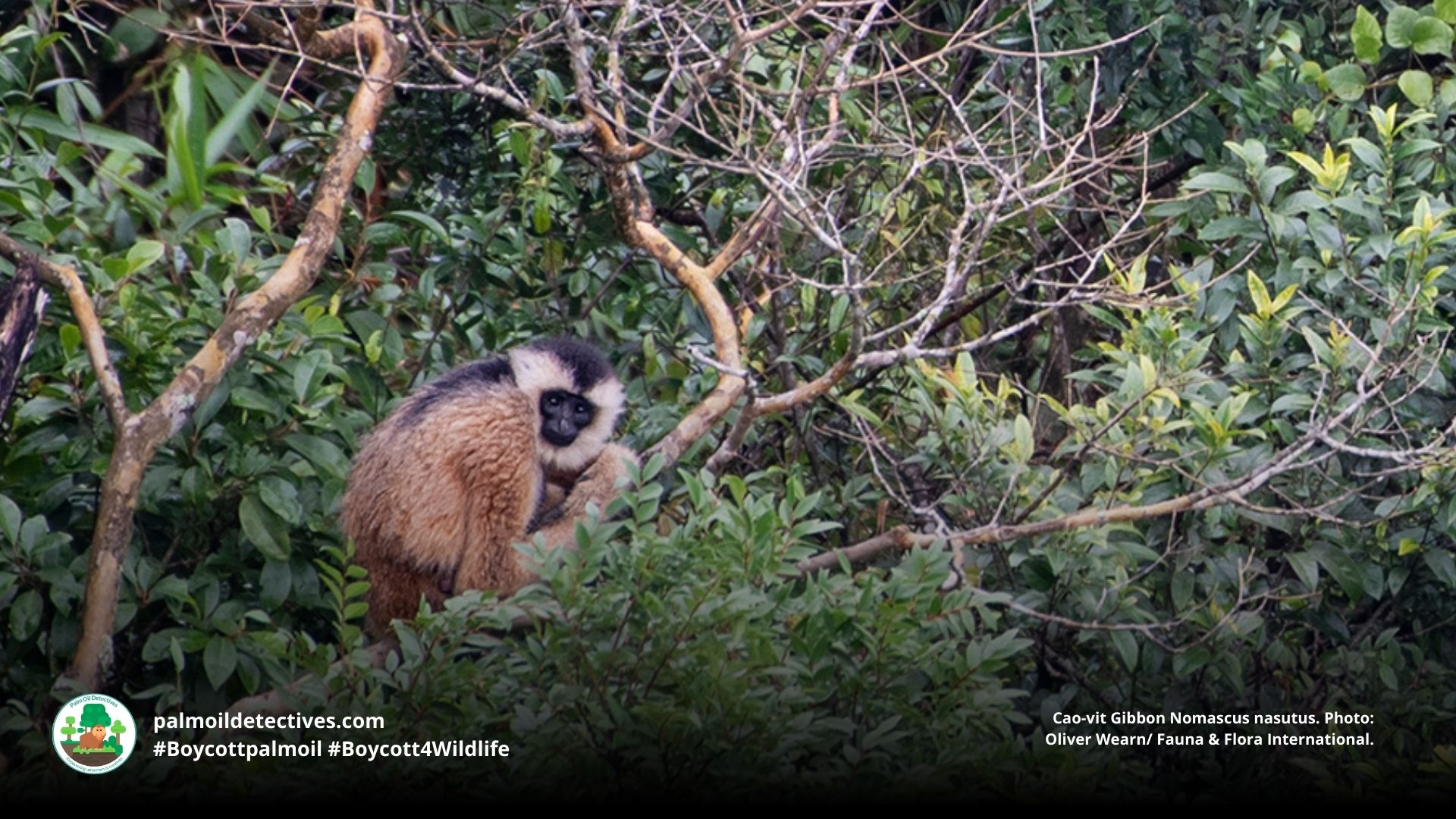
Cao-vit gibbons are medium-sized arboreal primates distinguished by their sexual dimorphism. Males are cloaked in striking black fur with silvery cheeks, while females are a warm honey-gold with black faces. Both sexes have elongated limbs and agile hands, perfectly adapted for their graceful brachiation through the treetops.
The social lives of these gregarious gibbons are rich and complex, as they live in small family groups led by a dominant male and female. Bonds are reinforced through daily duets, where pairs sing in harmony to announce their presence and maintain territory. The gibbons’ vocalisations are essential not just for social cohesion but also for monitoring efforts, as researchers use these “vocal fingerprints” to identify individuals in the wild.
Threats
IUCN Status: Critically Endangered
The Cao-vit gibbon’s survival is imperilled by numerous threats:
• Habitat Destruction: The gibbon’s remaining forest is under relentless pressure from logging, wood harvesting, and cultivation for livestock grazing.
• Hunting and Trapping: While direct hunting has decreased, accidental snaring poses a significant threat.
• Inbreeding Risks: The isolated population of just 74 individuals faces genetic bottlenecks, increasing their vulnerability to diseases and reducing reproductive success.
• Climate Change: Rising temperatures and shifting rainfall patterns disrupt food availability and habitat stability.
A recent study highlights the extensive logging and cultivation occurring within the Cao Vit Gibbon Conservation Area, exacerbating habitat fragmentation (IUCN, 2020).
Diet
The Cao-vit gibbons primarily feed on young leaves, fruits, and flowers, preferring species like Ficus and Pterocarya. Seasonal shifts dictate their dietary habits, as they consume more leaves during periods when fruit availability declines. A study on their food preferences emphasised the importance of preserving diverse tree species to sustain their year-round needs.
Reproduction and Mating
These monogamous small primates form long-term pair bonds, with females giving birth to a single offspring after a gestation period of approximately seven months. Parental care is shared, with males often playing an active role in protecting and nurturing their young. Juveniles remain with their family groups for several years before dispersing to form new pairs.
Geographic Range
The entire global population of Cao-vit gibbons resides within the Cao Vit Gibbon Conservation Area in Vietnam and the Bangliang Nature Reserve in China. This transboundary habitat consists of limestone karst forests, characterised by steep, rocky terrain and sparse vegetation. Once widespread, their range has been reduced to this single, isolated patch due to widespread deforestation.
FAQ
What is the Cao-vit gibbon?
The Cao-vit gibbon (Nomascus nasutus) is a critically endangered primate, second only to the Hainan gibbon in terms of rarity. Known for their distinctive calls, which resemble birdsongs, these gibbons are a flagship species for the conservation of Southeast Asia’s unique limestone karst forests.
Where does the Cao-vit gibbon live?
Cao-vit gibbons inhabit a single forest patch on the Vietnam–China border, specifically within the Cao Vit Gibbon Conservation Area and Bangliang Nature Reserve. Their habitat consists of limestone karst forests, a challenging and rugged terrain that offers refuge but limits their range.
What are the threats to the Cao-vit gibbon?
The gibbons face a host of threats, including habitat destruction from logging, wood harvesting, and meat agricultural expansion. Inbreeding within their small population further reduces their genetic diversity, while climate change alters the availability of their food resources. Hunting, though reduced, remains a risk, particularly from accidental trapping.
How is the Cao-vit gibbon being conserved?
Conservation and protection initiatives focus on habitat restoration, regular patrolling by rangers, and sustainable livelihood programs for local communities. Education campaigns raise awareness about their plight, while innovative monitoring techniques, such as “vocal fingerprinting,” help researchers track population changes.
What is the population size of the Cao-vit gibbon?
Recent surveys estimate just 74 individuals remain in the wild, a stark decline from earlier estimates of 110-120. This small, isolated population highlights the urgency of conservation efforts to ensure their survival.
How are the gibbons monitored?
Due to their inaccessible habitat, researchers use advanced acoustic techniques to monitor the gibbons. “Vocal fingerprinting” involves recording and analysing their unique calls to identify individuals and track their movements.
Take Action!
Support indigenous-led conservation and fight for the survival of the Cao-vit gibbon. Use your wallet as a weapon and #BoycottMeat and be #vegan #Boycott4Wildlife.
Further Information
Defler, T. R., García-Gutiérrez, J., Stevenson, P. R., Guzmán-Caro, D., & Palacios, E. (2020). Nomascus nasutus. The IUCN Red List of Threatened Species 2020: e.T41642A17969578. https://dx.doi.org/10.2305/IUCN.UK.2020-3.RLTS.T41642A17969578.en
Fan, P., Scott, M. B., Fei, H., & Ma, C. (2012). Locomotion behaviour of Cao Vit gibbon (Nomascus nasutus) living in karst forest in Bangliang Nature Reserve, Guangxi, China. Integrative Zoology, 7(4), 482–490. https://doi.org/10.1111/j.1749-4877.2012.00300.x
Fauna & Flora International. (n.d.). Cao-vit gibbons. Retrieved from https://www.fauna-flora.org/species/cao-vit-gibbons/
Nairn, C. (2024, March 27). Smaller population estimate underscores urgency of saving Cao-vit gibbon. Mongabay News. Retrieved from https://news.mongabay.com/2024/03/smaller-population-estimate-underscores-urgency-of-saving-cao-vit-gibbon/
Rawson, B.M., Roos, C., Nguyen, M.H., Bleisch, W., Geissmann, T. & Fan, P.F. 2020. Nomascus nasutus. The IUCN Red List of Threatened Species 2020: e.T41642A17969578. https://dx.doi.org/10.2305/IUCN.UK.2020-2.RLTS.T41642A17969578.en. Downloaded on 28 January 2021.
SOS Conservation. (n.d.). Transboundary conservation of the critically endangered Cao-vit gibbon. Retrieved from https://iucnsos.org/projects/transboundary-conservation-of-the-critically-endangered-cao-vit-gibbon/

How can I help the #Boycott4Wildlife?
Take Action in Five Ways
1. Join the #Boycott4Wildlife on social media and subscribe to stay in the loop: Share posts from this website to your own network on Twitter, Mastadon, Instagram, Facebook and Youtube using the hashtags #Boycottpalmoil #Boycott4Wildlife.
2. Contribute stories: Academics, conservationists, scientists, indigenous rights advocates and animal rights advocates working to expose the corruption of the palm oil industry or to save animals can contribute stories to the website.





3. Supermarket sleuthing: Next time you’re in the supermarket, take photos of products containing palm oil. Share these to social media along with the hashtags to call out the greenwashing and ecocide of the brands who use palm oil. You can also take photos of palm oil free products and congratulate brands when they go palm oil free.
4. Take to the streets: Get in touch with Palm Oil Detectives to find out more.
5. Donate: Make a one-off or monthly donation to Palm Oil Detectives as a way of saying thank you and to help pay for ongoing running costs of the website and social media campaigns. Donate here
Discover more from Palm Oil Detectives
Subscribe to get the latest posts sent to your email.
 Palm Oil Detectives