
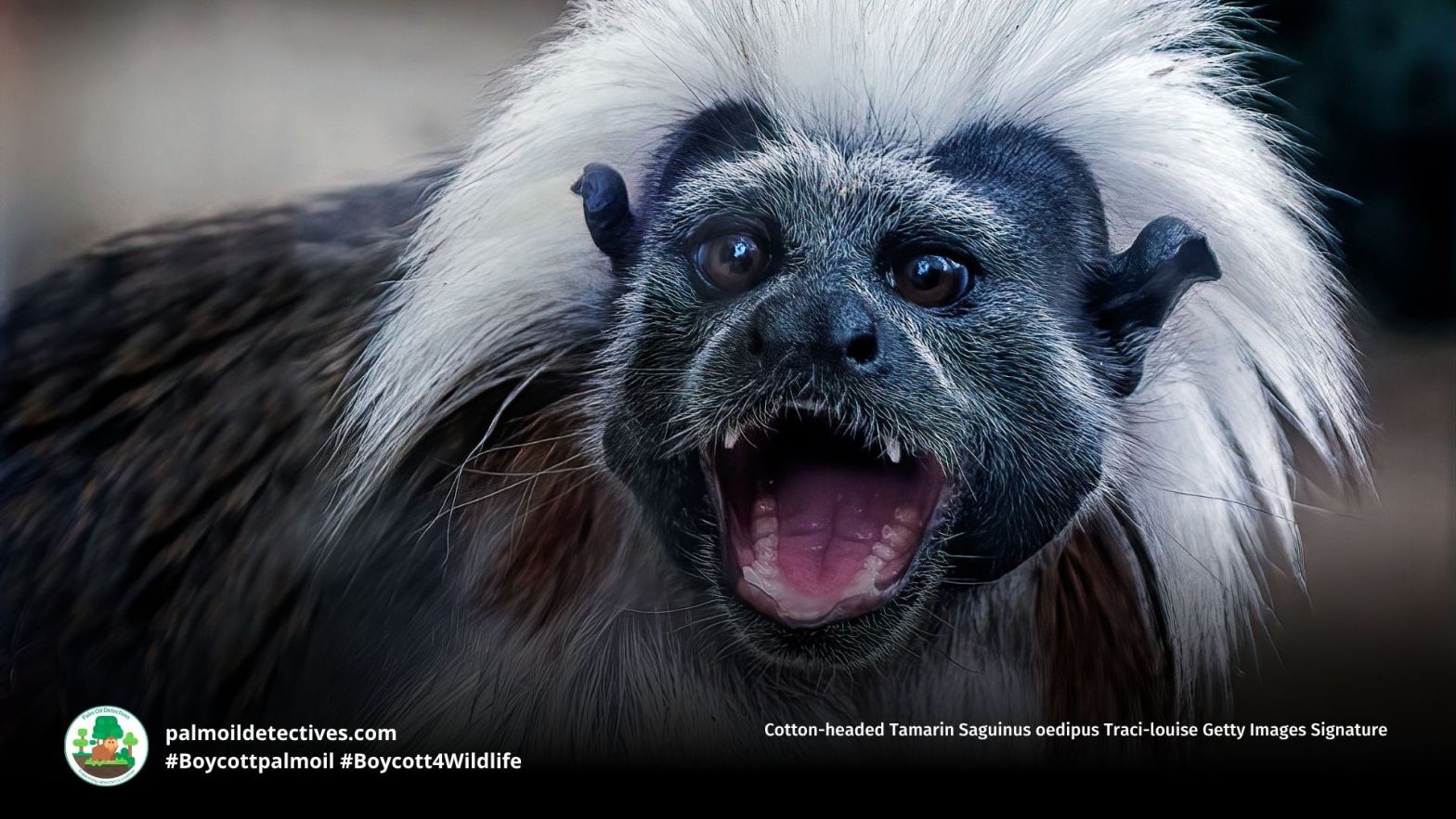
Cotton-headed Tamarin Saguinus oedipus
Red List Status: Critically Endangered
Locations: Colombia (regions of Atlántico, Bolívar, Sucre, and Córdoba)
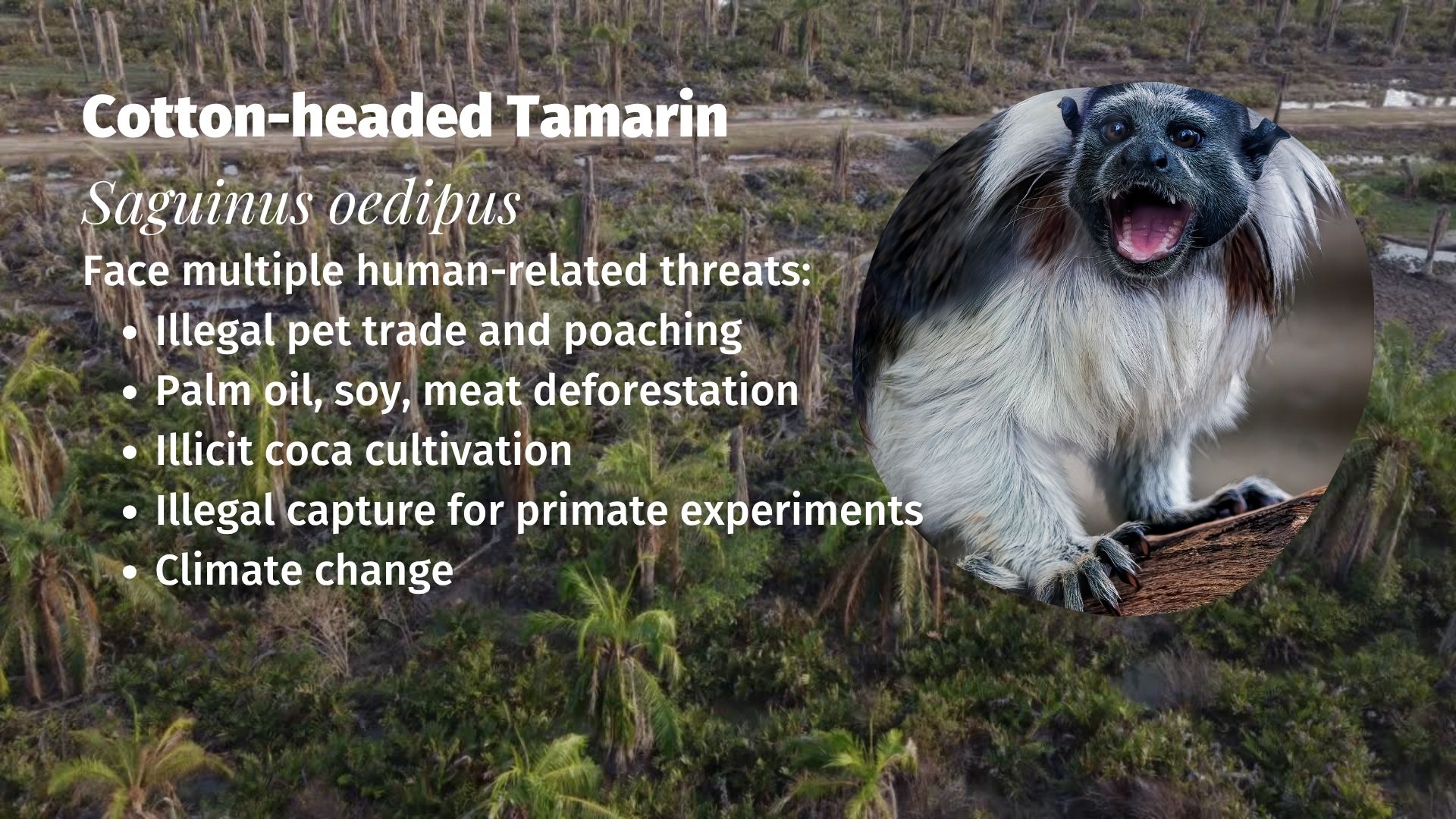
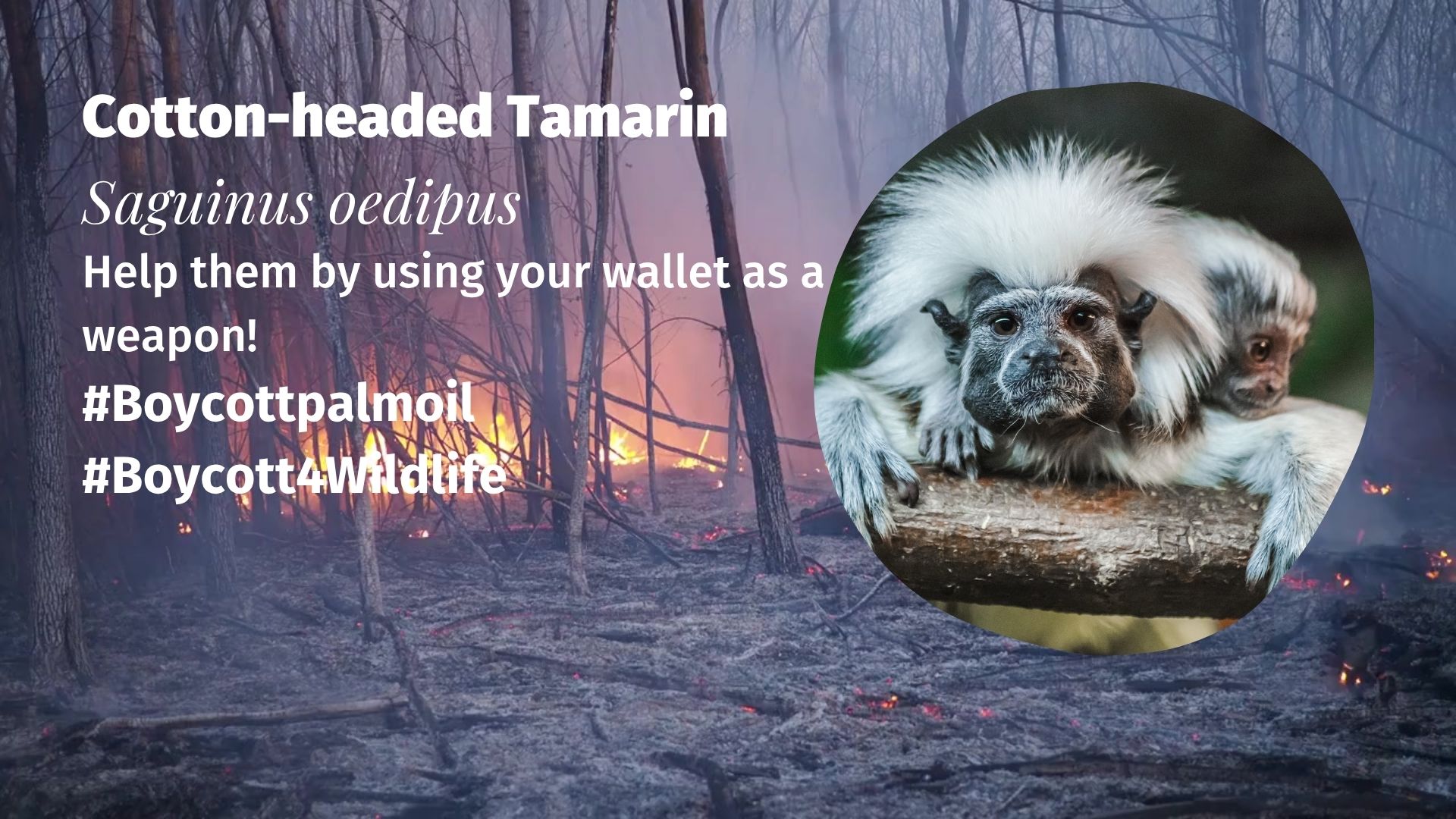
Known for the characterful head crests giving adults a plucky and “punk” look, the Cotton Top #Tamarin, also known as the Cotton-headed Tamarin is a diminuitive #monkey living in the humid forests in the south to dry deciduous forest in the north of #Colombia. They are now critically endangered and face multiple serious threats from capture for primate experiments, to the illegal pet trade and deforestation for palm oil, soy, meat deforestation and the cultivation of ilicit coca. Help these spritely and remarkable tiny primates to survive, every time you shop be #Vegan and #BoycottPalmOil #Boycott4Wildlife
Cotton-headed #Tamarins 🐒🙈🤎 are plucky #primates from rainforests of #Colombia 🇨🇴 They are critically endangered from #palmoil #soy and #mining #deforestation. Help them and #Boycottpalmoil 🌴🪔🧐🙊⛔️ be #vegan and #Boycott4Wildlife @palmoildetect https://palmoildetectives.com/2021/01/31/cotton-headed-tamarin-saguinus-oedipus/
The habitat of the Cotton-top Tamarin Saguinus oedipus is used for large-scale agricultural production (i.e. cattle) and farming, logging, oil palm plantations, and hydroelectric projects that fragment the cotton-top tamarin’s natural range.

Appearance and Behaviour
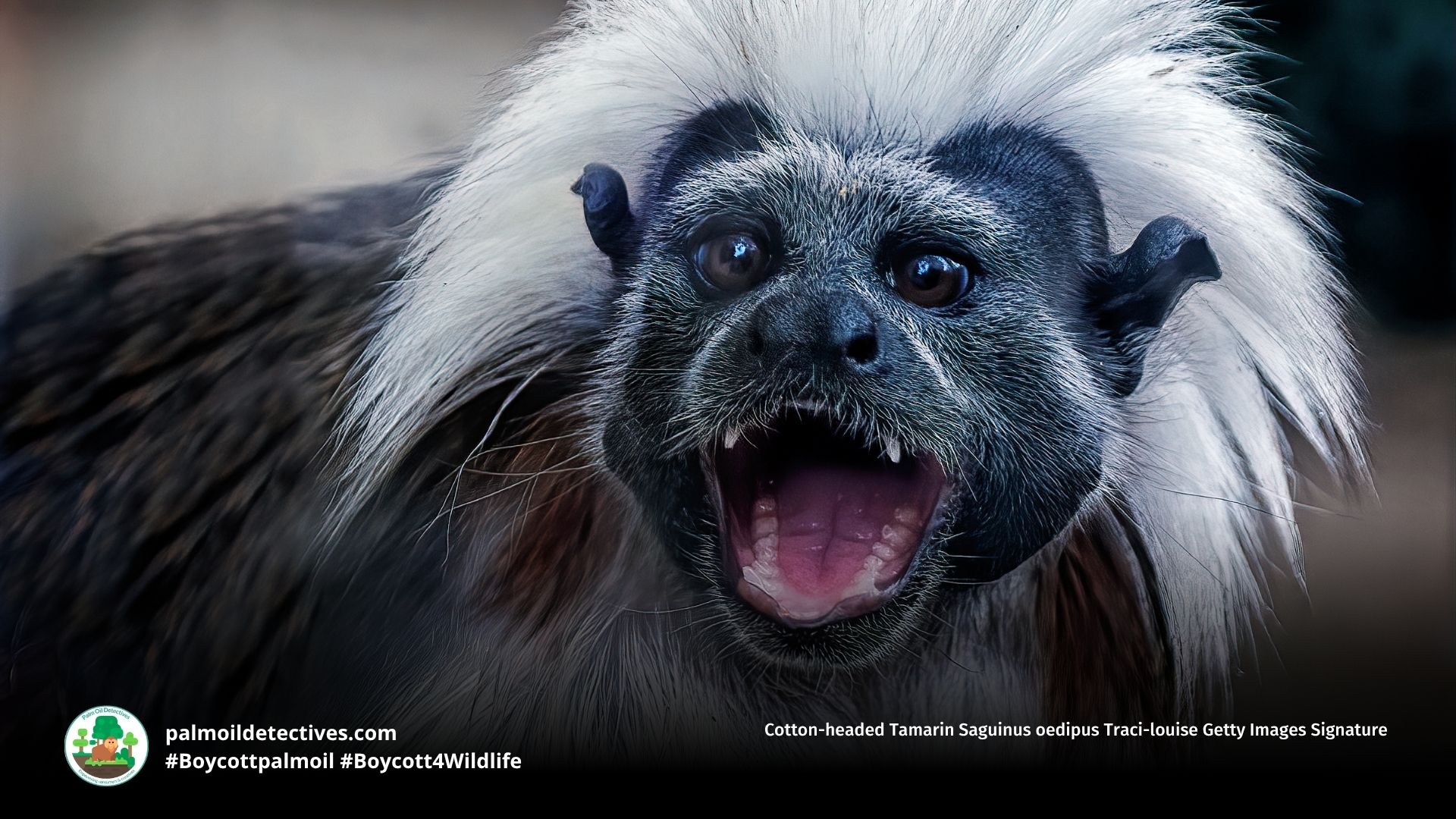
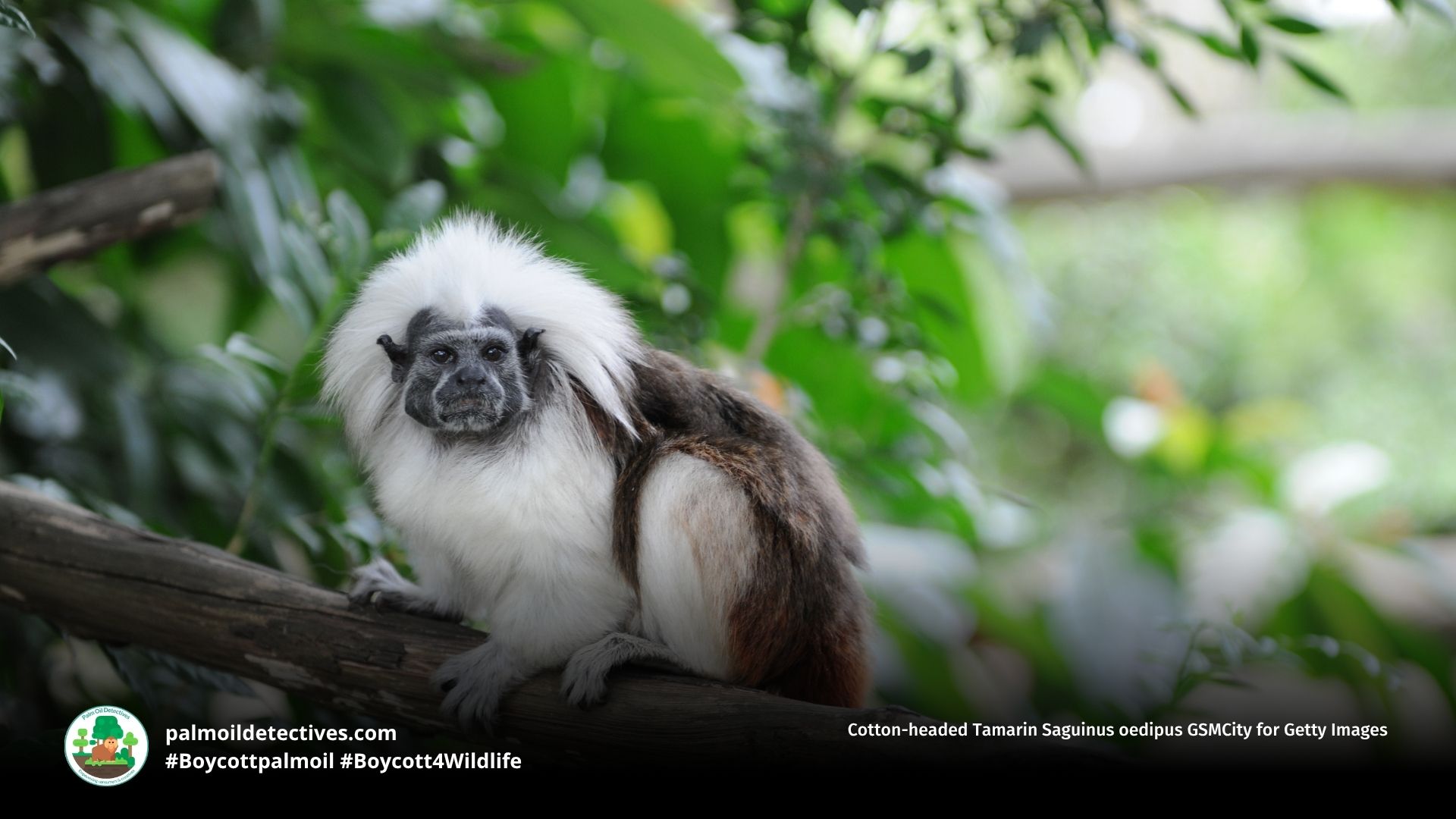
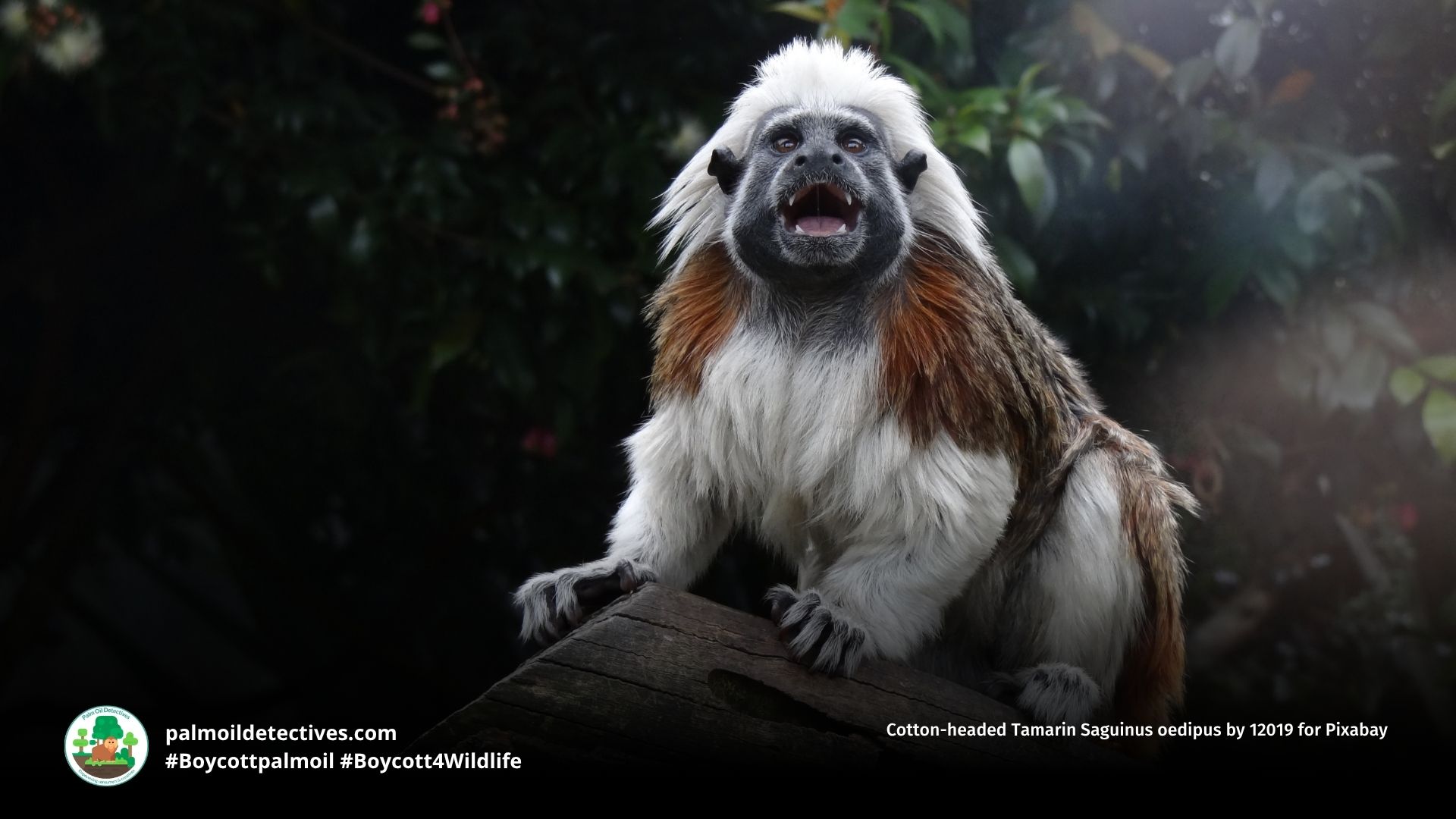
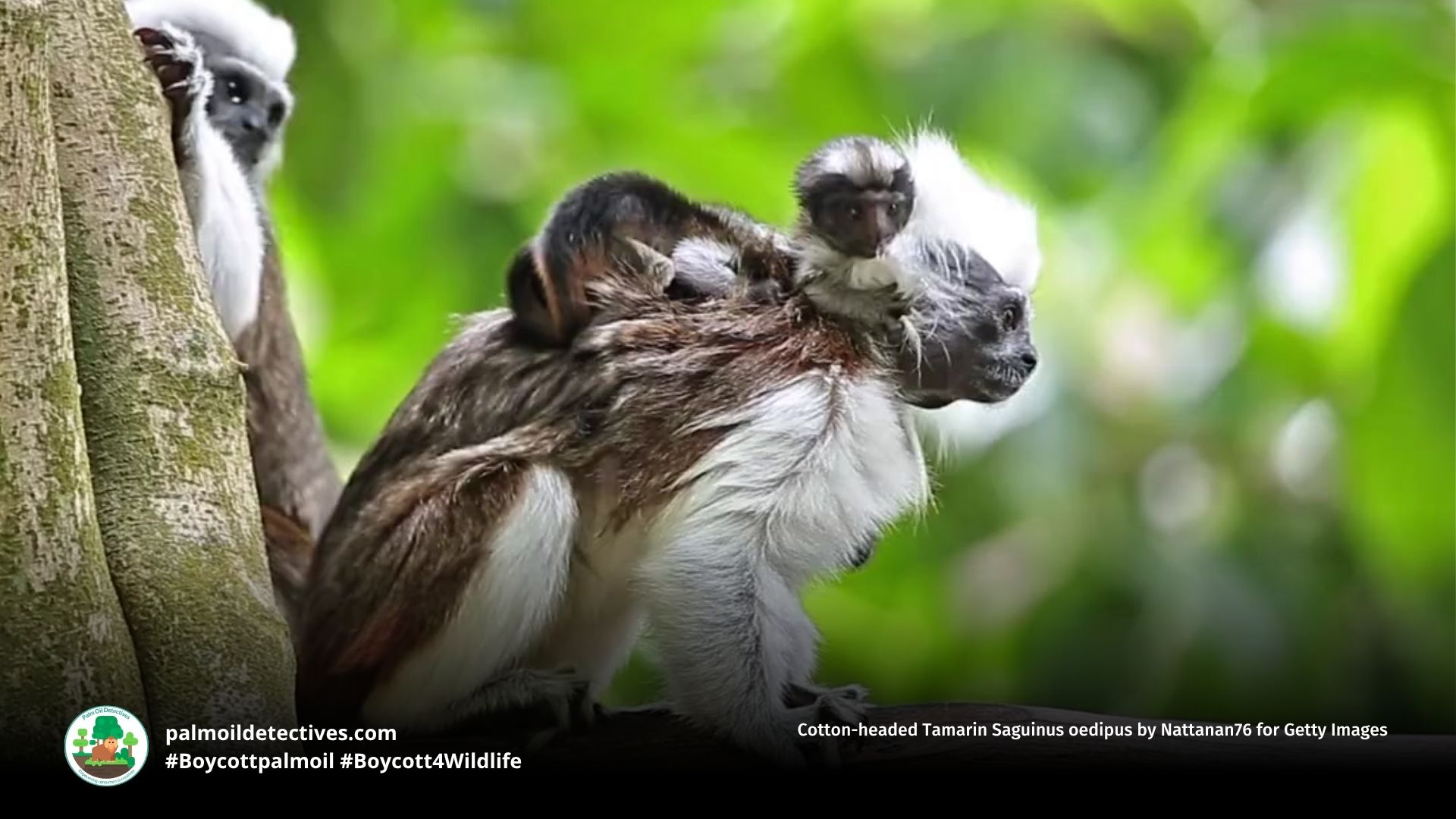
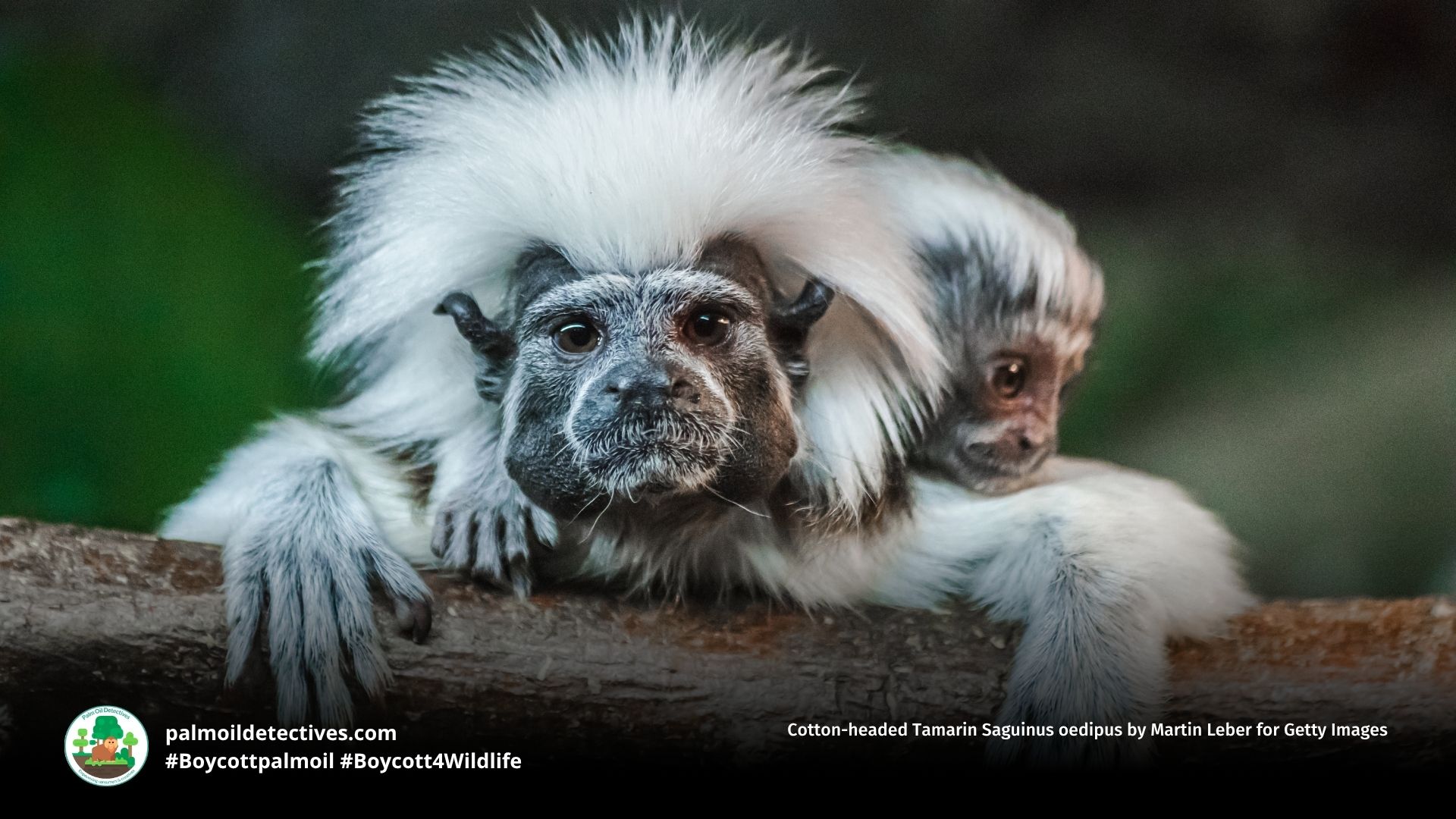
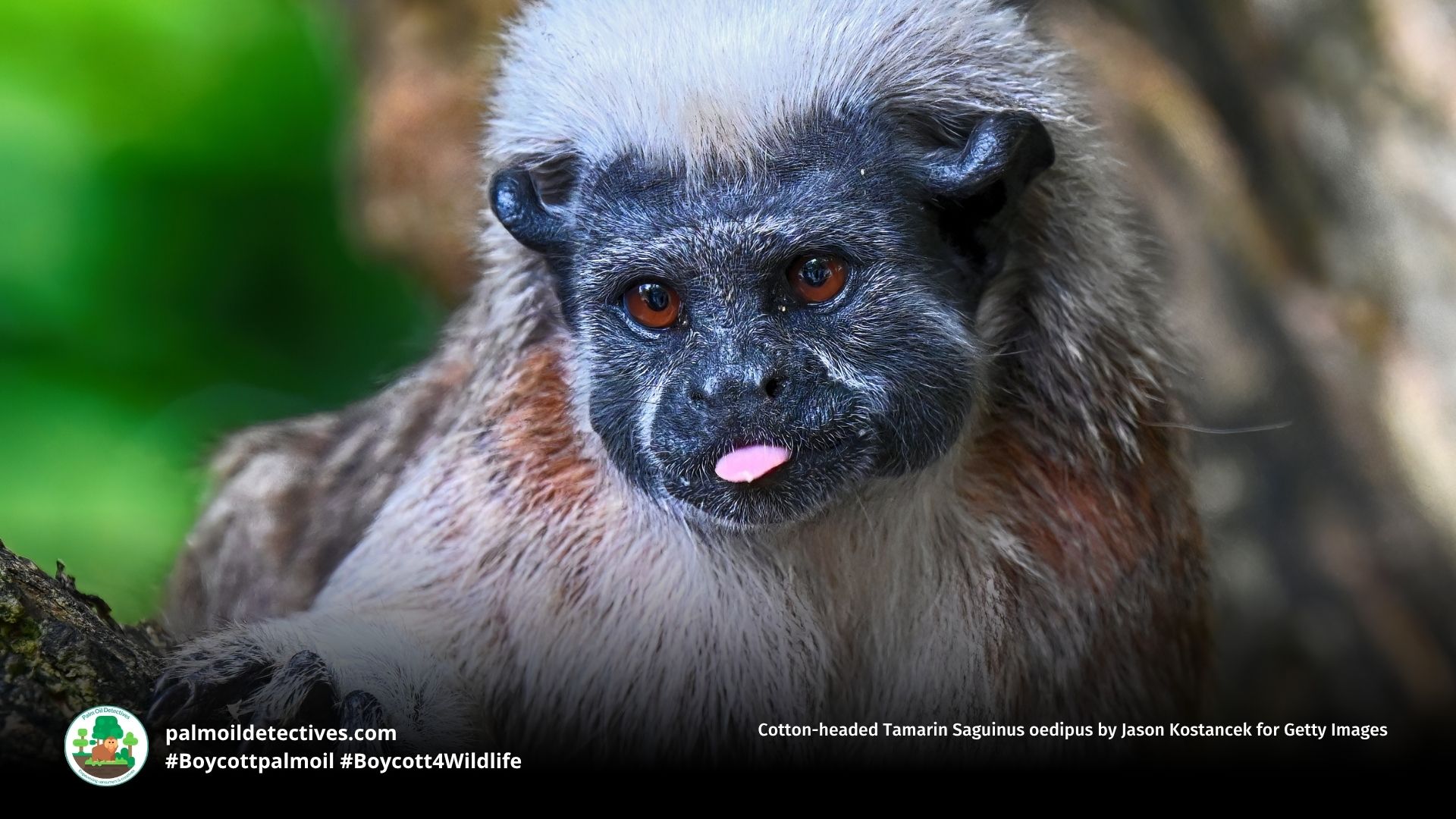
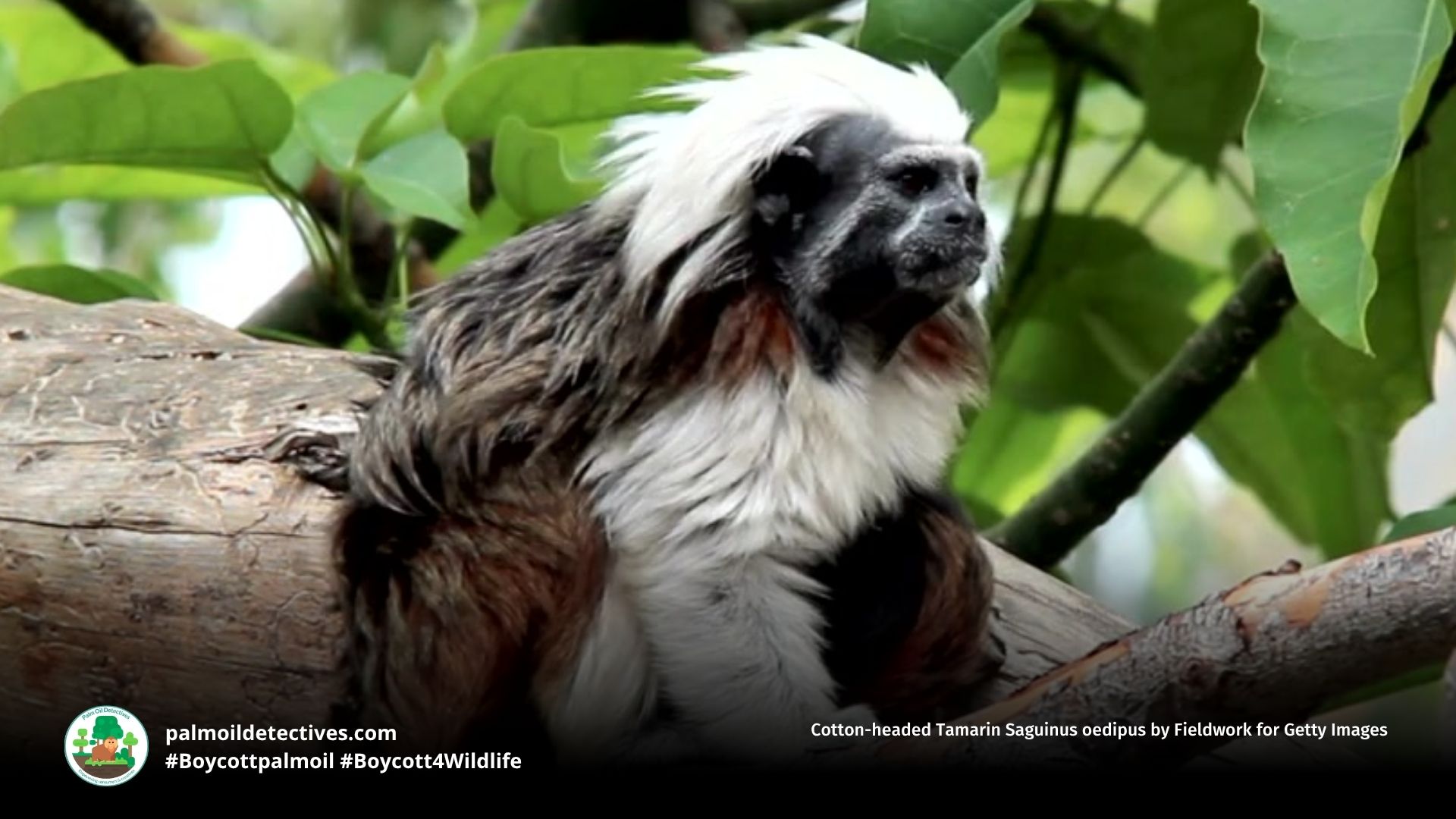
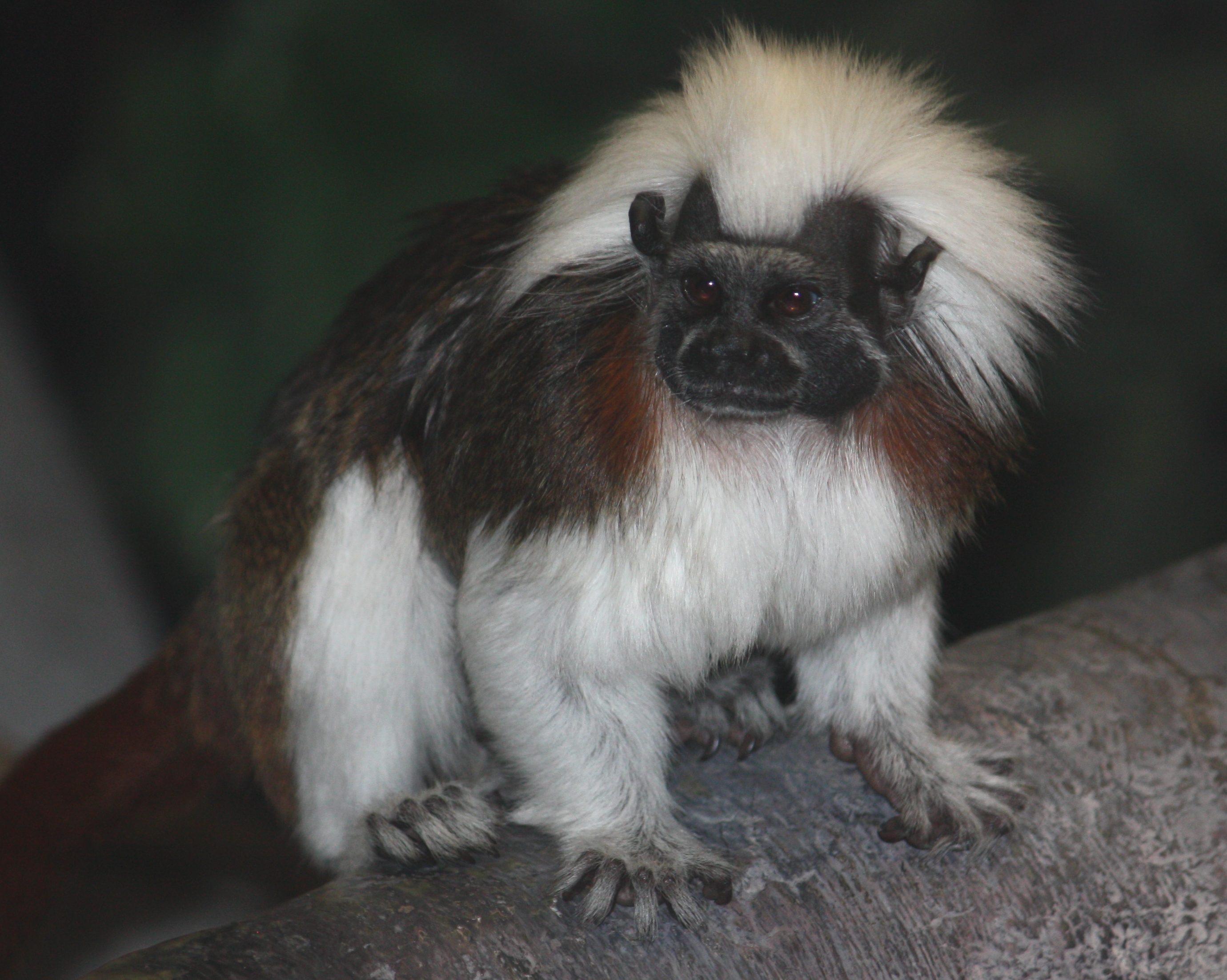
Cotton-top tamarins are instantly recognisable by their exuberant white crest, a tuft of hair that rises above their expressive faces like a crown. Their bodies, measuring 21 to 26 centimetres with tails stretching an additional 33 to 41 centimetres, are agile and light, weighing about 430 grams. Their fur is soft and textured, with shades of brown and cream blending seamlessly into the dappled forest light. These tamarins are highly social, living in close-knit groups of three to nine individuals. They communicate with a rich repertoire of sounds—chirps, trills, and whistles that echo through the trees as they forage and play. Their movements are quick and precise, a dance of curiosity and cooperation as they navigate the treetops, their family bonds strong and their emotional lives complex.
Threats
Palm oil and meat agriculture deforestation
The forests that cotton-top tamarins call home are vanishing at an alarming rate, stripped bare by the relentless expansion of palm oil plantations and cattle ranching. Where once there were towering trees and tangled vines, there are now rows of oil palms and open pastures. The bulldozers leave scars across the landscape, and the air is thick with the scent of burning wood and earth. For the cotton-top tamarin, each hectare lost is another fragment of their world torn away, another family group isolated and vulnerable.
Illegal pet trade and hunting
The illegal pet trade is a cruel and persistent threat. Infants are snatched from their mothers, their families torn apart, and their lives reduced to cages and loneliness. Hunting for bushmeat also takes its toll, disrupting social groups and undermining the resilience of wild populations. The silence that follows a gunshot is deafening, a reminder of the fragility of life in the forest.
Climate change and habitat fragmentation
Changing rainfall patterns and rising temperatures as a result of climate change are altering the delicate balance of the forest. Trees fruit at unpredictable times, and rivers run dry or flood unpredictably. Fragmented habitats isolate tamarin groups, reducing genetic diversity and making them more susceptible to disease and other pressures.
Diet
Cotton-top tamarins are omnivorous, their diet a vibrant reflection of the forest’s abundance. They feast on fruits, flowers, and nectar, their nimble fingers plucking delicacies from the branches. They also hunt small animal prey—frogs, snails, lizards, spiders, and insects—adding protein to their meals. In the rhythm of the forest, cotton-top tamarins play a vital role as seed dispersers, their foraging helping to regenerate the woodland and sustain the ecosystem. Their feeding is a lively affair, full of movement and interaction, as they share the bounty of the forest with their family.
Reproduction and Mating
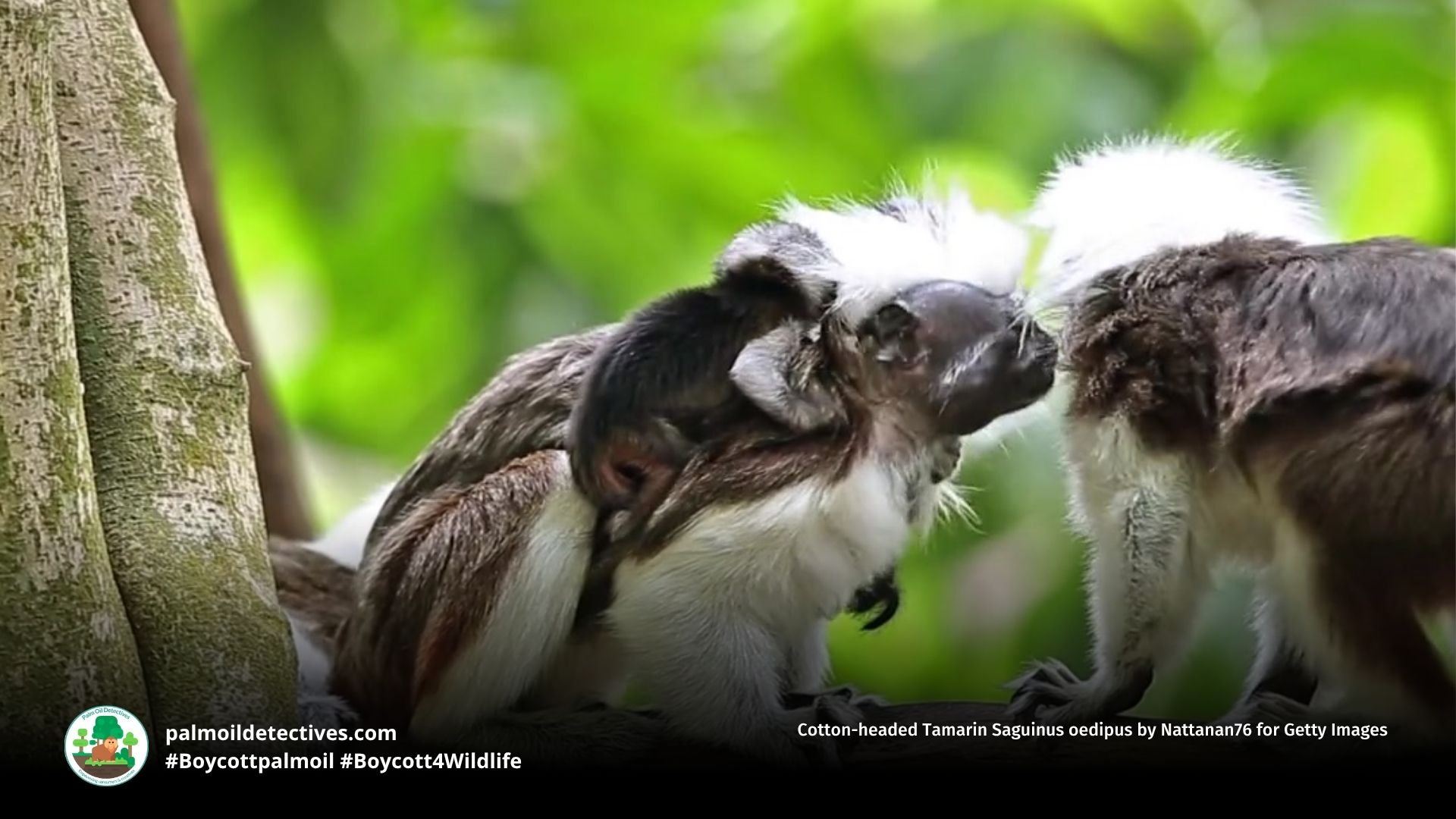
Breeding is a cooperative affair among cotton-top tamarins. Dominant females typically give birth to one to three offspring, most often twins, after a gestation period of about 180 days. The entire group shares responsibility for caring for the young, with fathers, siblings, and other relatives all playing a role. This cooperative system strengthens social bonds and increases the chances of survival for each infant. The forest is alive with the sounds of young tamarins learning to climb and forage, their mothers guiding them through the treetops. In captivity, cotton-top tamarins can live up to 20 years, but in the wild, their lives are shaped by the challenges of a changing world.
Geographic Range
Cotton-top tamarins are found only in northwest Colombia, in the departments of Atlántico, Bolívar, Sucre, and Córdoba. Their historical range has contracted dramatically, the forests they once roamed now reduced to scattered patches. The landscape is a patchwork of green and brown, the remnants of their habitat clinging to life amid the encroachment of agriculture and urban development. The sounds of the forest—birdsong, rustling leaves, and the calls of tamarins—are a reminder of what is at stake.
FAQs
How many cotton-top tamarins are left in the wild?
Recent estimates suggest that the wild population of cotton-top tamarins numbered around 6,946 individuals in 2012, with this figure likely to have declined further as deforestation continues to fragment their habitat. The actual number may be lower, as many forest patches are now isolated and vulnerable to further loss. The cotton-top tamarin’s future is uncertain, and urgent action is needed to protect their remaining strongholds.
What is the lifespan of a cotton-top tamarin?
In the wild, cotton-top tamarins typically live shorter lives due to predation, disease, and the pressures of a changing environment. In captivity, where they are protected from many of these threats, they can live up to 20 years. Their longevity is closely tied to the health of their habitat and the stability of their social groups, both of which are under threat in the wild.
What are the main threats to the cotton-top tamarin’s survival?
The primary threats to the cotton-top tamarin are deforestation for palm oil and meat agriculture, the illegal pet trade, hunting, and habitat fragmentation. Climate change and pollution further stress their already vulnerable populations. Each of these threats is driven by human activity, and each can be addressed through collective action and advocacy.
Do cotton-top tamarins make good pets?
Cotton-top tamarins absolutely do not make good pets! They suffer extreme stress, loneliness, and early death in captivity. The illegal pet trade rips families apart and fuels extinction. Their complex social and emotional needs cannot be met in a domestic setting, and keeping them as pets is both cruel and illegal.
Take Action!
Use your wallet as a weapon and #BoycottPalmOil #Boycott4Wildlife. Support indigenous-led conservation and agroecology to safeguard the forests that cotton-top tamarins call home. Reject the illegal pet trade and advocate for the protection of all wildlife. Every choice you make can help fight for their survival.
Conservation
Conservation efforts for these critically endangered small primates is underway. Read more about Proyecto Tití in Colombia.

Rodríguez, V., Defler, T.R., Guzman-Caro, D., Link, A., Mittermeier, R.A., Palacios, E. & Stevenson, P.R. 2020. Saguinus oedipus. The IUCN Red List of Threatened Species 2020: e.T19823A115573819. https://dx.doi.org/10.2305/IUCN.UK.2020-2.RLTS.T19823A115573819.en. Downloaded on 31 January 2021.
Masilkova, M., Weiss, A., Šlipogor, V., & Konečná, M. (2020). Comparative assessment of behaviorally derived personality structures in golden-handed tamarins (Saguinus midas), cotton-top tamarins (Saguinus oedipus), and common marmosets (Callithrix jacchus). Journal of Comparative Psychology, 134(4), 453–466. https://doi.org/10.1037/com0000226
Savage, A., et al. (2016). An assessment of the population of cotton-top tamarins (Saguinus oedipus) and their habitat in Colombia. PLOS ONE, 11(12), e0168324. https://journals.plos.org/plosone/article?id=10.1371/journal.pone.0168324

How can I help the #Boycott4Wildlife?
Take Action in Five Ways
1. Join the #Boycott4Wildlife on social media and subscribe to stay in the loop: Share posts from this website to your own network on Twitter, Mastadon, Instagram, Facebook and Youtube using the hashtags #Boycottpalmoil #Boycott4Wildlife.
2. Contribute stories: Academics, conservationists, scientists, indigenous rights advocates and animal rights advocates working to expose the corruption of the palm oil industry or to save animals can contribute stories to the website.




3. Supermarket sleuthing: Next time you’re in the supermarket, take photos of products containing palm oil. Share these to social media along with the hashtags to call out the greenwashing and ecocide of the brands who use palm oil. You can also take photos of palm oil free products and congratulate brands when they go palm oil free.
4. Take to the streets: Get in touch with Palm Oil Detectives to find out more.
5. Donate: Make a one-off or monthly donation to Palm Oil Detectives as a way of saying thank you and to help pay for ongoing running costs of the website and social media campaigns. Donate here
Discover more from Palm Oil Detectives
Subscribe to get the latest posts sent to your email.
 Palm Oil Detectives
One thought on “Cotton-headed Tamarin Saguinus oedipus”