
Sipora Flying Squirrel Hylopetes sipora
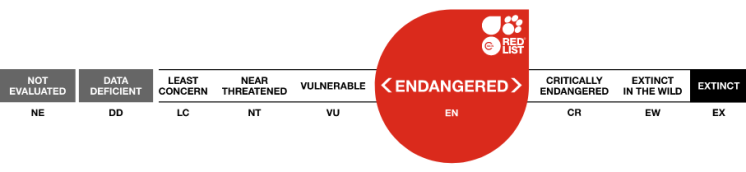
Red List Status: Endangered
Locations: Indonesia (Sipora Island, Mentawai Islands, Sumatra)
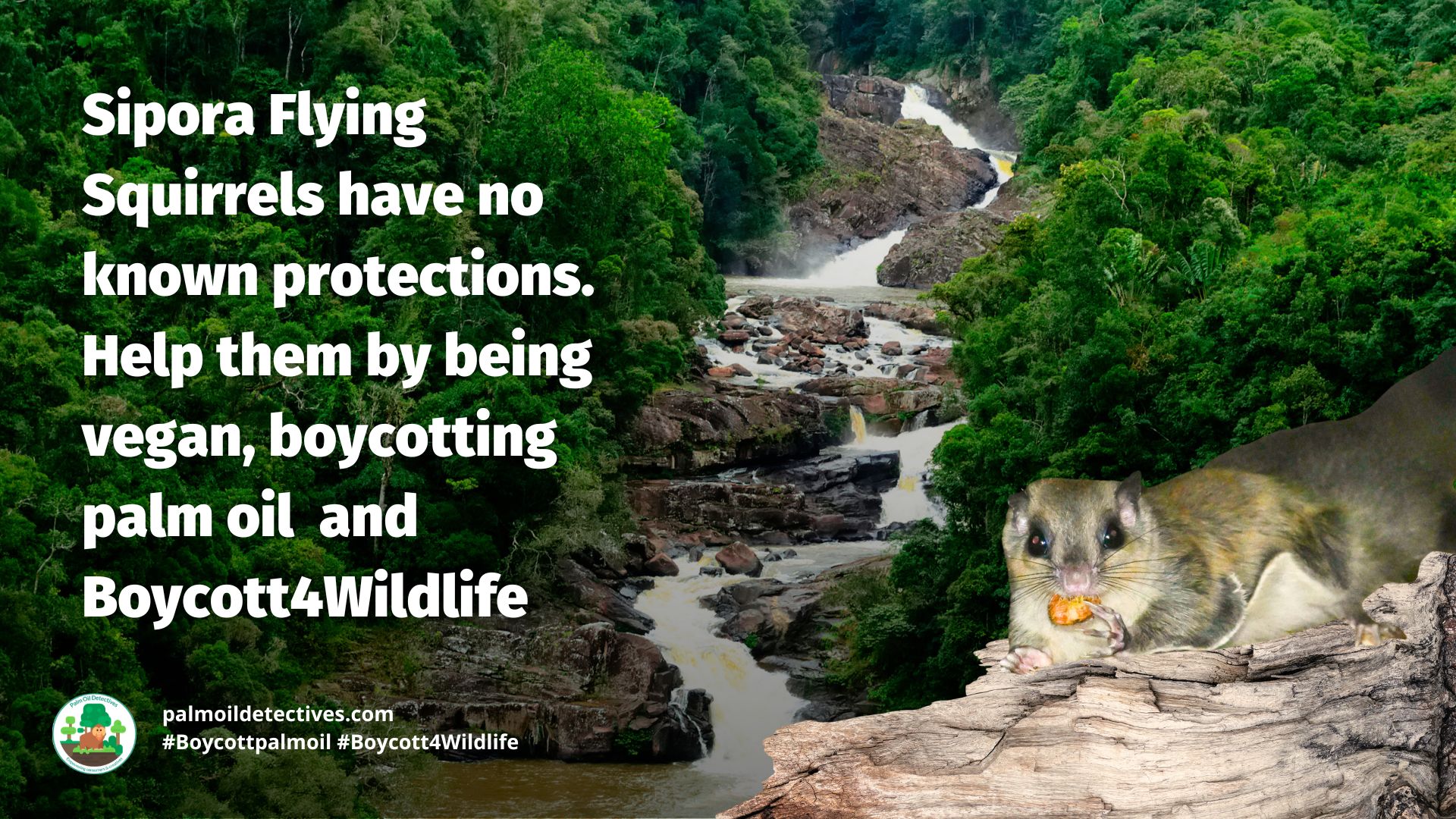
On the small, forested island of #Sipora in the Mentawai #archipelago #Indonesia the Sipora flying #squirrel Hylopetes sipora drifts silently between ancient trees. This rare squirrel is found nowhere else on earth. At night, the Sipora flying squirrel emerges from the hollows of towering trees, their large eyes scanning the dim canopy. With a sudden leap, they unfold their patagium—a membrane stretching from wrist to ankle—and glide effortlessly through the air, landing on a distant branch with barely a sound. The forests of Sipora are being cleared for #timber, charcoal and #palmoil, leaving the Sipora flying squirrel with fewer places to hide. Use your wallet as a weapon and #BoycottPalmOil #Boycott4Wildlife.
Sipora Flying #Squirrels are amazing gliding #mammals 🪽🦦🤎 who zip through trees on Sipora Island, #Sumatra #Indonesia 🇮🇩 They’re endangered by #deforestation from #palmoil #agriculture. Fight for them! #BoycottPalmOil #Boycott4Wildlife @palmoildetect https://palmoildetectives.com/2021/02/05/sipora-flying-squirrel-hylopetes-sipora/
Appearance and Behaviour
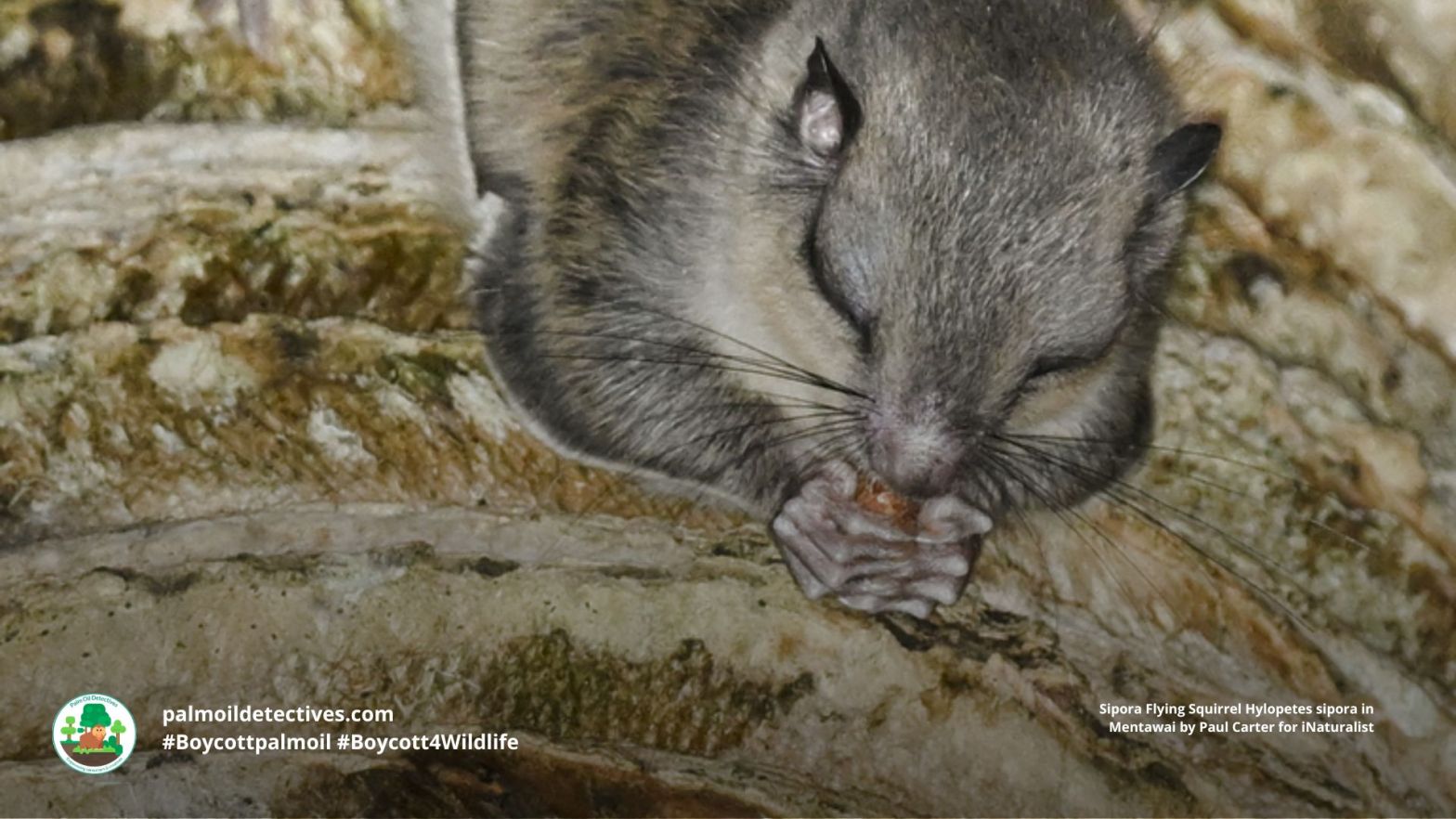
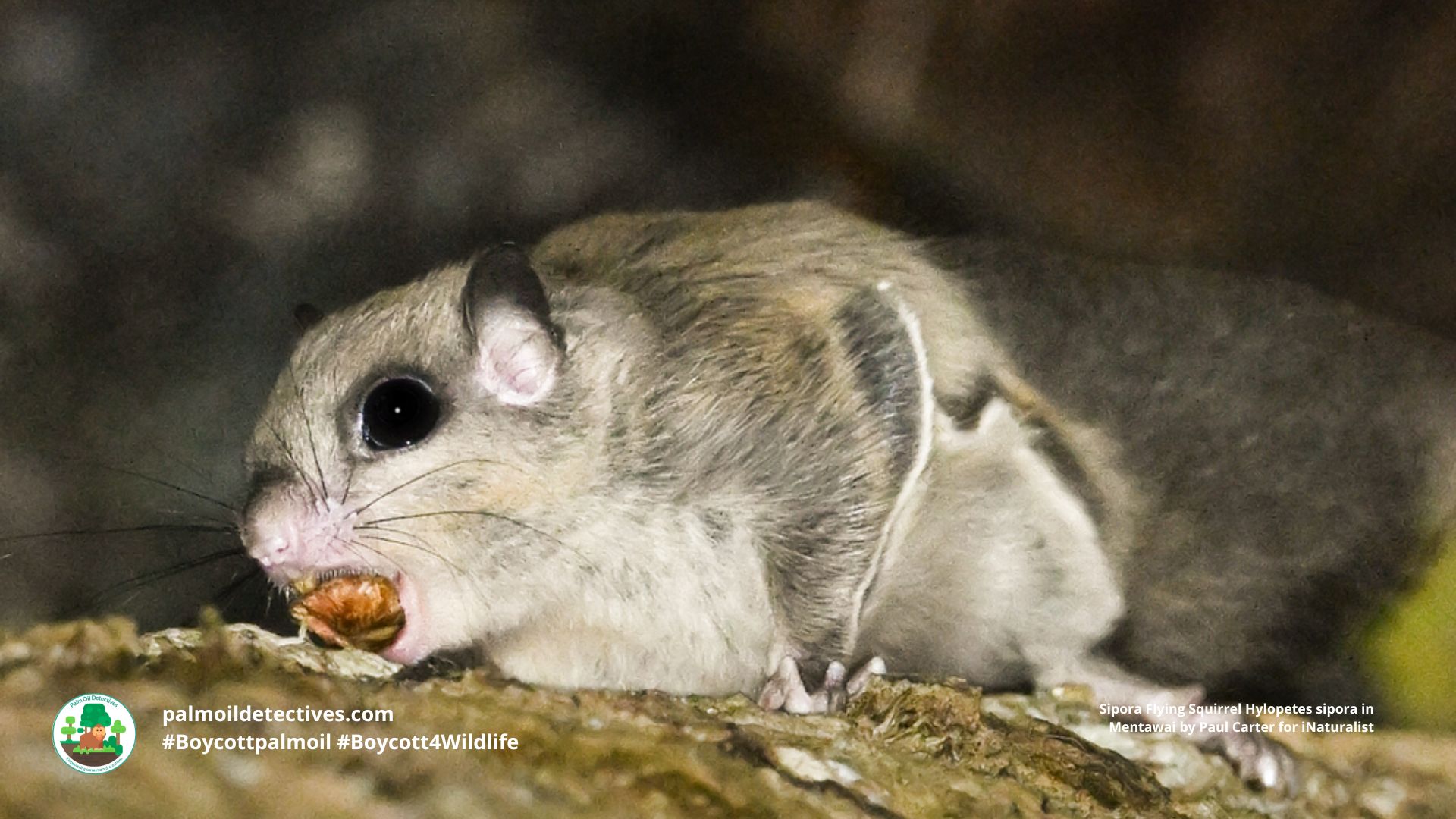
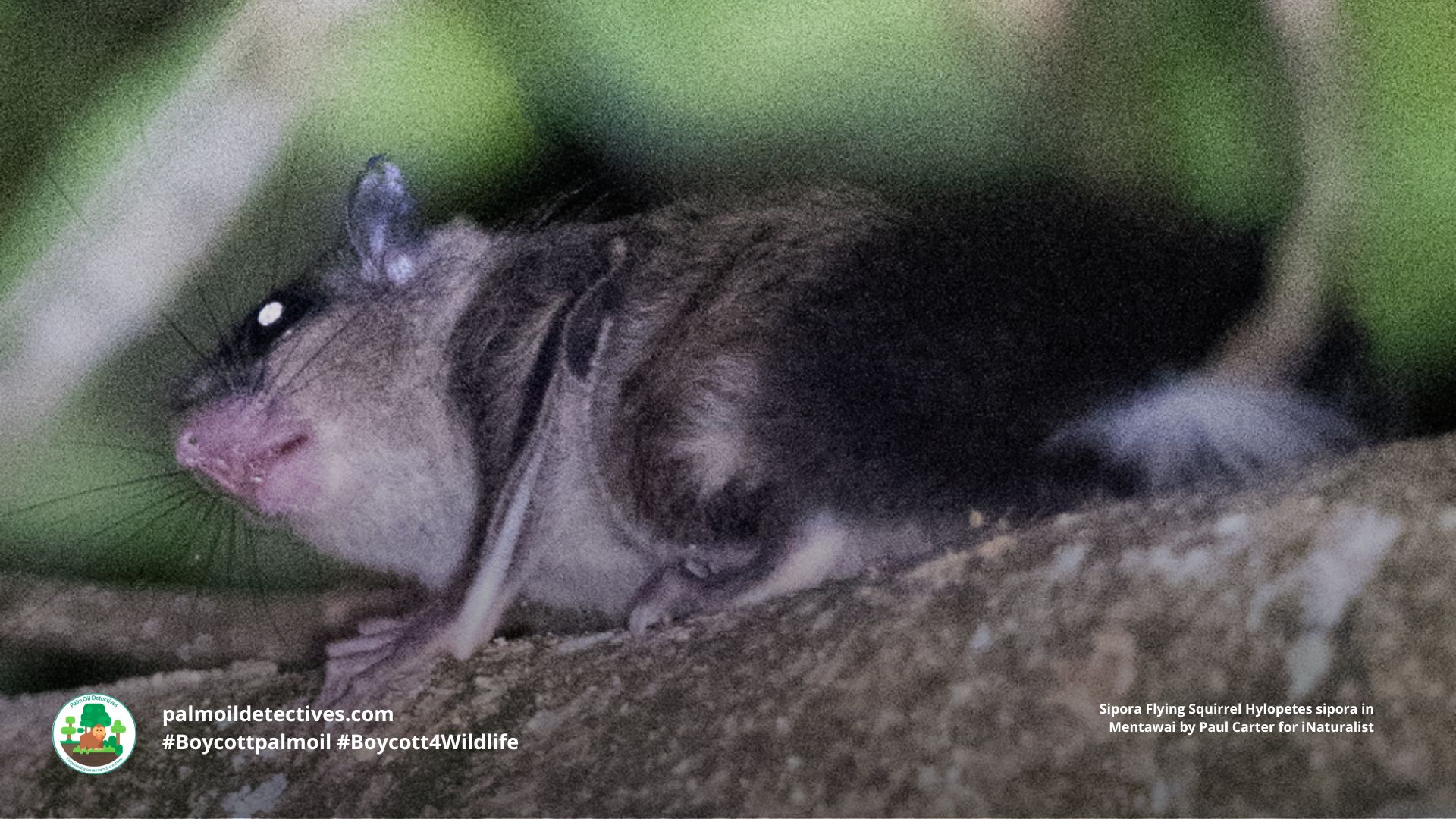
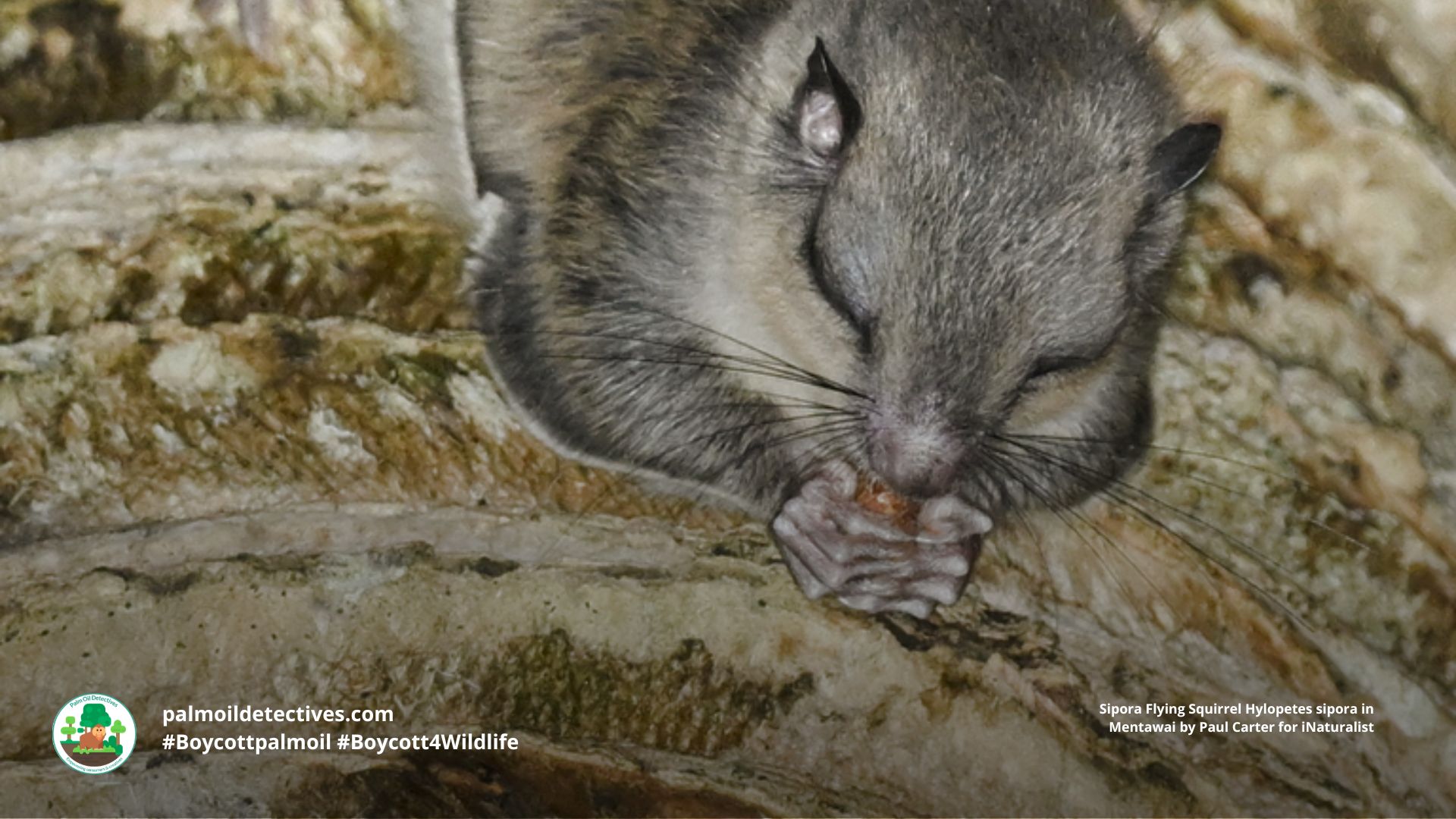
The Sipora flying squirrel is a small, elusive rodent, their bodies are covered in soft, dense fur, typically a mottled brown or grey that blends with the shadows of the forest. Adults measure around 15 to 20 centimetres in body length, with tails nearly as long, and weigh between 50 and 100 grams. Their most striking feature is their patagiums, a broad skin flaps that help them to glide up to 50 metres between trees. This adaptation enables them to escape predators and travel efficiently through the tree canopy. The Sipora flying squirrel is strictly nocturnal, spending their days hidden in tree hollows and emerging at night to forage. Their large, dark eyes and sensitive whiskers help them navigate the dim forest, while their quiet, whistling calls and rustling movements mark their presence. They are solitary by nature, though they may share roosting sites during the day.
Threats
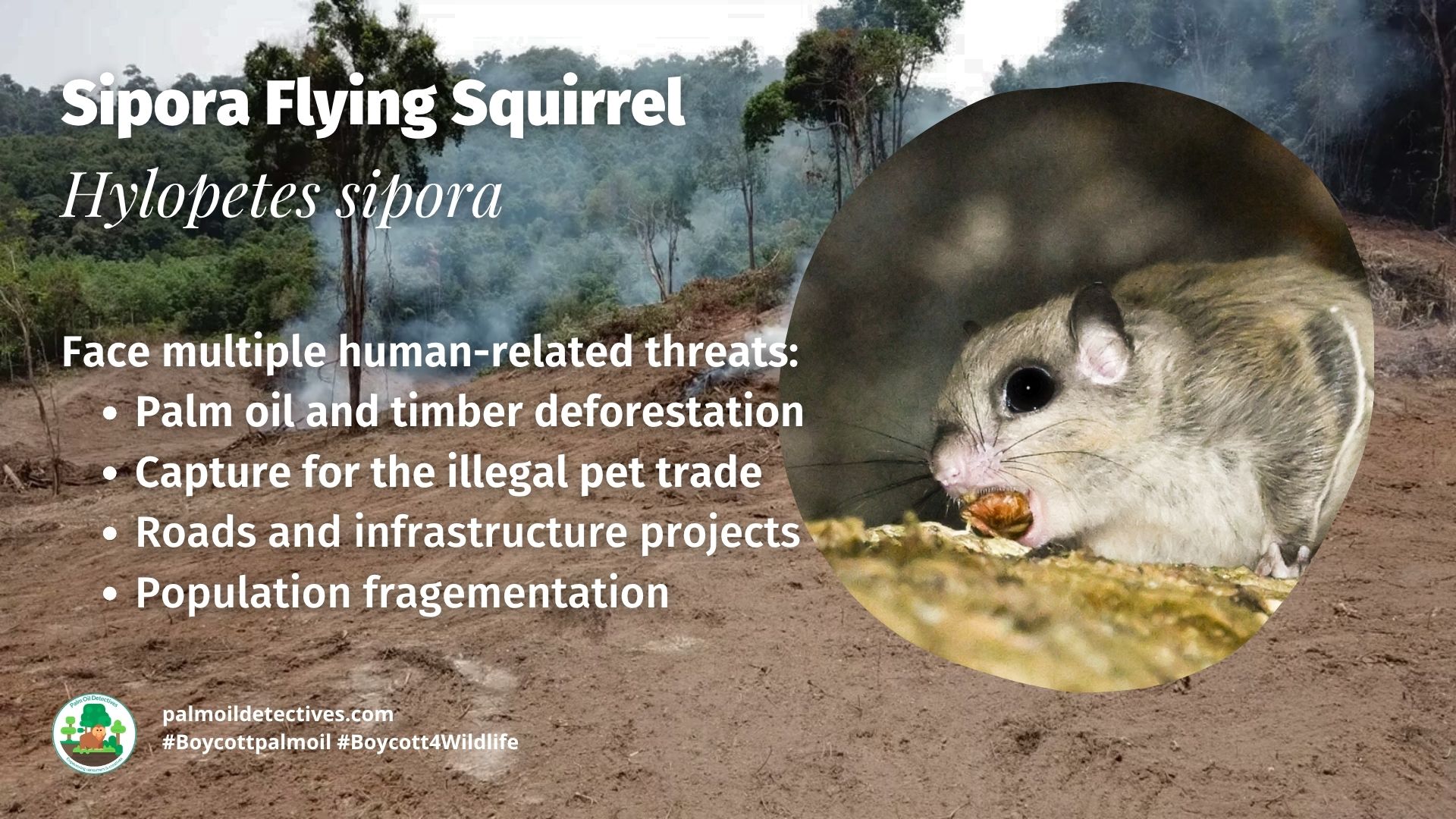
The habitat of the Sipora Flying Squirrel is being deforested for timber, firewood and conversion to agricultural land.
IUCN Red list
Timber and palm oil deforestation
The Sipora flying squirrel is classified as Endangered on the Red List, with the primary threat being the loss of their forest habitat. Sipora Island, covering just 845 square kilometres, is under increasing pressure from logging and palm oil deforestation. Forests are being stripped bare, replaced by fields and settlements, leaving only isolated fragments where the Sipora flying squirrel can survive.
Population fragmentation
Logging operations further fragment the remaining forest habitat of the Sipora flying squirrel. Roads and clearings cut through the forest, severing the vital connections that squirrels rely on for movement and foraging. Fragmentation isolates populations, reducing genetic diversity and increasing vulnerability to disease and environmental change.
Diet
Little is known about the diet of the Sipora flying squirrel, but like other flying squirrels, they are likely omnivorous, feeding on a variety of plant materials, including fruits, seeds, and leaves, as well as insects and other small invertebrates. Their foraging is a quiet, nocturnal activity, carried out in the safety of the canopy. The rhythm of their feeding is woven into the life of the forest, as they play a vital role in seed dispersal and the regeneration of their ecosystem. The availability of food is closely tied to the health of the forest, and the loss of habitat threatens their ability to find enough to eat.
Reproduction and Mating
Little is known about the reproductive habits of the Sipora flying squirrel, but related gliding squirrel species typically have one or two litters per year, with one to three young per litter. Females give birth in tree hollows or nests lined with leaves, and the young are cared for until they are able to glide and forage on their own. The mother is the primary caregiver, nursing and protecting her offspring as they grow. The family unit is tight-knit, with strong bonds between mother and young, but the pressures of habitat loss make survival increasingly difficult across generations.
Geographic Range
The Sipora flying squirrel is endemic to Sipora Island in the Mentawai archipelago, off the west coast of Sumatra, Indonesia. Their range is limited to the forests of this single island, which covers just 845 square kilometres. The natural home range of the Sipora flying squirrel is unknown, but it is likely to be small, given the limited area of suitable habitat. Their historical range has contracted dramatically due to deforestation and human encroachment, and they are now restricted to the few remaining patches of forest on the island.
FAQs
How many Sipora flying squirrels are left?
The exact population size of the Sipora flying squirrel is unknown, but their numbers are believed to be declining due to ongoing habitat loss and fragmentation. The species is listed as Endangered on the Red List, and their survival is threatened by the continued destruction of their forest home. The small size of Sipora Island and the rapid pace of deforestation make the Sipora flying squirrel particularly vulnerable to extinction.
What are the characteristics of the Sipora flying squirrel?
The Sipora flying squirrel is a small, nocturnal rodent with soft, dense fur and a long, bushy tail. They measure around 15 to 20 centimetres in body length and weigh between 50 and 100 grams. Their most distinctive feature is the patagium, a flap of skin that allows them to glide between trees. The Sipora flying squirrel is strictly arboreal, spending their days in tree hollows and emerging at night to forage. They are solitary by nature, though they may share roosting sites during the day.
Where does the Sipora flying squirrel live?
The Sipora flying squirrel is found only on Sipora Island, part of the Mentawai archipelago off the west coast of Sumatra, Indonesia. They inhabit subtropical or tropical dry forests, where they rely on the dense canopy for shelter and food. Their world is limited to this single island, and their survival is closely tied to the health of its forests.
What are the threats to the survival of the Sipora flying squirrel?
The main threats to the survival of the Sipora flying squirrel are habitat loss and fragmentation caused by logging, firewood collection, and agricultural expansion. The forests of Sipora Island are being cleared at an alarming rate, leaving only isolated patches where the squirrel can survive. Fragmentation isolates populations, reducing genetic diversity and increasing vulnerability to disease and environmental change. The disappearance of the Sipora flying squirrel’s forest home is the greatest threat to their existence.
Does the Sipora flying squirrel make a good pet?
The Sipora flying squirrel does not make a good pet. Captivity causes extreme stress, loneliness, and early death for these highly specialised forest animals. The pet trade rips families apart and fuels extinction, as animals are stolen from their natural habitat and forced into unnatural, impoverished conditions. Protecting the Sipora flying squirrel means rejecting the illegal pet trade and supporting their right to live wild and free in their forest home.
Take Action!
Use your wallet as a weapon and #BoycottPalmOil #Boycott4Wildlife. Support indigenous-led conservation and agroecology. Reject products linked to deforestation, mining, and the illegal wildlife trade. Adopt a #vegan lifestyle and #BoycottMeat to protect wild and farmed animals alike. Every choice matters—stand with the Sipora flying squirrel and defend the forests of Sipora Island.
Support the conservation of this species
This animal has no protections in place. Read about other forgotten species here. Create art to support this forgotten animal or raise awareness about them by sharing this post and using the #Boycottpalmoil #Boycott4Wildlife hashtags on social media. Also you can boycott palm oil in the supermarket.
Further Information
Lee, B. 2016. Hylopetes sipora. The IUCN Red List of Threatened Species 2016: e.T10606A22243951. https://dx.doi.org/10.2305/IUCN.UK.2016-2.RLTS.T10606A22243951.en. Downloaded on 05 February 2021.
Wikipedia. (n.d.). Sipora flying squirrel. https://en.wikipedia.org/wiki/Sipora_flying_squirrel
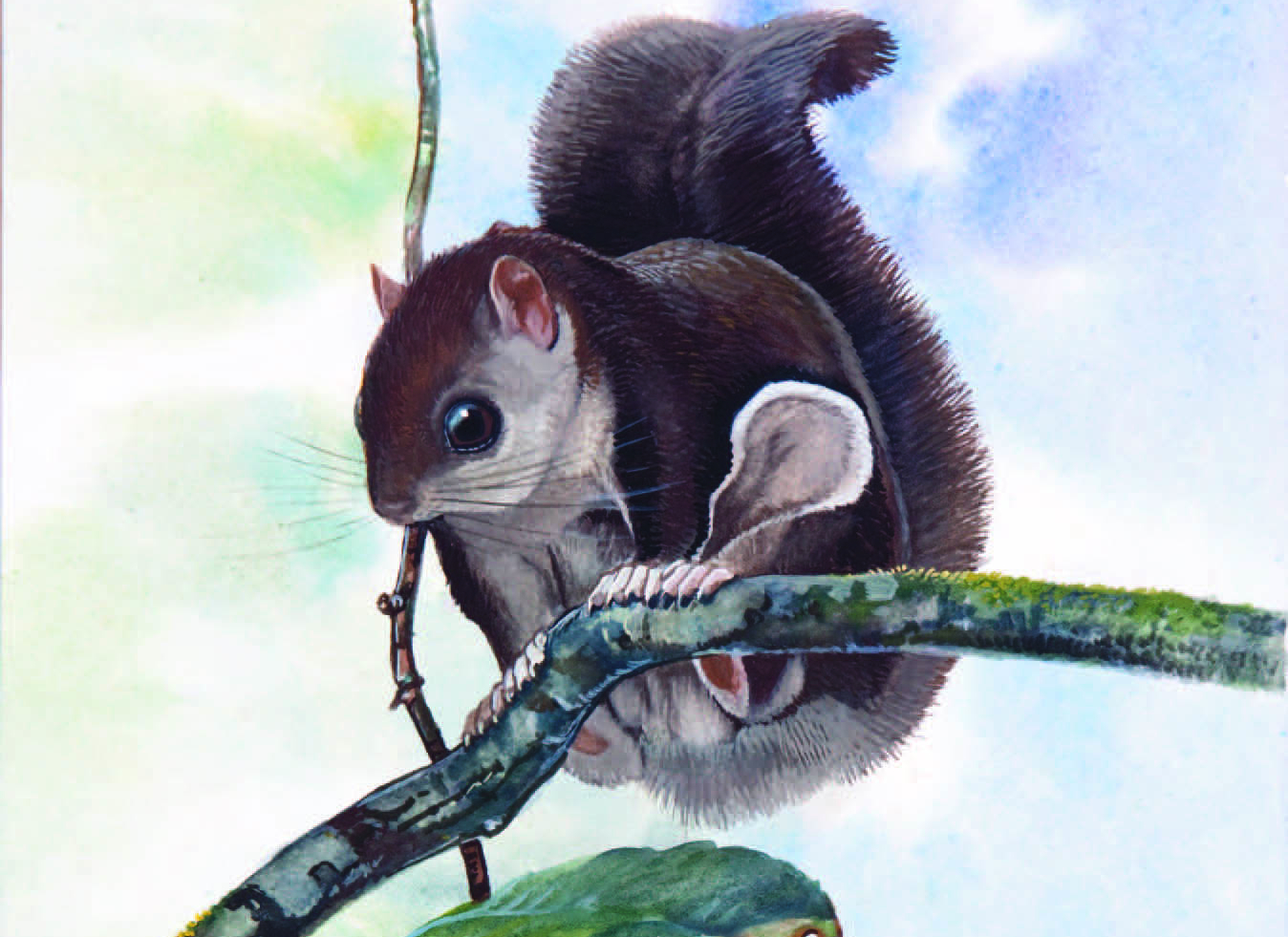
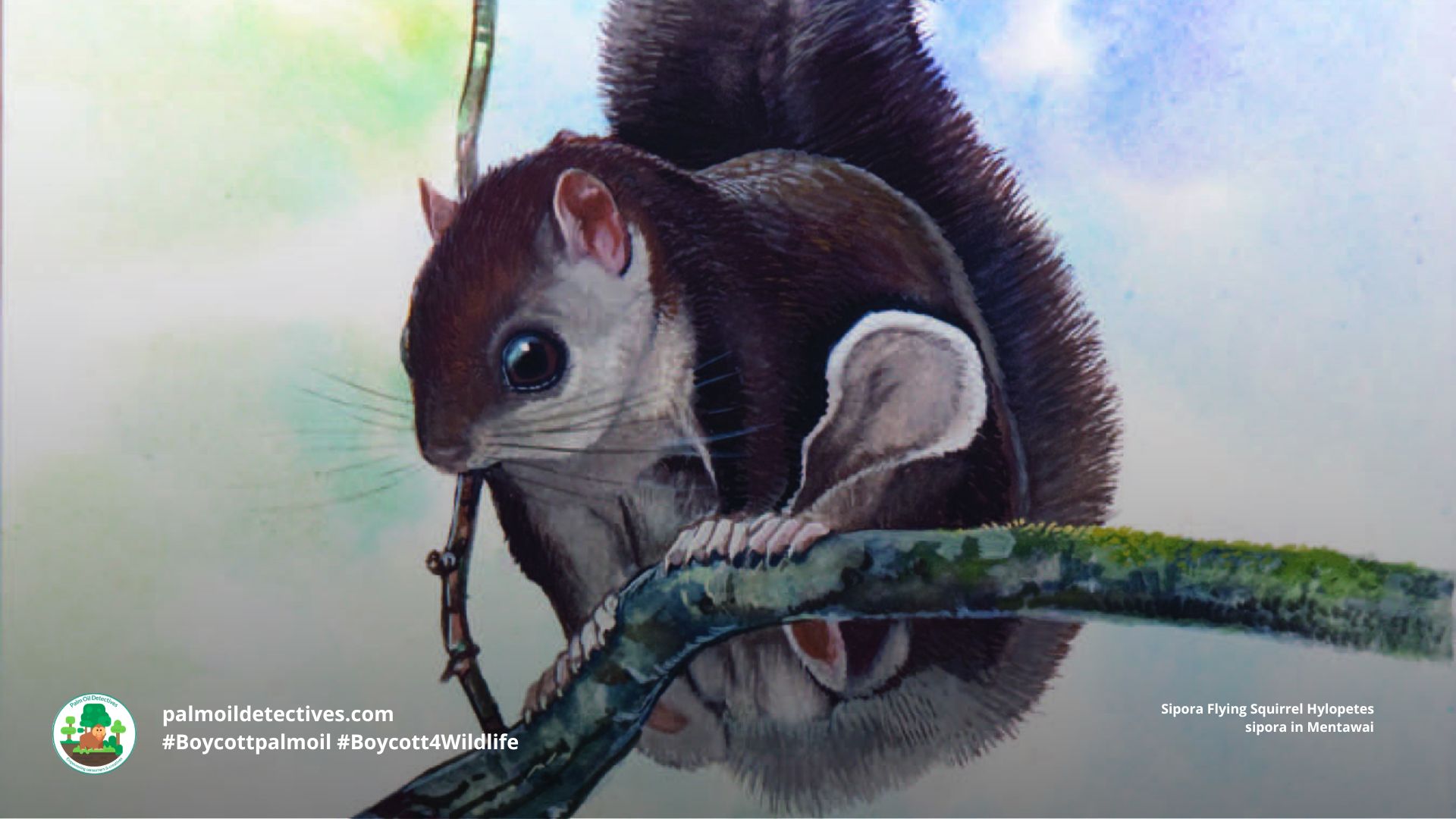
Caption: This beautiful painting is by My YM

How can I help the #Boycott4Wildlife?
Take Action in Five Ways
1. Join the #Boycott4Wildlife on social media and subscribe to stay in the loop: Share posts from this website to your own network on Twitter, Mastadon, Instagram, Facebook and Youtube using the hashtags #Boycottpalmoil #Boycott4Wildlife.
2. Contribute stories: Academics, conservationists, scientists, indigenous rights advocates and animal rights advocates working to expose the corruption of the palm oil industry or to save animals can contribute stories to the website.





3. Supermarket sleuthing: Next time you’re in the supermarket, take photos of products containing palm oil. Share these to social media along with the hashtags to call out the greenwashing and ecocide of the brands who use palm oil. You can also take photos of palm oil free products and congratulate brands when they go palm oil free.
4. Take to the streets: Get in touch with Palm Oil Detectives to find out more.
5. Donate: Make a one-off or monthly donation to Palm Oil Detectives as a way of saying thank you and to help pay for ongoing running costs of the website and social media campaigns. Donate here
Discover more from Palm Oil Detectives
Subscribe to get the latest posts sent to your email.
 Palm Oil Detectives