
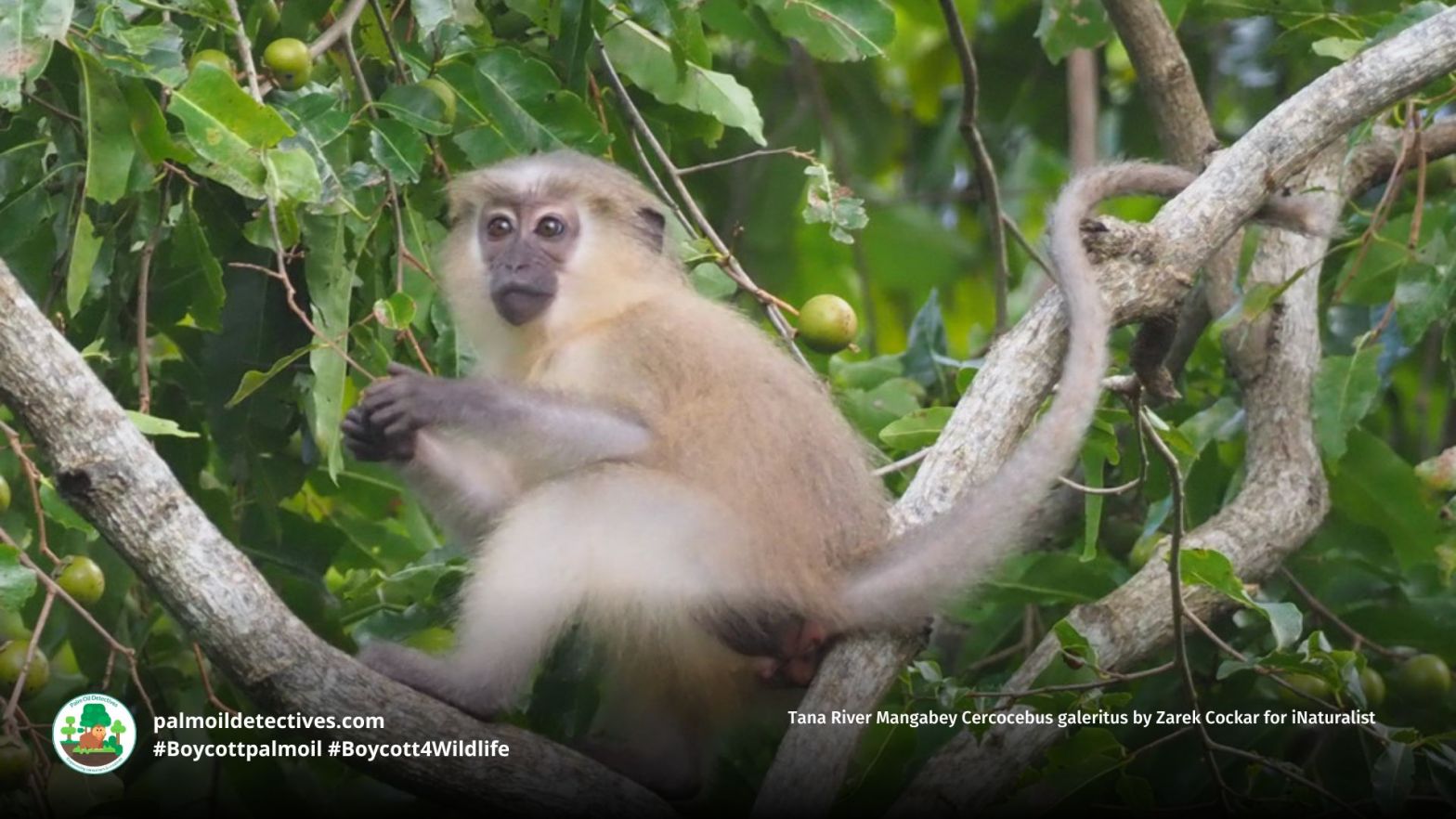
Tana River Mangabey Cercocebus galeritus
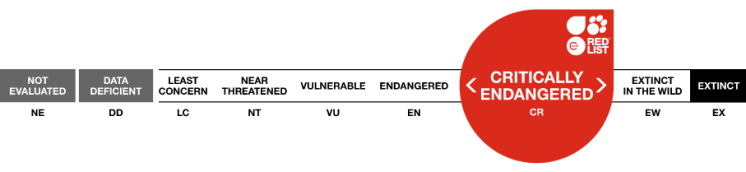
Red List: Critically Endangered
Location: Kenya
This species is found only along a fragmented 60 km stretch of floodplain forest near the lower Tana River in south-eastern Kenya.
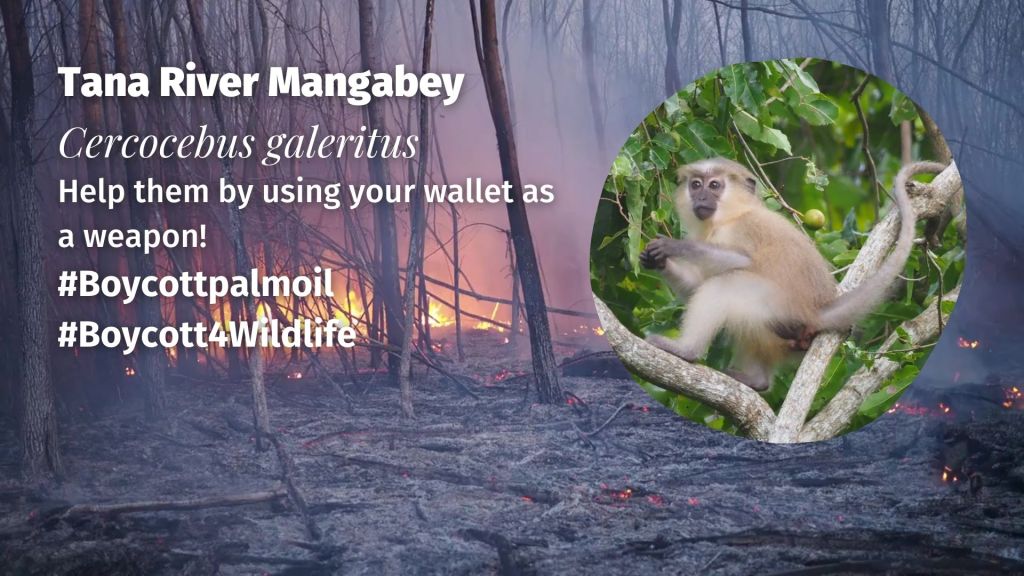
The Tana River Mangabey Cercocebus galeritus is a long-faced and slender old world monkey of #Kenya listed as Critically Endangered due to ongoing habitat destruction, dam construction, logging, and the degradation of floodplain forest ecosystems. Once protected by the Tana River #Primate Reserve, these #monkeys despite being key seed dispersers in their ecosystem are now more vulnerable than ever after the legal de-gazetting of their habitat. With only around 1,000 individuals remaining, this highly social and adaptable primate faces a devastating future unless urgent action is taken. Use your wallet as a weapon to end the destruction of their home. #BoycottPalmOil #Boycott4Wildlife #Vegan #BoycottMeat
Tana River Mangabeys🐒 are an icon of #Kenya 🇰🇪. These svelte, intelligent #primates are critically endangered in #Kenyan #forests due to dams, forest #fires and #agriculture. Help them and 🌴🔥🧐⛔️#Boycott4Wildlife at the supermarket @palmoildetect https://palmoildetectives.com/2021/03/29/tana-river-mangabey-cercocebus-galeritus/
Male Tana River #Mangabey #monkeys perform ‘whoop-gobble’ vocalisations at dawn. They’re critically #endangered by #agriculture #deforestation, hunting and hydroelectric #dams. Fight back for them and 🌴🔥🤮☠️🚜🧐🚫#Boycott4Wildlife @palmoildetect https://palmoildetectives.com/2021/03/29/tana-river-mangabey-cercocebus-galeritus/
Appearance and Behaviour
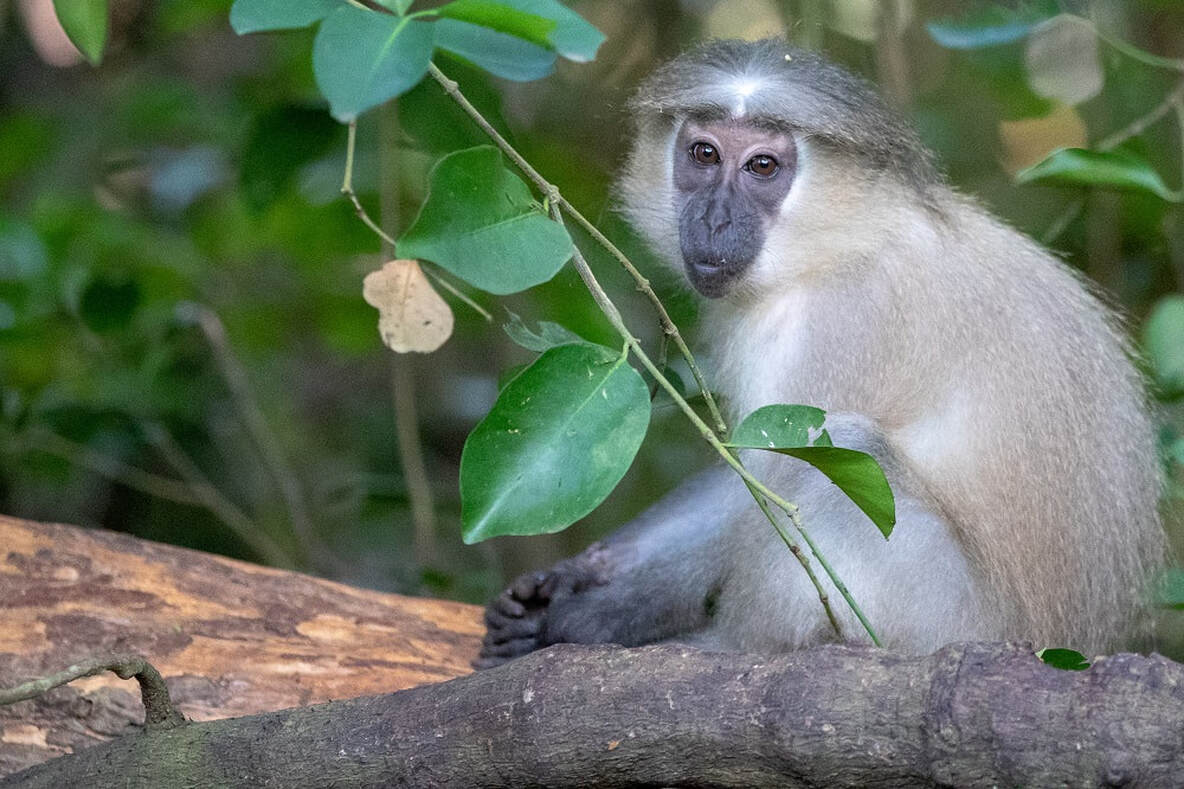
Tana River Mangabeys are medium-sized monkeys with long, light grey fur and cream-coloured underparts. Their forearms and hands are darker, and their dark grey face is framed by a prominent crest of fur parted down the centre. Their distinctive white eyelids contrast against their darker skin, playing a key role in their complex communication.
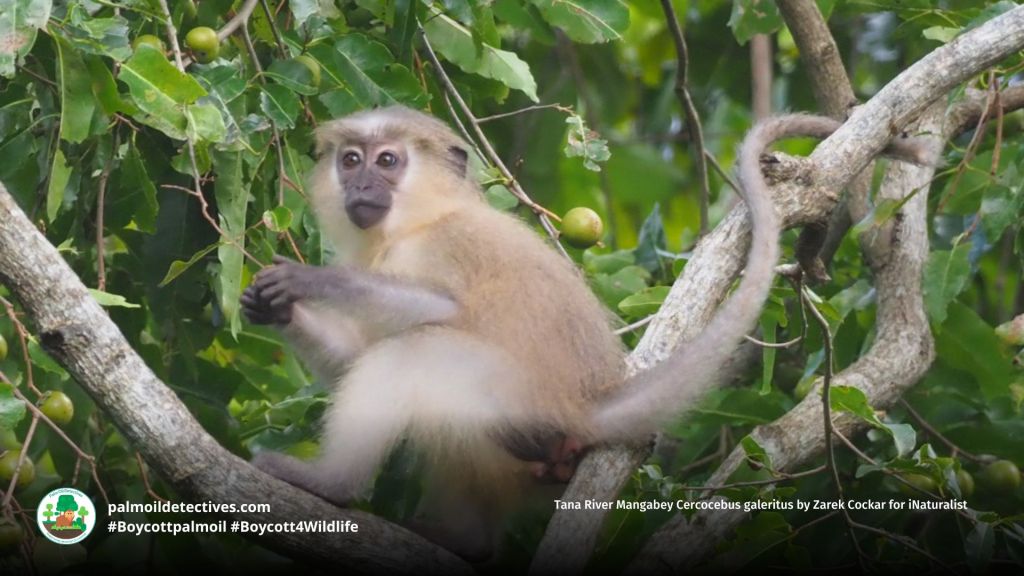
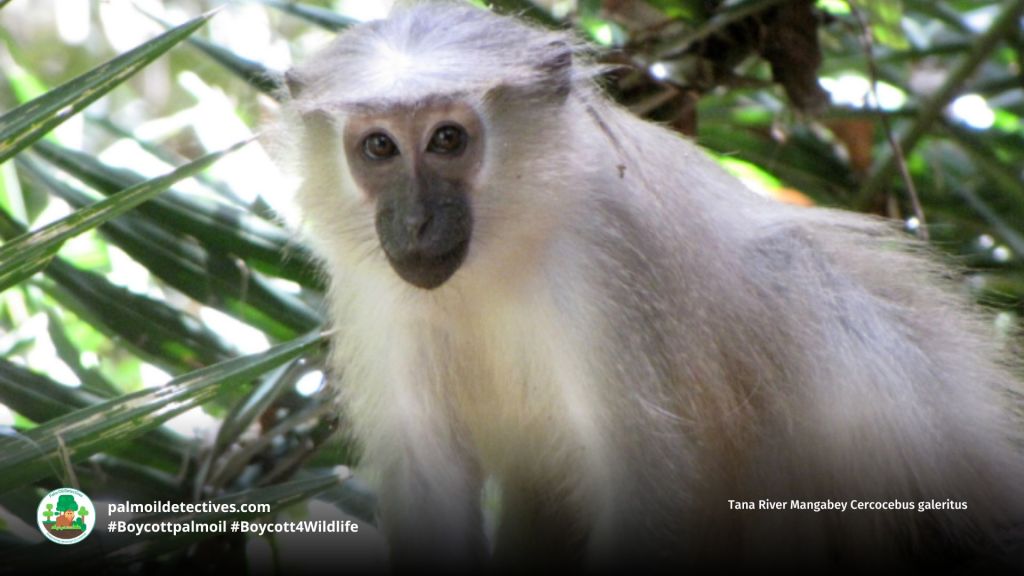
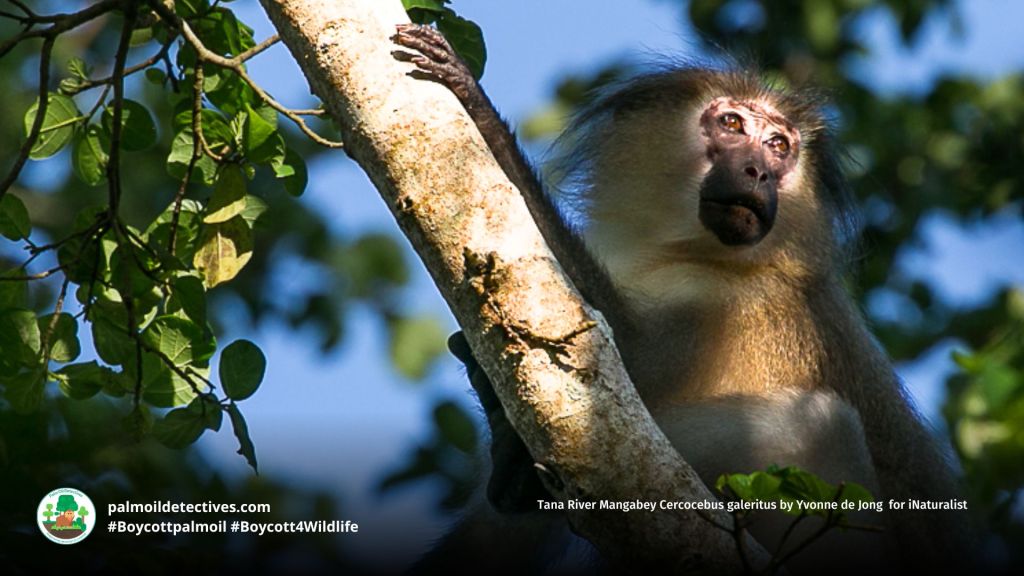
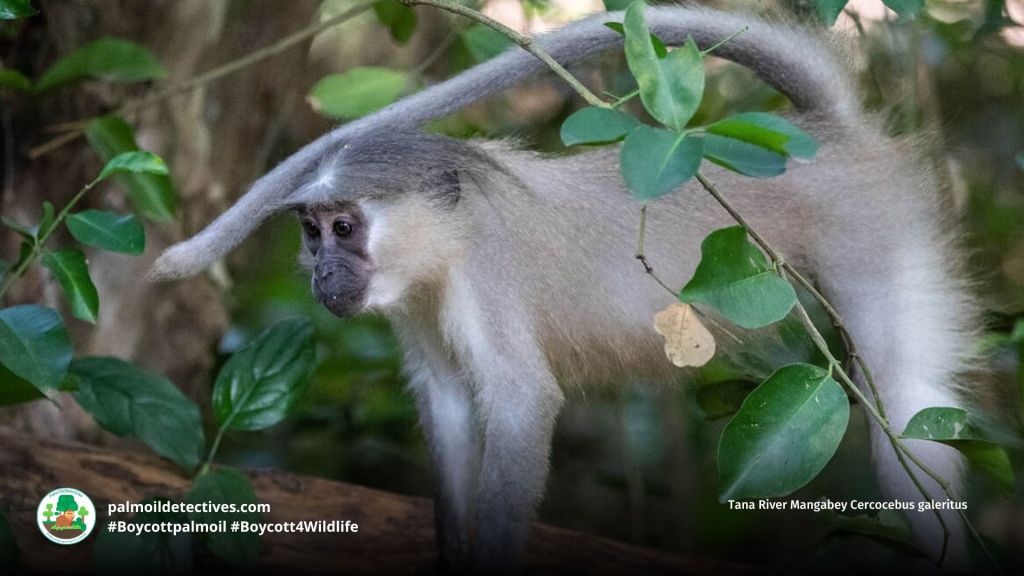
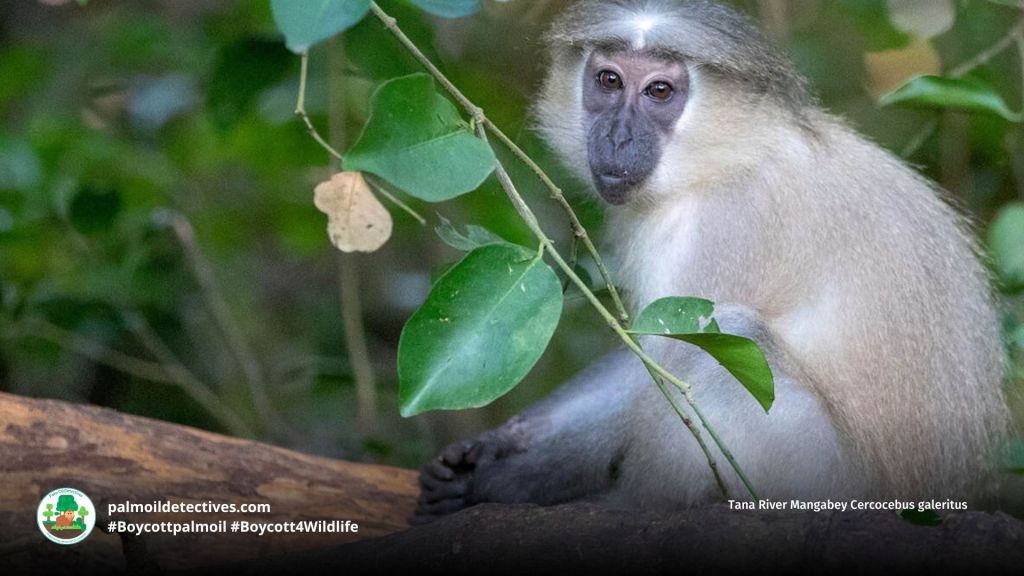
These monkeys are diurnal and semi-terrestrial, often seen foraging on the ground, though they sleep high in tree canopies for safety. Social groups are large and structured, with up to 36 individuals living together in mixed-sex groups. Males often perform territorial calls in the early morning, and loud “whoop-gobble” vocalisations can carry over a kilometre, helping to space out neighbouring groups. Their behaviour is deeply affected by food availability: in times of plenty, groups interact peacefully, while in lean months, they grow more territorial.
Diet
Tana River Mangabeys are primarily frugivorous monkeys but display great dietary flexibility. Around 46% of their annual diet consists of seeds, with another 25% made up of fruit. They also consume stems, young leaves, fungi, and insects. During the dry season, when food is scarce, they range further and diversify their diet.
They rely heavily on trees like Ficus sycomorus and Phoenix reclinata for food, both of which fruit at times when other resources are limited. Their powerful jaws and thick molar enamel allow them to crack tough seeds and nuts, and their shortened faces provide increased bite force—an adaptation that suits their opportunistic feeding strategy.
Reproduction and Mating
Tana River Mangabeys live in polygynous groups of monkeys, where one dominant male typically has access to multiple females. Females display conspicuous monthly estrous swellings to signal fertility, and many also exhibit post-conception swellings. These false signals may confuse males and encourage multiple males to invest in infant care, increasing the infant’s survival chances.
Gestation for these monkeys lasts around 180 days, with births most common between August and April. A single infant is born, and the mother is initially left undisturbed by the group. After two months, infants begin to explore and socialise with others. Females likely reach sexual maturity around age three and begin breeding between six and seven, while males mature slightly later.
Geographic Range
Tana River Mangabeys are endemic to Kenya, confined to around 27 forest fragments along a narrow corridor of floodplain forest near the lower Tana River. This range spans from Nkanjonja in the north to Hewani in the south, across an altitudinal range of just 20–40 metres above sea level.
Historically, this species may have had a broader distribution. However, fragmentation due to deforestation, dam construction, and agriculture has severely restricted their movement and isolated populations. Forest corridors are no longer structurally connected, although some functional connectivity remains through limited travel between fragments.
Threats
Tana River Mangabeys live in the flood-plain forest, riverine gallery forest, and the adjacent woodland and bushland of Kenya (Wieczkowski and Butynski 2013). Their abundance is highly correlated with the spatial characteristics of the forests. They are semi-terrestrial monkeys that can travel up to 1 km through non-forested habitat between forest patches (Wieczkowski 2010).
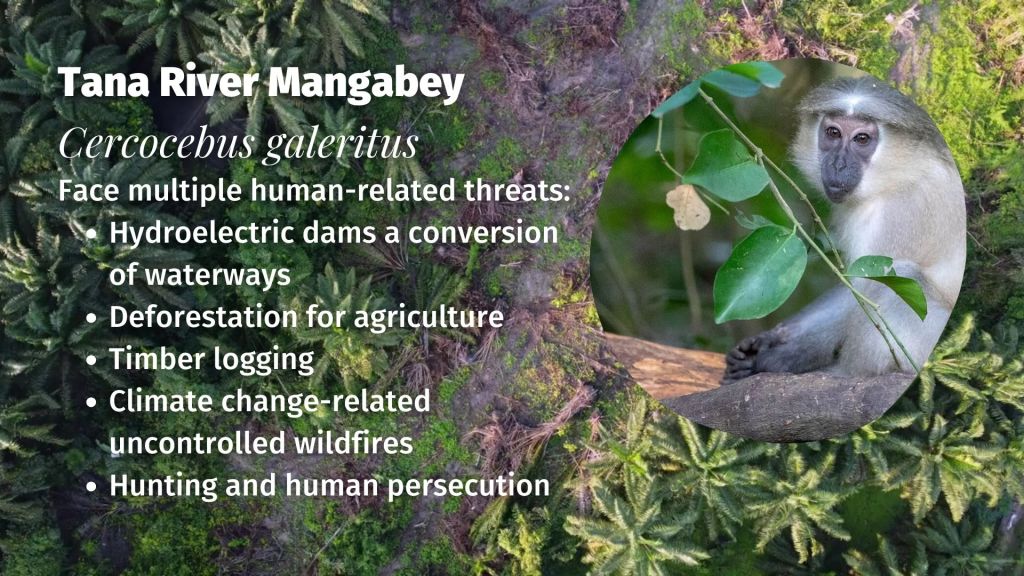
The rapid decline of Tana River Mangabeys has several causes including: Forest clearance for agriculture.
IUCN red list
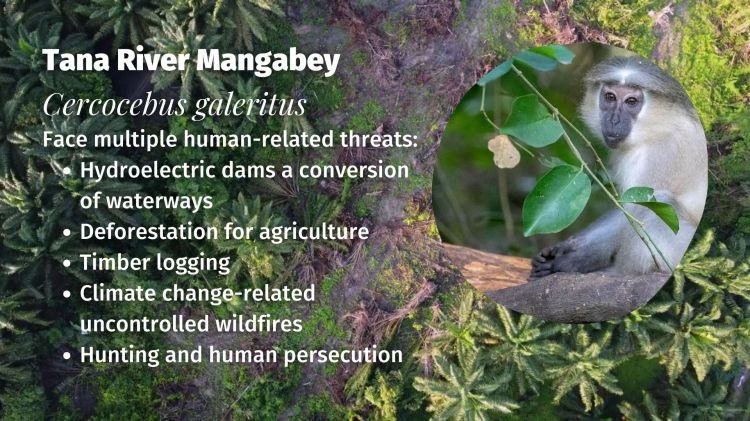
• Dam construction and water diversion: The building of hydroelectric dams has altered natural flood cycles and disrupted groundwater levels vital to the mangabeys’ habitat. The upcoming High Grand Falls Dam, one of Africa’s largest, threatens to irreparably damage the ecosystem.
• Deforestation and agriculture: Large swathes of gallery forest have been cleared for farming, drastically reducing the species’ habitat. An estimated 50% of the original forest has been lost in the last 20 years.
• Palm exploitation: Phoenix reclinata, a key food tree, is overharvested by local communities for palm wine, thatching, and mats, threatening both food security and habitat structure for the mangabeys.
• Logging and wildfires: Unregulated cutting of canopy and sub-canopy trees for housing and fuelwood, alongside uncontrolled fires, further degrades the forest and isolates populations.
• Human Persecution: As natural resources diminish, some mangabeys are are seen as pests and are persecuted and hunted for raiding crops—a threat expected to grow with increasing human-wildlife conflict.
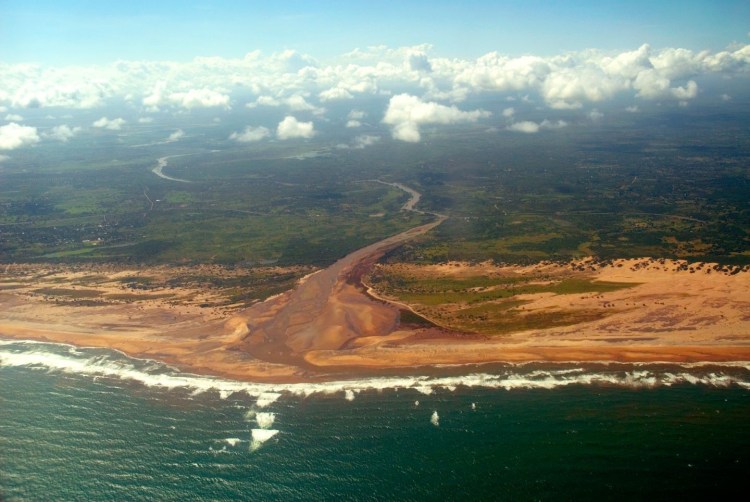
• Political instability and poor law enforcement: The de-gazetting of the Tana River Primate Reserve in 2007 removed legal protections, exacerbating habitat destruction and reducing conservation oversight.
Take Action!
The Tana River Mangabey is on the brink. If their fragmented forests are lost, so too is this charismatic and intelligent monkey. Support indigenous-led conservation and agroecology efforts in East Africa. Demand the full reinstatement of protected habitat in Kenya. Boycott palm oil and refuse to support the industries driving deforestation and dam construction in critical floodplain ecosystems. #BoycottPalmOil #Boycott4Wildlife #Vegan #BoycottMeat
FAQs
Why are Tana River Mangabeys endangered?
Their biggest threats are habitat loss and fragmentation, largely due to dam construction, logging, agriculture, and palm exploitation. Political instability and poor conservation enforcement have worsened their chances of survival (Butynski & Mwangi, 1994; Wieczkowski & Butynski, 2013).
What are the predators of the Tana River Mangabey?
Natural predators include African rock pythons (Python sebae), crowned eagles (Stephanoaetus coronatus), martial eagles (Polemaetus bellicosus), and Nile crocodiles (Crocodylus niloticus) (Wikipedia, n.d.).
In which country are Tana River Mangabeys found?
They are found exclusively in Kenya.
What do Tana River Mangabeys eat?
Their diet includes fruits, seeds, leaves, insects, stems, and fungi. They rely heavily on species like Ficus sycomorus and Phoenix reclinata (Homewood, 1978; Maingi, 2019).
Do Tana River Mangabeys make good pets?
Tana River Mangabeys are highly social and intelligent primates. Keeping them as pets is cruel and contributes to their extinction. Trapping them destroys wild populations, causes immense suffering, and breaks apart family groups. If you care about these animals, never support the exotic pet trade—advocate for habitat protection instead.
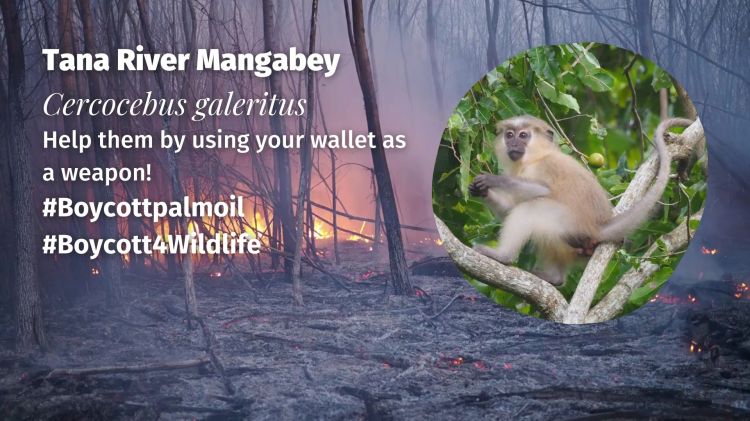
Support the conservation of this species
This animal has no protections in place. Read about other forgotten species here. Create art to support this forgotten animal or raise awareness about them by sharing this post and using the #Boycottpalmoil #Boycott4Wildlife hashtags on social media. Also you can boycott palm oil in the supermarket.
Further Information
Butynski, T.M., de Jong, Y.A., Wieczkowski, J. & King, J. 2020. Cercocebus galeritus. The IUCN Red List of Threatened Species 2020: e.T4200A17956330. https://dx.doi.org/10.2305/IUCN.UK.2020-2.RLTS.T4200A17956330.en. Downloaded on 26 March 2021.
Homewood, K. M. (1978). Feeding strategy of the Tana mangabey (Cercocebus galeritus galeritus) (Mammalia: Primates). Journal of Zoology, 186(3), 375–391. https://doi.org/10.1111/j.1469-7998.1978.tb03926.x
Kimuyu, D. M., Wahungu, G. M., & Otieno, D. O. (2012). Seed dispersal by Tana River mangabeys in fragmented gallery forests. Open Journal of Ecology, 2(1), 6–11. https://doi.org/10.4236/oje.2012.21002
Maingi, C. K. (2019). Forest fragmentation and anthropogenic disturbance: Implications on plant foods and behaviour of the Tana River mangabey. University of Nairobi. http://erepository.uonbi.ac.ke/handle/11295/107320
Maingi, C. K., Githaiga, J. M., Kanya, J. I., & Kivai, S. M. (2020). Anthropogenic activities and influence on behaviour of the Tana River mangabey (Cercocebus galeritus) in two forest fragments in Lower Tana River, Kenya. African Primates, 14(1), 1–16. Retrieved from https://static1.1.sqspcdn.com/static/f/1200343/28385233/1608487219480/AP+Vol+14+-+Maingi+et+al.pdf
Wieczkowski, J. (2010). Tana River mangabey use of nonforest areas: Functional connectivity in a fragmented landscape in Kenya. Biotropica, 42(5), 598–604. https://doi.org/10.1111/j.1744-7429.2010.00627.x
Wikipedia. (n.d.). Tana River Mangabey. https://en.wikipedia.org/wiki/Tana_River_mangabey

How can I help the #Boycott4Wildlife?
Take Action in Five Ways
1. Join the #Boycott4Wildlife on social media and subscribe to stay in the loop: Share posts from this website to your own network on Twitter, Mastadon, Instagram, Facebook and Youtube using the hashtags #Boycottpalmoil #Boycott4Wildlife.
2. Contribute stories: Academics, conservationists, scientists, indigenous rights advocates and animal rights advocates working to expose the corruption of the palm oil industry or to save animals can contribute stories to the website.






3. Supermarket sleuthing: Next time you’re in the supermarket, take photos of products containing palm oil. Share these to social media along with the hashtags to call out the greenwashing and ecocide of the brands who use palm oil. You can also take photos of palm oil free products and congratulate brands when they go palm oil free.
4. Take to the streets: Get in touch with Palm Oil Detectives to find out more.
5. Donate: Make a one-off or monthly donation to Palm Oil Detectives as a way of saying thank you and to help pay for ongoing running costs of the website and social media campaigns. Donate here
Discover more from Palm Oil Detectives
Subscribe to get the latest posts sent to your email.
 Palm Oil Detectives