
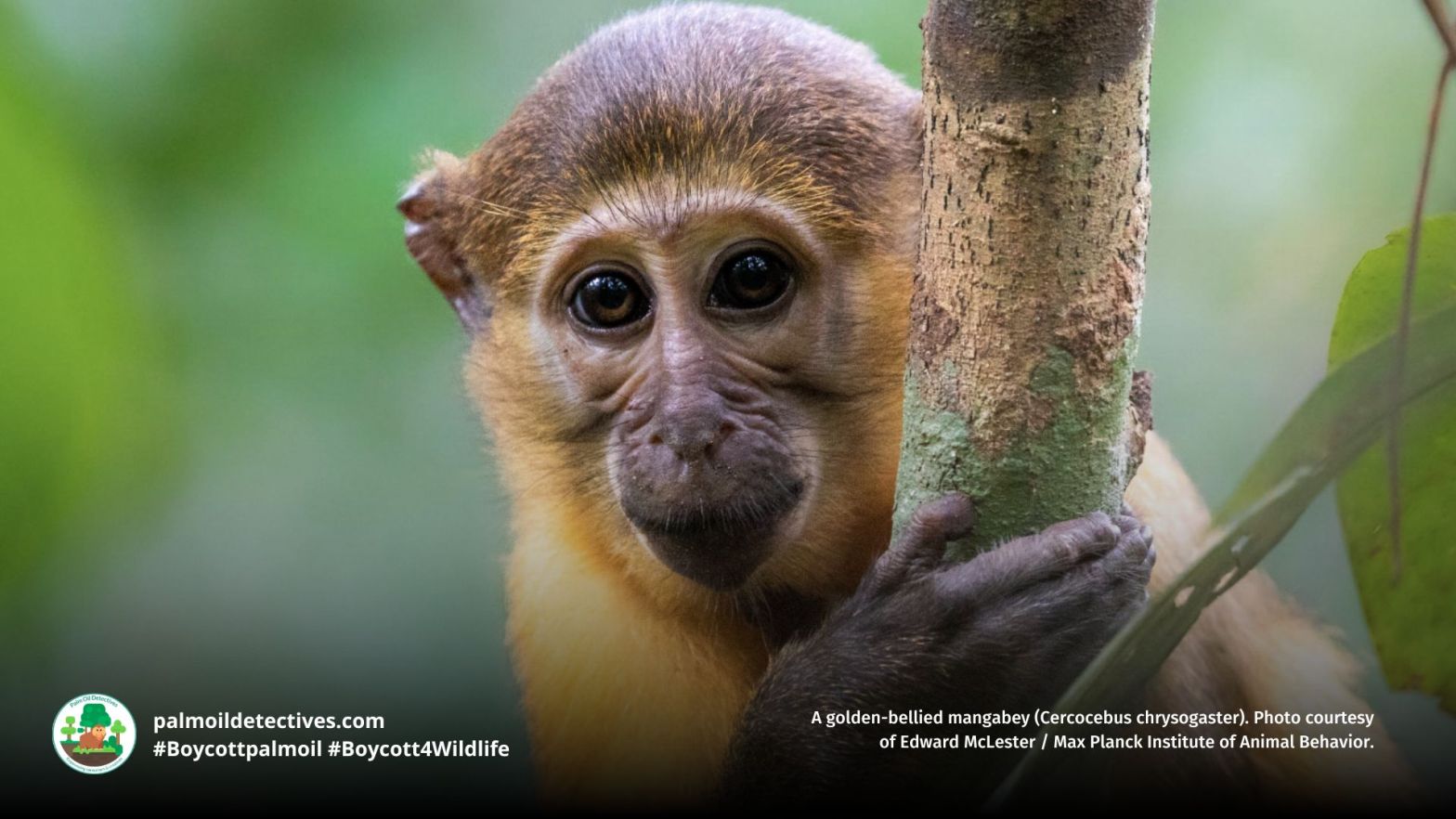
Golden-bellied Mangabey Cercocebus chrysogaster
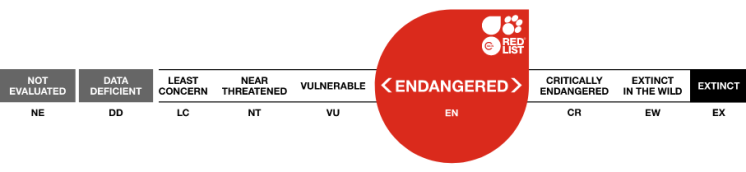
Endangered
Location: Democratic Republic of Congo (DRC)
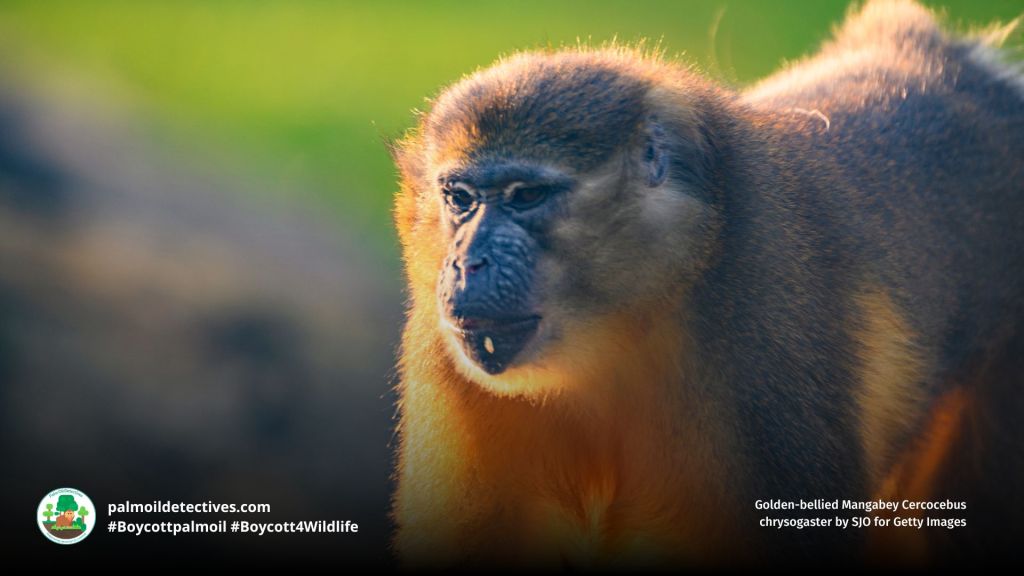
The golden-bellied mangabey (Cercocebus chrysogaster) is an intriguing and elusive monkey endemic to the Democratic Republic of Congo (DRC). Named for the vibrant golden hue of their undersides, these primates are known for their intelligence, complex social behaviours, and unique ecological role. Found in the remote tropical forests along the Congo River Basin, these monkeys remain poorly studied due to their limited range and secretive nature.
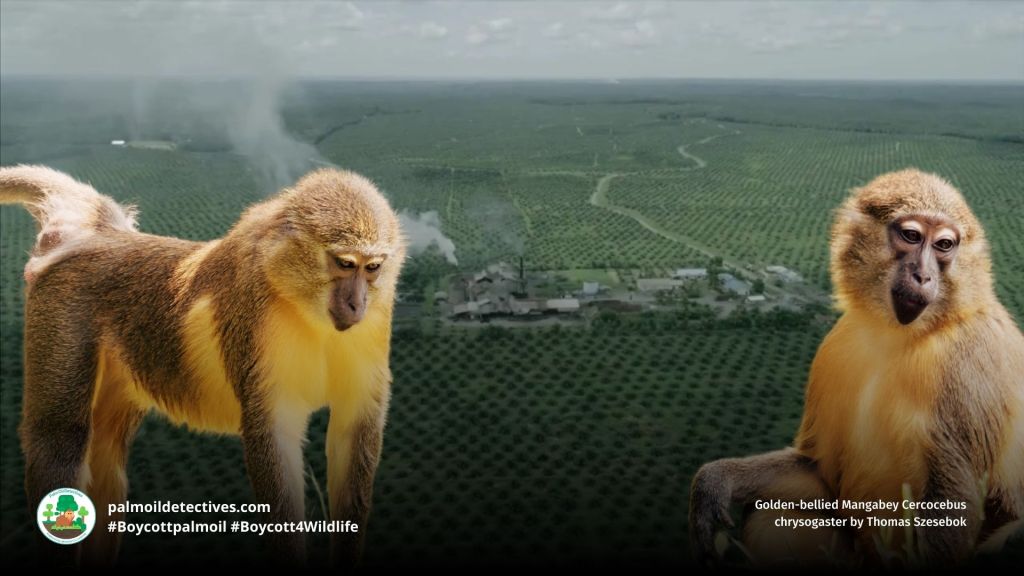
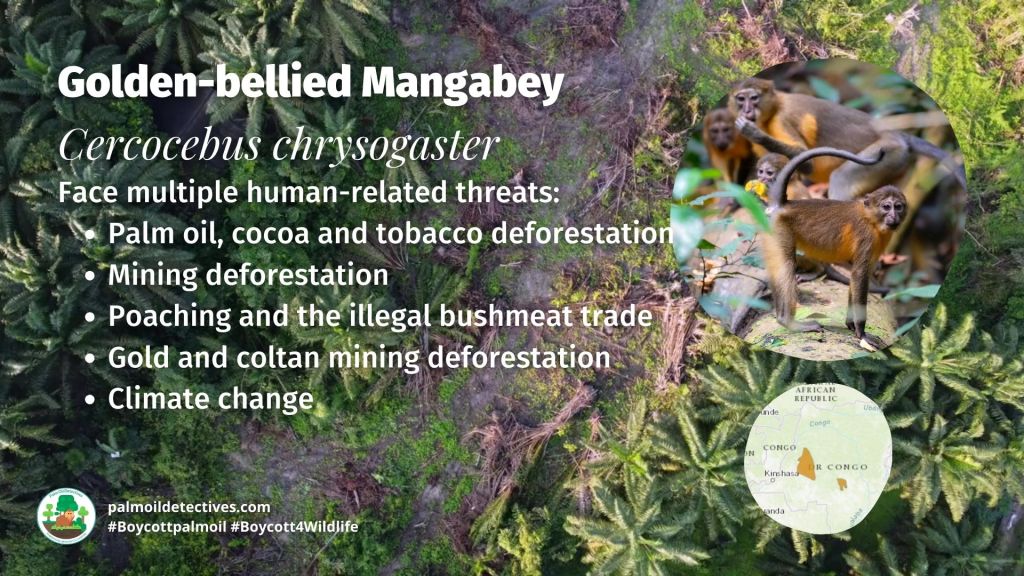
Tragically, the golden-bellied mangabey faces mounting threats from habitat destruction, driven by logging, coltan and gold mining, and agricultural expansion, including palm oil plantations. Their population continues to decline due to hunting and habitat fragmentation. Act now to protect these monkeys and their fragile habitat—boycott palm oil and stand against deforestation. #BoycottPalmOil #Boycott4Wildlife
Golden-bellied Mangabeys are gregarious and social #primates 🐒🐵🩷who are #endangered in the #DRC #Congo 🇨🇩 from the #bushmeat trade and #deforestation for #palmoil. Help them to survive #BoycottPalmOil 🌴🪔☠️🩸🤢⛔️ #Boycott4Wildlife @palmoildetect https://palmoildetectives.com/2021/04/24/golden-bellied-mangabey-cercocebus-chrysogaster/
Golden-bellied #mangabeys have vivid golden bellies 🐵✨💛 Known for their social natures, they’re #endangered due to #poaching and #palmoil, tobacco and #mining #deforestation Fight for them #BoycottPalmOil 🌴🪔☠️🩸🤢⛔️ #Boycott4Wildlife @palmoildetect https://palmoildetectives.com/2021/04/24/golden-bellied-mangabey-cercocebus-chrysogaster/
The species is also threatened by habitat loss due to logging, leading to declines in range area and range occupancy. Inogwabini et al. (2013) report that west of the Lake Mai-Ndombe, where the species no longer occurs, local communities reported their disappearance over the course of two decades following the arrival of intensive logging.
IUCN red list
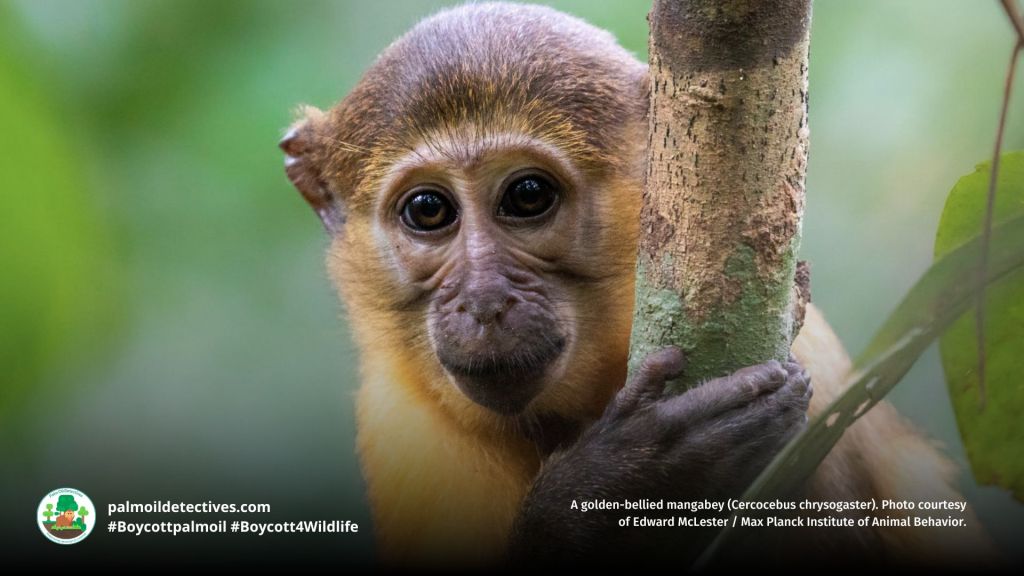
Appearance and Behaviour
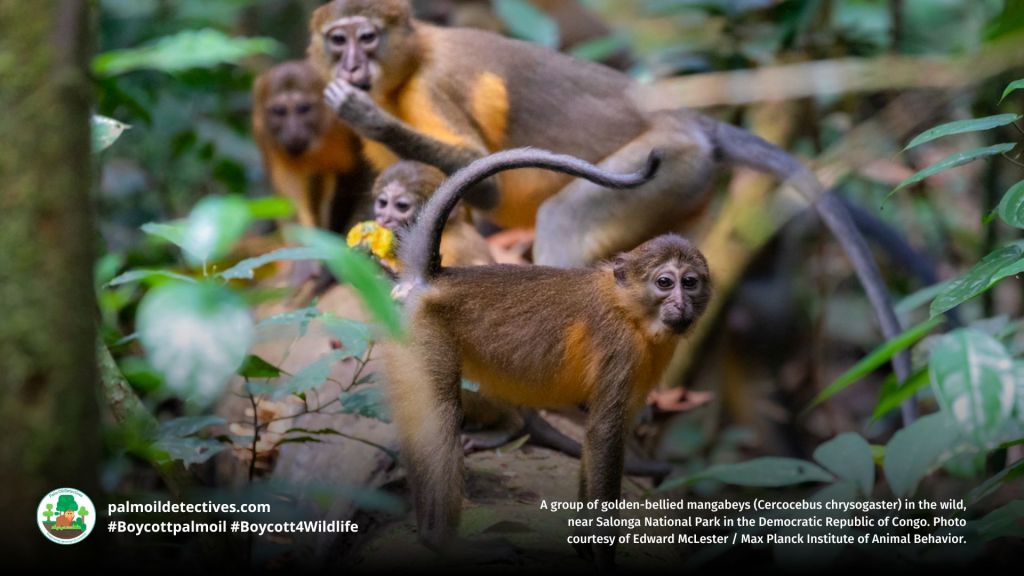
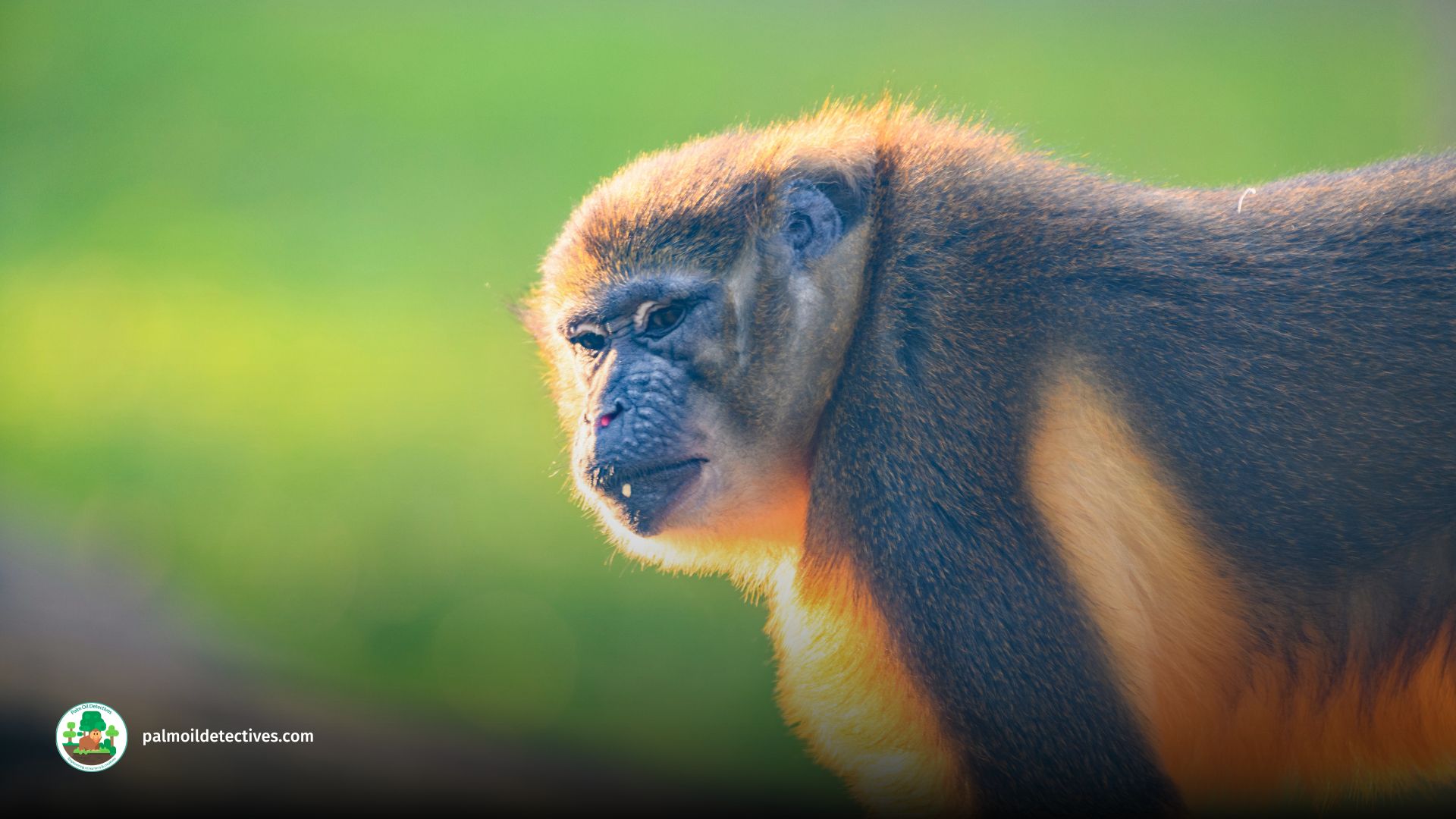
Golden-bellied Mangabeys are only found in the Democratic Republic of Congo in tropical rainforests. They are known for their striking bright yellow and gold bellies which is easily distinguishable from their orange fur.
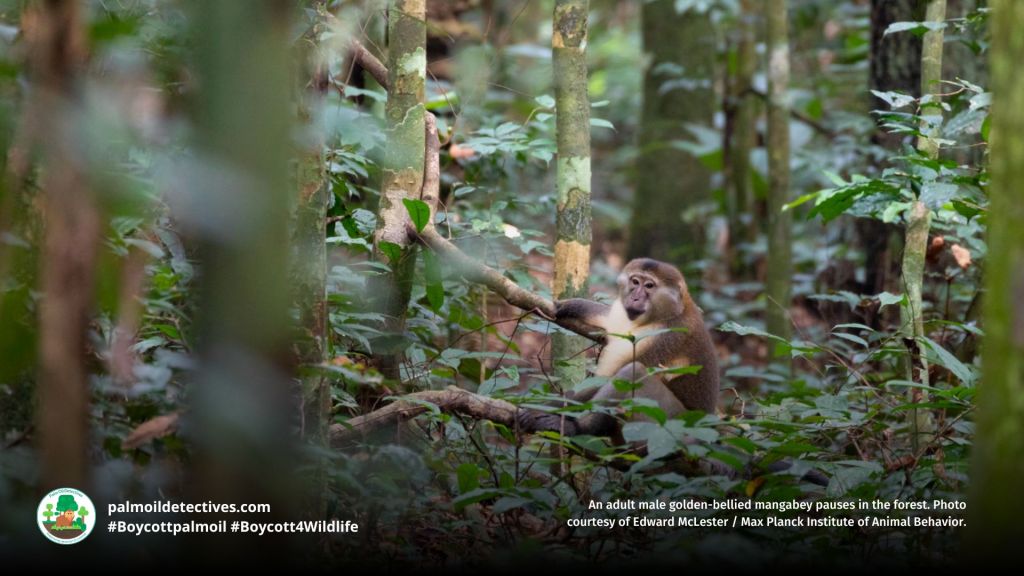
They medium-sized monkeys, weighing between 5–10 kg. They have sleek, dark grey fur with a striking golden-yellow underside that gives them their name. Their faces are expressive, with pale eyelids and a short muzzle that accentuates their curious and alert demeanour.
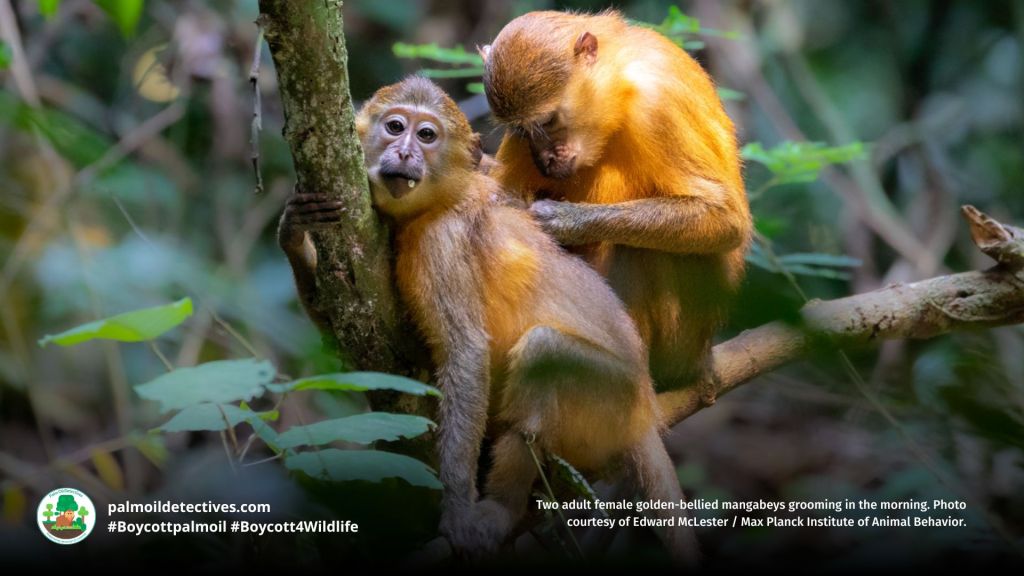
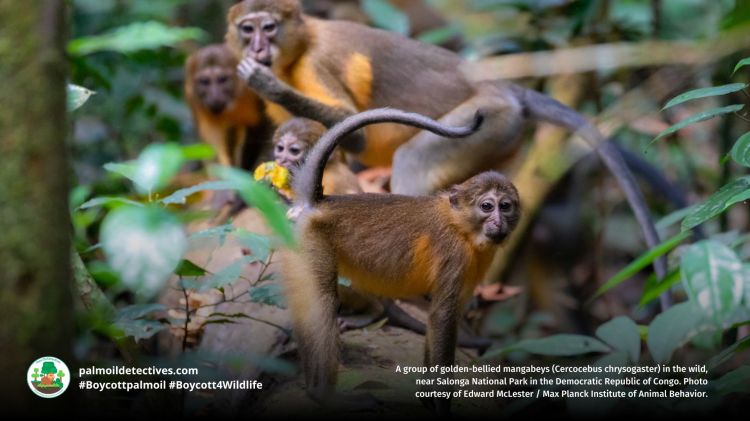
These mangabeys are highly social, living in groups of 10–30 individuals. They exhibit intricate communication through vocalisations, facial expressions, and physical gestures. A fascinating behaviour observed in these primates is their occasional consumption of mammalian prey, a rare trait among mangabeys. Research shows that golden-bellied mangabeys sometimes hunt small animals, sharing their spoils within their group—a behaviour that highlights their adaptability and complex social interactions (ResearchGate, 2024).
Geographic Range
Golden-bellied mangabeys are restricted to the dense tropical forests of the Congo River Basin in the DRC. Their primary habitats include swamp forests and lowland rainforests, areas that provide a mix of canopy cover and access to fruiting trees.
Their range is limited, with populations concentrated in fragmented forest patches. This restricted distribution makes them particularly vulnerable to habitat loss and environmental changes (IUCN, 2020).
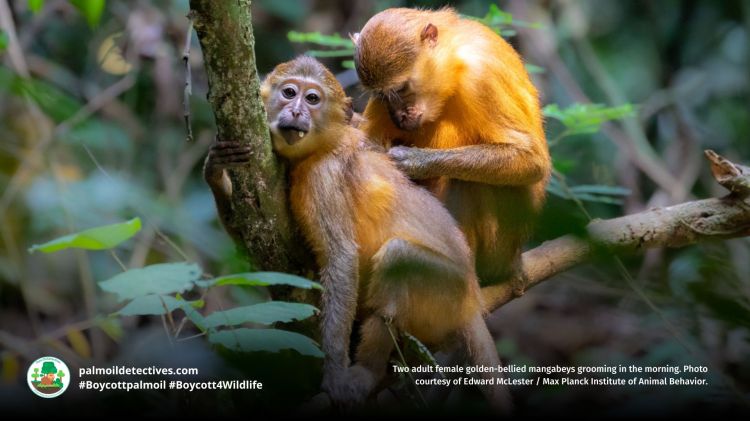
Diet
Golden-bellied mangabeys are primarily frugivorous, with fruits comprising the majority of their diet. They also consume seeds, leaves, flowers, and insects. Their foraging habits contribute to seed dispersal, making them vital to forest regeneration.
Recent studies have highlighted their occasional consumption of small vertebrates, including mammals, showcasing a level of dietary adaptability not commonly associated with mangabeys (ResearchGate, 2024). This dietary flexibility may help them survive in degraded or fragmented habitats but also underscores the challenges they face as their traditional food sources dwindle.
Reproduction and Mating
These monkeys have a gestation period of approximately six months, with females typically giving birth to a single infant every 1–2 years. Juveniles will not be fully independent until they are 4 to 5 years old. They are a nomadic, social species that travel in groups from 8 to 30 individuals. They have pouches in their cheeks which allow them to transport food. Mothers are the primary caregivers, but infants also interact closely with other group members, learning essential survival skills through observation and play.
Golden-bellied mangabeys exhibit strong social bonds within their groups, which may help ensure the survival of young despite the environmental challenges they face.
Threats
The golden-bellied mangabey is classified as Endangered by the IUCN. Conservation initiatives in the Congo Basin focus on protecting their habitats through anti-logging measures, wildlife corridors, and community-based conservation projects.
Despite these efforts, enforcement of wildlife protection laws remains inconsistent, and logging concessions continue to encroach on their range. Education and collaboration with local communities are essential to reducing hunting pressure and fostering coexistence.
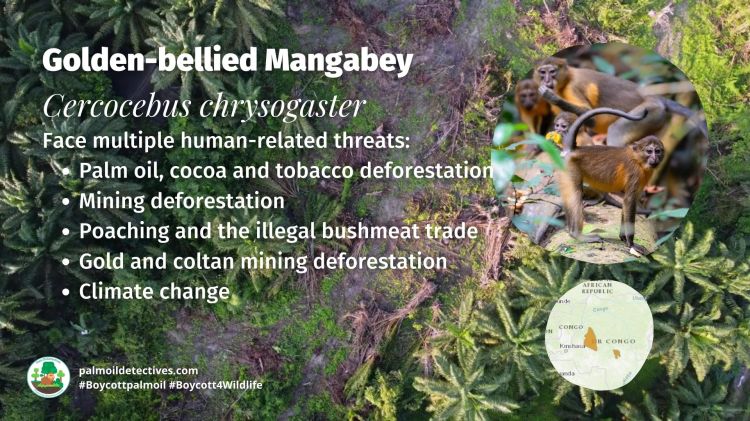
IUCN Status: Endangered
Palm oil, tobacco and cocoa deforestation:
Logging, agricultural expansion, and palm oil plantations have severely fragmented their forest habitats. Deforestation rates in the Congo Basin are among the highest globally.
The species is also threatened by habitat loss due to logging, leading to declines in range area and range occupancy. Inogwabini et al. (2013) report that west of the Lake Mai-Ndombe, where the species no longer occurs, local communities reported their disappearance over the course of two decades following the arrival of intensive logging. Industrial-scale logging concessions have been delimited in about 30% of the species’ range. Additional smaller-scale logging operations are widespread in the western range (Ministry of Environment 2013), thus the proportion of the species’ range vulnerable to habitat loss and degradation is likely higher.
Hunting and Poaching:
Golden-bellied mangabeys are hunted for bushmeat, with their small populations making them highly susceptible to overhunting.
High numbers of Golden-bellied Mangabeys are killed for the commercial bushmeat trade across their range. This has led to ongoing dramatic population declines. The species appears to be highly vulnerable to hunting.
Gold and coltan mining deforestation:
Coltan and gold mining operations disrupt their habitats, introducing pollution and human encroachment.
Climate Change:
Rising temperatures and altered rainfall patterns threaten their food sources and nesting sites.
Population Isolation:
Fragmented habitats restrict genetic exchange between groups, increasing the risk of inbreeding and reducing population resilience.
Take Action!
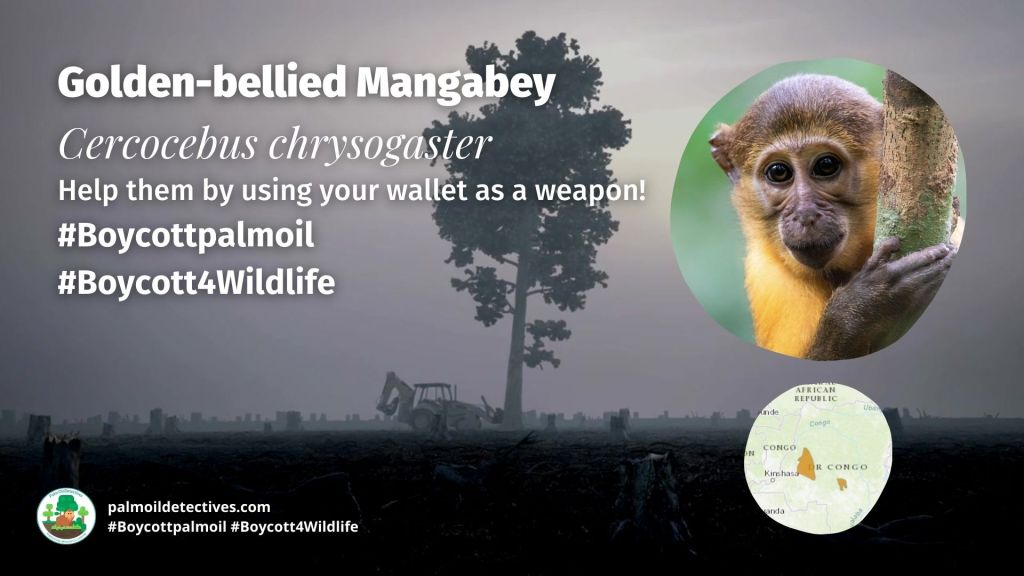
Help safeguard the golden-bellied mangabey by boycotting palm oil and advocating for stronger wildlife protections in the Congo Basin. Share their story to raise awareness and support organisations dedicated to protecting their habitats. #BoycottPalmOil #Boycott4Wildlife
Support the conservation of this species
This animal has no protections in place. Read about other forgotten species here. Create art to support this forgotten animal or raise awareness about them by sharing this post and using the #Boycottpalmoil #Boycott4Wildlife hashtags on social media. Also you can boycott palm oil in the supermarket.
Further Information
Britannica. (2024). Golden-bellied mangabey.
Hart, J.A. & Thompson, J. 2020. Cercocebus chrysogaster. The IUCN Red List of Threatened Species 2020: e.T4207A17956177. https://dx.doi.org/10.2305/IUCN.UK.2020-2.RLTS.T4207A17956177.en. Downloaded on 12 March 2021.
NePrimate Conservancy. (2024). Golden-bellied mangabey.
Inaturalist. (2024). Golden-bellied mangabey (Cercocebus chrysogaster).
Mongabay. (2024). DRC’s golden-bellied mangabeys: A little-known but much-threatened monkey.
ResearchGate. (2024). Golden-bellied mangabeys consume and share mammalian prey.

How can I help the #Boycott4Wildlife?
Take Action in Five Ways
1. Join the #Boycott4Wildlife on social media and subscribe to stay in the loop: Share posts from this website to your own network on Twitter, Mastadon, Instagram, Facebook and Youtube using the hashtags #Boycottpalmoil #Boycott4Wildlife.
2. Contribute stories: Academics, conservationists, scientists, indigenous rights advocates and animal rights advocates working to expose the corruption of the palm oil industry or to save animals can contribute stories to the website.





3. Supermarket sleuthing: Next time you’re in the supermarket, take photos of products containing palm oil. Share these to social media along with the hashtags to call out the greenwashing and ecocide of the brands who use palm oil. You can also take photos of palm oil free products and congratulate brands when they go palm oil free.
4. Take to the streets: Get in touch with Palm Oil Detectives to find out more.
5. Donate: Make a one-off or monthly donation to Palm Oil Detectives as a way of saying thank you and to help pay for ongoing running costs of the website and social media campaigns. Donate here
Discover more from Palm Oil Detectives
Subscribe to get the latest posts sent to your email.
 Palm Oil Detectives