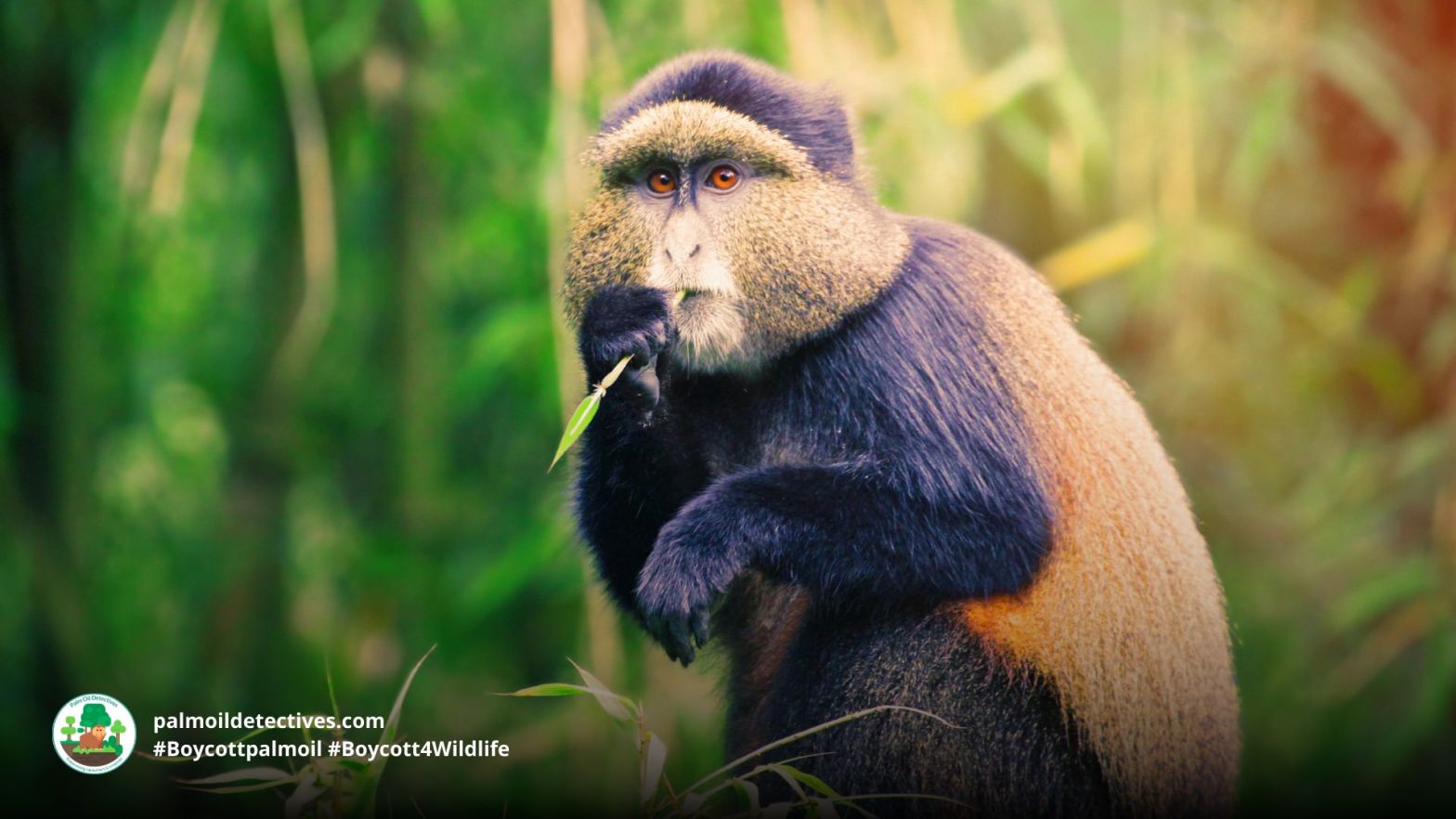
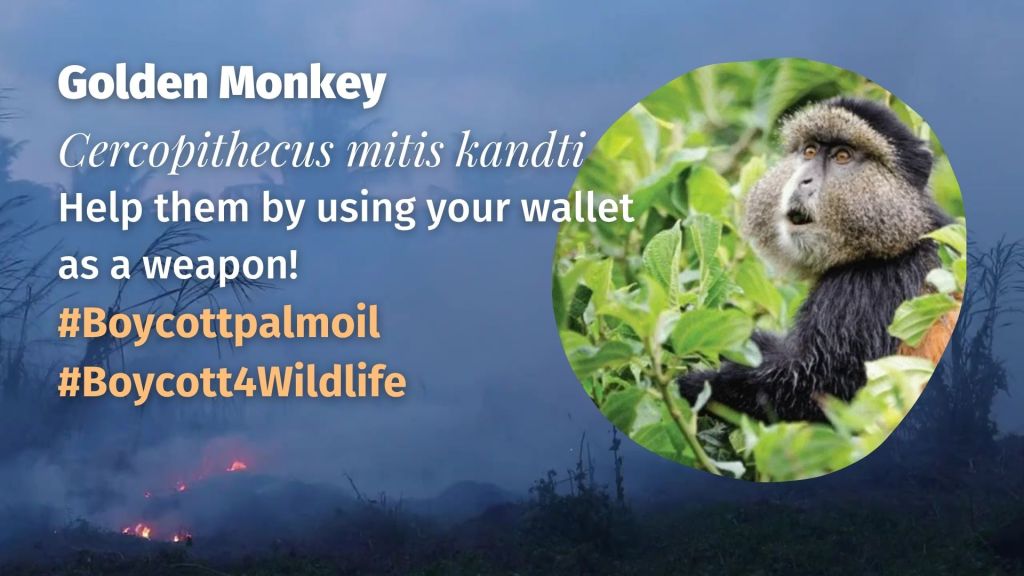
Golden MonkeyCercopithecus mitis kandti
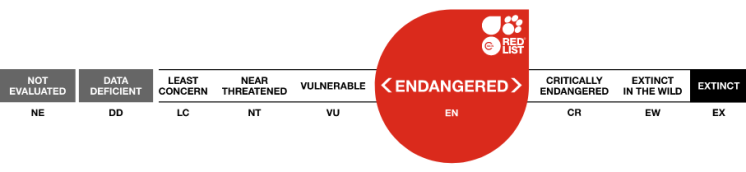
Red List Status: Endangered
Locations: The Democratic Republic of the Congo; Rwanda; Uganda. Virunga massif (Rwanda, Uganda, Democratic Republic of the Congo), Gishwati-Mukura National Park and Gishwati Forest (Rwanda)
In the mist-laden bamboo forests of the Virunga massif, the golden monkey Cercopithecus mitis kandti darts through dappled sunlight and the tree canopy. This endangered primate is found only in the high-altitude forests of the Albertine Rift, nestled deeply in volcanic mountains. They are found in four national parks: Mgahinga, in south-west Uganda; Volcanoes, in north-west #Rwanda; and Virunga and Kahuzi-Biéga, in the eastern Democratic Republic of #Congo. Like many other animals in the region they are protected and yet human threats including #mining #hunting and #agriculture continue to come dangerously close. Help these sweet-faced and severely threatened #primates every time you shop #BoycottPalmOil #Boycott4Wildlife
The Golden Monkey is an #oldworld #primate🐒 of #Congo 🇨🇩 #Uganda 🇺🇬 #Rwanda 🇷🇼 #Timber #cocoa and #palmoil are major threats. Help these remarkable #primates! Every time you shop 🌴🩸💀🚜🔥🙊❌#BoycottPalmOil #Boycott4Wildlife @palmoildetect https://palmoildetectives.com/2021/07/03/golden-monkey-cercopithecus-mitis-ssp-kandti/
The largest part of the geographic range of the Golden Monkey is probably in Rwanda, followed by Democratic Republic of the Congo and Uganda. Forest in all three countries is seriously threatened by harvesting of trees and bamboo, clearance for agriculture, palm oil, charcoal production, and grazing of livestock.
IUCN red list


Appearance and Behaviour
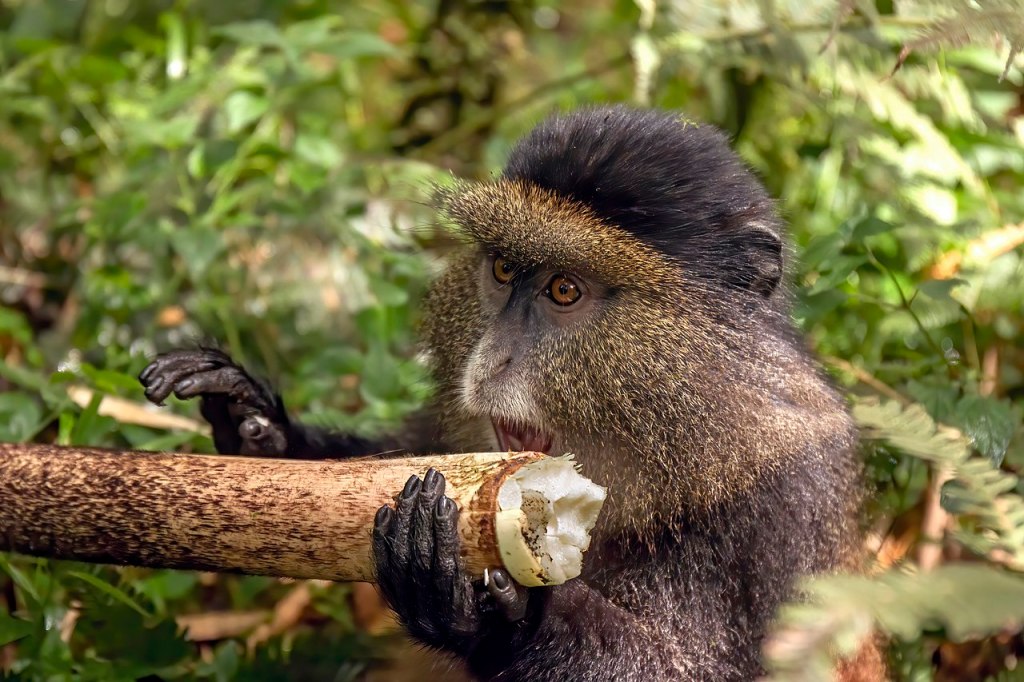
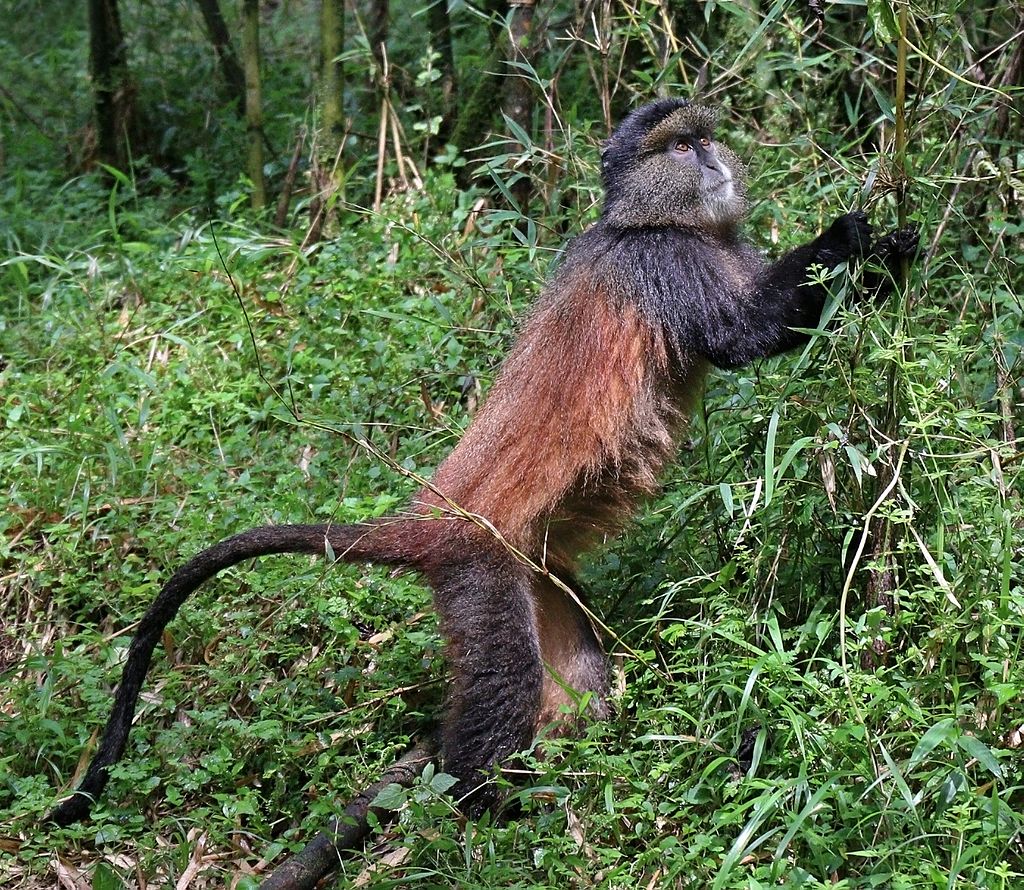
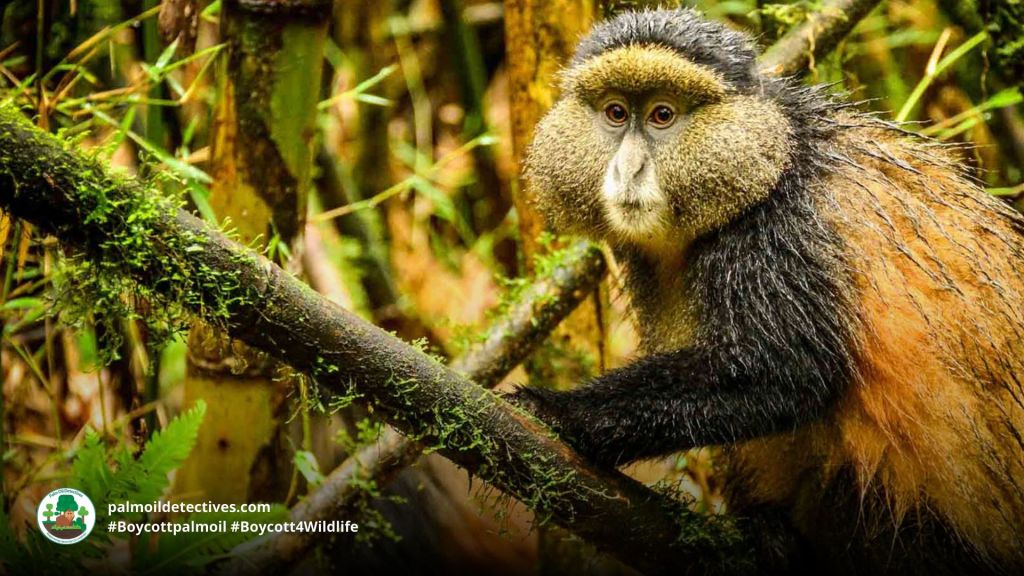
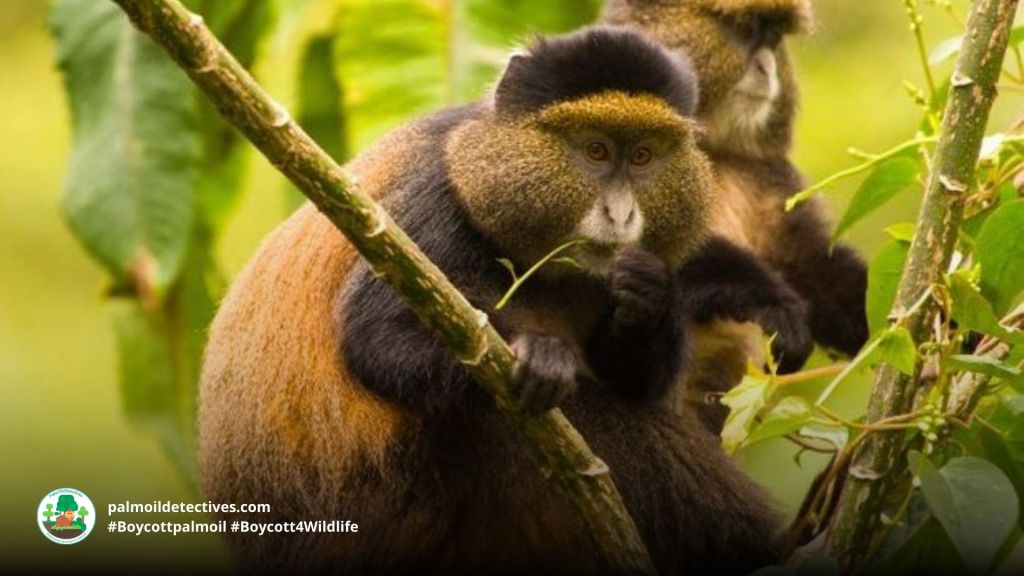
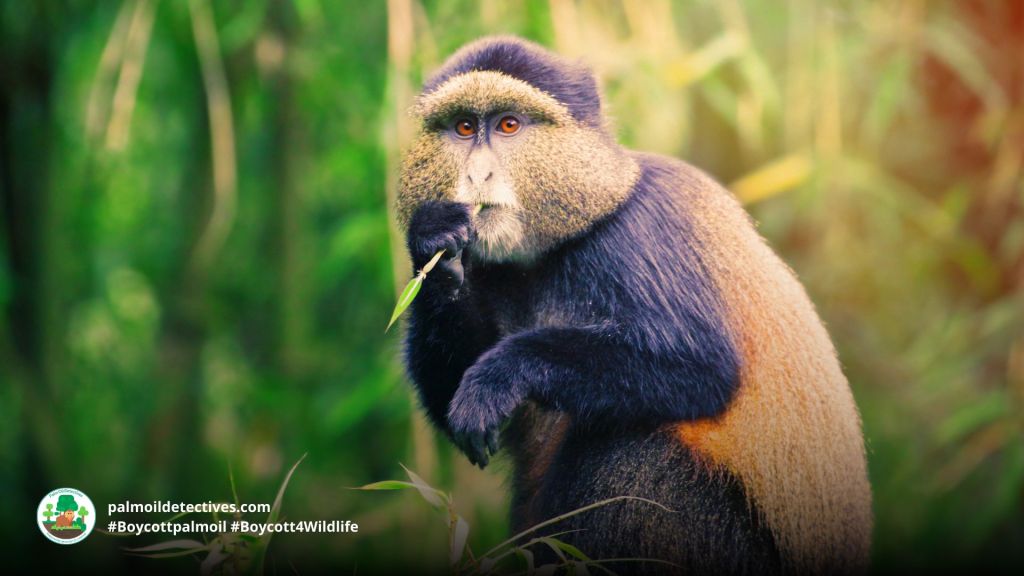
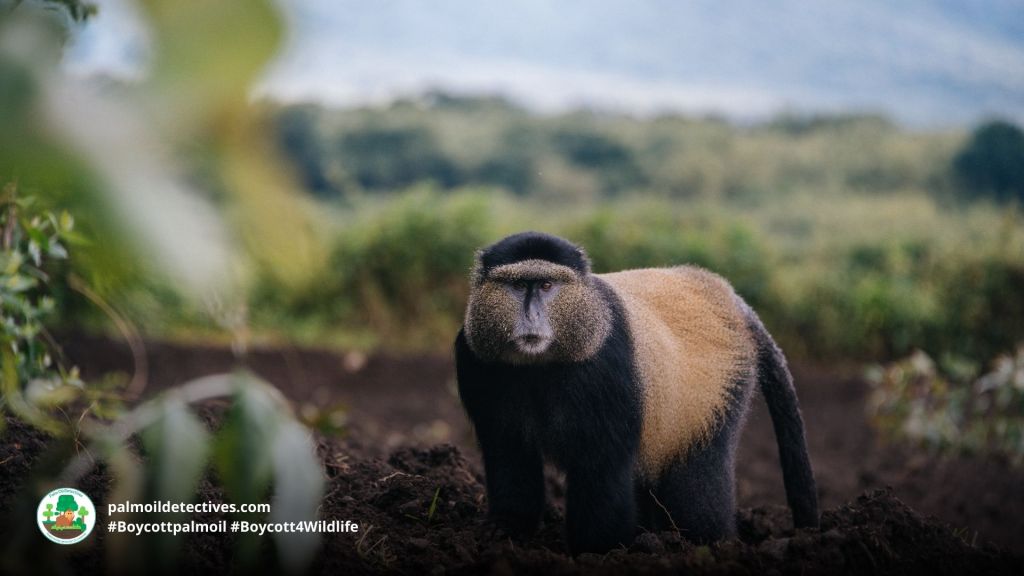
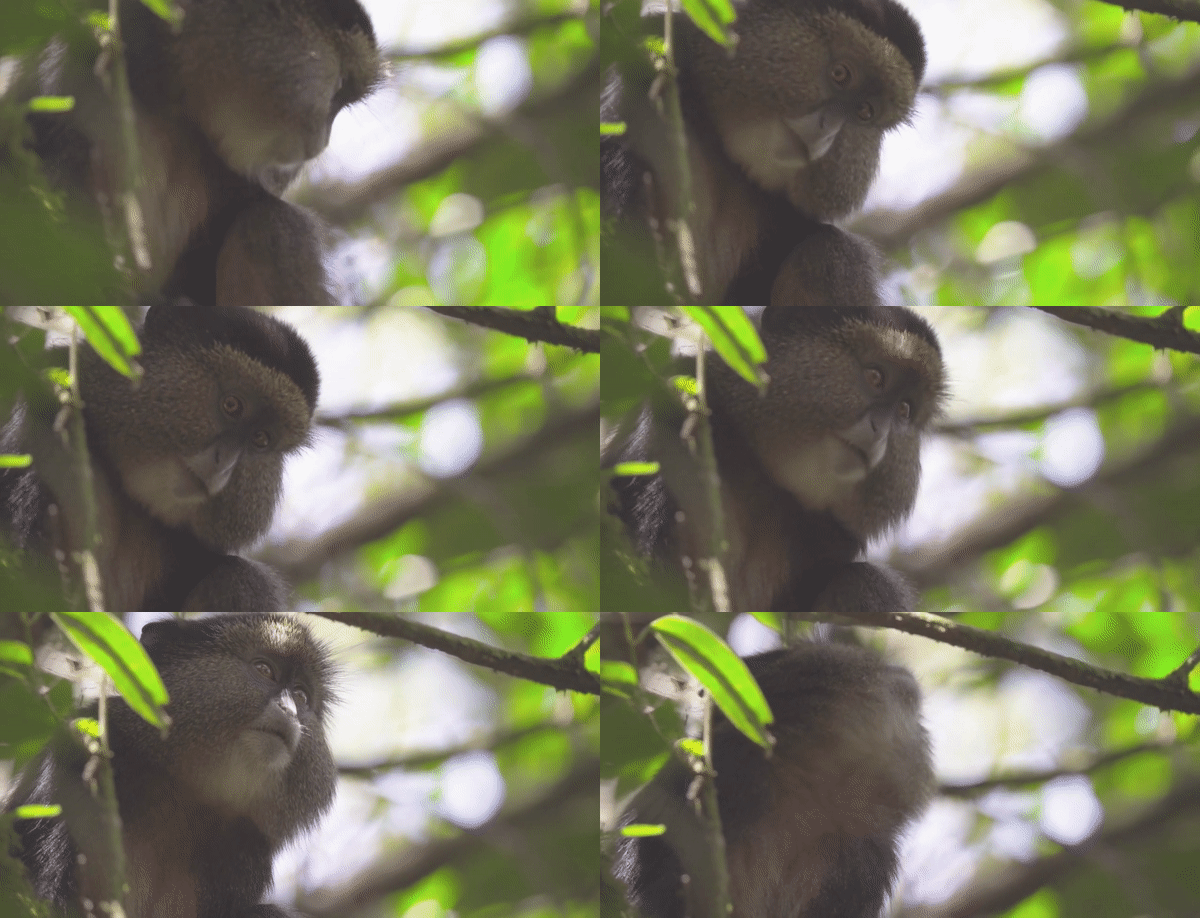
Golden monkeys are instantly recognisable by their vibrant golden-orange fur, which shimmers against the deep green of the bamboo forest. Their faces are framed by a halo of golden hair, with expressive eyes that reflect the intelligence and curiosity of these social primates. The Golden Monkey was previously thought to be a subspecies of the Blue Monkey. The two species look similar, although the Golden Monkey has a golden-orange patch on their upper flanks and back.
Adults typically weigh between 7 and 12 kilograms and measure up to 60 centimetres in body length, with tails extending even longer. Agile and acrobatic, golden monkeys leap between slender bamboo stalks, their movements swift and fluid as they forage in the canopy. Living in groups that can number over 60 individuals, the golden monkey’s social bonds are strong, with constant vocalisations and grooming sessions echoing through the forest. Their calls—soft chirps and whistles—blend with the forest’s morning chorus, a reminder of the complex lives unfolding in these threatened habitats.
Threats
Deforestation for palm oil and other monocultures
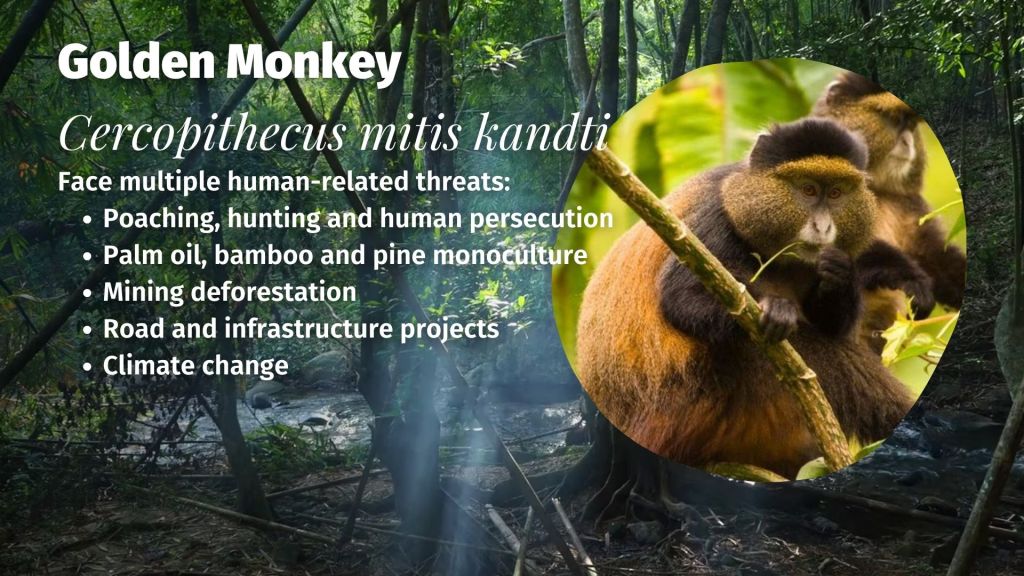
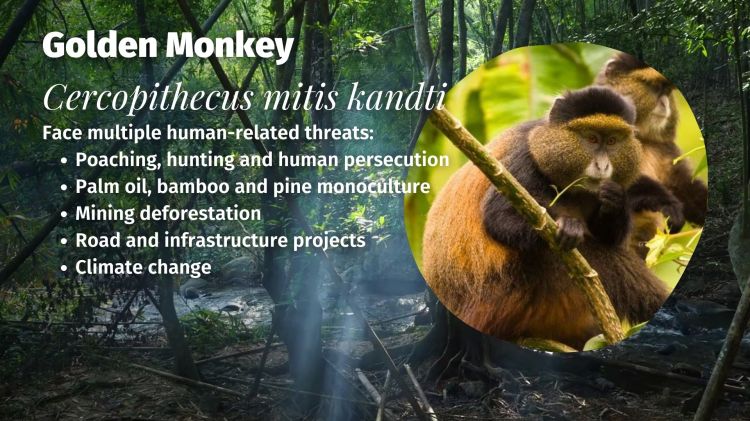
The golden monkey’s Endangered status is inseparable from the devastation wrought by palm oil, pine and bamboo agricultural expansion. Since the 1950s, the Virunga massif and Gishwati forests have lost vast tracts of habitat, with the Gishwati forest suffering a staggering 98% reduction. In the Rwandan part of the Virunga massif, habitat has shrunk by approximately 50%. These losses are driven by the relentless clearing of forests for palm oil, livestock, and crop production, leaving only isolated fragments for the golden monkey to survive. As the forest falls silent, the golden monkey’s world contracts, their food sources dwindle, and their future becomes ever more precarious.
Logging and habitat fragmentation
Logging scars the landscape, carving roads through once-continuous forests and isolating golden monkey populations. Fragmentation disrupts the intricate web of life in which the golden monkey is entwined, reducing genetic diversity and increasing vulnerability to disease and environmental change. In the Gishwati-Mukura landscape, golden monkeys are forced into degraded monoculture plantations, where their diet and behaviour shift dramatically in response to limited resources.
Poaching and human disturbance
Despite legal protection, golden monkeys remain at risk from poaching and illegal activities within their remaining habitats. Snares set for other wildlife can injure or kill golden monkeys, while the presence of humans in the forest brings stress and disruption to their daily lives. The pressure of human population densities—up to 1,000 people per square kilometre in some areas—further encroaches on their fragile existence.
Climate change
Shifting rainfall patterns and changes in key food plant regeneration, potentially driven by climate change, threaten to alter the delicate balance of the golden monkey’s ecosystem. As fruiting and flowering times change, the availability of essential foods becomes unpredictable, challenging the survival of this already vulnerable primate.
Diet
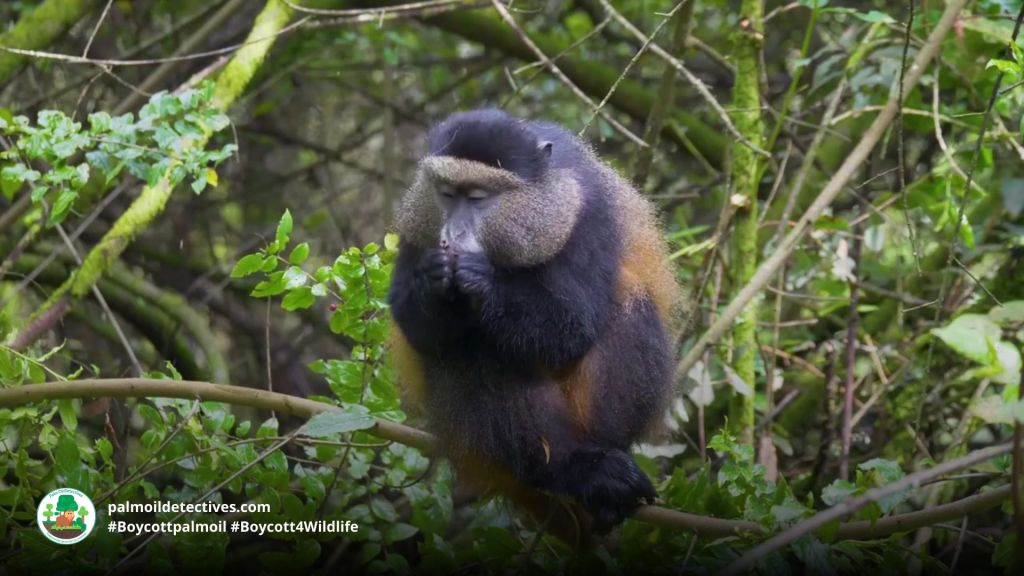
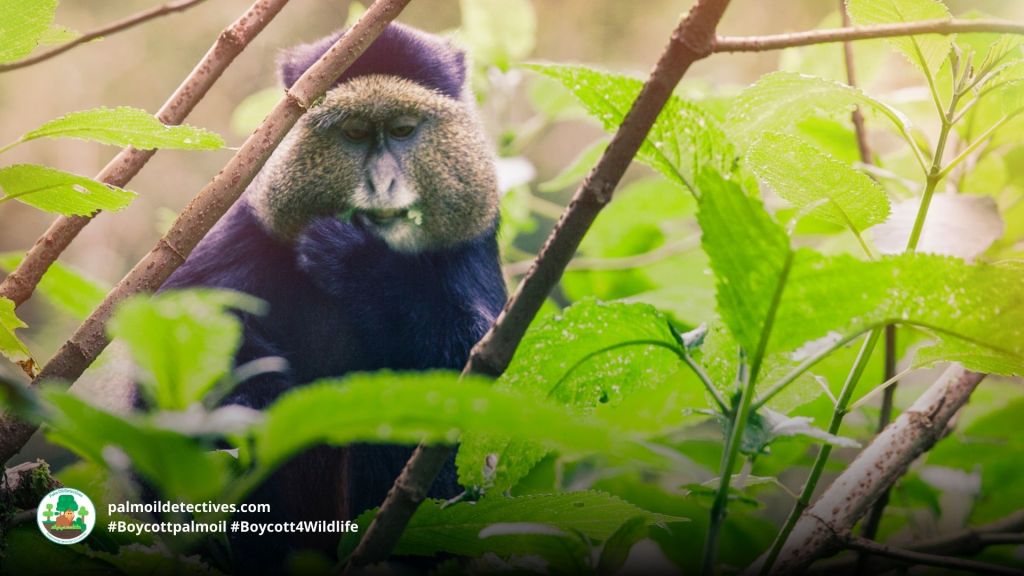
Golden monkeys are primarily frugivorous and folivorous, feasting on a diverse array of fruits, young leaves, bamboo shoots, and flowers. In the bamboo forests of the Virunga massif, they are especially fond of tender bamboo shoots and leaves, which provide both food and moisture. However, in degraded habitats such as pine plantations outside Gishwati-Mukura National Park, golden monkeys have adapted to consume pinecones and needles, a stark departure from their typical diet. This flexibility underscores their resilience but also signals the severity of habitat degradation they face. Their foraging is a rhythmic dance through the forest, with group members spreading out to exploit seasonal abundance and retreating together when resources are scarce.
Reproduction and Mating
Golden monkeys exhibit pronounced reproductive seasonality, with births peaking during periods of high fruit availability. Studies in Gishwati forest reveal that food abundance directly influences mating and birthing patterns, underscoring the importance of intact, diverse habitats for their survival. Gestation lasts about five months, after which a single infant is born. Mothers are attentive and nurturing, carrying their young close as they move through the canopy, while other group members participate in grooming and protection. The social fabric of golden monkey groups is woven through these intimate interactions, with infants learning essential skills by observing and mimicking older individuals.
Geographic Range
The golden monkey’s range is heartbreakingly small and fragmented. They are found only in the Virunga massif—spanning the borders of Rwanda, Uganda, and the Democratic Republic of the Congo—and in the Gishwati-Mukura National Park and Gishwati Forest in Rwanda. Once more widespread, their historical range has been decimated by decades of deforestation and human encroachment. Today, only two isolated populations persist, separated by expanses of farmland and settlements. The forests they inhabit are alive with the sounds of rain and the scent of moss, but these refuges are shrinking, and the golden monkey’s hold on survival is tenuous.
FAQs
What is the current population size of the golden monkey Cercopithecus mitis kandti?
Current estimates indicate that the golden monkey population is limited to two small, isolated fragments: the Virunga massif and Gishwati Forest. Surveys in Volcanoes National Park and Gishwati Forest conducted between 2007 and 2018 provide density and group size estimates, but the overall population remains small and vulnerable. In Mgahinga Gorilla National Park, a 41% decline was observed between 1998 and 2003, reflecting the ongoing threats to their survival. The continued loss and fragmentation of habitat make accurate population assessments challenging, but the trend is one of decline.
How long do golden monkeys live in the wild?
Golden monkeys can live up to 20 years in the wild, although survival rates are heavily influenced by habitat quality, predation, and human disturbance. Infants face significant risks from predation and environmental stress, while adults must navigate the dangers of poaching and habitat encroachment. The stability and longevity of golden monkey groups depend on the preservation of their forest home and the reduction of human-induced threats.
What are the main conservation challenges for the golden monkey?
The golden monkey faces a suite of interlinked challenges: palm oil-driven deforestation, logging, agricultural expansion, poaching, and climate change. The fragmentation of their habitat isolates populations, reducing genetic diversity and increasing vulnerability to disease and environmental fluctuations. Effective protection of the golden monkey requires indigenous-led conservation and agroecology, as well as the safeguarding of remaining forests from further destruction. Only through coordinated action across national borders and genuine community engagement can the golden monkey’s future be secured.
Does the golden monkey Cercopithecus mitis kandti make a good pet?
Golden monkeys do not make good pets. Captivity causes extreme stress, loneliness, and early death for these highly social, intelligent primates. The pet trade tears families apart and fuels extinction, as infants are ripped from their mothers and forced into unnatural, impoverished conditions. Protecting golden monkeys means rejecting the illegal pet trade and supporting their right to live wild and free in their forest homes.
Take Action!
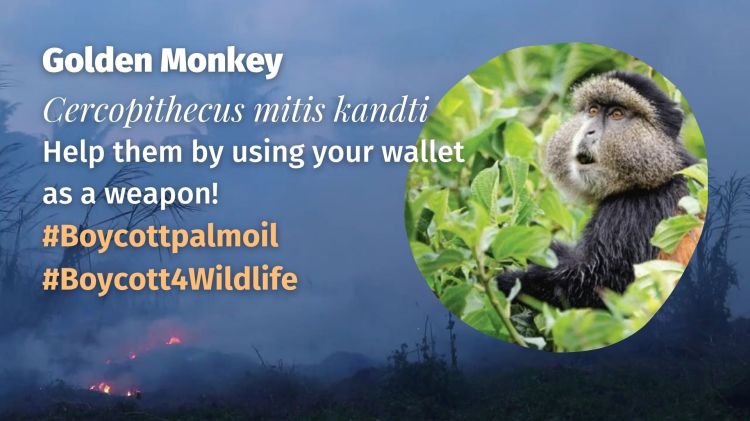
Fight for the golden monkey’s survival every time you shop—#BoycottPalmOil #Boycott4Wildlife. Support indigenous-led conservation and agroecology. Reject products linked to deforestation and the illegal wildlife trade. Adopt a #vegan lifestyle and #BoycottMeat to protect wild and farmed animals alike. Every choice matters—stand with the golden monkey and defend their forest home.
You can support this beautiful animal
There are no known conservation activities for this animal. Share out this post to social media and join the #BoycottPalmOil #Boycott4Wildlife on social media to raise awareness
Further Information
Butynski, T.M. & de Jong, Y.A. 2020. Cercopithecus mitis ssp. kandti. The IUCN Red List of Threatened Species 2020: e.T4236A92571626. https://dx.doi.org/10.2305/IUCN.UK.2020-2.RLTS.T4236A92571626.en. Downloaded on 06 June 2021.
Deogratias, T., Eckardt, W., Kaplin, B. A., Stoinski, T. S., & Caillaud, D. (2022). Food availability influences birth seasonality at a small spatial scale in endangered golden monkeys (Cercopithecus mitis kandti). American Journal of Biological Anthropology. https://doi.org/10.1002/ajpa.24681
Deogratias, T., Eckardt, W., Caillaud, D., & Kaplin, B. A. (2021). High flexibility in diet and ranging patterns in two golden monkey (Cercopithecus mitis kandti) populations in Rwanda. American Journal of Primatology. https://doi.org/10.1002/ajp.23347
Deogratias, T., Kaplin, B. A., Eckardt, W., Musana, A., & Caillaud, D. (2022). Distribution and conservation status of the golden monkey Cercopithecus mitis kandti in Rwanda. Oryx, 56(3), 381-391. https://doi.org/10.1017/S0030605321001009
Ngabikwiye, M., Eckardt, W., van der Hoek, Y., Nyiramana, A., & Deogratias, T. (2024). Diet and travel distances of golden monkey (Cercopithecus mitis kandti) in a pine plantation outside Gishwati-Mukura National Park, Rwanda. African Primates, 18(1), 1-8.
Regional Golden Monkey (Cercopithecus mitis kandti) Conservation Action Plan 2023–2028. (2023). Regional golden monkey (Cercopithecus mitis kandti) conservation action plan 2023–2028. IUCN. https://portals.iucn.org/library/node/50749

How can I help the #Boycott4Wildlife?
Take Action in Five Ways
1. Join the #Boycott4Wildlife on social media and subscribe to stay in the loop: Share posts from this website to your own network on Twitter, Mastadon, Instagram, Facebook and Youtube using the hashtags #Boycottpalmoil #Boycott4Wildlife.
2. Contribute stories: Academics, conservationists, scientists, indigenous rights advocates and animal rights advocates working to expose the corruption of the palm oil industry or to save animals can contribute stories to the website.




3. Supermarket sleuthing: Next time you’re in the supermarket, take photos of products containing palm oil. Share these to social media along with the hashtags to call out the greenwashing and ecocide of the brands who use palm oil. You can also take photos of palm oil free products and congratulate brands when they go palm oil free.
4. Take to the streets: Get in touch with Palm Oil Detectives to find out more.
5. Donate: Make a one-off or monthly donation to Palm Oil Detectives as a way of saying thank you and to help pay for ongoing running costs of the website and social media campaigns. Donate here
Discover more from Palm Oil Detectives
Subscribe to get the latest posts sent to your email.
 Palm Oil Detectives