
Marbled Cat Pardofelis marmorata
IUCN Status: Near Threatened
Location: India, Nepal, Bhutan, Bangladesh, Myanmar, Thailand, Laos, Vietnam, Cambodia, Malaysia, Indonesia (Sumatra, Borneo), China (Yunnan, Guangxi, Tibet), Brunei
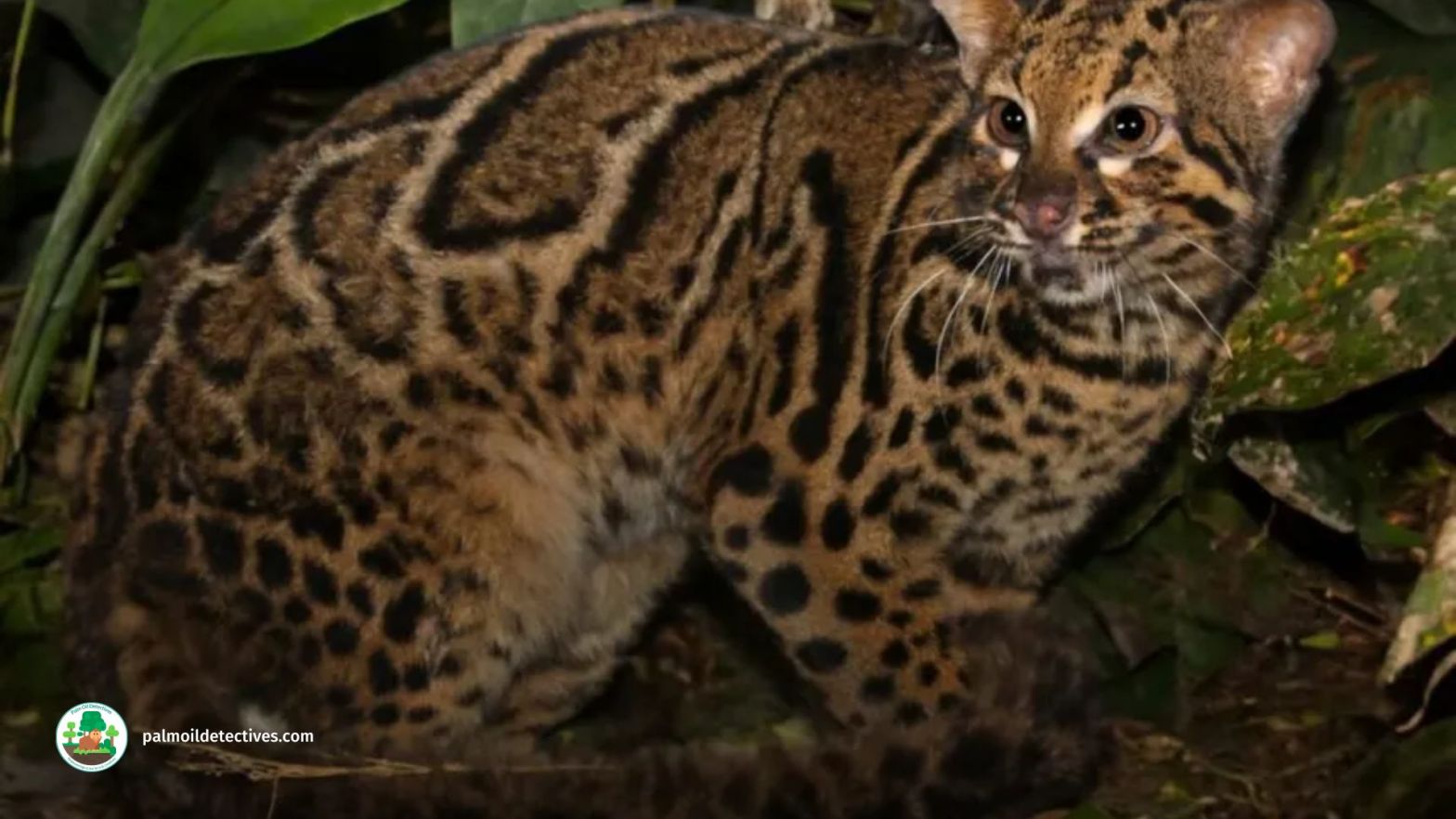
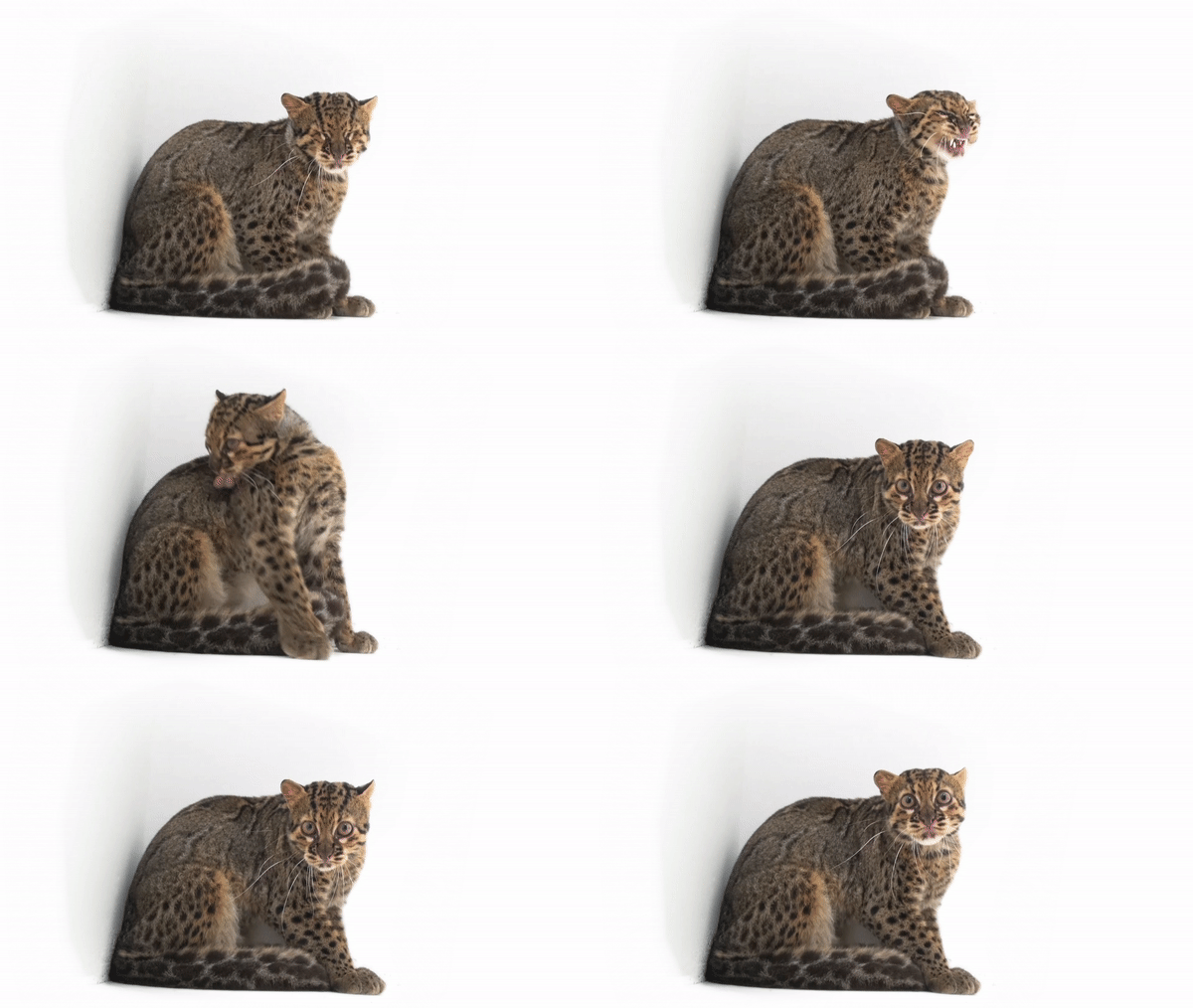
The marbled cat is a small #wildcat that can be found in the eastern part of the Himalayas and southern Asia. They are related to the Asian Golden Cat and the Borneo Bay Cat, and similar in size to a house cat. The Marbled Cat’s fur varies in color from brownish yellow to grey. Marbled Cats have rounded, short ears with a black spot on the back of the ears, and a white upper lip and chin.
With a coat resembling swirling marble, the Marbled Cat is a true spectacle of nature. Their elongated body and bushy tail help them balance effortlessly among tree branches, while their large paws and retractable claws make them formidable climbers. These agile hunters are rarely seen, spending much of their time in the trees where they stalk prey and avoid ground-dwelling predators.
Despite their elusive nature, Marbled Cats face mounting threats. #timber #palmoil #deforestation and human settlements are destroying their rainforest home. Illegal #hunting, indiscriminate snaring, and retaliatory killings from farmers also contribute to their decline. Without urgent action, these magnificent cats may disappear from the wild. #BoycottPalmOil #Boycott4Wildlife every time you shop.
The elusive and beautiful Marbled #Cat 🐱🫶 is a small #wildcat of #Asia. They’re Near Threatened by #palmoil #deforestation 🌴🔥 #Chinese medicine 🔪 and #hunting. Join the #Boycott4Wildlife #Boycottpalmoil to help them 🌴🪔☠️🔥🧐⛔️ @palmoildetect https://palmoildetectives.com/2021/07/24/marbled-cat-pardofelis-marmorata/
The Marbled Cat is forest dependent and forest loss and degradation is continuing across its range from logging and expansion of human settlements and agriculture, including oil palm plantations.
IUCN red list


The Marbled Cat is valued for skin, meat and bones, although it is infrequently observed in the wildlife trade (Nowell and Jackson 1996). However, it is possible that illegal killing and trade is underreported compared to other species. Targeted and indiscriminate snaring are prevalent throughout much of the range and likely to pose a significant threat.
IUCN RED LIST
Appearance and Behaviour
The Marbled Cat is a medium-sized wild feline, weighing between 2 to 5 kg, with a strikingly patterned coat of dark, irregular blotches against a pale gold or grey background. Their large eyes, adapted for both day and night vision, and long whiskers make them highly sensitive to movement in their surroundings.
Unlike most wild cats, Marbled Cats spend much of their time in the trees. Their long, bushy tail—nearly the length of their body—acts as a counterbalance, allowing them to move with exceptional agility through the canopy. They are primarily diurnal, with studies showing more daytime activity than other small wild cats.
Diet
Little is known about the exact dietary habits of the Marbled Cat, but they are thought to be opportunistic hunters. Their primary prey likely includes rodents such as squirrels, as well as birds, reptiles, and possibly small primates. Their exceptional climbing skills give them an advantage over other forest predators, allowing them to ambush prey from above.
Reproduction and Mating
Very little is known about the breeding habits of the Marbled Cat due to their secretive nature. They are believed to reproduce in dense forested areas, likely raising their young in tree hollows or sheltered ground dens. Reports suggest that they give birth to one to four kittens per litter, with the mother providing all parental care. Their lifespan in the wild is unknown, but in captivity, they have been recorded living up to 12 years.
Geographic Range
The Marbled Cat is distributed across the forests of the Himalayan foothills, Southeast Asia, and the islands of Sumatra and Borneo. They prefer dense, mixed deciduous-evergreen rainforests and are often found in hilly or mountainous regions. Camera trap surveys have detected them in both pristine and disturbed forests, but they appear to avoid open landscapes and plantations, highlighting their strong dependence on undisturbed rainforest.
The Marbled Cat seems to be sensitive to changes and disruptions caused by humans. Status and distribution of the Marbled cat are poorly studied and population trends are unknown. There is some indication that the species may be relatively rare when compared with other felids in the same habitat.
Threats
• Deforestation – Logging, agriculture, and out-of-control palm oil plantations are rapidly destroying their forest home.
• Poaching and the illegal wildlife trade – Though not as commonly hunted as other wild cats, they are still killed for their skin, bones, and meat.
• Indiscriminate snaring – Across their range, widespread snaring poses a deadly threat, catching them as unintended victims.
• Human-wildlife conflict – They are occasionally blamed for killing poultry, leading to retaliatory killings by farmers.
• Habitat fragmentation – Roads, plantations, and human settlements are isolating populations, making survival even more difficult.
Take Action!
The survival of the Marbled Cat depends on the protection of their forest habitat. You can help by:
- Avoiding products containing palm oil, which fuels rainforest destruction.
- Supporting indigenous-led conservation initiatives that protect Southeast Asia’s rainforests.
- Advocating against poaching and the illegal wildlife trade.
- #BoycottPalmOil #Boycott4Wildlife #Vegan
FAQs
How many Marbled Cats are left in the wild?
Exact population numbers are unknown, but they are declining due to habitat destruction and poaching. Their Near Threatened status indicates that without conservation efforts, they may become endangered in the near future.
How long do Marbled Cats live?
In captivity, they have been recorded living up to 12 years, but their lifespan in the wild remains uncertain due to their secretive nature.
Are Marbled Cats good pets?
No! Marbled Cats are wild animals that belong in their natural habitat. The illegal pet trade and wildlife trafficking contribute to their decline. If you care about them, do not support the exotic pet trade—advocate for their protection instead.
Are Marbled Cats related to Clouded Leopards?
Although their coat pattern is similar, they are not closely related to Clouded Leopards. Marbled Cats belong to the genus Pardofelis, which also includes the Asiatic Golden Cat and the Borneo Bay Cat.
Why are Marbled Cats so rare?
Marbled Cats are naturally elusive and spend much of their time in the trees, making sightings rare. Additionally, habitat destruction and hunting have reduced their numbers, making them even harder to find.
How can I help protect Marbled Cats?
Boycott palm oil, support conservation initiatives, and speak out against deforestation. Protecting their rainforest home is the key to their survival.
Further Information
Ross, J., Brodie, J., Cheyne, S., Datta, A., Hearn, A., Loken, B., Lynam, A., McCarthy, J., Phan, C., Rasphone, A., Singh, P. & Wilting, A. 2016. Pardofelis marmorata. The IUCN Red List of Threatened Species 2016: e.T16218A97164299. https://dx.doi.org/10.2305/IUCN.UK.2016-1.RLTS.T16218A97164299.en. Downloaded on 05 June 2021.

How can I help the #Boycott4Wildlife?
Take Action in Five Ways
1. Join the #Boycott4Wildlife on social media and subscribe to stay in the loop: Share posts from this website to your own network on Twitter, Mastadon, Instagram, Facebook and Youtube using the hashtags #Boycottpalmoil #Boycott4Wildlife.
2. Contribute stories: Academics, conservationists, scientists, indigenous rights advocates and animal rights advocates working to expose the corruption of the palm oil industry or to save animals can contribute stories to the website.





3. Supermarket sleuthing: Next time you’re in the supermarket, take photos of products containing palm oil. Share these to social media along with the hashtags to call out the greenwashing and ecocide of the brands who use palm oil. You can also take photos of palm oil free products and congratulate brands when they go palm oil free.
4. Take to the streets: Get in touch with Palm Oil Detectives to find out more.
5. Donate: Make a one-off or monthly donation to Palm Oil Detectives as a way of saying thank you and to help pay for ongoing running costs of the website and social media campaigns. Donate here
Discover more from Palm Oil Detectives
Subscribe to get the latest posts sent to your email.
 Palm Oil Detectives
3 thoughts on “Marbled Cat Pardofelis marmorata”