
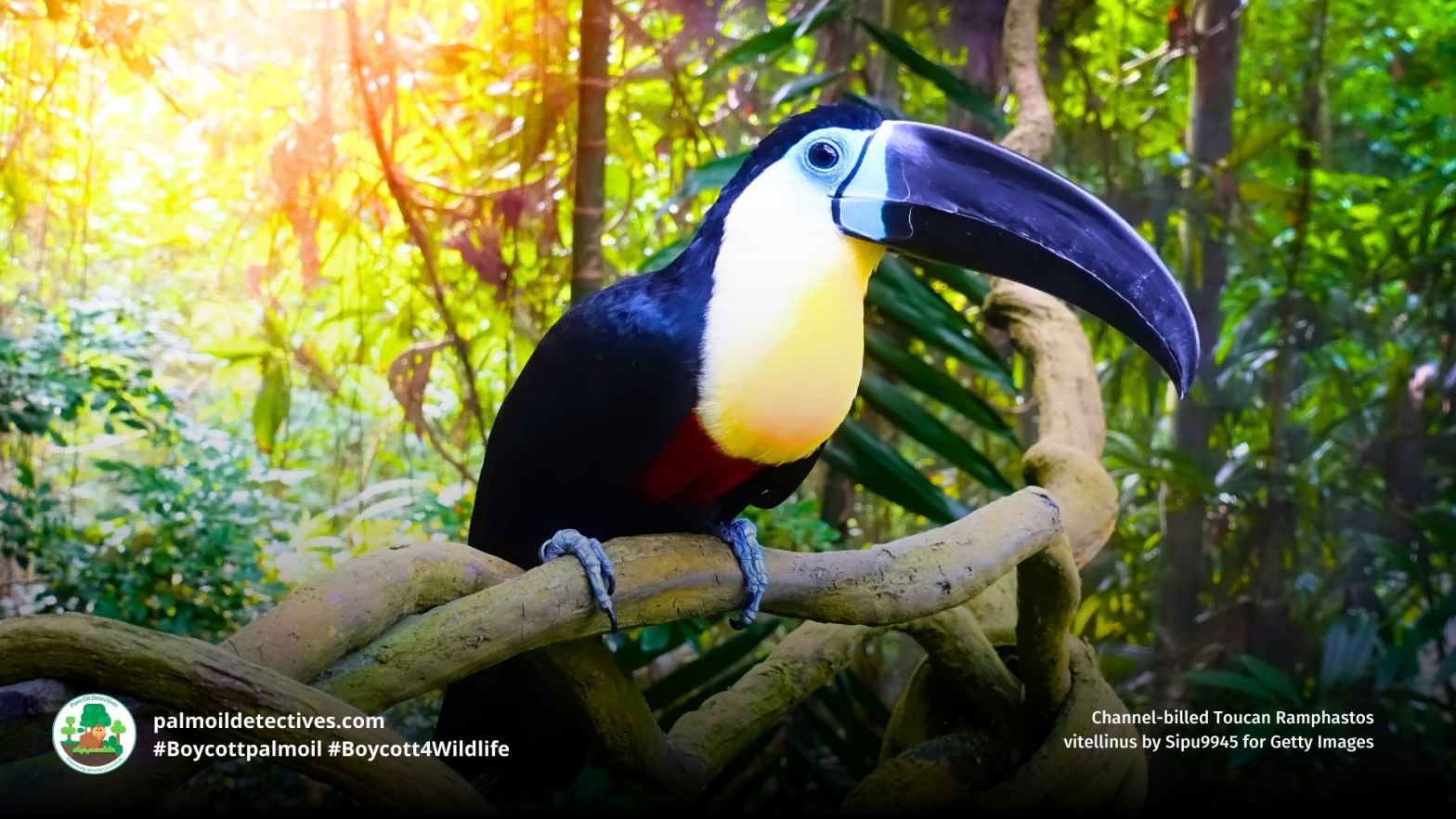
Channel-billed Toucan Ramphastos vitellinus
Location: Found across South America, including Venezuela, Colombia, the Guianas, Brazil, Ecuador, Peru, Bolivia, and Trinidad.
Deep in the heart of the #Amazon rainforest, a flash of vibrant colour moves between the towering canopy trees. The Channel-billed #Toucan Ramphastos vitellinus is a striking bird endemic to #Colombia, #Venezuela, #Ecuador, #Peru, Brazil and #Bolivia with a massive, curved bill and a raucous voice that echoes through the jungle. With their large, expressive eyes and vivid markings, these toucans are more than just symbols of tropical biodiversity—they are crucial players in the rainforest ecosystem, dispersing seeds that sustain the lush vegetation.
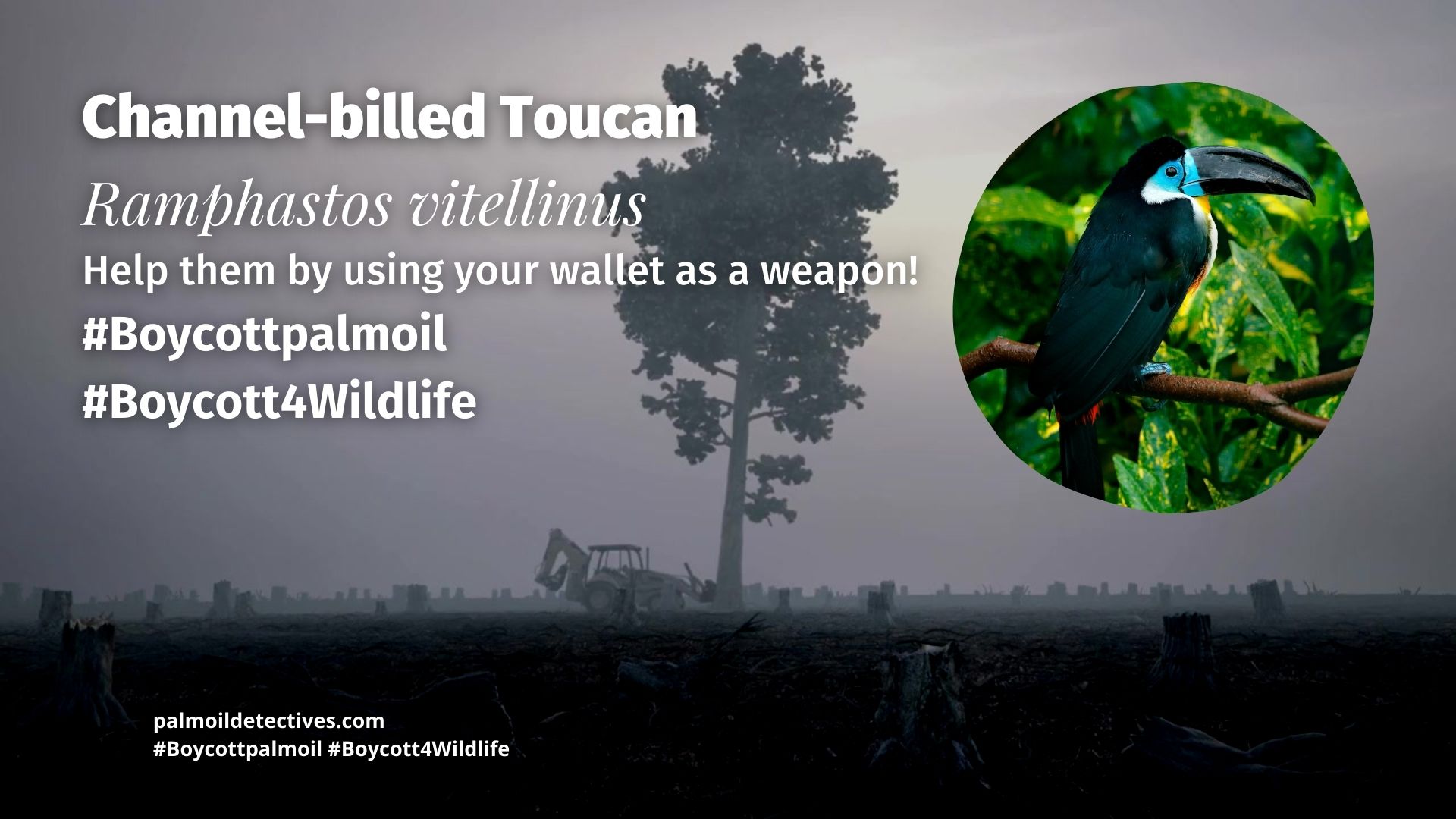
But their world is shrinking. The relentless destruction of the Amazon for cattle ranching, soy production, #palmoil and #goldmining is closing in on them. Habitat loss, hunting, and the wildlife trade are pushing them towards localised declines. In some parts of their range, they are disappearing entirely. Use your wallet as a weapon—fight for their survival. #BoycottPalmOil #Boycott4Wildlife
Colourful tree-dwellers Channel-billed Toucans are #Amazon #icons in #Brazil 🇧🇷#Venezuela 🇻🇪 #Colombia 🇨🇴 Threats include #PalmOil 🌴🔥#Soy #Meat 🥩🔥and #GoldMining 🥇🔥 Help them survive when you #BoycottPalmOil 🌴☠️🧐⛔️ #BoycottGold #Boycott4Wildlife https://palmoildetectives.com/2021/08/02/channel-billed-toucan-ramphastos-vitellinus/
The primary threat to the Channel-billed Toucan is accelerating deforestation in the Amazon basin as land is cleared for cattle ranching, palm oil and soy production, facilitated by expansion of the road network (Soares-Filho et al. 2006, Bird et al. 2011).
IUCN red list





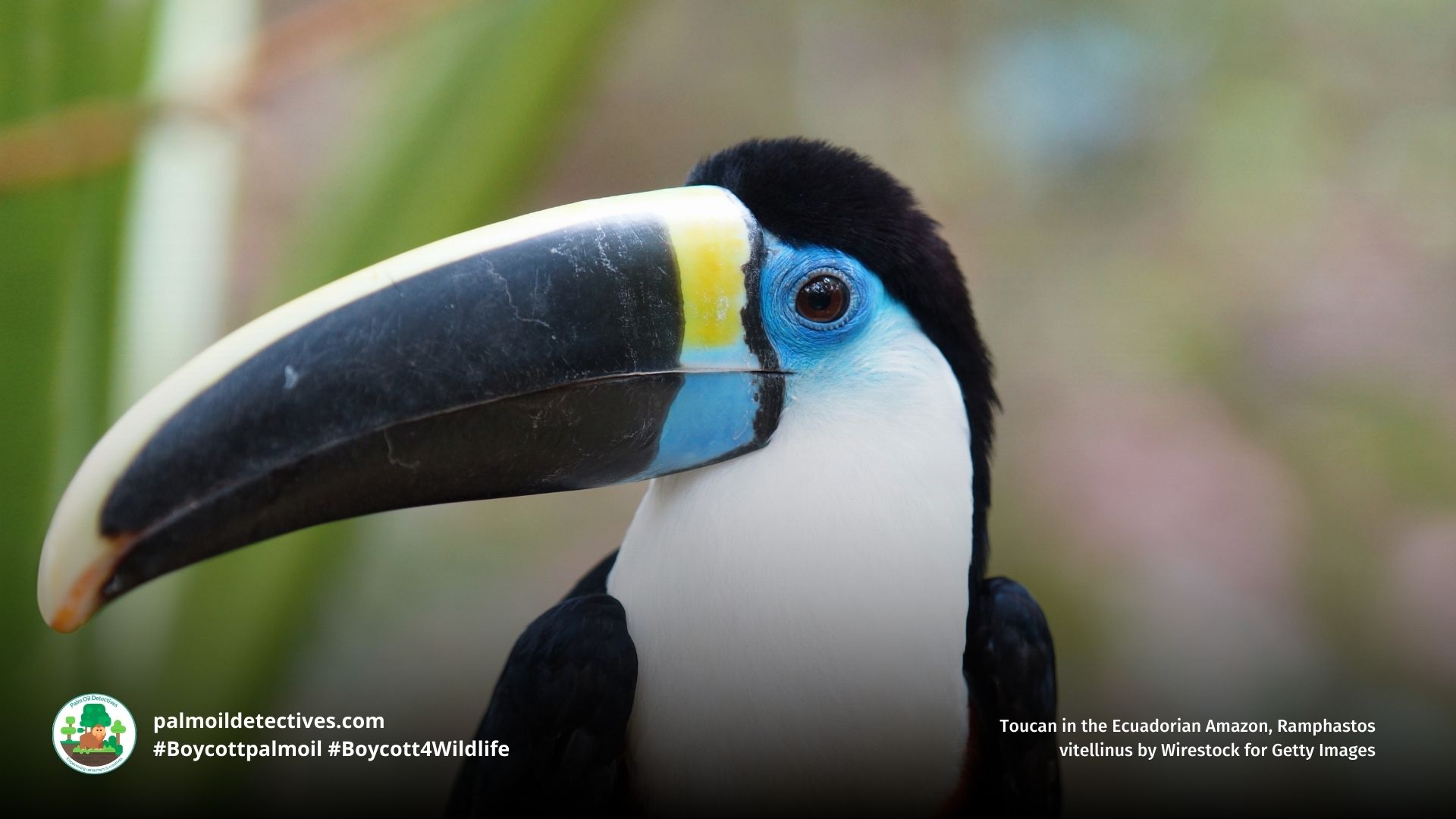
Appearance and Behaviour
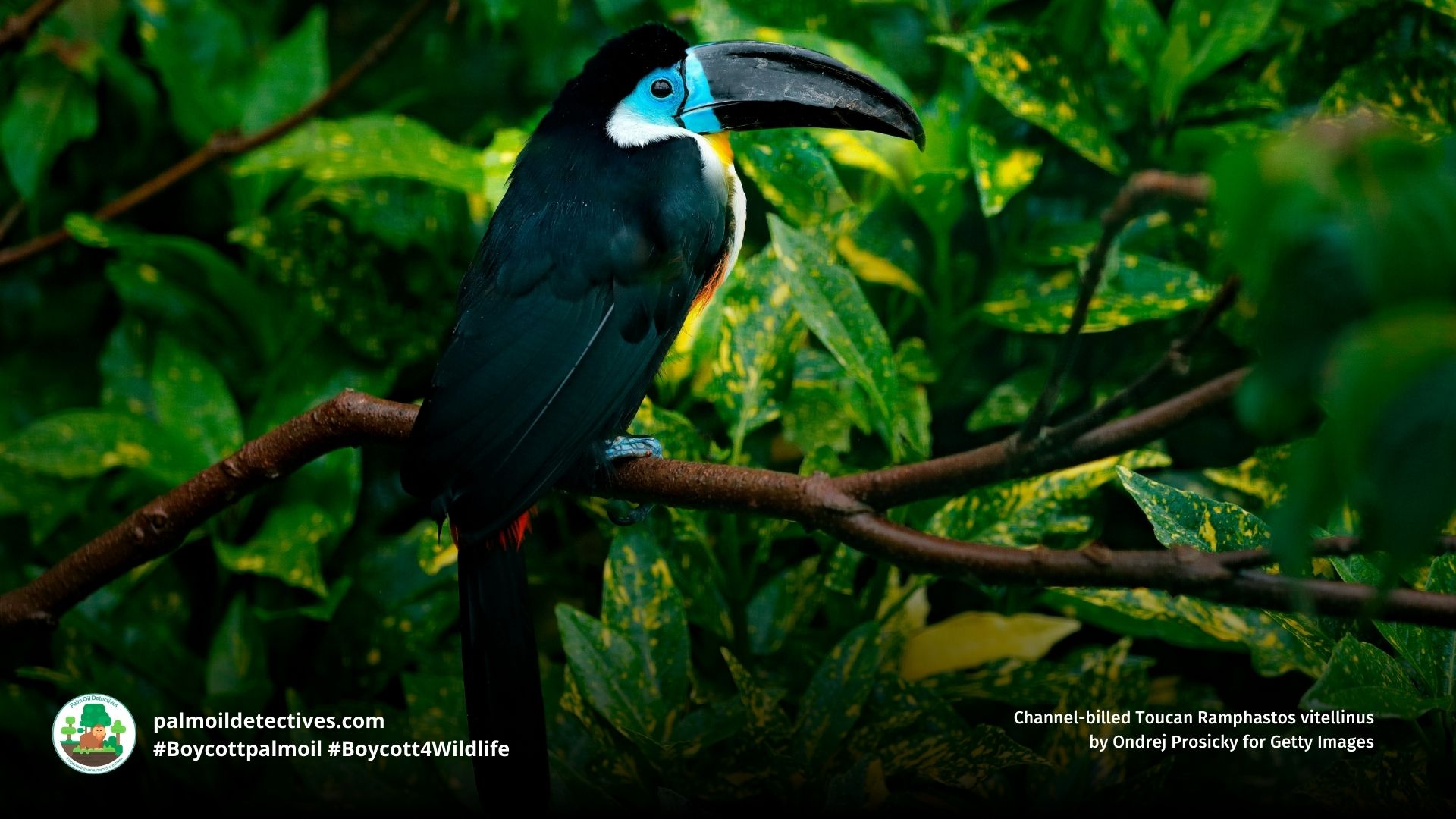
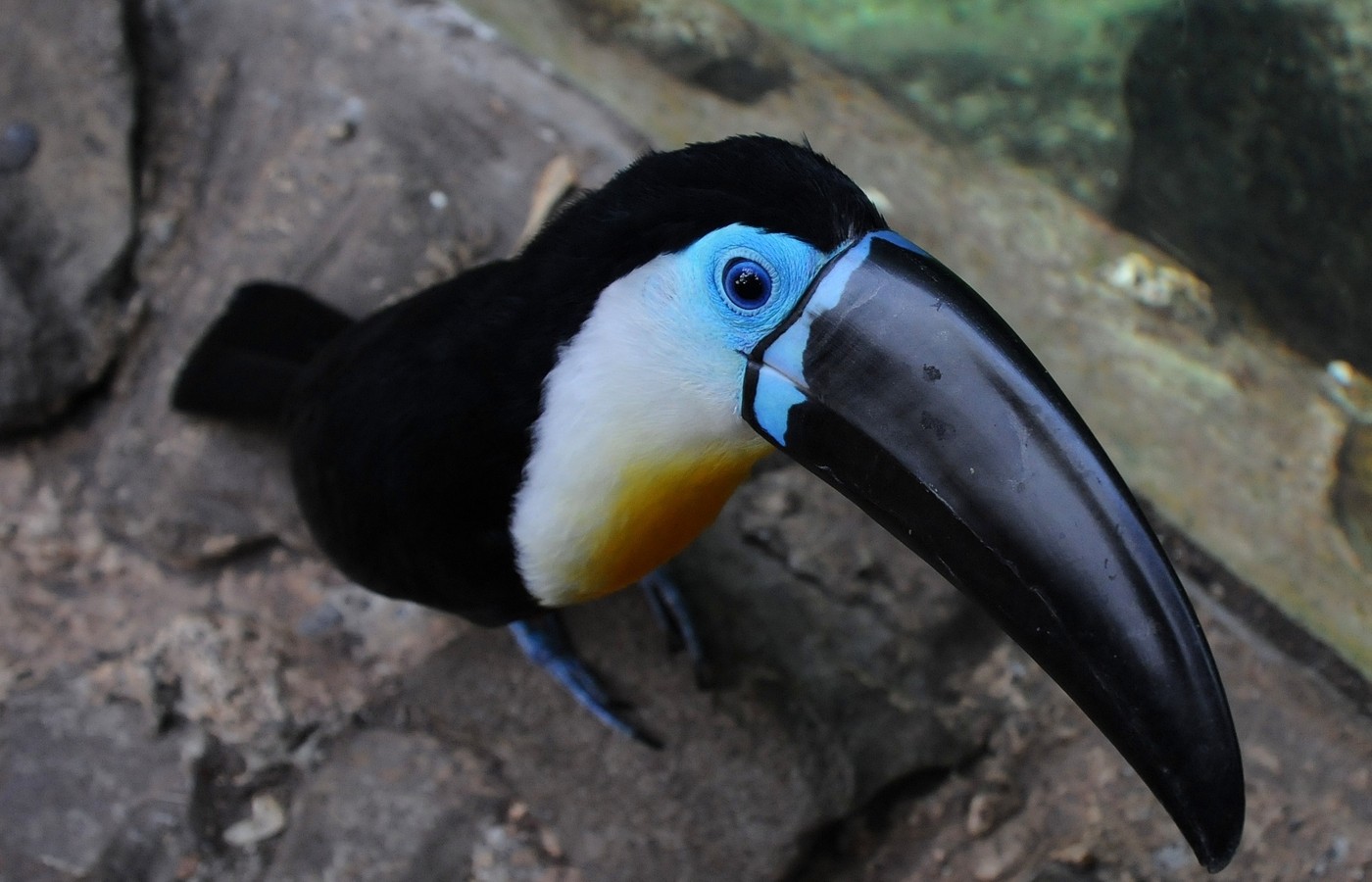
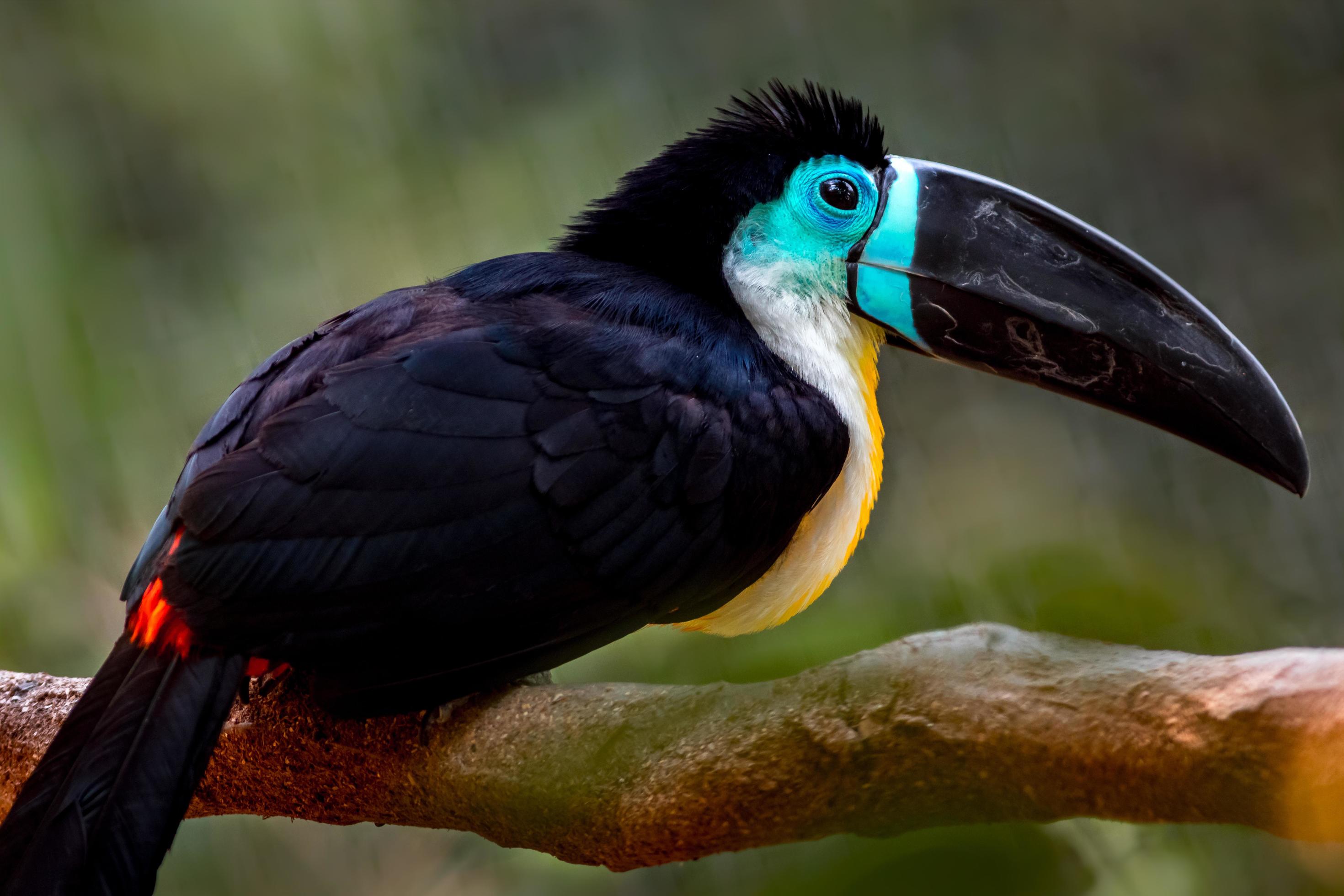
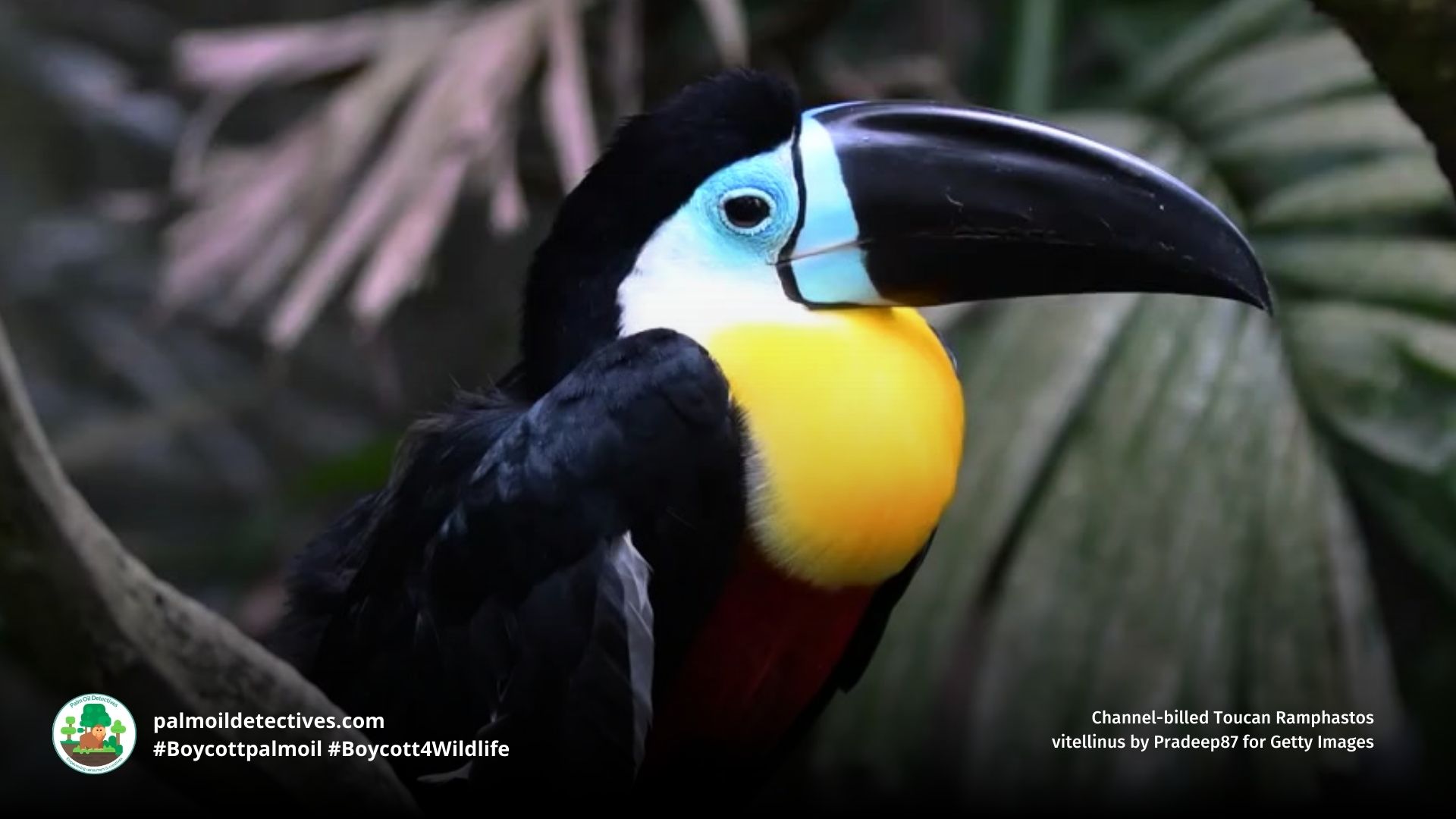
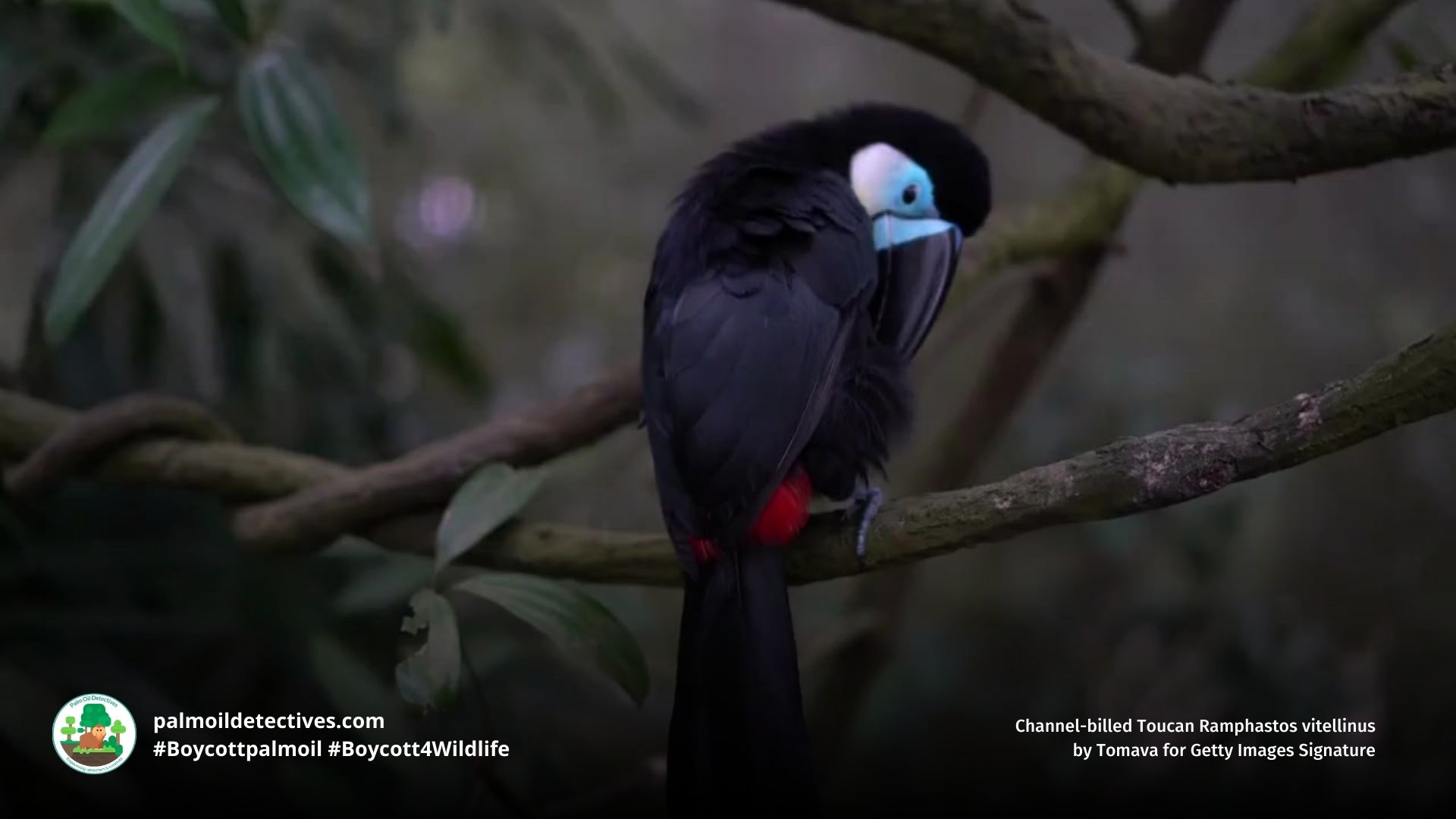
The Channel-billed Toucan is a striking bird, reaching up to 48 cm in length and weighing between 300-430 g. Their most recognisable feature is their enormous, arched bill, which varies in colour depending on the subspecies. Their plumage is primarily black, with bright splashes of yellow, orange, red, and blue. A vivid blue patch of bare skin surrounds their eyes, giving them a permanently inquisitive expression.
Unlike their smaller toucanet cousins, Channel-billed Toucans are strong fliers, moving between fruiting trees in a distinctive undulating flight pattern. They are highly social, often travelling in small family groups or loose flocks, and their deep, croaking calls resonate through the rainforest canopy.
Channel-billed Toucans rarely fly more than 100 metres at a time and prefer to bounce from branch to branch. Their large bills help them to regulate body temperature. A toucan’s bill can reach over 18cm in length, and is also used to reach for food and break open bird nests.
Channel-billed Toucans are also declining as a result of hunting pressure (del Hoyo et al. 2002), although due to beliefs about the sacredness of these birds, their consumption by Indigenous peoples of Amazonia is rare.
Subspecies
There are four recognised subspecies of Ramphastos vitellinus, each with slightly different markings and geographic distributions:
- Nominate subspecies (R. v. vitellinus): Found in Venezuela, the Guianas, northern Brazil, and Trinidad.
- Yellow-ridged Toucan (R. v. culminatus): Found in the upper Amazon Basin from western Venezuela to northern Bolivia. Distinguished by a yellow bill ridge.
- Ariel Toucan (R. v. ariel): Inhabits central and eastern Brazil south of the Amazon. Has a striking orange throat and chest, with a yellow-based bill.
- Citron-throated Toucan (R. v. citreolaemus): Found in northern Colombia and north-western Venezuela. Has a yellow-tinged throat and a pale bluish iris.
Where their ranges overlap, these subspecies frequently interbreed, creating intermediate forms.
Diet
Channel-billed Toucans are primarily frugivorous birds, feeding on lipid-rich fruits from trees such as Virola, Euterpe, Cecropia, and Ficus. However, they also supplement their diet with small reptiles, insects, eggs, and nestlings, making them opportunistic omnivores. Their large bills allow them to pluck fruit from branches that are too thin to support their weight, a crucial adaptation for forest survival.
Reproduction and Mating
Like other toucans and many other birds, they nest in tree cavities, where the female lays 2-4 eggs. Both parents take turns incubating the eggs for around 16 days. Hatchlings are born blind and featherless, with specialised heel pads that protect them from the rough nest floor. They remain in the nest for 40-50 days before fledging, relying on their parents for food and protection.
Geographic Range and Habitat
Channel-billed Toucans inhabit a wide range of forested environments, from lowland tropical rainforests to riverine forests and swampy areas. They are most common in pristine forests but can also be found in forest edges, clearings, and even small patches of forest within savanna landscapes. However, they are less frequently observed in secondary or selectively logged forests, and their long-term survival depends on the preservation of mature, undisturbed rainforest.
Threats
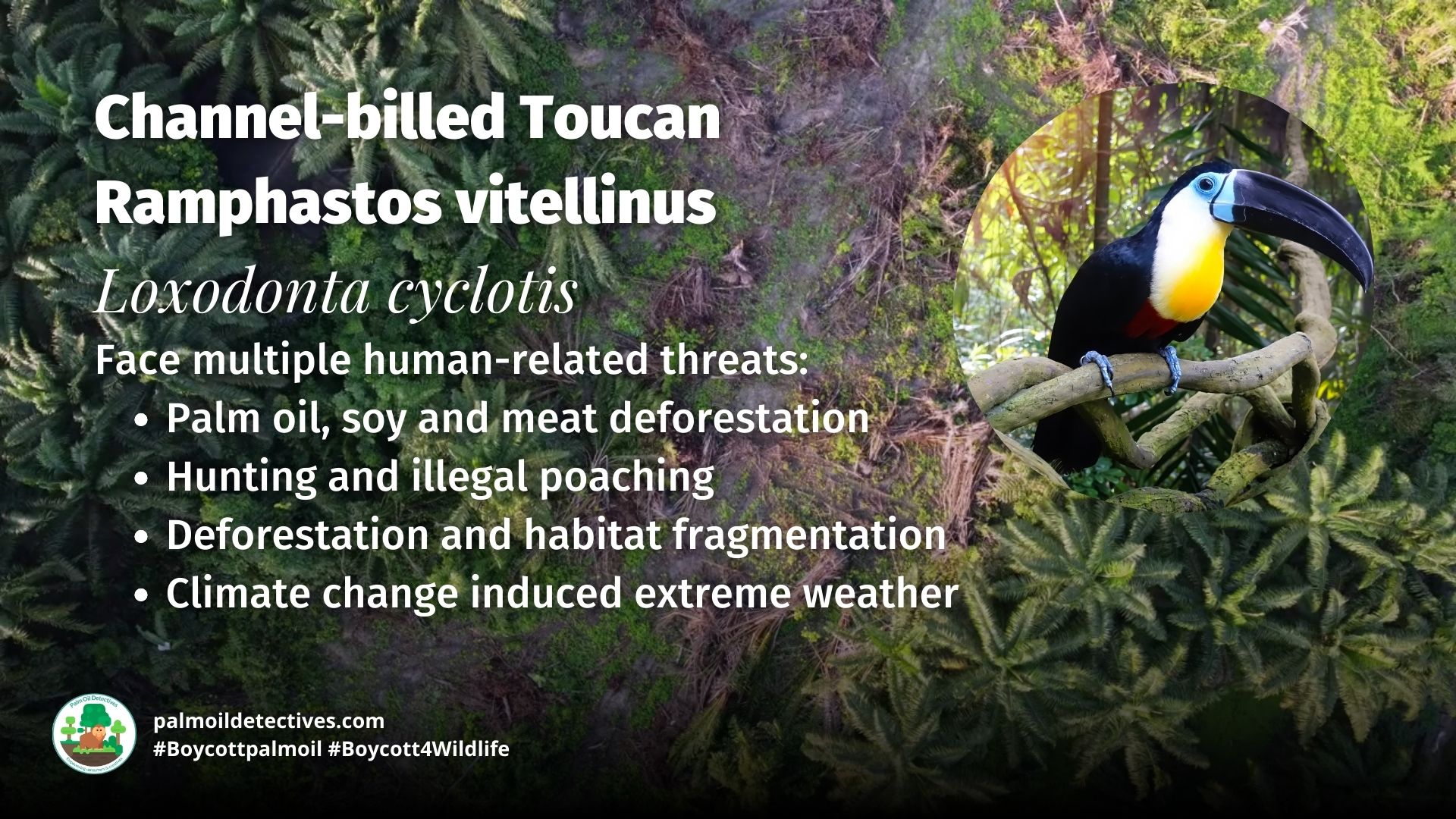
- Deforestation for Palm Oil, Cattle and Soy: The Amazon is being destroyed at an unprecedented rate to make way for cattle ranching, palm oil and soy plantations, wiping out crucial habitat (Soares-Filho et al., 2006; Bird et al., 2011).
- Gold Mining: Illegal and industrial-scale gold mining operations pollute waterways and destroy vast areas of rainforest (Ottema, 2020).
- Hunting and Trade: Although not widely consumed by forest communities, toucans are hunted in certain regions and are frequently trapped for the illegal pet trade, particularly for export to Asia (Bruslund, 2022).
- Logging Pressure: While the impact of logging in Suriname remains relatively low, the intensity of forest exploitation is increasing, leading to greater habitat fragmentation (Ottema, 2020).
Ecological Role: Seed Dispersers and Nest Predators
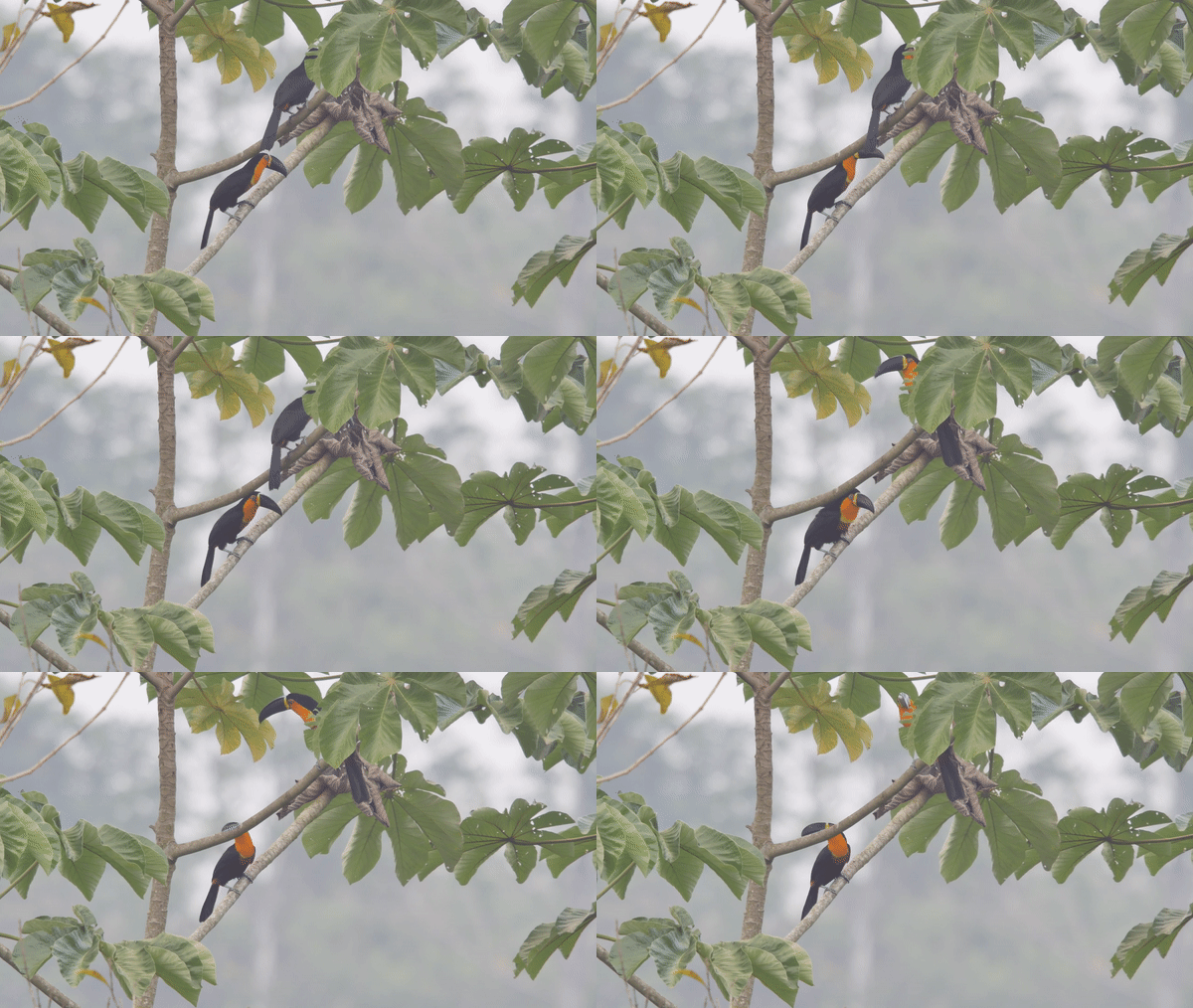
Channel-billed Toucans are essential seed dispersers, particularly for large-seeded rainforest trees. They ingest fruit whole and excrete seeds far from the parent tree, facilitating forest regeneration. However, they also have a darker side—recent studies have documented them raiding the nests of smaller birds, preying on eggs and chicks (Costa et al., 2021). This predatory behaviour may have increased due to habitat fragmentation and urban encroachment, forcing them to exploit alternative food sources.
Take Action
Every purchase you make has the power to protect the Amazon. Avoid palm oil, boycott deforestation-linked products, and demand action. #BoycottPalmOil #Boycott4Wildlife
FAQS
What does the Channel-billed Toucan eat?
They primarily consume fruit but also eat insects, lizards, bird eggs, and nestlings.
Where do they live?
They are found in forests across South America, including the Amazon, the Guianas, Venezuela, Colombia, Ecuador, Peru, Bolivia, and Trinidad.
Why are they threatened?
Deforestation for palm oil, soy and meat agriculture, gold mining, hunting, and the pet trade are driving population declines in some parts of their range.
How many subspecies are there?
There are four recognised subspecies, with intermediate forms occurring where ranges overlap.
You can support this beautiful animal
There are no known conservation activities for this animal. Share out this post to social media and join the #BoycottPalmOil #Boycott4Wildlife on social media to raise awareness
Further Information
Merazonia wildlife rescue and sanctuary rehabilitate parrots and toucans, some of the most trafficked animals in the world. Donate to them here

BirdLife International. 2016. Ramphastos vitellinus. The IUCN Red List of Threatened Species 2016: e.T22726222A94915148. https://dx.doi.org/10.2305/IUCN.UK.2016-3.RLTS.T22726222A94915148.en. Downloaded on 06 June 2021.
Costa, E. R., et al. (2021). Nest predation by Channel-billed Toucans on Pale-breasted Thrushes in an urban forest fragment. Ornithology Research, 29, 223–226. https://link.springer.com/article/10.1007/s43388-021-00075-w
Soares-Filho, B., et al. (2006). Modelling conservation in the Amazon basin. Nature, 440(7083), 520–523. https://doi.org/10.1038/nature04389

How can I help the #Boycott4Wildlife?
Take Action in Five Ways
1. Join the #Boycott4Wildlife on social media and subscribe to stay in the loop: Share posts from this website to your own network on Twitter, Mastadon, Instagram, Facebook and Youtube using the hashtags #Boycottpalmoil #Boycott4Wildlife.
2. Contribute stories: Academics, conservationists, scientists, indigenous rights advocates and animal rights advocates working to expose the corruption of the palm oil industry or to save animals can contribute stories to the website.



3. Supermarket sleuthing: Next time you’re in the supermarket, take photos of products containing palm oil. Share these to social media along with the hashtags to call out the greenwashing and ecocide of the brands who use palm oil. You can also take photos of palm oil free products and congratulate brands when they go palm oil free.
4. Take to the streets: Get in touch with Palm Oil Detectives to find out more.
5. Donate: Make a one-off or monthly donation to Palm Oil Detectives as a way of saying thank you and to help pay for ongoing running costs of the website and social media campaigns. Donate here
Discover more from Palm Oil Detectives
Subscribe to get the latest posts sent to your email.
 Palm Oil Detectives
Thank you so much Barbara I really appreciate you sharing out all of these posts to all of your followers 🙂
LikeLike
Thank you my dear
LikeLike