
Quince Monitor (Banggai Island Monitor) Varanus melinus
Red List Ranking: Endangered
Extant (resident): Indonesia (Maluku).
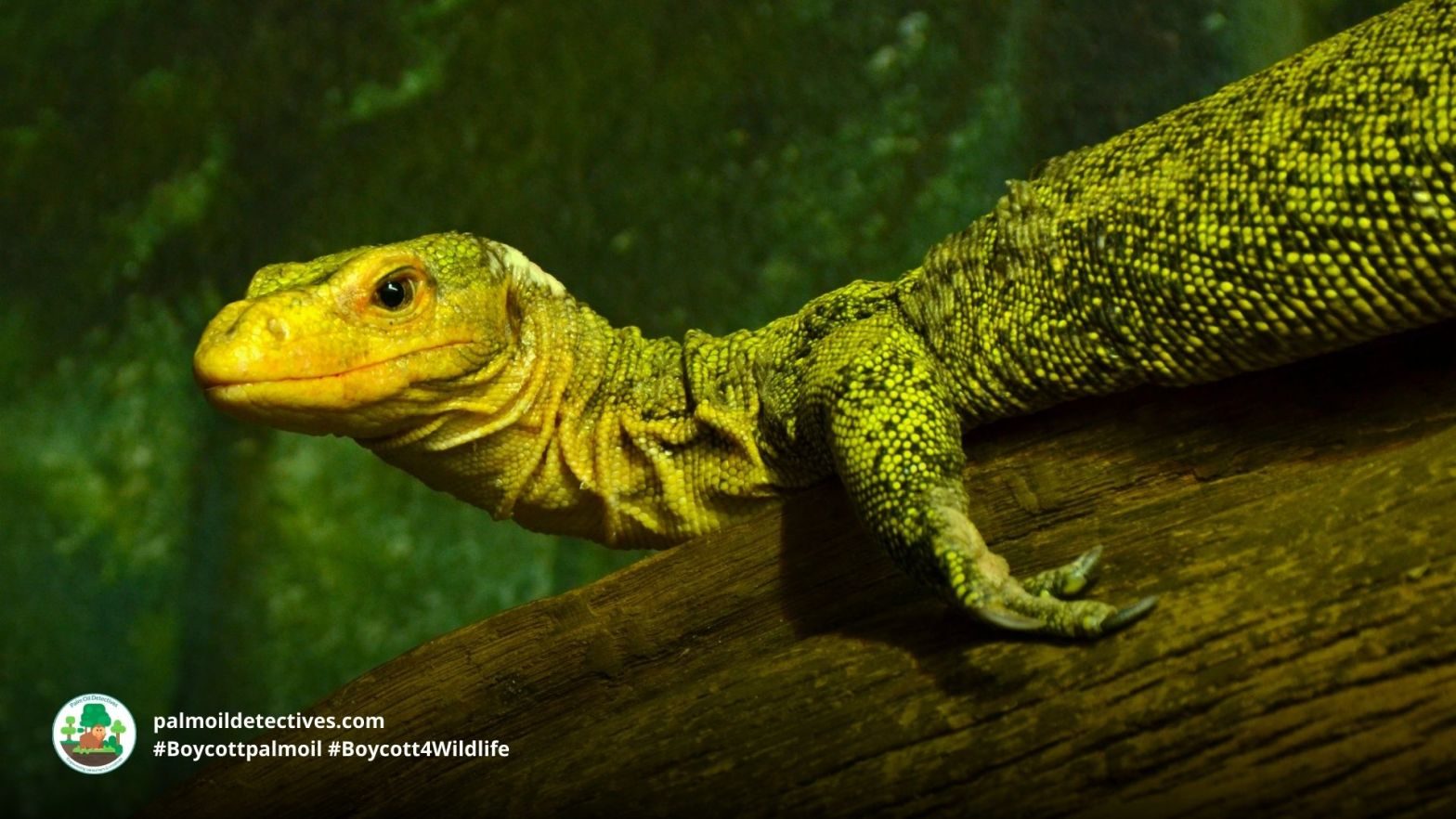
The Quince Monitor Varanus melinus get their name from the spectacular bright yellow of their skin. This is a rare and elusive species of #monitor #lizard that lives in only one location in #Indonesia – the #Maluku Islands. Their muscular, wide stance and ancient dragon-like looks make them fascinating to behold. They are endangered primarily from #palmoil #deforestation throughout their range along with collection for the illegal #pettrade. They have no known protections in place. Help them every time you shop and #BoycottPalmOil #Boycott4Wildlife in the supermarket and don’t buy these lizards as exotic pets as this is sending them extinct!
Quince Monitor #Lizards are named for their bright yellow skin and muscular bodies💛🍋🦎. They are #endangered 😿😭 by #palmoil #deforestation in #Indonesia 🇮🇩 Help them when you #Boycottpalmoil #Boycott4Wildlife @palmoildetect 🌴🩸☠️🚜🔥🧐🙊⛔️ https://palmoildetectives.com/2023/05/28/quince-monitor-banggai-island-monitor-varanus-melinus/
Help fight for the #endangered Quince #Monitor #Lizard of #Indonesia 🇮🇩, a majestic yellow #reptile. 💛🍋✨🌟🦎Major threats are #palmoil #deforestation and the pet trade. Help them and #Boycottpalmoil #Boycott4Wildlife 🌴🩸🤮☠️🚫 @palmoildetect https://palmoildetectives.com/2023/05/28/quince-monitor-banggai-island-monitor-varanus-melinus/
Appearance & Behaviour
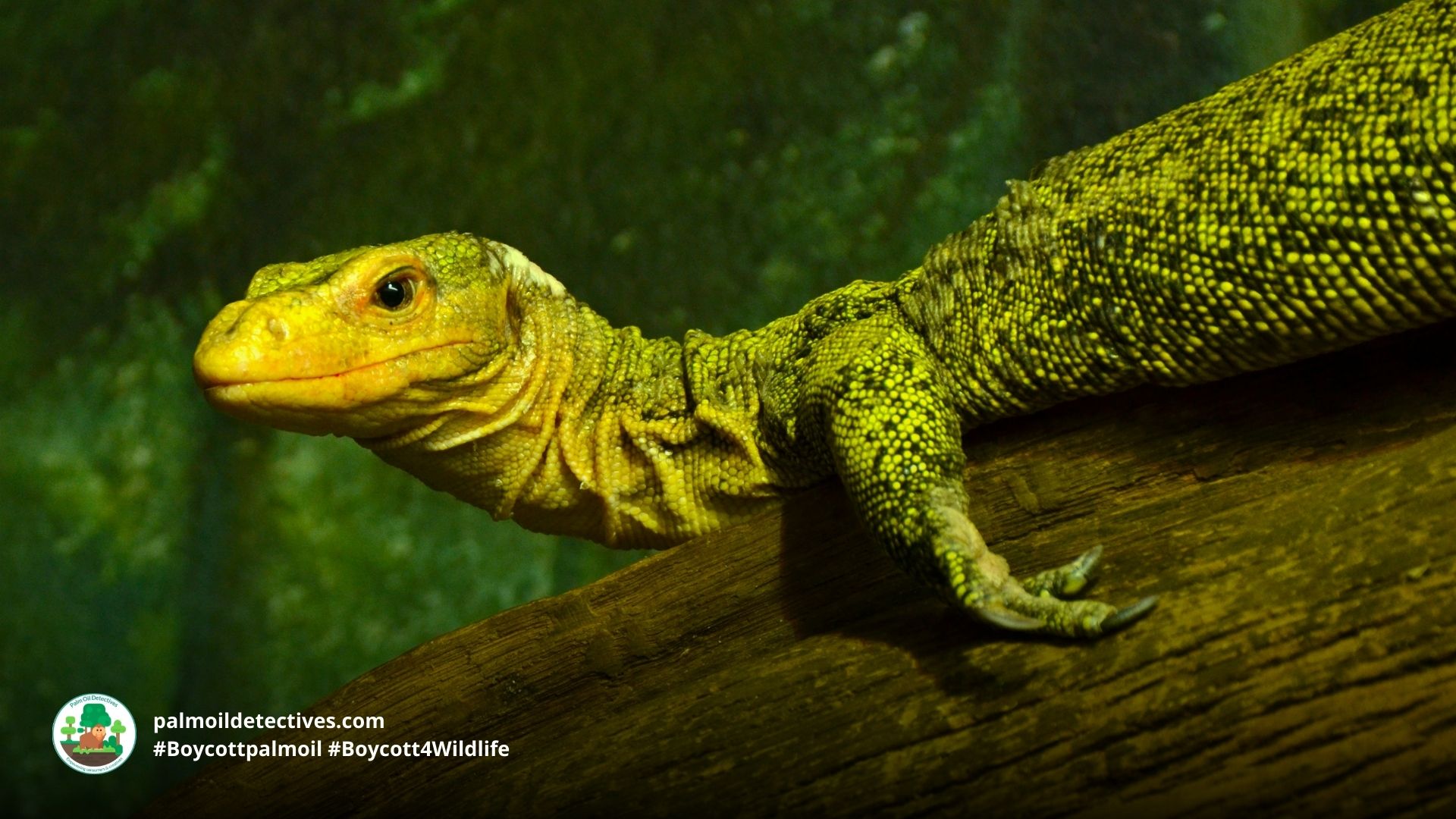
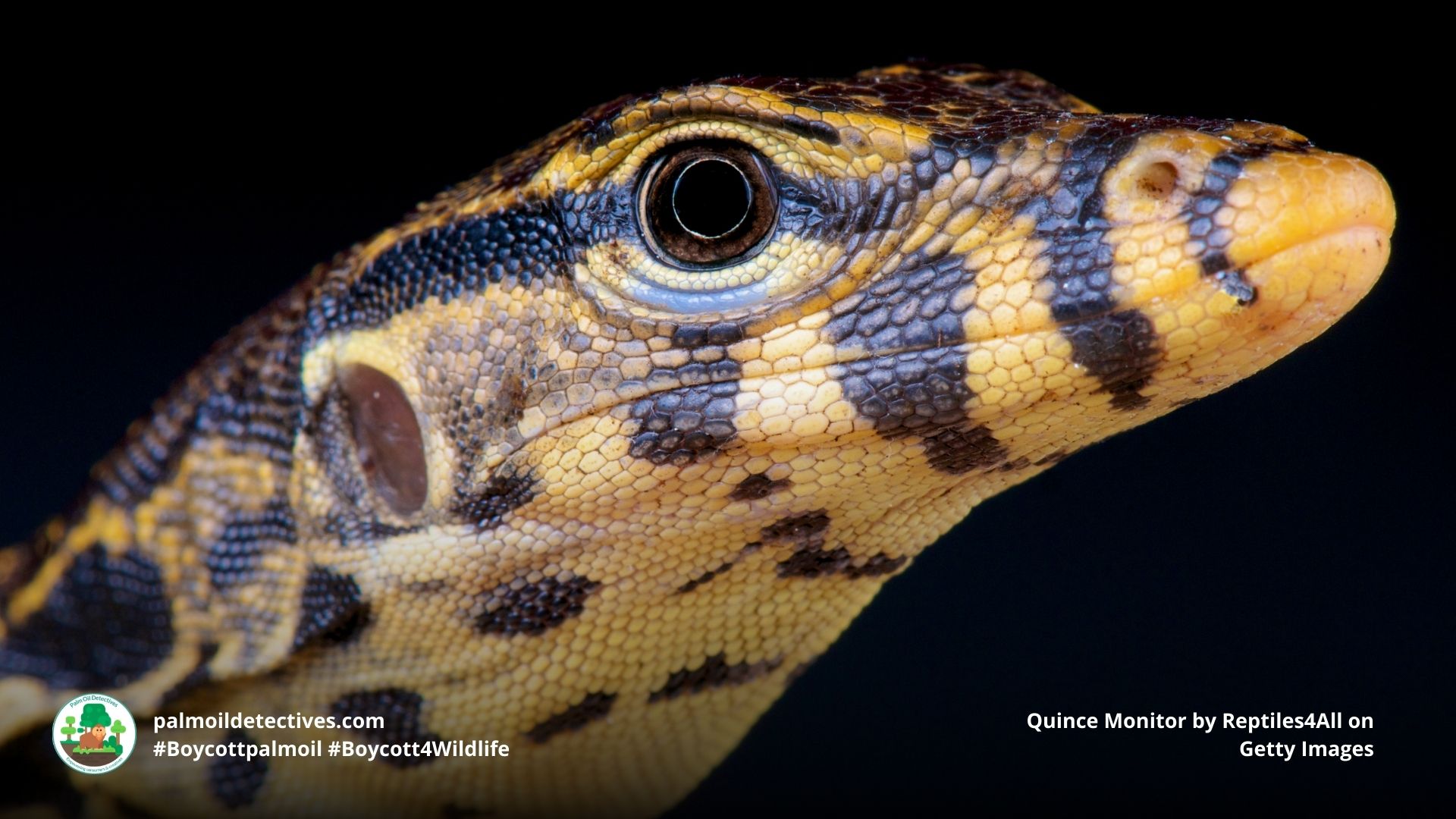
Quince monitors gain their names from their bright colouring reminiscent of the quince fruit.
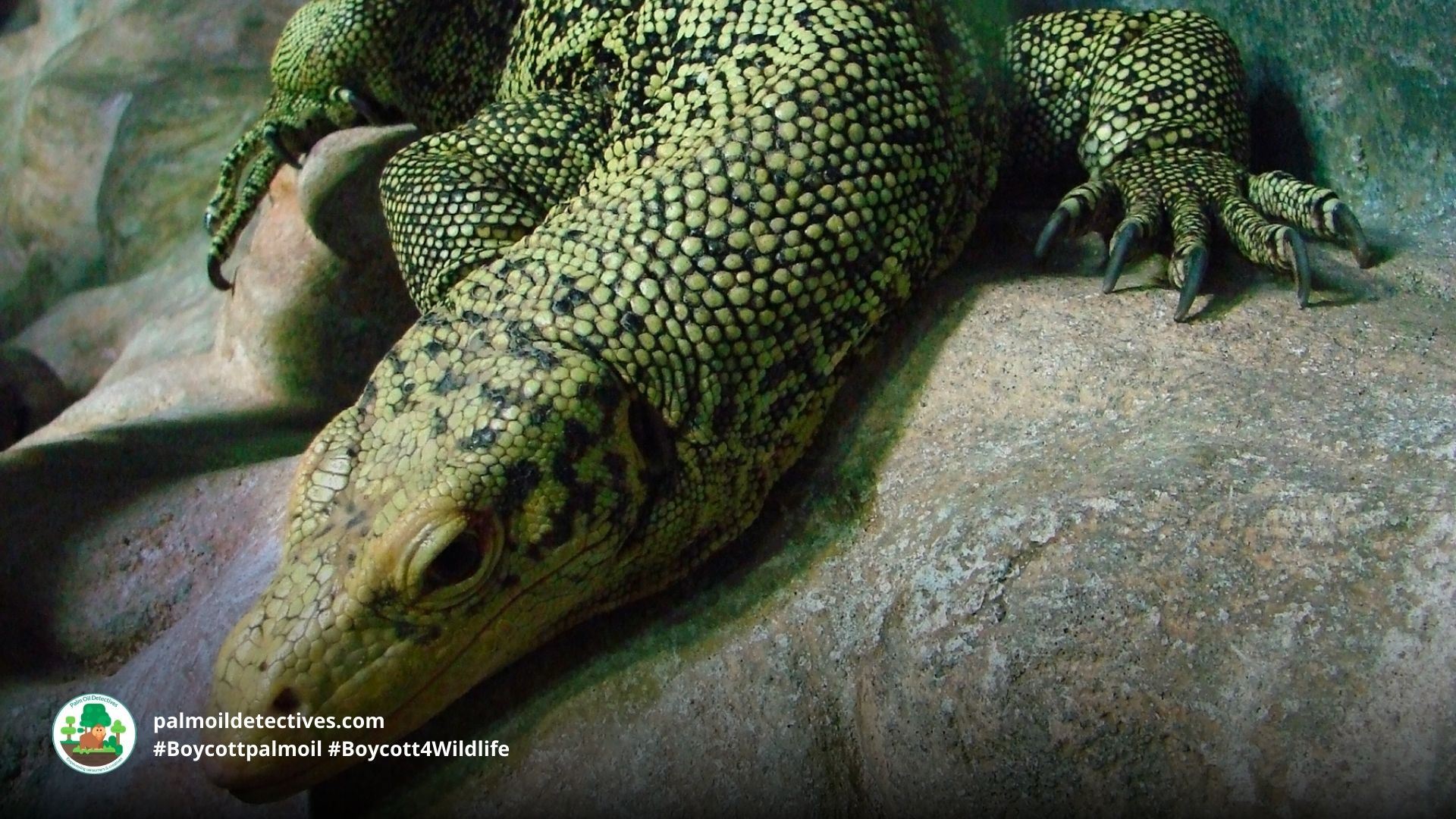
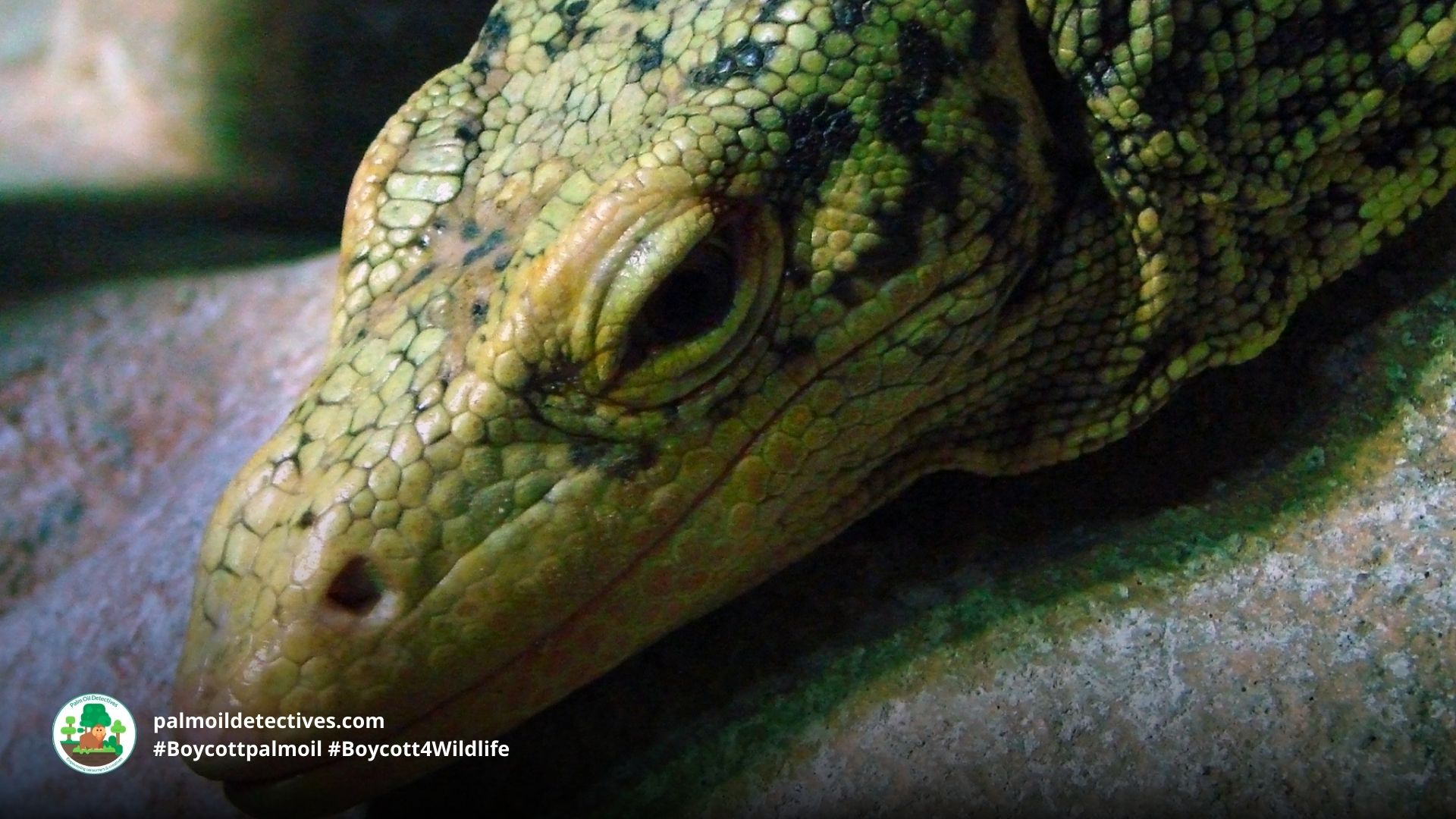
These large and impressive lizards have a yellow head, back and tail along with striking contrasting bands of yellow and black across their limbs, face and neck. Juvenile quince monitors are darker and they get brighter yellow with age. They average around 80-120cm in total body length.
Threats
This species of lizard appears to be threatened through over-collection for the international pet trade, and also degradation and clearance of forested areas within their range (for both timber and agricultural expansion for palm oil). An additional potential threat is the introduction of the non-native toad, Duttaphrynus melanostictus, which may be toxic to this predatory monitor lizard (Koch et al. 2013, Weijola and Sweet 2010).
IUCN RED LIST
The Quince Monitor faces a range of anthropogenic threats:
- Palm oil deforestation: This is their main threat on the islands of Maluku, Indonesia.
- Timber deforestation
- Collection for the pet trade
- An introduced, non-native toad, which is toxic to the lizards


Habitat
Far more research is needed to understand the ecological needs of the Quince Monitor. They seem to have a preference for swamps, wetlands and forests. These large reptiles are also found close to human settlements.
They are endemic to the Sula Islands of Indonesia, however their range has been destroyed by palm oil and reduced significantly. This along with overzealous collection for the pet trade has led them to now be classified as endangered on IUCN Red List.
Diet
In captivity, Quince monitors are known to eat crickets, mealworms, waxworms, roaches, frogs and eggs.
Mating and breeding
The generation length for this species requires further research. The reproductive age of this lizard, as revealed from captive breeding, may exceed seven years. A clutch consists of 2–12 eggs, with up to three clutches being laid per year and a minimum of 77 days between two clutches. The lizards reach reach 37–39.5 cm in length by 5.5 months and reach sexual maturity at 120 cm (male) or 90 cm (female).
Support Quince Monitors by going vegan and boycotting palm oil in the supermarket, it’s the #Boycott4Wildlife
Support the conservation of this species
This animal has no protections in place. Read about other forgotten species here. Create art to support this forgotten animal or raise awareness about them by sharing this post and using the #Boycottpalmoil #Boycott4Wildlife hashtags on social media. Also you can boycott palm oil in the supermarket.
Further Information
Shea, G., Stubbs, A. & Arida, E. 2021. Varanus melinus. The IUCN Red List of Threatened Species 2021: e.T83778224A83778231. https://dx.doi.org/10.2305/IUCN.UK.2021-2.RLTS.T83778224A83778231.en. Accessed on 14 November 2022.
Quince Monitor (Banggai Island Monitor) Varanus melinus on Wikipedia

How can I help the #Boycott4Wildlife?
Take Action in Five Ways
1. Join the #Boycott4Wildlife on social media and subscribe to stay in the loop: Share posts from this website to your own network on Twitter, Mastadon, Instagram, Facebook and Youtube using the hashtags #Boycottpalmoil #Boycott4Wildlife.
2. Contribute stories: Academics, conservationists, scientists, indigenous rights advocates and animal rights advocates working to expose the corruption of the palm oil industry or to save animals can contribute stories to the website.




3. Supermarket sleuthing: Next time you’re in the supermarket, take photos of products containing palm oil. Share these to social media along with the hashtags to call out the greenwashing and ecocide of the brands who use palm oil. You can also take photos of palm oil free products and congratulate brands when they go palm oil free.
4. Take to the streets: Get in touch with Palm Oil Detectives to find out more.
5. Donate: Make a one-off or monthly donation to Palm Oil Detectives as a way of saying thank you and to help pay for ongoing running costs of the website and social media campaigns. Donate here
Forgotten Species on Palm Oil Detectives
These species have no known conservation actions in place and are silently disappearing before we can save them. Do something about it by boycotting supermarket brands linked to tropical deforestation. Join the #Boycott4Wildlife
Something went wrong. Please refresh the page and/or try again.
Discover more from Palm Oil Detectives
Subscribe to get the latest posts sent to your email.
 Palm Oil Detectives
One thought on “Quince Monitor (Banggai Island Monitor) Varanus melinus”