
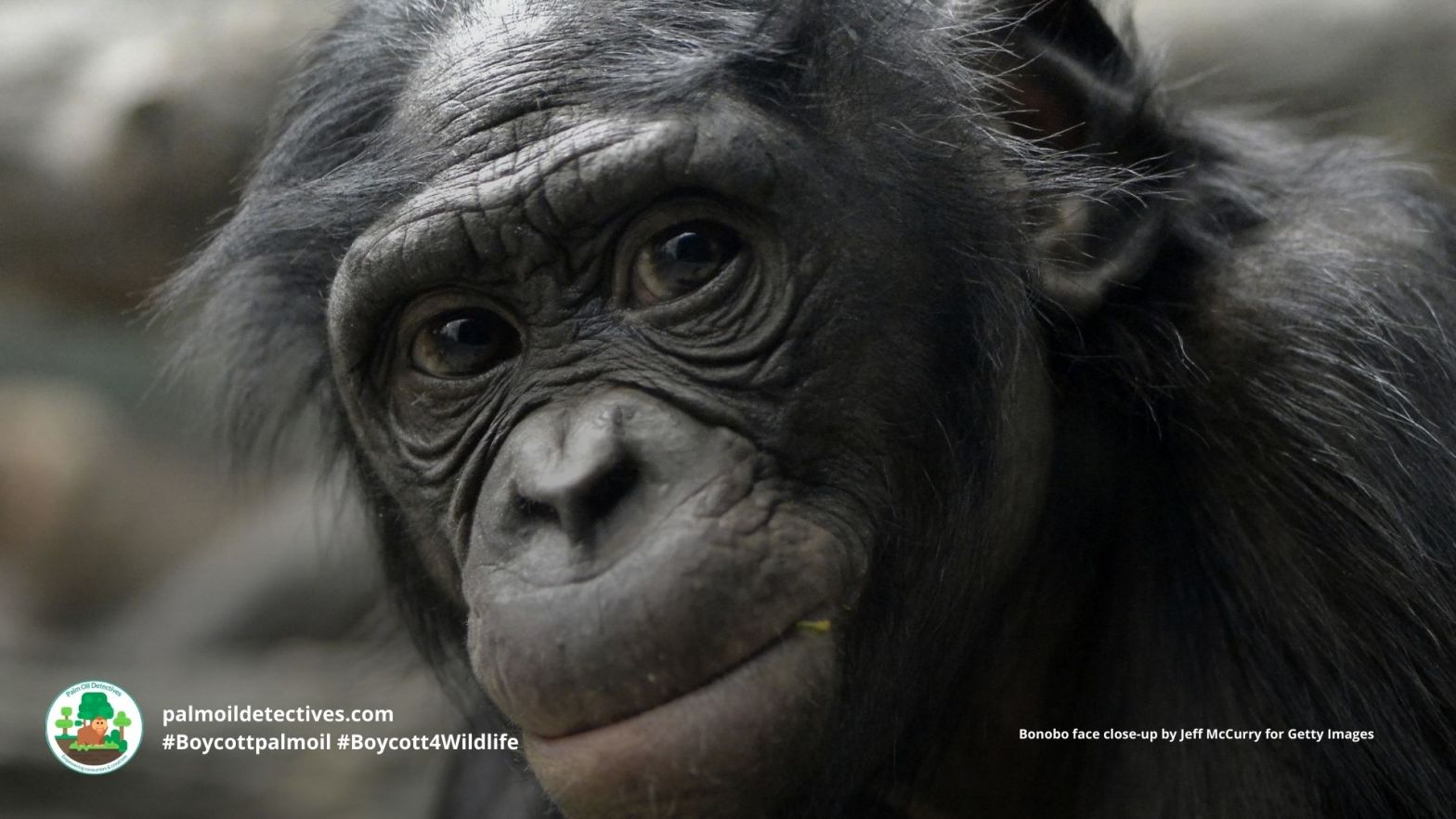
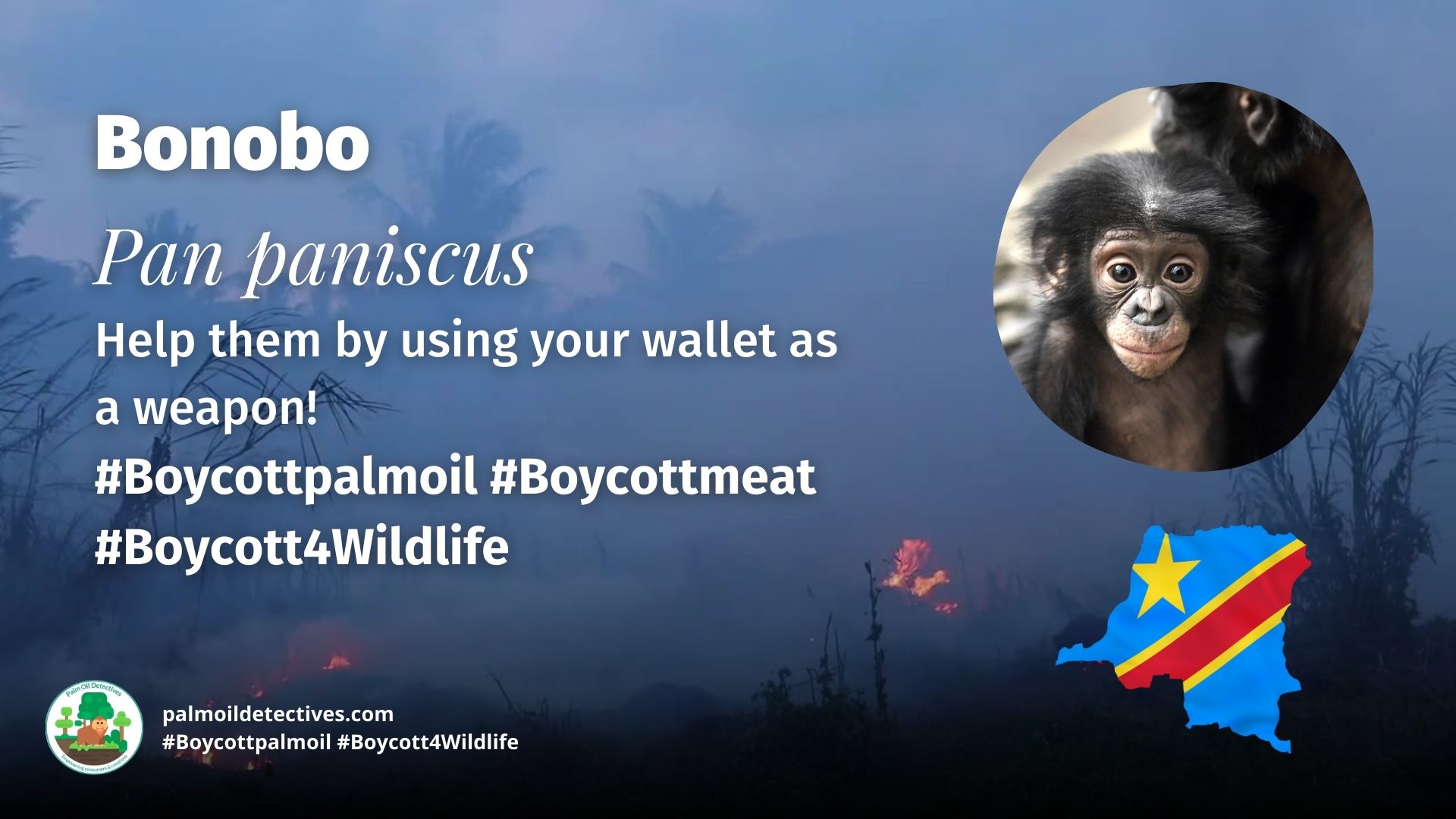
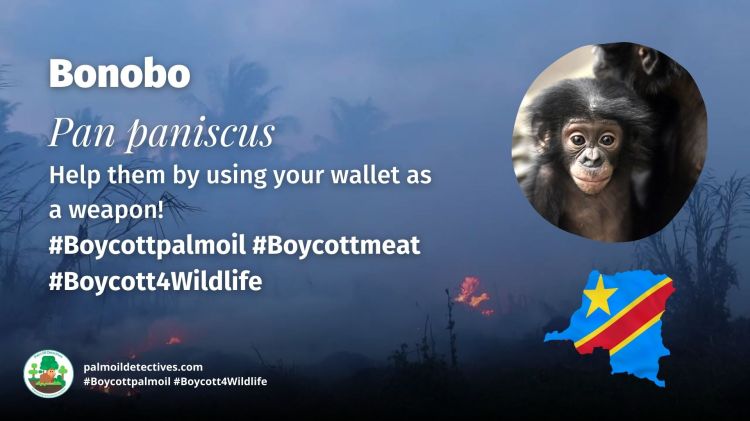
Bonobo Pan paniscus
Endangered
Extant (resident)
Democratic Republic of the Congo
#Bonobos are one of our closest living relatives 🦍🩷 Intelligent, sensitive and complex they are endangered by #palmoil #meat #deforestation and #poaching. Help them survive, be #vegan 🥦🥕 #Boycottpalmoil #Boycott4Wildlife 🌴🪔🩸🧐🙊⛔️ @palmoildetect https://palmoildetectives.com/2023/08/13/bonobo-pan-paniscus/
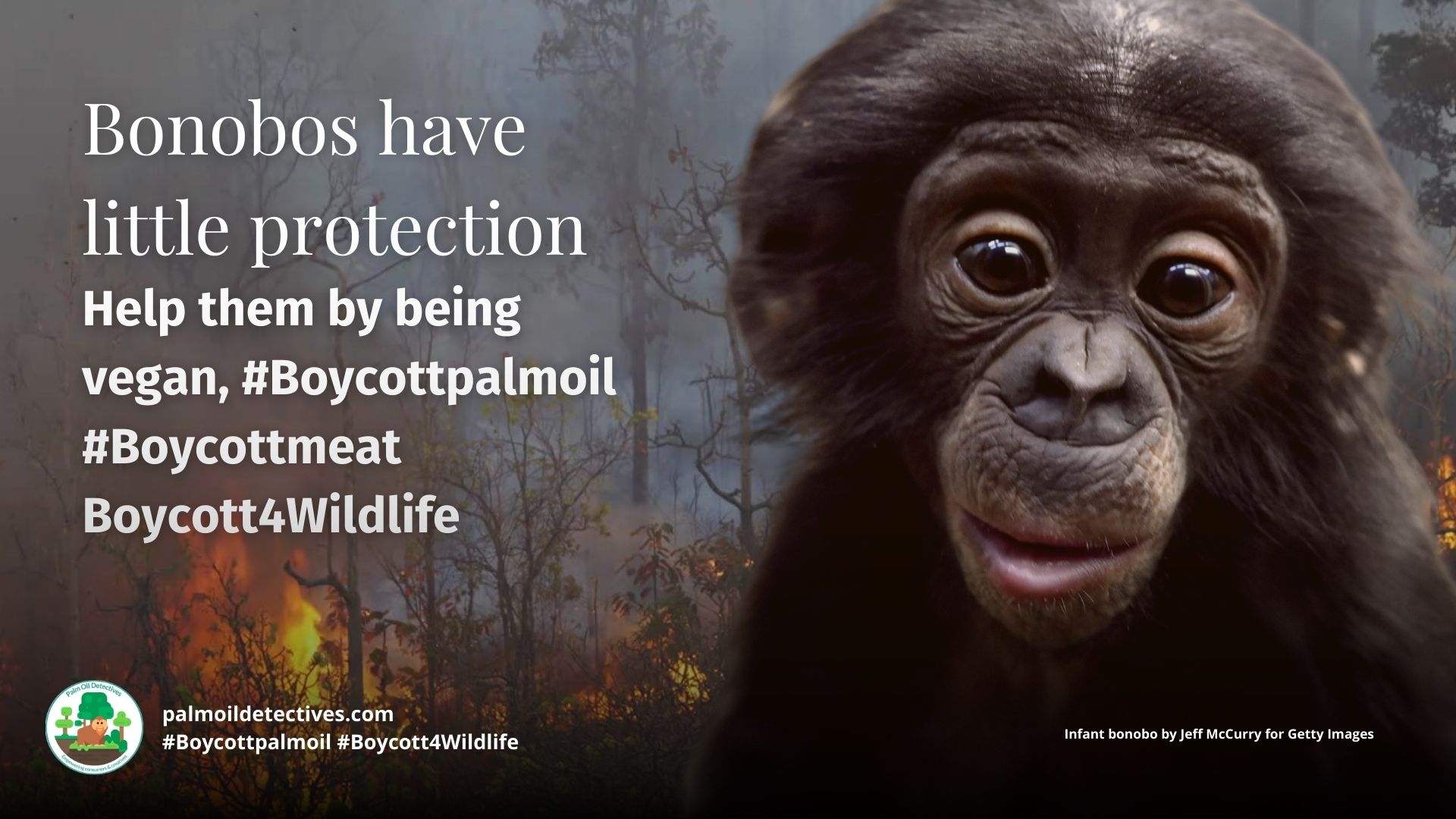
Beautiful #bonobos 🦍🫶🩷💘 serve as a model of non-violent conflict resolution. Yet humans are sending them #extinct 🤯 from #palmoil 🌴🔥 #meat #deforestation 🥩🔥 and #poaching! Fight for them #Boycottpalmoil #Boycott4Wildlife @palmoildetect https://palmoildetectives.com/2023/08/13/bonobo-pan-paniscus/
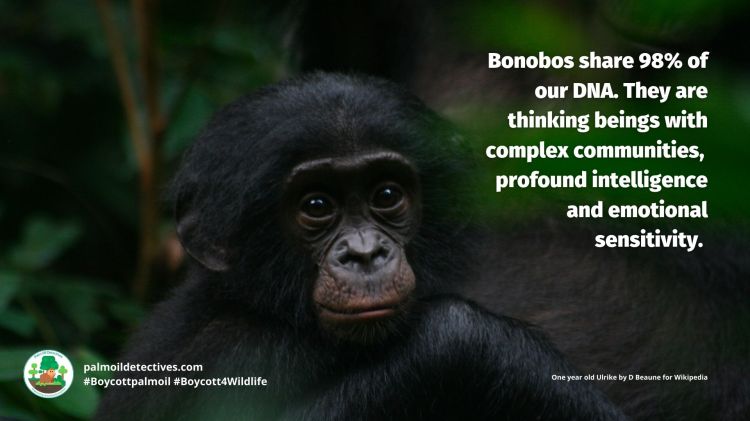
Bonobos share 98% of their DNA with humans and are one of our closest extant relatives. They are complex beings with intricate social relationships, they demonstrate profound intelligence and emotional sensitivity.
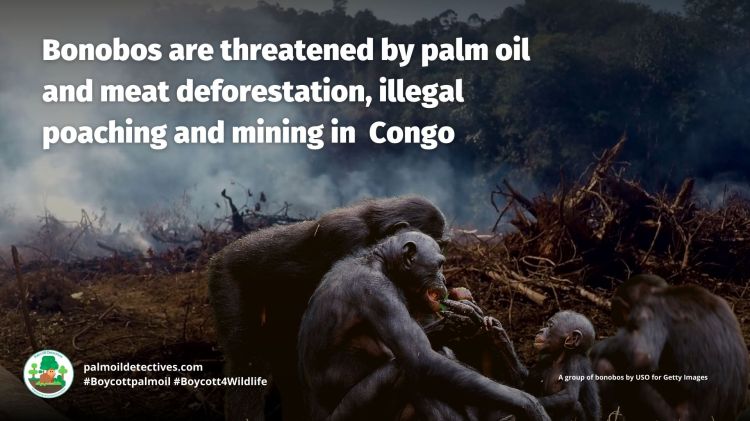
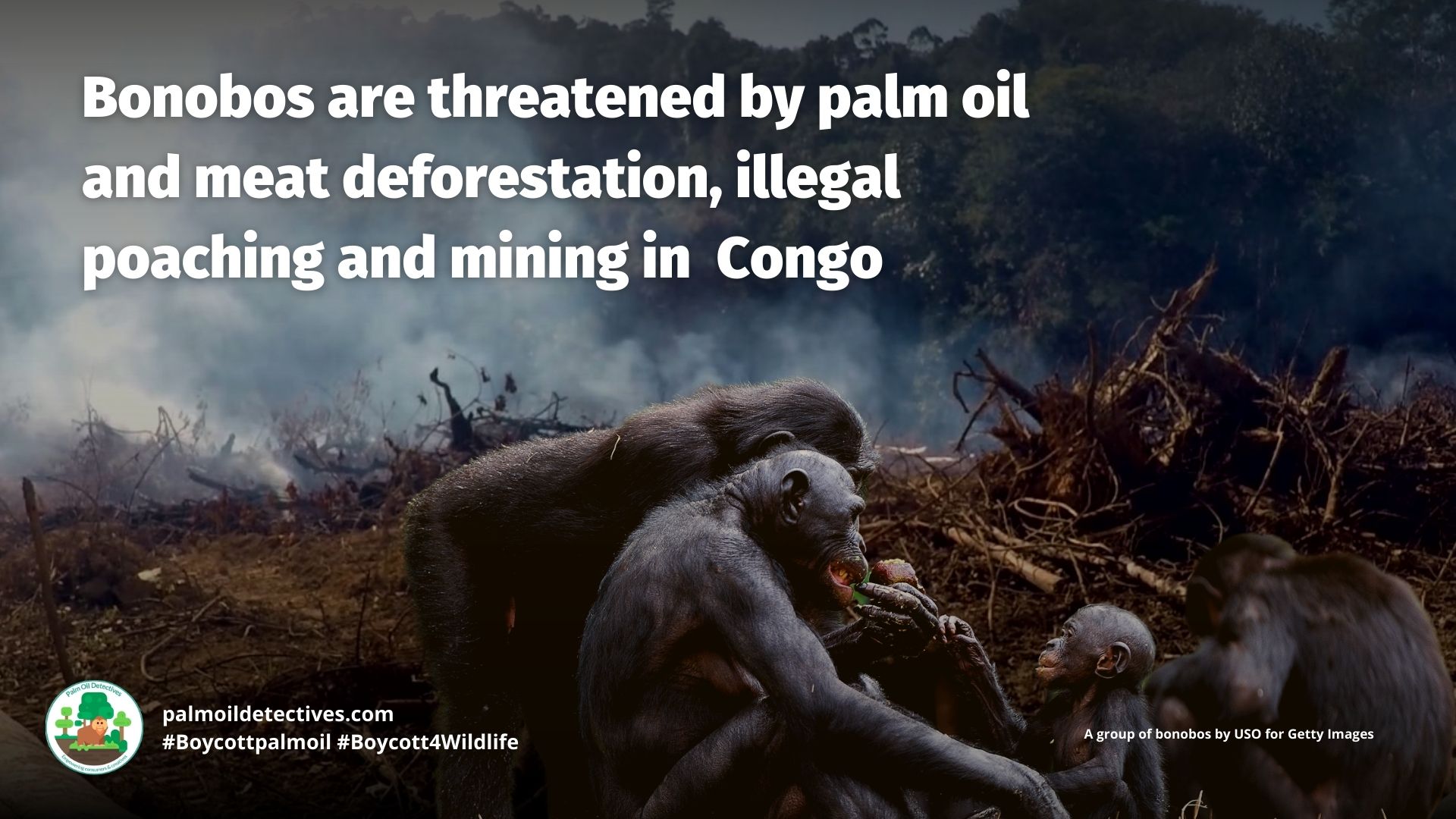
It is therefore fitting that 14th of February, Valentine’s Day is also the International Day to celebrate Bonobos – Bonobos provide a potent example to humans for how we can resolve conflicts through love and non-violent conflict resolution. They are endangered in DRC/Congo from infectious diseases, illegal poaching and deforestation for palm oil, cocoa and meat and mining throughout their home range. Help their survival every time you shop – be vegan and #Boycottpalmoil #Boycott4Wildlife.
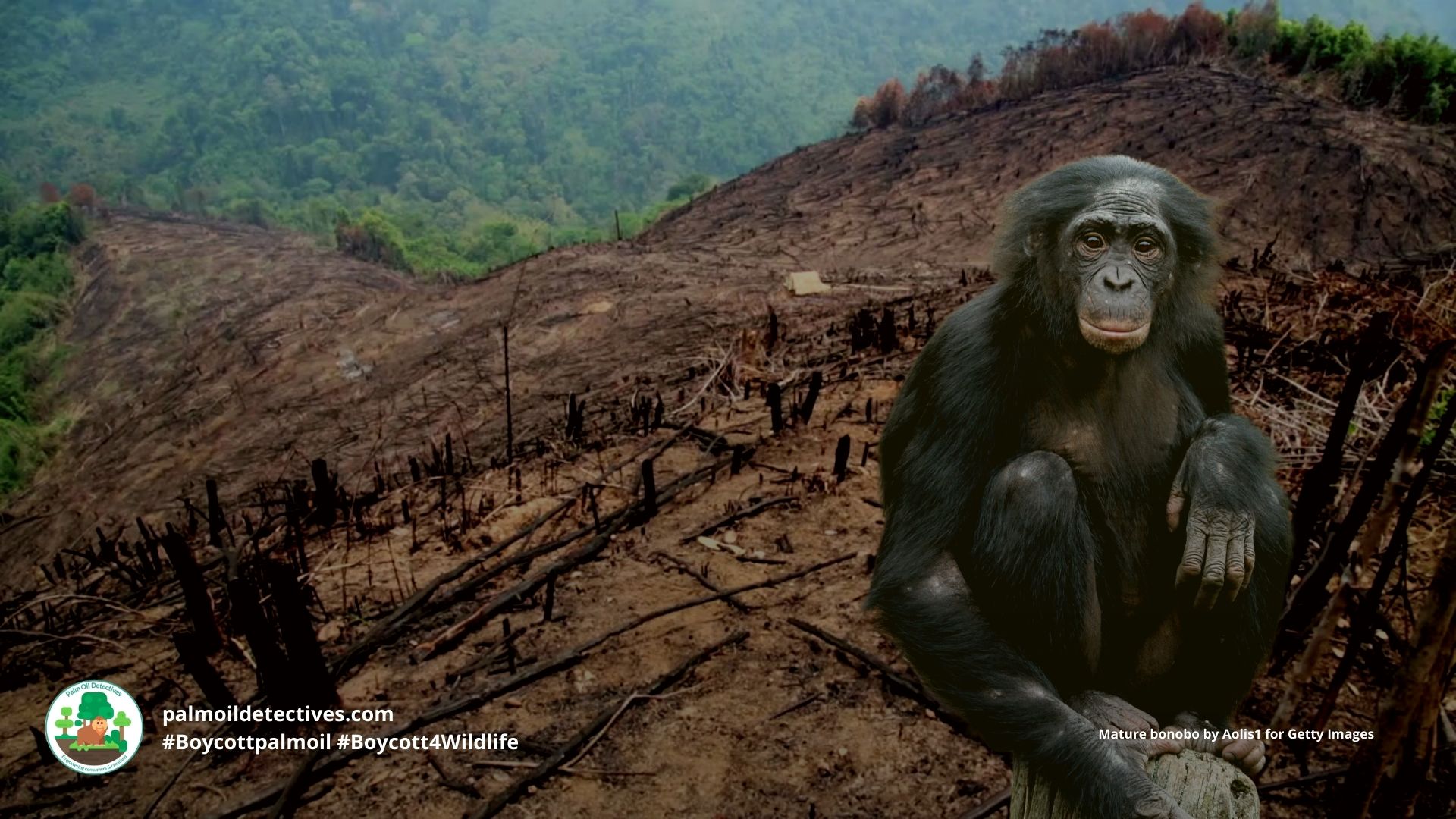
Oil palm is already being grown in what would otherwise be Bonobo habitat (Nackoney et al. 2012)
Africa is becoming the new frontier for oil-palm plantations, which offers excellent economic prospects in countries with appropriate rainfall, soil and temperature conditions (Rival and Levang 2014). A staggering 99.2% of the Bonobo’s range is suitable for oil palm (Wich et al. 2014), highlighting the enormous risk the palm-oil industry will pose unless sustainable management plans are developed and implemented to protect great apes and their habitats (IUCN SSC Primate Specialist Group 2014).
IUCN Red List
Appearance & Behaviour
Bonobos share 98% of their DNA with humans and are known as one of our closest extant relatives. They are complex beings who display profound intelligence, close social bonds and emotional sensitivity.
Matriarchal and peaceful society
Compared to the hierarchical and male-dominated culture of the chimpanzee, bonobo society is (most of the time) matriarchal, peaceful, and more egalitarian. Due to their generally compassionate and caring communities, bonobos have the capacity to inspire human cooperation and peace.
Bonobos have a more slender, longer-limbed and fine-boned in appearance compared to chimpanzees. However, similar to chimpanzees, the forearms of bonobos are longer than their legs, and they have mobile shoulder joints and long fingers. They have pink lips and dark faces, with tail tufts present until adulthood. Their long hair is parted on their heads.
Frans de Waal
Primatologist Frans de Waal‘s landmark research found that bonobos are capable of altruism, empathy, kindness, compassion, patience and sensitivity. In short – all of the better and higher consciousness qualities that humankind aspires towards.
Other primatologists have argued against de Waal’s findings and have found a broad range of other behaviours including aggressive behaviours. Some researchers theorise that ecological factors in the wild account for why some chimpanzee and bonobo communities are more peaceful than others. Other researchers believe that it is due to bonobos being observed in captivity that they display cooperative behaviours.
Social behavior
Unlike other ape species, Bonobos are matriarchal (there are also extensive overlaps with male and female hierarchies leading some researchers to call their societies gender-balanced).
Bonobo communities don’t have a defined territory and are nomadic. Their evenly distributed food sources mean that there is no incentive for male bonobos to form groups with other males and defend a home range, thus leading to male assertive dominance – as seen with chimpanzee groups.
Females are seen to be co-dominant with males and can even coerce reluctant males to mate. Within male and female pairs of bonobos – the male may become dominant over the female.
Dr George McGavin in Monkey Planet: Bonobo makes a fire, cooks and eats marshmallows
This charming video leads us to believe that off-camera there may be another bonobo strumming on the guitar while another plays the harmonica. Hear about Dr George McGavin’s thoughts on palm oil -hint – he wants it banned!
Matriarchal societies
Communities are frequently led by an alpha female who acts as decision maker and leader. Females gain seniority in the group through age, experience and forging alliances with other females in the group – rather than physical intimidation. Males may gain a senior ranking as well and outrank some females. Some males in the group will alert the group to predators like pythons or leopards.
Aggression is rare between males and females and males gain their rank and status from their mother. The mother-son bond remains strong throughout their lives. Females prefer to mate with males who are agreeable and non-aggressive and groups of bonobos are friendly and cooperative with each other rather than competitive.
As they age, bonobos lose their playful and social ways and often become more irritable. Female bonobos have been observed to foster infants outside of their established community.
Bonobos are not known to kill each other, and are generally less violent than chimpanzees. However, aggression still manifests itself in bonobo communities in association with the complexities of mating selection and competitiveness.
Sex as a social lubricant
Sex is used as a social glue in bonobo societies. It is used for many reasons:
- During times of excitement or group celebration
- Conflict resolution and post-conflict reconciliation
- As a form of greeting or to solidify social bonds
Bonobos are promiscuous and don’t form monogamous partnerships. Instead social encounters, bonding and connections are formalised through sexual interactions.

This can be in the form of group sex, male to male, female to female or male to female sex. Adults also have sex with infants and this can be initiated by the infants. The only form of sex that isn’t (generally) engaged in is between a mother and son. They engage in face-to-face genital sex and tongue kissing – the only ape other than humans to do so.
Compared to chimpanzees, female bonobos are more sexually active and less discriminatory about whom they have sex with. They also spend longer in estrus than female chimpanzees.
Peacefulness and aggression
Although referred to as peaceful, bonobo aggression has been observed in captivity and in the wild.
Humans have also been attacked by bonobos, and suffered serious, albeit non-fatal, injuries. Frans de Waal warns against romanticising bonobos as all animals are competitive with each other and capable for aggression.
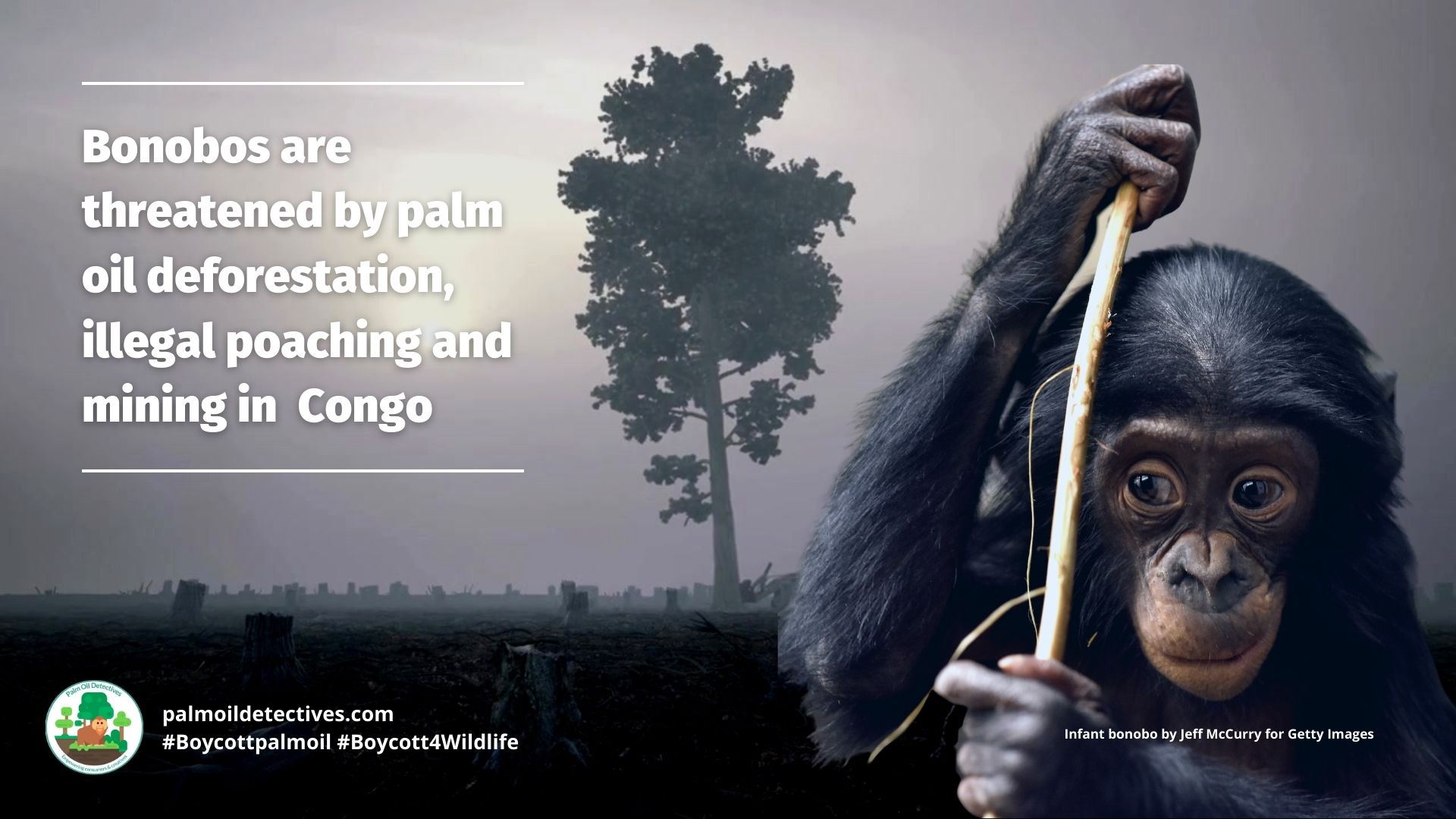



Threats
Bonobos reproduce very slowly and thus their populations are vulnerable to direct losses at the hands of humans.
Bonobos face a number of human-related threats to their survival:
- Illegal poaching: mainly for bushmeat or folk medicine. Taboos against poaching are ineffective when poachers come to the DRC from other regions and kill bonobos.
- Human civil warfare: warfare results in the destruction of habitat and these large apes are often caught in the crossfire.
- Palm oil, timber, meat and cocoa deforestation: habitat loss for industrial agricultural expansion is a huge threat.
- Illegal animal trafficking: As with other large apes in the Congo, bonobo mothers are killed and their babies sold into black market trade as exotic pets.
- Infectious diseases: Diseases that pose a risk to Bonobos’ survival include human-borne pathogens such as respiratory viruses, and natural pathogens such as Ebolavirus.
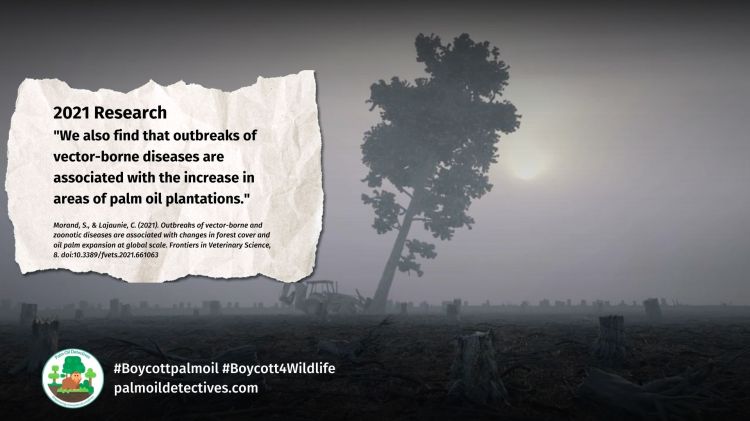
Bonobos, palm oil and Ebola virus: Research has found that previous outbreaks of ebola virus transferred from bonobos to humans coincided directly with the expansion of industrial palm oil in the Congo. Both palm oil deforestation and Ebola have decimated number of bonobos. Read the study.

Habitat
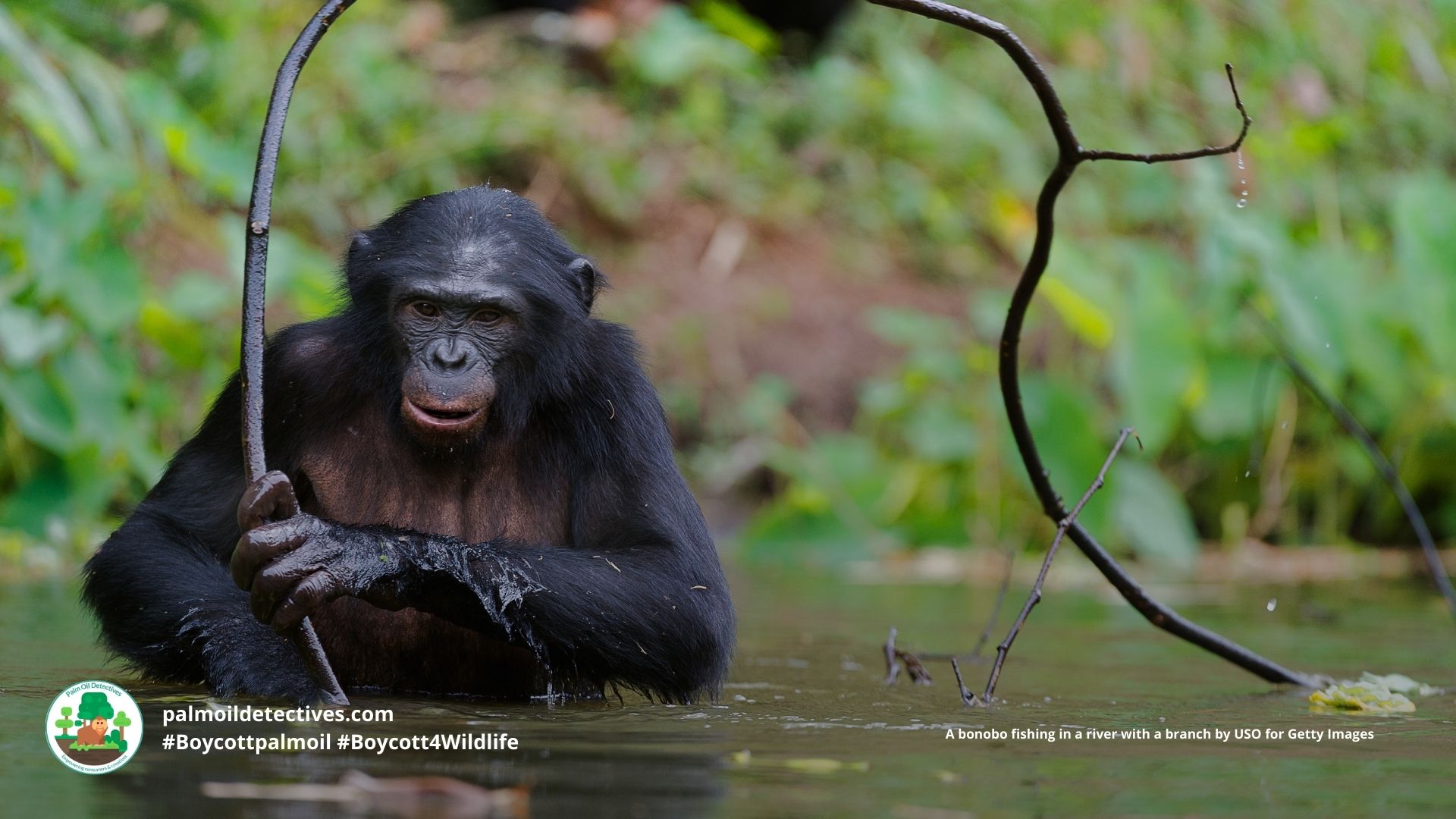
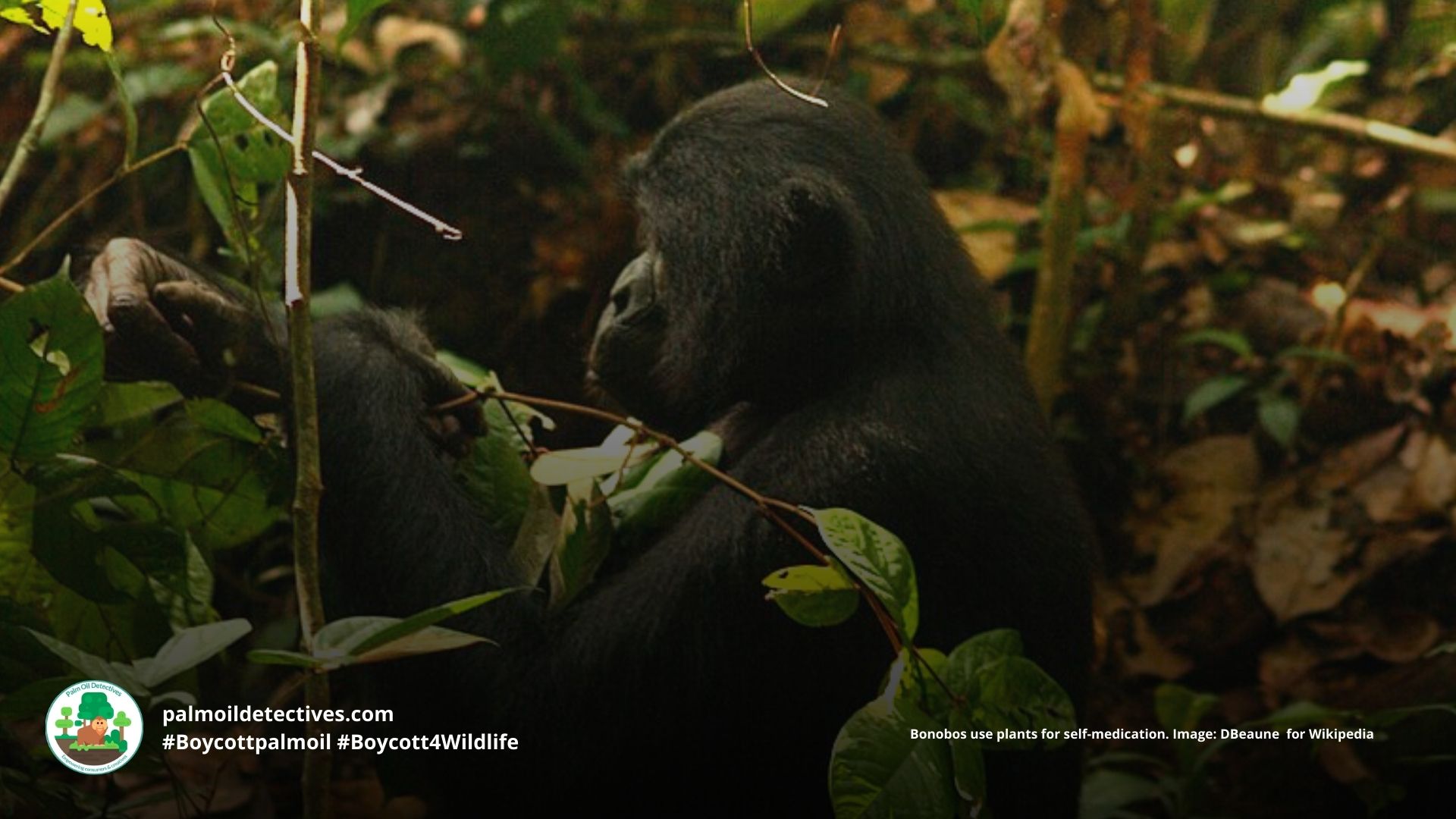
Bonobos spend most of their lives high up in the tree canopies foraging and hunting for food, sleeping, mating, socialising and constructing nests.
They are found in the forests and riverine ecosystems of the Congo Basin in a 500,000km2 area the Democratic Republic of the Congo. Their region is bordered by the Congo River in the north, the Kasai River in the south and west, and the Lualaba River in the east.
Diet
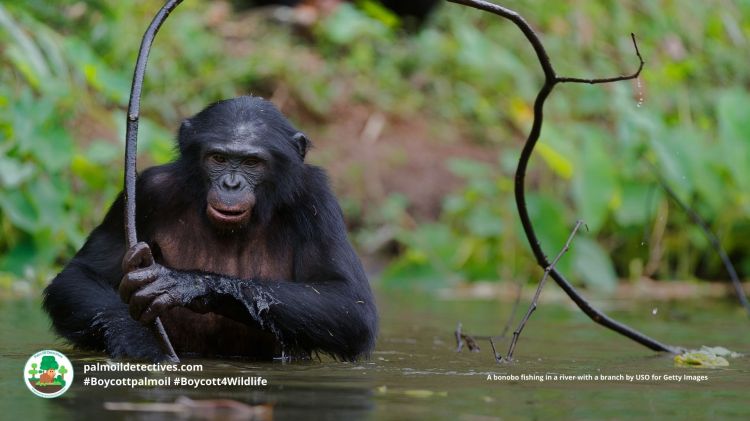
Bonobos are mainly frugivorous and consume fruits, nuts, shoots, stems, pith, leaves, roots, flowers and tubers. However, mushrooms and small invertebrates are also eaten including termites, worms and grubs. Some communities of bonobos have cultures of hunting specific animals such as flying squirrels, duikers, bats and other monkeys.
Bonobo communities of around 100 apes will split into smaller groups during the day to seek out food. Then they will come back together to sleep in their constructed tree-canopy nests. Females often have feeding privileges before males.
Mating and breeding
Adolescent females often leave their native community and so enrich the gene pool of neighbouring communities. Males on the other hand will remain with their natal community as they reach maturity and have a much more loose hierarchical structure compared to females.
Females living in the wild will give birth for the first time aged 13-14 years of age. Females will care for their young for around 4 years post partum and give birth an average of once every 4.6 years.
Infanticide is found with chimpanzee societies, but is absent in bonobo communities. Nevertheless, there have been documented cases of bonobos kidnapping infants in captivity. Bonobo females mating with many males means that there is ambiguity over paternity – this means that the incentive for infanticide disappears.
Support Bonobos by going vegan and boycotting palm oil in the supermarket, it’s the #Boycott4Wildlife
You can support this beautiful animal
Support Virunga National Park where the courageous rangers fight to protect all of the animals including bonobos in Congo. Donate now

Further Information
Fruth, B., Hickey, J.R., André, C., Furuichi, T., Hart, J., Hart, T., Kuehl, H., Maisels, F., Nackoney, J., Reinartz, G., Sop, T., Thompson, J. & Williamson, E.A. 2016. Pan paniscus (errata version published in 2016). The IUCN Red List of Threatened Species 2016: e.T15932A102331567. https://dx.doi.org/10.2305/IUCN.UK.2016-2.RLTS.T15932A17964305.en. Accessed on 14 February 2023.
Animalia.bio: https://animalia.bio/bonobo
Wikipedia: https://en.wikipedia.org/wiki/Bonobo

How can I help the #Boycott4Wildlife?
Take Action in Five Ways
1. Join the #Boycott4Wildlife on social media and subscribe to stay in the loop: Share posts from this website to your own network on Twitter, Mastadon, Instagram, Facebook and Youtube using the hashtags #Boycottpalmoil #Boycott4Wildlife.
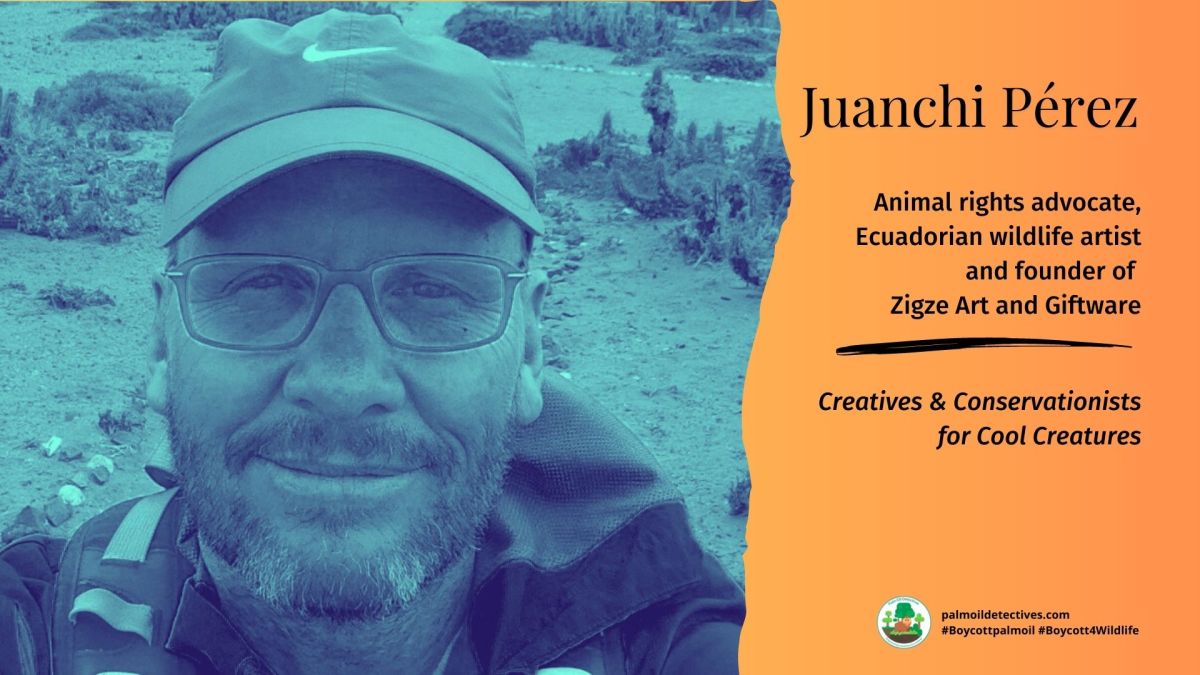
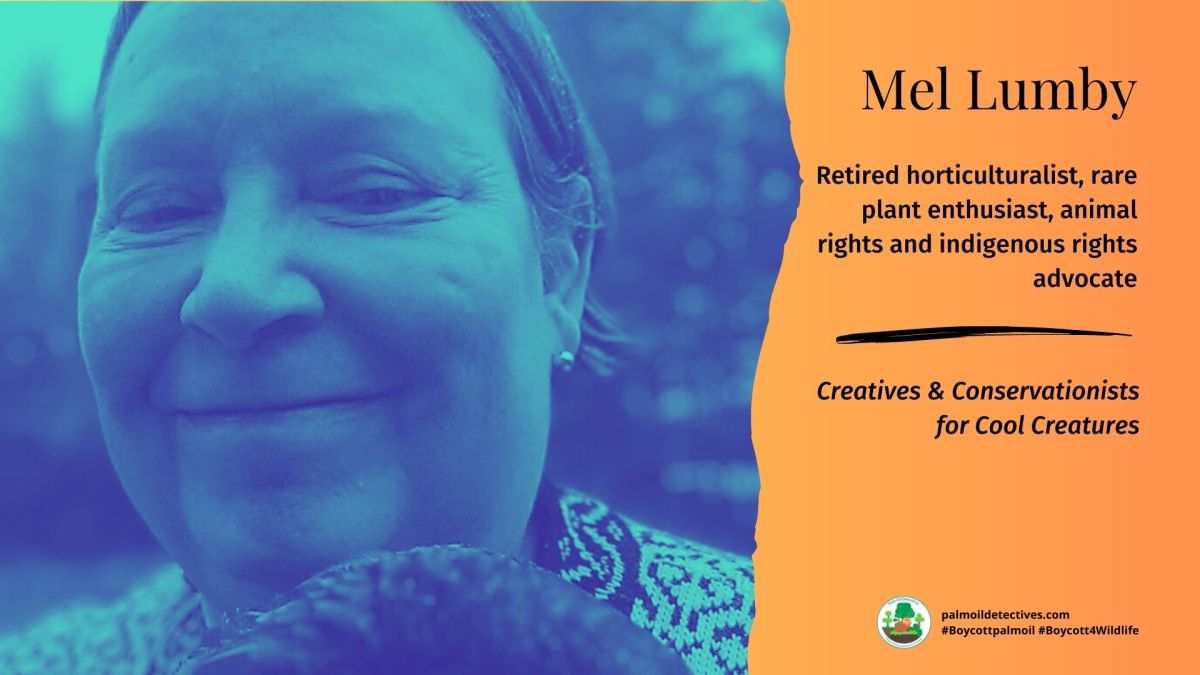
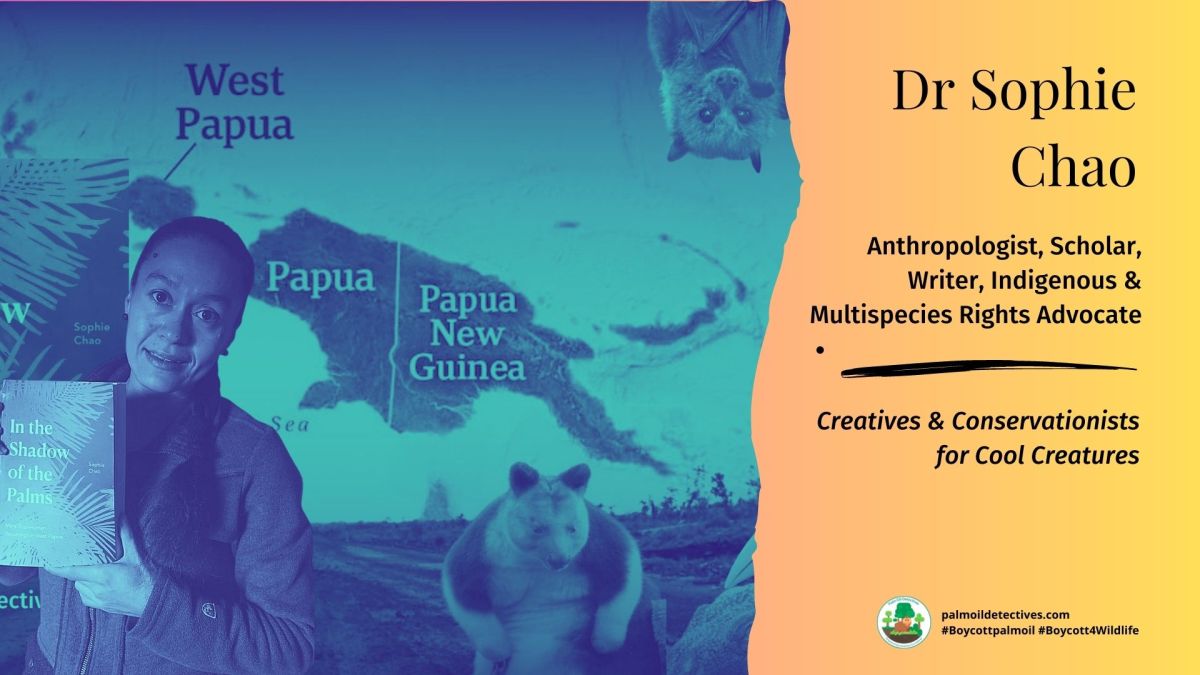
2. Contribute stories: Academics, conservationists, scientists, indigenous rights advocates and animal rights advocates working to expose the corruption of the palm oil industry or to save animals can contribute stories to the website.



3. Supermarket sleuthing: Next time you’re in the supermarket, take photos of products containing palm oil. Share these to social media along with the hashtags to call out the greenwashing and ecocide of the brands who use palm oil. You can also take photos of palm oil free products and congratulate brands when they go palm oil free.
4. Take to the streets: Get in touch with Palm Oil Detectives to find out more.
5. Donate: Make a one-off or monthly donation to Palm Oil Detectives as a way of saying thank you and to help pay for ongoing running costs of the website and social media campaigns. Donate here
Discover more from Palm Oil Detectives
Subscribe to get the latest posts sent to your email.
 Palm Oil Detectives
Why are you sending me emails when you have blocked my account on twitter? I have only retwitted your postings because it is something that I am passionate about!
LikeLiked by 1 person
Hi Liam I just emailed you I am not sure what handle you use on Twitter please send me a message back I am sorry that I seem to have blocked you in error!
LikeLike