

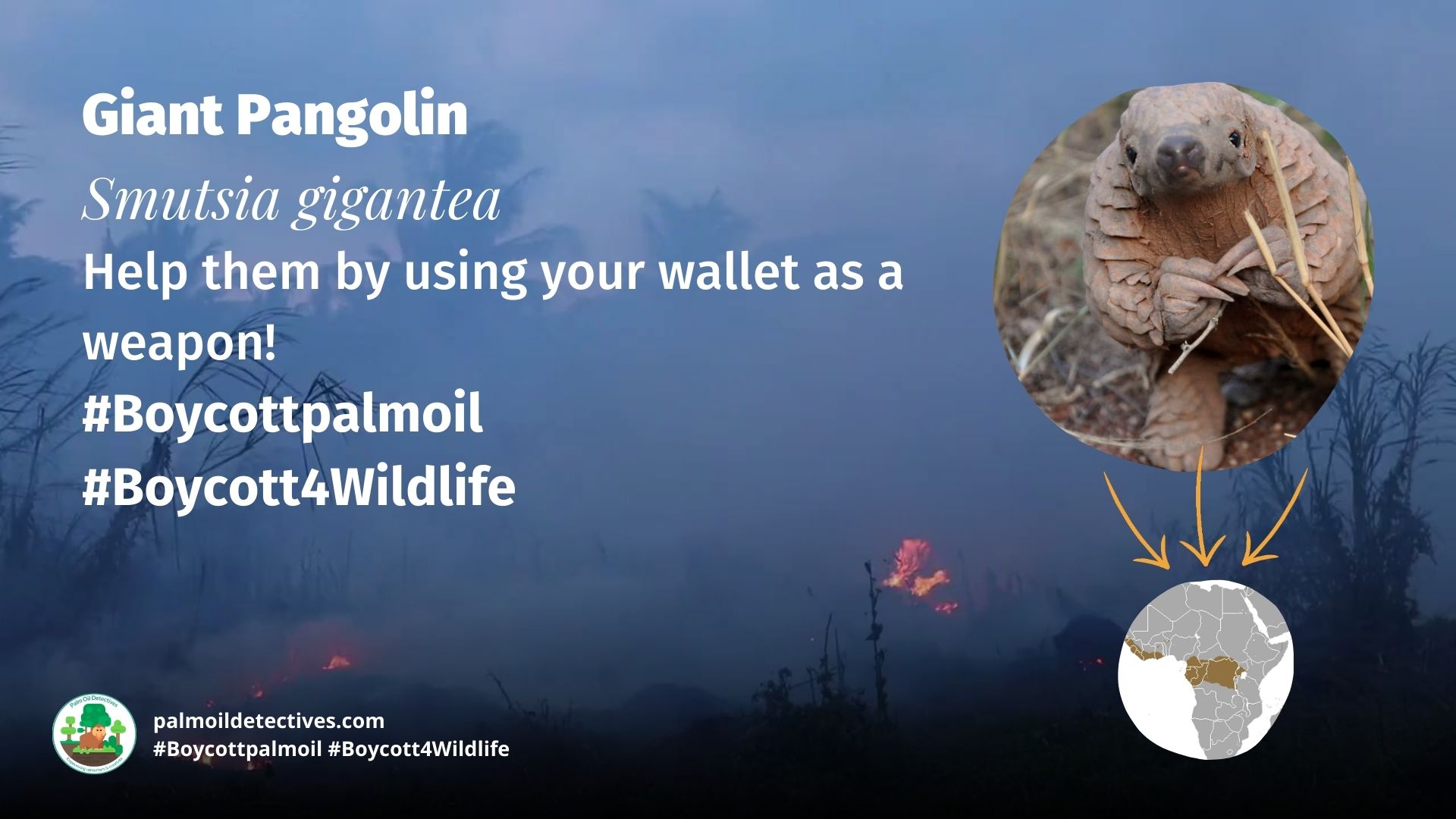
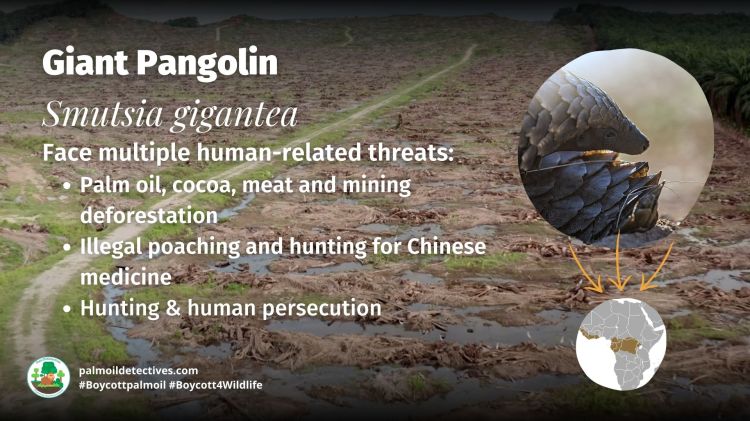
Giant Pangolin Smutsia gigantea
Endangered
Extant (resident)
Cameroon; Central African Republic; Congo; Congo, The Democratic Republic of the; Côte d’Ivoire; Equatorial Guinea (Equatorial Guinea (mainland)); Gabon; Ghana; Guinea; Guinea-Bissau; Liberia; Nigeria; Rwanda; Senegal; Sierra Leone; South Sudan; Tanzania, United Republic of; Uganda
Presence Uncertain
Benin; Burkina Faso; Kenya; Niger
The Giant #Pangolin is are the largest and heaviest of the pangolin species weighing up to 33 kilos. Males can be up to 1.8 metres long. These majestic creature are cloaked in keratin armour and embark on nightly quests through Central and #WestAfrica’s lush landscapes. By the light of the moon, they use their keen sense of smell to hunt down ants and termites. As they navigate a world fraught with dangers from habitat destruction, #poaching and illegal hunting, the survival of these enigmatic beings hangs in balance, urging us to reflect on our impact on their dwindling world. Help them to survive every single time you shop and #Boycottpalmoil #Boycottmeat, be #vegan and #Boycott4Wildlife.
The largest and heaviest #pangolin in the world is the Giant Pangolin of #Uganda 🇺🇬 #Congo 🇨🇩 #WestAfrica. Endangered by #palmoil and #cocoa #deforestation and #poaching Help them survive when u #Boycottpalmoil #Boycott4Wildlife @palmoildetect https://wp.me/pcFhgU-7jM
Help the #endangered Giant Ground #Pangolin 🙏🌿 of #Africa and boycott #Chinese medicine using them. Spoiler alert: their scales DO NOT CURE ANYTHING! Another threat is #palmoil #deforestation #Boycottpalmoil #Boycott4Wildlife @palmoildetect https://wp.me/pcFhgU-7jM
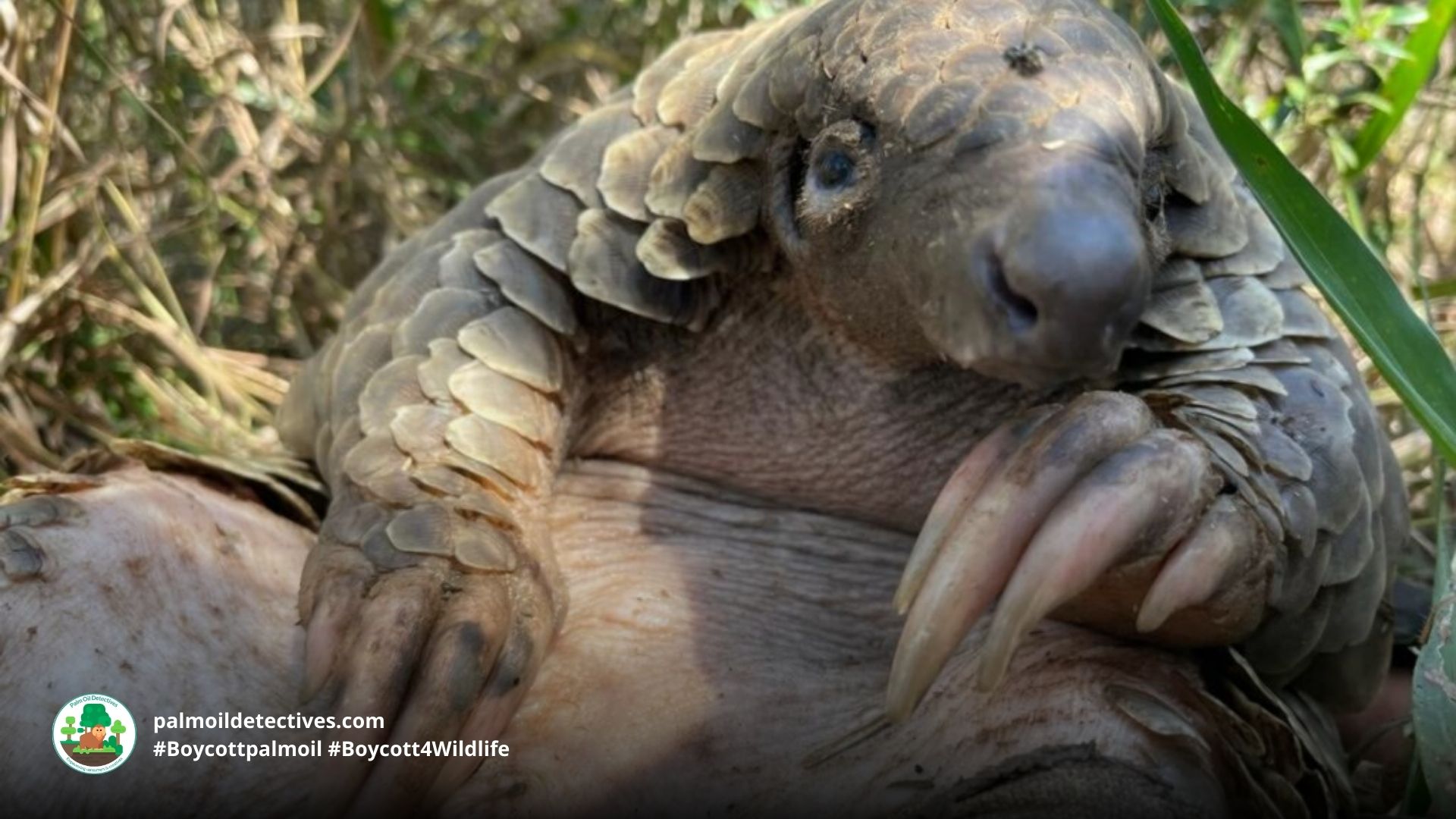
Giant pangolins have several quirky traits: they consume up to 70 million insects annually, primarily through nocturnal feasts, and lack teeth, instead swallowing stones to aid digestion. They walk on the sides of their wrists to protect their claws and have a keen sense of smell to compensate for their poor vision.
Appearance & Behaviour
Unique among mammals, their scales are made of keratin, the same material as human hair and nails. These account for around 20% of their body weight. These characteristics underscore their unique ecological niche and fascinating adaptations.
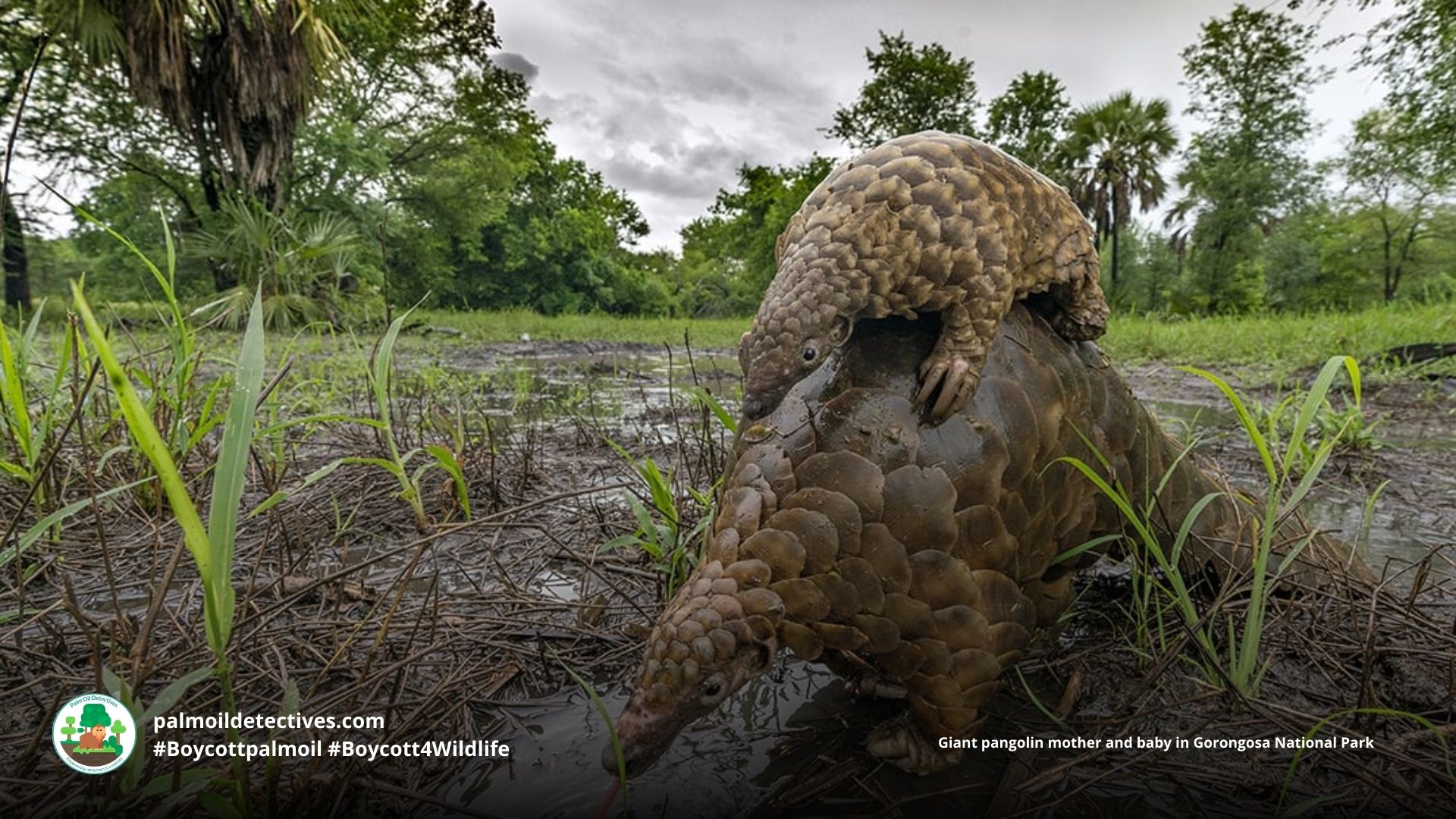
The Giant Pangolin is the largest of all pangolin species. With males measuring around 1.8 meters in length and females reaching up to 1.36 meters in length.
Their bodies are adorned with thick, keratin scales that serve as armour against predators. These scales, combined with their significant size, set them apart as majestic creatures of the west African jungle.
Giant Pangolins are nocturnal and rely upon their exceptional sense of smell to locate the 19 specific species of ants and termites that comprise their diet. Despite their poor eyesight, they are adept at navigating their diverse habitats, from forested swamps to moist tropical forests across Central and West Africa. Their methodical consumption of insects, aided by ingesting small stones for digestion, highlights their crucial ecological role as pest controllers.




Threats
- Hunting and Poaching: The primary threat to Giant Pangolins comes from hunting and poaching for bushmeat and traditional medicine. This significantly impacts their populations across Africa.
- Bushmeat: These animals are desirable on the illegal bushmeat markets, contributing to an increased pressure on their numbers.
- Illegal International Trade: Despite protections, a substantial illegal trade persists, with significant quantities of scales trafficked internationally, posing a major threat to their survival.
- Habitat Loss: Deforestation and habitat degradation for palm oil, meat and cocoa along with mining especially in West Africa, pose severe threats to their habitats, impacting their area of occupancy and survival rates.


Habitat
The Giant Pangolin inhabits a diverse range of environments across Africa, from primary and secondary rainforests to gallery and swamp forests, as well as forest-savannah mosaics and wooded savannahs. Their presence extends from sea level in Gabon to high altitudes in the Democratic Republic of Congo, indicating a versatile adaptation to various ecosystems. This species is thought to rely on access to permanent water sources. Their wide geographic range underscores the importance of varied habitats for their survival, from Uganda’s savannah woodlands to Tanzania’s miombo woodlands.
Diet
The Giant Pangolin’s diet is highly specialised and focuses almost exclusively on ants and termites. They are capable of consuming around 70 million insects per year. They are therefore known as the forest ecosystem’s natural pest controllers. Their eating habits are unique, involving up to 90 meals in a single night, with each meal lasting about a minute. This efficient feeding strategy is facilitated by their long, sticky tongues, adept at extracting insects from nests, despite the pangolins’ lack of teeth, requiring them to ingest small stones to aid in grinding their food.
Mating and breeding
Giant pangolins have a unique reproductive cycle, with little known about their breeding habits. They usually give birth once, following a gestation of around 140 days, to a single young that is born with open eyes and soft scales. These newborns, weighing about 500g, initially move on their bellies and display a defense mechanism by secreting a yellow substance from their anal glands. The mother’s care extends to nursing for 3-4 months and includes carrying the young on her tail during foraging. This intimate parenting underscores the species’ complex social behaviors within their habitats, spanning from rainforests to savannah woodlands, indicating a reliance on diverse ecosystems and possibly on permanent water sources.
Support Giant Pangolins by going vegan and boycotting palm oil in the supermarket, it’s the #Boycott4Wildlife
Gorongosa National Park: Pangolin rehabilitation programme
Further Information
Nixon, S., Pietersen, D., Challender, D., Hoffmann, M., Godwill Ichu, I., Bruce, T., Ingram, D.J., Matthews, N. & Shirley, M.H. 2019. Smutsia gigantea. The IUCN Red List of Threatened Species 2019: e.T12762A123584478. https://dx.doi.org/10.2305/IUCN.UK.2019-3.RLTS.T12762A123584478.en. Accessed on 29 February 2024.
Quaglia, Sofia; Endangered giant pangolin spotted in Senegal after nearly 24 years. Nature.
Giant Pangolin Wikipedia article: https://en.wikipedia.org/wiki/Giant_pangolin
Giant Pangolin Animalia.bio: https://animalia.bio/giant-pangolin

How can I help the #Boycott4Wildlife?
Take Action in Five Ways
1. Join the #Boycott4Wildlife on social media and subscribe to stay in the loop: Share posts from this website to your own network on Twitter, Mastadon, Instagram, Facebook and Youtube using the hashtags #Boycottpalmoil #Boycott4Wildlife.
2. Contribute stories: Academics, conservationists, scientists, indigenous rights advocates and animal rights advocates working to expose the corruption of the palm oil industry or to save animals can contribute stories to the website.
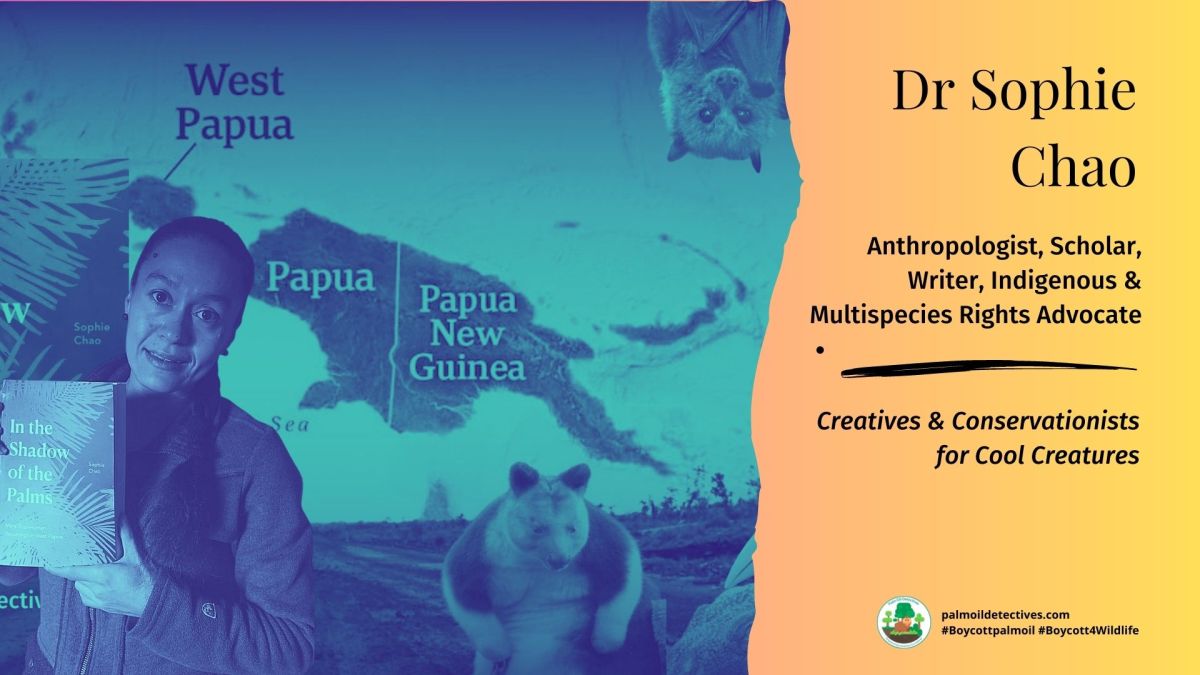



3. Supermarket sleuthing: Next time you’re in the supermarket, take photos of products containing palm oil. Share these to social media along with the hashtags to call out the greenwashing and ecocide of the brands who use palm oil. You can also take photos of palm oil free products and congratulate brands when they go palm oil free.
4. Take to the streets: Get in touch with Palm Oil Detectives to find out more.
5. Donate: Make a one-off or monthly donation to Palm Oil Detectives as a way of saying thank you and to help pay for ongoing running costs of the website and social media campaigns. Donate here
Learn about other animals endangered by palm oil and other agriculture
Learn about “sustainable” palm oil greenwashing
Read more about RSPO greenwashing
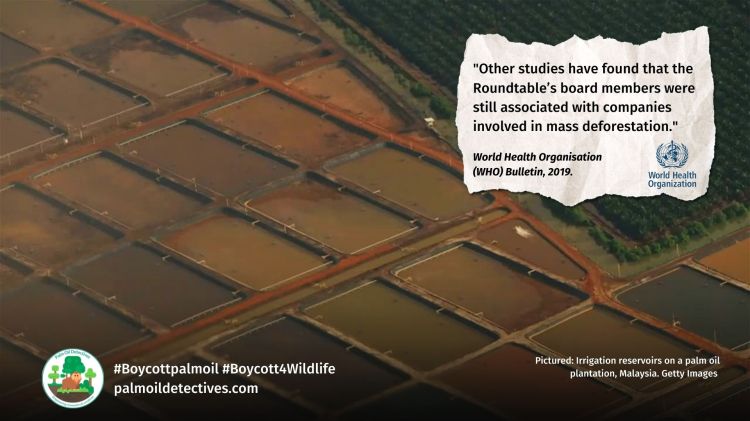
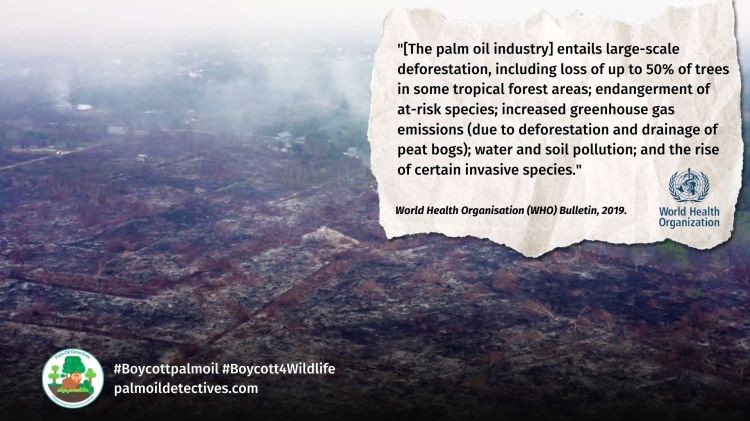
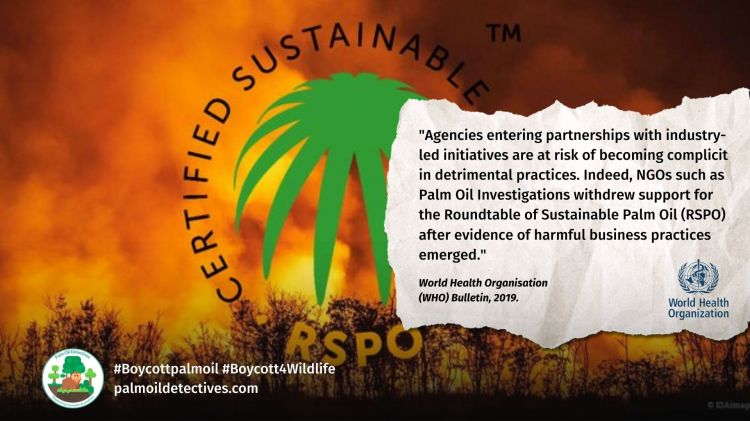
A 2019 World Health Organisation (WHO) report into the palm oil industry and RSPO finds extensive greenwashing of palm oil deforestation and the murder of endangered animals (i.e. biodiversity loss)


Discover more from Palm Oil Detectives
Subscribe to get the latest posts sent to your email.
 Palm Oil Detectives
Thanks Free Online for the resharing of this post
LikeLike