

Blonde Capuchin Sapajus flavius
IUCN Status: Endangered
Locations: Brazil
The blonde capuchin is found in the northeastern Atlantic Forest of Brazil, primarily in the states of Paraíba, Pernambuco, and Alagoas. Some populations have also been recorded in the Caatinga biome of Rio Grande do Norte, possibly due to habitat loss forcing them into new environments.
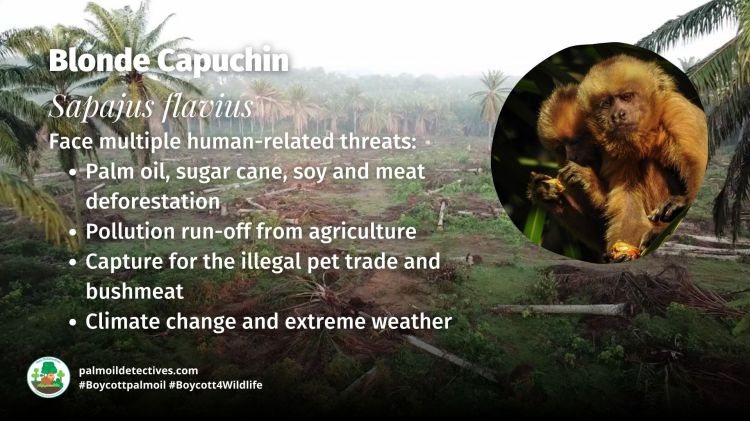
The blonde #capuchin (Sapajus flavius) is an enigmatic and critically endangered #primate found in the northeastern forests of Brazil. With their striking golden-yellow fur and intelligent, expressive faces, these capuchins are among the most visually distinctive of their genus. Once thought to be extinct, they were rediscovered in 2006, yet their populations remain fragmented and highly vulnerable. They inhabit a range of environments, from the coastal mangrove forests and várzea floodplains to terra firme forests in #Brazil’s Atlantic Forest biome. However, their survival is increasingly threatened by deforestation, agricultural expansion, #hunting, and the illegal #pettrade.
Blonde capuchins are known for their exceptionally large social groups, sometimes exceeding 150 individuals, where complex interactions, vocalisations, and even tool use have been observed. Unlike many primates, they do not have a specific breeding season, and infants can be seen being carried by their mothers year-round. Their remarkable adaptability to different habitats, including flooded forests and human-altered landscapes, underscores their resilience—but without immediate conservation action, these monkeys may not survive the pressures of habitat loss and hunting. Help them to survive every time you shop adopt a #Vegan lifestyle and #BoycottPalmOil #Boycott4Wildlife in the supermarket.
Blonde #capuchins 🐒🐵 are #endangered due to #palmoil 🌴 sugarcane and meat 🥩 #deforestation in #Brazil 🇧🇷. Supremely intelligent, they use tools and mourn dead in their troop. Take action! #Boycottpalmoil 🌴🪔⛔️ #Boycott4Wildlife @palmoildetect https://wp.me/pcFhgU-a9q
#Monkeys of #Brazil, blonde #capuchins 🐒 are super smart and rub millipedes into their fur as an bug repellent. #PalmOil #meat and the illegal #pet trade are threats. Be #vegan for them 🥕🍆🧅 and #BoycottPalmOil 🌴🪔🧐🚫 #Boycott4Wildlife @palmoildetect https://wp.me/pcFhgU-a9q
Appearance & Behaviour
- Evidence of social cohesion and empathic community behaviour, group and individual mourning of infant deaths.
- Use up to 29 distinctive calls used to communicate.
- Live in large groups of up to 150 individuals.
- Evidence of complex tool use for self-medication and locating food.
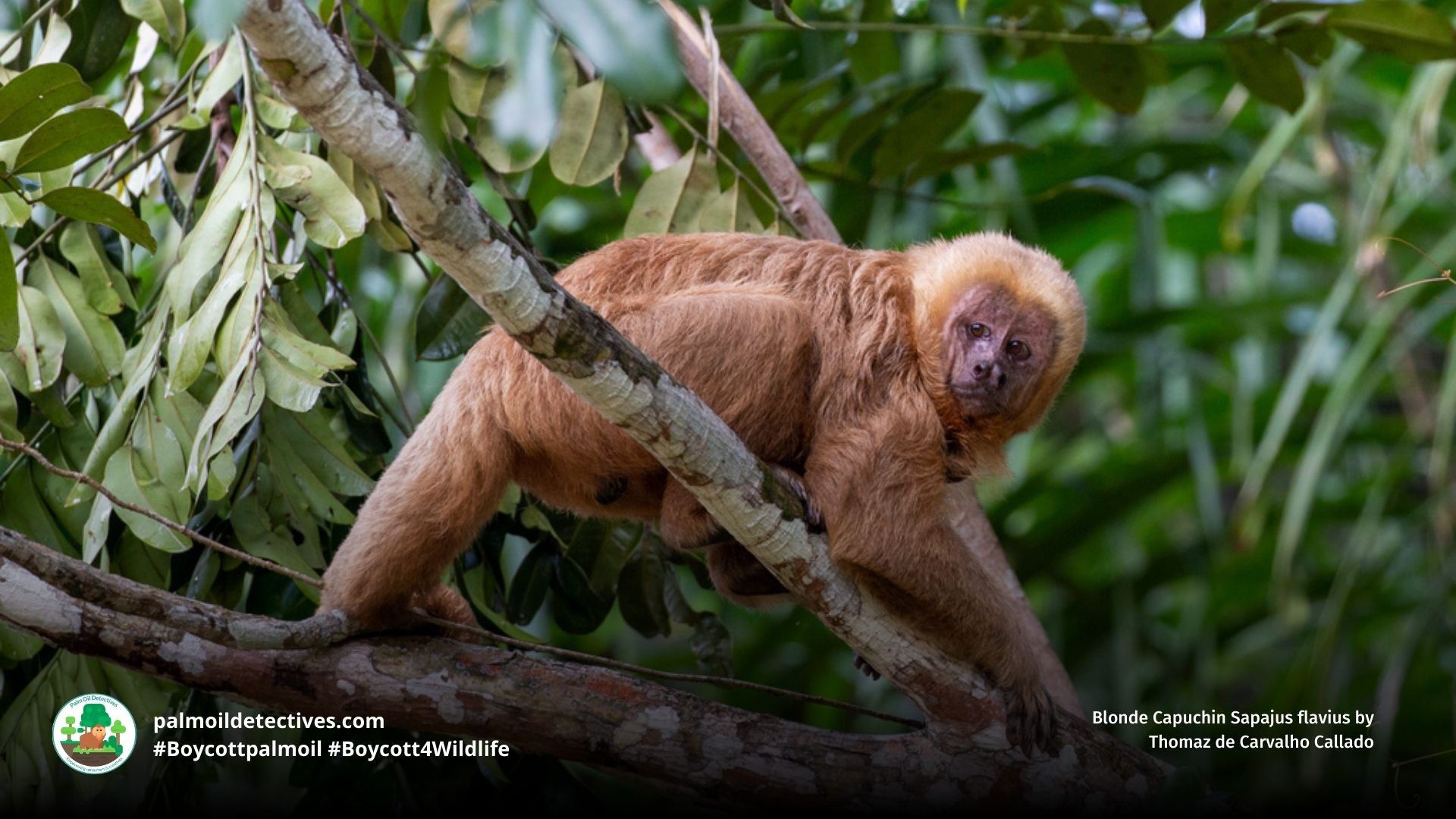
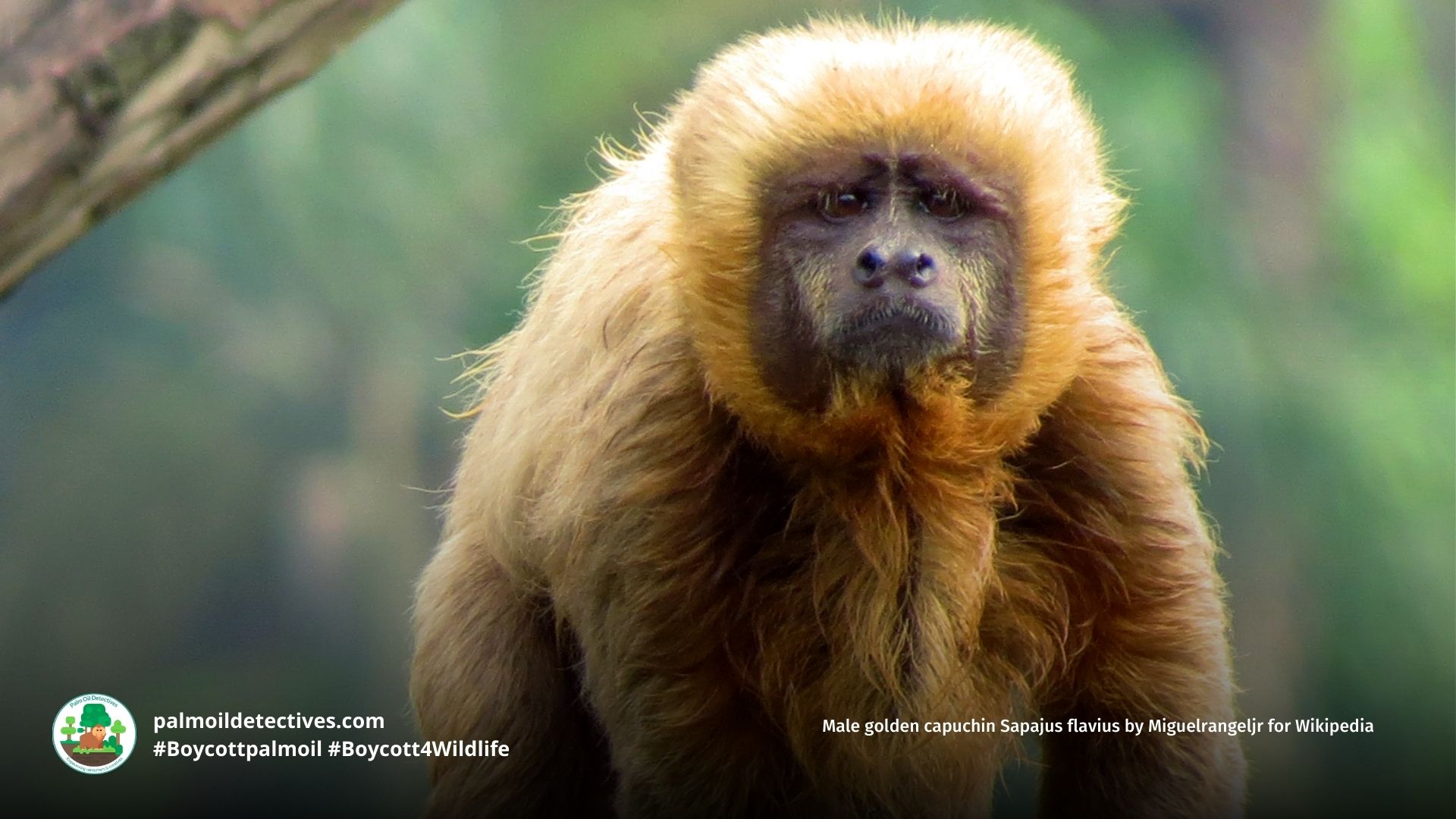
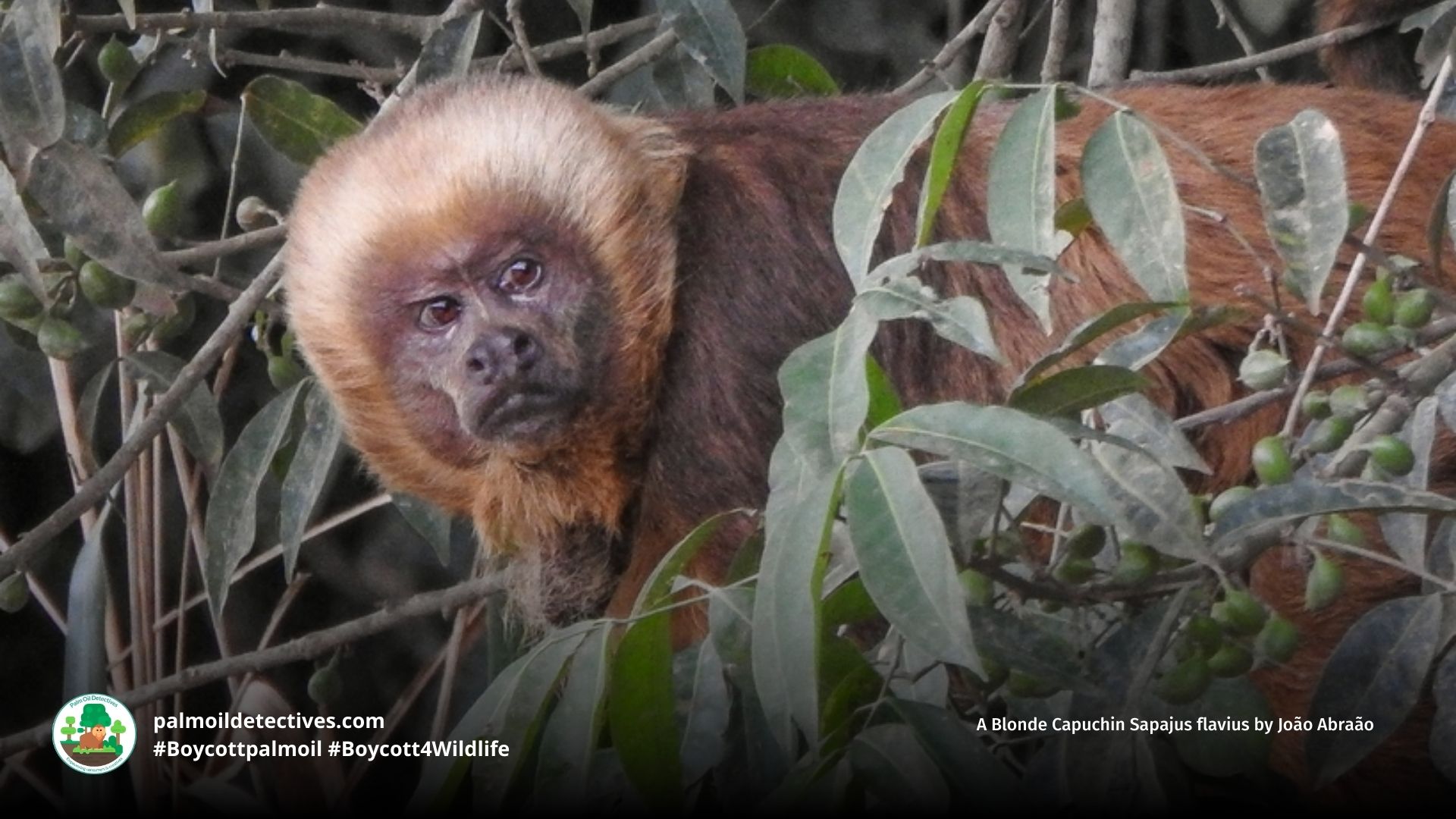
Blonde capuchins are striking primates, their golden-yellow coats shimmering against the deep greens of the Atlantic Forest. They have a distinctive whitish cap on the front of their heads, which contrasts sharply with their dark brown eyes and black facial markings. Their fur is short and dense, suited to the humid tropical climate. Their hands and feet are a lighter shade of gold, with hairless black palms and soles for better grip while climbing. Males and females are similar in appearance, but males are typically larger and more muscular.
These capuchins are highly intelligent and social, living in large, multi-male, multi-female groups that can contain over 150 individuals. They use a complex system of vocalisations, with at least 29 distinct calls, to communicate. Their societies function with a fission-fusion dynamic, meaning they frequently split into smaller foraging groups to reduce competition over food. This flexibility is key to their survival in fragmented habitats.
Despite spending most of their time in the trees, blonde capuchins also frequently descend to the ground, particularly in Caatinga dry forests and areas where fruit is scarce. They exhibit high levels of problem-solving and tool use, including using sticks to fish for termites and rubbing millipede secretions onto their fur as an insect repellent.
These monkeys have strong social bonds, and mothers play an essential role in infant care, carrying their young for months after birth. Although males do not carry infants, they play a protective role, ensuring the safety of the group, particularly mothers and offspring. In a fascinating example of primate grief, a female blonde capuchin was observed carrying her dead infant for an extended period, refusing to abandon the body despite the risks of slowing down. Two adult males guarded the grieving mother, offering protection as she lagged behind the group, demonstrating a strong sense of social cohesion and empathy.





Threats
Sugar Cane, Palm Oil and Soy Monoculture
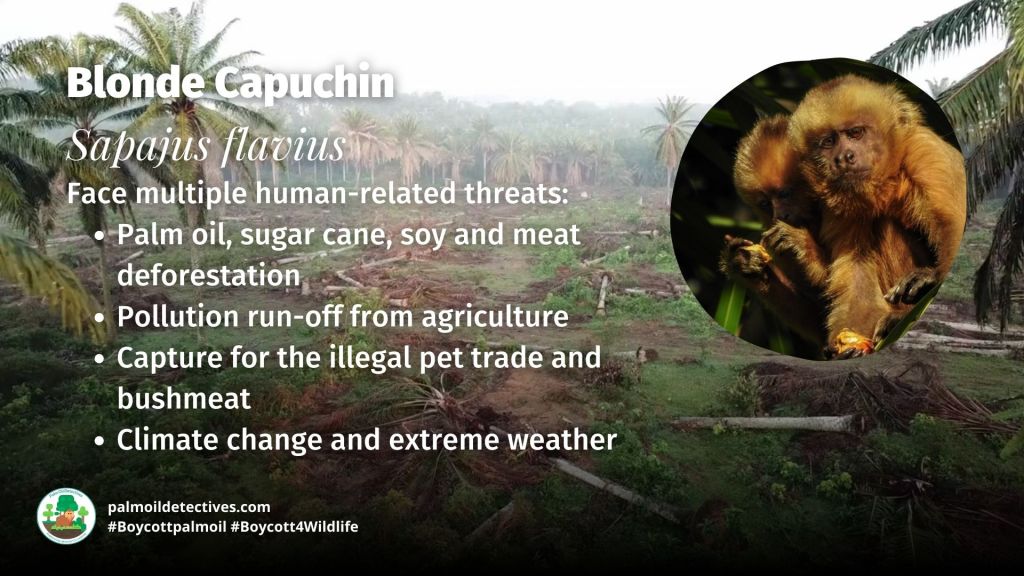
The relentless expansion of industrial agriculture, particularly sugar cane, palm oil and soy plantations, has led to the destruction of the Atlantic Forest—the blonde capuchin’s primary habitat. These plantations fragment their environment, forcing them into isolated forest patches where food scarcity increases competition and stress.
Cattle Ranching Deforestation
Large-scale cattle ranching contributes to deforestation, eliminating vast tracts of forest that blonde capuchins depend on. The clearing of land for pasture not only destroys their habitat but also reduces biodiversity, making it harder for them to find food and shelter.
Illegal Pet Trade
Blonde capuchins are frequently captured for the illegal pet trade. Their intelligence and playful nature make them highly sought after, but life in captivity is cruel. Confined to small cages and deprived of their social groups, they suffer immense psychological distress. The capture process is often violent, leading to injuries and death for both the captured individuals and the infants left behind.
Climate Change-Induced Extreme Weather
Rising temperatures and unpredictable weather patterns are disrupting food availability and seasonal cycles. Extreme droughts and storms destroy fruiting trees, leading to food shortages. Additionally, prolonged dry periods increase the risk of wildfires, further threatening their habitat.
Pesticides and River Pollution from Agriculture
Agricultural runoff, laden with pesticides and fertilisers, contaminates water sources. Blonde capuchins, like many primates, drink from forest streams, exposing them to toxic chemicals that weaken their immune systems and reduce reproductive success.

Geographic Range
Blonde capuchins are found in the fragmented forests of northeastern Brazil, particularly in the Atlantic Forest and, more recently, in the drier Caatinga biome. The latter may represent a forced adaptation due to habitat destruction.
Diet
Blonde capuchins are omnivores, feeding primarily on fruits, seeds, nuts, insects, and small vertebrates. In degraded habitats, they have been observed relying heavily on sugarcane, raiding plantations for food. This dietary shift highlights the impact of habitat destruction on their natural feeding behaviours.
Mating and Reproduction
Blonde capuchins (Sapajus flavius) exhibit year-round reproduction, meaning they do not adhere to a strict breeding season. This constant reproductive cycle allows for continuous population growth when environmental conditions permit. However, habitat destruction and human encroachment threaten this delicate balance, leading to increased infant mortality and population decline.
Maternal Care and Infant Development
Female blonde capuchins provide the primary care for their young, carrying infants on their backs for several months after birth. This close physical contact ensures warmth, protection, and the opportunity for infants to learn social behaviours by observing their mothers. Studies show that 68% of observed infant carrying was performed by females, emphasising their role as the primary caregivers (Medeiros et al., 2019).
Male Involvement in Infant Protection
Although males do not typically engage in direct infant care, they provide an essential protective role within the group. In some cases, two adult males have been observed guarding a vulnerable mother carrying her deceased infant, demonstrating social cooperation and the importance of group dynamics in protecting reproductive females (Andrade et al., 2020). This protective behavior ensures that mothers and infants are less vulnerable to predators while traveling with the group.
Infant Death and Maternal Grief
In rare but significant cases, female blonde capuchins have been documented engaging in corpse carrying behaviour, where a grieving mother carries her dead infant for days, even at the risk of slowing down her movements and exposing herself to danger. One such case involved a female who continued to carry her deceased infant despite being at increased risk of predation. Two males remained close to her, offering protection as she moved through the forest, suggesting that male blonde capuchins may provide indirect support to grieving mothers (Andrade et al., 2020).
This behavior is consistent with thanatology in primates, a field that examines how primates react to death. It suggests that blonde capuchins, like other cognitively complex primates, may experience a form of grief and maternal attachment beyond immediate survival instincts.
FAQs
Do blonde capuchins make good pets?
No. Keeping a blonde capuchin as a pet is both cruel and illegal. These intelligent primates require complex social interactions, large territories, and the freedom to forage and move. Captivity leads to severe mental and physical suffering. Additionally, the pet trade fuels poaching, further endangering wild populations.
How intelligent are blonde capuchins?
Blonde capuchins are among the most intelligent primates. They exhibit tool use, such as using sticks to extract termites and rocks to crack nuts. They also apply millipede secretions to their fur as a natural insect repellent, demonstrating problem-solving skills and cultural behaviours.
Why are blonde capuchins endangered?
The primary threats include deforestation for palm oil, sugar cane, soy and meat agriculture, habitat fragmentation, and the illegal pet trade. These pressures have drastically reduced their populations, leaving them confined to small, isolated forest patches.
How can I help protect blonde capuchins?
The best way to help is by supporting indigenous-led conservation initiatives and refusing to support industries that contribute to deforestation. Boycott palm oil and meat in the supermarket to fight against these destructive industries. #BoycottPalmOil #Boycott4Wildlife.
Take Action!
Blonde capuchins are in urgent need of protection. Every time you shop, you have the power to fight for their survival. Refuse products that contribute to deforestation and the destruction of their habitat. Support indigenous-led conservation efforts and advocate for stronger wildlife protection laws. Use your wallet as a weapon and #BoycottPalmOil #Boycott4Wildlife.
Support Blonde Capuchins by going vegan and boycotting palm oil in the supermarket, it’s the #Boycott4Wildlife
Support the conservation of this species
This animal has no protections in place. Read about other forgotten species here. Create art to support this forgotten animal or raise awareness about them by sharing this post and using the #Boycottpalmoil #Boycott4Wildlife hashtags on social media. Also you can boycott palm oil in the supermarket.
Further Information
Andrade, B. M. T., Freire-Filho, R., & Bezerra, B. (2020). The behaviours of a female blonde capuchin (Sapajus flavius) towards her dead infant. Behaviour. https://doi.org/10.1163/1568539X-bja10031
Bastos, M., Medeiros, K., Jones, G., & Bezerra, B. (2018). Small but wise: Common marmosets (Callithrix jacchus) use acoustic signals as cues to avoid interactions with blonde capuchin monkeys (Sapajus flavius). American Journal of Primatology, 80(2). https://doi.org/10.1002/ajp.22744
Bezerra, B. M., Bastos, M., Souto, A., Keasey, M. P., Eason, P., Schiel, N., & Jones, G. (2014). Camera Trap Observations of Nonhabituated Critically Endangered Wild Blonde Capuchins, Sapajus flavius (Formerly Cebus flavius). International Journal of Primatology, 35(5), 895–907. https://doi.org/10.1007/s10764-014-9782-4
Hance, J.(2011). Critically endangered capuchins make tools to gather termites. Mongabay https://news.mongabay.com/2011/03/critically-endangered-capuchins-make-tools-to-gather-termites/
Medeiros, K., Bastos, M., Jones, G., & Bezerra, B. (2019). Behavior, Diet, and Habitat Use by Blonde Capuchin Monkeys (Sapajus flavius) in a Coastal Area Prone to Flooding: Direct Observations and Camera Trapping. International Journal of Primatology, 40(5), 511–531. https://doi.org/10.1007/s10764-019-00103-z
Prado-Sañudo, M. L., Giraldo, A., & Bolívar, W. (2020). Population status of Sapajus flavius in the Western and Central Andes of Colombia. Boletín Científico Centro de Museos Museo de Historia Natural, 24(2), 116-124. https://doi.org/10.17151/bccm.2020.24.2.8
Valença-Montenegro, M.M., Bezerra, B.M., Martins, A.B., Jerusalinsky, L., Fialho, M.S. & Lynch Alfaro, J.W. 2021. Sapajus flavius (amended version of 2020 assessment). The IUCN Red List of Threatened Species 2021: e.T136253A192592928. https://dx.doi.org/10.2305/IUCN.UK.2021-1.RLTS.T136253A192592928.en. Accessed on 10 February 2025.
Wikipedia. (n.d.). Blonde capuchin. https://en.wikipedia.org/wiki/Blond_capuchin

How can I help the #Boycott4Wildlife?
Take Action in Five Ways
1. Join the #Boycott4Wildlife on social media and subscribe to stay in the loop: Share posts from this website to your own network on Twitter, Mastadon, Instagram, Facebook and Youtube using the hashtags #Boycottpalmoil #Boycott4Wildlife.
2. Contribute stories: Academics, conservationists, scientists, indigenous rights advocates and animal rights advocates working to expose the corruption of the palm oil industry or to save animals can contribute stories to the website.



3. Supermarket sleuthing: Next time you’re in the supermarket, take photos of products containing palm oil. Share these to social media along with the hashtags to call out the greenwashing and ecocide of the brands who use palm oil. You can also take photos of palm oil free products and congratulate brands when they go palm oil free.
4. Take to the streets: Get in touch with Palm Oil Detectives to find out more.
5. Donate: Make a one-off or monthly donation to Palm Oil Detectives as a way of saying thank you and to help pay for ongoing running costs of the website and social media campaigns. Donate here
Learn about other animals endangered by palm oil and other agriculture
Learn about “sustainable” palm oil greenwashing
Read more about RSPO greenwashing
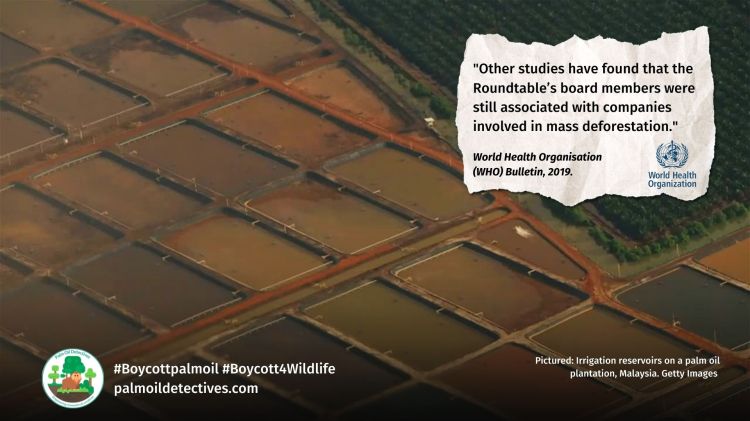
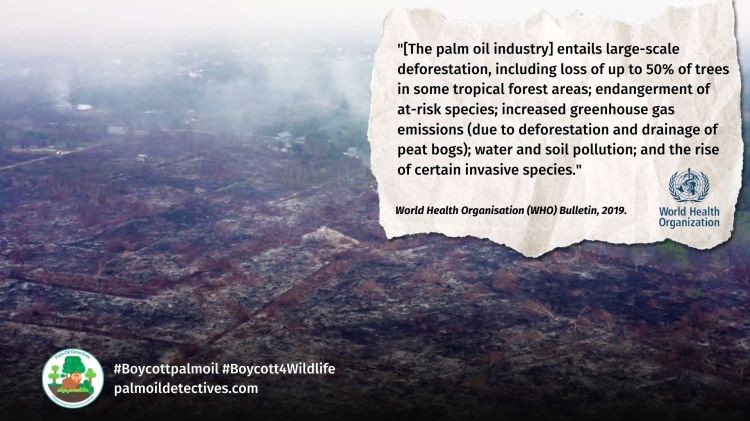
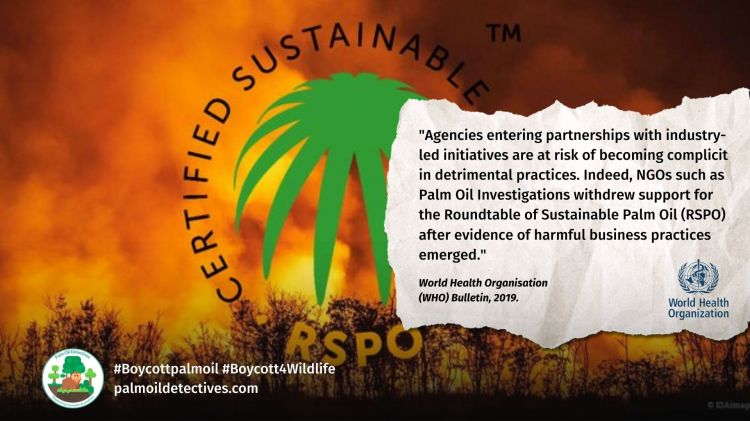
A 2019 World Health Organisation (WHO) report into the palm oil industry and RSPO finds extensive greenwashing of palm oil deforestation and the murder of endangered animals (i.e. biodiversity loss)


Discover more from Palm Oil Detectives
Subscribe to get the latest posts sent to your email.
 Palm Oil Detectives