

White-bellied Pangolin Phataginus tricuspis
Endangered
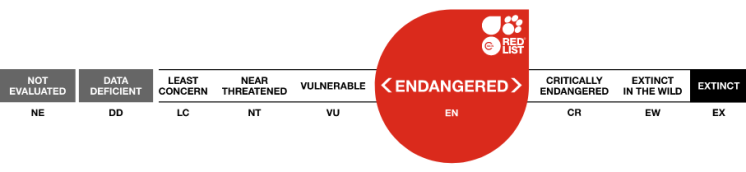
IUCN Red List Status: Endangered
Location: Guinea-Bissau, Guinea, Sierra Leone, Liberia, Côte d’Ivoire, Ghana, Nigeria, Cameroon, Equatorial Guinea, Gabon, Congo, Central African Republic, Democratic Republic of the Congo, Uganda, Kenya, Rwanda, Burundi, Angola, Tanzania, Zambia
Found across the remaining fragments of West and Central African rainforest, the elusive White-bellied Pangolin is a nocturnal, arboreal insectivore whose very body has become a global commodity.
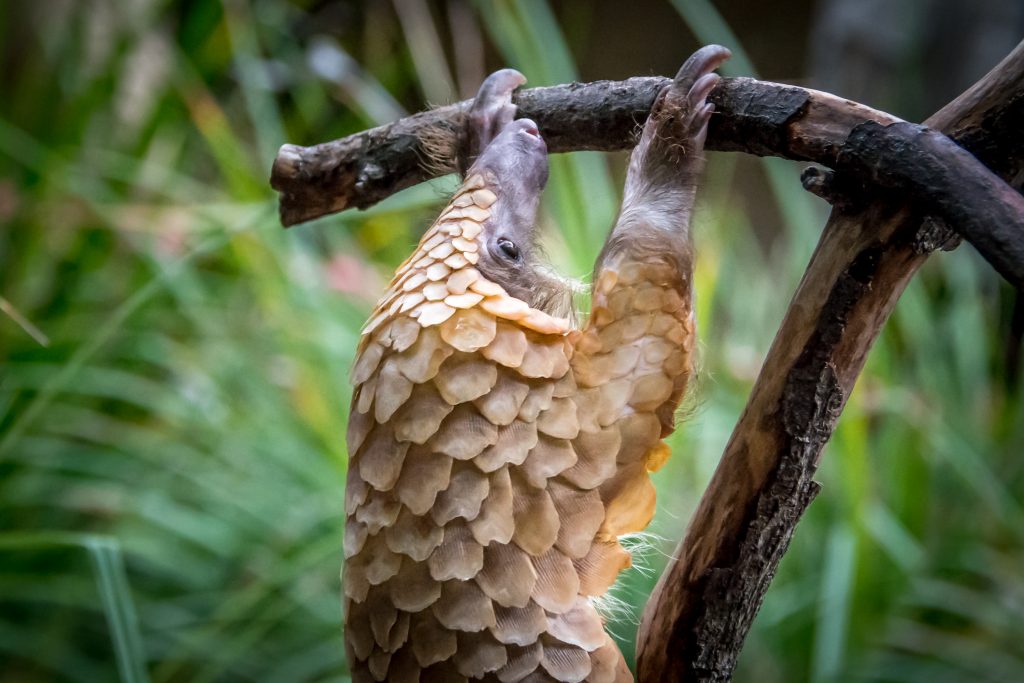
The White-bellied Pangolin also commonly known as the Tree Pangolin are fascinating creatures akin to giant pest controllers, estimated to consume around 70 million insects per year. #Pangolins don’t have teeth, rather they have scales lining their stomachs which aid them in the digestion of food that is swallowed whole. Baby pangolins often ride on their mother’s backs and and are known as pango pups. They are able to use their tails to support their body weight and can walk upright on their hind legs.
They are often captured and killed for the illegal #poaching trade in abandoned palm oil plantations in their native homelands in #WestAfrica. Now classified as #Endangered by the IUCN, White-bellied Pangolins face a terrifying future. The dual threats of industrial-scale trafficking and rampant #deforestation for agriculture—especially #palmoil plantations—are pushing them towards extinction Help them every time you shop and #Boycottpalmoil #Boycott4Wildlife
White-bellied #Pangolins 🤎😻🙏 are threatened by #palmoil #cococa #meat #deforestation and #poaching. These amazing animals can walk upright on their hind legs🐾 Help them when you shop be #vegan #Boycottpalmoil 🌴⛔️#Boycott4Wildlife @palmoildetect https://palmoildetectives.com/2021/01/18/white-bellied-pangolin-phataginus-tricuspis/
Meek and gentle white-bellied #pangolins are ruthlessly hunted for their scales which have ZERO medicinal value. A growing threat is #palmoil 🌴🪔🤢and #tobacco 🚭 #deforestation. Help them survive! #BoycottPalmOil #Boycott4Wildlife @palmoildetect https://palmoildetectives.com/2021/01/18/white-bellied-pangolin-phataginus-tricuspis/



Appearance and Behaviour
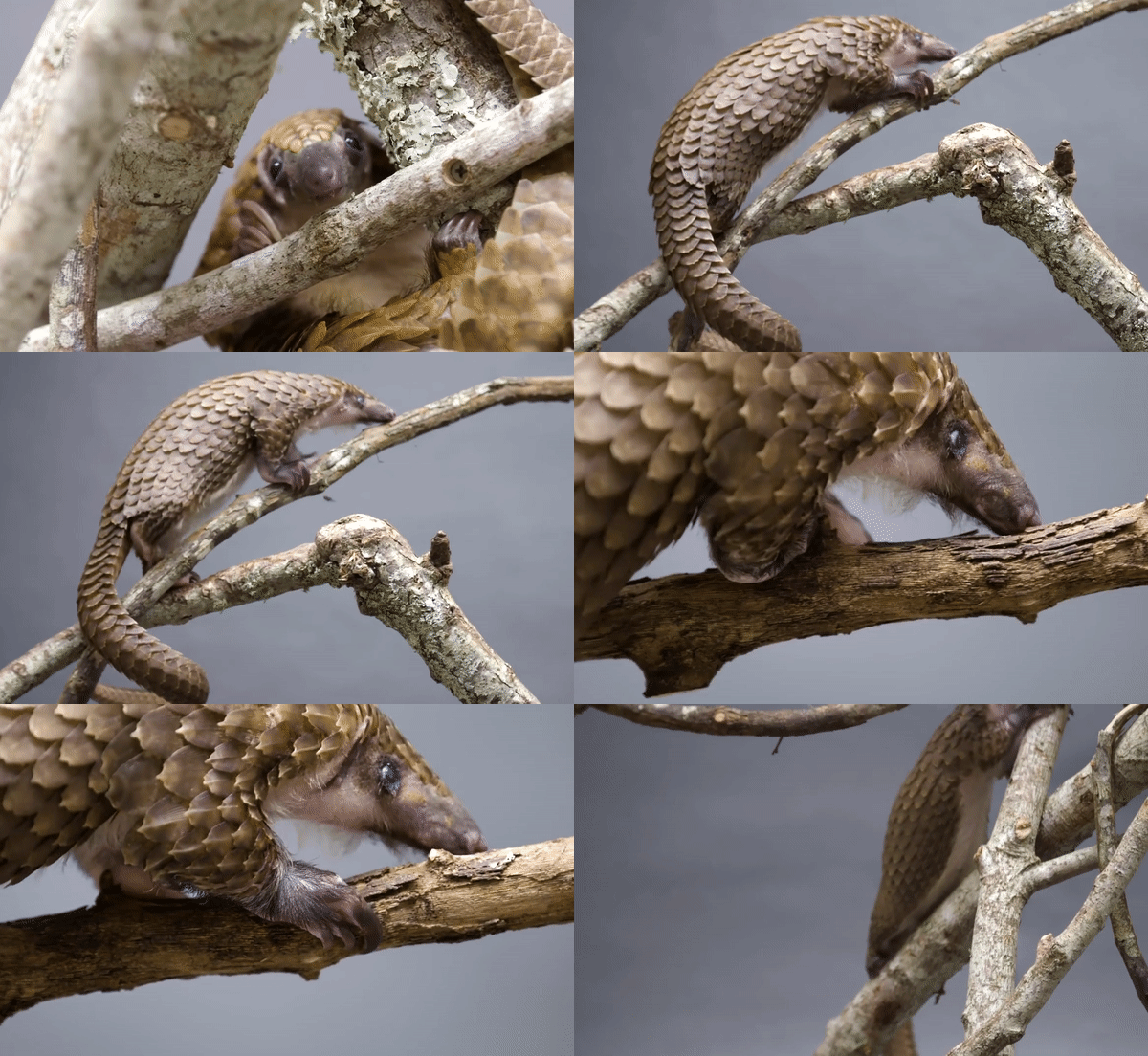
With their bodies armoured in keratin scales and their gentle, silent movements through the treetops, white-bellied pangolins have been described as one of the most extraordinary yet most misunderstood creatures on Earth.
Also known as the African Tree Pangolin, these slender and shy mammals are covered head to tail in overlapping, pale brown or yellowish scales made entirely of keratin. These scales provide formidable protection against predators, curling into a ball when threatened—a defence mechanism that unfortunately makes them easy targets for poachers. Adults typically weigh between 1.5 to 2.5 kilograms and grow to about 30 to 40 cm in body length, with tails often longer than their bodies to aid climbing.
Although often thought of as ground-dwelling, White-bellied Pangolins are superb climbers, capable of scaling tall trees with ease. Their prehensile tails help them balance while they forage along branches. They are largely nocturnal, solitary creatures, most active in the dark hours of night when they hunt for ants and termites. Motion-activated camera traps in West and Central African forests have shown them traversing forest floors and climbing high into the canopy, displaying surprising agility and adaptability (Akpona et al., 2008).
Social encounters are rare and brief, usually related to mating. White-bellied pangolins are silent and secretive, with subtle olfactory communication being their primary form of interaction. Even within protected areas, their presence is more often indicated by signs—like feeding holes or scat—than by direct sightings. Despite this elusiveness, they are now frequently detected in bushmeat markets across the region, highlighting the immense pressure they are under (Boakye et al., 2016).
Diet
White-bellied Pangolins feed exclusively on social insects—primarily ants and termites—which they locate using an acute sense of smell. Once prey is detected, they use their powerful, curved claws to tear open nests and extract insects using a long, sticky tongue that can extend more than 25 cm. Unlike other insectivores, they have no teeth; instead, they rely on their muscular stomach to grind food.
Their diet makes them ecological engineers, playing a critical role in controlling ant and termite populations and aerating soil through their foraging activity. This insectivorous diet also makes them highly vulnerable to habitat degradation, since many of their preferred prey species are sensitive to disturbance and disappear from logged or converted lands. A recent survey in the Oluwa Forest Reserve found that pangolin presence was strongly correlated with the abundance of ant and termite mounds, both of which are declining due to increasing land use (Adeniji et al., 2023).
Reproduction and Mating
Pangolins have slow reproductive rates. Females typically give birth to a single offspring after a gestation of around 150 days. Newborns are tiny, weighing around 80-100 grams, with soft, pink scales that harden over time. Young are known as ‘Pango Pups’. For the first few weeks, infants are carried on their mother’s tail, clinging tightly as she forages.
Breeding appears to occur year-round, though data is scarce. Most pangolin offspring are likely born during periods of high insect availability. Observations in Gabon have noted that most adult females encountered during field surveys were pregnant or nursing, suggesting near-continuous breeding potential (Pagès, 1975). However, due to intense poaching, pregnant and nursing pangolins are disproportionately removed from the wild, further destabilising populations.
Geographic Range
Phataginus tricuspis is the most widespread of all African pangolin species, ranging from Guinea-Bissau and Senegal in the west to north-western Tanzania and northern Angola in the east and south. It is present in at least 23 countries. Despite this wide distribution, populations are heavily fragmented, and many former strongholds—especially in West Africa—have seen local extinctions or drastic declines.
In Nigeria, Ghana and Côte d’Ivoire, intensive habitat conversion for logging, agriculture, and urban development has devastated forests, and pangolins are now rare outside protected areas. Studies in Osun and Ondo States have shown sharp declines even in conservation areas due to poaching and ineffective law enforcement (Owolabi et al., 2024; Adeniji et al., 2023). The Yaoundé bushmeat markets in Cameroon have been identified as key hubs for trafficking pangolins sourced from up to 600 km away, revealing the extent of illegal harvesting across Central Africa (Dipita et al., 2024).
Threats
Forests are disappearing rapidly in Nigeria, Ghana, Cameroon and the Democratic Republic of the Congo, their strongholds, while pangolin scales are being smuggled in tonnes across continents. With an estimated 0.4–2.7 million pangolins hunted annually in Central Africa alone, and seizures of their scales numbering in the hundreds of thousands of individuals, this species is in crisis (Ingram et al., 2018; Challender et al., 2019).
White-bellied Pangolins were often caught in abandoned or little-used oil palm plantations.
IUCN Red List
- Wildlife Trafficking: Phataginus tricuspis is the most trafficked African pangolin species. Between 2013 and 2019, an estimated 400,000 individuals were killed for their scales alone (Challender et al., 2019).
- Traditional Medicine and Bushmeat: Pangolins are widely consumed across West Africa and used in traditional rituals and pseudo medicine, particularly in Nigeria, Ghana, and Cameroon (Soewu & Ayodele, 2009).
- Palm Oil Deforestation: Industrial palm oil expansion is a major driver of forest loss throughout the species’ range. In Nigeria and Cameroon, pangolins are losing critical habitat to monoculture plantations (Adeniji et al., 2023).
- Habitat Fragmentation: Rapid human population growth and road expansion are isolating forest patches and making pangolins more accessible to poachers (Owolabi et al., 2024).
Take Action!
Boycott palm oil products to help save the White-bellied Pangolin and the forests they depend on. Support grassroots and indigenous-led conservation efforts in West and Central Africa. Demand stricter enforcement against wildlife trafficking and campaign online against the use of pangolins in traditional medicine. Use your wallet as a weapon and #BoycottPalmOil #Boycott4Wildlife
FAQs
How many White-bellied Pangolins are left in the wild?
There is no precise global population estimate due to their elusive nature and widespread poaching. However, local studies and market data suggest the species is in steep decline. In Ghana, Nigeria and Cameroon, hunters now consider the species to be rare or extirpated from many former habitats (Akpona et al., 2008; Ingram et al., 2018).
Why are pangolins hunted?
They are hunted for meat, traditional medicine, spiritual rituals, and increasingly, for international markets in China and Vietnam where their scales are used in pseudo-medicinal compounds. Scales from at least 200,000 pangolins were trafficked between 2015 and 2019 (Challender et al., 2019).
Do palm oil plantations affect pangolins?
Yes. The conversion of natural forest to palm oil monocultures destroys their habitat, reduces food sources, and makes pangolins more vulnerable to hunting. In southern Nigeria, White-bellied Pangolins were once found even in degraded farms, but monocultures support fewer ants and termites, removing their core diet (Sodeinde & Adedipe, 1994).
Do pangolins make good pets?
Absolutely not. Pangolins are solitary, wild animals with highly specialised diets. They cannot survive long in captivity, and the illegal pet trade drives their extinction. Keeping them as pets is cruel and ecologically devastating.

Further Information
Adeniji, A. E., Ejidike, B. N., Olaniyi, O. E., & Akala, V. T. (2023). Distribution and threat to white-bellied pangolin (Phataginus tricuspis) in Oluwa Forest Reserve, Ondo State, Nigeria. Journal of Research in Forestry, Wildlife and Environment, 15(2). https://www.ajol.info/index.php/jrfwe/article/view/252333
Dipita, A. D., Missoup, A. D., Aguillon, S., Lecompte, E., Momboua, B. R., Chaber, A. L., … & Gaubert, P. (2024). Genetic tracing of the illegal trade of the white-bellied pangolin (Phataginus tricuspis) in western Central Africa. Scientific Reports, 14, 13131. https://doi.org/10.1038/s41598-024-63666-9
Ingram, D. J., Coad, L., Abernethy, K. A., Maisels, F., Stokes, E. J., Bobo, K. S., … & Simo, M. (2018). Assessing Africa-wide pangolin hunting pressures and trade. Frontiers in Ecology and Evolution, 6, 25. https://doi.org/10.1111/conl.12389
Owolabi, B. A., Akinsorotan, O. A., Adewumi, A. A., & Sanusade, A. O. (2024). Locals’ perceptions, knowledge, and attitudes regarding the conservation of the critically endangered Phataginus tricuspis. ResearchSquare. https://doi.org/10.21203/rs.3.rs-3944447/v1
Pietersen, D., Moumbolou, C., Ingram, D.J., Soewu, D., Jansen, R., Sodeinde, O., Keboy Mov Linkey Iflankoy, C., Challender, D. & Shirley, M.H. 2019. Phataginus tricuspis. The IUCN Red List of Threatened Species 2019: e.T12767A123586469. https://dx.doi.org/10.2305/IUCN.UK.2019-3.RLTS.T12767A123586469.en. Downloaded on 17 January 2021.
Soewu, D. A., & Ayodele, I. A. (2009). Utilization of pangolins in traditional Yorubic medicine in Ijebu province, Ogun State, Nigeria. Journal of Ethnobiology and Ethnomedicine, 5, 39. https://doi.org/10.1186/1746-4269-5-39

How can I help the #Boycott4Wildlife?
Take Action in Five Ways
1. Join the #Boycott4Wildlife on social media and subscribe to stay in the loop: Share posts from this website to your own network on Twitter, Mastadon, Instagram, Facebook and Youtube using the hashtags #Boycottpalmoil #Boycott4Wildlife.
2. Contribute stories: Academics, conservationists, scientists, indigenous rights advocates and animal rights advocates working to expose the corruption of the palm oil industry or to save animals can contribute stories to the website.





3. Supermarket sleuthing: Next time you’re in the supermarket, take photos of products containing palm oil. Share these to social media along with the hashtags to call out the greenwashing and ecocide of the brands who use palm oil. You can also take photos of palm oil free products and congratulate brands when they go palm oil free.
4. Take to the streets: Get in touch with Palm Oil Detectives to find out more.
5. Donate: Make a one-off or monthly donation to Palm Oil Detectives as a way of saying thank you and to help pay for ongoing running costs of the website and social media campaigns. Donate here
Discover more from Palm Oil Detectives
Subscribe to get the latest posts sent to your email.
 Palm Oil Detectives
Thank you for all of your beautifully crafted and vitally important blogs! I plan to re-blog those that deal with wildlife and other issues in the Amazon region, citing you as the source.
LikeLiked by 2 people
Thank you so much Barbara I am so glad you liked these and are going to repost them. Likewise I am happy to showcase your work on Twitter to my followers to raise awareness of your beautiful children’s book and art. 🙂
LikeLiked by 1 person