
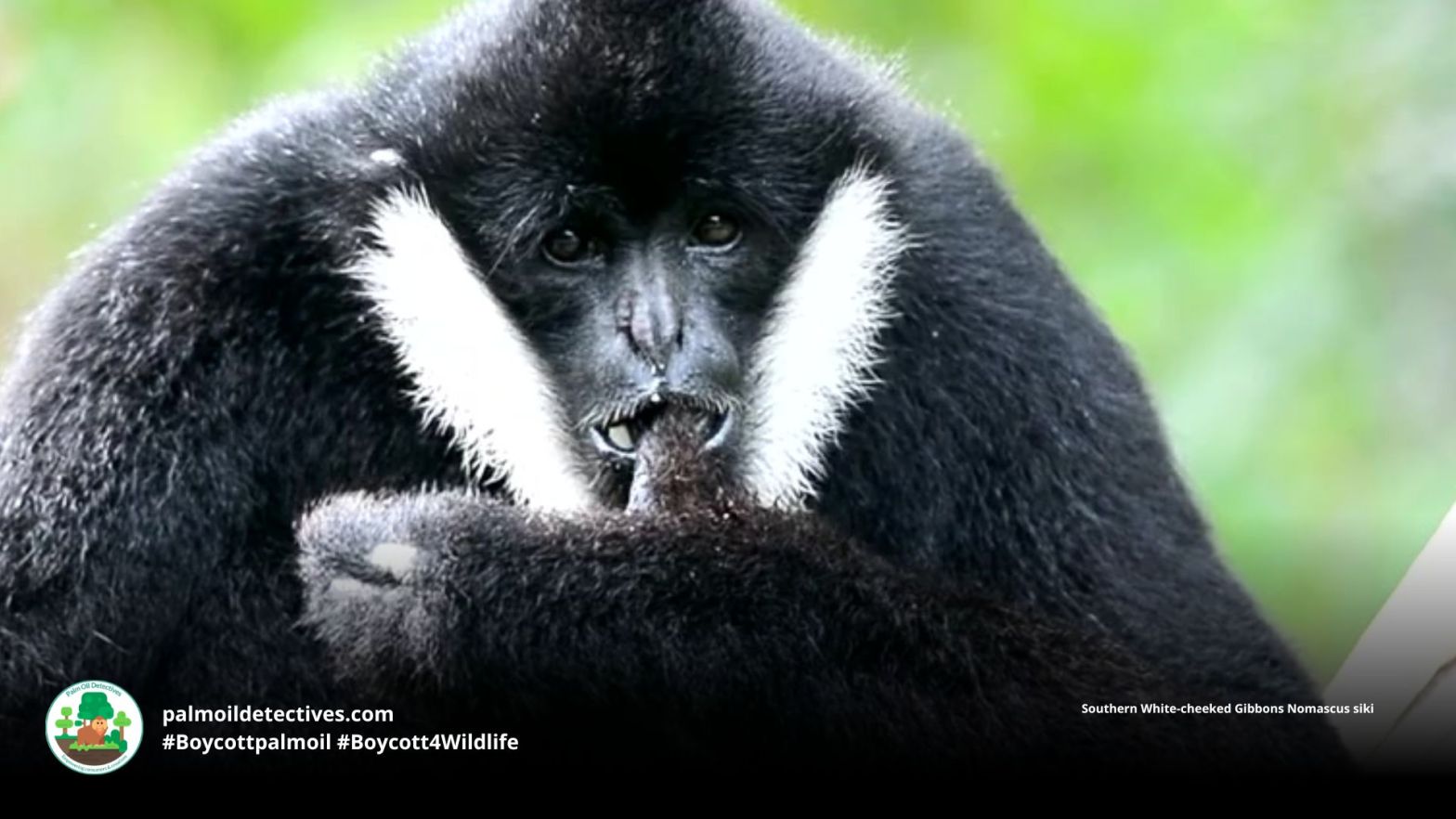
Southern White-cheeked Gibbon Nomascus siki
Red List Status: Critically Endangered
Location: Central Laos (east of Mekong River), Central Vietnam (Ha Tinh, Quang Binh, Quang Tri Provinces)
In the misty canopies of Southeast Asian forests, where ancient trees reach towards clouded peaks and dawn breaks with haunting melodies, Southern White-cheeked Gibbons swing through their rapidly shrinking world.
Southern White-cheeked #Gibbons stand among Southeast Asia’s most melodic #primates, their haunting territorial songs echoing through evergreen forests at dawn. These remarkable apes face an 80% population decline over three generations as #rubber plantations, agricultural expansion, and #hunting devastate their homeland. #Vietnam has lost 15% of its forest cover in just 15 years and could lose another 45% by 2050, while #Laos faces similar destruction. With fewer than 425 groups remaining in fragmented patches, these singing #apes teeter on #extinction’s edge. #BoycottPalmOil #Boycott4Wildlife
Southern White-cheeked #Gibbons 🐒🐵 sing together in regional dialects 🪇🎶🎷 and live in #Cambodia #Laos #Vietnam. They’re critically #endangered on due to #rubber #palmoil #deforestation and hunting. Help them and #BoycottPalmOil 🌴🚫 @palmoildetect https://palmoildetectives.com/2021/01/29/southern-white-cheeked-gibbon-nomascus-siki/
Appearance and Behaviour
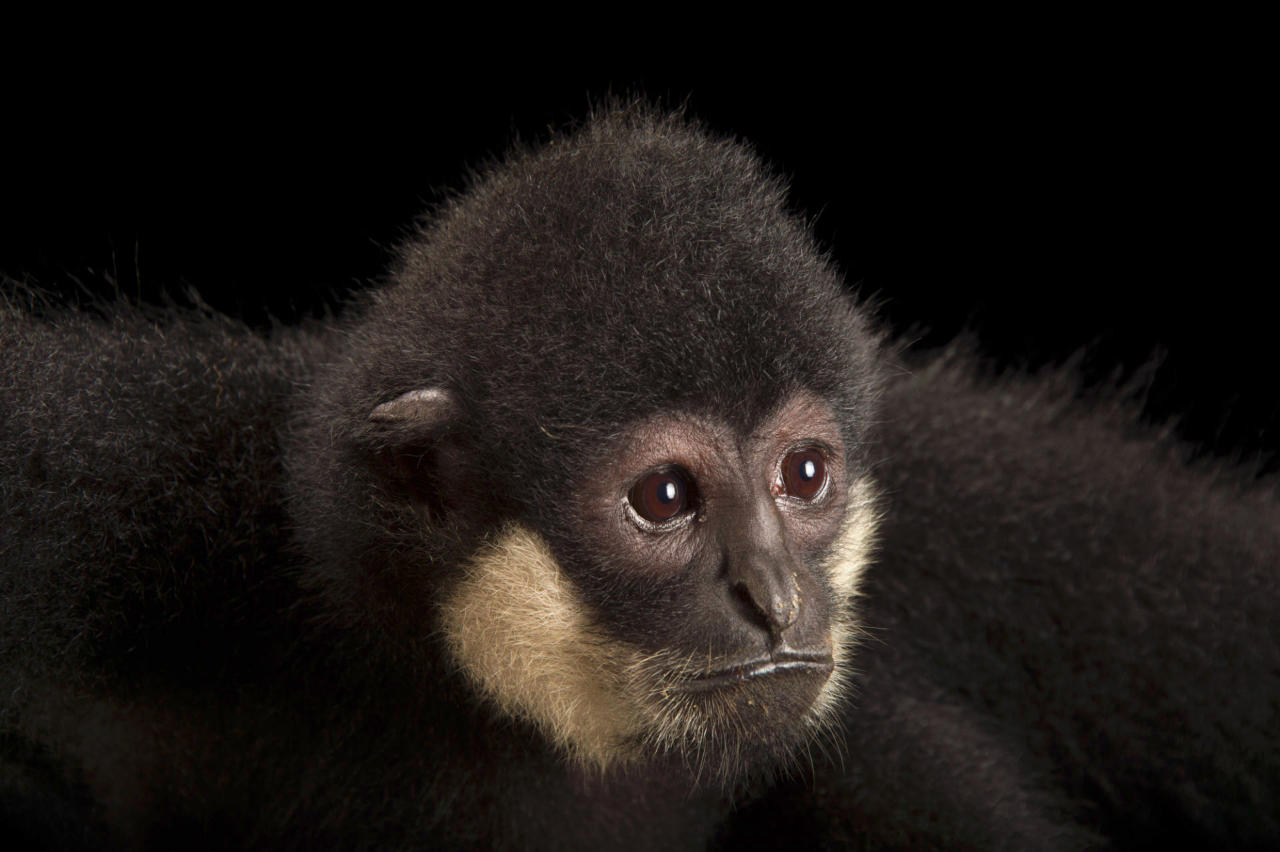
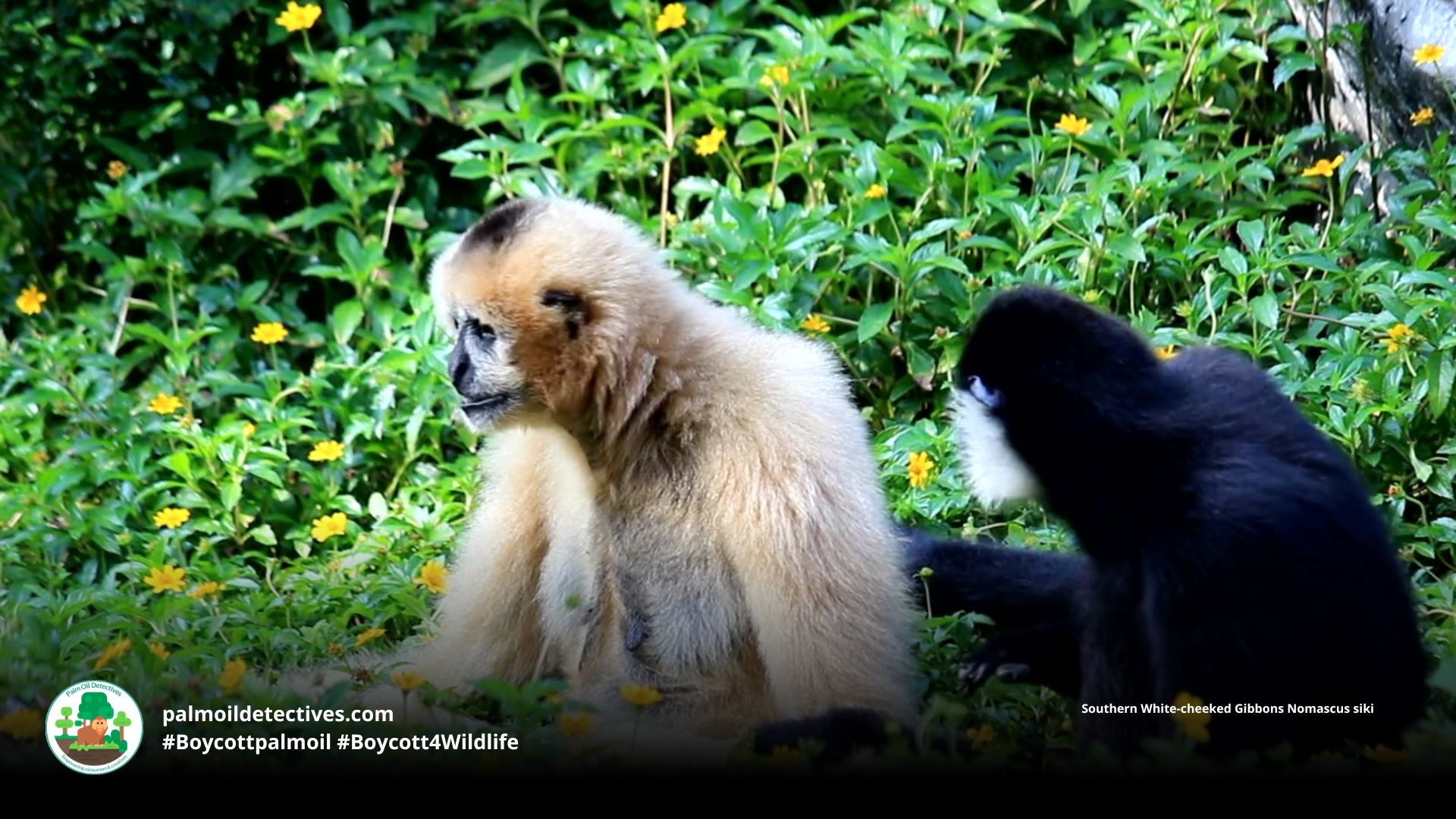
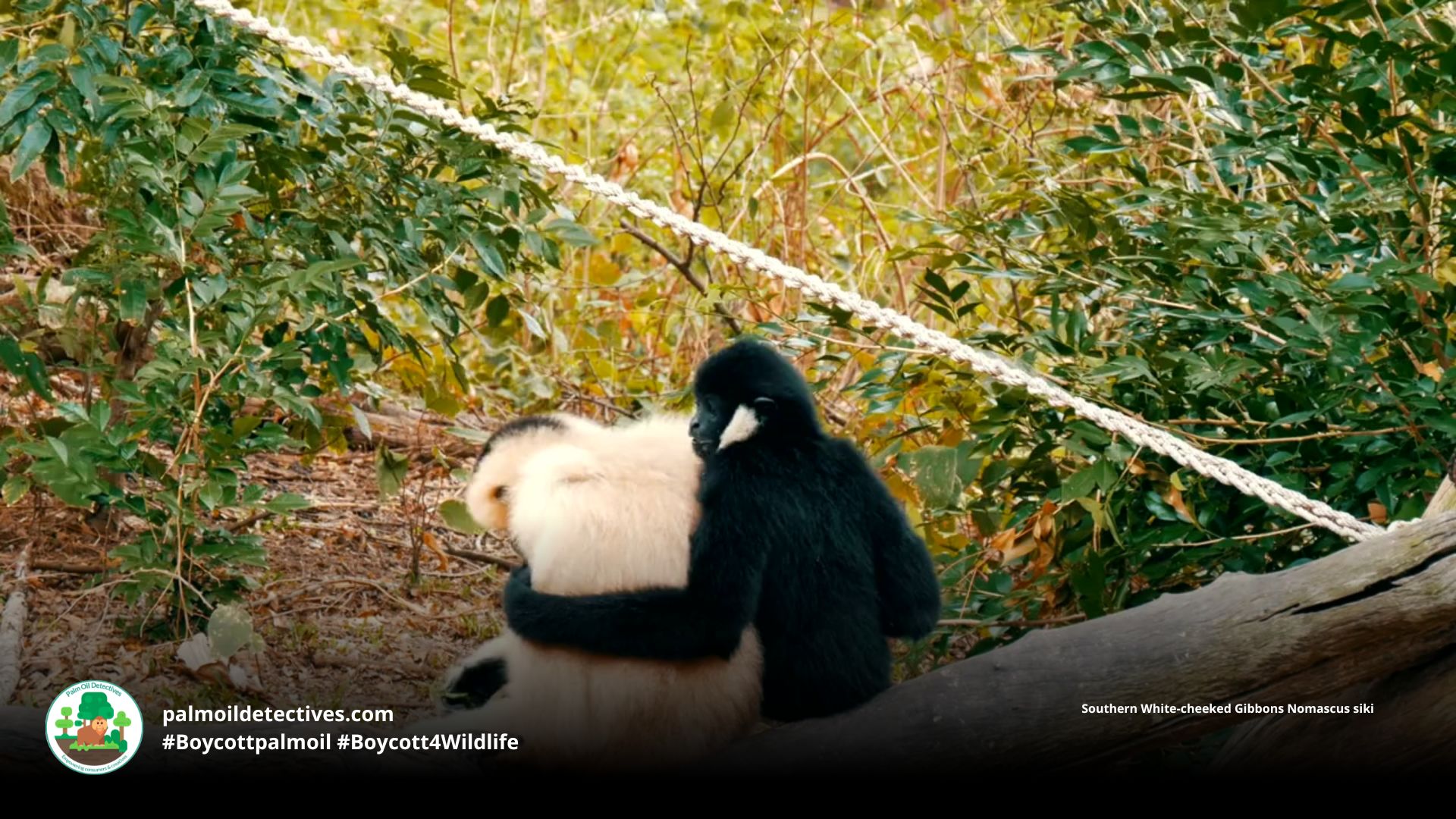
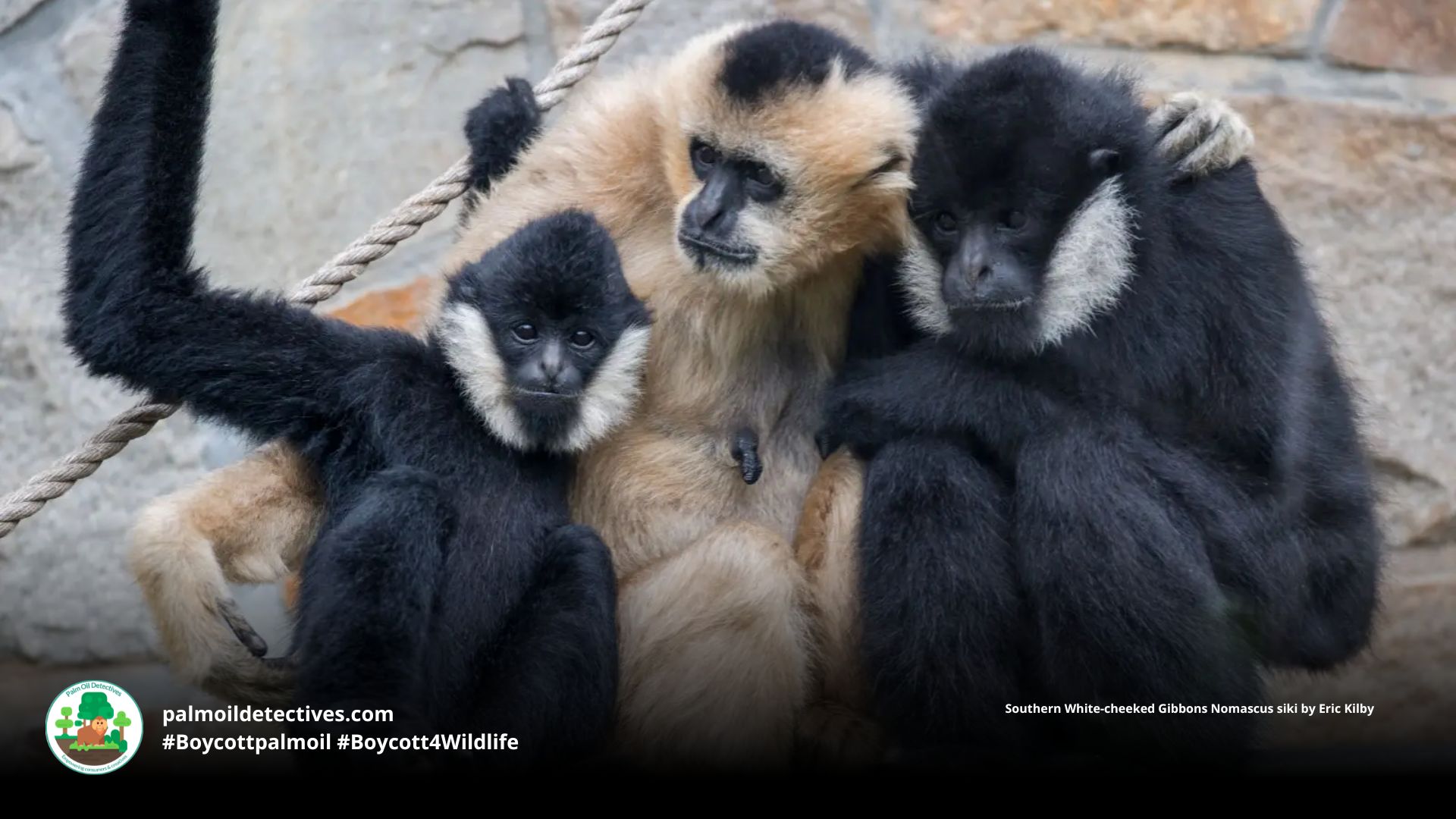
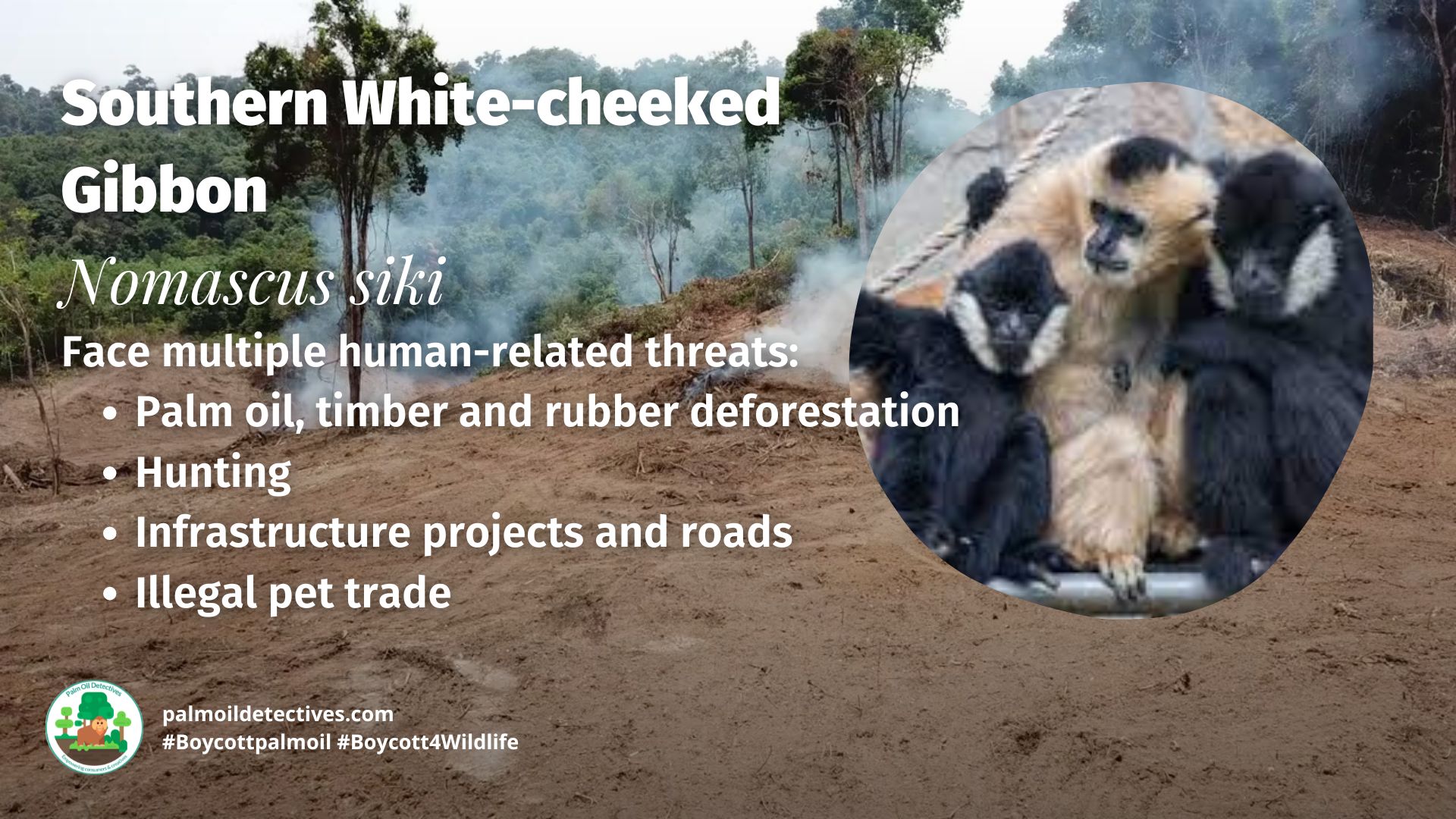
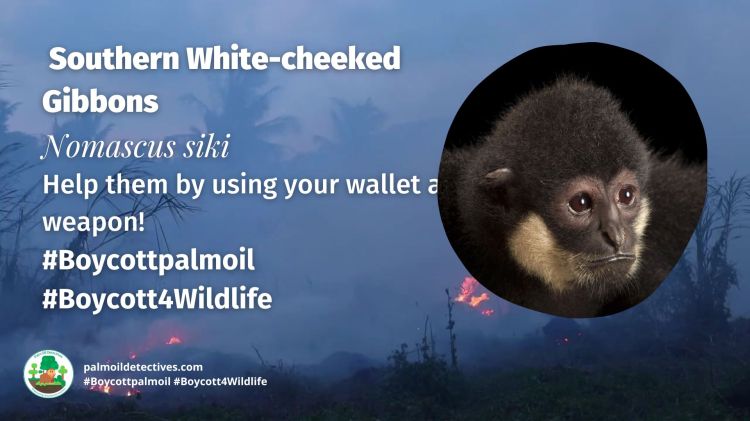
Southern White-cheeked Gibbons display striking sexual dimorphism that transforms with age. Juveniles begin life as light brown infants, turning black after weaning. Adult males remain jet black with distinctive white patches framing their mouths, while females develop rich brown colouring with delicate white facial edging. Their long, powerful arms span up to 1.5 metres, perfectly adapted for their brachiating lifestyle.
These gibbons begin each day with spectacular duet songs that can be heard up to 2 kilometres away. Mated pairs sing together to defend territories and strengthen bonds, their regional accents distinguishing different populations. Southern White-cheeked Gibbons are strictly arboreal, spending their entire lives in the canopy where they move with breathtaking grace and speed.

Diet
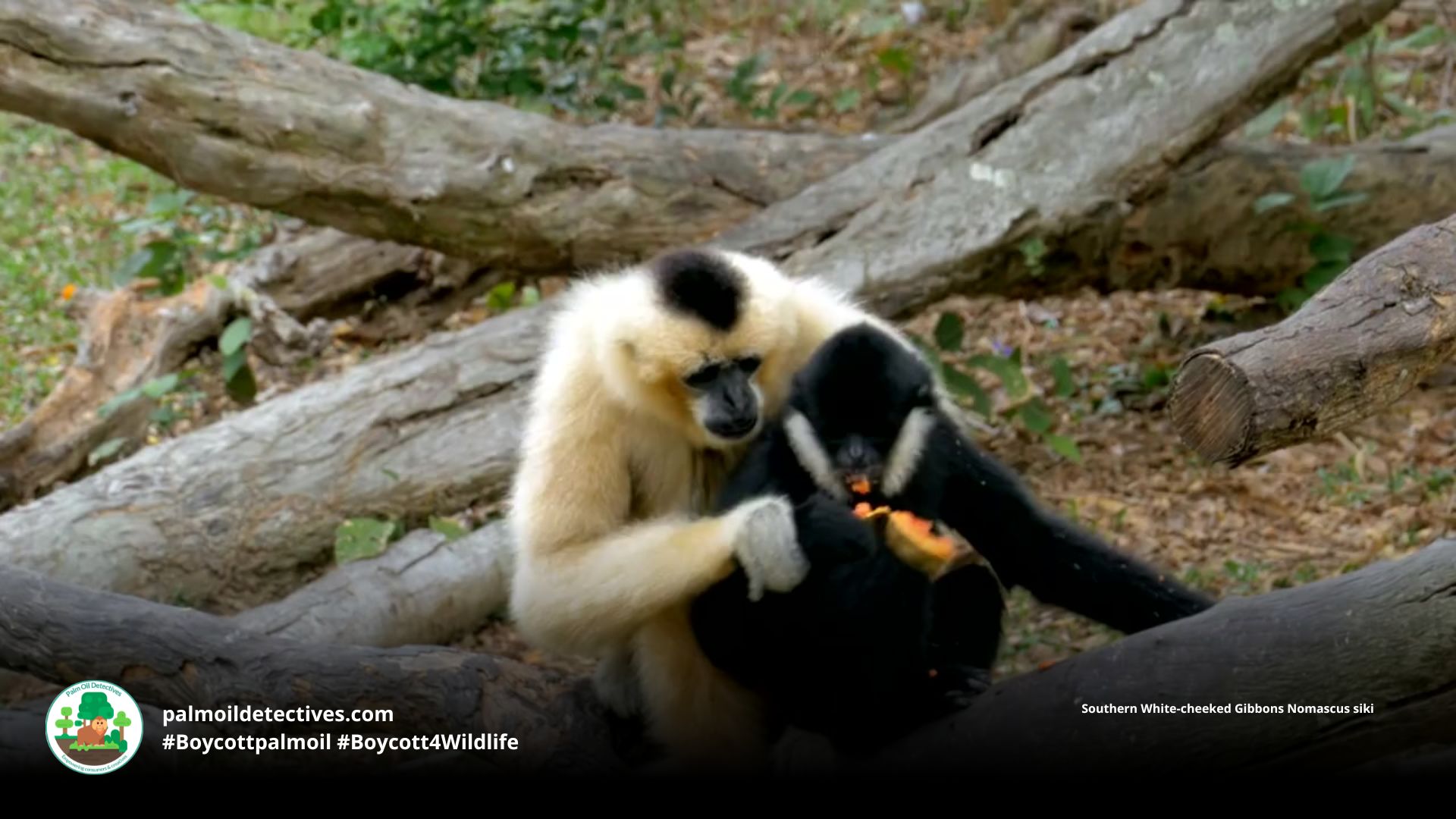
Southern White-cheeked Gibbons are primarily frugivorous, spending 33% of their day feeding on diverse forest fruits that ripen throughout the year. They supplement their diet with tender leaves, young shoots, and flowers, occasionally capturing small prey like lizards or Finlayson’s squirrels. These gibbons provide a critical ecosystem service by being seed dispersers, carrying viable seeds in their digestive systems across vast territories before depositing them in new locations through their faeces. Their feeding activities help regenerate forest biodiversity across their 37.9-hectare home ranges.
Reproduction and Mating
Southern White-cheeked Gibbons form monogamous pairs that mate for life, raising their young together in tight family units. Females typically give birth to their first offspring between seven and eight years of age. Because raising young is extremely demanding, both parents share childcare duties, and mothers wait until their current offspring becomes relatively independent before having another infant. Families consist of two parents, a juvenile, and an infant at any given time. Young gibbons leave their parents’ territory once they reach maturity between three and six years of age.
Geographic Range
Southern White-cheeked Gibbons inhabit a restricted range in central Laos east of the Mekong River and central Vietnam’s mountainous provinces. Their historical distribution extended from the Nam Theun and Rao Nay rivers in the north to the Banghiang and Thach Han rivers in the south.
In Vietnam, populations are heavily fragmented and scattered, while in Laos populations of gibbons remain larger. Key populations survive in protected areas including Phong Nha-Ke Bang National Park and Nakai-Nam Theun National Protected Area.
Threats

Timber, rubber and palm oil deforestation
Agricultural expansion converts primary forests into farmland and human settlements, destroying the tall broadleaf evergreen forests Southern White-cheeked Gibbons require for survival. Logging operations target luxury timber species, selectively removing the largest trees that provide crucial fruiting resources and nesting sites.
Rubber cultivation destroys the fruiting trees that sustain gibbon populations while fragmenting territories below viable thresholds for family groups. The conversion process typically involves clear-cutting entire forest sections, eliminating decades of ecological relationships in mere weeks. In Cambodia’s Virachey National Park, large areas have been cleared for rubber production in recent years, particularly along the eastern borders where gibbons once thrived.
Infrastructure development and roads
Infrastructure development opens previously inaccessible areas to human exploitation, bringing roads, settlements, and hunting pressure into formerly secure habitats. The fragmentation creates isolated forest patches too small to support viable gibbon populations, leading to local extinctions across their range. Agricultural conversion eliminates the continuous canopy connections these strictly arboreal primates need for movement and foraging.
Hunting and wildlife trade
Traditional medicine practitioners highly value Southern White-cheeked Gibbons for their body parts. Opportunistic hunting with firearms targets gibbons alongside other wildlife, often killing entire family groups when hunters encounter them.
The illegal pet trade tears infant gibbons from their families, condemning them to lives of isolation and psychological trauma in captivity. Local communities hunt gibbons for bushmeat, viewing them as readily available protein sources. Gun ownership and hunting access have increased significantly with infrastructure development, bringing previously secure populations within reach of hunters. The small group sizes and territorial nature of gibbon families make them particularly vulnerable to hunting pressure.
Take Action!
Use your wallet as a weapon and #BoycottPalmOil #Boycott4Wildlife every time you shop. Adopt a vegan lifestyle protecting both wild and farmed animals from agricultural expansion. Support indigenous-led protection recognising traditional forest guardianship. Refuse products containing rubber from deforested areas and demand supply chain transparency. #BoycottPalmOil #Boycott4Wildlife #Vegan
FAQs
What sounds do Southern White-cheeked Gibbons make?
Southern White-cheeked Gibbons are renowned for their spectacular dawn songs that can be heard up to 2 kilometres away through dense forest. Mated pairs perform elaborate duets combining whoops, hoots, and melodic phrases that last 15-30 minutes each morning. These territorial songs serve to defend their home ranges and strengthen pair bonds between mates. Each population has developed regional accents, with slight variations in song structure distinguishing different gibbon communities across their range. Males typically begin the duet with deep hooting calls, while females add higher-pitched, more complex phrases that create hauntingly beautiful harmonies echoing through the forest canopy.
How high can Southern White-cheeked Gibbons swing?
Southern White-cheeked Gibbons are masterful brachiators, swinging through forest canopies 15-50 metres above the ground using their extremely long arms and powerful shoulder joints. They travel at speeds reaching 55 kilometres per hour through the canopy. Their incredible agility allows them to navigate dense forest canopies with extraordinary precision.
How long do Southern White-cheeked Gibbons live?
Southern White-cheeked Gibbons can live 35-40 years. Young gibbons remain with their parents for 3-6 years, learning essential survival skills including territorial singing, foraging techniques, and canopy navigation.
Are Southern White-cheeked Gibbons dangerous to humans?
These gentle apes are primarily frugivorous and spend their time high in forest canopies, far from human activity. Their territorial behaviour is directed only towards other gibbon groups, not humans, and consists of vocal displays rather than physical aggression.
Do Southern White-cheeked Gibbons make good pets?
It is deeply cruel to keep these wild apes as pets. Southern White-cheeked Gibbons suffer extreme psychological trauma, loneliness, and early death in captivity. The illegal pet trade rips infant gibbons from their families, causing severe trauma while removing potential breeding individuals from critically endangered populations.
Captive Southern White-cheeked Gibbons often develop depression and aggression as they attempt to cope with social isolation and environmental deprivation. Legal ownership is prohibited under CITES Appendix I and national laws in both Vietnam and Laos.
Why do Southern White-cheeked Gibbons sing?
Southern White-cheeked Gibbons sing elaborate duets to defend their territories, strengthen pair bonds, and communicate with neighbouring families across the forest landscape. These dawn songs serve as acoustic boundaries, informing other gibbon groups about occupied territories and preventing potentially dangerous physical confrontations. Mated pairs coordinate their duets to demonstrate their strong partnership and reproductive fitness to potential rivals. The songs also help family members locate each other in dense forest canopies and may serve to teach young gibbons proper vocal techniques essential for establishing their own territories. Regional variations in song structure function like dialects, allowing gibbons to identify members of their local population versus strangers from distant areas.
Further Information

Can, D. N., Trai, L. T., Ninh, L. V., Hieu, T. D., Nghia, H. V., Mai, T. T., & Tu, L. N. (2020). The status of southern white-cheeked gibbon (Nomascus siki) in Truong Son key biodiversity area. Vietnam Journal of Biotechnology, 42(1), 31-42.
Endangered Primate Rescue Centre
Nguyen, M.H., Coudrat, C.N.Z., Roos, C., Rawson, B.M. & Duckworth, J.W. 2020. Nomascus siki. The IUCN Red List of Threatened Species 2020: e.T39896A17968765. https://dx.doi.org/10.2305/IUCN.UK.2020-2.RLTS.T39896A17968765.en. Downloaded on 28 January 2021.
Southern white-cheeked gibbon (Nomascus siki) in Nakai-Nam Theun National Protected Area, Lao PDR. Conservation and Science Report, Northeast Primate Conservancy.

How can I help the #Boycott4Wildlife?
Take Action in Five Ways
1. Join the #Boycott4Wildlife on social media and subscribe to stay in the loop: Share posts from this website to your own network on Twitter, Mastadon, Instagram, Facebook and Youtube using the hashtags #Boycottpalmoil #Boycott4Wildlife.
2. Contribute stories: Academics, conservationists, scientists, indigenous rights advocates and animal rights advocates working to expose the corruption of the palm oil industry or to save animals can contribute stories to the website.





3. Supermarket sleuthing: Next time you’re in the supermarket, take photos of products containing palm oil. Share these to social media along with the hashtags to call out the greenwashing and ecocide of the brands who use palm oil. You can also take photos of palm oil free products and congratulate brands when they go palm oil free.
4. Take to the streets: Get in touch with Palm Oil Detectives to find out more.
5. Donate: Make a one-off or monthly donation to Palm Oil Detectives as a way of saying thank you and to help pay for ongoing running costs of the website and social media campaigns. Donate here
Discover more from Palm Oil Detectives
Subscribe to get the latest posts sent to your email.
 Palm Oil Detectives