
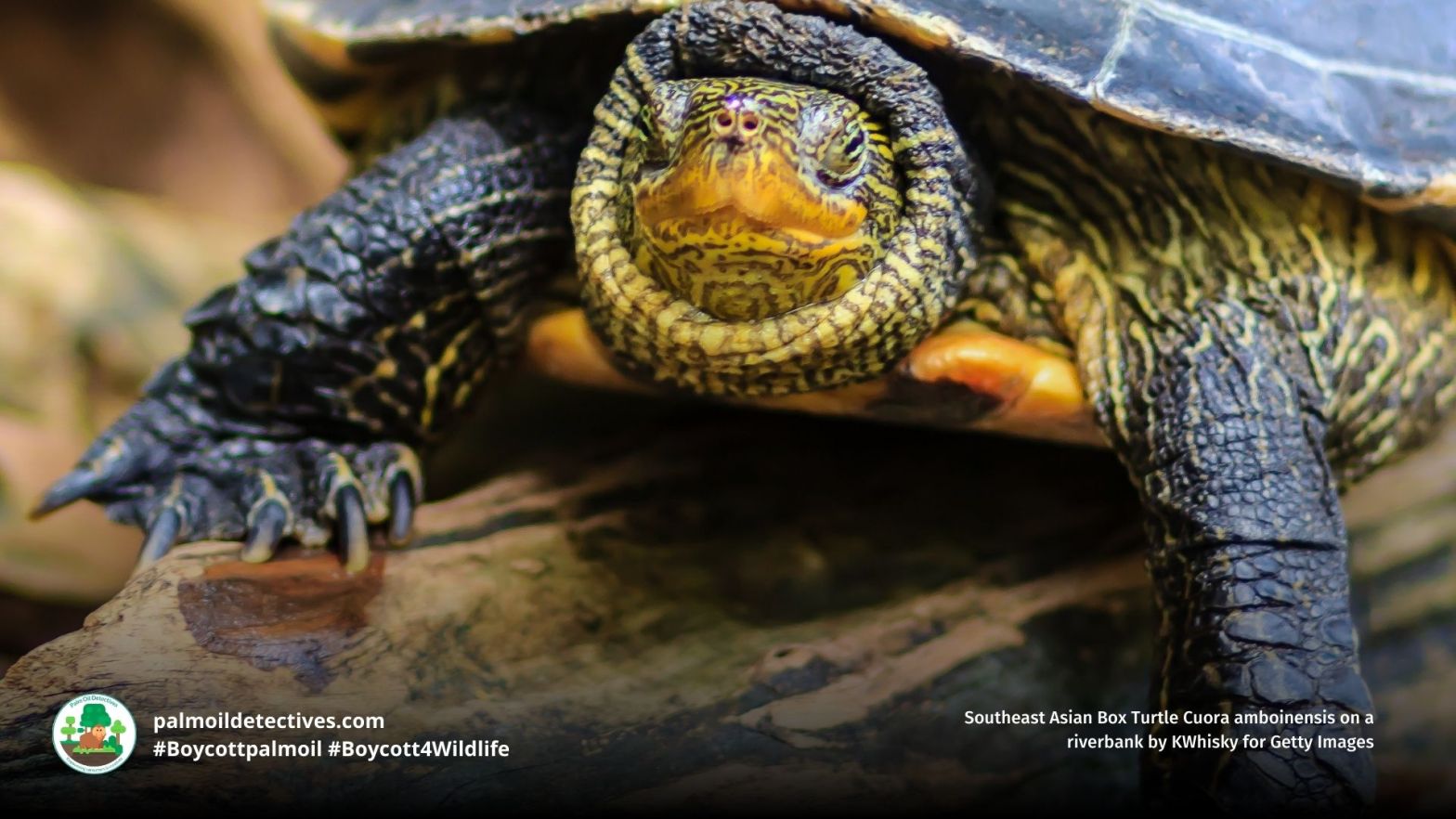
Southeast Asian Box Turtle Cuora amboinensis
IUCN Status: Endangered
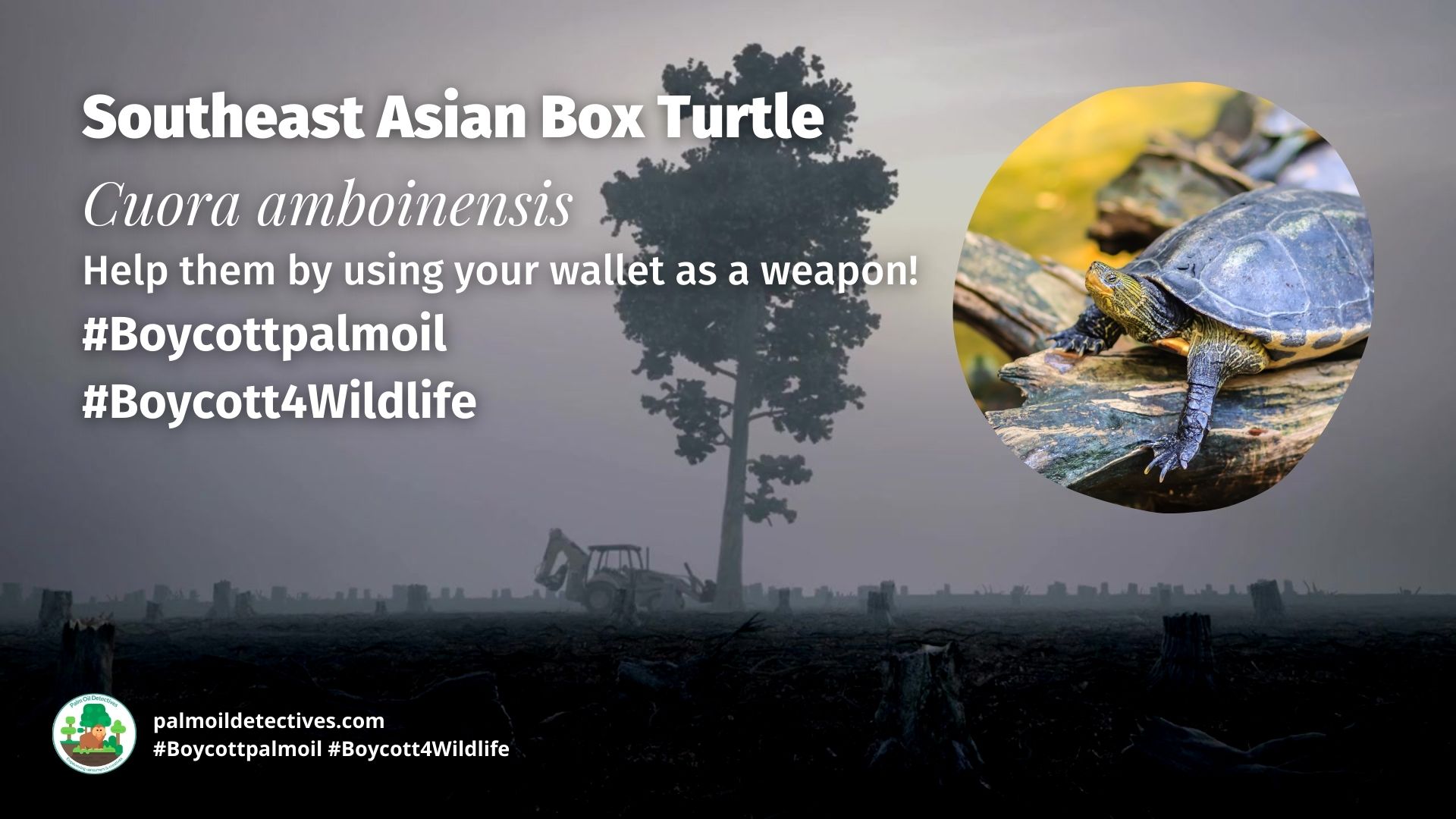
The Southeast Asian Box #Turtle Cuora amboinensis, also known as the Amboina Box Turtle, Malayan Box Turtle, or Indonesian Box Turtle, is a freshwater #reptile species found across much of Southeast Asia. This species is under severe pressure due to overexploitation for food, traditional medicine, and the #pettrade, particularly in Australia, #China, Europe, and the United States. Their semi-aquatic nature allows them to thrive in swamps, rice paddies, and slow-moving rivers, but habitat destruction from #palmoil plantations, #timber and wetland drainage threatens their survival. Their population is rapidly declining due to these threats, making urgent protections necessary. Resist destruction and fight for their survival every time you shop – #BoycottPalmOil #Boycott4Wildlife.
The Southeast Asian Box #Turtle 🐢💚🫶 is rare and disappearing #reptile, they’re #endangered due to #palmoil deforestation in #India 🇮🇳 #Indonesia 🇮🇩 and the #pet trade. Fight for them and #BoycottPalmOil 🌴🤮🔥🧐⛔️ #Boycott4Wildlife @palmoildetect https://palmoildetectives.com/2021/02/05/southeast-asian-box-turtle-cuora-amboinensis/
Location: The Southeast Asian Box Turtle is native to Southeast Asia. It is found across Indonesia, Malaysia, Thailand, Vietnam, Cambodia, Laos, Myanmar, the Philippines, Brunei, and parts of India and Bangladesh.
Appearance and Behaviour
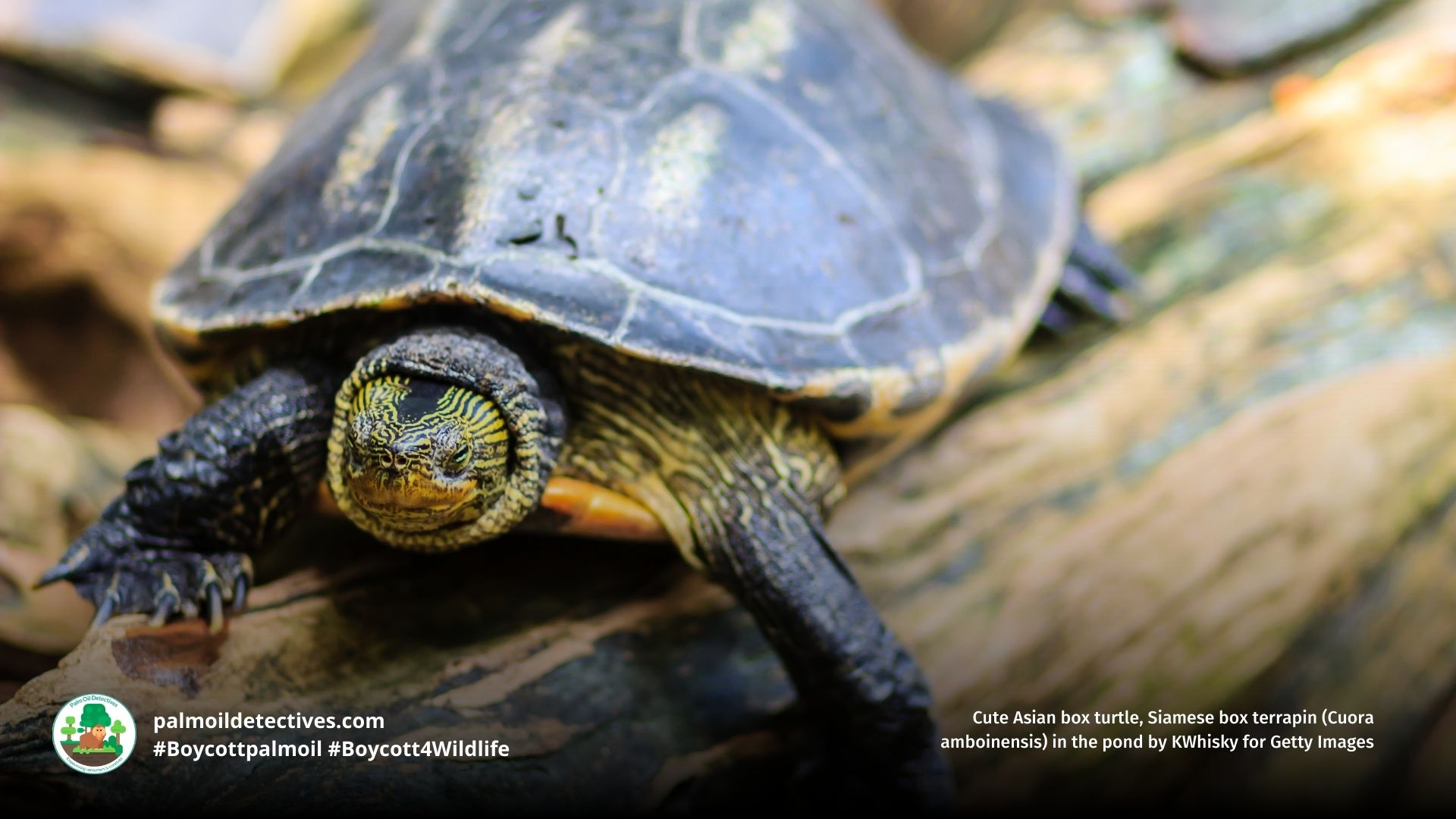
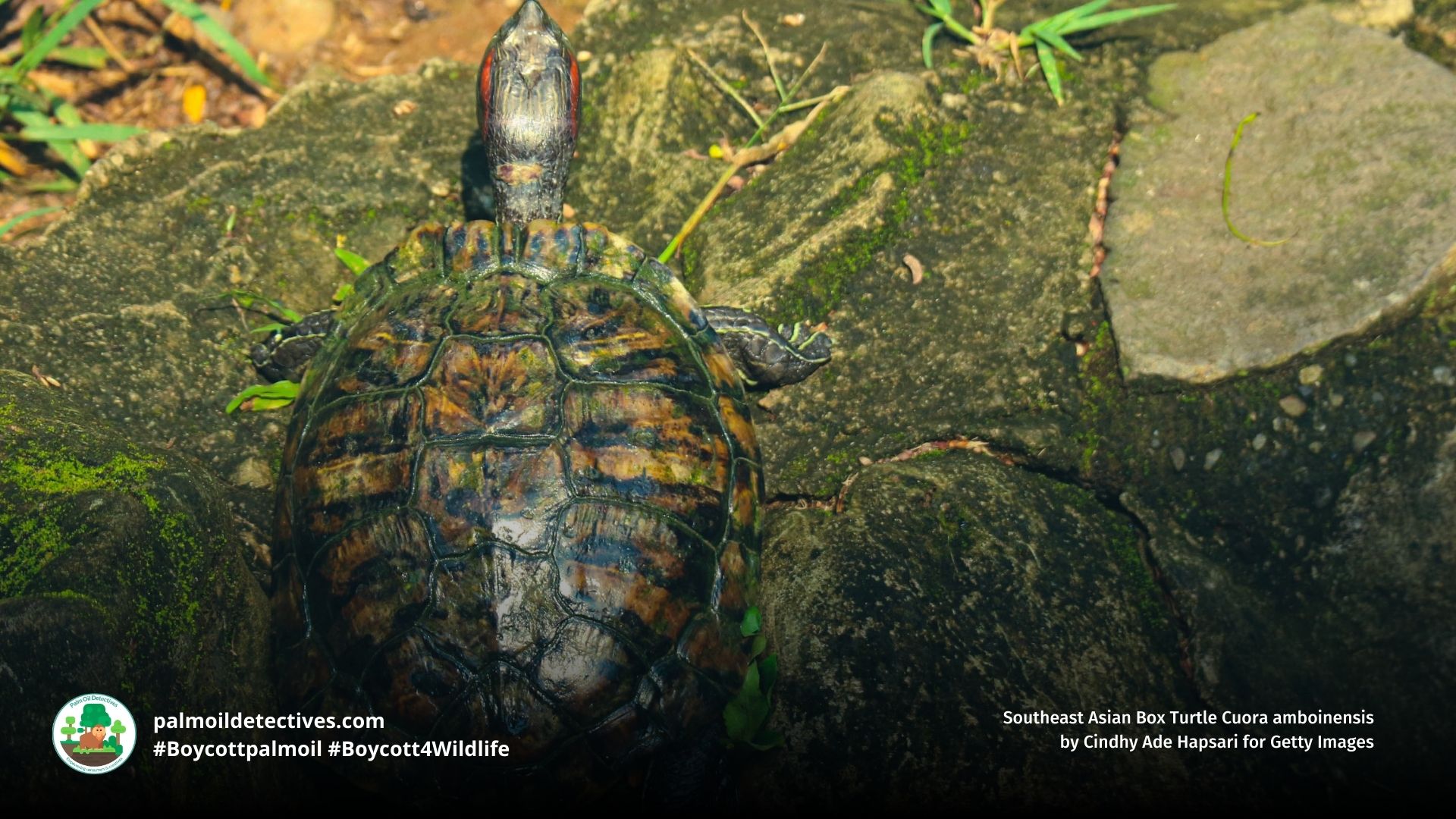
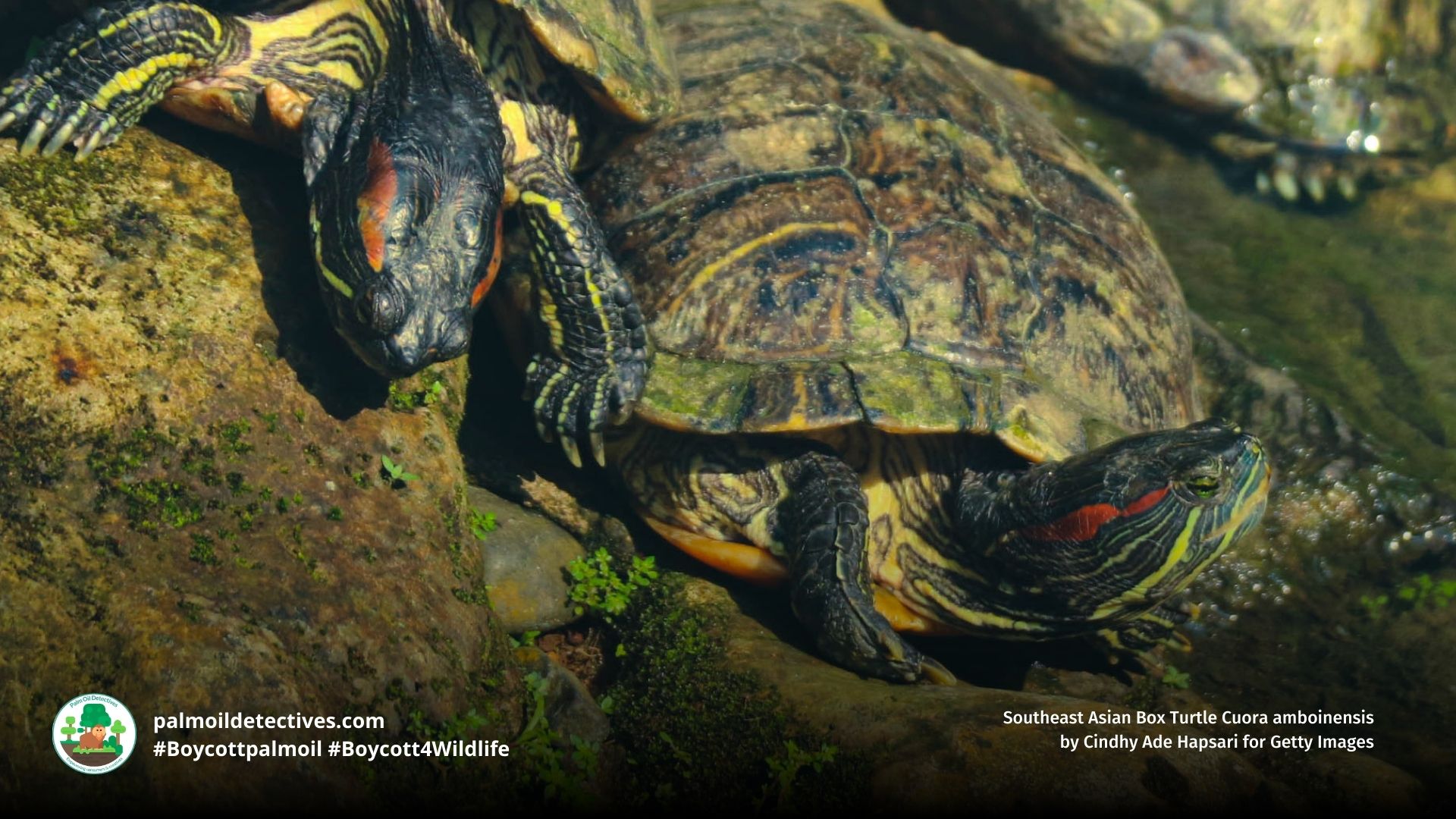
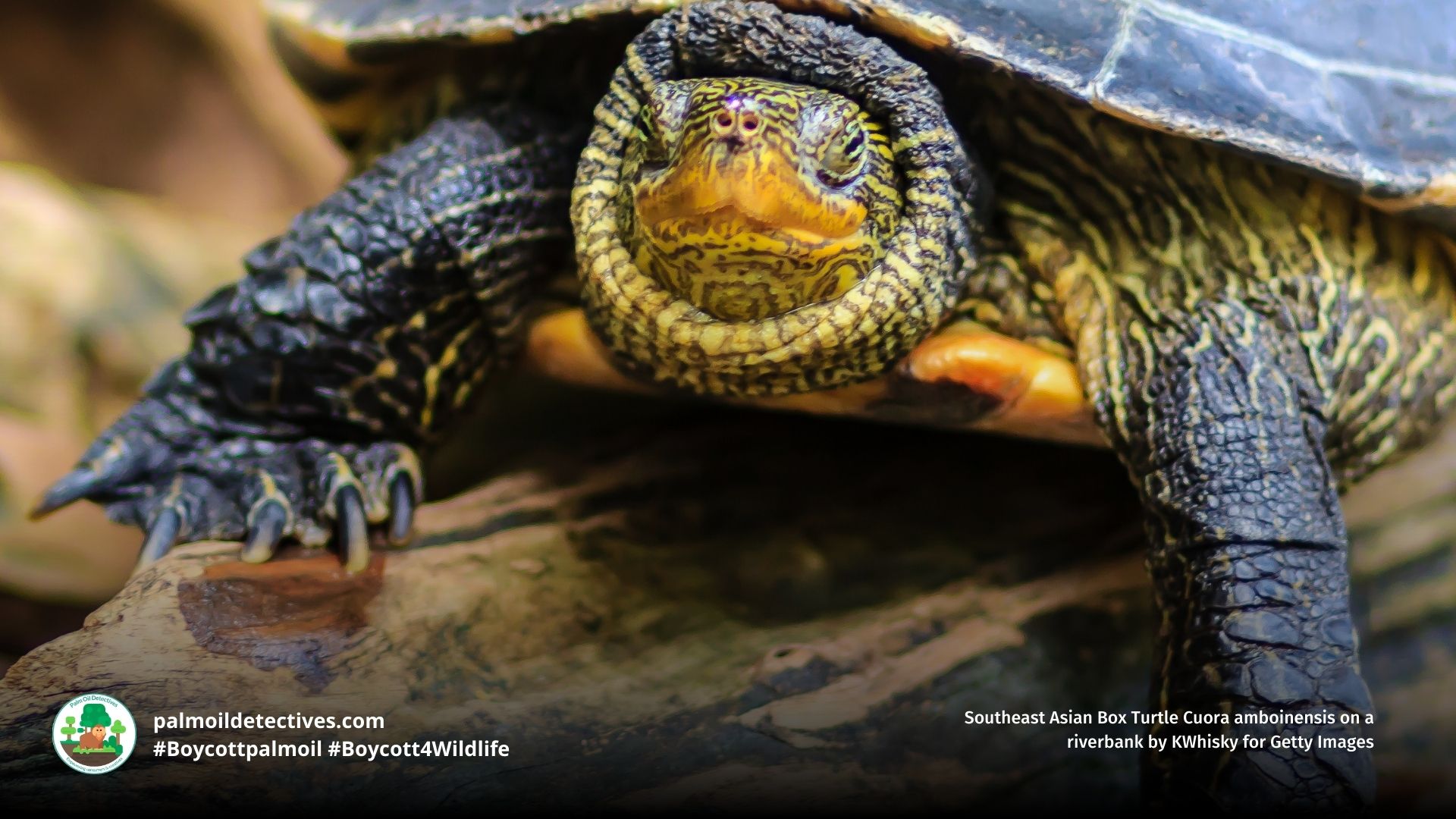
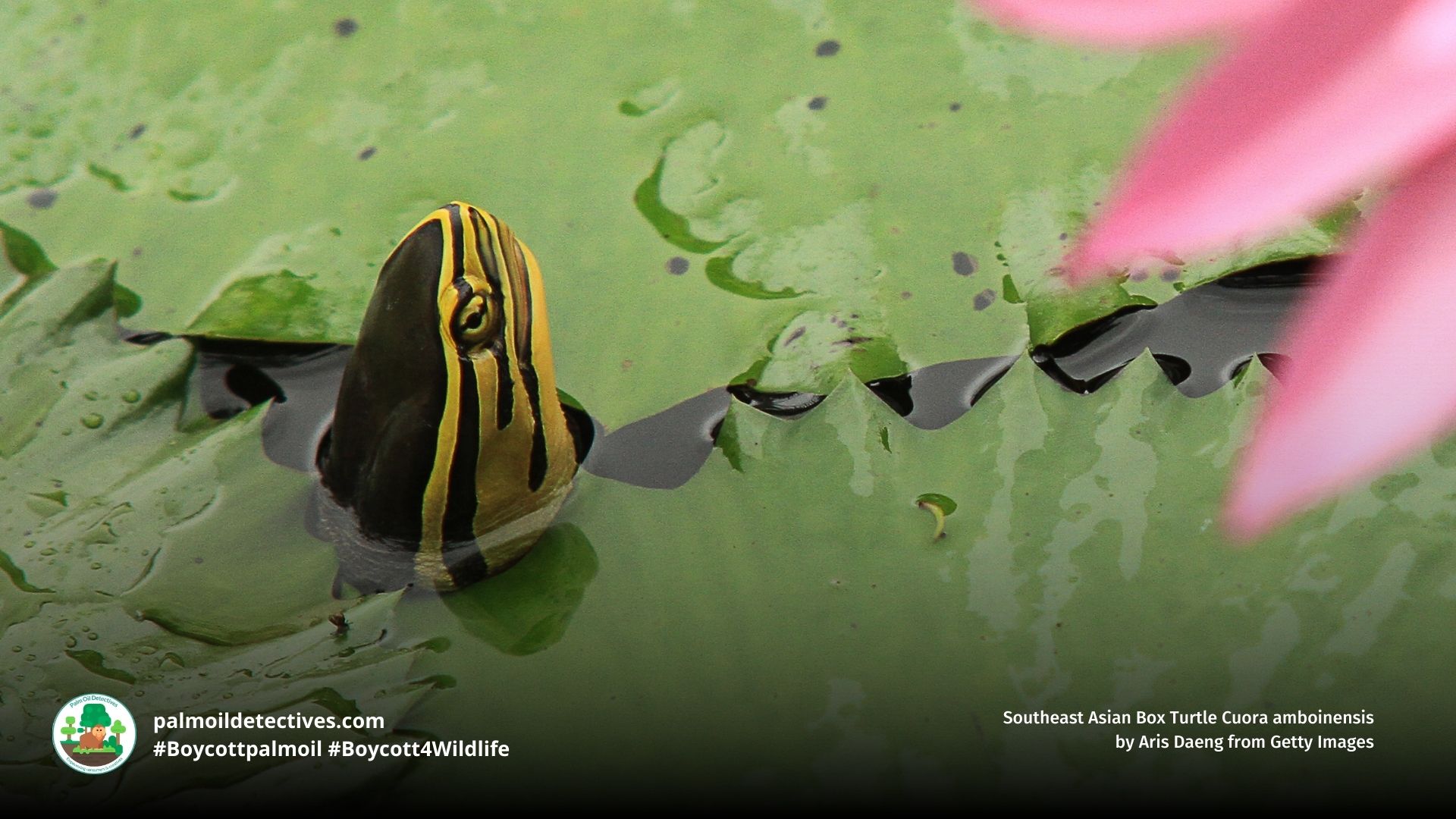
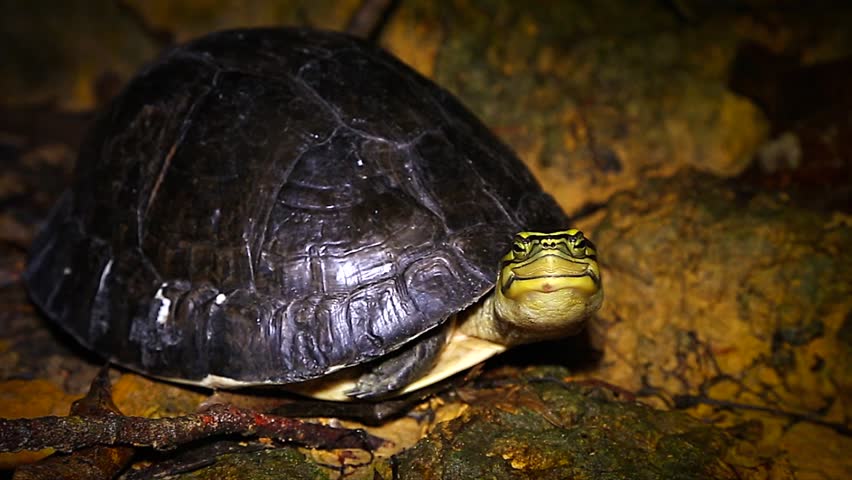
The Southeast Asian Box Turtle Cuora amboinensis, also known as the Amboina Box Turtle, Malayan Box Turtle, Indonesian Box Turtle, and Burmese Box Turtle, has a domed, olive-brown to black carapace (shell) with a yellow plastron (underside), often featuring dark markings. Unlike most turtles, they have a fully hinged plastron, allowing them to close their shell completely for protection against predators. Their large, dark eyes and distinctive yellow streaks on the head and neck give them a striking appearance.
In Malaysia the turtle was considered common in the 1990s, however, numbers have since reduced and they are considered Vulnerable (Schoppe 2008). Population density (including immature individuals) in an oil palm plantation in Sabak Bernam was 0.82 individuals/ha (Schoppe 2008).
IUCN
These turtles are slow-moving and spend much of their time hiding in vegetation or submerged in shallow water. Although they are primarily aquatic, they can move between water and land with ease. They are known for their ability to remain still for long periods, using their natural camouflage to avoid predators.


Threats
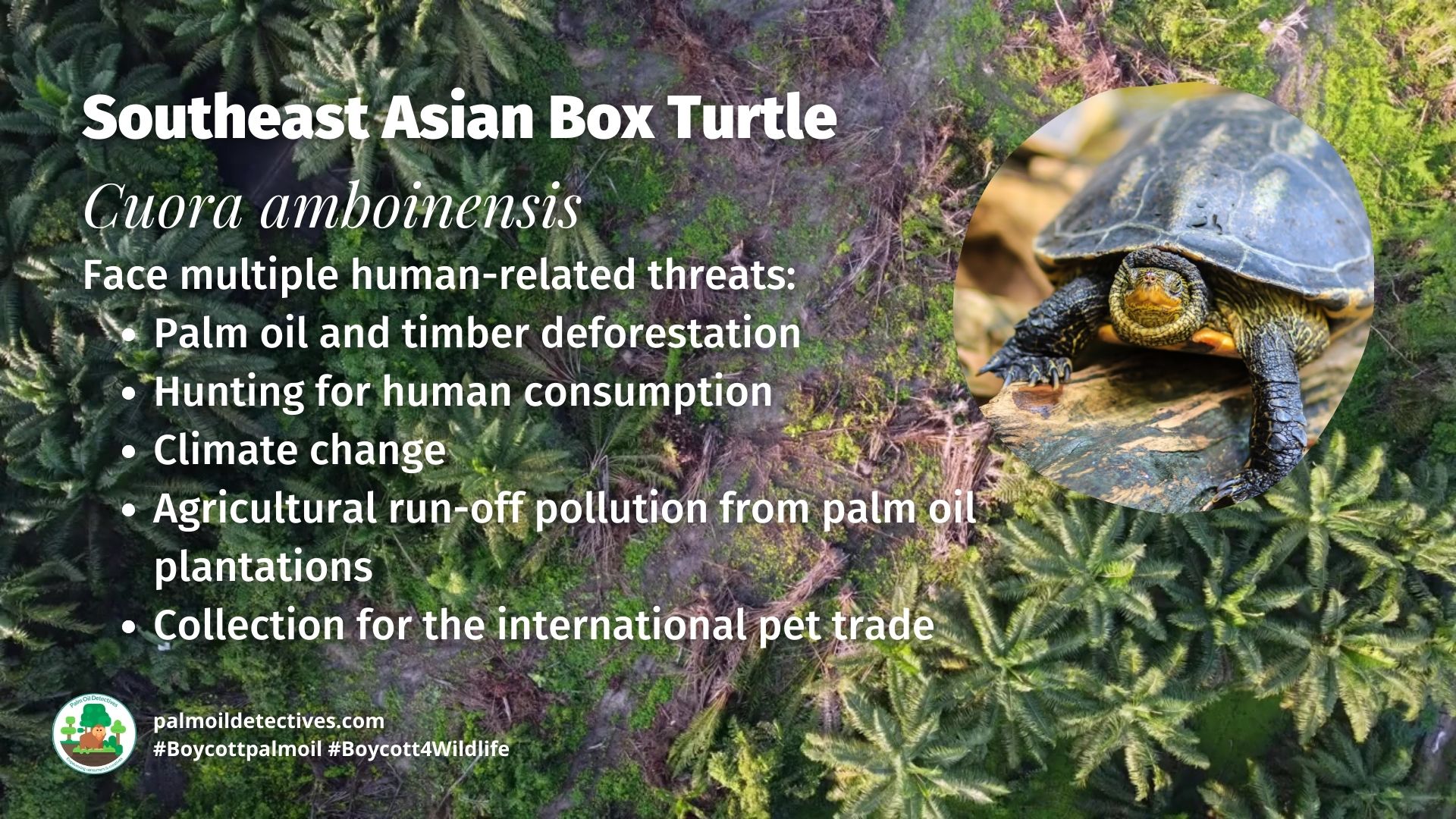
The Southeast Asian Box Turtle faces multiple threats, primarily from human exploitation and habitat destruction:
Pollution of waterways from oil palm run offs was also identified as a key threatening factor by Lim and Das (1999) in Malaysia.
IUCN Red list
Illegal Wildlife Trade
This species is one of the most heavily trafficked turtles in the world, exported in huge numbers to China for food and traditional medicine, as well as to international pet markets such as Australia and the USA.
Palm oil and timber deforestation
Wetlands, swamps, and slow-moving rivers are being destroyed to make way for palm oil plantations, agriculture, and urban development.
Pollution and Climate Change
Water pollution from industrial agriculture, including palm oil plantations, is poisoning their habitats, while climate change-induced flooding and droughts disrupt their ecosystems.
If urgent action is not taken, the Southeast Asian Box Turtle may disappear from the wild within a few decades.
Diet
Cuora amboinensis is an opportunistic omnivore, feeding on a wide range of plants, fruits, fungi, and animal matter. Studies have shown that their diet varies by age, with juveniles consuming more animal-based foods like insects and worms, while adults rely more on aquatic plants and fruits.
Research indicates that these turtles play a crucial role in seed dispersal, moving seeds between wetland and forest ecosystems. In a study conducted in Indonesia, seeds passed through their digestive system over 2–9 days, allowing for dispersal across distances of 70–313 metres. Some seeds even germinated better after being eaten by these turtles, making them vital for maintaining healthy wetland forests. However, their populations are in decline due to overharvesting and habitat destruction.
Reproduction and Mating
Southeast Asian Box Turtles reach sexual maturity at around 5–7 years of age. Mating occurs in shallow water, with males using their long tails and distinctive throat vibrations to court females. After successful mating, females lay clutches of 1–5 eggs in sandy soil or leaf litter, often near water sources. The incubation period lasts between 65 and 90 days, depending on temperature and humidity.
Unlike many turtle species, the hatchlings emerge fully independent, with no parental care. Their small size and soft shells make them highly vulnerable to predators, but those that survive can live for over 30 years in the wild.
FAQs

Do Southeast Asian Box Turtles make good pets?
Keeping a Southeast Asian Box Turtle as a pet is strongly discouraged. These turtles are wild animals, not pets, and their populations are rapidly declining due to the cruel and unsustainable pet trade. Thousands are taken from their natural habitat each year and shipped to markets, where they suffer stress, malnutrition, and death. Many die before even reaching buyers due to the horrific conditions they are kept in. If you truly care about this species, you must never buy one and instead support conservation efforts to protect them in the wild.
How big do Southeast Asian Box Turtles get?
They typically grow to 20–25 cm (8–10 inches) in length, with females being slightly larger than males.
What is the lifespan of a Southeast Asian Box Turtle?
In the wild, these turtles can live 30–50 years, but most individuals caught for the pet trade die prematurely due to stress, dehydration, and poor care.
What do Southeast Asian Box Turtles eat?
They are omnivores, eating a mix of fruits, seeds, aquatic plants, insects, small amphibians, and carrion. They also play a vital role in seed dispersal, making them an important species for wetland ecosystems.
How can I help protect Southeast Asian Box Turtles?
• Never buy them as pets – the pet trade is driving them toward extinction.
• Boycott products linked to deforestation, especially palm oil, which is wiping out their wetland habitats.
• Raise awareness and educate others about the threats they face.
• Report illegal wildlife trade if you see these turtles being sold.
Resist and fight for their survival every time you shop – #BoycottPalmOil #Boycott4Wildlife.
Take Action!
Use your wallet as a weapon in the supermarket and #BoycottPalmOil #Boycott4Wildlife. Every purchase you make has the power to support or destroy the natural world. By choosing products that are 100% palm oil-free, you help protect wetland habitats and ensure these turtles have a future.
Help with conservation of this creature
Further Information
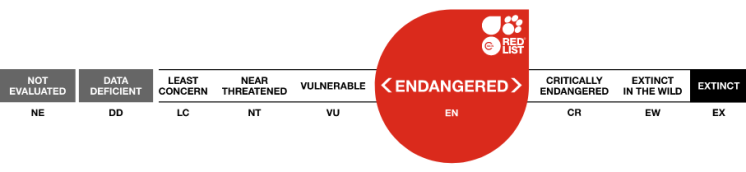
Cota, M., Hoang, H., Horne, B.D., Kusrini, M.D., McCormack, T., Platt, K., Schoppe, S. & Shepherd, C. 2020. Cuora amboinensis. The IUCN Red List of Threatened Species 2020: e.T5958A3078812. https://dx.doi.org/10.2305/IUCN.UK.2020-2.RLTS.T5958A3078812.en. Downloaded on 04 February 2021.
Karraker, N. E., Kusrini, M. D., Atutubo, J. R., Healey, R. M., & Yusratul, A. (2020). Non‐marine turtle plays important functional roles in Indonesian ecosystems. Ecology and Evolution, 10(18), 9613–9623. https://doi.org/10.1002/ece3.6487
Turtle Survival Alliance. (2020). Species Spotlight: Southeast Asian Box Turtle (Cuora amboinensis). Retrieved from https://turtlesurvival.org/species-spotlight-southeast-asian-box-turtle/
Wikipedia contributors. (n.d.). Southeast Asian box turtle. Wikipedia, The Free Encyclopedia. Retrieved [insert date], from https://en.wikipedia.org/wiki/Southeast_Asian_box_turtle.

How can I help the #Boycott4Wildlife?
Take Action in Five Ways
1. Join the #Boycott4Wildlife on social media and subscribe to stay in the loop: Share posts from this website to your own network on Twitter, Mastadon, Instagram, Facebook and Youtube using the hashtags #Boycottpalmoil #Boycott4Wildlife.
2. Contribute stories: Academics, conservationists, scientists, indigenous rights advocates and animal rights advocates working to expose the corruption of the palm oil industry or to save animals can contribute stories to the website.






3. Supermarket sleuthing: Next time you’re in the supermarket, take photos of products containing palm oil. Share these to social media along with the hashtags to call out the greenwashing and ecocide of the brands who use palm oil. You can also take photos of palm oil free products and congratulate brands when they go palm oil free.
4. Take to the streets: Get in touch with Palm Oil Detectives to find out more.
5. Donate: Make a one-off or monthly donation to Palm Oil Detectives as a way of saying thank you and to help pay for ongoing running costs of the website and social media campaigns. Donate here
Discover more from Palm Oil Detectives
Subscribe to get the latest posts sent to your email.
 Palm Oil Detectives