
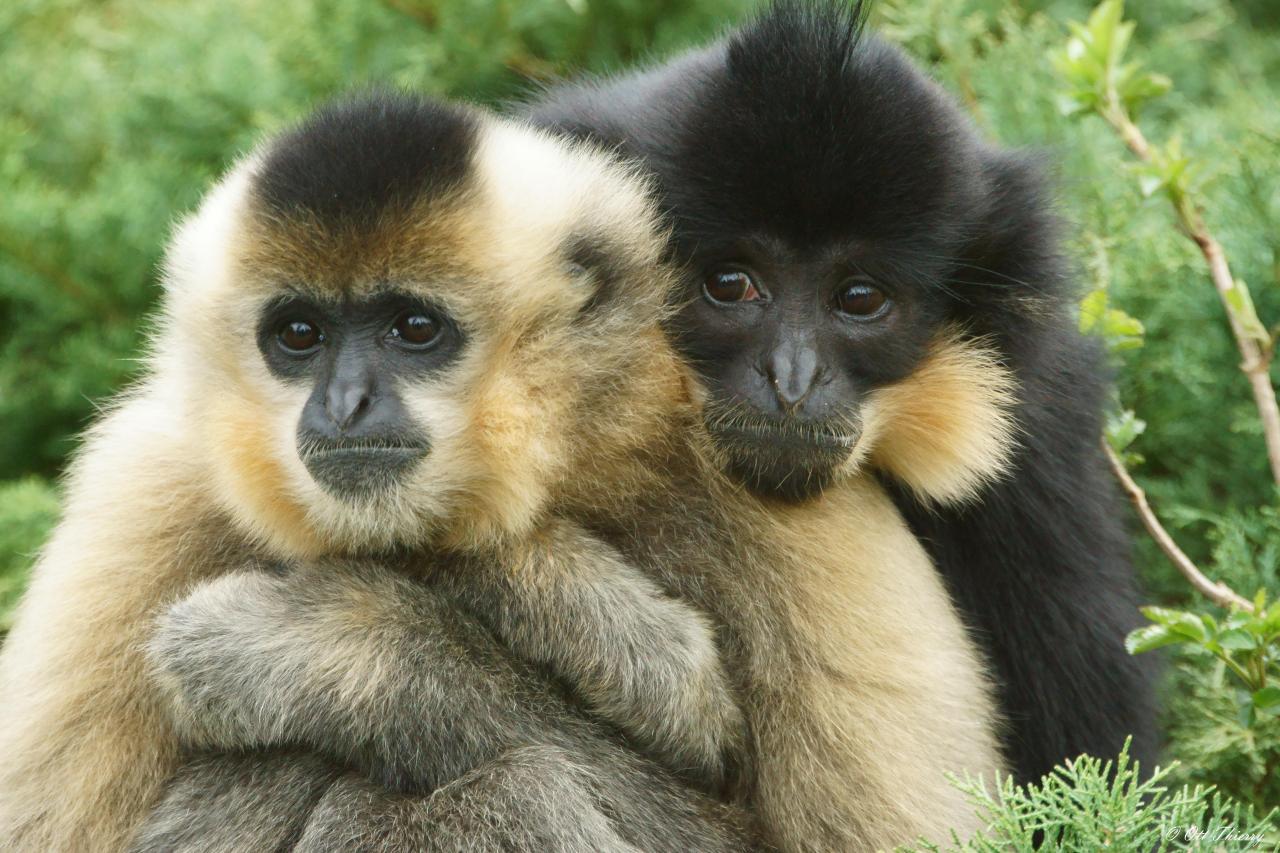
Tonkin Black Crested Gibbon Nomascus concolor ssp. concolor
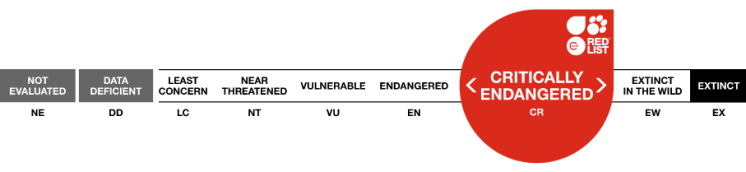
IUCN Status: Critically Endangered
Location: Vietnam, China, Laos
The Tonkin Black Crested #Gibbon of the genus Nomascus are also known as the Indochinese black-crested gibbon. They are critically endangered #primates native to the misty mountain forests of northern #Vietnam, southern #China, and parts of #Laos. These highly intelligent and social #primates are famous for their morning duets, with pairs singing in species specific harmony to reinforce familial bonds and mark their territory. Research has shown that different populations have unique vocal accents, much like human dialects, making their songs distinct across their range. Despite their unique and sparkling vocal range, they are tragically on the edge of extinction. Only around 300 individuals are left in the wild, their survival is threatened by deforestation for palm oil, coffee, and rubber plantations, along with hunting for the illegal pet trade and traditional medicine. Help them to survive every time you shop boycott palm oil and call-out the exotic pet trade! #BoycottPalmOil #Boycott4Wildlife
Tonkin Black Crested #Gibbon 🙈🐒 are a critically #endangered #monkey in #Vietnam 🇻🇳 #China 🇨🇳and #Laos 🇱🇦 on the edge of #extinction from the illegal #pet trade and #agriculture incl. #palmoil. Help them survive and 🌴🚫🙊 #Boycott4Wildlife https://palmoildetectives.com/2021/02/05/tonkin-black-crested-gibbon-nomascus-concolor-ssp-concolor/
Appearance and Behaviour
Tonkin black-crested gibbons are strikingly beautiful primates with a dramatic sexual dimorphism in their fur colour. Males are jet black with a distinctive crest of hair, giving them a regal appearance. Females, in contrast, are golden or light buff with dark faces, their dense fur providing camouflage among the treetops.
As true masters of the canopy, they rely on brachiation—swinging through the trees with their long, powerful arms—to travel effortlessly. Their limbs and hands are highly adapted for gripping branches, allowing them to cover great distances without ever touching the ground. Unlike other primates, they rarely descend from the trees, as doing so would leave them vulnerable to predators and poachers.
Each morning, their haunting, melodic calls echo through the rainforest, a ritual that strengthens pair bonds and communicates with neighbouring groups. Studies reveal that their songs differ by region, much like human accents, making each population’s calls unique.
Threats
Deforestation and Habitat Loss
The biggest threat to Tonkin black-crested gibbons is the rampant destruction of Southeast Asia’s rainforests. Vast tracts of land are cleared for palm oil, coffee, and rubber plantations, destroying their ancient treetop homes. Even within so-called “protected areas,” illegal logging and encroachment continue to fragment their shrinking range. With less than 2% of their original habitat remaining, their survival is at extreme risk.
The biggest threats to Nomascus concolor throughout its range include destructive local forest use and hunting while selective logging and agriculture encroachment are additional threats (Geissmann et al. 2000, Jiang et al. 2006, Sun et al. 2012, Wei et al. 2017).
IUCN Red List
Hunting and Illegal Pet Trade
Despite being legally protected, these gibbons are still hunted for bushmeat, traditional medicine, and the exotic pet trade. Hunters kill adult gibbons to steal their infants, who are then sold on the black market. Many of these stolen babies die from stress, malnutrition, or trauma, while those that survive endure a miserable existence in tiny cages.
Infrastructure and Road Expansion
New roads and infrastructure projects are fragmenting gibbon populations, cutting them off from crucial foraging and mating territories. As forests become increasingly isolated, inbreeding and local extinctions become inevitable. Roads also provide easier access for poachers to hunt these vulnerable primates.
Climate Change Induced Extreme Weather
Recent research (Yang et al., 2023) suggests that climate change is altering their rainforest habitat, with rising temperatures affecting food availability. Increased typhoons and extreme weather events are also destroying large swathes of forest, leaving them with fewer places to find shelter and food.
Diet
Tonkin black-crested gibbons are primarily frugivores, feeding on wild figs, berries, and other soft fruits. They also consume young leaves, flowers, and insects, adapting their diet depending on seasonal availability. Their role as seed dispersers is vital in maintaining and regenerating rainforest ecosystems.
Reproduction and Mating
Gibbons form strong, monogamous pairs, a rarity among primates. Mating pairs stay together for life, raising their young in close-knit family groups. After a six-to-seven-month gestation period, females give birth to a single infant, which clings tightly to its mother for the first few months. Juveniles remain with their parents for several years before venturing off to establish their own families.
Geographic Range
Tonkin black-crested gibbons lives in subtropical and montane evergreen, semi-evergreen and deciduous forest. These magnificent gibbons are classified as Critically Endangered based on a suspected population reduction of over 80% in the last 45 years (three generations) and a suspected continuing reduction at the same rate for at least 15 years (one generation) in the future, due primarily to widespread hunting and habitat loss.
Following extensive forest loss their dwindling number are only found in isolated forest patches across northern Vietnam, southern China, and Laos. Their remaining populations are largely confined to fragmented, high-altitude forests in the Yunnan province of China, the Mu Cang Chai region of Vietnam, and parts of northern Laos. These populations are critically small and continue to shrink due to habitat destruction.
FAQs
Are Tonkin black-crested gibbons good pets?
No. Keeping a Tonkin black-crested gibbon as a pet is cruel, unethical, and highly illegal. These primates are wild animals that belong in the rainforest, not in cages. To fuel the illegal pet trade, hunters slaughter adult gibbons to steal their babies, who are then smuggled and sold. Most of these infants die from stress, disease, or malnutrition within weeks. If you truly love gibbons, you should fight against the pet trade and demand stronger enforcement of wildlife protection laws.
How does palm oil and other agriculture threaten Tonkin black-crested gibbons?
The expansion of palm oil, coffee, and rubber plantations is wiping out the last remaining forests where these gibbons live. Vast areas of Vietnam, Laos, and China have been cleared for monoculture agriculture, leaving only small, disconnected patches of rainforest. Without large, intact forests, gibbons cannot find enough food, establish new family groups, or escape from hunters. Boycotting palm oil, along with coffee and rubber sourced from deforested land, is one of the most powerful ways to help.
Why are Tonkin black-crested gibbons different colours?
Like many gibbon species, males and females have different fur colours—a trait known as sexual dichromatism. Males have sleek, black fur with a crest of hair on their heads, while females are golden with dark faces. Infants are born with a pale, golden coat that darkens as they mature, eventually taking on the adult coloration of their sex.
How many Tonkin black-crested gibbons are left in the wild?
Only around 300 individuals remain, scattered across fragmented forest patches in Vietnam, China, and Laos. Their numbers continue to decline due to deforestation, hunting, and the illegal pet trade. Without urgent intervention, they could disappear entirely within a few decades.
Take Action!
The survival of Tonkin black-crested gibbons depends on protecting their forests and ending the illegal wildlife trade. You can help by:
• Boycotting palm oil and other commodities linked to deforestation
• Refusing to support the exotic pet trade
• Raising awareness about their plight and supporting conservation efforts
Every choice you make has an impact. Fight for their future every time you shop. #BoycottPalmOil #Boycott4Wildlife
Support the conservation of this species
Numerous conservation efforts of these rarest of small primates are ongoing. Sponsor a gibbon at a rescue centre here.
Endangered Primate Rescue Centre
Further Information
Pengfei, F., Nguyen, M.H., Roos, C. & Rawson, B.M. 2020. Nomascus concolor ssp. concolor. The IUCN Red List of Threatened Species 2020: e.T160304839A17991381. https://dx.doi.org/10.2305/IUCN.UK.2020-2.RLTS.T160304839A17991381.en. Downloaded on 28 January 2021.
Yang, L., Chen, T., Zhang, L., & Fan, P. (2023). Stable habitat supports long-term persistence of critically endangered western black-crested gibbons. Global Ecology and Conservation, 47, e02657. https://doi.org/10.1016/j.gecco.2023.e02657
Neprimate Conservancy. (2023). Black-Crested Gibbon Profile. Retrieved from https://neprimateconservancy.org/black-crested-gibbon

How can I help the #Boycott4Wildlife?
Take Action in Five Ways
1. Join the #Boycott4Wildlife on social media and subscribe to stay in the loop: Share posts from this website to your own network on Twitter, Mastadon, Instagram, Facebook and Youtube using the hashtags #Boycottpalmoil #Boycott4Wildlife.
2. Contribute stories: Academics, conservationists, scientists, indigenous rights advocates and animal rights advocates working to expose the corruption of the palm oil industry or to save animals can contribute stories to the website.



3. Supermarket sleuthing: Next time you’re in the supermarket, take photos of products containing palm oil. Share these to social media along with the hashtags to call out the greenwashing and ecocide of the brands who use palm oil. You can also take photos of palm oil free products and congratulate brands when they go palm oil free.
4. Take to the streets: Get in touch with Palm Oil Detectives to find out more.
5. Donate: Make a one-off or monthly donation to Palm Oil Detectives as a way of saying thank you and to help pay for ongoing running costs of the website and social media campaigns. Donate here
Discover more from Palm Oil Detectives
Subscribe to get the latest posts sent to your email.
 Palm Oil Detectives
Thank you for sharing this 🙂
LikeLike