
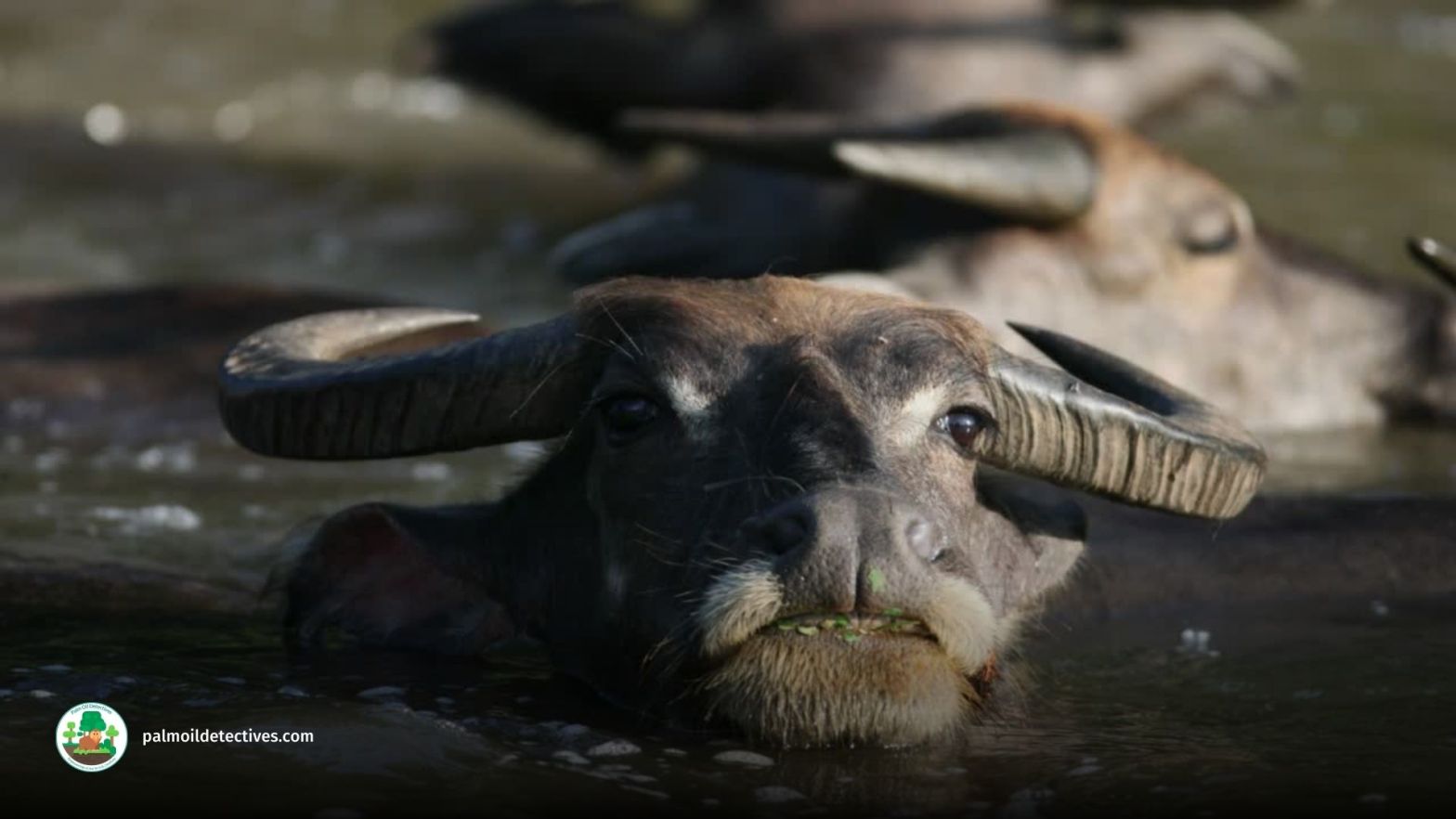
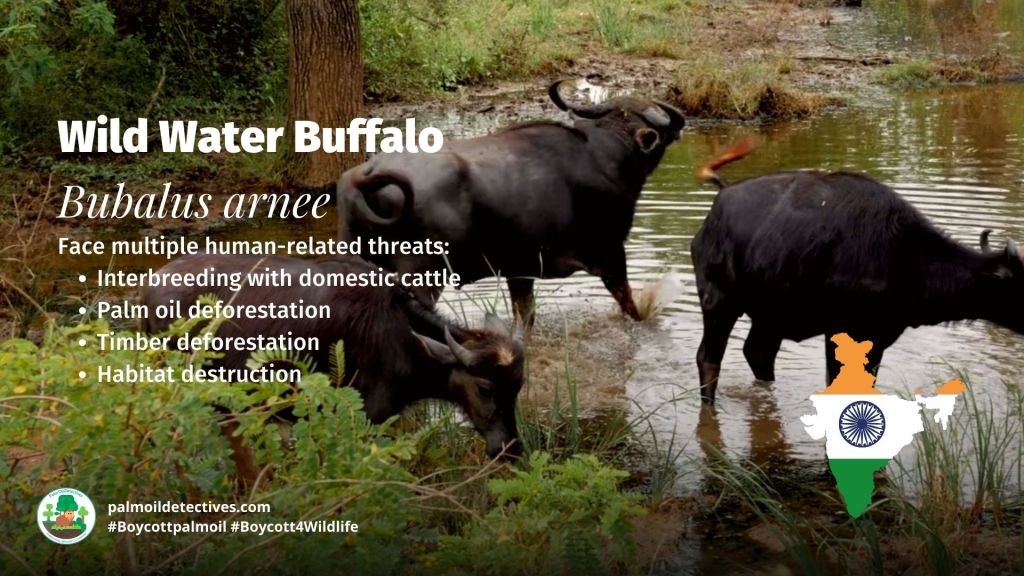
Wild Water Buffalo Bubalus arnee
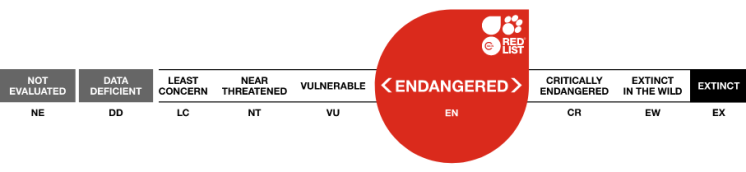
IUCN Red List Status: Endangered
Location: India, Nepal, Bhutan, Thailand, Cambodia, Myanmar.
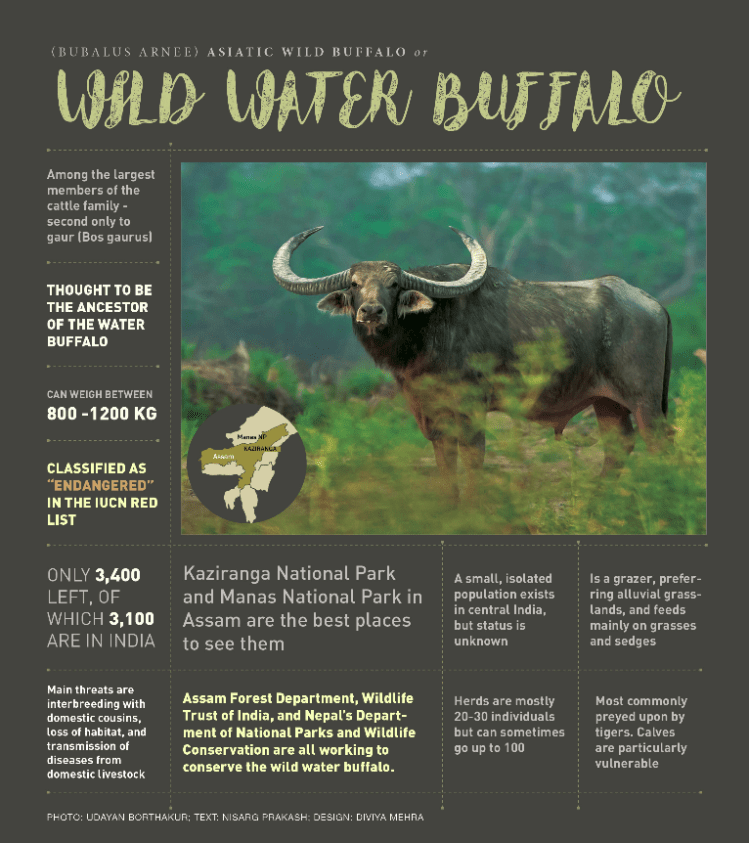
Wild Water Buffaloes survive mainly in Kaziranga and Manas National Parks (Assam), Udanti Wildlife Sanctuary (Chhattisgarh), Koshi Tappu Wildlife Reserve (Nepal), with reintroduction potential identified in Kanha National Park (Madhya Pradesh).
Massive, muscular, and critically under threat, the Wild Water Buffalo Bubalus arnee is the endangered ancestor of all domestic buffalo breeds. Once roaming vast swathes of South and Southeast Asia, fewer than 4,000 individual buffaloes remain today, scattered across shrinking habitats in India, Nepal, Cambodia, and a handful of neighbouring nations. Their decline is driven by interbreeding with domestic buffalo species, habitat destruction from farming and palm oil plantations, hunting, and disease transmission from livestock. This ancient grazer of flooded grasslands and braided rivers is vanishing before our eyes. Speak out for them and support indigenous-led efforts to restore their ecosystems. #BoycottPalmOil #Boycott4Wildlife
Wild Water #Buffalo 🐂 of #Nepal 🇳🇵 #India 🇮🇳 and other parts of Asia are #endangered due to #deforestation #hunting there are only 3,400 of them left! Support these animals with your weekly shop #Boycottpalmoil 🌴🪔🧐⛔️ #Boycott4Wildlife @palmoildetect https://palmoildetectives.com/2021/02/05/wild-water-buffalo-bubalus-arnee/
Wild Buffaloes like most other large herbivores, require large spaces with adequate food and water supply to survive which is negatively impacted by fragmentation and degradation of forest and grassland areas.
IUCN Red List
Appearance and Behaviour
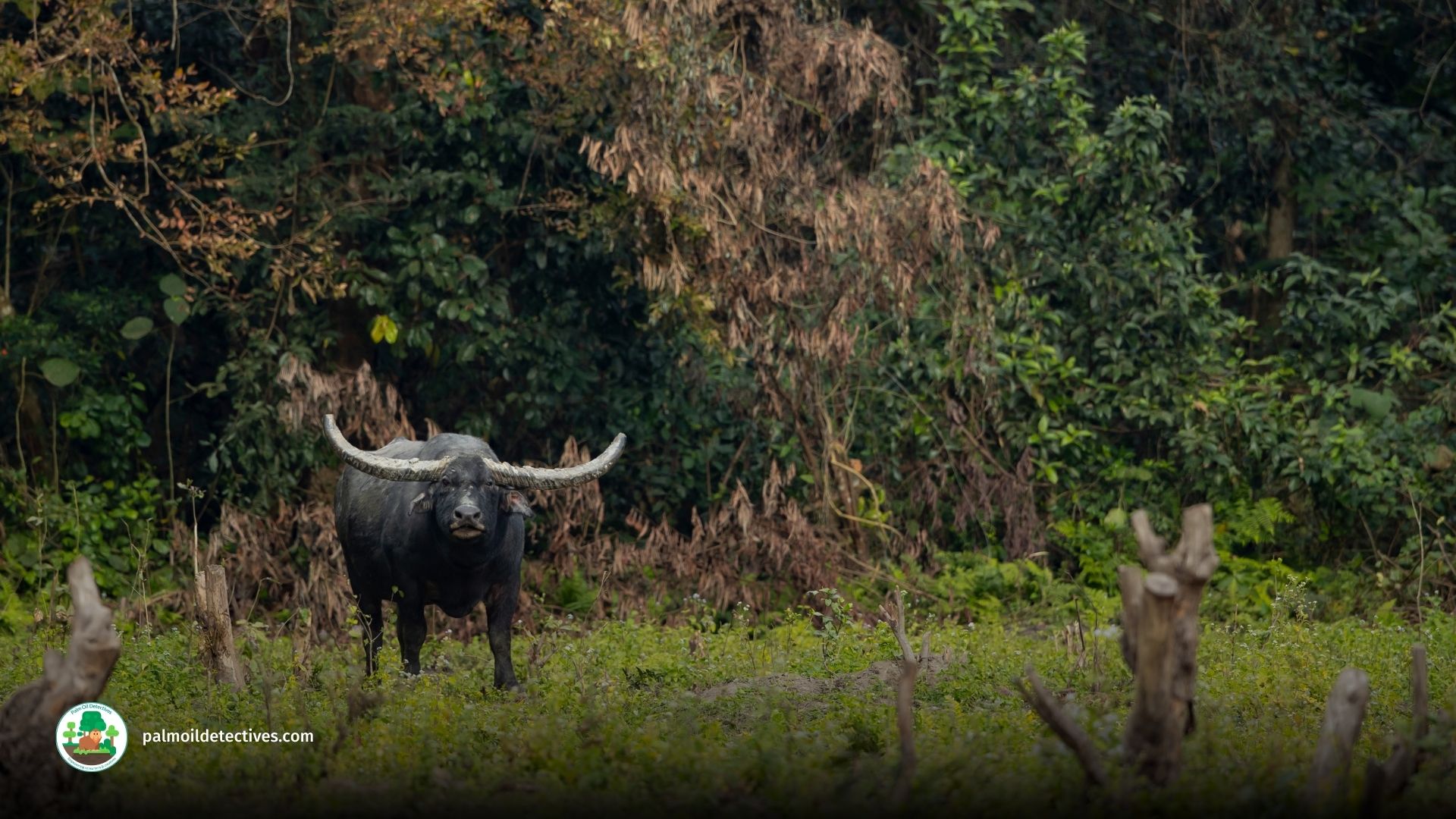
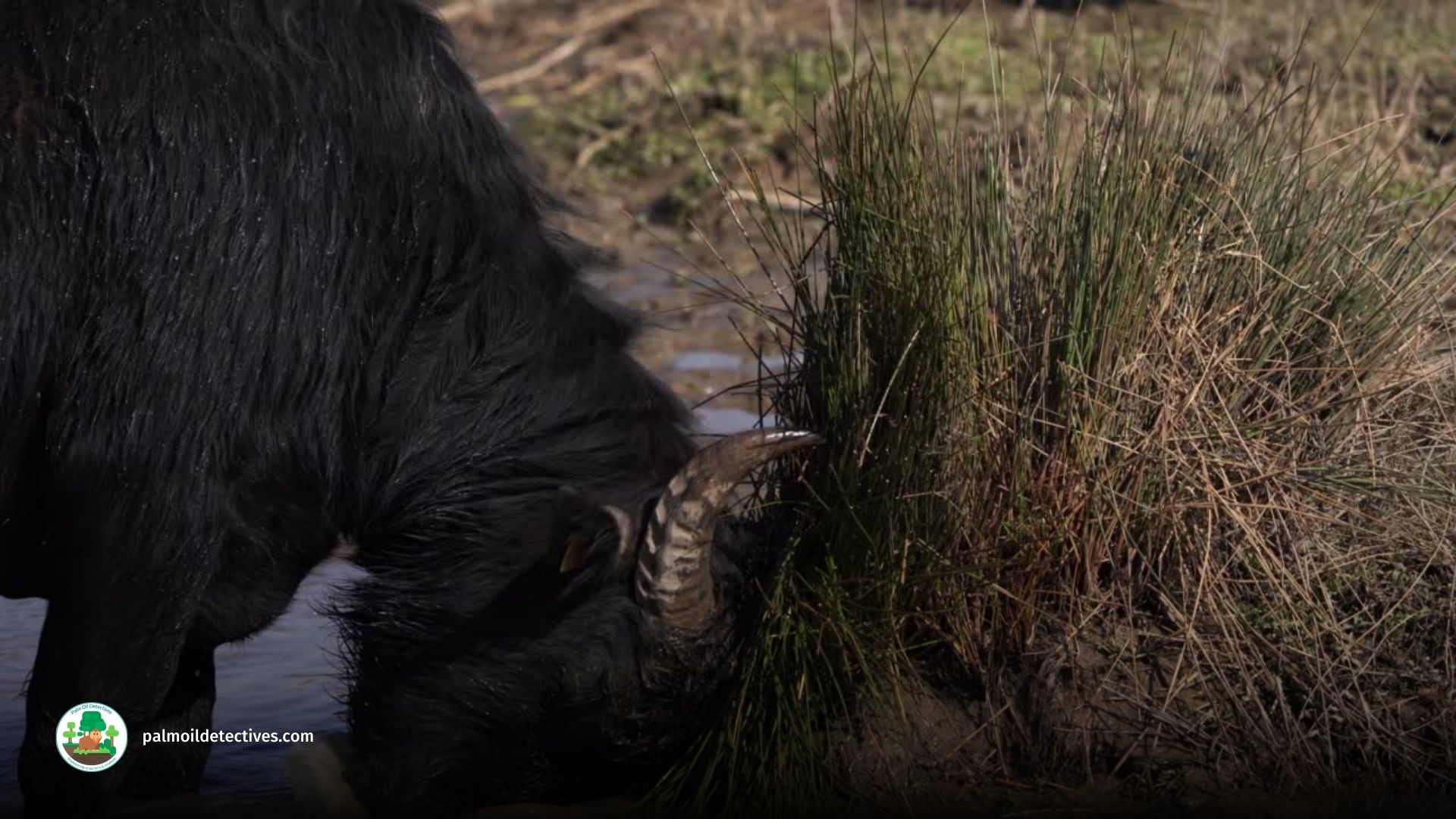
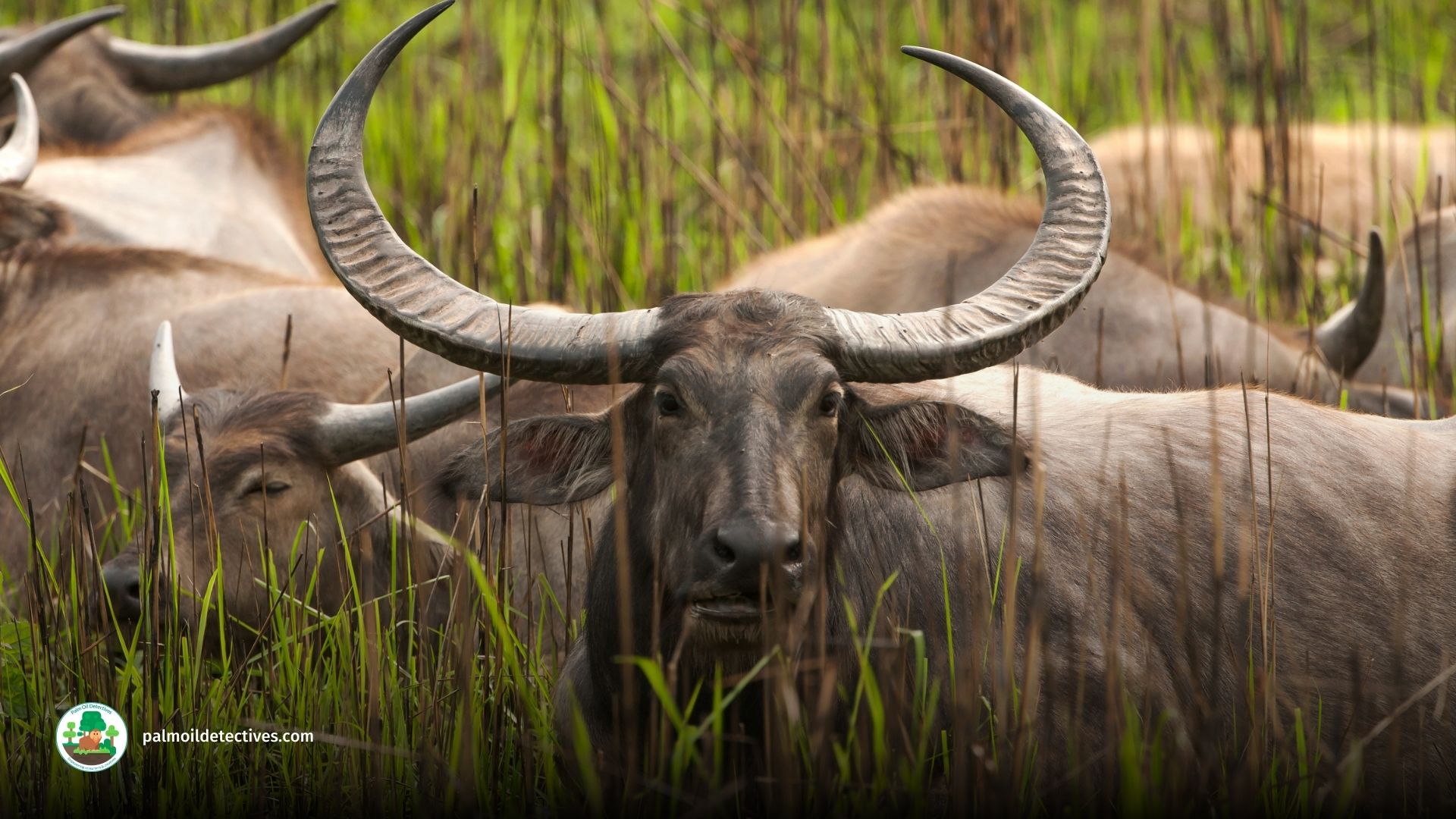
Towering and formidable, Wild Water Buffaloes are among the largest bovines on Earth. Mature bulls can weigh up to 1,200 kg, with sweeping, crescent-shaped horns that curve outward and back, often spanning more than two metres. Their coats are slate-grey to black, and their muscular frames are well adapted for traversing muddy, floodplain environments.
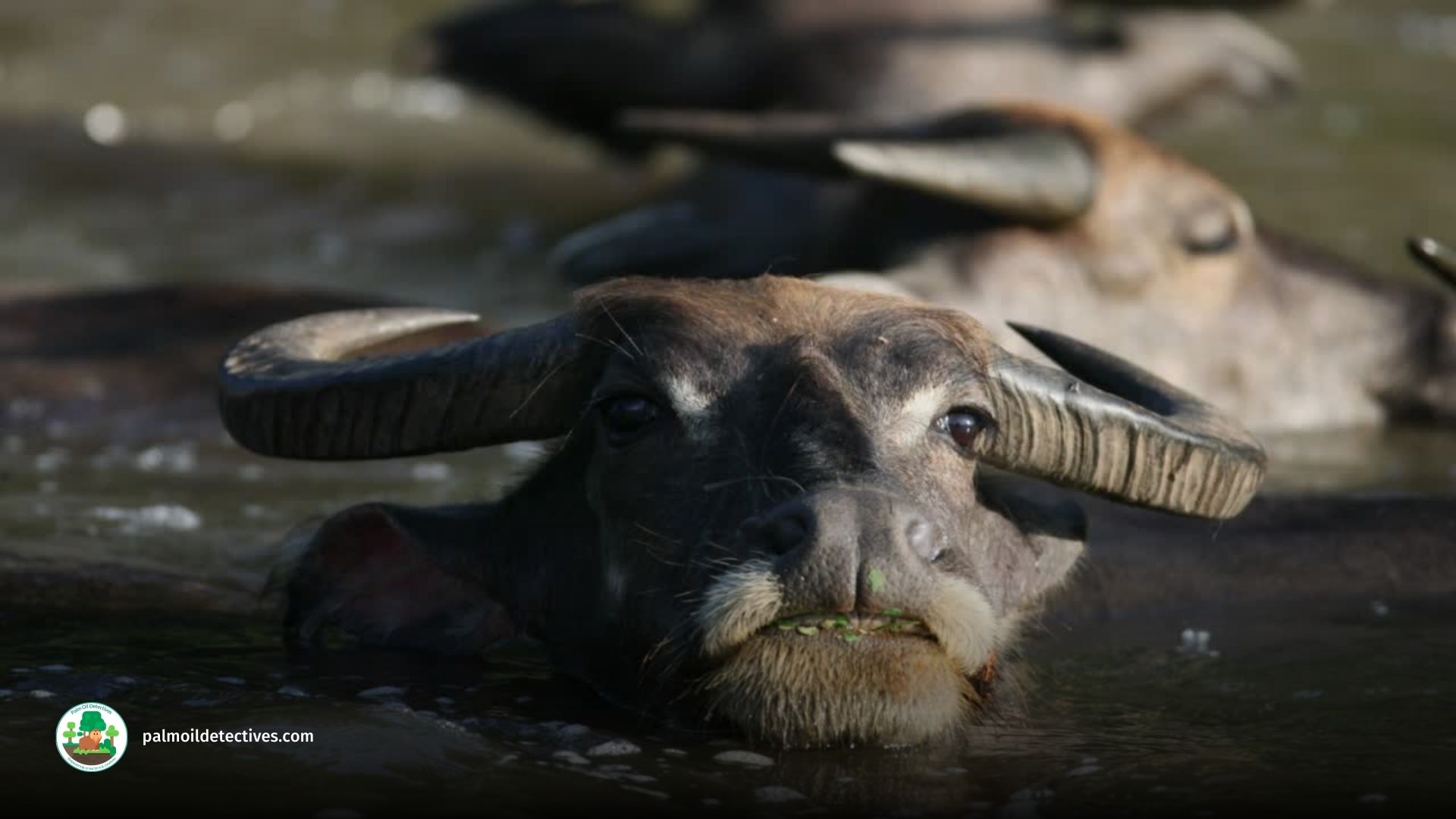
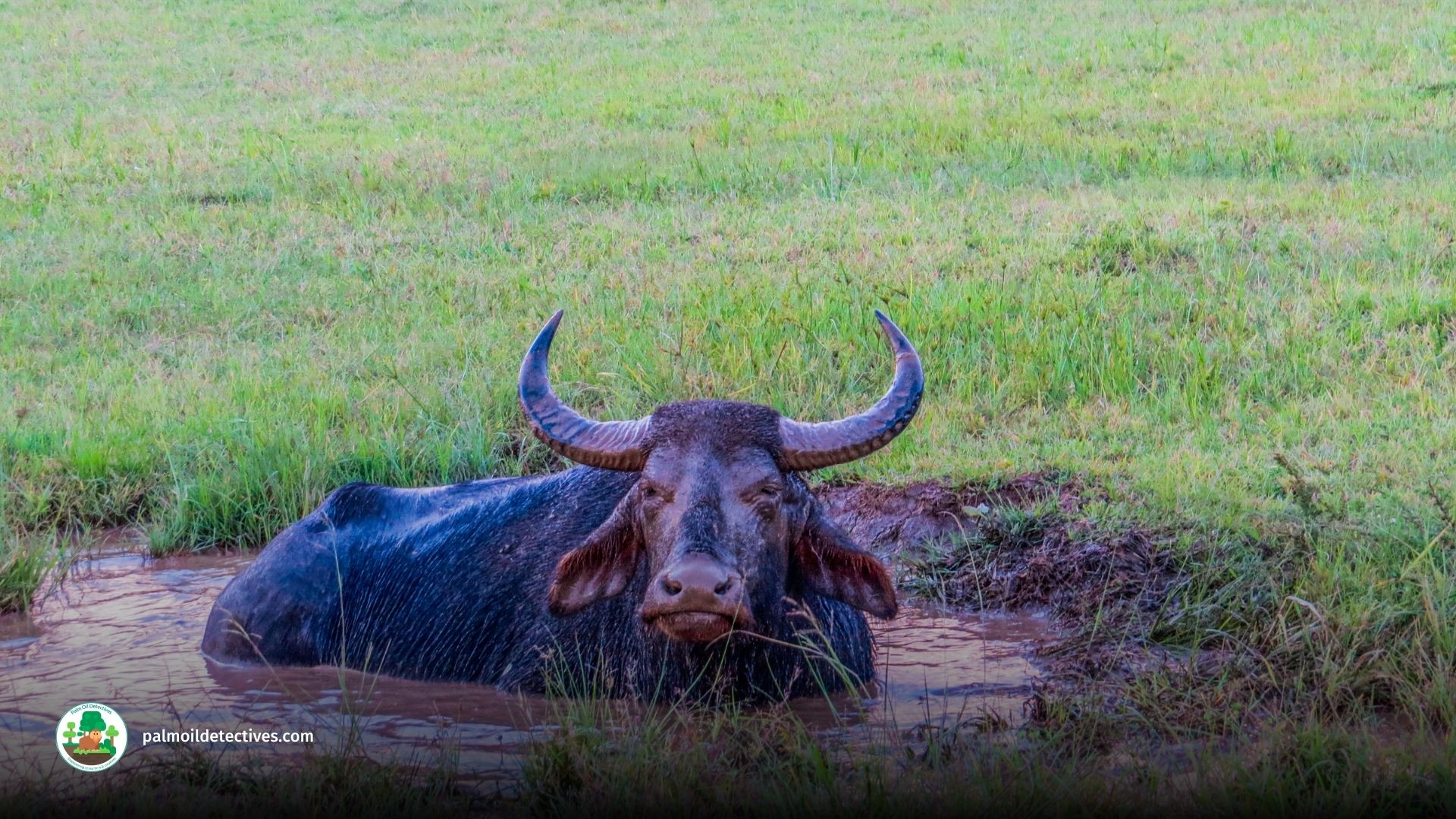
They are deeply dependent on water and spend much of their time wallowing in rivers, oxbow lakes, or self-made mud holes to cool down and protect themselves from insects. These highly social animals form matriarchal herds of 10 to 20 individuals, with bachelor groups and solitary bulls more common in less disturbed areas. Their movements follow seasonal changes in water availability, and they show remarkable loyalty to traditional trails, using the same routes for generations.


Diet
Wild Water Buffaloes are primarily grazers and feed on tall grasses such as Cynodon dactylon, Themeda quadrivalvis, and Coix species. They are also known to consume sedges like Cyperus corymbosus, herbs, bark, and crop plants including rice, jute, and sugarcane, which brings them into conflict with nearby human communities. They have also shown an ability to tolerate brackish water, giving them access to areas other species cannot utilise.
Reproduction and Mating
Wild Water Buffaloes are seasonal breeders, with most mating occurring in October and November. Gestation lasts 10 to 11 months, and females usually give birth to one calf per year. Sexual maturity is reached around 18 months for males and three years for females. Their reproductive system is polygynous, with dominant bulls mating with multiple females. In the wild, they can live up to 25 years, although most do not reach this age due to threats from humans and habitat disruption.
Geographic Range
Wild Water Buffaloes were once distributed widely across South and Southeast Asia, but today, they persist in only about 5% of their historical range. Approximately 90% of the global population is now confined to India, with two genetically distinct and geographically isolated populations—one in the northeast (Assam) and another in central India (Chhattisgarh). The central Indian population is extremely fragile, with just a handful of individuals, and is in urgent need of conservation action to prevent its extinction (Bora et al., 2024).
In Nepal, the species is now restricted to the Koshi Tappu Wildlife Reserve, with a population of around 400 individuals. This reserve provides a mosaic of seasonally flooded grasslands and wetlands, offering suitable but limited habitat. Camera-trap studies confirm that Wild Water Buffaloes are increasingly clustered in the reserve’s southwestern zone, preferring low-lying grasslands with limited human interference (Bhattarai et al., 2023). The species is now extinct in Laos, Viet Nam, and Bangladesh, and its presence in Cambodia, Myanmar, and Thailand is uncertain or highly fragmented.
Threats
Loss of Range and Isolation
A staggering 95% contraction in their historical distribution has left Wild Water Buffaloes clinging to survival in fragmented pockets. The central Indian population, in particular, is critically isolated and no longer viable without direct human intervention. Habitat modelling shows that suitable grassland habitats still exist, such as in Kanha National Park, but these remain unoccupied due to historical extirpation and lack of reintroduction efforts (Bora et al., 2024).
Hybridisation with Domestic Buffalo
Hybridisation remains a top threat to genetic purity. In Koshi Tappu, the proximity of domestic buffalo to wild herds—though minimal—still raises concerns about genetic introgression. Reproductive behaviour studies show that wild males may attempt to mate with nearby domestic females, undermining long-term conservation unless such risks are actively mitigated (Bhattarai et al., 2023).
Human Encroachment and Agricultural Expansion
Human encroachment and agricultural expansion continue to erode the grasslands needed by Bubalus arnee. In central India, overgrazing by livestock, road development, and conversion of alluvial plains to farmland have nearly eliminated their habitat. Even in protected areas like Koshi Tappu, disturbances such as flooding, roadkill, and poaching have impacted population stability and reproductive output (Bhattarai et al., 2023).
Low Reproductive Success and Skewed Sex Ratios
Research in Nepal has shown that although the population of Bubalus arnee has grown modestly in recent years, it is limited by low recruitment. Male-biased mortality—particularly from poaching and environmental threats—has disrupted natural sex ratios and herd structures, reducing breeding success and calf survival rates (Bhattarai et al., 2023). This creates an urgent need for better protection during calving seasons and enhanced anti-poaching patrols.
Historical and Cultural Significance of Wild Water Buffaloes
Wild Water Buffaloes have played a central role in the development of civilisations across Asia for over 6,000 years. In the Indus Valley Civilisation, they were traded with Mesopotamia, and a scribe’s seal from that time depicts the sacrifice of a buffalo. In India, the Hindu god of death, Yama, is depicted riding a water buffalo, and in some Shaktism festivals, a male buffalo is still ritually sacrificed.
In Chinese culture, the water buffalo is associated with a peaceful, contemplative lifestyle, symbolising hard work and serenity. In Vietnam and Thailand, buffalo feature prominently in folklore and agricultural festivals, including water buffalo fighting events that date back centuries. In the Philippines, the carabao—a swamp-type domestic buffalo—has become a national symbol, reflecting its role in farming and cultural heritage. The Minangkabau of West Sumatra even derive their name and architectural style from a legendary buffalo battle used to resist imperial rule.
Take Action!
The Wild Water Buffalo is more than a relic of the past—it is a living icon of Asia’s ancient riverine ecosystems. Protecting this species means defending wetlands, grasslands, and the cultures that have coexisted with these powerful animals for millennia.
Reject palm oil, demand indigenous-led agroecology, and help stop the extinction of one of the world’s last true wild bovines.
#BoycottPalmOil #Boycott4Wildlife #Vegan #BoycottMeat
FAQs
How many Wild Water Buffaloes remain?
Estimates suggest fewer than 4,000 individuals survive globally, with around 90% located in India. Nepal’s population in Koshi Tappu Wildlife Reserve was recently estimated at around 405 animals (Subedi et al., 2023).
What’s the difference between Wild and Domestic Water Buffaloes?
Wild Water Buffaloes are larger, have broader heads, and possess distinct, sweeping horns. They are genetically distinct and more suited to wild floodplain habitats. Most domestic buffalo breeds descend from them, but hybridisation is rapidly blurring the line.
Why is species hybridisation a serious threat to Wild Water Buffaloes?
Hybridisation permanently alters the wild gene pool. It dilutes adaptive traits and may lead to the loss of behaviours or features essential for survival in the wild. Once the species is hybridised, it cannot be restored to its original form.
Do Wild Water Buffaloes make good pets?
Absolutely not. Keeping them as pets contributes directly to their extinction. These are powerful, wild animals who suffer greatly in captivity, and their removal from the wild disrupts natural herds and genetics.
How does palm oil deforestation affect Wild Water Buffaloes?
Floodplain and riverine habitats are increasingly cleared for palm oil plantations, especially in Southeast Asia. This destroys critical wallowing sites and pushes buffaloes into contact with domestic animals and humans, leading to conflict, disease, and death
You can support this beautiful animal
There are no known conservation activities for this animal. Share out this post to social media and join the #BoycottPalmOil #Boycott4Wildlife on social media to raise awareness
Further Information
Bora, J. K., Vardhan, V., Vijh, R. K., Deshmukh, A. V., Srinivas, Y., Mungi, N. A., Goswami, S., Jhala, H., Chauhan, J. S., et al. (2024). Evaluating the potential for reintroducing the endangered Wild Water Buffalo (Bubalus arnee) in Kanha National Park, central India. Restoration Ecology, 32(1), e14079. https://doi.org/10.1111/rec.14079
Bhattarai, R. K., Joshi, R., Gautam, J., Kandel, B., & Singh, B. (2023). Reproductive behavior of Bubalus arnee (Kerr, 1792) (Mammalia: Artiodactyla: Bovidae) in Koshi Tappu Wildlife Reserve and Chitwan National Park, Nepal. International Journal of Zoology, 2023, Article ID 6305614. https://doi.org/10.1155/2023/6305614
Heinen, J. T., & Kandel, R. (2006). Threats to a small population: A census and conservation recommendations for Wild Buffalo Bubalus arnee in Nepal. Oryx, 40(3), 324–330. https://doi.org/10.1017/S0030605306000755
Kaul, R., Williams, A.C., rithe, k., Steinmetz, R. & Mishra, R. 2019. Bubalus arnee. The IUCN Red List of Threatened Species 2019: e.T3129A46364616. https://dx.doi.org/10.2305/IUCN.UK.2019-1.RLTS.T3129A46364616.en. Downloaded on 05 February 2021.
Subedi, A., Joshi, R., Ghimire, S., Bhatta, S., & Pokhrel, K. (2023). Exploring habitat suitability for Bubalus arnee and its interplay with domestic cattle within Koshi Tappu Wildlife Reserve. Journal of Animal Diversity, 5(3), 55–71. https://doi.org/10.61186/JAD.2023.5.3.6
Wikipedia contributors. (n.d.). Water buffalo. Wikipedia. Retrieved 17 May 2025, from https://en.wikipedia.org/wiki/Water_buffalo

How can I help the #Boycott4Wildlife?
Take Action in Five Ways
1. Join the #Boycott4Wildlife on social media and subscribe to stay in the loop: Share posts from this website to your own network on Twitter, Mastadon, Instagram, Facebook and Youtube using the hashtags #Boycottpalmoil #Boycott4Wildlife.
2. Contribute stories: Academics, conservationists, scientists, indigenous rights advocates and animal rights advocates working to expose the corruption of the palm oil industry or to save animals can contribute stories to the website.





3. Supermarket sleuthing: Next time you’re in the supermarket, take photos of products containing palm oil. Share these to social media along with the hashtags to call out the greenwashing and ecocide of the brands who use palm oil. You can also take photos of palm oil free products and congratulate brands when they go palm oil free.
4. Take to the streets: Get in touch with Palm Oil Detectives to find out more.
5. Donate: Make a one-off or monthly donation to Palm Oil Detectives as a way of saying thank you and to help pay for ongoing running costs of the website and social media campaigns. Donate here
Discover more from Palm Oil Detectives
Subscribe to get the latest posts sent to your email.
 Palm Oil Detectives