
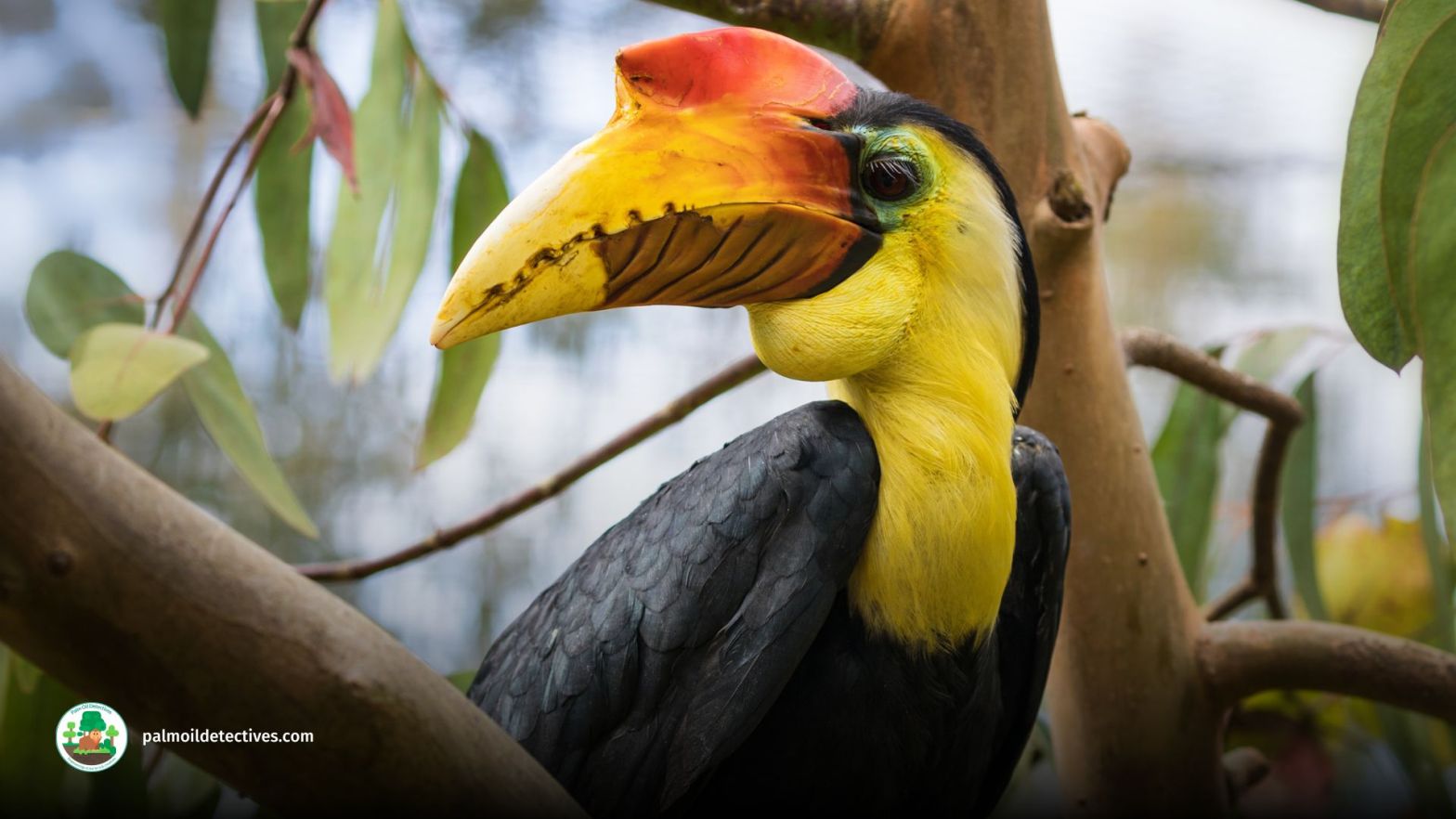
Wrinkled Hornbill Rhabdotorrhinus corrugatus
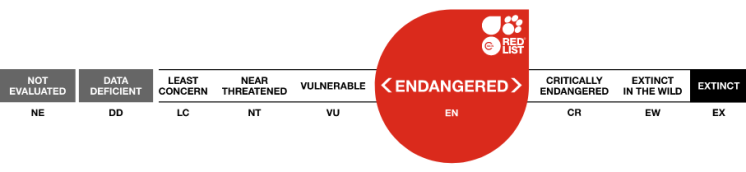
IUCN Status: Endangered
Extant Locations: Indonesia (Sumatra, Kalimantan), Malaysia (Peninsular Malaysia, Borneo), Brunei, Thailand (southern regions)
Now extinct: Singapore
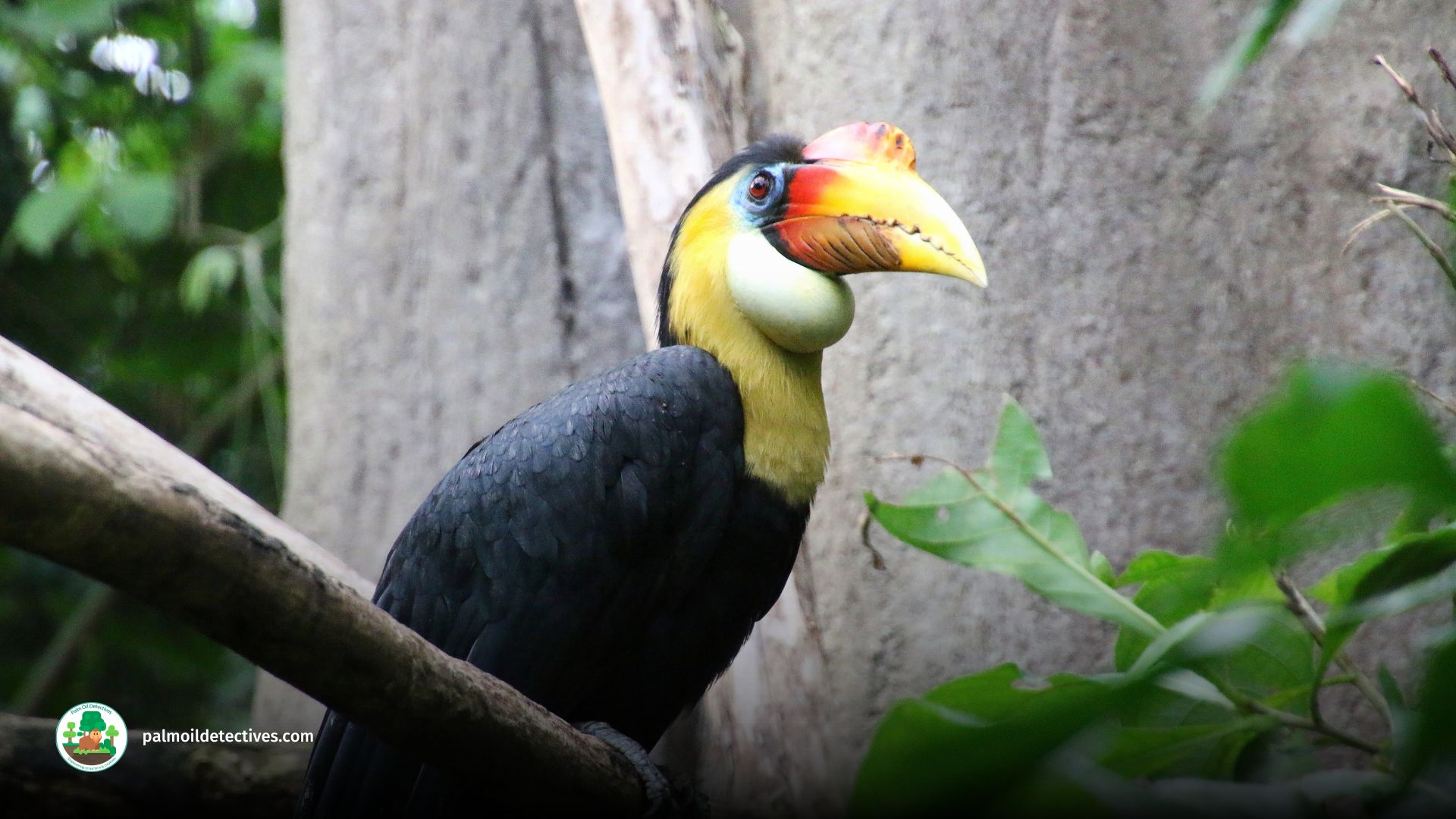
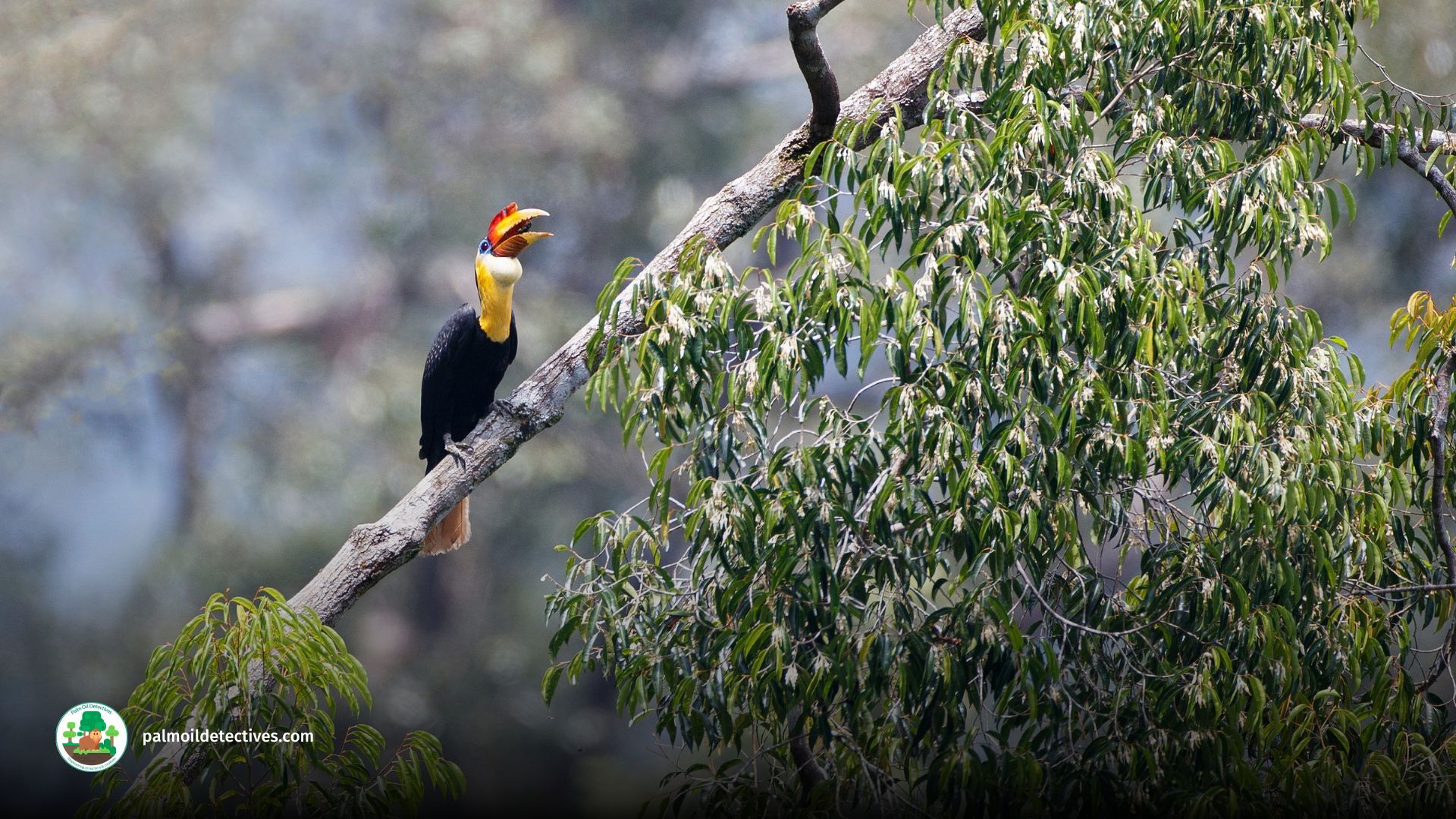
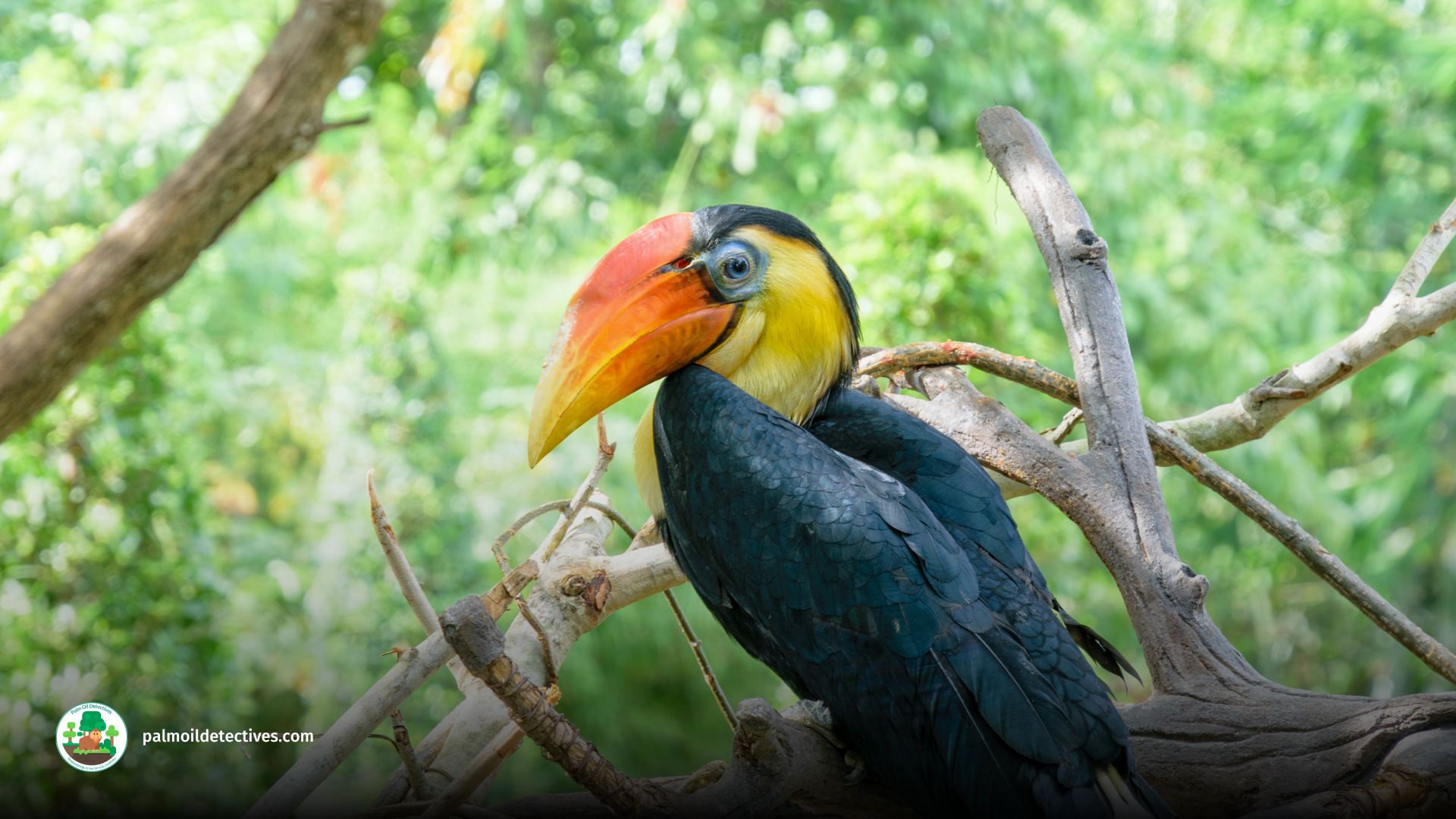
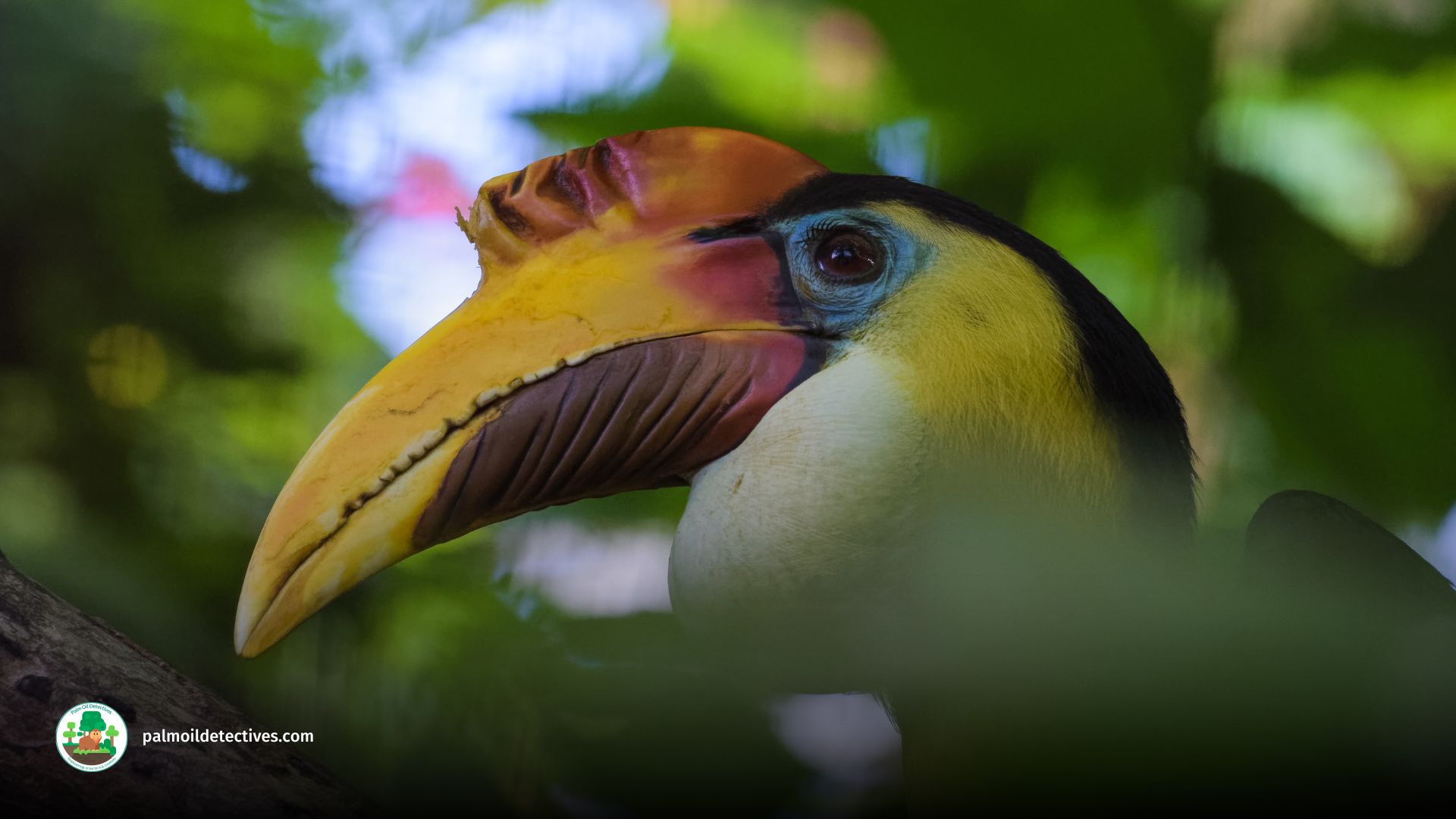
The Wrinkled #Hornbill Rhabdotorrhinus corrugatus, also known as the Corrugated Hornbill, is a striking rainforest #bird from #Indonesia, #Borneo, Peninsular #Malaysia, #Brunei and #Thailand. They are famous for their glossy black plumage, massive wrinkled casque, and vibrant orange-yellow beak. Males boast bright yellow throats, while females display striking blue patches, making them one of the most vividly colourful hornbills in of Southeast Asia. As crucial seed dispersers, they shape tropical forests by spreading the seeds of fig trees and other large fruiting species. However, their numbers are plummeting due to rampant deforestation for timber, paper, and industrial palm oil plantations, alongside illegal #hunting and the illegal wildlife trade. A 2023 study in Central Sarawak (Mohd-Azlan et al.) revealed that even selectively logged forests are failing to support hornbill populations, highlighting the urgent need for action. These birds rely on mature fig trees and vast, uninterrupted canopy cover, but their habitat is being decimated at an alarming rate. Without immediate conservation efforts, their populations will continue to collapse. Fight for their survival every time you shop—boycott palm oil, tropical timber, and wildlife trafficking. Support indigenous-led conservation. #BoycottPalmOil #Boycott4Wildlife.
Magnificent #hornbill 🦜💚 couples nest in ancient trees, females stay put while males bring food for chicks. Hornbills need old #forest to survive, #palmoil #deforestation is a huge threat! Resist and #BoycottPalmOil 🌴⛔️ #Boycott4Wildlife @palmoildetect https://palmoildetectives.com/2021/02/05/wrinkled-hornbill-rhabdotorrhinus-corrugatus/
Wrinkled Hornbills 🦜💚🧐have a colourful casque that looks great on them but is sought after by #poachers 🤢🤮 Ancient keepers of rainforests in #Indonesia and #Malaysia, #palmoil #deforestation is a threat. #BoycottPalmOil 🌴☠️🚫 #Boycott4Wildlife https://palmoildetectives.com/2021/02/05/wrinkled-hornbill-rhabdotorrhinus-corrugatus/

Appearance and Behaviour
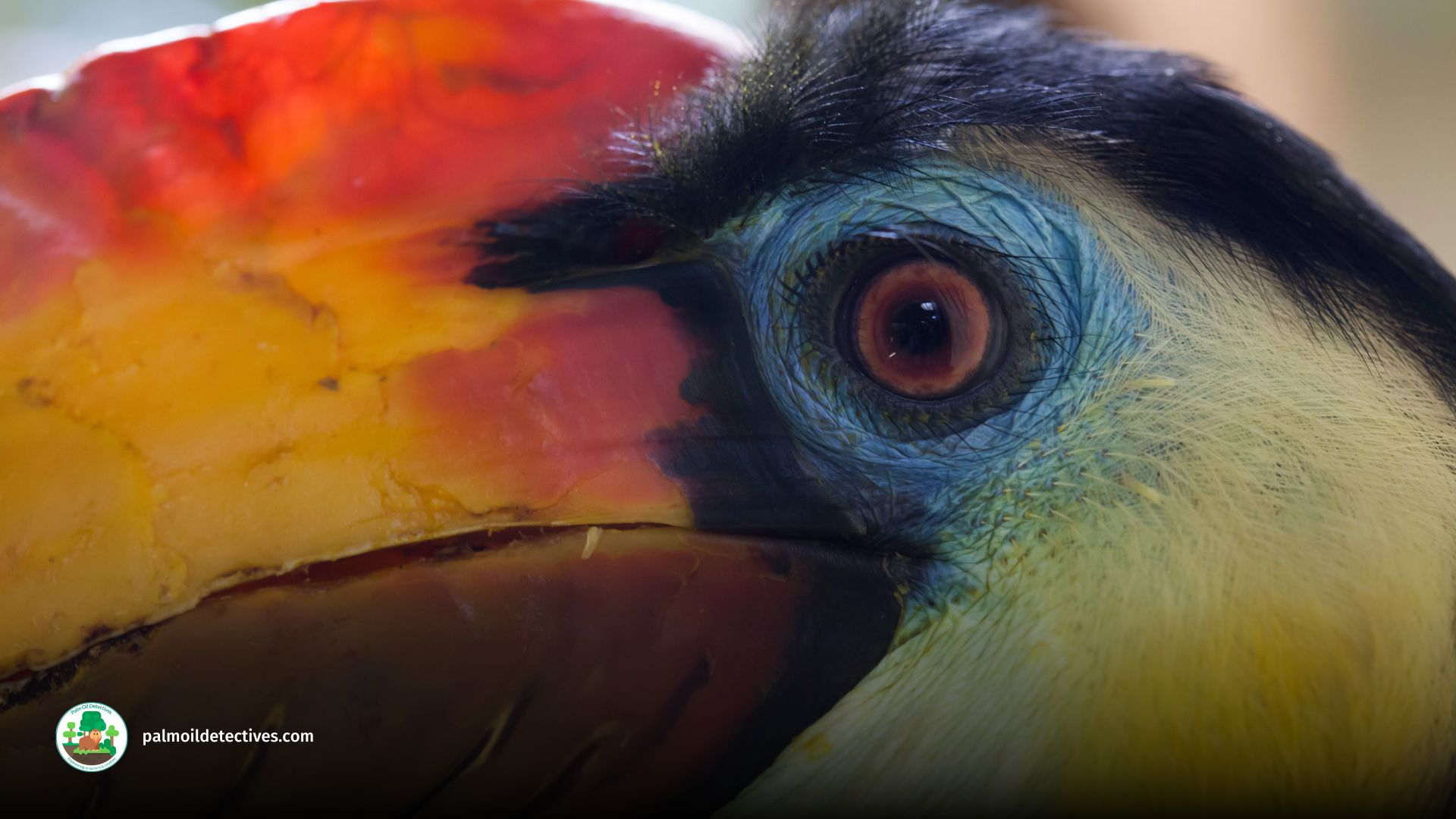
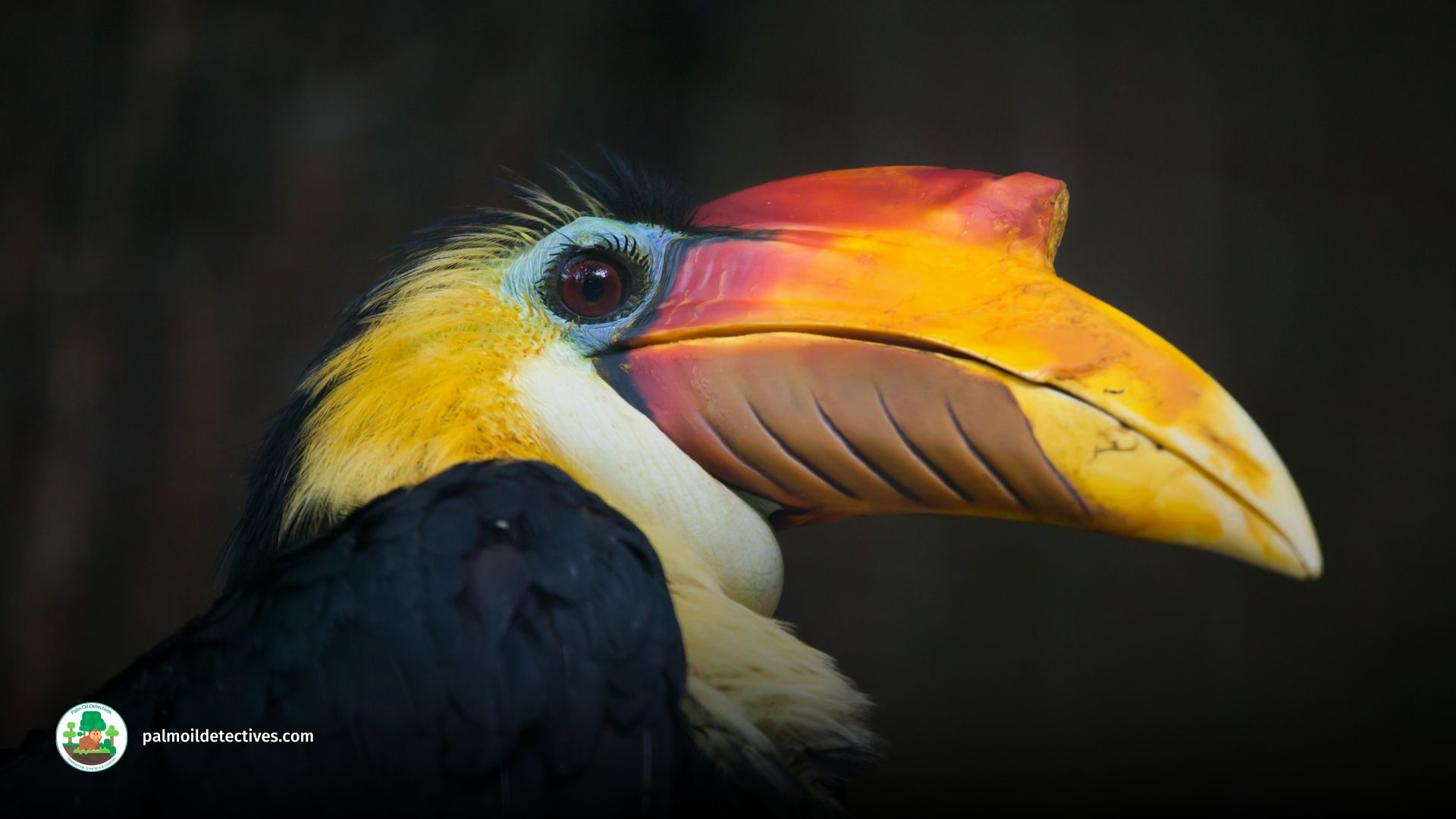
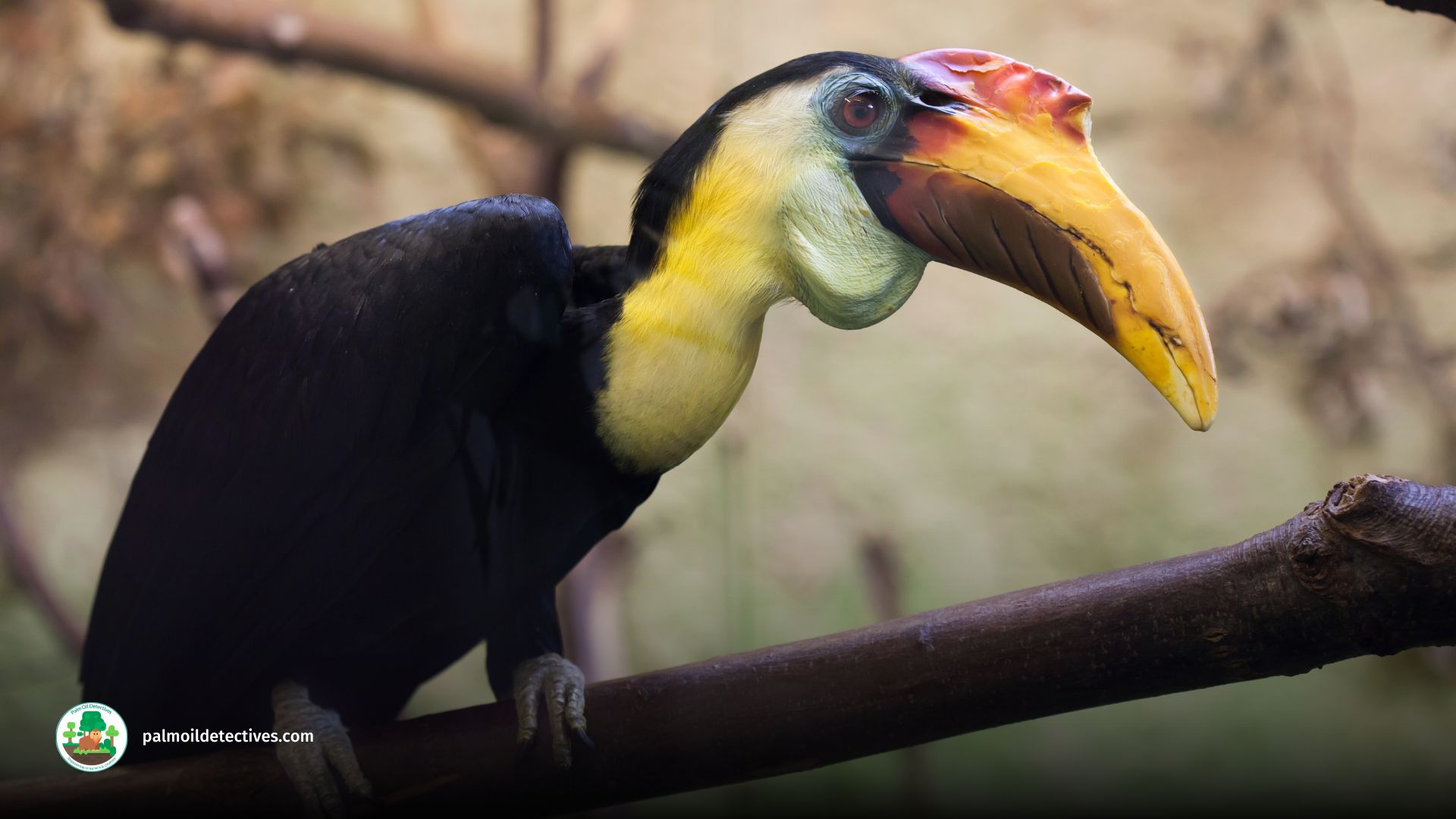
These medium-sized hornbills measure 70–80 cm in length and weigh between 1.2–1.5 kg. Their most defining feature is their wrinkled casque, a hollow structure atop their beak, which is larger in males than in females. Males have a bright yellow throat pouch, while females display a striking blue pouch. Their glossy black plumage contrasts with their vivid red-orange bills, creating a spectacular visual in the rainforest canopy. Their calls echo through the treetops, a mix of harsh cackles and deep honks that signal their presence and territorial claims.
These birds are highly social and monogamous, forming lifelong bonds. They are strong fliers, moving in pairs or small groups as they traverse vast forest landscapes in search of fruit. When alarmed, they emit a sharp, rasping croak, warning others of potential threats.
Diet
Wrinkled Hornbills are primarily frugivorous, feeding on a diverse range of rainforest fruits, including figs (Ficus spp.), rambutans, and nutmeg. They also consume small animals, such as insects, lizards, and even small birds, supplementing their diet with protein when necessary.
Their role as seed dispersers is crucial—many rainforest trees rely on these hornbills to carry their seeds across vast distances, ensuring the survival of the ecosystem.
Reproduction and Mating
These birds follow a strict nesting ritual, where the female is sealed inside a tree cavity using mud and regurgitated food. She remains inside for two to three months, incubating one to two eggs and relying entirely on the male to provide food. The chicks hatch blind and helpless, and the male continues to deliver fruit through a narrow opening in the sealed nest until they are ready to emerge.
This unique breeding strategy makes them highly vulnerable—if their nesting tree is cut down, the entire family perishes.
Geographic Range
Historically, Wrinkled Hornbills were found throughout Thailand, Malaysia, Indonesia, and Brunei, but they are now largely restricted to isolated forest patches in Sumatra, Borneo, and Peninsular Malaysia. Habitat loss has caused severe population fragmentation, and local extinctions have been recorded in several areas.
Threats
This species shows strong avoidance of degraded or secondary forests and is reliant on lowland forest (D. L. Yong and S. Mahood in litt. 2018), which is particularly threatened by land conversion for large-scale plantations of oil palm and rubber, as well as clearance for small-scale agriculture.
IUCN Red list
Palm oil and timber deforestation and habitat fragmentation
The primary driver of decline is the large-scale clearance of tropical rainforests for palm oil plantations, logging, and agricultural monocultures. Wrinkled Hornbills require large, undisturbed tracts of forest to thrive, particularly for nesting in old-growth trees. However, Mohd-Azlan et al. (2023) found that hornbill diversity and abundance drop significantly in selectively logged production forests, indicating that even non-clear-cut logging has detrimental effects on populations. Forest fragmentation isolates small groups of Wrinkled Hornbills, reducing breeding success and genetic diversity.
Logging and nesting site loss
Wrinkled Hornbills rely on massive, centuries-old trees for nesting. Large dipterocarp trees with natural cavities are particularly important, yet selective logging disproportionately removes these trees, causing catastrophic declines in nesting availability (Mohd-Azlan et al., 2023). Even where some forest cover remains, the loss of suitable breeding sites disrupts reproductive success and forces hornbills into suboptimal, degraded areas.
Hunting and illegal wildlife trade
Wrinkled Hornbills are targeted by poachers for their casque, meat, and body parts, particularly in parts of Southeast Asia where traditional medicine and ornamental trade drive illegal hunting. Though not as heavily poached as the Helmeted Hornbill (Rhinoplax vigil), Wrinkled Hornbills are still captured for the illegal pet trade. The disruption of breeding pairs due to hunting has devastating consequences, as hornbills form long-term monogamous pairs and rely on cooperative care for their chicks.
Climate change induced extreme weather
The intensifying impacts of climate change, including unpredictable rainfall patterns, prolonged droughts, and stronger storms, pose an additional threat to Wrinkled Hornbills. These birds are sensitive to fluctuations in fruit availability, and prolonged dry seasons have been shown to reduce breeding success in related hornbill species. Rising temperatures and extreme weather events may also degrade their remaining forest habitats, exacerbating existing threats.
Agricultural expansion and palm oil plantations
Palm oil expansion remains one of the greatest threats to Wrinkled Hornbills. The conversion of diverse rainforests into uniform oil palm monocultures eliminates critical foraging grounds and disrupts seasonal food availability. Oil palm plantations do not support the diverse fruiting trees hornbills depend on, leading to starvation and displacement. To protect this species, urgent action is needed to halt deforestation and promote indigenous-led conservation efforts that preserve primary forests.
FAQs
How many Wrinkled Hornbills are left in the wild?
Their population is rapidly declining, with estimates placing their numbers at fewer than 10,000 mature individuals. The main drivers of this decline are deforestation, poaching, and the illegal pet trade.
Why are Wrinkled Hornbills endangered?
Massive deforestation for palm oil, illegal logging, and hunting have wiped out large portions of their habitat. They are also highly sensitive to human disturbances, making them particularly vulnerable to extinction.
Would a Wrinkled Hornbill make a good pet?
Absolutely not! Wrinkled Hornbills are wild birds that require vast rainforests to thrive. Capturing them for the pet trade is illegal and contributes to their extinction. Many of these majestic birds are stolen from their nests, leading to high mortality rates among both the chicks and their parents along with enormous trauma to whole families of birds. If you love these birds, instead you must advocate for their protection and call-out the illegal trading of these birds online!
Where do Wrinkled Hornbills live?
Wrinkled Hornbills are native to Thailand, Malaysia, Sumatra, and Borneo, where they inhabit dense lowland rainforests. They are typically found in primary forests below 300 metres in elevation, though they may venture higher in some areas. These hornbills rely on mature trees with large natural cavities for nesting, making them especially vulnerable to deforestation. Logging and agricultural expansion, particularly for palm oil plantations, have caused significant habitat loss, pushing these birds into smaller, fragmented patches of remaining rainforest.
What do Wrinkled Hornbills eat?
Wrinkled Hornbills primarily feed on fruit, particularly figs, which make up a large part of their diet. As frugivores, they play an essential role in their ecosystem by dispersing seeds that help regenerate forests. However, they also supplement their diet with insects, frogs, lizards, and small vertebrates, especially when fruit is scarce. Using their powerful, curved beaks, they pluck fruit directly from trees or snatch prey from bark and leaves. The loss of diverse fruiting trees due to deforestation severely impacts their ability to find food, putting additional pressure on already declining populations.
How do Wrinkled Hornbills drink?
Unlike many other bird species, Wrinkled Hornbills do not drink water directly. Instead, they obtain all their hydration from the fruit they consume, which contains high moisture content. This adaptation allows them to remain in the canopy without descending to the ground, reducing their risk of predation. Their reliance on fruit for hydration further underscores the importance of protecting diverse rainforest ecosystems, as habitat destruction and monoculture plantations deprive them of this crucial resource.
How do Wrinkled Hornbills communicate?
Wrinkled Hornbills are highly vocal birds, producing deep, resonant calls to communicate through the dense rainforest. Their most common vocalisations include a harsh “kak-kak” or a deep “row-wow” sound, which helps them maintain contact with their mates, warn off intruders, or signal the presence of predators. Their large casque, the wrinkled structure on top of their beak, may help amplify these calls, allowing them to travel over long distances. In addition to vocalisations, they use bill-clattering, posturing, and aerial displays to communicate, particularly during courtship or territorial disputes. These vocal abilities are essential, as Wrinkled Hornbills form monogamous pairs that remain bonded for life and rely on constant communication.
How do Wrinkled Hornbills breed?
Wrinkled Hornbills are monogamous, forming lifelong bonds with their mates. Their breeding process is highly specialised, with the female sealing herself inside a tree cavity to protect her eggs. She uses a mixture of mud, fruit pulp, and droppings to create a barrier, leaving only a small opening through which the male delivers food. Inside the nest, she lays up to two eggs and incubates them for around three months, relying entirely on the male for sustenance. Once the chicks hatch, the female breaks out of the sealed nest to help care for them. Both parents take turns feeding their young until they are strong enough to leave the nest and forage independently. This unique nesting behaviour makes Wrinkled Hornbills particularly dependent on old-growth trees, as the loss of suitable nesting sites due to deforestation severely impacts their ability to reproduce.
How does palm oil threaten Wrinkled Hornbills?
The palm oil industry is responsible for rampant deforestation, destroying their habitat at an alarming rate. Wrinkled hornills rely on ancient trees for nesting sites. Thus the clearing forests for palm oil plantations wipes out nesting sites, leaving them vulnerable to hunters, and eliminates the fruiting trees they rely on for food. Support indigenous-led conservation and always #BoycottPalmOil in the supermarket
What can be done to save Wrinkled Hornbills?
Protecting their habitat is key. You can help by:
• Refuse to buy products containing palm oil and actively boycott palm oil.
• Supporting indigenous communities who have protected rainforests for thousands of years.
• Advocating for stronger legal protections to stop deforestation and illegal trade. Call out and report illegal trading of these birds on social media.
• Raising awareness about their plight on social media using #BoycottPalmOil #Boycott4Wildlife.
Take Action!
The future of the Wrinkled Hornbill depends on urgent action. Stop supporting industries that destroy their habitat, boycott palm oil, and demand stronger protections for these remarkable birds. #BoycottPalmOil #Boycott4Wildlife every time you shop!
Support the conservation of this species
This species has no known conservation projects in place for their protection. Help them and #Boycottpalmoil #Boycott4Wildlife.

Empowering creatives and consumers
Further Information
Birds of the World. (n.d.). Wrinkled Hornbill (Rhabdotorrhinus corrugatus). Retrieved from Birds of the World
BirdLife International. 2018. Rhabdotorrhinus corrugatus. The IUCN Red List of Threatened Species 2018: e.T22682514A132244524. https://dx.doi.org/10.2305/IUCN.UK.2018-2.RLTS.T22682514A132244524.en. Downloaded on 05 February 2021.
Mohd-Azlan, J., Philovenny, P., Maiwald, M. J., Chas, N. B. J., Robert, L. A., & Noske, R. A. (2023). Diversity and relative abundance of hornbills in selectively-logged production forests in Central Sarawak, Malaysian Borneo. Kukila, 24, 1–15. Retrieved from Research Gate
Reko Forest. (n.d.). Wildlife of RER: The Wrinkled Hornbill. Retrieved from Reko Forest

How can I help the #Boycott4Wildlife?
Take Action in Five Ways
1. Join the #Boycott4Wildlife on social media and subscribe to stay in the loop: Share posts from this website to your own network on Twitter, Mastadon, Instagram, Facebook and Youtube using the hashtags #Boycottpalmoil #Boycott4Wildlife.
2. Contribute stories: Academics, conservationists, scientists, indigenous rights advocates and animal rights advocates working to expose the corruption of the palm oil industry or to save animals can contribute stories to the website.





3. Supermarket sleuthing: Next time you’re in the supermarket, take photos of products containing palm oil. Share these to social media along with the hashtags to call out the greenwashing and ecocide of the brands who use palm oil. You can also take photos of palm oil free products and congratulate brands when they go palm oil free.
4. Take to the streets: Get in touch with Palm Oil Detectives to find out more.
5. Donate: Make a one-off or monthly donation to Palm Oil Detectives as a way of saying thank you and to help pay for ongoing running costs of the website and social media campaigns. Donate here
Discover more from Palm Oil Detectives
Subscribe to get the latest posts sent to your email.
 Palm Oil Detectives