
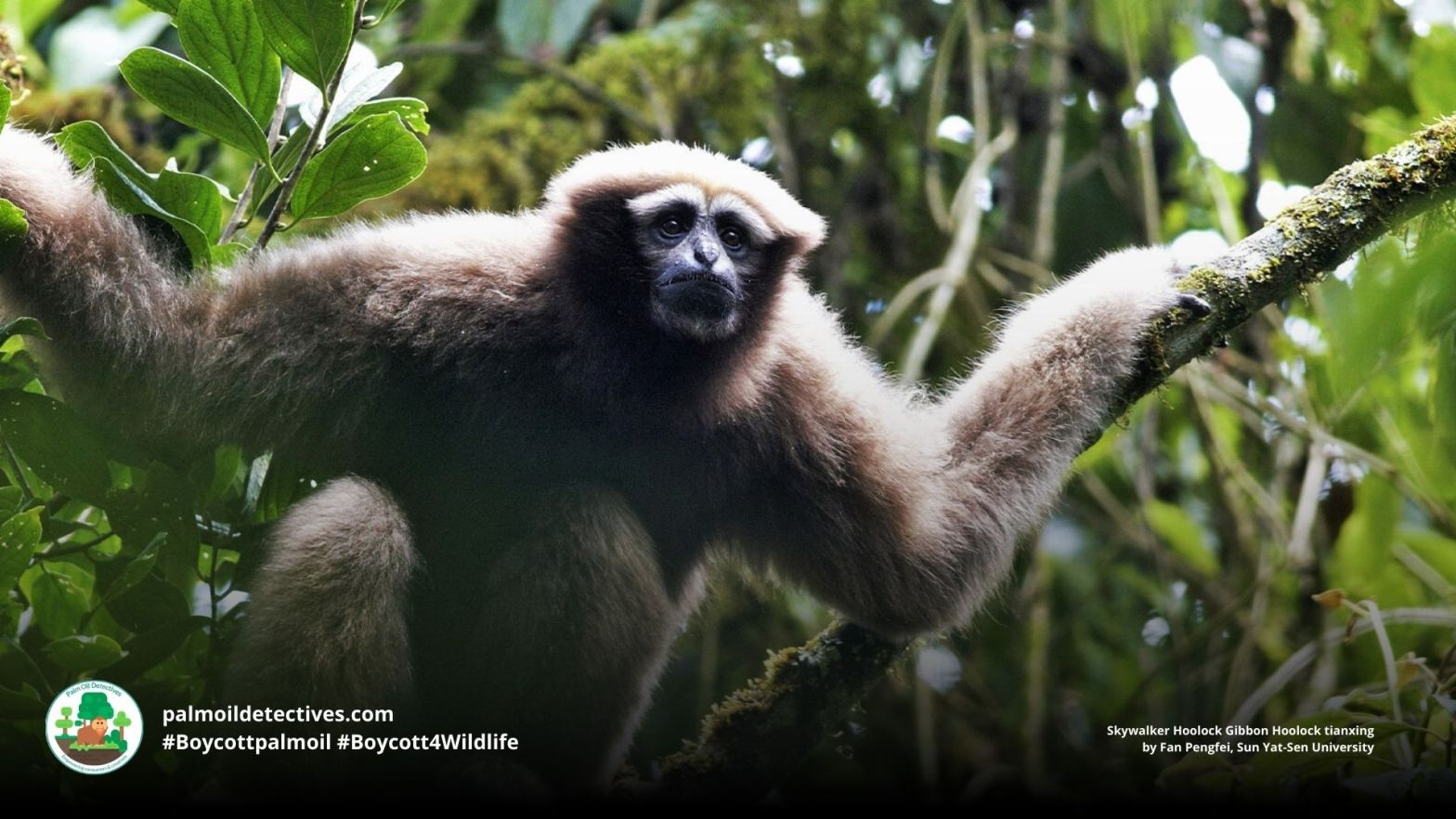
Skywalker Hoolock Gibbon Hoolock tianxing
Location: Eastern Myanmar and southwestern China, particularly the Gaoligong Mountains
IUCN Status: Endangered
High in the treetops of Myanmar and China’s remote montane forests, the Skywalker Hoolock Gibbon swings effortlessly through the canopy, moving with near-weightless grace. These rare, tree-dwelling primates were only officially described in 2017, making them one of the most recently discovered gibbon species. With fewer than 150 individuals confirmed in the wild, they are now among the world’s most endangered gibbons, clinging to existence in increasingly fragmented forests.
Despite their elusive nature, their presence is unmistakable—their piercing songs echo at dawn, carrying for over a kilometre through the jungle. But in many places, these songs have fallen silent, drowned out by the sounds of logging, mining, and hunting. Their delicate grip on survival is under immense pressure from habitat destruction, poaching, and the relentless expansion of agriculture. Help them by campaigning for their survival #Boycott4Wildlife.
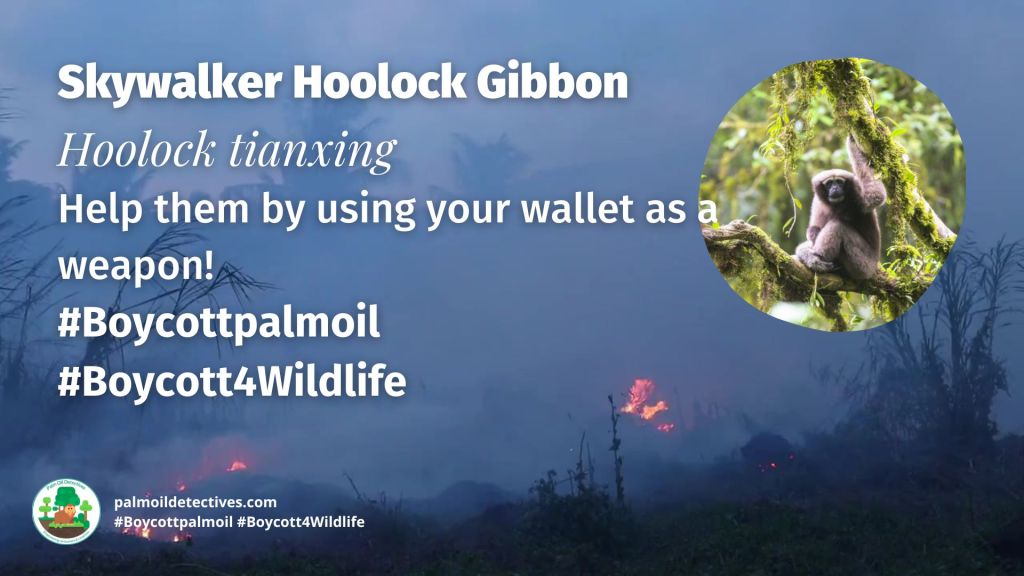
High in #China 🇨🇳 and #Myanmar’s 🇲🇲 trees live melodic long-limbed bards of the jungle. Skywalker Hoolock #Gibbons 🙉🐵🐒 got their name from #StarWars 🛸🌌 but Skywalker also translates to ‘Heaven’s Movement’ in Chinese. Help them and #Boycott4Wildlife https://palmoildetectives.com/2021/02/06/skywalker-hoolock-gibbon-hoolock-tianxing/
Just a few dozen beautiful and elegant Skywalker #Gibbons 🐵🐒remain alive in the vulnerable forests of #Myanmar 🇲🇲and southern #China 🇨🇳 Threats include cardamom #deforestation 🥜🔥 #poaching and #climatechange. Help them survive #Boycott4Wildlife https://palmoildetectives.com/2021/02/06/skywalker-hoolock-gibbon-hoolock-tianxing/
Appearance and Behaviour
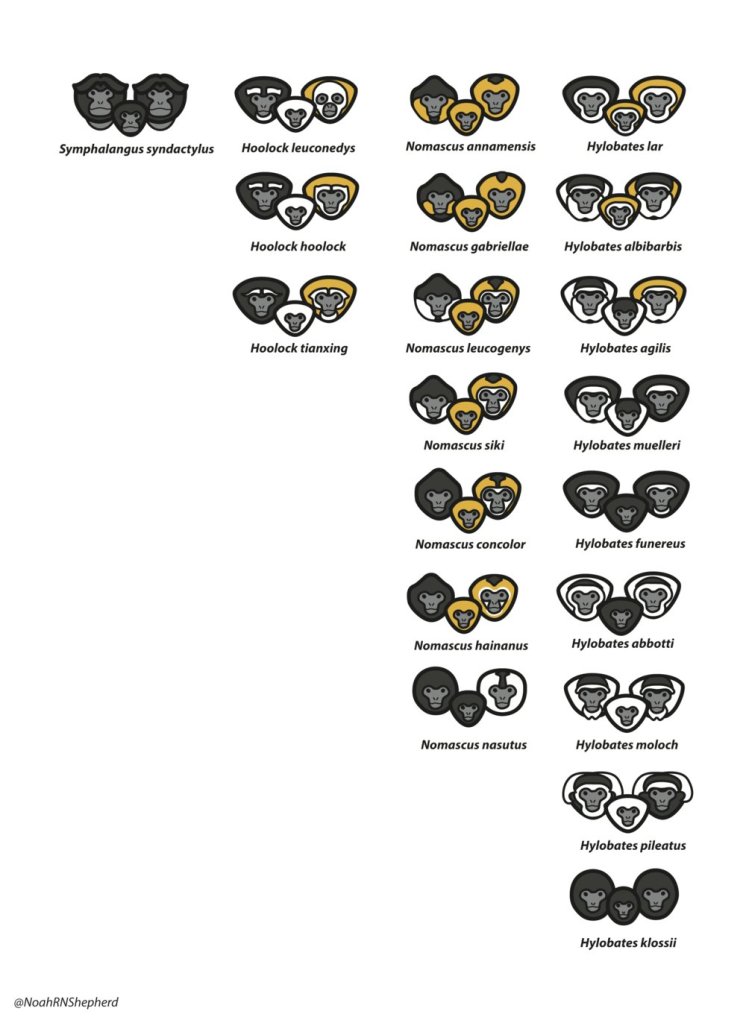
Skywalker Hoolock Gibbons are strikingly beautiful primates, with graceful, elongated limbs and expressive, intelligent eyes. Their fur varies from black to dark brown, with a large beard that can be either black or brown, unlike their closest relatives, the Eastern hoolock gibbon (Hoolock leuconedys), which have white beards. One of their most distinctive features is their white eyebrows, which are thinner and more widely spaced than those of other hoolock gibbons.
Males and females are sexually dimorphic. Males have dark brown fur with a slight brownish overlay, while females are yellowish or reddish-blonde, with incomplete white facial rings. Younger gibbons lack the white fur under their eyes and chin, making them easier to distinguish.
These gibbons are arboreal specialists, spending their entire lives in the trees. They travel through the forest canopy using brachiation, swinging between branches with their long arms at breathtaking speed. On the ground, they are awkward and vulnerable, avoiding descent unless absolutely necessary.

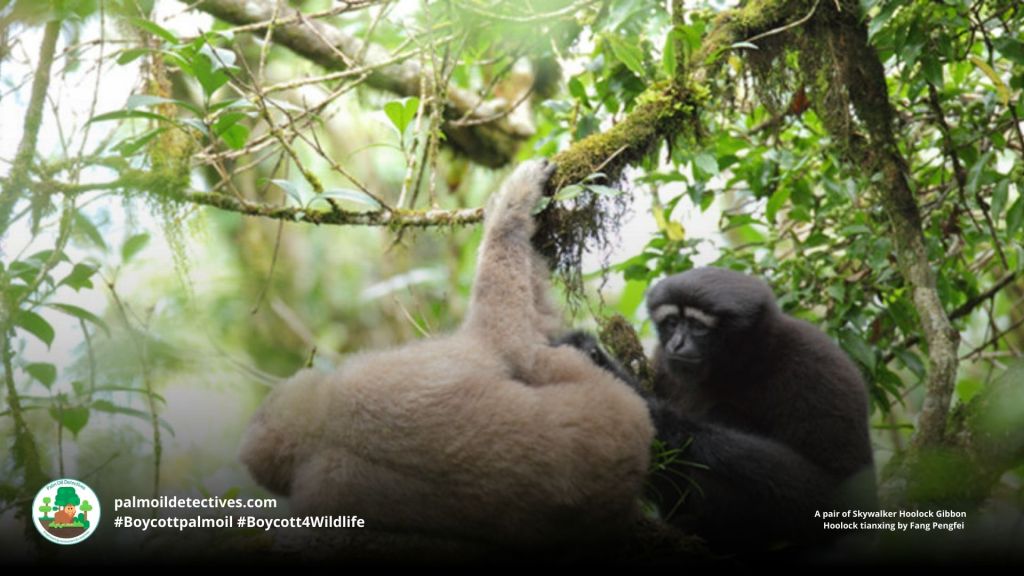
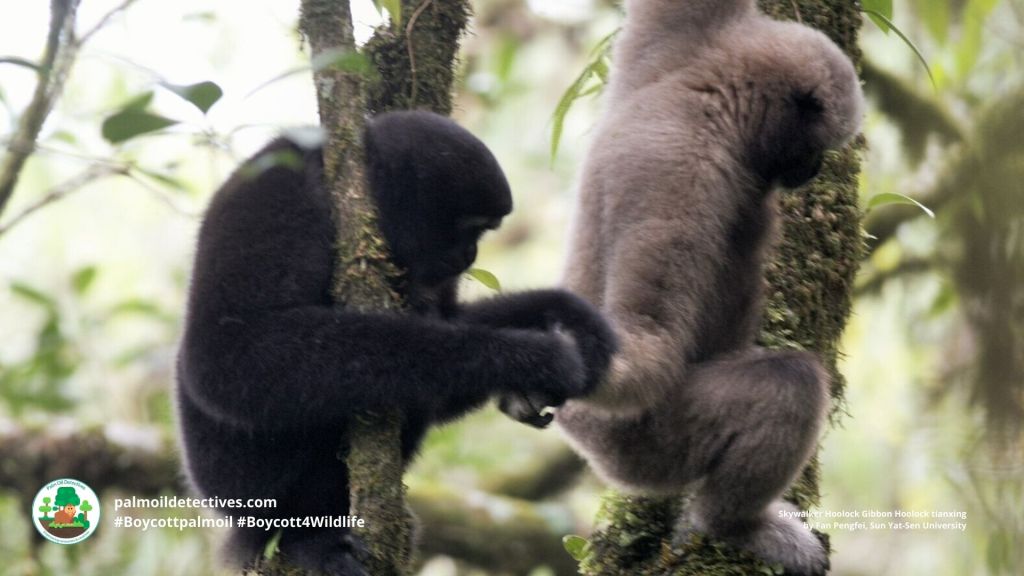
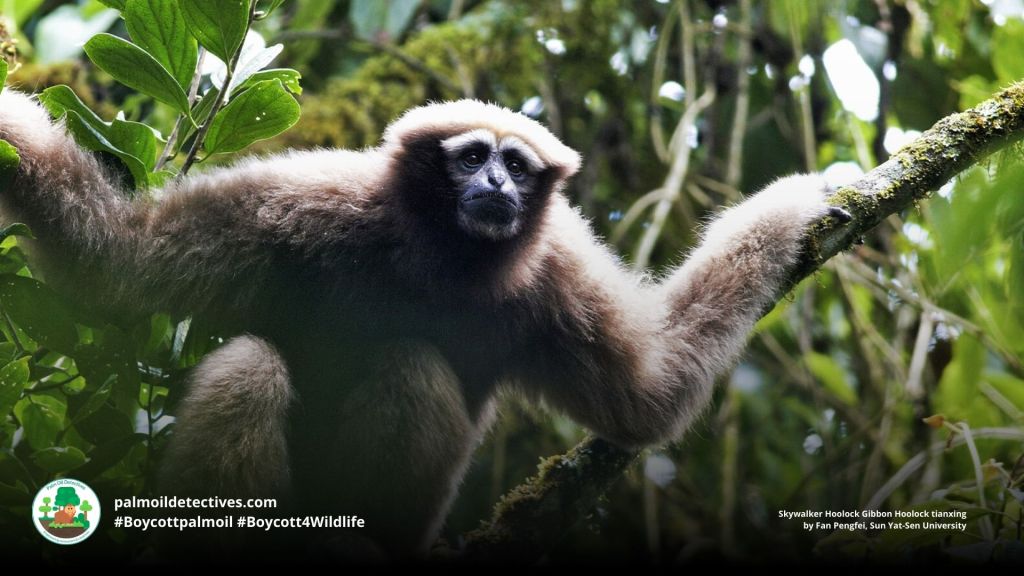
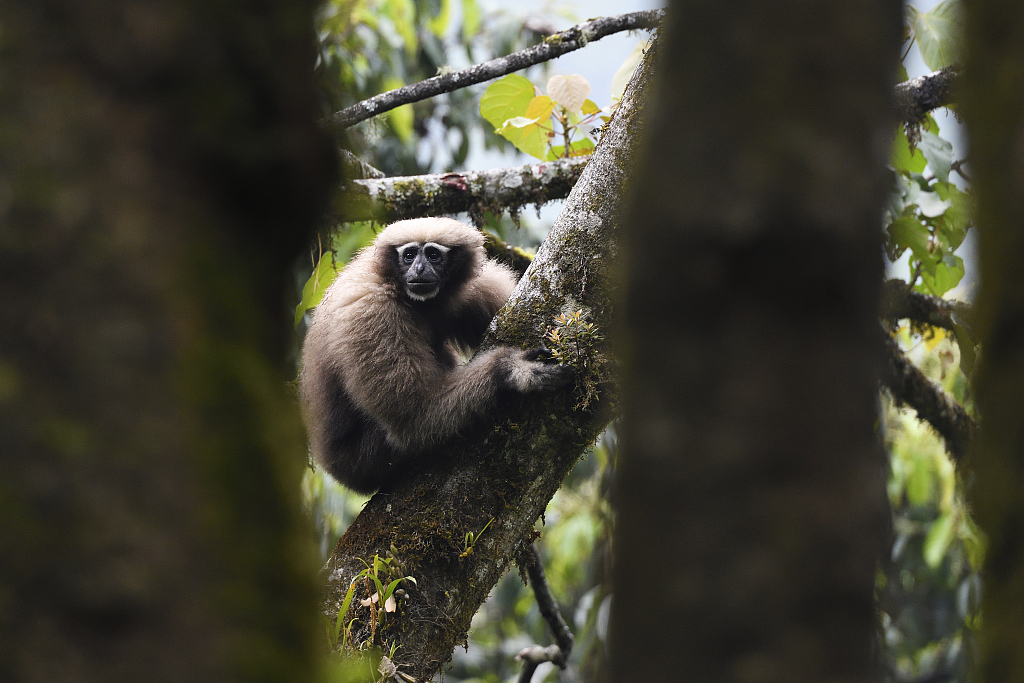
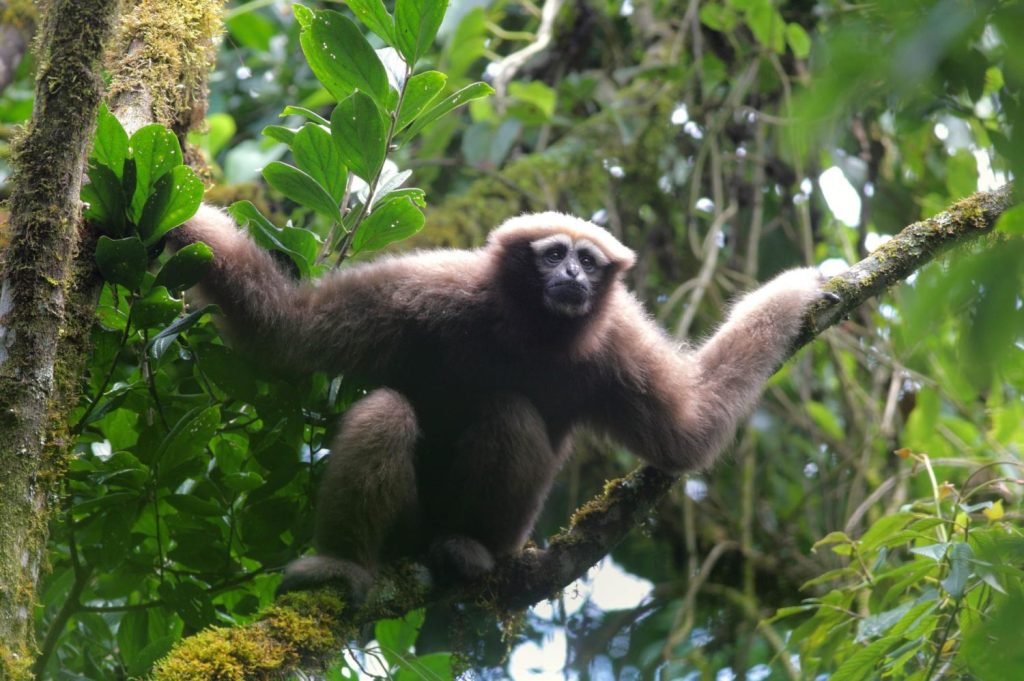
Skywalker hoolock gibbons are highly social and monogamous, forming lifelong pairs. Their strong bonds are reinforced through duet calls—long, melodious songs that mated pairs perform together at dawn. These calls serve as territorial markers and as a way to maintain their connection. However, in some areas, researchers have observed gibbons going silent for weeks after hearing gunfire, an eerie reminder of the threats they face.
Geographic Range
Skywalker Hoolock Gibbons are found in the dense montane forests of eastern Myanmar and southwestern China, particularly in the Gaoligong Mountains. Initially, scientists believed their population was limited to small, fragmented groups in China. However, a groundbreaking study in 2024 confirmed that Myanmar is home to the largest known population of these elusive primates.
Using a combination of acoustic monitoring and DNA analysis, researchers were able to identify 44 previously unknown Skywalker gibbon groups in Myanmar. This discovery significantly expands their known range and offers new hope for their conservation.
Despite this positive news, over 90% of their range remains unprotected, leaving them highly vulnerable to habitat destruction. In Myanmar, their forest home is shrinking due to illegal logging, mining, and agricultural expansion, forcing them into smaller and more isolated populations.
Diet
Skywalker Hoolock Gibbons are primarily frugivorous, meaning that fruit makes up the majority of their diet (around 49%). However, when fruit is scarce, they also consume leaves, buds, flowers, and even small invertebrates or bird chicks. Their diet shifts with the seasons, with ripe fruit being the most sought-after food source.
They play a crucial role in their ecosystem as seed dispersers, ensuring the health and regeneration of the forests they inhabit. Without them, the delicate balance of their habitat would begin to unravel.
Reproduction and Mating
Mating among Skywalker hoolock gibbons is a complex social ritual. Females initiate courtship, presenting themselves to males, who respond by approaching them in an elaborate display of mutual trust. Once bonded, these pairs remain together for life, raising one offspring at a time.
The gestation period lasts around 7 months, after which a single helpless, pink-skinned infant is born. The mother provides constant care and protection, carrying the baby clinging to her fur for the first several months of life. Juveniles remain dependent on their parents for up to 8 years before reaching sexual maturity.
Due to their slow reproductive rate, any decline in population is devastating. If adult gibbons are killed, the loss is felt for generations, pushing their already fragile numbers closer to extinction.
Threats
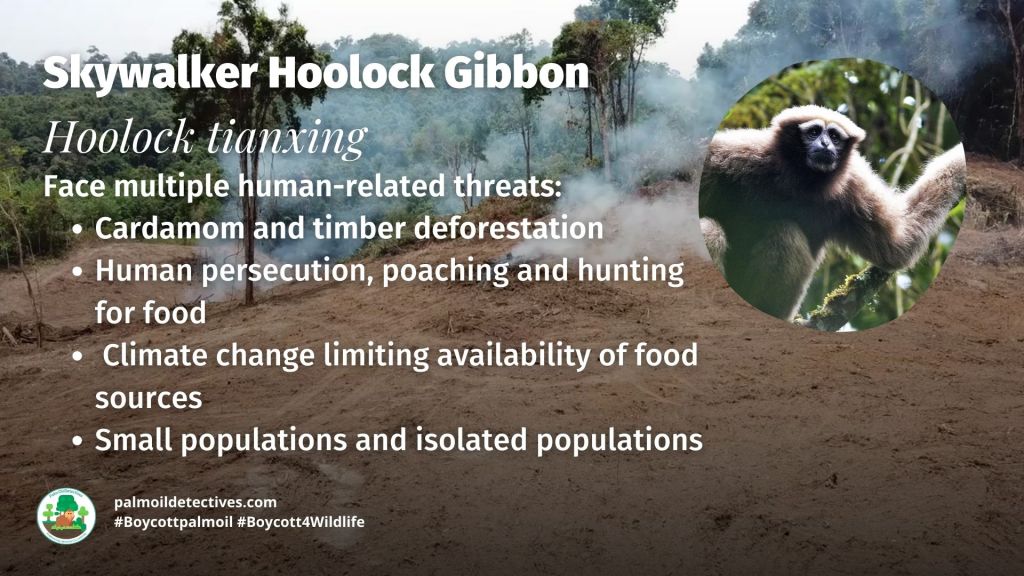
Skywalker Hoolock Gibbons face a critical battle for survival, with their population declining due to multiple human-driven threats.
In Myanmar, the Skywalker Hoolock Gibbon remains threatened by habitat loss due largely to slash-and-burn agriculture, gold mining and logging, and secondarily by hunting for food and medicinal purposes (Ni et al. 2018). Unfortunately, the species is not known to occur in any protected areas in this country.
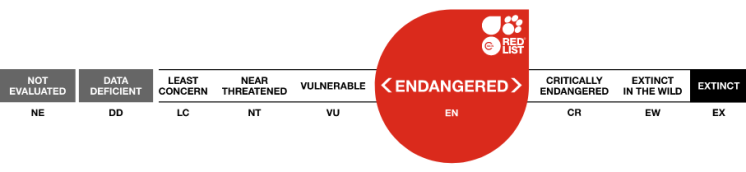
IUCN Red List
Habitat Destruction and Deforestation
• Myanmar and China’s forests are rapidly disappearing due to commercial logging, mining, and slash-and-burn agriculture.
• Over 90% of their range remains unprotected, making them highly vulnerable to deforestation.
• In Myanmar, forest loss has accelerated since 2000, with up to 9% of their habitat disappearing in key areas.
As trees fall, gibbons lose their homes, their food sources, and their ability to move safely through the forest canopy.
Agricultural Expansion and Cardamom Plantations
• Large swathes of forest are being cleared for cardamom plantations, particularly in China.
• While some gibbons have adapted to agroforestry environments, heavy fragmentation of these habitats isolates populations, preventing gene flow and increasing the risk of inbreeding.
Hunting and the Illegal Wildlife Trade
• In Myanmar, hoolock gibbons are hunted for food and traditional Chinese medicine, with the false belief that consuming their brains can cure epilepsy.
• They are poached for the illegal pet trade, with babies being torn from their mothers, who are often killed in the process.
• Even when not actively hunted, gibbons are often shot by miners and loggers as they are seen as “noisy disturbances.”
Climate Change and Habitat Fragmentation
• Warming temperatures and unpredictable weather patterns due to climate change are altering the availability of food sources, forcing gibbons into competition with one another.
• Fragmentation of forests forces gibbons to travel across open ground, making them highly vulnerable to predators and human threats.
FAQS
How many Skywalker hoolock gibbons are left?
Fewer than 150 individuals have been confirmed in the wild. However, new research suggests their numbers may be slightly higher in Myanmar, though they remain endangered.
Where do Skywalker hoolock gibbons live?
They are found in eastern Myanmar and southwestern China, particularly in the Gaoligong Mountains and areas between the Salween and Irrawaddy Rivers.
What do Skywalker hoolock gibbons eat?
Their diet is primarily fruit, but they also consume leaves, buds, flowers, insects, and bird chicks when plant sources are limited.
How do Skywalker hoolock gibbons communicate?
They perform loud, melodic duet songs at dawn, which serve to mark territory and strengthen bonds between mated pairs.
Why are they called ‘Skywalker’ hoolock gibbons?
They were named by researchers who are Star Wars fans, inspired by their graceful movement through the treetops and the Chinese translation of their name, which means ‘heaven’s movement’.
Are Skywalker hoolock gibbons endangered?
Yes, they are listed as Endangered on the IUCN Red List. Their population is small and highly fragmented, with habitat loss being the greatest threat to their survival.
Can Skywalker hoolock gibbons be kept as pets?
No. Keeping a gibbon as a pet is illegal, immoral and cruel. Many gibbons in the pet trade are illegally captured from the wild, often involving the killing of their family members.
Take Action
Skywalker Hoolock Gibbons are on the brink of extinction, but you can help ensure their survival. The biggest threats to these rare primates come from deforestation, illegal hunting, and the expansion of agriculture such as cardamom plantations. Protecting them means taking action against habitat destruction and the wildlife trade.
• Boycott palm oil, cardamom, and other crops linked to deforestation. The destruction of their habitat is directly linked to agriculture and logging. Every time you shop, choose products that are 100% palm oil-free to avoid contributing to deforestation and biodiversity loss.
• Support Indigenous-led conservation efforts. More than 90% of their habitat is unprotected. Local indigenous communities play a crucial role in protecting their forests from destruction. Donate to or amplify the work of organisations that empower Indigenous and local communities to safeguard forests.
• Demand stronger wildlife protection laws. Gibbons are hunted for food and traditional medicine, and the illegal pet trade remains a major threat. Contact policymakers and demand harsher penalties for those who exploit endangered species.
• Spread awareness. Many people have never heard of the Skywalker Hoolock Gibbon or the threats they face. Share their story on social media using #BoycottPalmOil #Boycott4Wildlife #Vegan and encourage others to take action.
Without urgent intervention, these rare gibbons could be lost forever. Every action counts—speak up, make ethical choices, and help protect their rainforest home before it’s too late.
Further Information
Cowan, C. (2024). Skywalker gibbons confirmed in Myanmar for the first time. Mongabay. https://news.mongabay.com/2024/02/skywalker-gibbons-confirmed-in-myanmar-for-the-first-time/
Fan, P.F., Turvey, S.T. & Bryant, J.V. 2020. Hoolock tianxing (amended version of 2019 assessment). The IUCN Red List of Threatened Species 2020: e.T118355648A166597159. https://dx.doi.org/10.2305/IUCN.UK.2020-1.RLTS.T118355648A166597159.en. Downloaded on 06 February 2021.
Wikipedia Contributors. (n.d.). Skywalker hoolock gibbon. Wikipedia, The Free Encyclopedia. https://en.wikipedia.org/wiki/Skywalker_hoolock_gibbon
How to easily identify gibbons by Noah RNS Shepherd
Support the conservation of this species
This animal has no protections in place. Read about other forgotten species here. Create art to support this forgotten animal or raise awareness about them by sharing this post and using the #Boycottpalmoil #Boycott4Wildlife hashtags on social media. Also you can boycott palm oil in the supermarket.


How can I help the #Boycott4Wildlife?
Take Action in Five Ways
1. Join the #Boycott4Wildlife on social media and subscribe to stay in the loop: Share posts from this website to your own network on Twitter, Mastadon, Instagram, Facebook and Youtube using the hashtags #Boycottpalmoil #Boycott4Wildlife.
2. Contribute stories: Academics, conservationists, scientists, indigenous rights advocates and animal rights advocates working to expose the corruption of the palm oil industry or to save animals can contribute stories to the website.






3. Supermarket sleuthing: Next time you’re in the supermarket, take photos of products containing palm oil. Share these to social media along with the hashtags to call out the greenwashing and ecocide of the brands who use palm oil. You can also take photos of palm oil free products and congratulate brands when they go palm oil free.
4. Take to the streets: Get in touch with Palm Oil Detectives to find out more.
5. Donate: Make a one-off or monthly donation to Palm Oil Detectives as a way of saying thank you and to help pay for ongoing running costs of the website and social media campaigns. Donate here
Discover more from Palm Oil Detectives
Subscribe to get the latest posts sent to your email.
 Palm Oil Detectives