
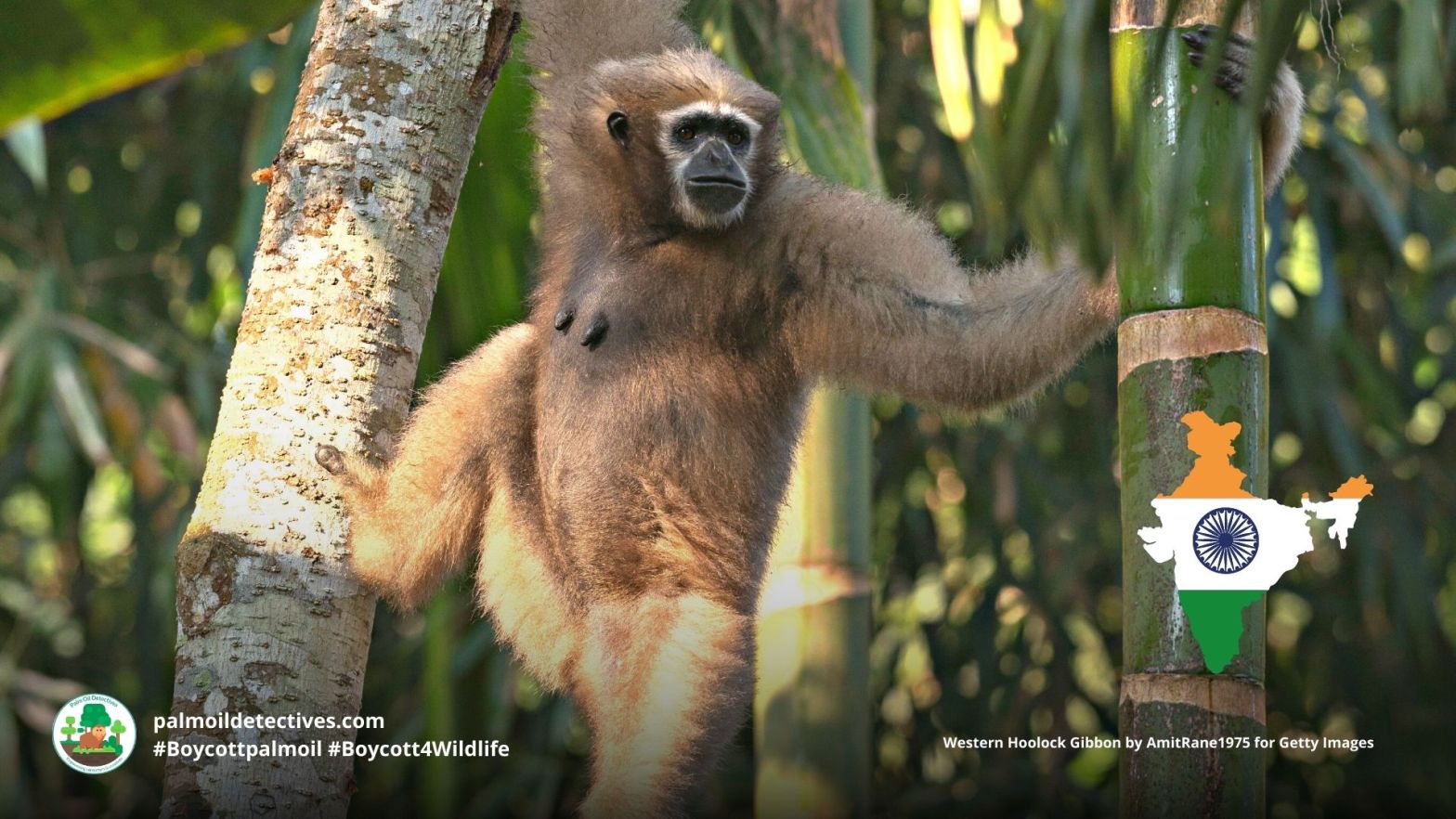
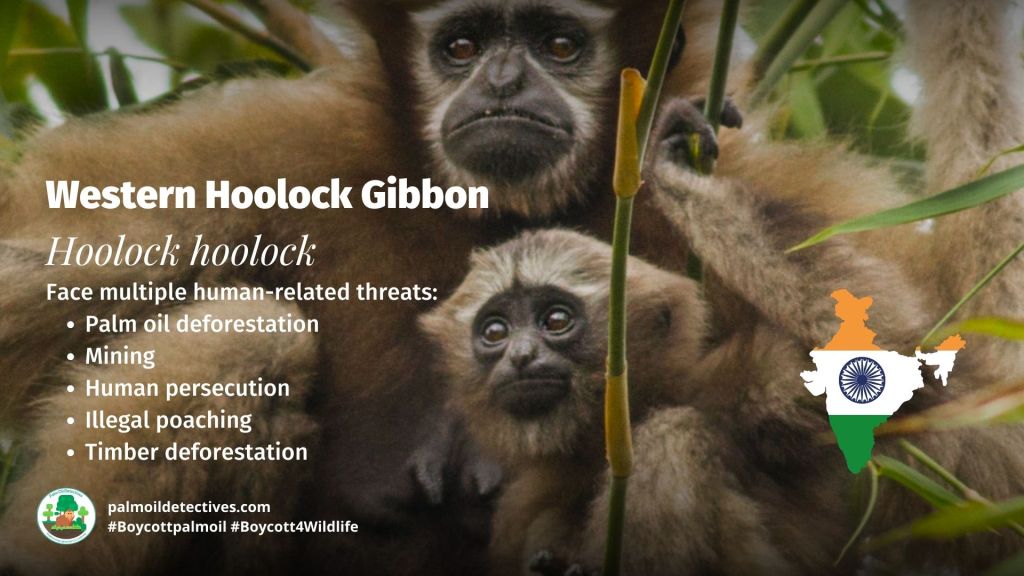
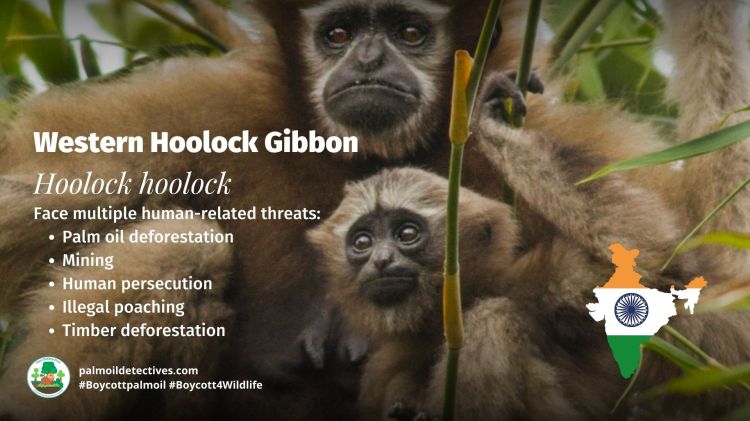
Western Hoolock Gibbon Hoolock hoolock
Endangered
Bangladesh, India, Myanmar
Existence uncertain: China
Energetic and social Western Hoolock Gibbons live in India, Bangladesh and Myanmar. Known for their close-knit families and melodious singing, they are endangered from palm oil deforestation, timber deforestation, human persecution and illegal poaching. Help them every time you shop by boycotting palm oil in the supermarket. #Boycottpalmoil #Boycott4Wildlife
Western Hoolock #Gibbons 🤎🐒 are the only ape species in #India 🇮🇳 Once also found in #China they are threatened by #meat #deforestation. Take action when you shop – be #vegan 🥦🍅🍆 and #Boycott4Wildlife @palmoildetect https://palmoildetectives.com/2021/02/06/western-hoolock-gibbon-hoolock-hoolock/
Western Hoolock #Gibbons 🤎🐒 sing a sweet serenade 🎶 in #Indian #forests 🇮🇳 They are threatened by #meat and #palmoil #deforestation. Take action when you shop – be #vegan 🥜🥔🥕 #BoycottPalmOil 🌴☠️⛔️ #Boycott4Wildlife @palmoildetect https://palmoildetectives.com/2021/02/06/western-hoolock-gibbon-hoolock-hoolock/
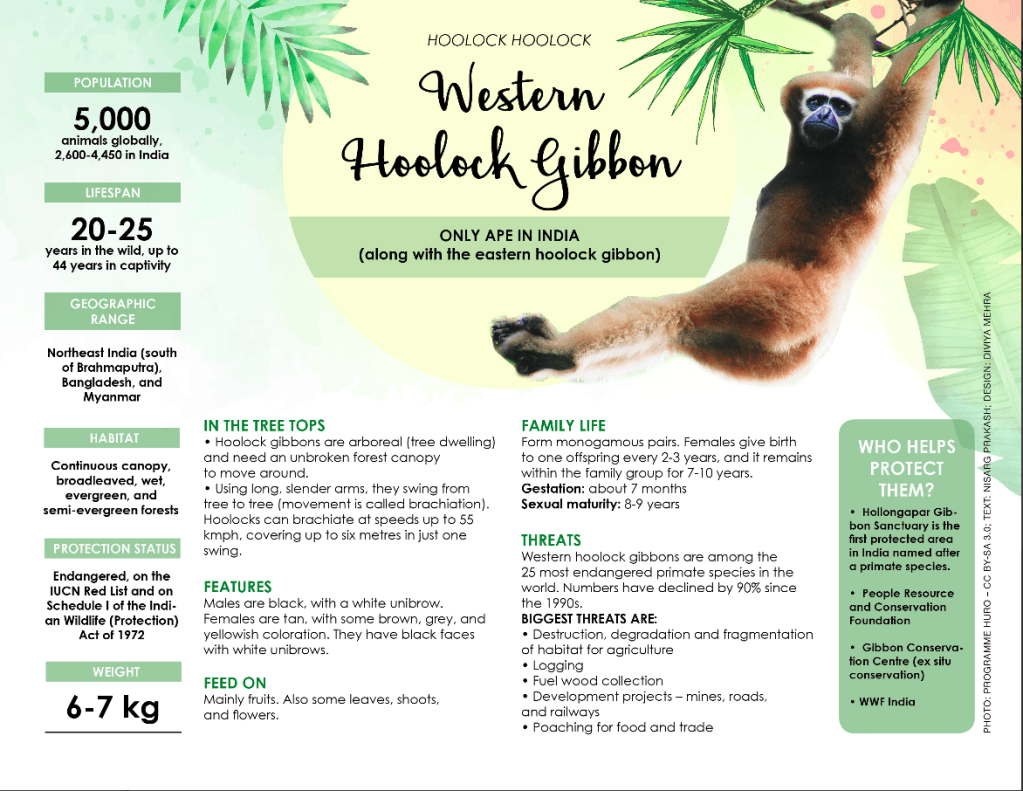
The Hoolock Gibbons are three species located in South Central Asia. They are the second largest of the gibbons after the Siamang. They have rings around their eyes and mouths giving them a mask-like appearance. Like other gibbon species they call to each other in regionalised accents, have long swinging arms and superior acrobatic skills.
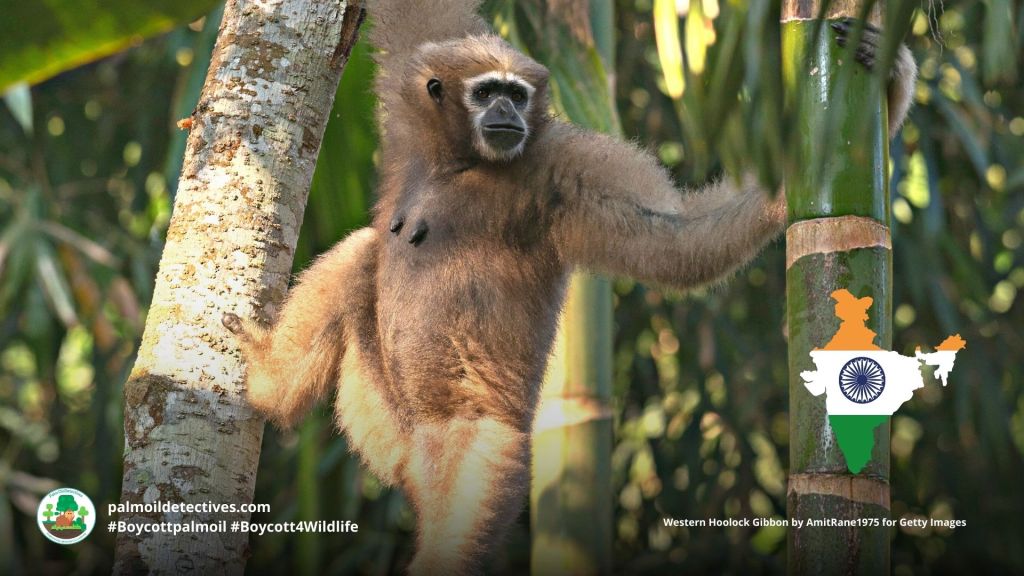
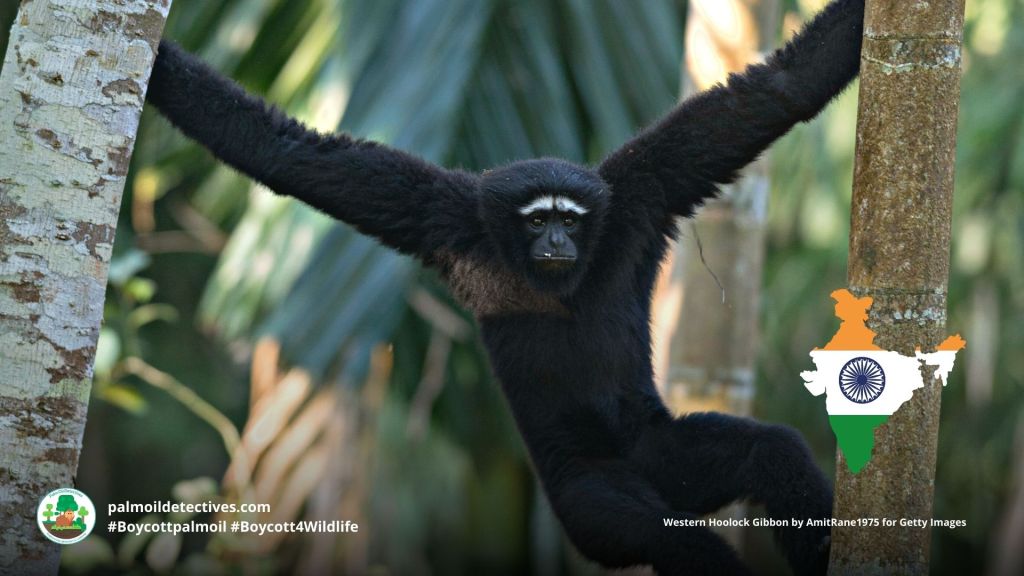
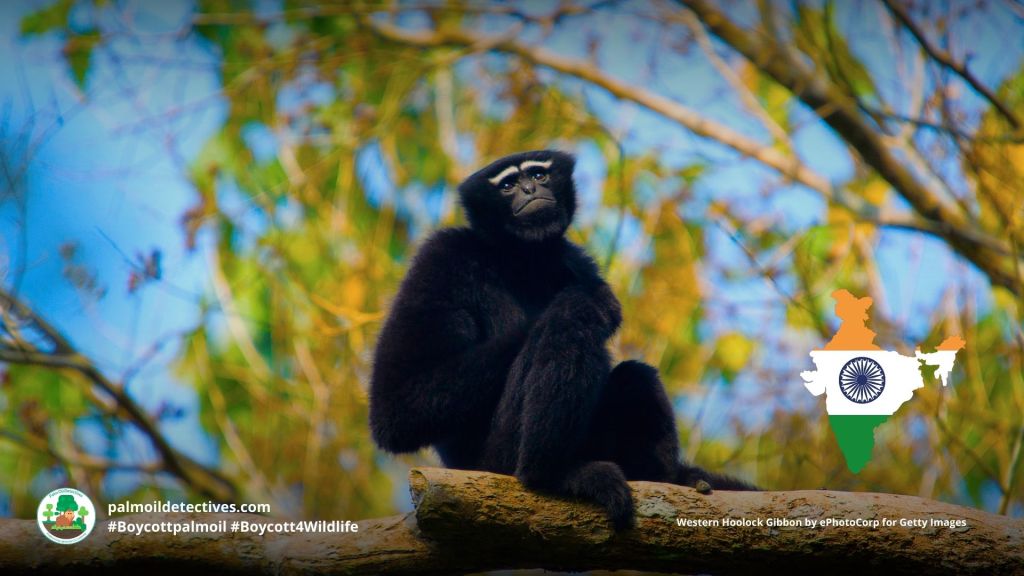
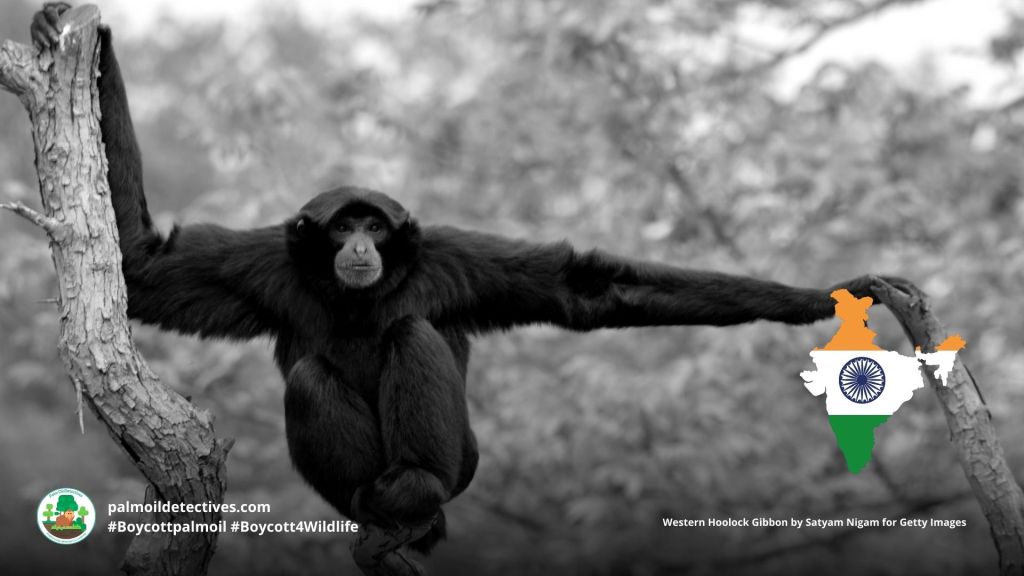

The Western Hoolock Gibbon is a forest-dweller that, depending on its locale, inhabits tropical evergreen rainforests, tropical evergreen and semi-evergreen forests, tropical mixed deciduous forests, and subtropical broadleaf hill forests. It has also been noted in bamboo “brakes” and hollock (Terminalia myriocarpa) and ajhar (Largerstroemia flosreginae) plantations. One gibbon pair in the Borajan Reserved Forest (north-east India) was observed to habitually descend from the trees to move over scrub and short bamboo especially while trying to reach the isolated food trees inside a village. This pair was found sleeping at heights of 0 m or less in bamboo clumps (Kakati 1997).
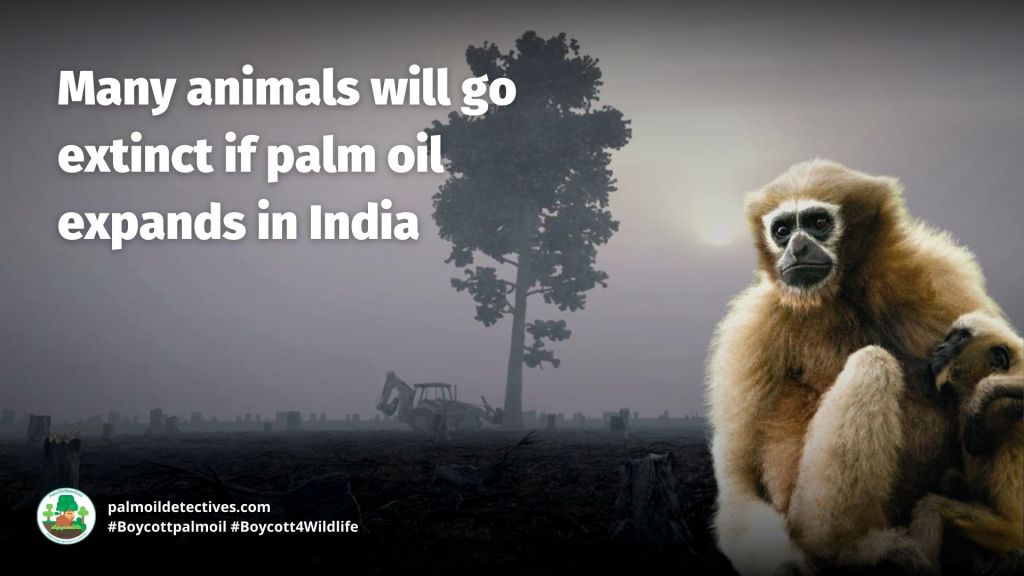
Although gibbons may be moving through, or sleeping in, bamboo forest or plantations, they cannot survive in monocultures such as palm oil (W. Brockleman pers. comm.)
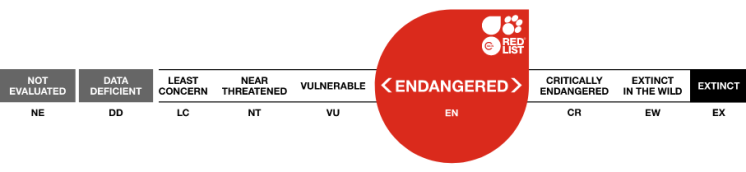
IUCN Red List
The Western Hoolock Gibbon remains Endangered, based upon a suspected population reduction of at least 50% over the period of three generations (2001-2015, 2016-2030 and 2031-2045), based on ongoing and significant levels of forest loss in Bangladesh, northeastern India and Myanmar, combined with ongoing and similarly significant levels of subsistence hunting and live capture for the pet trade throughout the species’ range.
Affecting all northeastern Indian primate populations are harvesting of bamboo for paper mills, oil mining and exploration, and coal mining, which deplete habitat and cause pollution and disturbance (Choudhury 1991). Habitat fragmentation and loss are major threats in India (Kakati 2000).
IUCN Red List
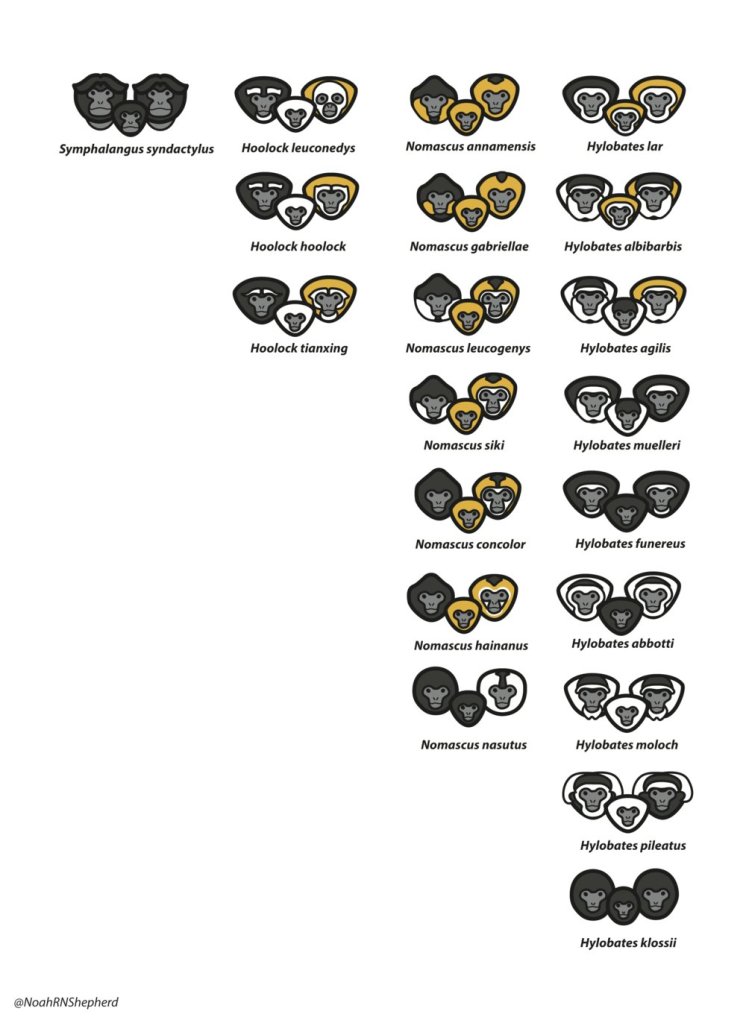
How to easily identify gibbons by Noah RNS Shepherd
Support the conservation of this species
Further Information
Brockelman, W, Molur, S. & Geissmann, T. 2019. Hoolock hoolock. The IUCN Red List of Threatened Species 2019: e.T39876A17968083. https://dx.doi.org/10.2305/IUCN.UK.2019-3.RLTS.T39876A17968083.en. Downloaded on 06 February 2021.
Sustain Round Glass: Hoolock Gibbons

How can I help the #Boycott4Wildlife?
Take Action in Five Ways
1. Join the #Boycott4Wildlife on social media and subscribe to stay in the loop: Share posts from this website to your own network on Twitter, Mastadon, Instagram, Facebook and Youtube using the hashtags #Boycottpalmoil #Boycott4Wildlife.
2. Contribute stories: Academics, conservationists, scientists, indigenous rights advocates and animal rights advocates working to expose the corruption of the palm oil industry or to save animals can contribute stories to the website.



3. Supermarket sleuthing: Next time you’re in the supermarket, take photos of products containing palm oil. Share these to social media along with the hashtags to call out the greenwashing and ecocide of the brands who use palm oil. You can also take photos of palm oil free products and congratulate brands when they go palm oil free.
4. Take to the streets: Get in touch with Palm Oil Detectives to find out more.
5. Donate: Make a one-off or monthly donation to Palm Oil Detectives as a way of saying thank you and to help pay for ongoing running costs of the website and social media campaigns. Donate here
Discover more from Palm Oil Detectives
Subscribe to get the latest posts sent to your email.
 Palm Oil Detectives
This very informative..can I share this?
LikeLiked by 1 person
It seems you’re only able to see it because you’re logged into wordpress but the site isn’t live yet and the link won’t work outside of WordPress! I really appreciate your support, absolutely once I’ve finished with the site…share away!
LikeLike