
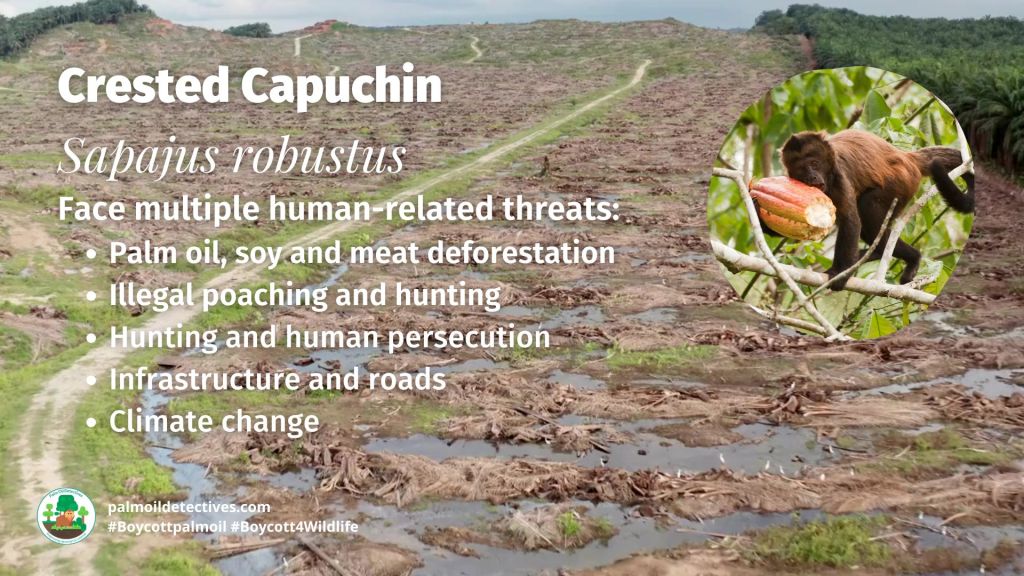
Crested Capuchin Sapajus robustus
IUCN Status: Endangered
Location: Brazil (southern Bahia, eastern Minas Gerais, Espírito Santo). In Brazil’s Atlantic Forest, where morning mist clings to ancient trees, the crested capuchin moves through their shrinking world with quiet intelligence.
The crested capuchin stands as one of Brazil’s most endangered primates. Their distinctive scarlet crests catch filtered sunlight as they navigate forest fragments between the Jequitinhonha and Doce rivers. With only 14,400 individuals remaining, these intelligent tool-users face extinction as palm oil plantations, soy agriculture, and urban sprawl devour their ancestral homes. #BoycottPalmOil #Boycott4Wildlife every time you shop and be #Vegan to help their survival.
Cheeky Crested #Capuchins are gregarious tool-using #monkeys, #endangered in #Brazil 🇧🇷 from #palmoil 🌴⛔️ meat 🥩🐮⛔️ and soy #deforestation and the illegal #pettrade 🏹 Help save them, when you shop #BoycottPalmOil #Boycott4Wildlife @palmoildetect https://palmoildetectives.com/2021/06/12/crested-capuchin-sapajus-robustus/
Main threats to Crested Capuchins are agriculture, urban sprawl, deforestation, increasing energy matrix, increasing road matrix habitat fragmentation, habitat reduction, hunting, harvesting and extensive areas of monoculture eucalyptus and pine.
IUCN red list
Appearance and Behaviour
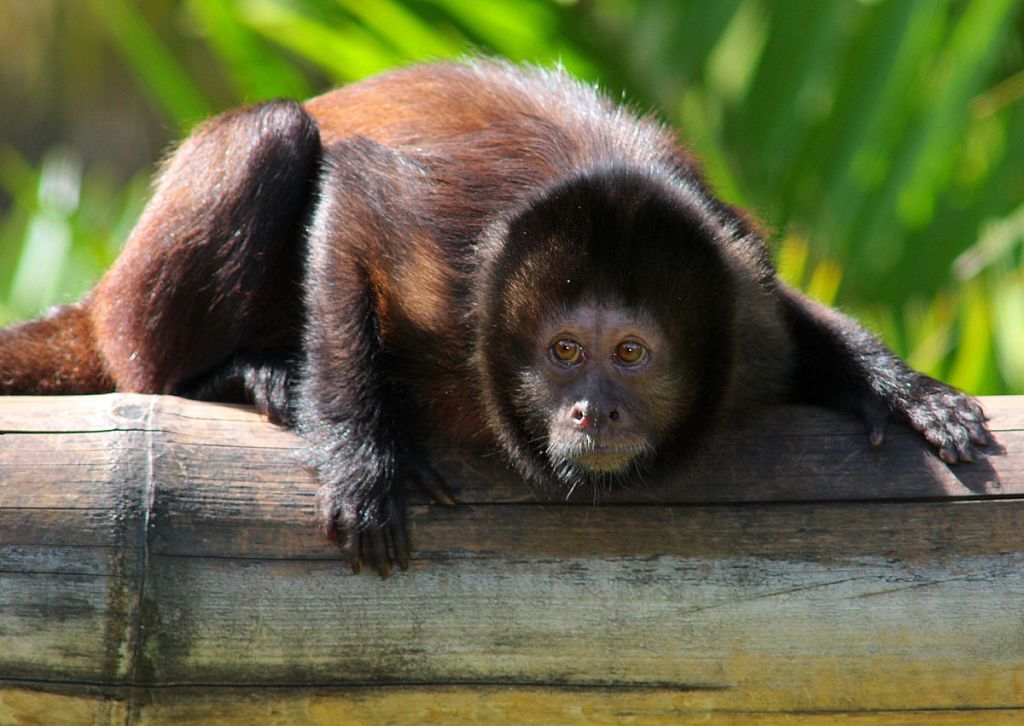
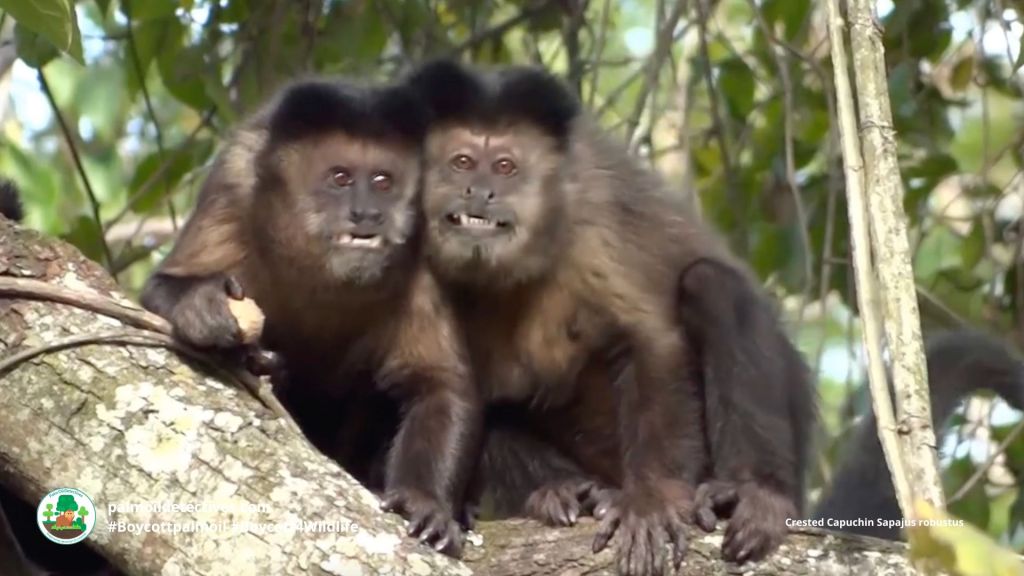
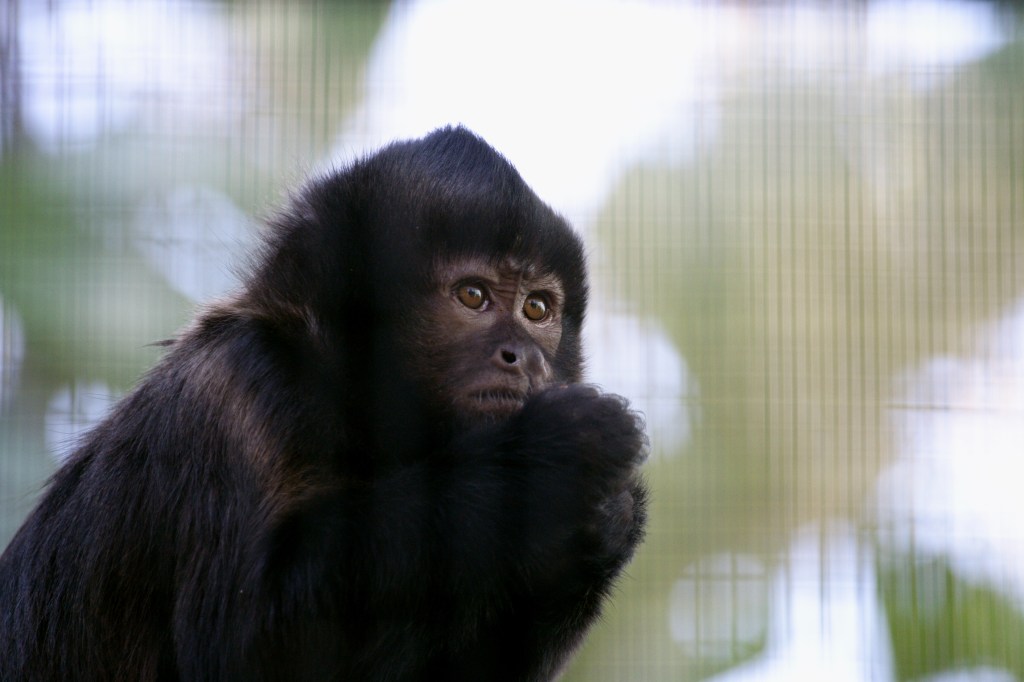
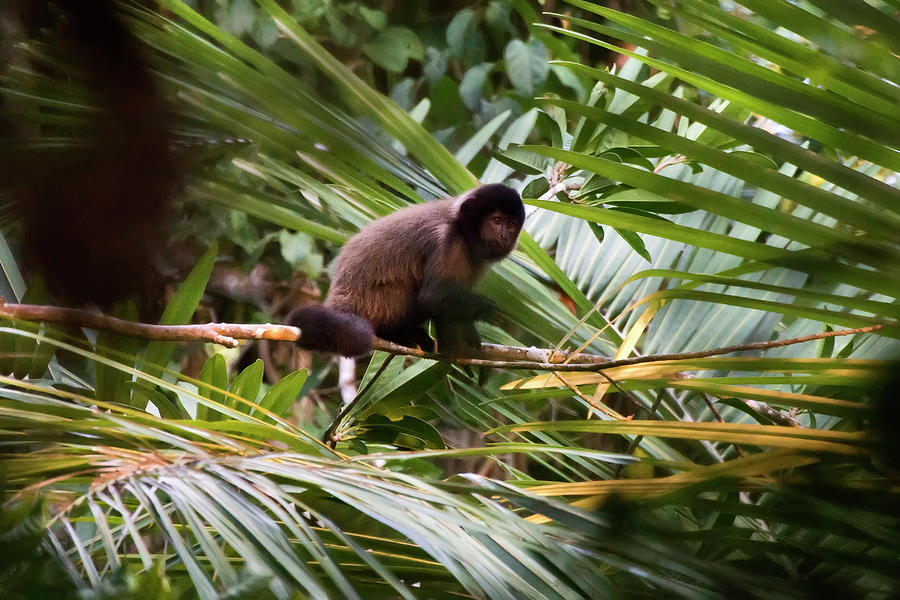
The Crested Capuchin’s most striking feature blazes against the Atlantic forest canopy —a conical crest of brilliant scarlet adorned with a black spot. Their crests may extend around their faces, creating elegant black beards. Their robust bodies measure 33-57 centimetres with tails reaching 40-47 centimetres. Males weigh up to 3.8 kilograms.
These remarkable and gregarious primates reveal intelligence through sophisticated tool use. They employ eleven distinct actions including hammering, probing, and sponging. The social structure of Crested Capuchins features linear hierarchies spanning both sexes, with dominant males commanding respect from highest-ranking females.

Diet
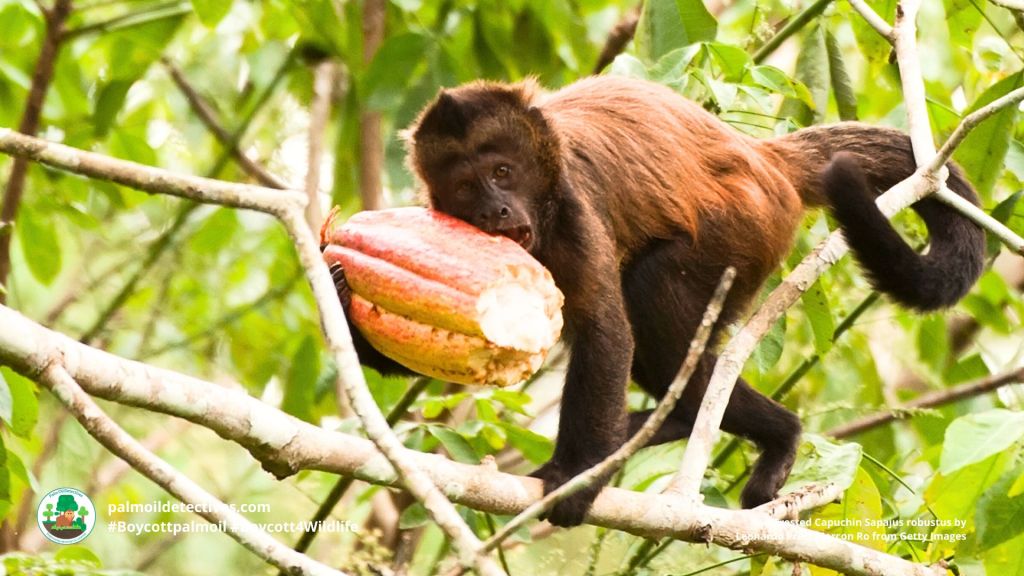
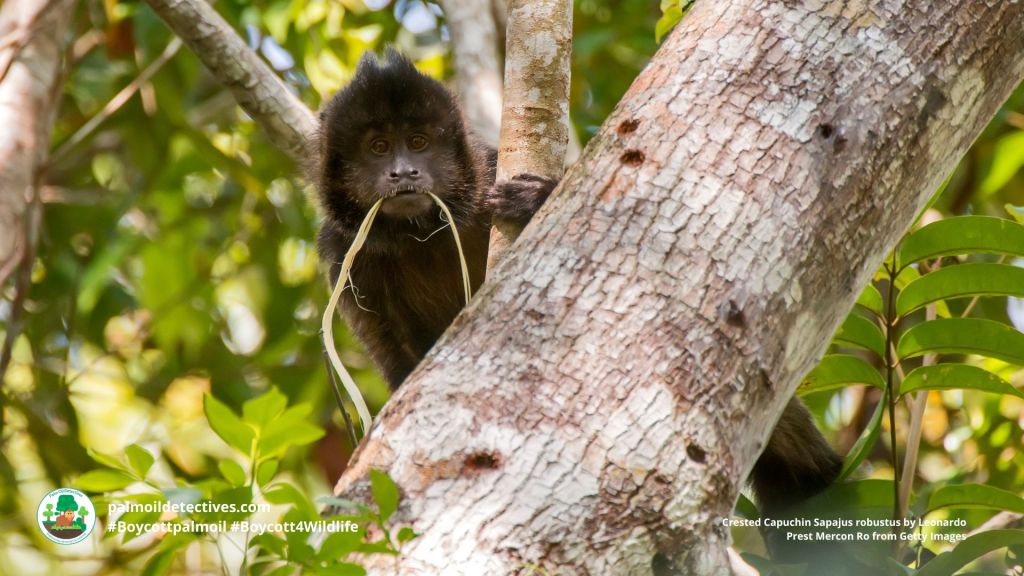
Crested capuchins are master foragers. As frugivore-insectivores, they feast on fruits from 56 native species, protein-rich arthropods, tender shoots and leaves, and occasionally small mammals. Their nimble little hands extract seeds from tough-shelled fruits with craftsperson precision. Crested capuchins maintain preferences for wild forest fruits even when exotic options become available, allowing them to maintain home ranges of approximately 120 hectares.
Reproduction and Mating
Groups of capuchins ranging from 12 to 27 individuals create dynamic communities. Males typically disperse from natal groups seeking new territories. Females remain within birth communities, creating matrilineal bonds spanning generations. Dominant males secure priority access to females during breeding seasons. Mothers teach essential foraging skills and social behaviours determining offspring survival prospects.
Geographic Range
Once ranging broadly between the Doce and Jequitinhonha rivers across Espírito Santo, Minas Gerais, and Bahia, crested capuchins now survive primarily in forest fragments. Climate projections predict significant habitat deterioration by 2070. Their extent of occurrence spans greater than 119,000 square kilometres, yet actual occupancy remains unknown as habitat fragments into smaller islands.
Threats
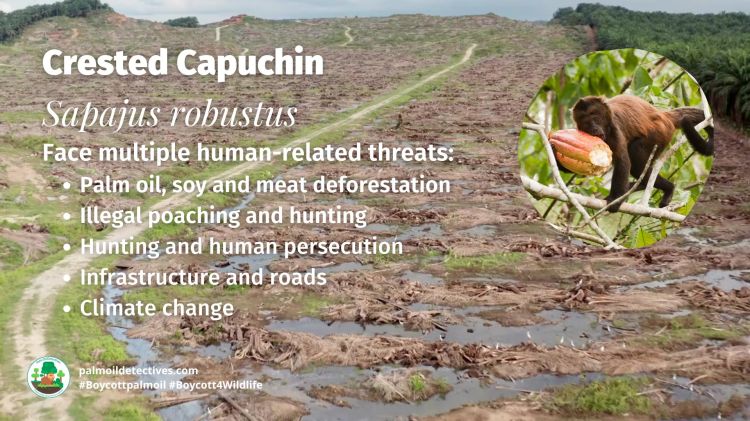
Cattle ranching, timber, palm oil and soy deforestation
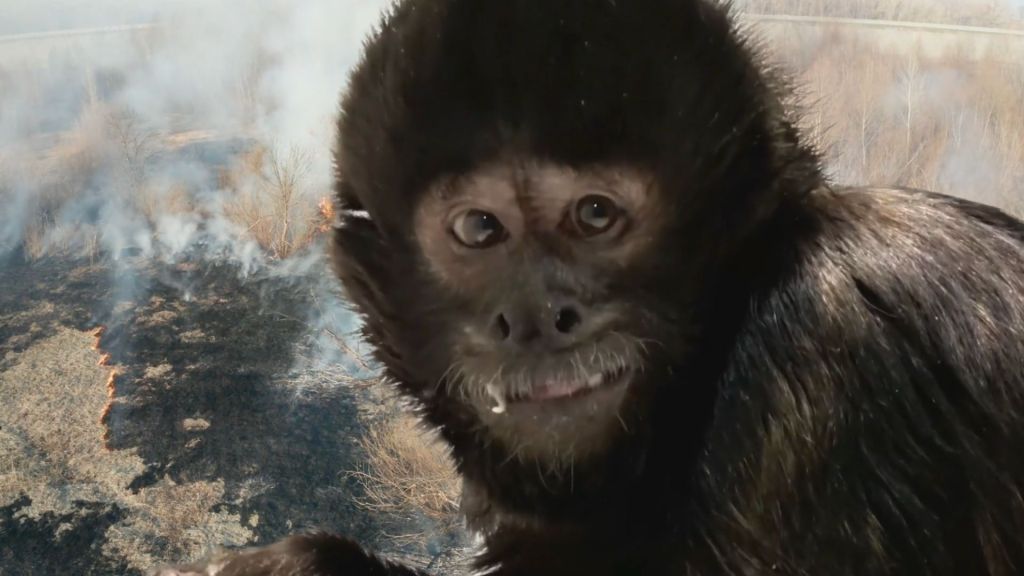
Palm oil plantations strip away multilayered canopy, replacing complex ecosystems with sterile monocultures. Soy cultivation and cattle ranching carve geometric scars across landscapes. Roads slice through forest fragments, creating barriers preventing genetic exchange. Energy infrastructure fragments habitat further. Urban sprawl consumes forest edges with relentless appetite. Pine and eucalyptus plantations replace native forest with fast-growing exotic trees providing neither food nor shelter.
Hunting and illegal wildlife trade
Hunters target crested capuchins for bushmeat near human settlements. The illegal pet trade tears infants from mothers’ arms, condemning them to stress, loneliness, and early death. Young capuchins suffer psychological trauma often proving fatal. Local communities facing economic hardship may turn to hunting as protein sources. Law enforcement struggles to patrol vast fragmented areas.
Climate change
Rising temperatures and shifting weather patterns disrupt seasonal rhythms. Prolonged droughts stress fruit trees, reducing food source abundance. Earlier or delayed fruiting seasons create mismatches between peak food availability and energy demand periods. Extreme weather events caused by climate change destroy habitat and force populations of crested capuchins into marginal areas.
Take Action!
Use your wallet as a weapon and #BoycottPalmOil #Boycott4Wildlife every time you shop. Reject soy-fed meat and adopt a vegan lifestyle protecting wild and farmed animals. Support indigenous-led protection and agroecology. Refuse products containing palm oil and meat, which is driving Atlantic Forest deforestation. #BoycottPalmOil #Boycott4Wildlife and go plant-based every time you shop.
FAQs
What is the current population of crested capuchins?
The total remaining population of Crested Capuchins is estimated at 14,400 individual monkeys based on census data in protected areas. Population densities range from 2.47 sightings per 10 kilometres in protected areas to 0.22 groups per 10 square kilometres in degraded habitats. Groups of capuchins typically consist of 12-15 individuals, though larger assemblages of up to 27 individuals show remarkable fluidity. The species faces ongoing population decline of at least 50% over three generations due to continuing habitat loss.
How long do crested capuchins live?
Related capuchin species typically live 15-25 years in the wild and potentially longer in captivity. Their longevity depends heavily on habitat quality, food availability, and human disturbance levels. Dominant individuals may enjoy better access to resources and greater longevity. However, ongoing deforestation and declining food availability may be reducing average lifespans of Crested Capuchins as individuals face increased stress and greater exposure to human-related mortality factors.
What are the main conservation challenges facing crested capuchins?
The primary challenge is relentless destruction of their Atlantic Forest habitat, with less than 12% of original forest remaining in small, isolated fragments. Palm oil plantations, soy cultivation for livestock feed, and cattle ranching continue converting forest into monocultures. Climate change compounds pressures by altering rainfall patterns, potentially making suitable habitat uninhabitable by 2070. Hunting for bushmeat and illegal pet trade further reduce numbers while disrupting social structures. Their restricted range makes them particularly vulnerable to local extinctions.
What are some interesting and unusual facts about crested capuchins?
Crested capuchins display remarkable intelligence through sophisticated tool use, employing eleven distinct actions including hammering, probing, and sponging. They modify tools for specific tasks and learn from watching companions. Their most distinctive feature is the brilliant scarlet conical crest adorned with a black spot. They show remarkable dietary flexibility, maintaining preferences for wild forest fruits even when exotic cultivated options become available. Their social groups can reach up to 27 individuals with remarkable fluidity, sometimes forming temporary subgroups.
Do crested capuchins make good pets?
Absolutely not. Crested capuchins suffer extreme stress, loneliness, and early death in captivity. These highly social primates have complex needs that cannot be met domestically. The illegal pet trade rips infants from mothers’ arms, causing severe trauma while removing breeding individuals from critically endangered populations. They require sophisticated social interactions, diverse natural foods, and extensive territories. Legal ownership is prohibited under Brazilian law, making possession illegal and unethical.
Further Information
Chiarello, A. G. (1999). Effects of fragmentation of the Atlantic forest on mammal communities in south-eastern Brazil. Biological Conservation, 89(1), 71-82. https://doi.org/10.1016/S0006-3207(98)00130-X
Fragaszy, D. M., Izar, P., Visalberghi, E., Ottoni, E. B., & de Oliveira, M. G. (2004). Wild capuchin monkeys (Cebus libidinosus) use anvils and stone pounding tools. American Journal of Primatology, 64(4), 359-366. https://doi.org/10.1002/ajp.20085
Martins, W. P., de Melo, F. R., Kierulff, M. C. M., Mittermeier, R. A., Lynch Alfaro, J. W., & Jerusalinsky, L. (2021). Sapajus robustus (amended version of 2019 assessment). The IUCN Red List of Threatened Species 2021: e.T42697A192592444. https://dx.doi.org/10.2305/IUCN.UK.2021-1.RLTS.T42697A192592444.en
Santos, P. M., Bocchiglieri, A., & Chiarello, A. G. (2023). Impacts of climate change and habitat loss on the distribution of the endangered crested capuchin monkey (Sapajus robustus). American Journal of Primatology, 85(11), e23548. https://doi.org/10.1002/ajp.23548
Steinberg, D. L., Lynch, J. W., & Cartmill, E. A. (2022). A robust tool kit: First report of tool use in captive crested capuchin monkeys (Sapajus robustus). American Journal of Primatology, 84(11), e23428. https://doi.org/10.1002/ajp.23428
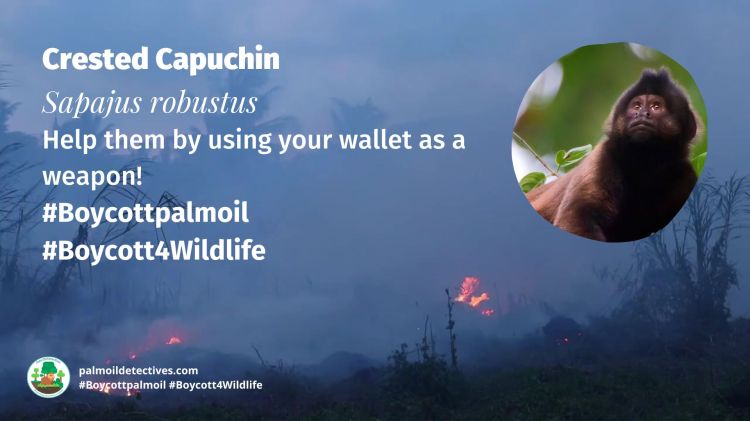
You can support this beautiful animal
There are no known conservation activities for this animal. Share out this post to social media and join the #BoycottPalmOil #Boycott4Wildlife on social media to raise awareness
Further Information
Donate to help orphaned capuchins that are rescued from traffickers. At Merazonia Wildlife Sanctuary
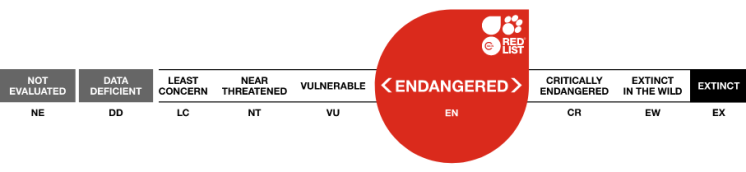
Martins, W.P., de Melo, F.R., Kierulff, M.C.M., Mittermeier, R.A., Lynch Alfaro, J.W. & Jerusalinsky, L. 2021. Sapajus robustus (amended version of 2019 assessment). The IUCN Red List of Threatened Species 2021: e.T42697A192592444. https://dx.doi.org/10.2305/IUCN.UK.2021-1.RLTS.T42697A192592444.en. Downloaded on 06 June 2021.


How can I help the #Boycott4Wildlife?
Take Action in Five Ways
1. Join the #Boycott4Wildlife on social media and subscribe to stay in the loop: Share posts from this website to your own network on Twitter, Mastadon, Instagram, Facebook and Youtube using the hashtags #Boycottpalmoil #Boycott4Wildlife.
2. Contribute stories: Academics, conservationists, scientists, indigenous rights advocates and animal rights advocates working to expose the corruption of the palm oil industry or to save animals can contribute stories to the website.



3. Supermarket sleuthing: Next time you’re in the supermarket, take photos of products containing palm oil. Share these to social media along with the hashtags to call out the greenwashing and ecocide of the brands who use palm oil. You can also take photos of palm oil free products and congratulate brands when they go palm oil free.
4. Take to the streets: Get in touch with Palm Oil Detectives to find out more.
5. Donate: Make a one-off or monthly donation to Palm Oil Detectives as a way of saying thank you and to help pay for ongoing running costs of the website and social media campaigns. Donate here
Discover more from Palm Oil Detectives
Subscribe to get the latest posts sent to your email.
 Palm Oil Detectives
One thought on “Crested Capuchin Sapajus robustus”