
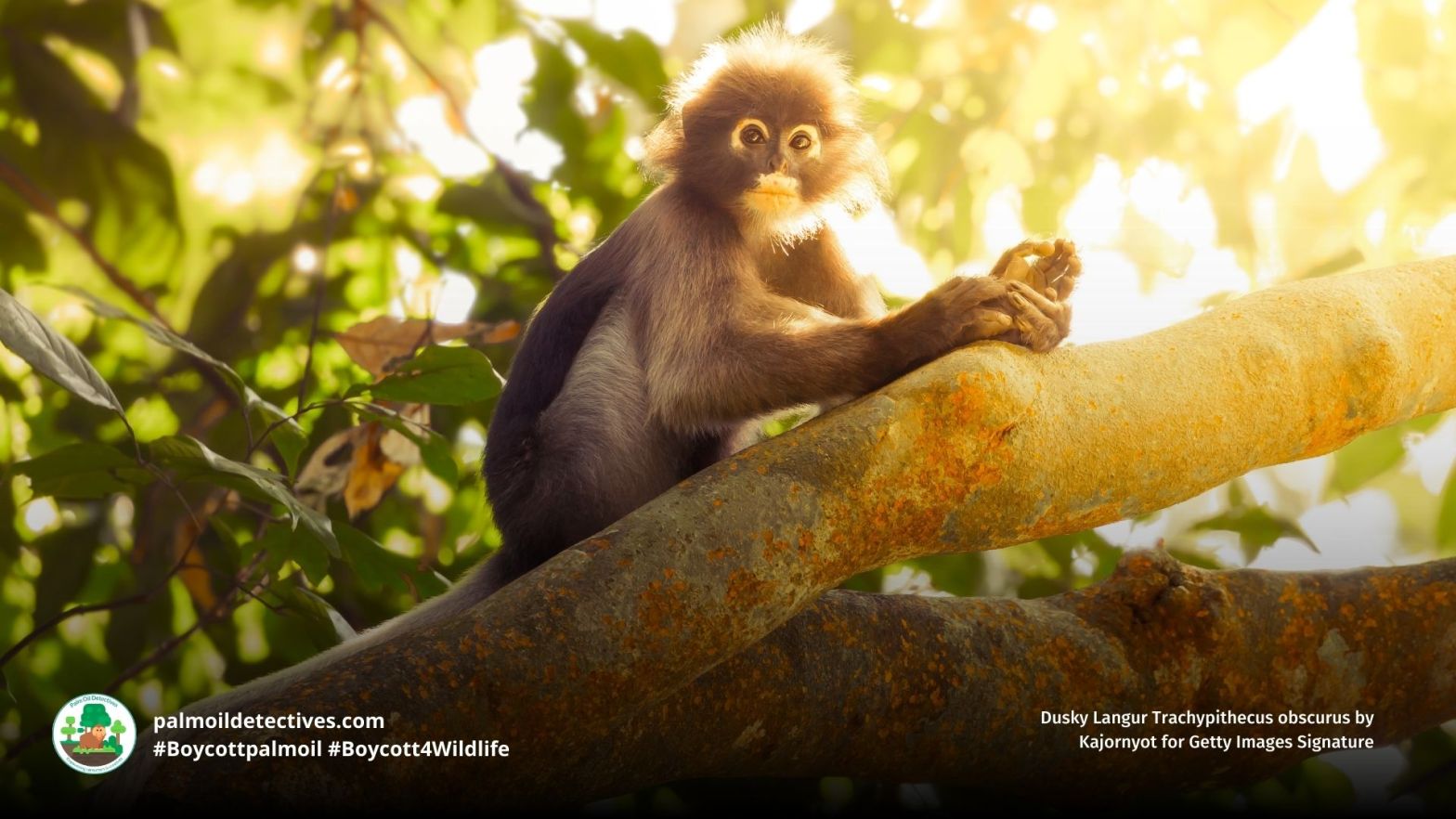
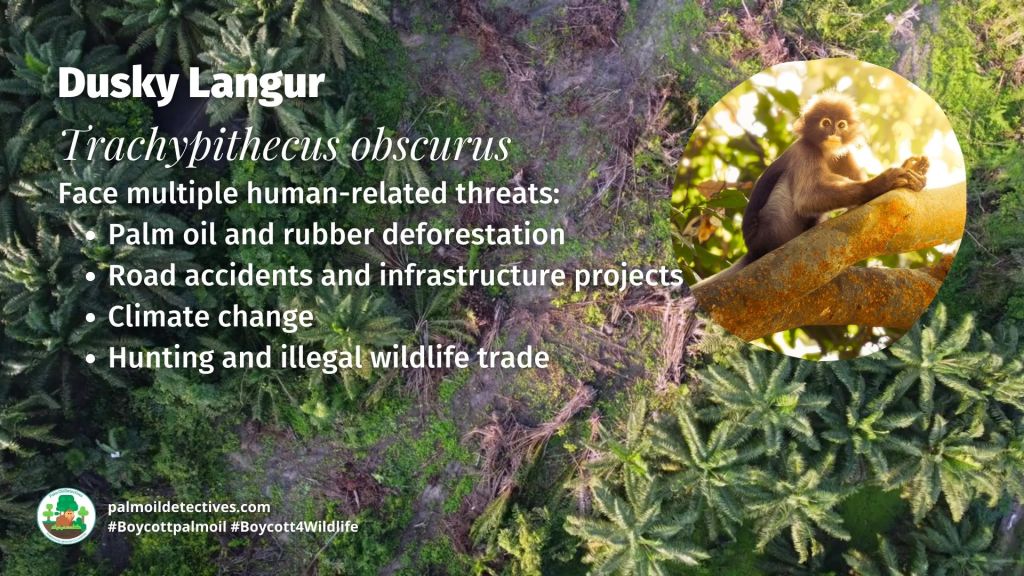
Dusky Langur Trachypithecus obscurus
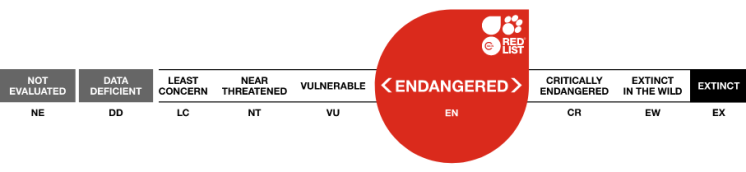
IUCN Status: Endangered
Location: Thailand, Malaysia, Myanmar
Found in dense tropical forests, mangroves, and limestone hills across the Malaysia Thailand, and southern Myanmar, these striking primates thrive in both primary and secondary forests.
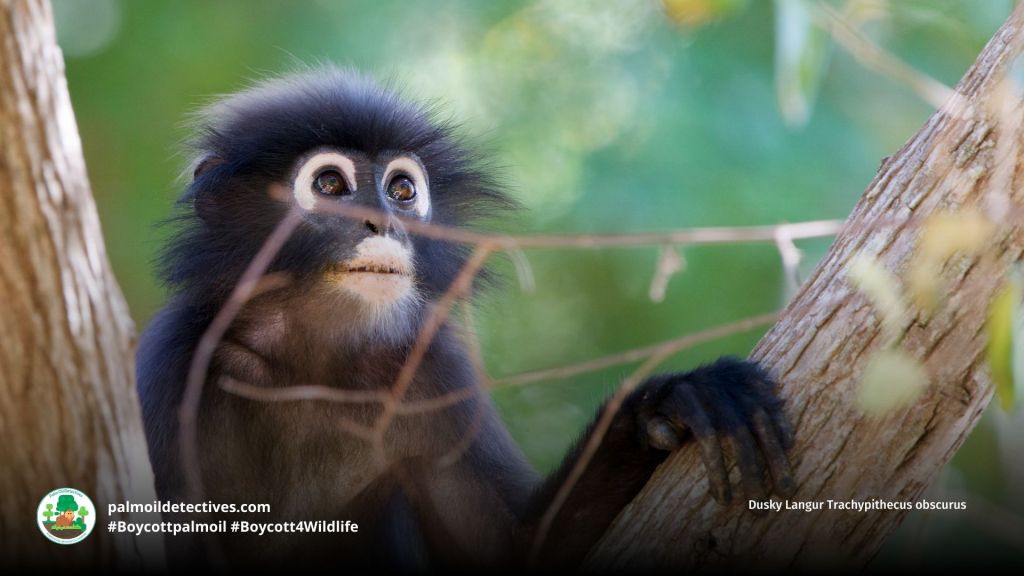
The dusky langur, also known as the spectacled langur or dusky leaf monkey, is one of Southeast Asia’s most charismatic primates. Living in #Thailand, #Myanmar and #Malaysia they have vivid white eye patches that resemble spectacles and a fluffy dark-grey coat, they cut an unmistakable figure against the rustling emerald canopy of the rainforest. These intelligent and agile #monkeys play a crucial role in their ecosystems by dispersing seeds, keeping forests healthy and thriving. Yet, deforestation for agriculture—particularly #palmoil, rubber, and durian plantations—alongside hunting and illegal #wildlifetrade, is pushing them closer to extinction. Without urgent intervention, the forests they call home will be razed, and their populations will continue to plummet. Use your voice to protect them—fight for their survival and #BoycottPalmOil #Boycott4Wildlife every time you shop
Dusky Langurs are beautiful #primates and excellent parents 🤎🐒 They’re threatened by #palmoil #deforestation in #Malaysia 🇲🇾 #Myanmar and #Thailand 🇹🇭 Help them when you shop and #BoycottPalmOil 🌴🧐 #Boycott4Wildlife in the supermarket @palmoildetect https://palmoildetectives.com/2021/06/27/dusky-langur-trachypithecus-obscurus/
Dusky #langurs have a vivid ‘goggles’ around their eyes 👀😻 The whole troop cares for young. #Endangered by #palmoil #deforestation and the illegal pet trade, help them to survive when u shop #BoycottPalmOil 🌴☠️🤮🧐🙊⛔️ #Boycott4Wildlife @palmoildetect https://palmoildetectives.com/2021/06/27/dusky-langur-trachypithecus-obscurus/





Appearance and Behaviour
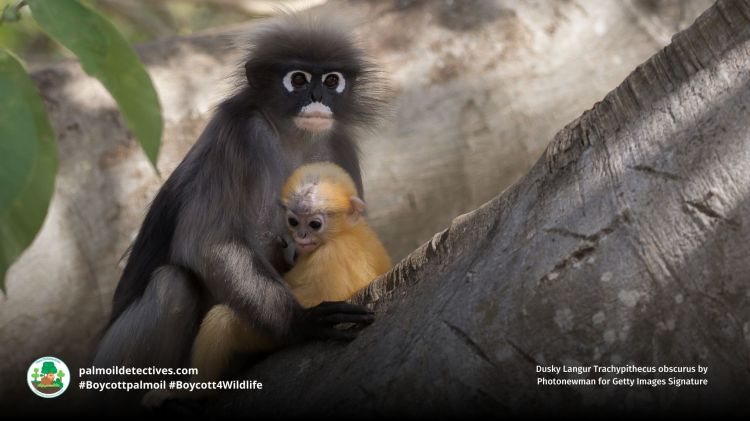
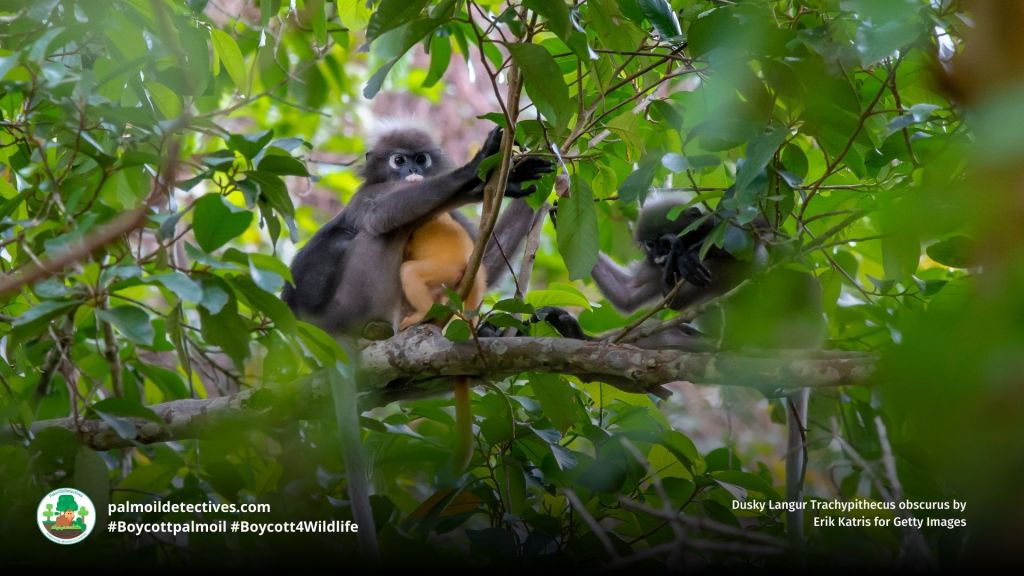
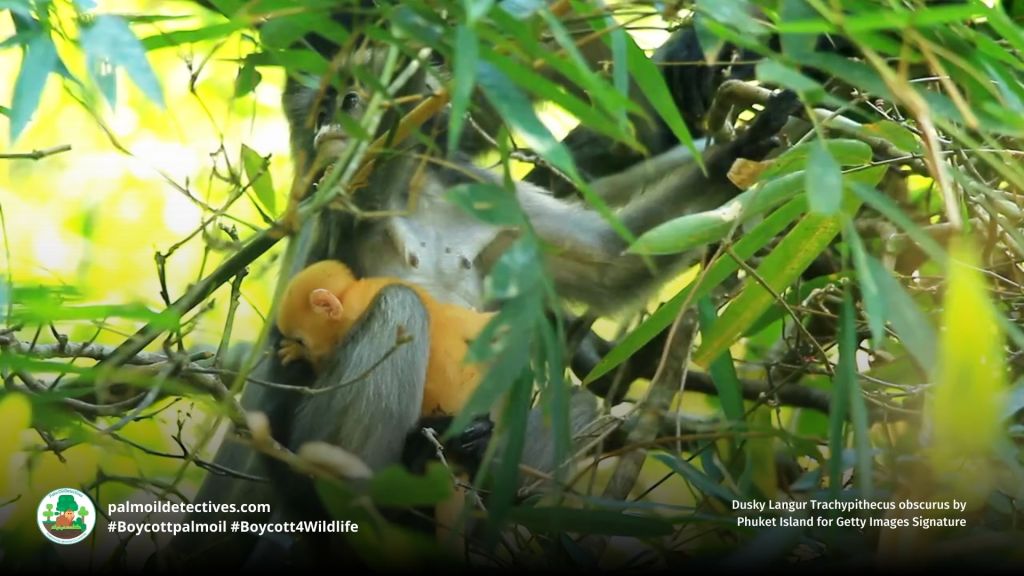
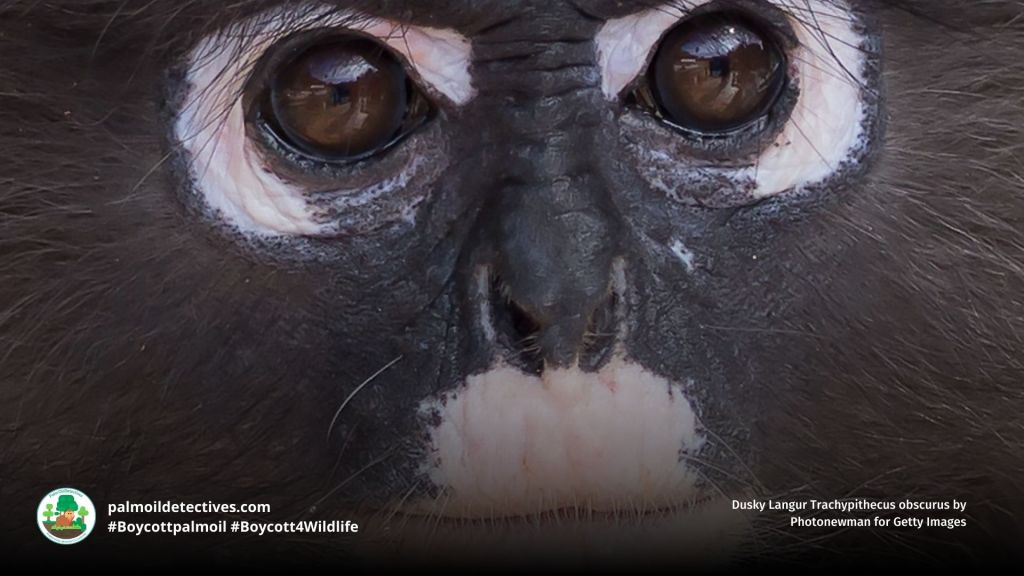
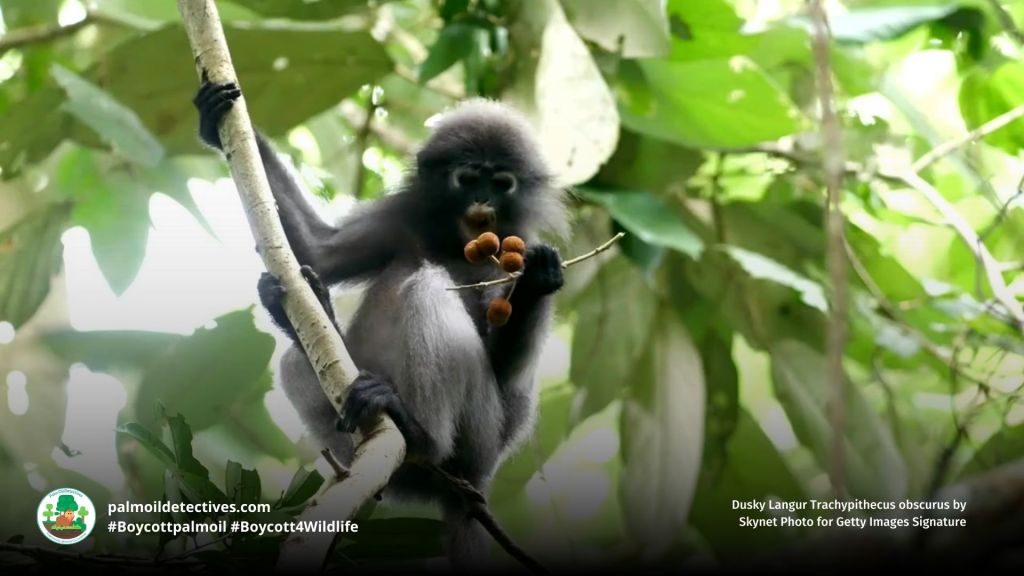
Dusky langurs are captivating primates, instantly recognisable by their dark fur, which can range from deep charcoal to soft grey, offset by their wide, white eye-rings and pink lips. Their expressive faces with white ‘goggles’ give them a perpetual look of surprise. Infants are born a vibrant orange—in stark contrast to their adult counterparts. This helps mothers quickly identify their young in the dense foliage. Over the first few months, their bright coats fade into the muted hues of adulthood.
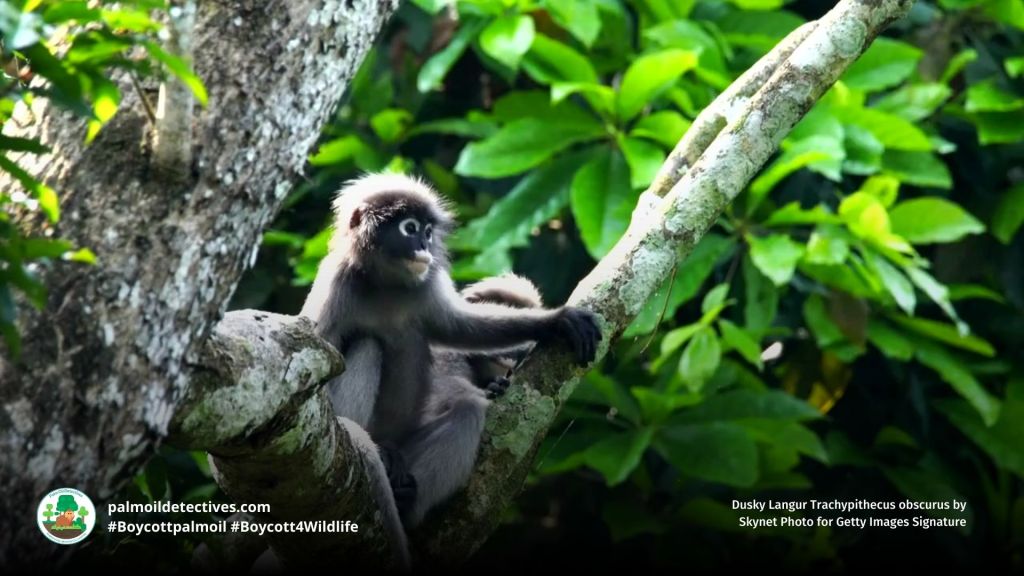
These highly social primates live in structured troops led by a dominant male, with multiple females and their offspring. They communicate using an array of vocalisations, from soft coos and grunts to high-pitched alarm calls warning of predators. Agile and acrobatic, they leap effortlessly between treetops, covering vast distances in search of food, rarely descending to the ground.
Threats
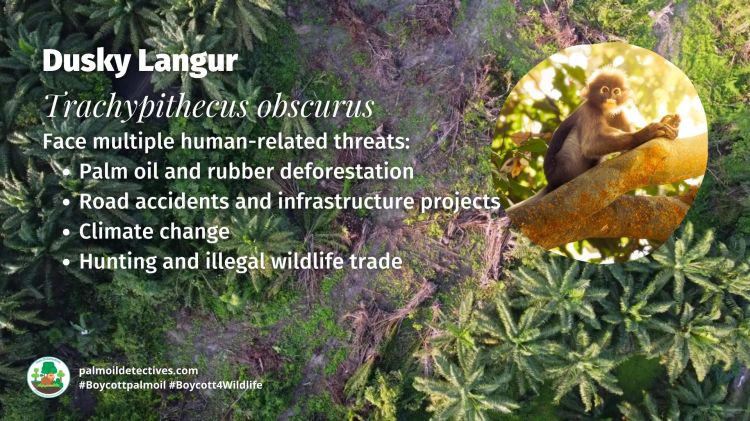
Hunting for food is a major threat, as is fragmentation, habitat loss and degradation due to expanding oil palm plantations, agriculture, urbanization, and touristic development (Groves et al. 2013). In Peninsular Malaysia the langurs are frequent victims of road-kill (Boonratana 2003).
IUCN Red list
Habitat Destruction
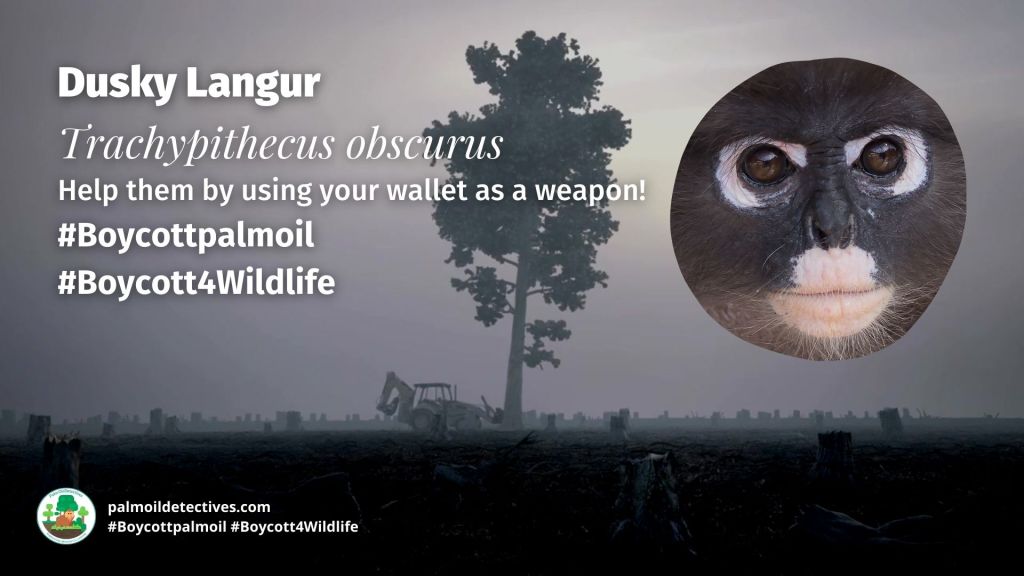
Massive deforestation for palm oil, rubber, and durian plantations has left dusky langurs stranded in shrinking patches of forest, unable to find food or shelter. Expanding urbanisation and infrastructure projects further fragment their habitat, increasing their vulnerability to starvation and predation.
Hunting and the Illegal Wildlife Trade
Despite legal protections, dusky langurs are still poached for the illegal pet trade. Adults are slaughtered, and their defenceless infants are ripped from their grasp, often dying from stress or malnutrition in transit. They are also hunted for bushmeat and traditional medicine.
Human-Wildlife Conflict
As forests disappear, these monkeys are forced to forage in farmlands, where they are viewed as pests and often shot or poisoned by farmers. Road accidents are another growing danger, with many langurs killed while attempting to cross highways that bisect their habitat.
Diet
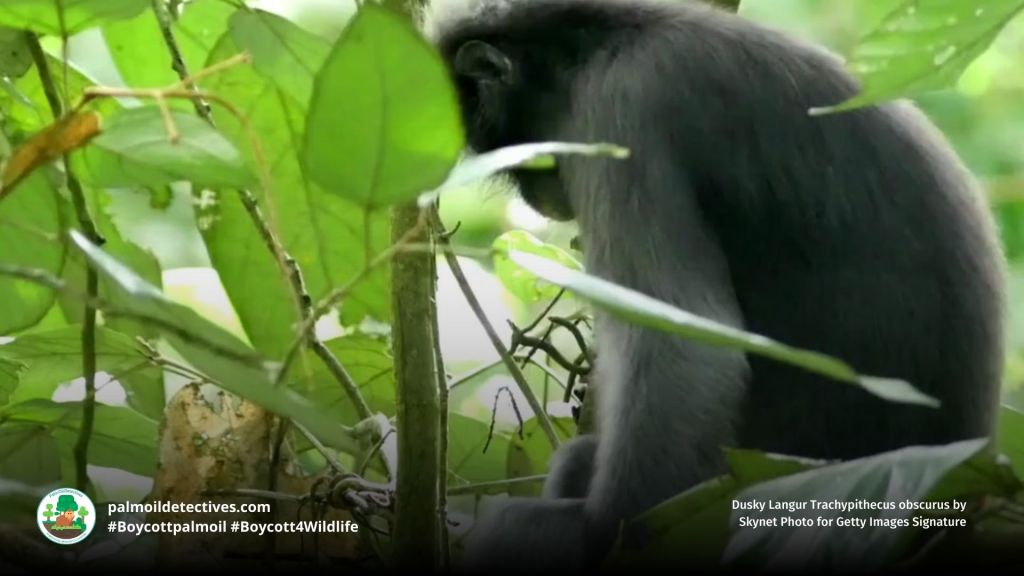
Dusky langurs are primarily folivores, with a specialised digestive system that allows them to break down tough, fibrous leaves. However, they also eat fruits, flowers, and buds when available. Individuals are able to take advantage of unripe fruit, which have chemical defenses, by the same means that they break down toxins in plant leaves, using the bacteria found in their digestive system (MacKinnon and MacKinnon 1980). Their foraging habits make them key seed dispersers, helping maintain the biodiversity of their ecosystems.
Reproduction and Mating
The Dusky Langur is often found in single female-multiple male groups or in multiple male and female groups of around 10-20 individuals. Females give birth to a single infant after a gestation period of approximately six months. Newborns, with their striking orange fur, are cared for by multiple females in the troop, a behaviour known as alloparenting.
Dusky Langur infants have bright orange fur with pink skin. The orange hair begins to shed 2nd week after birth. At around 3rd week old, black-greyish hair starts to appear on the forehead, tail, and limbs. By four months old, the baby’s head and back are black-greyish with only the cheeks showing remaining traces of yellow. Their early colouring as infants is thought to help mothers and other group members to identify and care for young more easily. Young dusky langurs remain dependent on their mothers for several months before fully integrating into the troop’s daily activities.
Geographic Range
These langurs inhabit forests throughout Thailand, Malaysia, and Myanmar. Their strongholds include Penang National Park and other protected areas, but outside these reserves, their numbers are rapidly declining due to human encroachment.
Dusky Langurs prefer to live in closed primary forests, but they can also be found in old-growth secondary and disturbed forests, plantations, urban areas, and parks. They are mostly tree dwelling and active throughout the day. They face many threats including hunting and deforestation for palm oil and other agriculture.
FAQs
Why are dusky langur babies orange?
The bright orange colouration of newborn dusky langurs is thought to help mothers and other group members identify and care for them more easily. The colour gradually fades to the dark grey coat of adulthood within a few months.
What are some interesting facts about dusky langurs?
• They are exceptional leapers, capable of jumping over 6 metres between trees.
• Their stomachs have multiple chambers, allowing them to digest tough leaves efficiently.
• Unlike many primates, they are relatively quiet, using body language and soft vocalisations to communicate.
What do dusky langurs eat?
Their diet primarily consists of leaves, but they also consume fruits, seeds, and flowers. By eating a wide range of plants, they help regenerate forests by dispersing seeds.
Are dusky leaf monkeys aggressive?
No, dusky langurs are typically gentle and non-aggressive. They prefer to avoid conflict and will flee from threats rather than confront them.
Why are dusky langurs endangered?
The biggest threats to their survival are deforestation for palm oil, illegal hunting, and the pet trade. Habitat destruction has forced them into smaller, isolated areas, making it harder for populations to recover.
What can people do to help dusky langurs?
Boycott palm oil in the supermarket. Support conservation organisations working to protect them. Campaign against the illegal wildlife trade by reporting sellers of exotic pets. Actively report sellers of animals on social media to the authorities.
Take Action!
Every time you shop, you have the power to make a difference. Say NO to palm oil and support ethical conservation and indigenous-led rewilding efforts. #BoycottPalmOil #Boycott4Wildlife
Help save this beautiful species from extinction
The Dusky Langur Project Panang
Further Information
Aifat, N. R., Abdul-Latiff, M. A. B., Roos, C., & Md-Zain, B. M. (2020). Taxonomic revision and evolutionary phylogeography of Dusky Langur (Trachypithecus obscurus) in Peninsular Malaysia. Zoological Studies, 59, e64. https://pubmed.ncbi.nlm.nih.gov/34140981/
Boonratana, R., Ang, A., Traeholt, C. & Thant, N.M.L. 2020. Trachypithecus obscurus. The IUCN Red List of Threatened Species 2020: e.T22039A17960562. https://dx.doi.org/10.2305/IUCN.UK.2020-2.RLTS.T22039A17960562.en. Downloaded on 26 June 2021.
Langur Project Penang. (n.d.). Dusky Langur Conservation and Research. Retrieved from Langur Project Penang.
Yap, J. L., Ruppert, N., & Fadzly, N. (2019). Activities, habitat use and diet of wild Dusky Langurs, Trachypithecus obscurus, in different habitat types in Penang, Malaysia. Journal of Sustainability Science and Management, 14(4), 71-85. Retrieved from ResearchGate.
Wikipedia Contributors. (2024). Dusky Leaf Monkey. Wikipedia, The Free Encyclopedia. Retrieved from Wikipedia.


How can I help the #Boycott4Wildlife?
Take Action in Five Ways
1. Join the #Boycott4Wildlife on social media and subscribe to stay in the loop: Share posts from this website to your own network on Twitter, Mastadon, Instagram, Facebook and Youtube using the hashtags #Boycottpalmoil #Boycott4Wildlife.
2. Contribute stories: Academics, conservationists, scientists, indigenous rights advocates and animal rights advocates working to expose the corruption of the palm oil industry or to save animals can contribute stories to the website.




3. Supermarket sleuthing: Next time you’re in the supermarket, take photos of products containing palm oil. Share these to social media along with the hashtags to call out the greenwashing and ecocide of the brands who use palm oil. You can also take photos of palm oil free products and congratulate brands when they go palm oil free.
4. Take to the streets: Get in touch with Palm Oil Detectives to find out more.
5. Donate: Make a one-off or monthly donation to Palm Oil Detectives as a way of saying thank you and to help pay for ongoing running costs of the website and social media campaigns. Donate here
Discover more from Palm Oil Detectives
Subscribe to get the latest posts sent to your email.
 Palm Oil Detectives