

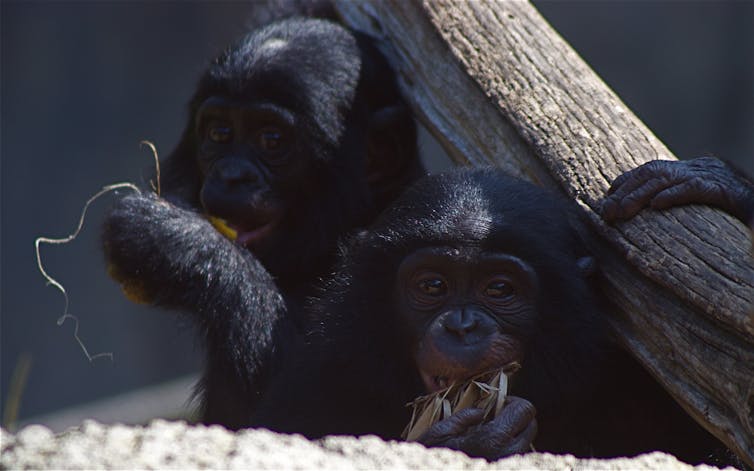
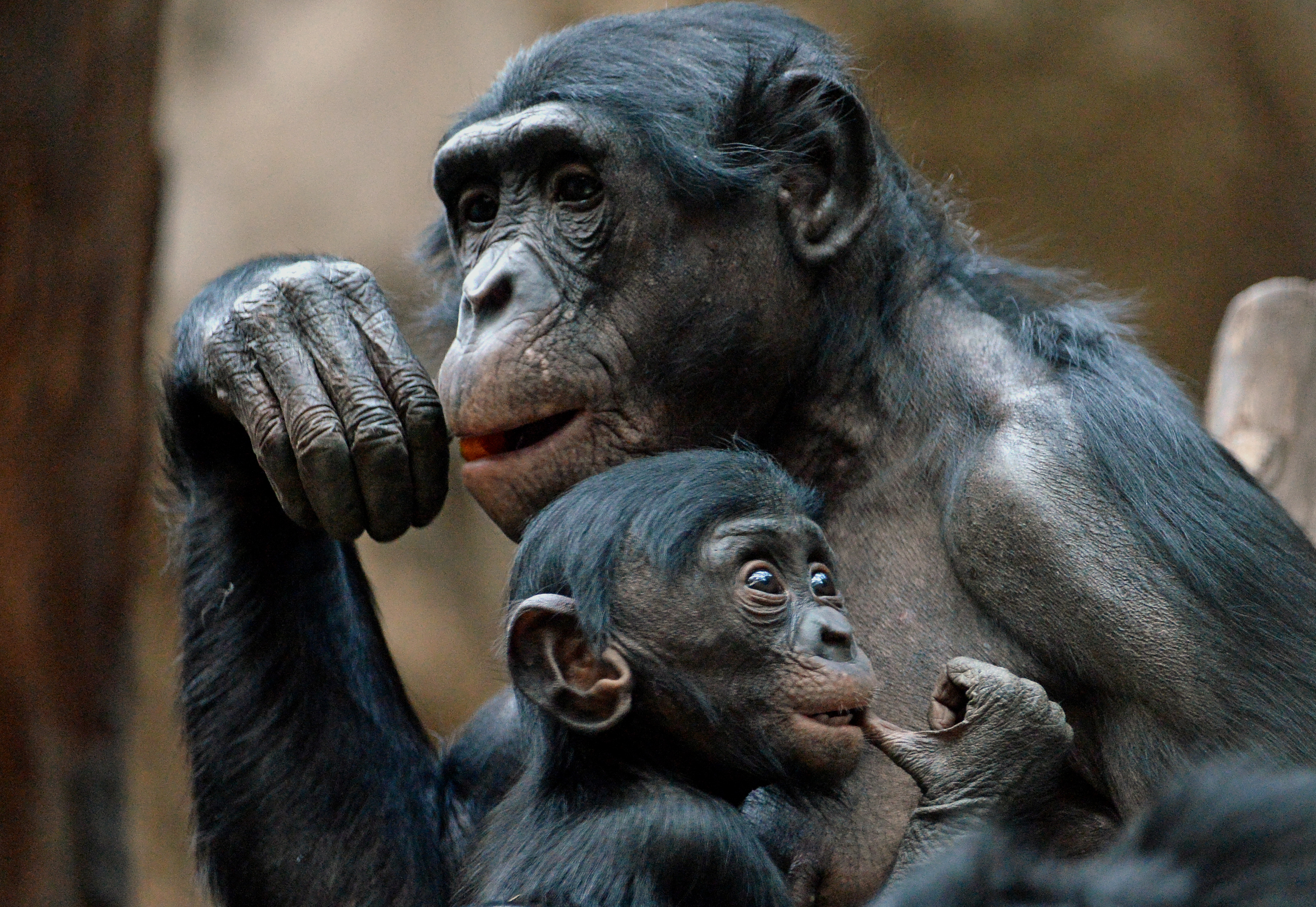
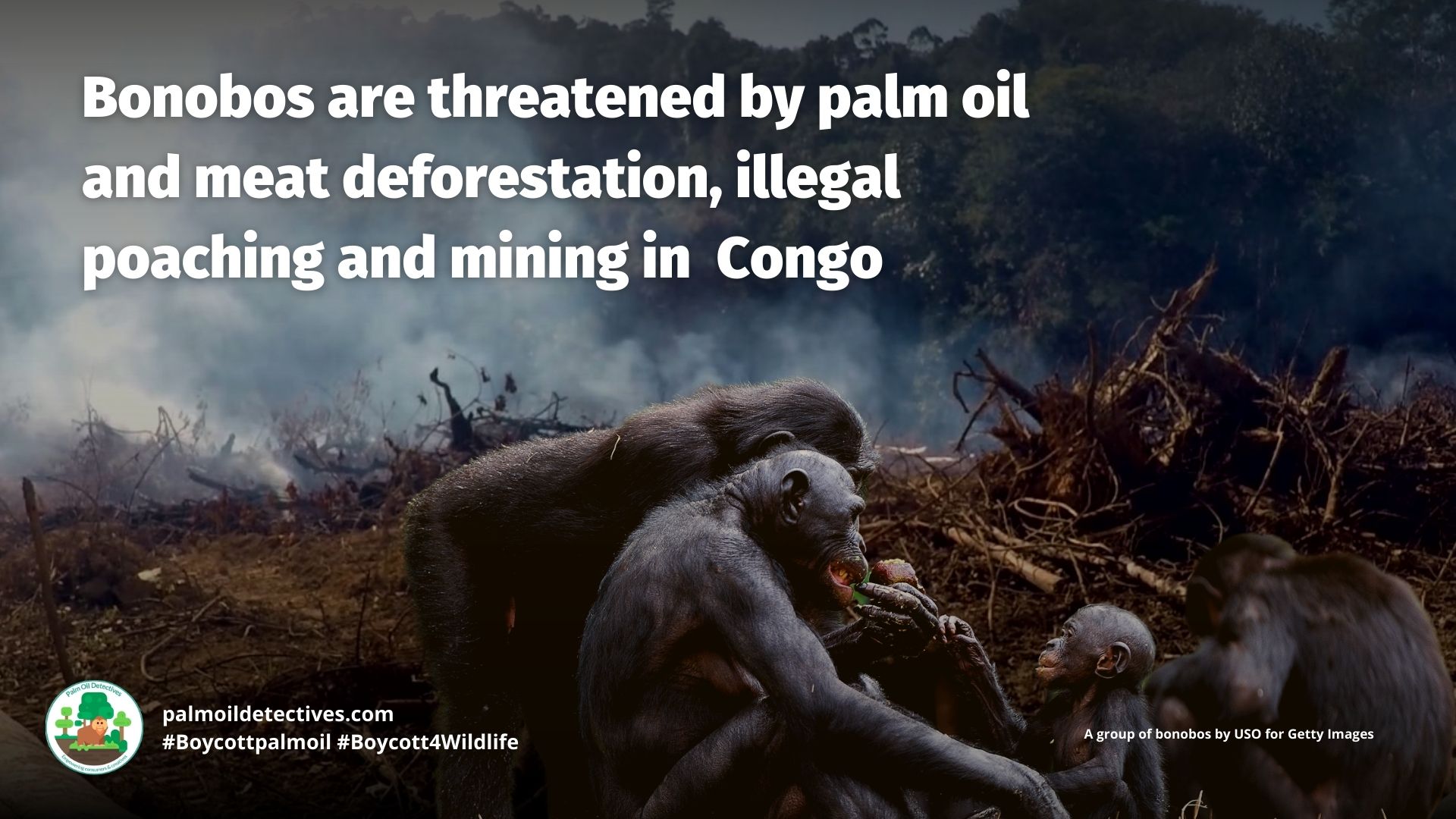
Wild #bonobos, like other Great #Apes and humans, spend long childhoods with their mothers, learning the social skills they need to function as emotionally stable members of their community. But orphaned bonobos at sanctuaries don’t have that kind of upbringing. Can they still learn the skills they need to get by in bonobo society? A study by Zanna Clay and Frans de Waal in PNAS found that the mother-infant bond is vital in developing healthy social and emotional skills. Help these mighty and intelligent primates when you shop and #BoycottPalmOil #Boycott4Wildlife
Just like #human babies, #bonobos reared by their mother are more socially and emotionally well adjusted compared to orphaned #bonobos #primates 🐵🐒🦍😻 #primatology Fight for them! #BoycottPalmOil #Boycott4Wildlife and be #Vegan 🥦🍅 @palmoildetect https://palmoildetectives.com/2021/09/29/for-primates-having-a-mother-helps-them-learn-social-skills/
A big step forward for understanding maternal care
Clay and de Waal did their work at Lola ya Bonobo in the Republic of Congo, which cares for bonobos orphaned by the illegal bushmeat trade.
There are mother-reared apes here, but also orphans who would have experienced the trauma of being torn (literally) from their dead mothers’ bodies, and seeing other members of their group slaughtered. And while they are raised by human surrogates, they lose that bond with their mother.
This forested sanctuary environment is a stark contrast to the laboratory where Harry Harlow and his team conducted early studies of maternal deprivation or “the nature of love” in Rhesus macaques (monkeys) in the 1950s.
In a horrific set of experiments, the tiny monkeys were removed from their mothers only hours after birth, and given access to artificial inanimate substitute mothers made of hard “wire” or softer terry towelling and foam. If frightened, the tiny monkeys would run to the cloth mother, but not the wire mother.
Not surprisingly, the monkeys in later years were psychologically damaged.
These studies reflect the poor understanding of maternal care and mental health even in humans in the 1940s and 1950s. Human orphanages or “foundling homes” at the time often provided little care, with no consistent caregiver or affection or attachment possible. Western child-rearing practices were often cold, detached and “hands-off” compared to today, where crying children are held and comforted.
How can we understand primates’ social development?
Three sets of behavioural data were analysed to investigate areas of social competence considered important in development of healthy humans or bonobos.
Thirty-six bonobo bystanders were included in the analysis: thirteen adults, eleven adolescents, six mother-reared juveniles and six orphan juveniles.
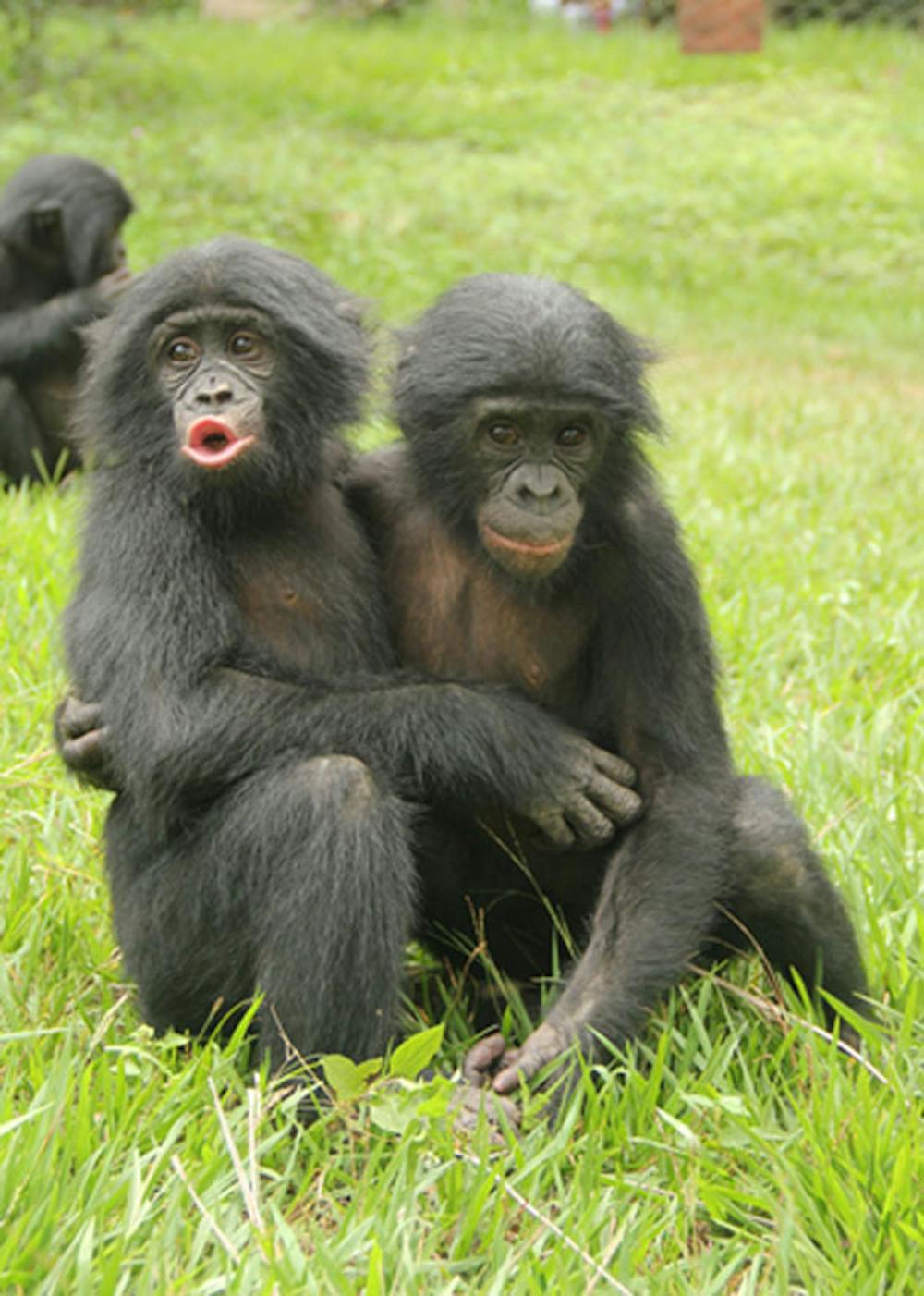
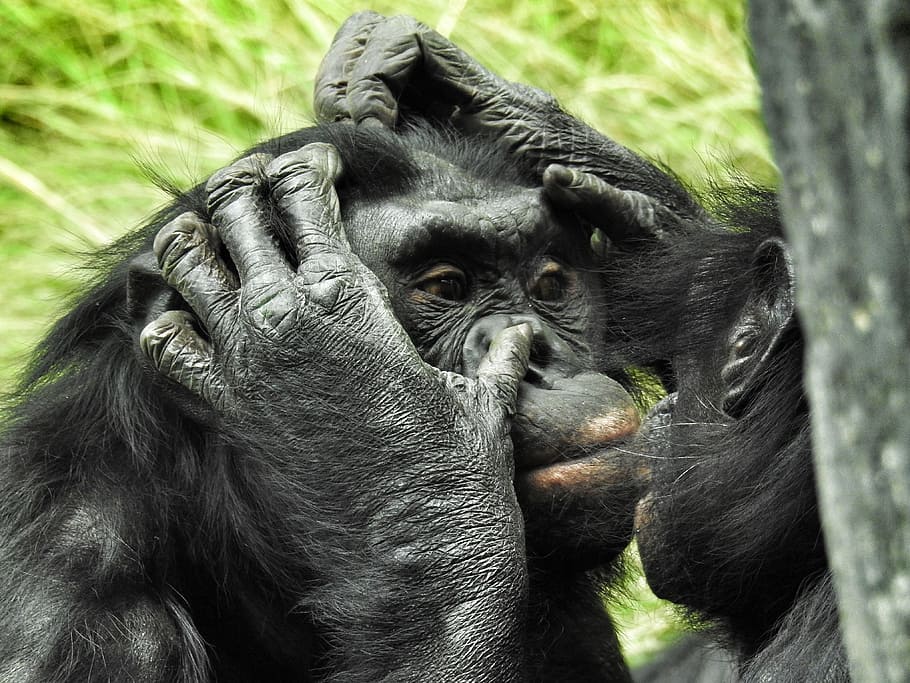
Responses to others’ distress were measured by recording instances when a bonobo bystander offered “affiliative consolation” (such as sitting close to, touching, grooming, playing, holding, patting) to a bonobo “victim” in distress (shown by screaming, whimpering, self-embracing). This distress usually happened after conflict or a tantrum.
Juvenile bystanders offered consolation more than either adults or adolescents, but the mother-reared youngsters were almost three times as likely to embrace or comfort a distressed friend or companion.
If a juvenile was within 3 metres of a “victim” needing comfort, the mother-reared juveniles tended to immediately approach and comfort, whereas the orphans’ immediate response was more avoidant – fleeing, moving away or screaming.
Overcoming self-distress was measured by seeing how long it took for “victim” bonobos to stop screaming and anxiously “self-scratching” after conflict. Although the orphans tended to scream for about 10 seconds (on average), the difference was not significantly different from mother-reared bonobos.
However, the orphan bonobos were about four times as likely to start screaming again (after stopping for 30 seconds or longer), and on average took more than 2 minutes to recover compared to about 30 seconds for the mother-reared juveniles.





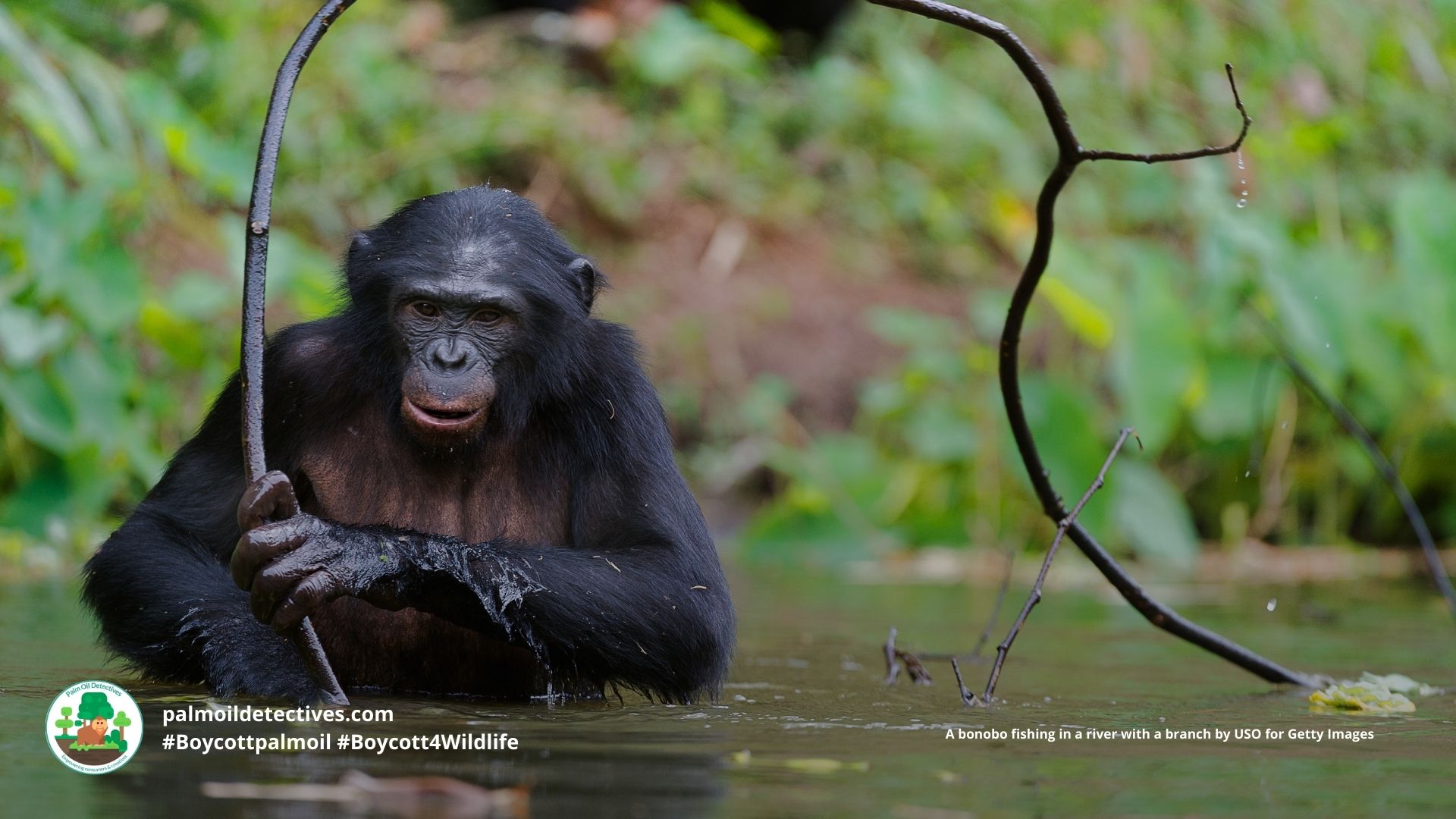
To measure sustained play and friendships, researchers recorded the length of social bouts of play. Mother-reared juveniles spent twice as long playing with others as orphans did.
Mother-reared bonobos also initiated play with others twice as often as orphans, and had three times as many friends. This suggests that the mother-reared youngsters were more sociable and playful than orphaned bonobos.
Having a mother helps
In short, the mother-reared bonobos were more socially and emotionally “competent” than orphan bonobos.
The results were used to construct a “composite sociality index” to see if general social competence was related to how the bonobos dealt with their own distress or that of others. The index or “best-fitting model” to account for the results was that juveniles who were high on sociality were more likely to console others, especially if the “victim” was a friend.
After reviewing this article, I am rushing home to give my daughter a big hug and to send an email of support to friends and colleagues who work with orphaned Great Apes in sanctuaries such as the one described here, tirelessly campaigning to stop the organised illegal trafficking and trade of Great Apes.
Carla Litchfield, Lecturer, School of Psychology, Social Work and Social Policy, University of South Australia
This article is republished from The Conversation under a Creative Commons license. Read the original article.
Take Action in Five Ways
1. Join the #Boycott4Wildlife on social media and subscribe to stay in the loop: Share posts from this website to your own network on Twitter, Mastadon, Instagram, Facebook and Youtube using the hashtags #Boycottpalmoil #Boycott4Wildlife.
2. Contribute stories: Academics, conservationists, scientists, indigenous rights advocates and animal rights advocates working to expose the corruption of the palm oil industry or to save animals can contribute stories to the website.




3. Supermarket sleuthing: Next time you’re in the supermarket, take photos of products containing palm oil. Share these to social media along with the hashtags to call out the greenwashing and ecocide of the brands who use palm oil. You can also take photos of palm oil free products and congratulate brands when they go palm oil free.
4. Take to the streets: Get in touch with Palm Oil Detectives to find out more.
5. Donate: Make a one-off or monthly donation to Palm Oil Detectives as a way of saying thank you and to help pay for ongoing running costs of the website and social media campaigns. Donate here
Discover more from Palm Oil Detectives
Subscribe to get the latest posts sent to your email.
 Palm Oil Detectives
One thought on “For primates, having a mother helps them learn social skills”