
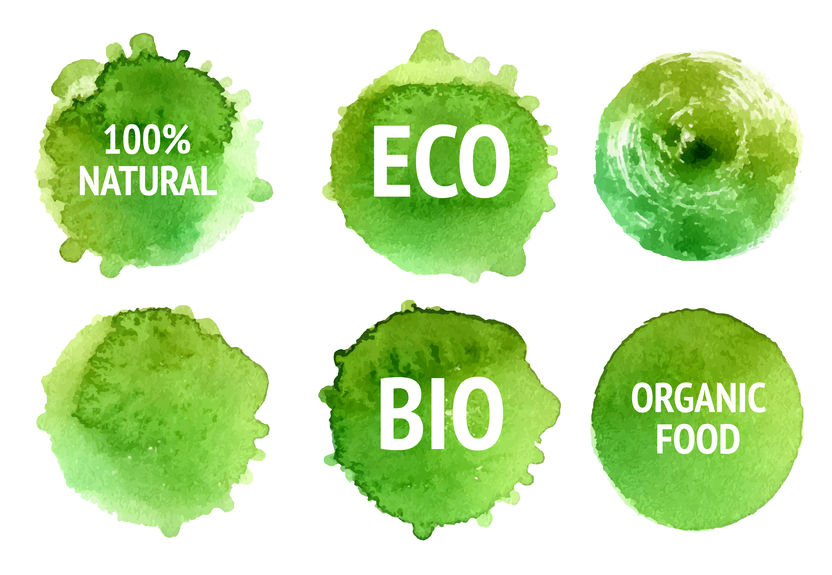
Claiming a brand or commodity is green based on unreliable, ineffective endorsements or eco-labels such as the RSPO, Forest Stewardship Council (FSC) or FairTrade coffee and cocoa.
Fake Labels
Most certifications and eco-lavels add a ‘green sheen’ to brands. Yet according to Greenpeace – even the most respected certifications in the world rarely have a positive environmental and social impact
Tweet this…
Greenwashing Tactic #4: Fake Labels: Claiming a brand or commodity is green by using fake certifications such as @RSPOtweets that does not stop #deforestation #landgrabbing We #Boycottpalmoil Boycott4Wildlife #FightGreenwashing
Tweet
Greenwashing: Fake Labels and fake certifications
Ecolabels are designed to reassure consumers that they are purchasing green or sustainable products.
In reality the environmental standards are no better than for non-certified goods.
Examples of this form of greenwashing
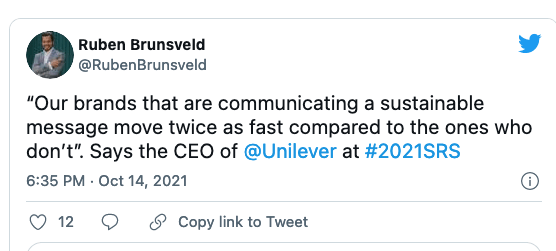
[Tweet above by Ruben Brunsveld now deleted] https://twitter.com/RubenBrunsveld/status/1448552977665507330?s=20

Reality: Eco-labels do not:
Stop deforestation
Stop human rights abuses
Stop indigenous landgrabbing
Improve the livelihood of smallholder farmers
Improve biodiversity in tropical regions
Certification does not equal the definition of deforestation free.
Mark Engel, Chief Supply Chain Officer, Unilever. Greenpeace: Destruction Certified

In 2022 Unilever put its money where it’s mouth is. Given the failings of so-called “sustainable” palm oil, they have decided to collaborate with biotech company Genomatica on as lab-based alternative to palm oil and fossil fuel derived cleaning and cosmetic ingredients.
The Vice President of the European Parliament Heidi Hautala does not trust the RSPO’s false and weak promise of “sustainable” palm oil
She replies to my conversation on Twitter to advise of this…

“No voluntary standards or industry schemes have done the job fully [of eliminating deforestation or human rights abuses]. That is why the game-changing EU CSDDD [Corporate Sustainability Due Diligence Directive] is mandatory. Certification is a useful tool but will not liberate the company from its duty of due diligence”
~ Heidi Hautala, Vice-President of the European Parliament and part of the the Human Rights and Democracy panel and Eco-Management and Audit Scheme (EMAS)
Certification has done much to cultivate the image that ‘green’ labelled commodities are ‘sustainable’
A 2019 World Health Organisation (WHO) report into the palm oil industry finds extensive greenwashing of human rights abuses, deforestation, air pollution and human health impacts


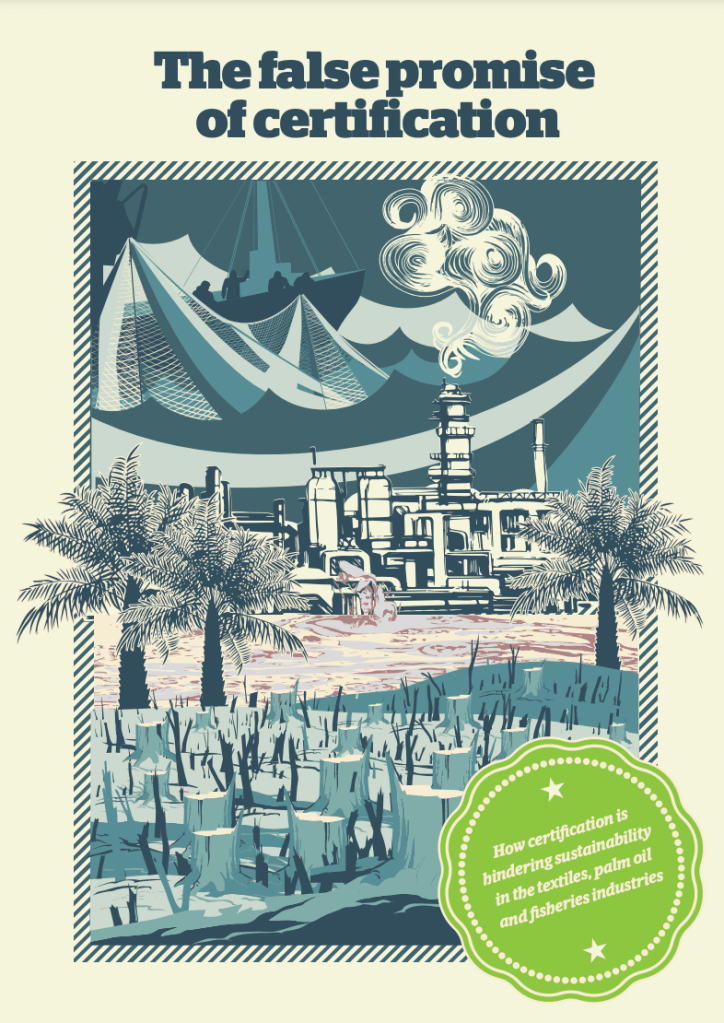
“While RSPO is often referred to as the best scheme in the sector, it
has several shortcomings; most notably, it allows the conversion of secondary forests and the draining
of peatlands, it has not prevented human rights violations and it does not require GHG emissions
reductions.“In light of this, we call for action to reduce demand for palm oil, such as
— The False Promise of Certification (2018) Changing Markets
ditching biofuels targets, as well as channelling new plantations into non-forested areas by putting in
place a strong moratorium on palm oil expansion to forests and peatlands. Most schemes in this sector
should be abolished in light of their failures on multiple fronts.”
“Rather than transforming the underlying conditions or practices that lead to abuse, Multi-Stakeholder Initiatives (MSI’s) risk embedding certain business-as-usual practices and creating a misperception that they are effectively addressing human rights concerns when they are not.
MSI Insight Report on Standards and Scope for Multi-Stakeholder Initiatives (MSIs) like the RSPO
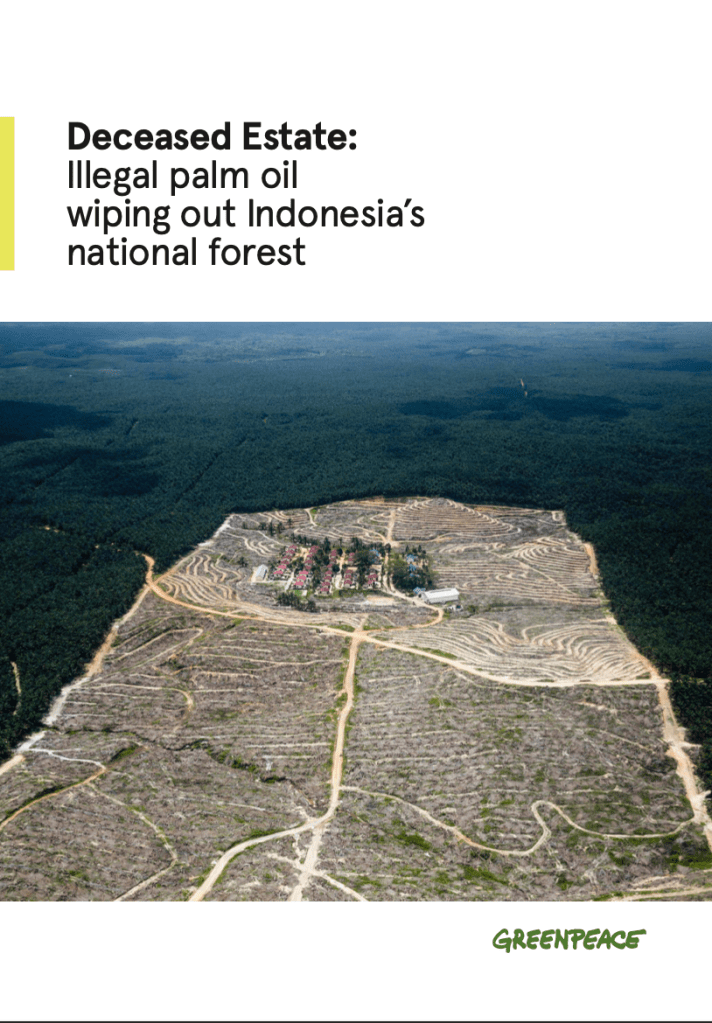
“Both Roundtable on Sustainable Palm Oil (RSPO) and Indonesian Sustainable Palm Oil (ISPO) schemes are failing to ensure that palm oil is being produced and traded legally, let alone sustainably. They cannot be relied upon by overseas consumers concerned about their role in the global chain that leads to deforestation.”
Deceased Estate: Illegal palm oil wiping out Indonesia’s national forest, Greenpeace Indonesia, Oct 2021
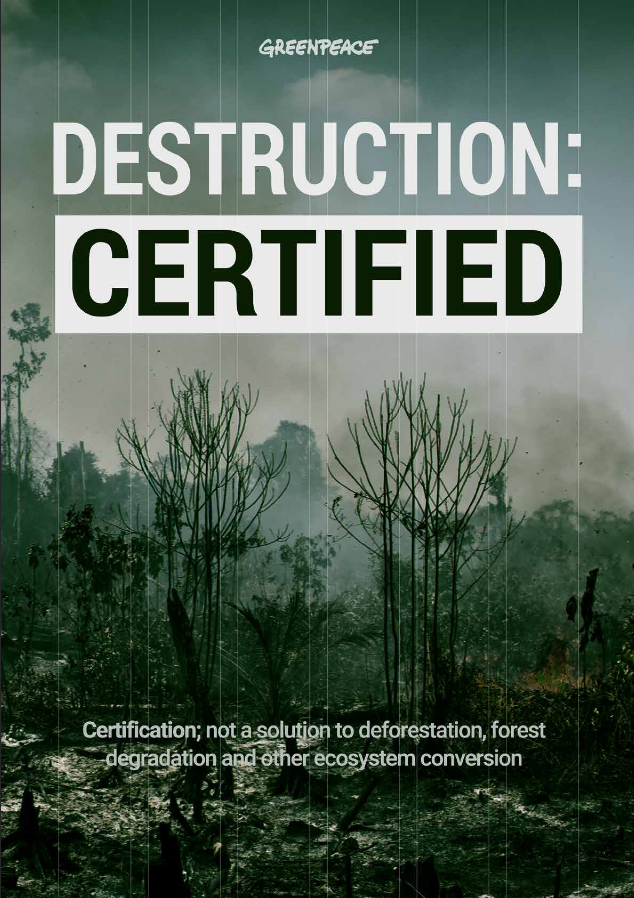
Instead of guaranteeing that deforestation and other harms are excluded from supply chains, certification with inadequate governance, standards and/or enforcement enables destructive businesses to continue operating as usual.
More broadly, by improving the image of forest and ecosystem risk commodities and so stimulating demand, certification risks actually increasing the harm caused by the expansion of commodity production.
Instead of being an effective forest protection tool, certification schemes thus end up greenwashing products linked to deforestation, ecosystem destruction and rights abuses.
Destruction Certified, Greenpeace 2021.
The analyses conducted in the study indicate that while certifications can help prevent greenwashing, they can also contribute to eco-opportunism. The theory of eco-opportunism warns that this can lead to free riding and greenwashing, where products are falsely advertised as sustainable but fail to meet certified standards.
Nygaard, A. (2023). Is sustainable certification’s ability to combat greenwashing trustworthy? Frontiers in Sustainability, 4, Article 1188069. https://doi.org/10.3389/frsus.2023.1188069
RSPO’s complaint procedures are lengthy and ineffective; the high incidence of substandard audits (up to 60%) indicates a lack of quality control in the system. Even if complaints are brought to the complaints mechanism, the RSPO member can decide to leave the RPSO scheme without negative con- sequences. This could disincentivize the RSPO scheme from sanctioning members over complaints in order to minimize its risk of losing members.
In some cases, the same auditors investigated complaints against companies that they had previously audited themselves. This represents a clear conflict of interest and therefore compromises the complaints mechanism.
There is also a lack of transparency in the awarding of contracts, certification processes, audit reports or the withdrawal of a contract or certification or accreditation. This lack of transparency largely shields the actors from scrutiny by civil society.
More about the lead auditor for FSC and the RSPO and technical advisor for Orangutan Land Trust: Bart Van Assen

Greenwashing Tactic 10: Gaslighting, Harassment, Stalking and Threats
Gaslighting, harassing or stalking vocal critics of a brand, commodity or industry certification in order to silence these critics – this is greenwashing!

Greenwashing Tactic 9: Partnerships, Sponsorships and Research Funding
Greenwashing Tactic 9. Corporations use NGOs, Zoo partnerships, sponsorships, and research funding to give an industry or brand a ‘green image.
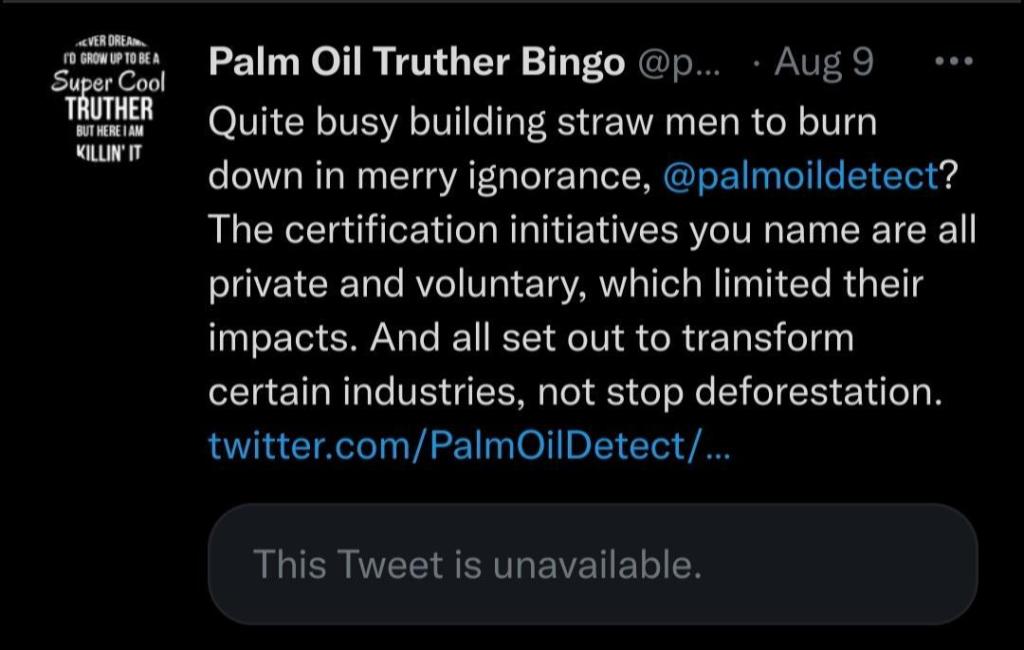
Tweet from Bart Van Assen, former lead auditor for the RSPO and HCV admitting that the main goal of the RSPO, FSC and other certification initiatives is not to prevent deforestation. (Bart has formerly used @palmoiltruther on Twitter but now changes between @vliegerholland @Forest4Apes or @Apes4Forests depending on times when he attempts to conceal his identity).
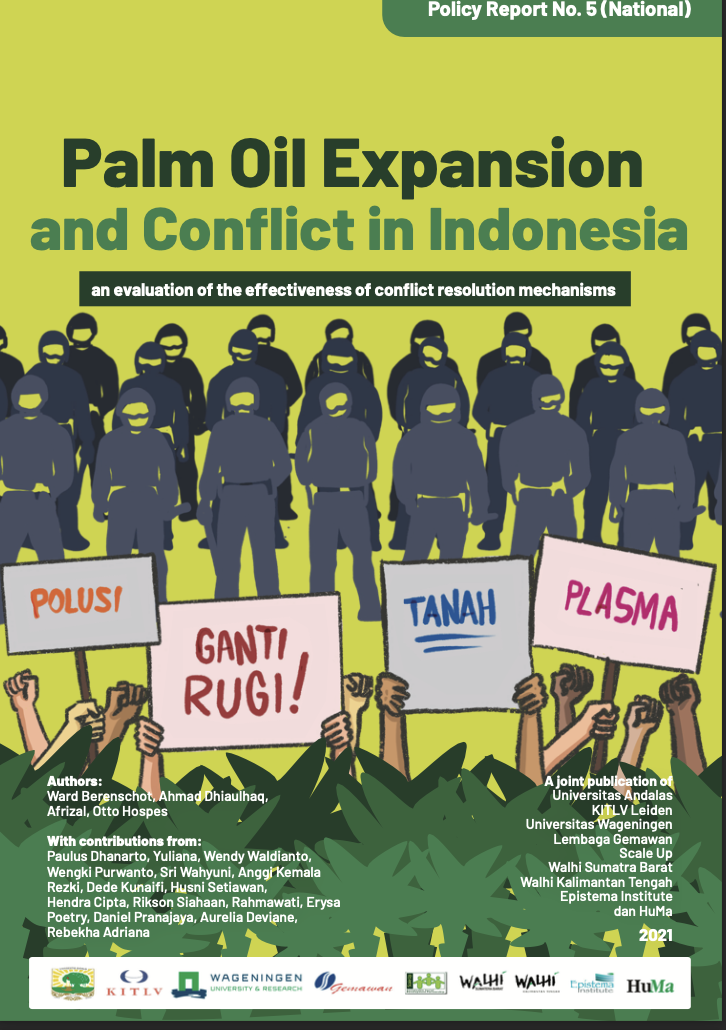
“The RSPO complaints system receives and resolves few cases. Out of 64 RSPO member companies, only 17 grievances were reported and only 3 resolved”
‘Lack of resolution mechanisms allow palm oil conflicts to fester in Indonesia‘, Hans Nicholas Jong, Mongabay, 29 November, 2021
More about RSPO complaints panel member and Executive Director of Orangutan Land Trust: Michelle Desilets

Greenwashing Tactic 10: Gaslighting, Harassment, Stalking and Threats
Gaslighting, harassing or stalking vocal critics of a brand, commodity or industry certification in order to silence these critics – this is greenwashing!
Greenwashing Tactic 9: Partnerships, Sponsorships and Research Funding
Greenwashing Tactic 9. Corporations use NGOs, Zoo partnerships, sponsorships, and research funding to give an industry or brand a ‘green image.
Environmental Investigation Agency (EIA)
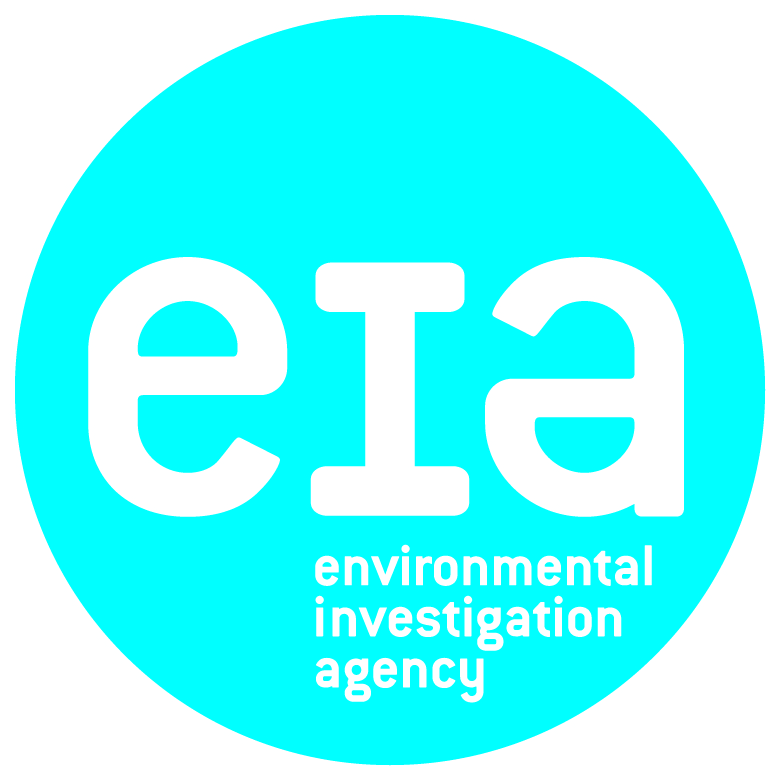
“Non-adherence to the RSPO’s standards is systemic and widespread, and has led to ongoing land conflicts, labour abuses and destruction of forests.
“As the world approaches 2020 targets to halt deforestation, the RSPO needs to rapidly implement radical solutions to restore its credibility. We question whether the RSPO is willing and able to rectify its systemic failures – ultimately, voluntary certification is too limited by its voluntary nature.”
— Who Watches the Watchmen Part 2: The continuing incompetence of the RSPO’s assurance systems (2019)
Changing Markets Foundation
“While RSPO is often referred to as the best scheme in the sector, it has several shortcomings; most notably it has not prevented human rights violations and it does not require GHG emissions reductions.”
— The False Promise of Certification (2018)
Greenpeace
“Implementation of [the RSPO’s] standards is often weak, with serious audit failures being reported, many members failing to meet the full range of membership requirements and grievances slow to be addressed.”
— Destruction Certified by Greenpeace (2021)
Environmental Investigation Agency (EIA)
“Without assurance mechanisms that properly function, the RSPO has little credibility and its claims are hollow.
“RSPO companies have continued to be beset
by assurance issues in 2020. Associated Press notably reported on labour violations in Malaysia, including by RSPO members. These allegations included forced labour, the abuse of women and child labour, among others.”
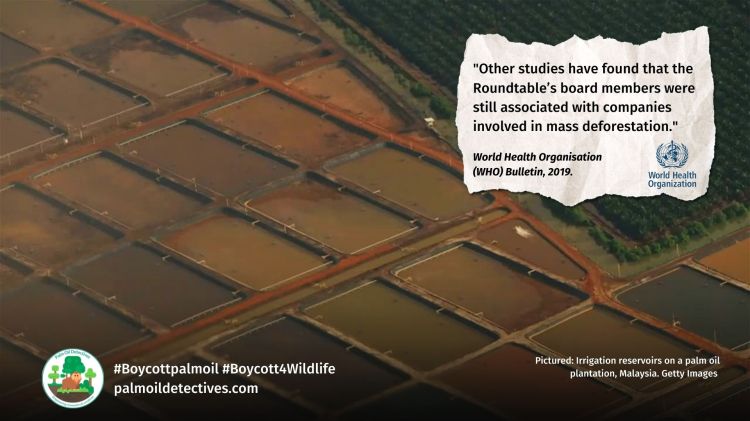
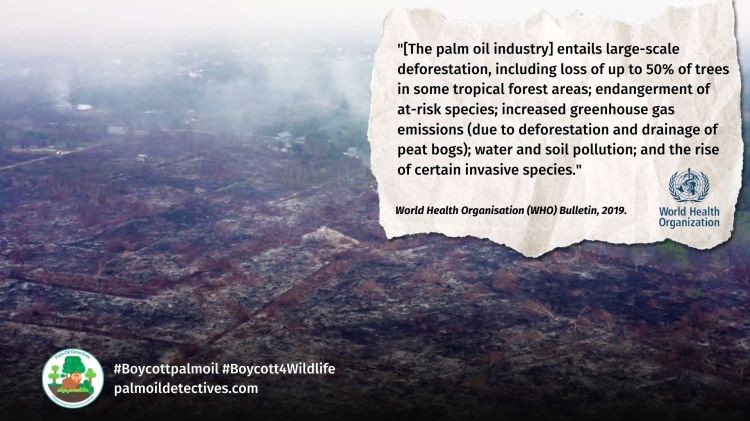
A 2019 World Health Organisation (WHO) report into the palm oil industry and RSPO finds extensive greenwashing of palm oil deforestation and the murder of endangered animals (i.e. biodiversity loss)


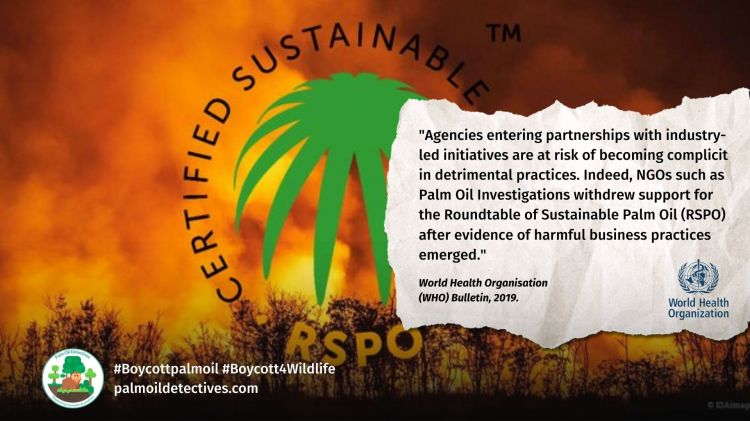
RSPO’s annual conference 2019: a focus on faulty audits
It was also acknowledged that the taskforce did not have the capacity to handle the responsibilities that it had set itself, and that besides training, a new model where the work was outsourced might be needed.
In ending the session, the panelists identified the most important things that would kickstart better assurance, namely: obtaining feedback to improve the assurance system, formulating better social policy, improved communications, rigour in meeting deadlines, and maintaining credible audits.
RT Report 2019

No significant difference was found between certified and non-certified plantations for any of the sustainability metrics investigated, however positive economic trends including greater fresh fruit bunch yields were revealed. To achieve intended outcomes, RSPO principles and criteria are in need of substantial improvement and rigorous enforcement.
Evaluating the effectiveness of palm oil certification in delivering multiple sustainability objectives. (2018), Morgans, C. L. et al. Environ. Res. Lett. 13, 064032.
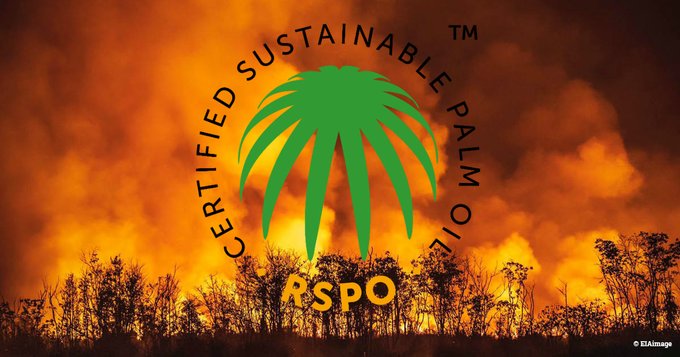
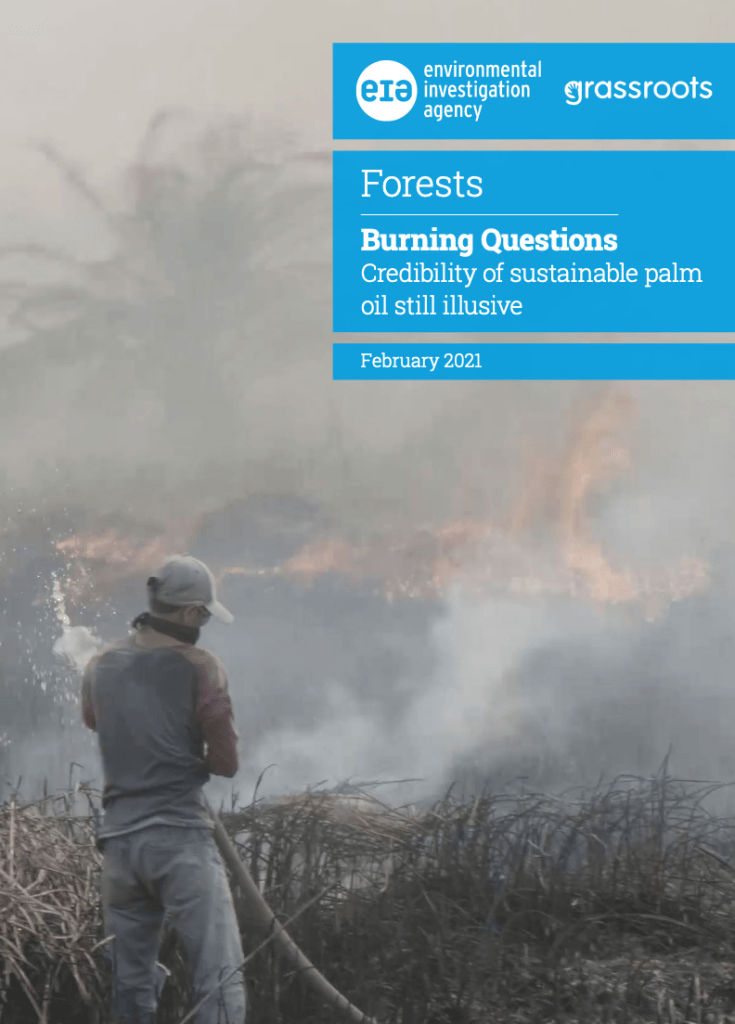
EIA: Burning Questions, the Credibility of Sustainable Palm Oil Still Elusive
RSPO members continue to be exposed for violations of the body’s own standard and this ongoing trend makes the RSPO’s claims of sustainability unreliable.
We identified 64 conflicts that involved RSPO member companies, of which 17 prompted communities to convey their grievances to the RSPO’s conflict resolution mechanism…We conclude that—on all counts—the conflict resolution mechanism is biased in favor of companies. The result of these biases is that the actual capacity of the RSPO’s mechanism to provide a meaningful remedy for rural communities’ grievances remains very limited. This unequal access to justice sustains conflicts between companies and communities over land.
Afrizal, A., Hospes, O., Berenschot, W. et al. Unequal access to justice: an evaluation of RSPO’s capacity to resolve palm oil conflicts in Indonesia. Agric Hum Values 40, 291–304 (2023). https://doi.org/10.1007/s10460-022-10360-z
Certification schemes too weak to uphold the European Union Deforestation Regulation
[Voluntary Sustainability Standards] fell short in providing a comprehensive prohibition of deforestation and forest degradation. They also presented variable coverage of the relevant legislation outlined in the EUDR, as well as deficiencies in their systems to assure compliance with the standards. Overall, this study indicates that VSS schemes can be incorporated as elements of due diligence systems but are insufficient to demonstrate compliance with the EUDR.
Cosimo, L. H. E., Masiero, M., Mammadova, A., & Pettenella, D. (2024). Voluntary sustainability standards to cope with the new European Union regulation on deforestation-free products: A gap analysis. Forest Policy and Economics, 164, 103235. https://doi.org/10.1016/j.forpol.2024.103235
Eco-labels and certifications for agricultural crops have yet to halt land use change. Sparse and uneven market uptake only partially explain this outcome. Loopholes in certification standards and enforcement mechanisms also play a role.
Do eco-labels prevent deforestation? Lessons from non-state market driven governance in the soy, palm oil, and cocoa sectors., (2018) van der Ven, H., Rothacker, C. & Cashore, B. Glob. Environ. Change 52, 141–151.
We find that, while sustainability standards can help improve the sustainability of production processes in certain situations, they are insufficient to ensure food system sustainability at scale, nor do they advance equity objectives in agrifood supply chains.
Sustainability standards in global agrifood supply chains., (2021) Meemken, EM., Barrett, C.B., Michelson, H.C. et al. Nat Food. https://doi.org/10.1038/s43016-021-00360-3
Big brand sustainability, while important, will not on its own resolve the problems of global environmental change. In conclusion, the article highlights the importance of a co-regulatory governance approach that includes stronger state regulations, sustained advocacy, more responsible individual consumerism, and tougher international legal constraints to go beyond the business gains from big brand sustainability to achieve more transformational, ‘absolute’ global environmental progress.
Big brand sustainability: governance prospects and environmental limits. (2012) Dauvergne, P. & Lister, J. Glob. Environ. Change 22, 36–45.
Product packaging cues are a means of communication to consumers. This study reflects on use and effectiveness of sustainability cues on packaging. The conversion of cue recognition to driving purchasing behavior is low.
Sustainability cues on packaging: the influence of recognition on purchasing behavior. (2019) Rees, W., Tremma, O. & Manning, L., J. Clean. Prod. 235, 841–85.
This article argues that the form of sustainability offered by certification schemes such as the RSPO fetishes the commodity palm oil in order to assuage critical consumer initiatives in the North. This technical-managerial solution is part of a larger project: the “post-political” climate politics regime (Swyngedouw) that attempts to “green” the status quo.
Commodifying sustainability: Development, nature and politics in the palm oil industry (2019) World Development
Volume 121, September 2019, Pages 218-228
- The palm oil industry is neither sustainable nor a viable development model.
- Certification represents a technical fix which neglects underlying dynamics of power, class, gender and accumulation.
- The fetishised commodity ‘certified sustainable palm oil’ has no impact on the regional scale of expansion.
- Working conditions in the plantations and mills entrench social inequality and poverty.
From: Commodifying sustainability: Development, nature and politics in the palm oil industry (2019) World Development
Volume 121, September 2019, Pages 218-228
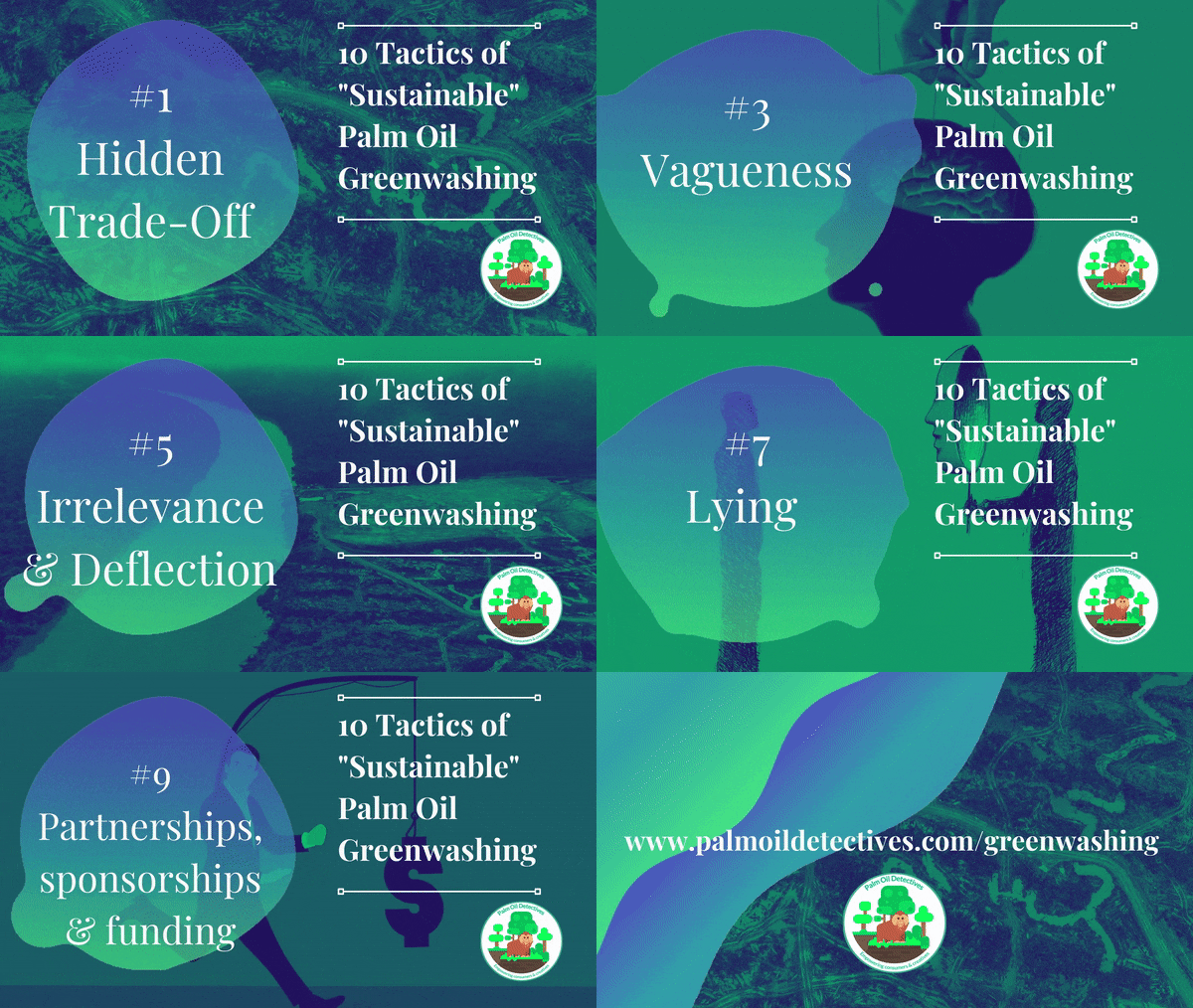

Explore the series
Join the #Boycott4Wildlife and fight deforestation and greenwashing by using your wallet as a weapon!
Further reading on palm oil ecocide, greenwashing and deceptive marketing
- A Brief History of Consumer Culture, Dr. Kerryn Higgs, The MIT Press Reader. https://thereader.mitpress.mit.edu/a-brief-history-of-consumer-culture/
- A Deluge of Double-Speak (2017), Jason Bagley. Truth in Advertising. https://truthinadvertising.org/blog/a-deluge-of-doublespeak/
- Aggarwal, P. (2011). Greenwashing: The darker side of CSR. Indian Journal of Applied Research, 4(3), 61-66. https://www.worldwidejournals.com/indian-journal-of-applied-research-(IJAR)/article/greenwashing-the-darker-side-of-csr/MzMxMQ==/?is=1
- Anti-Corporate Activism and Collusion: The Contentious Politics of Palm Oil Expansion in Indonesia, (2022). Ward Berenschot, et. al., Geoforum, Volume 131, 2022, https://doi.org/10.1016/j.geoforum.2022.03.002
- Armour, C. (2021). Green Clean. Company Director Magazine. https://www.aicd.com.au/regulatory-compliance/regulations/investigation/green-clean.html
- Balanced Growth (2020), In: Leal Filho W., Azul A.M., Brandli L., özuyar P.G., Wall T. (eds) Responsible Consumption and Production. Encyclopedia of the UN Sustainable Development Goals. Springer, Cham
- Berenschot, W., Hospes, O., & Afrizal, A. (2023). Unequal access to justice: An evaluation of RSPO’s capacity to resolve palm oil conflicts in Indonesia. Agriculture and Human Values, 40, 291-304. https://doi.org/10.1007/s10460-022-10360-z
- Carlson, K. M., Heilmayr, R., Gibbs, H. K., Noojipady, P., et al. (2018). Effect of oil palm sustainability certification on deforestation and fire in Indonesia. PNAS, 115(1), 121-126. https://doi.org/10.1073/pnas.1704728114
- Cazzolla Gatti, R., Liang, J., Velichevskaya, A., & Zhou, M. (2018). Sustainable palm oil may not be so sustainable. Science of The Total Environment, 652, 48-51. https://pubmed.ncbi.nlm.nih.gov/30359800/
- Changing Times Media. (2019). Roundtable on Sustainable Palm Oil is ‘greenwashing’ labelled products, environmental investigation agency says. Changing Times Media. https://changingtimes.media/2019/11/03/roundtable-on-sustainable-palm-oil-is-greenwashing-labelled-products-environmental-protection-agency-says/
- Client Earth: The Greenwashing Files. https://www.clientearth.org/projects/the-greenwashing-files/
- Commodifying sustainability: Development, nature and politics in the palm oil industry (2019). World Development, Volume 121, September 2019, Pages 218-228. https://ideas.repec.org/a/eee/wdevel/v121y2019icp218-228.html
- Contrasting communications of sustainability science in the media coverage of palm oil agriculture on tropical peatlands in Indonesia, Malaysia and Singapore (2020). Liu, F. H. M., Ganesan, V., Smith, T. E. L. Environmental Science & Policy, 114. https://www.researchgate.net/publication/343772443_Contrasting_communications_of_sustainability_science_in_the_media_coverage_of_palm_oil_agriculture_on_tropical_peatlands_in_Indonesia_Malaysia_and_Singapore
- Cosimo, L. H. E., Masiero, M., Mammadova, A., & Pettenella, D. (2024). Voluntary sustainability standards to cope with the new European Union regulation on deforestation-free products: A gap analysis. Forest Policy and Economics, 164, 103235. https://doi.org/10.1016/j.forpol.2024.103235
- Dalton, J. (2018). No such thing as sustainable palm oil – ‘certified’ can destroy even more wildlife, say scientists. The Independent. https://www.independent.co.uk/climate-change/news/palm-oil-sustainable-certified-plantations-orangutans-indonesia-southeast-asia-greenwashing-purdue-a8674681.html
- Davis, S. J., Alexander, K., Moreno-Cruz, J., et al. (2023). Food without agriculture. Nature Sustainability. https://www.nature.com/articles/s41893-023-01241-2
- EIA International. (2022). Will palm oil watchdog rid itself of deforestation or continue to pretend its products are sustainable? EIA International. https://eia-international.org/news/will-palm-oil-watchdog-rid-itself-of-deforestation-or-continue-to-pretend-its-products-are-sustainable/
- Environmental Investigation Agency. (2019). Palm oil watchdog’s sustainability guarantee is still a destructive con. EIA International. https://eia-international.org/news/palm-oil-watchdogs-sustainability-guarantee-is-still-a-destructive-con/
- Federal Trade Commission. (n.d.). Green Guides. https://www.ftc.gov/news-events/topics/truth-advertising/green-guides
- Fifteen environmental NGOs demand that sustainable palm oil watchdog does its job (2019). Rainforest Action Network. https://www.ran.org/press-releases/fifteen-environmental-ngos-demand-that-sustainable-palm-oil-watchdog-does-its-job/
- Friends of the Earth International. (2018). RSPO: 14 years of failure to eliminate violence and destruction from the industrial palm oil sector. Friends of the Earth International. https://www.foei.org/rspo-14-years-of-failure-to-eliminate-violence-and-destruction-from-the-industrial-palm-oil-sector/
- Lang, Chris and REDD Monitor. Sustainable palm oil? RSPO’s greenwashing and fraudulent audits exposed. The Ecologist. https://theecologist.org/2015/nov/19/sustainable-palm-oil-rspos-greenwashing-and-fraudulent-audits-exposed
- Gatti, L., Pizzetti, M., & Seele, P. (2021). Green lies and their effect on intention to invest. Journal of Business Research, 127, 376-387. https://doi.org/10.1016/j.jbusres.2021.01.028
- Global Witness. (2023). Amazon palm: Ecocide and human rights abuses. Global Witness. https://www.globalwitness.org/en/campaigns/environmental-activists/amazon-palm/
- Global Witness. (2021). The True Price of Palm Oil. Global Witness. https://www.globalwitness.org/en/campaigns/forests/true-price-palm-oil/
- Grain. (2021). Ten reasons why certification should not be promoted in the EU anti-deforestation regulation. Grain. https://grain.org/en/article/6856-ten-reasons-why-certification-should-not-be-promoted-in-the-eu-anti-deforestation-regulation
- Green Clean (2021). Armour, C. Company Director Magazine.
- Green marketing and the Australian Consumer Law (2011). Australian Competition and Consumer Commission. https://www.accc.gov.au/system/files/Green%20marketing%20and%20the%20ACL.pdf
- Greenwash and spin: palm oil lobby targets its critics (2011). Helan, A. Ecologist: Informed by Nature. https://theecologist.org/2011/jul/08/greenwash-and-spin-palm-oil-lobby-targets-its-critics
- Greenwashing: definition and examples. Selectra https://climate.selectra.com/en/environment/greenwashing#:~:text=Greenwashing%20is%20the%20practice%20of,its%20activities%20pollute%20the%20environment.
- Greenwashing of the Palm Oil Industry (2007). Mongabay. https://news.mongabay.com/2007/11/greenwashing-the-palm-oil-industry/
- Group Challenges Rainforest Alliance Earth-Friendly Seal of Approval (2015). Truth in Advertising. https://www.truthinadvertising.org/group-challenges-rainforest-alliance-earth-friendly-seal-of-approval
- Helan, A. (2011). Greenwash and spin: palm oil lobby targets its critics. Ecologist: Informed by Nature. https://theecologist.org/2011/feb/15/greenwash-and-spin-palm-oil-lobby-targets-its-critics
- Hewlett Packard. (2021). What is Greenwashing and How to Tell Which Companies are Truly Environmentally Responsible. Hewlett Packard. https://www.hp.com/us-en/shop/tech-takes/what-is-greenwashing-environmentally-responsible-companies
- Holzner, A., Rameli, N. I. A. M., Ruppert, N., & Widdig, A. (2024). Agricultural habitat use affects infant survivorship in an endangered macaque species. Current Biology. https://pubmed.ncbi.nlm.nih.gov/38194972/
- How Cause-washing Deceives Consumers (2021). Truth in Advertising. https://truthinadvertising.org/resource/how-causewashing-deceives-consumers/
- International Labour Organization. (2020). Forced labor in the palm oil industry. ILO. https://www.ilo.org/topics/forced-labour-modern-slavery-and-human-trafficking
- Jauernig, J., Uhl, M., & Valentinov, V. (2021). The ethics of corporate hypocrisy: An experimental approach. Futures, 129, 102757. https://doi.org/10.1016/j.futures.2021.102757
- Kirby, D. (2015). Sustainable Palm Oil? Who Knows, Thanks to Derelict Auditors. Take Part. https://www.yahoo.com/news/sustainable-palm-oil-knows-thanks-derelict-auditors-200643980.html
- Li, T. M., & Semedi, P. (2021). Plantation life: Corporate occupation in Indonesia’s oil palm zone. Duke University Press. https://www.dukeupress.edu/plantation-life
- Liu, F. H. M., Ganesan, V., & Smith, T. E. L. (2020). Contrasting communications of sustainability science in the media coverage of palm oil agriculture on tropical peatlands in Indonesia, Malaysia, and Singapore. Environmental Science & Policy, 114. https://www.researchgate.net/publication/343772443_Contrasting_communications_of_sustainability_science_in_the_media_coverage_of_palm_oil_agriculture_on_tropical_peatlands_in_Indonesia_Malaysia_and_Singapore
- Meemken, E. M., Barrett, C. B., Michelson, H. C., et al. (2021). Sustainability standards in global agrifood supply chains. Nature Food. https://doi.org/10.1038/s43016-021-00299-2
- Miles, T. (2019). Study in WHO journal likens palm oil lobbying to tobacco and alcohol industries. Reuters. https://www.reuters.com/article/idUSKCN1P21ZR/
- Nygaard, A. (2023). Is sustainable certification’s ability to combat greenwashing trustworthy? Frontiers in Sustainability, 4, Article 1188069. https://doi.org/10.3389/frsus.2023.1188069
- Oppong-Tawiah D, Webster J. Corporate Sustainability Communication as ‘Fake News’: Firms’ Greenwashing on Twitter. Sustainability. 2023; 15(8):6683. https://www.mdpi.com/2071-1050/15/8/6683
- Pabon, J. (2024). The great greenwashing: How brands, governments, and influencers are lying to you. Anansi International. https://www.vitalsource.com/products/the-great-greenwashing-john-pabon-v9781487012878
- Podnar, K., & Golob, U. (2024). Brands and activism: Ecosystem and paradoxes. Journal of Brand Management, 31, 95–107. https://link.springer.com/article/10.1057/s41262-024-00355-y
- Rainforest Action Network. (2019). Fifteen environmental NGOs demand that sustainable palm oil watchdog does its job. RAN. https://www.ran.org/press-releases/fifteen-environmental-ngos-demand-that-sustainable-palm-oil-watchdog-does-its-job/
- Renner, A., Zellweger, C., & Skinner, B. (2021). ‘Is there such a thing as sustainable palm oil? Satellite images show protected rainforest on fire’. Neue Zürcher Zeitung. https://www.nzz.ch/english/palm-oil-boom-threatens-protected-rainforest-in-indonesia-ld.1625490
- Saager, E. S., Iwamura, T., Jucker, T., & Murray, K. A. (2023). Deforestation for oil palm increases microclimate suitability for the development of the disease vector Aedes albopictus. Scientific Reports, 13(1), 9514. https://www.nature.com/articles/s41598-023-35452-6
- Southey, F. (2021). What do Millennials think of palm oil? Nestlé investigates. Food Navigator. https://www.foodnavigator.com/Article/2021/08/12/What-do-Millennials-think-of-palm-oil-Nestle-investigates
- Transparency International. (2023). Transparency international report: Corruption and corporate capture in Indonesia’s top 50 palm oil companies. Transparency International. https://palmoildetectives.com/2023/05/14/transparency-international-report-corruption-and-corporate-capture-in-indonesias-top-50-palm-oil-companies/
- Truth in Advertising. (2022). Companies accused of greenwashing. https://truthinadvertising.org/articles/companies-accused-greenwashing/
- Truth in Advertising. (n.d.). How causewashing deceives consumers. https://truthinadvertising.org/resource/how-causewashing-deceives-consumers/
- Tybout, A. M., & Calkins, T. (Eds.). (2019). Kellogg on Branding in a Hyper-Connected World. Kellogg School of Management, Northwestern University. https://www.wiley.com/en-au/Kellogg+on+Branding+in+a+Hyper-Connected+World-p-9781119533184
- Wicke, J. (2019). Sustainable palm oil or certified dispossession? NGOs within scalar struggles over the RSPO private governance standard. Bioeconomy & Inequalities: Working Paper No. 8. https://www.bioinequalities.uni-jena.de/sozbemedia/WorkingPaper8.pdf
- World Health Organisation. (2019). The palm oil industry and noncommunicable diseases. World Health Organisation Bulletin, 97, 118-128. https://pubmed.ncbi.nlm.nih.gov/30728618/
- World Rainforest Movement. (2021, November 22). Why the RSPO facilitates land grabs for palm oil. https://wrm.org.uy/articles-from-the-wrm-bulletin/section1/why-the-rspo-facilitates-land-grabs-for-palm-oil/
- Zuckerman, J. (2021). The Time Has Come to Rein In the Global Scourge of Palm Oil. Yale Environment 360, Yale School of Environment. https://e360.yale.edu/features/the-time-has-come-to-rein-in-the-global-scourge-of-palm-oil
Contribute to my Ko-Fi
Did you enjoy visiting this website?

Palm Oil Detectives is 100% self-funded
Palm Oil Detectives is completely self-funded by its creator. All hosting and website fees and investigations into brands are self-funded by the creator of this online movement. If you like what I am doing, you and would like me to help meet costs, please send Palm Oil Detectives a thanks on Ko-Fi.




Discover more from Palm Oil Detectives
Subscribe to get the latest posts sent to your email.
 Palm Oil Detectives
Agreed that RSPO certification is not effective and should be ignored.
Have you considered covering Palm Done Right? https://greenstarsproject.org/2017/12/17/ethical-consumerism-why-is-palm-oil-bad-environment/
An example of a product certified under the Palm Done Right program is Nutiva: https://ethicalbargains.org/2021/06/20/nutiva-shortening-ethical-review-palm-done-right/
LikeLiked by 1 person
Palm Done Right is involving the same greenwashing lobbyists, paid researchers, NGOs, Zoos and palm oil companies that are all associated with each other via funding and the sharing of expertise and human resources. And all are associated with the RSPO. In other words it is a greenwashing syndicate, just with a different name.
Evidence from Greenpeace, Mighty Earth, Sum of Us, World Rainforest Movement, Environmental Investigation Agency, Mighty Earth, RAN, CorpWatch, and 100 other NGOS working in environmental rights, land rights have shown that sustainable palm oil is nothing more than a greenwashing lie to confuse or placate consumers. To get them to keep buying products.
From these investigations which took over a year, I found there is no such thing as sustainable palm oil, there’s no difference to sustainability metrics.
I proved this with a series of 10 in-depth articles that show the lies, deception and greenwashing and how it is done.
The failure of commodity certification is not isolated to palm oil – sustainability standards don’t actually make any difference to human rights abuses or deforestation for coffee, soy, cocoa or timber either.
I recommend instead to boycott when you can, reduce consumption as much as you can and also buy locally made products instead of mass produced ones whenever possible.
Solutions:
Boycotts work very well to force brands to change. Boycotts along with strong government legislation are the only things now stopping corporate destruction of rainforests.
LikeLike
In short – all palm oil is bad and certification makes zero difference: for wildlife, forests and forest peoples. Best to avoid it and boycott it all and instead replace it with any locally produced oil that has a low carbon footprint: groundnut, olive, peanut, sesame oil.
LikeLike