

African palm civets were once common seed dispersers. Now they face pressure from palm oil-driven deforestation, mining, and hunting for bushmeat – boycott!
Tag Archives: Viverrid
Binturong Arctictis binturong
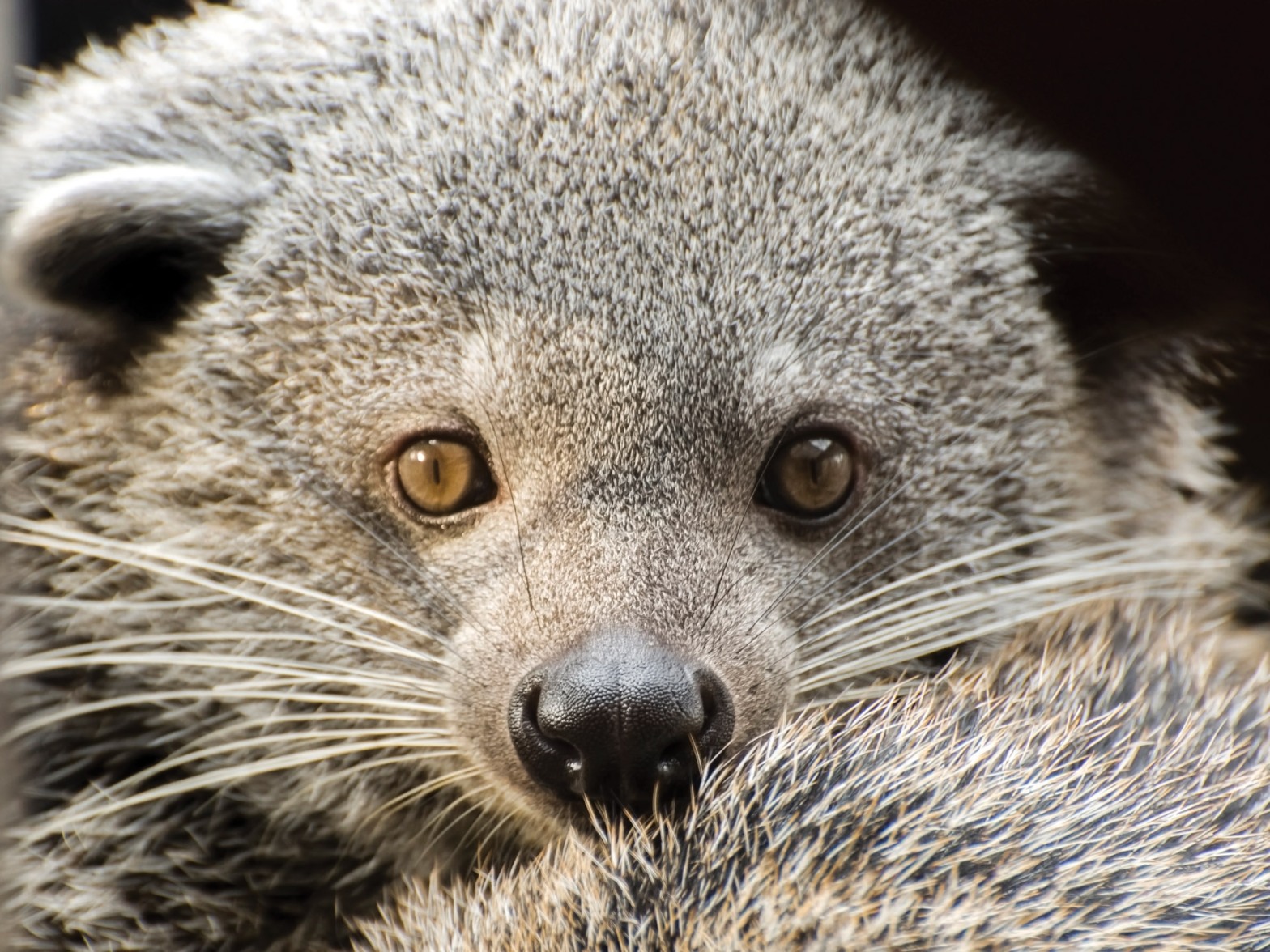
You may smell a Binturong in the forest before you see them. They give off the aroma of buttered popcorn or cheesy crisps due to the a compound in their urine they use to attract mates. The binturong, Arctictis binturong, is a fascinating and rare mammal who roam the dense rainforests of Southeast Asia. Often called the “bearcat” due to their looks, binturongs are neither bears nor cats, but are more closely related to ferrets. With their prehensile tail, thick wiry fur, and a popcorn-like scent, these unique and irreplacible creatures play vital roles as seed dispersers, particularly for strangler figs (Ficus spp.), making them keystone species in their ecosystem.
Despite their ecological significance, the binturong is now classed as Vulnerable. Populations have plummeted due to habitat destruction, particularly for palm oil deforestation; along with illegal hunting, exploitation for the coffee market and the illegal bushmeat and pet trade. Protecting the majestic binturong requires urgent action to safeguard their rainforest home. Fight for them every time you use your wallet! #BoycottPalmOil #Boycott4Wildlife
Bornean Ferret Badger Melogale everetti
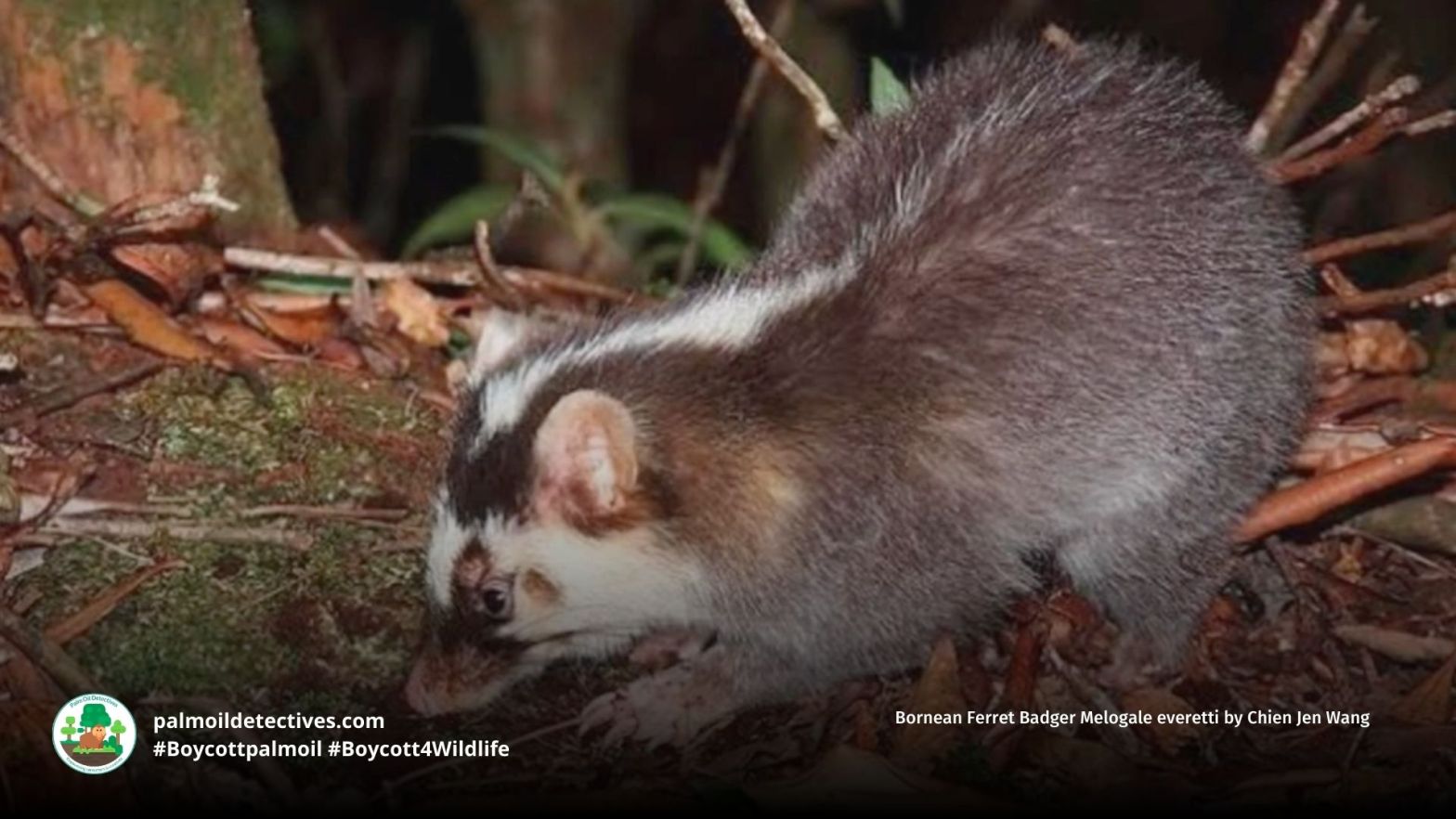
The Bornean Ferret Badger is an enigmatic nocturnal omnivore is endangered due to palm oil and timber deforestation in Malaysia, take action boycott palm oil!
Large-spotted Civet Viverra megaspila
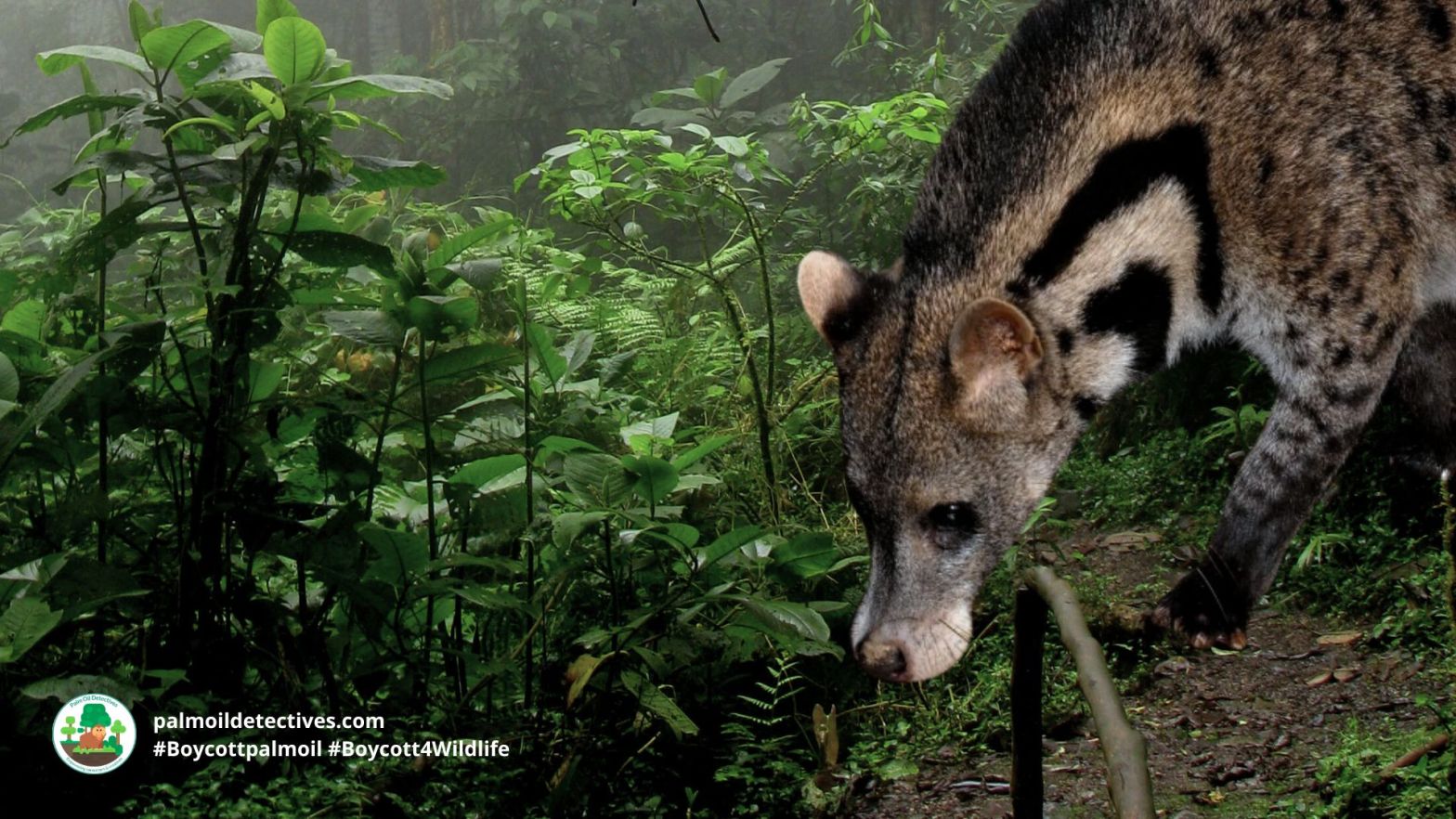
The Large-spotted Civet is an elusive and mysterious nocturnal carnivore of Southeast Asia. They are recognised for their large black spots on a greyish-buff coat and play an essential role in the health of their ecosystems. Preferring lowland forests and wetlands, they are elusive and rarely sighted. Unfortunately, habitat destruction for palm oil, hunting, and the illegal wildlife trade have contributed to their decline, with the species now classified as Endangered. Their predicted population decline is more than 50% over three generations. To protect the Large-spotted Civet, boycott products linked to deforestation and palm oil. Use your wallet as a weapon to fight for their survival. #BoycottPalmOil #Boycott4Wildlife
Otter Civet Cynogale bennettii
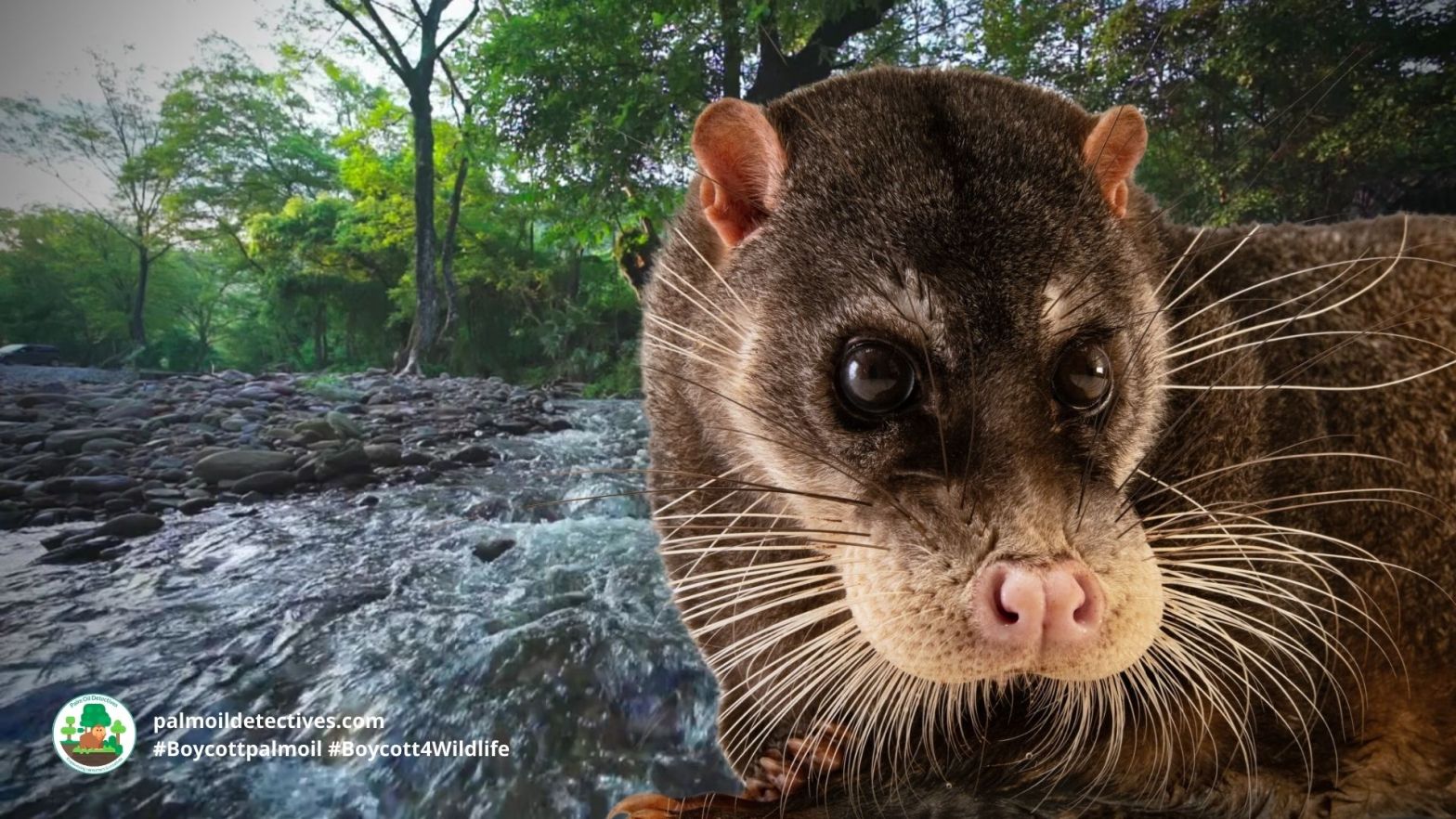
The beautiful and elusive Otter Civet lives primarily in peatland forests and riverine swamps. Their prominent snouts and long whiskers give them keen sensory understanding of their environment. They face serious ongoing threat to their survival in Borneo and are rapidly disappearing due to palm oil deforestation and gold mining pollution run-off into rivers. Help them to survive when you #BoycottPalmOil #Boycott4Wildlife.
 Palm Oil Detectives