

Sumatran Rhino Dicerorhinus sumatrensis
Critically Endangered
Population: 34-47 living in the wild.
Locations: Indonesia (Sumatra and Borneo)
The Sumatran rhinoceros, the smallest and hairiest of all rhino species, is a living relic of the Pleistocene epoch. Often referred to as “living fossils,” they are more closely related to the extinct woolly rhinoceros than to any other living rhino species. Once widespread across Southeast Asia, their numbers have plummeted to fewer than 80 individuals, primarily due to palm oil deforestation and poaching. To protect the Sumatran rhino, use your wallet as a weapon to fight for their survival every time you shop! #BoycottPalmOil #Boycott4Wildlife
Celebrate the world’s smallest rhino 🦏 🩵💔 the critically endangered Sumatran #Rhino. They face imminent #extinction from #palmoil #deforestation and #poaching. Help them to survive and be #vegan #BoycottPalmOil 🔥🌴🚫#Boycott4Wildlife @palmoildetect https://palmoildetectives.com/2021/01/20/sumatran-rhino-dicerorhinus-sumatrensis/
There are only 34-47 #Sumatran #Rhinos left in the wild! 🦏 They face #extinction from massive #palmoil #deforestation and ruthless ivory #poaching. Fight and resist for them – be #vegan and #BoycottPalmOil 🔥🌴🚫#Boycott4Wildlife @palmoildetect https://palmoildetectives.com/2021/01/20/sumatran-rhino-dicerorhinus-sumatrensis/







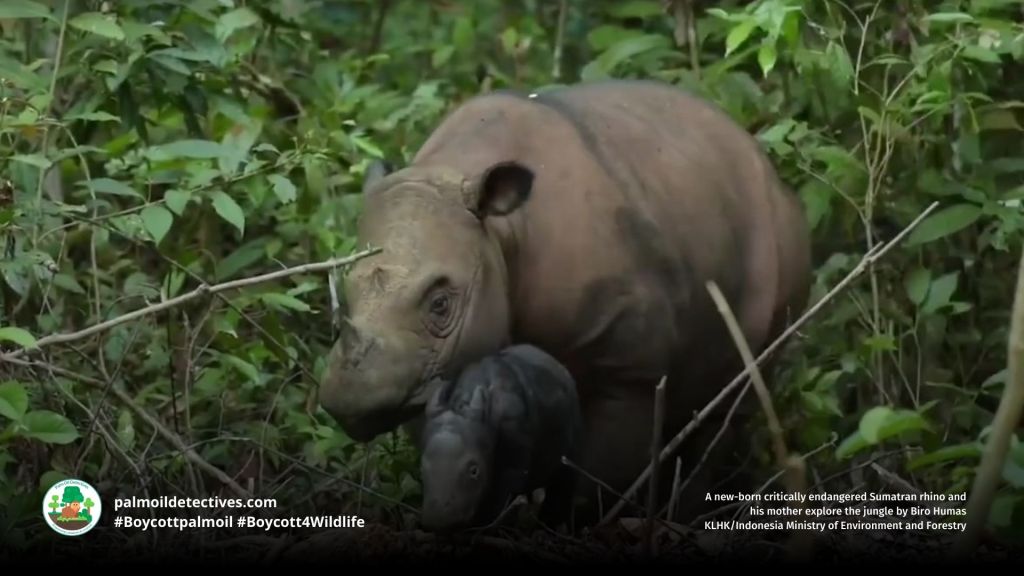
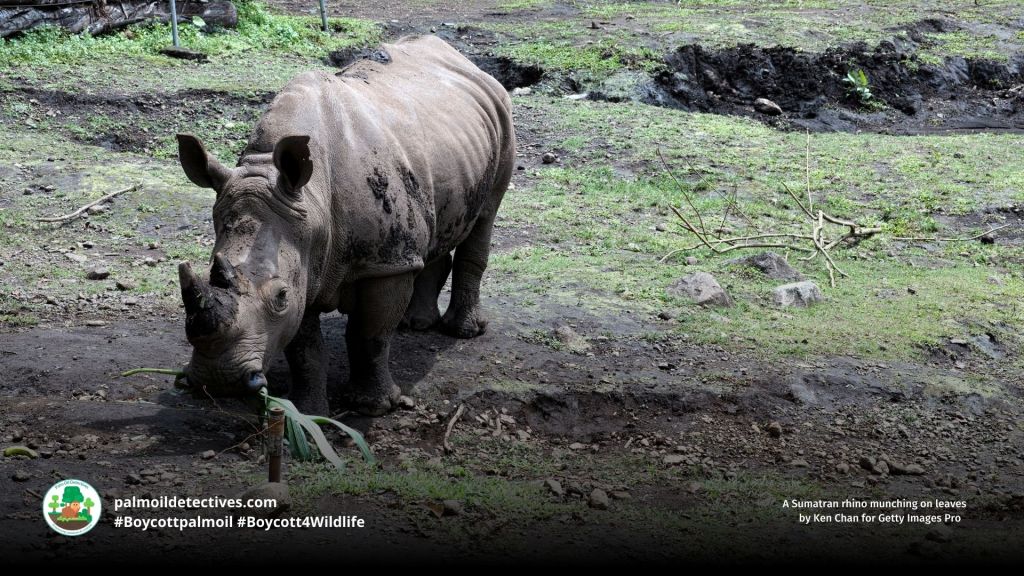
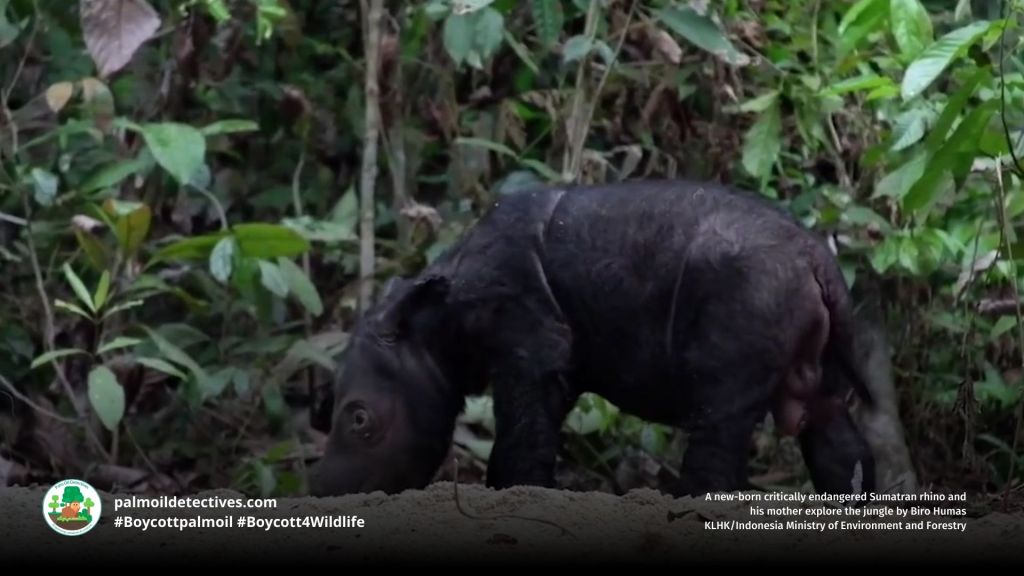
Appearance and Behaviour
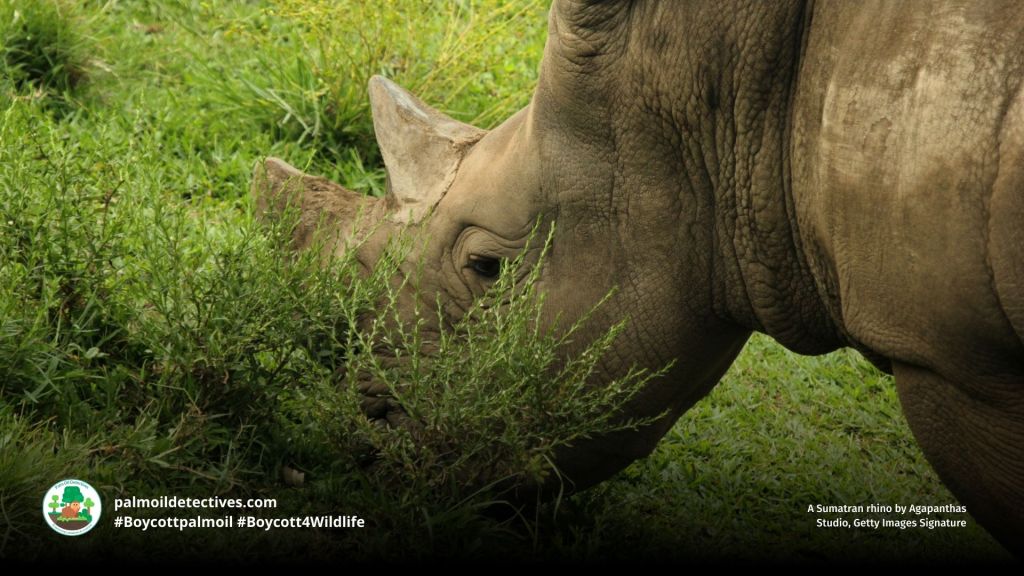
Sumatran rhinos are distinguished by their reddish-brown, hairy hides, which provide protection against insects and help them navigate dense forests. They possess two horns, with the front horn typically more prominent. Despite their smaller size—standing about 1.2 to 1.5 meters at the shoulder and weighing between 500 to 800 kilograms—they are agile climbers, adept at traversing steep terrains. These solitary creatures are known for their vocalizations, including whistles and whines, which they use to communicate across dense jungles.
Geographic Range
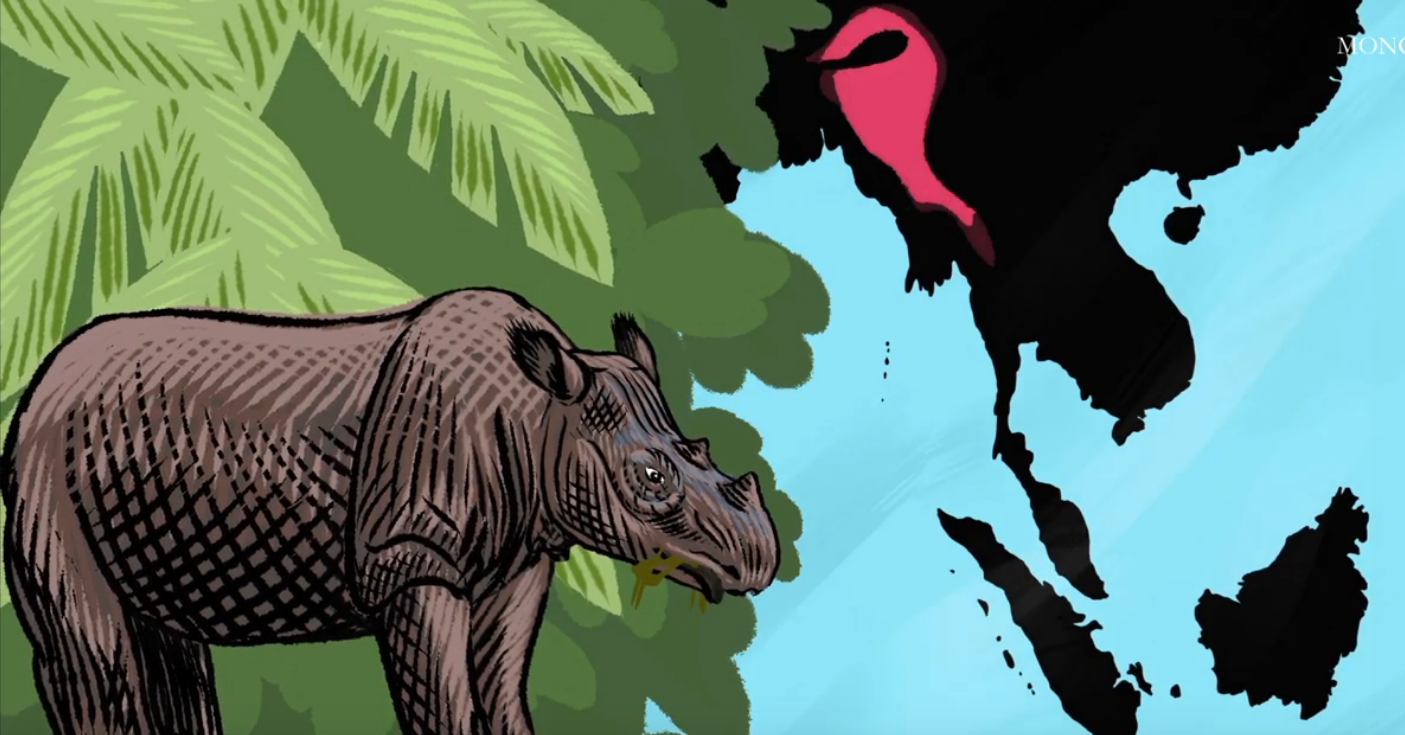
Historically, Sumatran rhinos roamed from the foothills of the Himalayas in Bhutan and eastern India, through Myanmar, Thailand, and Malaysia, to the islands of Sumatra and Borneo. Today, they are confined to fragmented habitats in Indonesia, primarily on the islands of Sumatra and Borneo. Their preferred environments include dense highland and lowland tropical forests, where they inhabit hilly and mountainous terrain. The species inhabits tropical rainforest and montane moss forest, and occasionally at forest margins and in secondary forest. Throughout the seasons they move around, migrating uphill during periods of flooding. This shy species is dependent on salt licks, and live mostly in primary forest in protected areas, but wandering into secondary forests outside protected areas, especially in the dry season in search of water.
Diet
As herbivores, Sumatran rhinos have a diverse diet consisting of leaves, fruits, twigs, and bark from a variety of plant species. They are known to consume over 100pecies, playing a crucial role in seed dispersal and maintaining the ecological balance of their forest habitats.
Reproduction and Mating
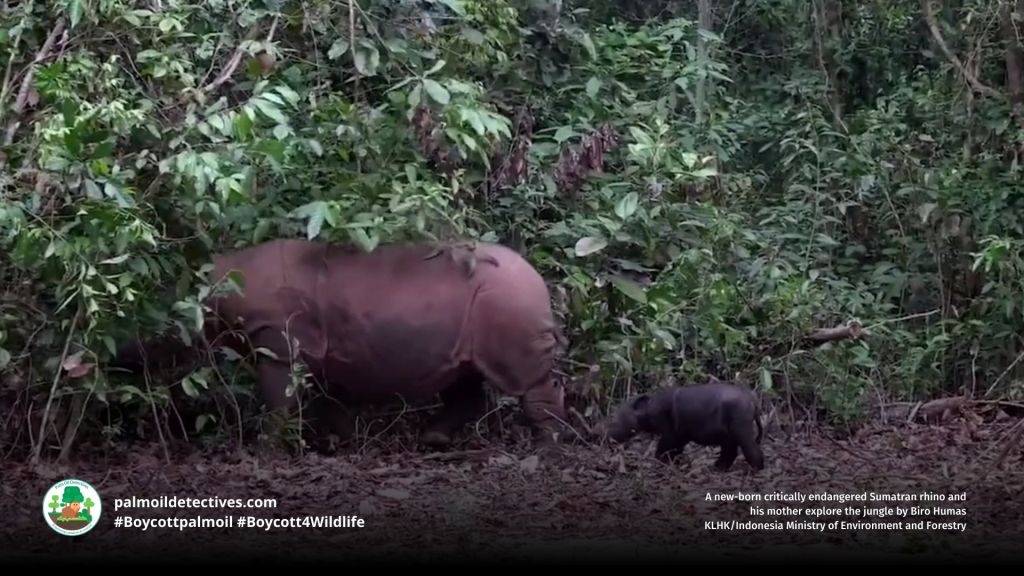
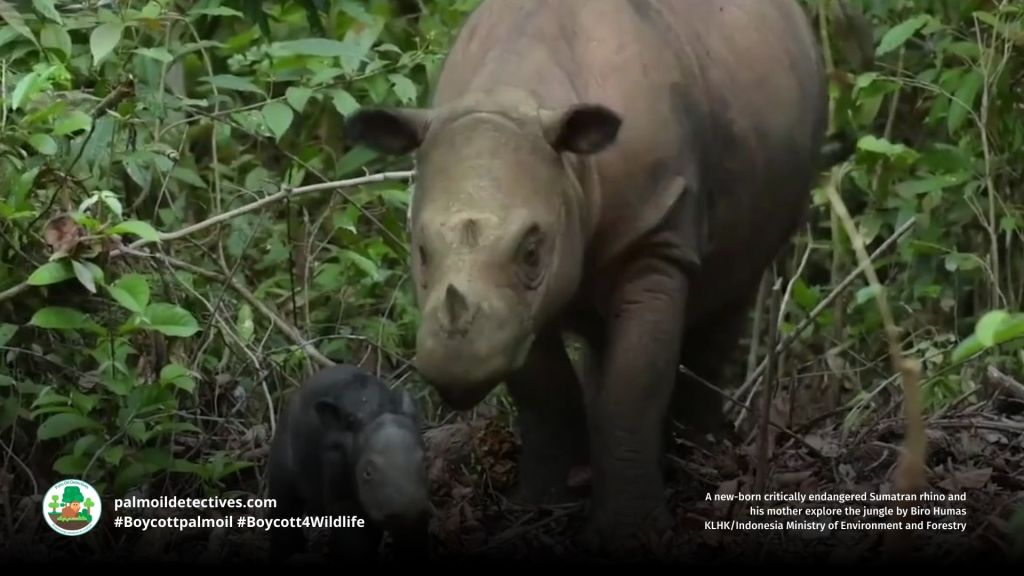
Female Sumatran rhinos reach sexual maturity around the age of six to seven years, while males mature slightly earlier, between five to six years. od lasts approximately 15 to 16 months, culminating in the birth of a single calf. Calves are born with a dense covering of hair and remain with their mothers for up to two to three years, learning essential survival skills. Due to their critically low population, breeding encounters in the wild are exceedingly rare, exacerbating their risk of extinction.
Threats
The Sumatran rhinoceros is listed as Critically Endangered on the IUCN Red List, with only around 40 individuals remaining in the wild. Conservation ehabitat protection, anti-poaching measures, and captive breeding programs, are underway to prevent their extinction. Notably, the Sumatran Rhino Sanctuary in Indonesia has seen some success in breeding, offering a glimmer of hope for the species’ future.
Habitat Loss: Deforestation for agriculture, particularly palm oil plantations, and infrastructure development has let fragmentation.
Poaching: Despite international protection, Sumatran rhinos are still targeted for their horns, driven by demand in traditional medicine markets. Spoiler: horns made from keratin have no medicinal value whatsoever!
• Slow and complex breeding: With a slow reproductive rate and current population fragmentation, finding mates in the wild has become increasingly challenging, hindering population growth.
Take Action!
Protect the Sumatran rhinoceros by boycotting products linked to deforestation, such as palm oil. Use your wallet as a weapon to support ethical and eco-friee their story and fight for their survival with #BoycottPalmOil and #Boycott4Wildlife.

We estimate that the probability of extinction in 3 generations (60 years) is 90%, without successful interventions.
IUCN Red List of Threatened Species

Further Information

Ellis, S. & Talukdar, B. 2020. Dicerorhinus sumatrensis. The IUCN Red List of Threatened Species 2020: e.T6553A18493355. https://dx.doi.org/10.2305/IUCN.UK.2020-2.RLTS.T6553A18493355.en. Downloaded on 24 January 2021.
International Fund for Animal Welfare. (n.d.). Sumatran Rhinos: Facts, Threats, & Conservation. Retrieved from IFAW
National Geographic. (n.d.). Sumatran Rhinoceros. Retrieved from National Geographic
Wikipedia contributors. (n.d.). Sumatran Rhinoceros. Retrieved from Wikipedia

How can I help the #Boycott4Wildlife?
Take Action in Five Ways
1. Join the #Boycott4Wildlife on social media and subscribe to stay in the loop: Share posts from this website to your own network on Twitter, Mastadon, Instagram, Facebook and Youtube using the hashtags #Boycottpalmoil #Boycott4Wildlife.
2. Contribute stories: Academics, conservationists, scientists, indigenous rights advocates and animal rights advocates working to expose the corruption of the palm oil industry or to save animals can contribute stories to the website.





3. Supermarket sleuthing: Next time you’re in the supermarket, take photos of products containing palm oil. Share these to social media along with the hashtags to call out the greenwashing and ecocide of the brands who use palm oil. You can also take photos of palm oil free products and congratulate brands when they go palm oil free.
4. Take to the streets: Get in touch with Palm Oil Detectives to find out more.
5. Donate: Make a one-off or monthly donation to Palm Oil Detectives as a way of saying thank you and to help pay for ongoing running costs of the website and social media campaigns. Donate here
Discover more from Palm Oil Detectives
Subscribe to get the latest posts sent to your email.
 Palm Oil Detectives
Can you attach to any of your posts a list of those implicated whom we should boycott?
LikeLiked by 1 person
Hi Adrian, thanks for reading and your comment here 🙂
It’s nice to connect with you.
Here’s a list of brands to boycott. I will add more over time, as there are many more I just haven’t had time as it’s only me myself and I doing this.
https://palmoildetectives.com/2021/02/09/brands-using-deforestation-palm-oil/
Also if you want to know the research basis for the boycotts here that is – it’s based on evidence from Greenpeace, Environmental Investigations Agency, Rainforest Action Network and Chain Reaction Research, all industry watch-dogs that have called the RSPO a scam and their inaction on deforestation akin to environmental crimes.
https://palmoildetectives.com/2021/02/07/research-palm-oil-deforestation-and-its-connection-to-brands/
LikeLiked by 1 person