
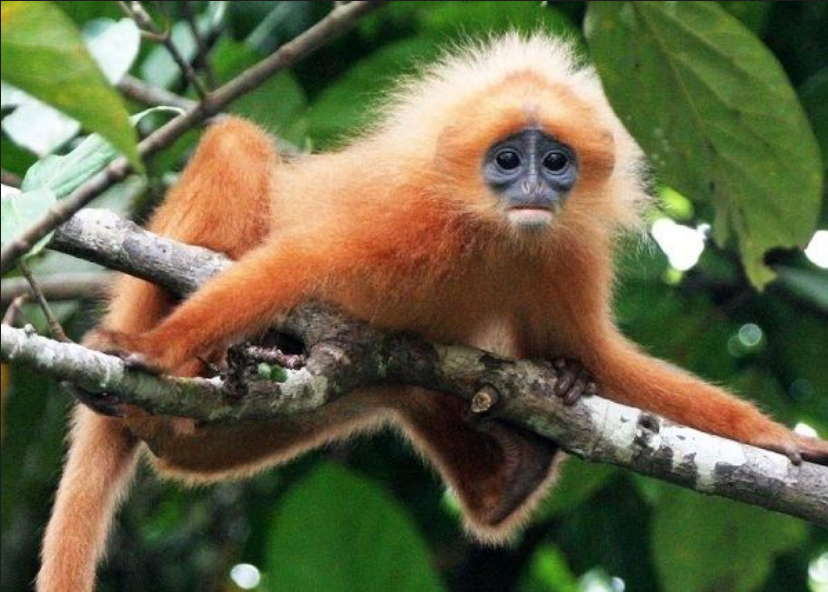
Bornean Banded Langur Presbytis chrysomelas
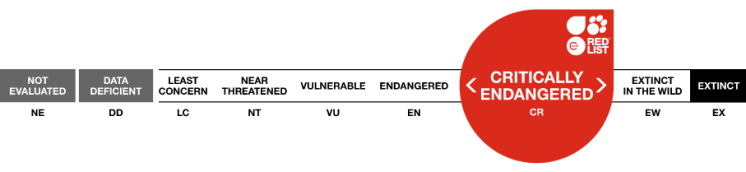
Critically Endangered
Brunei; Indonesia (Kalimantan); Malaysia (Sarawak)
The Bornean banded langur, known for its striking black and white coat, is one of Southeast Asia’s most elusive and endangered primates. These langurs inhabit the fragmented lowland forests and peat swamps of Borneo, relying on dense foliage for their survival.
The population of Bornean banded langurs is rapidly declining due to habitat destruction for palm oil plantations, illegal logging, and hunting. As their habitat continues to shrink, these shy and rarely seen primates face an uncertain future. Use your wallet as a weapon—boycott palm oil and join the fight for their survival. #BoycottPalmOil #Boycott4Wildlife
Bornean Banded Langurs 🐒🤎🙊 are critically #endangered in #Indonesia 🇮🇩 #Malaysia 🇲🇾 as 80% of their rainforest home was destroyed in past 30 years for #palmoil. Tell brands enough is enough! #BoycottPalmOil 🌴🪔🤢🤮⛔️ #Boycott4Wildlife @palmoildetect https://palmoildetectives.com/2021/01/24/bornean-banded-langur-presbytis-chrysomelas/
Once common, now crit. endangered, the Bornean Banded #Langur hangs on for dear life in small patches of #rainforest in #Indonesia 🇮🇩 #Malaysia 🇲🇾. 80% of their home was destroyed for #palmoil. #BoycottPalmOil 🌴🪔🤢🤮⛔️ #Boycott4Wildlife @palmoildetect https://palmoildetectives.com/2021/01/24/bornean-banded-langur-presbytis-chrysomelas/
This species of Langur is listed as Critically Endangered as it is only known from five sites, where populations have been reduced by approximately 80% over the past 30 years (three generations) and the trend is suspected to continue into the future due to habitat loss from expanding oil palm cultivation.
IUCN Red List

In addition, the area of occupancy has been reduced dramatically. This species was once considered common. They are now considered one of the rarest primates in the world. They live in less than 5% of their historic range. Additional conservation measures are urgent as this species could go extinct if current trends continue.
Appearance and Behaviour
Bornean banded langurs are medium-sized monkeys, reaching about 50–60 cm in body length with a long, slender tail often exceeding their body length. They are distinguished by their unique black and white banded coat, which provides excellent camouflage among tree branches. Their expressive faces, encircled by pale fur, give them an inquisitive and alert appearance.
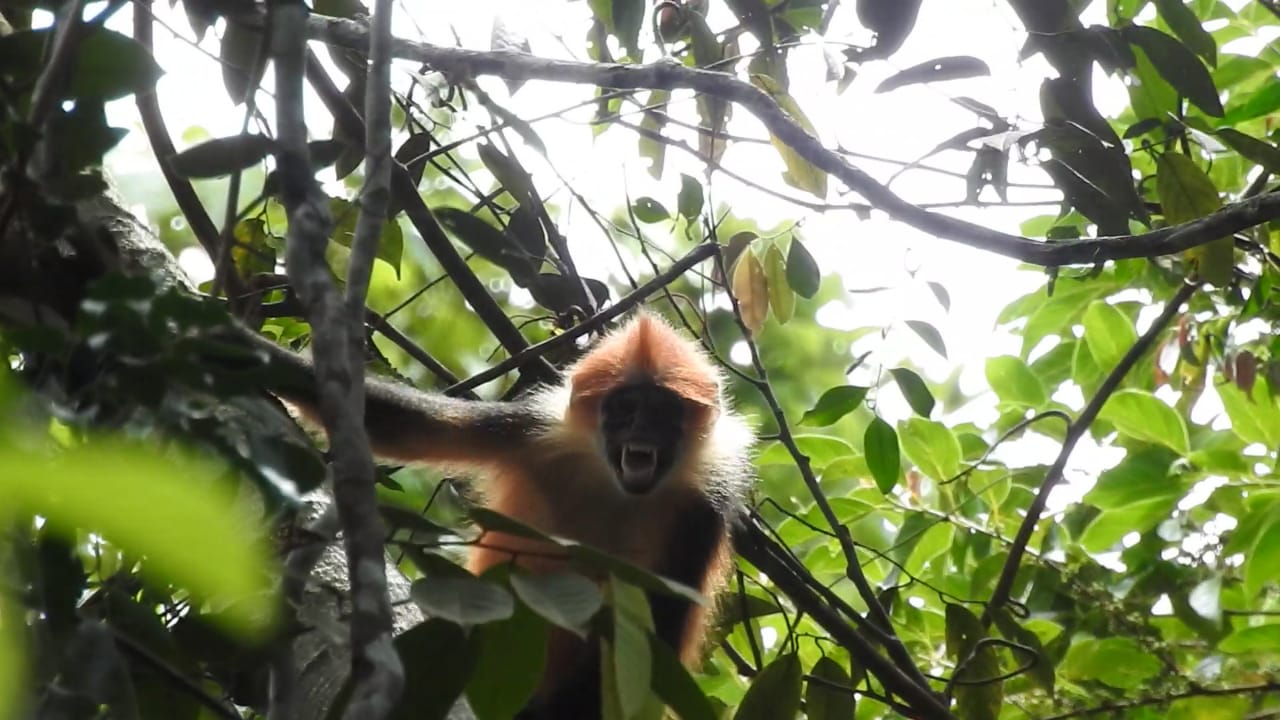
Primarily arboreal and diurnal, they spend most of their time in the upper forest canopy, where they live in small groups of 3–10 individuals. Group dynamics often include a dominant male, several females, and their offspring. Bornean banded langurs are highly social and communicate using a range of vocalisations, including soft grunts and alarm calls when sensing danger.
Geographic Range
These langurs are endemic to Borneo and are found in Malaysia’s Sabah and Sarawak regions as well as Indonesia’s Kalimantan. Their preferred habitats include lowland dipterocarp forests, peat swamps, and mangroves. However, habitat destruction has fragmented their range, leaving populations isolated in areas such as Danau Sentarum National Park and Tanjung Datu National Park (IUCN, 2020).
Diet
Bornean banded langurs are folivorous, primarily feeding on young leaves, flowers, seeds, and unripe fruits. Their specialised stomachs are adapted to digest fibrous plant material efficiently, enabling them to extract maximum nutrients from their diet. This diet also plays a vital role in seed dispersal, contributing to forest regeneration and biodiversity (NePrimate Conservancy, 2024).
Reproduction and Mating
These langurs exhibit a slow reproductive cycle. Females typically give birth to a single infant every 1–2 years after a gestation period of about 6 months. Infants are born with bright orange coats, which gradually transition to the adult black and white coloration as they mature.
Mothers provide extensive care, with other group members occasionally assisting in grooming or protecting the young. This communal care highlights their highly social nature. However, the slow reproductive rate makes it difficult for the species to recover from population declines.
Threats
The Bornean banded langur is listed as Critically Endangered by the IUCN, with populations continuing to decline. Conservation efforts focus on habitat restoration and protection in key national parks such as Danau Sentarum and Tanjung Datu. Organisations are also working to combat illegal logging and raise awareness about the impact of palm oil.
IUCN Status: Critically Endangered
- Palm oil and timber deforestation: Deforestation for palm oil plantations and logging has decimated much of their forest habitat. Between 2000 and 2018, more than 30% of suitable habitat was lost across Borneo.
- Hunting and poaching: Although not commonly targeted, these langurs are occasionally hunted for bushmeat or captured for the exotic pet trade.
- Habitat fragmentation: Habitat fragmentation isolates populations, reducing genetic diversity and increasing the risk of local extinction.
- Climate Change: Rising temperatures and changes in rainfall patterns threaten the health of their forest ecosystems.
Take Action!
Protect the Bornean banded langur by boycotting palm oil and supporting conservation programs focused on preserving Borneo’s forests. Raise awareness about their plight and advocate for stronger legal protections. Together, we can secure a future for these remarkable primates. #BoycottPalmOil #Boycott4Wildlife
You can support this beautiful animal
There are no known conservation activities for this animal. Share out this post to social media and join the #BoycottPalmOil #Boycott4Wildlife on social media to raise awareness
Further Information
Md-Zain, B. M. (2019). Bornean banded langur in Danau Sentarum National Park.
NePrimate Conservancy. (2024). Bornean banded langur (Presbytis chrysomelas).
Nijman, V., Cheyne, S., Traeholt, C. & Setiawan, A. 2020. Presbytis chrysomelas. The IUCN Red List of Threatened Species 2020: e.T39803A17955321. https://dx.doi.org/10.2305/IUCN.UK.2020-2.RLTS.T39803A17955321.en. Downloaded on 24 January 2021.
Phillipps, Q., & Phillipps, K. (2019). Presbytis chrysomelas population survey in Borneo.
Rustam, A., & Yanuar, A. (2021). Preliminary assessment of group composition and activity pattern of the critically endangered Bornean banded langur (Presbytis chrysomelas) in Tanjung Datu National Park.
Tanjung, H., et al. (2024). Impacts of habitat loss on Presbytis chrysomelas populations.

How can I help the #Boycott4Wildlife?
Take Action in Five Ways
1. Join the #Boycott4Wildlife on social media and subscribe to stay in the loop: Share posts from this website to your own network on Twitter, Mastadon, Instagram, Facebook and Youtube using the hashtags #Boycottpalmoil #Boycott4Wildlife.
2. Contribute stories: Academics, conservationists, scientists, indigenous rights advocates and animal rights advocates working to expose the corruption of the palm oil industry or to save animals can contribute stories to the website.






3. Supermarket sleuthing: Next time you’re in the supermarket, take photos of products containing palm oil. Share these to social media along with the hashtags to call out the greenwashing and ecocide of the brands who use palm oil. You can also take photos of palm oil free products and congratulate brands when they go palm oil free.
4. Take to the streets: Get in touch with Palm Oil Detectives to find out more.
5. Donate: Make a one-off or monthly donation to Palm Oil Detectives as a way of saying thank you and to help pay for ongoing running costs of the website and social media campaigns. Donate here
Discover more from Palm Oil Detectives
Subscribe to get the latest posts sent to your email.
 Palm Oil Detectives