
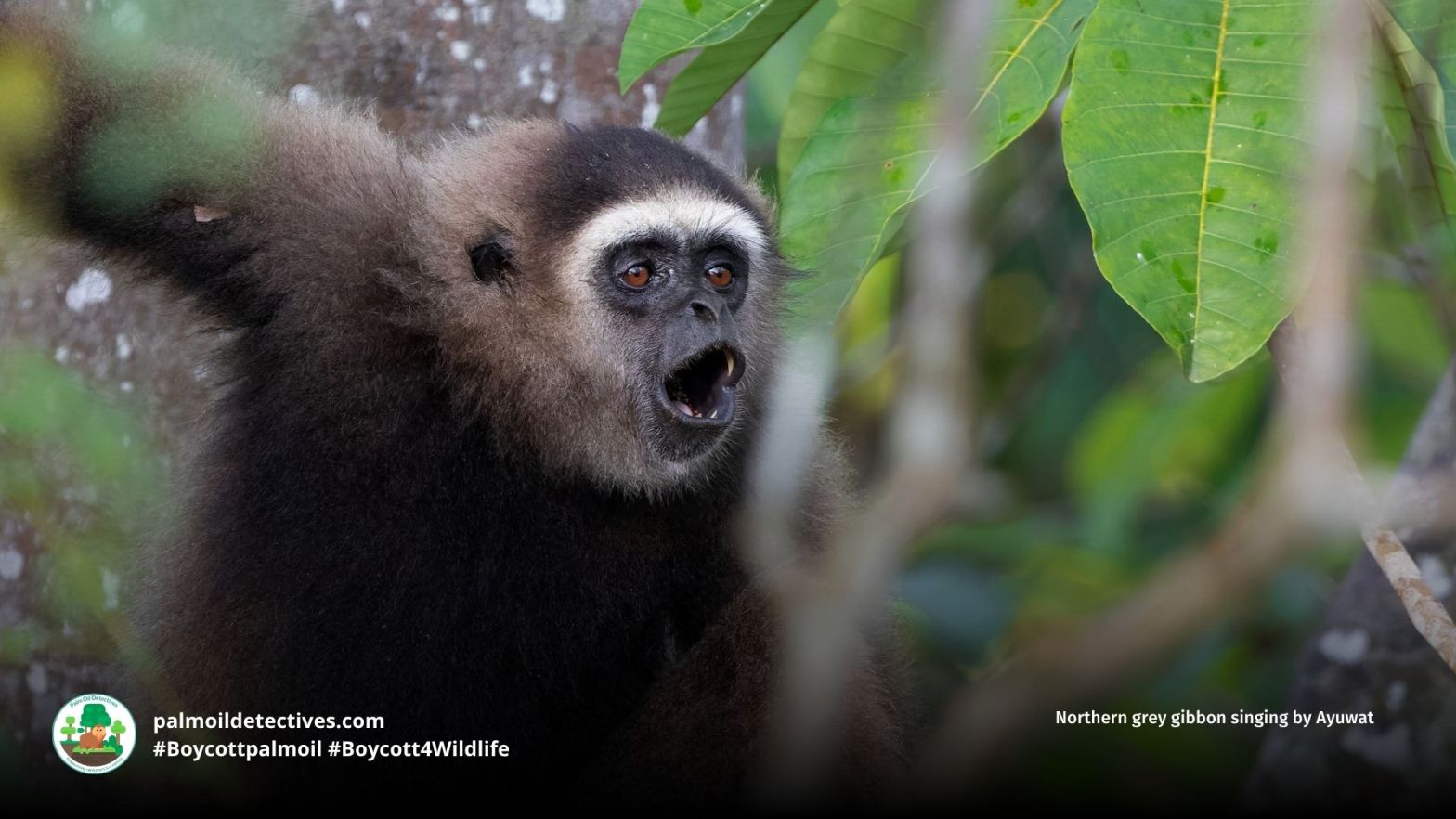
Northern Gray Gibbon Hylobates funereus
Red List Status: Endangered
Locations: Northeastern Borneo, including Sabah and Sarawak in Malaysia, North Kalimantan and East Kalimantan in Indonesia, and Brunei.
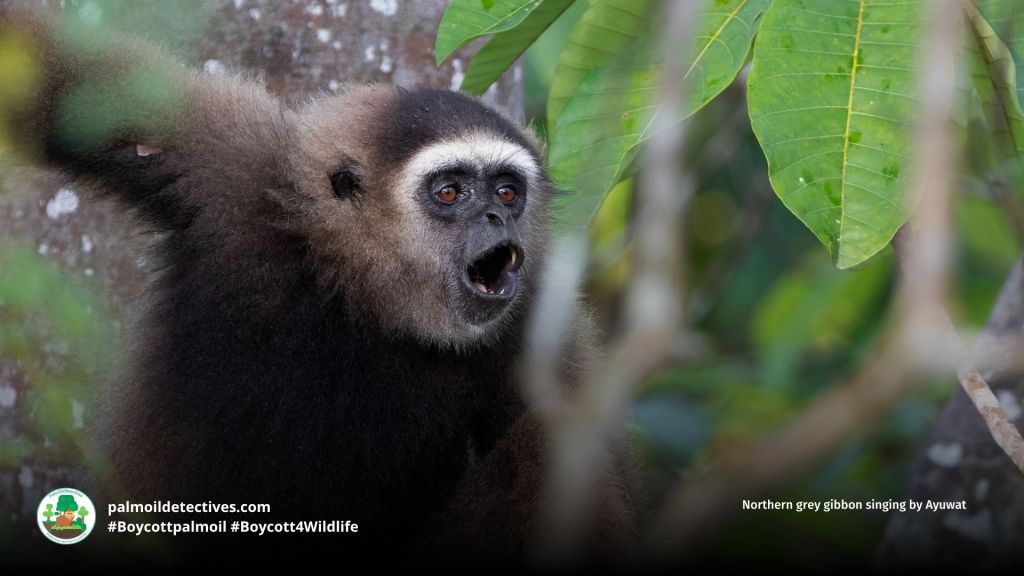
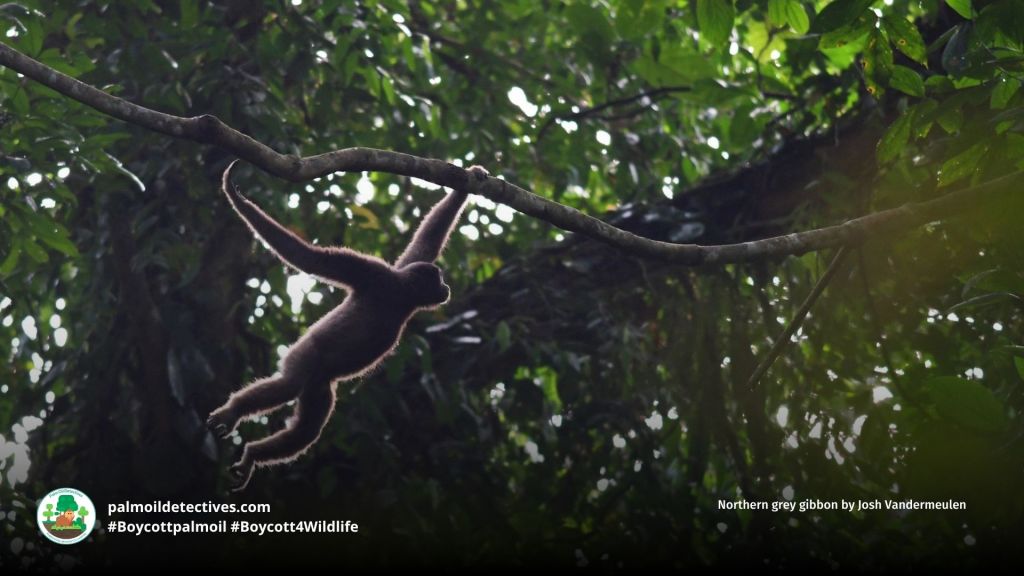
At dawn under a slowly brightening sky, a sound begins to swell, a clear, haunting melody that cascades through the trees. This is the sound of the Northern grey gibbon, a small, acrobatic ape greeting the new day. They are masters of their treetop world, their long arms carrying them in a breathtaking, high-speed ballet from branch to branch. But their fragile world is shrinking. The roar of chainsaws replaces their song as ancient forests fall for palm oil plantations and timber. The Northern grey gibbon’s existence hangs by a thread, their families torn apart for the cruel pet trade. Their song is a plea for survival, a plea you can answer. Fight for their survival every time you shop #BoycottPalmOil #Boycott4Wildlife.
Graceful ballet dancers and opera singers of #Borneo, Northern Grey #Gibbons are #endangered by #palmoil and #timber #ecocide in #Malaysia and #Indonesia. Protect them when you shop and #BoycottPalmOil #Boycott4Wildlife @palmoildetect https://palmoildetectives.com/2021/02/05/northern-gray-gibbon-hylobates-funereus/
Fluffy and curious Northern Grey #Gibbons are the fastest moving tree dwellers in the world and become ultra social during the fruit season. Help preserve their song for the future when you shop #BoycottPalmOil #Boycott4Wildlife @palmoildetect https://palmoildetectives.com/2021/02/05/northern-gray-gibbon-hylobates-funereus/
Appearance and behaviour
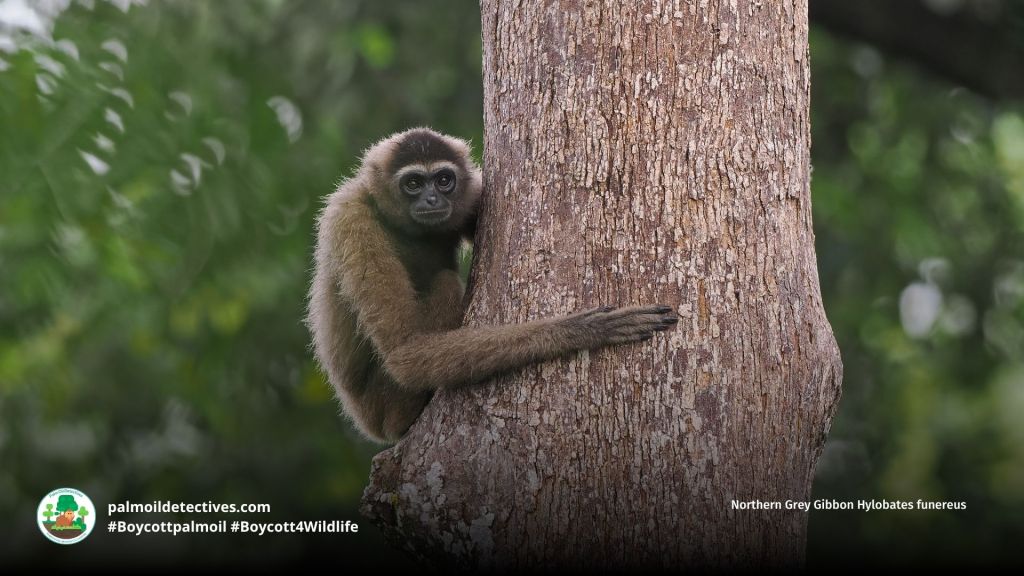
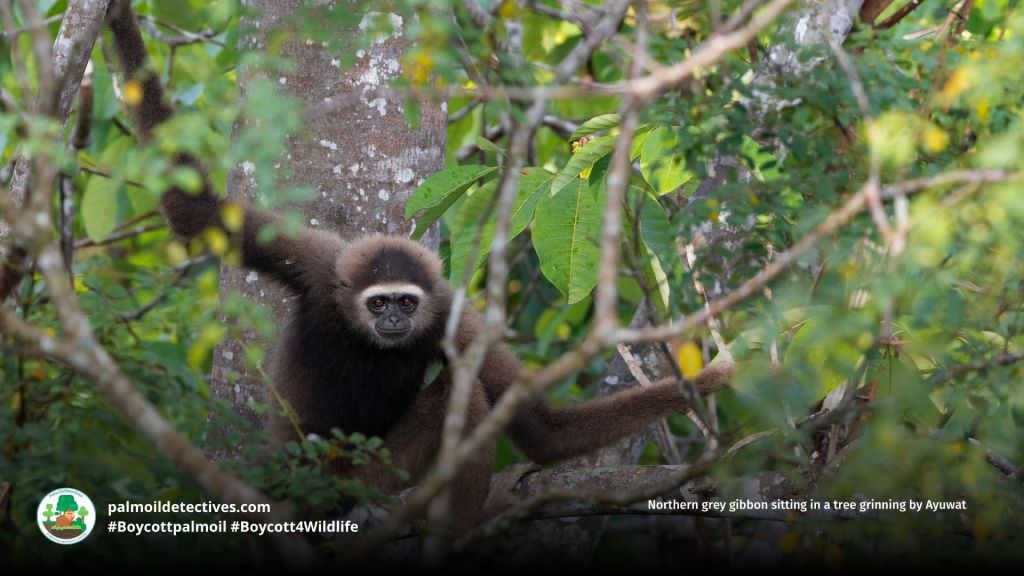
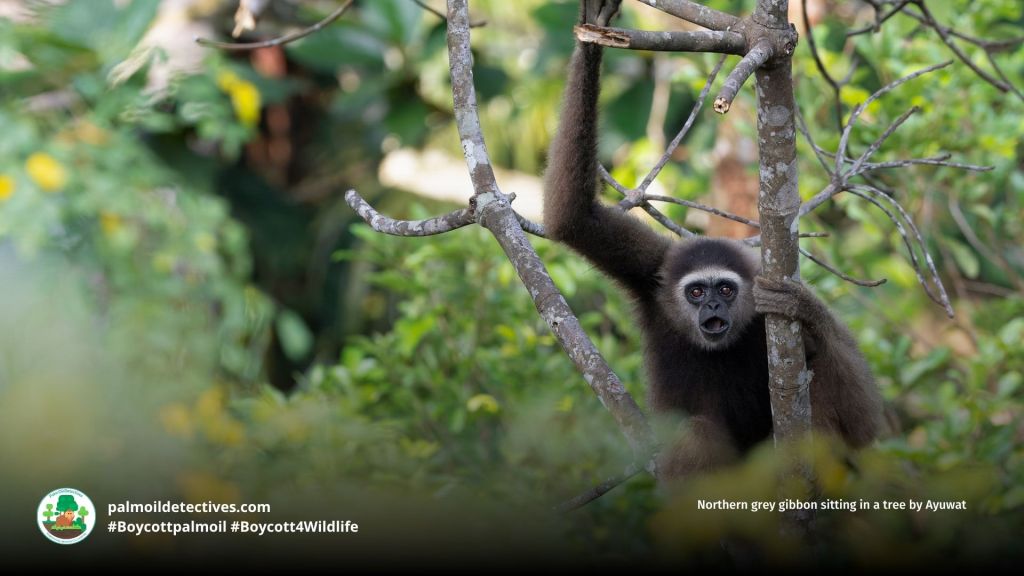
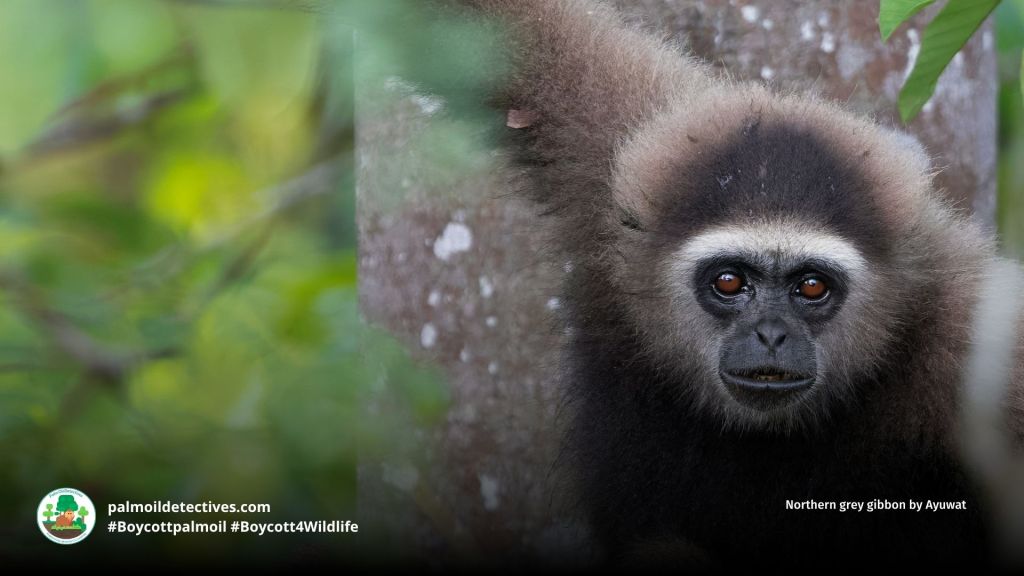
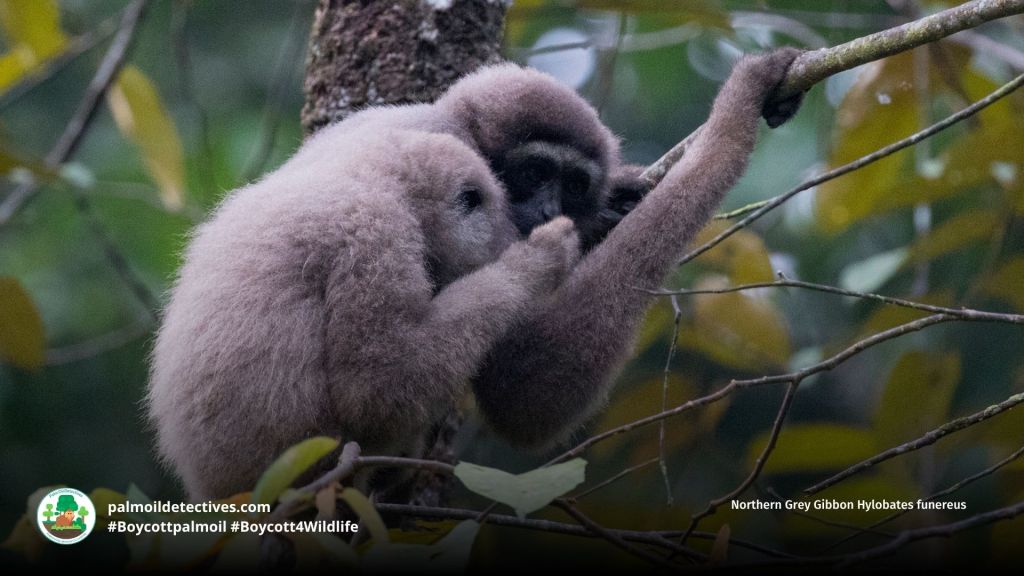
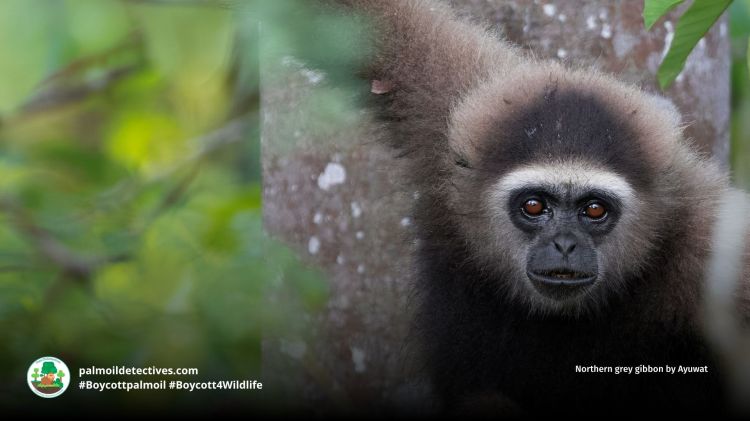
The Northern grey gibbon wears a coat of light brown fur that darkens on its face and chest, framed by a delicate white ring. Their most incredible feature is their impossibly long arms, a special adaptation for their life swinging through the trees. While they are territorial, defending their home with powerful songs, they are not necessarily aggressive neighbours. A long-term study in Malaysia’s Danum Valley Conservation Area found that when different family groups met, their interactions were mostly peaceful and communicative, using their songs to interact rather than fighting (Inoue et al., 2023).
These gibbons are also surprisingly adaptable. During “mast fruiting” events, when the forest trees produce a massive amount of fruit all at once, the gibbons’ social lives flourish. Fueled by the extra energy from the fruit bounty, they travel further, stay active later into the day, and spend significantly more time singing, playing, and grooming each other (Inoue et al., 2021). This period of abundance transforms their behaviour, turning their focus to strengthening social bonds within their family group.

Threats
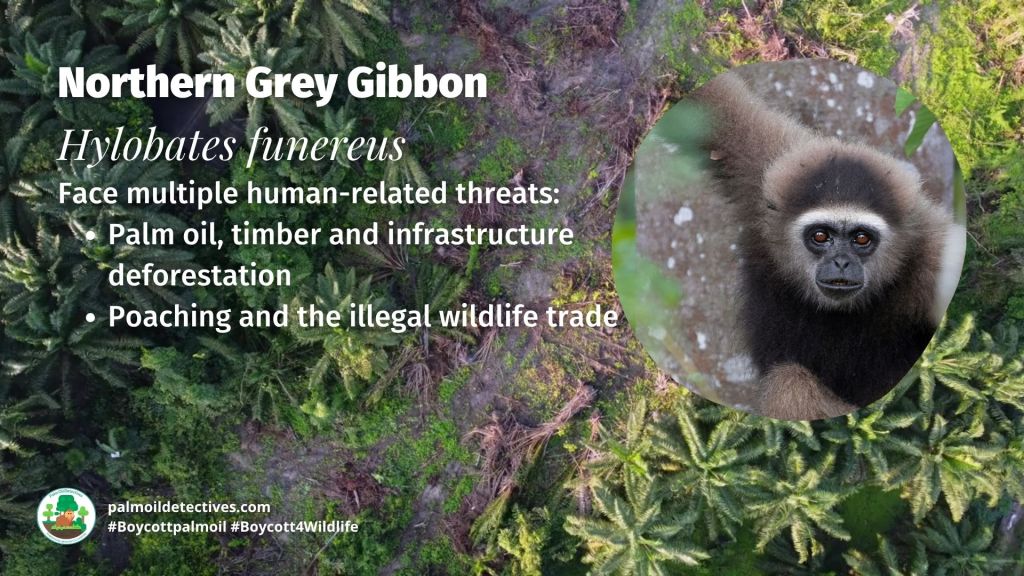
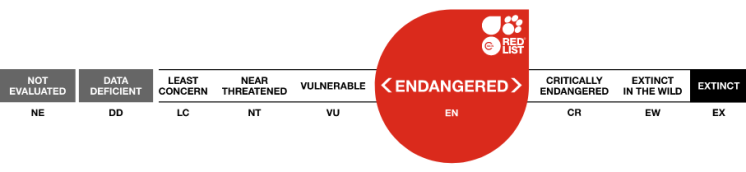
The Red List classifies the Northern grey gibbon as Endangered. Their population has dropped by more than half in the last 30 years because their forest home continues to be destroyed for palm oil and timber.
The Northern Gray Gibbon is threatened by habitat loss due the expansion of agricultural plantations, clear-felling for timber and, to a lesser extent, selective logging, all of which are exacerbated by forest fires associated with El Niño events.
IUCN Red List
Palm oil and timber deforestation
The greatest danger to the Northern grey gibbon is the clearing of rainforests for palm oil agriculture and logging. This destruction carves up their habitat, leaving them stranded in small, isolated forest patches. In these fragments, they struggle to find food and mates, pushing them closer to extinction. Despite the immense greenwashing, there is no such thing as “sustainable” palm oil, all of it drives deforestation.
Illegal hunting and the illegal pet trade
These gibbons are also hunted illegally. Poachers target them for the pet trade, a cruel business that rips families apart. Mothers are often killed to steal their infants, who then face a miserable life in captivity. A gibbon belongs in the canopy, not a cage. Adopt a #vegan lifestyle and #BoycottMeat to protect wild and farmed animals alike.
Diet
Northern grey gibbons are primarily fruit-eaters. Their lives are shaped by the forest’s rhythm of feast and famine. Their diet and energy levels are directly linked to the “mast fruiting” cycles in the Bornean rainforest. When fruit is abundant, they thrive, using the extra energy to fuel their social lives (Inoue et al., 2021). When fruit is scarce, they survive by eating more leaves, flowers, and insects, but these periods put a strain on their health and ability to reproduce.

Mating and Reproduction
Northern grey gibbons form devoted pairs, raising their young in tight-knit family groups. A female gives birth to a single infant after a seven-month pregnancy, and she will nurse the baby for up to two years. The bond is strong, with the young gibbon staying with his family for as long as eight years to learn the skills needed to survive. Interestingly, social bonding seems to be a key part of their lives. Researchers have seen pairs mating even when the female is already pregnant, suggesting the act is not just for making babies but also for reinforcing their relationship, especially during times of fruit abundance when energy is high (Inoue et al., 2021).
Geographic Range
The Northern grey gibbon is found only in the rainforests of northeastern Borneo. They live high in the trees in the Malaysian states of Sabah and Sarawak, the Indonesian provinces of North and East Kalimantan, and in Brunei. They almost never touch the ground, spending their lives in the forest canopy that is now under constant threat.
FAQs
What are the main threats to the Eastern grey gibbon’s existence?
Their survival is threatened by the relentless destruction of their rainforest home for palm oil and timber. They are losing the trees they need for food, shelter, and movement. They are also victims of the illegal pet trade, which involves hunters killing mothers to capture their babies for a life of cruel captivity.
How can we protect the Northern grey gibbon?
A major hurdle for their protection is that the Northern grey gibbon is not officially on Indonesia’s list of protected species, unlike other gibbons. Furthermore, many of these gibbons live outside of national parks on land owned by local communities and private companies. Therefore, a critical step for their survival is to work with these multiple stakeholders to develop a conservation strategy that protects gibbons both inside and outside of protected areas (Setiawan et al., 2021).
How do Eastern grey gibbons communicate with each other?
They communicate using complex, beautiful songs. A mated pair sings duets at dawn to announce their territory and strengthen their bond. Studies show that these songs are also their main way of interacting with neighbouring groups, usually avoiding physical conflict (Inoue et al., 2023).
What are the natural predators of the Northern grey gibbon?
While humans are their biggest threat, Northern grey gibbons do have natural predators in the rainforest. Their main predators include large, stealthy cats like the Sunda clouded leopard, big snakes such as reticulated pythons and king cobras, and powerful birds of prey like the crested serpent eagle and the white-bellied sea eagle. Gibbons are incredibly fast and agile, which helps them escape, and they use loud alarm calls to warn their family and even other monkey species of nearby danger.
Are Northern grey gibbons aggressive towards their neighbours?
While they are territorial animals, Northern grey gibbons mostly avoid physical fights with their neighbours. A long-term study in Borneo observed that when different family groups came into contact, they almost always interacted peacefully. Instead of fighting, they use their powerful songs to communicate, settle disputes, and announce their presence, showing that their relationships are more complex than simple aggression (Inoue et al., 2023).
How does food availability change a Northern grey gibbon’s social life?
The social life of a Northern grey gibbon changes dramatically depending on how much food is available. During “mast fruiting” events, when the forest is full of fruit, they have a surplus of energy which they invest in social activities. Research shows that during these times of plenty, they spend much more time playing, grooming, and singing together, strengthening their family bonds (Inoue et al., 2021).
Do Northern grey gibbons mate for many reasons?
Yes. Mating appears to be an important social activity for Northern grey gibbons, not just a way to produce offspring. Scientists have observed them mating even when the female is already pregnant, particularly during times when food is abundant. This suggests that for gibbons, mating also serves to strengthen the bond between the male and female of a pair, reinforcing their lifelong partnership (Inoue et al., 2021).
Take Action!
Don’t let the beautiful songs of Northern grey gibbons go silent! Use your wallet as a weapon and #BoycottPalmOil #Boycott4Wildlife. When you reject products containing palm oil, you send a clear message that you will not fund ecocide and deforestation. Support Indigenous-led conservation efforts, as they are the original and enduring protectors of Borneo’s rainforests. Your choices can help ensure the gibbon’s song is heard for generations to come.
Support the conservation of this species
Endangered Primate Rescue Centre
Numerous conservation efforts of these rarest of small primates are ongoing. Sponsor a gibbon at a rescue centre here.
Further Information
Inoue, Y., Sinun, W., & Okanoya, K. (2021). Increase in social interactions of wild Northern Gray gibbons (Hylobates funereus) during the mast fruiting period in the Danum Valley Conservation Area, Sabah, Malaysia. acta ethologica, 24, 153–163. https://link.springer.com/article/10.1007/s10211-021-00370-1
Inoue, Y., Sinun, W., & Okanoya, K. (2023). Non-aggressive inter-group interactions in wild Northern Gray gibbons (Hylobates funereus). acta ethologica, 26, 59–74. https://link.springer.com/article/10.1007/s10211-023-00415-7
Lempang, M. E. P., Dewayanti, F. K., Syahrani, L., Permana, D. H., Malaka, R., Asih, P. B. S., & Syafruddin, D. (2022). Primate malaria: An emerging challenge of zoonotic malaria in Indonesia. One Health, 14, 100389. https://doi.org/10.1016/j.onehlt.2022.100389
Nijman, V., Cheyne, S. & Traeholt, C. (2020). Hylobates funereus. The IUCN Red List of Threatened Species 2020: e.T39890A17990856. https://dx.doi.org/10.2305/IUCN.UK.2020-2.RLTS.T39890A17990856.en
Setiawan, A., Cahyaningrum, E., Sibarani, M. C., Oktaviani, R., Nayasilana, I. N., Rifqi, M. A., Abdi, A. M., Rusmadipraja, I. A., & Prasetyo, D. (2021). The future of Indonesian gibbons: challenges and recommendations. Oryx, 55(5), 649-650. https://doi.org/10.1017/S0030605321000909
Wikipedia. (n.d.). Eastern grey gibbon. https://en.wikipedia.org/wiki/Eastern_grey_gibbon

How can I help the #Boycott4Wildlife?
Take Action in Five Ways
1. Join the #Boycott4Wildlife on social media and subscribe to stay in the loop: Share posts from this website to your own network on Twitter, Mastadon, Instagram, Facebook and Youtube using the hashtags #Boycottpalmoil #Boycott4Wildlife.
2. Contribute stories: Academics, conservationists, scientists, indigenous rights advocates and animal rights advocates working to expose the corruption of the palm oil industry or to save animals can contribute stories to the website.




3. Supermarket sleuthing: Next time you’re in the supermarket, take photos of products containing palm oil. Share these to social media along with the hashtags to call out the greenwashing and ecocide of the brands who use palm oil. You can also take photos of palm oil free products and congratulate brands when they go palm oil free.
4. Take to the streets: Get in touch with Palm Oil Detectives to find out more.
5. Donate: Make a one-off or monthly donation to Palm Oil Detectives as a way of saying thank you and to help pay for ongoing running costs of the website and social media campaigns. Donate here
Discover more from Palm Oil Detectives
Subscribe to get the latest posts sent to your email.
 Palm Oil Detectives