

Siamang Symphalangus syndactylus
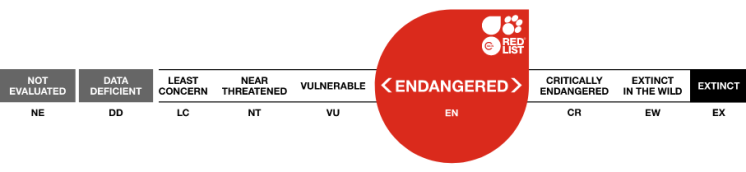
Endangered
Indonesia, Thailand, Sumatra
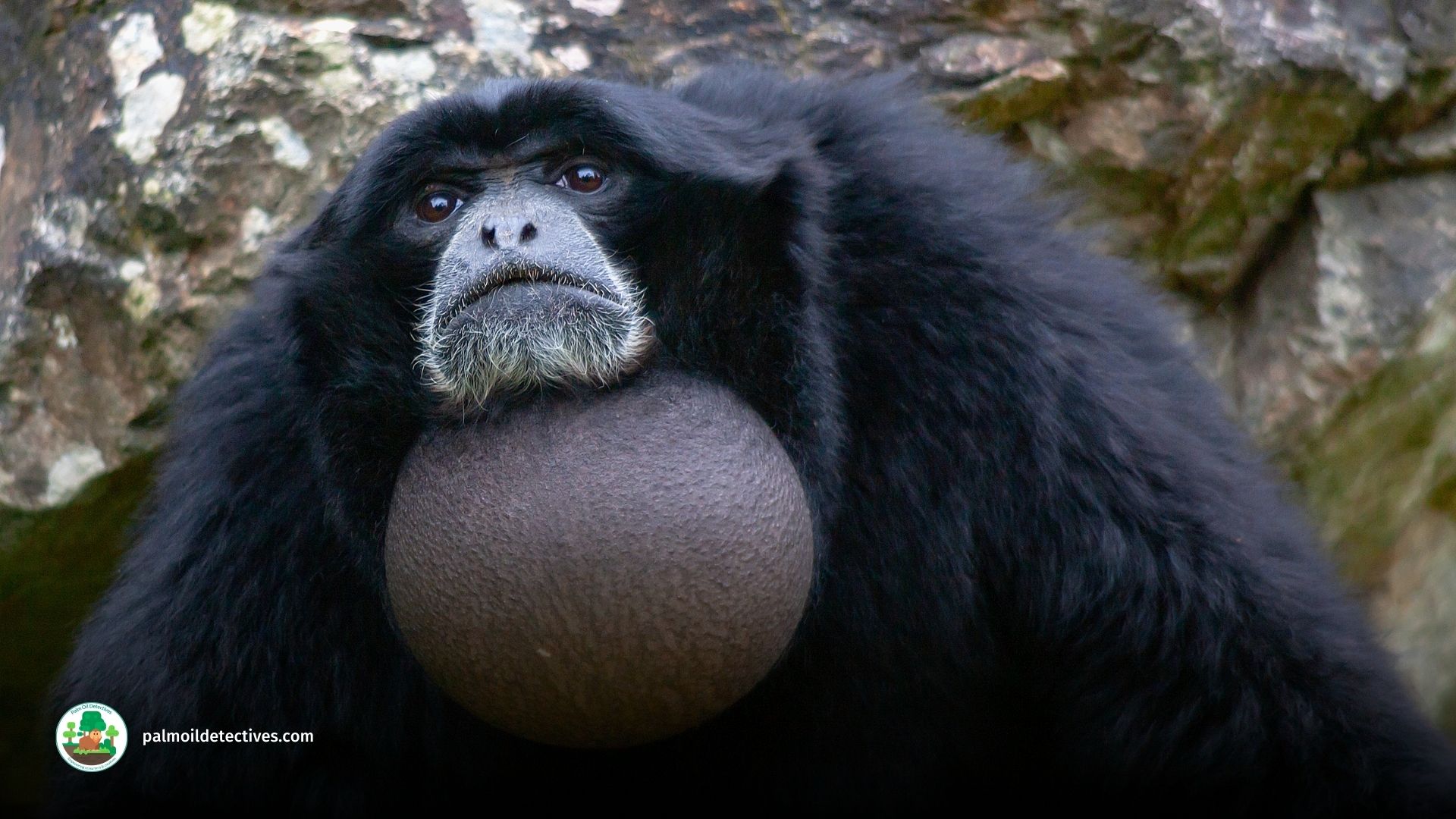
The siamang is the largest and most vocal of all gibbons, known for their spectacular morning calls that resonate across the forests of Sumatra and Peninsular Malaysia. Their complex vocalisations, amplified by a throat sac, serve as a hallmark of their species and a testament to their social bonds.
Despite their ecological importance as seed dispersers and their striking behaviours, siamangs face serious threats from deforestation, palm oil plantations, and illegal pet trade. With forest habitats shrinking rapidly, their populations continue to decline. Fight for their survival by boycotting palm oil and supporting conservation efforts. #BoycottPalmOil #Boycott4Wildlife
#Siamangs are known for their booming boisterous calls 🦍🎶 and close families. They are endangered from complex threats including #palmoil #deforestation. You can save them every time you shop #Boycottpalmoil 🌴🔥⛔️ @palmoildetect #Boycott4Wildlife https://wp.me/pcFhgU-x6
#Siamangs are the biggest #gibbons and arguably the most excitable with a cacophony of jungle calls 🦍🎶 ✨🐵Threats include #palmoil #deforestation and #hunting. Fight for them when you #Boycottpalmoil 🌴🔥⛔️ @palmoildetect #Boycott4Wildlife https://wp.me/pcFhgU-x6



Appearance and Behaviour
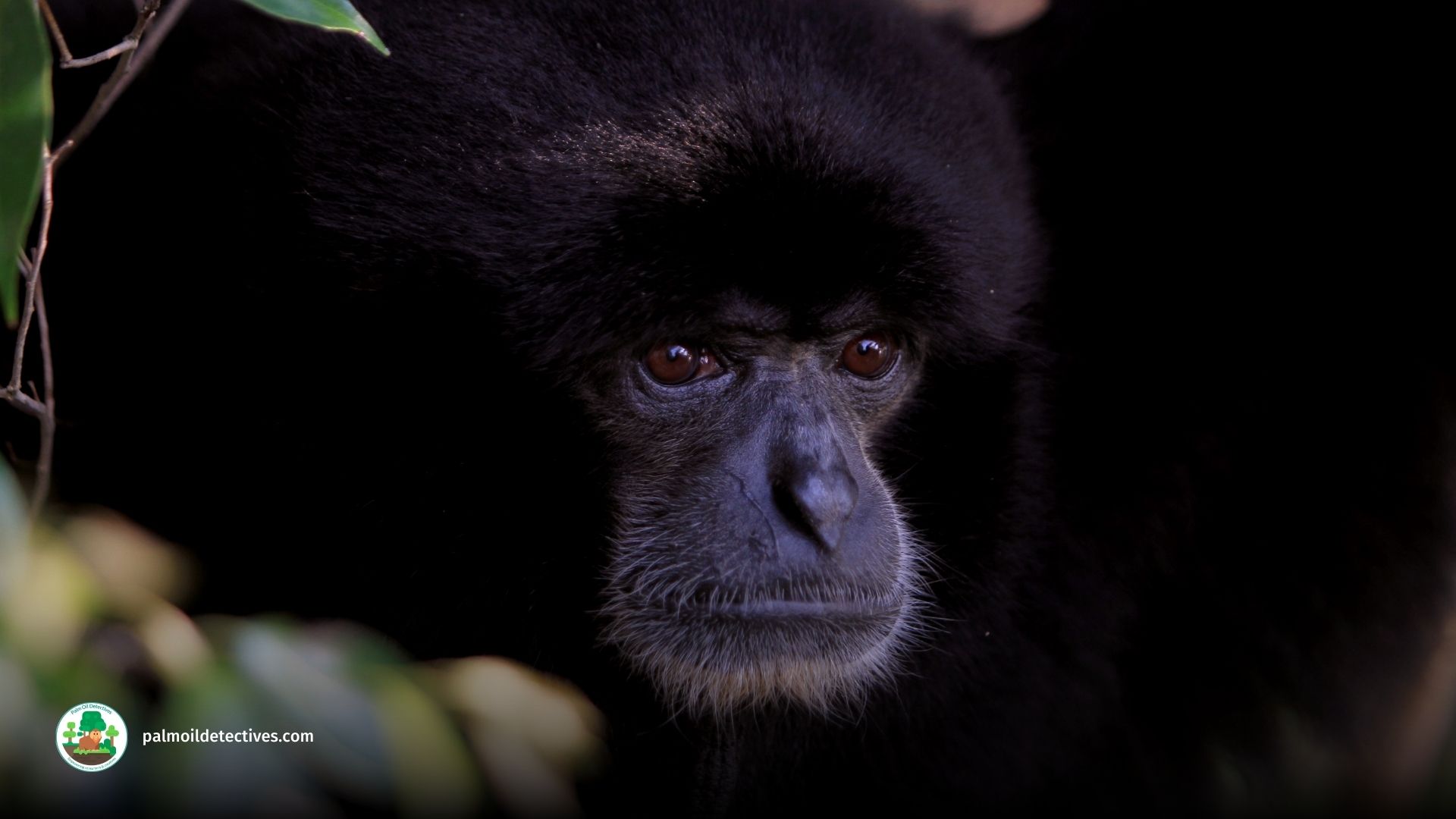
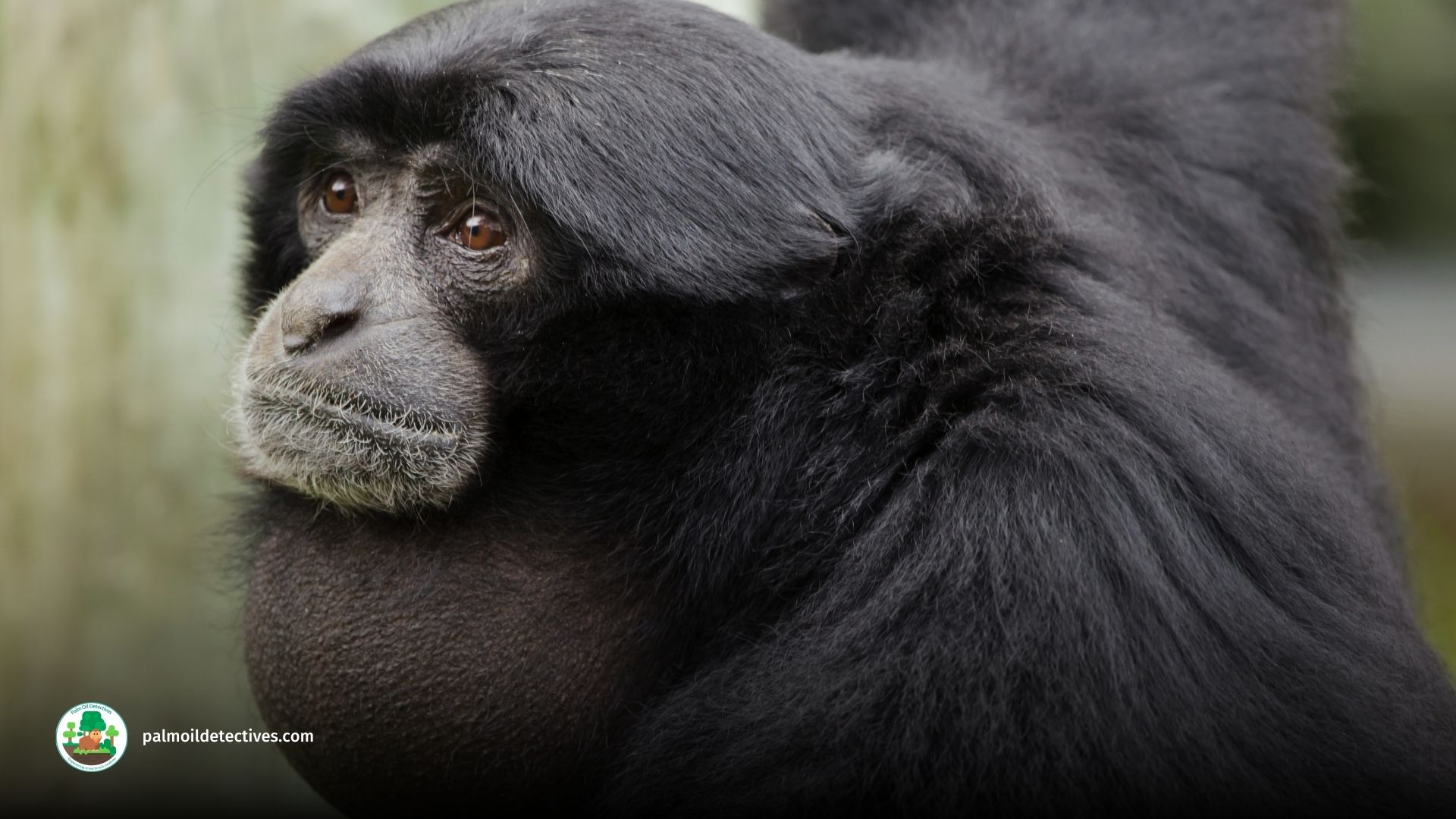
The siamang is a large, arboreal primate, weighing between 10 to 15 kg and reaching up to 90 cm in height. Their jet-black fur contrasts with their bare faces and hands, and they are easily distinguished by the large throat sac that inflates dramatically during their vocalisations. This sac can expand to the size of a grapefruit, amplifying their calls to carry over several kilometres.
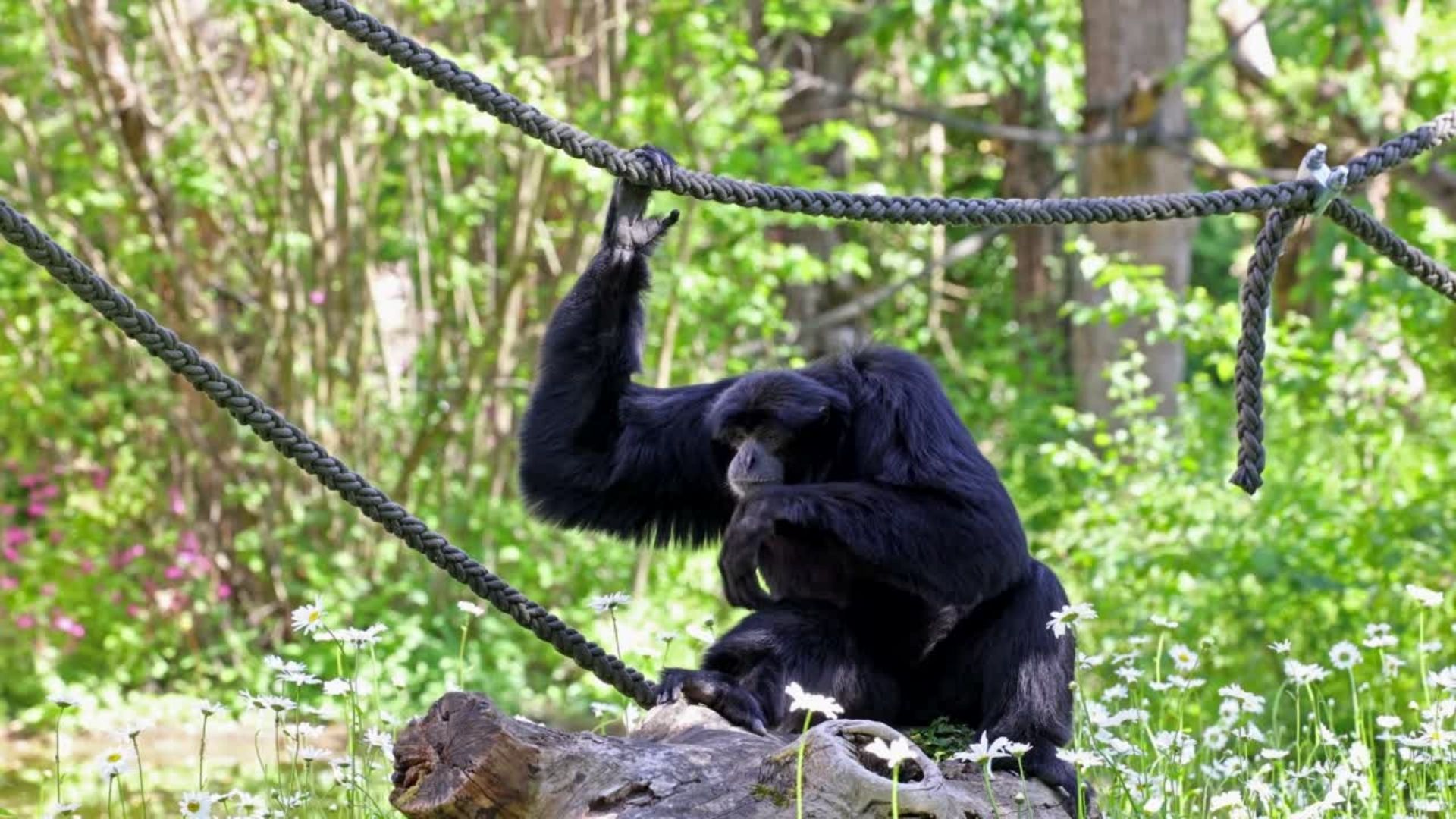
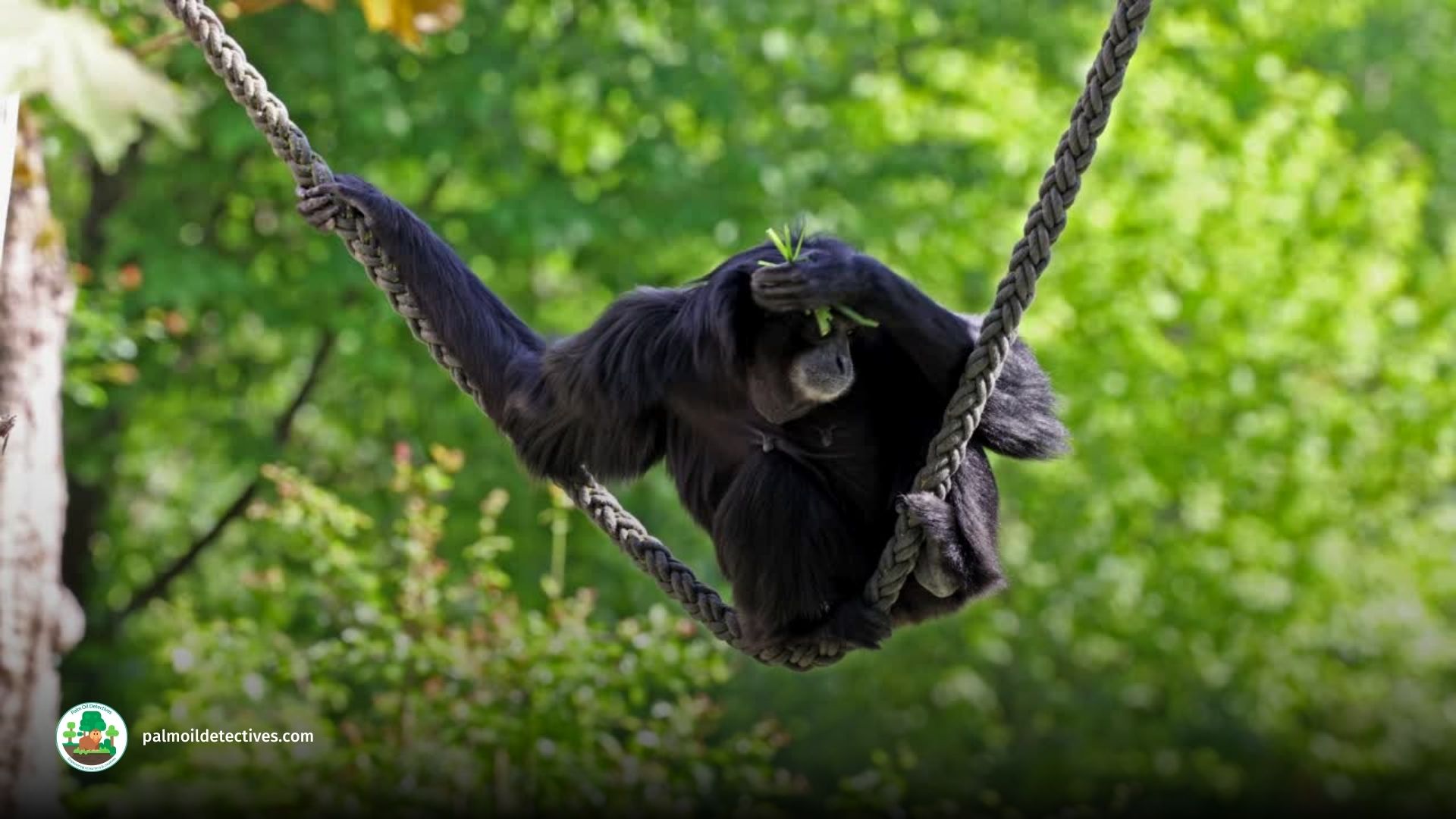
Siamangs are highly social and monogamous, typically forming small family groups consisting of a mated pair and their offspring. Their complex duet calls, often performed at dawn, reinforce pair bonds and establish territory. Their long arms and powerful shoulders make them exceptional brachiators, swinging effortlessly between tree branches.
Their intelligence has been a subject of fascination; recent research suggests siamangs demonstrate advanced cognitive abilities, including problem-solving and tool use (Gibbons et al., 2023).
Geographic Range
Siamangs are native to the tropical forests of Sumatra and Peninsular Malaysia, preferring lowland and hill forests up to 2000 metres in elevation in some areas of Kerinci Seblat National Park, Sumatra, Indonesia. They are most commonly found in primary and secondary forests, where they rely on continuous canopy cover for brachiation. Palm oil deforestation has confined them to protected areas such as Gunung Leuser National Park in Sumatra and Taman Negara National Park in Malaysia (IUCN, 2020). However, the species future in both Malaysia and Indonesia is uncertain. oil palm expansion has been identified as one of the main causes of deforestation in Peninsular Malaysia (Miyamoto et al. 2014). Also, as in Sumatra, rates of forest loss have accelerated over the last several years and are likely to range between 70-100% within the range of siamangs.
Diet
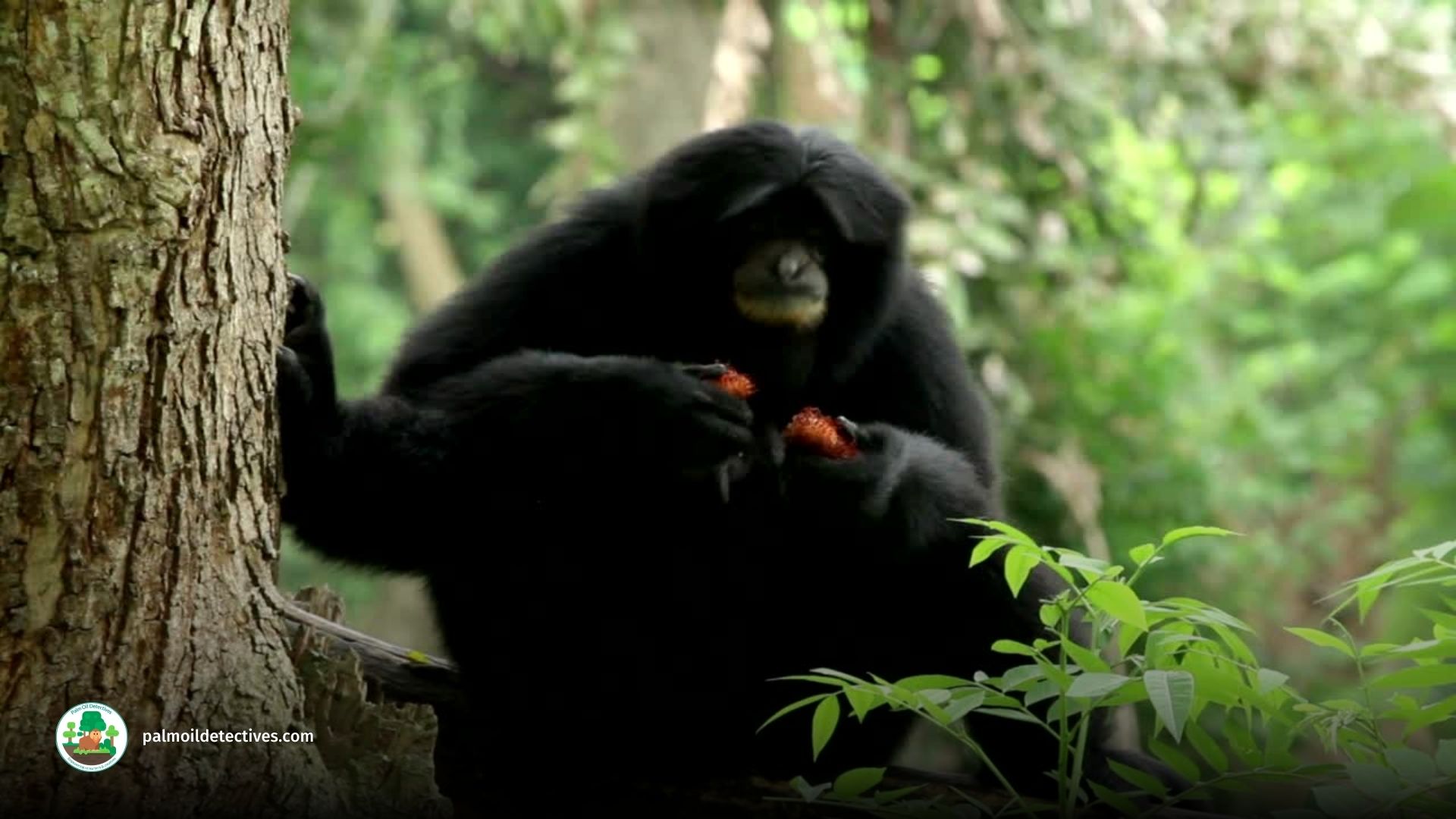
Siamangs are primarily frugivorous, with fruits making up around 60% of their diet. They also consume young leaves, flowers, and insects when fruit availability is low. By consuming fruits and dispersing seeds throughout the forest, they play a crucial role in maintaining biodiversity and promoting forest regeneration (Yusuf et al., 2022).
Reproduction and Mating
Siamangs are monogamous, forming lifelong bonds with their partners. After a gestation period of approximately seven months, females give birth to a single infant. Both parents are actively involved in raising their young, with males frequently carrying infants during their first year.
Young siamangs remain with their family group for up to seven years before dispersing to establish their own territories. The slow reproductive cycle, combined with low birth rates, makes their populations particularly vulnerable to decline (NePrimate Conservancy, 2024).
Threats
This species is threatened by forest conversion, mining, road construction, human encroachment and opportunistic poaching for pet trade and human consumption on Sumatra, with these threats often extending to populations in national parks and protected forests.
IUCN Red List
The siamang is classified as Endangered by the IUCN, with populations continuing to decline across their range. Conservation efforts include habitat restoration, anti-poaching patrols, and public awareness campaigns to reduce demand for palm oil and exotic pets. Protected areas such as Gunung Leuser National Park and Taman Negara are critical to their survival. Yet they are no guarantee for protection and so-called “sustainable” palm oil companies regularly and illegally expand into protected areas.
IUCN Status: Endangered
- Palm oil and timber deforestation: Extensive deforestation for palm oil plantations, logging, and agriculture has destroyed vast swathes of their habitat, forcing siamangs into increasingly fragmented forests.
- Habitat Fragmentation: The loss of continuous canopy cover limits their ability to travel, forage, and maintain genetic diversity, further isolating populations.
- Illegal Pet Trade: Infant siamangs are often captured for the illegal pet trade, typically involving the killing of their mothers.
- Climate Change: Altered rainfall patterns and rising temperatures threaten the fruiting cycles of trees they depend on for food.
- Population Decline: It is estimated that their population has declined by over 50% in the past four decades.
Organisations like the Gibbon Conservation Alliance work tirelessly to study and protect siamangs, advocating for stronger wildlife laws and community-led conservation initiatives. However, long-term survival requires a collective effort to address habitat destruction and curb illegal activities.
Take Action!
Protect siamangs every time you shop by boycotting palm oil. Share their story and demand stronger wildlife protections. Use your influence to make a difference. #BoycottPalmOil #Boycott4Wildlife
Between 1985 and 2007 on Sumatra, over 40% of the conceivable habitat for this species was lost to fires, logging, road development and conversion to agriculture or plantations (Laumonier et al. 2010). The forests, where they remain, are extremely fragmented (Margono et al. 2012).
IUCN Red List

Siamangs have no protection or conservation in place in Sumatra…
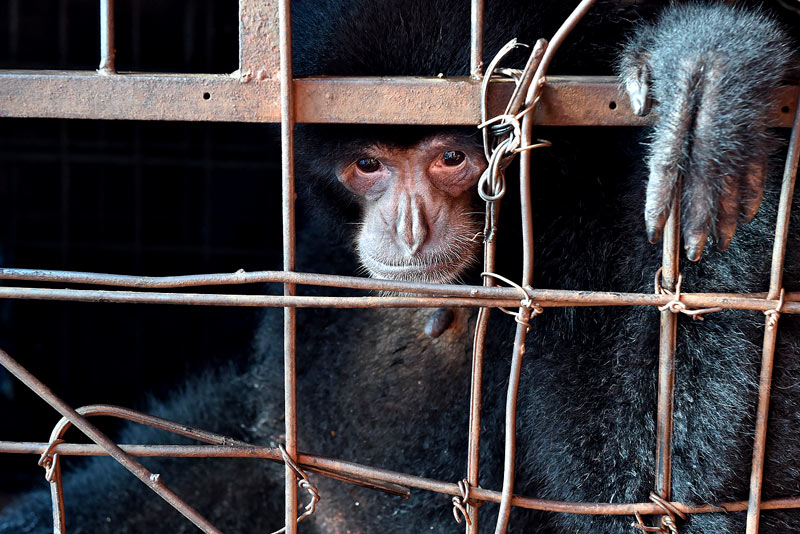
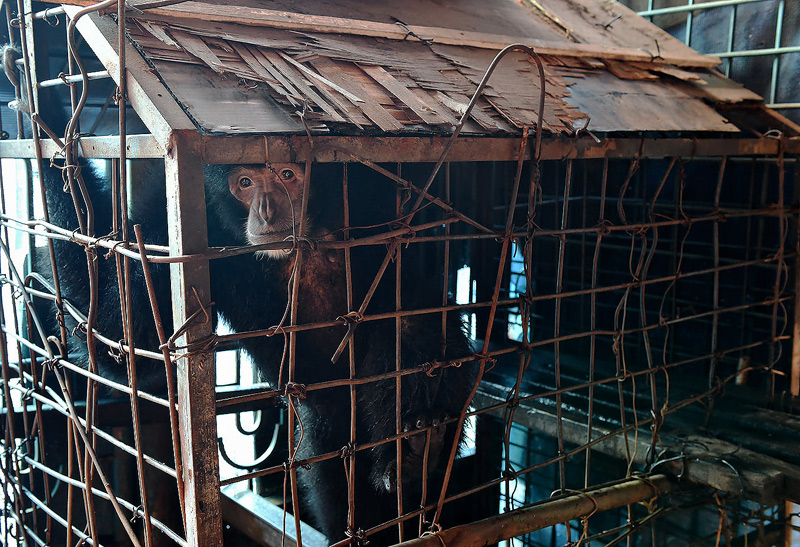
Craig Jones – Wildlife Photo Journalist, ConservationistThis endangered primate faces an uncertain future, most are kept as pets and very little is done to inforce the law to protect them. The outcome to this is they are kept in shocking conditions as pets in Sumatra. This female is 8 years old and has been kept in this same cage for that whole period. I gained access through a friend, this is what I witnessed. Sad thing is there are no NGO’s to help these and the other primates caught and thrown into the pet trade. There is nowhere for them to go when rescued apart from the zoo. While taking this I had to act like a tourist who was interested in Siamangs otherwise I wouldn’t have gained access to this unseen hell. Part of me wishes I hadn’t seen such torment.

Photos and videos: Craig Jones – Wildlife Photo Journalist, Conservationist
Support the conservation of this species
This animal has no protections in place. Read about other forgotten species here. Create art to support this forgotten animal or raise awareness about them by sharing this post and using the #Boycottpalmoil #Boycott4Wildlife hashtags on social media. Also you can boycott palm oil in the supermarket.
Further Information
Craig Jones Wildlife Photography – Sumatra Behind the Scenes
Britannica. (2024). Siamang.
Ecology Asia. (2024). Siamang (Symphalangus syndactylus).
Gibbons, J. et al. (2023). Preliminary assessment of siamang cognition using digital cognition testing software and touchscreen technology.
NePrimate Conservancy. (2024). Siamang (Symphalangus syndactylus).
Nijman, V., Geissmann, T., Traeholt, C., Roos, C. & Nowak, M.G. 2020. Symphalangus syndactylus. The IUCN Red List of Threatened Species 2020: e.T39779A17967873. https://dx.doi.org/10.2305/IUCN.UK.2020-2.RLTS.T39779A17967873.en. Downloaded on 05 February 2021.
Yusuf, E., et al. (2022). Role of siamang (Symphalangus syndactylus) as seed dispersal agent in a Sumatran lowland tropical forest.

How can I help the #Boycott4Wildlife?
Take Action in Five Ways
1. Join the #Boycott4Wildlife on social media and subscribe to stay in the loop: Share posts from this website to your own network on Twitter, Mastadon, Instagram, Facebook and Youtube using the hashtags #Boycottpalmoil #Boycott4Wildlife.
2. Contribute stories: Academics, conservationists, scientists, indigenous rights advocates and animal rights advocates working to expose the corruption of the palm oil industry or to save animals can contribute stories to the website.



3. Supermarket sleuthing: Next time you’re in the supermarket, take photos of products containing palm oil. Share these to social media along with the hashtags to call out the greenwashing and ecocide of the brands who use palm oil. You can also take photos of palm oil free products and congratulate brands when they go palm oil free.
4. Take to the streets: Get in touch with Palm Oil Detectives to find out more.
5. Donate: Make a one-off or monthly donation to Palm Oil Detectives as a way of saying thank you and to help pay for ongoing running costs of the website and social media campaigns. Donate here
Discover more from Palm Oil Detectives
Subscribe to get the latest posts sent to your email.
 Palm Oil Detectives
4 thoughts on “Siamang Symphalangus syndactylus”