
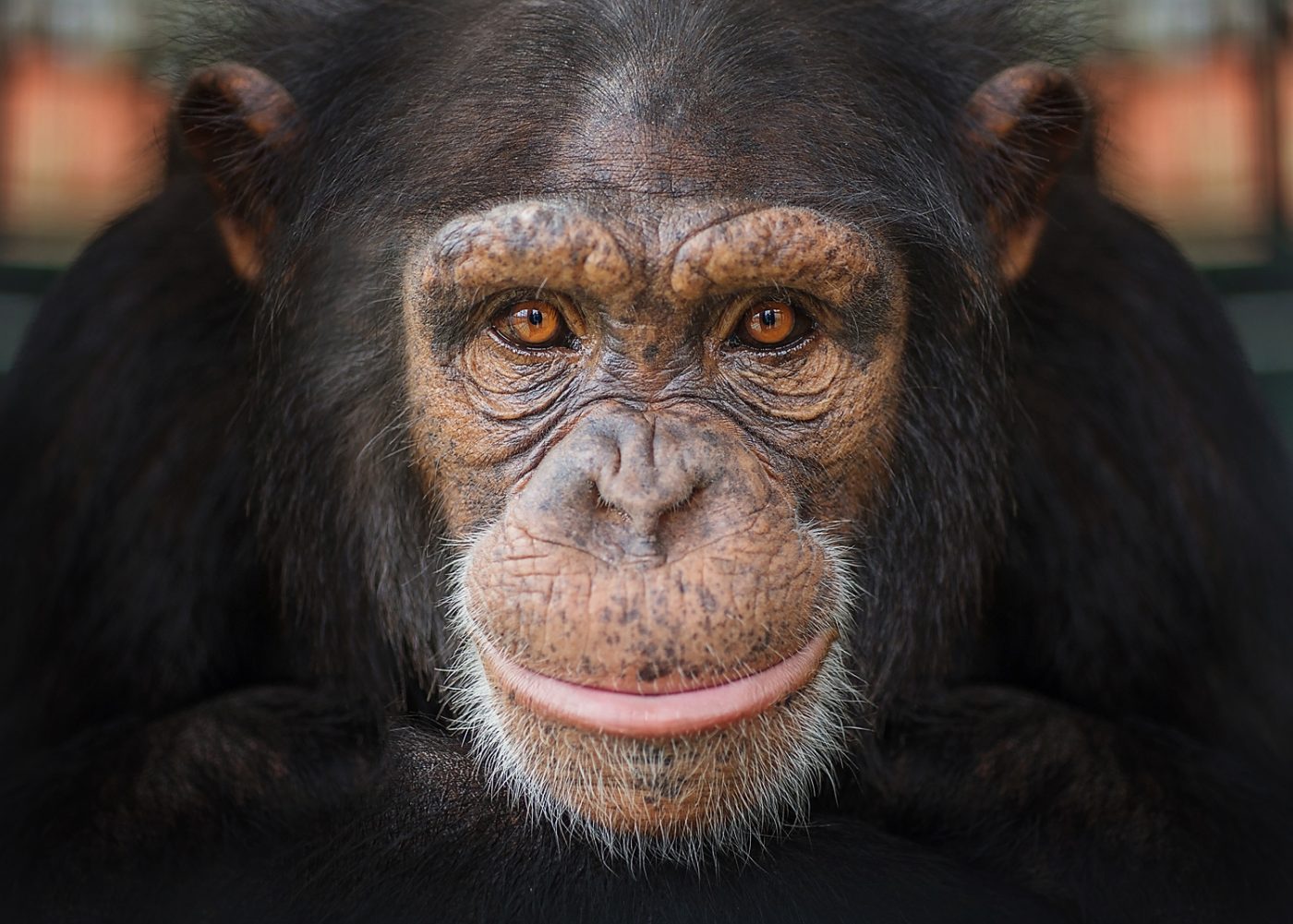
Chimpanzee Pan troglodytes
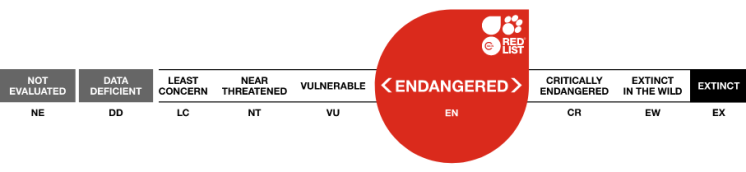
IUCN Red List Status: Endangered
Location: Angola, Burundi, Cameroon, Central African Republic, Republic of the Congo, Côte d’Ivoire, Equatorial Guinea, Gabon, Ghana, Guinea, Guinea-Bissau, Liberia, Mali, Nigeria, Rwanda, Senegal, Sierra Leone, South Sudan, Tanzania, Uganda
Possibly Extinct: Benin, Burkina Faso, Togo
Habitat: Primary and secondary moist lowland forests, swamp forests, montane and submontane forests, dry forests, woodland savannahs, fallow-agriculture mosaics, and oil palm-dominated landscapes
Chimpanzees (Pan troglodytes) are one of humanity’s closest living relatives and the most widespread of all great apes, with a vast historical range stretching across 21 African countries. Research from Uganda’s Budongo Forest has revealed remarkable prosocial behaviours: chimpanzees treat each other’s wounds, remove human snares, and apply chewed medicinal leaves to injuries. These extraordinary acts of empathy and healing show us just how intelligent, sensitive and socially complex these primates are. We must act now to protect them before it’s too late. Despite this, they are now classified as Endangered by the IUCN Red List due to catastrophic declines of more than 50% over a 75-year period, from 1975 to a projected 2050. These losses are driven by a lethal cocktail of threats: rampant poaching, habitat destruction for palm oil and logging, industrial mining, disease outbreaks like Ebola, and illegal trafficking. Subspecies such as P. t. ellioti have been reduced to only a few thousand individuals, while the once widespread P. t. verus is now Critically Endangered. Protecting them means dismantling the extractive industries that are ripping Africa’s forests apart such as the meat industry and palm oil industry. Help them when you #BoycottPalmOil #Boycott4Wildlife and be #Vegan #BoycottMeat
#Chimpanzees 🦍🐵🤎 are directly threatened by #palmoil and #poaching 🏹 42% of their range is great #palmoil land 🤮 SAY NO to #deforestation in #Congo 🇨🇩 #Liberia 🇱🇷 #Uganda 🇺🇬 when u #Boycottpalmoil 🌴🩸🚜🔥☠️⛔️#Boycott4Wildlife @palmoildetect https://palmoildetectives.com/2021/03/13/chimpanzee-pan-troglodytes/
#Chimpanzees 🐒🐵 once made Congo and #Uganda’s #forests grow 🇨🇩🌱 Now they’re threatened by #palmoil, #poaching and human conflict. Fight for their survival! When you shop check the label and #Boycottpalmoil 🌴🪔🧐🤢❌💀 #Boycott4Wildlife @palmoildetect https://palmoildetectives.com/2021/03/13/chimpanzee-pan-troglodytes/
Appearance and Behaviour
Chimpanzees are robust, long-limbed primates covered in coarse black or dark brown hair, with expressive bare faces and opposable thumbs and toes. Sexual dimorphism is subtle but present, with males slightly larger than females. They are renowned for their intelligence, strong familial bonds, and use of tools—a behaviour once thought uniquely human. Stone and wooden tools are crafted to crack nuts; stripped plant stems are used to fish for termites, ants, and honey; and in some populations, percussive techniques are used to break open tortoise shells, suggesting a form of proto-technology (Pika et al., 2019).
They live in large, complex, fission-fusion communities averaging 35 individuals but sometimes reaching up to 150. These societies are shaped by intricate social hierarchies, alliances, and cooperation. Male chimpanzees defend territories collectively, while females focus on maternal care and food acquisition. Power dynamics fluctuate within groups, influenced by both aggression and cooperation, and recent research shows that intersexual power is far more fluid than previously believed, shifting according to ecological and social contexts (Davidian et al., 2022).
Recent findings from the Budongo Forest in Uganda have revealed just how empathetic and knowledgeable these primates are. Chimpanzees there have been recorded treating wounds not only on themselves, but on others in their group. They apply chewed leaves from medicinal plants directly to cuts, remove wire snares, and even lick the wounds of unrelated individuals—a groundbreaking demonstration of care and prosocial concern with no immediate personal gain. These behaviours, including post-mating hygiene using leaves, suggest chimpanzees possess deep-rooted emotional awareness and a sophisticated understanding of their natural pharmacy. They are not just survivors in a threatened forest—they are healers, caretakers, and guardians of a cultural legacy we barely understand.
Diet
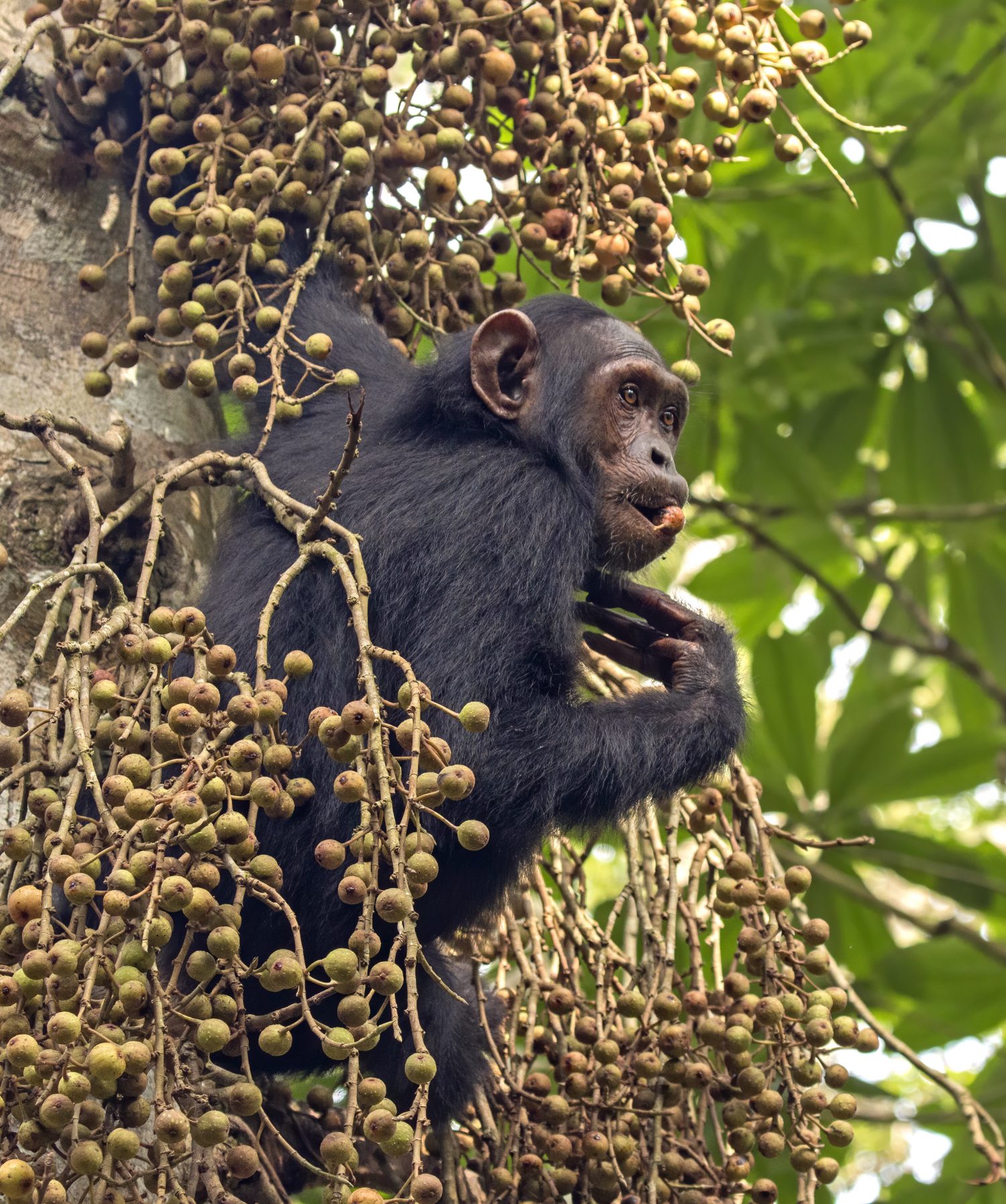
Chimpanzees are omnivorous and opportunistic, with fruit making up approximately 50% of their diet. They also consume terrestrial herbaceous vegetation, bark, stems, flowers, seeds, pith, mushrooms, honey, eggs, and even small to medium-sized mammals, making them the most carnivorous of the great apes. In Guinea and Gabon, for example, chimpanzees have been observed hunting monkeys, exploiting tortoises using percussive tools, and sharing meat with group members—behaviours that demonstrate advanced cognition and complex social rules around food distribution (Pika et al., 2019).
They are the most carnivorous of the great apes. Chimpanzees are also proficient tool users. Tools made from plant parts are used to extract bees, ants and termites from their nests (e.g., Fowler and Sommer 2007), and stone and wooden hammers are used to crack nuts (e.g., Boesch and Boesch 1984, Matsuzawa et al. 2011).
Chimpanzees living in anthropogenic landscapes, such as the agriculture-swamp mosaics of Sierra Leone, have adapted their diets to include cultivated fruits, oil palm (Elaeis guineensis), and swamp-dwelling plant species (Garriga et al., 2019). This ability to adjust to human-altered environments showcases their remarkable resilience, but also places them in direct conflict with farmers.
Reproduction and Mating
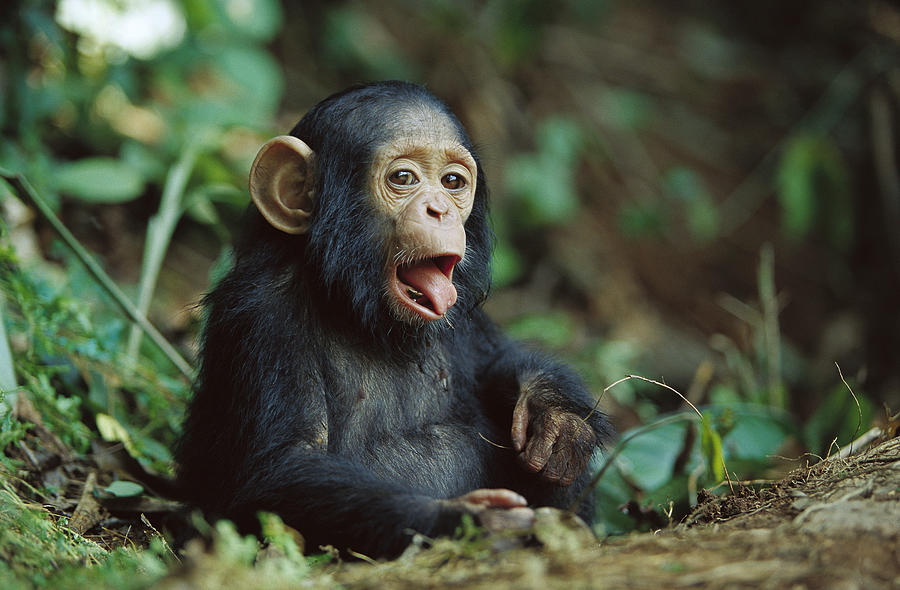
Females reach sexual maturity around 7 to 8 years, with first births typically occurring between 13 and 14 years, though births as early as 9 have been recorded in P. t. verus. The reproductive cycle is approximately 35 days, and gestation lasts 230 days. Offspring are typically weaned by age 4 or 5, and the interbirth interval—averaging between 4.6 and 7.2 years—reflects their slow reproductive rate. Females may continue reproducing into their late forties and give birth to up to nine infants across their lifespan, though infant mortality is high and only one-third typically survive beyond infancy (Williamson et al., 2013).
These slow life histories make chimpanzee populations particularly vulnerable to even moderate increases in mortality, whether from poaching, disease, or habitat loss. Communities rely heavily on the experience of older individuals for group stability, knowledge transfer, and parenting—meaning that every loss is acutely felt.
Geographic Range
Chimpanzees once roamed much of sub-Saharan Africa but now survive in fragmented populations across 21 countries. Their current range extends over 2.6 million km² but is increasingly broken by logging roads, mines, and agricultural development.
The four subspecies include:
- P. t. verus: Found in West Africa from Senegal to Ghana. Now Critically Endangered and possibly extinct in Benin, Burkina Faso, and Togo.
- P. t. ellioti: Endemic to Nigeria and Cameroon north of the Sanaga River, with fewer than 9,000 individuals.
- P. t. troglodytes: Occupies parts of Cameroon, Gabon, Republic of the Congo, and DRC.
- P. t. schweinfurthii: Inhabits East and Central Africa, including Uganda, Rwanda, Burundi, and western Tanzania.
Recent studies show that over half the chimpanzee population in Sierra Leone lives outside protected areas, adapting to swamp-agriculture mosaics where swamps and abandoned settlements offer critical refuge (Garriga et al., 2019).
Threats
As tropical Asia nears its capacity for oil-palm plantations, Africa has become the new frontier for this crop, which offers excellent economic prospects in countries with appropriate rainfall, soil and temperature conditions (Rival and Lavang 2014). Unfortunately, these areas coincide with good great ape habitat: 42.3% of the African apes’ range is suitable for oil palm (Wich et al. 2014), so the spread of plantations is likely to hit Chimpanzee populations hard in coming years.
IUCN red list
Poaching for Bushmeat and Pet Trade
Despite national and international protections, illegal poaching remains the most immediate and deadly threat to chimpanzees. They are hunted for bushmeat in both rural and urban markets, especially near resource extraction camps. Infants captured from slain mothers often end up in the exotic pet trade. Wire snares set for other animals often maim or kill chimpanzees indiscriminately. This hunting pressure is amplified by road access into previously untouched forests, allowing easier transport of weapons, meat, and live animals (Quiatt et al., 2002; Hicks et al., 2010).
Habitat Loss from Logging and Mining
Extractive industries are razing African forests with shocking speed. Logging concessions, especially in the Congo Basin, degrade habitat by removing key food trees and fragmenting territories. Mining for gold, cobalt, and other minerals permanently destroys habitat through open-pit mining, pollution, and worker migration. The construction of roads, railways, and camps introduces further disturbance and dramatically increases hunting risk (Morgan et al., 2007; Laurance et al., 2015).
Palm Oil and Industrial Agriculture
With Southeast Asia reaching capacity, multinational companies have turned to Africa as the next frontier for palm oil. Up to 42% of chimpanzee habitat overlaps with regions ideal for oil palm. Forest is cleared on a massive scale to make way for plantations. This transformation not only removes food trees and nesting sites but also introduces human-wildlife conflict as chimpanzees raid crops out of desperation. They are often killed in retaliation, poisoned, or captured during such encounters (Wich et al., 2014; Garriga et al., 2019).
Disease and Zoonotic Transmission
Chimpanzees are genetically similar to humans and therefore vulnerable to many of the same diseases. Outbreaks of Ebola virus disease have decimated populations in Uganda, Gabon and the Republic of the Congo. The virus spreads rapidly and has wiped out entire communities in a matter of weeks. Respiratory illnesses, anthrax, and other infections also spread from humans during tourism, research, and contact in forest-edge settlements (Walsh et al., 2005; Köndgen et al., 2008; Gilardi et al., 2015).
Habitat Encroachment and Fragmentation
Outside protected areas, chimpanzees increasingly live in “agriculture-swamp matrices”—landscapes shaped by slash-and-burn farming, abandoned villages, and scattered oil palms. In Sierra Leone, these degraded landscapes are dominated by roads and settlements. Chimpanzees prefer swamps, avoid roads, and often nest near abandoned villages where wild fruits grow. But such areas are also hotspots for conflict and poaching (Garriga et al., 2019). Their continued existence in these landscapes depends on human tolerance, often rooted in cultural taboos or religion.
Take Action!
The survival of chimpanzees hinges on dismantling the industries that exploit Africa’s forests. Boycott palm oil, demand ethical investment policies from your bank, and support local and indigenous communities fighting for land sovereignty. Advocate for bans on forest clearance and stronger enforcement of wildlife protections. Never support the exotic pet trade or zoos that profit from captivity. #BoycottPalmOil #Boycott4Wildlife #Vegan #BoycottMeat
FAQs
How many chimpanzees are left in the wild?
Estimates vary, but the total population is believed to be between 172,000 and 300,000 individuals across all four subspecies. P. t. verus and P. t. ellioti are the most endangered, with populations under 65,000 and 9,000 respectively. The strongest populations are in the Democratic Republic of the Congo, Gabon, and Guinea (IUCN, 2021; Plumptre et al., 2010).
How do chimpanzees use tools?
Chimpanzees have been observed crafting and using a wide range of tools—sticks to fish for termites, stones to crack nuts, and even using rocks to break open tortoise shells (Pika et al., 2019). These behaviours vary by region and community, suggesting cultural transmission of knowledge across generations.
Do chimpanzees eat meat?
Yes. They are the most carnivorous of all great apes. While fruit forms the basis of their diet, they also hunt monkeys, birds, and small mammals. Meat is often shared socially, reinforcing bonds within groups.
Are chimpanzees affected by palm oil?
Industrial agriculture is expanding across the chimpanzee’s range, particularly oil palm (Elaeis guineensis), which is transforming the West African landscape. In places like Sierra Leone, more than half of all chimpanzees now survive in fallow-agriculture mosaics dominated by oil palms and swamps. These semi-domesticated oil palms—originally planted by people—have become fallback nesting sites and food sources for chimpanzees (Garriga et al., 2019). However, reliance on these plants places them directly in conflict with farmers, leading to more crop-raiding incidents and retaliatory killings. As noted in studies of chimpanzees in Guinea-Bissau and Sierra Leone, swamps and mangroves may offer some refuge due to being less disturbed, but these marginal areas are also vulnerable to fire, agricultural drainage, and infrastructure development. The expansion of palm oil agriculture not only destroys critical forest but introduces new risks of zoonotic disease and food insecurity for chimpanzees already on the edge.
Can chimpanzees survive outside protected areas?
Studies in Sierra Leone show that chimpanzees are adapting to anthropogenic landscapes such as swamps and farmland mosaics, but this is no substitute for intact forest ecosystems. Their survival depends on local tolerance, and even that is being eroded as competition for space intensifies (Garriga et al., 2019).
Despite the fact that all killing, capture or consumption of great apes is illegal, poaching is the greatest threat to most Chimpanzees. The second major driver of decline in central Chimpanzee populations is infectious disease, especially Ebola virus disease (EVD).


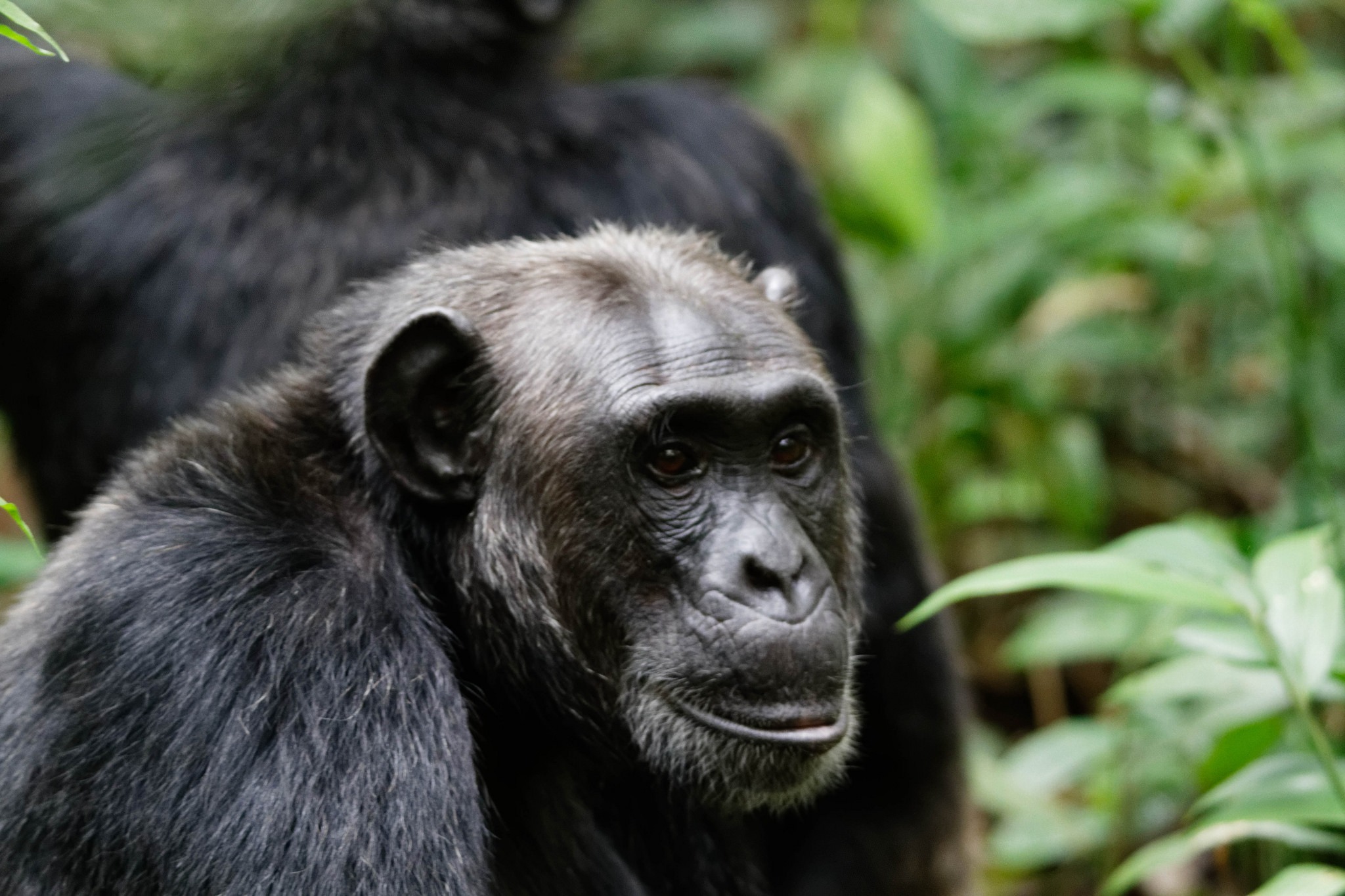
The conversion of forest to farmland across Africa has severely reduced the availability of Chimpanzee habitat. Such habitat loss is especially acute in West Africa, where it is estimated that more than 80% of the region’s original forest cover had been lost by the early 2000s (Kormos et al. 2003).
Effective, coordinated land-use planning is required across the geographic range of chimpanzees to avoid the clearing of large areas of Chimpanzee habitat to establish large-scale agriculture, especially oil-palm plantations (IUCN SSC Primate Specialist Group 2014, Wich et al. 2014, Ruysschaert and Rainer 2015).
IUCN Red list
Support the conservation of this species
Africa Conservation Foundation
Jane Goodall Conservation Foundation
Further Information
Davidian, E., Surbeck, M., Lukas, D., Kappeler, P. M., & Huchard, E. (2022). The eco-evolutionary landscape of power relationships between males and females. Trends in Ecology & Evolution, 37(8), 706–718. https://doi.org/10.1016/j.tree.2022.04.004
Freymann, E., Hobaiter, C., Huffman, M. A., Klein, H., Muhumuza, G., Reynolds, V., Slania, N. E., Soldati, A., Yikii, E. R., Zuberbühler, K., & Carvalho, S. (2025). Self-directed and prosocial wound care, snare removal, and hygiene behaviors amongst the Budongo chimpanzees. Frontiers in Ecology and Evolution, 13, Article 1540922. https://doi.org/10.3389/fevo.2025.1540922
Garriga, R. M., Marco, I., Casas-Díaz, E., Acevedo, P., Amarasekaran, B., Cuadrado, L., & Humle, T. (2019). Factors influencing wild chimpanzee (Pan troglodytes verus) relative abundance in an agriculture-swamp matrix outside protected areas. PLOS ONE, 14(5), e0215545. https://doi.org/10.1371/journal.pone.0215545
Humle, T., Maisels, F., Oates, J.F., Plumptre, A. & Williamson, E.A. 2016. Pan troglodytes (errata version published in 2018). The IUCN Red List of Threatened Species 2016: e.T15933A129038584. https://dx.doi.org/10.2305/IUCN.UK.2016-2.RLTS.T15933A17964454.en. Downloaded on 12 March 2021.
Musgrave, S., Koni, D., Morgan, D., & Sanz, C. (2024). Planning abilities of wild chimpanzees (Pan troglodytes troglodytes) in tool-using contexts. Primates, 65, 525–539. https://doi.org/10.1007/s10329-023-01106-4
Pika, S., Klein, H., Bunel, S., Baas, P., Théleste, E., & Deschner, T. (2019). Wild chimpanzees (Pan troglodytes troglodytes) exploit tortoises via percussive technology. Scientific Reports, 9, 7661. https://doi.org/10.1038/s41598-019-43301-8
van Dijk, K., Cibot, M., & McLennan, M. R. (2021). Chimpanzees (Pan troglodytes) adapt their nesting behavior after large-scale forest clearance and community decline. American Journal of Primatology, 83(10), e23323. https://doi.org/10.1002/ajp.23323

How can I help the #Boycott4Wildlife?
Take Action in Five Ways
1. Join the #Boycott4Wildlife on social media and subscribe to stay in the loop: Share posts from this website to your own network on Twitter, Mastadon, Instagram, Facebook and Youtube using the hashtags #Boycottpalmoil #Boycott4Wildlife.
2. Contribute stories: Academics, conservationists, scientists, indigenous rights advocates and animal rights advocates working to expose the corruption of the palm oil industry or to save animals can contribute stories to the website.





3. Supermarket sleuthing: Next time you’re in the supermarket, take photos of products containing palm oil. Share these to social media along with the hashtags to call out the greenwashing and ecocide of the brands who use palm oil. You can also take photos of palm oil free products and congratulate brands when they go palm oil free.
4. Take to the streets: Get in touch with Palm Oil Detectives to find out more.
5. Donate: Make a one-off or monthly donation to Palm Oil Detectives as a way of saying thank you and to help pay for ongoing running costs of the website and social media campaigns. Donate here
Discover more from Palm Oil Detectives
Subscribe to get the latest posts sent to your email.
 Palm Oil Detectives
2 thoughts on “Chimpanzee Pan troglodytes”