
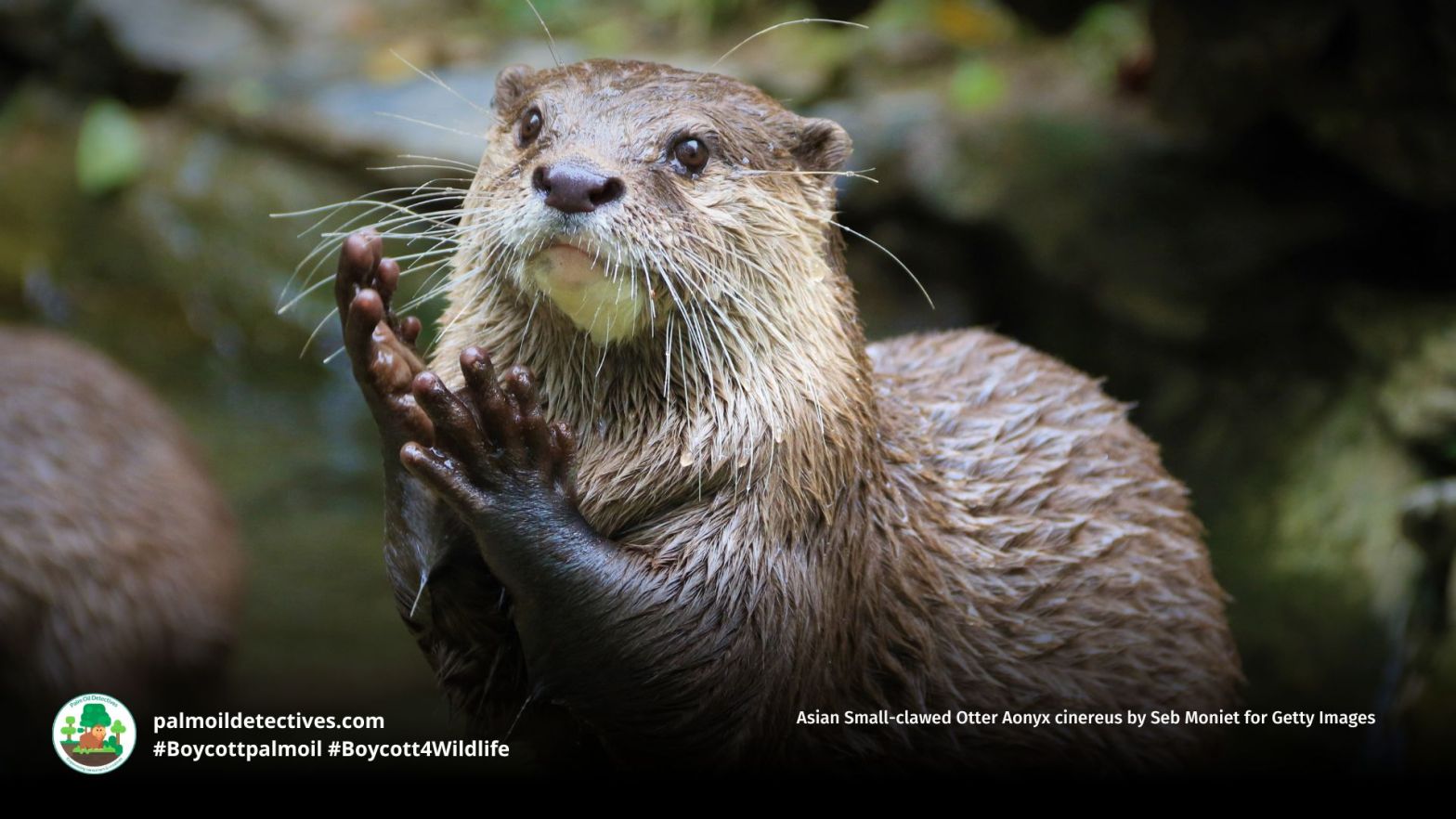
Asian Small-clawed Otter Aonyx cinereus
IUCN Red List Status: Vulnerable
Locations: India, Nepal, Bangladesh, Bhutan, China, Taiwan, Myanmar, Thailand, Laos, Cambodia, Vietnam, Malaysia, Indonesia (Sumatra, Borneo, Java), The Philippines (Palawan)
Found in freshwater wetlands, peat swamps, mangroves, hill streams and rice fields across South and Southeast Asia, with a genetically distinct and critically impacted subspecies (Aonyx cinereus nirnai) in the Western Ghats of India.
The Asian Small-clawed #Otter, the world’s smallest otter species — is inquisitive, intelligent, and highly social. They are listed as #Vulnerable on the IUCN Red List and are declining rapidly due to #palmoil #tea and #coffee #deforestation, #poaching, #pesticide #pollution, and the illegal pet trade. Their fragile habitat in the Western Ghats, India home to the subspecies Aonyx cinereus nirnai, is being destroyed at an alarming rate for palm oil monocultures, plantations, and hydropower development. Boycott #palmoil and demand protection for these sensitive and intelligent wetland sentinels. #BoycottPalmOil #Boycott4Wildlife #Vegan #BoycottMeat
The Asian Small-Clawed Otter 🦦🩷 is the smallest #otter in the 🌎. A tenacious survivor in #Asia’s vast #rivers, #pesticide pollution and #palmoil #ecocide now pose grave threats. Help them when you #Boycottpalmoil 🌴⛔️ #Boycott4Wildlife @palmoildetect https://palmoildetectives.com/2026/03/22/asian-small-clawed-otter-aonyx-cinereus/
Communicating with chirps and whistles, endearing Asian Small-Clawed #Otters live in rowdy groups 🦦😘 They’re #vulnerable from the illegal #pet trade and #palmoil #deforestation. #Boycottpalmoil 🌴🩸❌ #Boycott4Wildlife in the supermarket! @palmoildetect https://palmoildetectives.com/2026/03/22/asian-small-clawed-otter-aonyx-cinereus/
Appearance and Behaviour
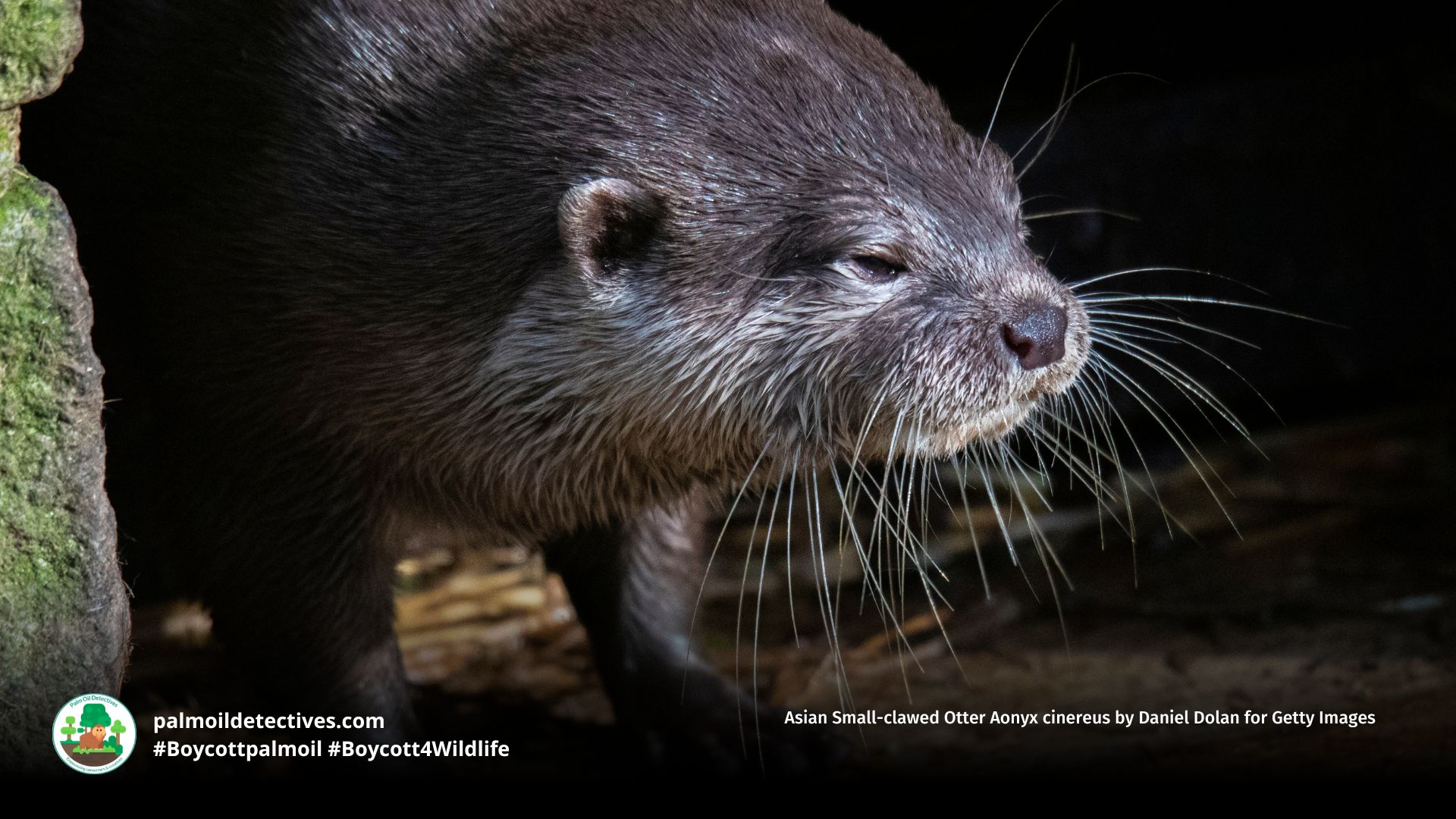
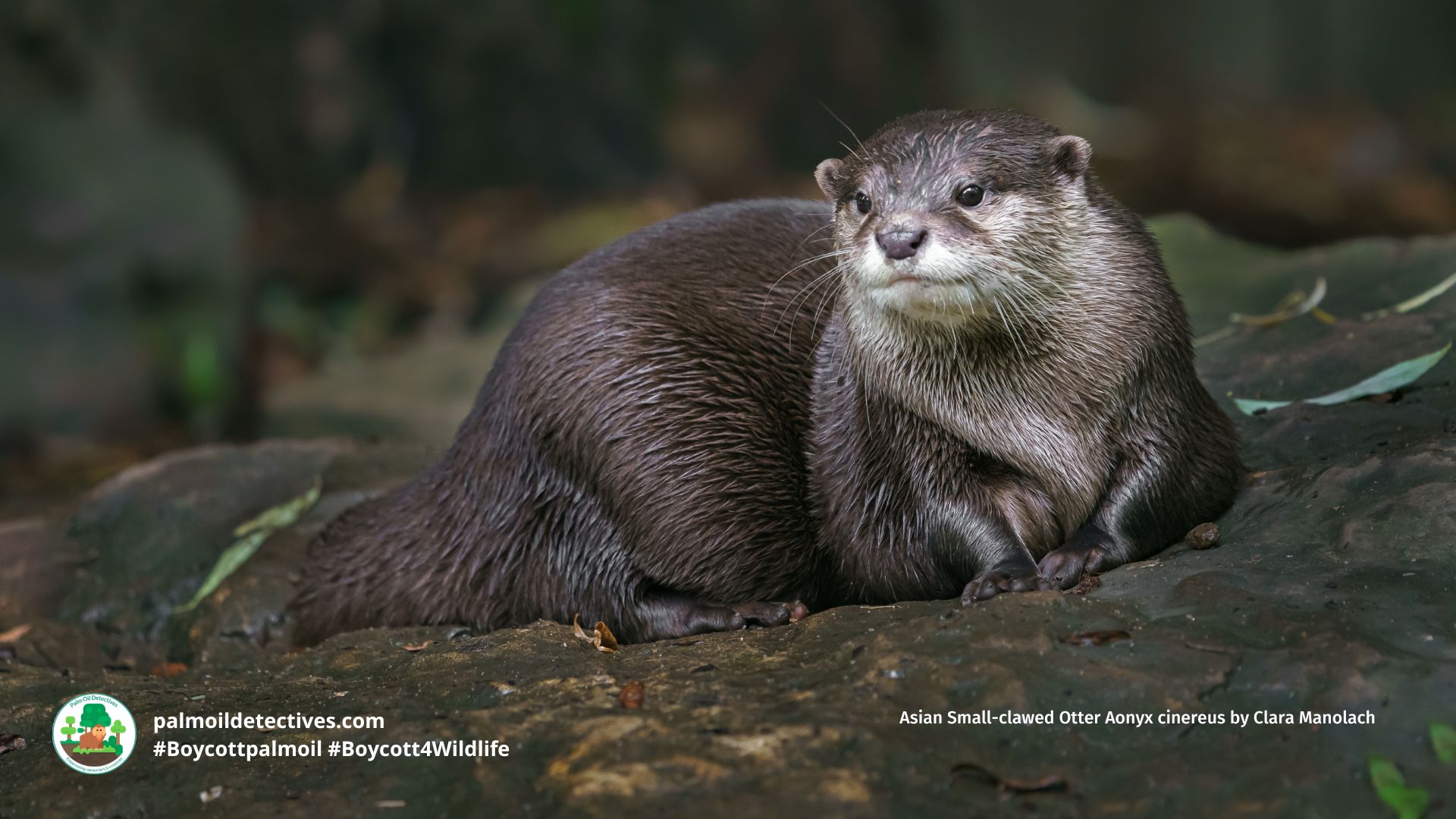
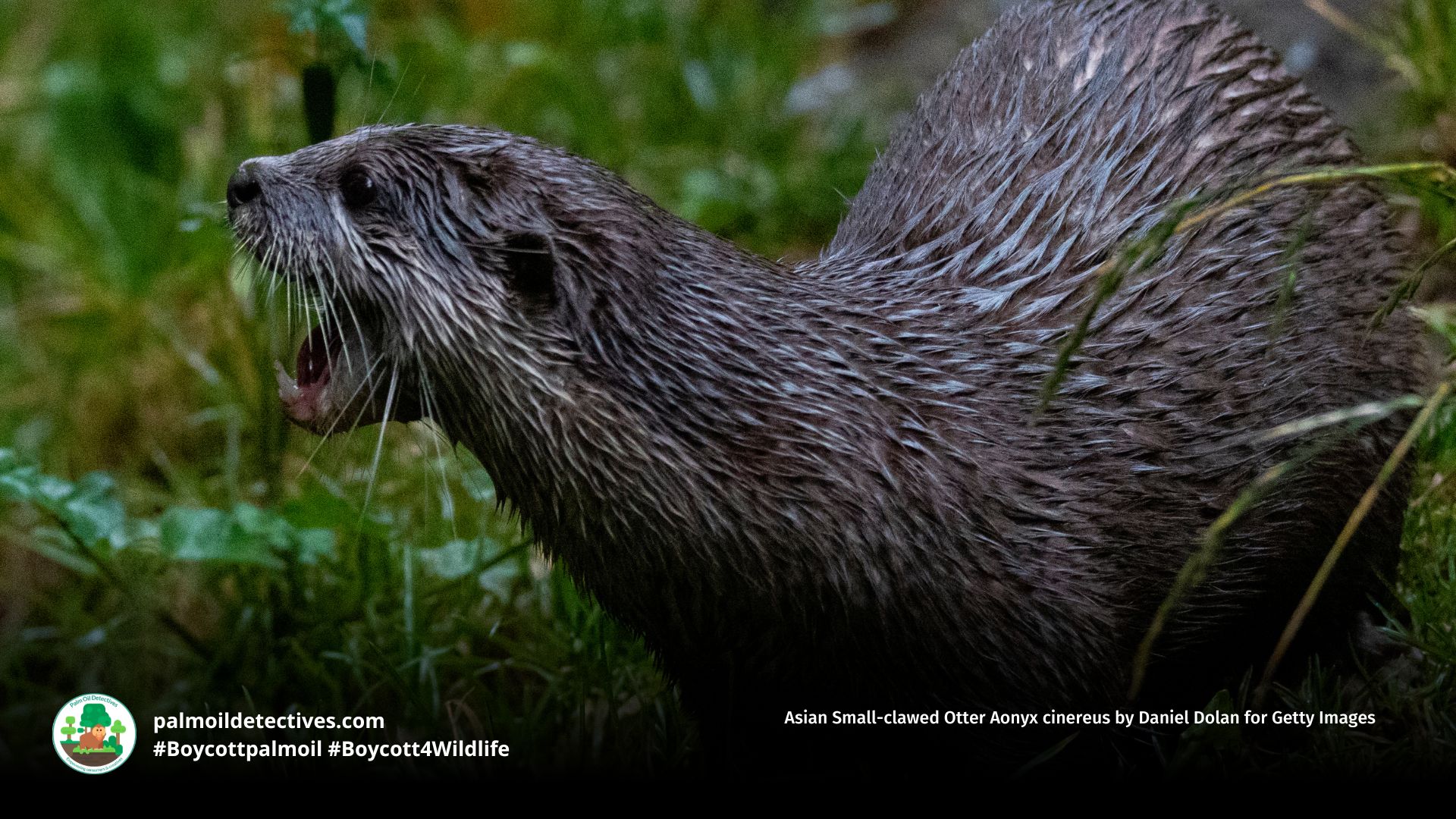
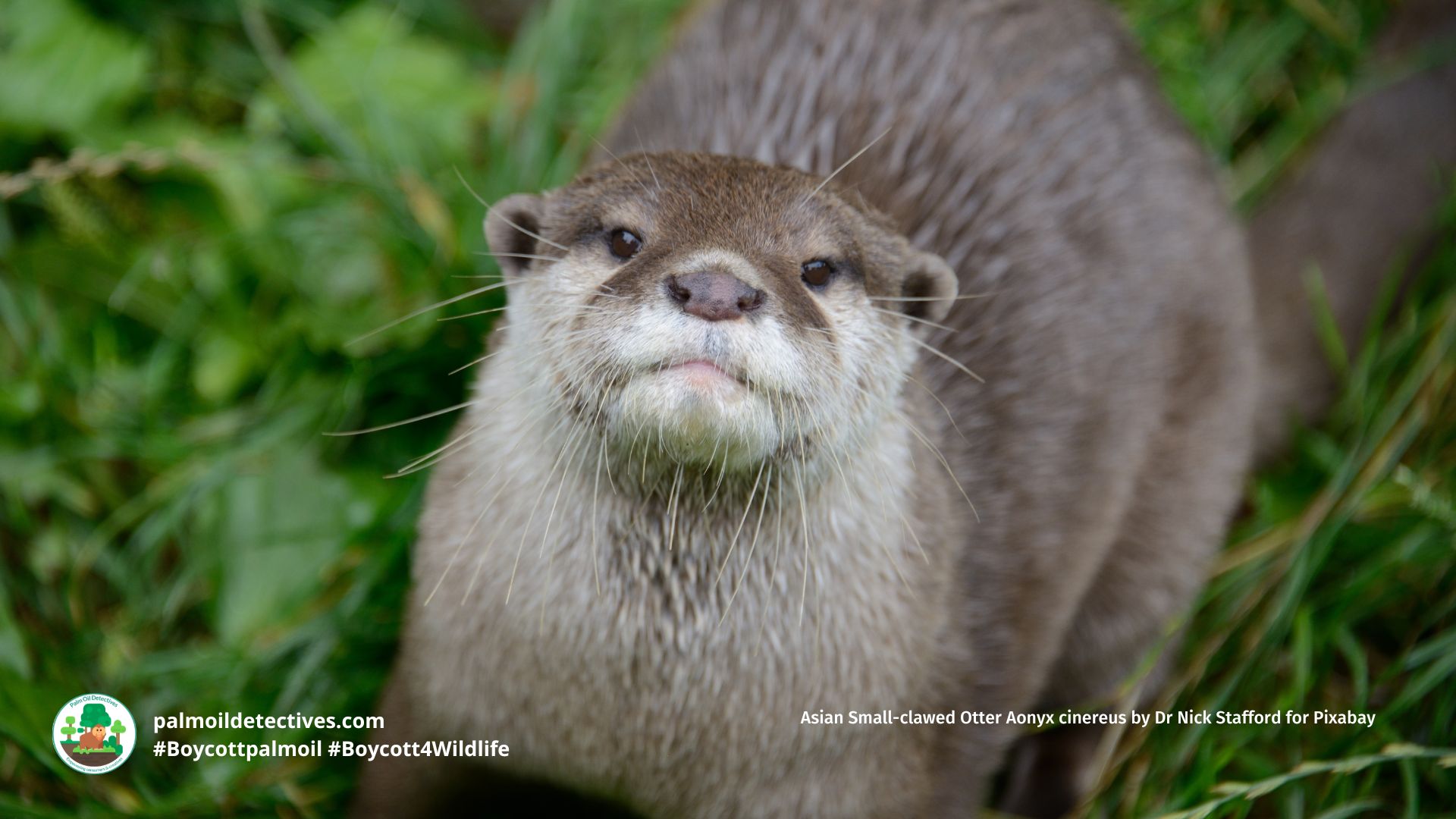
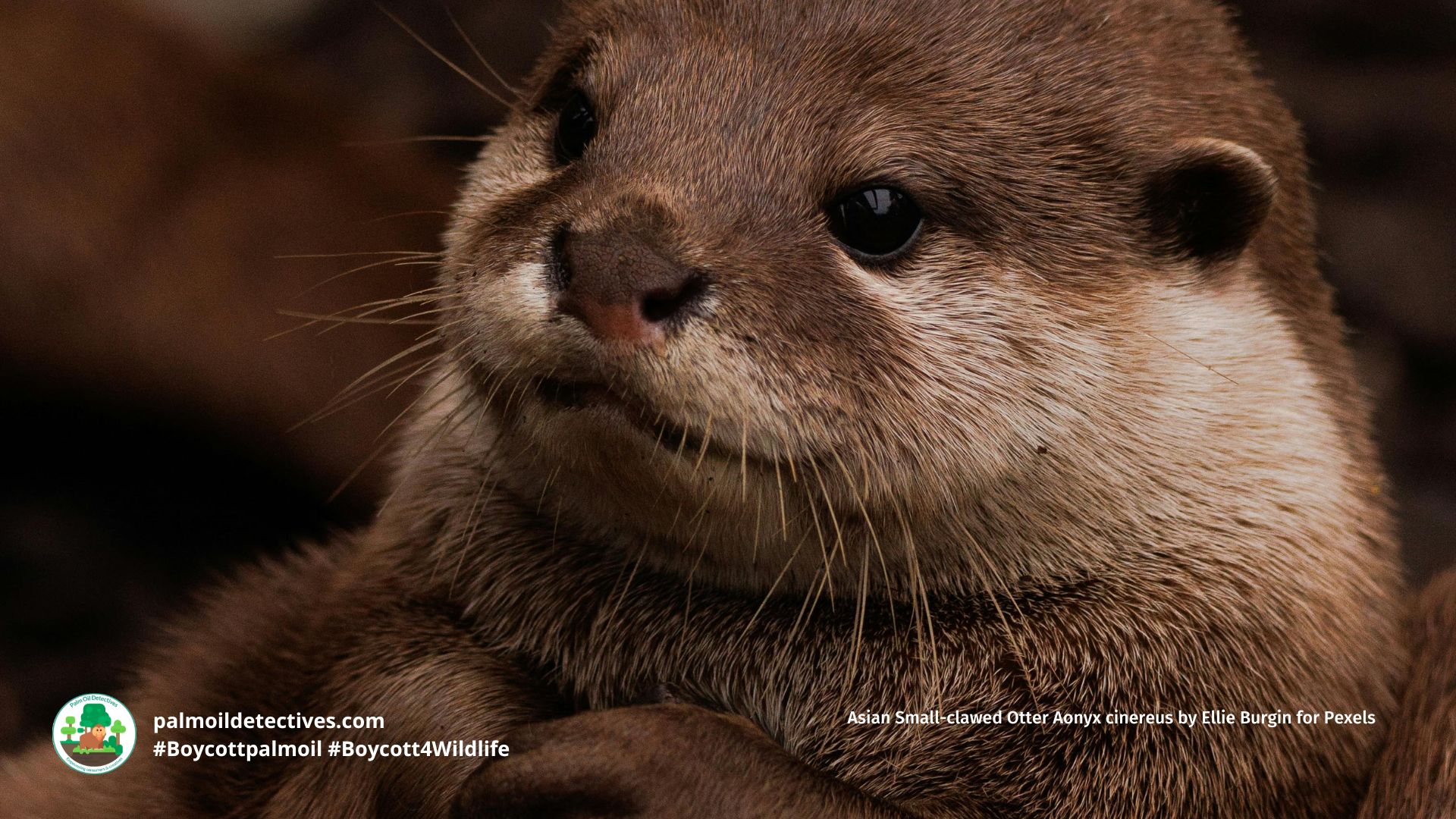
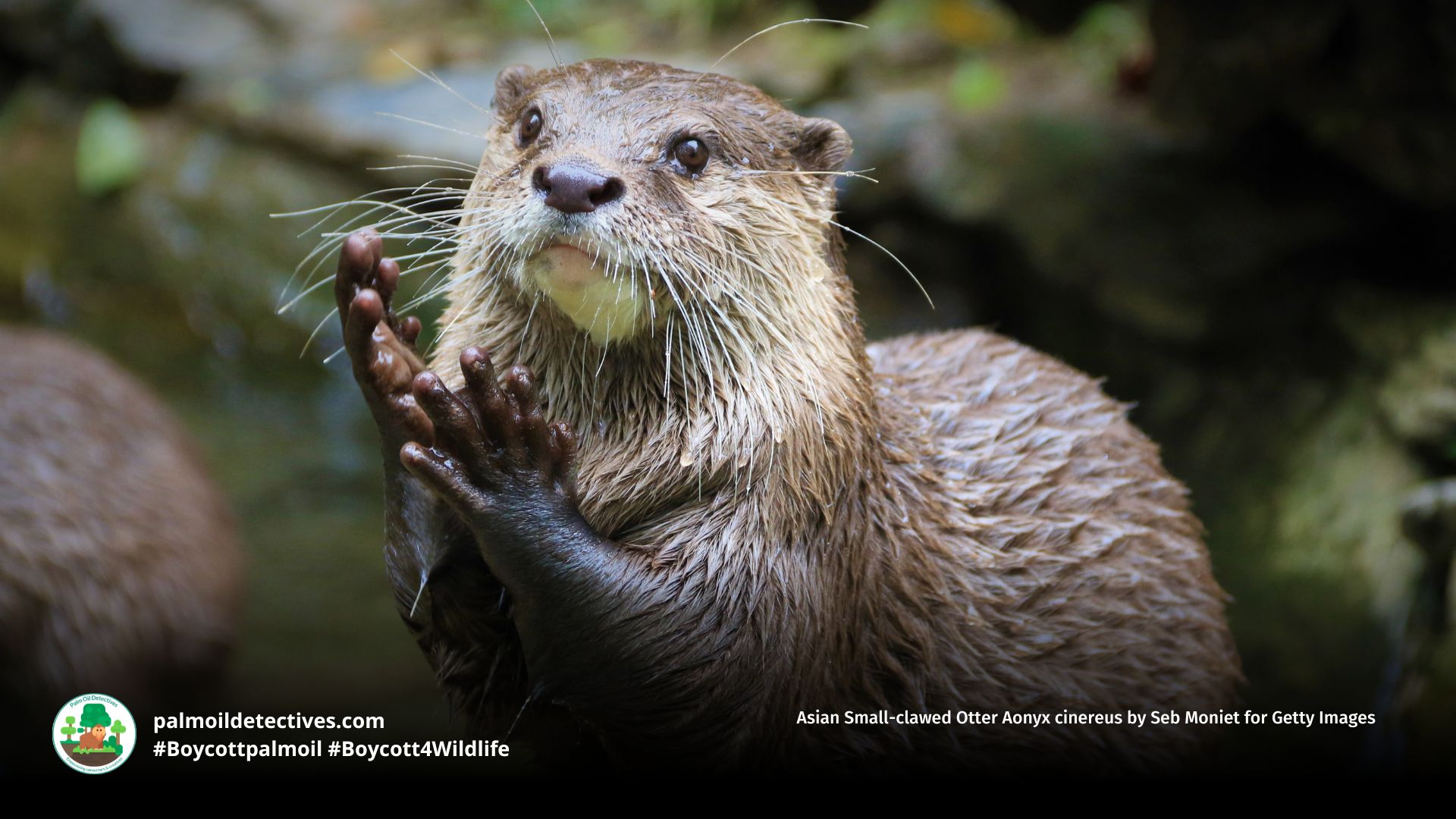
With silky chocolate-brown fur, pale undersides and a broad, flat face, the Asian Small-clawed Otter has a distinct charm. Their tiny claws don’t extend past their fingers — an adaptation that gives them remarkable dexterity for catching prey. They weigh only 2.7 to 3.5 kg and reach lengths of 73 to 96 cm, making them the smallest otter species in the world.
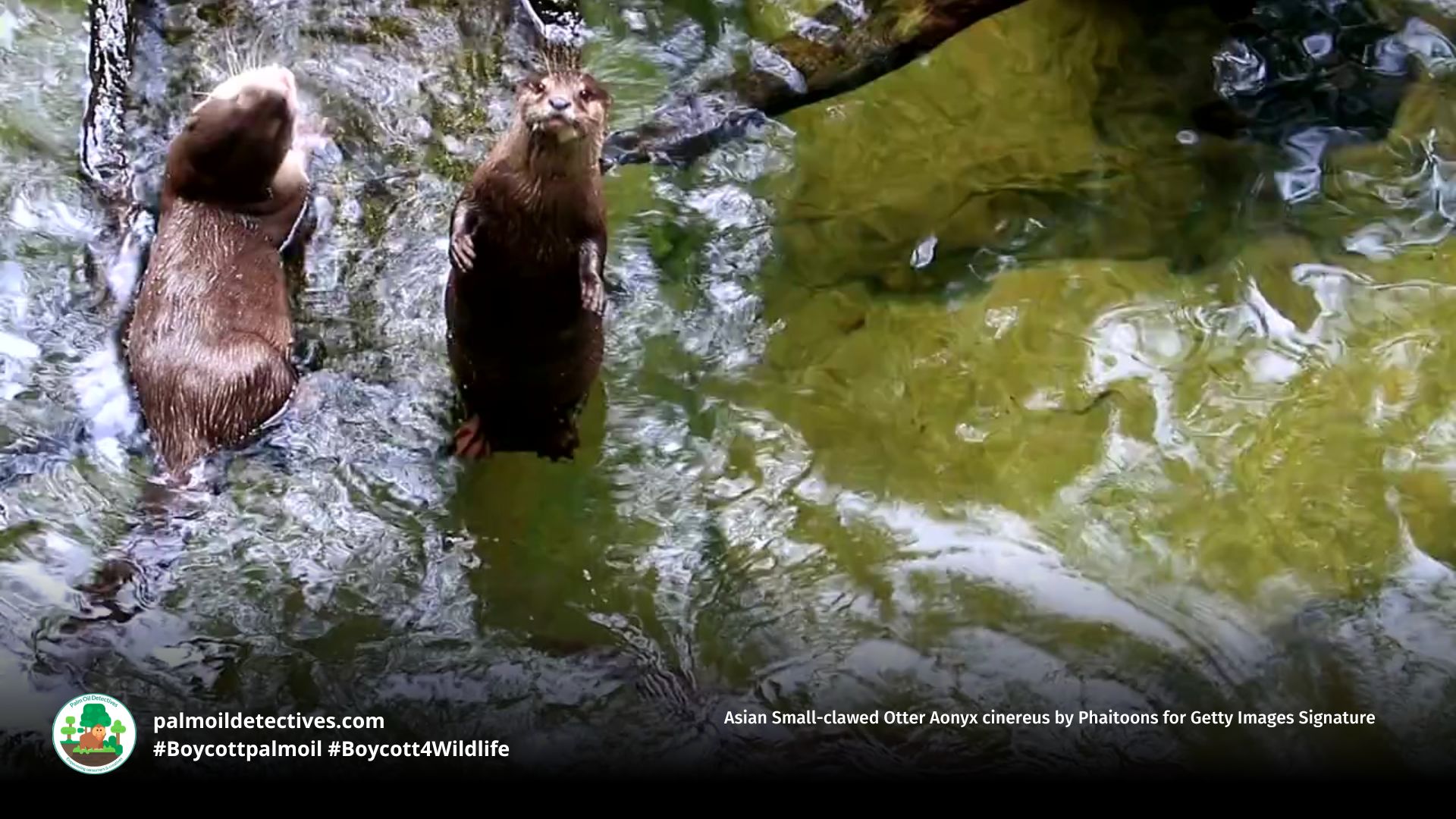
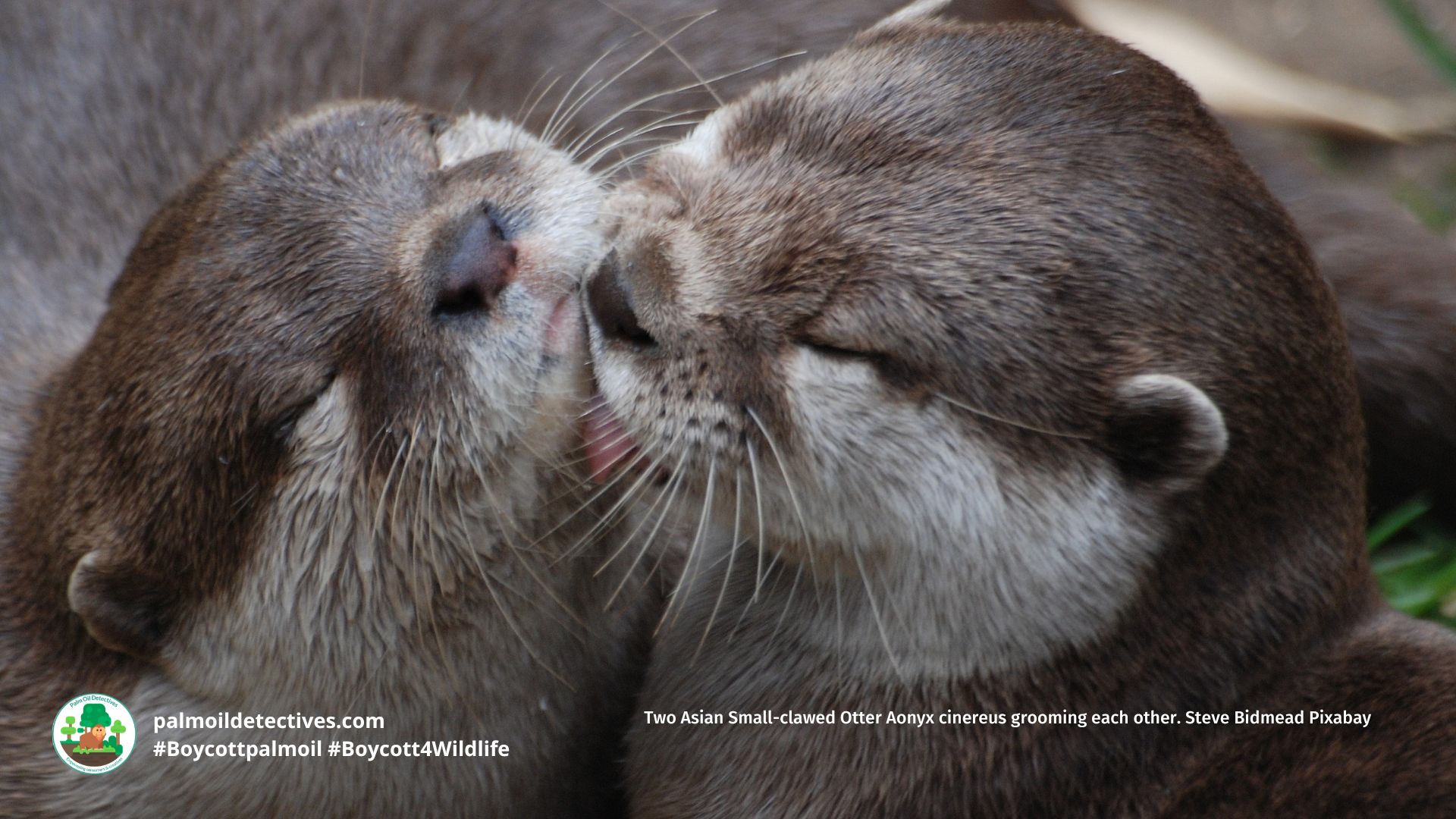
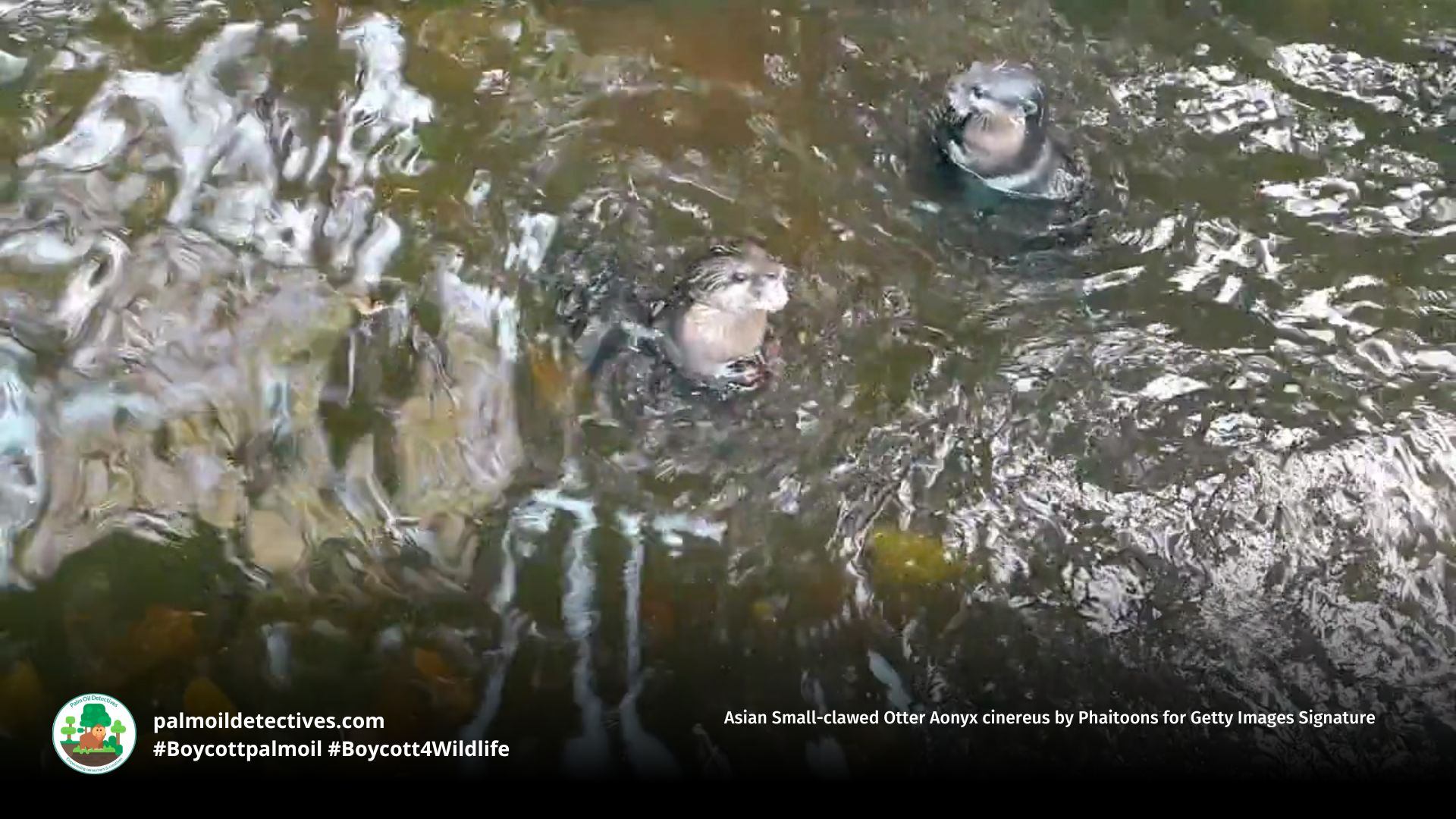
Highly vocal and playful, these otters live in tight-knit family groups of up to 15. They communicate with at least a dozen vocalisations — chirps, squeals and whistles — and use communal latrines to mark their territories. In the Western Ghats, they are more active at night and prefer rugged hill streams with dense grasses and rocky pools for cover and escape routes.
Threats
Palm oil deforestation and peat swamp destruction
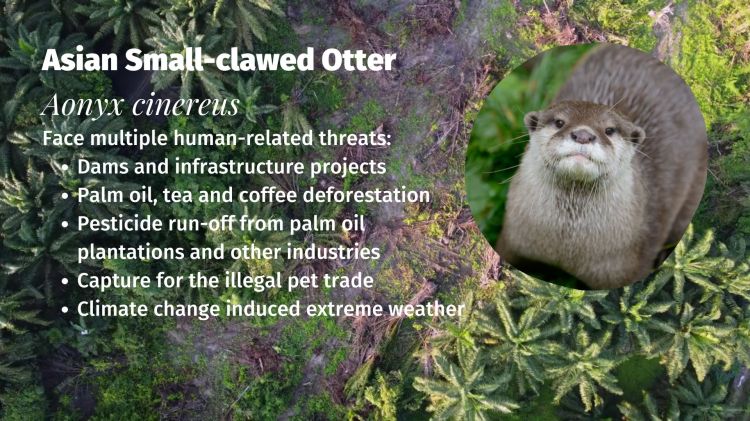
Across Southeast Asia, especially in Indonesia and Malaysia, vast areas of peat swamp forests and mangroves — critical habitats for Asian Small-clawed Otters — have been destroyed to make way for palm oil plantations. These plantations drain wetlands, replace diverse ecosystems with monocultures, and leave otters with no access to food or cover. In India, the expansion of palm oil into the Western Ghats under so-called ‘green development’ initiatives is now destroying the rocky hill stream habitats used by the Aonyx cinereus nirnai subspecies. This deforestation not only eliminates their shelter and food sources but also causes soil erosion and alters the hydrology of entire watersheds.
Conversion of forests to palm oil, tea and coffee plantations in the Western Ghats
In southern India, particularly in Tamil Nadu and Kerala, large-scale conversion of native forests to palm oil, tea and coffee plantations is reducing the range of Aonyx cinereus nirnai. These monocultures fragment stream habitats and introduce pesticides that poison aquatic life. Studies have found the otters avoiding plantation areas due to lack of vegetation cover and prey (Raha & Hussain, 2016). As a result, the Western Ghats population is now restricted to narrow, isolated pockets, surrounded by human-altered landscapes that are increasingly inhospitable to them.
Capture for the Illegal pet trade and cruel conditions in pet cafés
The Asian Small-clawed Otter is the most heavily trafficked otter species in Asia’s exotic pet trade. Between 2016 and 2017, over 700 individuals were recorded for sale online in countries like Indonesia, Thailand, Malaysia, and Vietnam (Gomez & Bouhuys, 2018). Many are poached from the wild as pups, leading to the death of their parents and collapse of social groups. Captive conditions in pet cafés and private homes cause extreme stress and suffering — and demand is rising due to social media content that normalises otter ownership.
Poaching for pelts and traditional use
Poaching continues to be a severe threat in South Asia. In the Western Ghats, otters are hunted for their pelts and body parts, which are used in traditional medicine or sold on the black market. Reports from protected areas in India reveal organised trapping and trade routes extending across state lines (Prakash et al., 2012). These killings often go undocumented due to weak enforcement, and they rapidly deplete already fragile local populations.
Overfishing and prey depletion
In many parts of Asia, otters face competition from humans for aquatic prey. Overfishing in rivers, lakes, and mangroves has drastically reduced populations of crabs, mudskippers, and fish species that form the core of the otter’s diet. Pollution from fish farms and chemical runoff further weakens these food webs, making otter survival harder during dry or lean seasons. In some areas, otters are also deliberately killed by fishers who perceive them as pests competing for the same resources.
Pesticide run-off pollution from agriculture
Agricultural runoff from palm oil, tea and coffee plantations containing pesticides, herbicides, and heavy metals has been shown to poison water sources throughout the otter’s range. In the Western Ghats of India and parts of Southeast Asia, such contaminants accumulate in the food chain and affect the physiology of aquatic mammals. Polluted waterways reduce prey availability and can lead to bioaccumulation of toxins in otters, weakening their immune systems and reproductive capacity. This is especially critical in closed or stagnant freshwater systems like rice paddies and irrigation channels, where contamination is concentrated.
Hydropower development and infrastructure fragmentation
Dams and hydroelectric projects throughout the Western Ghats and Southeast Asia have altered river flow, submerged natural habitats, and fragmented otter territories. These developments destroy riverine connectivity, which otters rely on to forage and disperse. For the nirnai subspecies, hill streams once connected across forest corridors are now interrupted by roads, canals, and dams — leading to isolated, unsustainable populations. Infrastructure development often proceeds without proper environmental assessments, disregarding the needs of aquatic species like otters.
Climate change and habitat drying
Shifts in monsoon patterns, increased droughts, and rising temperatures are affecting the wetlands and rivers that Asian Small-clawed Otters depend on. Reduced water flow in dry seasons can strand otter families and eliminate key feeding pools. In the Western Ghats, erratic rainfall is already altering seasonal resource use patterns for A. c. nirnai, increasing their vulnerability to disturbance (Narasimmarajan et al., 2024). Climate stress, combined with other threats, compounds the likelihood of local extinctions.
Geographic Range
Their range stretches across India, Nepal, Bhutan, Bangladesh, Myanmar, Thailand, Laos, Cambodia, Vietnam, Malaysia, Indonesia (including Borneo, Sumatra, Java), the Philippines (Palawan), China and Taiwan. In India, they are found in Arunachal Pradesh, Assam, West Bengal, Odisha, Kerala, Karnataka and Tamil Nadu. They are absent from large swathes of their historical range, including the Western Himalayas.
The genetically distinct subspecies Aonyx cinereus nirnai is restricted to the Western Ghats’ Moyar River and surrounding hill streams. This biodiverse stronghold is currently being cleared for palm oil plantations, hydropower projects, and invasive monocultures, putting this population in grave danger.
Diet
Asian Small-clawed Otters are primarily crustacean specialists. Their diet includes crabs, snails, molluscs, fish such as mudskippers and catfish, amphibians, insects, snakes, and even rodents. Scat analysis in Malaysia and Thailand revealed crabs to be the most frequent prey, often making up over 80% of their diet.
In rice fields and mangroves, they may leave molluscs out in the sun to soften the shells before eating — a sign of their intelligence and adaptability. Seasonal changes in water levels influence the availability of prey, leading to subtle shifts in their dietary habits throughout the year.
Mating and Reproduction
These otters are monogamous and breed year-round, with gestation lasting 62–86 days. Litters typically include 2–7 pups. In captivity, they start breeding at around 18 months of age, and may live up to 11 years. Parents build nests together before birth and both contribute to raising the young. Pups begin to open their eyes around five weeks old and start swimming with their mothers at around three months.
FAQs
How many Asian Small-clawed Otters are left in the wild?
There is no global population estimate, but their numbers are declining throughout their range. In China and Cambodia, they are now almost locally extinct, with only a few scattered sightings since 2006 (Li & Chan, 2017; Heng et al., 2016). Surveys in India confirm drastic reductions in range, especially from west to east, over the past 60 years (Hussain et al., 2011).
What is the lifespan of the Asian ?
In captivity, Asian Small-clawed Otters can live up to 11 years (Crandall, 1964). Their lifespan in the wild is likely shorter due to environmental pressures and poaching.
Why are Asian Small Clawed Otters endangered?
They are threatened by habitat loss from logging, plantations, palm oil, pollution, and construction of dams. In the Western Ghats, the genetically distinct nirnai subspecies is losing habitat to hydropower development and palm oil monocultures, which destroy the narrow, rocky streams they depend on (Narasimmarajan et al., 2024).
Do Asian Small-clawed Otters make good pets?
Absolutely not. Keeping them as pets is cruel and selfish. They are wild animals with complex social and environmental needs. The illegal pet trade is driving them towards extinction, causing immense suffering and ripping family groups apart (Gomez & Bouhuys, 2018). Buying a pet otter and also sharing pet otter content on social media fuels this horrific industry — if you love otters, protect them in the wild! Do not buy them as pets or support this cruel industry!
How is palm oil affecting their survival?
Palm oil plantations have destroyed vast tracts of mangroves, peat swamps, and wetlands in Malaysia, Indonesia, and now India. In the Western Ghats, forests are being cleared for palm oil under the guise of “afforestation” and “reforestation” using non-native species. This directly threatens the survival of A. c. nirnai (Narasimmarajan et al., 2024).
Take Action!
Raise your voice for the smallest otter in the world. Every time you shop, Boycott palm oil and reject products linked to deforestation and wetland destruction. Support indigenous-led conservation efforts in the Western Ghats and Southeast Asia.
Never buy otters or exotic animals — their capture fuels extinction. Adopt a plant-based lifestyle to protect wetlands, rivers and biodiversity. #BoycottPalmOil #Boycott4Wildlife #Vegan #BoycottMeat
Support Asian Small-Clawed Otters by going vegan and boycotting palm oil in the supermarket, it’s the #Boycott4Wildlife
Support the conservation of this species
This animal has no protections in place. Read about other forgotten species here. Create art to support this forgotten animal or raise awareness about them by sharing this post and using the #Boycottpalmoil #Boycott4Wildlife hashtags on social media. Also you can boycott palm oil in the supermarket.
Further Information
Gomez, L., & Bouhuys, J. (2018). Illegal otter trade: An analysis of seizures in selected Asian countries (1980–2015). TRAFFIC. https://www.traffic.org/site/assets/files/2402/illegal-otter-trade-asia.pdf
Narasimmarajan, K., Mathai, M. T., Hayward, M. W., & Palanivel, S. (2024). Lesser-known sentinels: Role of environmental variables influencing the seasonal resource use patterns of Asian Small-clawed Otters (Aonyx cinereus nirnai) in the Western Ghats Moyar River Biodiversity Hotspots. IUCN Otter Spec. Group Bull., 41(5), 296–310. https://iucnosgbull.org/Volume41/Narasimmarajan_et_al_2024a.pdf
Wikipedia contributors. (n.d.). Asian small-clawed otter. Wikipedia. https://en.wikipedia.org/wiki/Asian_small-clawed_otter
Wright, L., de Silva, P.K., Chan, B.P.L., Reza Lubis, I. & Basak, S. 2021. Aonyx cinereus. The IUCN Red List of Threatened Species 2021: e.T44166A164580923. https://dx.doi.org/10.2305/IUCN.UK.2021-3.RLTS.T44166A164580923.en. Accessed on 17 April 2025.

How can I help the #Boycott4Wildlife?
Take Action in Five Ways
1. Join the #Boycott4Wildlife on social media and subscribe to stay in the loop: Share posts from this website to your own network on Twitter, Mastadon, Instagram, Facebook and Youtube using the hashtags #Boycottpalmoil #Boycott4Wildlife.
2. Contribute stories: Academics, conservationists, scientists, indigenous rights advocates and animal rights advocates working to expose the corruption of the palm oil industry or to save animals can contribute stories to the website.



3. Supermarket sleuthing: Next time you’re in the supermarket, take photos of products containing palm oil. Share these to social media along with the hashtags to call out the greenwashing and ecocide of the brands who use palm oil. You can also take photos of palm oil free products and congratulate brands when they go palm oil free.
4. Take to the streets: Get in touch with Palm Oil Detectives to find out more.
5. Donate: Make a one-off or monthly donation to Palm Oil Detectives as a way of saying thank you and to help pay for ongoing running costs of the website and social media campaigns. Donate here
Learn about other animals endangered by palm oil and other agriculture
Learn about “sustainable” palm oil greenwashing
Read more about RSPO greenwashing
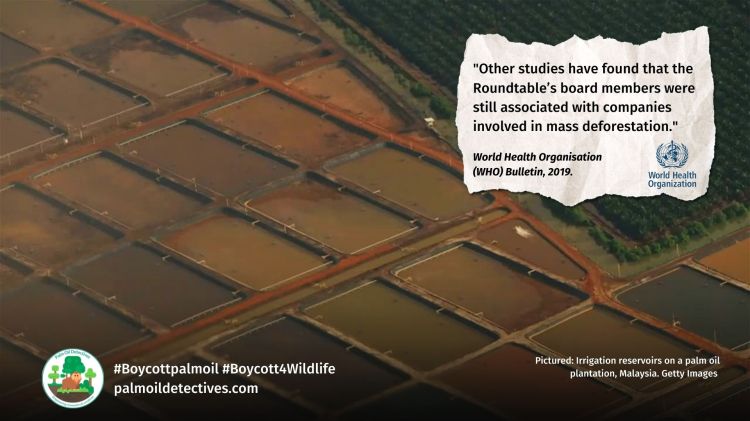
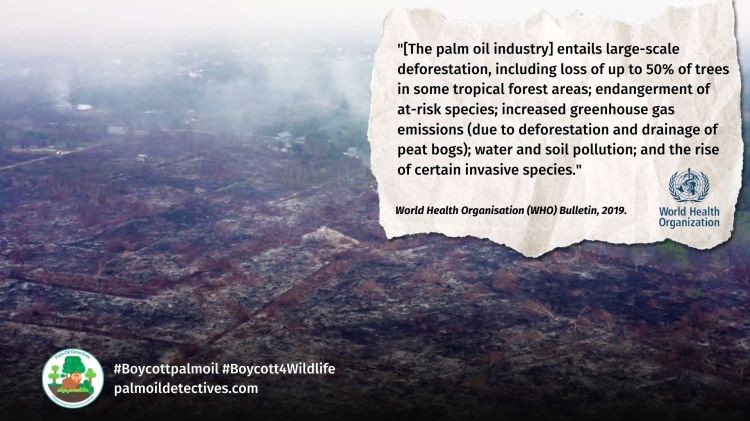
A 2019 World Health Organisation (WHO) report into the palm oil industry and RSPO finds extensive greenwashing of palm oil deforestation and the murder of endangered animals (i.e. biodiversity loss)


Discover more from Palm Oil Detectives
Subscribe to get the latest posts sent to your email.
 Palm Oil Detectives