
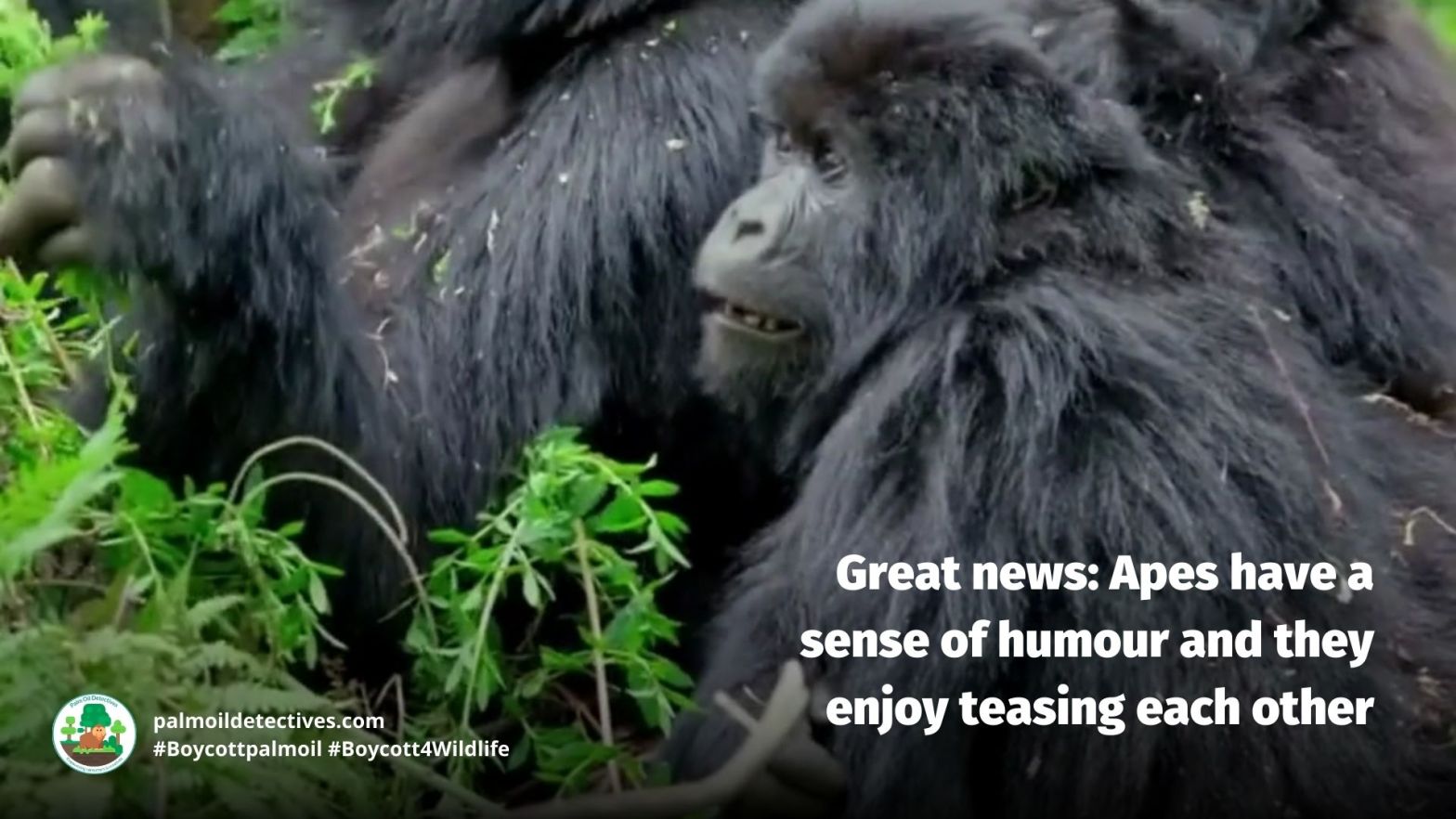
New research finds that it’s not only human babies who love to playfully tease each other. Researchers reasoned that since language is not required for this behaviour, similar kinds of playful teasing might be present in non-human animals such as chimpanzees, bonobos, gorillas and orangutans. Now cognitive biologists and primatologists have documented playful teasing in four species of great apes. Like joking behaviour in humans, ape teasing is provocative, persistent, and includes elements of surprise and play. Because all four great ape species used playful teasing, it is likely that the prerequisites for humour evolved in the human lineage at least 13 million years ago.
Tag Archives: great apes
Do chimpanzees and orangutans really have midlife crises?

Many people know that chimpanzees and orangutans have personalities, feel emotions and are “almost human”. However a recent paper has found that great apes also have a mid-life slump or a “midlife crisis”. Great apes (chimpanzees, bonobos, gorillas and orangutans) are just as socially, politically and cognitively complex as we are. Our “hairy” great ape relatives are like us in every respect. Help them to survive when you shop and be #Vegan #BoycottPalmOil #Boycott4Wildlife
For primates, having a mother helps them learn social skills
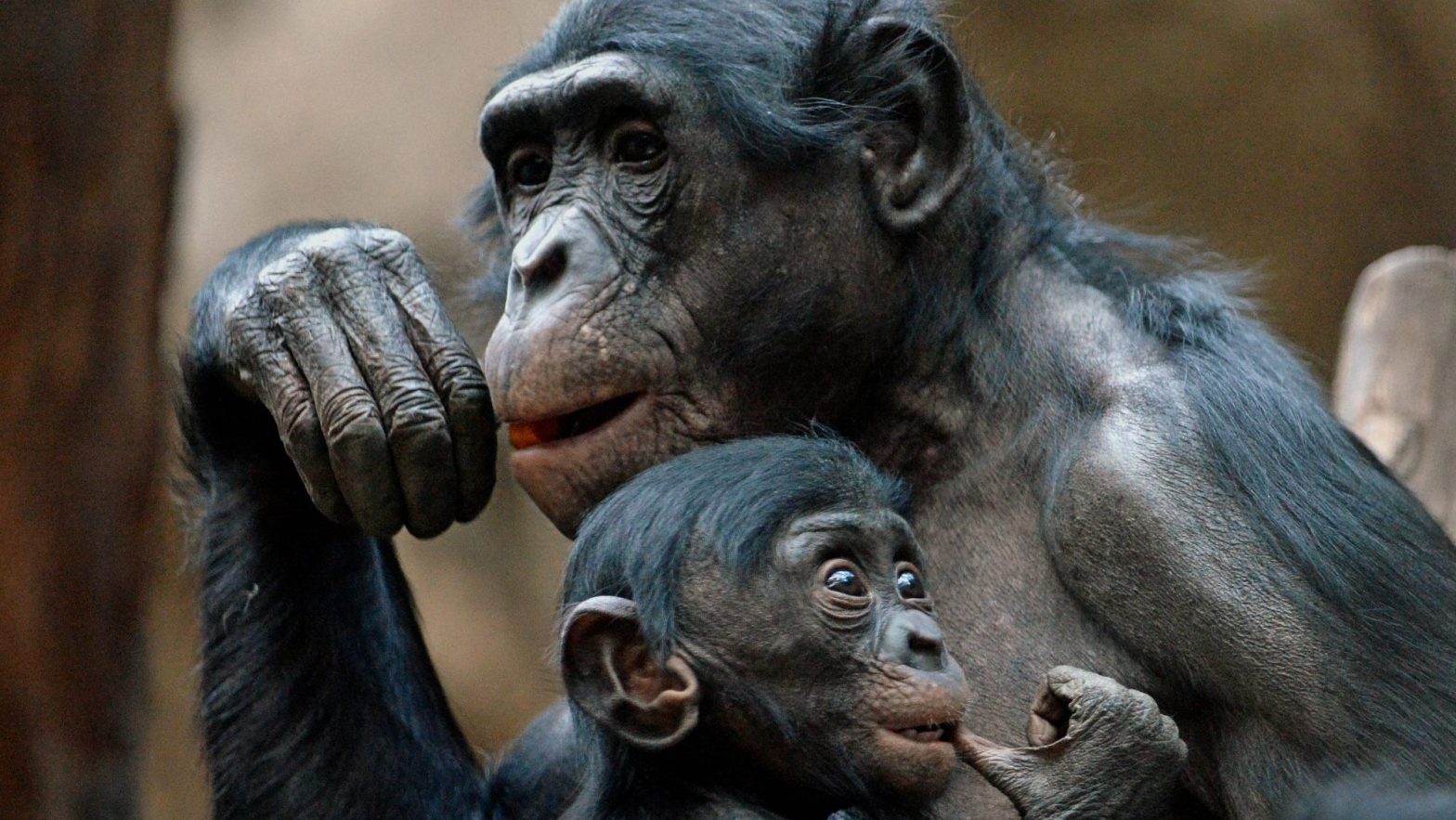
Wild #bonobos, like other Great #Apes and humans, spend long childhoods with their mothers, learning the social skills they need to function as emotionally stable members of their community. But orphaned bonobos at sanctuaries don’t have that kind of upbringing. Can they still learn the skills they need to get by in bonobo society? A study by Zanna Clay and Frans de Waal in PNAS found that the mother-infant bond is vital in developing healthy social and emotional skills. Help these mighty and intelligent primates when you shop and #BoycottPalmOil #Boycott4Wildlife
We don’t know how many mountain gorillas live in the wild. Here’s why
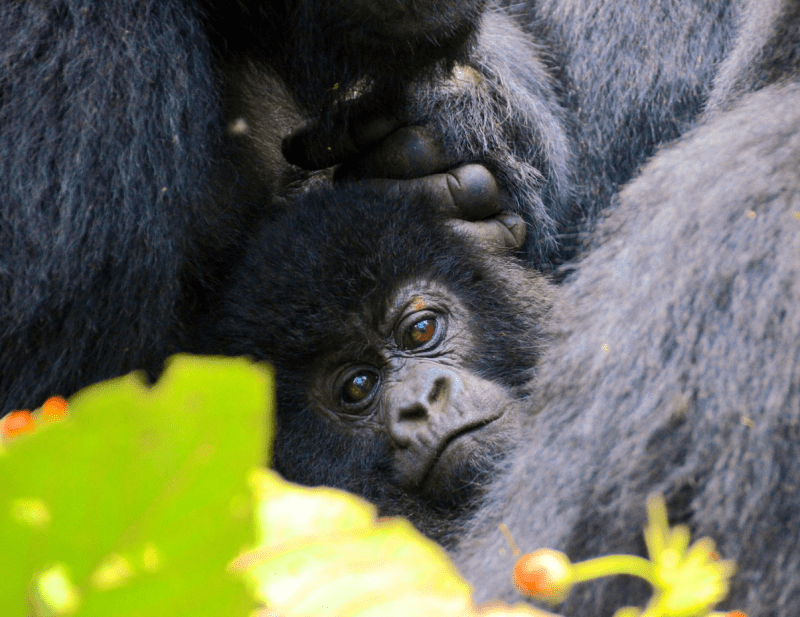
How important are the mountain #gorillas of Uganda’s Bwindi Impenetrable Forest National Park to global populations? Their importance to the health of the forest is immeasurable and irreplacable! Mountain gorillas are one of the two subspecies of eastern gorillas. They are divided into just two populations: one in the Virunga Massif that spans the borders of Uganda, Rwanda and the Democratic Republic of Congo (DRC) and one population that lives in the Bwindi Impenetrable National Park in Uganda and the adjacent Sarambwe Nature Reserve in DRC. Help them to survive, be #vegan and #BoycottPalmOil #Boycott4Wildlife
Chimpanzee Pan troglodytes
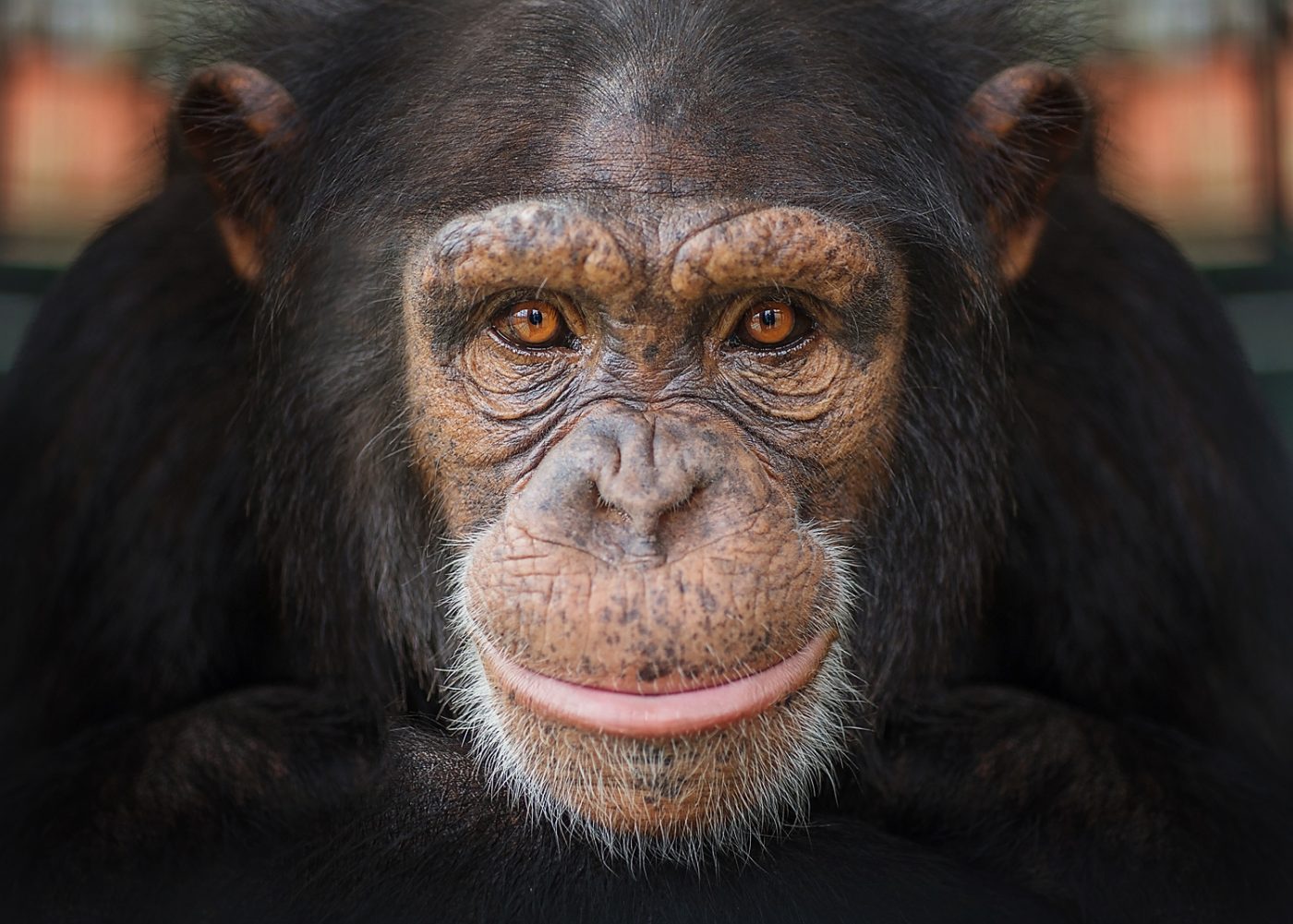
Chimpanzees (Pan troglodytes) are one of humanity’s closest living relatives and the most widespread of all great apes, with a vast historical range stretching across 21 African countries. Despite this, they are now classified as Endangered by the IUCN Red List due to catastrophic declines of more than 50% over a 75-year period, from 1975 to a projected 2050. These losses are driven by a lethal cocktail of threats: rampant poaching, habitat destruction for palm oil and logging, industrial mining, disease outbreaks like Ebola, and illegal trafficking. Subspecies such as P. t. ellioti have been reduced to only a few thousand individuals, while the once widespread P. t. verus is now Critically Endangered. Protecting them means dismantling the extractive industries that are ripping Africa’s forests apart such as the meat industry and palm oil industry. Help them when you #BoycottPalmOil #Boycott4Wildlife and be #Vegan #BoycottMeat
Tapanuli Orangutan Pongo tapanuliensis
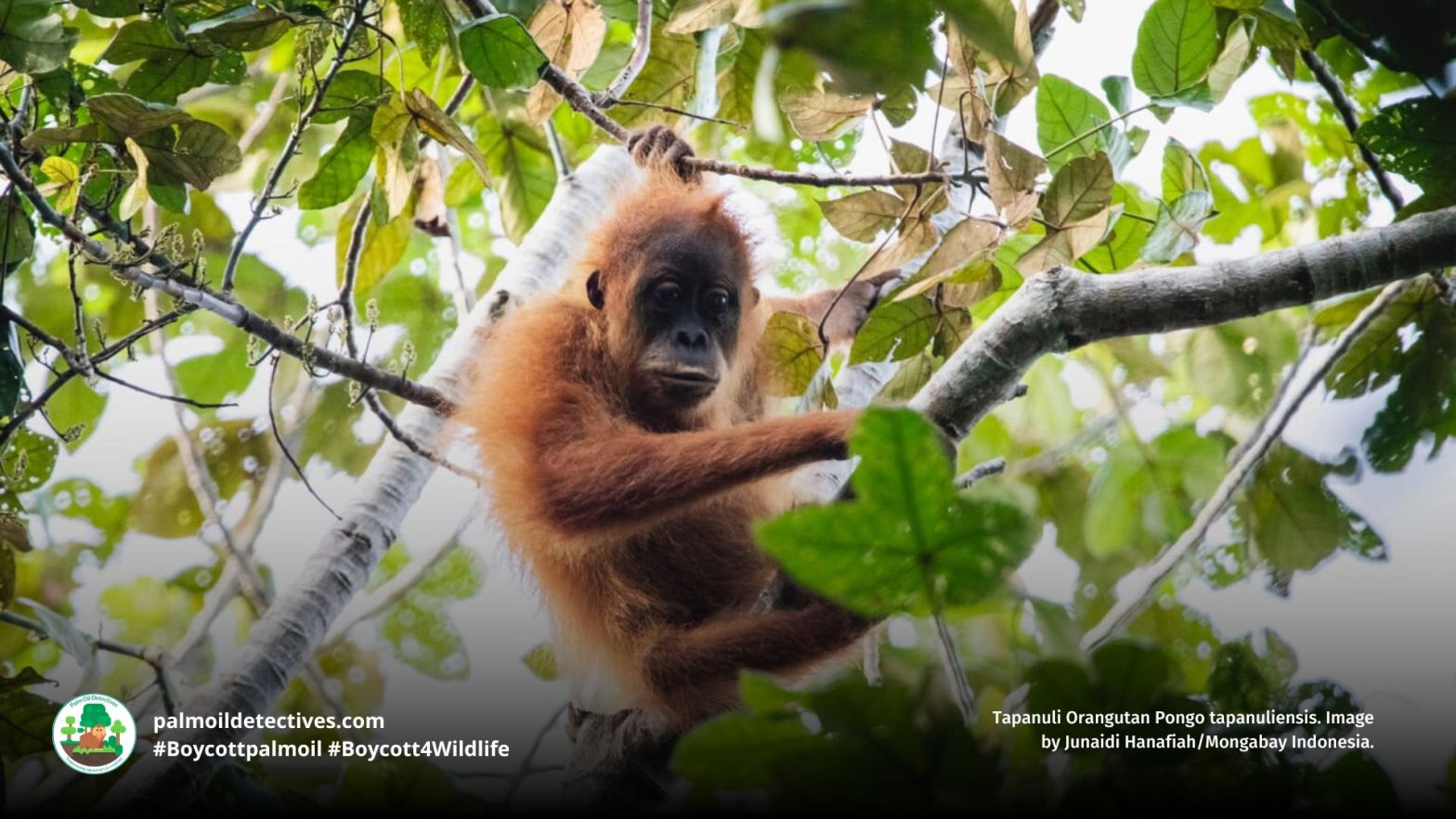
Act now and save the Tapanuli Orangutan – boycott palm oil! Fewer than 800 individual animals remain alive due to palm oil and timber deforestation.
 Palm Oil Detectives