

Bengal Slow Loris Nycticebus bengalensis
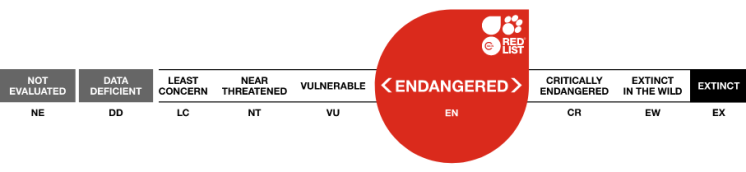
Red List Status: Endangered
Locations: Bangladesh, Bhutan, Cambodia (west of the Mekong River), China (southern and western Yunnan, possibly southwestern Guangxi), north-eastern India (Arunachal Pradesh, Assam, Manipur, Meghalaya, Mizoram, Nagaland, Tripura), Laos Myanmar (including the Mergui Archipelago), Thailand (north of the Isthmus of Kra), and Vietnam.
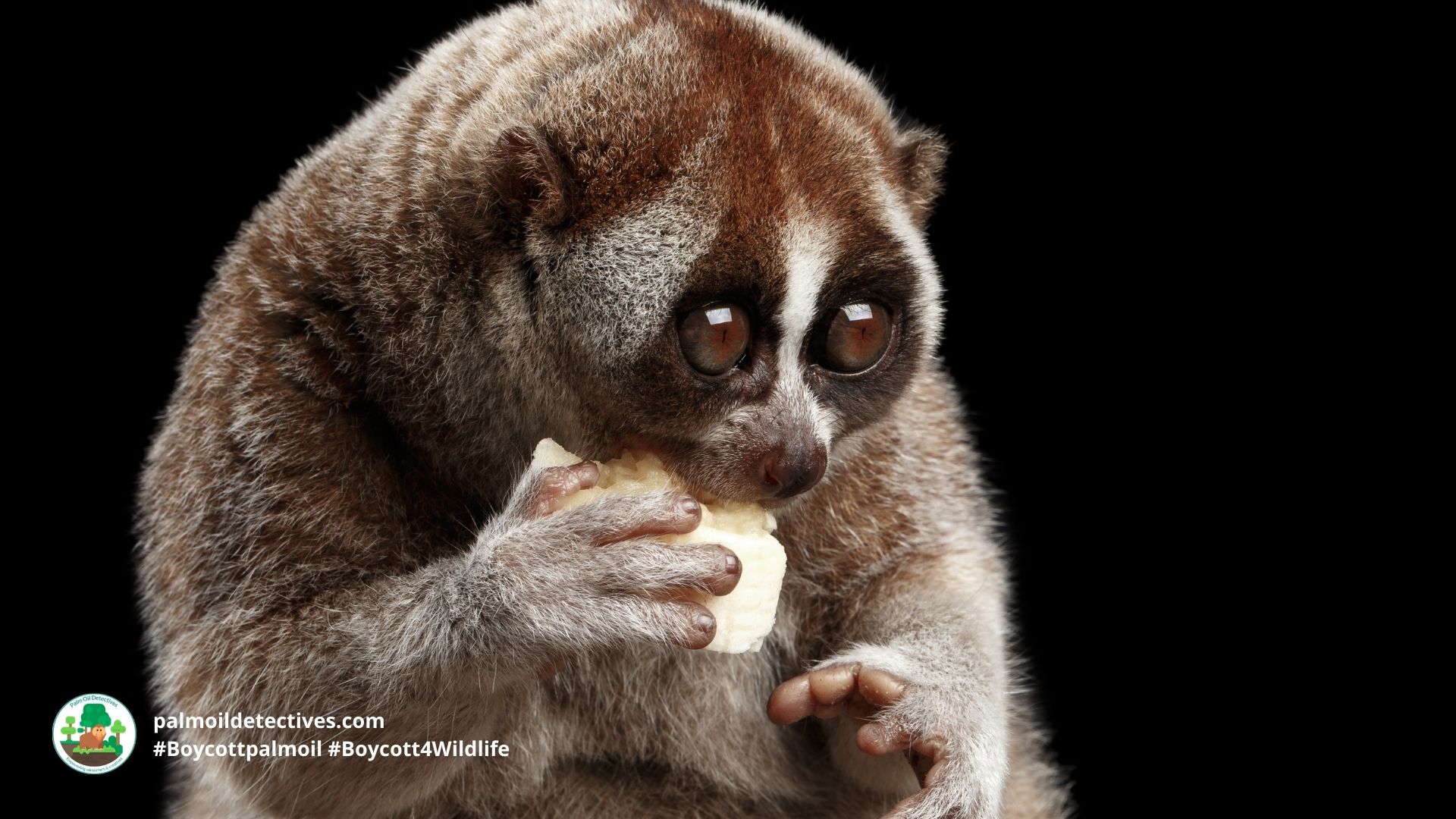
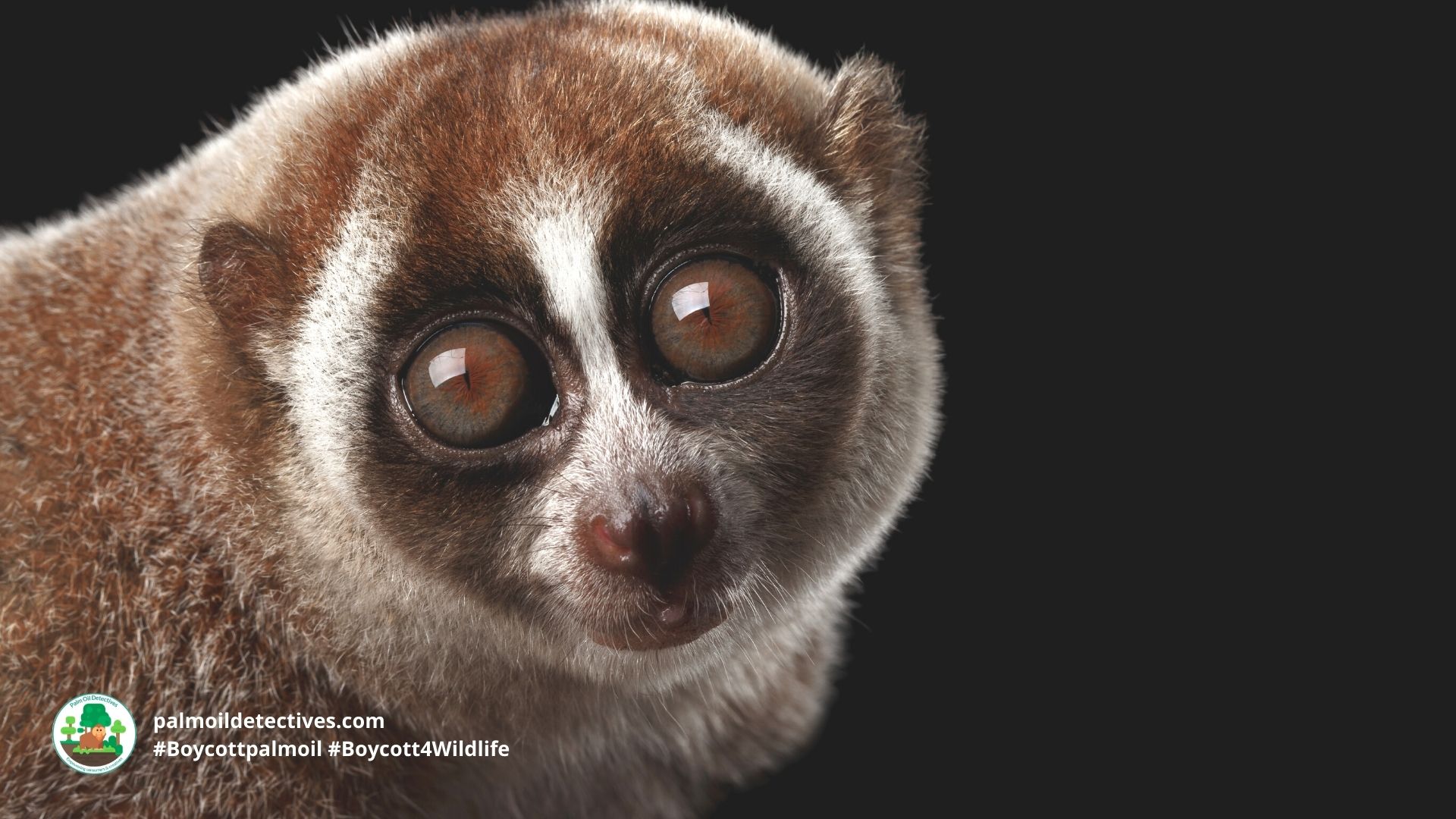
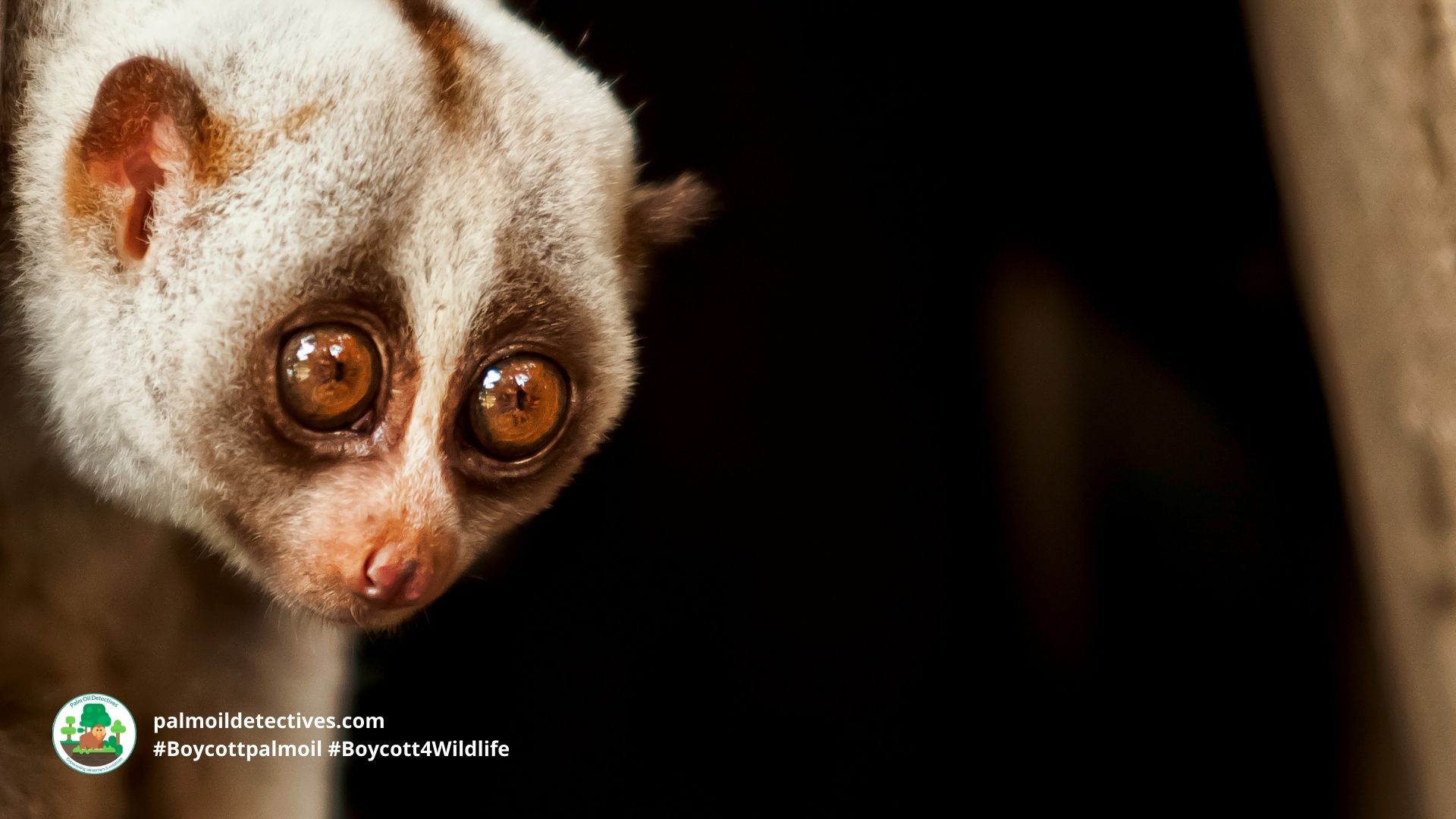
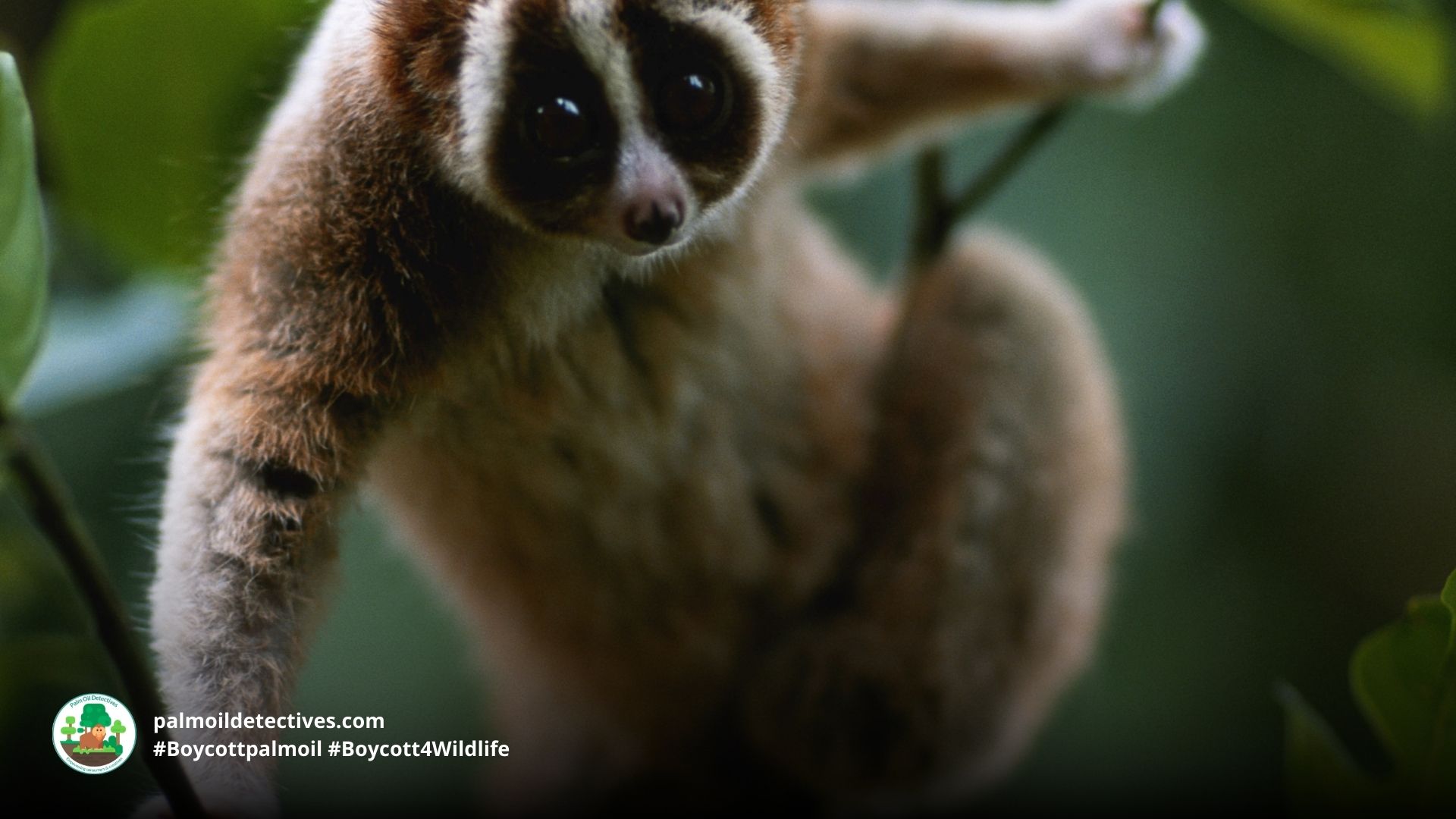
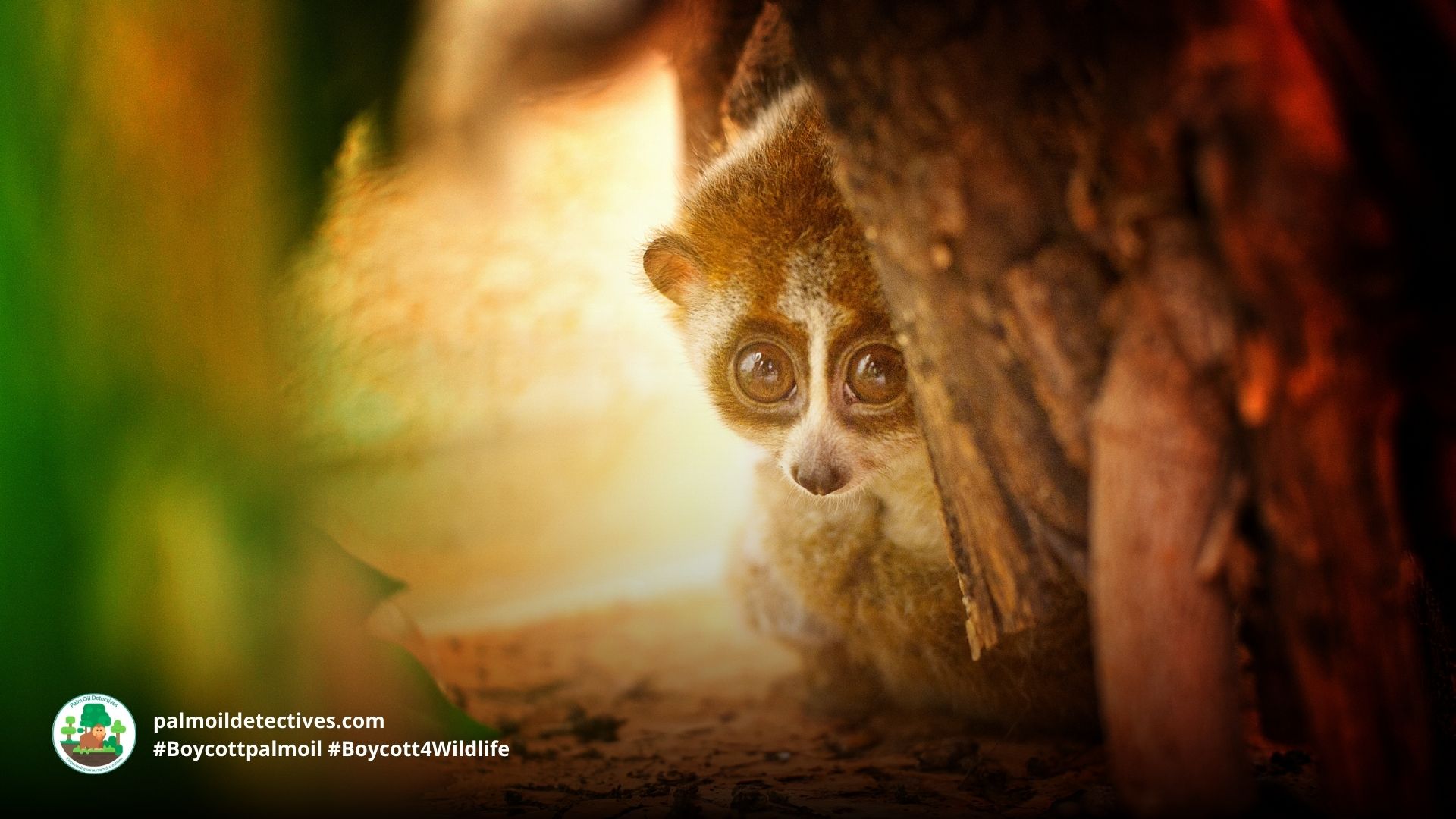
The Bengal Slow Loris‘s are wide-eyed beauties that are arboreal and nocturnal and live in tropical evergreen rainforest, semi-evergreen forest, and mixed deciduous forest. They are the largest loris species and feed predominantly on plant sap. They are now endangered in Malaysia and other parts of South East Asia, their primary threats are illegal capture for the pet trade and #palmoil #deforestation throughout their range. Help them every time you shop and #Boycottpalmoil #Boycott4Wildlife
Bengal #SlowLoris are shy wide-eyed beauties who are #nocturnal and live in 🇲🇾 #Malaysia 🇹🇭 #Thailand. They face multiple threats including #palmoil #deforestation. Help them when you shop! #Boycottpalmoil 🌴🪔🔥☠️🩸🙊⛔️ #Boycott4Wildlife @palmoildetect https://palmoildetectives.com/2021/02/08/bengal-slow-loris-nycticebus-bengalensis/

The major threats that this species’ habitat faces include farming, timber removal, human settlement, road building, dams, power lines, fragmentations, soil loss and erosion, and deliberately set fires.
IUCN Red List
Appearance and Behaviour
The Bengal Slow Loris is the largest of all slow loris species, a nocturnal primate whose soulful eyes, moon-like face and deliberate movements have made them both iconic and vulnerable. Once widespread across the lush forests of Asia, their numbers have been slashed by more than half in just over two decades, driven by relentless hunting, the illegal pet trade, and the clearing of forests for palm oil, timber, and agriculture. Every destroyed tree and every loris taken for trade deepens the silence in these forests. Stand up for the Bengal Slow Loris—use your wallet as a weapon and BoycottPalmOil Boycott4Wildlife.
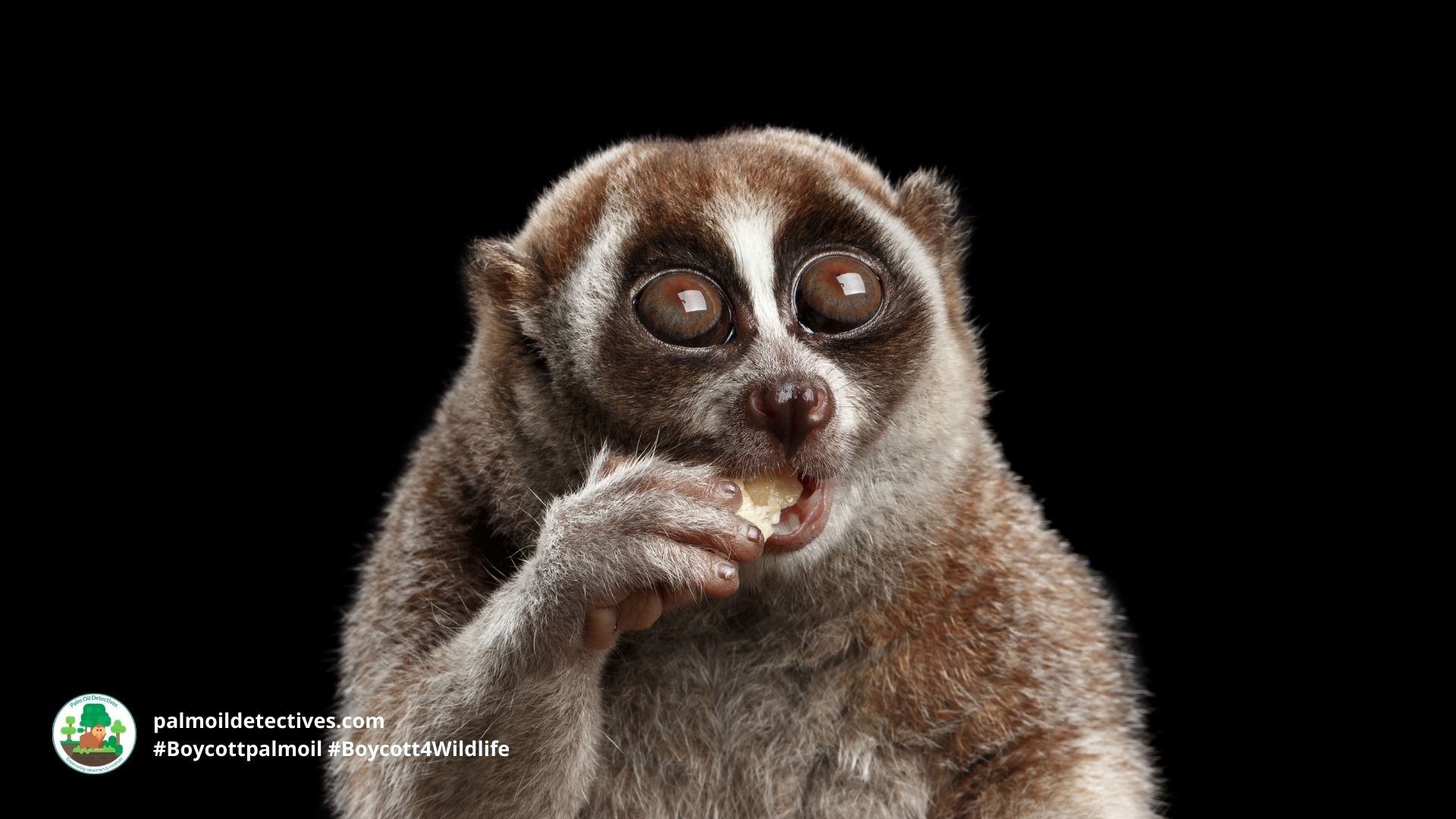
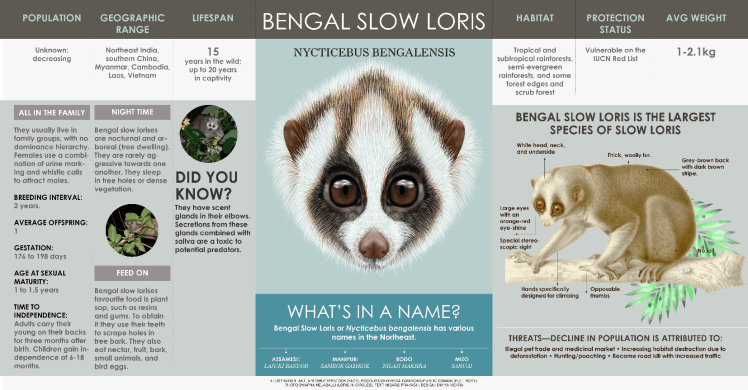
The Bengal Slow Loris is cloaked in dense, woolly brown-grey fur, with a lighter, creamy underside. A striking dark stripe runs from the crown of their head, sometimes forking towards the eyes, which are set in triangular patches of dark fur. Their hands and feet are pale, and they possess a distinctive “toilet-claw” on the second toe for grooming. Their large, round head and short ears lend them a gentle, almost spectral appearance, while their enormous, forward-facing eyes glow with a vivid orange under torchlight. They move with slow, deliberate grace, gripping branches with powerful, opposable toes, and sleep curled in dense foliage or tree hollows by day. At night, Bengal Slow Lorises emerge to forage, marking their territory with scent and communicating through soft whistles and scent cues. Uniquely, they are venomous, secreting a pungent oil from a gland near the elbow, which they spread on their toothcomb for defence.
Threats
Habitat loss and deforestation
The Bengal Slow Loris is Endangered, with forests disappearing beneath the advance of palm oil plantations, logging, and agriculture. Bulldozers flatten ancient trees, leaving behind barren earth and fragmented canopies. Roads, power lines, and dams dissect once-continuous habitats, isolating populations and exposing them to new dangers. In many regions, slash-and-burn agriculture turns vibrant green into ash, and selective logging removes the old trees that lorises depend on for food and shelter.
Hunting, the illegal pet trade, and traditional medicine
Hunters pursue the Bengal Slow Loris for bushmeat, Chinese medicine, and the illegal pet trade. In border markets like Mong La, Myanmar, hundreds are killed and sold annually—limbs traded as key rings, bodies dried for medicine, and infants taken for pets. The demand as tourist photo props is especially severe in Thailand, where almost all lorises in the trade are Bengal Slow Lorises. Captured individuals endure stress, loneliness, and early death in captivity, with wild populations pushed ever closer to extinction.
Infrastructure projects, roads, forest fragmentation
As forests are fragmented, Bengal Slow Lorises are forced to the edges, crossing roads where many are killed by vehicles. Human settlements encroach deeper, bringing fire, pollution, and the constant threat of capture. Even protected areas offer little safety, as poaching and illegal logging persist.
Climate change and river pollution
Changing rainfall, altered fruiting patterns, and polluted rivers further erode the delicate balance of the forests these primates call home. As the climate shifts, the resources Bengal Slow Lorises rely on become scarce, compounding the effects of habitat loss and hunting.
Diet
Under the cover of darkness, Bengal Slow Lorises forage for nectar, plant sap, tree gum, fruits, and small invertebrates. Their diet is dominated by plant exudates—sticky gums and saps from wounded trees, which they lap up with specialised tongues. These exudates are a vital, year-round staple, especially when fruit is scarce. They also hunt insects, snails, or small vertebrates, their slow movements belying a patient, methodical approach. By feeding, they become pollinators and seed dispersers, quietly sustaining the health and diversity of their forest home.
Reproduction and Mating
Bengal Slow Lorises are not seasonal breeders—females can attract mates with a loud whistle at any time of year. Gestation lasts around six months, and usually only one infant is born at a time, though twins are rare. Newborns arrive with eyes open, covered in soft fur, and are carried by their mothers for the first three months. During this period, mothers may leave their young on branches while foraging, returning frequently to nurse and groom them. Weaning occurs at around six months, and young lorises reach sexual maturity by about 20 months. In the wild, Bengal Slow Lorises can live up to 20 years.
Geographic Range
The Bengal Slow Loris has the widest range of any slow loris species, spanning Bangladesh, Bhutan, Cambodia (west of the Mekong), southern and western Yunnan and possibly southwestern Guangxi in China, north-eastern India (including Arunachal Pradesh, Assam, Manipur, Meghalaya, Mizoram, Nagaland, Tripura), Lao PDR, Myanmar (including the Mergui Archipelago), Thailand (north of the Isthmus of Kra), and Vietnam. Within these countries, their forests are shrinking, and populations have vanished from many regions, especially where hunting and habitat loss are most severe. Even in protected areas, the absence of lorises is a stark reminder of their fragility.
FAQs
What is the current population trend for the Bengal Slow Loris?
The Bengal Slow Loris population has declined by more than 50 percent over the past three generations, and is projected to decline by another 50 percent in the next three generations due to ongoing hunting and habitat loss. Across much of their range, they have disappeared entirely, with only scattered, isolated populations remaining.
How long do Bengal Slow Lorises live?
In the wild, Bengal Slow Lorises can live up to 20 years, though many perish far earlier due to hunting, capture, and habitat destruction. In captivity, their lifespan may be shorter due to stress and poor conditions.
What are the main threats impacting the Bengal Slow Loris?
The greatest challenges are relentless hunting for the pet trade and traditional medicine, widespread deforestation for palm oil and other agriculture, and weak law enforcement even in protected areas. Fragmented habitats and the illegal wildlife trade make recovery difficult, and the species is often overlooked in planning for indigenous-led conservation.
How does agriculture threaten the Bengal Slow Loris?
Palm oil plantations, slash-and-burn farming, and other forms of agriculture have destroyed vast swathes of their forest habitat, leaving only fragments where lorises can survive. These agricultural frontiers are expanding, pushing the species ever closer to extinction.
How does the illegal pet trade endangered the Bengal Slow Loris?
The illegal pet trade is a primary driver of the Bengal Slow Loris’s decline. Infants are torn from their mothers, adults are mutilated or killed, and those sold as pets often die from stress, malnutrition, and loneliness. The trade also fuels demand for tourist photo props and traditional medicine.
Do Bengal Slow Lorises make good pets?
No. Bengal Slow Lorises suffer extreme stress, loneliness, and early death in captivity. The pet trade rips families apart, inflicts cruelty, and fuels their extinction in the wild. Keeping them as pets is illegal and unethical.
Why do Bengal Slow Lorises spit toxic venom?
Bengal Slow Lorises along with other lorises and are the world’s only venomous primates. They secrete a toxin from a gland near the elbow, which they spread on their teeth and use for defence. Their bite can cause severe allergic reactions in humans and other animals. This is an evolutionary defence mechanism to ward of predators.
How do Bengal Slow Lorises contribute to their ecosystem?
As pollinators and seed dispersers, Bengal Slow Lorises play a vital role in maintaining the health and diversity of their forests. Their feeding habits help regenerate trees and sustain the intricate web of life in their habitats.
Do Bengal Slow Lorises live in protected areas where they are safe?
While Bengal Slow Lorises are found in many protected areas, poaching and illegal logging are rampant even within these boundaries. Enhanced enforcement and indigenous-led stewardship are urgently needed to safeguard their future.
How does climate change affect Bengal Slow Lorises?
Climate change disrupts the fruiting patterns of trees, alters rainfall, and increases the frequency of fires, all of which threaten the Bengal Slow Loris’s delicate habitat and food sources.
What can be done to help Bengal Slow Lorises?
Support indigenous-led conservation and agroecology, refuse to buy products containing palm oil, and never participate in the illegal pet trade or tourist photo prop industry. Stronger law enforcement and habitat protection are also critical.
Why are Bengal Slow Lorises used in Chinese medicine?
Their body parts are used in Chinese and other traditional medicine across Asia, believed to treat a range of ailments, especially for women after childbirth, though there is no scientific basis for these folk uses. The demand for these false and scientifically baseless remedies is driving the hunting and trade that threatens their survival.
Take Action!
Fight for the survival of the Bengal Slow Loris every time you shop. Boycott palm oil. Boycott products that drive deforestation. Reject the illegal pet trade and tourist photo prop industry. Support indigenous-led conservation and agroecology. Use your wallet as a weapon and demand a future where the forests still whisper with the movement of Bengal Slow Lorises. #BoycottPalmOil #Boycott4Wildlife
Support the conservation of this species
Endangered Primate Rescue Centre (EPRC)
Further Information
Nekaris, K.A.I., Al-Razi, H., Blair, M., Das, N., Ni, Q., Samun, E., Streicher, U., Xue-long, J. & Yongcheng, L. 2020. Nycticebus bengalensis (errata version published in 2020). The IUCN Red List of Threatened Species 2020: e.T39758A179045340. https://dx.doi.org/10.2305/IUCN.UK.2020-2.RLTS.T39758A179045340.en. Downloaded on 08 February 2021.
Nijman, V., Shepherd, C. R., & Nekaris, K. A. I. (2014). Trade in Bengal slow lorises in Mong La, Myanmar on the China border. Primate Conservation, 28, 139-144.
Pliosungnoen, M., Gale, G., & Savini, T. (2010). Density and microhabitat use of Bengal slow loris in primary forest and non-native plantation forest. American Journal of Primatology, 72(12), 1108–1117. https://doi.org/10.1002/ajp.20875
Wikipedia contributors. (n.d). Bengal slow loris. In Wikipedia, The Free Encyclopedia. Retrieved June 13, 2025, from https://en.wikipedia.org/wiki/Bengal_slow_loris

How can I help the #Boycott4Wildlife?
Take Action in Five Ways
1. Join the #Boycott4Wildlife on social media and subscribe to stay in the loop: Share posts from this website to your own network on Twitter, Mastadon, Instagram, Facebook and Youtube using the hashtags #Boycottpalmoil #Boycott4Wildlife.
2. Contribute stories: Academics, conservationists, scientists, indigenous rights advocates and animal rights advocates working to expose the corruption of the palm oil industry or to save animals can contribute stories to the website.






3. Supermarket sleuthing: Next time you’re in the supermarket, take photos of products containing palm oil. Share these to social media along with the hashtags to call out the greenwashing and ecocide of the brands who use palm oil. You can also take photos of palm oil free products and congratulate brands when they go palm oil free.
4. Take to the streets: Get in touch with Palm Oil Detectives to find out more.
5. Donate: Make a one-off or monthly donation to Palm Oil Detectives as a way of saying thank you and to help pay for ongoing running costs of the website and social media campaigns. Donate here
Discover more from Palm Oil Detectives
Subscribe to get the latest posts sent to your email.
 Palm Oil Detectives