
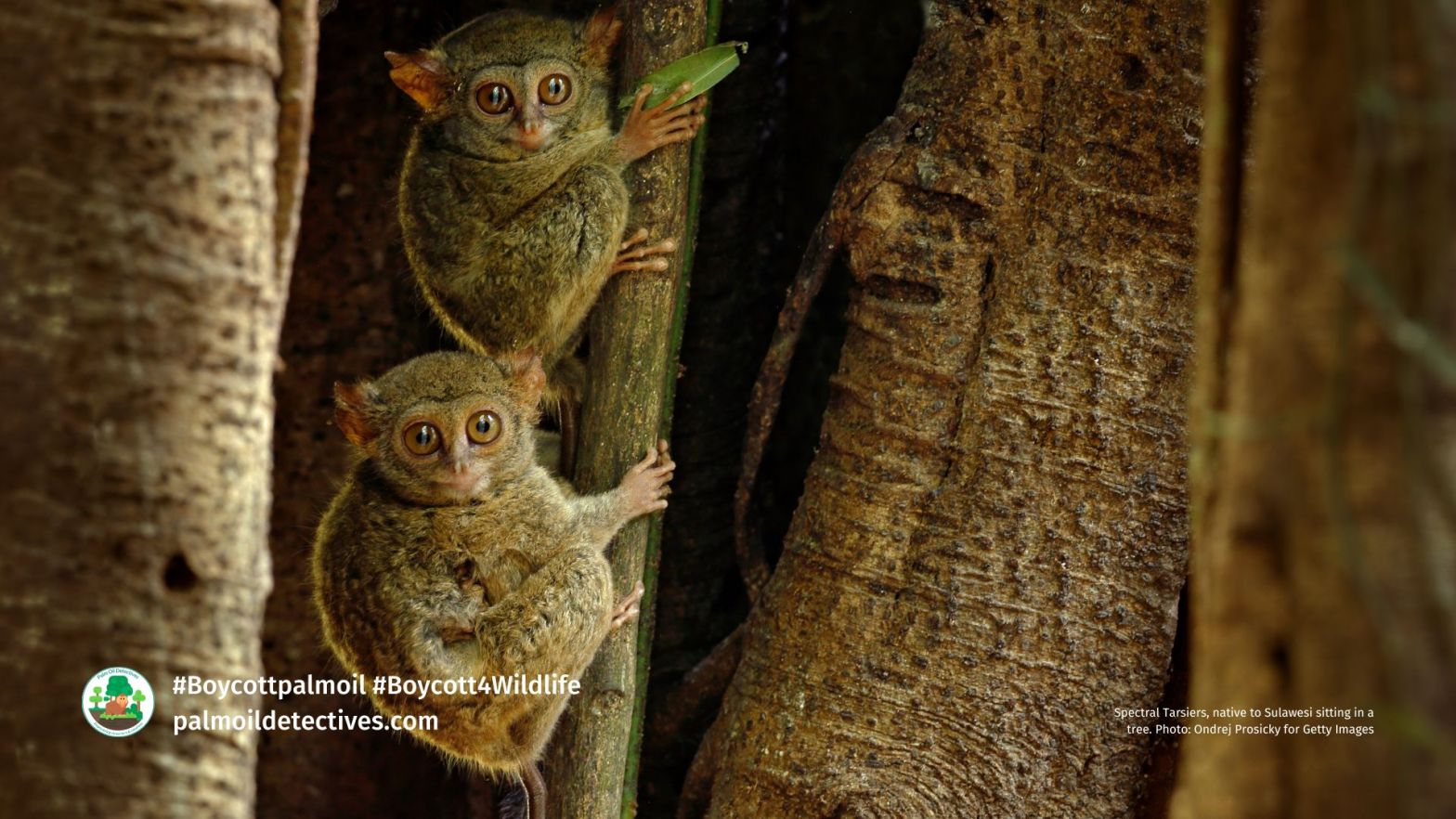
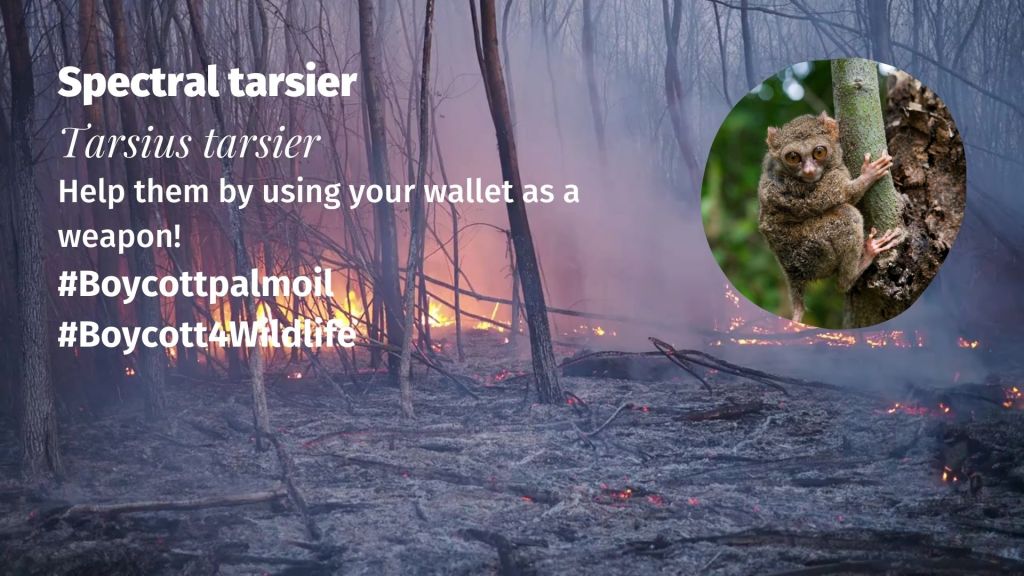
Spectral Tarsier Tarsius tarsier
Red List Status: Vulnerable
Location: Indonesia (Sulawesi, Buton, Muna, Kabaena, Selayar, Togian Islands)
The spectral tarsier is found across several islands in the Sulawesi biogeographic region of Indonesia. They live in dense lowland and submontane forests up to 1,500 metres elevation, including degraded and agricultural landscapes.
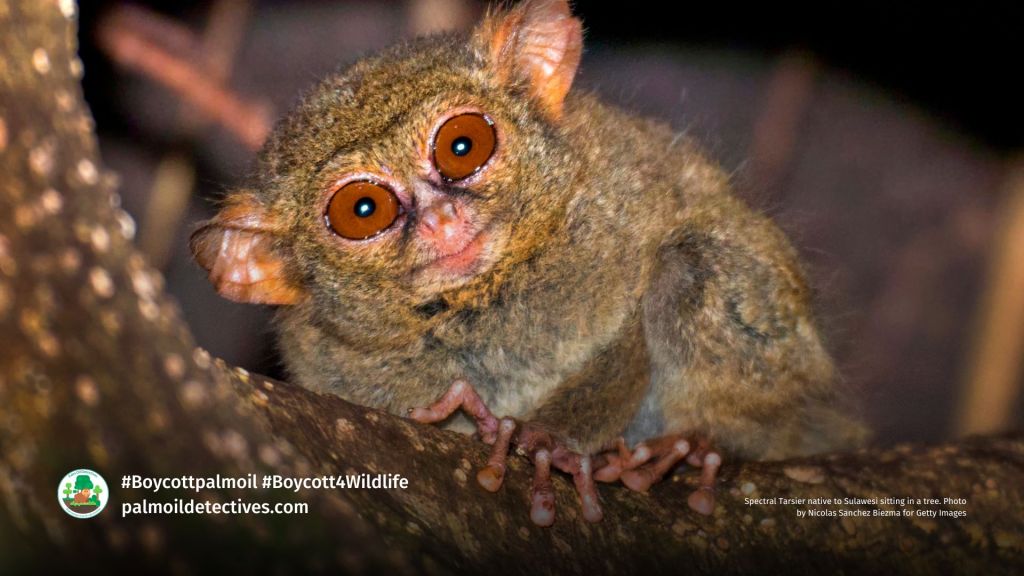
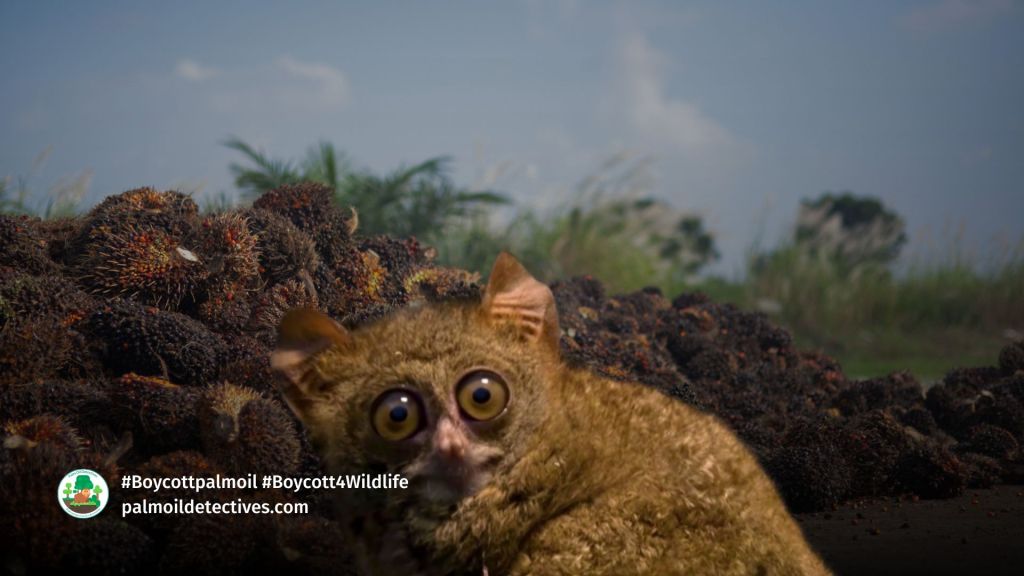
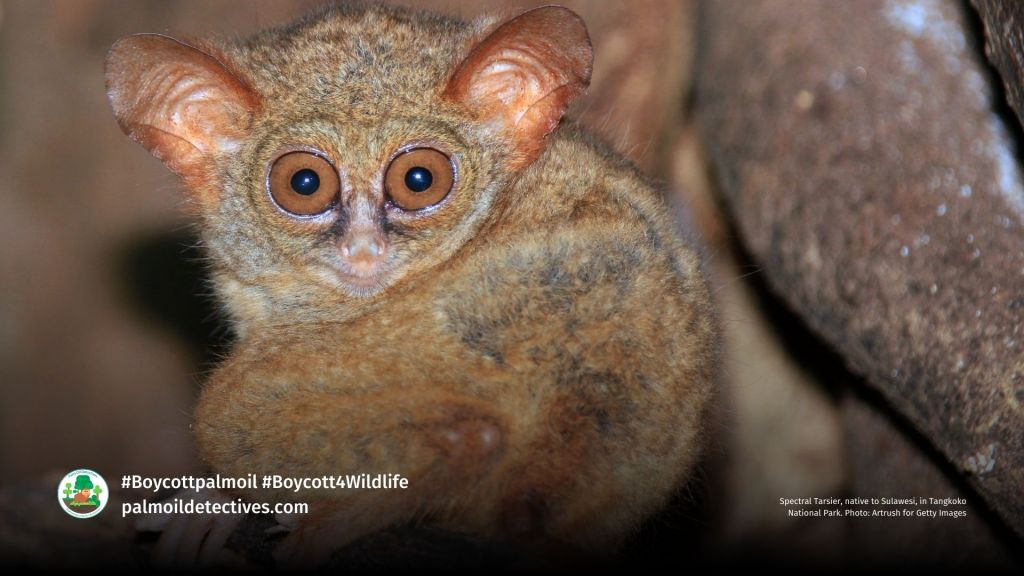
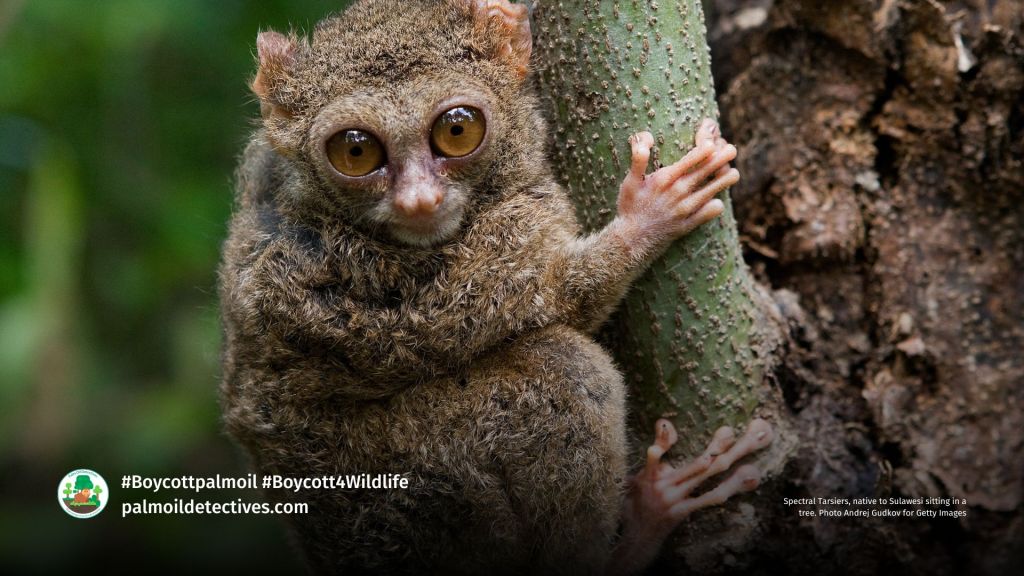
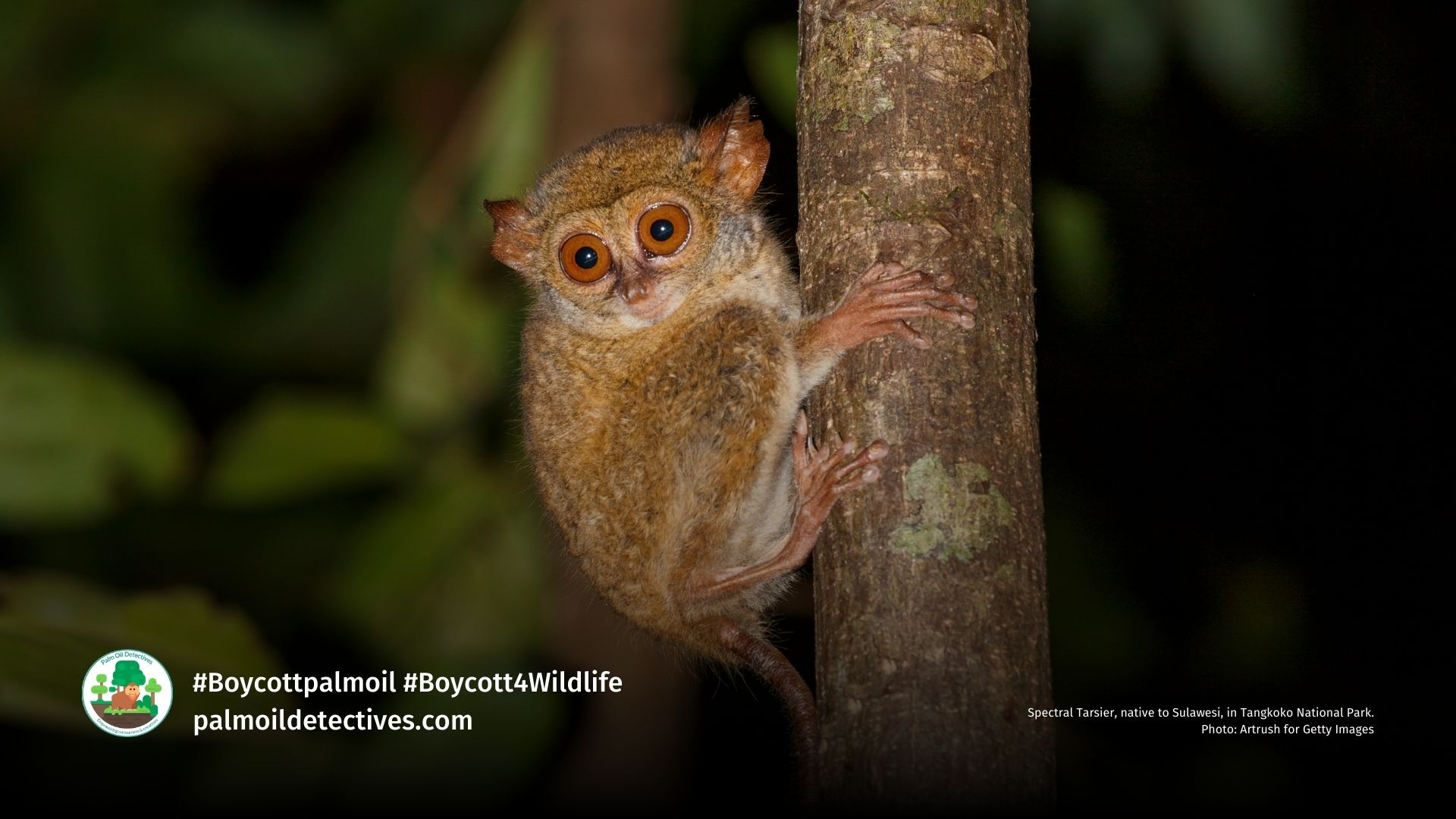
The Spectral Tarsier Tarsius tarsier is one of the smallest and most endearing #primates in the world. With the largest eye-to-body ratio of any #mammal, this wide-eyed, nocturnal #insectivore is found only in #Sulawesi and nearby Indonesian islands. Although they show some tolerance to human-altered landscapes, they are listed as #Vulnerable by the Red List due to rampant #deforestation for #palmoil and #timber agriculture, limestone #mining, #pesticide use and agricultural #pollution and the illegal pet trade. These elusive primates are declining fast. Use your wallet as a weapon: always choose products that are 100% palm oil-free and never support the exotic pet trade.#BoycottPalmOil #Boycott4Wildlife #Vegan
Appearance and Behaviour
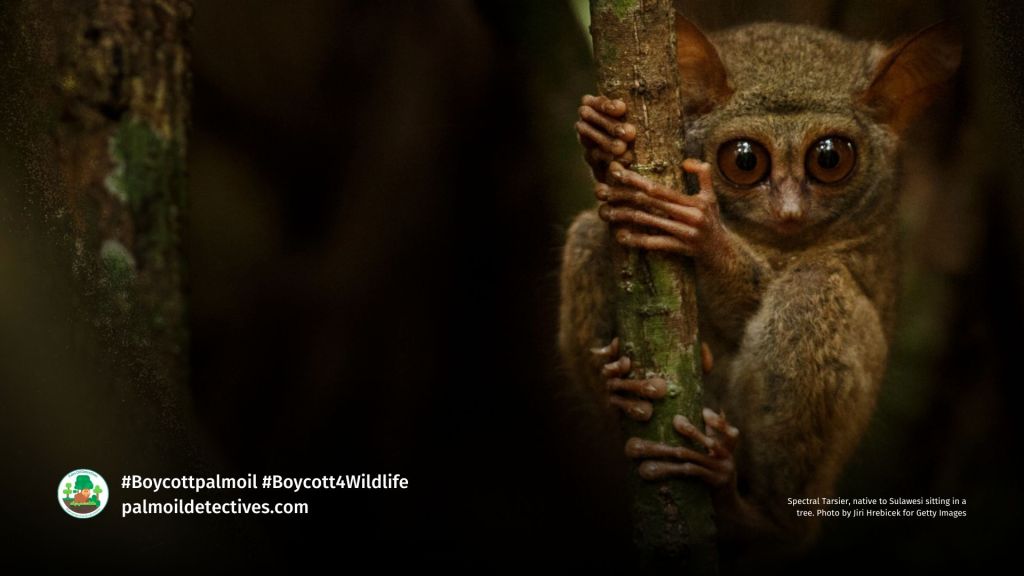
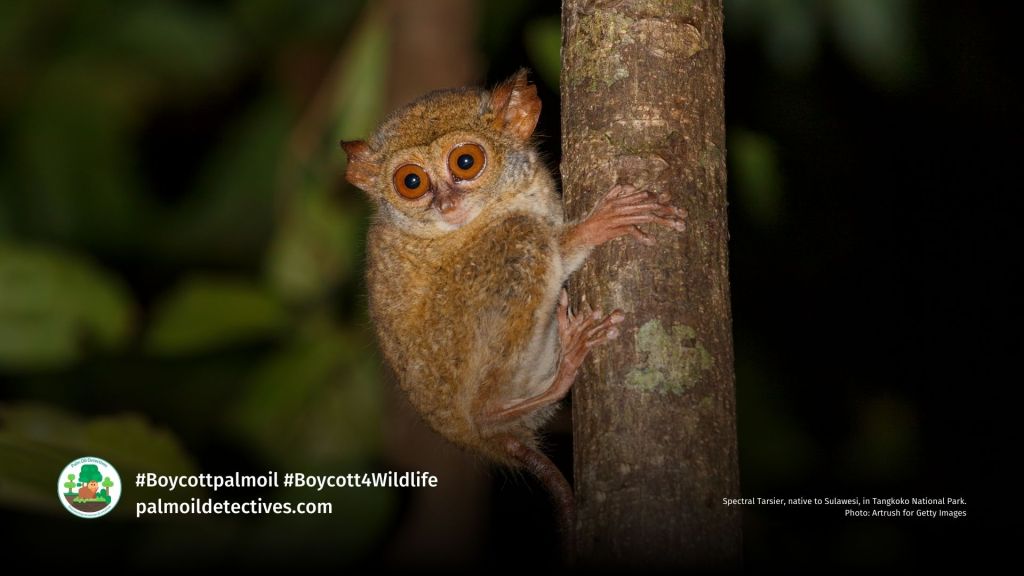
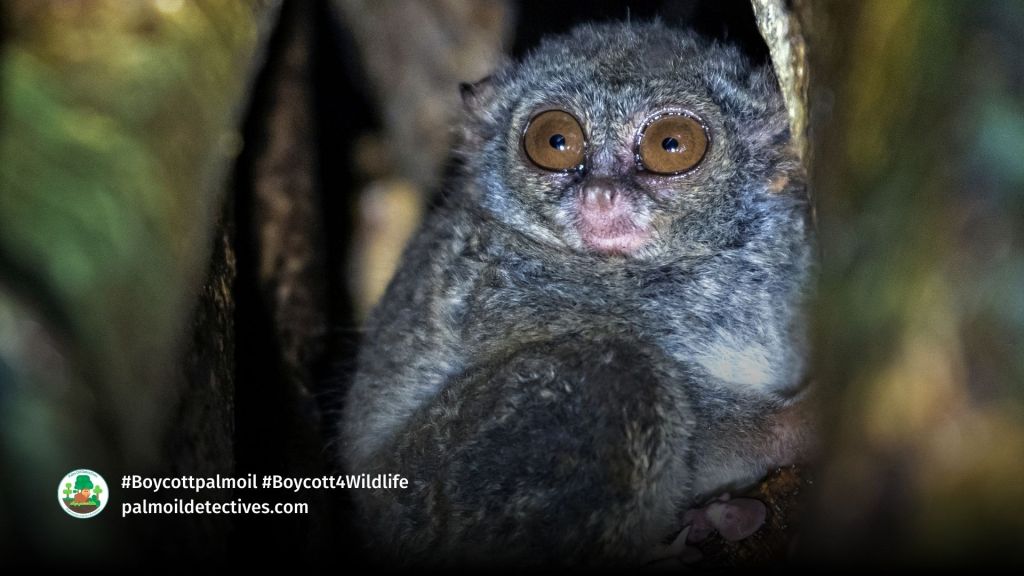
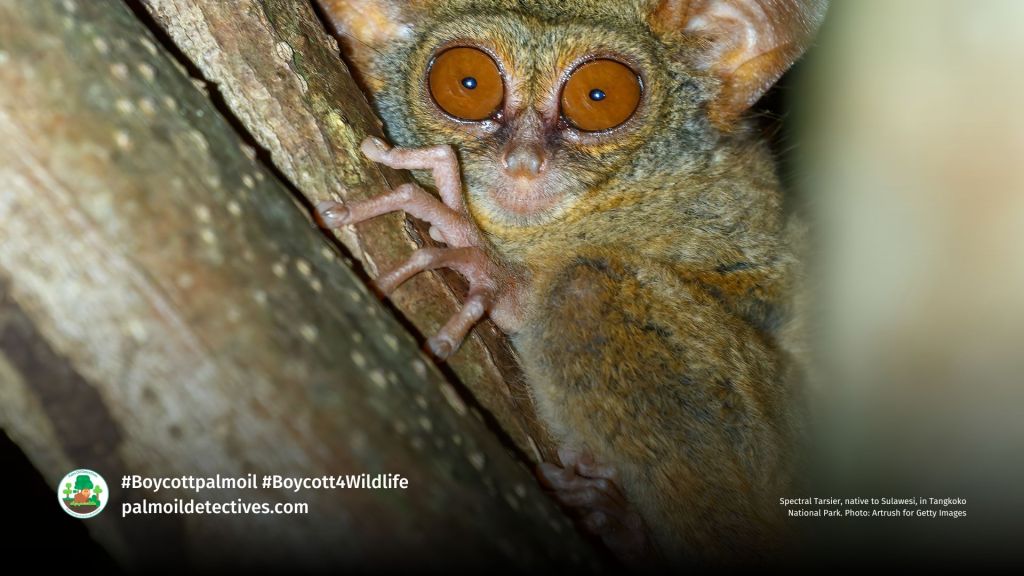
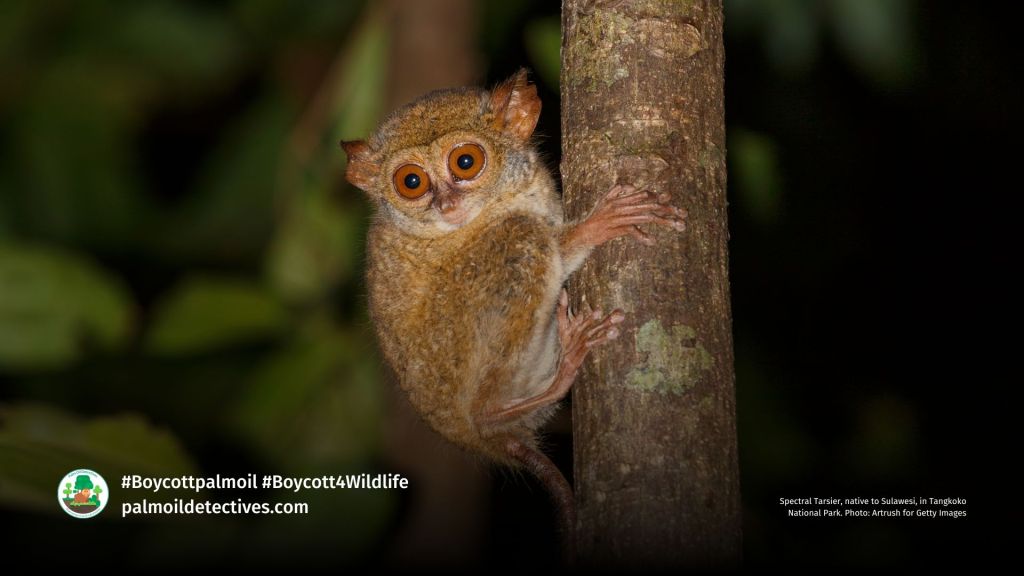
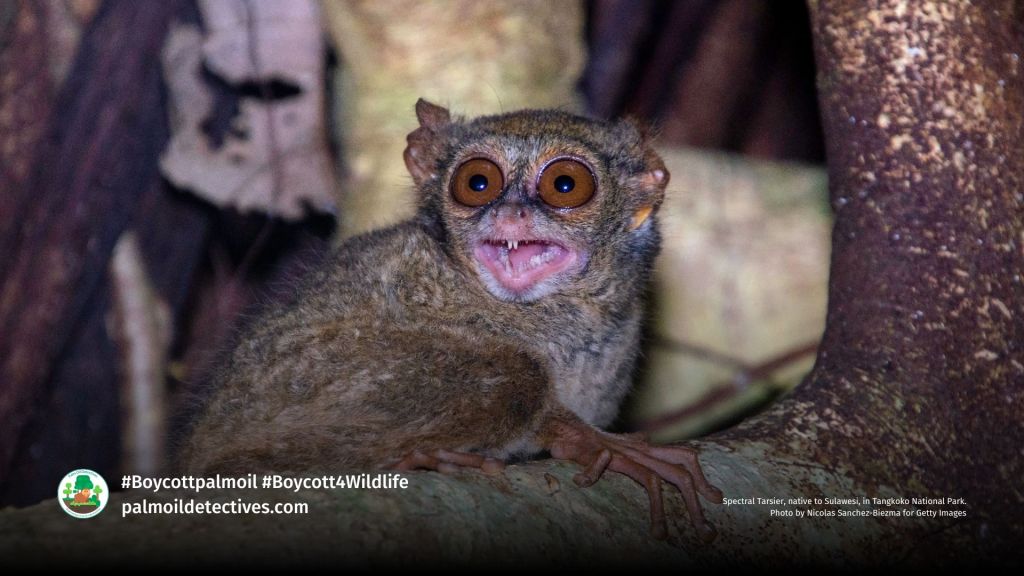
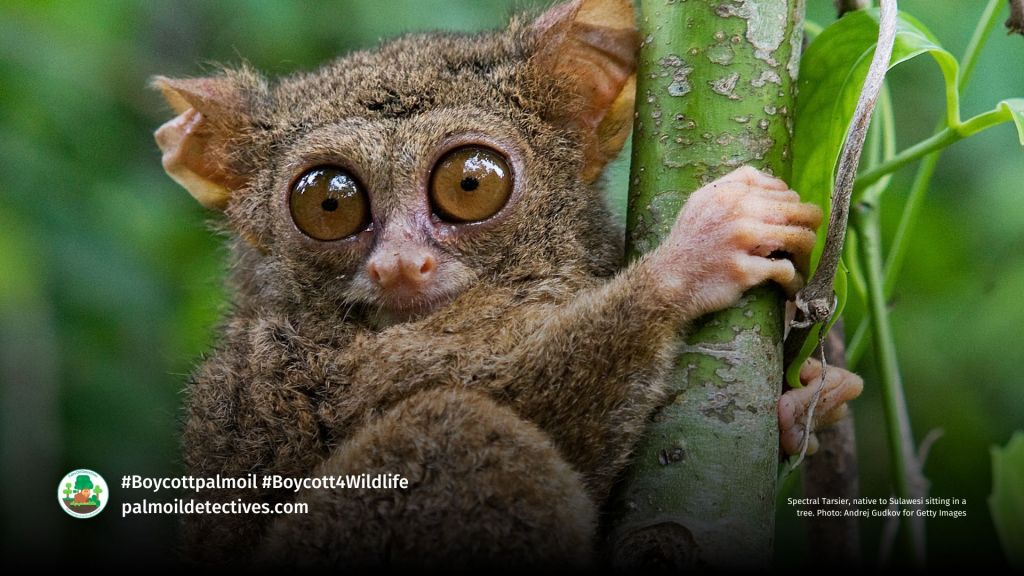
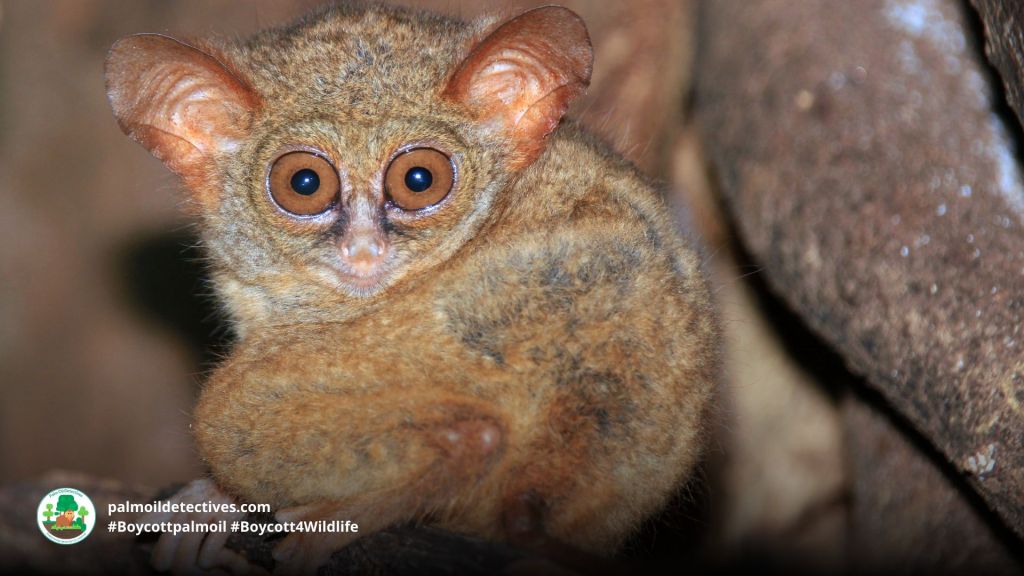
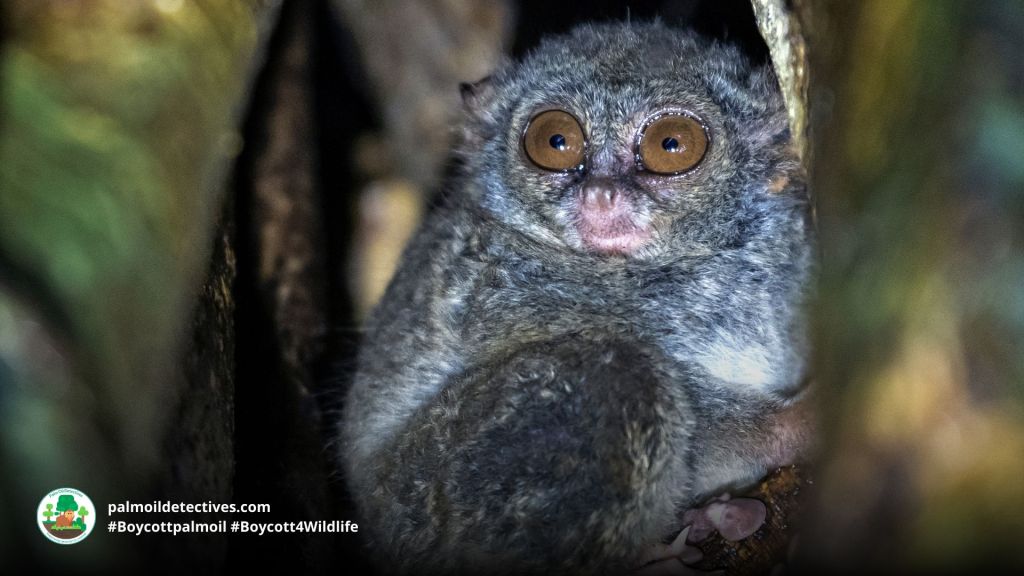
The spectral tarsier is a tiny, delicate primate with velvety brown fur and an unforgettable face. Their saucer-like amber eyes dominate their head, enabling astonishing night vision. They cannot move their eyes in their sockets, but instead swivel their heads 180 degrees like an owl.
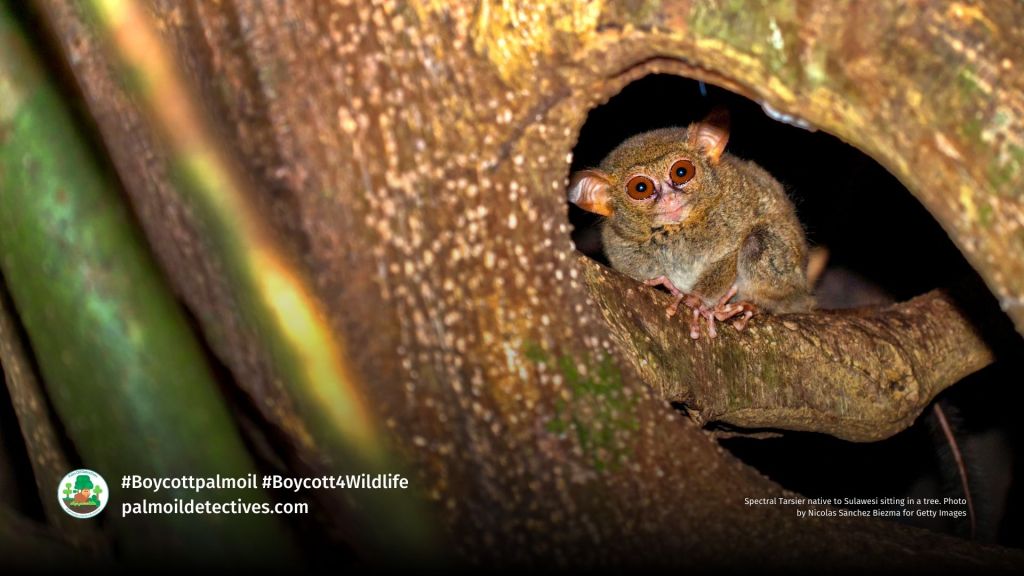
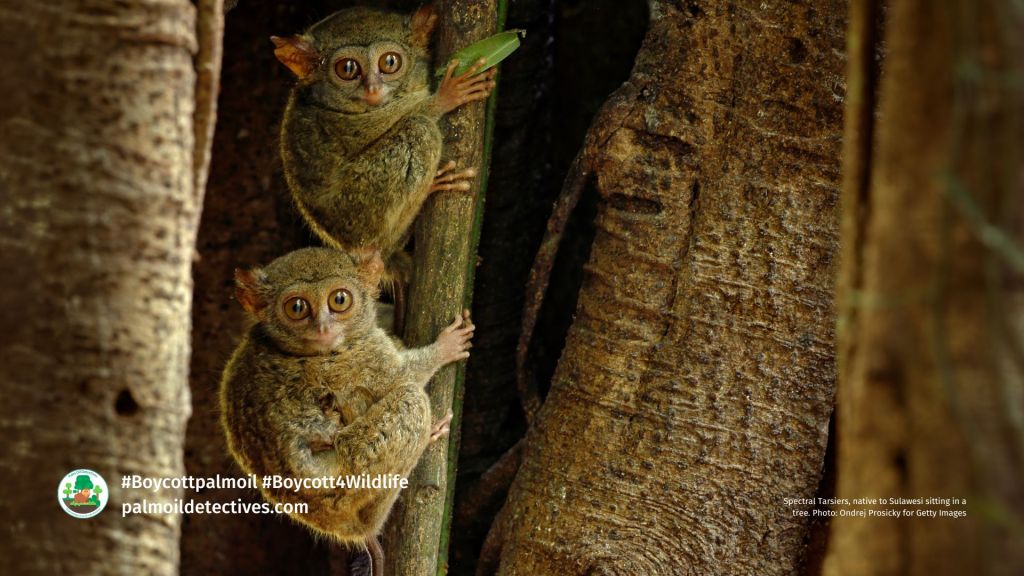
They are social primates who groom, vocalise, and nest together in groups of two to six. They spend their days snuggled up together in dense vegetation and become active at dusk and night.
Vocal Duets at Night and Dawn at Ultrasonic Frequencies Not Detectable by Humans
These duets, sometimes also heard during territorial conflicts at night, are performed by both males and females and can even include ultrasonic frequencies undetectable to the human ear (Gursky, 2000). At dawn, group members return to their sleeping site, often vocalising in loud duets or choruses that reinforce social bonds and territorial boundaries
Scent making and foraging together
Males tend to travel farther than females and patrol their home ranges, which average around one hectare (MacKinnon & MacKinnon, 1980). They regularly scent-mark boundaries using urine and epigastric glands. Both sexes urinate on their hands to spread their scent and enhance their grip while leaping.
Gravity-defying leaps
Despite their small size, tarsiers can jump over 40 times their body length thanks to their elongated tarsus bones, a feature from which they get their name. Their elongated ankle bones, and suction-cup-like fingertips allow them to spring through the forest canopy in gravity-defying leaps.
Lunarphilia: Increased Activity Under a Full Moon
These tiny tree-dwellers are not only nocturnal, they display “lunar philia”—increased activity under brighter moonlight—which helps compensate for their lack of a tapetum lucidum (a reflective eye layer common in other nocturnal animals). Instead, their massive eyes provide extreme light sensitivity. When threatened by predators like snakes, civets, or birds of prey, tarsiers may scatter and hide—or mob the predator by surrounding it and making repeated vocal attacks until it flees.
During a landmark study at Tangkoko Nature Reserve in Sulawesi, Gursky (2000) documented over 1,000 encounters between adult group members across 442 hours of focal observations. Social behaviour occurred frequently throughout the night—not just during rest periods—and nearly half of all interactions involved adult male–female pairs. In some groups, females were also highly interactive with one another, and subadults from neighbouring groups engaged in friendly cross-sex encounters. These interactions ranged from quick greetings to prolonged sessions lasting over three hours, including grooming, play, and coordinated foraging.
Diet
Unlike most primates, spectral tarsiers are obligate carnivores. Their diet is composed entirely of live prey—mainly insects such as moths, cicadas, beetles, and grasshoppers. They also opportunistically catch small lizards, snakes, and birds. Their lightning-fast reflexes, long fingers, and extraordinary night vision make them formidable miniature hunters in the darkness.

Reproduction and Mating
Spectral tarsiers breed twice a year, between April–June and October–November. Males and females form monogamous pairs during mating season, staying close through ultrasonic duets and courtship rituals including genital sniffing, scent marking, and chirping. After a gestation period of about six months, a single, highly developed infant is born. Infants begin venturing off alone as early as 23 days of age. Adolescent siblings often babysit younger offspring, freeing the mother to forage. Both males and females disperse from their natal groups as they mature.
Geographic Range
The spectral tarsier is endemic to Indonesia, found in Sulawesi, Buton, Muna, Kabaena, Selayar, and the Togian Islands. Although once thought to have a wide continuous range, this species likely consists of several distinct and cryptic island species. Populations are fragmented and localised, especially due to habitat loss and recent taxonomic revisions that split several former subspecies into distinct species.
Threats
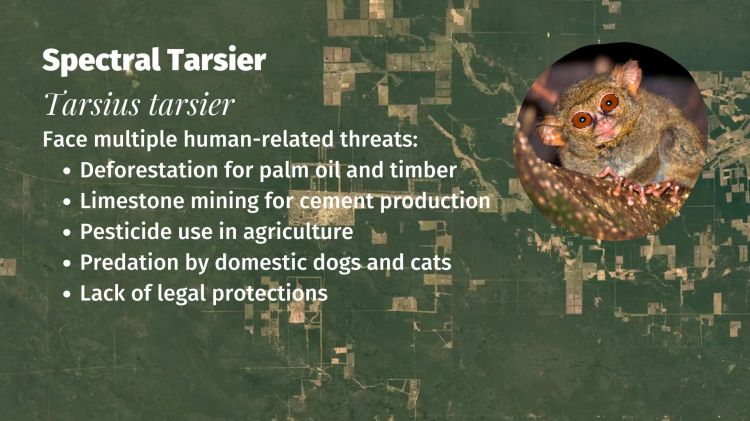
• Habitat loss due to palm oil, agriculture, and illegal logging
Vast areas of Sulawesi’s once-intact tropical forest are being cleared for monocultures including palm oil, coffee, nutmeg, and coconut. These practices eliminate the dense understorey vegetation that tarsiers need for sleeping, foraging, and nesting. Although spectral tarsiers show some tolerance to disturbed areas, ongoing forest clearance dramatically reduces their viable habitat, isolates populations, and increases the risk of local extinction.
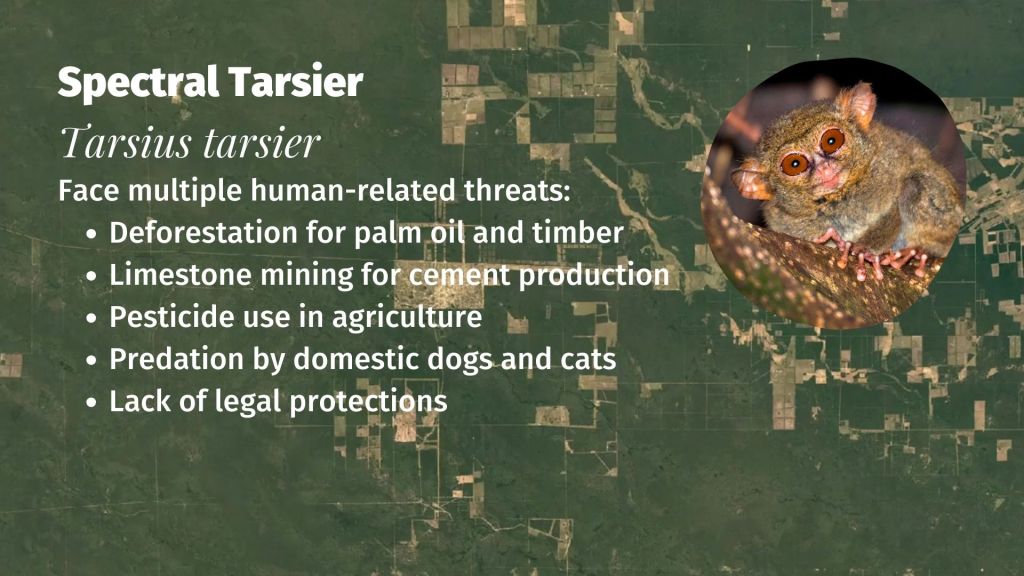
Major threats include habitat loss due to agriculture, illegal logging, mining of limestone for cement manufacture, agricultural pesticides, and predation by domestic animals (dogs and cats). Based on habitat loss alone, this species is considered Vulnerable in that at least 30% of the habitat has been converted in the past 20 years (approximately three generations).
IUCN Red List
• Limestone mining for cement production
Spectral tarsiers often roost in karst limestone formations, which provide critical sleeping sites and shelter. However, the demand for limestone in cement manufacture has led to extensive quarrying in Sulawesi. This destruction removes entire microhabitats and creates irreversible changes to the landscape that tarsiers cannot adapt to or recolonise.
• Pesticide use in agricultural zones
Insecticides used on plantations surrounding forest fragments poison the tarsiers’ primary food sources. As obligate insectivores, any reduction in insect abundance has immediate and severe impacts on their survival. Furthermore, bioaccumulation of toxins in their prey may lead to health problems or infertility in tarsier populations.
• Predation by domestic animals such as dogs and cats
With the encroachment of human settlements into forest edges, free-ranging dogs and cats often hunt and kill small native fauna like the spectral tarsier. These domestic predators are especially dangerous at night when tarsiers are active. They also introduce diseases to which wild animals have little immunity, increasing mortality.
• Illegal capture for the exotic pet trade
Spectral tarsiers are sometimes taken from the wild to be sold as pets, particularly in tourist hotspots like Tangkoko. These nocturnal primates do not survive well in captivity due to their strict dietary needs and extreme stress from handling. Removing them from the wild not only causes immense suffering but disrupts fragile family groups and reduces genetic diversity in already fragmented populations.
• Lack of legal protections and inadequate conservation measures
Although the species is listed as Vulnerable by the Red List and under Appendix II of CITES, this offers little practical protection on the ground. Many of the forests they inhabit remain unprotected and are at risk of conversion or degradation. The full extent of their decline may be underestimated due to their cryptic nature and unresolved taxonomy, and some distinct island populations may already be on the brink of extinction.
Take Action!
Use your power as a consumer to help save the spectral tarsier. Boycott palm oil and products that destroy Indonesian forests. Never support the exotic pet trade. Tarsiers are wild animals, not pets. Support indigenous-led conservation efforts and ecosystem restoration in Sulawesi. #BoycottPalmOil #Boycott4Wildlife and be #Vegan #BoycottMeat to help them survive!
FAQs
How many spectral tarsiers are left in the wild?
Exact numbers are unknown due to their cryptic nature and complex taxonomy. In one well-studied location, Tangkoko, population density is estimated between 70 and 156 individuals per square kilometre (MacKinnon & MacKinnon, 1980; Gursky, 1997). However, many island populations are isolated and may be in steeper decline than previously understood.
How long do spectral tarsiers live?
In the wild, spectral tarsiers may live up to 14–16 years. In captivity, their close relatives have lived up to 17 years. Ageing tarsiers show greying fur and slower activity (Archuleta, 2019).
What makes them different from other primates?
Spectral tarsiers are the only exclusively carnivorous primates, relying entirely on live animal prey. They also possess the largest eye-to-body ratio among all mammals and use ultrasonic vocalisations for echolocation and social bonding—traits rarely seen in primates (Gursky, 2019).
Are spectral tarsiers endangered because of palm oil?
Yes. While not their only threat, palm oil-driven deforestation is one of the biggest threats to them and many 1000’s of other animals and plants in their ecosystem. The conversion of tropical forests into palm oil monoculture severely reduces the complex undergrowth they rely on for roosting, foraging, and raising young. Pollution and pesticide run-off from agricultural plantations also poses a major threat. The razing of their natural ecosystem for palm oil makes it easier for illegal poaching to occur and capture for the illegal wildlife trade.
Are tarsiers good pets?
No—spectral tarsiers are intelligent and emotionally complex beings with specialised needs. Keeping them as pets is not only unethical and extremely cruel but is also a major threat contributing to their extinction. Wild-caught individuals often die from stress and trauma, and their removal devastates wild populations. If you love tarsiers, never buy them or keep them as pet! —Instead campaign against the pet trade.
Support the conservation of this species
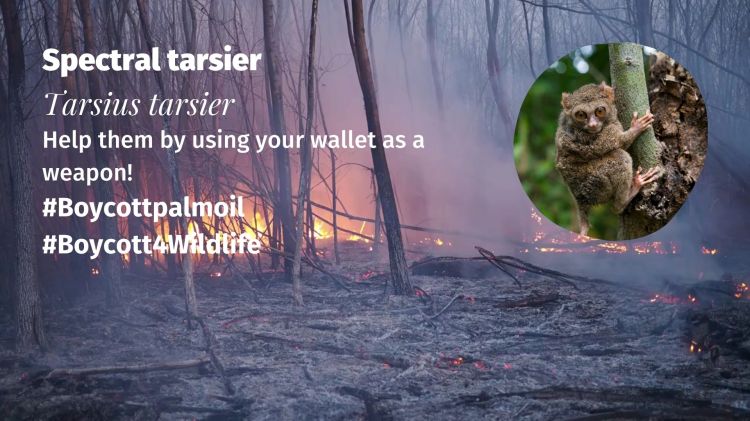
This animal has no protections in place. Read about other forgotten species here. Create art to support this forgotten animal or raise awareness about them by sharing this post and using the #Boycottpalmoil #Boycott4Wildlife hashtags on social media. Also you can boycott palm oil in the supermarket.
Further Information

Gursky, S. (2000). Sociality in the spectral tarsier, Tarsius spectrum. American Journal of Primatology, 51(1), 89–101. https://doi.org/10.1002/(sici)1098-2345(200005)51:1%3C89::aid-ajp7%3E3.0.co;2-7
Gursky, S.L. (2022). The Effect of Tourism on a Nocturnal Primate, Tarsius Spectrum, in Indonesia. In: Gursky, S.L., Supriatna, J., Achorn, A. (eds) Ecotourism and Indonesia’s Primates. Developments in Primatology: Progress and Prospects. Springer, Cham. https://doi.org/10.1007/978-3-031-14919-1_5
MacKinnon, J., & MacKinnon, K. (1980). The behaviour of wild spectral tarsiers. International Journal of Primatology, 1(4), 361–379. https://doi.org/10.1007/BF02692280
Shekelle, M. 2020. Tarsius tarsier. The IUCN Red List of Threatened Species 2020: e.T162369551A17978304. https://dx.doi.org/10.2305/IUCN.UK.2020-3.RLTS.T162369551A17978304.en. Downloaded on 08 February 2021.
Wikipedia contributors. (n.d). Spectral tarsier. Wikipedia. Retrieved from https://en.wikipedia.org/wiki/Spectral_tarsier

How can I help the #Boycott4Wildlife?
Take Action in Five Ways
1. Join the #Boycott4Wildlife on social media and subscribe to stay in the loop: Share posts from this website to your own network on Twitter, Mastadon, Instagram, Facebook and Youtube using the hashtags #Boycottpalmoil #Boycott4Wildlife.
2. Contribute stories: Academics, conservationists, scientists, indigenous rights advocates and animal rights advocates working to expose the corruption of the palm oil industry or to save animals can contribute stories to the website.






3. Supermarket sleuthing: Next time you’re in the supermarket, take photos of products containing palm oil. Share these to social media along with the hashtags to call out the greenwashing and ecocide of the brands who use palm oil. You can also take photos of palm oil free products and congratulate brands when they go palm oil free.
4. Take to the streets: Get in touch with Palm Oil Detectives to find out more.
5. Donate: Make a one-off or monthly donation to Palm Oil Detectives as a way of saying thank you and to help pay for ongoing running costs of the website and social media campaigns. Donate here
Discover more from Palm Oil Detectives
Subscribe to get the latest posts sent to your email.
 Palm Oil Detectives