
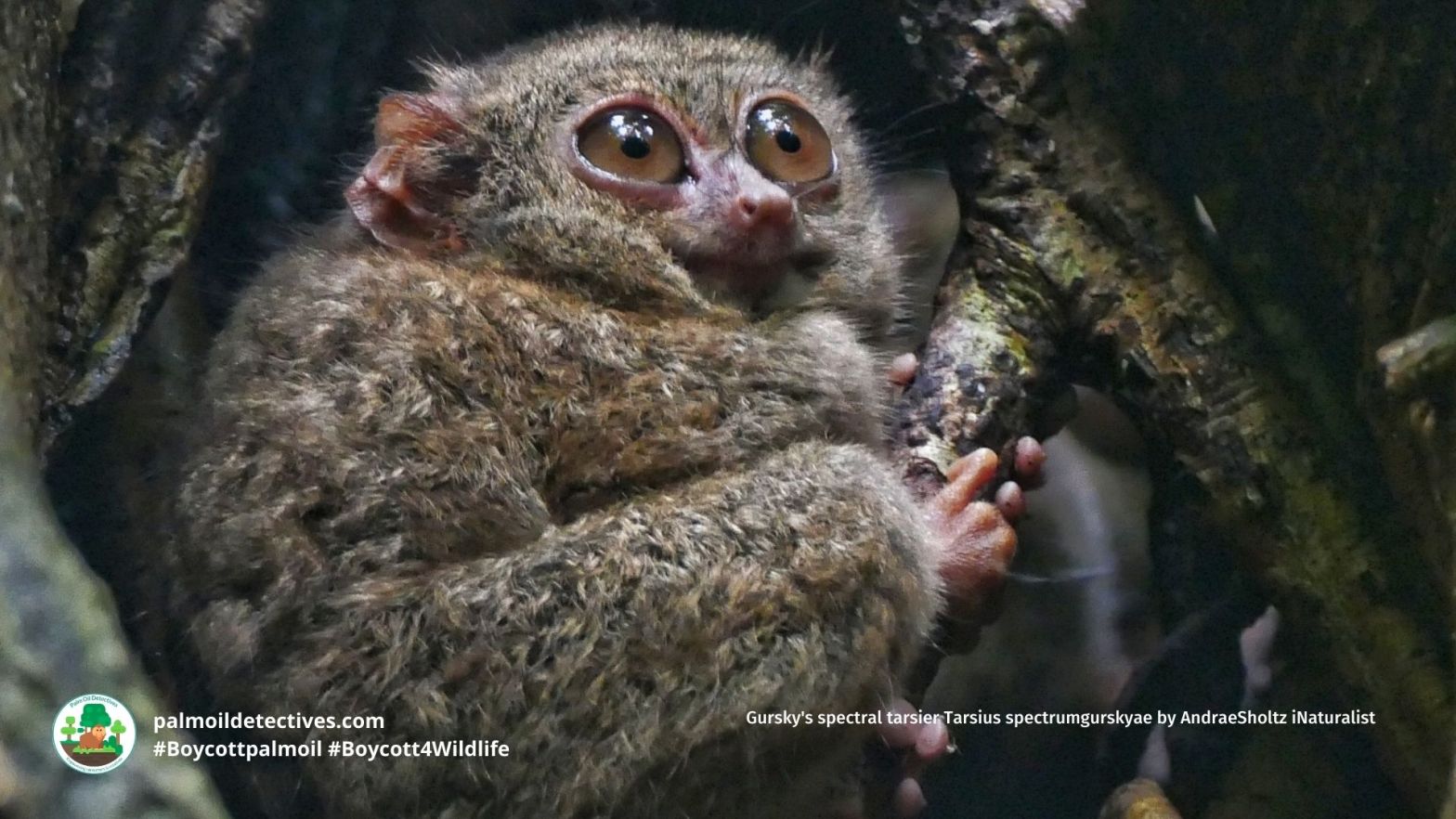
Gursky’s spectral tarsiers AKA Wusing of North Sulawesi are vulnerable due to palm oil and timber deforestation. Take action for them and boycott palm oil!
Tag Archives: nocturnal
Sunda Flying Lemur Galeopterus variegatus
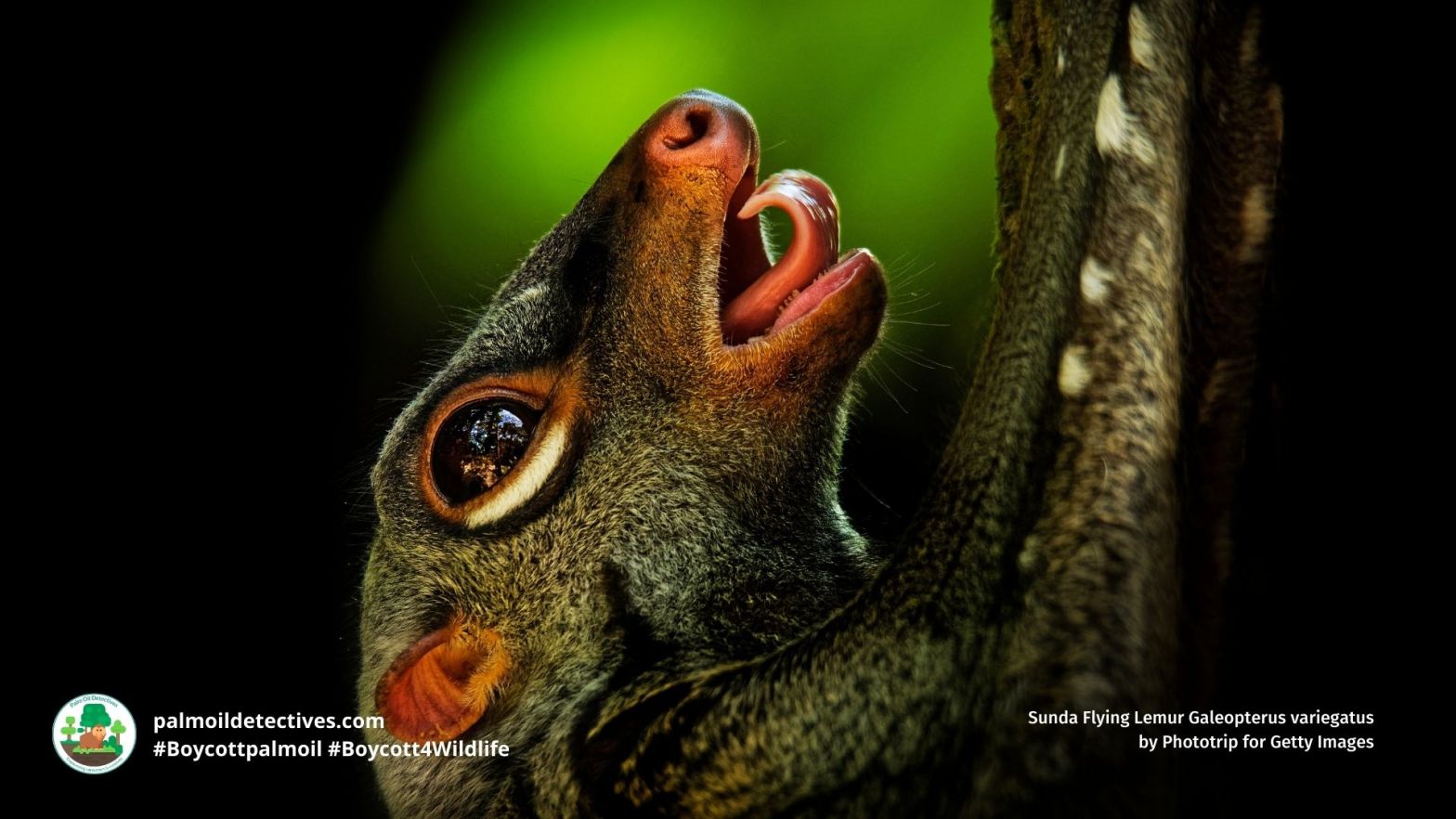
Sunda flying lemurs AKA Malayan colugos rely on ancient forests to survive, despite being skilful gliders, palm oil is a major threat, boycott palm oil!
Nancy Ma’s Night Monkey Aotus nancymaae
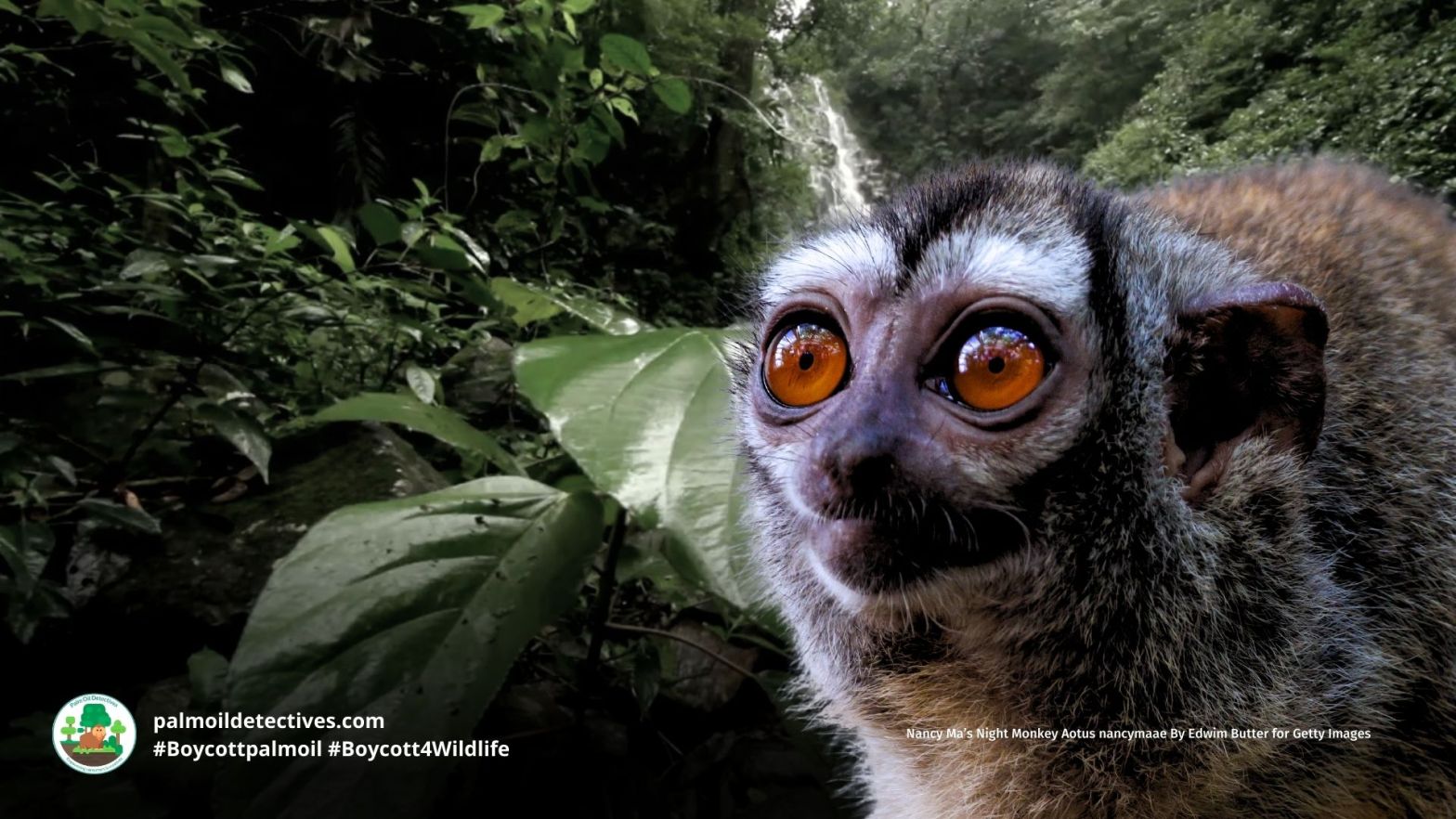
Deep in the heart of the Amazon rainforest, the Nancy Ma’s night monkeys peer out of the trees during the dusk with their large, soulful eyes and striking facial markings. Also known as the Ma’s night monkey or the Peruvian red-necked owl monkey, this nocturnal primate is named in honour of Dr. Nancy Shui-Fong Ma, who played a significant role in their genetic research. They are endemic to Brazil, Peru, and parts of Colombia, these monkeys are an essential part of their ecosystem. They now face direct threats from expansion for palm oil, soy and meat deforestation and are wild captured for scientific research – much of primate research is not even relevant to human health. Help them every time you shop and #BoycottPalmOil, be #vegan and #Boycott4Wildlife!
African Dwarf Crocodile Osteolaemus tetraspis

African Dwarf #Crocodiles are timid #nocturnal animals and solitary hunters. They predate mainly on small animals in rivers or nearby to the riverbank. They are also known as the Broad-Snouted Crocodile or the Bony Crocodile are the smallest extant species of crocodile in the world and are typically around 1.5 metres in length. They face persecution by humans and other animals and spend most of their daylight hours resting in burrows they make along riverbanks in #WestAfrica and Central Africa. They are vulnerable from #timber #palmoil #soy #meat #deforestation and hunting. Help them survive and be #vegan, #Boycottpalmoil #Boycott4Wildlife
Bengal Slow Loris Nycticebus bengalensis

The Bengal Slow Loris’s are wide-eyed beauties that are arboreal and nocturnal and live in tropical evergreen rainforest, semi-evergreen forest, and mixed deciduous forest. They are the largest loris species and feed predominantly on plant sap. They are now endangered in Malaysia and other parts of South East Asia, their primary threats are illegal capture for the pet trade and #palmoil #deforestation throughout their range. Help them every time you shop and #Boycottpalmoil #Boycott4Wildlife
Sipora Flying Squirrel Hylopetes sipora
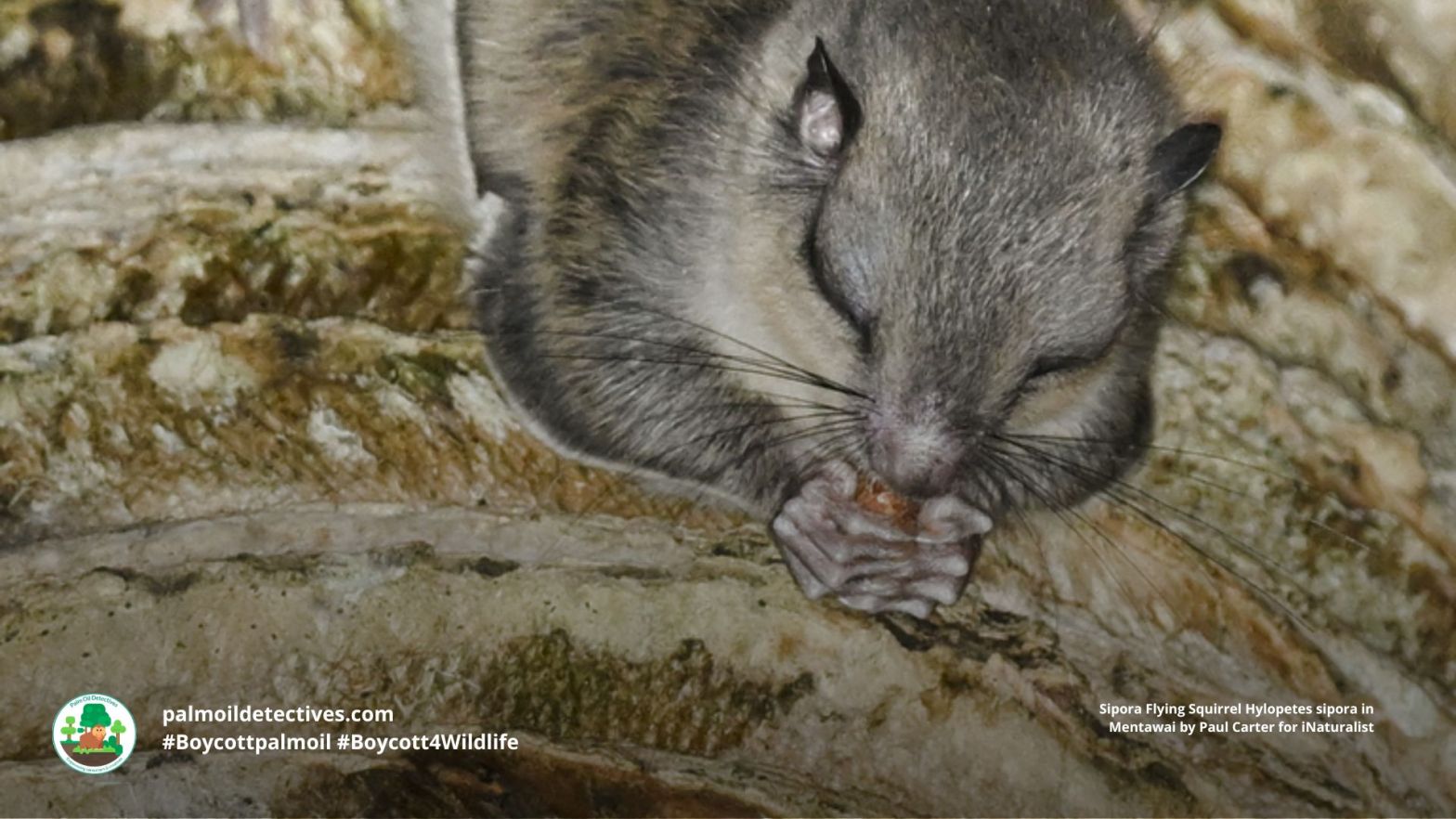
On the small, forested island of #Sipora, #Indonesia the Sipora flying #squirrel Hylopetes sipora drifts silently between ancient trees. This rare squirrel is found nowhere else on earth. At night, the Sipora flying squirrel emerges from the hollows of towering trees, their large eyes scanning the dim canopy. With a sudden leap, they unfold their patagium—a membrane stretching from wrist to ankle—and glide effortlessly through the air, landing on a distant branch with barely a sound. The forests of Sipora are being cleared for #timber, charcoal and #palmoil, leaving the Sipora flying squirrel with fewer places to hide. Use your wallet as a weapon and #BoycottPalmOil #Boycott4Wildlife.
Siberut Flying Squirrel Petinomys lugens
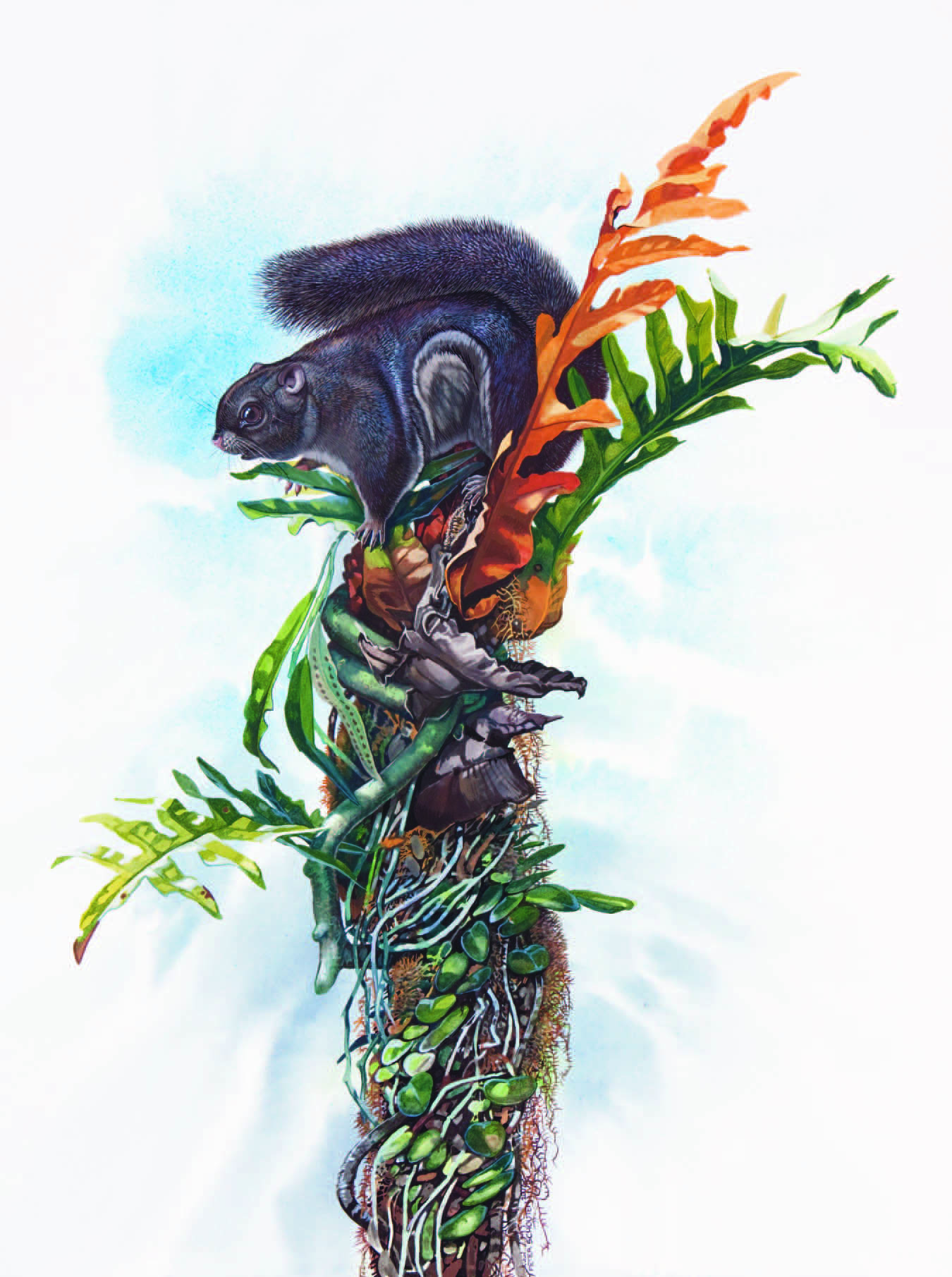
The Siberut Flying Squirrel is one of the world’s most elusive gliders, found only in the #Mentawai Archipelago’s humid forests. At dusk, the Siberut Flying Squirrel launches from high branches, spreading their soft, square-shaped patagium to drift silently between ancient trees. The air is thick with the scent of damp earth and moss, and the only sound is the faint rustle of leaves as the Siberut Flying #Squirrel lands. Their world is shrinking fast—logging and #palmoil plantations are destroying the last forests on #Siberut, #Sipora, and North Pagai. No conservation actions protect the Siberut Flying Squirrel. Stand with indigenous communities and use your wallet as a weapon. #BoycottPalmOil #Boycott4Wildlife
Vordermann’s Flying Squirrel Petinomys vordermanni
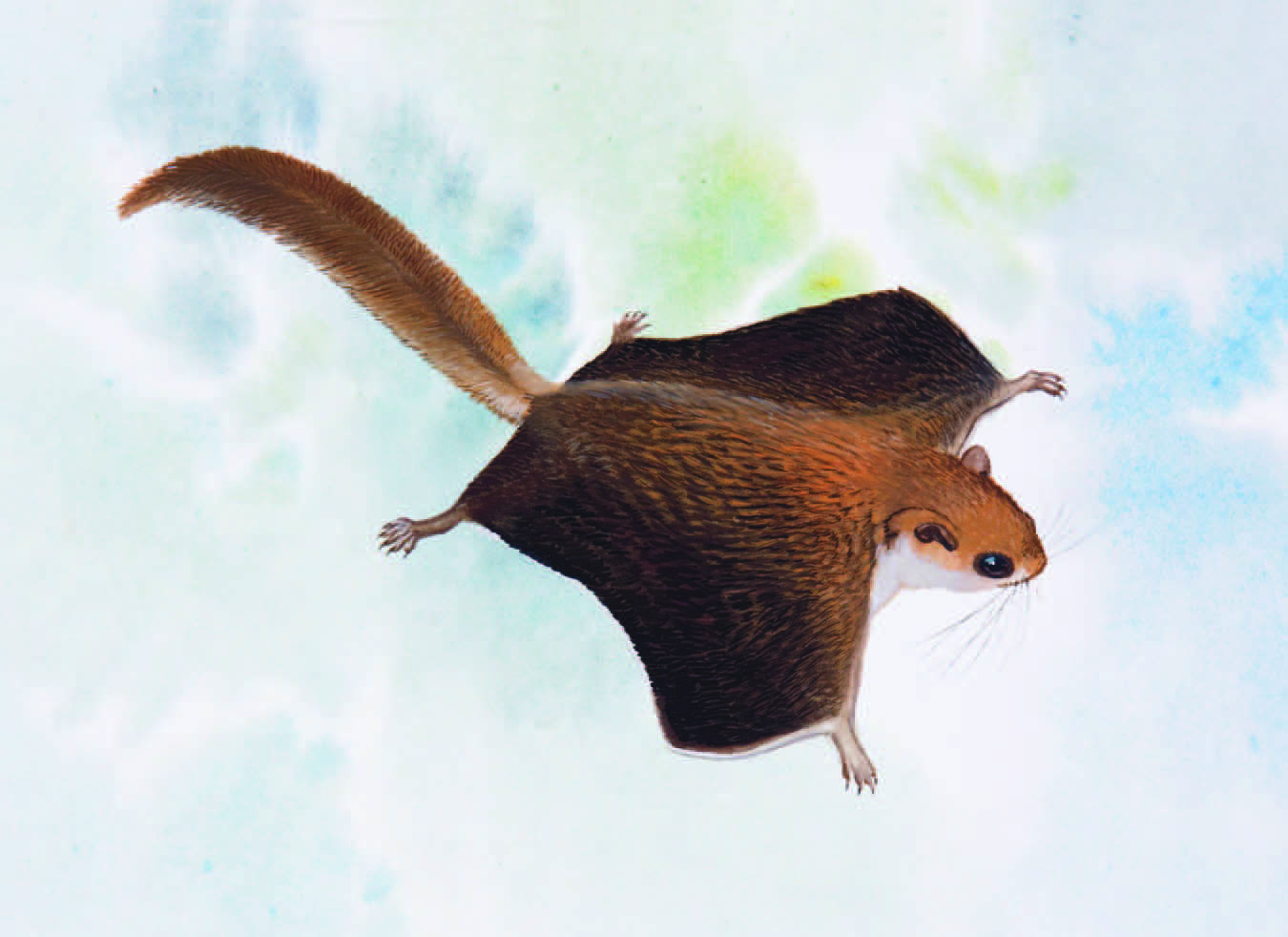
In #Borneo’s twilight, the Vordermann’s flying #squirrel emerges from her nest, resplendent with orange cheeks and black-ringed eyes. This small, #nocturnal #mammal is a master of the rainforest canopy. They use an ingenious membrane called a patagium to effortlessly glide between trees. A flying squirrel’s world is one of constant motion and quiet vigilance. Don’t let this world disappear! The forests that sustain them are vanishing at an alarming rate. Palm oil-driven deforestation, logging, and land conversion are tearing through their habitat, leaving only fragmented forest. Use your wallet as a weapon and #BoycottPalmOil #Boycott4Wildlife.
 Palm Oil Detectives