Guaranteeing Ecocide: The Green Lie of Palm Oil Certification

For decades, the palm oil industry, backed by the RSPO, has misled consumers with the false promise of “sustainable” palm oil. Behind this green façade lies a brutal reality of deforestation, human rights abuses, and the destruction of endangered species’ habitats. Dozens of investigations from many different industry watchdogs have exposes the RSPO’s certification as a sham, enabling continued environmental devastation under the guise of sustainability.

However it’s not only the palm oil industry that is an environmental liability, gold mining and meat deforestation also deserves to be strongly condemned for its ongoing ecocide. Read on to discover the examples of greenwashing deception from these industries, so that you don’t fall for their corporate greenwashing. Protect our planet and all human and non-human beings by refusing to support these lies—#Boycottpalmoil #BoycottGold #BoycottMeat and #Boycott4Wildlife every time you shop.
How Brands Exploit “Green” Certification

Brands and businesses may be tempted to exploit “green” certifications to garner a larger market share at the expense of integrity.

PalmWatch: A Tool to Hold Palm Oil Greenwashers to Account

A groundbreaking open-source tool by the University of Chicago called PalmWatch, shines a light on the darkest parts of the palm oil industry.

PalmWatch is a free web-based tool that reveals links between major multinational brands using supposedly “sustainable” palm oil, and palm oil supply chain. This means that concerned consumers, animal rights advocates and human rights advocates can clearly see the toll of palm oil ecocide in their daily supermarket purchases.

Covering hundreds of thousands of kilometres, PalmWatch gives everyone open-source, free and unprecedented access to what “sustainable” palm oil really looks like.

More than simply a tool, PalmWatch is a clarion call to consumers to look carefully at their purchases. And where possible, to boycott brands causing the ecological crisis of tropical deforestation.

Help animals and indigenous peoples and #BoycottPalmOil #Boycott4Wildlife every time you shop!

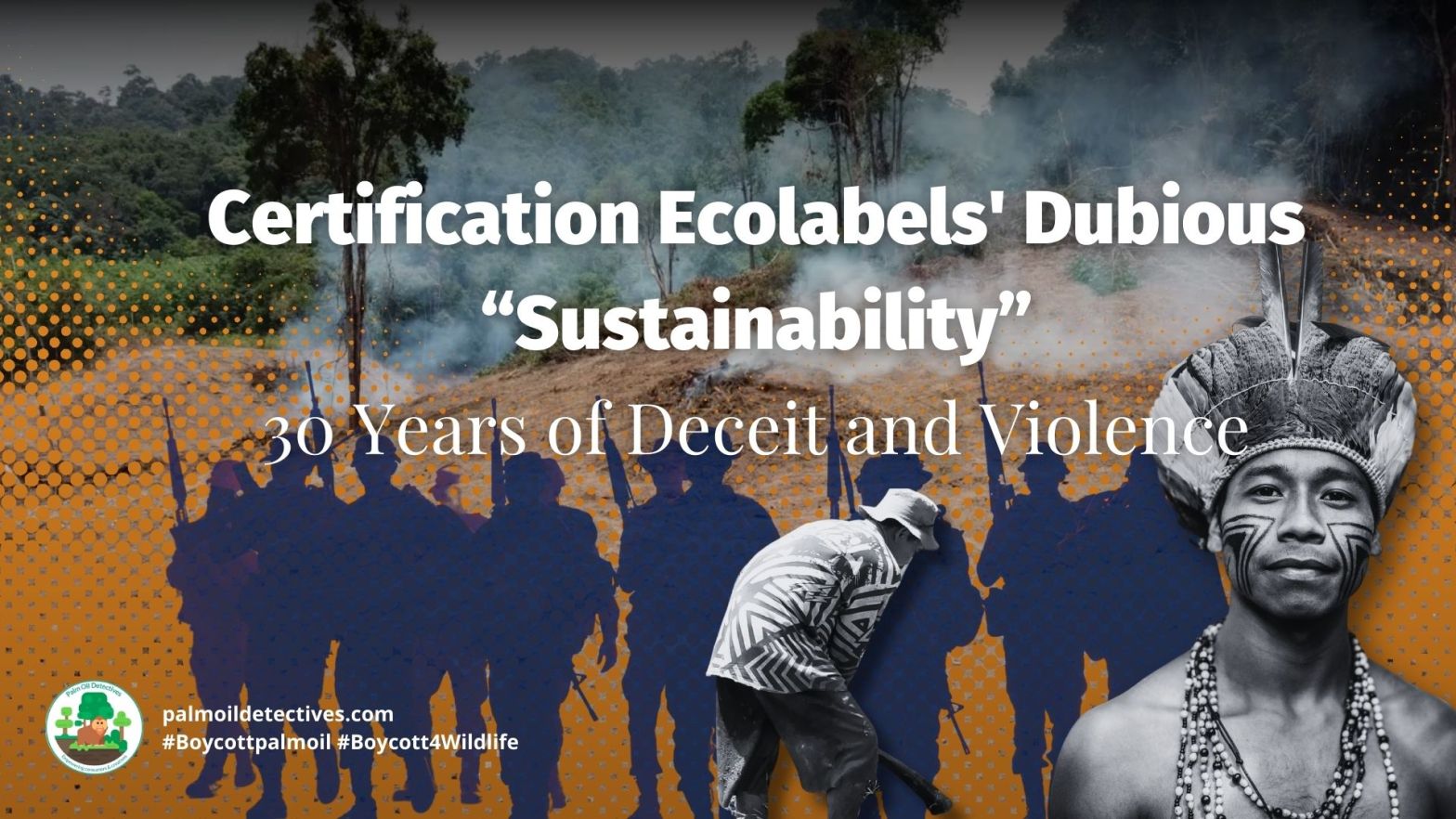
RSPO’s Dubious “Sustainability”: 30 Years of Deceit

Ecolabels like RSPO and FSC are involved in networks of greenwashing about human rights abuses and deforestation. Resist and boycott palm oil when you shop!

Amazon Palm Oil: Top Brands Source from Amazon Destroyers

Expose the truth about brands like Nestlé, PepsiCo, and Unilever sourcing “sustainable” palm oil from Brazil linked to violence, abuses and fraud. Shame!

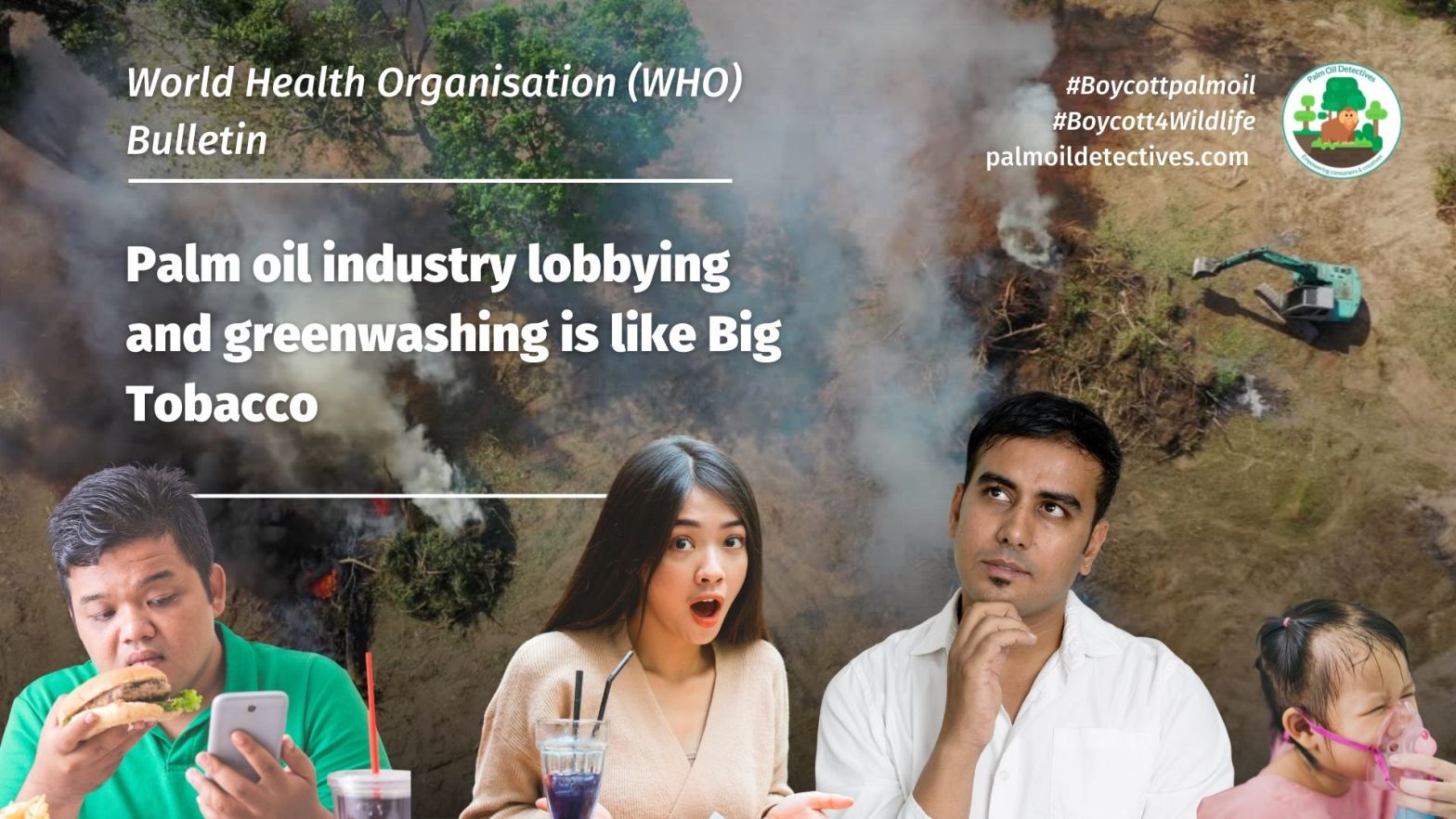
WHO: Palm Oil Industry Greenwashing Like Big Tobacco

What does the $60 billion USD palm oil industry have in common with Big Tobacco? A lot according to this report by the World Health Organisation. Palm oil industry lobbying tactics are used to influence research into the health impacts of palm oil and also to influence consumer buying habits. The dire health and environmental impacts of palm oil are hidden from consumers by clever marketing. These lobbying, marketing and greenwashing tactics are reminiscent of tobacco and alcohol health lobbying.

Greenwashing Tactic 10: Gaslighting, Harassment, Stalking and Threats

Gaslighting, harassing or stalking vocal critics of a brand, commodity or industry certification in order to silence these critics – this is greenwashing!

Ten Tactics of ‘Sustainable’ Palm Oil Greenwashing

Learn ten marketing and PR tactics used for “sustainble” palm oil greenwashing to justify endless growth by the palm oil industry. Boycott palm oil now!

Greenwashing Tactic #1: Hidden Trade Off

When a brand makes token changes while continuing with deforestation, ecocide or human rights abuses in another part of their business – this is ‘Hidden Trade Off’

For example, Nestle talks up satellite monitoring to stop palm oil deforestation. Yet their deforestation continues to accelerate in spite of this – this is ‘Hidden Trade-Off”

Greenwashing Tactic #2: No Proof

Greenwashing Tactic 5. Palm oil companies make environmental claims without providing proof or evidence of these claims or using spurious evidence.

Greenwashing Tactic #4: Fake Labels

Claiming a brand or commodity is green based on unreliable, ineffective endorsements or eco-labels such as the RSPO, Forest Stewardship Council (FSC) or FairTrade coffee and cocoa. Greenwashing: Fake Labels and fake certifications Ecolabels are designed to reassure consumers that they are purchasing green or sustainable products. In reality the environmental standards are no betterContinue reading “Greenwashing Tactic #4: Fake Labels”

Greenwashing Tactic #6: The Lesser of Two Evils

Claiming that a brand, commodity or industry is greener than others in the same category, in order to excuse ecocide, deforestation, human rights and animal rights abuses. Jump to section Greenwashing: Lesser of Two Evils: Palm Oil Uses Less Land Than Other Crops Greenwashing messaging is pervasive by researchers Greenwashing messaging is pervasive on socialContinue reading “Greenwashing Tactic #6: The Lesser of Two Evils”

What is greenwashing?

Learn how consumerism was engineered to fuel a hunger for more stuff and how greenwashing now masks true environmental harm. Discover the facts.

Greenwashing Tactic 9: Partnerships, Sponsorships and Research Funding

Greenwashing Tactic 9. Corporations use NGOs, Zoo partnerships, sponsorships, and research funding to give an industry or brand a ‘green image.

Greenwashing Tactic #3: Vagueness

Claiming a brand or commodity is ‘green’ or ‘sustainable’ based on broad generalisations, unclear language or vague statements Jump to section Greenwashing: Vagueness in Language Greenwashing: Vagueness in certification standards Reality: Auditing of RSPO a failure Quote: EIA: Who Watches the Watchmen 2 (2019) Quote: Greenpeace: Destruction Certified (2021) Quote: EIA: Burning Questions the CredibilityContinue reading “Greenwashing Tactic #3: Vagueness”

Greenwashing Tactic #7: Lying

Greenwashing lies are falsifying support from authorities to back up claims or using spurious research data to back up the greenwashing, boycott palm oil!

Greenwashing Tactic 8: Design & Words

Greenwashing Tactic 8. Companies use design principles and subliminal language to signal ‘greenness’ and trigger unconscious emotional responses in consumers

Greenwashing Tactic #5: Irrelevance and Deflection

Learn how lobbyists use irrelevant information and deflection to shift the conversation away from their environmental harms, e.g. “sustainable” palm oil.