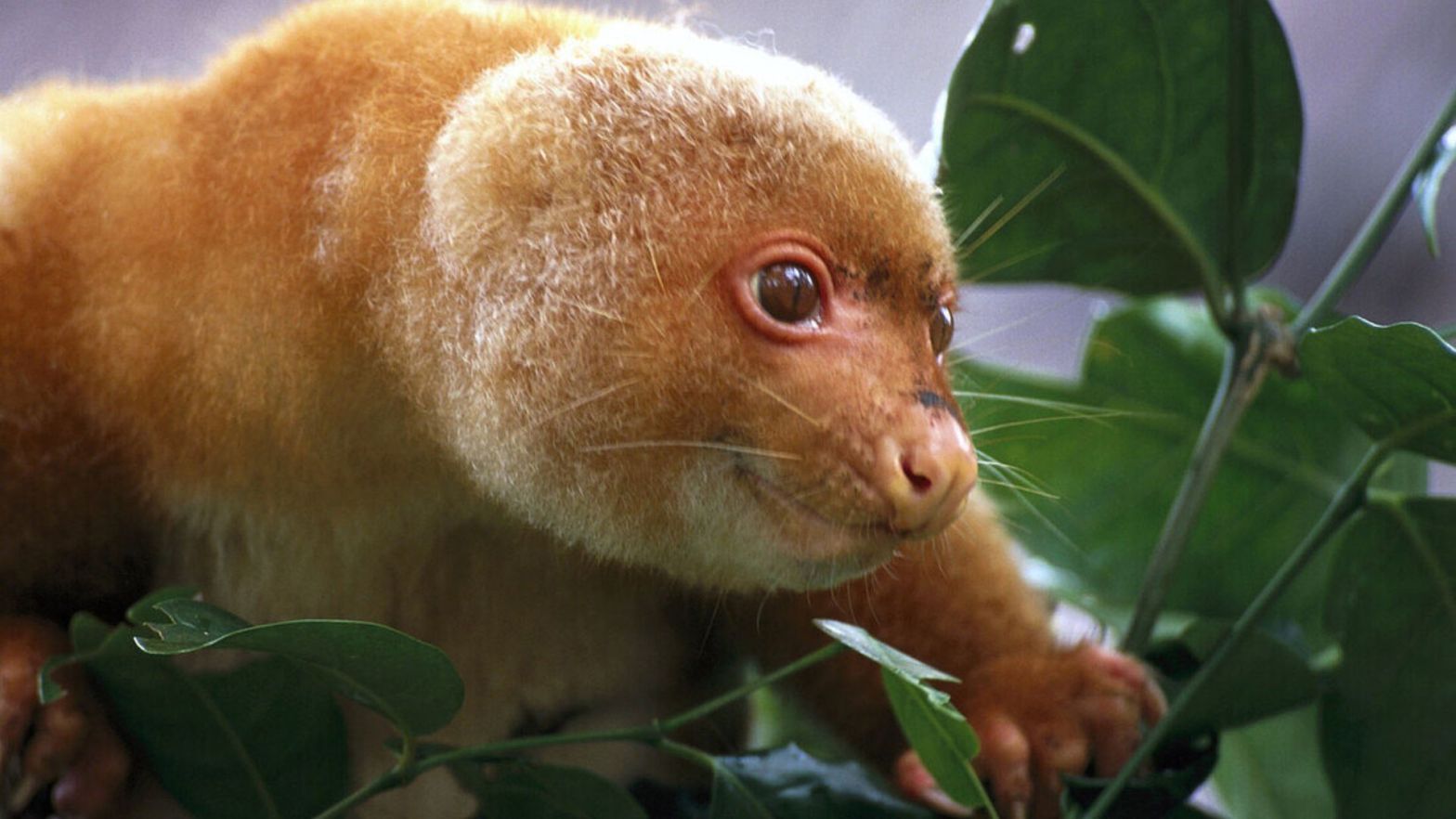
Save Sabah Grizzled Langurs AKA Crested Grizzled Langurs from palm oil! They’re endangered and urgent action is needed to prevent their extinction – boycott!
Category Archives: News
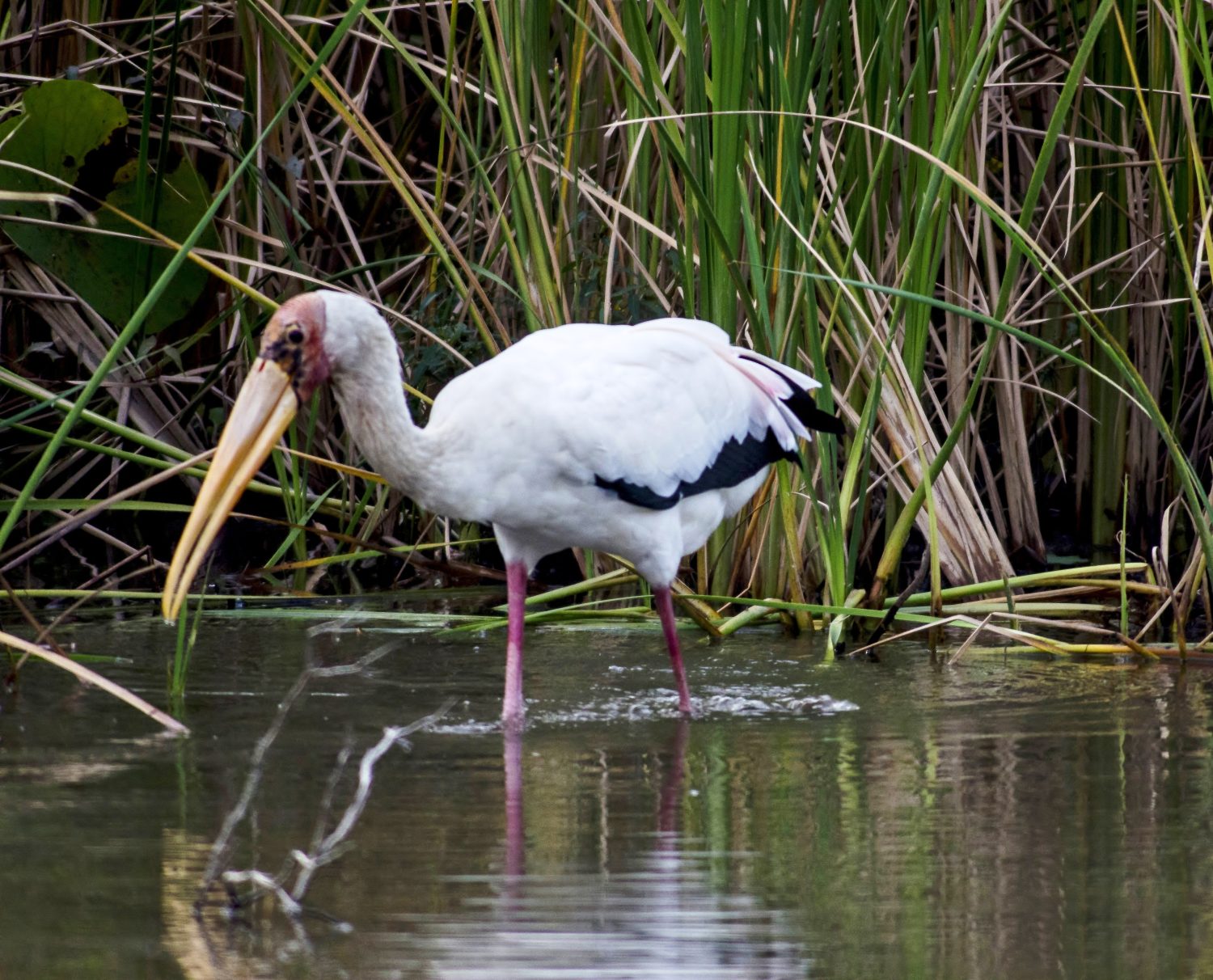
Milky Stork Mycteria cinerea
Help protect the striking Milky Stork. This wading bird faces a sharp decline in Southeast Asia as their coastal mangrove habitat is destroyed by pollution.
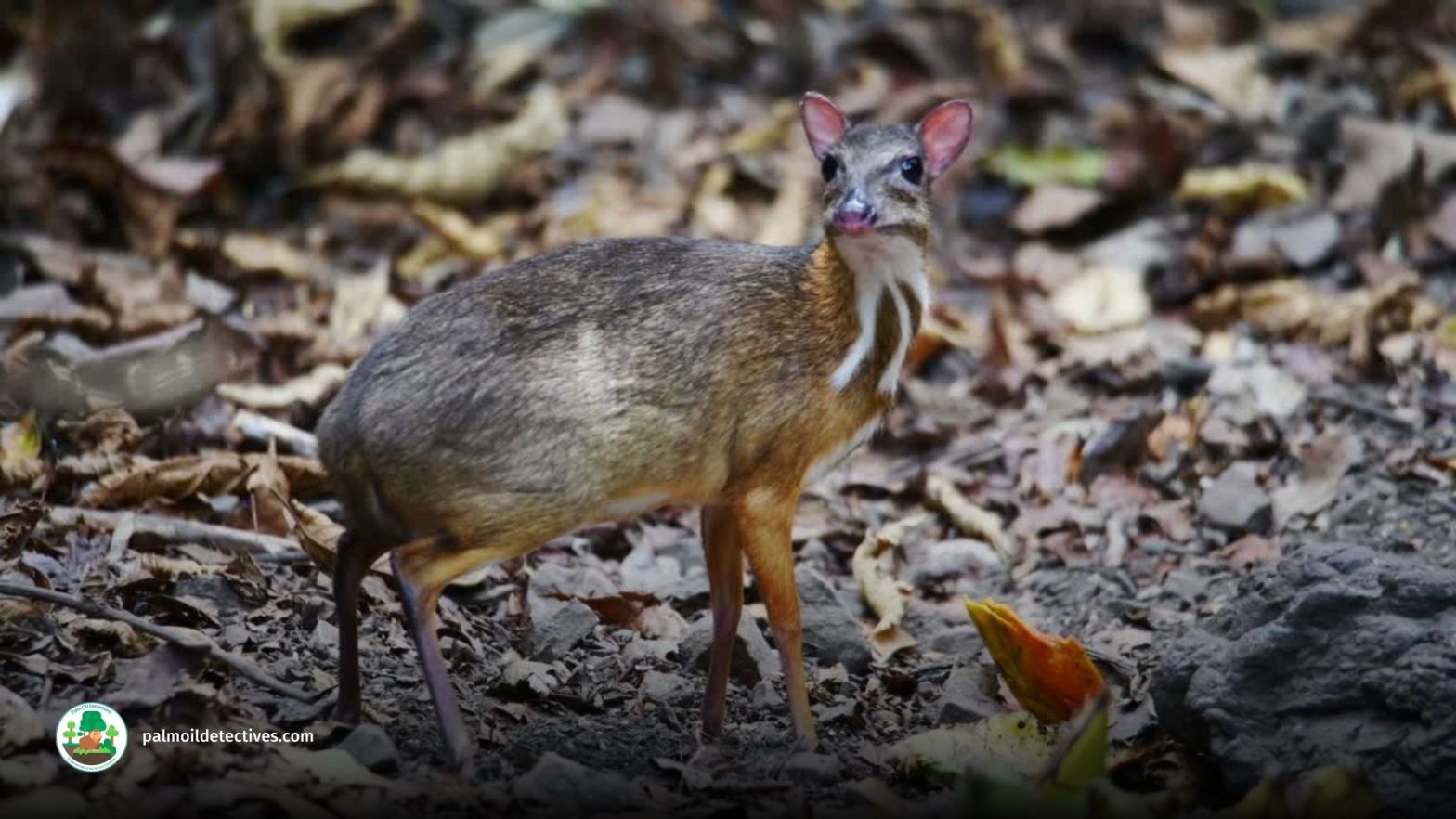
Balabac Mouse Deer Tragulus nigricans
Balabac Mouse Deer Tragulus nigricans Endangered Extant (resident) Philippines; Presence Uncertain: Malaysia The Balabac Mouse-deer, also known as the Philippine Mouse-deer or locally as Pilandok, is a tiny, fragile deer most active at night. They are ruminants endemic to the Balabac Islands in the Philippines. Despite their diminutive size, the deers play a significant roleContinue reading “Balabac Mouse Deer Tragulus nigricans”
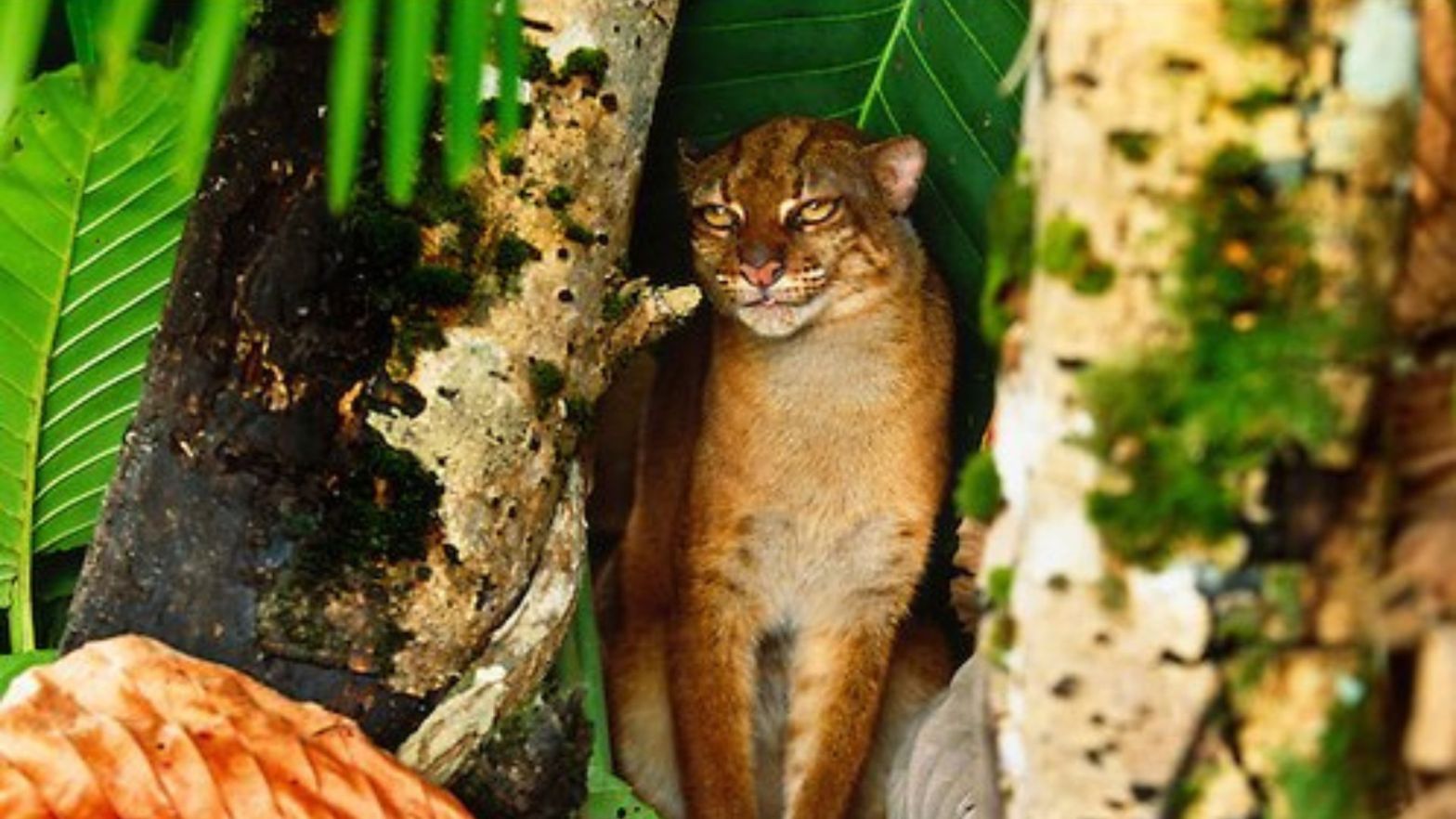
Borneo Bay Cat Catopuma badia
The Borneo Bay Cat, also known as the Bay Cat, is a small wildcat species endemic to the island of Borneo. Renowned for their elusive nature, they inhabit dense tropical forests and are among the least studied wild cats globally. Their rarity and the rapid deforestation of Borneo’s rainforests have raised significant conservation concerns. To protect the Borneo Bay Cat use your wallet as a weapon to fight for their survival each time you shop. #BoycottPalmOil #Boycott4Wildlife
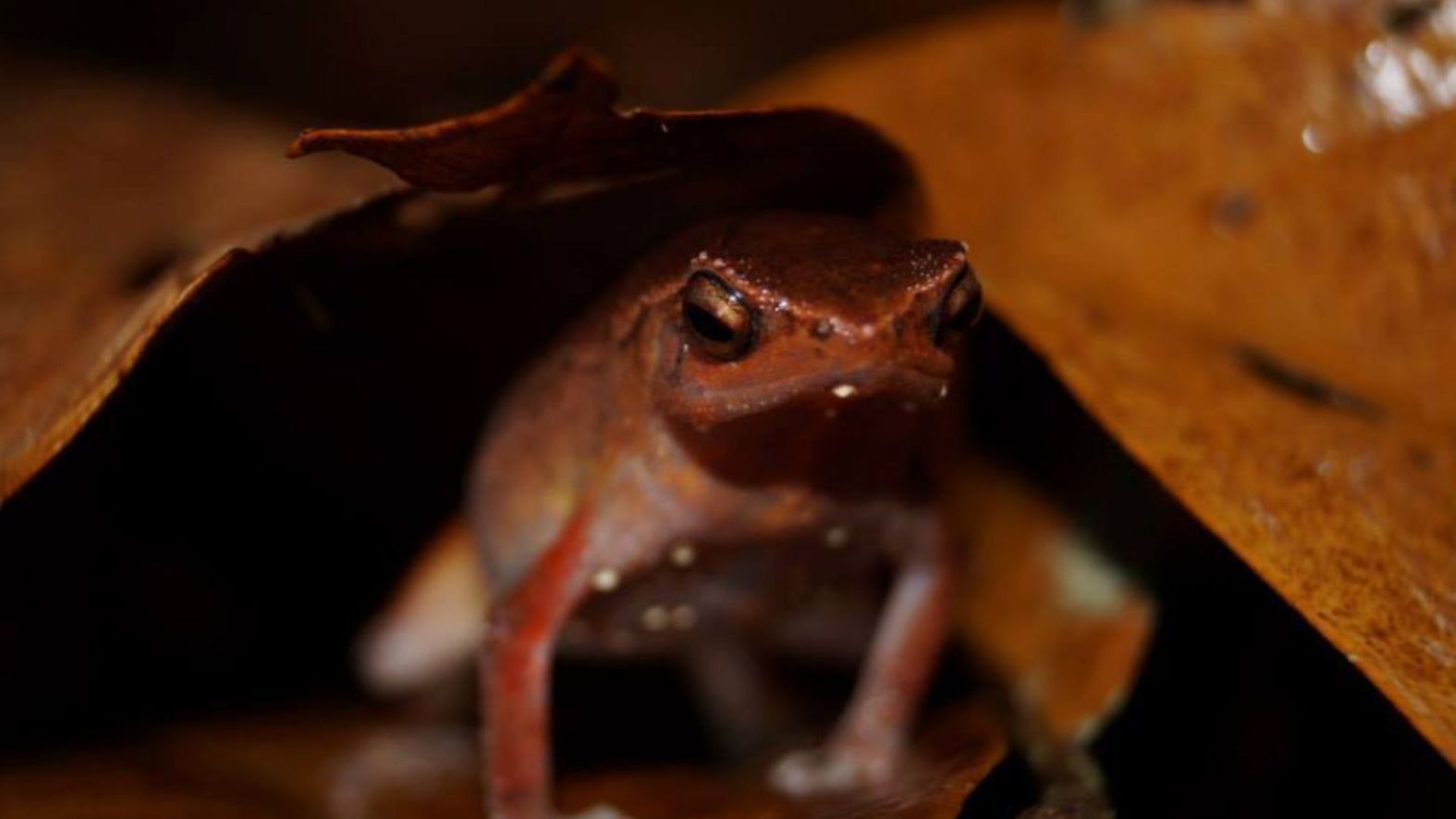
Lowland Grainy Frog Kalophrynus palmatissimus
The survival elusive amphibians lowland grainy frogs of Malaysia is under threat from palm oil. Boycott palm oil in solidarity with these beautiful frogs
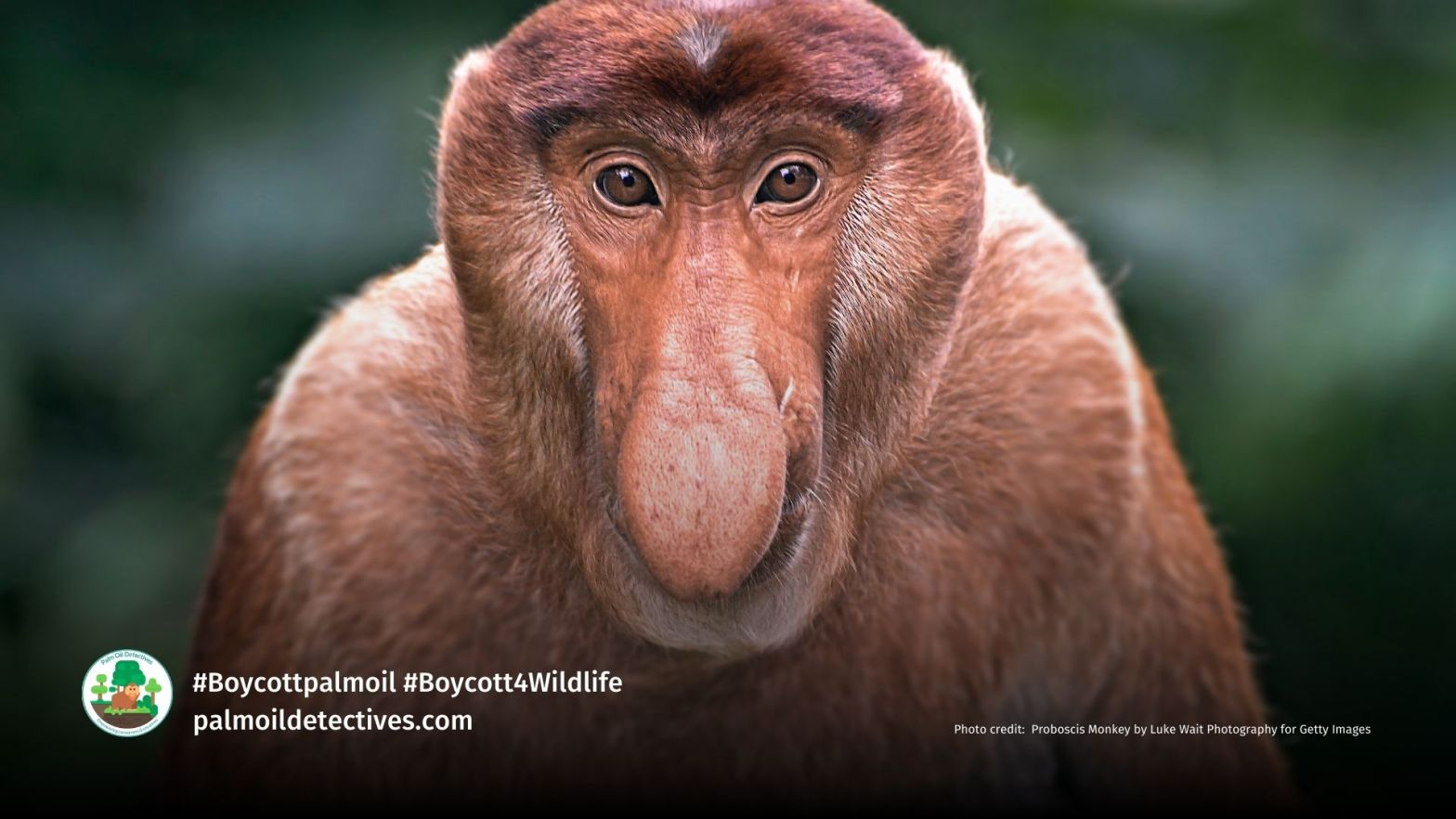
Proboscis Monkey Nasalis larvatus
Proboscis Monkeys are known for their large noses and pot bellies. These arboreal monkeys of Borneo are great swimmers, help them when you boycott palm oil
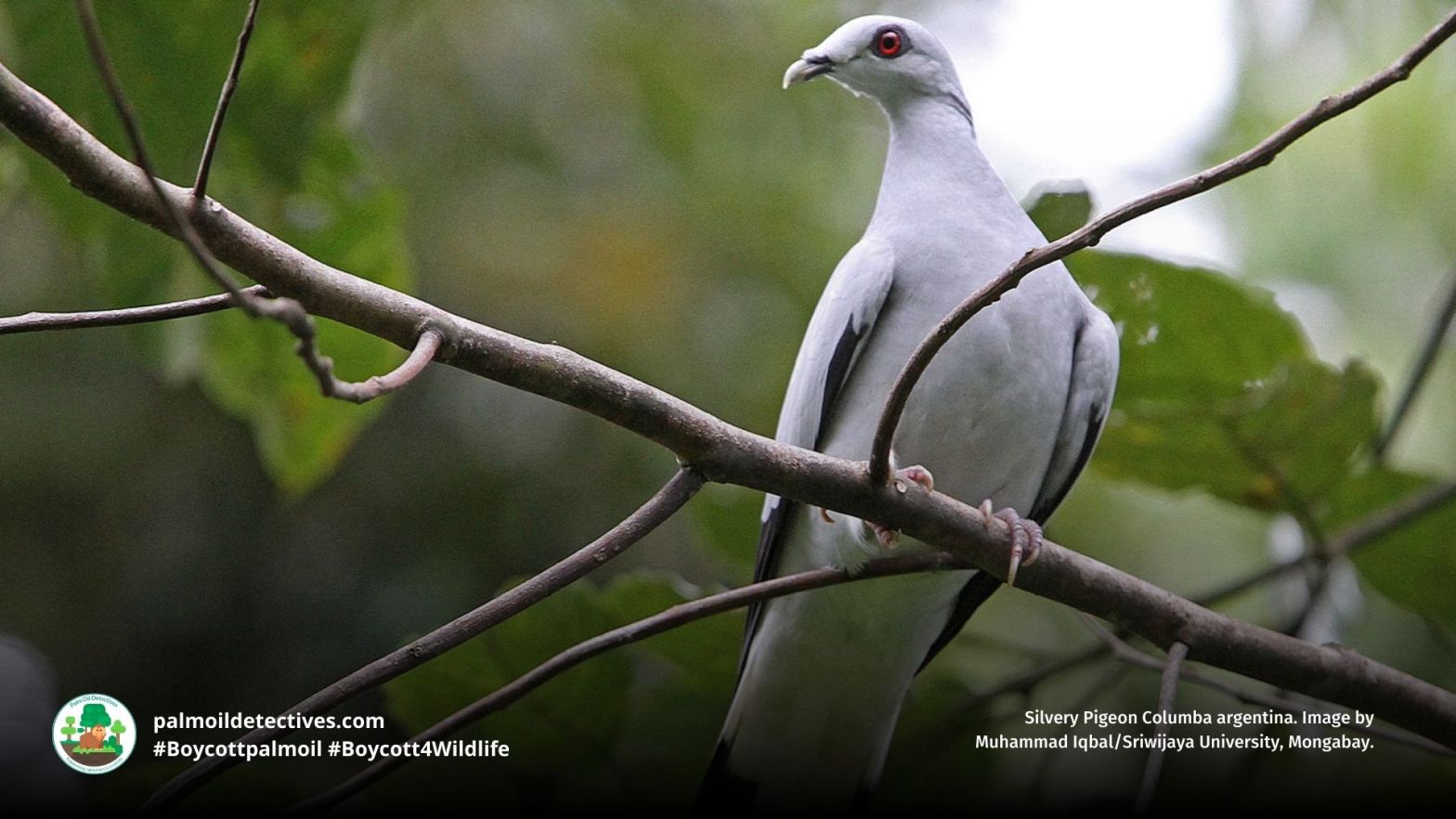
Silvery Pigeon Columba argentina
Help save the Silvery Pigeon. One of Southeast Asia’s most enigmatic birds, they are critically endangered, with an estimated population of fewer than 50.
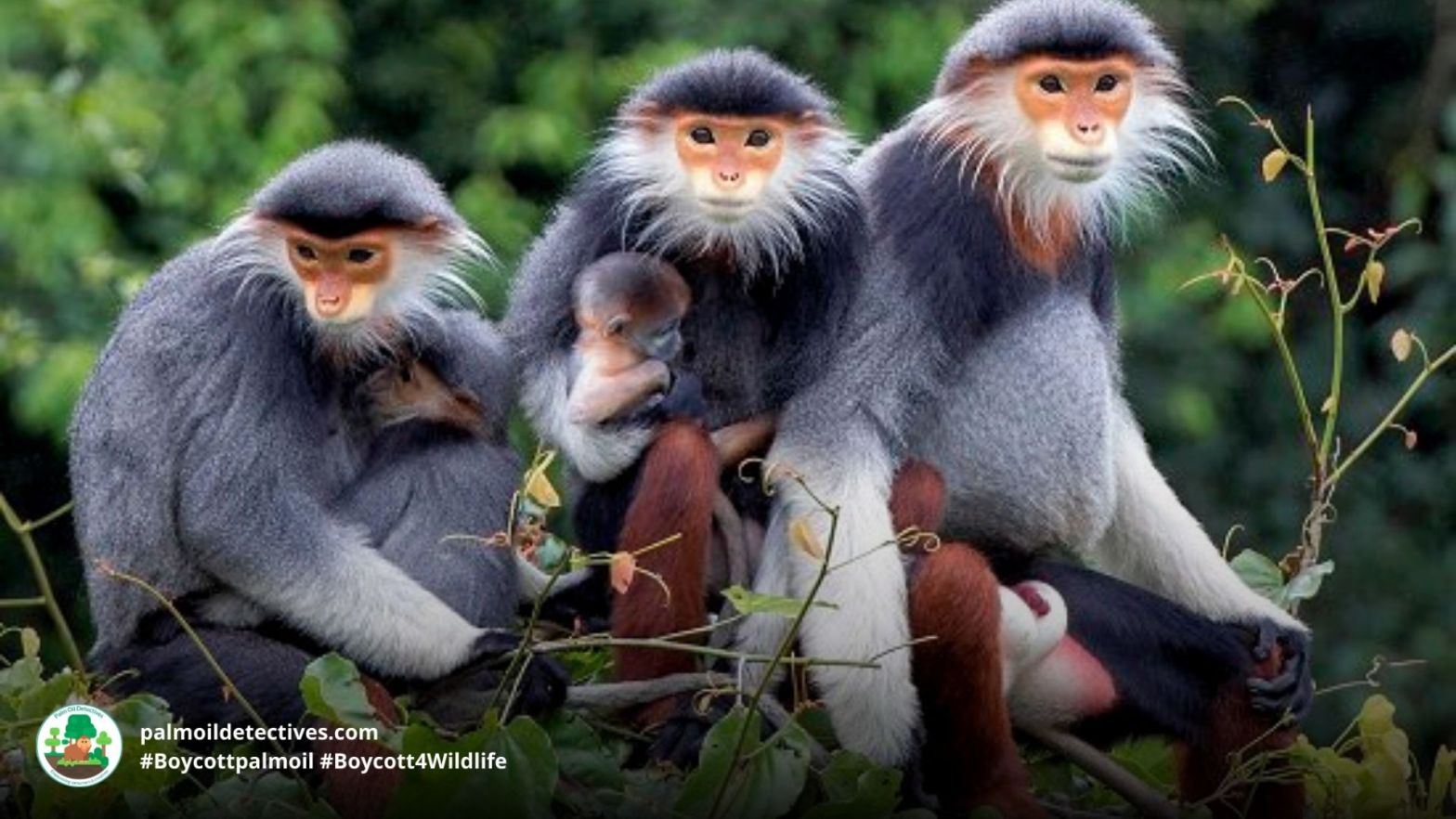
Red-shanked Douc Langur Pygathrix nemaeus
If you have never seen the Red-shanked Douc Langur, you are in for a real treat.
These vividly coloured creatures have a fairytale quality. They thrive in lush forests, from lowlands to mountainous regions, and even limestone habitats. However, they are facing imminent threats to their existence – hunting and palm oil deforestation.
By boycotting palm oil and embracing a vegan lifestyle, you’re not just helping them, but also our planet. The palm oil industry and meat industry directly and indirectly causes tropical deforestation, destroying the homes of countless animals, including the Red-shanked Douc Langur.
Every time you shop use your wallet as a weapon and #Boycottpalmoil, be #vegan and #Boycott4Wildlife
Popa langur Trachypithecus popa
The Popa langur Trachypithecus popa is the most endangered langur species in the world. Discovered in 2020, they are immediately considered critically endangered. These primates are known for their striking lilac-grey fur, expressive white-ringed eyes, and long tails. Named after Mount Popa, an extinct volcano in central Myanmar, they are a living testament to the region’s rich biodiversity.
Sadly, fewer than 300 individuals are still alive in the wild. Habitat destruction caused by palm oil deforestation, logging, and infrastructure development has pushed this species to the brink of extinction.
Protect their future by supporting indigenous-led conservation efforts, boycotting palm oil, and sharing their story. #BoycottPalmOil #Boycott4Wildlife
Southern River Terrapin Batagur affinis
With their blazing yellow eyes, southern river terrapins cut a striking figure. They are critically endangered from #palmoil and #mining #deforestation in Indonesia and Malaysia. Fight for them and #Boycottpalmoil #Boycott4Wildlife
Asian Giant Tortoise Manouria emys
Asia’s largest tortoise is rapidly declining. The Asian Giant Tortoise is threatened by palm oil deforestation and illegal hunting. Take action for them!
Straw-headed Bulbul Pycnonotus zeylanicus
The Straw-headed Bulbul is a striking bright yellow bird known for their vibrant song, often described as one of the most melodious in the bird world. Their powerful calls echo through Southeast Asia’s lowland forests, but these sounds are becoming increasingly rare. They are critically endangered due to illegal trapping for the cage-bird trade and habitat loss driven by deforestation, including the expansion of palm oil plantations.
Protecting the Straw-headed Bulbul is vital to preserving their unique contribution to the soundscapes of their natural habitats. Fight for their survival by boycotting products linked to deforestation. Use your wallet as a weapon. #BoycottPalmOil #Boycott4Wildlife
Elongated Tortoise Indotestudo elongata
The elongated tortoise Indotestudo elongata is a Critically Endangered species native to South and Southeast Asia. They are renowned for their uniquely patterned and elongated shells and have vital roles as seed dispersers in tropical forests. However, their numbers have declined alarmingly due to palm oil deforestation, hunting, and the illegal wildlife trade.
Fewer than 20,000 mature individuals are estimated to remain in fragmented populations across their range, with significant declines reported in most countries. Deforestation for agriculture, including palm oil plantations and urbanisation has devastated their habitats, while poaching continues unabated. Fight for them every time you shop and boycott palm oil! #BoycottPalmOil #Boycott4Wildlife
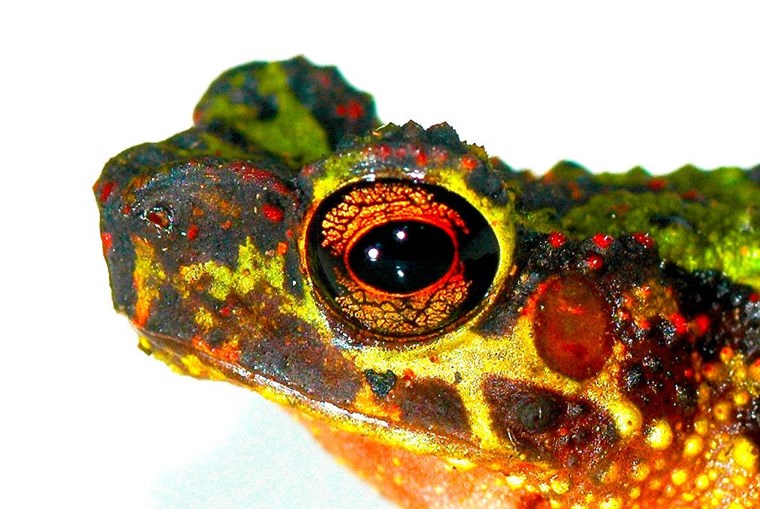
Murud Black Slender Toad Ansonia vidua
The Murud Black Slender Toad is an enigmatic amphibian, perfectly camouflaged among the rocks and vegetation of Borneo’s high-altitude forests. Known only from the remote Mount Murud region, their sleek black body and delicate frame make them one of the most unique species of their kind. These toads are specialists, thriving near fast-flowing streams where they feed and reproduce.
Despite their ecological significance, they face mounting pressures from habitat destruction. Logging, agricultural expansion, and rising temperatures are pushing them closer to extinction. Fight to save them by boycotting palm oil and supporting indigenous-led conservation. #BoycottPalmOil #Boycott4Wildlife.
Javan Rhinoceros Rhinoceros sondaicus
The Javan rhinoceros, also called the Sunda rhinoceros, is a critically endangered species and one of the world’s rarest large mammals. There are only a few dozen left alive in Ujung Kulon National Park in Java, Indonesia. Javan rhinos once lived throughout northeast India and Southeast Asia. Vietnam’s last Javan rhino was poached in 2010. they now survive only in Ujung Kulon National Park on the island of Java, with fewer than 75 individuals remaining.
Their decline has been driven by palm oil deforestation, poaching for their horns, and competition with invasive plant species like the Arenga palm, which reduces food availability. Saving the Javan rhinoceros is critical to preserving the biodiversity of their rainforest home. Fight for their survival by boycotting products linked to deforestation. Use your wallet as a weapon. #BoycottPalmOil #Boycott4Wildlife
Bornean Banded Langur Presbytis chrysomelas
The Bornean banded langur, known for its striking black and white coat, is one of Southeast Asia’s most elusive and endangered primates. These langurs inhabit the fragmented lowland forests and peat swamps of Borneo, relying on dense foliage for their survival.
The population of Bornean banded langurs is rapidly declining due to habitat destruction for palm oil plantations, illegal logging, and hunting. As their habitat continues to shrink, these shy and rarely seen primates face an uncertain future. Use your wallet as a weapon—boycott palm oil and join the fight for their survival. #BoycottPalmOil #Boycott4Wildlife
Painted Terrapin Batagur borneoensis
The painted terrapin, or painted river terrapin (Batagur borneoensis), is one of the most beautiful and critically endangered freshwater turtles in the world. Known for the vibrant markings displayed by males during breeding seasons, these terrapins are an integral part of Southeast Asia’s mangrove and river ecosystems.
However, their populations are rapidly declining due to habitat destruction, including deforestation for palm oil plantations, sand mining, and coastal development. With fewer than 1,000 mature individuals left in the wild, immediate action is critical to ensure their survival. Protect these majestic reptiles—boycott palm oil and support conservation efforts. #BoycottPalmOil #Boycott4Wildlife
Boo-Liat’s Kukri Snake Oligodon booliati
Boo-Liat’s Kukri Snake is a jewel of the lowland forests of Peninsular Malaysia, with their vibrant red colouration and bold black saddle-like markings. Named to honour the renowned zoologist Tan Sri Dr. Lim Boo Liat, this critically endangered snake highlights the incredible biodiversity of the region.
However, their survival is in jeopardy. Forests are rapidly vanishing due to deforestation for palm oil and logging, while increasing tourism brings additional pressures to their fragile habitat. Protecting these snakes requires safeguarding their home. Act now: #BoycottPalmOil #Boycott4Wildlife.
Indonesian Longfinned Eel Anguilla borneensis
Indonesian Longfinned Eels glide like shadows in Borneo and Sulawesi rivers. Dependent on healthy rivers, take a stand for these fish, Boycott palm oil!
Thailand Leaf-nosed Bat Hipposideros halophyllus
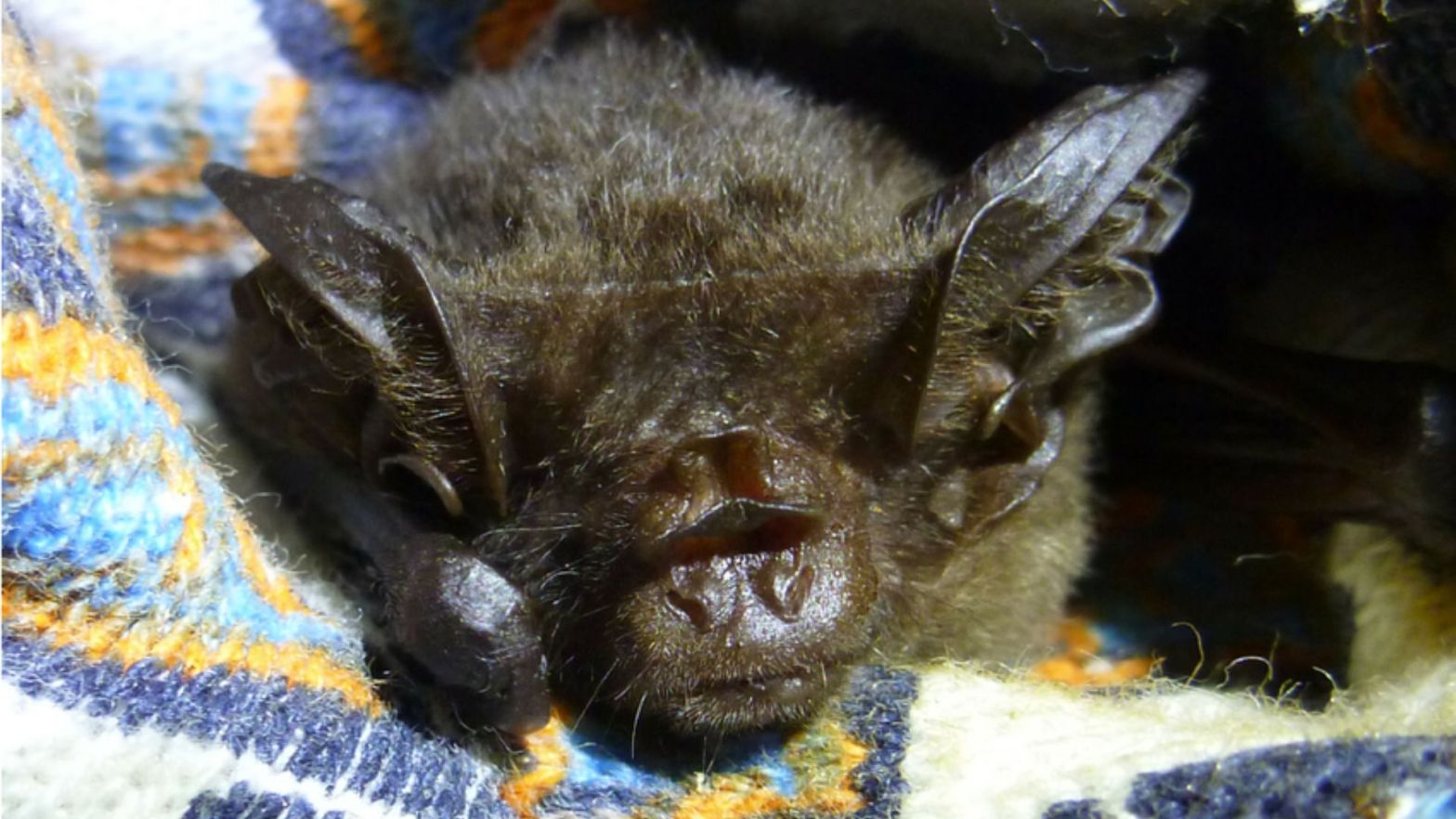
Vulnerable Thailand Leaf-nosed Bats live in limestone caves in Thailand and Malaysia. Threats include mining, palm oil and pesticide use. Take action now!
Malaysian Giant Turtle Orlitia borneensis
The Malaysian giant turtle, or Bornean river turtle, is Southeast Asia’s largest freshwater turtle. These gentle aquatic giants are critically important for maintaining the balance of their fragile river ecosystems. Their significant size and unique adaptations make them a marvel of evolution, yet they are on the brink of extinction.
Habitat loss driven by palm oil plantations, deforestation, and illegal trade has caused their population to plummet. Protect these critically endangered turtles by using your wallet as a weapon. Boycott palm oil and fight for their survival. #BoycottPalmOil #Boycott4Wildlife
Large-spotted Civet Viverra megaspila
The Large-spotted Civet is an elusive and mysterious nocturnal carnivore of Southeast Asia. They are recognised for their large black spots on a greyish-buff coat and play an essential role in the health of their ecosystems. Preferring lowland forests and wetlands, they are elusive and rarely sighted. Unfortunately, habitat destruction for palm oil, hunting, and the illegal wildlife trade have contributed to their decline, with the species now classified as Endangered. Their predicted population decline is more than 50% over three generations. To protect the Large-spotted Civet, boycott products linked to deforestation and palm oil. Use your wallet as a weapon to fight for their survival. #BoycottPalmOil #Boycott4Wildlife
Sun Bear Helarctos malayanus
Sun bears are playful and energetic small bear species from South East Asia who are increasingly becoming marginalised by deforestation and trade for their body parts.
With their glistening golden crescent chest markings, these bears embody uniqueness and bold beauty. Despite their tenacity palm oil and timber deforestation is an unmatched threat to their survival. They are now vulnerable from this and other threats and have lost 50-80% of their range. Help to protect them and #Boycottpalmoil #Boycott4Wildlife in the supermarket!
Yellow-handed Mitered Langur Presbytis melalophos
Yellow-handed Mitered Langur Presbytis melalophos Endangered The vividly colourful and cheeky yellow-handed mitered langur Presbytis melalophos are native to Sumatra, Indonesia. They are severely threatened by deforestation and logging due to the palm oil, mining and timber industries. Agricultural expansion for palm oil plantations has caused massive habitat loss and fragmentation throughout their range, whileContinue reading “Yellow-handed Mitered Langur Presbytis melalophos”
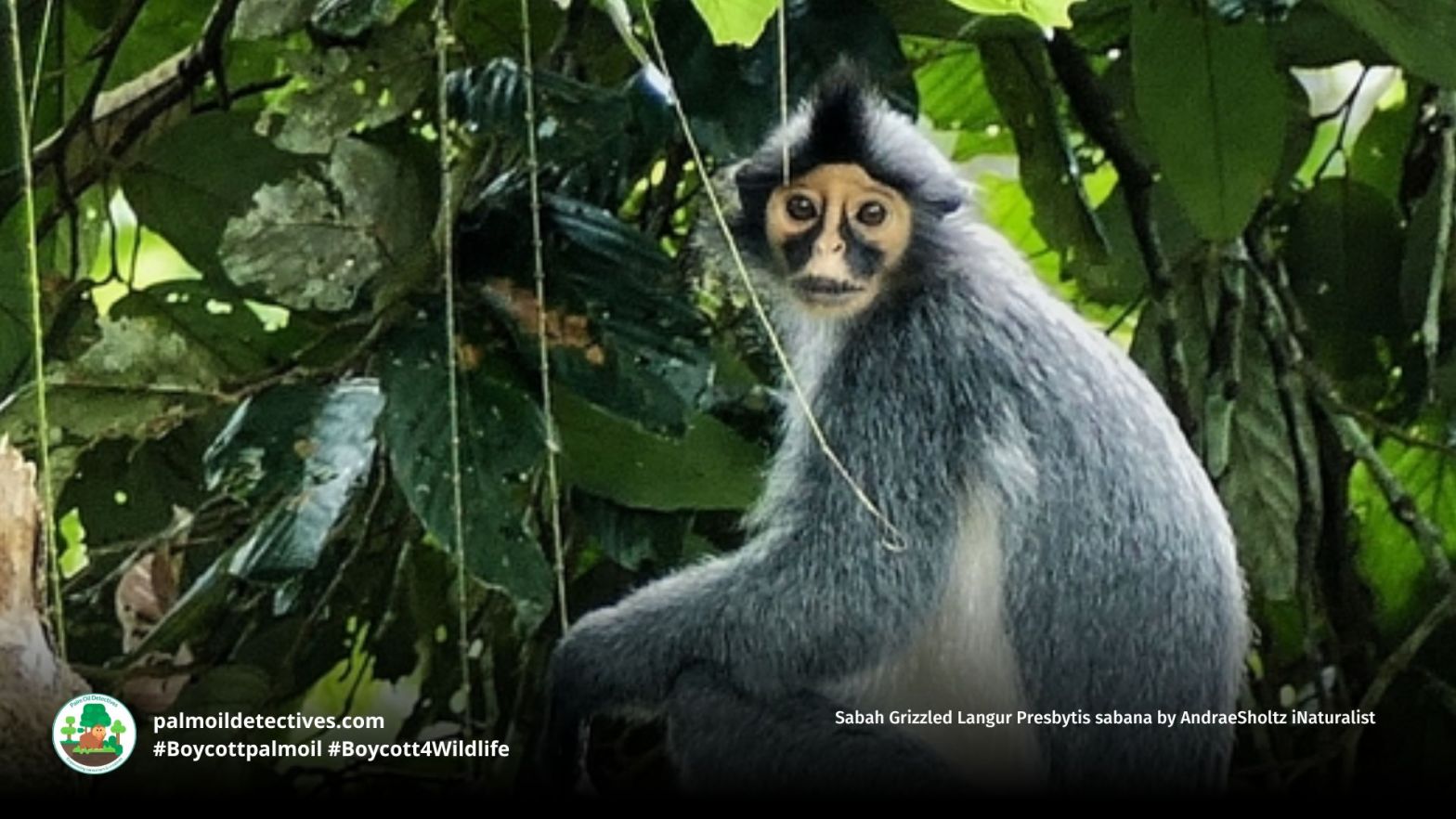
Thomas’s Langur Presbytis thomasi
Thomas’s Langur, also known as the North Sumatran Leaf #Monkey is famous for their bold facial stripes giving them a handsome profile. These monkeys are endemic to the lush forests of northern Sumatra, Indonesia. Listed as Vulnerable by the Red List, this striking species is facing serious population declines due to habitat loss, primarily driven by illegal logging and oil palm deforestation. Though not as globally known as some of its neighbours, such as the Sumatran Orangutan, Thomas’s Langur plays an equally vital role in forest regeneration and seed dispersal. You can help protect them by using your consumer power: always choose palm oil-free products.#BoycottPalmOil #Boycott4Wildlife #Vegan
Sumatran Cochoa Cochoa beccarii
The Sumatran Cochoa Cochoa beccarii is a rare and secretive forest-dwelling #songbird found only in the highland rainforests of #Sumatra #Indonesia. With their shimmering electric blue and smoky black plumage and elusive behaviour, this species of songbird moves in a melodic symphony of song through the middle and upper canopy, often remaining hidden from view. Although currently listed as #Vulnerable, the species is experiencing a slow but steady decline caused by #deforestation and trapping for the illegal bird trade. As demand for exotic songbirds grows, especially online, the Sumatran Cochoa faces a very real risk of disappearing from the wild. Use your wallet as a weapon. Say no to palm oil and never support the illegal wildlife trafficking and illegal songbird trade. Campaign against wildlife trafficking and #BoycottPalmOil #Boycott4Wildlife #Vegan
Mainland Serow Capricornis sumatraensis
The Mainland serow, a reclusive wild goat-antelope, is a remarkable yet poorly understood resident of Southeast Asia’s rugged terrains. This enigmatic animal, with their coarse black coat and sharply curving horns, has earned a mythical status in local folklore due to their elusiveness and adaptability to steep, rocky landscapes.
However, the Mainland serow like many other ungulates is facing a precarious future. Habitat destruction from palm oil plantations, logging, and agricultural expansion has drastically reduced their numbers, leaving their population fragmented and declining. Protect these remarkable creatures and their fragile home—boycott palm oil and fight for their survival. #BoycottPalmOil #Boycott4Wildlife
Sumatran Laughingthrush Garrulax bicolor
Critically endangered Sumatran Laughingthrushs, known for their melodic songs, are threatened by palm oil deforestation and illegal wildlife trade. Help them!
Otter Civet Cynogale bennettii
The beautiful and elusive Otter Civet lives primarily in peatland forests and riverine swamps. Their prominent snouts and long whiskers give them keen sensory understanding of their environment. They face serious ongoing threat to their survival in Borneo and are rapidly disappearing due to palm oil deforestation and gold mining pollution run-off into rivers. Help them to survive when you #BoycottPalmOil #Boycott4Wildlife.
Blue-backed Parrot Tanygnathus everetti
The Blue-backed #Parrot, also known as Müller’s Parrot or Burbridge’s Parrot, is a striking yet elusive #bird native to the #Philippines. Their shimmering blue and green plumage allows them to blend seamlessly into the forest canopy, making sightings of this rare species increasingly difficult. Despite once being common, the relentless destruction of their rainforest home and rampant #poaching for the #pettrade have pushed this parrot to the brink. They are now classified as #Endangered, they face ongoing population declines, with some local populations feared to be extinct. Without urgent conservation efforts, this vibrant parrot may vanish forever. Help them every time you shop and #BoycottPalmOil #Boycott4Wildlife