

Endangered Grey Crowned Cranes are a regal and graceful bird of Uganda, Tanzania, DRC, and Namibia. Help them to survive and join the boycott4wildlife
Category Archives: Africa: Species Endangered by Palm Oil Deforestation
Bateleur Eagle Terathopius ecaudatus

Striking raptor Bateleur #Eagle Terathopius ecaudatus soars through #Africa’s skies with powerful red legs, a bright intelligent face and intense eyes. They are famous for their distinctive aerial and soaring skills such as a rocking flight, similar to a tightrope walker. These eagles are known to travel over 300 kilometres a day in search of food. Sadly, their numbers are plummeting due to deforestation, poisoning, and habitat destruction. The loss of their habitat to #palmoil, #mining and #meat #deforestation are some of the biggest threats they face. Help them every time you shop and boycott palm oil and go plant-based. #BoycottPalmOil and #Boycott4Wildlife!
Giant Pangolin Smutsia gigantea

The Giant Pangolin is are the largest and heaviest of the pangolin species weighing up to 35 kilos. These majestic creature are cloaked in keratin armour and embark on nightly quests through Central and West Africa’s lush landscapes. By the light of the moon, they use their keen sense of smell to hunt down ants and termites. As they navigate a world fraught with dangers from habitat destruction, poaching and illegal hunting, the survival of these enigmatic beings hangs in balance, urging us to reflect on our impact on their dwindling world. Help them to survive every single time you shop and #Boycottpalmoil #Boycottmeat, be #vegan and #Boycott4Wildlife
African Golden Cat Caracal aurata
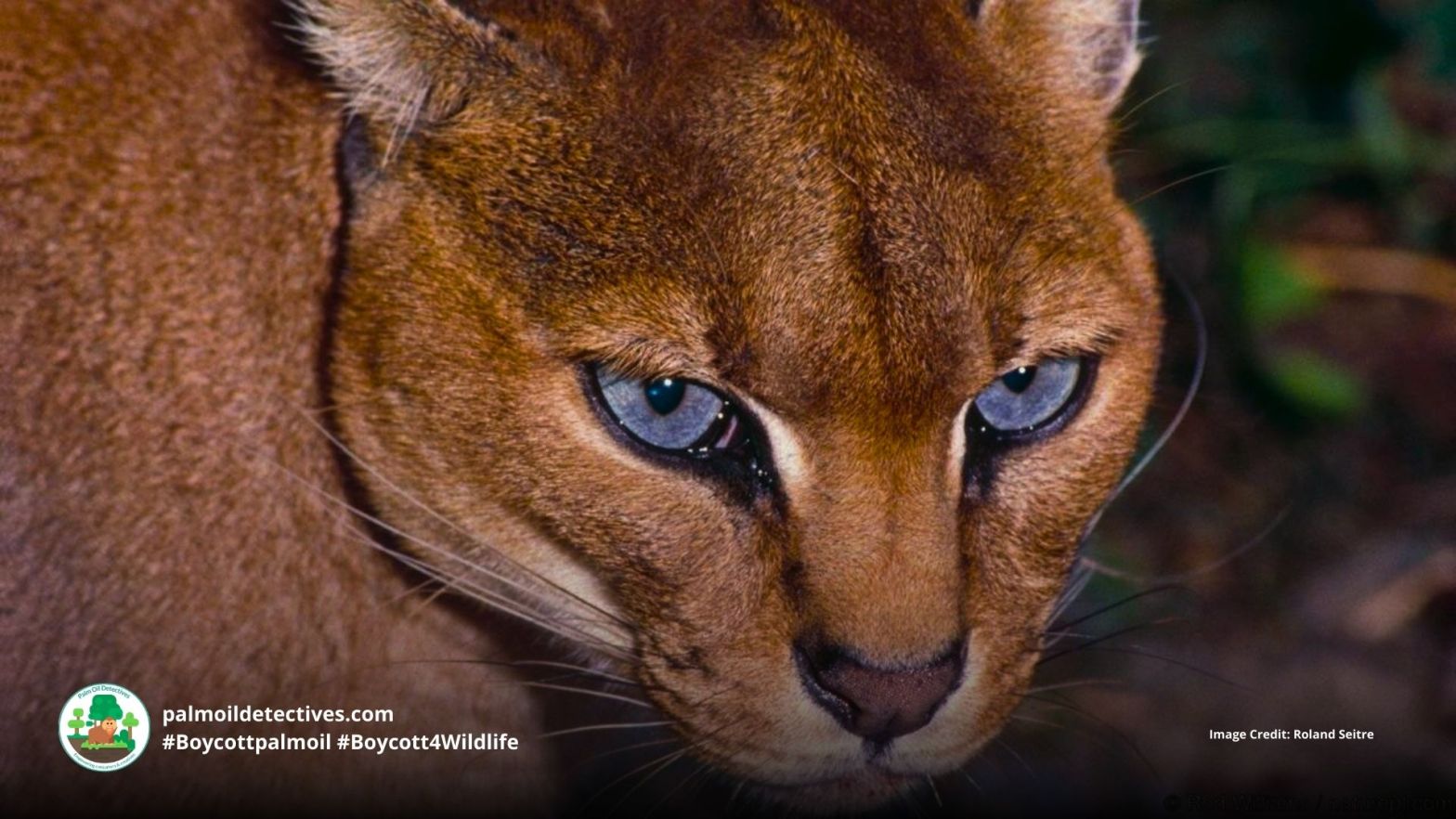
The African golden cat’s striking coat varies from radiant red to elegant gray. They are a symbol of wild grace in the African jungle. This feline enchants a cacophony of sounds, from gentle meows to assertive growls. They are classified as Vulnerable and their population is expected to reduce by 30% as a direct result of palm oil deforestation in their forest home (IUCN Red List). Fight to protect these magnificent animals and their home every day! #BoycottPalmOil and #Boycott4Wildlife in the supermarket!
Campbell’s Mona Monkey Cercopithecus campbelli
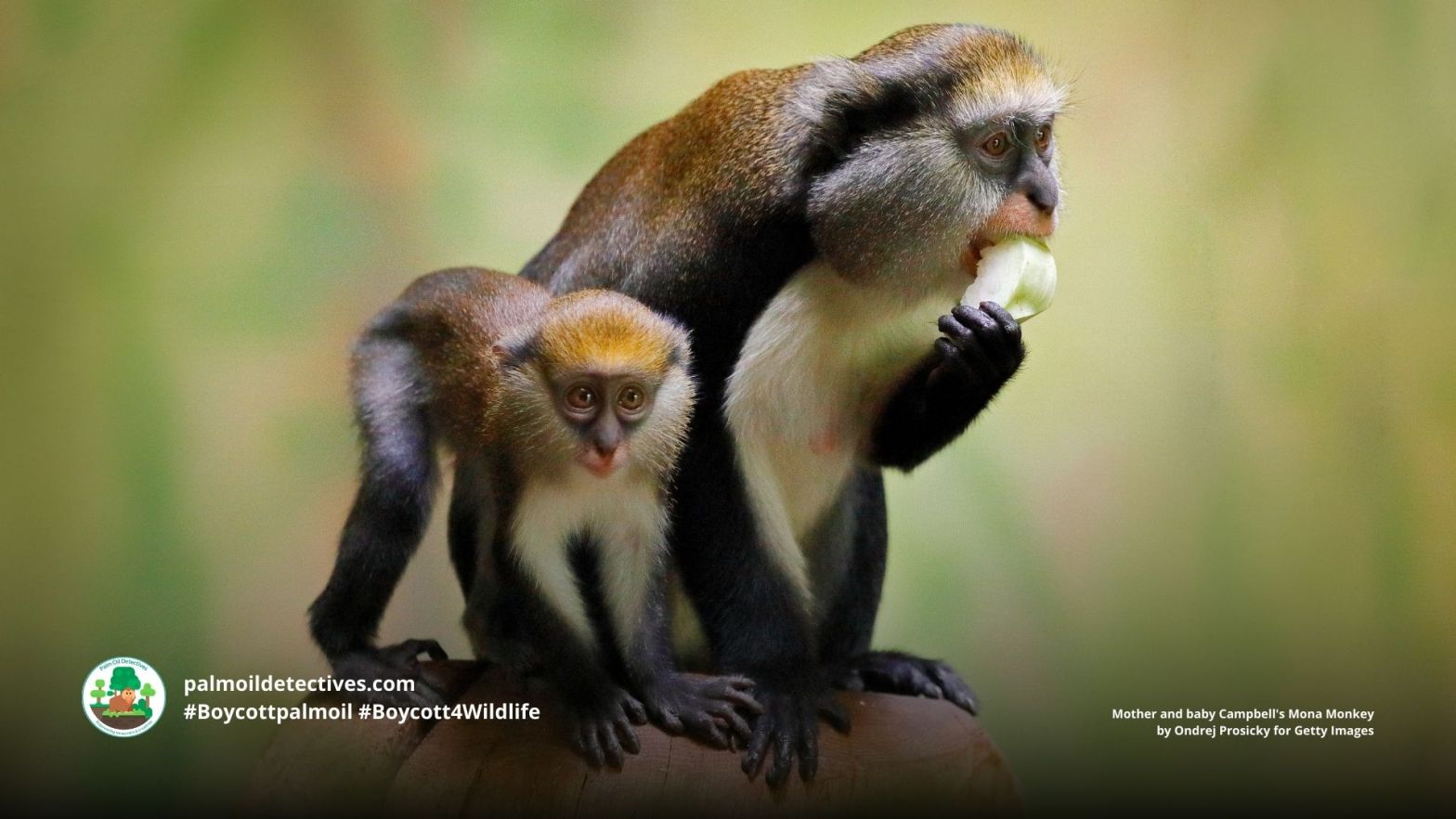
Inquisitive and highly social Campbell’s Mona Monkeys are known for their intense hazel eyes and bright yellow brows. They use their large puffy cheeks to store food while they climb to the top of tree canopies to eat it. Males will engage in a dawn and dusk symphony of calling along with other species in a coordinated ritual. They are Near Threatened due to hunting and extensive forest loss throughout their range in West Africa for palm oil, coffee, cocoa and mining. Help them every time you shop by using your wallet as a weapon – #Boycottpalmoil #Boycott4Wildlife
Mandrill Mandrillus sphinx
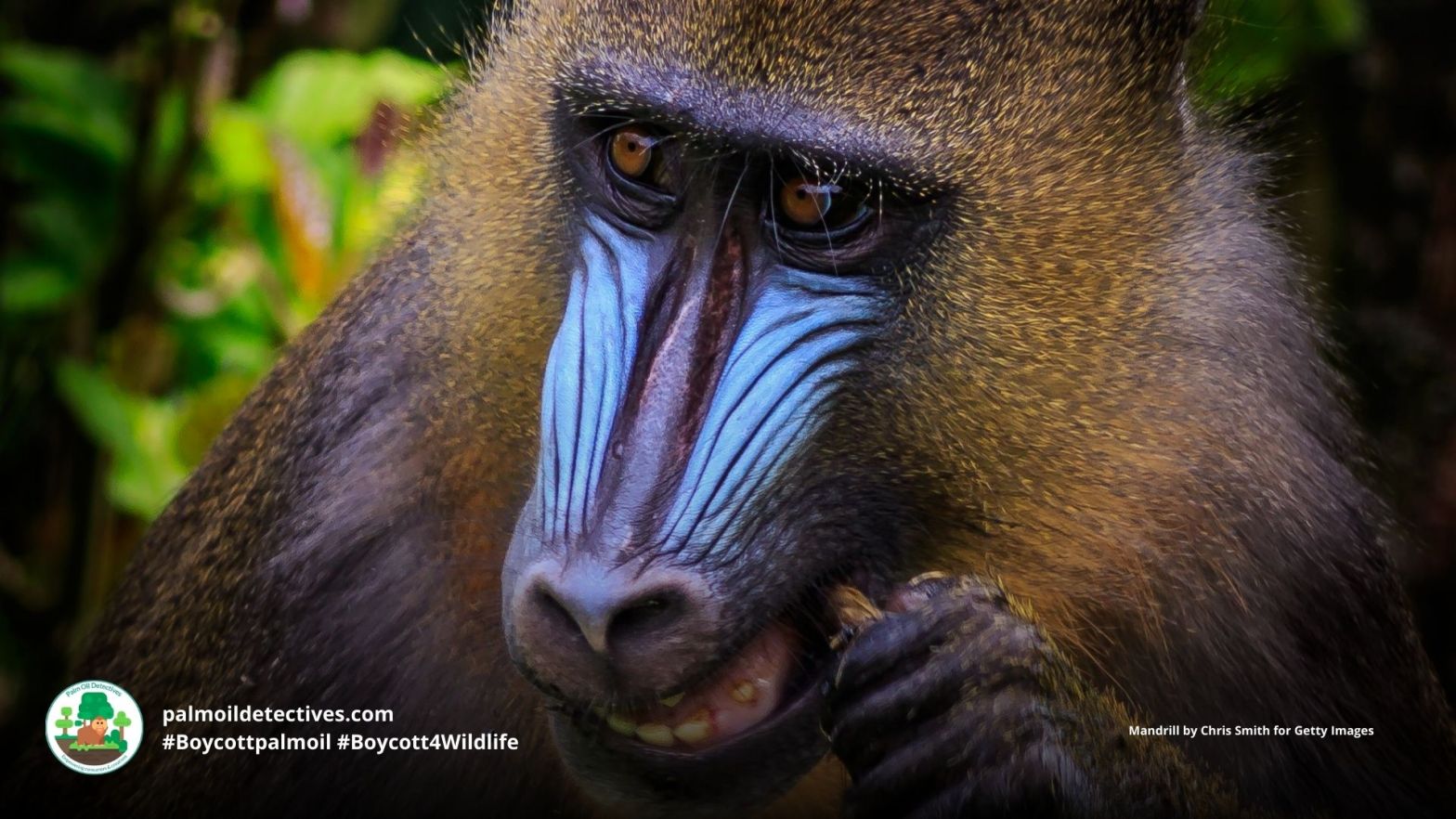
Magnificent #mandrills are undoubtedly one of the world’s most photogenic monkeys – famous for their brightly coloured and expressive appearance. Their bright blue rumps and vivid red, yellow and pink faces become even more deeply colourful when they’re excited. Males use their extra long canines for self-defence, but exposing their teeth can also be a sign of friendliness. Mandrills are important seed dispersers and a critical part of keeping the ecosystem in balance. These beautiful monkeys are vulnerable from palm oil, meat and cocoa deforestation and intensive poaching. Help their survival and #Boycottpalmoil #Boycott4Wildlife
Goliath Frog Conraua goliath
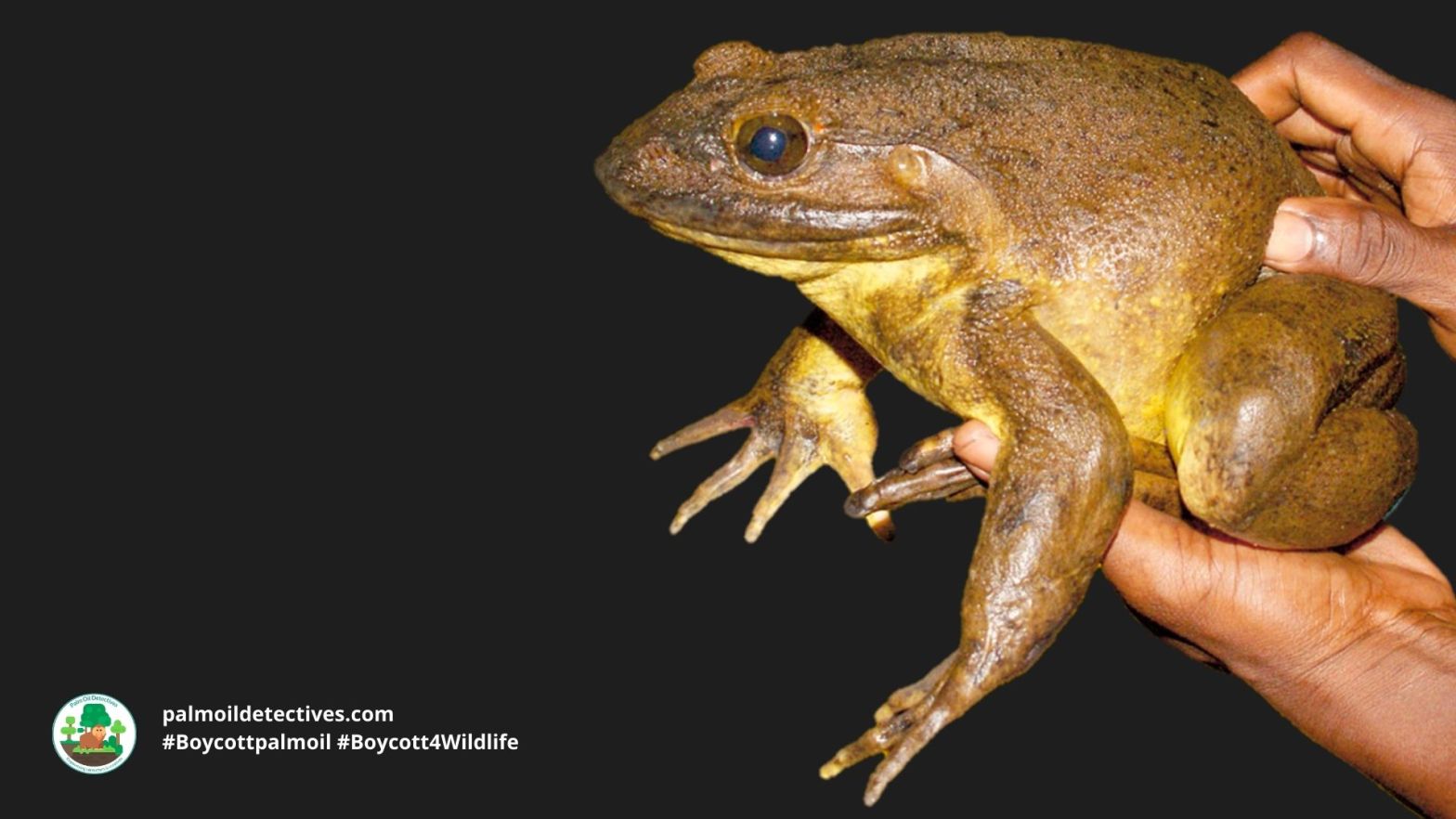
Goliath #Frogs are the largest frog in the world and can grow as large as a domestic cat. These muscle-bound #amphibians lift heavy rocks to build nests and protect their young. They face extinction from #palmoil #deforestation and human persecution including hunting.
Their nesting and reproduction is hugely dependent upon access to clean, fast-flowing rivers – for this reason the encroachment of industrial scale palm oil, cocoa and timber deforestation and p0llution and #pesticides of rivers are direct threats to the existence of the goliath #frog. Help them every time you shop in the supermarket and #Boycottpalmoil #Boycott4Wildlife
African Manatee Trichechus senegalensis
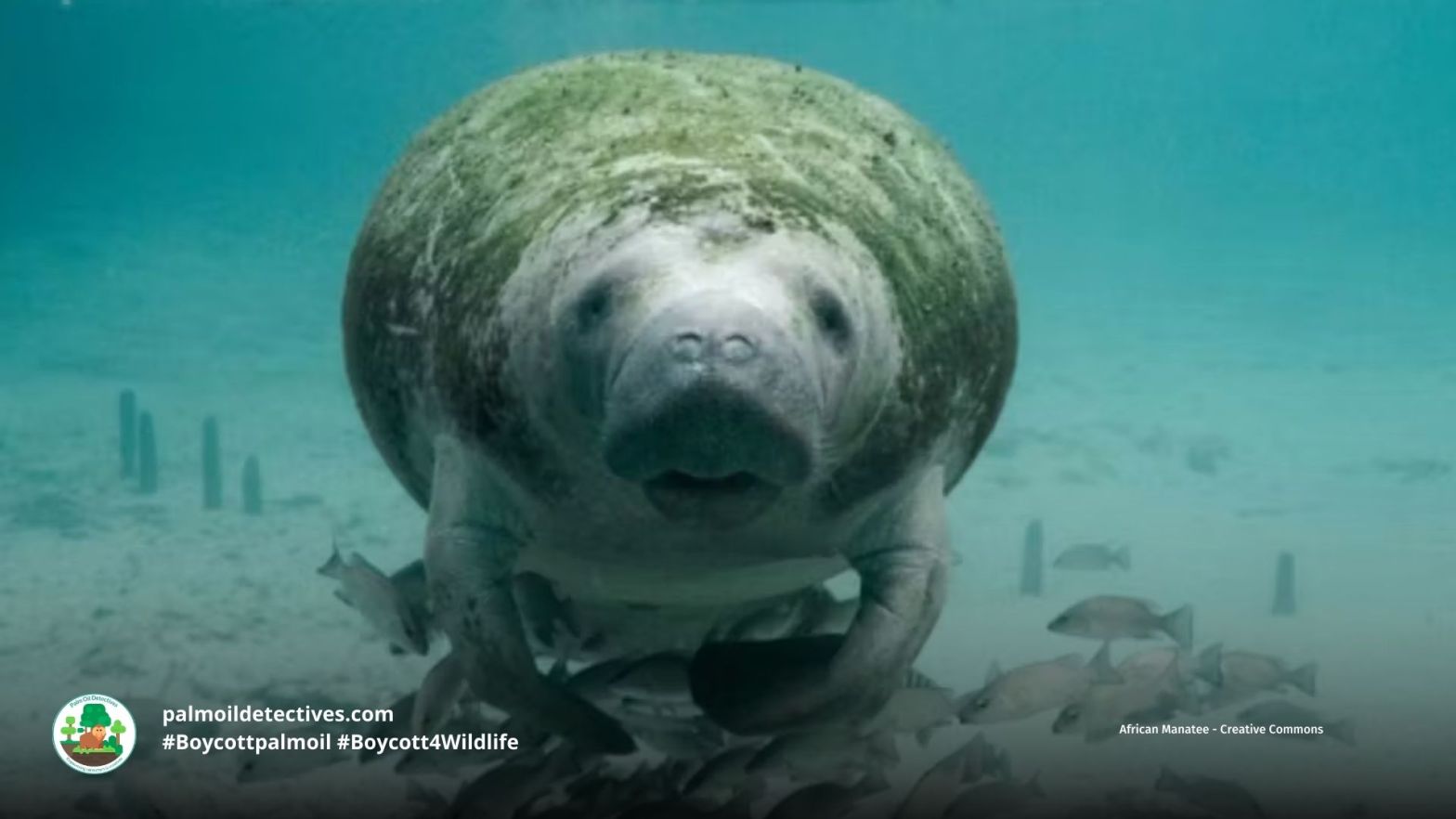
In the folklore of West Africa, there’s a fascinating character called Maame Water, believed to be a goddess of the sea, she symbolises wealth and beauty. Maame Water is none other than the African Manatee!
The Serer people of Senegal, the Gambia, and Mauritania hold the African Manatee in high regard, considering them sacred and a guardian of the secrets of the future according to their creation myth. This precious species is vulnerable from palm oil deforestation, hunting and pollution. They perform an essential service to mangrove ecosystems by keeping them healthy. Help them survive and #Boycottpalmoil #Boycott4Wildlife every time you shop!
Yellow-casqued Hornbill Ceratogymna elata
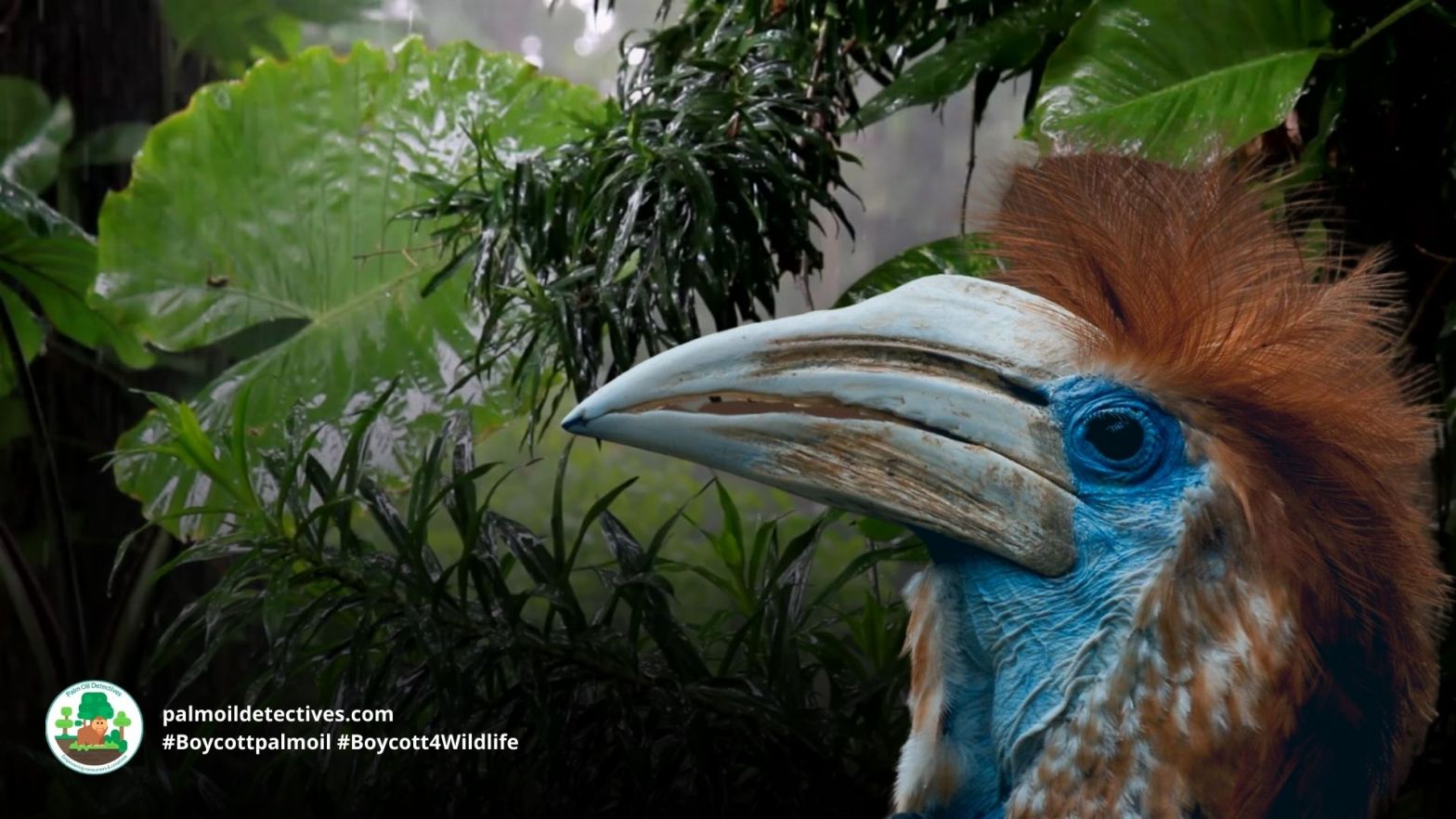
The yellow-casqued hornbill is one of the most remarkable hornbills in the world and one of the largest birds in the rainforests of West Africa weighing up to two kilos. Sporting a shock of russet coloured feathers and a striking blue coloured face, they prefer to live high up in the rainforest canopy in Côte d’Ivoire, #Ghana, #Liberia, Mali and #SierraLeone. Their main threat is hunting and human persecution and they are possibly extinction now in some countries. Recent mass deforestation for #mining, #palmoil, #cocoa and #meat is also a threat and they are now classified as #vulnerable. Help them every time you shop and be #vegan, #Boycottpalmoil, #Boycott4Wildlife
Shoebill Balaeniceps rex
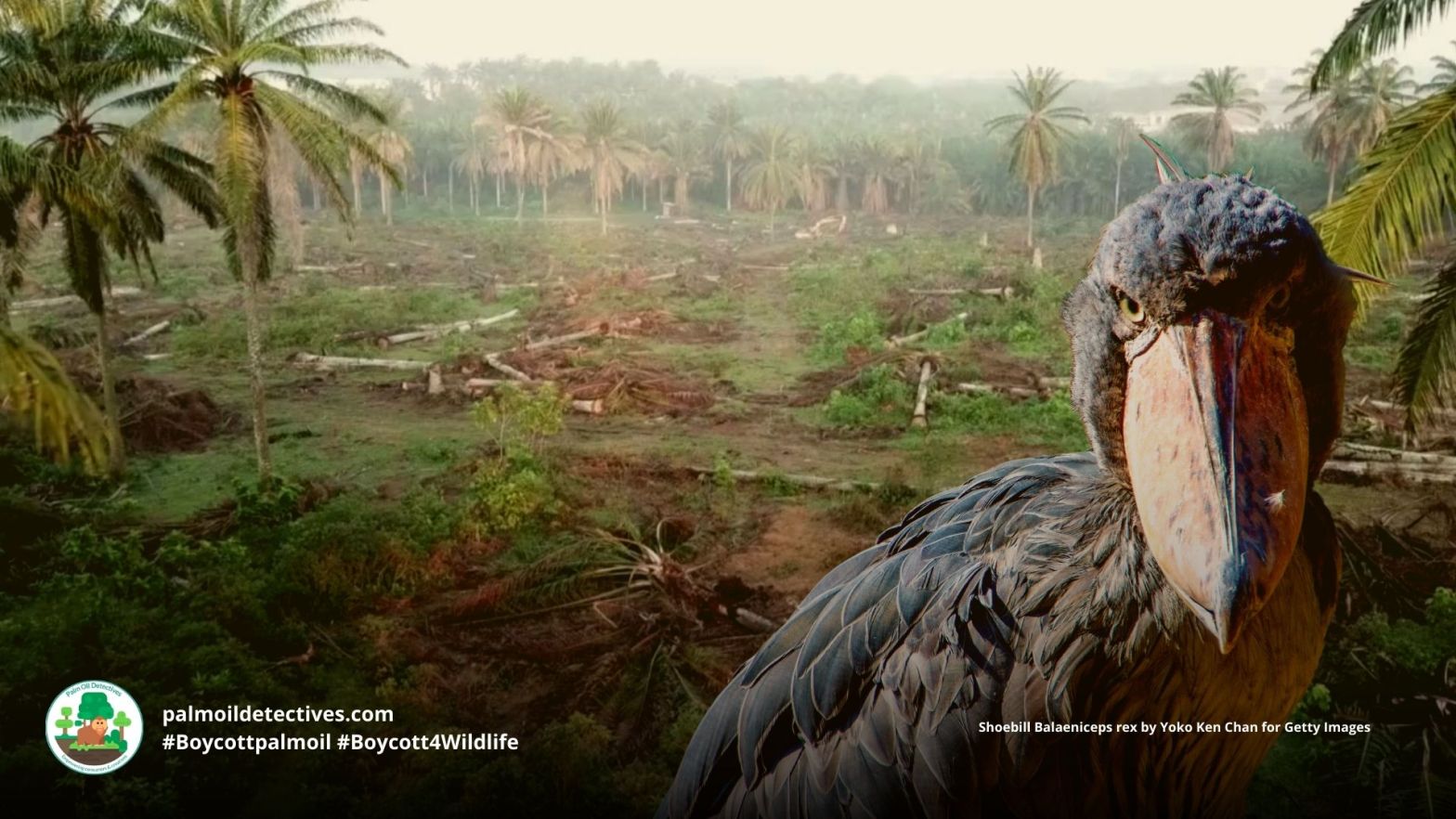
With their intense stare and imposing appearance, prehistoric birds Shoebills number fewer than 8000 in the wild. Save them when you boycott palm oil!
Bonobo Pan paniscus
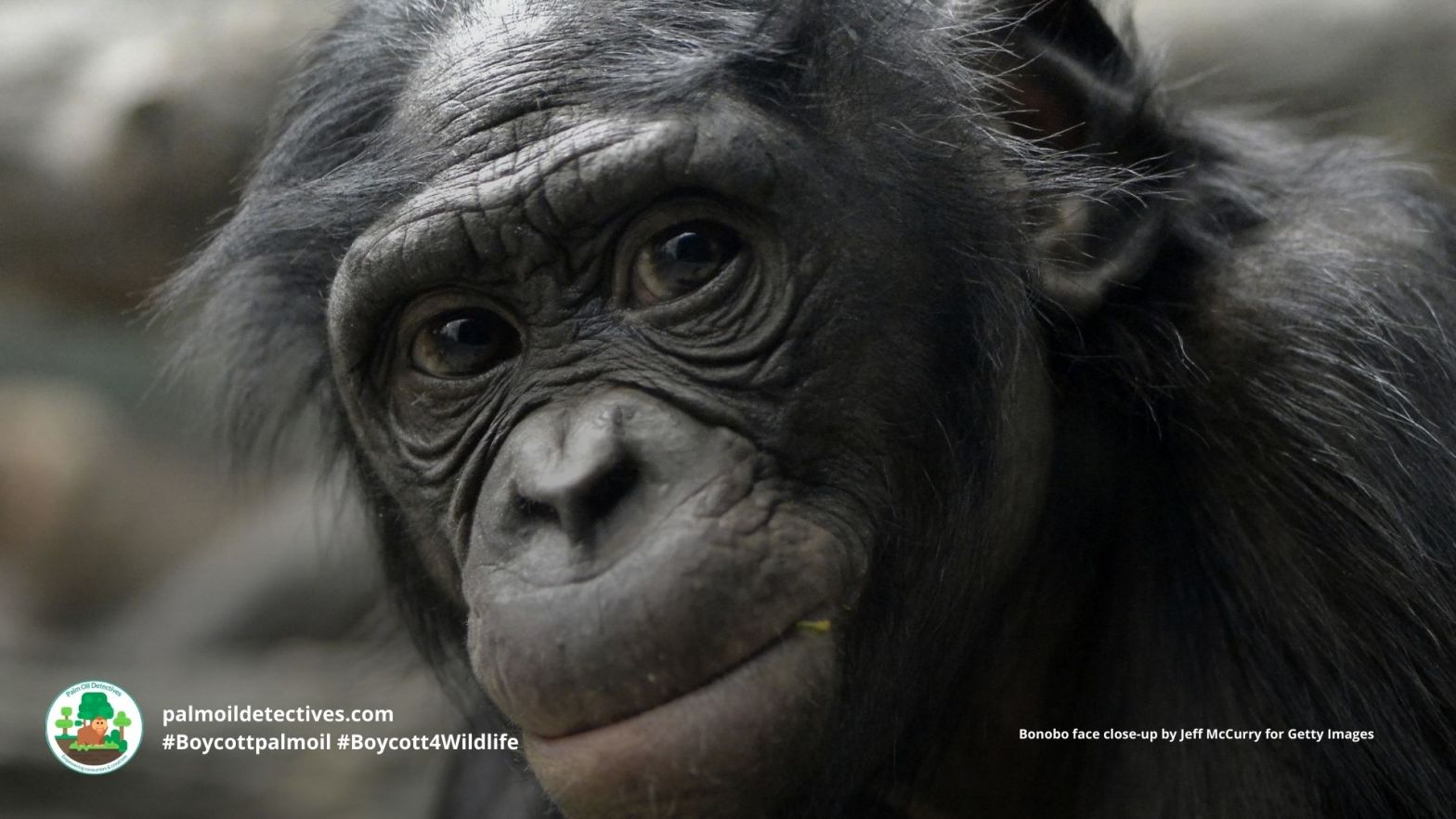
Bonobos share 98% of their DNA with humans and are one of our closest extant relatives. They are complex beings with intricate social relationships, they demonstrate profound intelligence and emotional sensitivity.
It is therefore fitting that 14th of February, Valentine’s Day is also the International Day to celebrate Bonobos – Bonobos provide a potent example to humans for how we can resolve conflicts through love and non-violent conflict resolution. They are endangered in DRC/Congo from infectious diseases, illegal poaching and deforestation for palm oil, cocoa and meat and mining throughout their home range. Help their survival every time you shop – be vegan and #Boycottpalmoil #Boycott4Wildlife.
Africa is becoming the new frontier for oil-palm plantations, which offers excellent economic prospects in countries with appropriate rainfall, soil and temperature conditions (Rival and Levang 2014). A staggering 99.2% of the Bonobo’s range is suitable for oil palm (Wich et al. 2014), highlighting the enormous risk the palm-oil industry will pose unless sustainable management plans are developed and implemented to protect great apes and their habitats (IUCN SSC Primate Specialist Group 2014).
Dryas Monkey Chlorocebus dryas
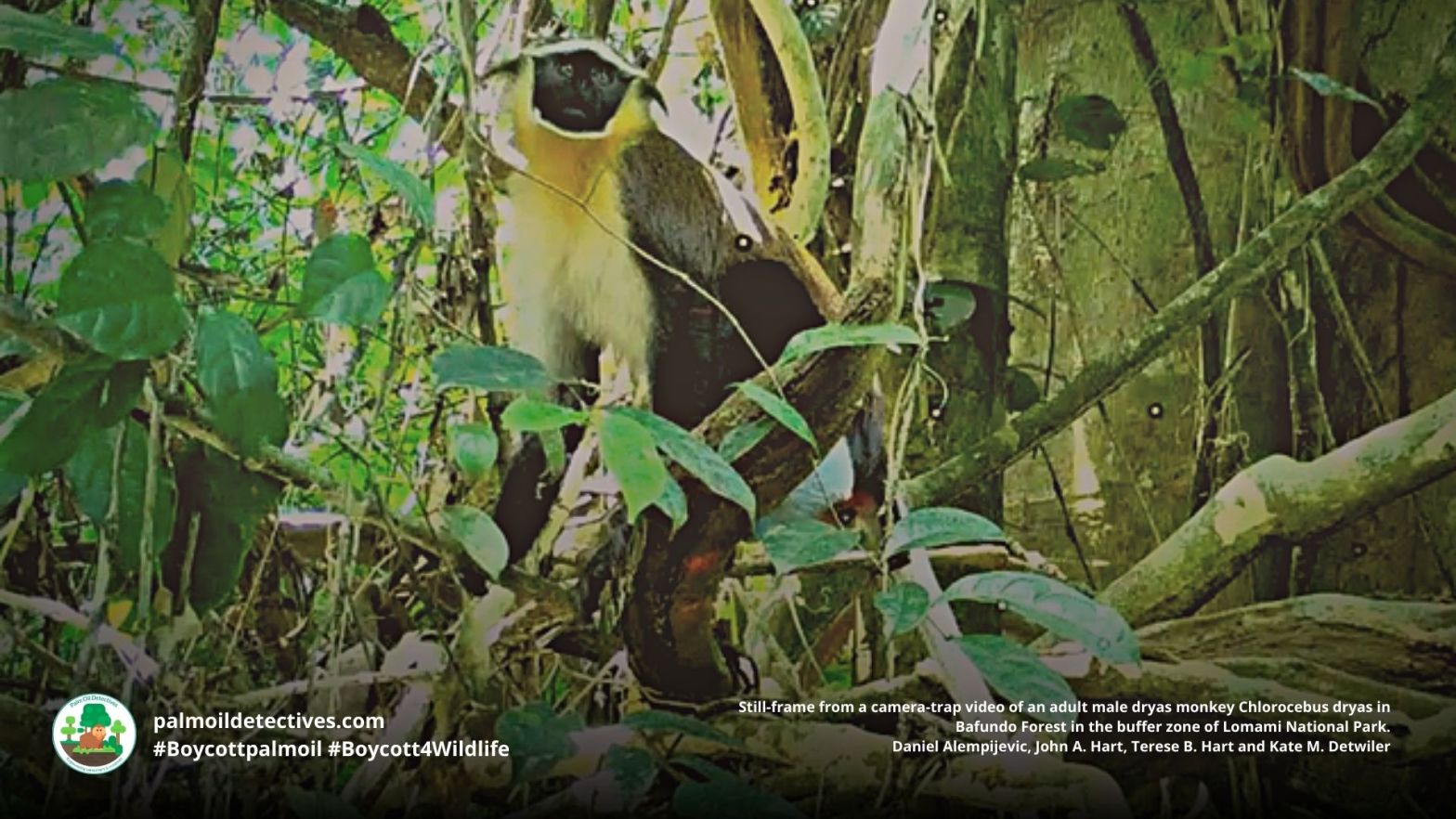
Dryas #Monkeys are secretive and vividly colourful monkeys who hang on to survival in the forests of the #Congo. Tragically, there is estimated to only be 100-250 individual monkeys still alive. They are fruit-eaters and play a critical role in ensuring the dispersion of seeds and therefore the future health of the DRC’s #rainforests. They are preyed upon by leopards in the Congo basin. However, the main threat they face is the illegal poaching and hunting by humans for #bushmeat, along with #deforestation for #palmoil, #mining and other commodities. Fight for their survival every time you shop, be #vegan and #BoycottPalmOil #Boycott4Wildlife
Southern Ground-hornbill Bucorvus leadbeateri
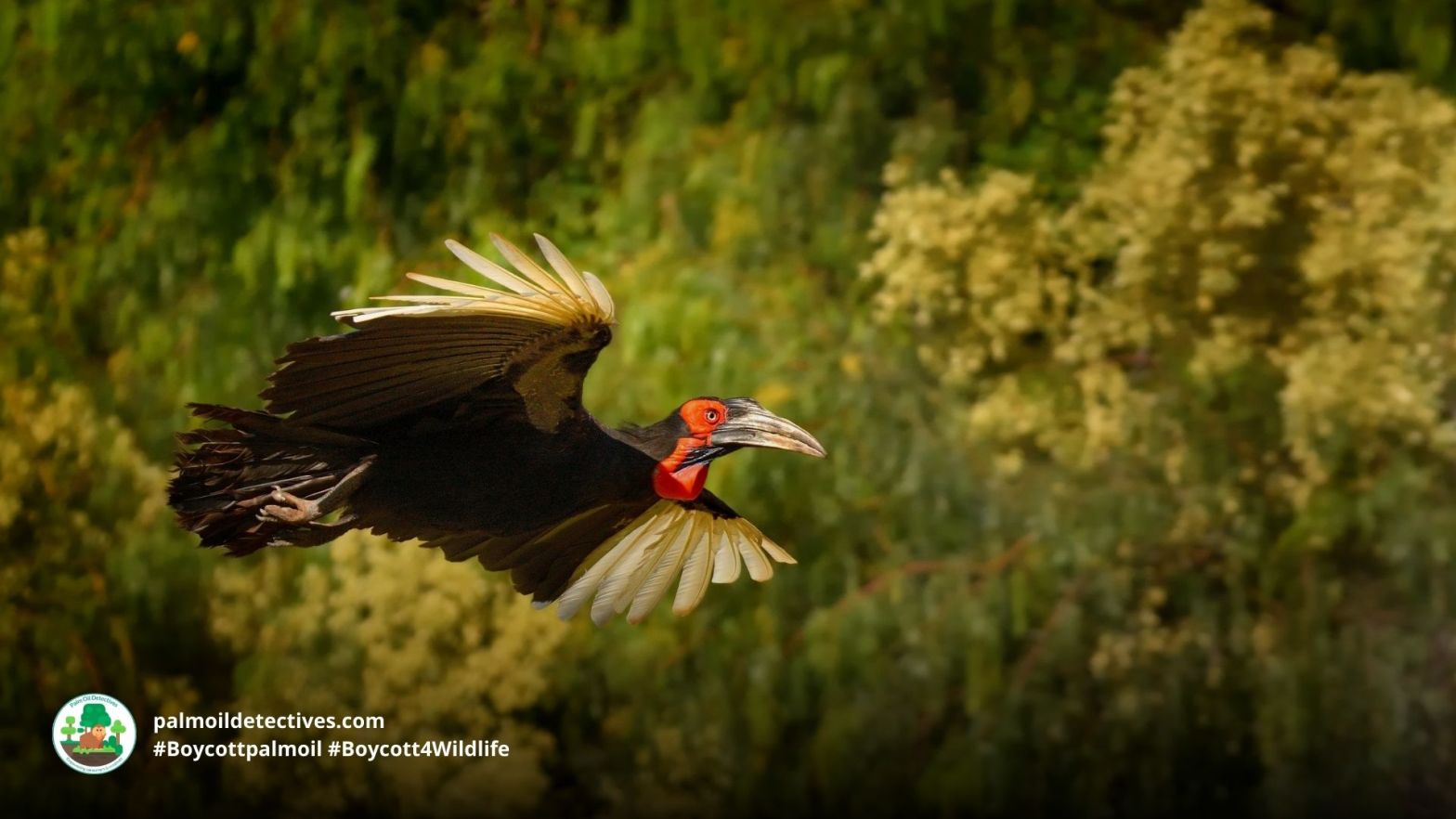
Territorial and highly social, Southern Ground #Hornbills collectively raise their young in groups – a process of parental guidance that can take up to two years – the longest of any #bird species known. They are considered to be a culturally important species to many indigenous peoples and are known as rain birds or thunder birds for their folklore association with bringing rain and ending drought. Help them to survive every time you shop and #BoycottPalmOil #Boycott4Wildlife
African Dwarf Crocodile Osteolaemus tetraspis

African Dwarf #Crocodiles are timid #nocturnal animals and solitary hunters. They predate mainly on small animals in rivers or nearby to the riverbank. They are also known as the Broad-Snouted Crocodile or the Bony Crocodile are the smallest extant species of crocodile in the world and are typically around 1.5 metres in length. They face persecution by humans and other animals and spend most of their daylight hours resting in burrows they make along riverbanks in #WestAfrica and Central Africa. They are vulnerable from #timber #palmoil #soy #meat #deforestation and hunting. Help them survive and be #vegan, #Boycottpalmoil #Boycott4Wildlife
Butterfly Viper Bitis nasicornis
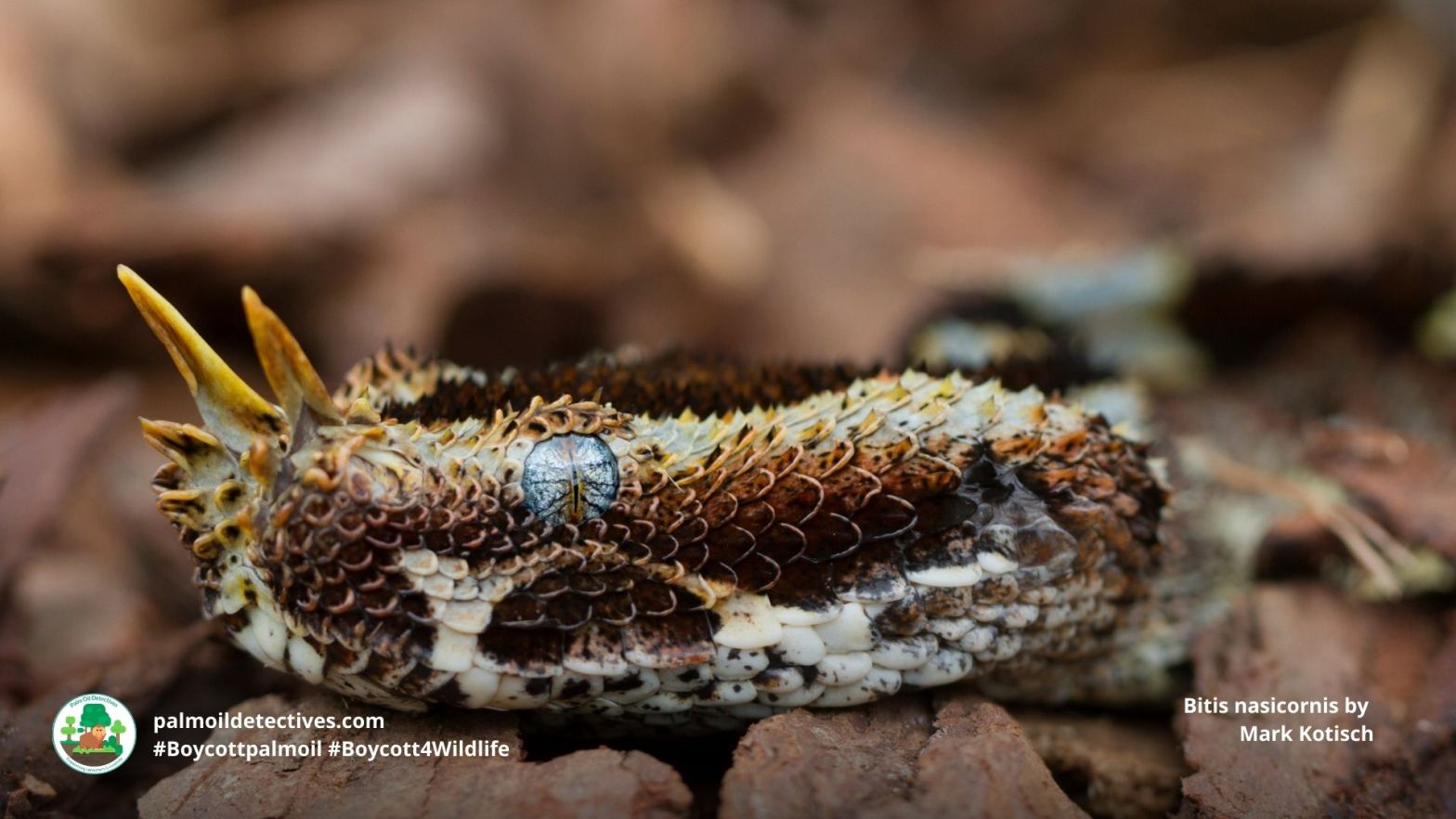
Although they possess one of the most potent venoms of all #snakes in #Africa, Butterfly Vipers are surprisingly placid and won’t attack unless provoked or threatened. They are known by several common names: Rhinoceros viper, River Jack, the Rhinoceros horned viper and the Horned puff adder. These remarkable serpents are appreciated for their vividly coloured markings that keep them camouflaged on the forest floor. Help them to survive when you shop and #BoycottPalmOil #Boycott4Wildlife.
African Palm Civet Nandinia binotata

African palm civets were once common seed dispersers. Now they face pressure from palm oil-driven deforestation, mining, and hunting for bushmeat – boycott!
Hippopotamus Hippopotamus amphibius
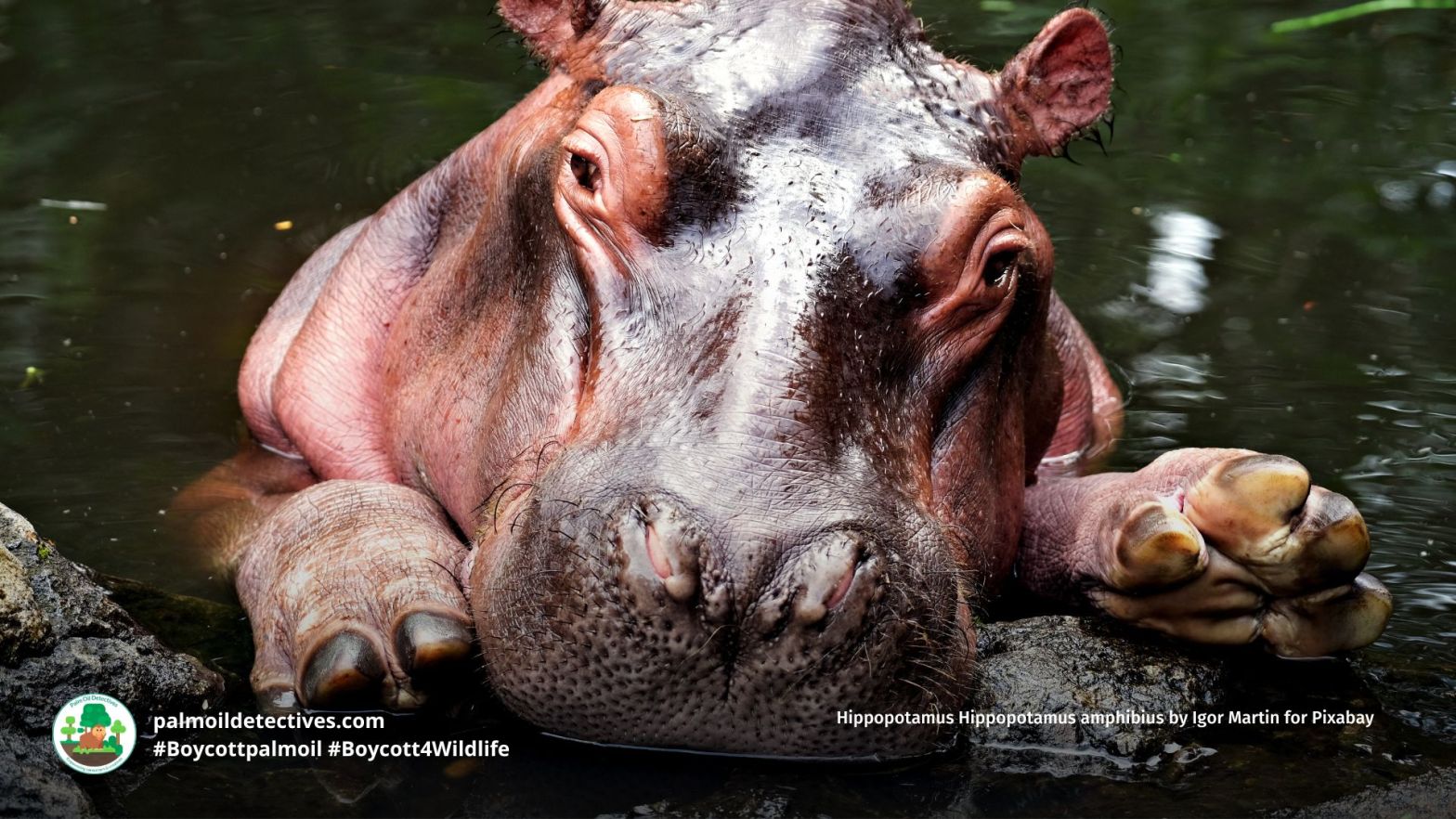
The Common Hippopotamus, or Hippo, is a powerful and enduring symbol of Africa’s rivers and wetlands. Once common throughout all of Africa and the revered subjects of African folklore —their populations are now in peril. Hippo numbers plummeted in the 1990s and early 2000s due to unregulated #hunting and land conversion for #palmoil #cocoa and #tobacco #agriculture and human settlement. Although some strongholds remain in East and Southern Africa, many populations are in decline across #WestAfrica and Central Africa. Hippos are now listed as #Vulnerable on the Red List, with threats from freshwater habitat loss, illegal hunting for meat and ivory, and increasing conflicts with people. Use your voice and your wallet to push for stronger protections for Hippos and their riverine homes. #BoycottPalmOil #Boycott4Wildlife
African Forest Elephant Loxodonta cyclotis
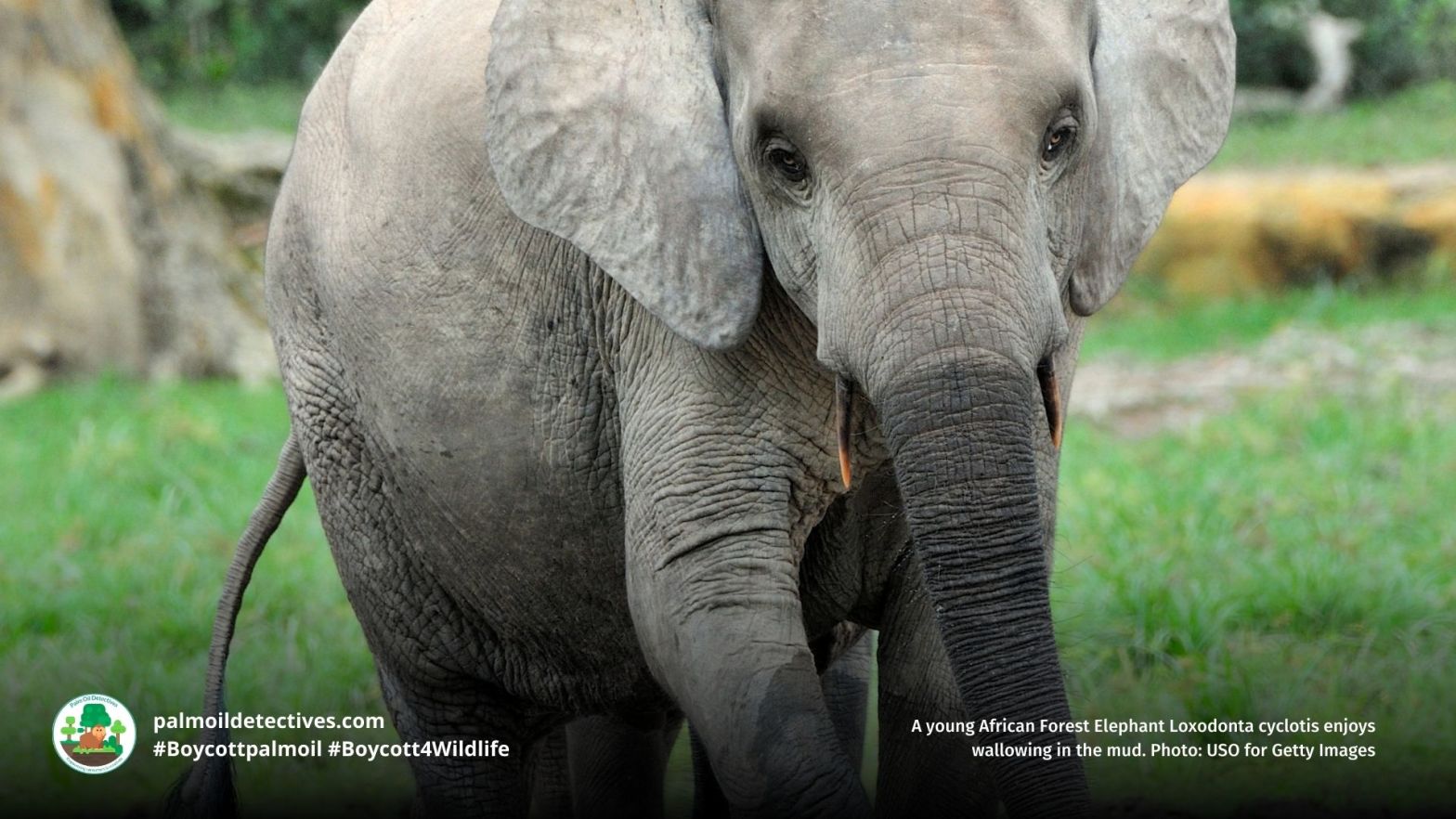
Protect African Forest Elephants! These critically endangered ecosystem engineers are vital for rainforest health but face extinction from poaching, ecocide
Temminck’s Pangolin Smutsia temminckii
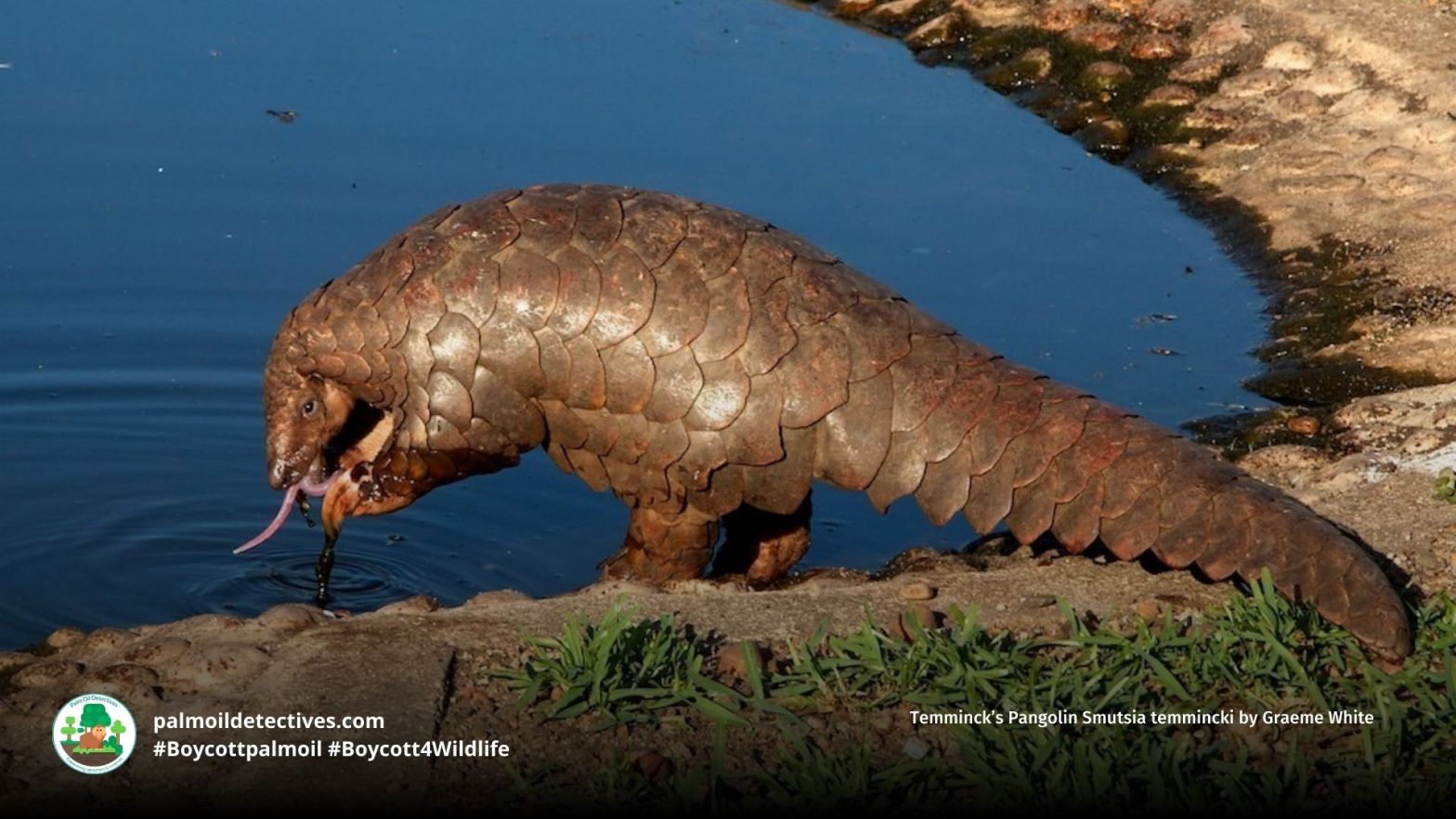
The Temminck’s pangolin Smutsia temminckii is remarkable mammal. They are the second largest of the pangolin species and are reported to weigh between 12.5kg and 21 kilograms. They’re famous for their armour-like keratinous scales and their unique ability to curl into a protective ball when threatened. These elusive creatures are found in the savannahs and woodlands of sub-Saharan Africa and are essential to their ecosystem, controlling insect populations. The word pangolin comes from the Malay word “pengguling” meaning something that rolls up. Owing to their secretive nature and low densities, little is known about the pangolin. The species is killed primarily for Chinese medicine, even though their keratin scales have no medicinal value. All pangolins face a grave threat from trafficking for their meat and scales. Tragically, they are one of the most illegally traded mammals in the world.
Despite their ecological and cultural importance, Temminck’s pangolins are increasingly threatened by habitat destruction and illegal wildlife trade. Habitat loss from palm oil, cocoa and coffee agricultural expansion and mining further compounds their decline. Protect these unique creatures by boycotting palm oil and supporting strong anti-trafficking initiatives. #BoycottPalmOil #Boycott4Wildlife
Black-Throated monitor Varanus albigularis microstictus

The Black-Throated Monitor is a mighty and large lizard reaching over 2 metres long. They are threatened by agriculture deforestation and #hunting for their leather and meat in Tanzania, Africa. Help them every time you shop and #Boycottpalmoil #Boycott4Wildlife
Western Lowland Gorilla Gorilla gorilla
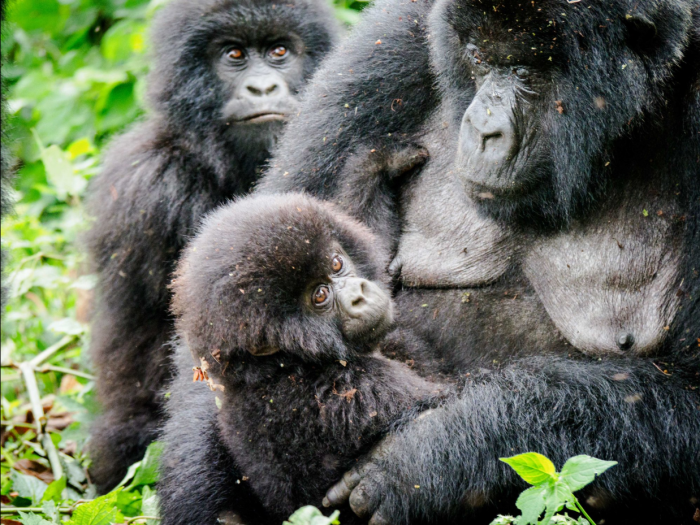
Mighty, intelligent and gentle Western Lowland Gorillas are well-loved apes, they are #critically endangered by #deforestation and habitat loss for #palmoil, cocoa and mining along with disease and illegal poaching in #Congo #Nigeria #Cameroon Help them to survive every time you shop! Join the #Boycott4Wildlife
Forgotten Animals of Secretly Destroyed Forests
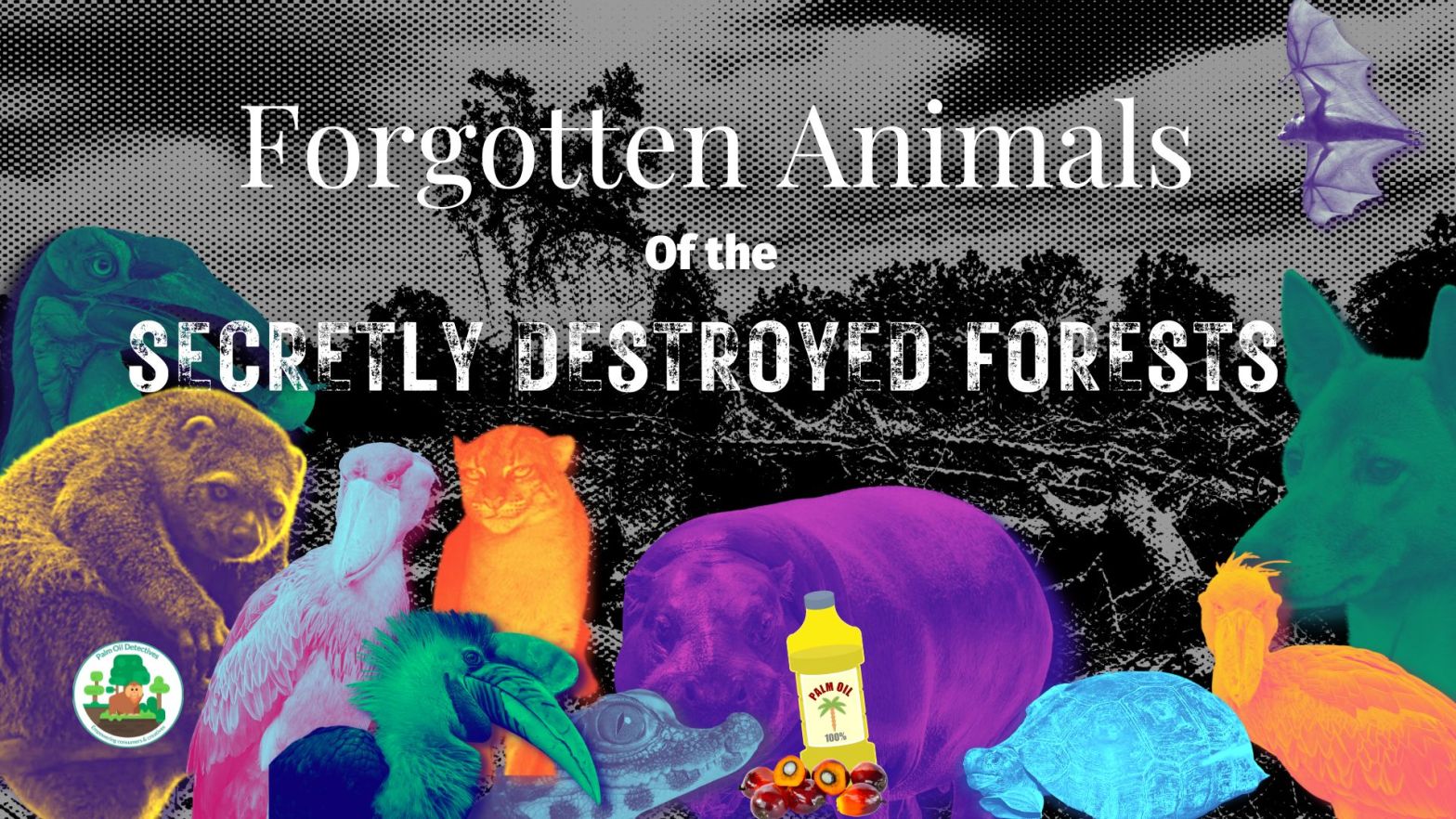
Don’t let the forests go silent! 1000’s of forgotten animals are nearing extinction due to palm oil deforestation. Take action and boycott palm oil today!
Golden Monkey Cercopithecus mitis kandti
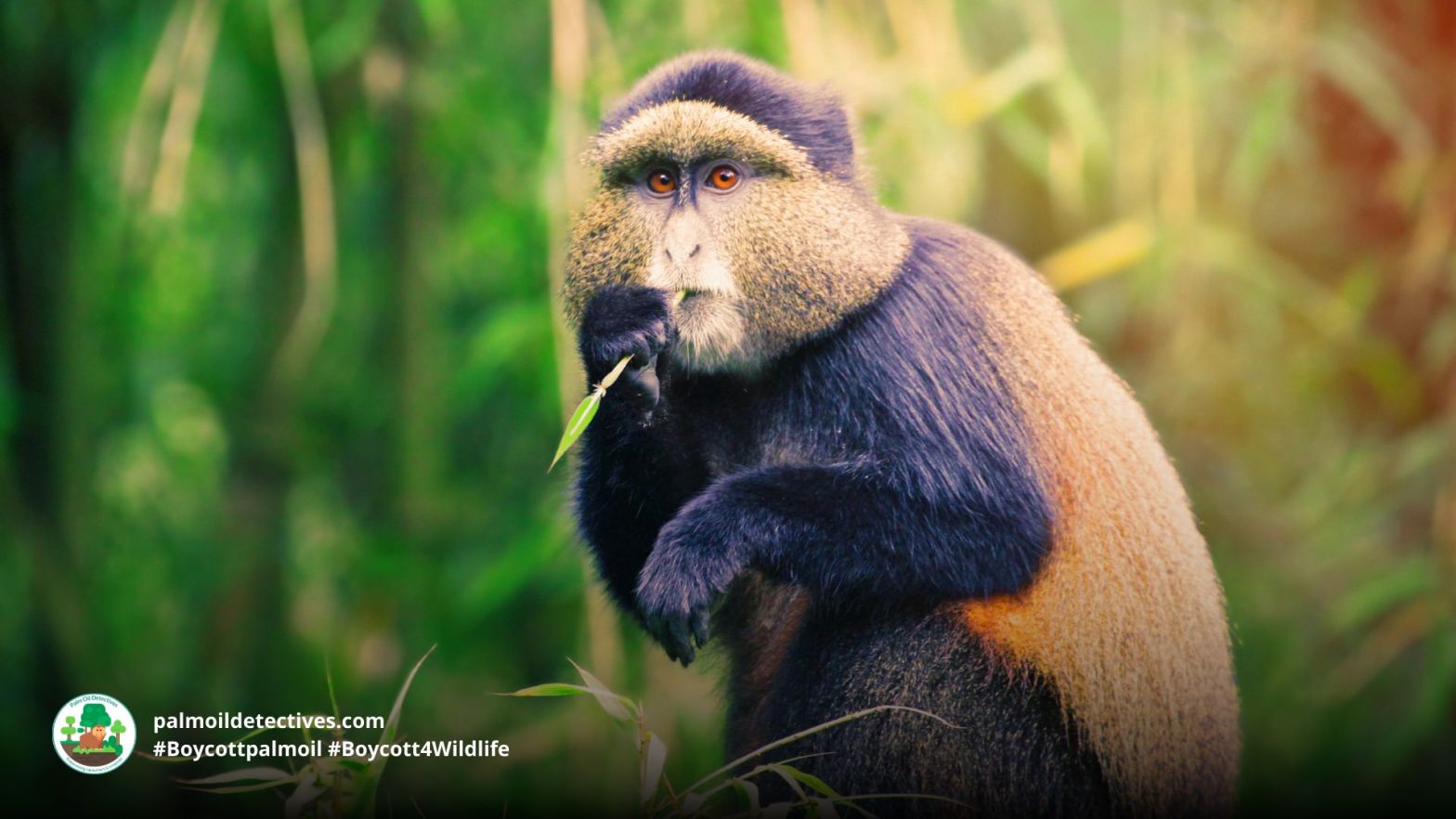
In the mist-laden bamboo forests of the Virunga massif, the golden monkey Cercopithecus mitis kandti darts through dappled sunlight and the tree canopy. This endangered primate is found only in the high-altitude forests of the Albertine Rift, nestled deeply in volcanic mountains. They are found in four national parks: Mgahinga, in south-west Uganda; Volcanoes, in north-west #Rwanda; and Virunga and Kahuzi-Biéga, in the eastern Democratic Republic of #Congo. Like many other animals in the region they are protected and yet human threats including #mining #hunting and #agriculture continue to come dangerously close. Help these sweet-faced and severely threatened #primates every time you shop #BoycottPalmOil #Boycott4Wildlife
Southern Patas Monkey Erythrocebus baumstarki
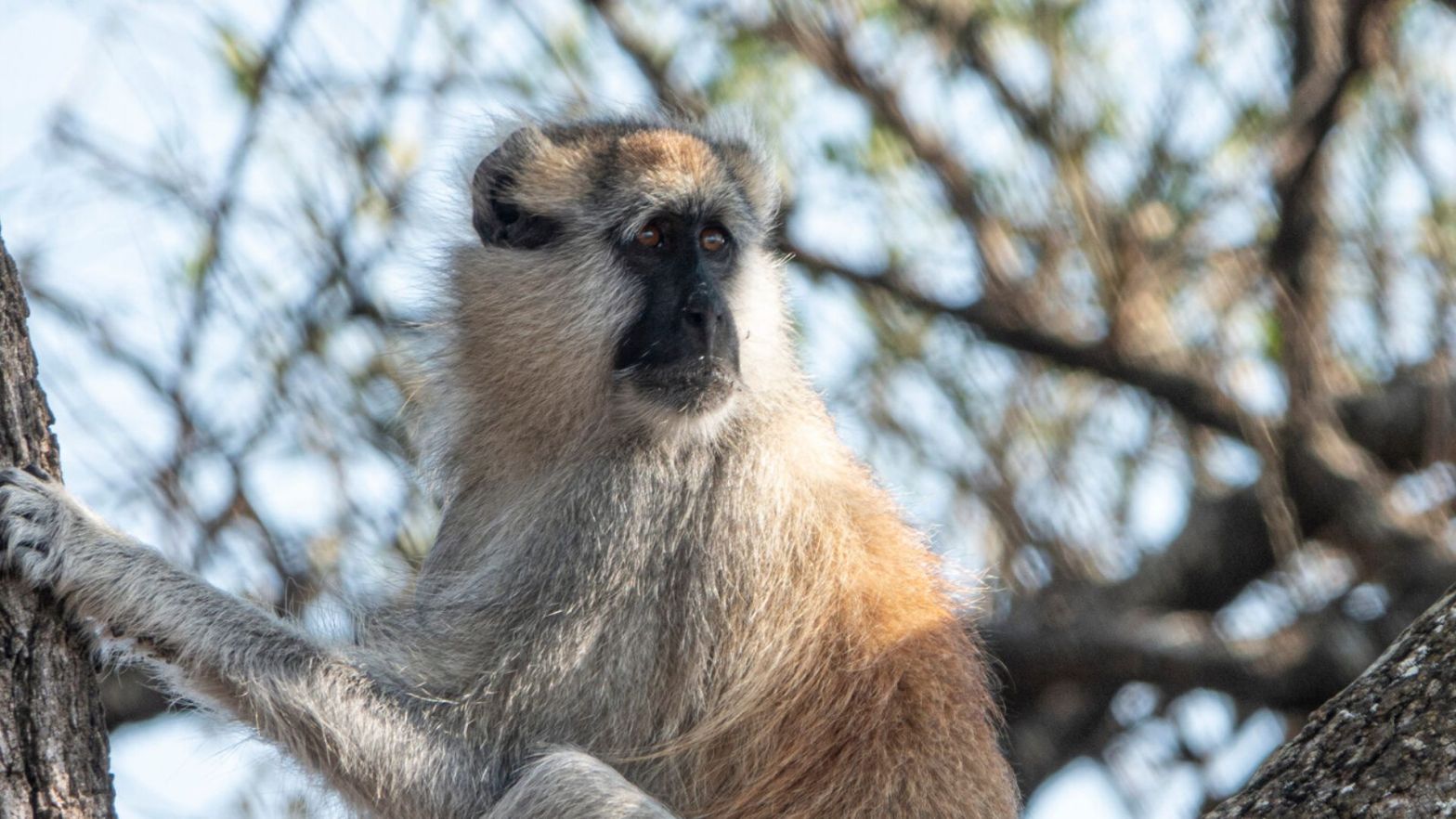
The Southern Patas #Monkey (Erythrocebus baumstarki) is an elusive, long-limbed #primate once common across northern #Tanzania and parts of #Kenya and now on the very edge of #extinction. With a lean, agile body built for speed, they are among the fastest-running primates in the world, capable of reaching speeds up to 55 km/h. Once ranging over approximately 66,000 km², their habitat has been decimated by agriculture, human settlements, and bushmeat hunting, reducing their known range by over 85% in recent decades. By 2021, estimates suggested fewer than 200 individuals remained in the wild, restricted to small populations in western Serengeti National Park and its surroundings (de Jong & Butynski, 2021).
Without urgent intervention, this striking species could be the next primate extinction in Africa. Help them every time you shop and campaign for these rare primates, every time you shop go #vegan and #Boycott4Wildlife!
Golden-bellied Mangabey Cercocebus chrysogaster
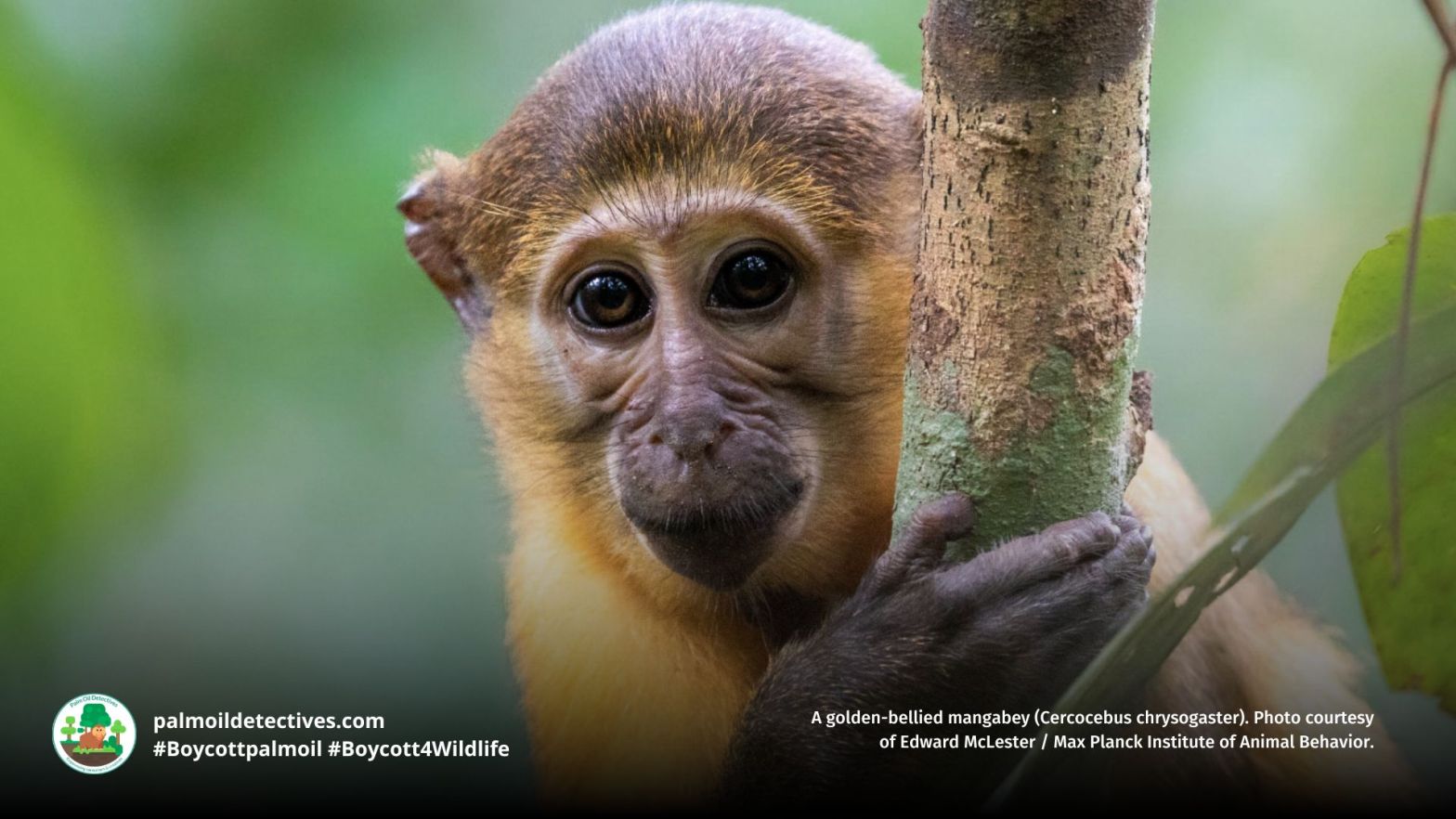
The golden-bellied mangabey (Cercocebus chrysogaster) is an intriguing and elusive monkey endemic to the Democratic Republic of Congo (DRC). Named for the vibrant golden hue of their undersides, these primates are known for their intelligence, complex social behaviours, and unique ecological role. Found in the remote tropical forests along the Congo River Basin, these monkeys remain poorly studied due to their limited range and secretive nature.
Tragically, the golden-bellied mangabey faces mounting threats from habitat destruction, driven by logging, mining, and agricultural expansion, including palm oil plantations. Their population continues to decline due to hunting and habitat fragmentation. Act now to protect their fragile habitat—boycott palm oil and stand against deforestation. #BoycottPalmOil #Boycott4Wildlife
Saker Falcon Falco cherrug
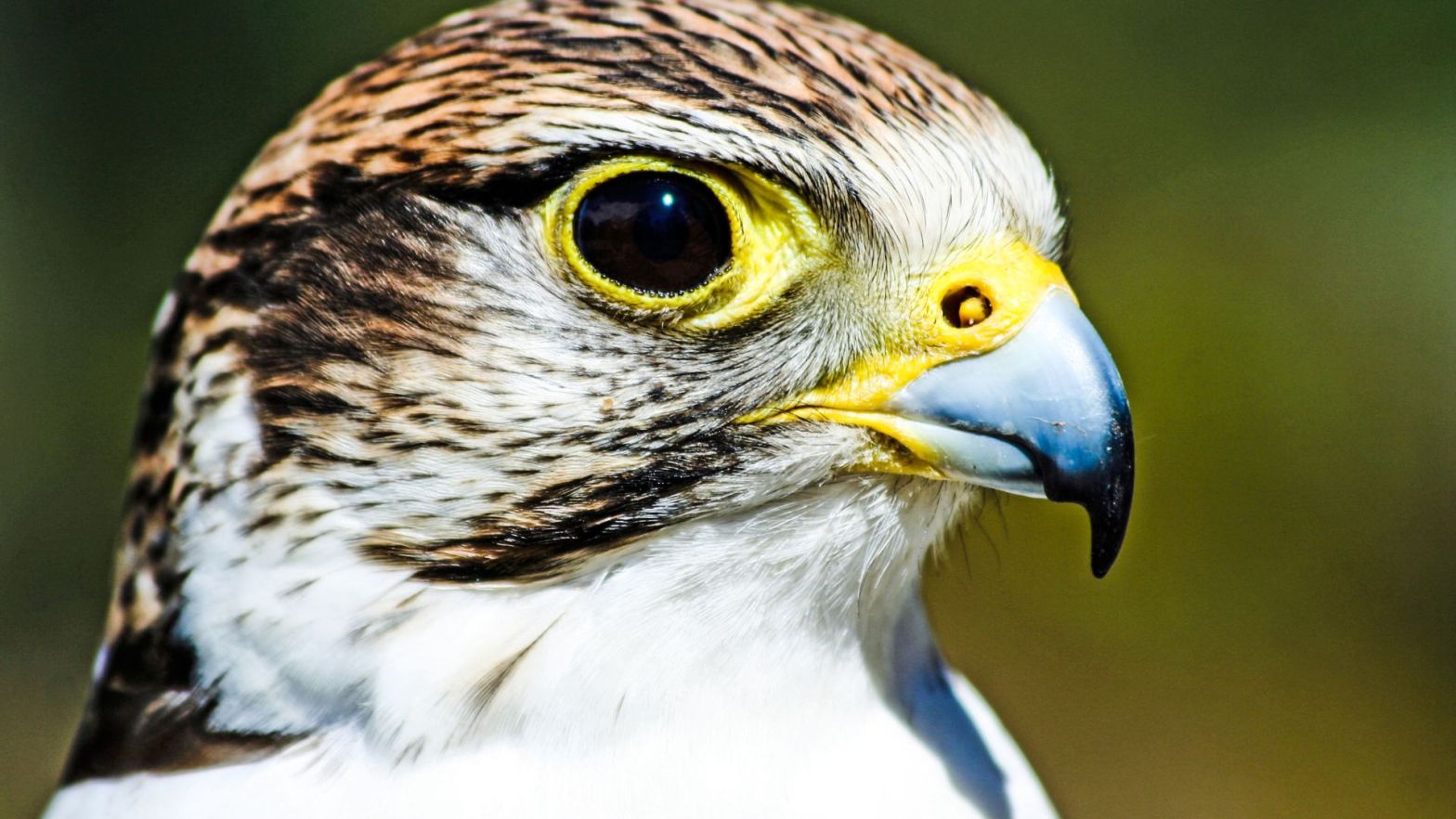
Saker #Falcons are majestic and powerful birds of prey that have a wide range throughout much of Southern Europe, the Middle East and parts of Africa. Their plumage ranges from chocolate brown in colour to a pale sandy with brown bars or streaks and can be snow white and off-white.
This species has been uplisted to Endangered because a revised population trend analysis indicates that they may be undergoing a very rapid decline. This negative trend is a result of a range of anthropogenic factors including electrocution on power lines, unsustainable capture for the falconry and #pettrade, as well as habitat degradation throughout all three continents but especially in Africa. Help them every time you shop and #Boycott4Wildlife
Drill Mandrillus leucophaeus

The Drill is one of the most visually arresting, emotionally complex, and endangered #monkeys on Earth. Endemic to a narrow slice of rainforest in #Nigeria, #Cameroon, and Bioko Island, these intelligent primates have lost over 50% of their population in just three decades. They face a terrifying gauntlet of threats: #palmoil plantations, #hunting for the #bushmeat trade, #timber logging, and a tidal wave of new #infrastructure creation. Though rarely seen, Drills are capable of extraordinary behaviour—forming multi-species foraging alliances, mourning their dead, and navigating their crumbling world with grace and resilience. Only a few thousand of these precious #primates remain alive. Take action every time you shop, be #Vegan and #BoycottPalmOil #Boycott4Wildlife
Four-horned Chameleon Trioceros quadricornis
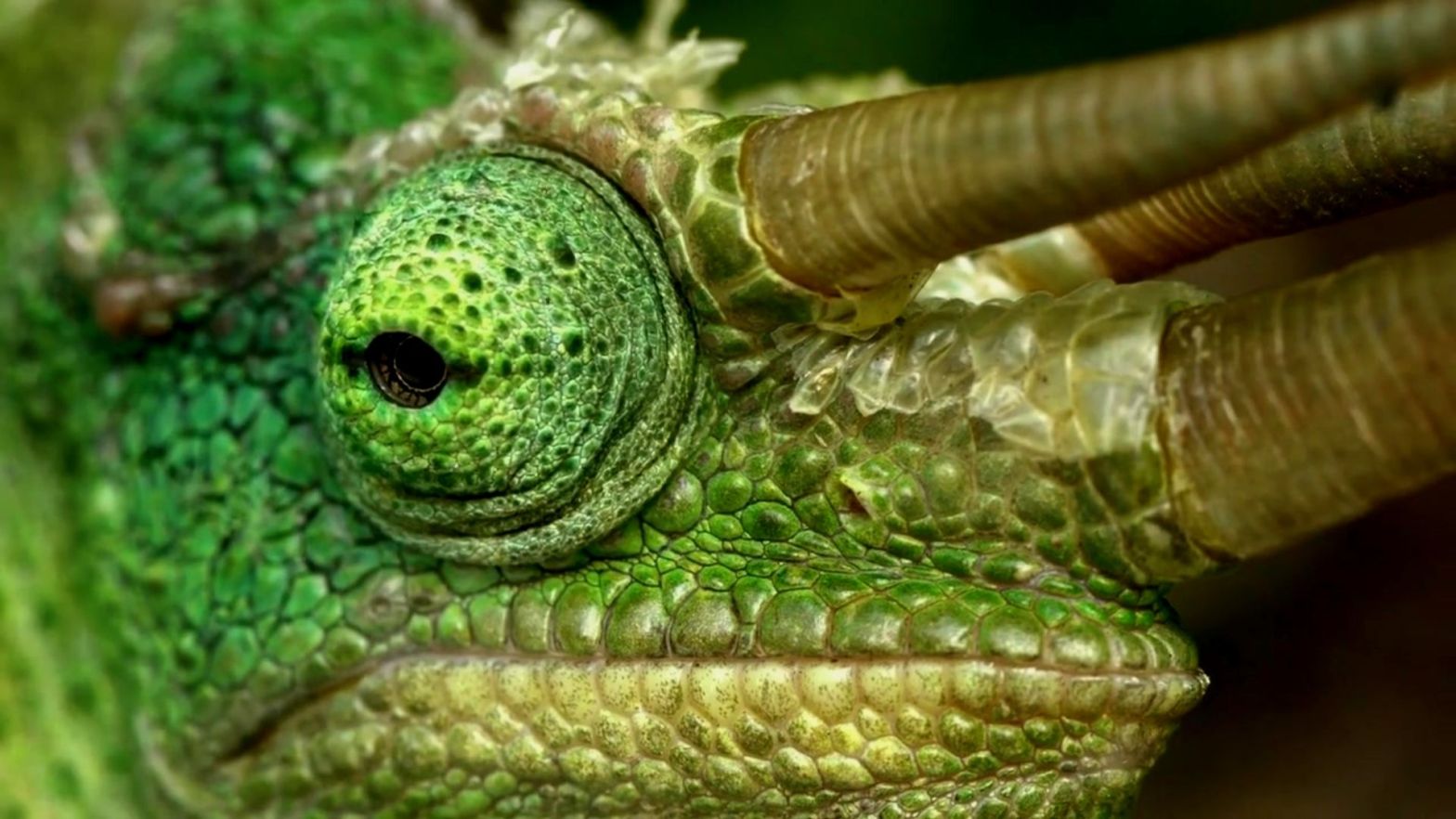
Protect the Four-Horned Chameleons, native to Cameroon’s rainforests, these extraordinary reptiles are now listed as Vulnerable, boycott palm oil for them!
Tana River Mangabey Cercocebus galeritus
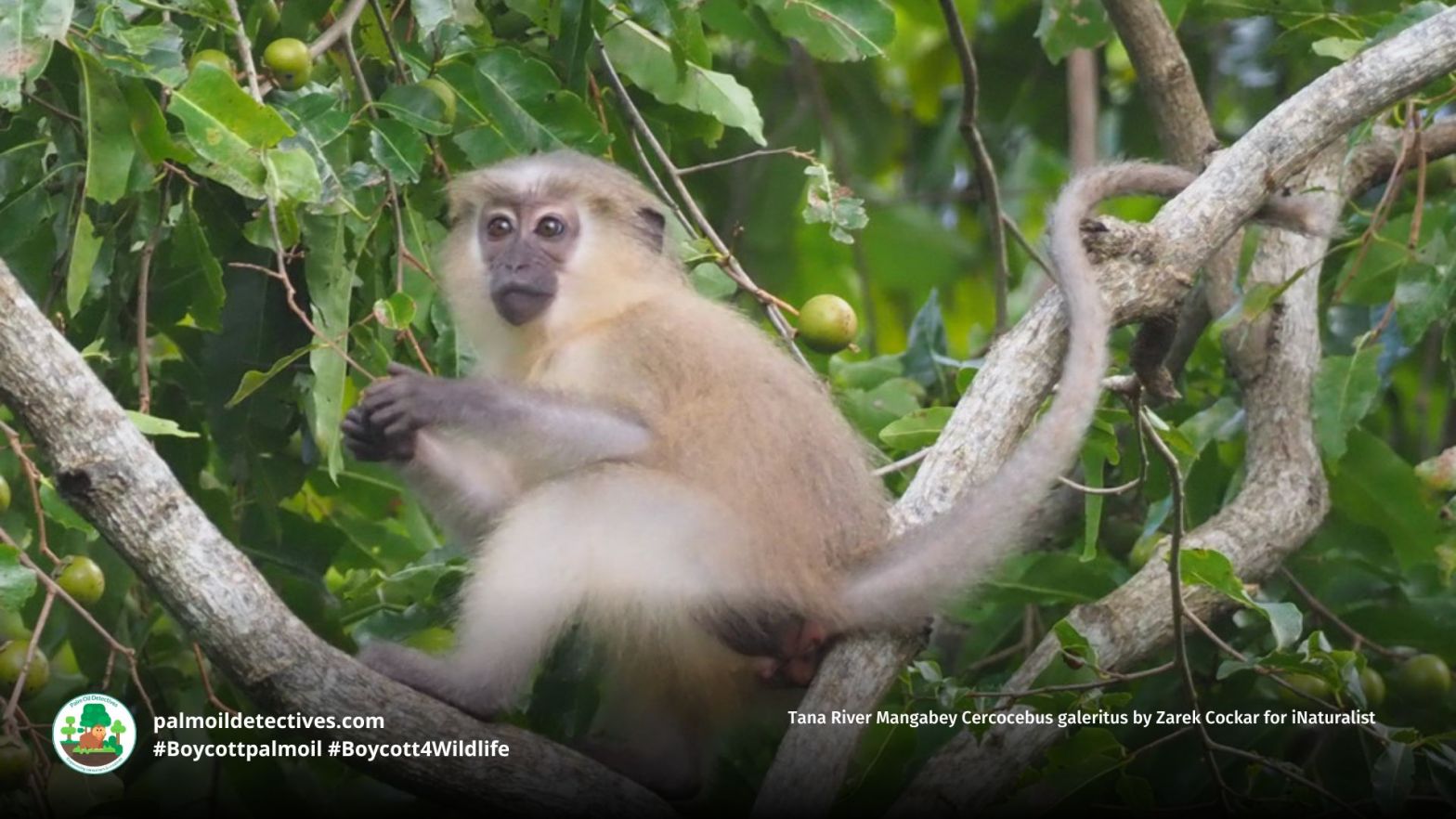
The Tana River Mangabey Cercocebus galeritus is a long-faced and slender old world monkey of #Kenya listed as Critically Endangered due to ongoing habitat destruction, dam construction, logging, and the degradation of floodplain forest ecosystems. Once protected by the Tana River #Primate Reserve, these #monkeys despite being key seed dispersers in their ecosystem are now more vulnerable than ever after the legal de-gazetting of their habitat. With only around 1,000 individuals remaining, this highly social and adaptable primate faces a devastating future unless urgent action is taken. Use your wallet as a weapon to end the destruction of their home. #BoycottPalmOil #Boycott4Wildlife #Vegan #BoycottMeat
Eastern Gorilla Gorilla beringei
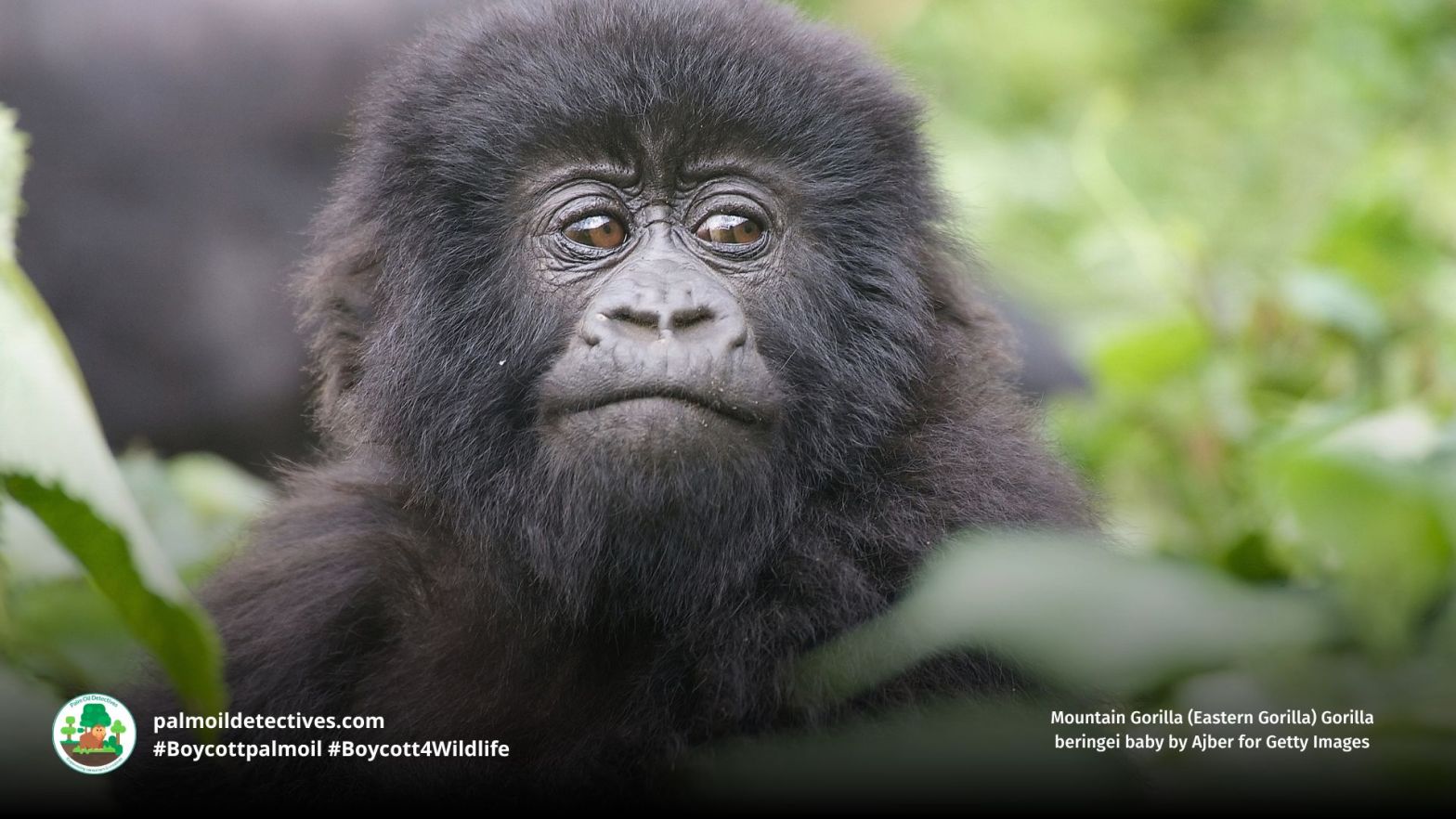
Eastern Gorillas, the world’s largest primates are Critically Endangered in DRC, Rwanda, and Uganda. Help them survive be vegan and boycott palm oil now
 Palm Oil Detectives