
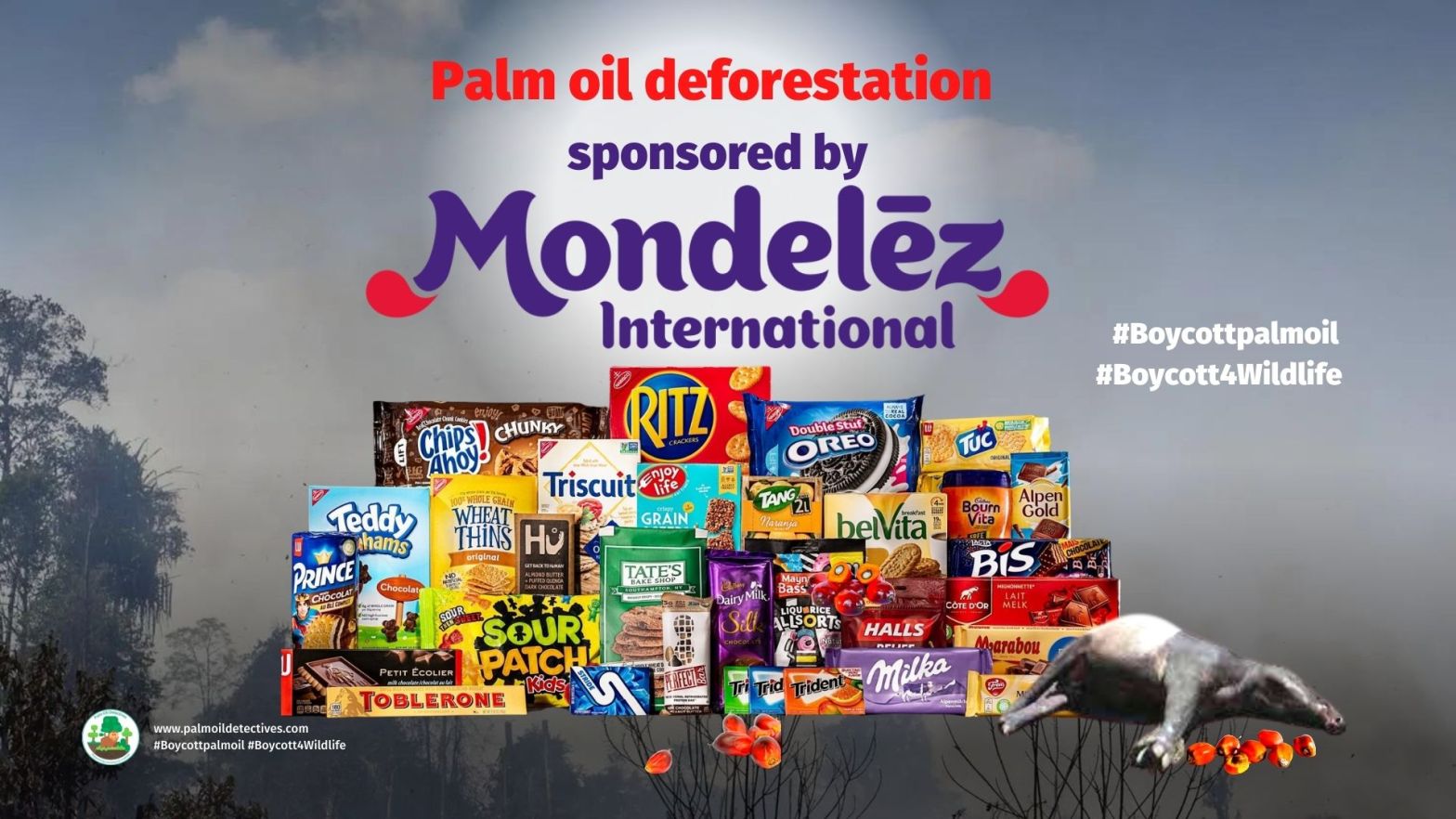
Mondelēz International who make Oreos keep sourcing palm oil from suppliers linked to violence and deforestation. Their RSPO certification is pure greenwash!
Author Archives: Palm Oil Detectives
Jaguars vs Cows: JBS Fuelling Biodiversity Collapse in Brazil’s Forests
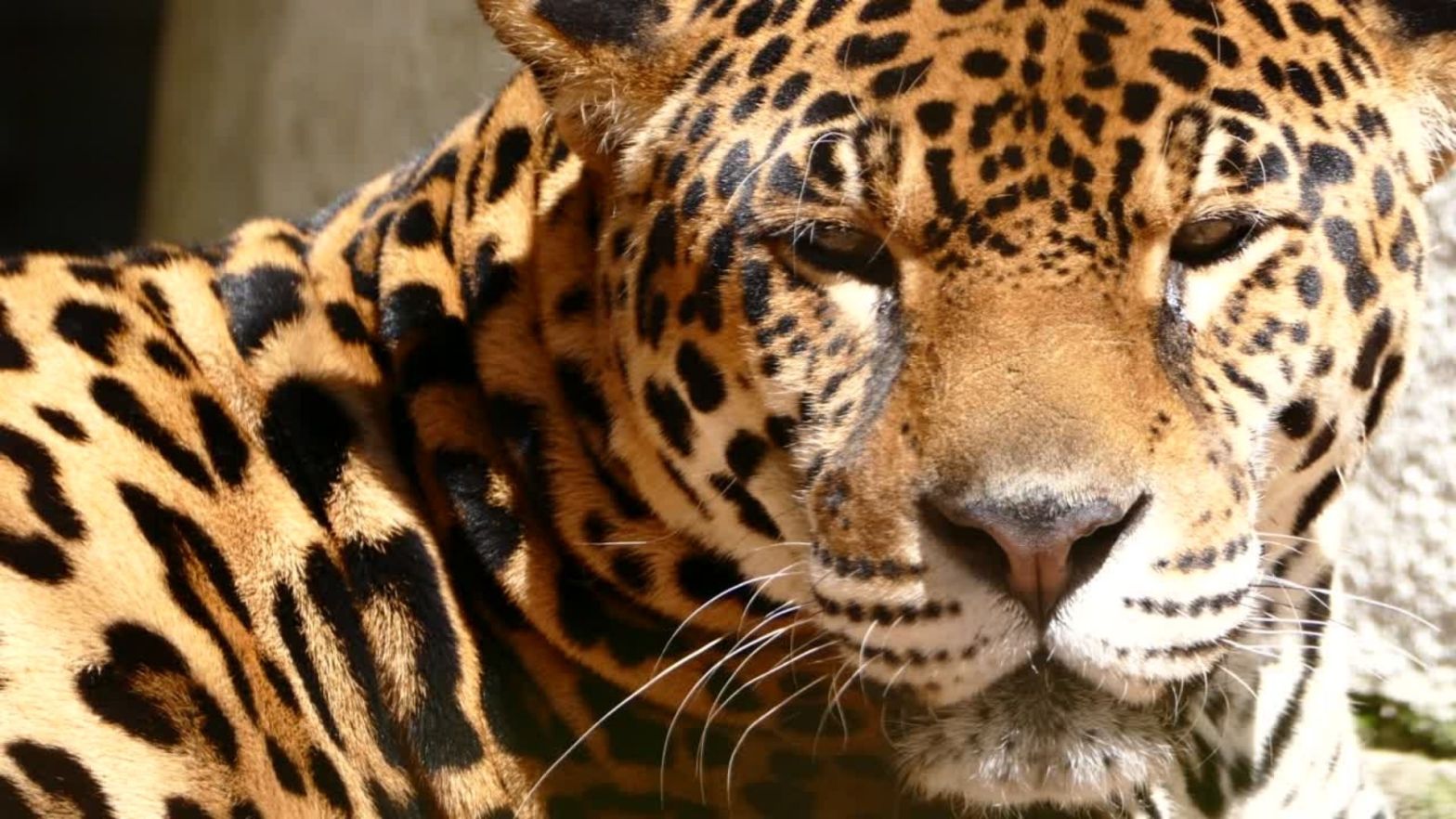
Global Witness report finds JBS, the world’s largest meat company, is directly linked to deforestation in the Amazon and Pantanal putting jaguars at risk
World’s Wealthiest Drive Two Thirds of Global Warming Since 1990

Wealthiest people in USA and China responsible for 2/3 of global warming since 1990. Climate policies needed to target the richest people on the planet now!
Finance giants fuel $8.9 trillion deforestation economy
Forest 500 report shows 150 of the world’s largest financial institutions invested nearly $9 trillion in deforestation-linked industries. Support EUDR!
SOCFIN’s African Empire of Colonial Oppression: Billionaires Profit from Palm Oil and Rubber Exploitation
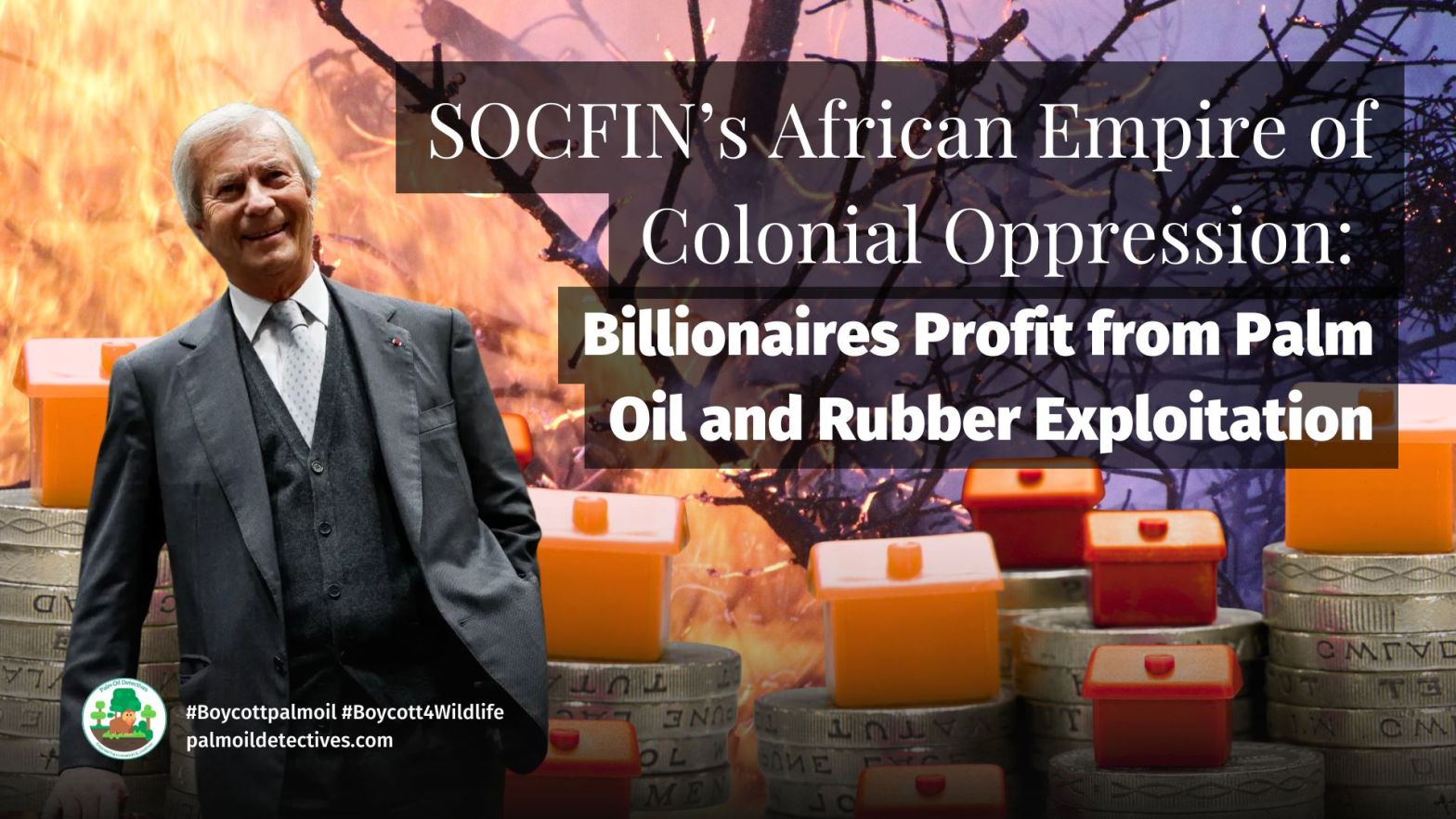
Investigation by Bloomberg exposes that despite being RSPO members, #SOCFIN plantations in #WestAfrica are the epicentre of #humanrights abuses, sexual coercion, environmental destruction, and #landgrabbing. Operating in #Liberia, #Ghana, #Nigeria, and beyond, SOCFIN’s #rubber and #palmoil plantations continue historical colonial legacies of exploitation. Despite widespread evidence of abuse and deforestation, SOCFIN and its partners benefit from weak sustainability certifications such as #FSC and #RSPO. Europe and the US buy products directly linked to these violations, greenwashing the destruction in the process. Indigenous communities and workers are actively resisting this huge injustice —They seek proper redress in the form of stricter #EUDR regulations and better protections of their health, livelihoods and families. Consumers can boycott palm oil and rubber in solidarity. #BoycottPalmOil #Boycott4Wildlife
Family Ties Expose Deforestation and Rights Violations in Indonesian Palm Oil
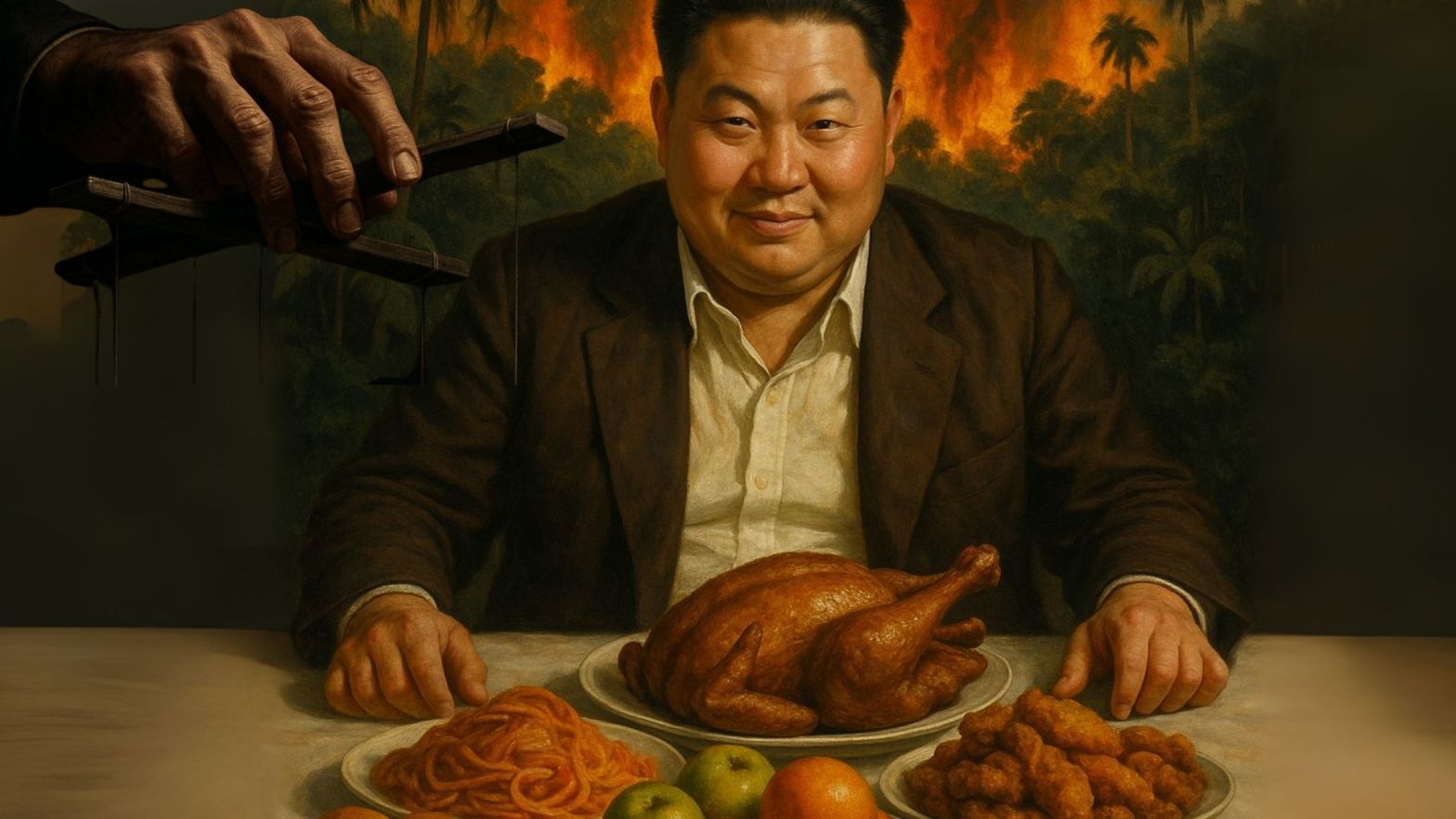
An explosive report by the Environment Investigation Agency (EIA) details how Indonesia’s Fangiono family, through a wide corporate web, is linked to ongoing #deforestation, #corruption, and #indigenousrights abuses for #palmoil. Calls mount for governments to act immediately to strengthen the #EUDR. Consumers can act when we #BoycottPalmOil #Boycott4Wildlife #HumanRights
West Papuan Indigenous Women Fight Land Seizures
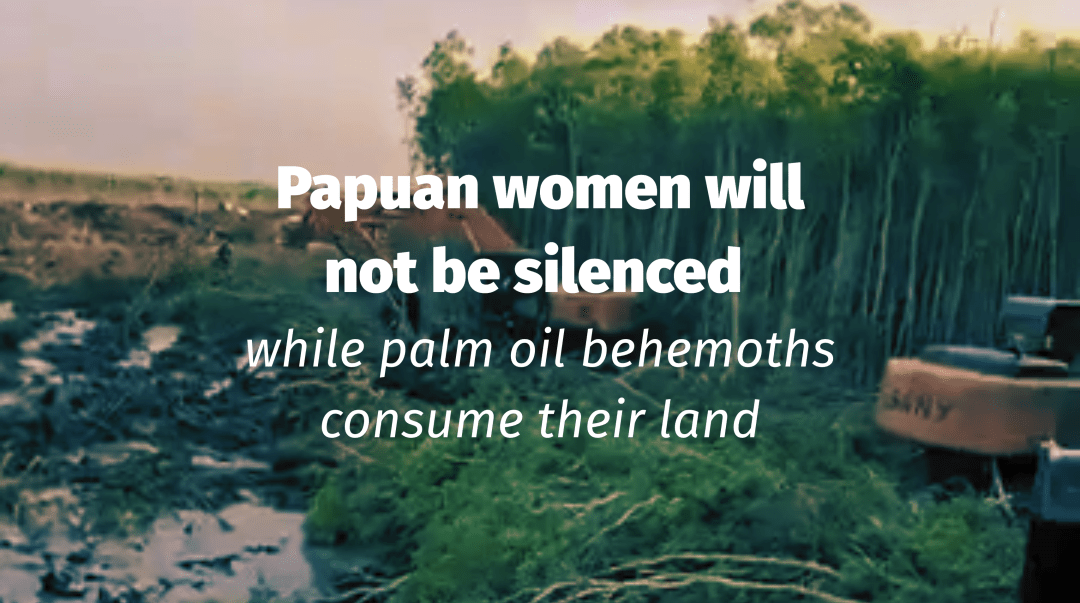
Indigenous Melanesian women in West Papua fight land seizures for palm oil and sugar plantations, protecting their ancestral rights. Join #BoycottPalmOil
Mountain Cuscus Phalanger carmelitae

The Mountain #Cuscus are fascinating and shy creatures who live in Papua New Guinea and #WestPapua. Thick, dark, woolly fur covers most of their bodies, while their bellies are white. The Mountain Cuscus has a black tail with a rough, white tip. Their skulls are medium-sized, with a short snout, large back teeth, and three small teeth on each side of their lower jaws. It’s important to note that the Mountain Cuscus can sometimes be confused with the Silky Cuscus, which has a smooth tail without rough patches, a shorter or absent white tail tip, and fewer teeth in their lower jaw. They are threatened by massive #palmoil and #timber deforestation across West Papua and Papua New Guinea, help them every time you shop and #Boycottpalmoil #Boycott4Wildlife
Greasing the Wheels of Colonialism: Palm Oil Industry in West Papua
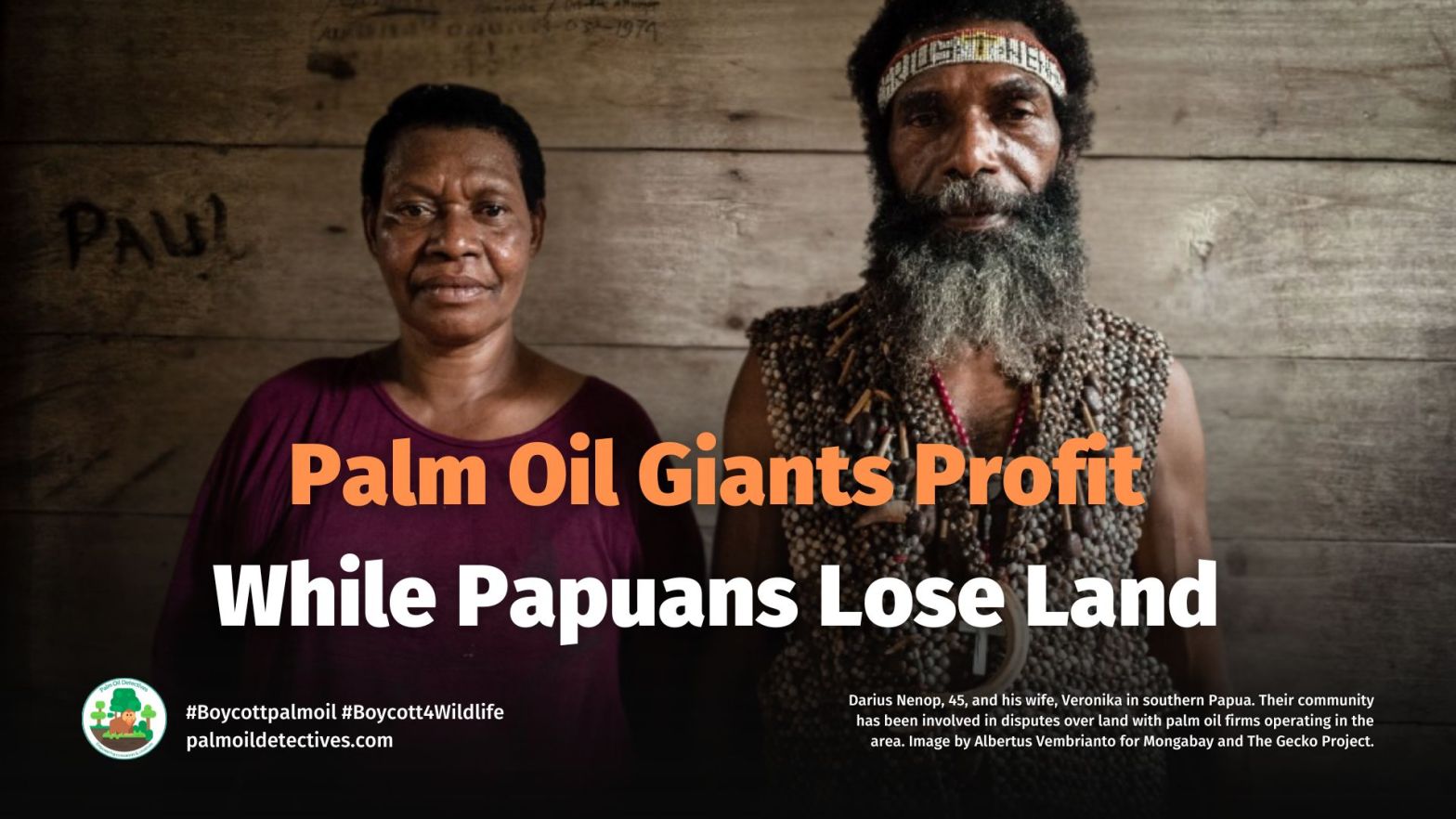
A landmark study published in Global Studies Quarterly in April 2025 has revealed that the rapid expansion of the #palmoil industry in #WestPapua is not only fuelling #deforestation, #ecocide and environmental destruction but also perpetuating colonial-era patterns of land dispossession, #violence, and erasure of #Indigenous #Papuan communities.
Palm Oil Workers Exposed to Hazardous Pesticides
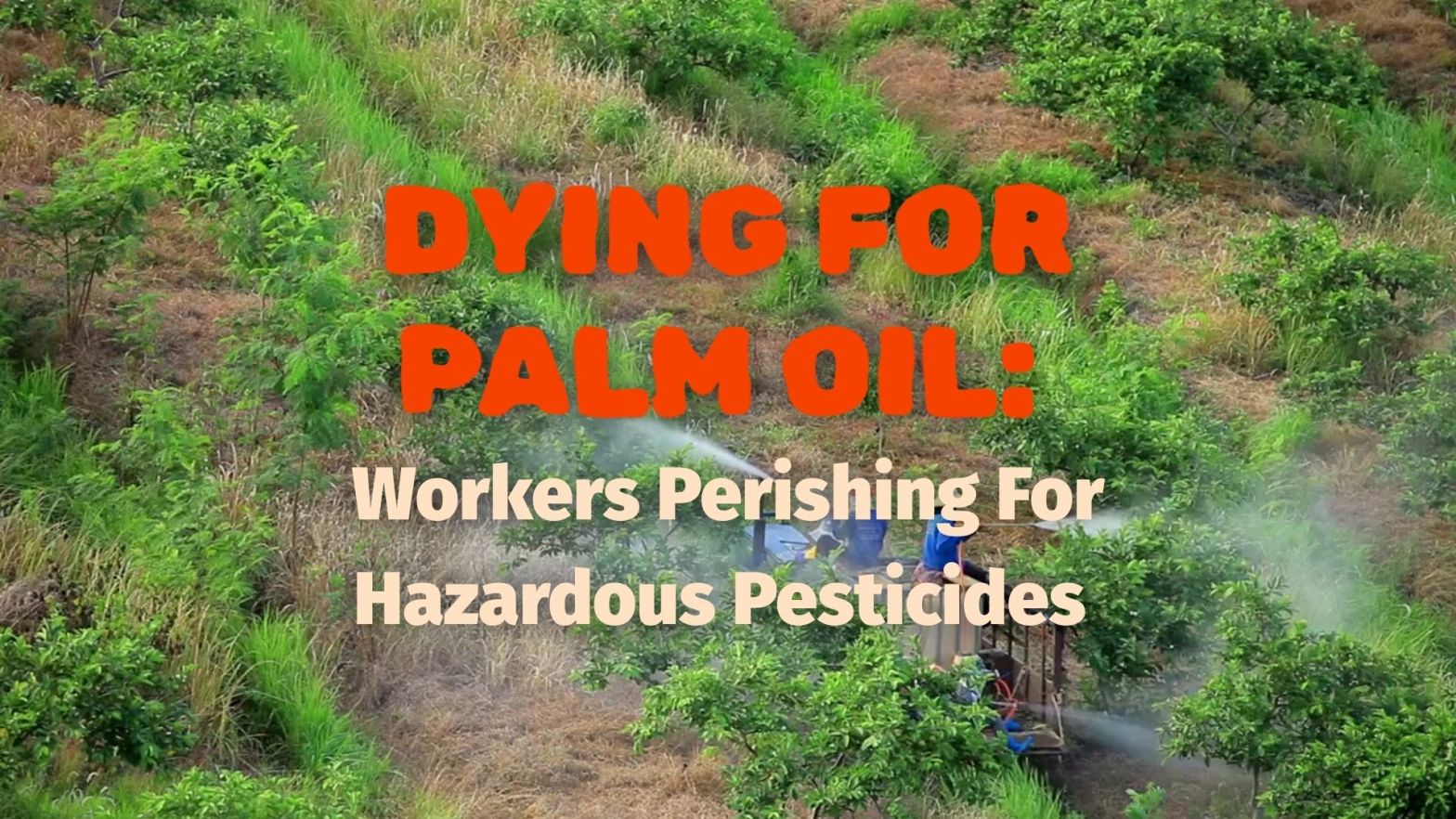
Palm oil workers in Colombia, Ghana, and Indonesia are regularly exposed to hazardous EU-banned pesticides like Paraquat for palm oil. Take action!
Demystifying the Strange Beauty of the Proboscis Monkey’s Large Nose
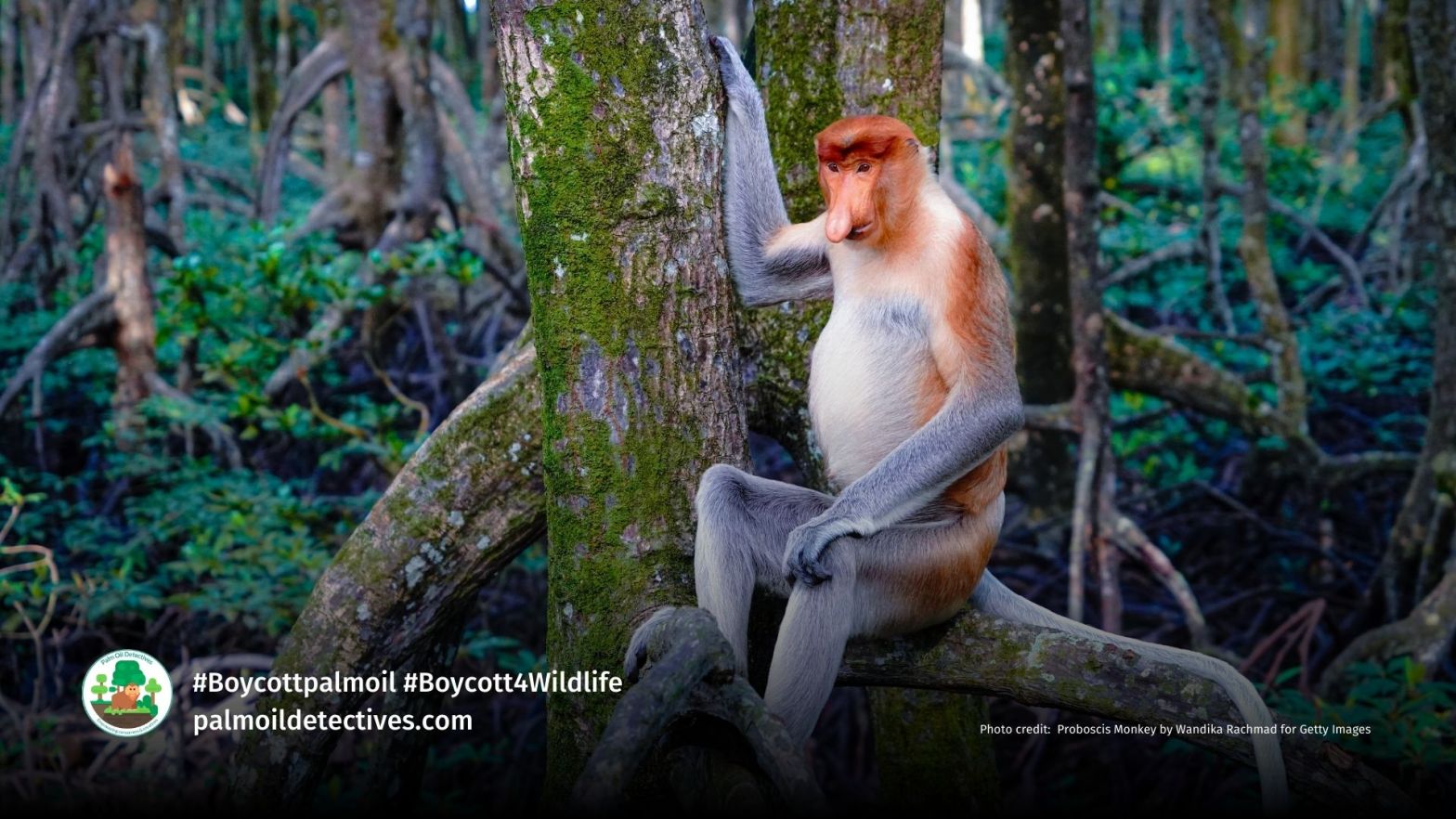
Of all the #monkey species around the world, one stands out with its large, bizarre nose. In male proboscis monkeys, their bulbous noses will often hang past their mouths.
But why did they evolve such a strange feature? Are they a visual sign of health and status to potential female mates, and to other males? Or did they evolve to help the monkeys make honks and other loud sounds? New groundbreaking #research has much to reveal about the mysterious large nose of the Proboscis Monkey!
The origins of animal words in SE Asia and what this reveals to us about our connection to them
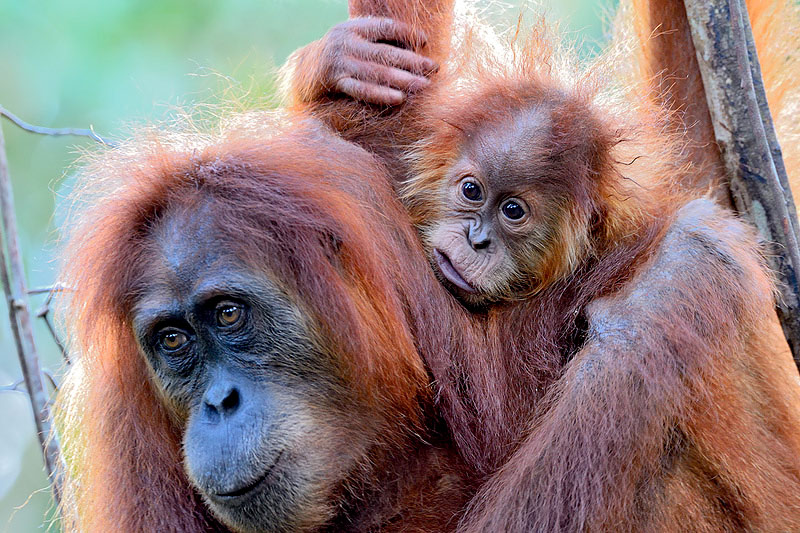
South East Asia is home to many fascinating creatures and rich biodiversity. The secrets of animal origins and ancient legends are revealed in their names: #Orangutan, #Gibbon, #Binturong and #Siamang in South East Asian languages. Help these animals to survive and #Boycottpalmoil
Dung Beetles Are Rainforests’ Diligent Regrowth Soldiers
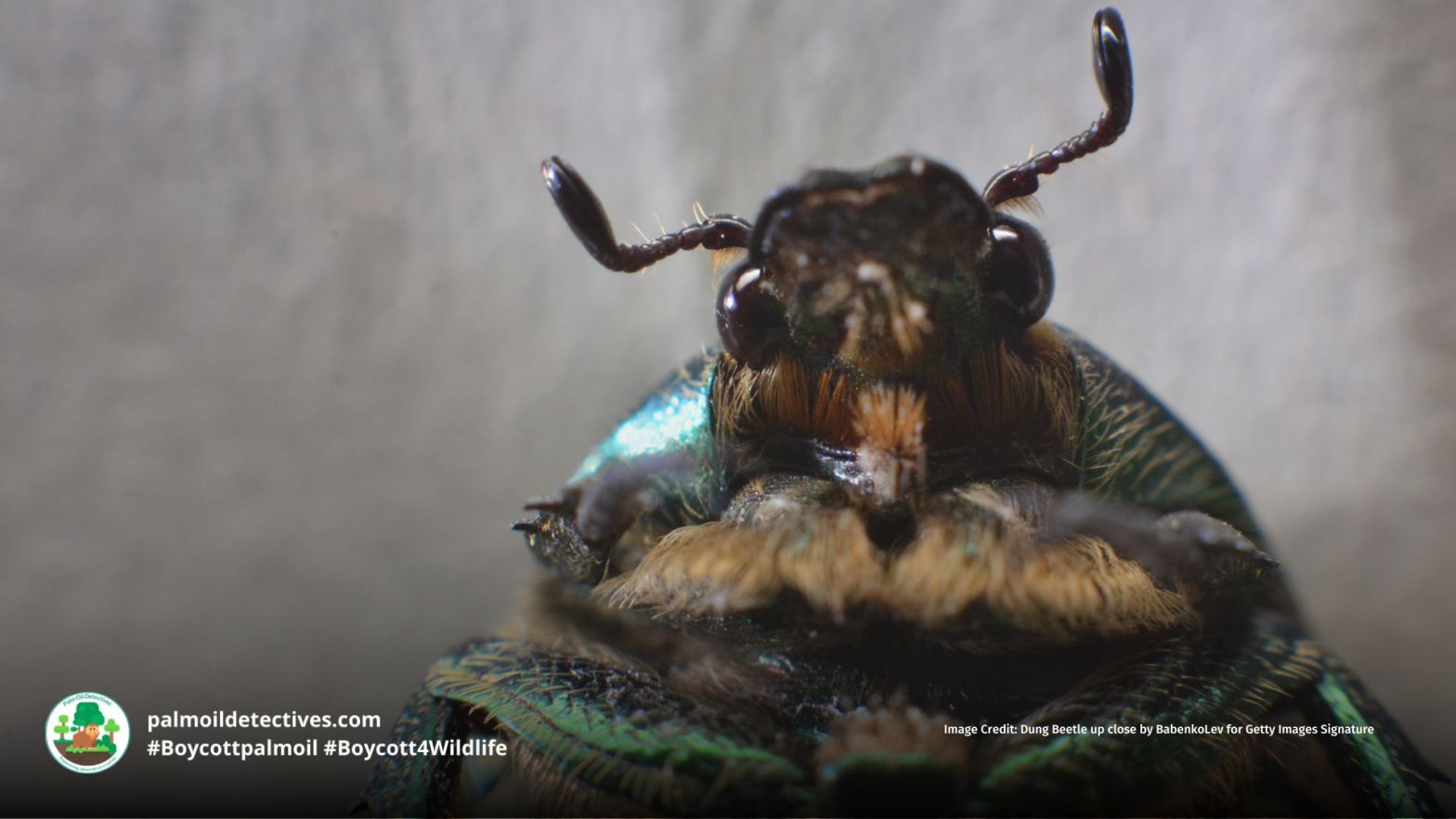
The dung beetle may eat and nest in poop, but their role in nature is anything but humble. These hardshelled scarabs live on every continent except Antarctica, recycling feces and suppressing parasites that could otherwise harm people and animals. Dung beetles also spread both seeds and nutrients into the soil, helping to maintain a healthy ecosystem. Help them and #Boycottpalmoil #BoycottGold and #Boycott4Wildlife
Research: Climate Change Collapsing Insect Numbers by 63%
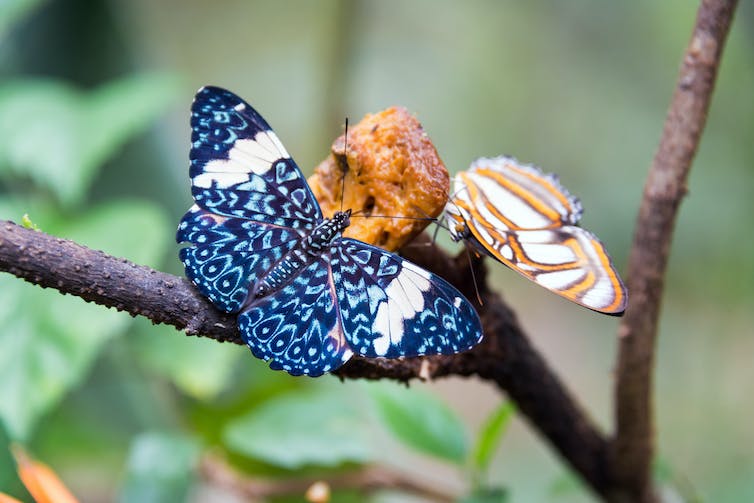
The world may be facing a devastating “hidden” collapse in insect species due to the twin threats of climate change and habitat loss. #Palmoil 🪔 #soy #meat 🥩 and #cocoa 🍫 #agriculture along with #climatechange and #habitatloss in rainforests is driving #insects to the edge of #extinction. Take action by going #vegan and #Boycottpalmoil #Boycott4WildlifeContinue reading “Research: Climate Change Collapsing Insect Numbers by 63%”
Visayan Broadbill Sarcophanops samarensis
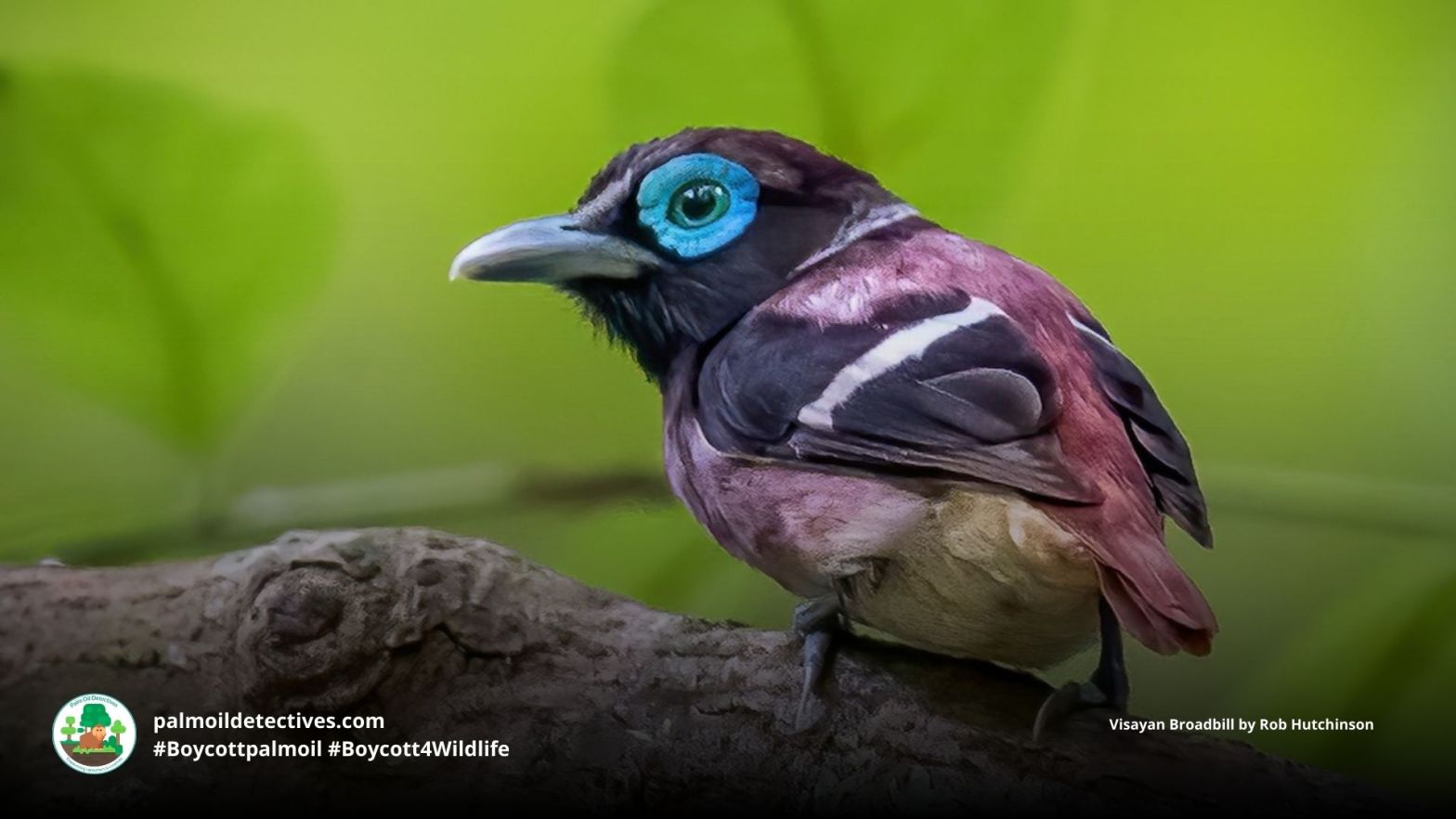
The Visayan broadbill Sarcophanops samarensis is a brightly colored bird endemic to the islands of Samar, Leyte, and Bohol in the central Philippines. Males flaunt striking reddish-pink underparts, while females are marked by a distinctive white belly and collar. Sadly, due to extensive deforestation and habitat loss for palm oil and other commodities in the Philippines, the Visayan broadbill is now classified as “Vulnerable” on the IUCN Red List. There is only an estimated population of 2,500 to 9,999 mature individuals left alive! Therefore urgent conservation measures are needed to protect this unique bird’s lowland forest habitat. Advocate for stricter protections, push back against illegal logging for palm oil #BoycottPalmOil #Boycott4Wildlife to make a difference.
Research: Wild cat carnivores in Borneo may adjust their schedules to avoid each other
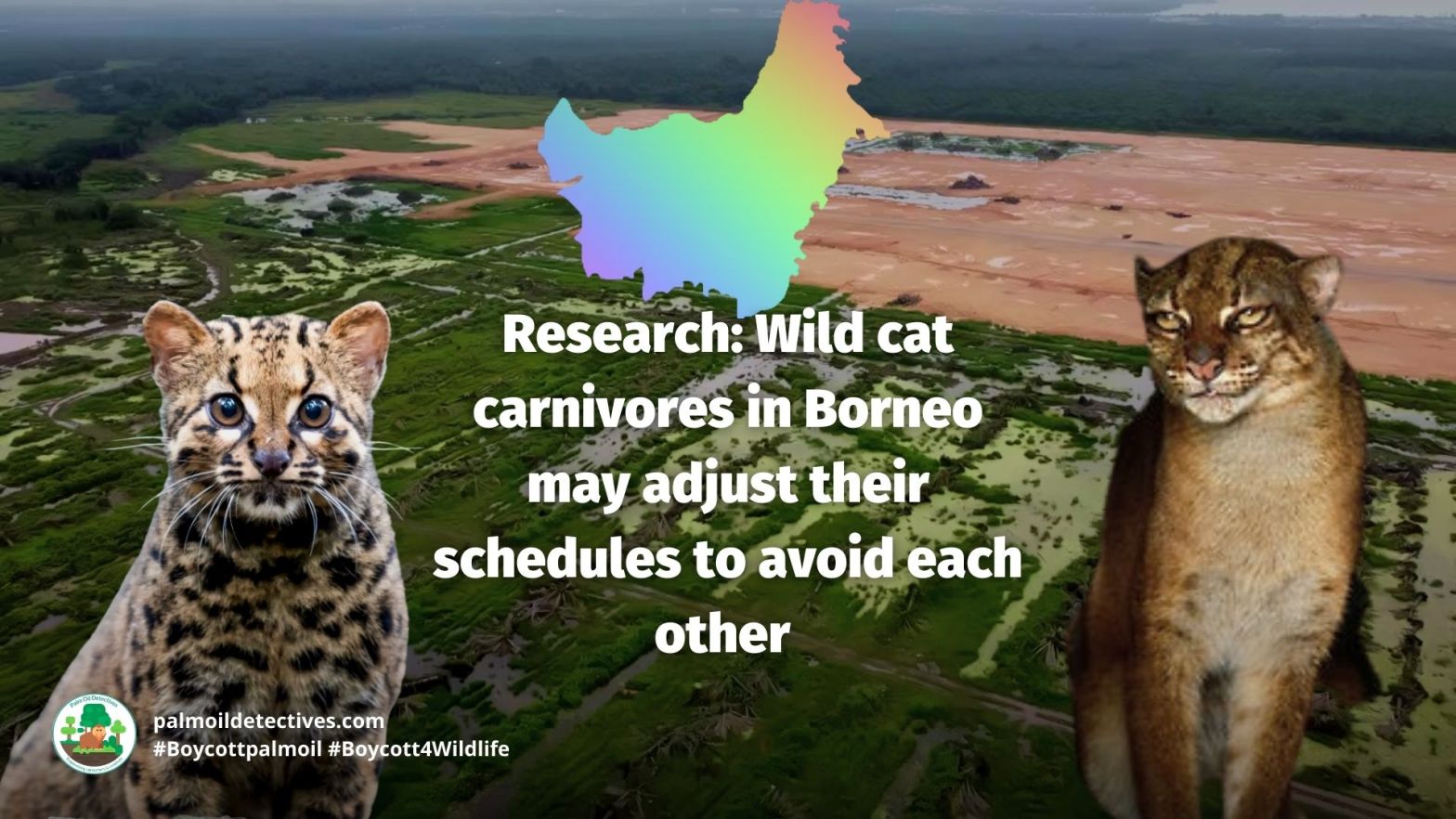
Study by Hiroshima University finds that due to increased human pressures from hunting, palm oil and other deforestation, wild cats and other carnivores in Indonesia and Malaysia may go out of their way to avoid other species – they negotiate space and resources for survival.
August 19th is #WorldOrangutanDay
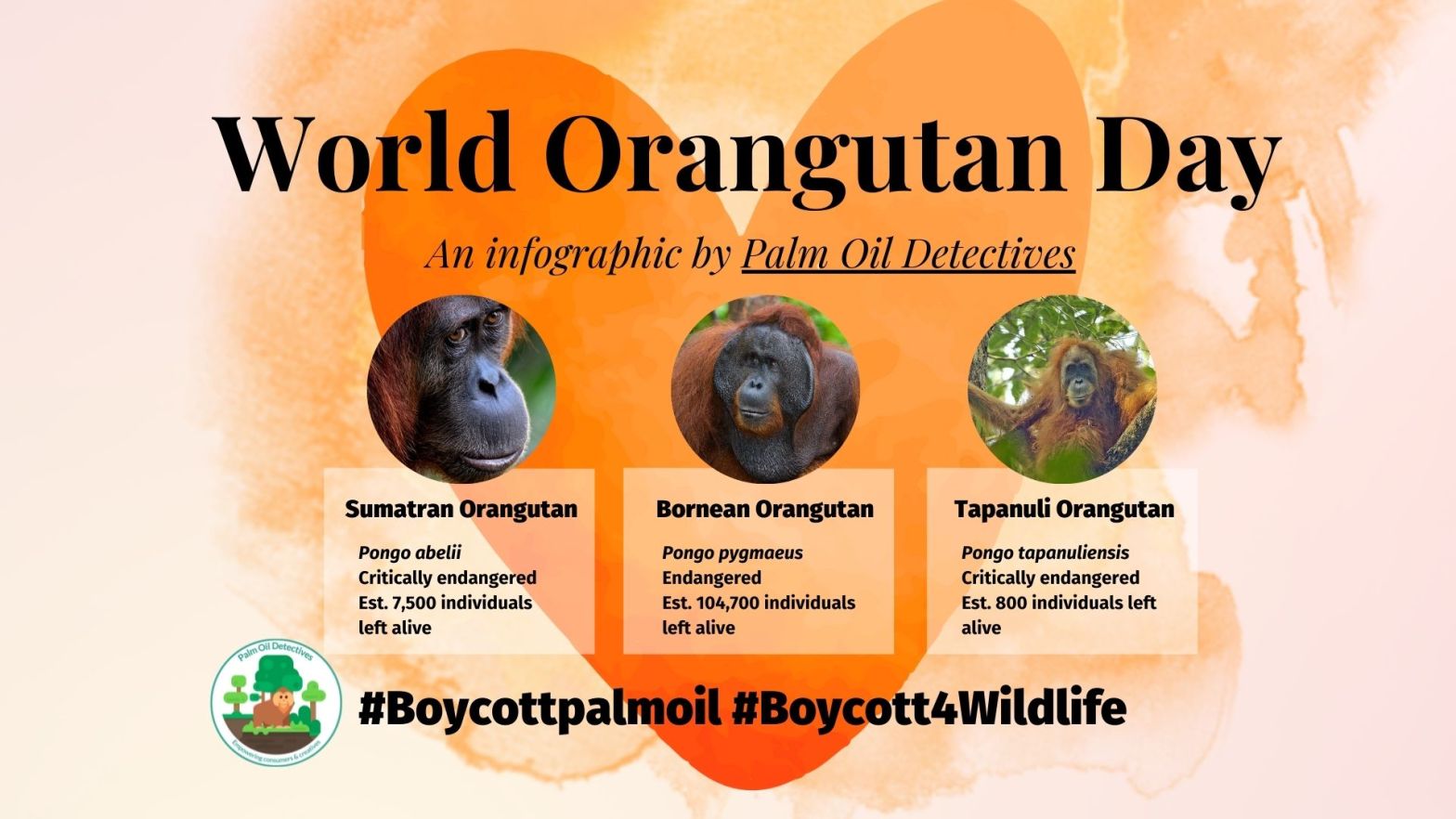
Although #WorldOrangutanDay falls on the 19th of August, every day deserves to be World Orangutan Day! So here is an infographic that you can download, print and share however you please. All three species of orangutan are classified as ‘endangered’ or ‘critically endangered’ in S.E. Asia. Their main threat is palm oil deforestation in Indonesia and Malaysia Help them and fight for their survival every time you shop! #BoycottPalmOil #Boycott4Wildlife
Bird species are facing extinction hundreds of times faster than previously thought
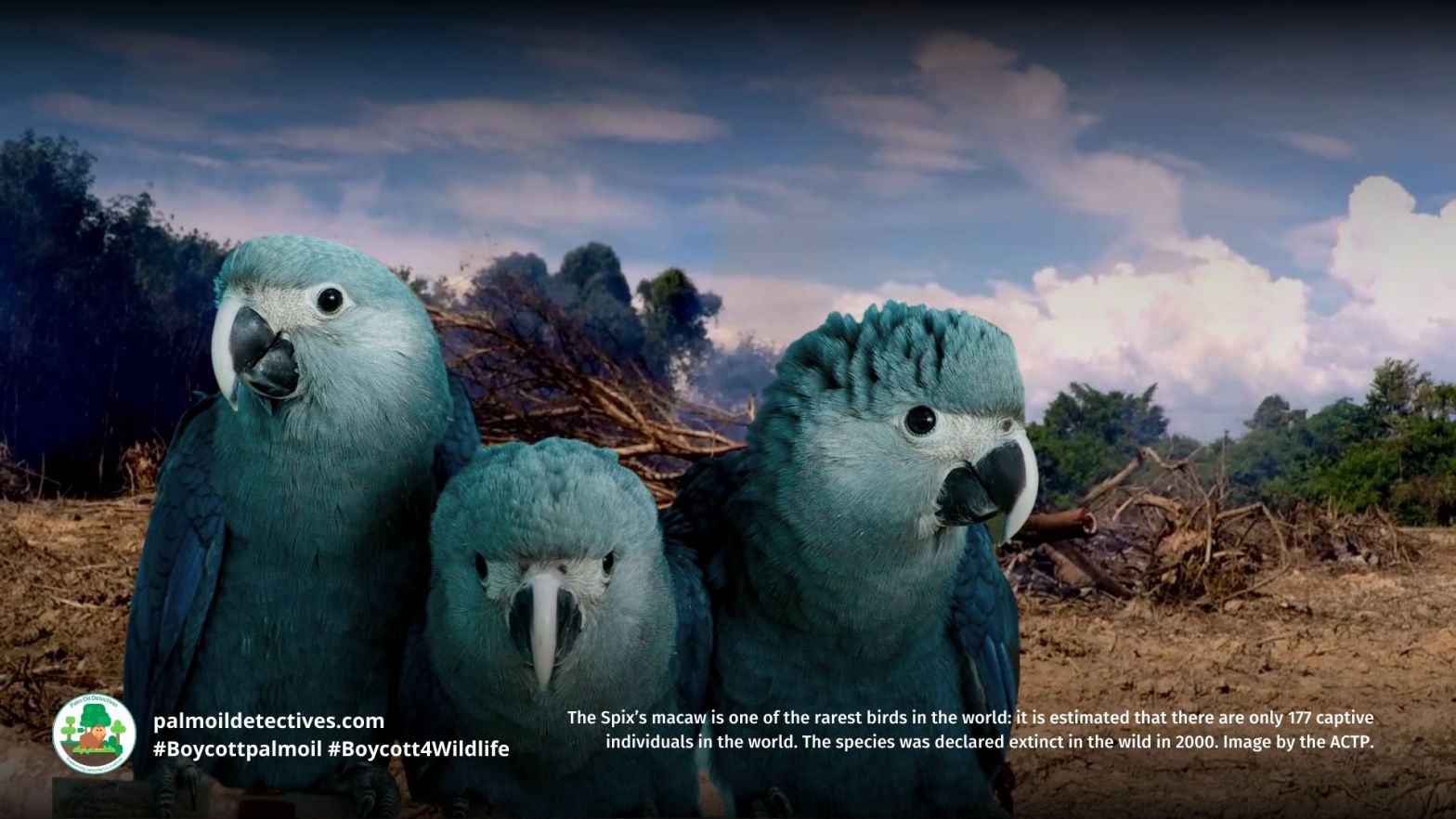
Extinction, or the disappearance of an entire species, is commonplace. Yet evidence suggests that the number of bird species going extinct, and the rate at which they are disappearing, is increasing dramatically. Conserving species at the 11th hour is difficult and expensive, the key is definitely prevention. To go hard and go early and stop species disappearing. Help rainforest animals on the verge of extinction from deforestation by changing your shopping habits. #Boycottmeat #Boycottpalmoil #Boycott4Wildlife
Amphibians Glow in Ways People Can’t See
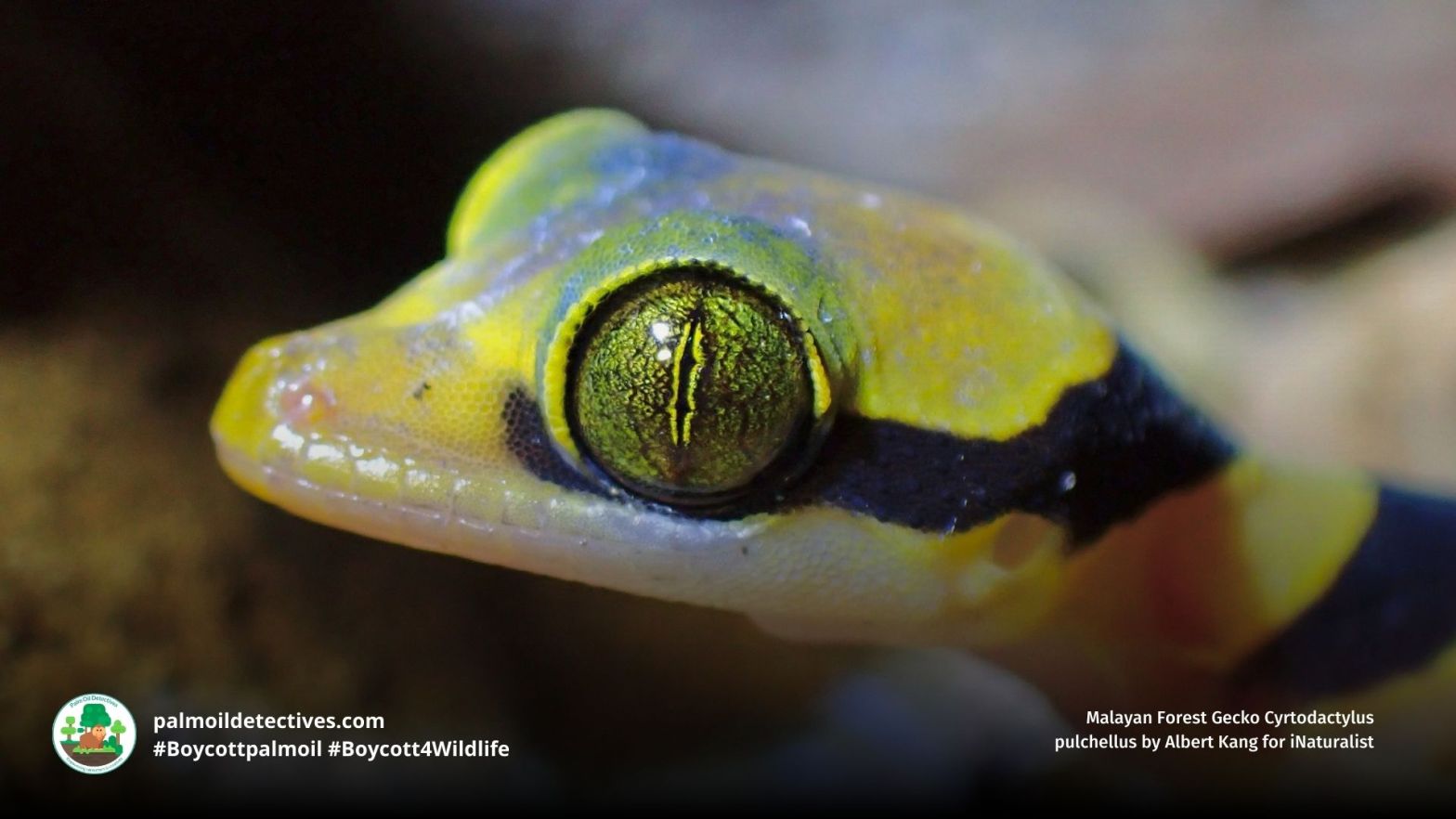
Many animals have a colourful, yet largely hidden, trait. Marine creatures like #fish and corals can glow blue, green or red under certain types of light. So can land animals like penguins and #parrots. But until now, experts knew of only one salamander and a few #frogs that could glow. No longer. Among #amphibians, this ability to glow now appears fairly common — even if you can’t see it. Research has found that most amphibians glow as well – even if it’s not visible to human eyes. Protect amphibians and reptiles every time you shop and #Boycottpalmoil #Boycott4Wildlife
Magnificent Bird of Paradise Cicinnurus magnificus
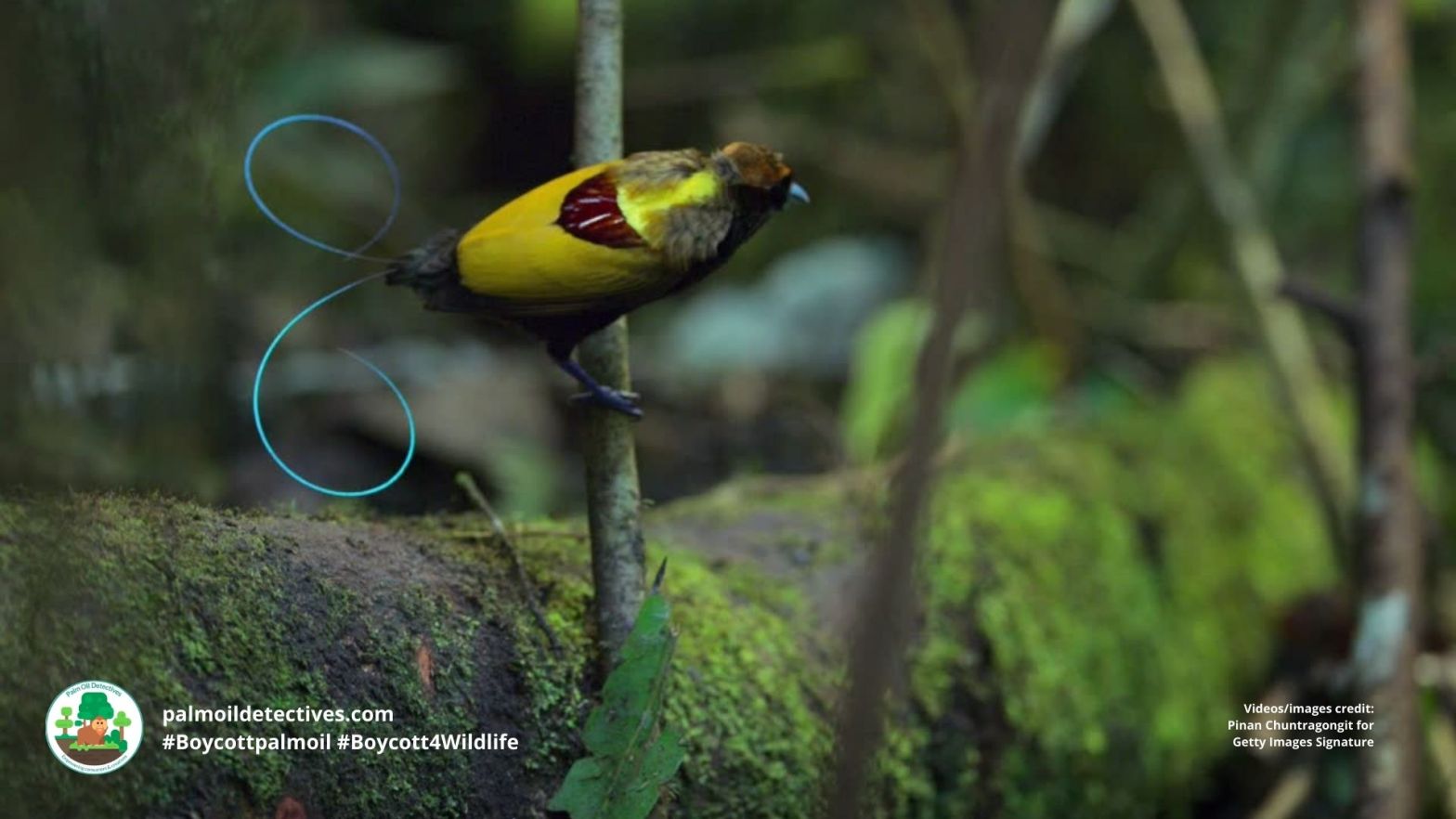
Meet the Magnificent Bird-of-Paradise, a dazzling, theatrical bird from New Guinea’s forests. Their vibrant courtship dances must be protected from palm oil!
Strange Species Could Vanish Before Discovery

Scientists have described around 1.5 million species on Earth – but how many are still out there to be discovered? This is one of the most heated debates in biology. Discounting microbes, plausible estimates range from about half a million to more than 50 million species of unknown animals, plants and fungi.
Our present knowledge is just scratching the surface. Evolution has had billions of years to create biologically active compounds that can combat human diseases, generate genetic diversity that could save our food crops from disastrous pathogens, and spawn ecological innovations that can inspire marvellous new inventions. Help the rarest and most cryptic animals, plants and fungi to survive when you #BoycottPalmOil adopt a #vegan lifestyle and #Boycott4Wildlife
Sulawesi Babirusa Babyrousa celebensis
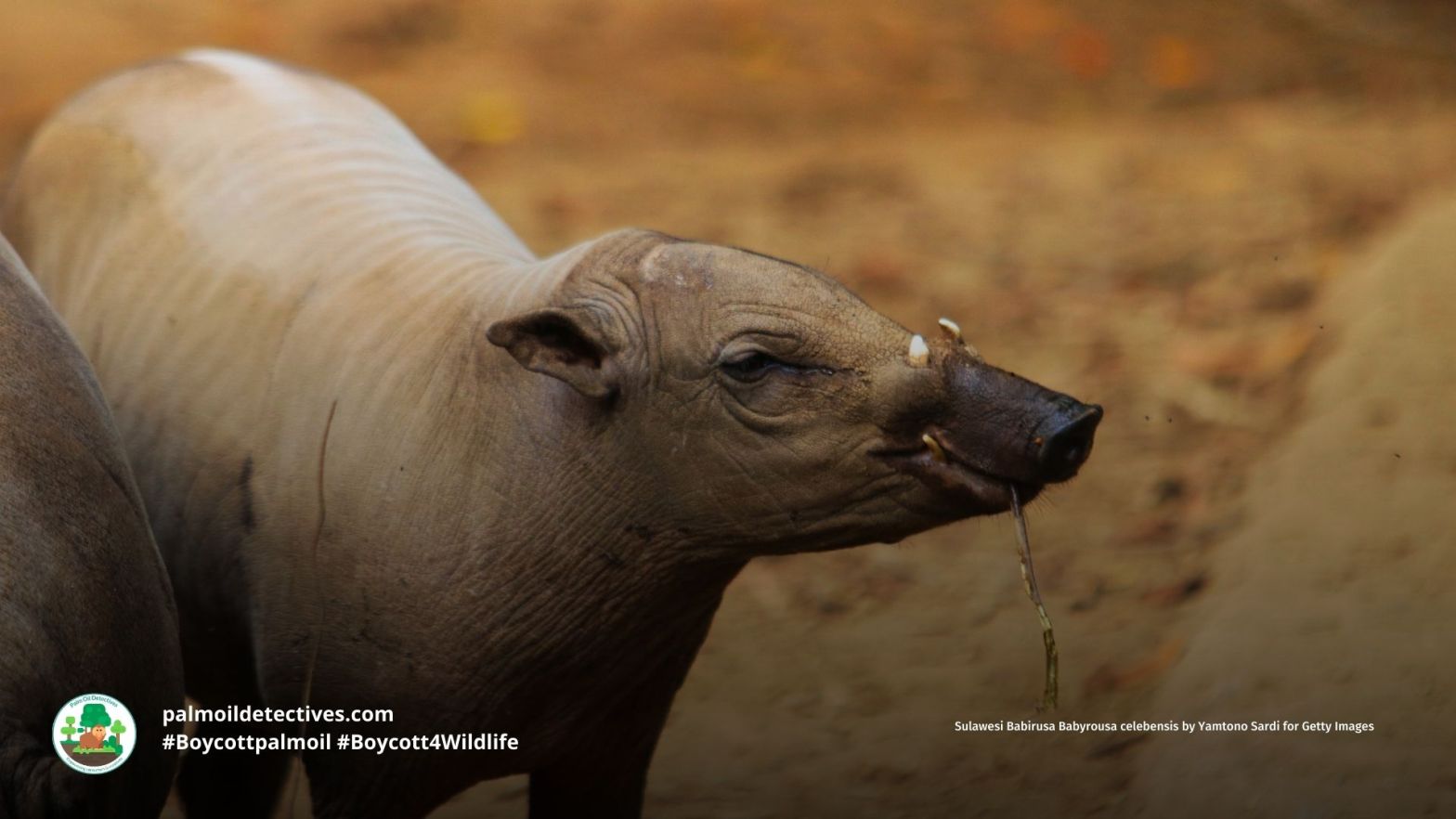
The Sulawesi Babirusa also known as the North Sulawesi Babirusa are wild pigs are found on Sulawesi Island along with nearby islands Lembeh, Buton, and Muna in #Indonesia.
They have a mottled grey-and-brown skin that helps them blend into their forested habitat. One remarkable feature of babirusas is their large tusks. They have two pairs of elongated canine teeth that curve upward and backward towards their heads.
For males, their upper canines grow so long that they protrude through holes in the flesh on the top of their snouts. Sadly, these unique creatures are threatened by deforestation caused by the palm oil and timber industries along with hunting and mining. You can help by making conscious choices. Consider going vegan to support the movement against palm oil, and join the call to boycott palm oil and protect wildlife with the hashtags #Vegan, #Boycottpalmoil, and #Boycott4Wildlife. Together, we can make a difference for the Sulawesi Babirusa and their habitat.
Alta Floresta titi monkey Plecturocebus grovesi

The enchanting Groves Titi Monkey, also referred to as the Alta Floresta titi #monkey or Mato Grosso titi monkey went from being completely unknown to being one of the most critically endangered #primates in #SouthAmerica and the world. They made a remarkable entry into the spotlight only recently in 2016 when they were classified by scientists. They belong to the Eastern Amazonian clade of the red-bellied titi monkey (P. moloch) group and are known for their vividly coloured fur and rowdy rainforest vocalisations. They face multiple anthropogenic threats in #Brazil including hunting, #goldmining, #palmoil, #meat and #soy #deforestation and hydroelectric #dams. Help them to survive each time you shop, be #vegan and #Boycottpalmoil #Boycott4Wildlife
Bougainville Monkey-faced Bat Pteralopex anceps
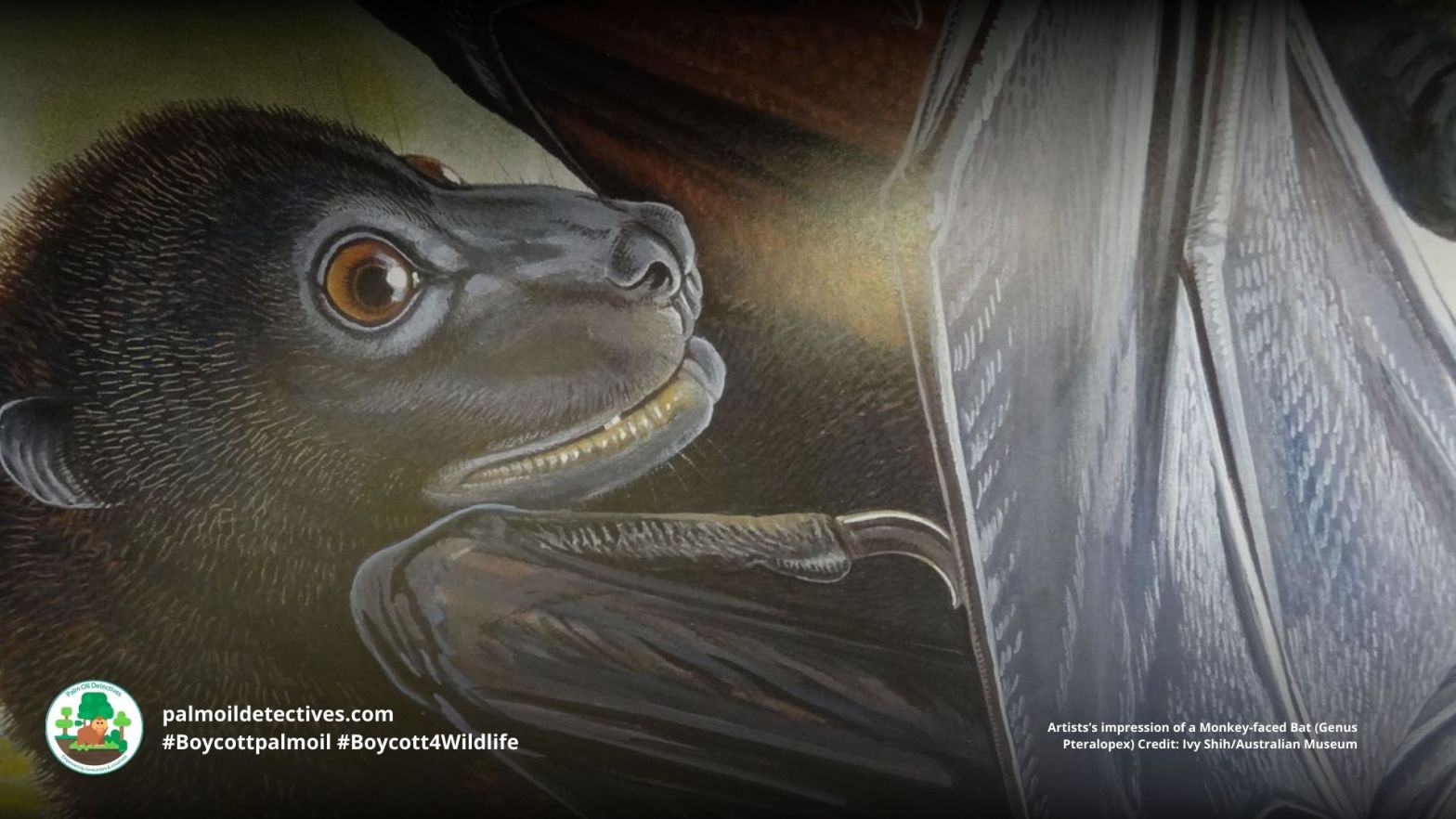
In the verdant, high-altitude forests of Bougainville Island, Papua New Guinea, and Choiseul Island, Solomon Islands, lives an intriguing creature—the Bougainville Monkey-faced bat or, as some call them, the Bougainville Flying Monkey. These bats are the titans of their family, boasting arm spans stretching impressively between 14.1 to 16 cm. They are endangered, mostly from palm oil and mining deforestation and hunting. Help them to survive every time you shop and #Boycottpalmoil #Boycott4Wildlife
Buy Palm Oil Free Chocolate This Easter

Palm oil is linked to death, ecocide, deforestation and destruction. So this Easter, make sure you look out for palm oil free brands and actively avoid dirty palm oil.
Jerdon’s Courser Rhinoptilus bitorquatus

The Jerdon’s Courser is a rare and captivating nocturnal #songbird belonging to the pratincole and courser family Glareolidae. These #birds are endemic to #India in the Eastern Ghats region of Andhra Pradesh. Currently they are only known to live in the Sri Lankamalleswara Wildlife Sanctuary, where they reside in sparse scrub forest with patches of bare ground and are threatened by #palmoil #deforestation, help them to survive and #Boycottpalmoil #Boycott4Wildlife
Air Pollution from Palm Oil: A Human Rights Issue

Forest-fire haze from Indonesian palm oil deforestation is a crisis! Learn how toxic air pollution is a human rights issue affecting all of Southeast Asia
Colombian Red Howler Monkey Alouatta seniculus
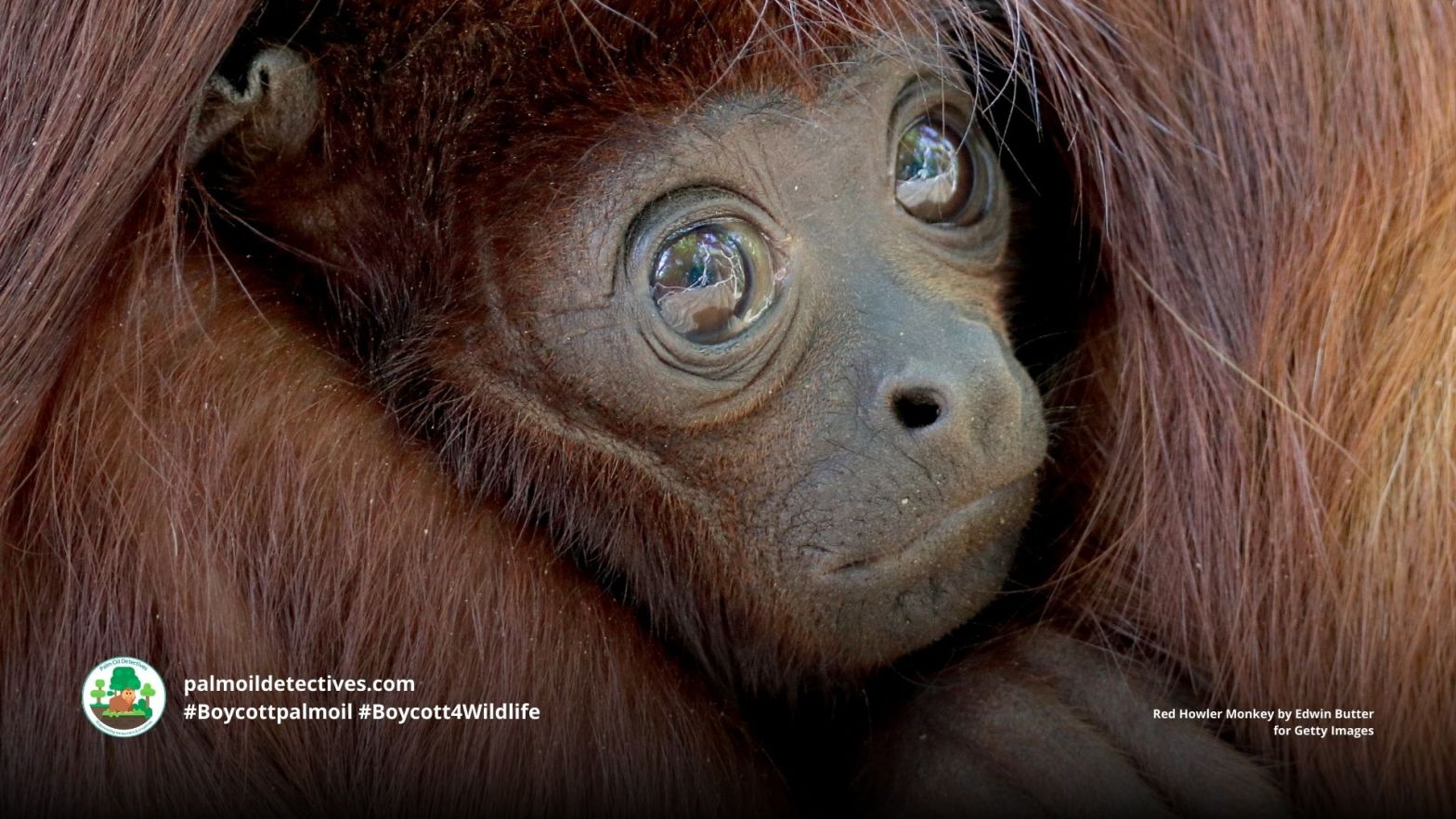
Red howlers are the largest of the howler monkey species. They have dense and vividly coloured fur that ranges from brown to dark red, with gold or bright orange undersides – the colour can vary based on their age and habitat. Their bare, dark faces contrast with the surrounding fur. They have stunning and characterful faces with stubby noses, wide jaws, and thick beards. These beautiful #monkeys face multiple threats including palm oil, soy and meat deforestation, the construction of #hydroelectric dams, #hunting and human persecution. Help them to survive each time you shop, #BoycottGold #Boycottpalmoil #Boycott4Wildlife
Sulu Hornbill Anthracoceros montani
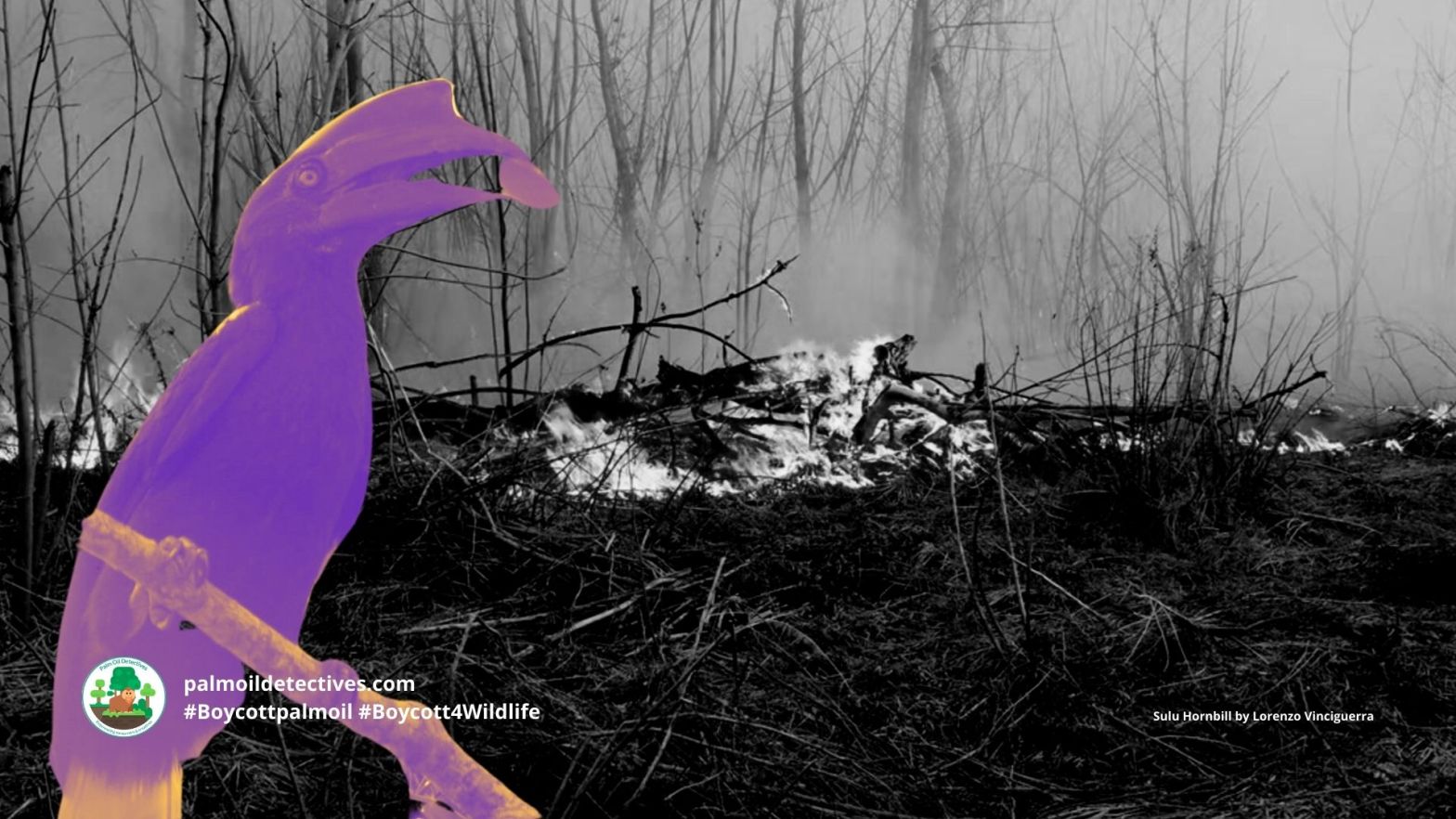
The Sulu Hornbill is one of the rarest birds in the world. They are large and almost entirely black except for a white tail, with a thick black bill, a black casque, and black skin around the eye. Males have pale eyes, females have brown eyes and a smaller casque. These striking birds are native to the Sulu Islands, possibly now only found on Tawi-Tawi due to hunting and palm oil deforestation throughout their range. In 2018 there was only a few dozen left. Help their survival and #Boycottpalmoil #Boycott4Wildlife
UK Pressuring Forests For Palm Oil and Beef
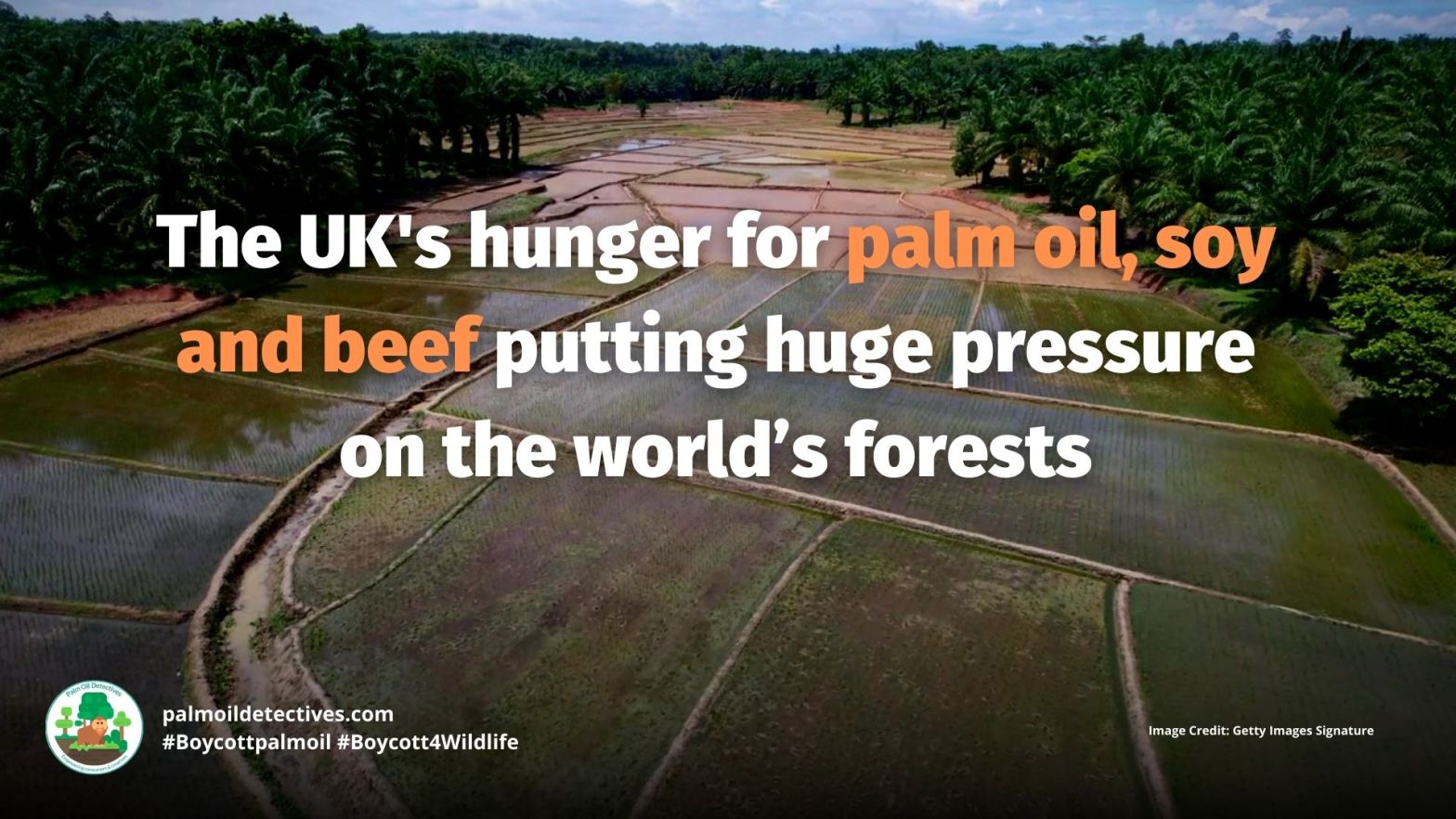
Urgent call to action! 🌍 #UK’s heavy use of #palmoil #soy & #beef fuels global #deforestation. Demand stricter regulations & transparency. Make every purchase count and #Boycottmeat #BoycottPalmOil #Boycott4Wildlife, learn more: https://wp.me/pcFhgU-78V
 Palm Oil Detectives