
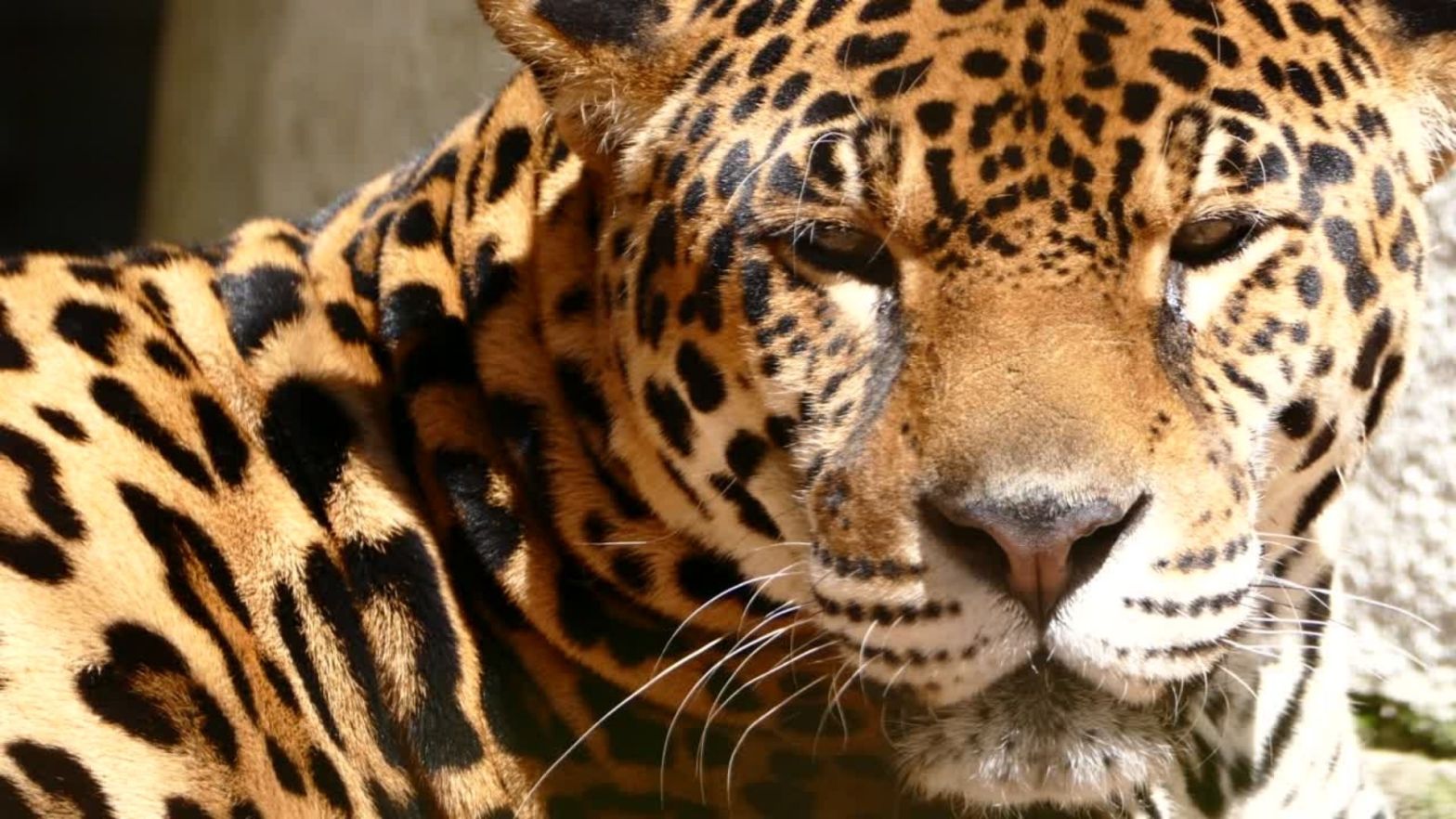
Global Witness report finds JBS, the world’s largest meat company, is directly linked to deforestation in the Amazon and Pantanal putting jaguars at risk
Tag Archives: meat and soy deforestation in Brazil
Finance giants fuel $8.9 trillion deforestation economy
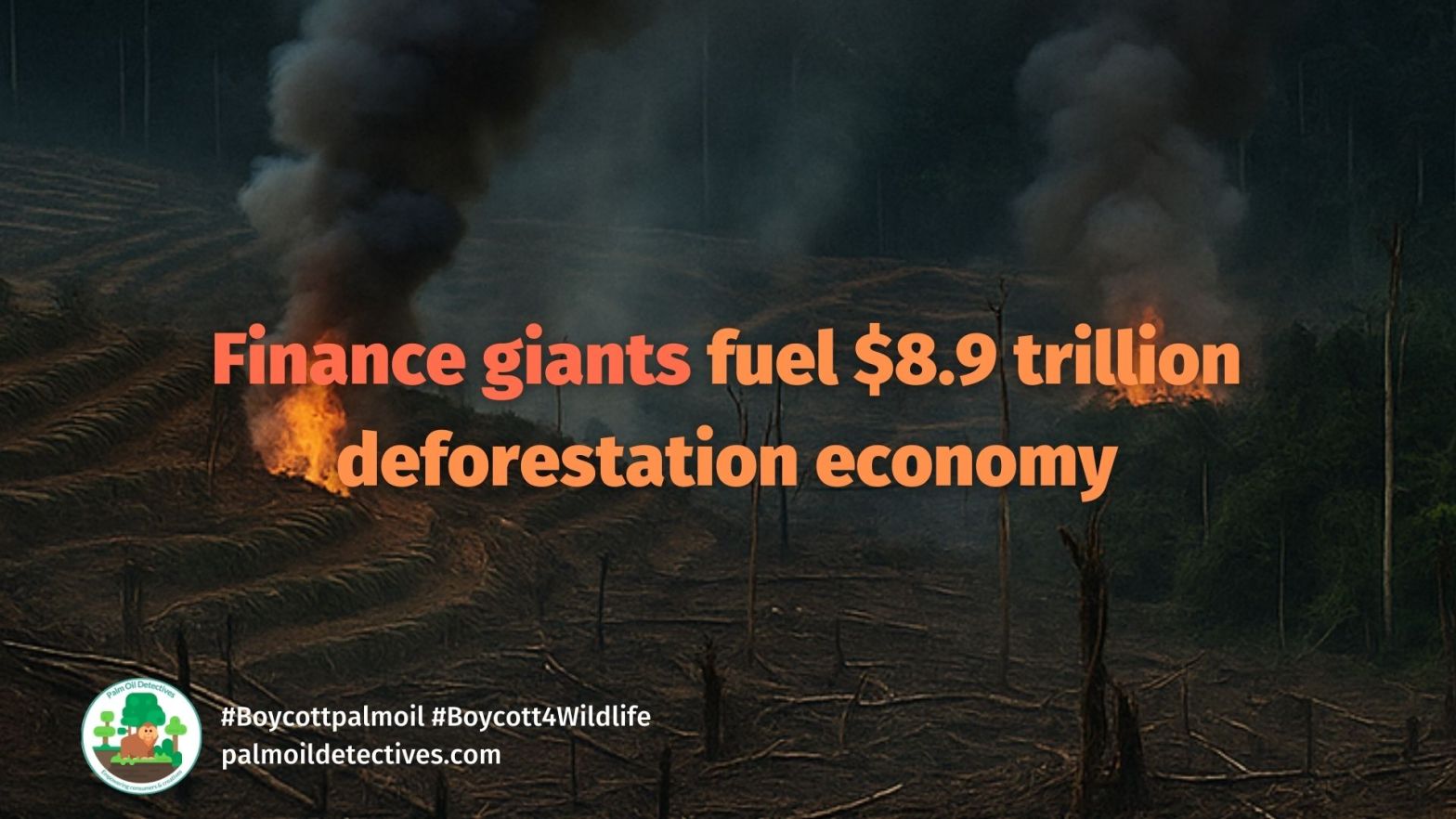
Forest 500 report shows 150 of the world’s largest financial institutions invested nearly $9 trillion in deforestation-linked industries. Support EUDR!
Declining primate numbers are threatening Brazil’s Atlantic forest
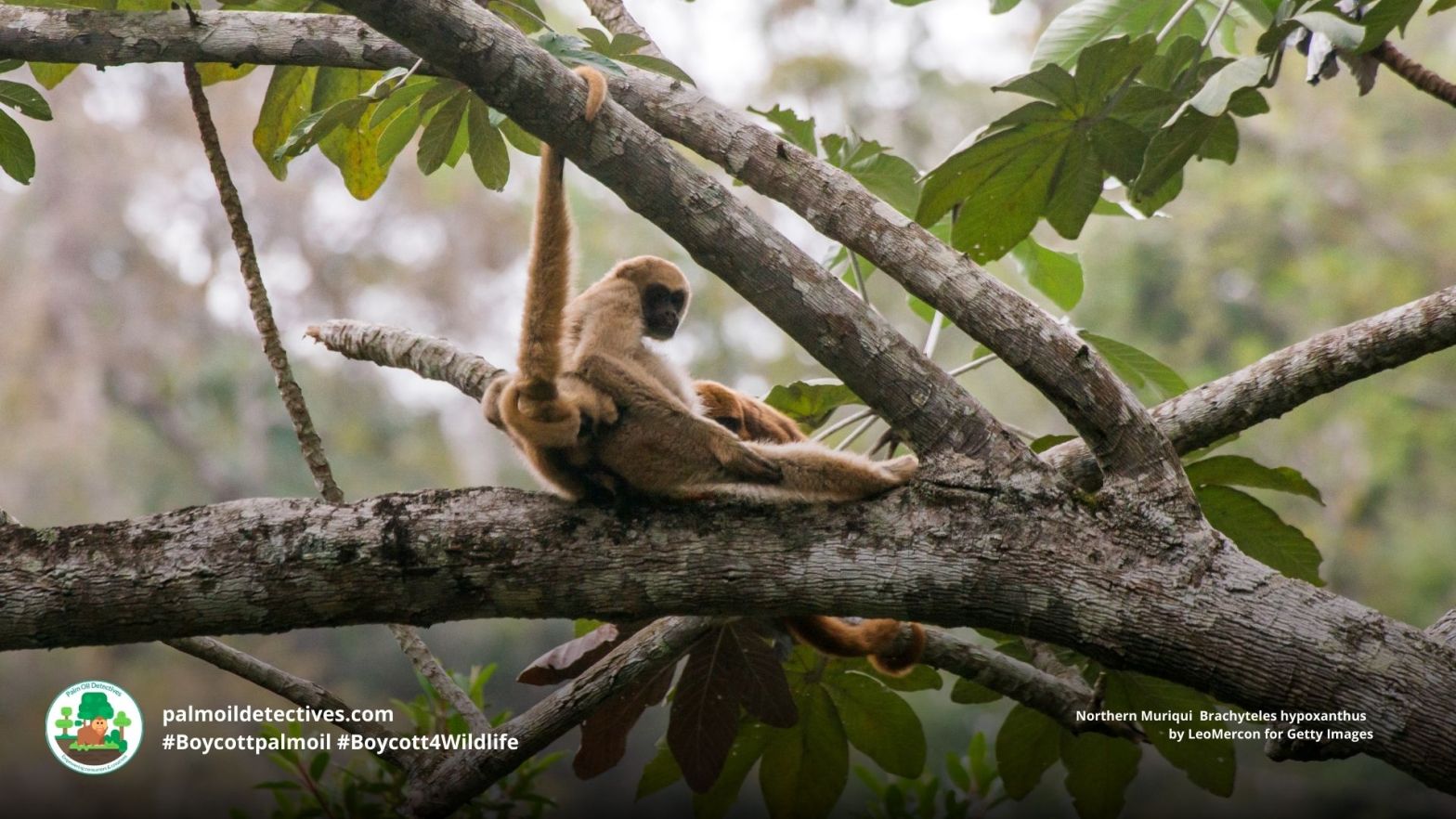
#Brazil’s Atlantic Forest, one of the most biodiverse ecosystems in the world, is facing severe threats due to deforestation and habitat fragmentation. This has led to a sharp decline in primate species, including the critically endangered southern and northern muriqui. The loss of these #primates, essential for seed dispersers in the Atlantic forest, is further destabilising the forest ecosystem. As human-driven deforestation escalates, the #extinction debt continues to rise, endangering both wildlife and the forest itself. You can take action to help their survival. Be #vegan for the animals and forests and #BoycottPalmOil #BoycottGold #Boycott4Wildlife.
Blonde Capuchin Sapajus flavius

Only rediscovered in 2006, Blonde Capuchins are highly intelligent critically endangered primates of Brazil threatened by palm oil and meat deforestation
Corporate Control of Food Harms Us All
Around 800 million people in our world go hungry each day. Yet around the globe we have enough food to go around. So why the discrepancy? Market concentration and corporate monopoly of our global food system means that corporate giants control everything from access to seeds, access to land, #workersrights, #greenwashing and wages. Mergers and acquisitions take place at all stages of the global food system – from seeds and fertilisers to machinery and manufacturing. This is what contributes to bad health outcomes and food inequality. Learn how you can boycott big brands causing the corporate crush and other solutions. #Boycott4Wildlife
Brazilian three-banded armadillo Tolypeutes tricinctus

The Brazilian three-banded #armadillo Tolypeutes tricinctus, known as “tatu-bola” in Portuguese, is a rare and unique species native to #Brazil. With the ability to roll into a near-impenetrable ball, this endearing behaviour has made them an icon of conservation efforts. They are found in the dry forests and savannahs of Brazil, particularly in the #Cerrado and Caatinga biomes. These fascinating armoured creatures are Vulnerable on the IUCN Red List due to agricultural expansion for #palmoil, #soy and #meat. Fragmentation of their ecosystem is ongoing for infrastructure projects and #goldmining. With their population in sharp decline, efforts to protect their habitats are essential for their survival. Help them every time you shop and adopt a #vegan diet, and #BoycottPalmOil #BoycottGold #Boycott4Wildlife on social media!
Orange-breasted Falcon Falco deiroleucus

Help protect the Orange-breasted Falcon, vibrant birds of prey facing significant threats from palm oil, gold mining, and soy deforestation, boycott palm oil!
Marsh Deer Blastocerus dichotomus
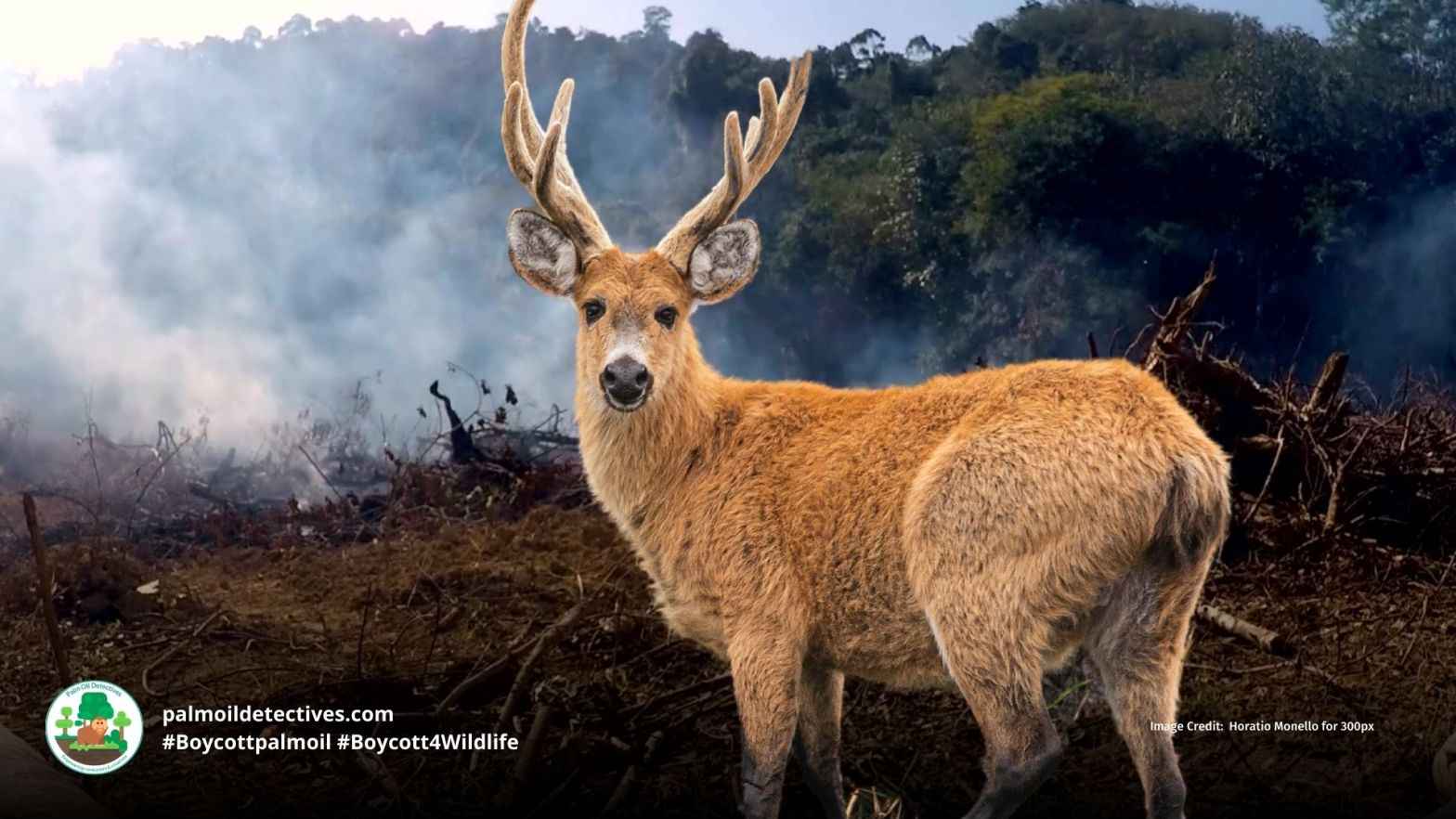
The Marsh deer are South America’s largest deer species, uniquely adapted to wetland life with their web-like hooves and preference for aquatic plants. They are prey animals for jaguars and pumas.
These majestic creatures, once widespread, are now confined to isolated pockets. Their main threat is habitat loss and fragmentation due to palm oil, soy and meat deforestation along with hydroelectric dams and gold mining.
Even as researchers strive to understand their complex and obscure social and mating behaviours, time is running out for these unique creatures. Use your wallet as a weapon and protect the Marsh deer #BoycottPalmOil #BoycottGold4Yanomami #Boycott4Wildlife.
Northern Muriqui Brachyteles hypoxanthus
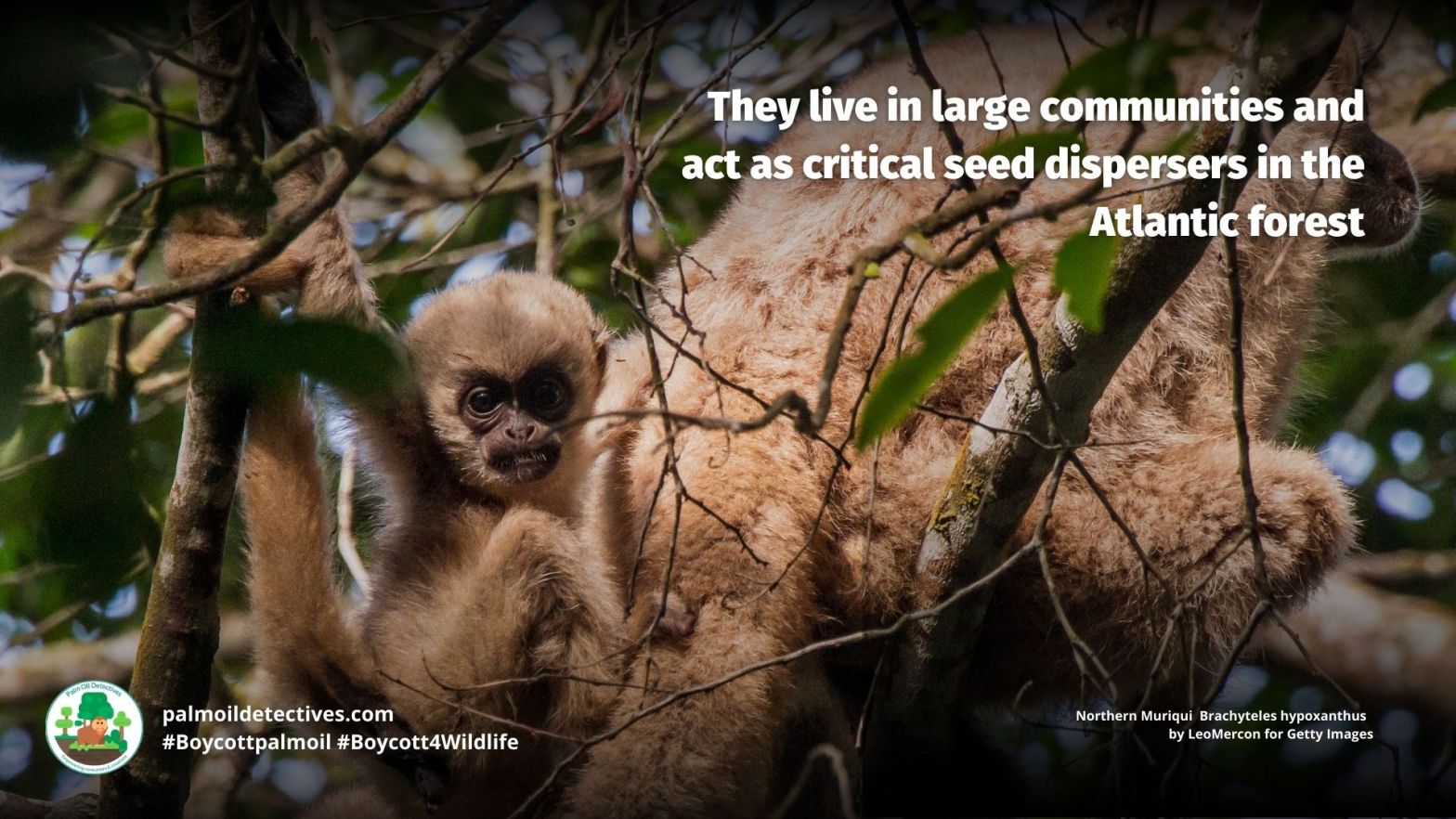
Northern Muriquis (AKA Woolly Spider Monkeys) have a striking light brown and golden fur and are known for their rattling vocalisations. They live in large communities and act as critical seed dispersers in the Atlantic forest. There are fewer than 800 individuals left alive and they are critically endangered. Their main threats are palm oil, meat and soy deforestation in Brazil, along with illegal hunting. Help them every time you shop and be #vegan, #Boycottpalmoil and #Boycott4Wildlife
Almost 90% of the world’s animal species will lose some habitat to agriculture by 2050
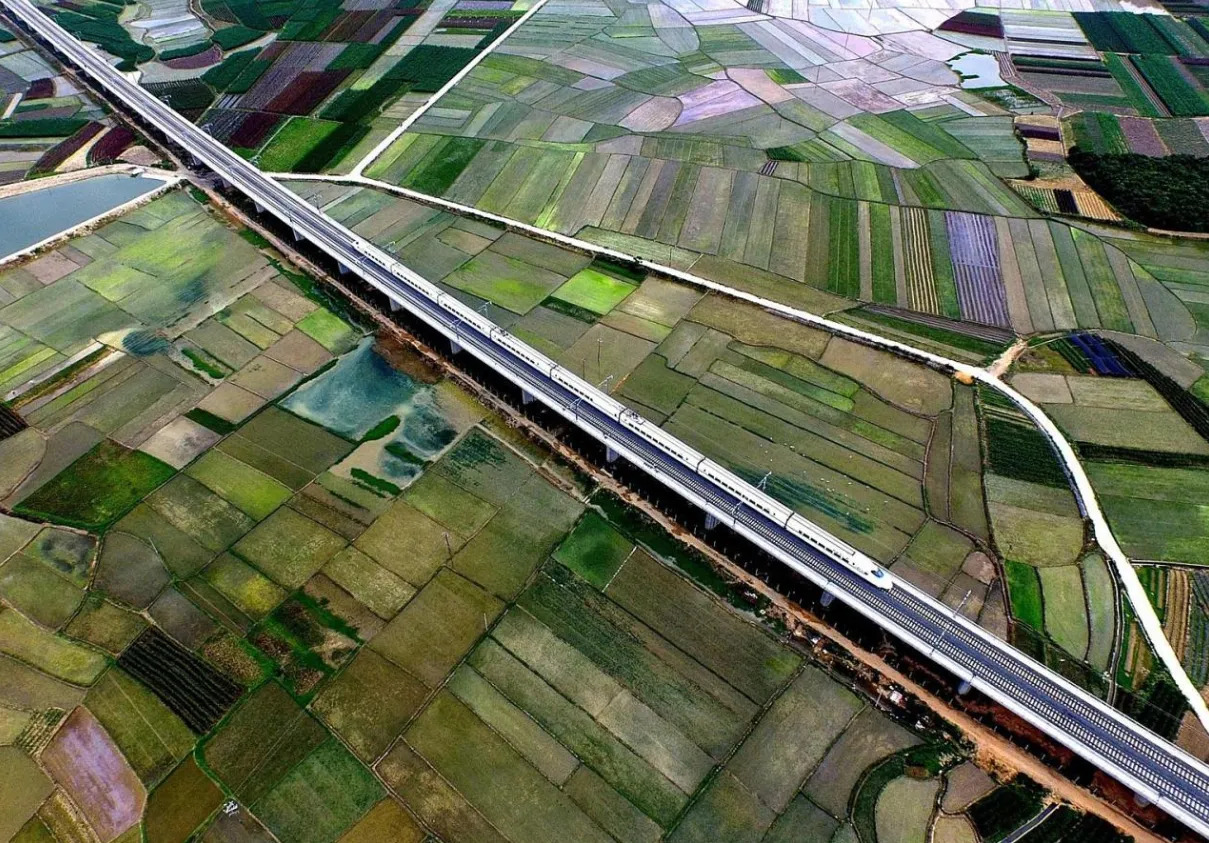
Scientists know that #biodiversity is declining across much of the world although less universally and dramatically than we feared. We also know that things are likely to get worse in the future, with a combination of #deforestation, #climatechange and overexploitation set to drive species and habitats ever closer to #extinction. Help them every time you shop and be #vegan #BoycottPalmOil #Boycott4Wildlife
Demand for meat is driving deforestation in Brazil – changing the soy industry could stop it
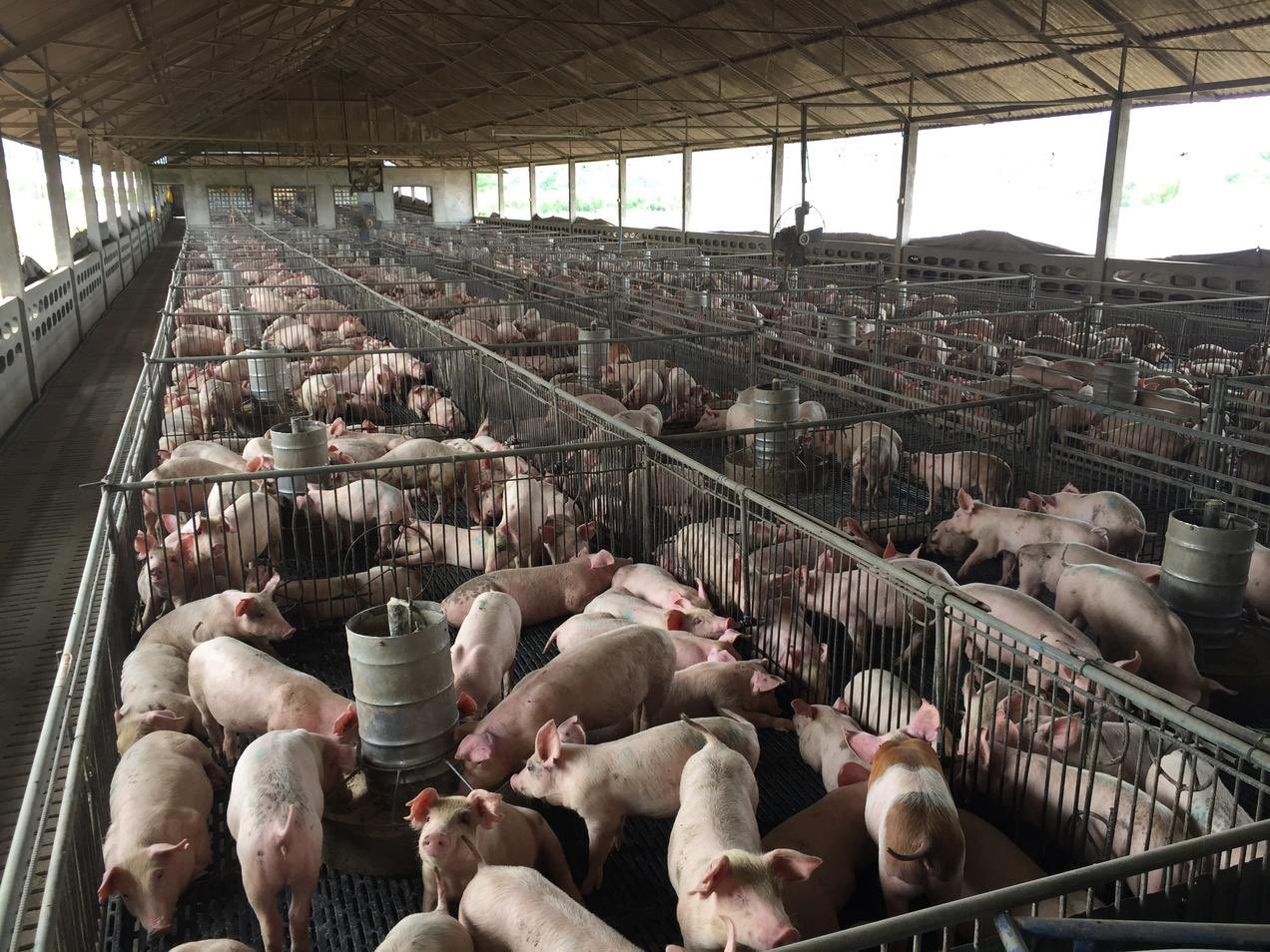
For many people, soy as a commodity has a pretty innocuous reputation thanks to its association with vegan food and meat alternatives. However don’t be fooled – crops of this pale legume are behind much of Brazil’s epidemic of deforestation. Much more #soy is fed to farm animals that people eat than is used in vegan food. Since 2000, #Brazil has doubled its total area of soy plantation to 36 million hectares and become the world’s largest producer. This expansion has erased vast swathes of forest and other habitats in some of the country’s most biodiverse regions. Soy, along with palm oil and meat deforestation are the biggest land-hungry commodities in South America and threaten the world’s largest rainforest biosphere. Help fight against this ecocide every time you shop, be #vegan #BoycottPalmOil #Boycott4Wildlife
Crested Capuchin Sapajus robustus
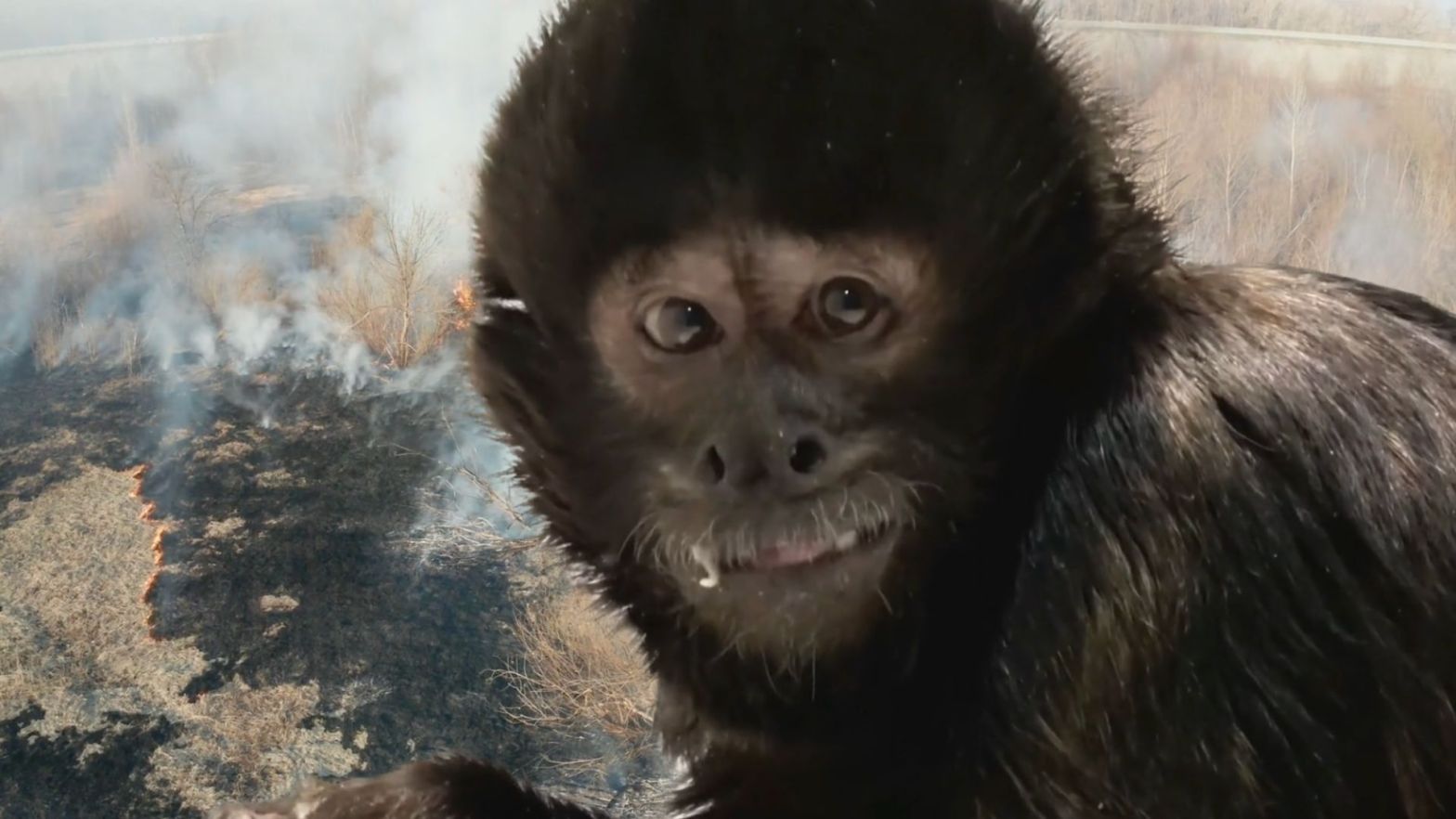
Crested Capuchins are one of Brazil’s most endangered primates. A few thousand remain, facing extinction due to palm oil, mining, soy. Take action for them!
Hoge’s Side-necked Turtle Mesoclemmys hogei
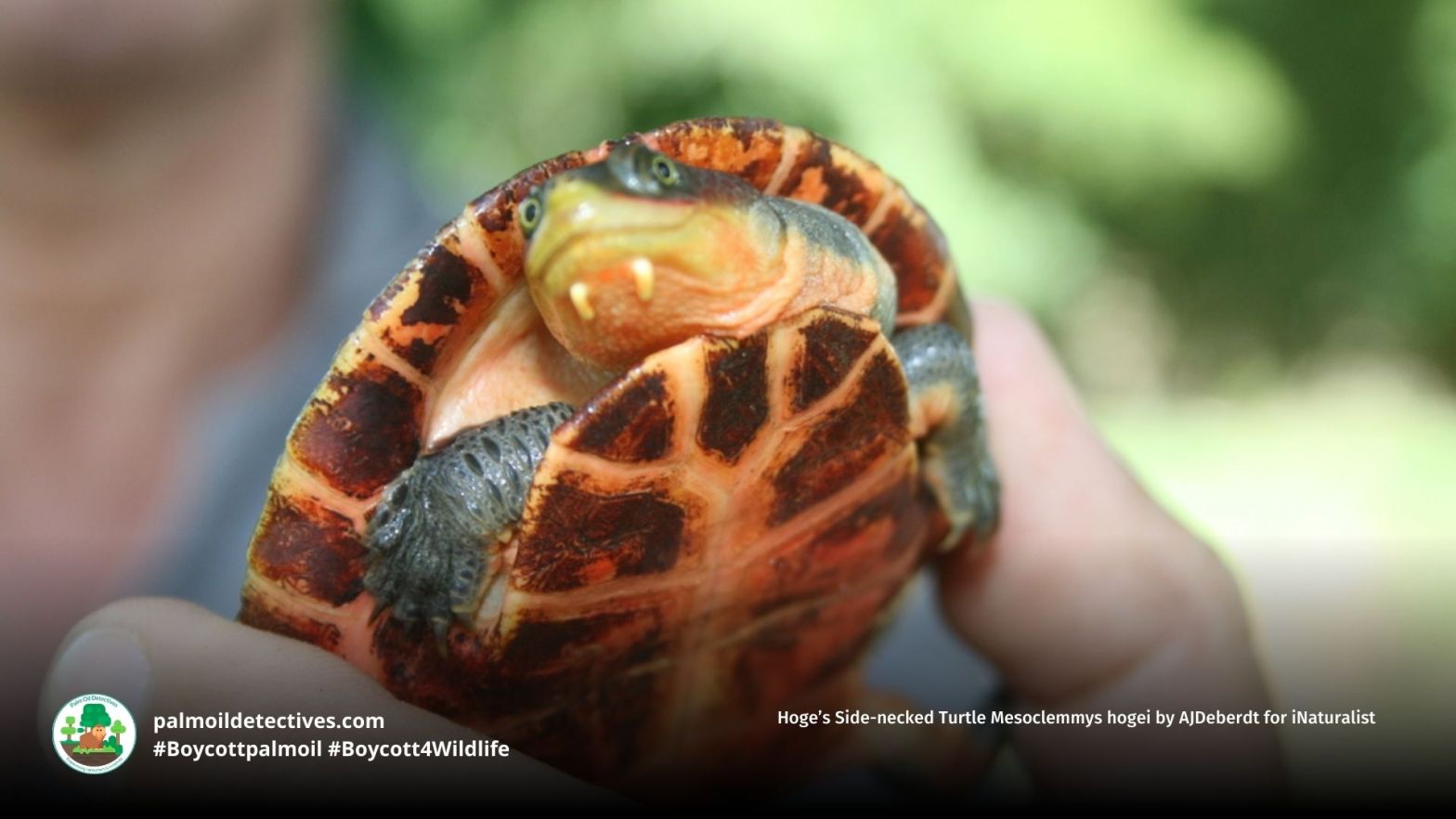
The Hoge’s Side-necked Turtle Ranacephala hogei—also known as Hoge’s Toadhead Turtle—is one of #Brazil’s rarest and most endangered reptiles. Having diverged from other turtles some 80 million years ago, they are evolutionary survivors now on the brink. With fewer than 2,000 individuals thought to remain, their populations have plummeted due to #palmoil #soy and #meat #deforestation, damming, water pollution, and incidental deaths in fisheries. Once feared lost from parts of their range, new research using citizen science and extensive fieldwork has rediscovered them in previously unknown areas, sparking renewed hope. But the threats remain. Help them every time you shop and #BoycottPalmOil #Boycott4Wildlife, be #Vegan and #BoycottMeat
How forest loss has changed biodiversity across the globe over the last 150 years
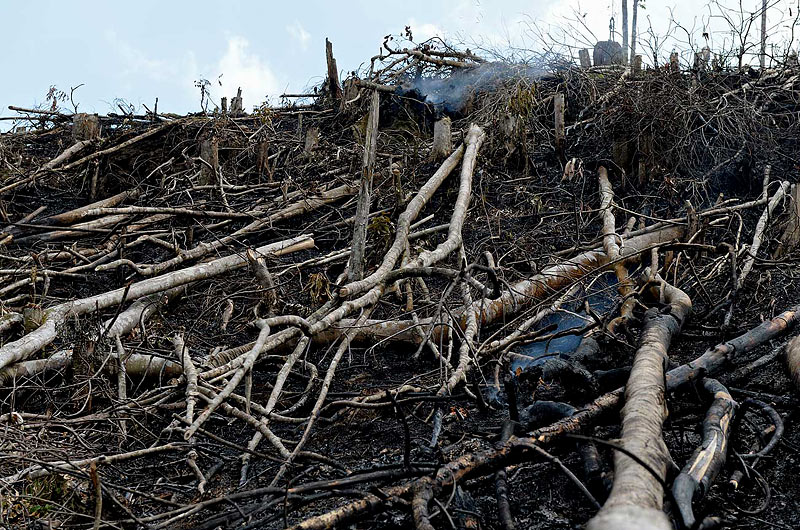
The Earth’s forests have been changing ever since the first tree took root. For 360 million years, trees have grown and been felled through a dynamic mix of hurricanes, #fires and natural regeneration. But with the dawn of the 17th century, humans began replacing large swathes of forest with farms and cities. The global pace of #deforestation has slowed in the 21st century, but #forests are still disappearing – albeit at different rates in different parts of the world. In the tropics, forest loss is accelerating in previously pristine wilderness. Help rainforests, wild animals and indigenous peoples to survive #BoycottPalmOil #Boycott4Wildlife
 Palm Oil Detectives