
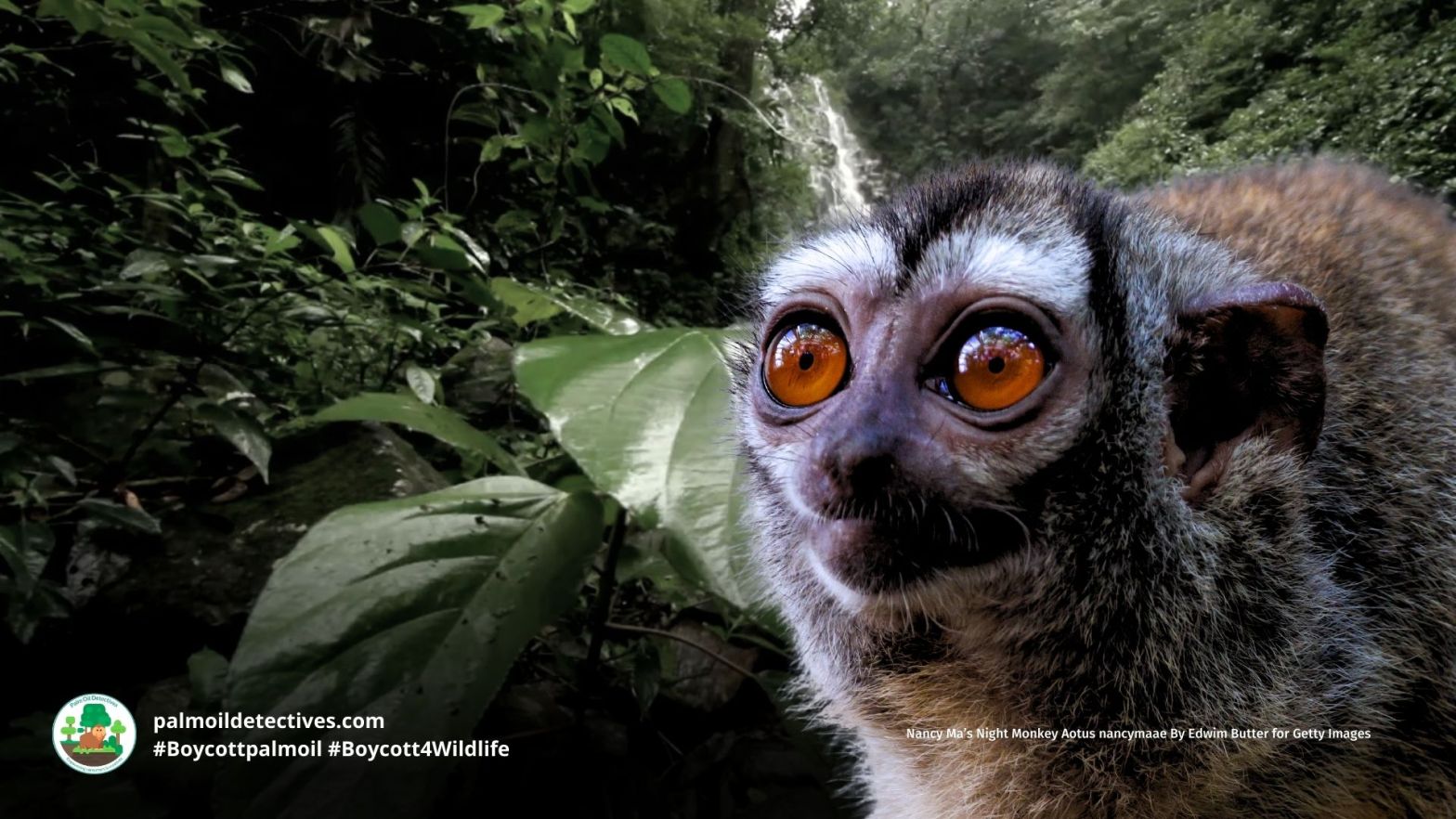
Deep in the heart of the Amazon rainforest, the Nancy Ma’s night monkeys peer out of the trees during the dusk with their large, soulful eyes and striking facial markings. Also known as the Ma’s night monkey or the Peruvian red-necked owl monkey, this nocturnal primate is named in honour of Dr. Nancy Shui-Fong Ma, who played a significant role in their genetic research. They are endemic to Brazil, Peru, and parts of Colombia, these monkeys are an essential part of their ecosystem. They now face direct threats from expansion for palm oil, soy and meat deforestation and are wild captured for scientific research – much of primate research is not even relevant to human health. Help them every time you shop and #BoycottPalmOil, be #vegan and #Boycott4Wildlife!
Tag Archives: Seed dispersers
Dung Beetles Are Rainforests’ Diligent Regrowth Soldiers
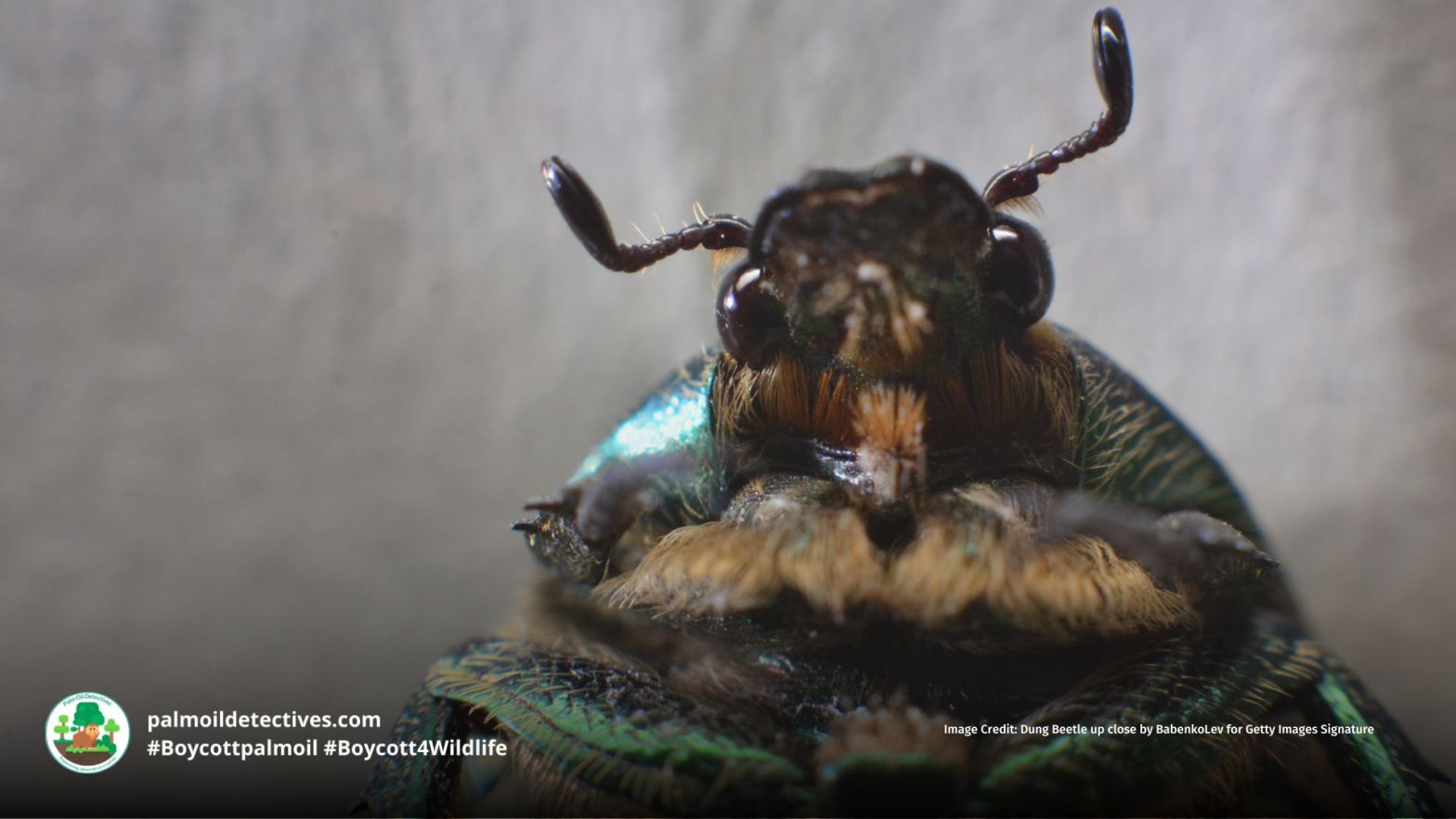
The dung beetle may eat and nest in poop, but their role in nature is anything but humble. These hardshelled scarabs live on every continent except Antarctica, recycling feces and suppressing parasites that could otherwise harm people and animals. Dung beetles also spread both seeds and nutrients into the soil, helping to maintain a healthy ecosystem. Help them and #Boycottpalmoil #BoycottGold and #Boycott4Wildlife
August 19th is #WorldOrangutanDay
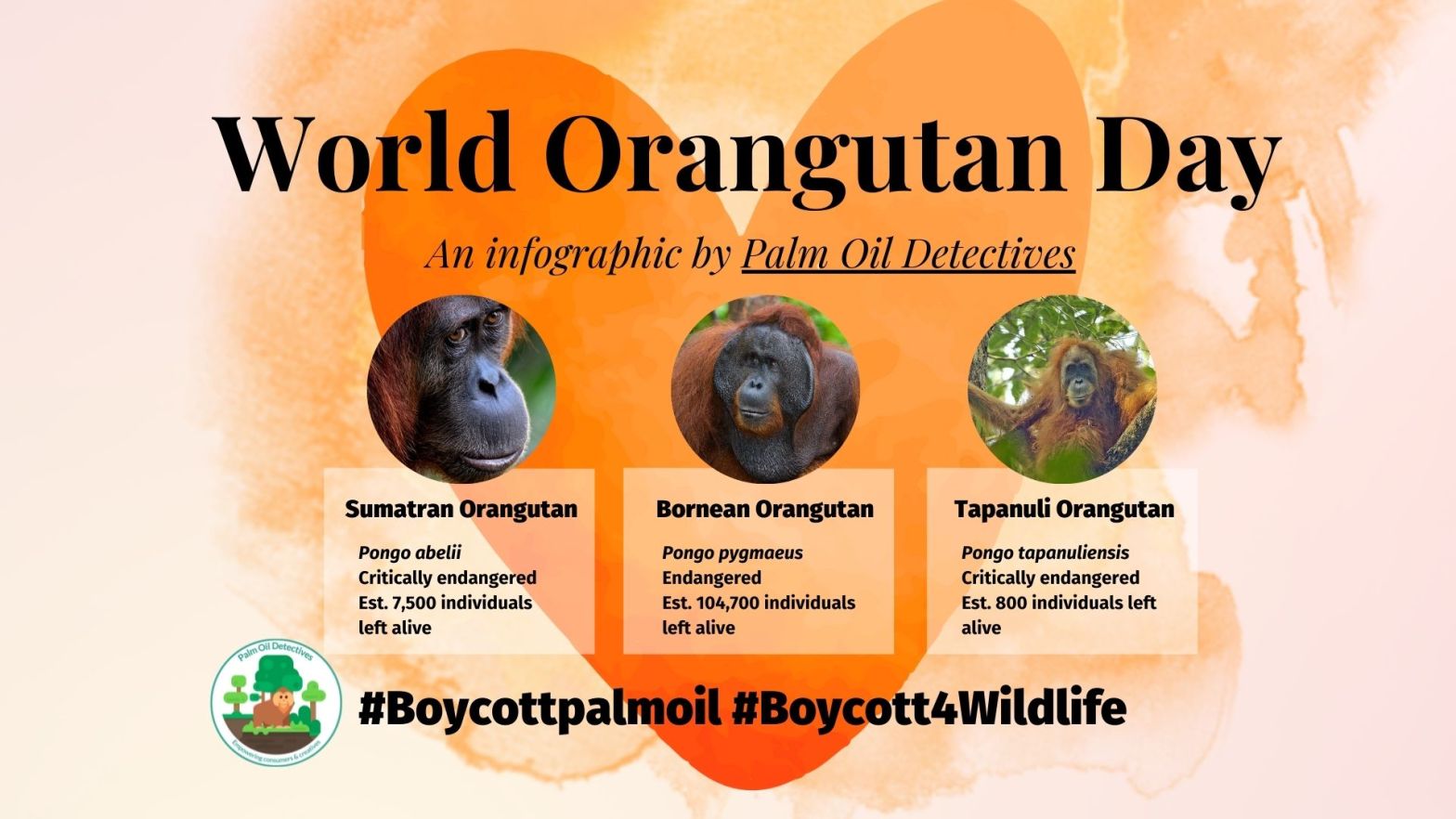
Although #WorldOrangutanDay falls on the 19th of August, every day deserves to be World Orangutan Day! So here is an infographic that you can download, print and share however you please. All three species of orangutan are classified as ‘endangered’ or ‘critically endangered’ in S.E. Asia. Their main threat is palm oil deforestation in Indonesia and Malaysia Help them and fight for their survival every time you shop! #BoycottPalmOil #Boycott4Wildlife
Dusky Pademelon Thylogale brunii

Dusky Pademelons are small marsupials with large ears, strong hind legs and a short, thick tail. They navigate the dense and mountainous forests of New Guinea with natural agility. Solitary by nature, these fascinating creatures disperse seeds as they roam through the forests contributing to the maintenance of a vibrant ecosystem. They are now vulnerable due to the threat of hunting and deforestation for mining, palm oil and timber throughout their range. Help them to survive every time you shop and #Boycottpalmoil #Boycott4Wildlife
Magnificent Bird of Paradise Cicinnurus magnificus
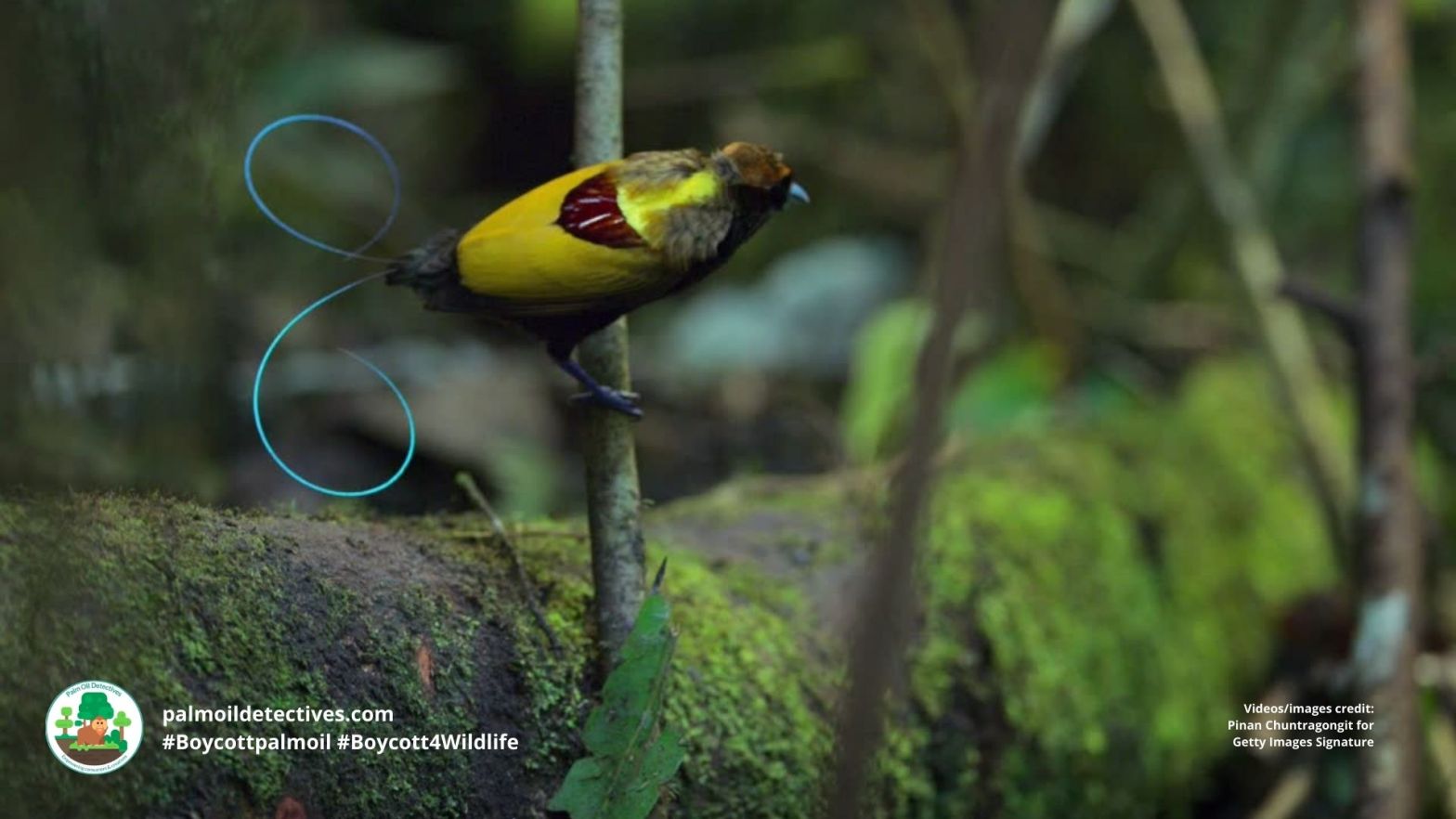
Meet the Magnificent Bird-of-Paradise, a dazzling, theatrical bird from New Guinea’s forests. Their vibrant courtship dances must be protected from palm oil!
Mandrill Mandrillus sphinx
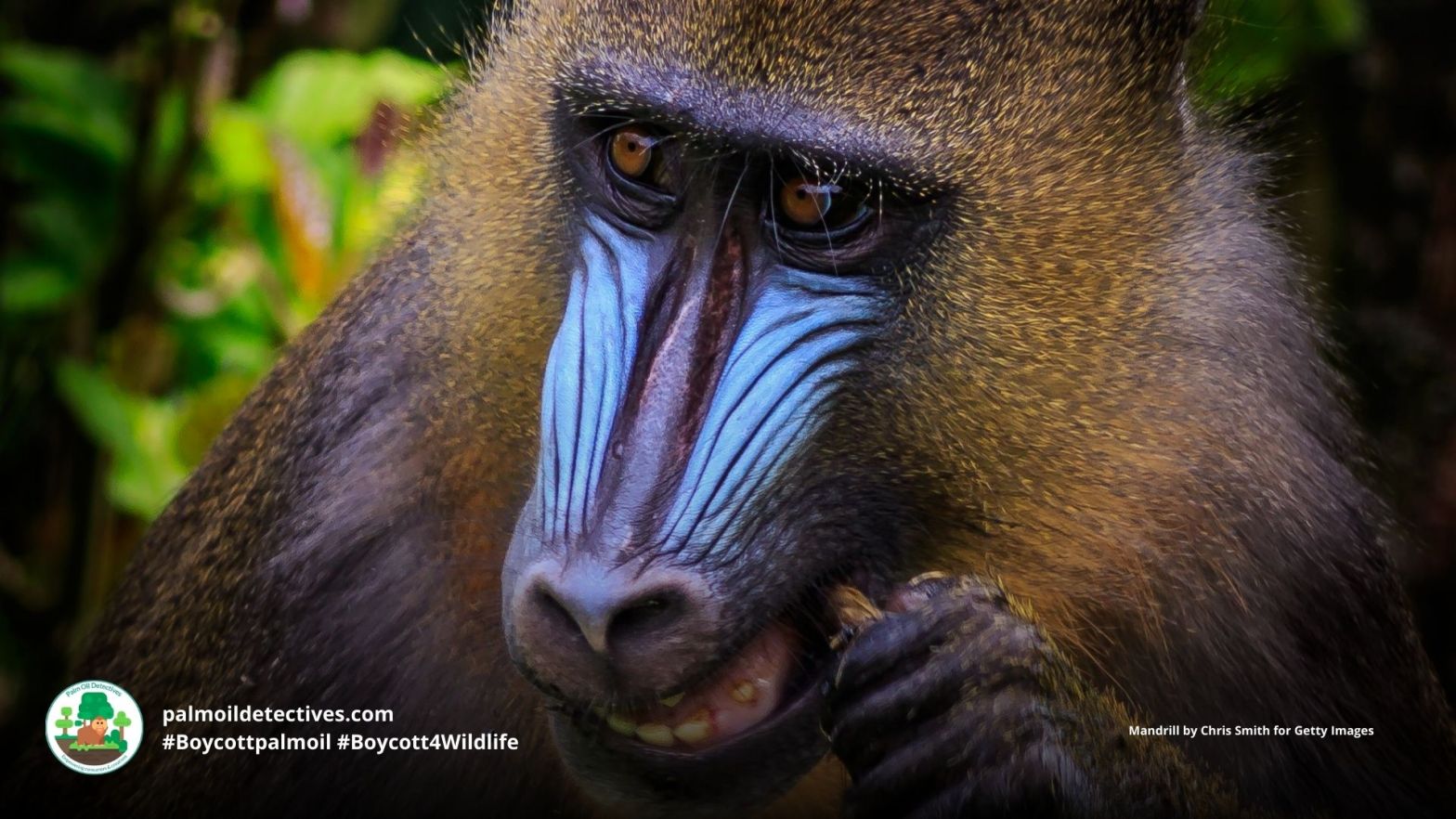
Magnificent #mandrills are undoubtedly one of the world’s most photogenic monkeys – famous for their brightly coloured and expressive appearance. Their bright blue rumps and vivid red, yellow and pink faces become even more deeply colourful when they’re excited. Males use their extra long canines for self-defence, but exposing their teeth can also be a sign of friendliness. Mandrills are important seed dispersers and a critical part of keeping the ecosystem in balance. These beautiful monkeys are vulnerable from palm oil, meat and cocoa deforestation and intensive poaching. Help their survival and #Boycottpalmoil #Boycott4Wildlife
Vogelkop Superb Bird of Paradise Lophorina superba

Male superb-bird’s-of-paradise are the dramatic actors of #NewGuinea’s rainforest. They use their lush, multicoloured plumage to change shape in an elaborate dancing courtship display that typically goes on for many hours for the sole benefit of a female #bird. At the end of the dancing ritual, the female will get to choose her mate between 15-20 male #birds. These magnificent birds are struggling to survive, hemmed in on all sides by #hunting, #palmoil, gold mining and timber #deforestation throughout their range. Help their survival every time you shop and #Boycottpalmoil #Boycott4Wildlife in the supermarket!
Northern Muriqui Brachyteles hypoxanthus
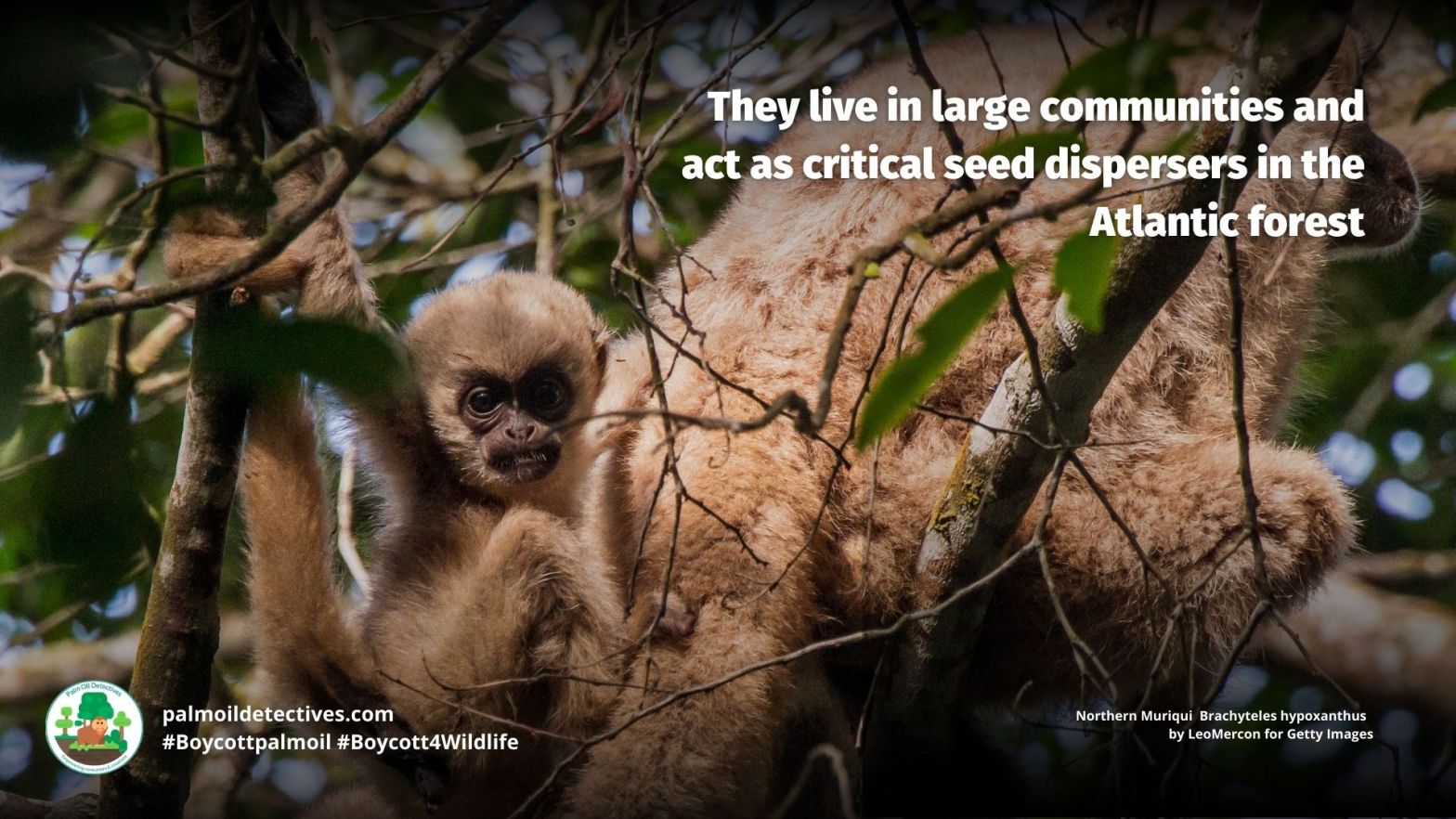
Northern Muriquis (AKA Woolly Spider Monkeys) have a striking light brown and golden fur and are known for their rattling vocalisations. They live in large communities and act as critical seed dispersers in the Atlantic forest. There are fewer than 800 individuals left alive and they are critically endangered. Their main threats are palm oil, meat and soy deforestation in Brazil, along with illegal hunting. Help them every time you shop and be #vegan, #Boycottpalmoil and #Boycott4Wildlife
Indian Rhinoceros (Greater One-horned Rhino) Rhinoceros unicornis
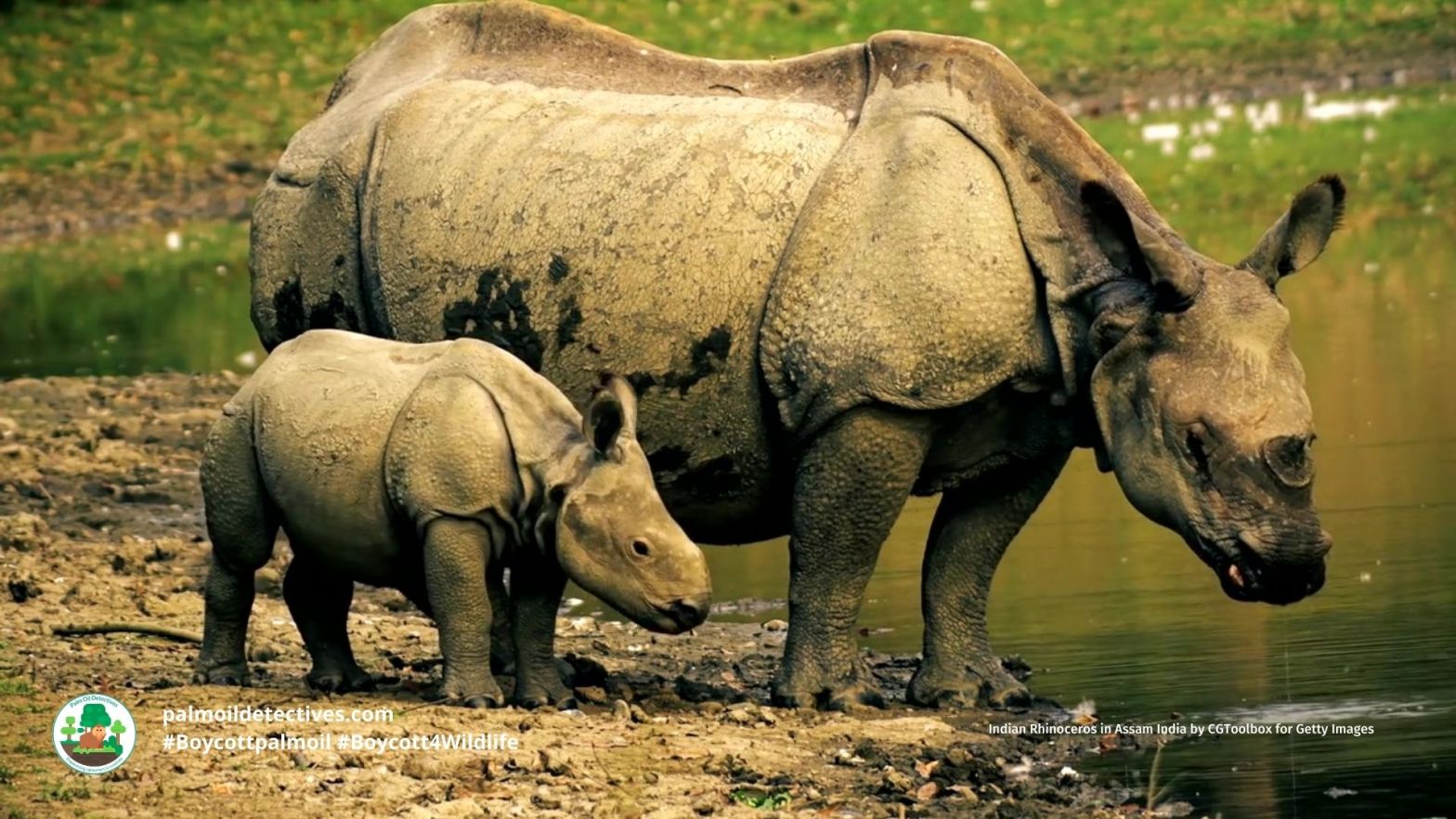
The largest of the three rhino species in Asia, the Indian Rhino has a distinctive and unique armour-plated look which lends them a fairytale quality that has captivated admirers for aeons. Although Indian rhino numbers have climbed over the past decades due to conservation, they are under imminent threat from the expansion of palm oil deforestation in the Assam region of India. A protected national park there is earmarked for destruction. Use your wallet as a weapon every time you shop and #Boycottpalmoil #Boycott4Wildlife
Banded Surili (Raffles Banded Langur) Presbytis femoralis
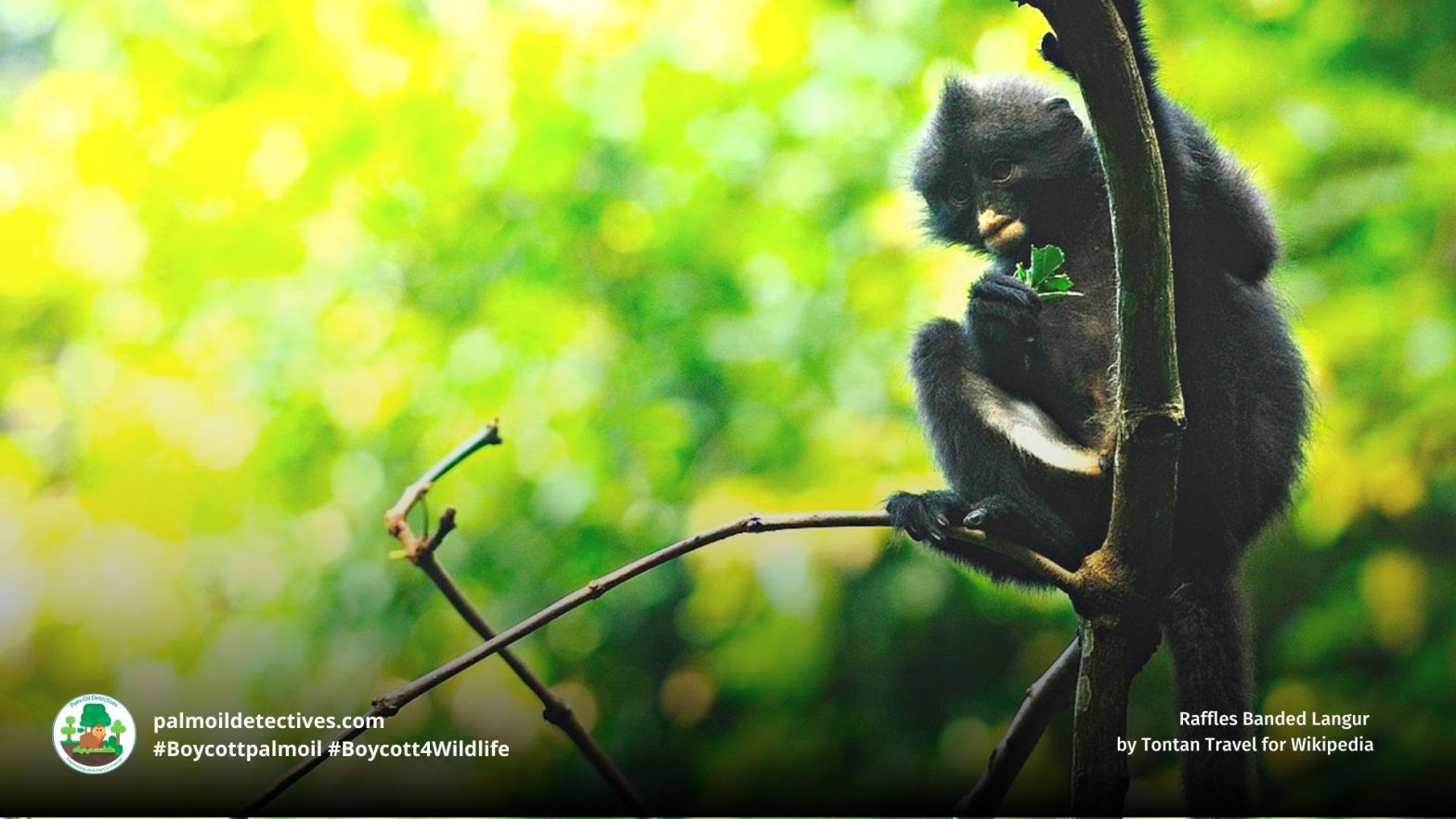
A curious and intelligent small monkey species, Raffles’ Banded Langurs are also known by their other common names: Banded Leaf Monkey or Banded Surili. Endemic to the southern Malay Peninsula and Singapore, this critically endangered monkey is now found in only a few fragmented pockets of primary and secondary forest, swamps, mangroves, and rubber plantations. Once widespread across Indonesia, Malaysia, Myanmar, Singapore, and Thailand, the banded surili’s population has plummeted—fewer than 60 individuals survive in Malaysia, with Singapore’s last wild group clinging to existence in the Central Catchment Nature Reserve. Palm oil deforestation and habitat destruction continue to erase their world. Help them survive and #BoycottPalmOil and #Boycott4Wildlife every time you shop.
White-Nosed Saki Chiropotes albinasus
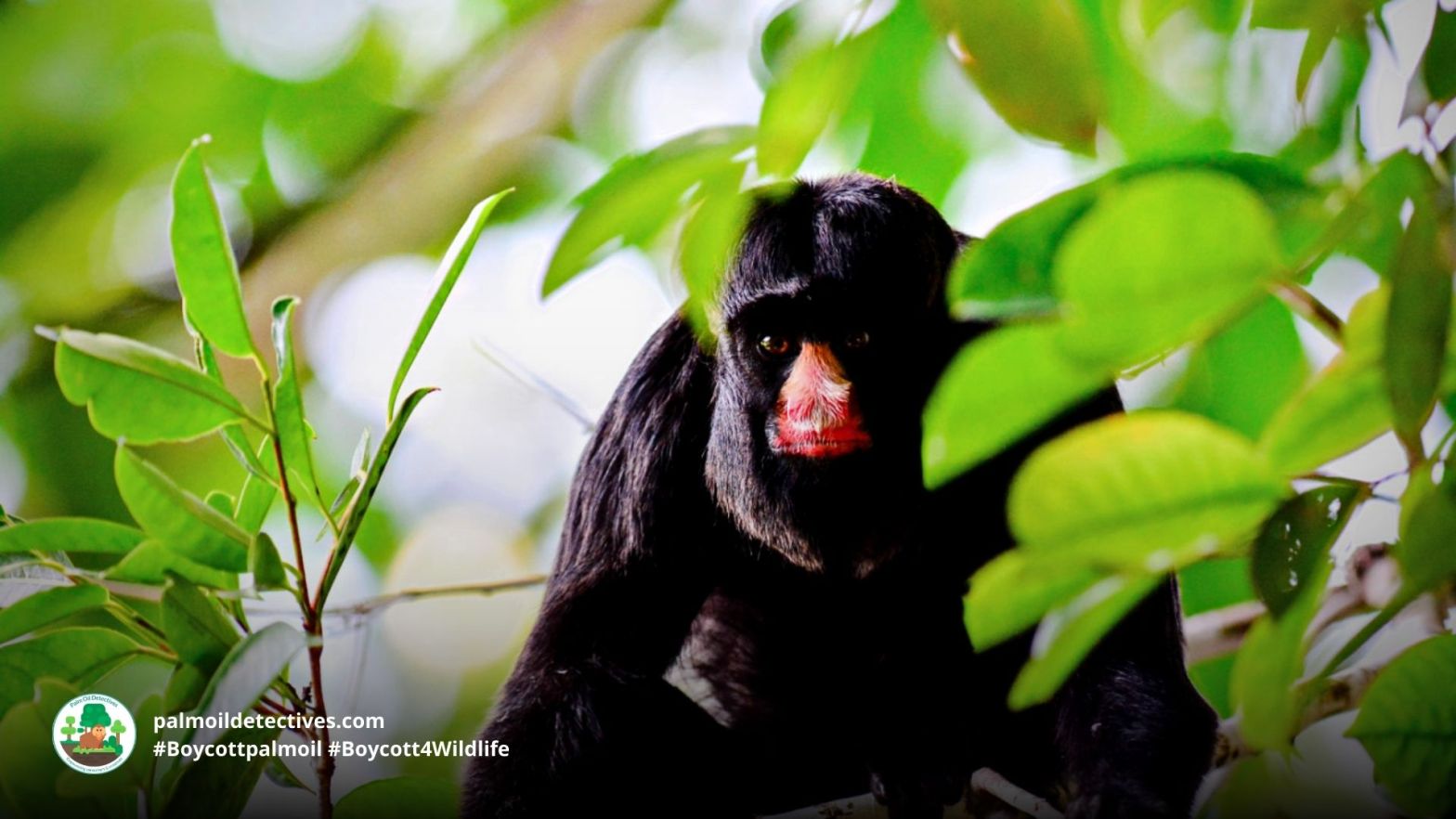
Curious, social and beautiful White-Nosed Sakis are striking and unusual looking #primates. This vulnerable primate is instantly recognisable by their long, silky black fur, reddish-pink noses, and distinctive hair tufts crowning their heads. The white-Nosed Saki’s range spans the shaded forests south-west of the Dos Marmelos river, where they are vulnerable from human-related threats including #palmoil, #soy and #meat #deforestation, #goldmining and human persecution. They deserve us to fight for their survival. Help them every time you shop and be #Vegan #BoycottPalmOil and #Boycott4Wildlife
Do humans really need other species?

Do humans need other #species? Yes! millions of organisms are needed to keep #ecosystems in balance and ensure everyone can survive. Most importantly, #research shows other species make us happy! Be 🐱🐷🐎🐕🐠 #Vegan for the animals 🍅🥦 #BoycottPalmOil #Boycott4Wildlife
African Palm Civet Nandinia binotata

African palm civets were once common seed dispersers. Now they face pressure from palm oil-driven deforestation, mining, and hunting for bushmeat – boycott!
Chimpanzees once helped African rainforests recover from a major collapse
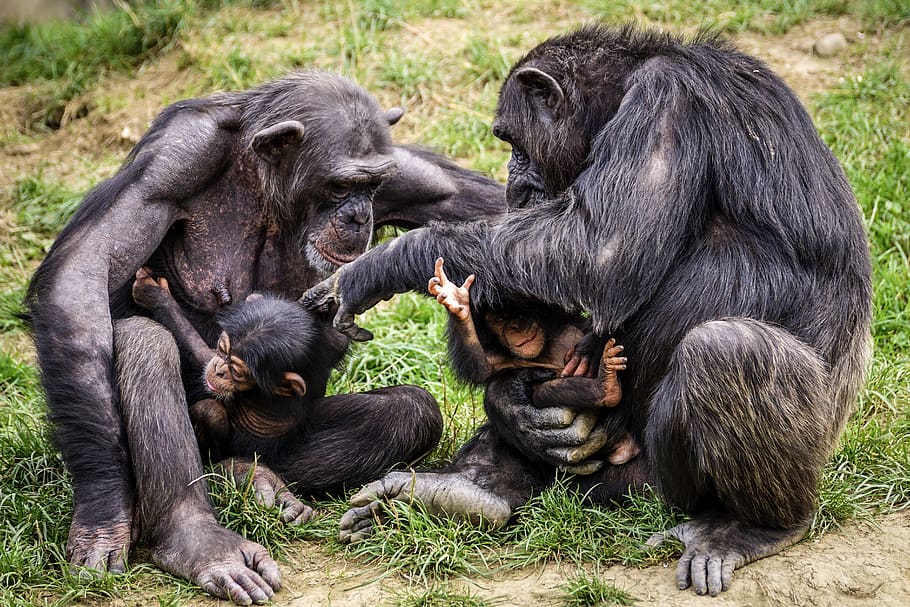
Most people probably think that the rainforest of central and west Africa, the second largest in the world, has been around for millions of years. However recent research suggests that it is mostly just 2,000 or so years old. The forest reached roughly its modern state following five centuries of regeneration after it was massively fragmented when the dry season suddenly became longer some 2,500 years ago. Help #chimpanzees to survive and #Boycottpalmoil #Boycott4Wildlife every time you shop
African Forest Elephants’s Movements Depend on Their Personalities
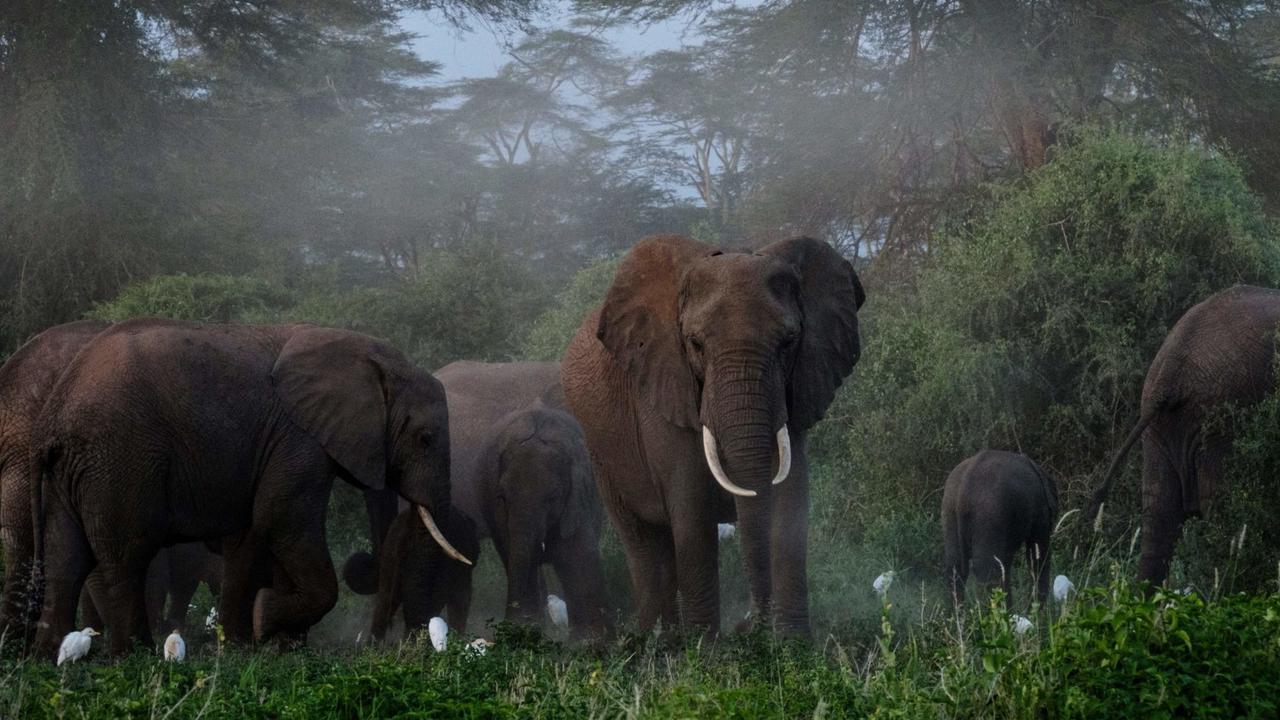
African forest #elephants roam the dense rainforests of West and Central Africa where they subsist largely on a diet of fruit. They shape forests by dispersing fruit and seeds, browsing, and creating an extensive trail network. But because it’s difficult to track animals in thick forest, little is known about the movements of the AfricanContinue reading “African Forest Elephants’s Movements Depend on Their Personalities”
The Amazonian Royal Flycatcher: A flurry of feathers

The Amazonian Royal Flycatcher is a member of a family of birds called the tyrant flycatchers, which occur throughout North and South America. This is the biggest family of birds in the world, with more than 400 species. As the name implies, the majority of tyrant flycatchers are entirely insectivorous (though they do not necessarily specialise in flies), while the ‘tyrant’ part comes from the noisy, aggressively territorial behaviour of some species in the group. Help them to survive every time you shop and #BoycottPalmOil #Boycott4Wildlife.
Knobbed Hornbill Rhyticeros cassidix
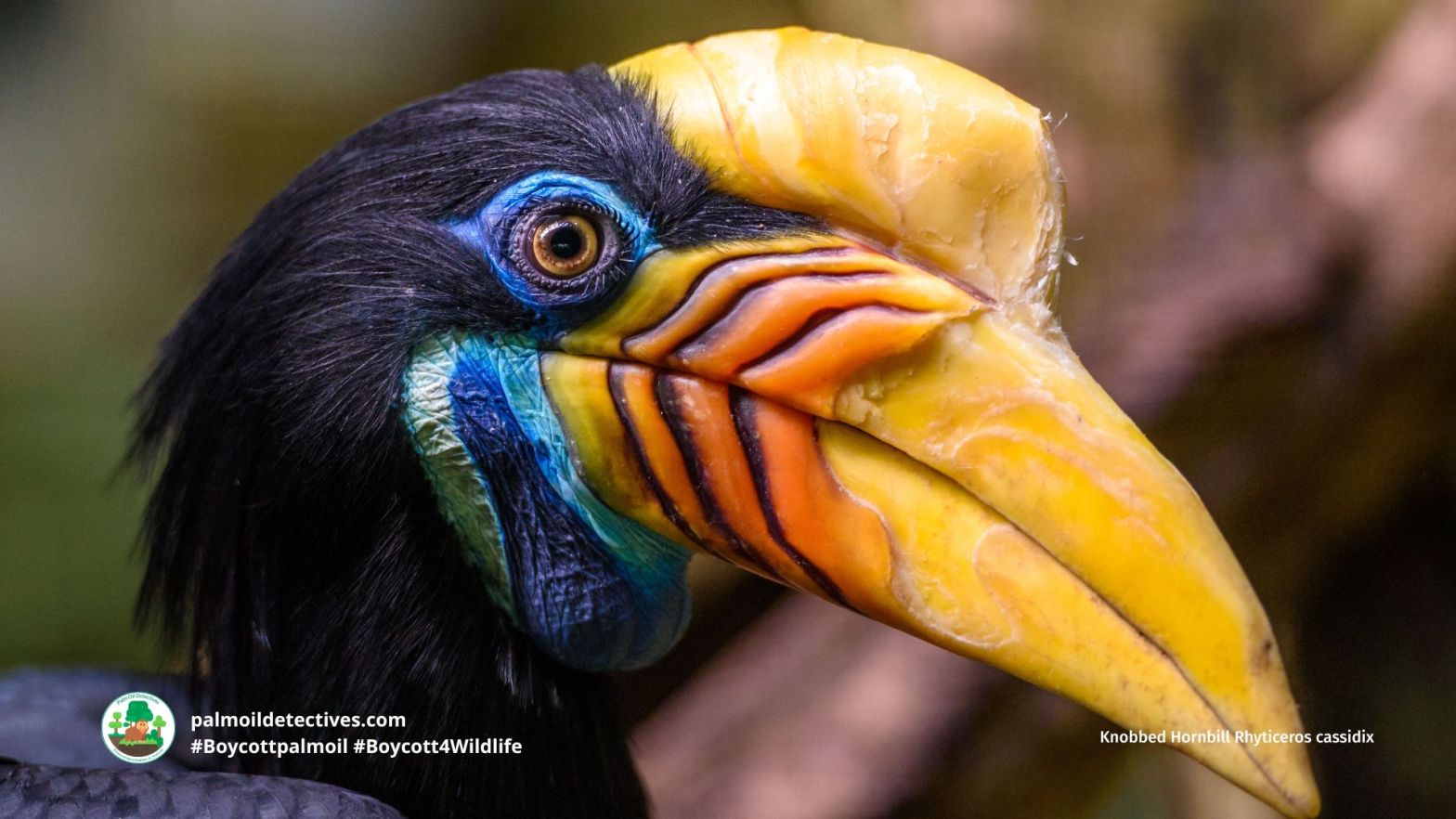
Knobbed Hornbills are important seed dispersers in Indonesia. Known for their unique social nature, save this striking bird, when you shop boycott palm oil!
African Forest Elephant Loxodonta cyclotis
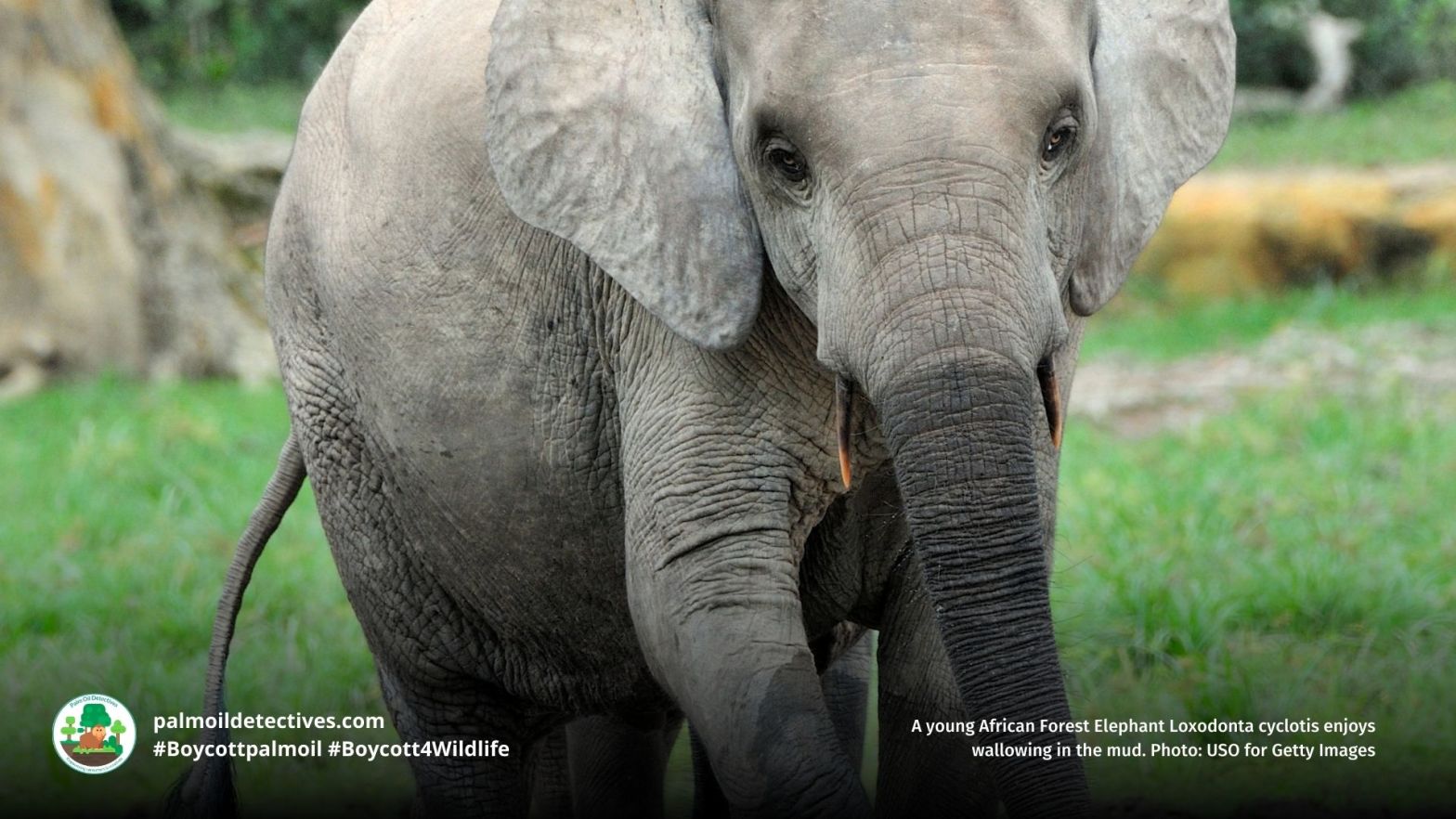
Protect African Forest Elephants! These critically endangered ecosystem engineers are vital for rainforest health but face extinction from poaching, ecocide
Black Bearded Saki Chiropotes satanas
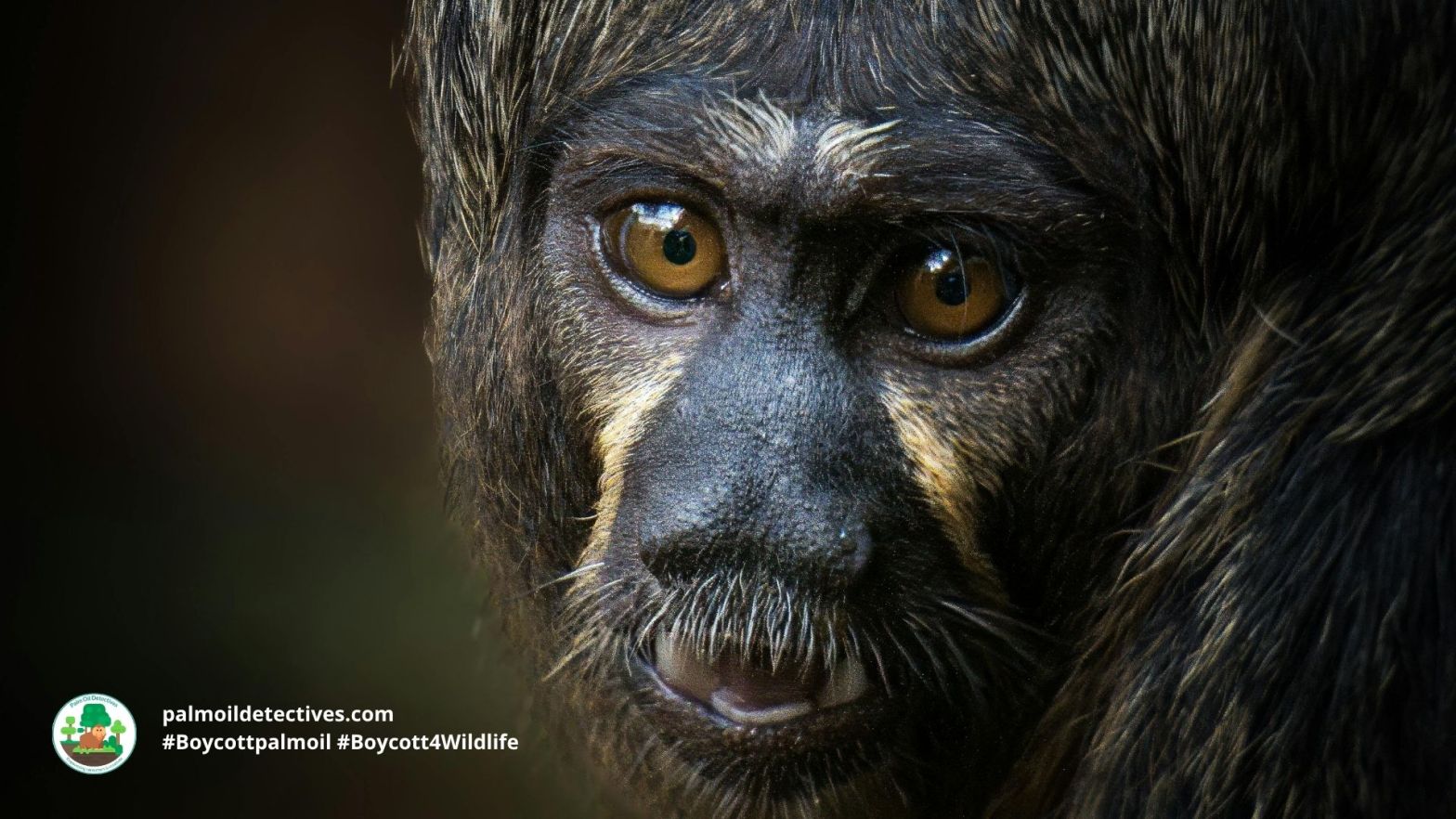
Beneath the towering canopy of the Amazon’s north-eastern forests, the black bearded saki moves with quiet purpose, their distinctive shaggy beard and robust body a testament to their resilience in a world under siege. The air is thick with the scent of damp earth and the distant calls of unseen creatures, but the forest is changing—#roads, #dams, and #agriculture are carving scars across the landscape, fragmenting the saki’s ancestral home. The black bearded saki’s survival is threatened by relentless deforestation and hunting, their fate bound to the fate of the forest—fight for their survival every time you shop #BoycottPalmOil #Boycott4Wildlife.
Varied White-fronted Capuchin Cebus versicolor
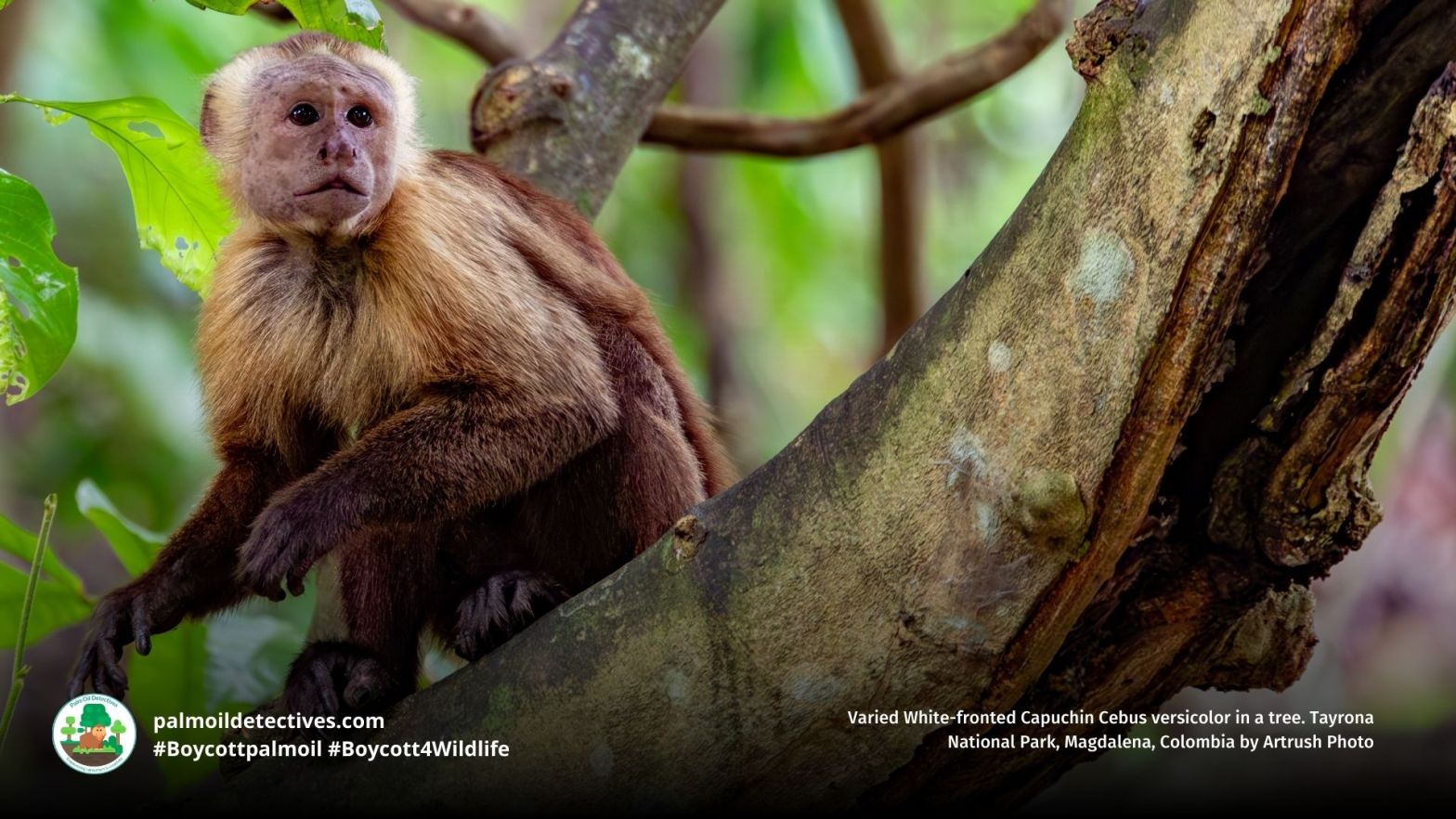
The Varied White-Fronted Capuchin Cebus versicolor is an intelligent, tenacious and resourceful small primate endemic to the forests of Colombia. With their pale white faces, reddish-gold coats, they are both striking in appearance and crucial to their ecosystems. These capuchins play an essential role in seed dispersal, ensuring the health and regeneration of their forest homes.
Tragically, their populations are declining due to deforestation, hunting, and the illegal wildlife trade. Protecting these forests is critical to their survival. Support indigenous-led conservation, adopt a vegan lifestyle and #BoycottPalmOil and #Boycott4Wildlife to take meaningful action for these incredible primates.
Golden-bellied Mangabey Cercocebus chrysogaster
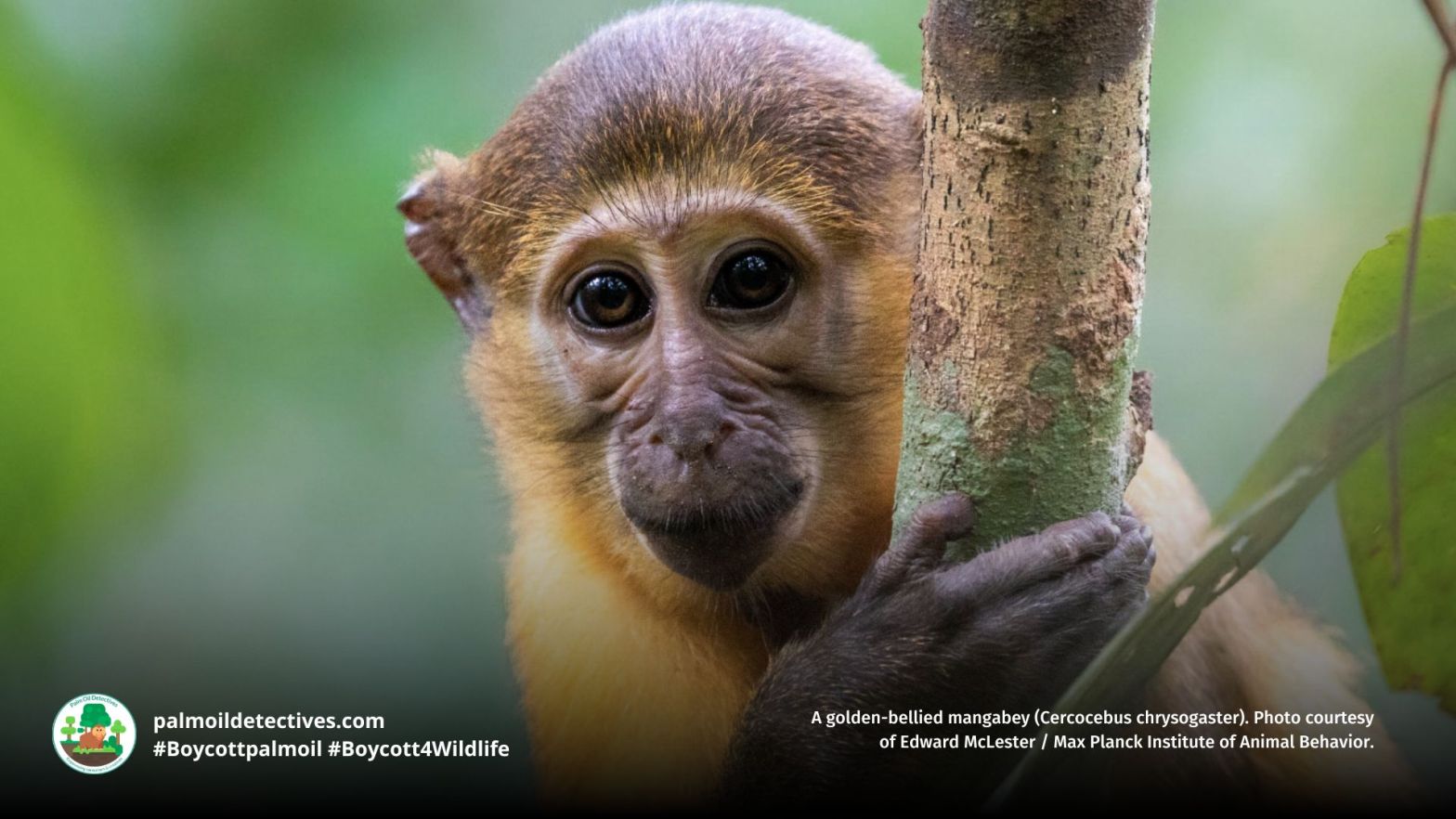
The golden-bellied mangabey (Cercocebus chrysogaster) is an intriguing and elusive monkey endemic to the Democratic Republic of Congo (DRC). Named for the vibrant golden hue of their undersides, these primates are known for their intelligence, complex social behaviours, and unique ecological role. Found in the remote tropical forests along the Congo River Basin, these monkeys remain poorly studied due to their limited range and secretive nature.
Tragically, the golden-bellied mangabey faces mounting threats from habitat destruction, driven by logging, mining, and agricultural expansion, including palm oil plantations. Their population continues to decline due to hunting and habitat fragmentation. Act now to protect their fragile habitat—boycott palm oil and stand against deforestation. #BoycottPalmOil #Boycott4Wildlife
African Greys: How politics killed the parrot
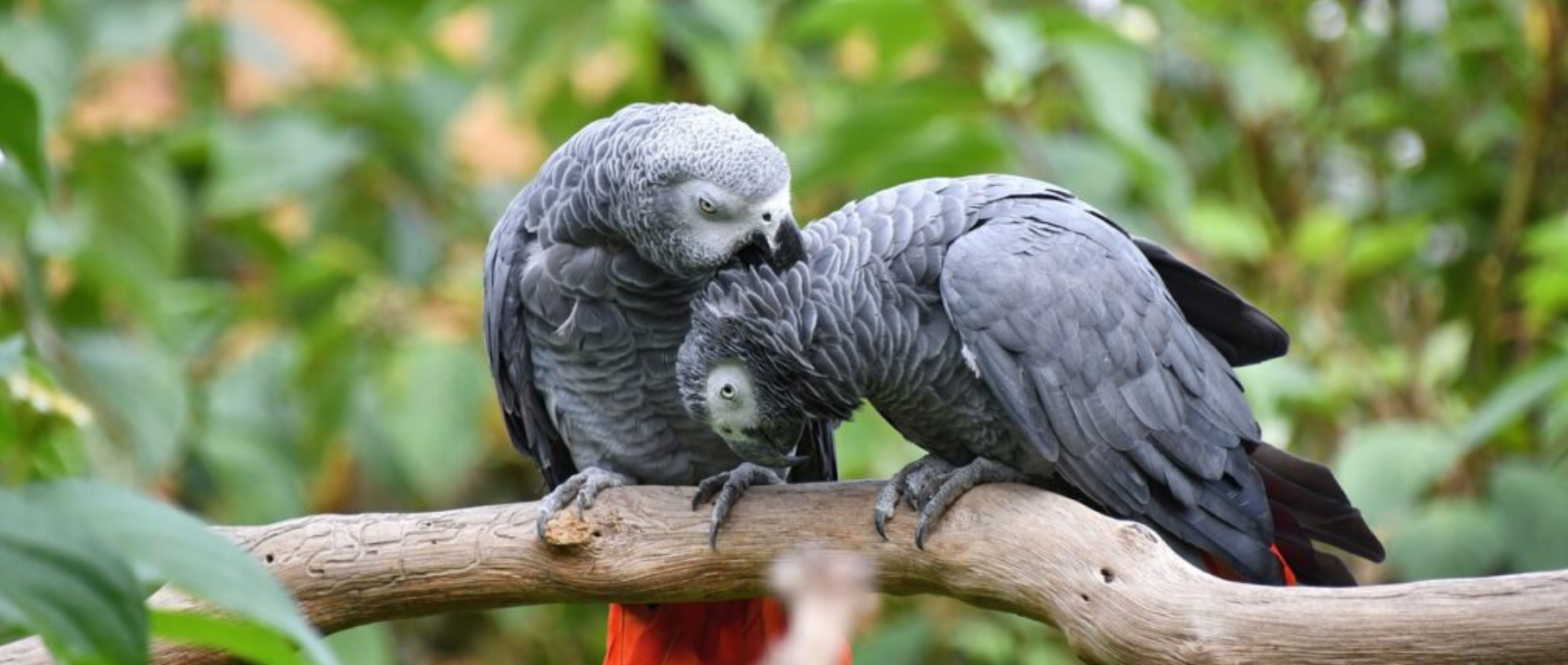
The African Grey Parrot of the Congo is an understated beauty sporting ash-grey plumage, which partially conceals the red flash of their short tails – not to be confused with the smaller and darker Timneh grey parrot. This species is found, as their name suggests, in the Democratic Republic of the Congo (DRC), along with Kenya, Tanzania and parts of Angola. Already globally threatened, any self-described bird lover must understand jus how the political environment in the DRC is threatening this gorgeous parrot. One of the most pervasive threats for these rare birds is poaching for the illegal pet trade, which, in the past 40 years alone, has resulted in almost three million birds being snatched from their homes. That’s three million birds who will never reproduce in the wild and ensure continuity of this species. Help these birds every time you shop and be #Vegan, #BoycottPalmOil #Boycott4Wildlife.
Tana River Mangabey Cercocebus galeritus
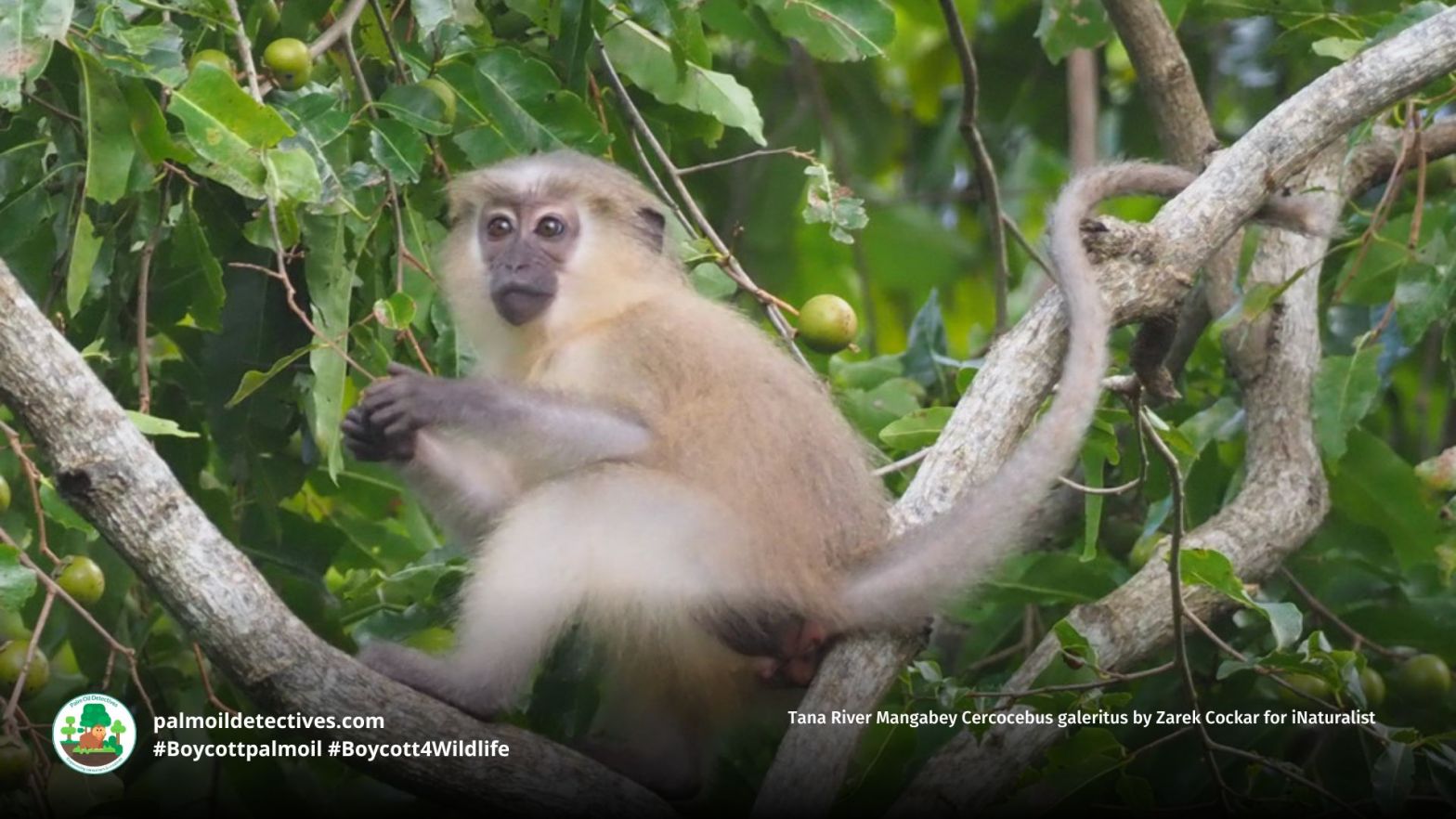
The Tana River Mangabey Cercocebus galeritus is a long-faced and slender old world monkey of #Kenya listed as Critically Endangered due to ongoing habitat destruction, dam construction, logging, and the degradation of floodplain forest ecosystems. Once protected by the Tana River #Primate Reserve, these #monkeys despite being key seed dispersers in their ecosystem are now more vulnerable than ever after the legal de-gazetting of their habitat. With only around 1,000 individuals remaining, this highly social and adaptable primate faces a devastating future unless urgent action is taken. Use your wallet as a weapon to end the destruction of their home. #BoycottPalmOil #Boycott4Wildlife #Vegan #BoycottMeat
Bald-headed Uacari Cacajao calvus

With their long shaggy coats and striking bright red faces, Bald-headed Uacaris are true icons of the Amazon rainforest and are found in #Brazil, #Peru and #Colombia. When a #Uacari has a bright red face this indicates they are in good health. A pale face indicates a sickly physical state. These remarkable #monkeys spend most of the year in the tree tops to avoid the seasonal flooding of their Amazonian habitat. During the dry season, they return to the ground to look for seeds. They face an existential threat from #palmoil, #soy and #meat #deforestation in the #Amazon. Once their unmistakeable scarlet faces were a common sight in the dusky green of the rainforest. Now they are rapidly disappearing, victims of a relentless drive for land, gold, and profit. Listed as Vulnerable, you can help them to survive every time you shop! #BoycottGold be #vegan for them and #BoycottPalmOil #Boycott4Wildlife
Blue-billed Curassow Crax alberti
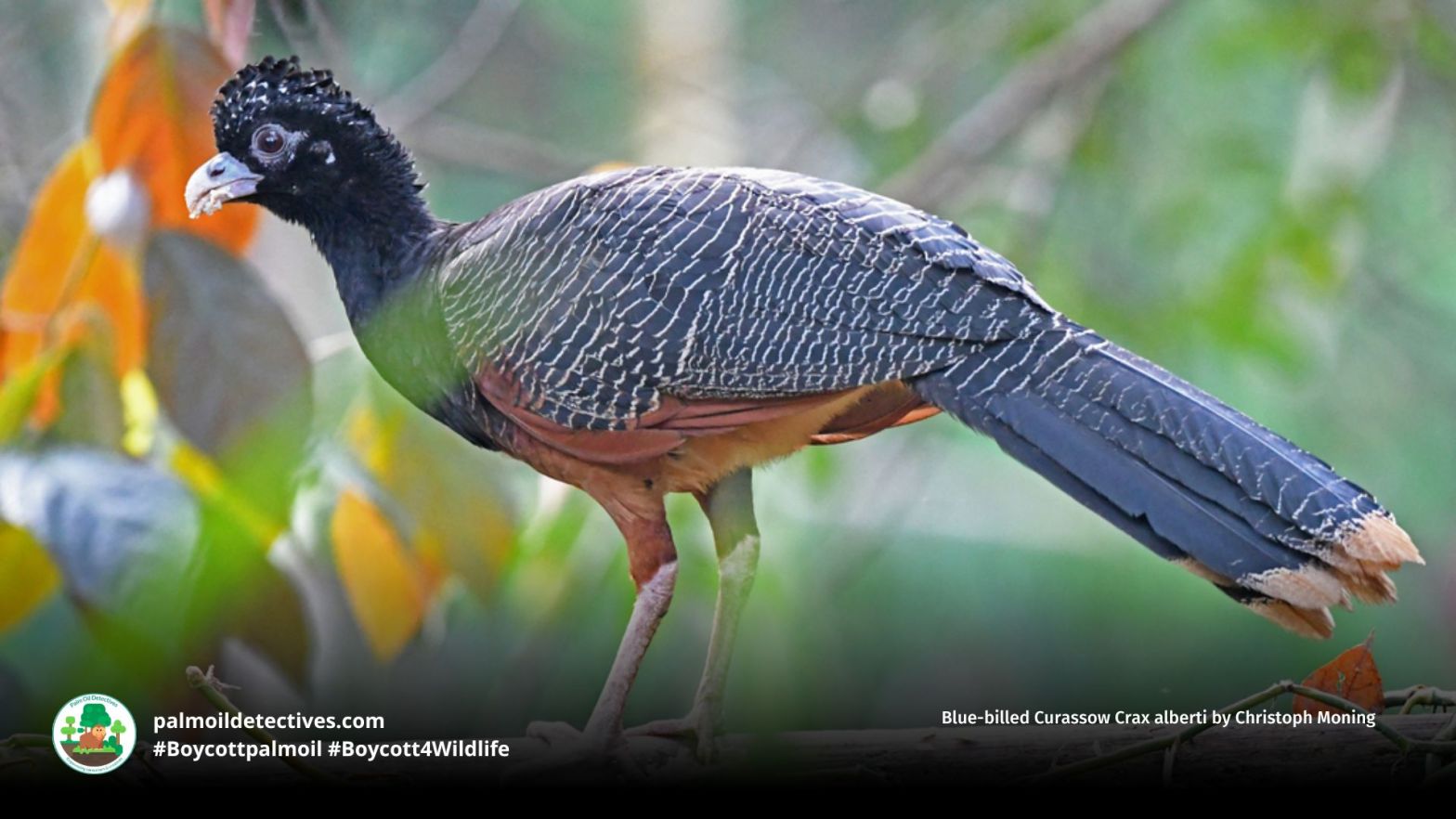
Help save Colombia’s Blue-billed Curassow, a critically endangered bird facing extinction from habitat loss due to palm oil and coca plantations!
Pygmy Hippopotamus Choeropsis liberiensis
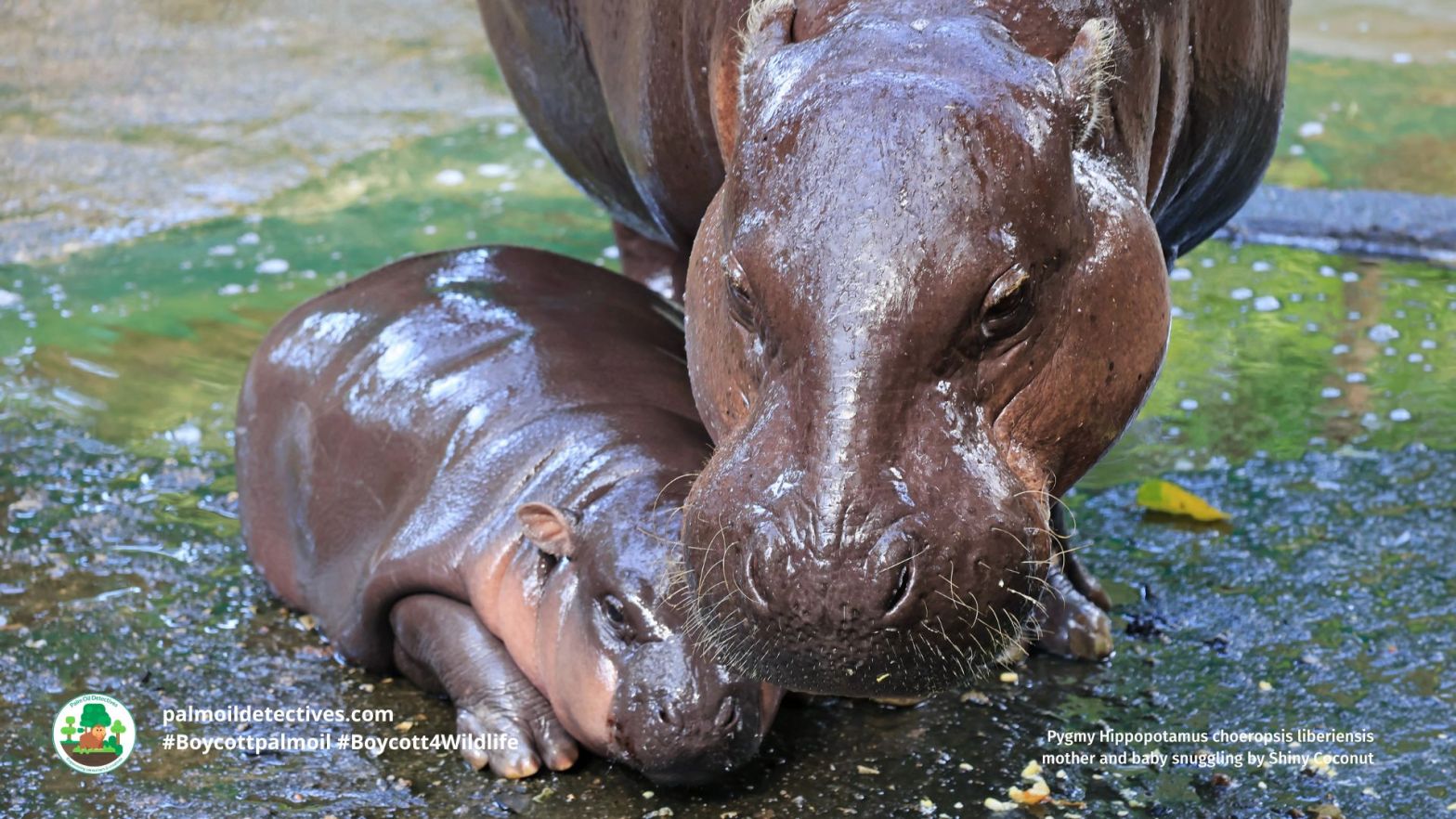
The rare and secretive Pygmy Hippopotamus clings to survival as their forest habitat is destroyed for palm oil and meat, help them when you boycott palm oil!
Bearded Pig Sus barbatus
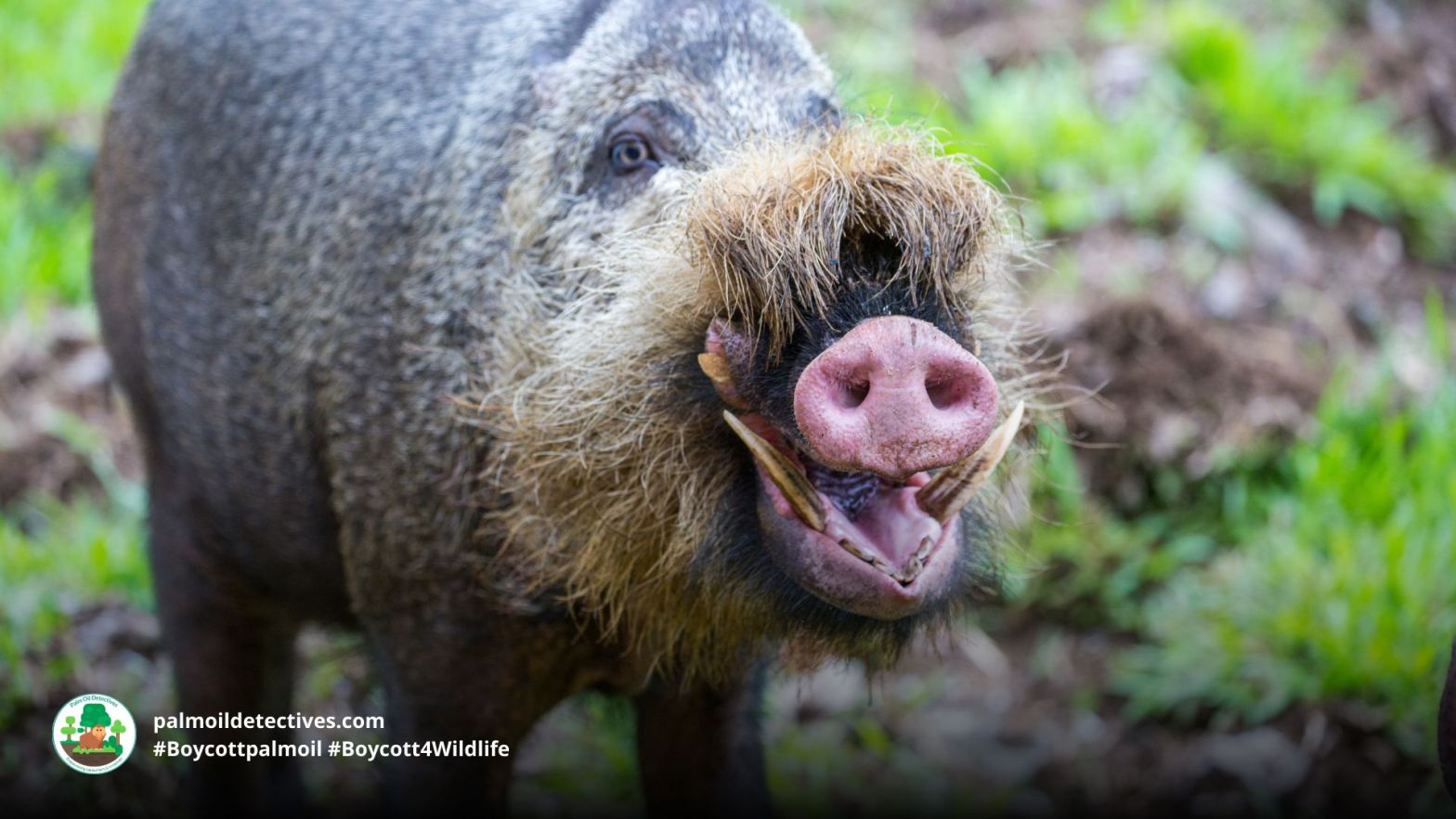
Bearded Pigs have hair which grows along their lower jaws that resembles a beard – giving them their distinctive whiskery appearance and their name. The Bearded Pig is an integral part of Southeast Asia’s tropical ecosystems, known for their unique appearance and critical role as seed dipersers in forest health. They are the only pig species known to migrate, moving in synchrony with fruiting seasons. However, they face mounting threats from habitat loss for palm oil and timber, along with illegal hunting, and disease. Help them to survive and use your wallet as a weapon in the supermarket #BoycottPalmOil #Boycott4Wildlife
Borneo’s bearded pig: forest gardener and eocosysem protector!
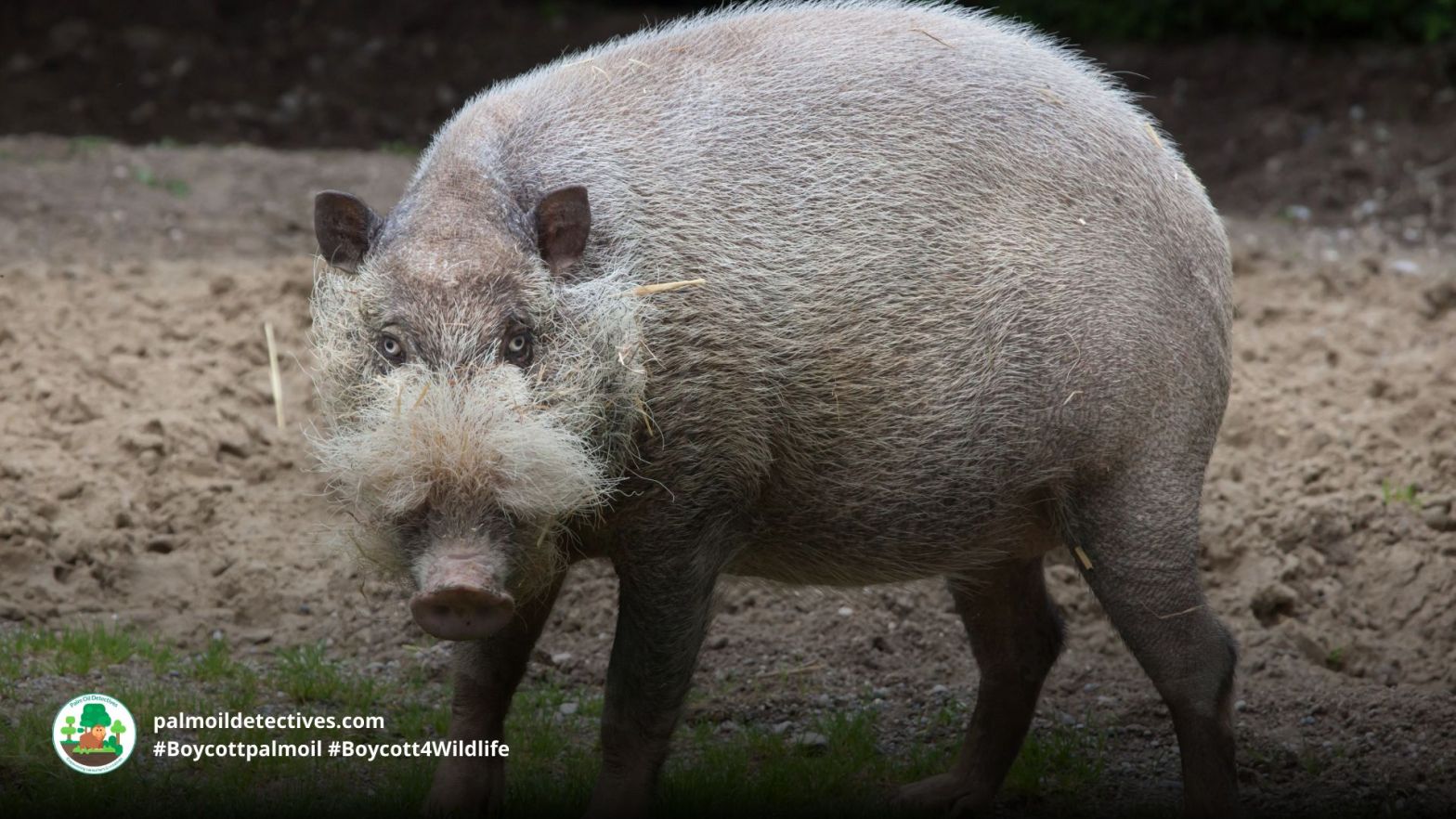
Borneo – fourth-largest island in the world, home to more than 20 million people. With so many well known species on the island like elephants, rhinos and orangutans, one species continues to fly under the radar. Sus barbatus AKA the Borneo Bearded Pig should be the most emblematic animal on the island. This wild boarContinue reading “Borneo’s bearded pig: forest gardener and eocosysem protector!”
Bengal Slow Loris Nycticebus bengalensis

The Bengal Slow Loris’s are wide-eyed beauties that are arboreal and nocturnal and live in tropical evergreen rainforest, semi-evergreen forest, and mixed deciduous forest. They are the largest loris species and feed predominantly on plant sap. They are now endangered in Malaysia and other parts of South East Asia, their primary threats are illegal capture for the pet trade and #palmoil #deforestation throughout their range. Help them every time you shop and #Boycottpalmoil #Boycott4Wildlife
Lar Gibbon Hylobates lar
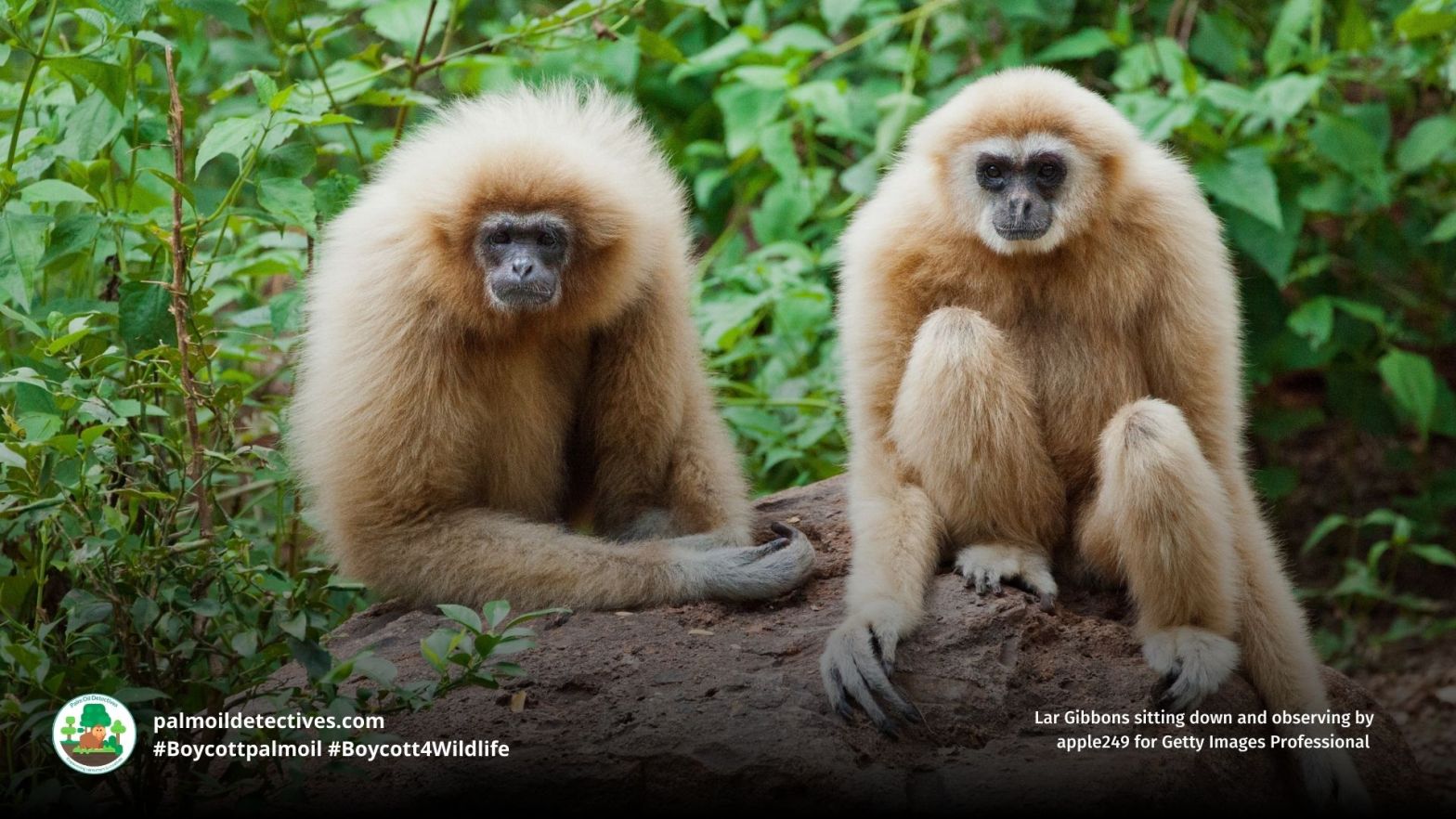
Gibbons, often called “lesser apes,” are no less than awesome! The Lar Gibbon Hylobates lar, also known as the white-handed gibbon, is a charismatic and acrobatic primate renowned for their incredible agility and melodic songs that echo through the rainforests of Southeast Asia. With their striking black or sandy-coloured fur and distinctive white markings on their hands and face, Lar Gibbons are both captivating and vital to their ecosystems.
These gibbons are Endangered according to the IUCN Red List, facing rapid population declines due to habitat loss, poaching, and the illegal wildlife trade. Protecting these extraordinary primates means addressing deforestation, logging, and other threats head-on. Fight for their survival every time you shop. Use your wallet as a weapon, demand palm oil free and #BoycottPalmOil #Boycott4Wildlife.
 Palm Oil Detectives