Binturong Arctictis binturong

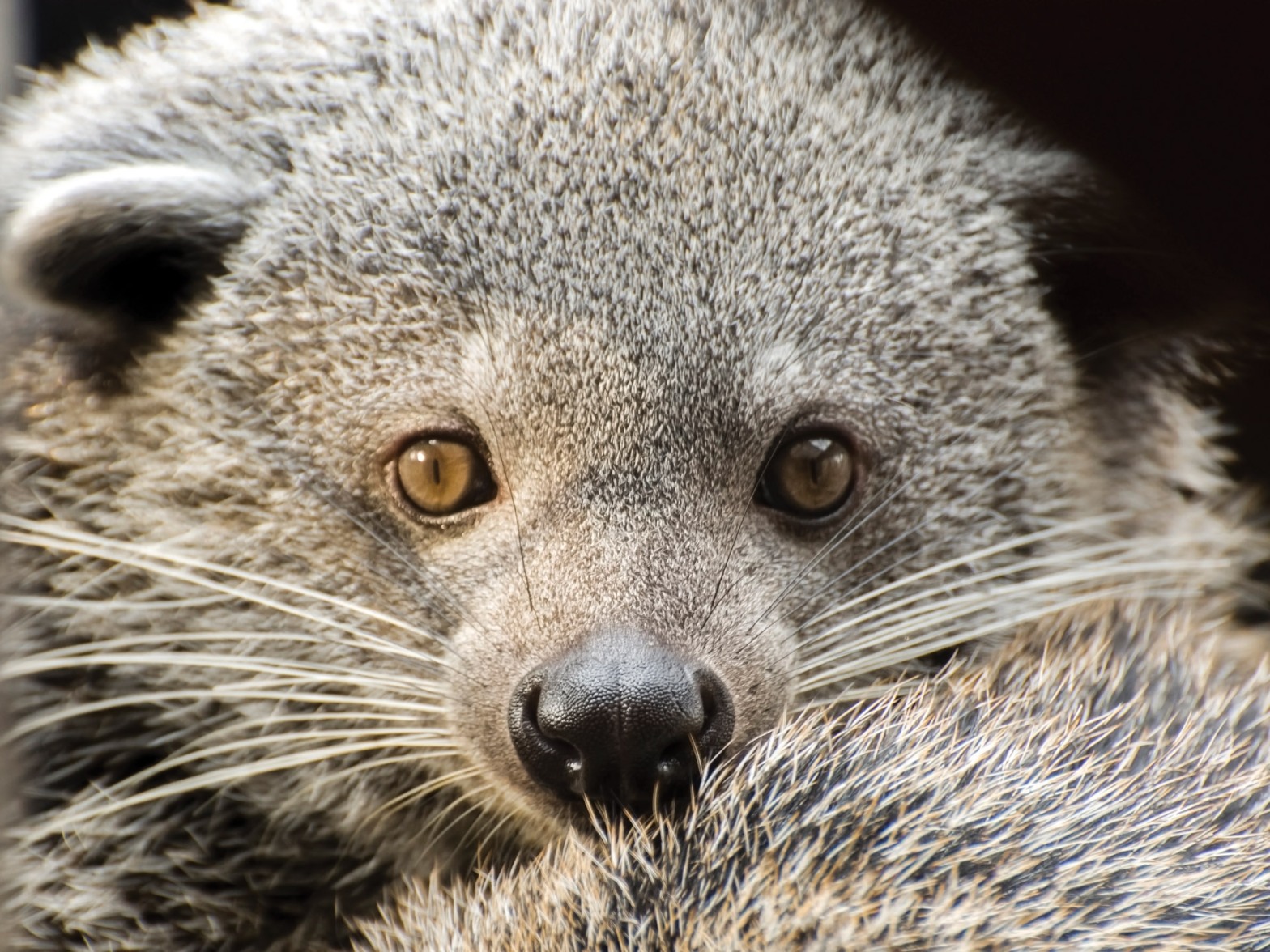
You may smell a Binturong in the forest before you see them. They give off the aroma of buttered popcorn or cheesy crisps due to the a compound in their urine they use to attract mates. The binturong, Arctictis binturong, is a fascinating and rare mammal who roam the dense rainforests of Southeast Asia. Often called the “bearcat” due to their looks, binturongs are neither bears nor cats, but are more closely related to ferrets. With their prehensile tail, thick wiry fur, and a popcorn-like scent, these unique and irreplacible creatures play vital roles as seed dispersers, particularly for strangler figs (Ficus spp.), making them keystone species in their ecosystem.

Despite their ecological significance, the binturong is now classed as Vulnerable. Populations have plummeted due to habitat destruction, particularly for palm oil deforestation; along with illegal hunting, exploitation for the coffee market and the illegal bushmeat and pet trade. Protecting the majestic binturong requires urgent action to safeguard their rainforest home. Fight for them every time you use your wallet! #BoycottPalmOil #Boycott4Wildlife

Sulawesi Hornbill Rhabdotorrhinus exarhatus

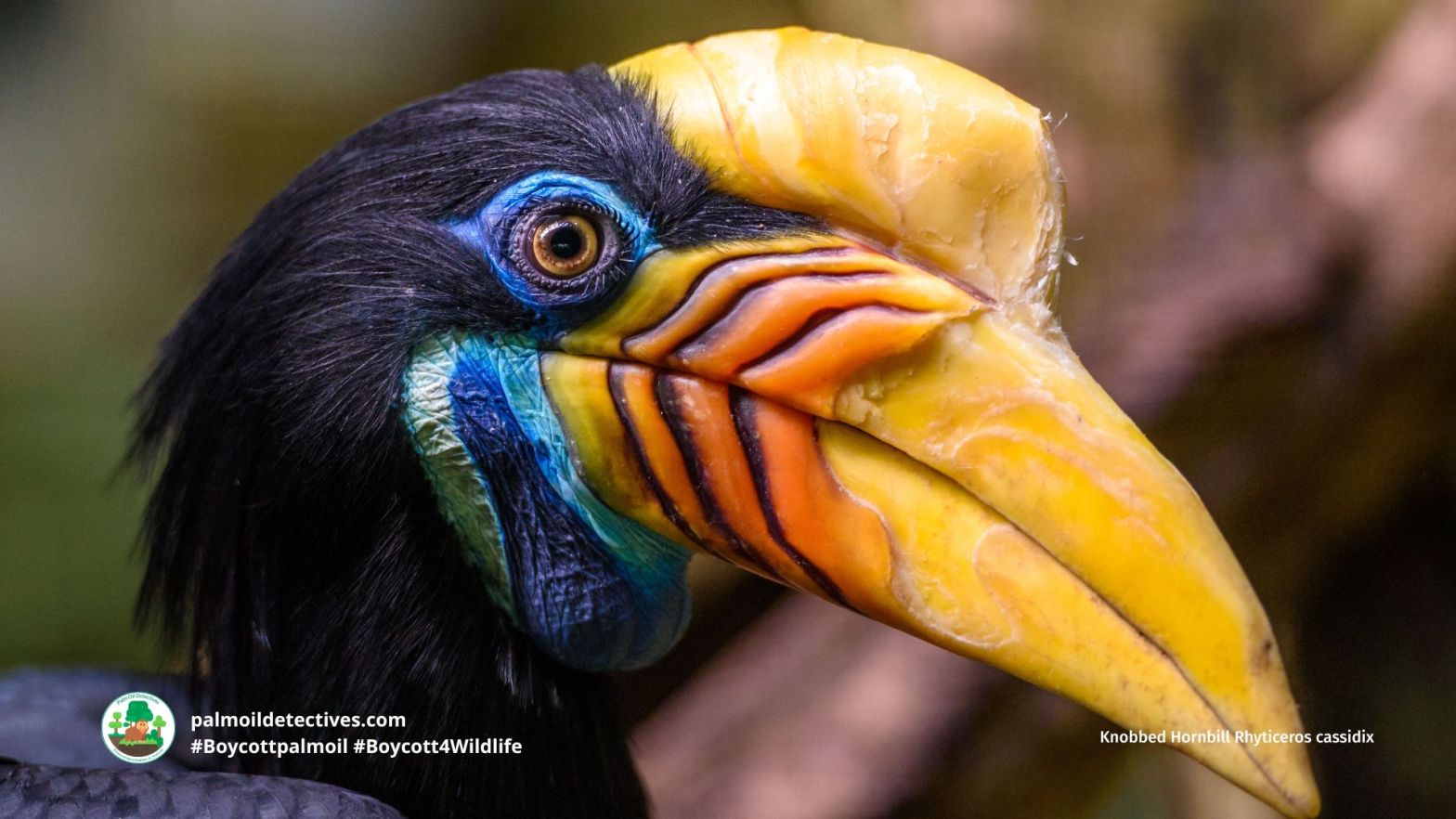
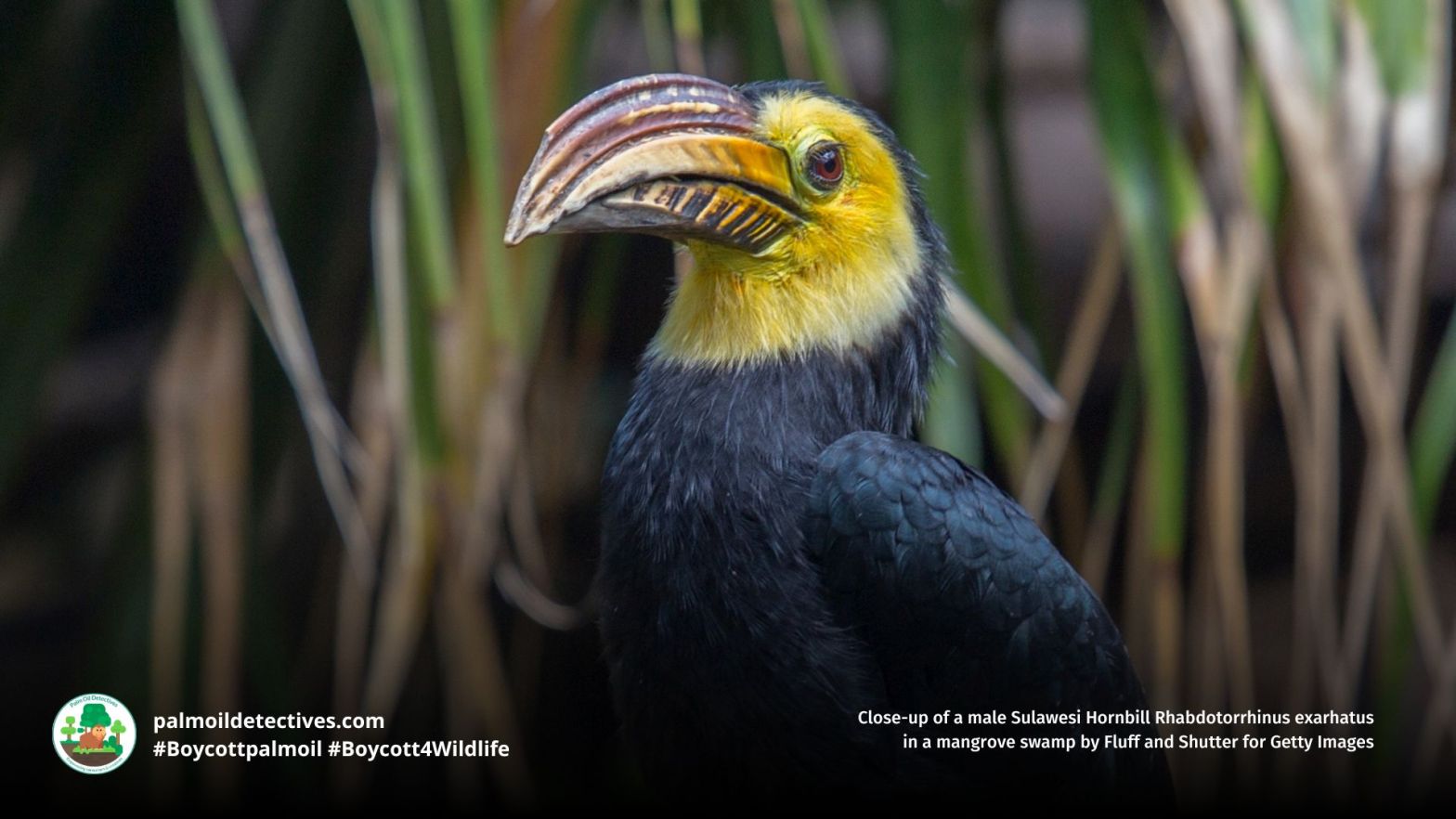
The Sulawesi hornbill (Rhabdotorrhinus exarhatus) is a striking and large yellow and black bird endemic to Sulawesi, Indonesia. Known for their unique vocalisations and social nature, including communal shared breeding practices, these medium-sized hornbills are integral to the rainforest ecosystem, acting as crucial seed dispersers for many important tree species.

Sadly, the Sulawesi hornbill is classified as Vulnerable due to habitat destruction from logging, agriculture, and palm oil plantations, as well as poaching for the illegal pet trade. Protecting their remaining rainforest habitats is essential to ensuring their survival. Fight for their survival every time you shop. #BoycottPalmOil #Boycott4Wildlife

Pygmy Marmoset Cebuella niveiventris and Cebuella pygmaea

The petite pygmy #marmoset, the world’s tiniest true #monkey, boasts a mix of brownish-gold, grey, and tawny fur. These little wonders, weighing just around 100 grams, communicate uniquely using chemical, vocal, and visual cues to ensure group safety and harmony. Although these #marmosets prefer river-edge forests and can adapt to secondary forests, their homes are under serious threat. Rampant #deforestation for #meat, #goldmining, and #palmoil cultivation are eroding their habitats, pushing the subspecies Cebuella niveiventris towards a “Vulnerable” status. The situation is dire, with an estimated 30% reduction in their population in just 18 years. Protect these delicate creatures and their home – use your wallet as a weapon, be #vegan, #BoycottPalmOil, and #Boycott4Wildlife.🌳🐒

Giant Anteater Myrmecophaga tridactyla

Giant Anteaters have a striking and unforgettable appearance. They are covered in wiry, grey and brown fur with a distinctive black and white stripe running along their bodies. Their elongated snouts and long, sticky tongues are perfectly adapted for feeding on ants and termites. With their bushy tails and long, curved claws, they are supremely strange looking creatures, making them captivating to behold.

The Giant Anteater is classed as Vulnerable due to widespread deforestation and #palmoil, soy, meat, sugarcane and gold mining across their range. They are often victims to frequent deliberate and accidentally lit fires in the Amazon. These gentle creatures are becoming increasingly rare. But there’s a lot of actions you can take. Make sure you #Boycottpalmoil #BoycottGold #Boycottmeat and #Boycott4Wildlife to help them every time you shop.

Temminck’s Pangolin Smutsia temminckii

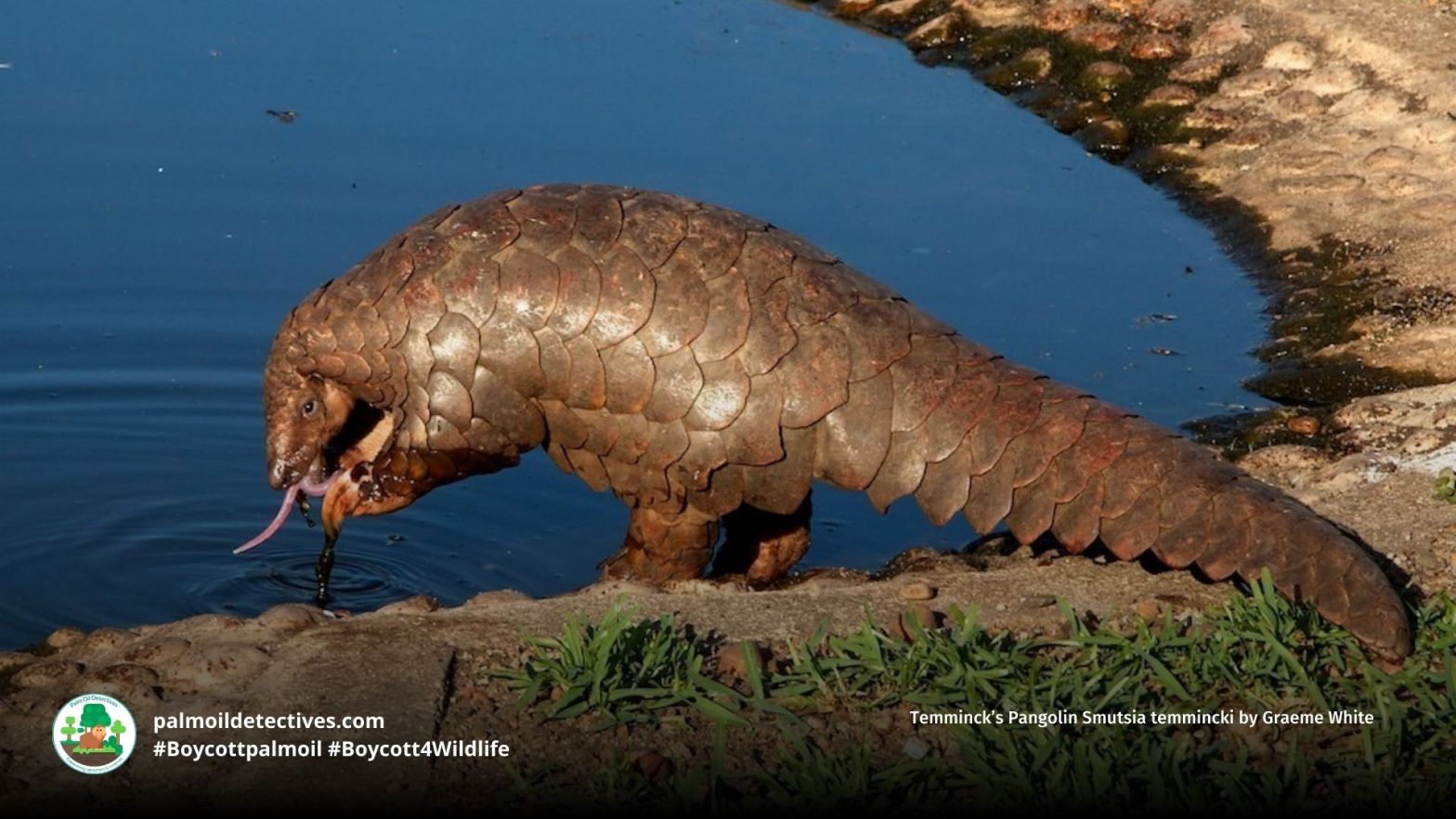
The Temminck’s pangolin Smutsia temminckii is remarkable mammal. They are the second largest of the pangolin species and are reported to weigh between 12.5kg and 21 kilograms. They’re famous for their armour-like keratinous scales and their unique ability to curl into a protective ball when threatened. These elusive creatures are found in the savannahs and woodlands of sub-Saharan Africa and are essential to their ecosystem, controlling insect populations. The word pangolin comes from the Malay word “pengguling” meaning something that rolls up. Owing to their secretive nature and low densities, little is known about the pangolin. The species is killed primarily for Chinese medicine, even though their keratin scales have no medicinal value. All pangolins face a grave threat from trafficking for their meat and scales. Tragically, they are one of the most illegally traded mammals in the world.

Despite their ecological and cultural importance, Temminck’s pangolins are increasingly threatened by habitat destruction and illegal wildlife trade. Habitat loss from palm oil, cocoa and coffee agricultural expansion and mining further compounds their decline. Protect these unique creatures by boycotting palm oil and supporting strong anti-trafficking initiatives. #BoycottPalmOil #Boycott4Wildlife

Northern Tiger Cat (Oncilla) Leopardus tigrinus

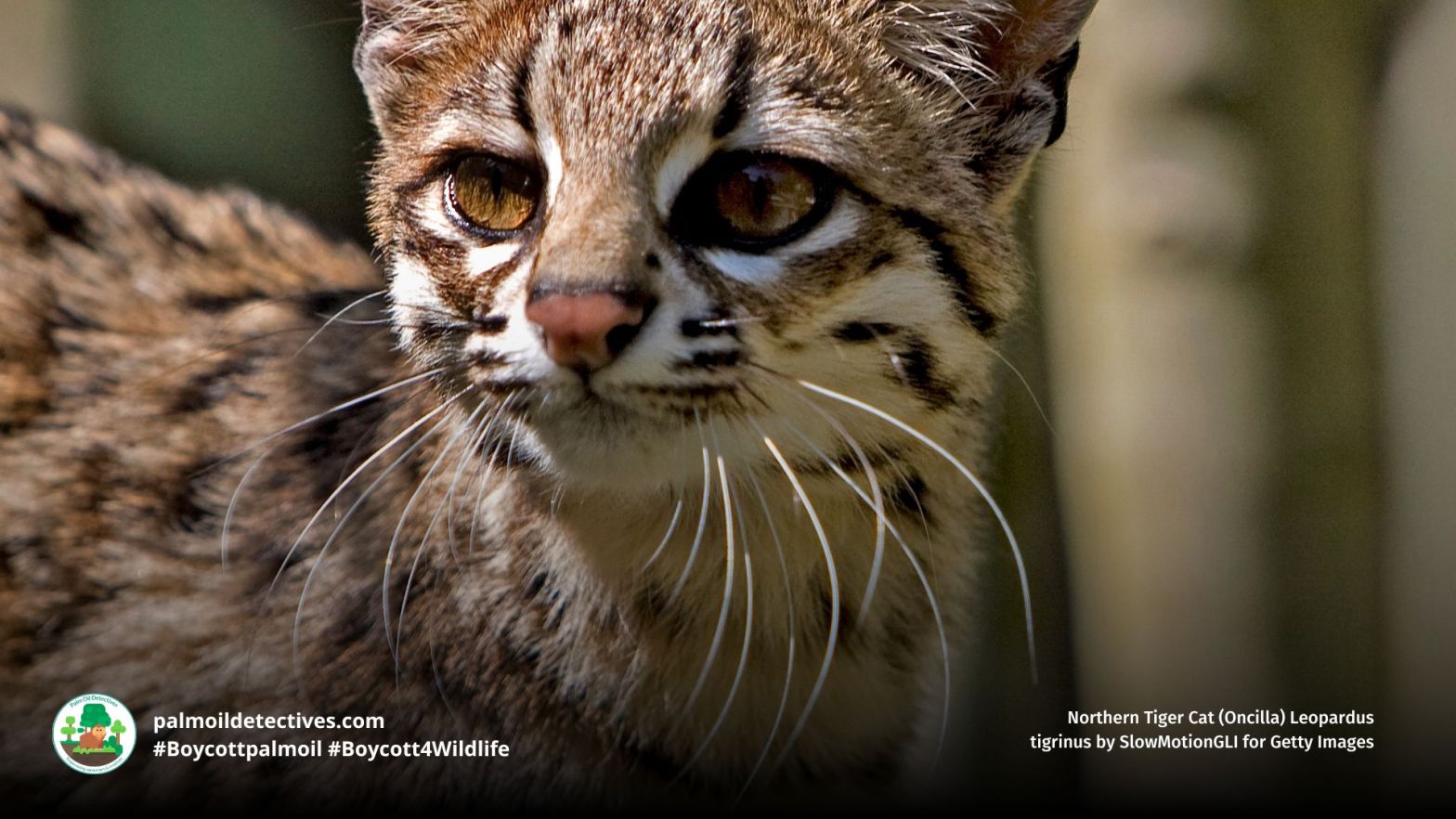
The northern tiger cat, also known as the oncilla (Leopardus tigrinus), is a captivating small wild cat native to Central and South America. Distinguished by their striking, leopard-like coat marked with dark rosettes and a sleek, agile body, this elusive feline is a master of stealth and survival in the dense forests and grasslands they inhabit.

The northern tiger cat is a tiny predator, weighing only 1.5–3 kg, yet they play a significant role in maintaining ecological balance as a keystone predator. These solitary creatures, though mostly ground-dwelling, are adept climbers. They communicate through purring as kittens and have a unique “gurgle” as adults. Their habitats range from the semi-arid Caatinga to the Andean cloud forests. Tragically, this species is classified as Vulnerable, with populations declining due to habitat destruction for palm oil, soy, meat and mining, poaching, and habitat fragmentation. Indigenous-led conservation efforts are vital to protect their remaining habitats. #BoycottPalmOil #Boycott4Wildlife

Four-horned Chameleon Trioceros quadricornis

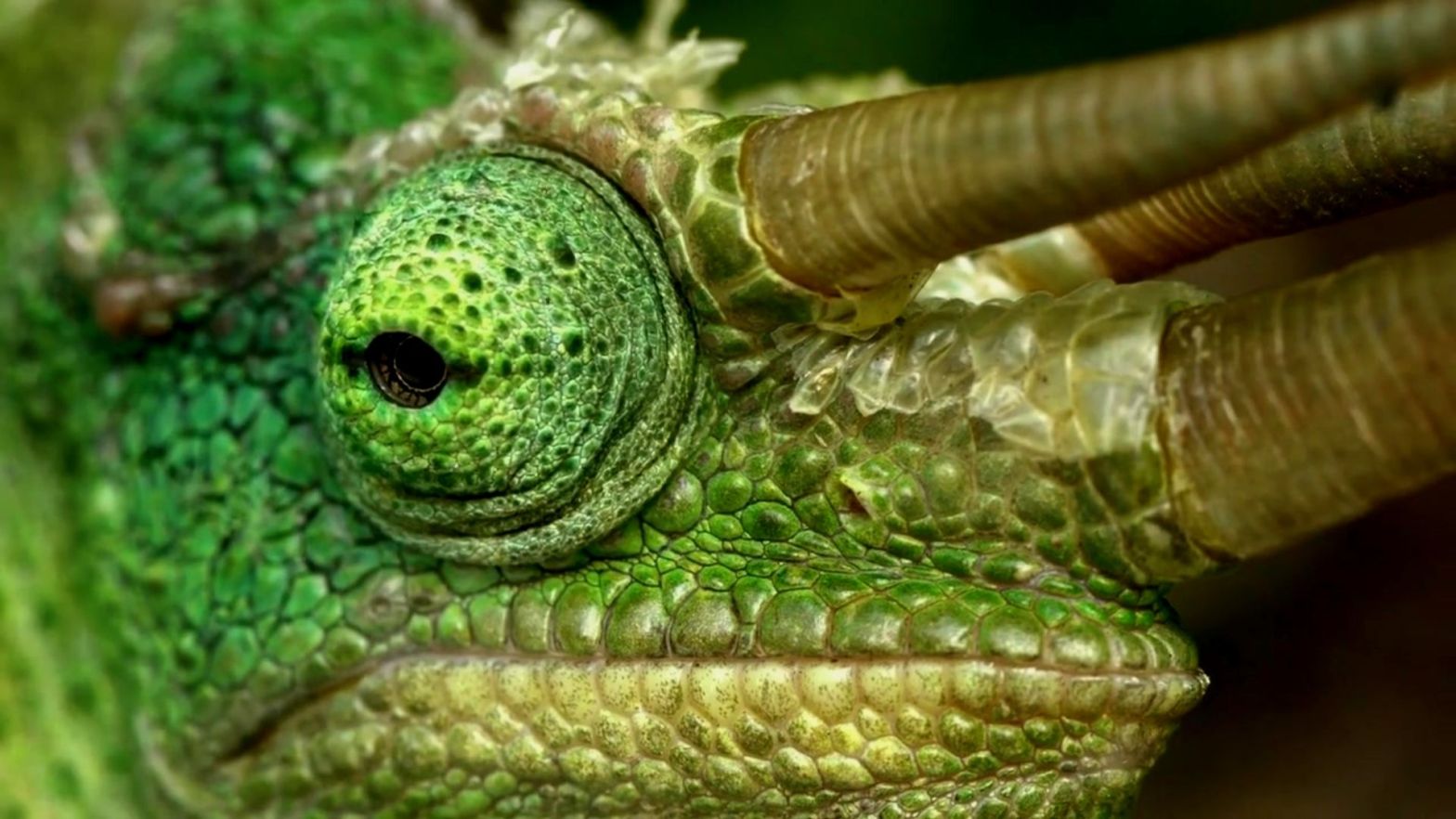
Protect the Four-Horned Chameleons, native to Cameroon’s rainforests, these extraordinary reptiles are now listed as Vulnerable, boycott palm oil for them!

King Cobra Ophiophagus hannah

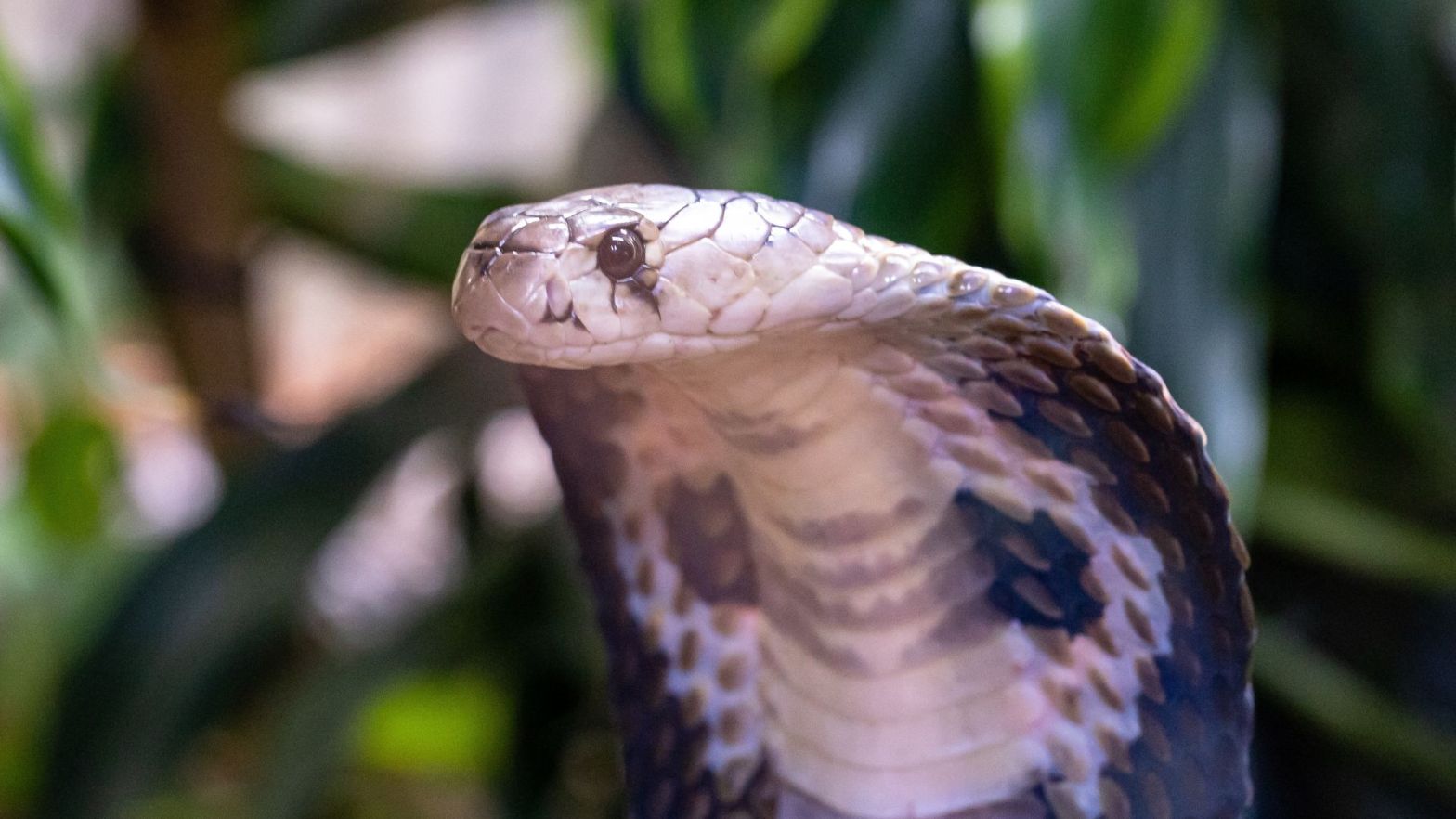
Known as the serpentine king of the jungle in South East Asia, and inspiration for the villain Kaa in the Jungle Book, the King Cobra lives in many different environments, including pristine forests, degraded forests, mangroves, swamps and woodlands of #Thailand, #Cambodia, #Malaysia, #Laos, #Vietnam, #Bangladesh and #India. Their main threat is human-wildlife conflict and ongoing persecution. Palm oil deforestation and other agricultural expansion is also a big threat throughout their range. The world’s largest venomous #snake has a neurotoxic bite powerful enough to kill twenty people or an adult elephant. Sadly, these majestic creatures are persecuted for this reason and do not have adequate protection. Help them every time you shop and #Boycottpalmoil #Boycott4Wildlife

Bearded Pig Sus barbatus

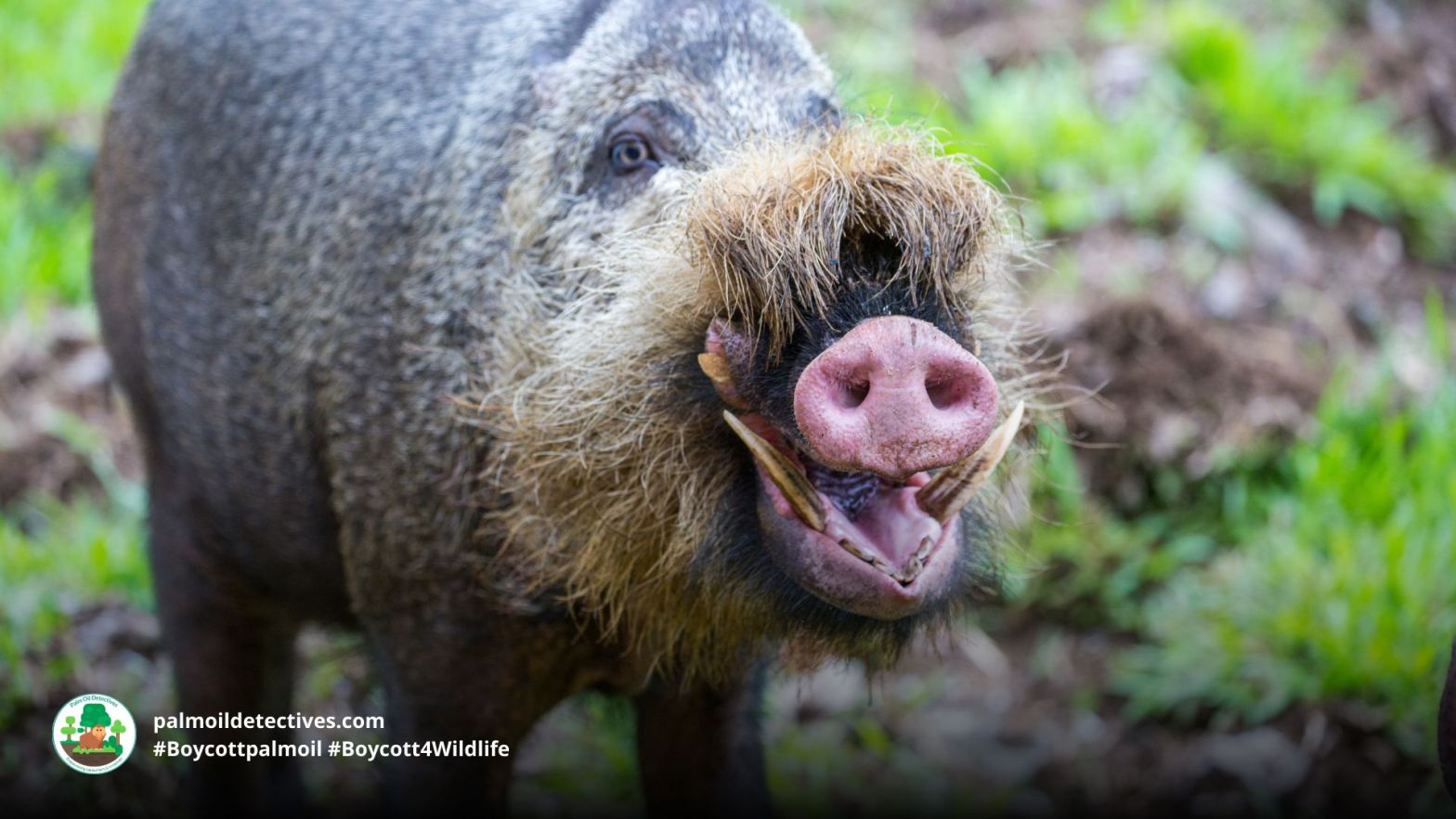
Bearded Pigs have hair which grows along their lower jaws that resembles a beard – giving them their distinctive whiskery appearance and their name. The Bearded Pig is an integral part of Southeast Asia’s tropical ecosystems, known for their unique appearance and critical role as seed dipersers in forest health. They are the only pig species known to migrate, moving in synchrony with fruiting seasons. However, they face mounting threats from habitat loss for palm oil and timber, along with illegal hunting, and disease. Help them to survive and use your wallet as a weapon in the supermarket #BoycottPalmOil #Boycott4Wildlife

Spectral Tarsier Tarsius tarsier

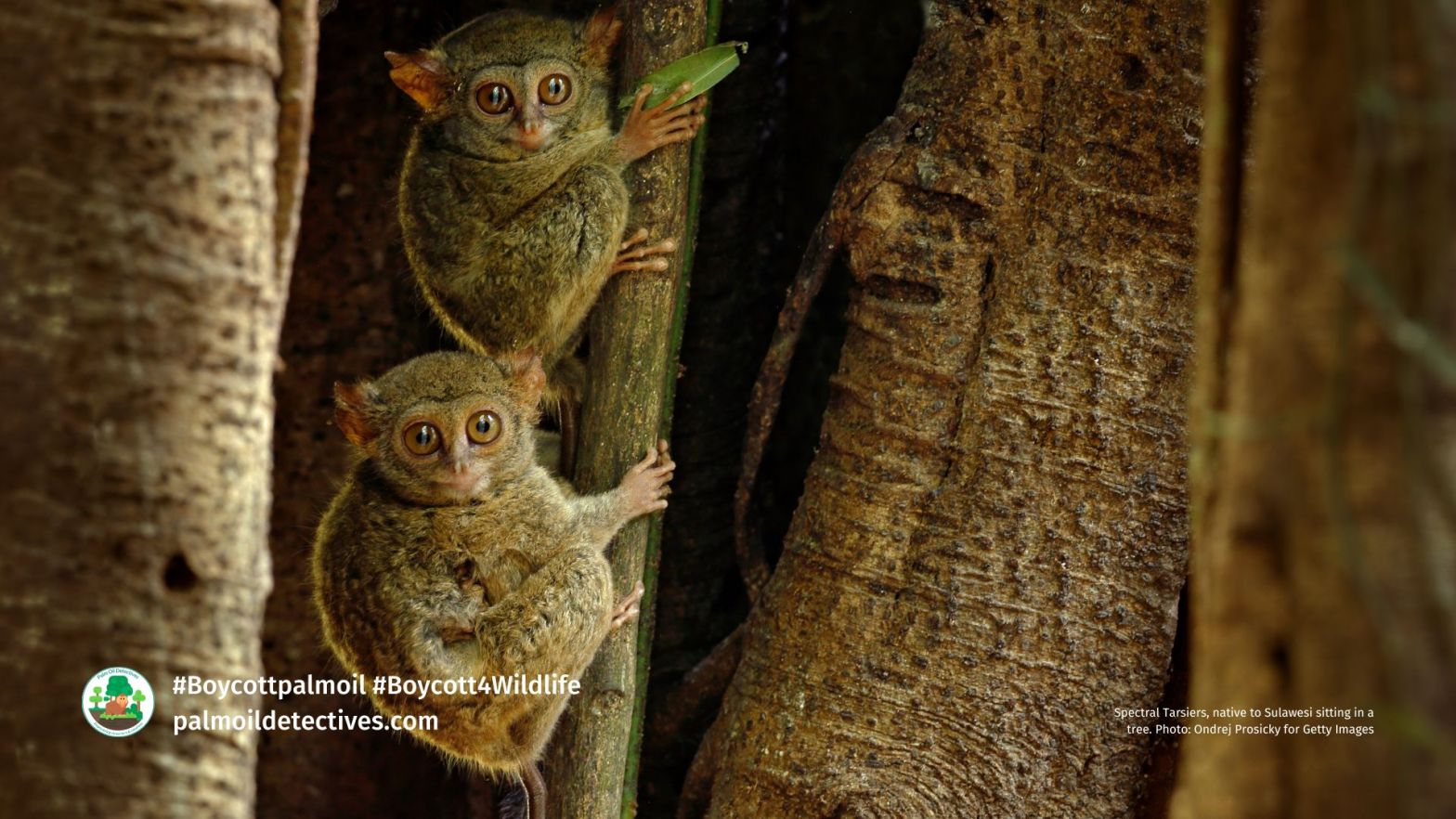
The Spectral Tarsier Tarsius tarsier is one of the smallest and most endearing #primates in the world. With the largest eye-to-body ratio of any #mammal, this wide-eyed, nocturnal #insectivore is found only in #Sulawesi and nearby Indonesian islands. Although they show some tolerance to human-altered landscapes, they are listed as #Vulnerable by the Red List due to rampant #deforestation for #palmoil and #timber agriculture, limestone #mining, #pesticide use and agricultural #pollution and the illegal pet trade. These elusive primates are declining fast. Use your wallet as a weapon: always choose products that are 100% palm oil-free and never support the exotic pet trade.#BoycottPalmOil #Boycott4Wildlife #Vegan

Vordermann’s Flying Squirrel Petinomys vordermanni

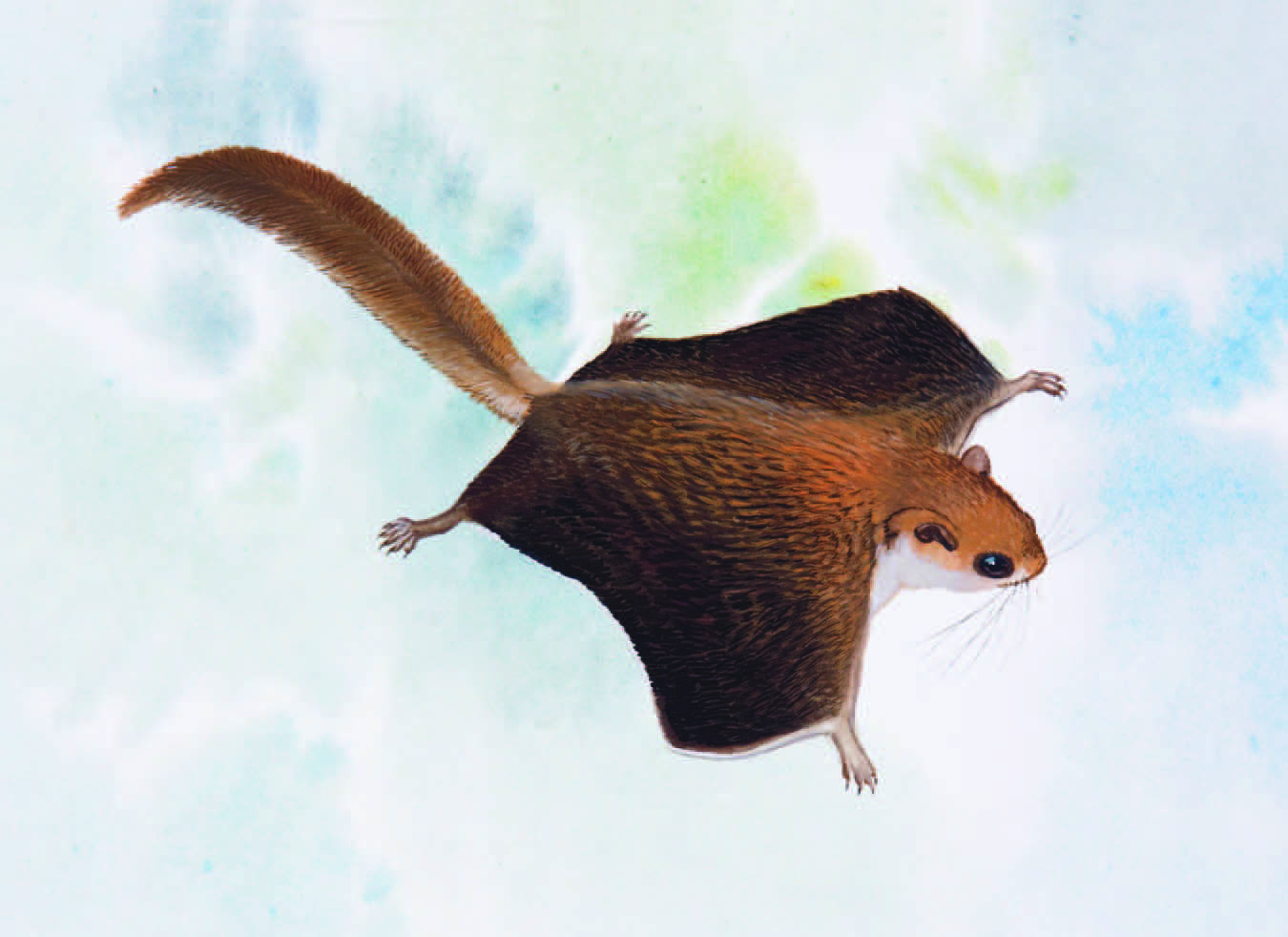
In #Borneo’s twilight, the Vordermann’s flying #squirrel emerges from her nest, resplendent with orange cheeks and black-ringed eyes. This small, #nocturnal #mammal is a master of the rainforest canopy. They use an ingenious membrane called a patagium to effortlessly glide between trees. A flying squirrel’s world is one of constant motion and quiet vigilance. Don’t let this world disappear! The forests that sustain them are vanishing at an alarming rate. Palm oil-driven deforestation, logging, and land conversion are tearing through their habitat, leaving only fragmented forest. Use your wallet as a weapon and #BoycottPalmOil #Boycott4Wildlife.

Seri’s Tree Kangaroo Dendrolagus stellarum

Seri’s #TreeKangaroo is one of the world’s most elusive #marsupials of the genus #Dendrolagus surviving only in the remote mountains of #PapuaNewGuinea and the contested territory of #WestPapua. In these highlands, Indigenous Papuans have resisted Indonesian rule for over half a century, while the forests themselves are threatened by commercial logging, palm oil, and hunting. The Seri’s Tree Kangaroo’s silvery coat and secretive habits help them blend into the forest, but not even the tallest trees can shield them from bulldozers. When you shop ensure that you BoycottPalmOil, Boycott4Wildlife to fight for their protection.

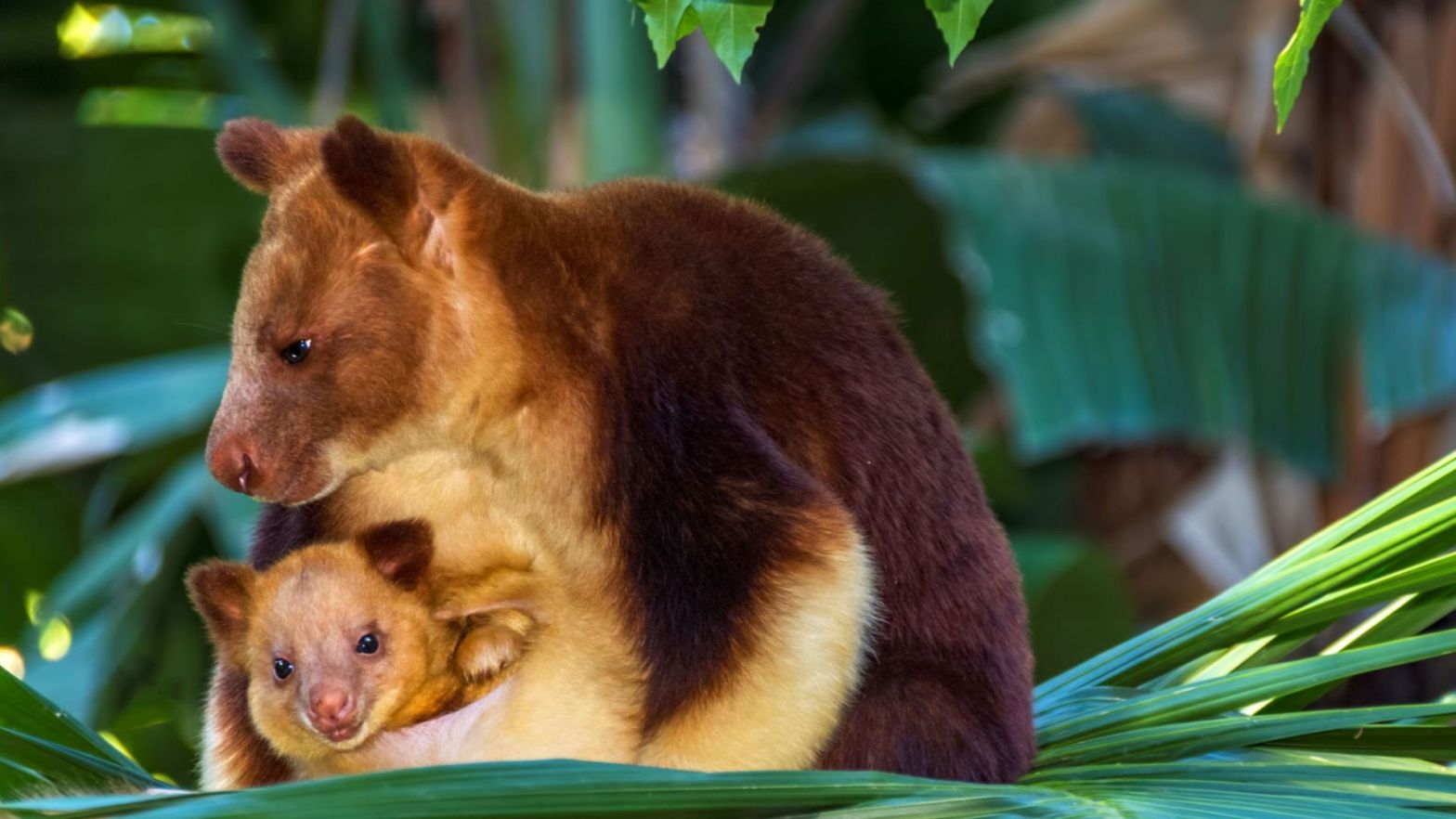
Lowlands Tree Kangaroo Dendrolagus spadix

The Lowlands Tree #Kangaroo Dendrolagus spadix is a #Vulnerable species endemic to the forests of #PapuaNewGuinea. Unlike their ground-dwelling relatives, they are agile climbers, leaping through lush rainforest canopies with ease despite their bulky size. However, their survival is in peril due to widespread #deforestation driven by #palmoil plantations, #timber logging, and expansion of #roads, which has led to habitat destruction and increased #hunting pressures. If urgent action is not taken, this unique species faces further decline. Take action and resist for this species every time you shop and go #BoycottPalmOil #Boycott4Wildlife in the supermarket.

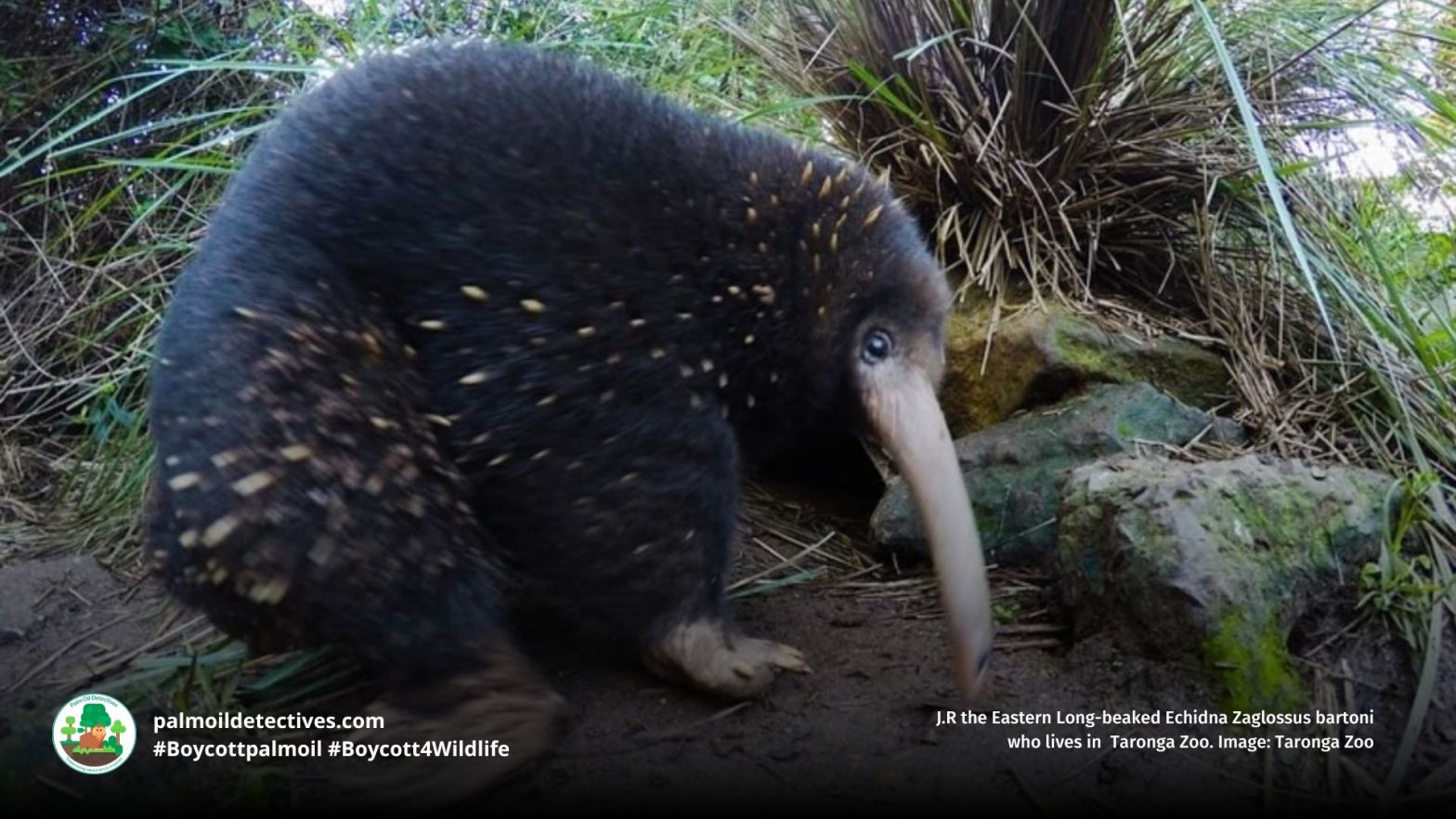
Eastern Long-beaked Echidna Zaglossus bartoni

The Eastern long-beaked echidna Zaglossus bartoni is one of the planet’s most extraordinary mammals—a living relic from the dawn of mammalian evolution. Found only in the rugged, remote mountains of New Guinea, this remarkable creature is genetically and physically unlike any other animal alive today. Their existence bridges ancient evolutionary traits with the survival needs of modern species, representing a fascinating link to the distant past.

Tragically, these rare monotremes face the threat of extinction due to hunting and habitat loss for palm oil, timber and gold mining. Support indigenous-led conservation and fight for their survival. Use your wallet as a weapon and #BoycottPalmOil #Boycott4Wildlife.

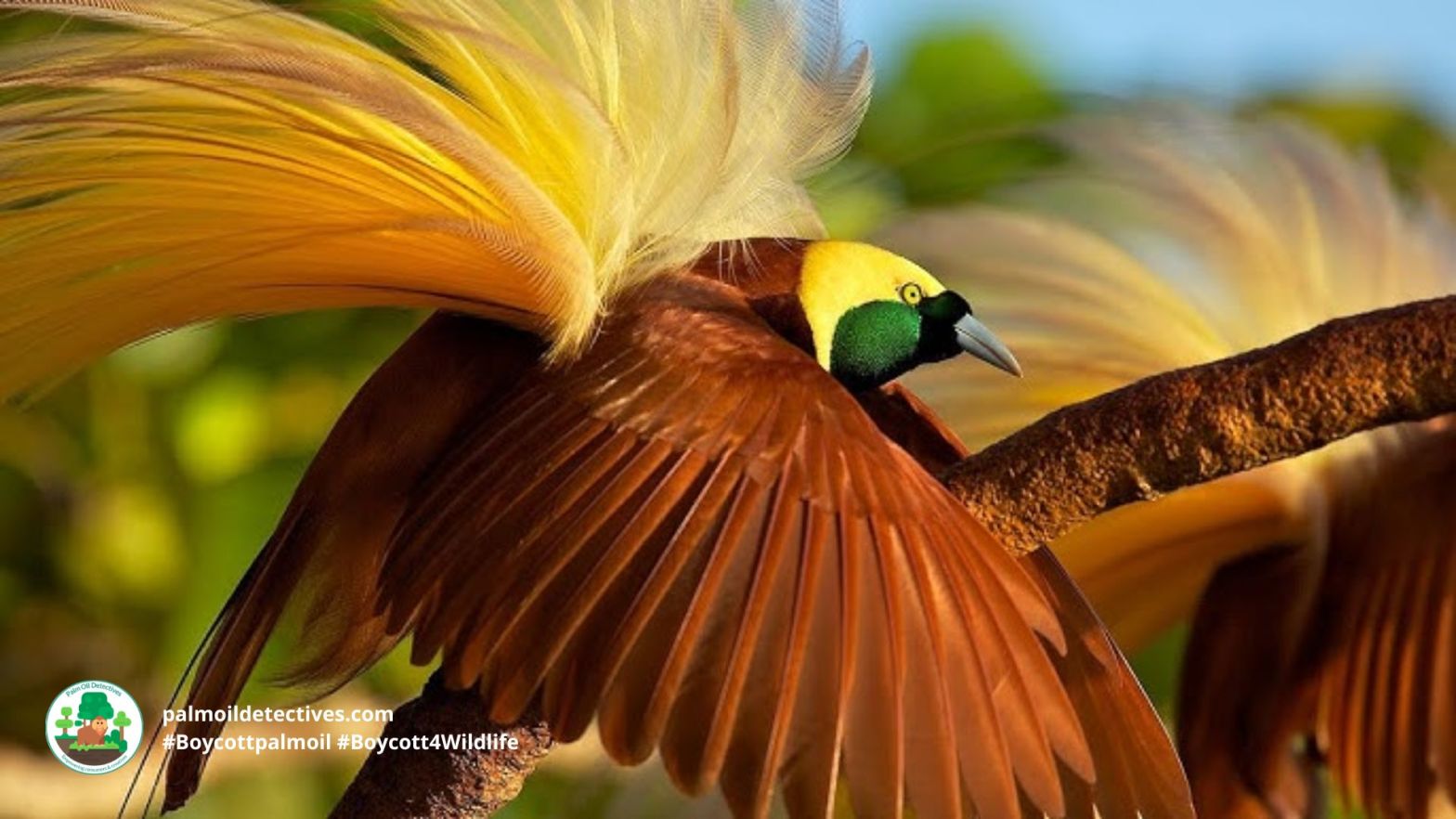
Goldie’s Bird-of-paradise Paradisaea decora

The Goldie’s Bird of Paradise is a rustling rainbow 🦜🌈 They are #vulnerable in #rainforests of #WestPapua from #mining and #palmoil #deforestation. Fight for them and #Boycottpalmoil #Boycott4Wildlife 🌴🔥👎⛔ @palmoildetect.bsky.social https://palmoildetectives.com/2021/02/03/goldies-bird-of-paradise-paradisaea-decora/

Blue-eyed Cockatoo Cacatua ophthalmica

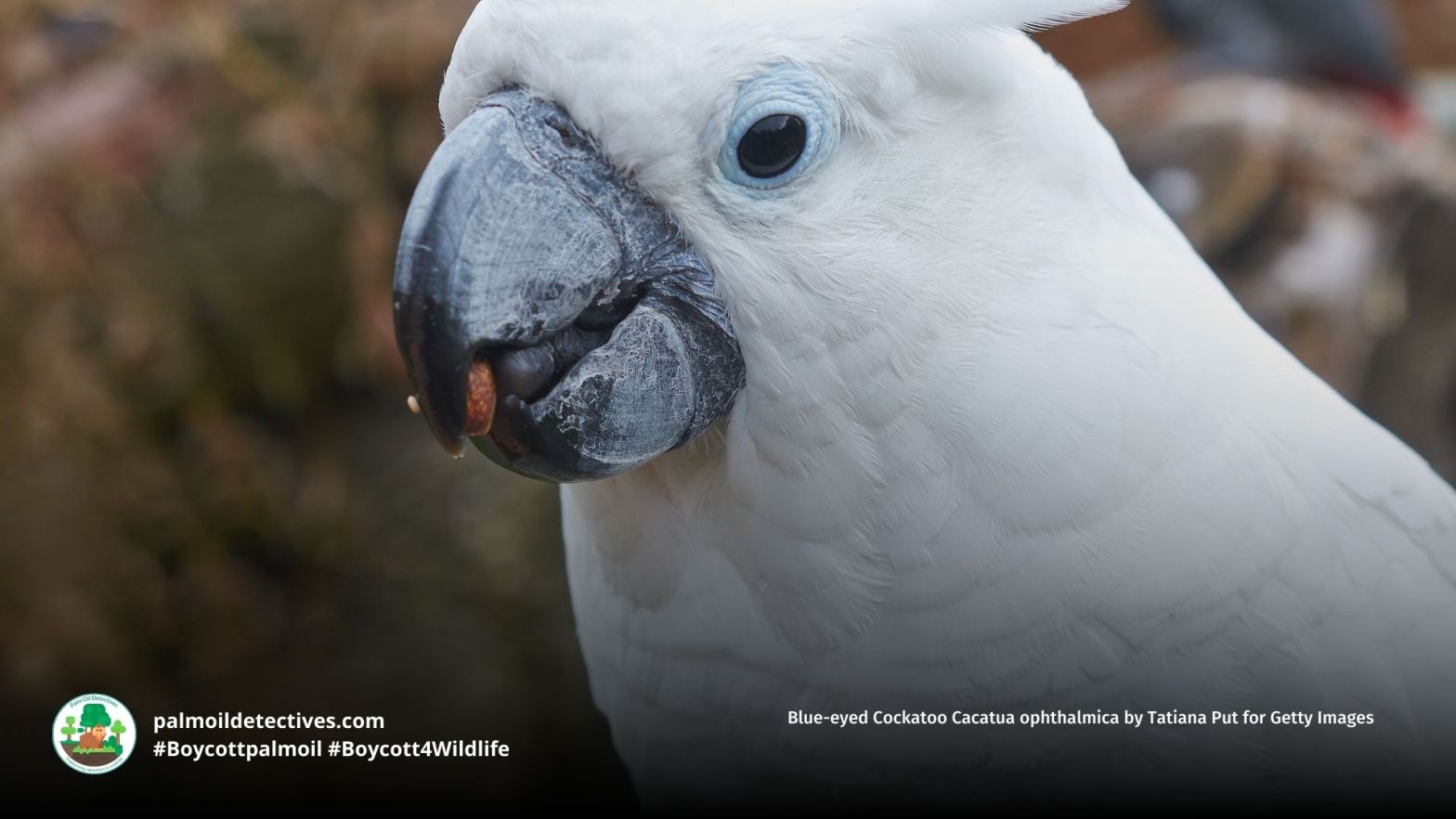
The Blue-eyed Cockatoo is a striking and charismatic bird, known for their vivid blue eye rings and expressive crests. These cockatoos depend on mature forests for nesting and food but face significant threats, including habitat destruction caused by out-of-control palm oil plantations, illegal hunting, and the illegal pet trade. Conservation efforts are critical to ensure the survival of this remarkable species. #BoycottPalmOil #Boycott4Wildlife

Arfak Ringtail Pseudochirulus schlegeli

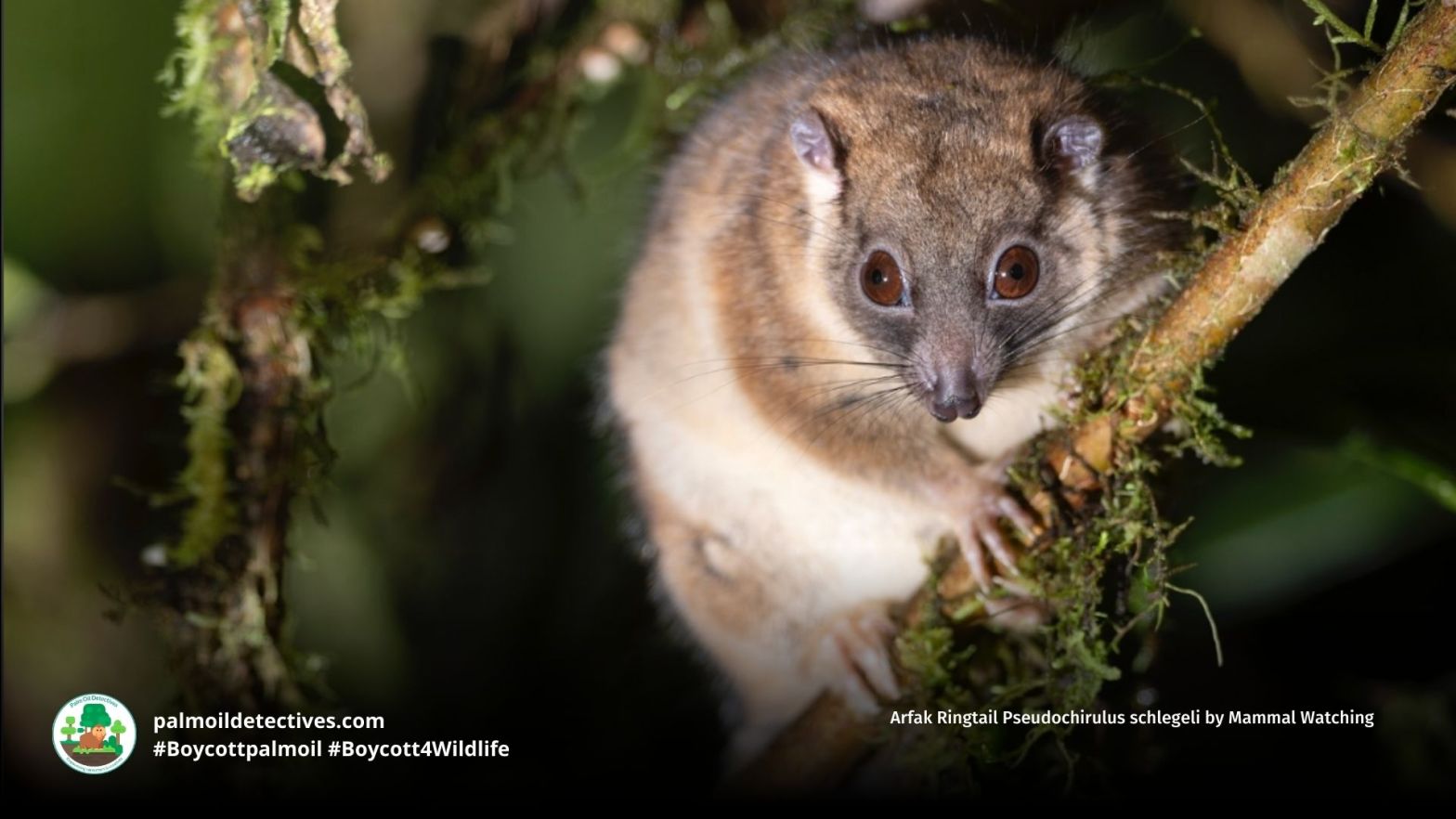
The Arfak Ringtail Pseudochirulus schlegeli is a wide-eyed and bushy tailed #possum living in the remote Arfak Mountains and cloud forests of #WestPapua. Although little is known of these tree-dwelling #marsupials, much can be gleaned from related #mammals in Australasia. These cryptic and fluffy arboreal beauties are found in the mossy, cloud-wrapped forests of the Vogelkop Peninsula’s Arfak Mountains. Listed as #Vulnerable, the species faces mounting pressure from #deforestation for #palmoil and #timber and #hunting by local communities. With fewer than five known locations and less than 20,000 km² of suitable habitat, this highland #possum could disappear quietly without urgent action. Protect #indigenous forests, say no to palm oil, and stand up against wildlife exploitation #BoycottPalmOil #Boycott4Wildlife #Vegan

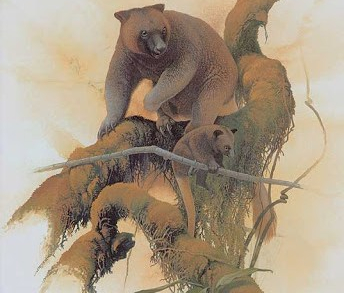
Bear Cuscus Ailurops ursinus

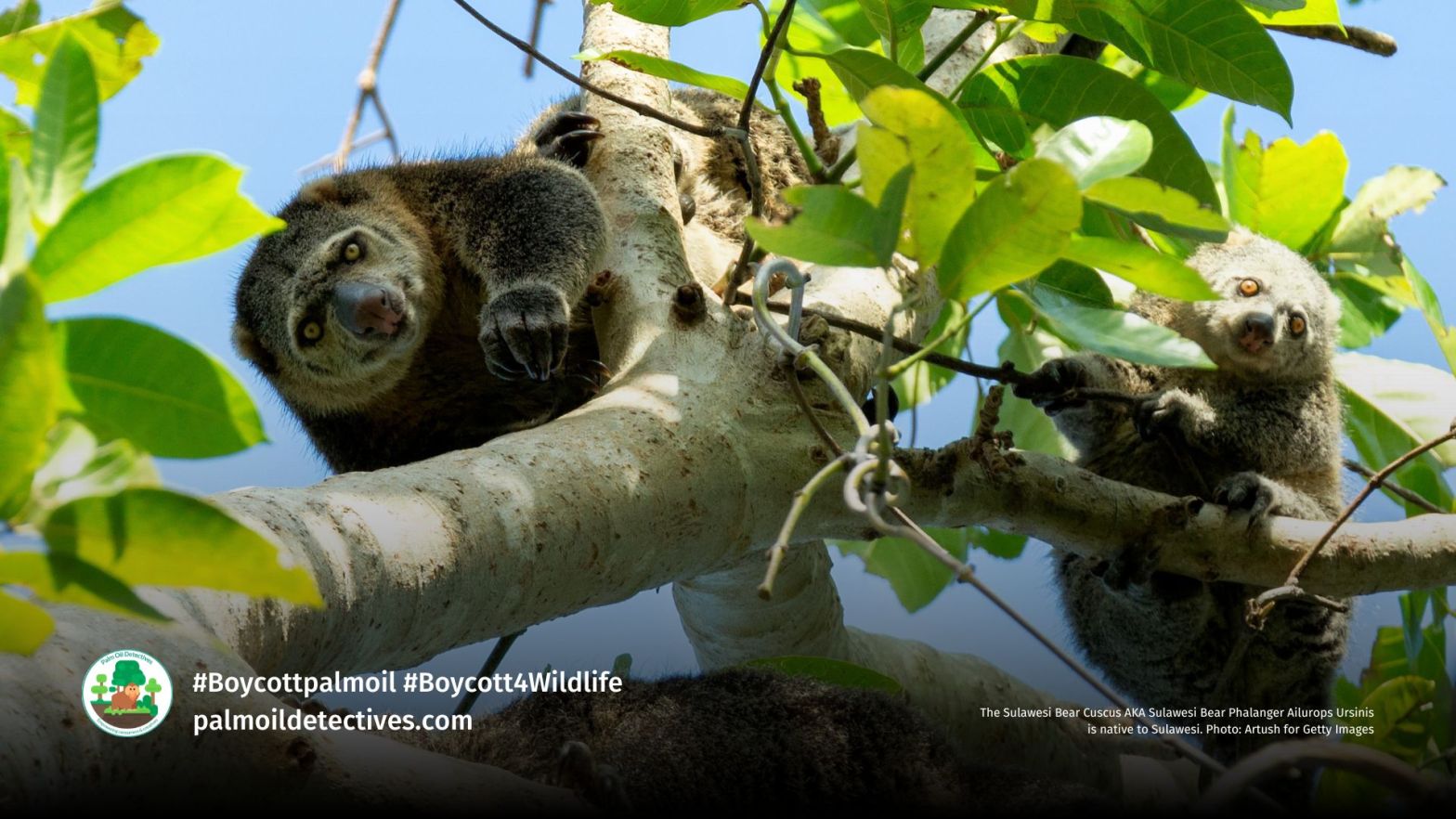
The Bear Cuscus also known as the Sulawesi bear cuscus is an unusual and charming marsupial, named for their thick, dark, bear-like fur. Found only on the island of Sulawesi and nearby islands, this slow-moving, arboreal creature spends much of their day resting in the tropical rainforests of Indonesia. The Sulawesi bear cuscus uses their elongated claws and prehensile tail to navigate the canopy, feeding on a diet of leaves, flowers, and unripe fruit. Sadly, palm oil deforestation and hunting pose serious threats to this species, resulting in a significant decline in their population. Protecting the Sulawesi bear cuscus is essential to preserving the biodiversity of Indonesia’s rainforests. Say no to palm oil and industrial agriculture every time you shop, and use the hashtags #BoycottPalmOil and #Boycott4Wildlife on social media to vocally oppose the greenwashing of “sustainable” palm oil.

Vogelkop Tree Kangaroo Dendrolagus ursinus

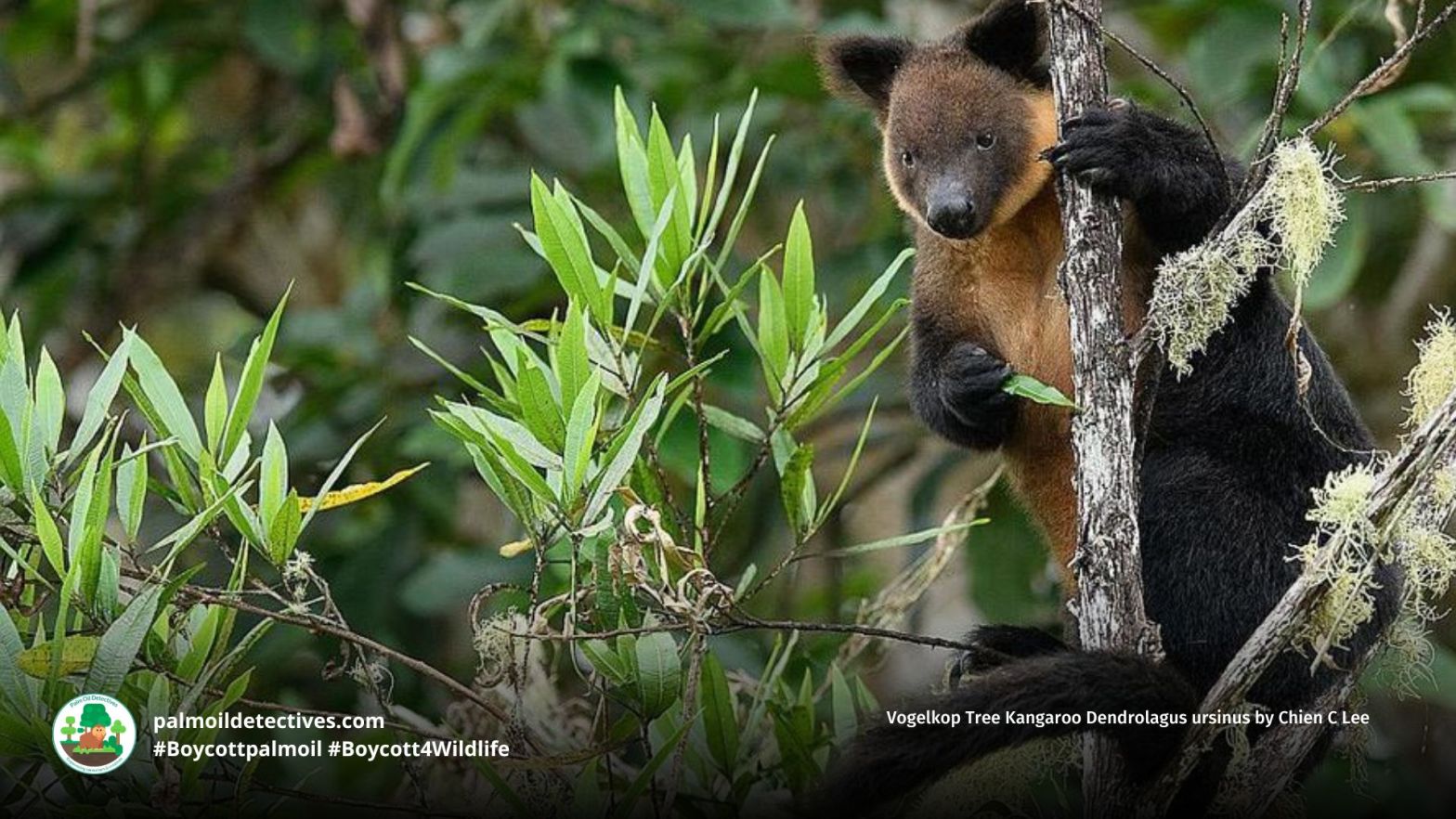
Protect stunning marsupials Vogelkop Tree Kangaroo Dendrolagus ursinus and boycott palm oil! They live in the Vogelkop and Fakfak Peninsulas of West Papua.

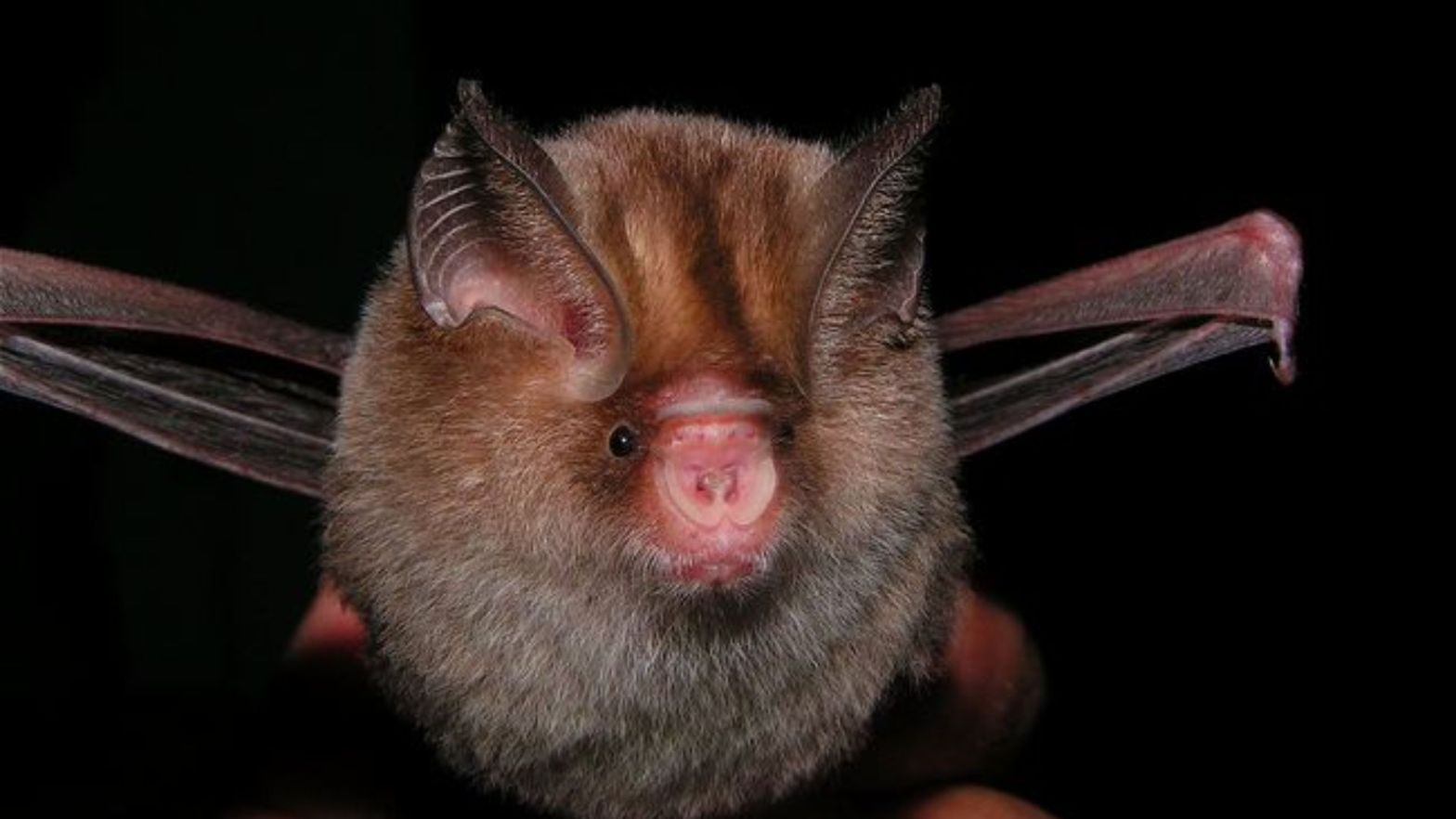
Thailand Leaf-nosed Bat Hipposideros halophyllus

Vulnerable Thailand Leaf-nosed Bats live in limestone caves in Thailand and Malaysia. Threats include mining, palm oil and pesticide use. Take action now!

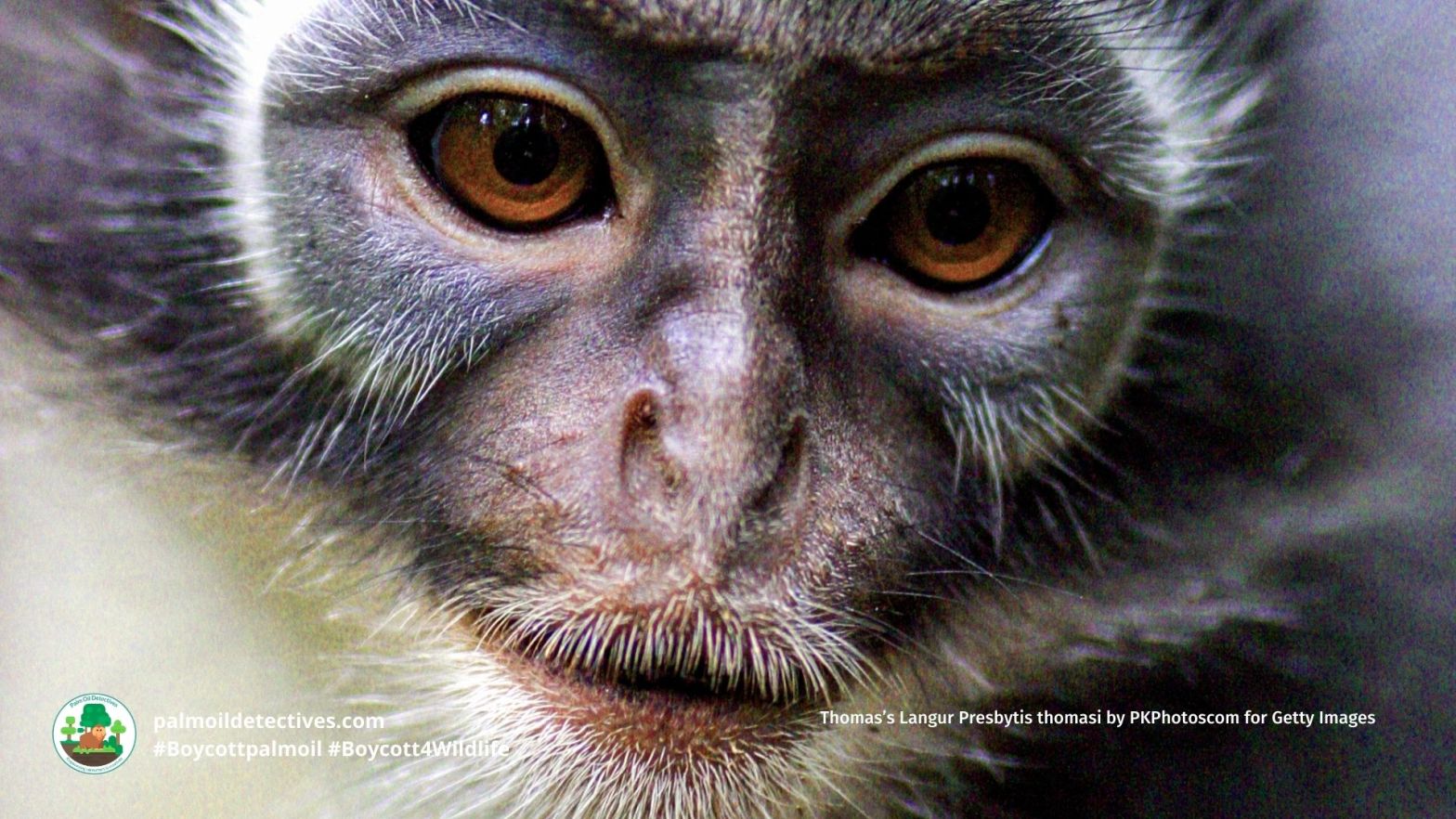
Thomas’s Langur Presbytis thomasi

Thomas’s Langur, also known as the North Sumatran Leaf #Monkey is famous for their bold facial stripes giving them a handsome profile. These monkeys are endemic to the lush forests of northern Sumatra, Indonesia. Listed as Vulnerable by the Red List, this striking species is facing serious population declines due to habitat loss, primarily driven by illegal logging and oil palm deforestation. Though not as globally known as some of its neighbours, such as the Sumatran Orangutan, Thomas’s Langur plays an equally vital role in forest regeneration and seed dispersal. You can help protect them by using your consumer power: always choose palm oil-free products.#BoycottPalmOil #Boycott4Wildlife #Vegan

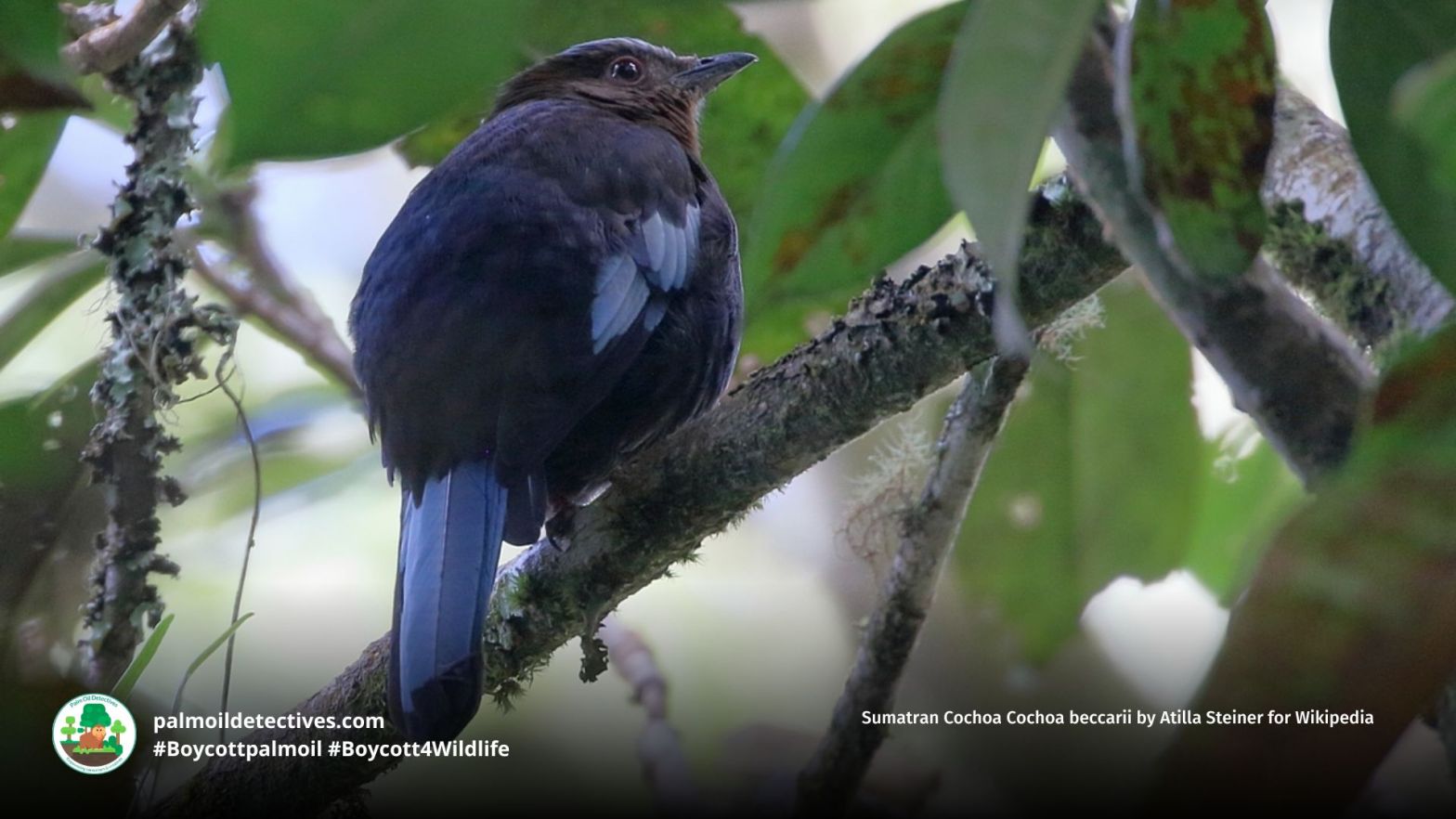
Sumatran Cochoa Cochoa beccarii

The Sumatran Cochoa Cochoa beccarii is a rare and secretive forest-dwelling #songbird found only in the highland rainforests of #Sumatra #Indonesia. With their shimmering electric blue and smoky black plumage and elusive behaviour, this species of songbird moves in a melodic symphony of song through the middle and upper canopy, often remaining hidden from view. Although currently listed as #Vulnerable, the species is experiencing a slow but steady decline caused by #deforestation and trapping for the illegal bird trade. As demand for exotic songbirds grows, especially online, the Sumatran Cochoa faces a very real risk of disappearing from the wild. Use your wallet as a weapon. Say no to palm oil and never support the illegal wildlife trafficking and illegal songbird trade. Campaign against wildlife trafficking and #BoycottPalmOil #Boycott4Wildlife #Vegan