
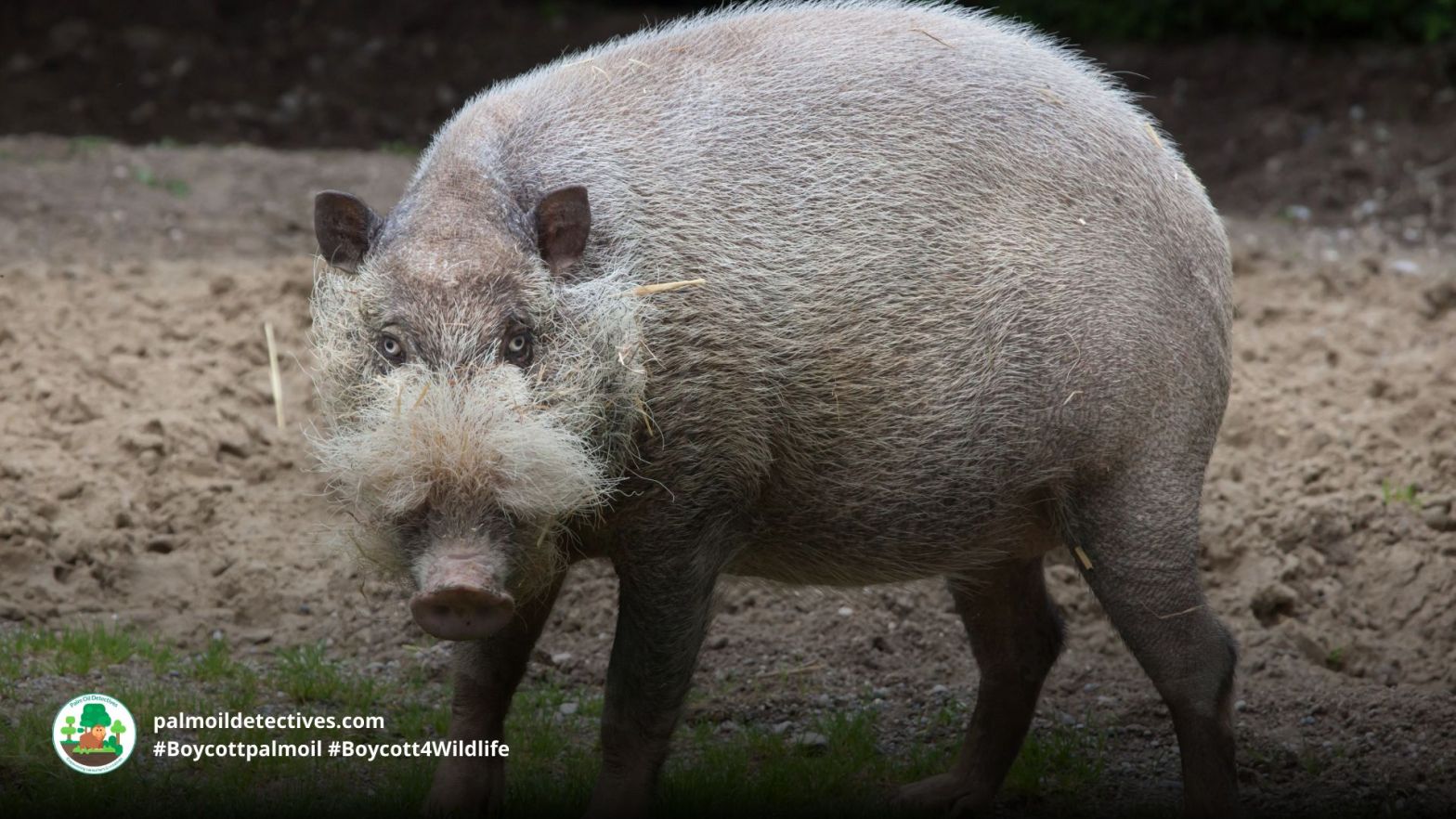
Borneo – fourth-largest island in the world, home to more than 20 million people. With so many well known species on the island like elephants, rhinos and orangutans, one species continues to fly under the radar. Sus barbatus AKA the Borneo Bearded Pig should be the most emblematic animal on the island. This wild boarContinue reading “Borneo’s bearded pig: forest gardener and eocosysem protector!”
Author Archives: Palm Oil Detectives
Opinion: Seven strategies that offer hope for rainforests

Discover real hope for our planet’s rainforests. Explore seven strategies, from new technologies to innovative financing, that are brightening their future.
Brands Using 100% Deforestation Free Palm Oil

These brands have been proven to have already ceased deforestation for palm oil, soy, meat and timber. Verification of this status has been sought from Greenpeace, Rainforest Action Network and Chain Reaction Research.
Nestlé
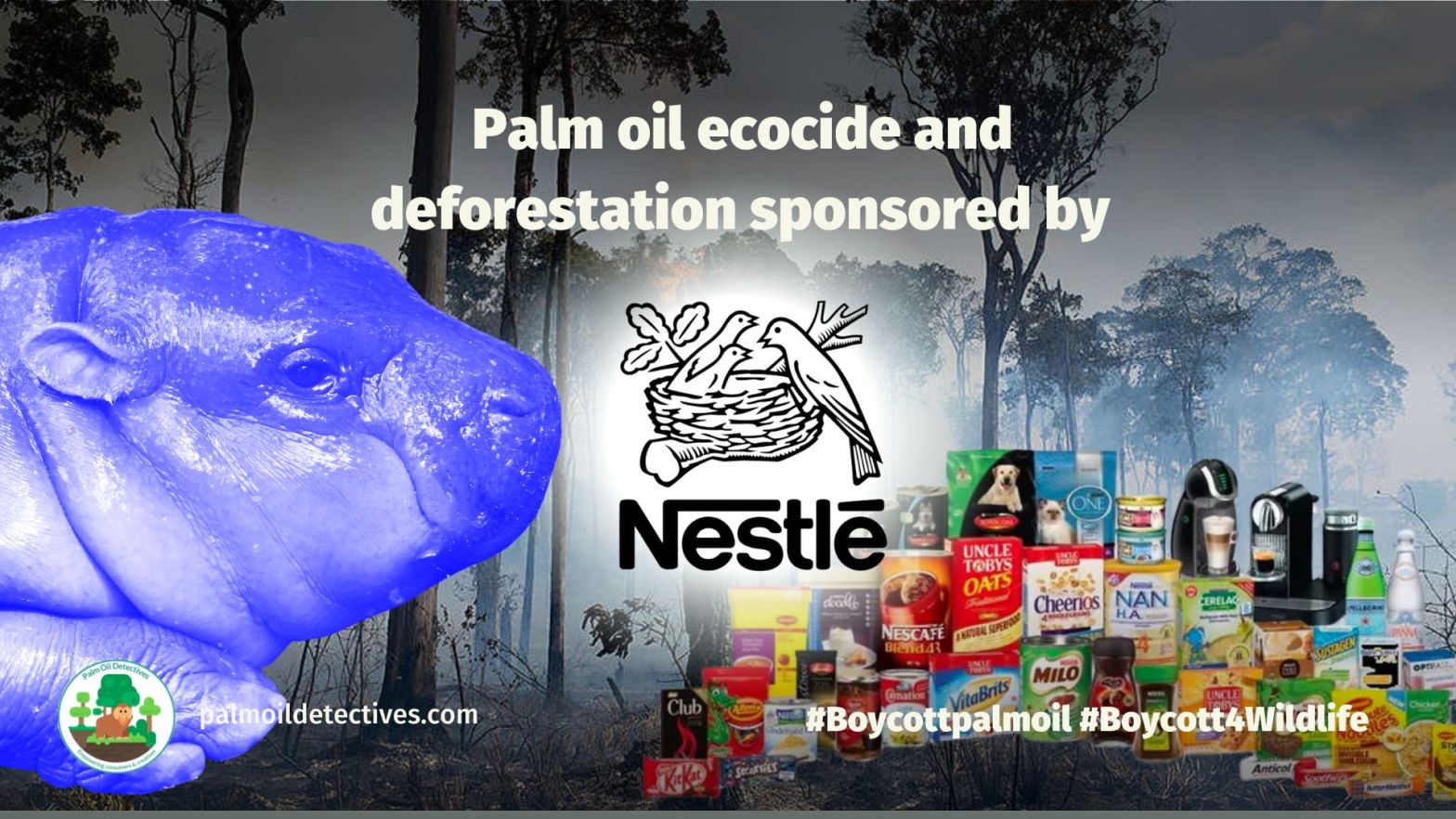
Nestlé is destroying rainforests, releasing mega-tonnes of carbon into the atmosphere, and killing hundreds of endangered species. Once these animals are gone – they are gone for good. See Nestlé’s full list of mills where they buy palm oil, six of these are actively destroying forest.
Titiwangsa Horned Tree Lizard Acanthosaura titiwangsaensis
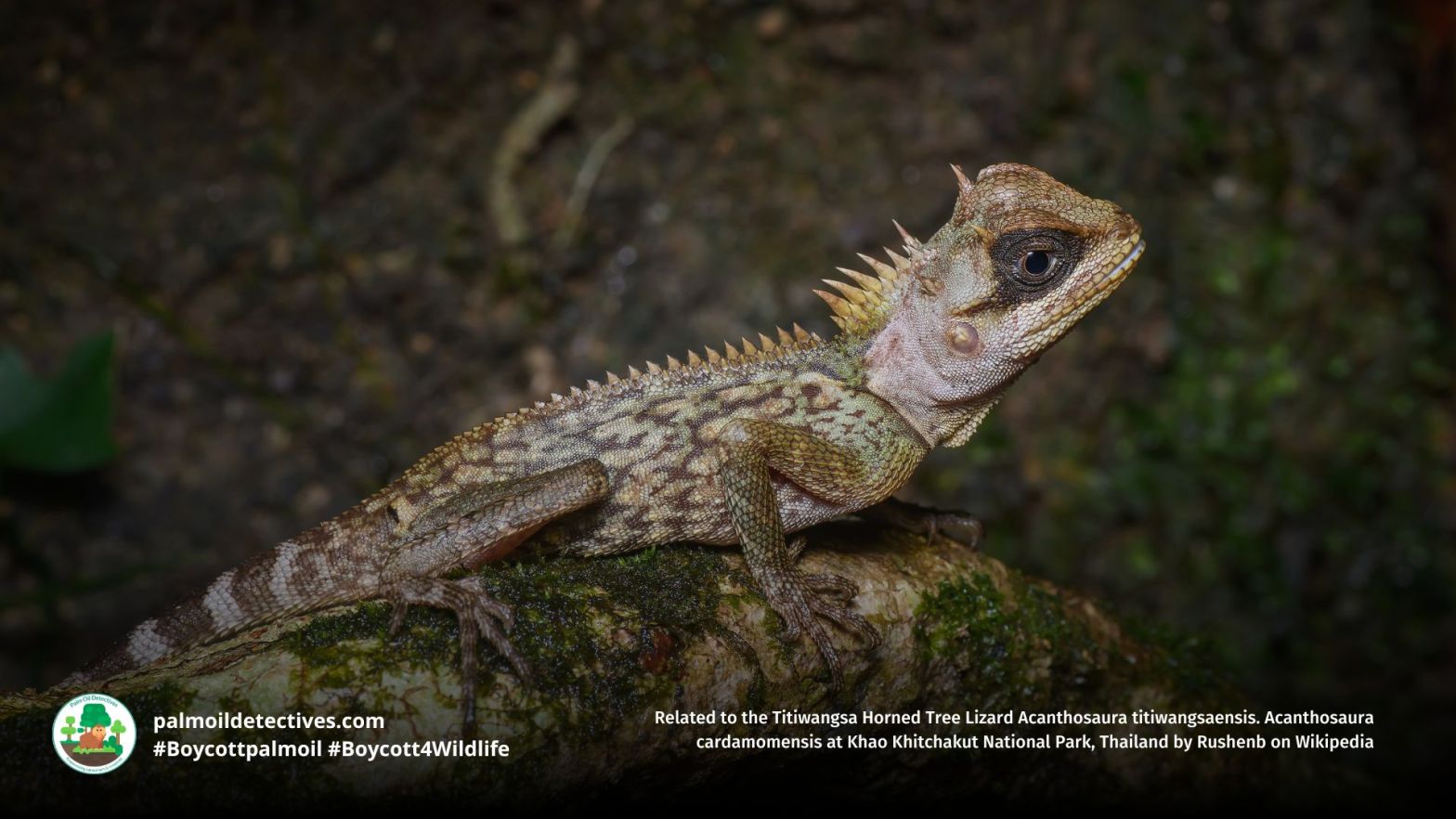
The Titiwangsa Horned Tree Lizard is a stunning and elusive reptile found exclusively in the cool montane forests of Peninsular Malaysia’s Titiwangsa Mountain Range. First described in 2009, they are known for their striking spines and intricate camouflage, which allow them to blend seamlessly into their forested environment. They are threatened by palm oil deforestation and urban expansion in Peninsular Malaysia. Help them to survive when you #BoycottPalmOil #Boycott4Wildlife in the supermarket!
The Counterpunch: Consumer Solutions To Fight Extinction
Although the world is highly complex, every person can make a difference. That previous sentence almost sounds like a cliche right? Really it’s not. If every person on the planet made a few simple lifestyle changes, it would result in less demand on land and resources and soften the impact of deforestation on endangered species.Continue reading “The Counterpunch: Consumer Solutions To Fight Extinction”
Tonkin Black Crested Gibbon Nomascus concolor ssp. concolor
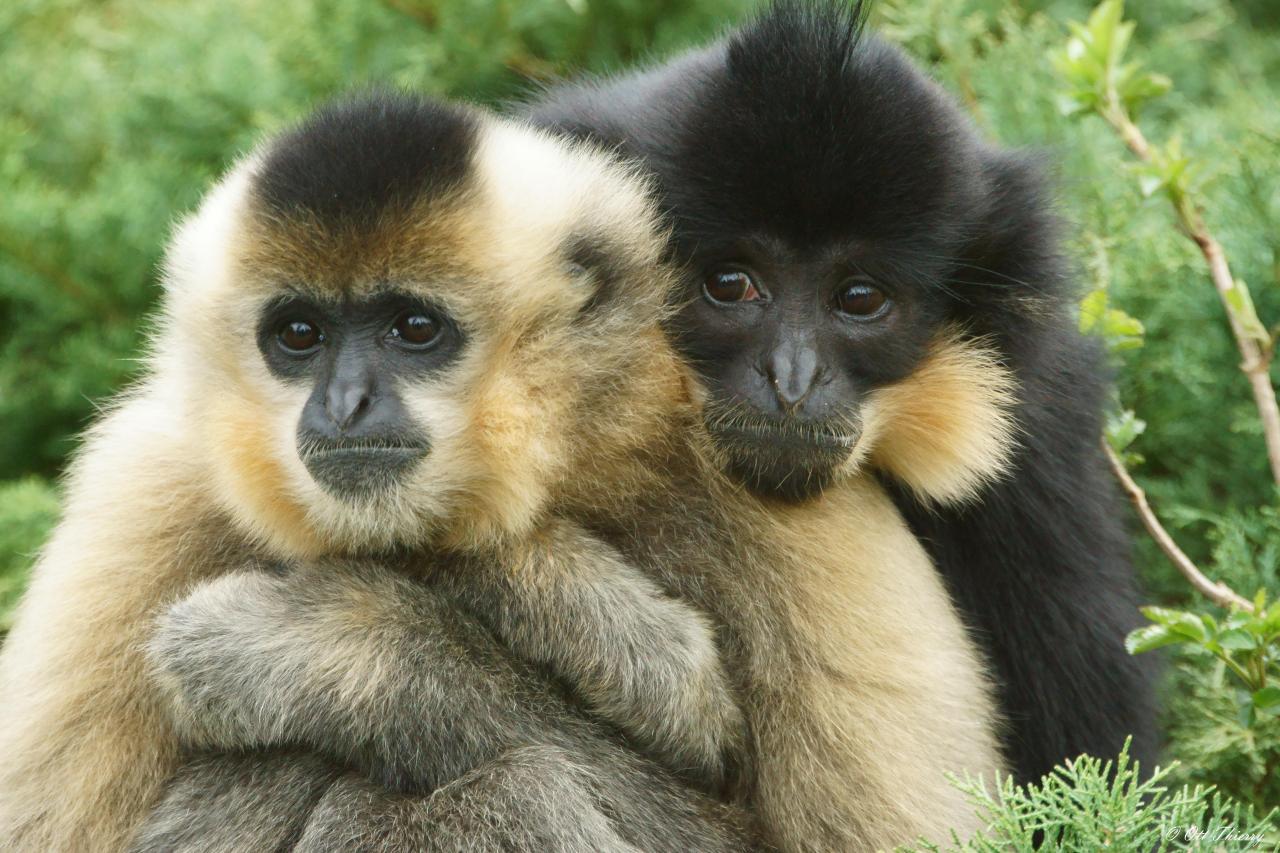
The Tonkin Black Crested #Gibbon of the genus Nomascus are also known as the Indochinese black-crested gibbon. They are critically endangered #primates native to the misty mountain forests of northern #Vietnam, southern #China, and parts of #Laos. These highly intelligent and social #primates are famous for their morning duets, with pairs singing in species specific harmony to reinforce familial bonds and mark their territory. Research has shown that different populations have unique vocal accents, much like human dialects, making their songs distinct across their range. Despite their unique and sparkling vocal range, they are tragically on the edge of extinction. Only around 300 individuals are left in the wild, their survival is threatened by deforestation for palm oil, coffee, and rubber plantations, along with hunting for the illegal pet trade and traditional medicine. Help them to survive every time you shop boycott palm oil and call-out the exotic pet trade! #BoycottPalmOil #Boycott4Wildlife
Wrinkled Hornbill Rhabdotorrhinus corrugatus
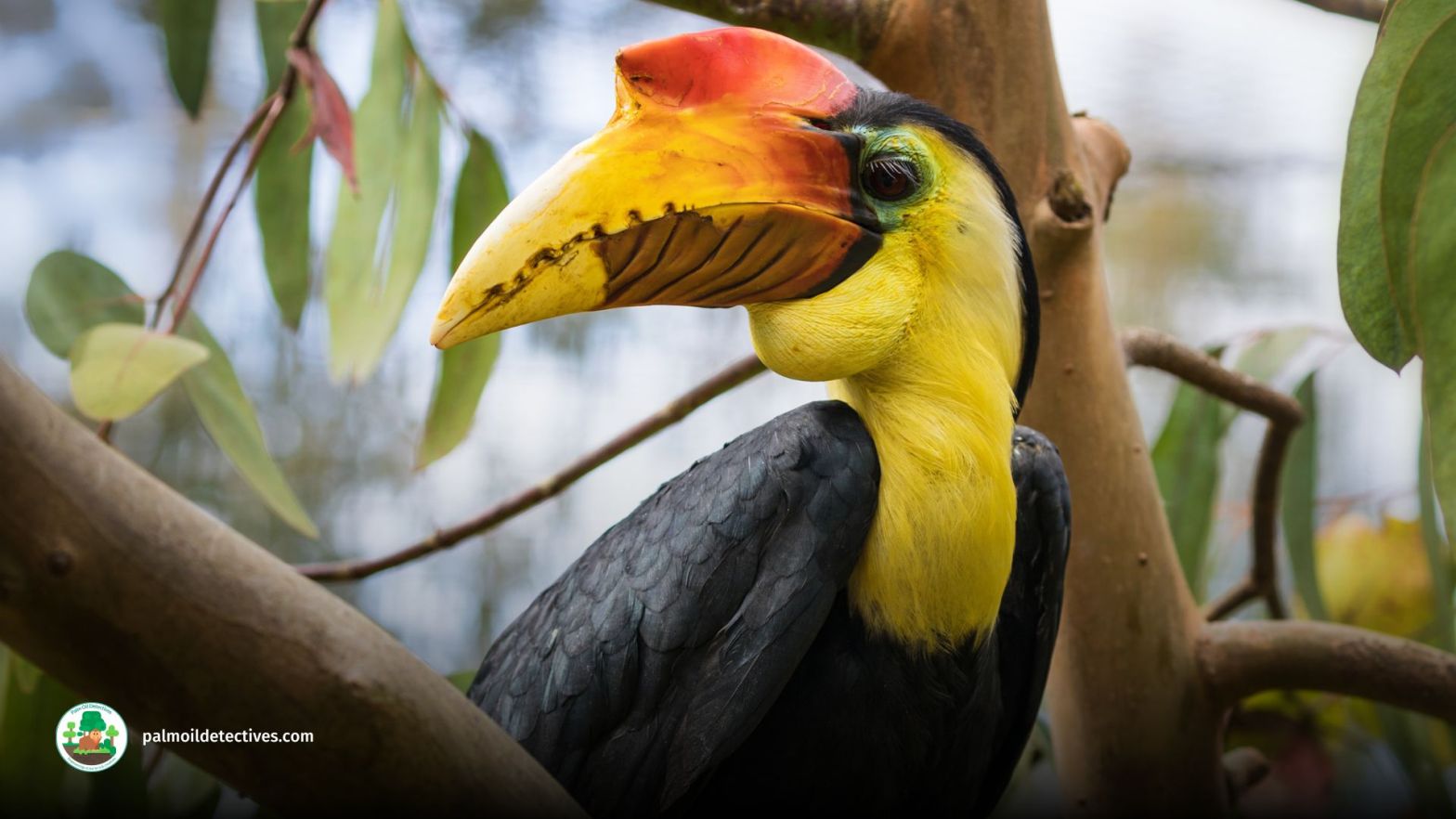
Discover the fascinating world of the Wrinkled Hornbill. These ancient and magnificent birds thriving in lush primary evergreen and swamp forests up to 1,000 meters above sea level. Unfortunately, their habitat faces threats from forest fires and the conversion of lowland forests into large-scale palm oil and rubber plantations, along with small-scale agriculture. These majestic creatures rely on large trees for nesting, putting them at risk due to logging. But we can help! By boycotting palm oil and adopting a #vegan lifestyle, we can protect the Wrinkled Hornbills and their precious home. Let’s come together and make a positive impact for wildlife preservation. 🌳🐦💚 #Boycottpalmoil #Boycott4Wildlife
Malayan Forest Gecko Cyrtodactylus pulchellus
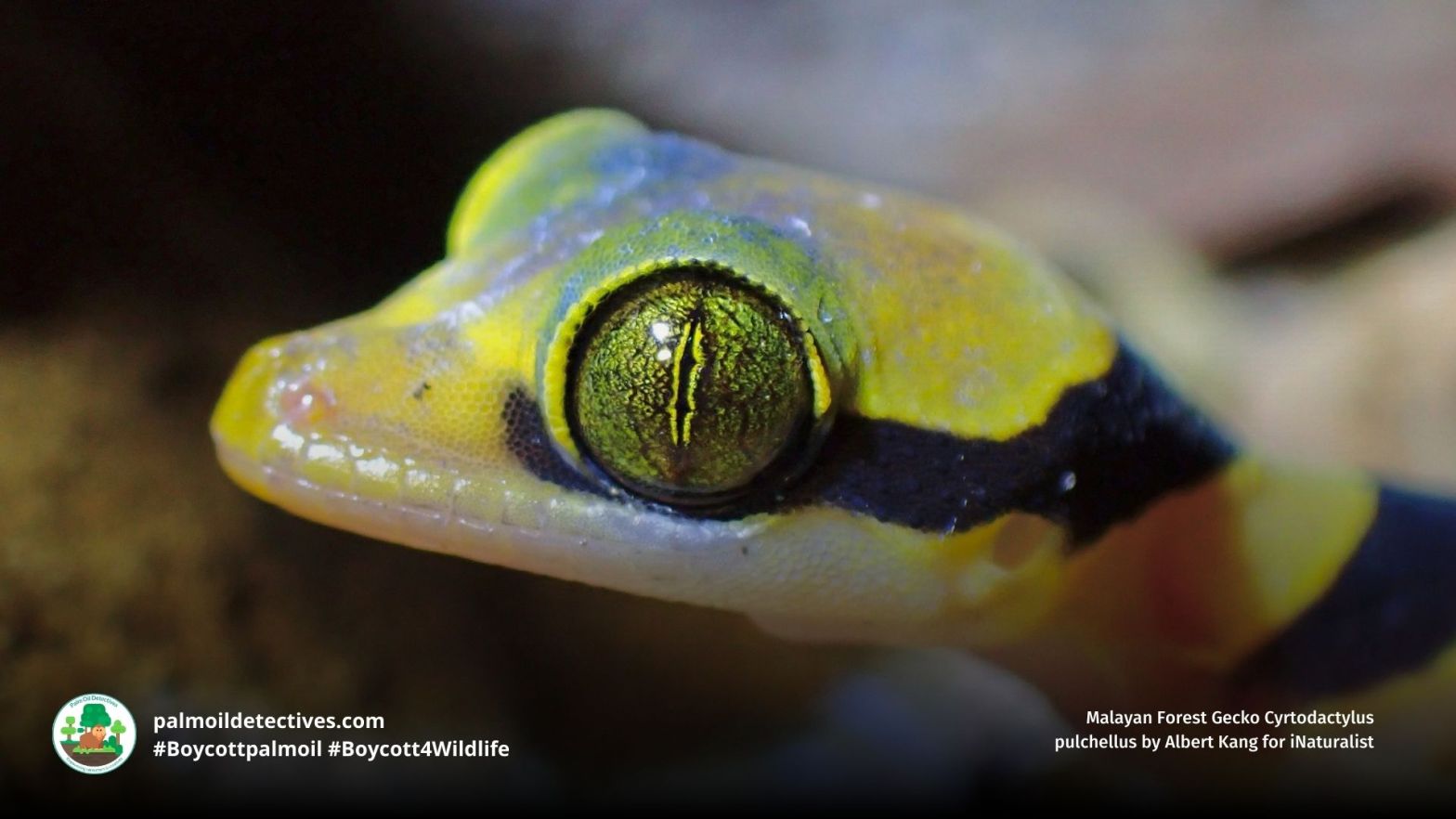
The Malayan Forest Gecko, a rare reptile endemic to Peninsular Malaysia’s dense rainforests, is in grave danger due to deforestation for palm oil plantations
Masked Finfoot Heliopais personatus
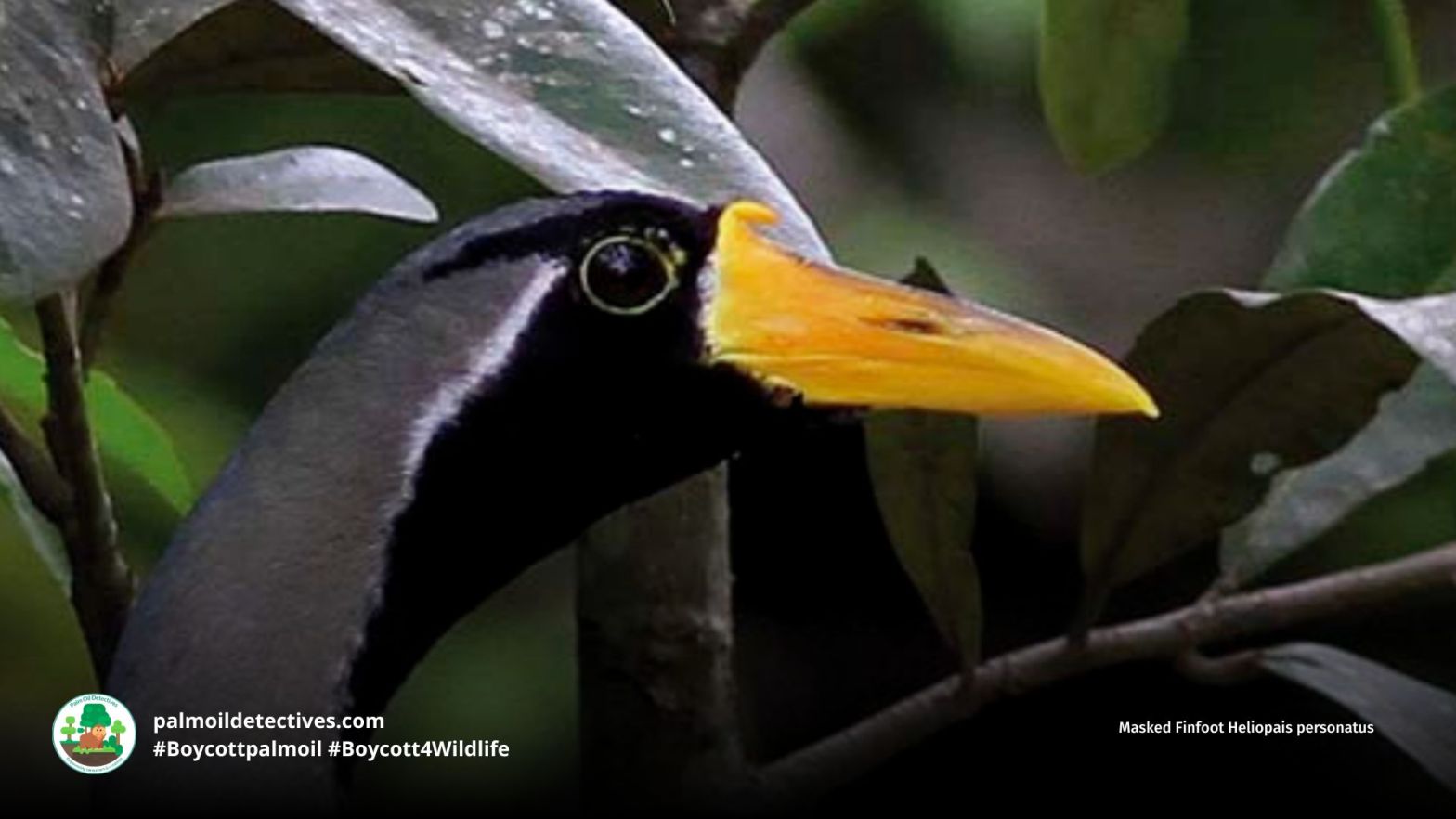
The Masked Finfoot is vanishing before our eyes. These rare and secretive waterbirds are in freefall due to palm oil expansion and habitat destruction.
Bornean Peacock-pheasant Polyplectron schleiermacheri
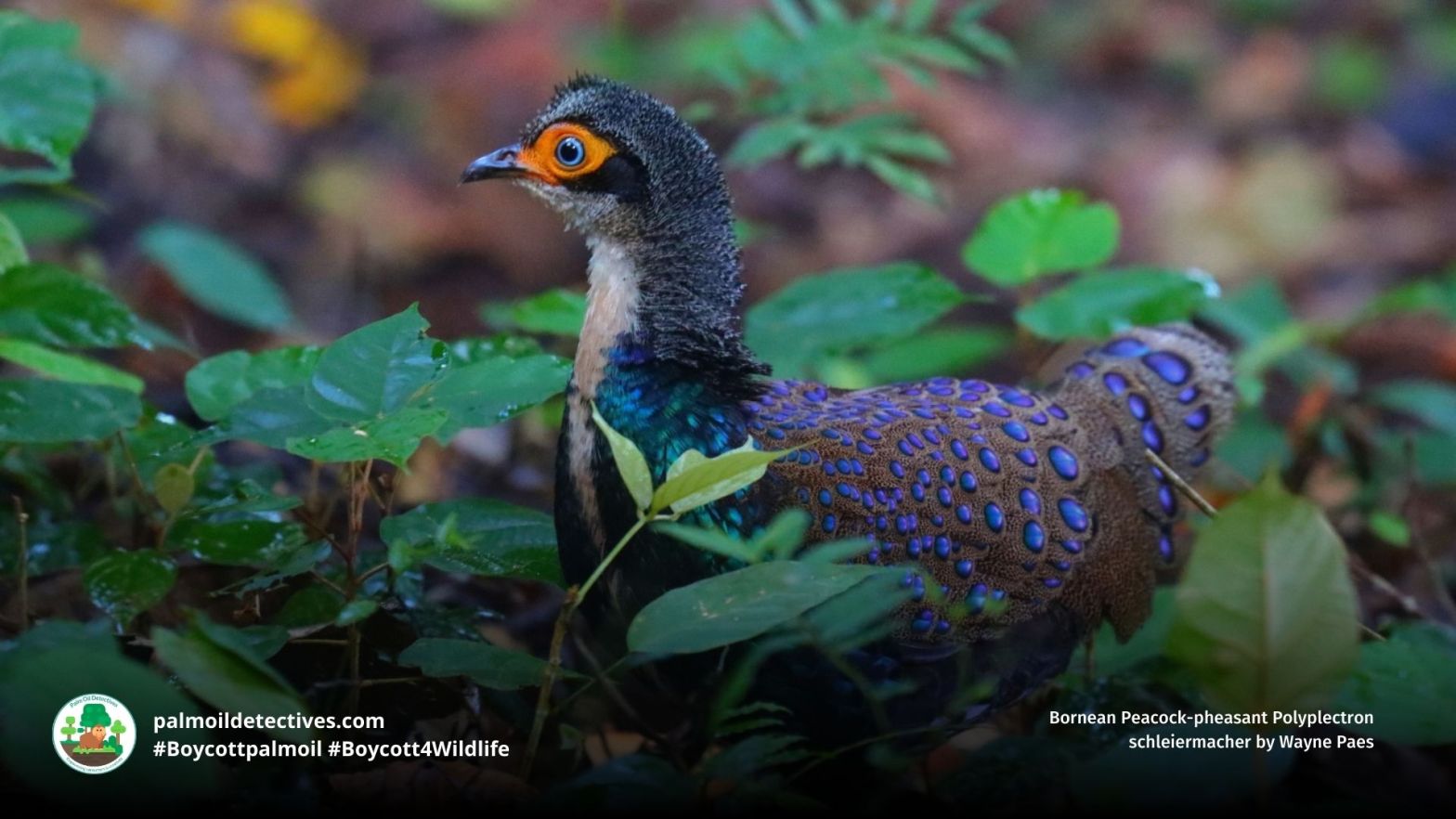
Protect Borneo’s elusive Peacock-Pheasant. These rare birds, known for their iridescent plumage, face a grave threat from out-of-control palm oil plantations
Siberut Flying Squirrel Petinomys lugens
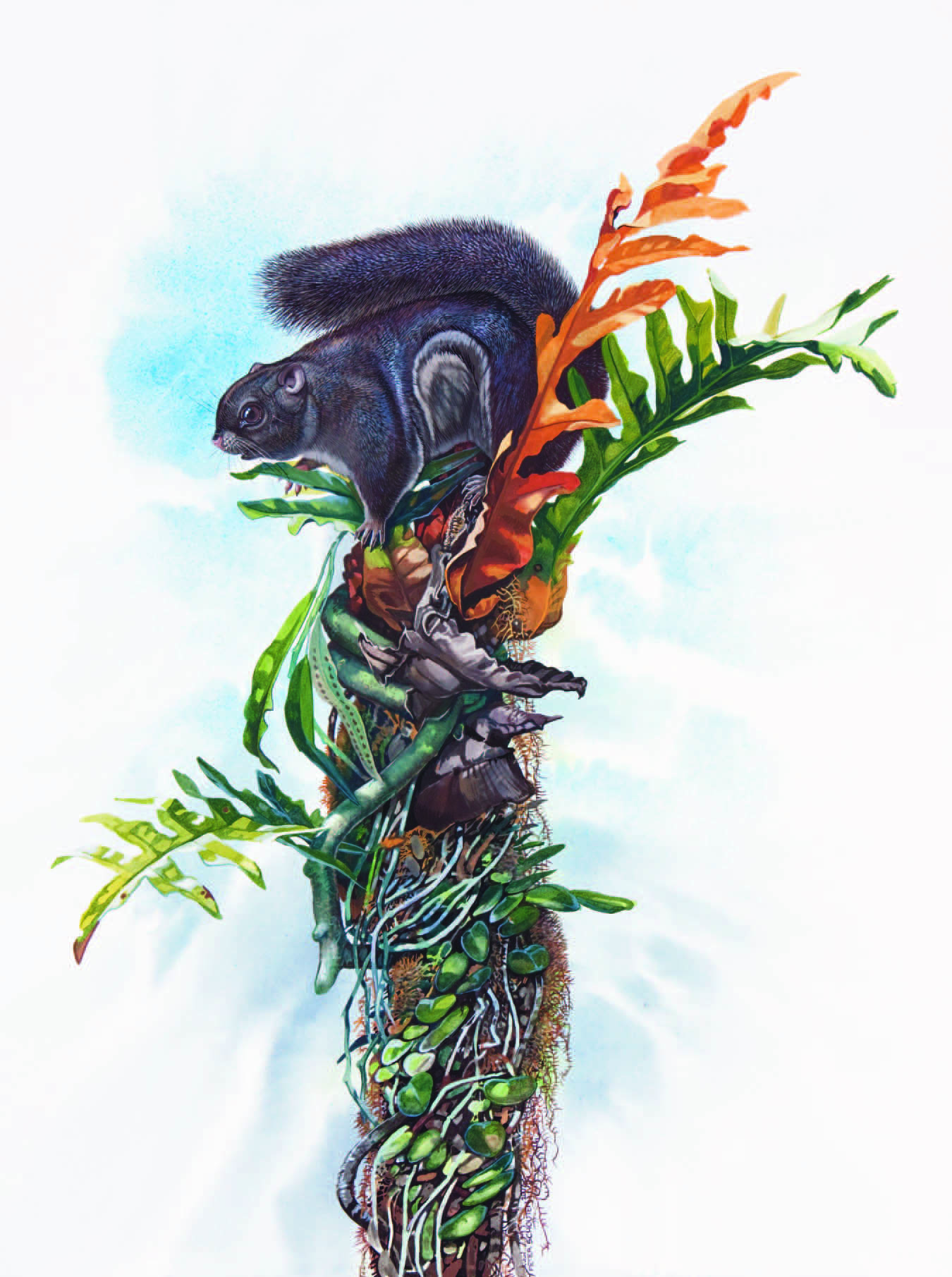
The Siberut Flying Squirrel is one of the world’s most elusive gliders, found only in the #Mentawai Archipelago’s humid forests. At dusk, the Siberut Flying Squirrel launches from high branches, spreading their soft, square-shaped patagium to drift silently between ancient trees. The air is thick with the scent of damp earth and moss, and the only sound is the faint rustle of leaves as the Siberut Flying #Squirrel lands. Their world is shrinking fast—logging and #palmoil plantations are destroying the last forests on #Siberut, #Sipora, and North Pagai. No conservation actions protect the Siberut Flying Squirrel. Stand with indigenous communities and use your wallet as a weapon. #BoycottPalmOil #Boycott4Wildlife
Vordermann’s Flying Squirrel Petinomys vordermanni
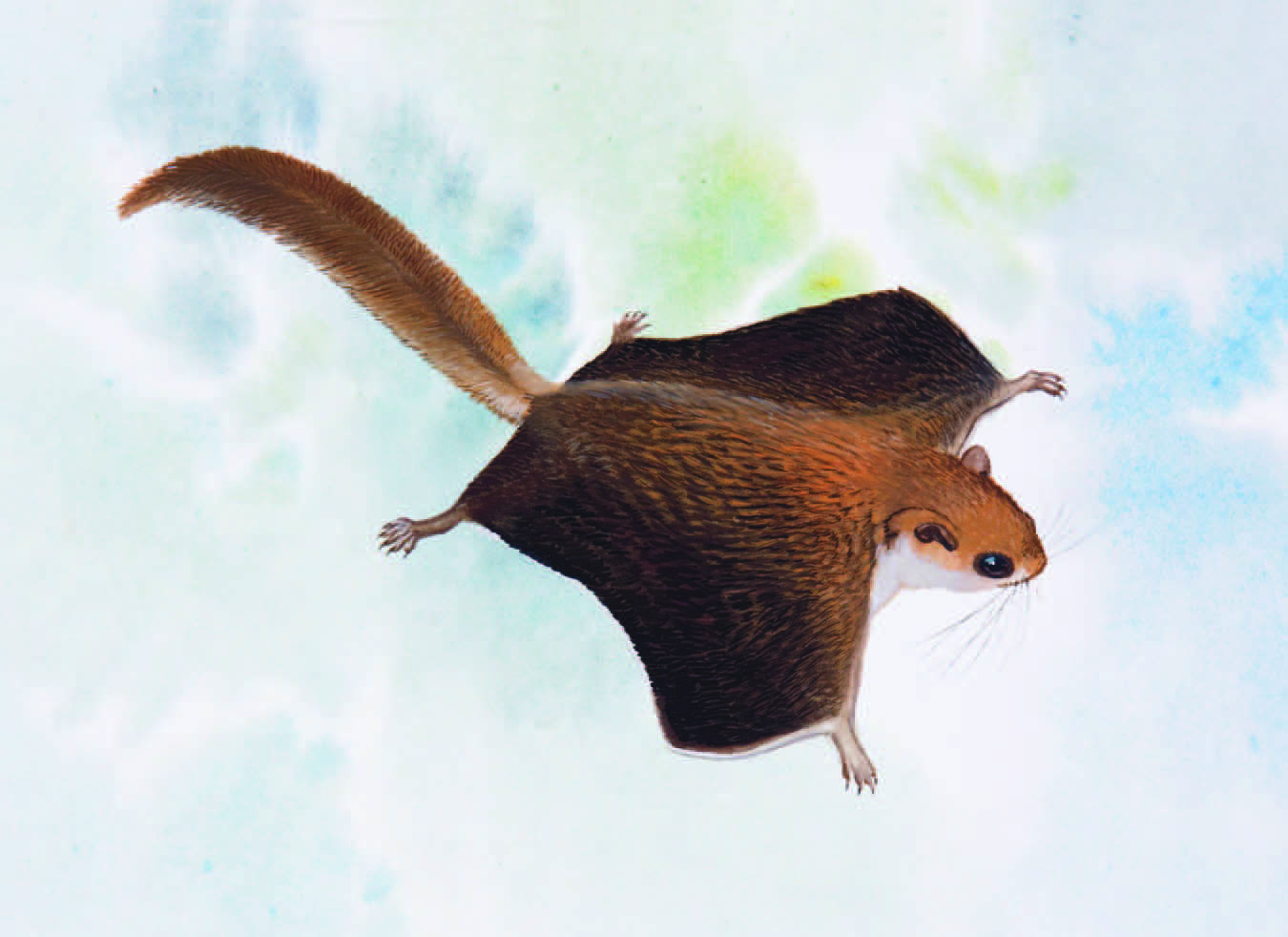
In #Borneo’s twilight, the Vordermann’s flying #squirrel emerges from her nest, resplendent with orange cheeks and black-ringed eyes. This small, #nocturnal #mammal is a master of the rainforest canopy. They use an ingenious membrane called a patagium to effortlessly glide between trees. A flying squirrel’s world is one of constant motion and quiet vigilance. Don’t let this world disappear! The forests that sustain them are vanishing at an alarming rate. Palm oil-driven deforestation, logging, and land conversion are tearing through their habitat, leaving only fragmented forest. Use your wallet as a weapon and #BoycottPalmOil #Boycott4Wildlife.
Smoky Flying Squirrel Pteromyscus pulverulentus
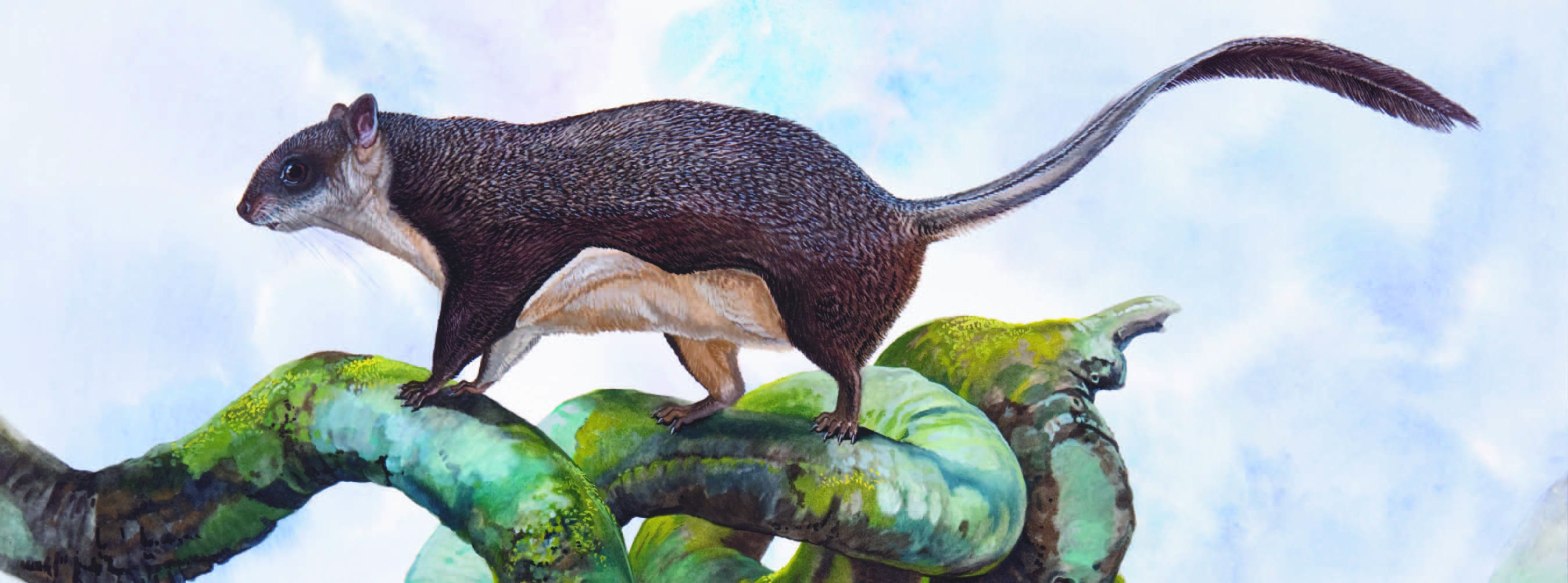
The Smoky Flying Squirrel (Pteromyscus pulverulentus) is a rare and elusive creature silently and gracefully gliding between the towering canopies of Southeast Asia’s rainforests. With their smoky-grey fur, expansive gliding membrane, and bushy tail, these squirrels are perfectly adapted to a dynamic life on the move in the treetops.
Classified as Endangered by the IUCN, their populations are dwindling and at a critical all time low due to habitat destruction from timber logging, palm oil plantations, and agricultural expansion. This fleet footed nocturnal marvel symbolises the fragile ecosystems of Southeast Asia. Protect them by boycotting palm oil and fighting deforestation. #BoycottPalmOil #Boycott4Wildlife
Southeast Asian Box Turtle Cuora amboinensis
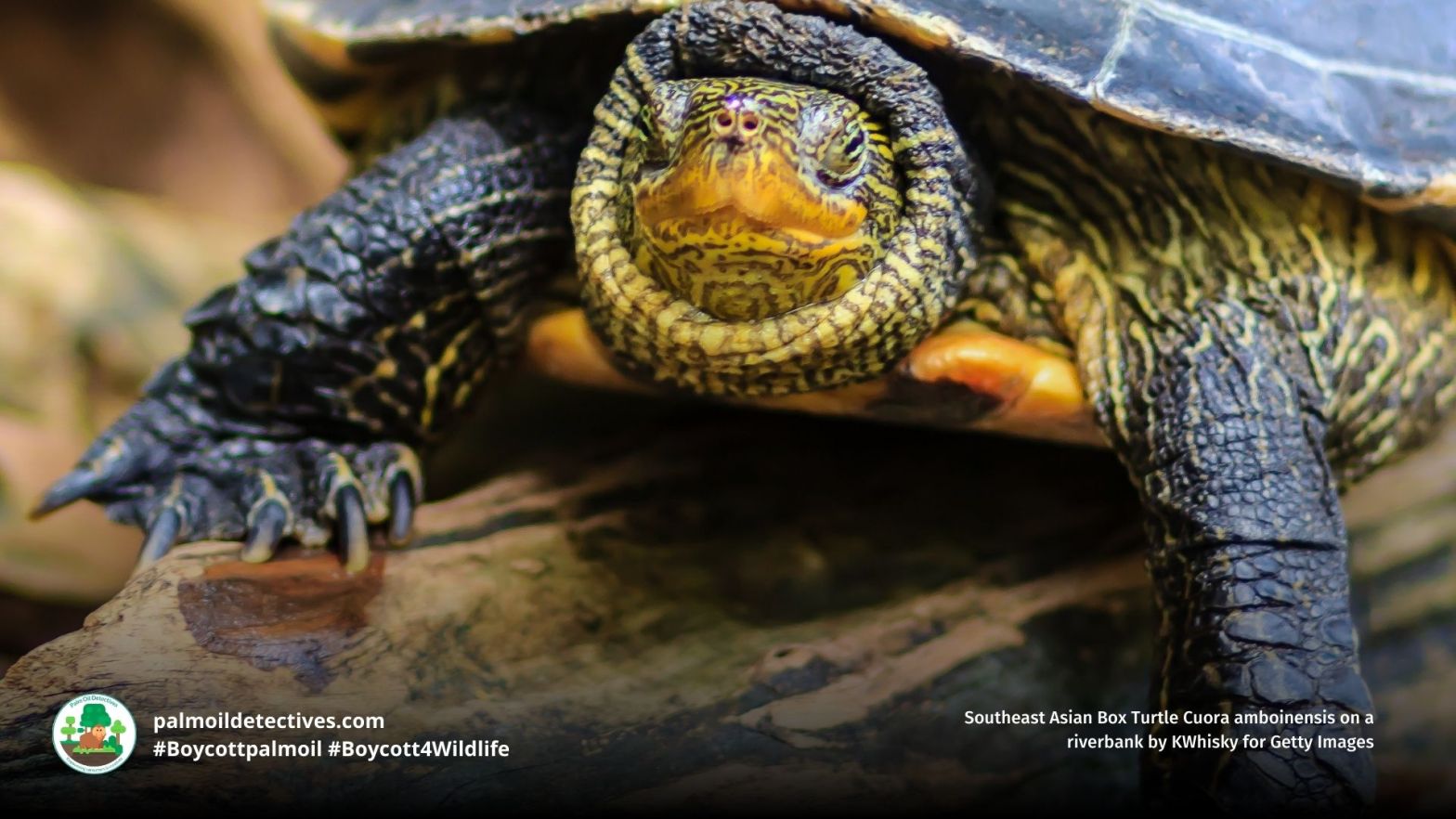
The Southeast Asian Box #Turtle Cuora amboinensis, also known as the Amboina Box Turtle, Malayan Box Turtle, or Indonesian Box Turtle, is a freshwater #reptile species found across much of Southeast Asia. This species is under severe pressure due to overexploitation for food, traditional medicine, and the #pettrade, particularly in Australia, #China, Europe, and the United States. Their semi-aquatic nature allows them to thrive in swamps, rice paddies, and slow-moving rivers, but habitat destruction from #palmoil plantations, #timber and wetland drainage threatens their survival. Their population is rapidly declining due to these threats, making urgent protections necessary. Resist destruction and fight for their survival every time you shop – #BoycottPalmOil #Boycott4Wildlife.
Bornean Ferret Badger Melogale everetti
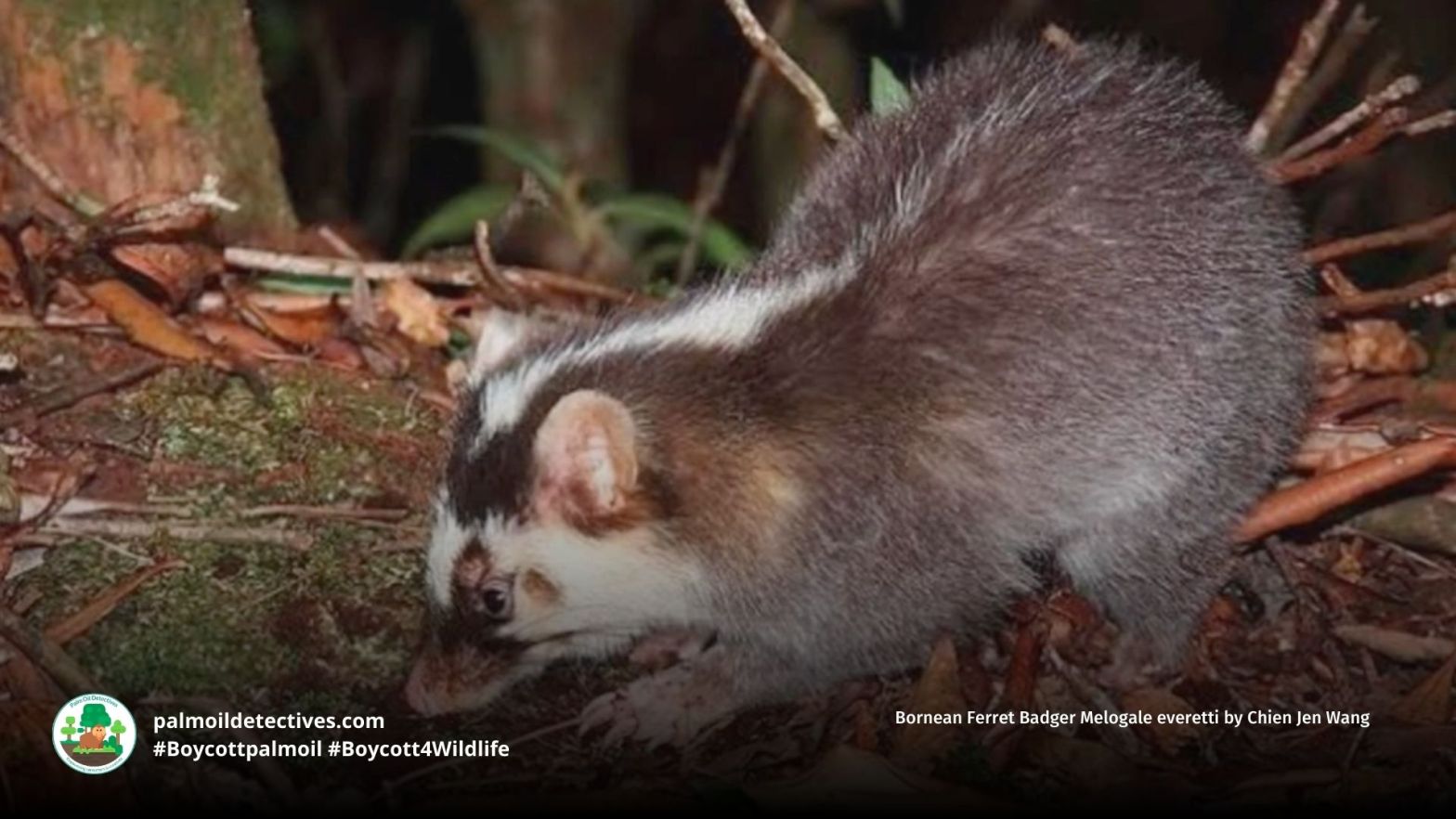
The Bornean Ferret Badger is an enigmatic nocturnal omnivore is endangered due to palm oil and timber deforestation in Malaysia, take action boycott palm oil!
Lowlands Tree Kangaroo Dendrolagus spadix
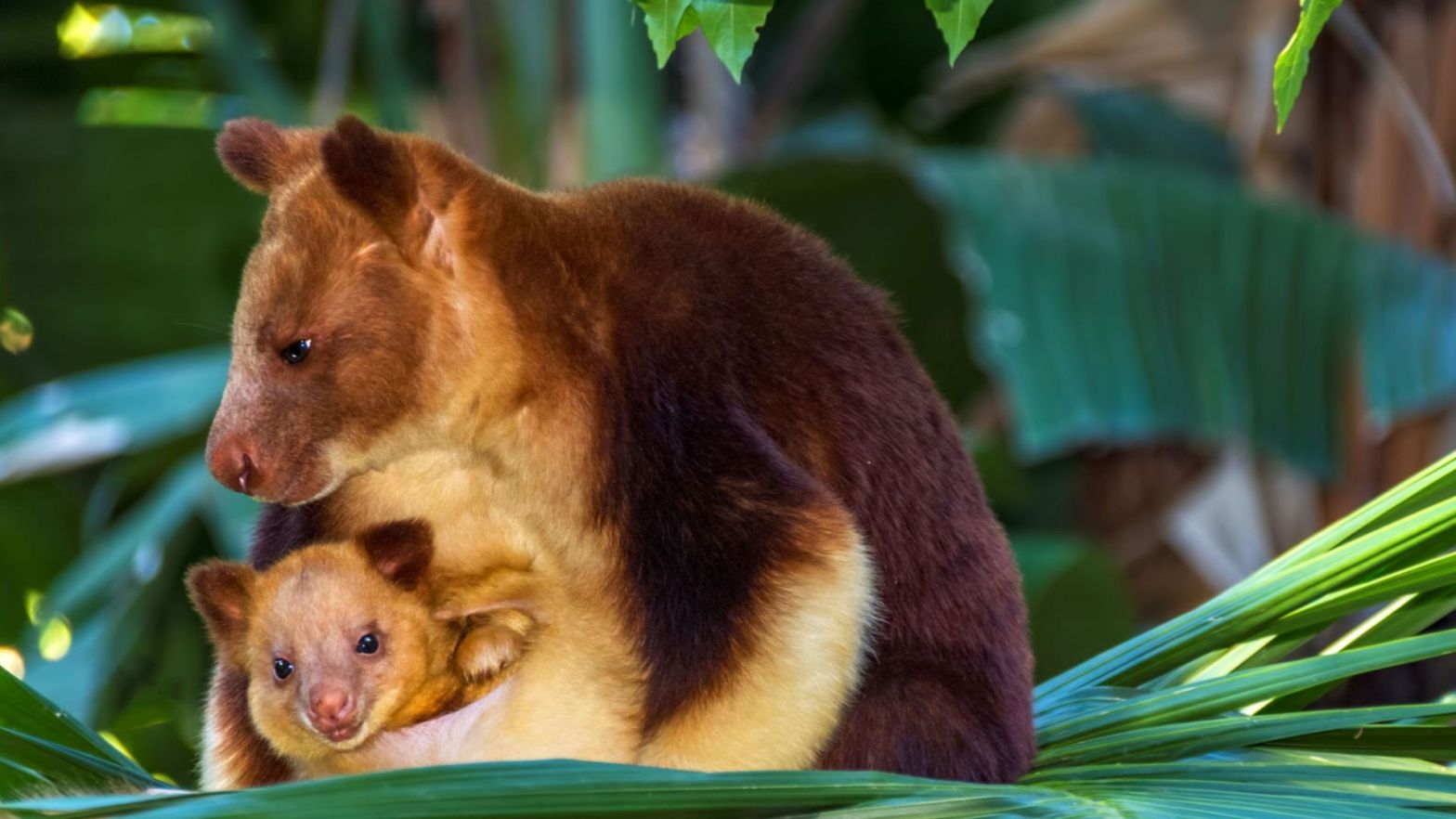
The Lowlands Tree #Kangaroo Dendrolagus spadix is a #Vulnerable species endemic to the forests of #PapuaNewGuinea. Unlike their ground-dwelling relatives, they are agile climbers, leaping through lush rainforest canopies with ease despite their bulky size. However, their survival is in peril due to widespread #deforestation driven by #palmoil plantations, #timber logging, and expansion of #roads, which has led to habitat destruction and increased #hunting pressures. If urgent action is not taken, this unique species faces further decline. Take action and resist for this species every time you shop and go #BoycottPalmOil #Boycott4Wildlife in the supermarket.
Eastern Long-beaked Echidna Zaglossus bartoni
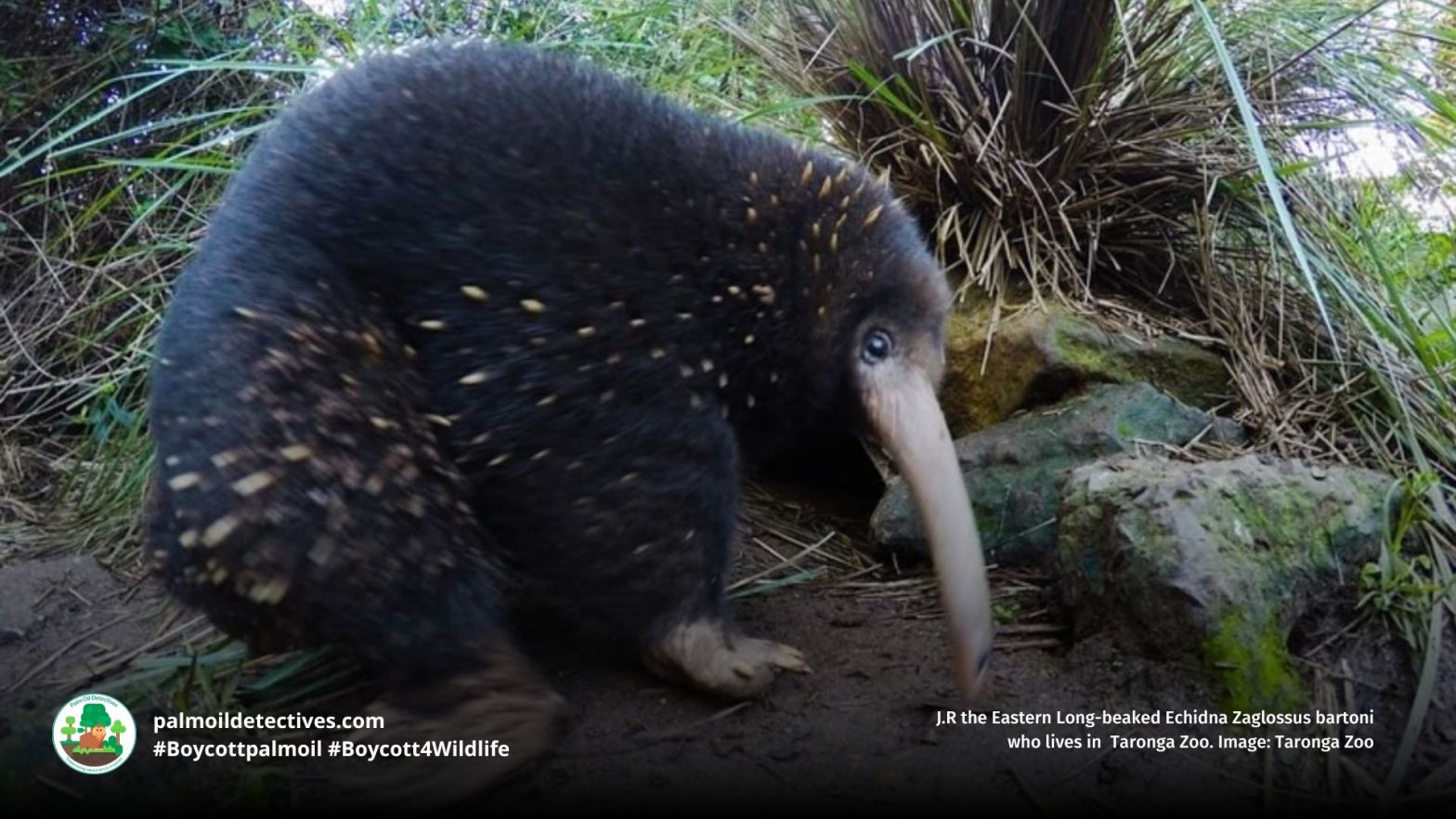
The Eastern long-beaked echidna Zaglossus bartoni is one of the planet’s most extraordinary mammals—a living relic from the dawn of mammalian evolution. Found only in the rugged, remote mountains of New Guinea, this remarkable creature is genetically and physically unlike any other animal alive today. Their existence bridges ancient evolutionary traits with the survival needs of modern species, representing a fascinating link to the distant past.
Tragically, these rare monotremes face the threat of extinction due to hunting and habitat loss for palm oil, timber and gold mining. Support indigenous-led conservation and fight for their survival. Use your wallet as a weapon and #BoycottPalmOil #Boycott4Wildlife.
Fearful Owl Nesasio solomonensis
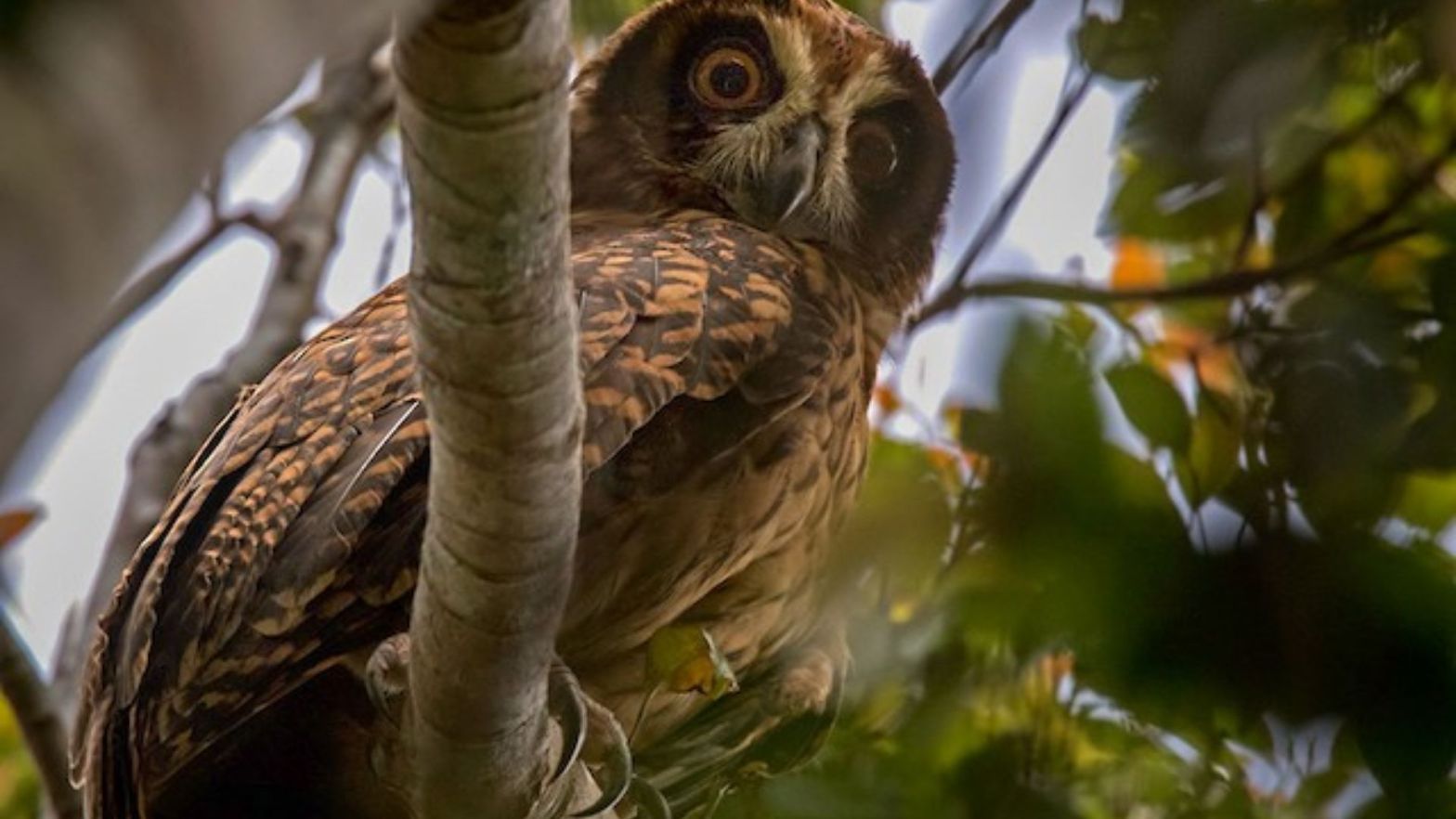
Fearful Owl Nesasio solomonensis Location: Bougainville (Papua New Guinea), Choiseul and Santa Isabel (Solomon Islands) IUCN Status: Near Threatened One of the least known and possibly rarest birds of prey in the world, the Fearful #Owl Nesasio solomonensis is an elusive nocturnal predator endemic to the Solomon Islands and Bougainville in Papua New Guinea. WithContinue reading “Fearful Owl Nesasio solomonensis”
Great Knot Calidris tenuirostris
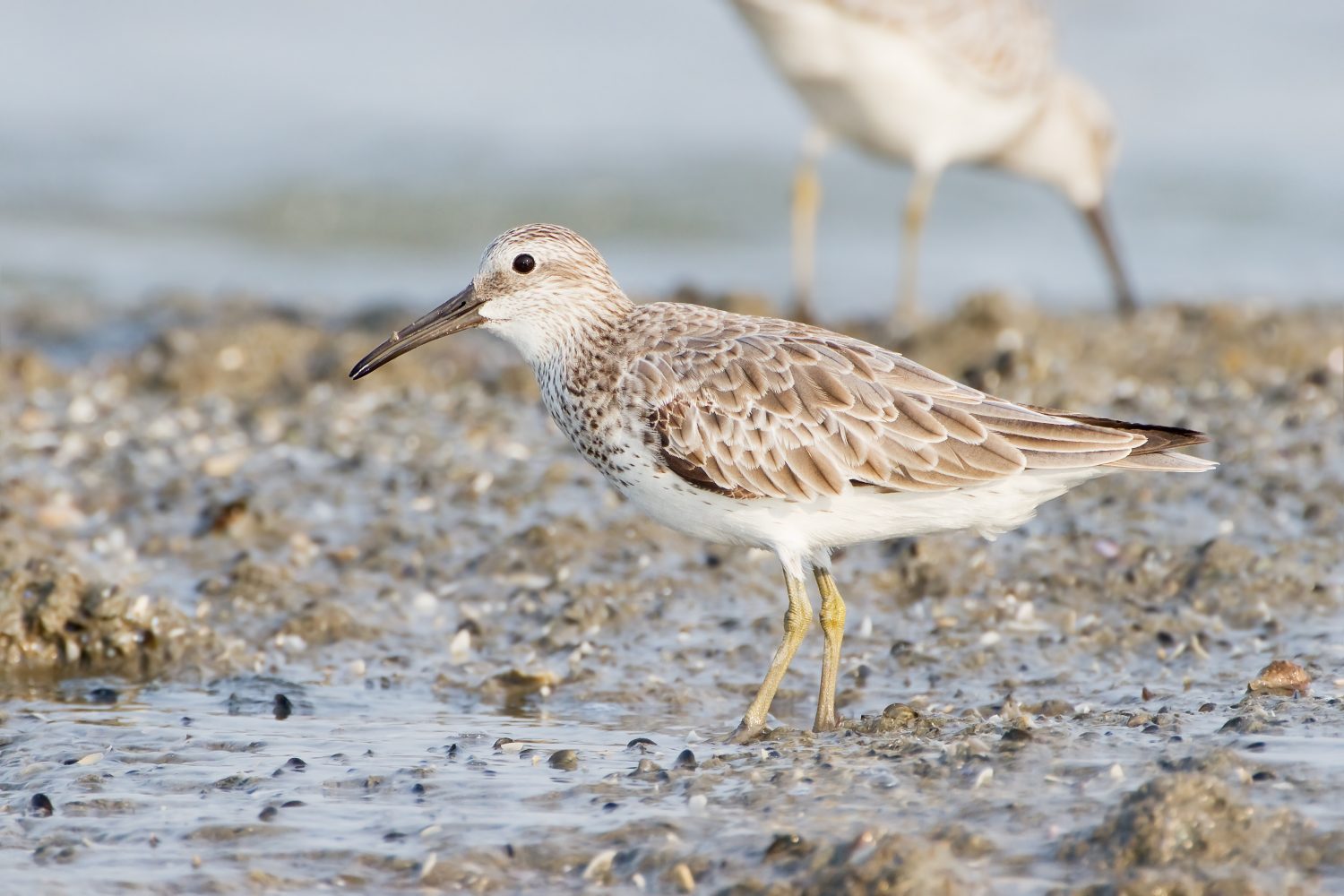
Great Knot Calidris tenuirostris Endangered Location: Papua New Guinea, Australia The Great Knot breeds on gravelly areas covered with lichen and patches of herbs, heather (del Hoyo et al. 1996), Empetrum spp., Dryas spp. and Vaccinium spp.(Johnsgard 1981), or alternatively on areas with a continuous layer of lichen and scattered stunted larch Larix spp. orContinue reading “Great Knot Calidris tenuirostris”
Ifola Dendrolagus notatus

The Ifola, a rare and little-known tree kangaroo, inhabits the tropical montane forests of the Fakfak Mountains in Papua New Guinea and Indonesian-occupied West Papua. First identified as a distinct species in 1993, this remarkable marsupial is part of the genus Dendrolagus, known for their arboreal lifestyle. With their restricted range and vulnerability to habitat loss, Ifola are at significant risk due to palm oil deforestation, gold mining, and other human activities encroaching on their high-altitude homes. Their survival is tied to the preservation of the rich, biodiverse forests they call home. #BoycottPalmOil #Boycott4Wildlife
Woodlark Cuscus Phalanger lullulae
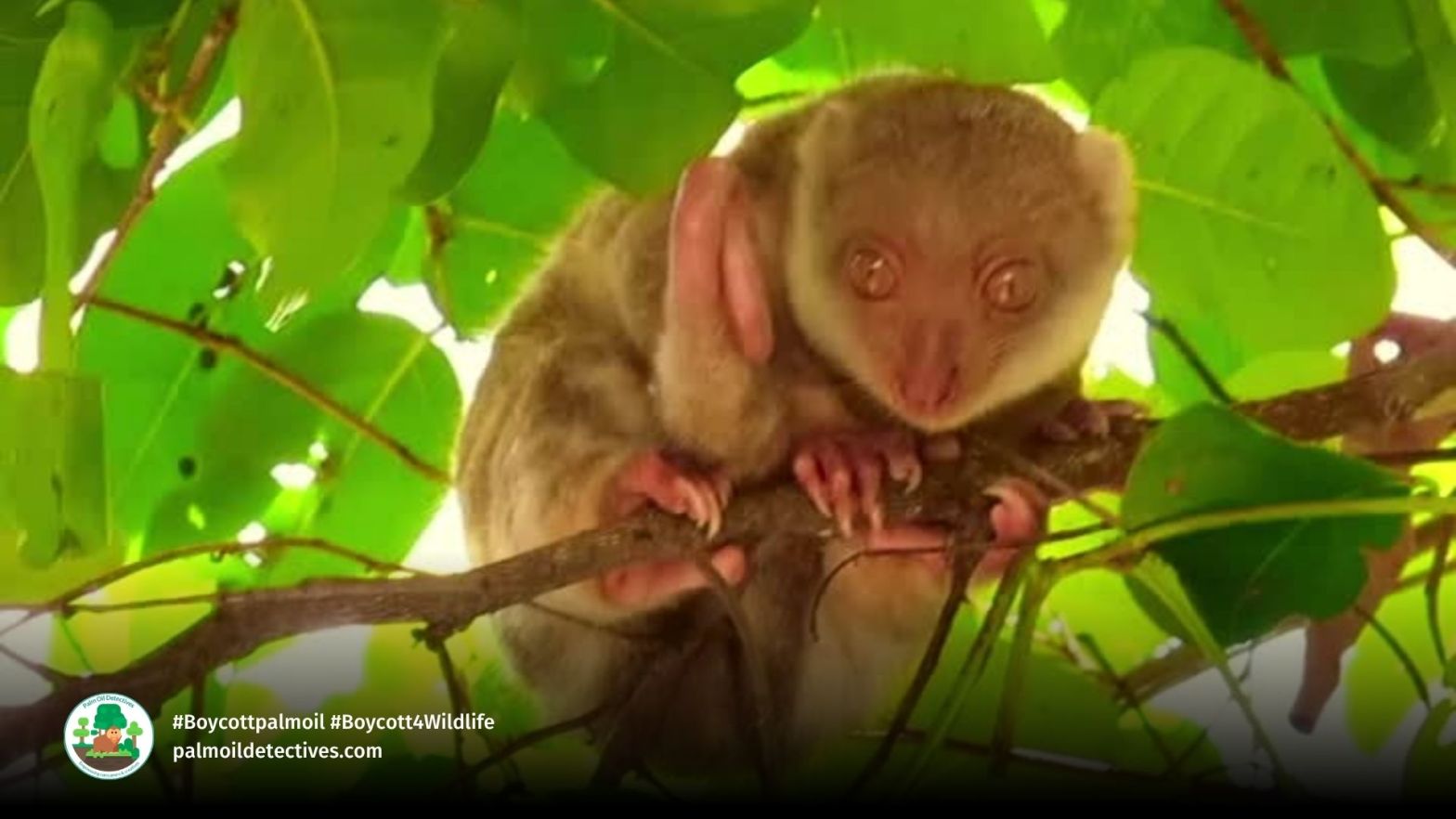
The Woodlark #Cuscus is a nocturnal marsupial found nowhere else but the forests of Woodlark, Madau, and Alcester islands. By day, the Woodlark Cuscus curls into tree hollows or buries themselves in tangles of epiphytes; by night, they move silently through the canopy, their marbled fur blending with the shifting shadows. The Woodlark Cuscus faces imminent extinction as palm oil plantations, logging, and gold mining threaten to erase the last forests of their island home. With all individual cuscuses known from less than 1,300 km² and new clearances looming, the Woodlark Cuscus’s world is shrinking fast. Stand with indigenous Melanesian sovereignty and safeguard these islands. Use your wallet as a weapon and #BoycottPalmOil #Boycott4Wildlife.
D’entrecasteaux Archipelago Pogonomys Pogonomys fergussoniensis
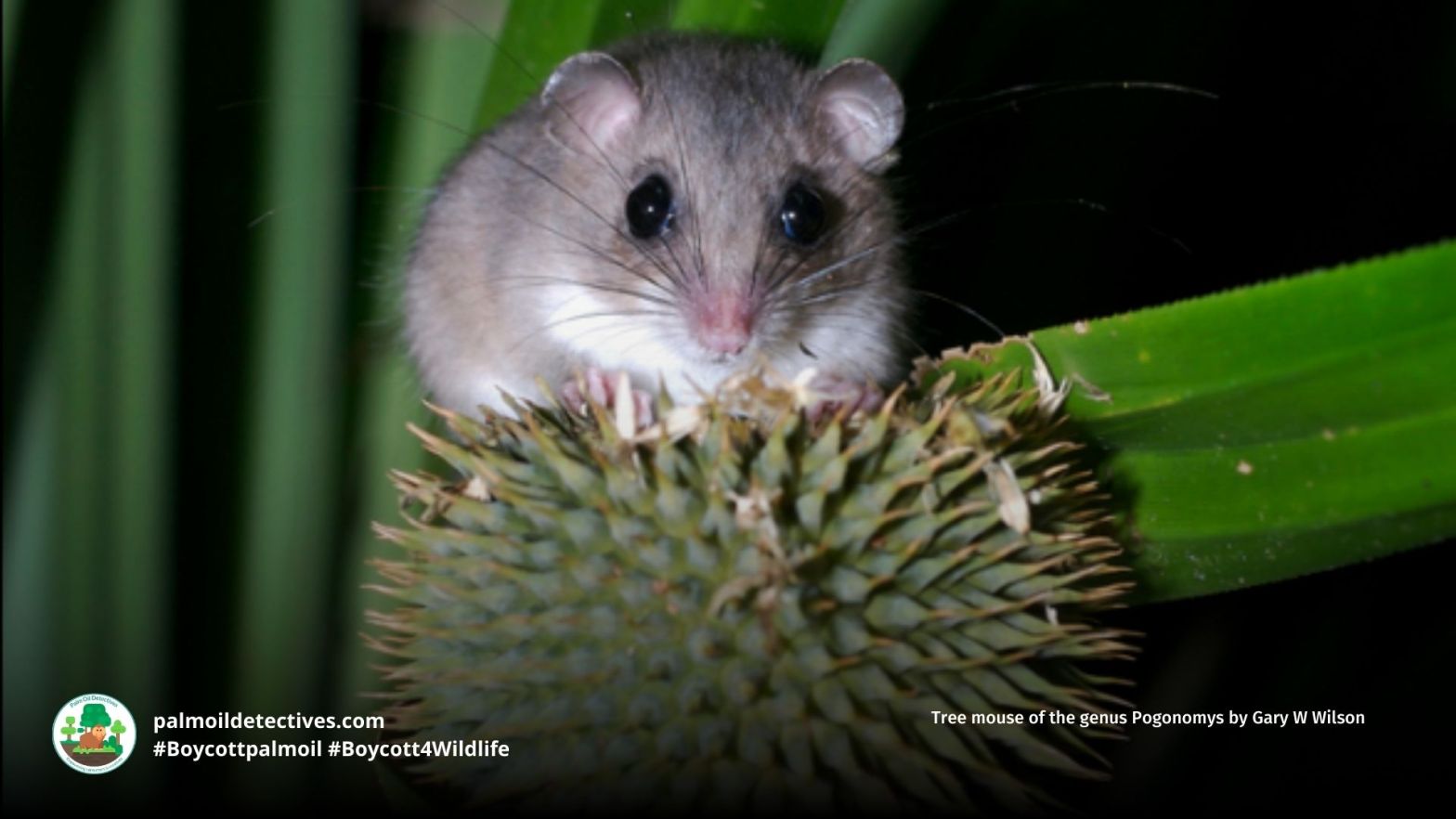
Help save D’Entrecasteaux Archipelago Pogonomys. Long named ultra cute arboreal rodents from Papua New Guinea are endangered by palm oil. Resist and boycott!
David’s Echymipera Echymipera davidi
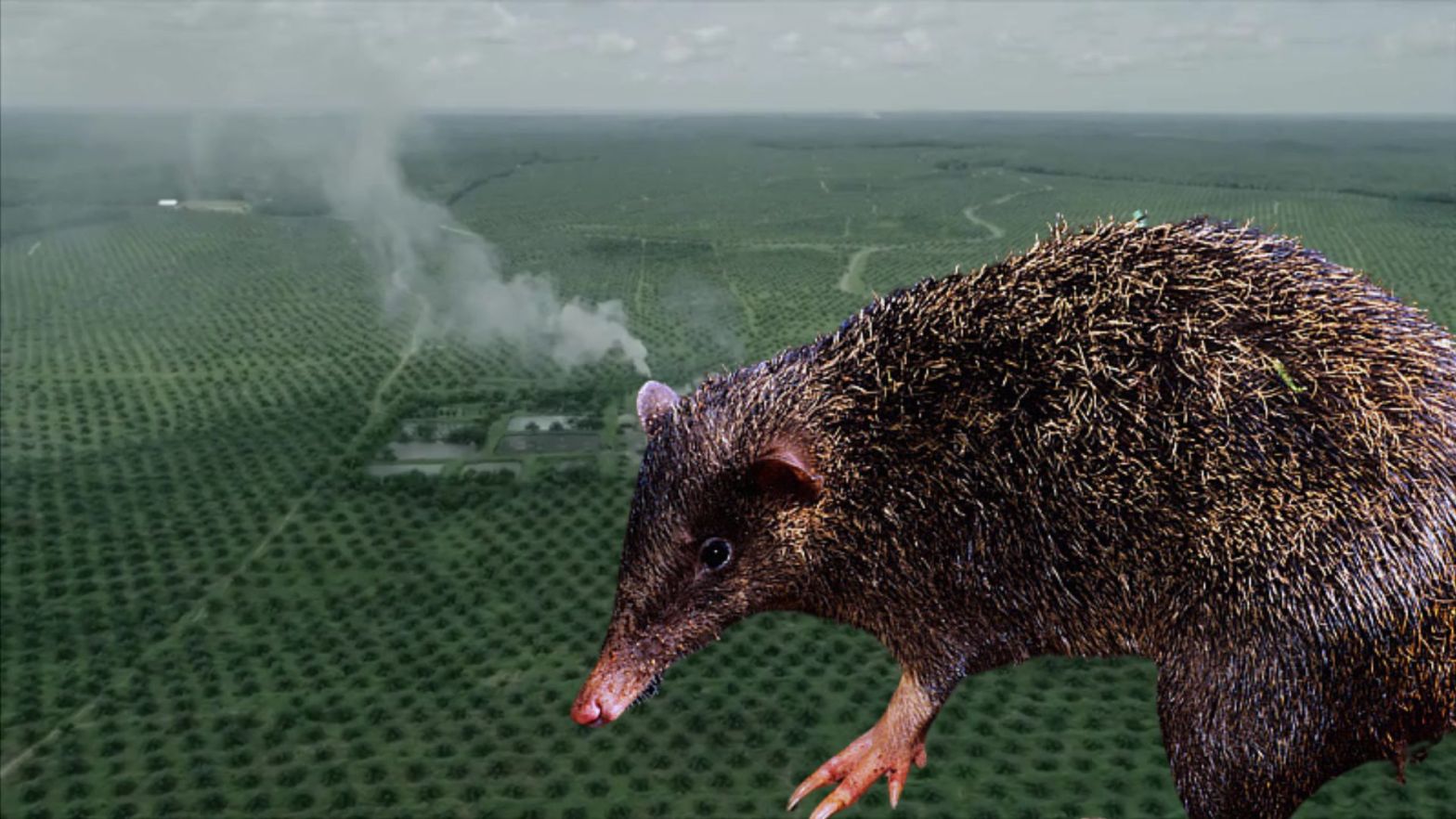
David’s Echymipera (Echymipera davidi) is an extremely rare, little-known #bandicoot endemic to Kiriwina Island in the Trobriand Islands of #PapuaNewGuinea. With a range of just 280 km², this elusive #marsupial is at significant risk due to habitat loss and human encroachment. Like other bandicoots, they are crucial for ecosystem health, aerating the soil as they dig for food. However, their survival is threatened by the pressures of #agriculture, habitat destruction, and #hunting. Without immediate conservation efforts, this species faces an uncertain future. Help this animal by raising awareness #Boycott4Wildlife
Pig-tailed Snub-nosed Langur Simias concolor
Boycott palm oil for Pig-tailed Langurs. These critically endangered monkeys face extinction from palm oil deforestation, hunting, and habitat fragmentation
Cotton-headed Tamarin Saguinus oedipus
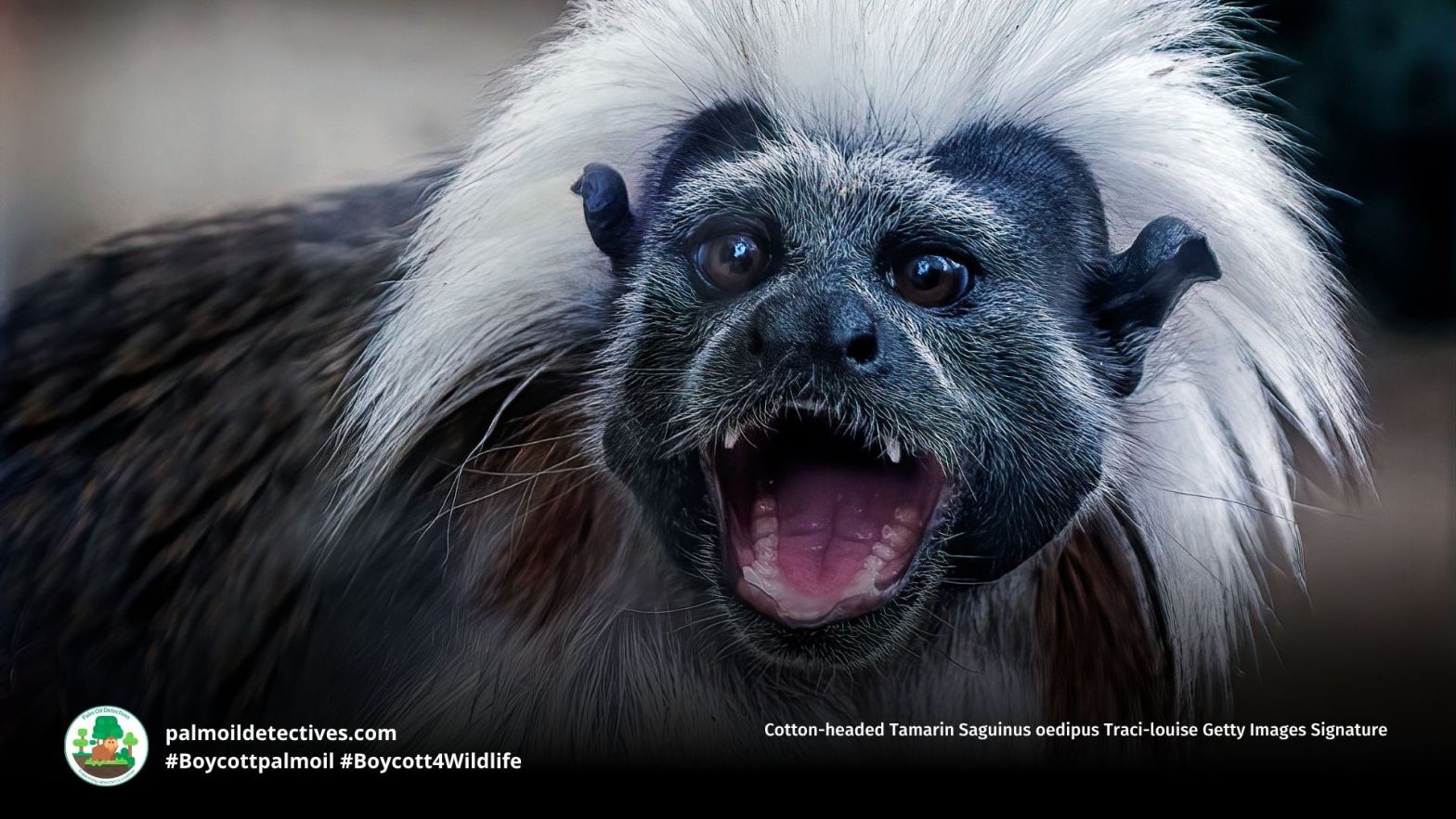
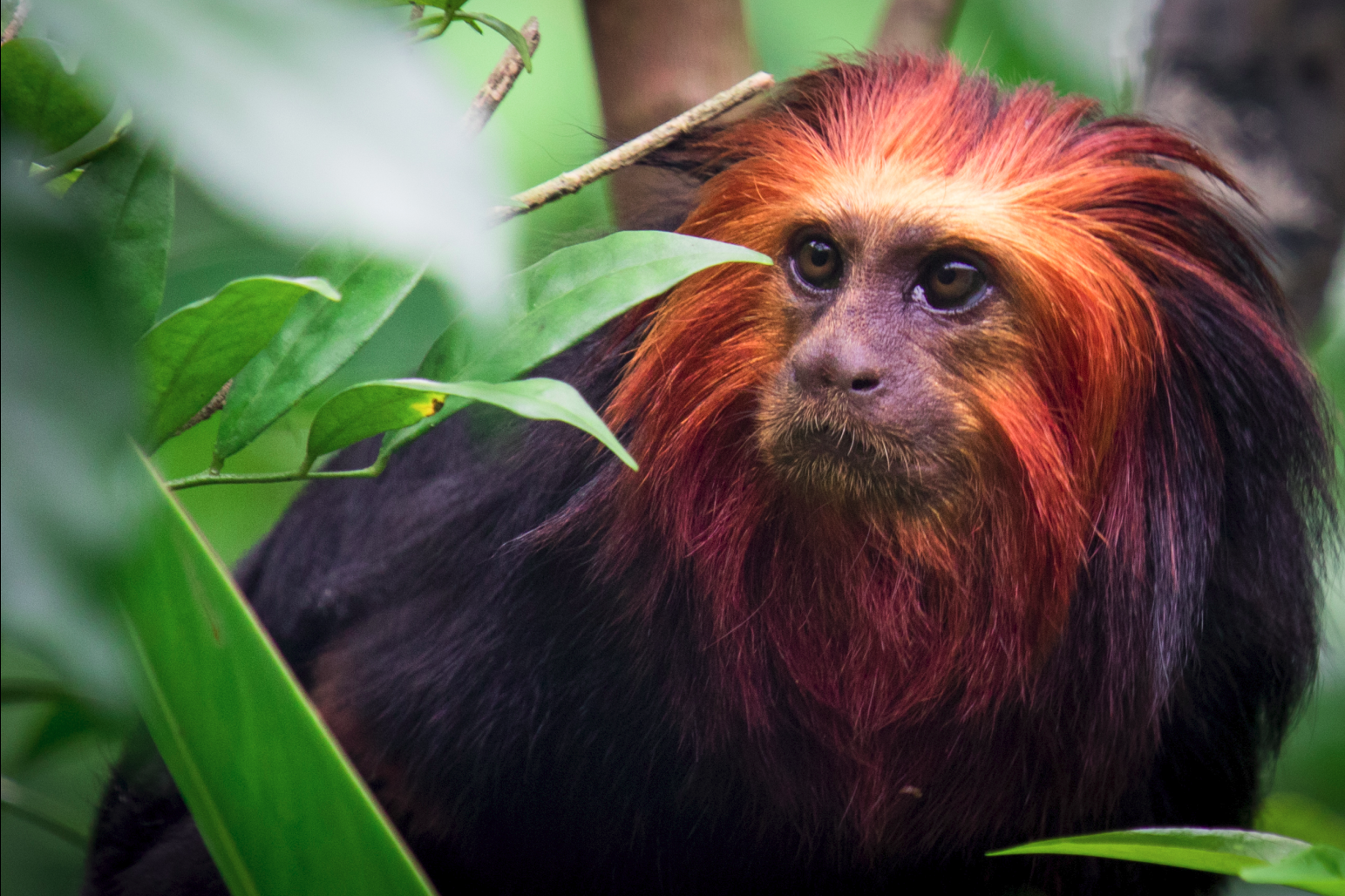
Known for the characterful head crests giving adults a plucky and “punk” look, the Cotton Top #Tamarin, also known as the Cotton-headed Tamarin is a diminuitive #monkey living in the humid forests in the south to dry deciduous forest in the north of #Colombia. They are now critically endangered and face multiple serious threats from capture for primate experiments, to the illegal pet trade and deforestation for palm oil, soy, meat deforestation and the cultivation of ilicit coca. Help these spritely and remarkable tiny primates to survive, every time you shop be #Vegan and #BoycottPalmOil #Boycott4Wildlife
Red-cheeked Gibbon Nomascus gabriellae

Like other gibbons, Red-cheeked Gibbons are arboreal and diurnal, with singing bouts averaging 12 minutes and lower calling frequencies in the wet season (Rawson 2004, Kenyon 2007). The species displays a monogamous social structure of adult pair and offspring. Average group size is estimated at 3-5 individuals. Females emigrate near, in and around their natal territories, but males emigrate farther and wider. Female give birth to single offspring at 17-22 month intervals. Nomascus gabriellae is considered Endangeredb ased on a suspected population reduction of 50% or more due to hunting for food, live capture for the pet trade, and the loss of suitable habitat.
Southern White-cheeked Gibbon Nomascus siki
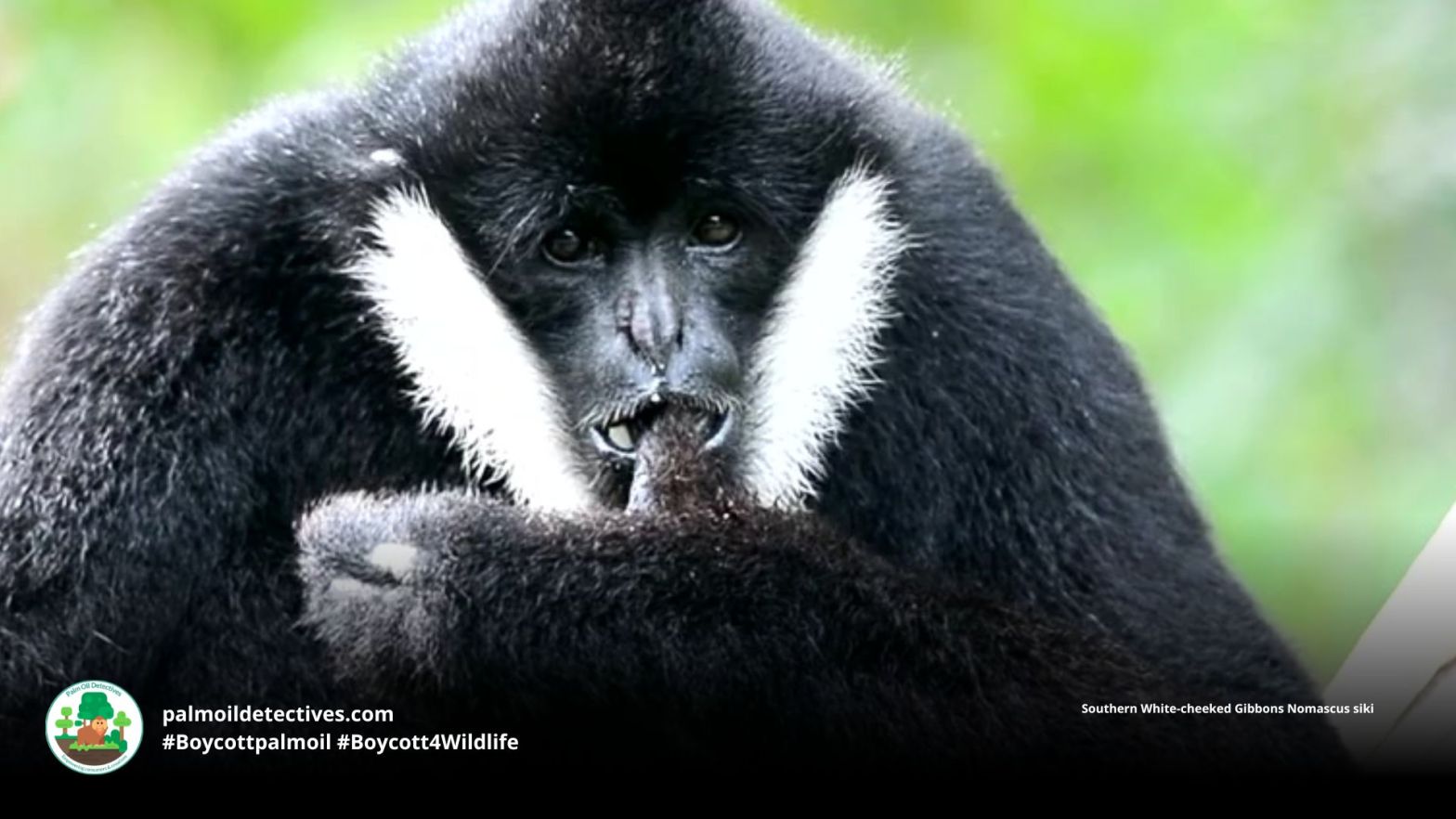
Southern White-cheeked Gibbons are melodic primates of Laos and Vietnan under threat by rubber plantations facing 80% population loss. Fight for them!
Northern White-cheeked Gibbon Nomascus leucogenys

Northern White-cheeked Gibbons are Critically Endangered in Vietnam, Laos due to hunting, pet trade, and palm oil deforestation. Take action, boycott palm oil!
Cao-vit Gibbon Nomascus nasutus
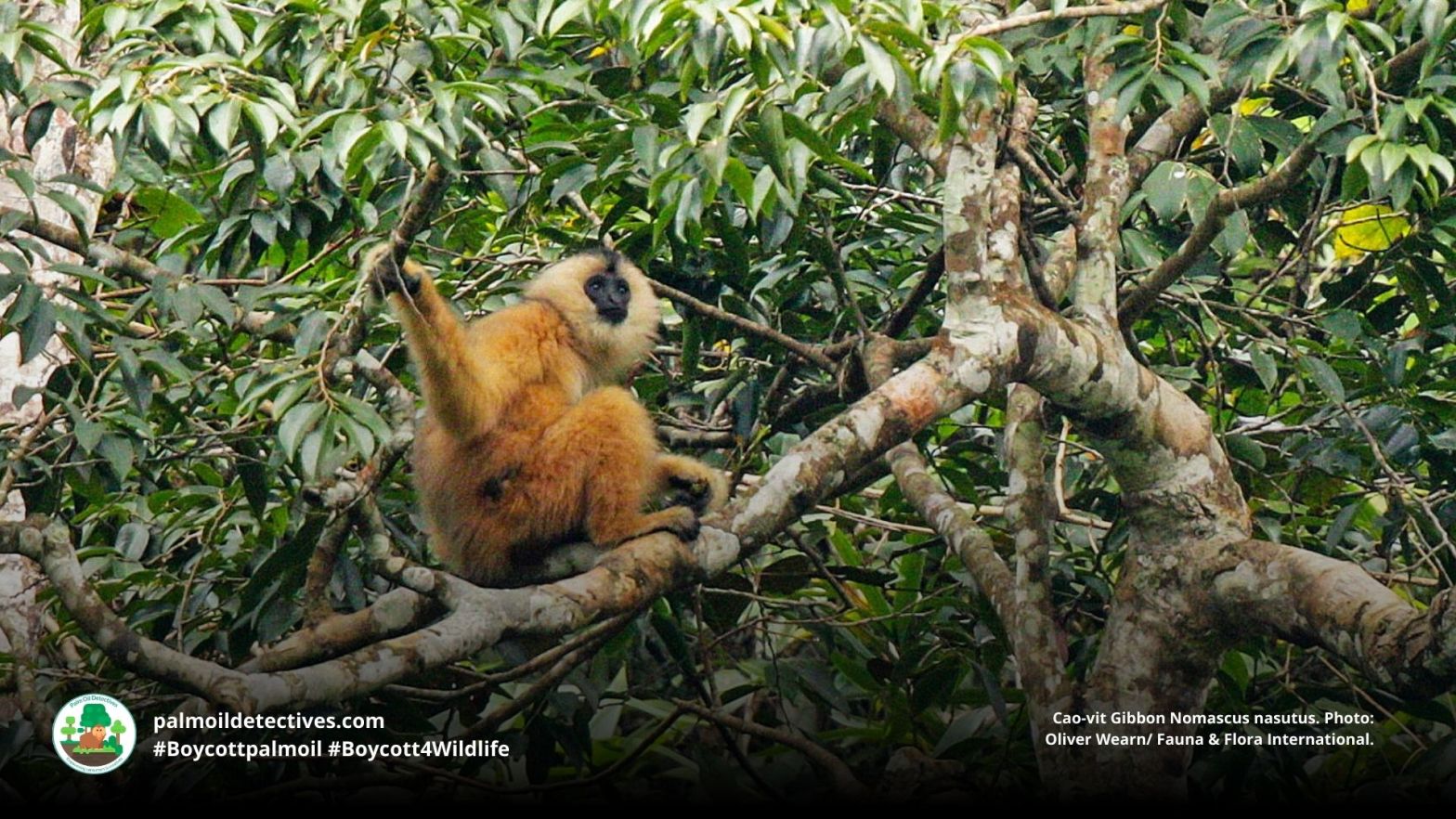
The Cao-vit gibbon, one of the world’s rarest primates, captivates the imagination with their melodic “cow-veet” calls, which echo like rainforest birdsongs. Research has found that they sing in regional accents to each other and form breeding pairs.
Arguably the world’s rarest gibbon they live in one forest patch straddling the Vietnam–China border. These critically endangered primates face myriad threats, including habitat destruction for timber and meat agriculture, inbreeding, and climate change. Immediate, concerted conservation action is essential to save these extraordinary gibbons from extinction.
Support indigenous-led conservation efforts to protect their habitat. Fight for their survival every time you shop. Use your wallet as a weapon and #BoycottMeat and be #Vegan #Boycott4Wildlife.
 Palm Oil Detectives