Papuan Eagle Harpyopsis novaeguineae

Elusive, forest-dwelling apex predators in New Guinea, Papuan eagles are classified as vulnerable and rapidly declining due to enormous deforestation for mining and palm oil in Papua New Guinea and West Papua along with hunting threats. They are poorly studied birds and therefore estimates of their populations may be severely overestimated, meaning that they are in much more serious strife than we know.

While there have probably never been high densities of the Papuan eagle, evidence indicates that they are declining rapidly. It is possible that the entire population is considerably under 10,000 individuals. There is no evidence that the Papuan eagle is adaptable to the opening of forests and the eagles appear to abandon areas especially where logging roads have been cut into the forests.

Help them every time you shop and be #vegan, #Boycottpalmoil #Boycott4Wildlife
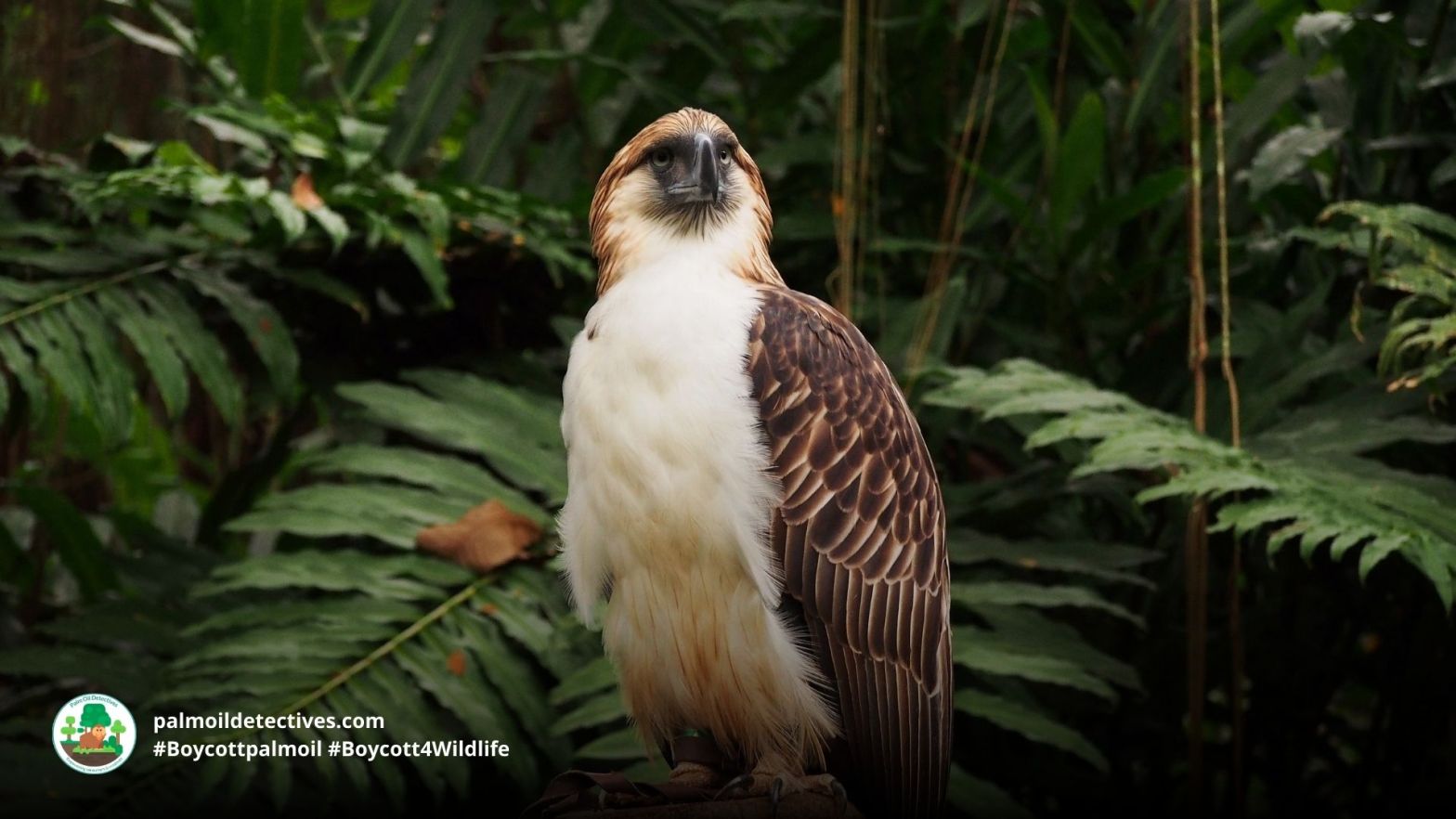
Philippine Eagle Pithecophaga jefferyi

Apex predator and flying royalty of the jungle, Philippine #Eagles are critically endangered from #climatechange, #palmoil, #timber and #cacao #deforestation and illegal #hunting.

There are estimated to be only 180-600 eagles left in the wild. Protecting the Philippine eagle would also protect 780 other plant and animal species in the Philippines. Help them every time you shop and #Boycottpalmoil #Boycott4Wildlife

Giant Otter Pteronura brasiliensis

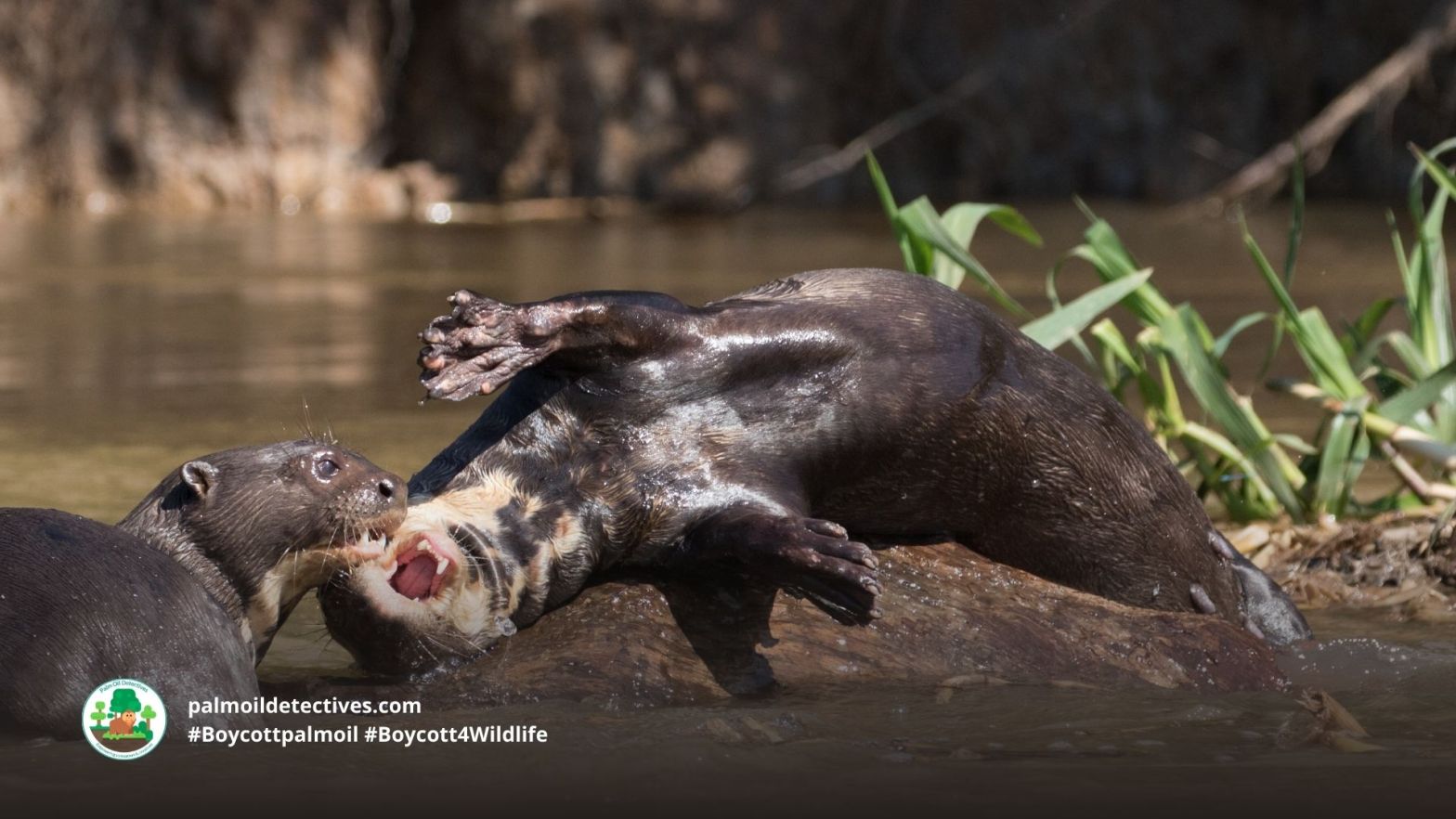
The agile and graceful tumbling Olympians of the Amazonian rivers, Giant #Otters are able to swim 100 metres in less than 30 seconds. They are also known as the Lobo de Rio (the River wolf), Los Lobos del Rio (Wolves of the River) and Ariranha. They are most active in the mornings and evenings and take a siesta during the hottest parts of the day. Known for their striking size and the chorus of whistles and barks echoing through flooded forests, giant otters are social, vocal, and deeply bonded to their family groups. But the rivers they call home are under siege. The most significant threats to giant otters are anthropogenic pressures of deforestation for palm oil, soy and meat, pollution from mining and climate change. They are also illegally hunted and traded for their pelts or killed in retribution by fishermen. Help them and be #vegan, use your wallet as a weapon and #BoycottPalmOil #Boycott4Wildlife.

Jaguar Panthera onca

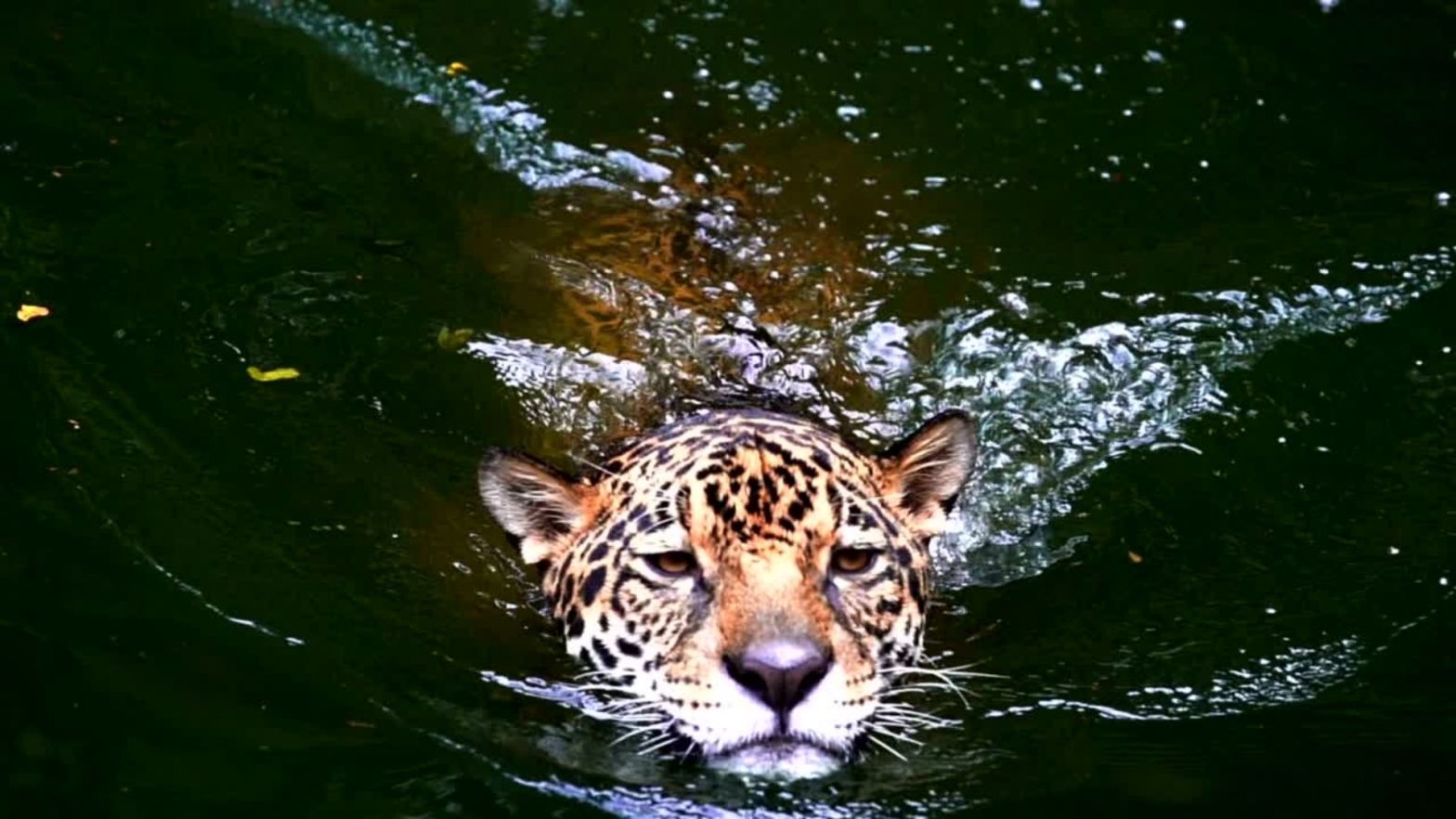
Jaguars, currently deemed Near Threatened, face a substantial habitat reduction of up to 25% in just over two decades. This decline stems from rampant deforestation for palm oil, soy, and meat, as well as illegal poaching for trophies and body parts. These magnificent creatures also suffer from conflicts arising due to livestock depredation and competition with human hunters for food. Aggravating the issue, Latin America’s widespread agricultural industries, like soy, palm oil, and cattle ranching, mainly serve foreign markets rather than local needs. Let’s step up and use our wallets as a weapons! Be #vegan #Boycottpalmoil #Boycott4Wildlife.

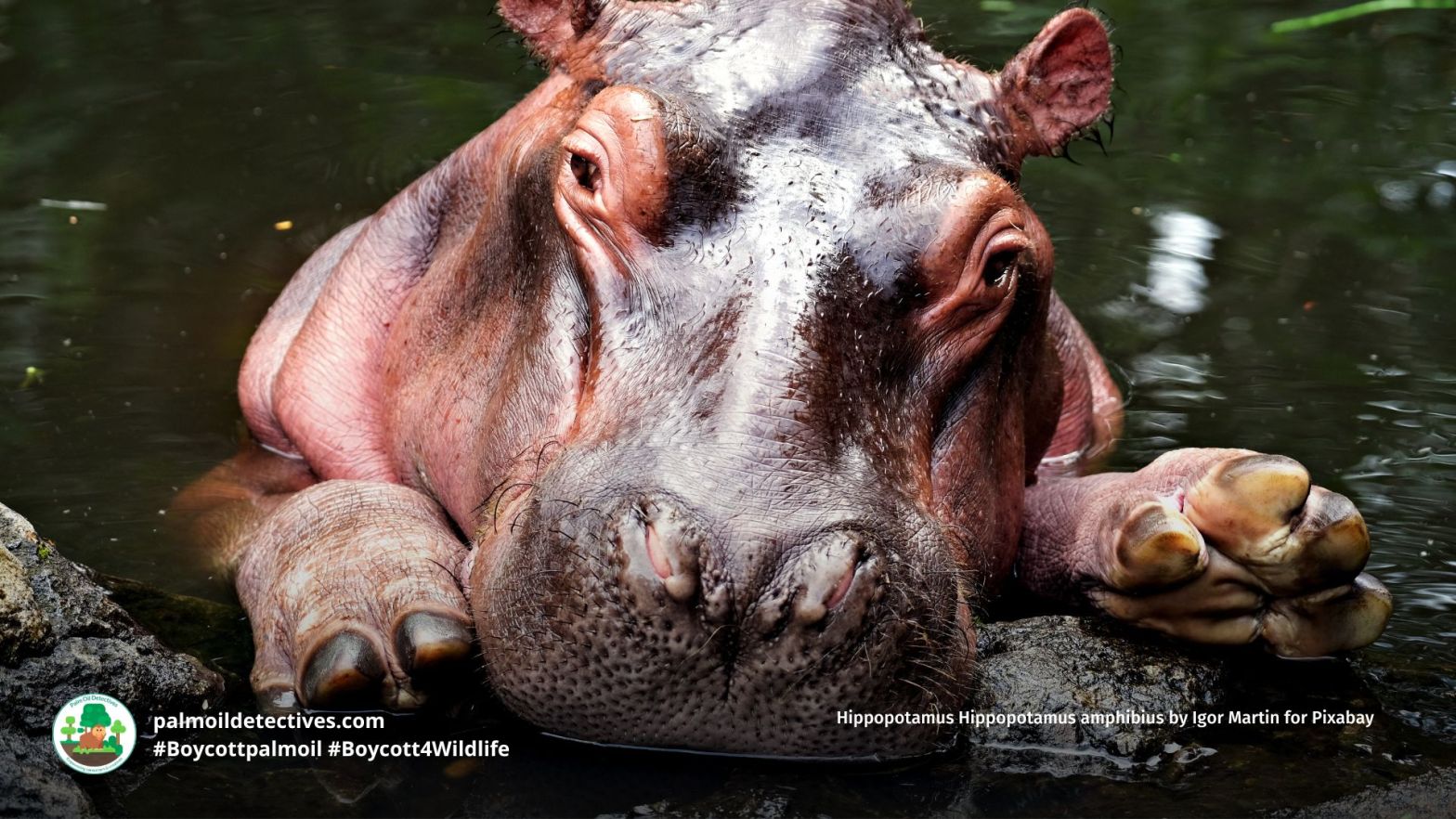
Hippopotamus Hippopotamus amphibius

The Common Hippopotamus, or Hippo, is a powerful and enduring symbol of Africa’s rivers and wetlands. Once common throughout all of Africa and the revered subjects of African folklore —their populations are now in peril. Hippo numbers plummeted in the 1990s and early 2000s due to unregulated #hunting and land conversion for #palmoil #cocoa and #tobacco #agriculture and human settlement. Although some strongholds remain in East and Southern Africa, many populations are in decline across #WestAfrica and Central Africa. Hippos are now listed as #Vulnerable on the Red List, with threats from freshwater habitat loss, illegal hunting for meat and ivory, and increasing conflicts with people. Use your voice and your wallet to push for stronger protections for Hippos and their riverine homes. #BoycottPalmOil #Boycott4Wildlife

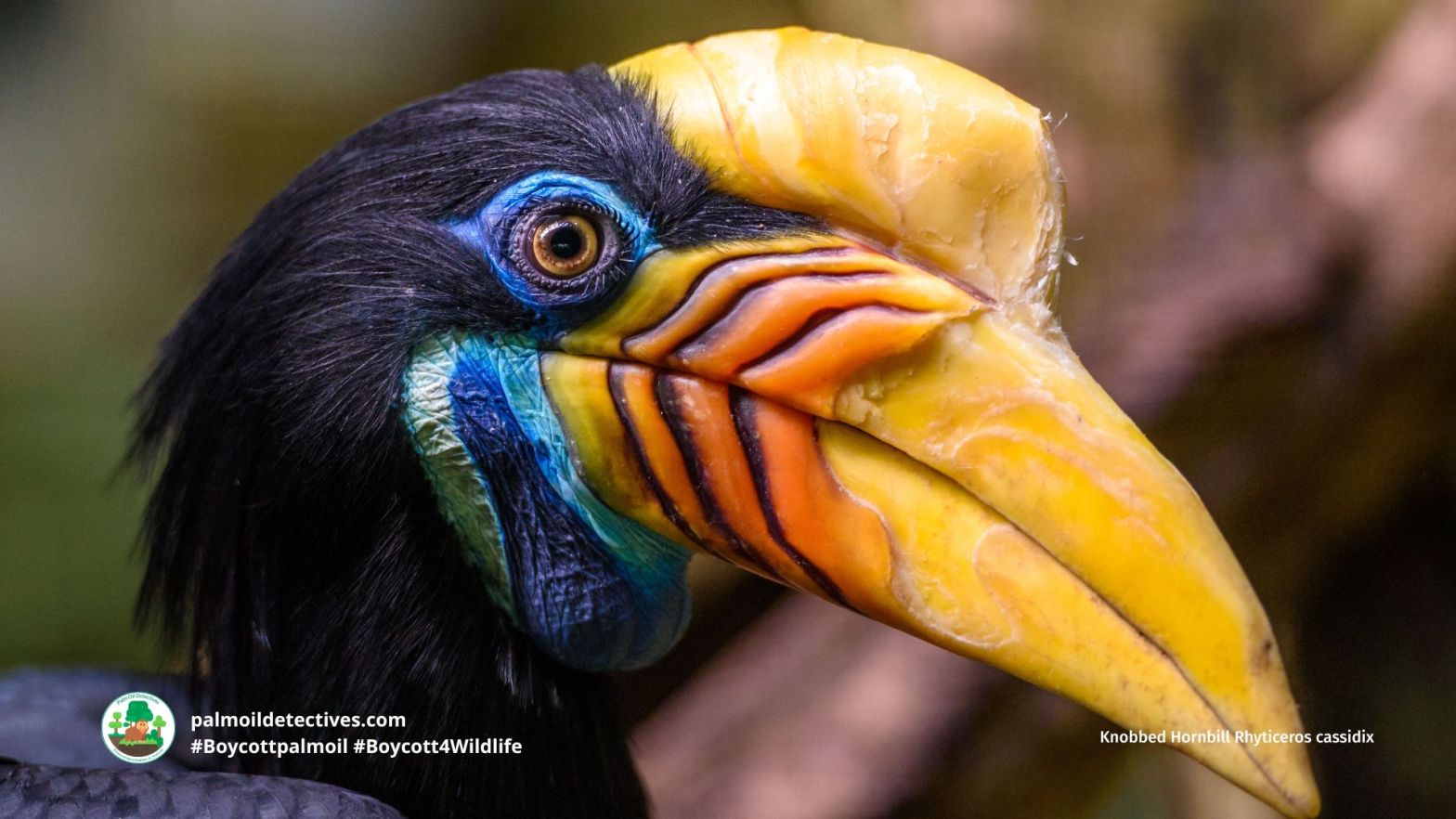
Knobbed Hornbill Rhyticeros cassidix

Knobbed Hornbills are important seed dispersers in Indonesia. Known for their unique social nature, save this striking bird, when you shop boycott palm oil!

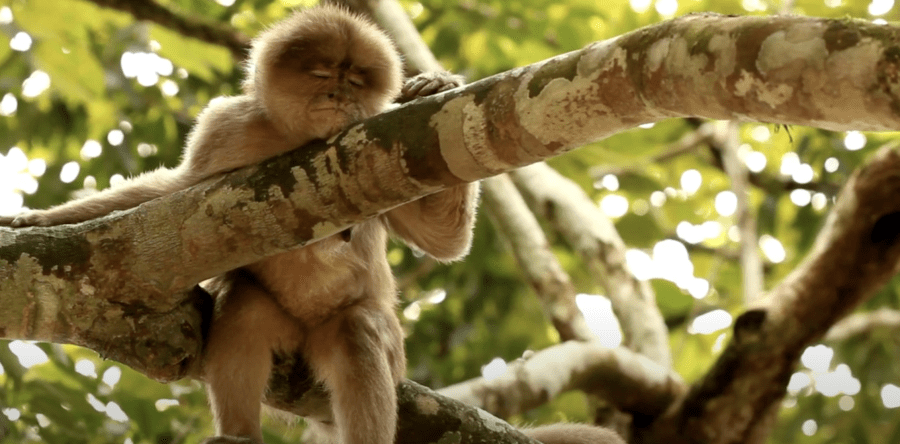
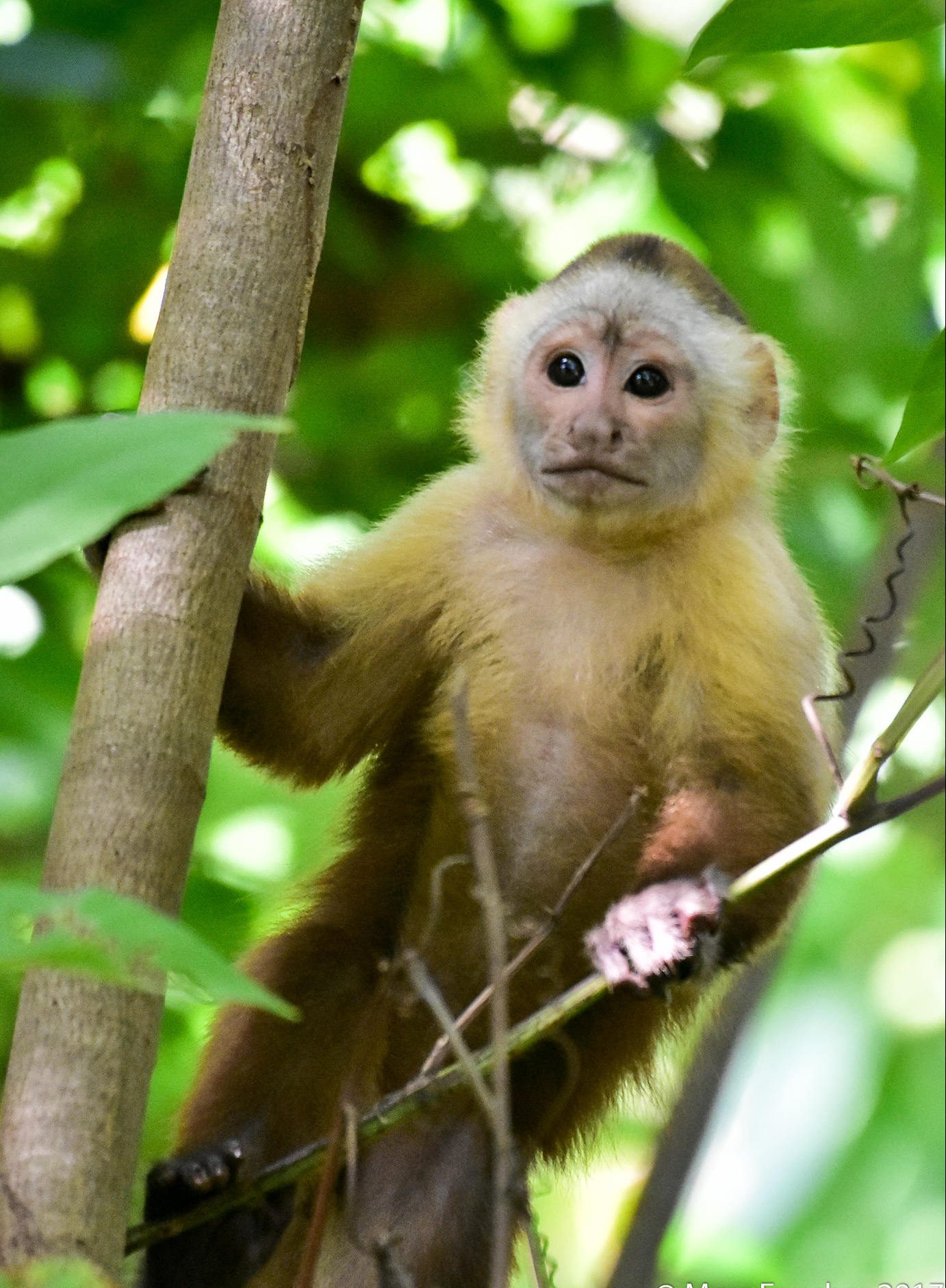
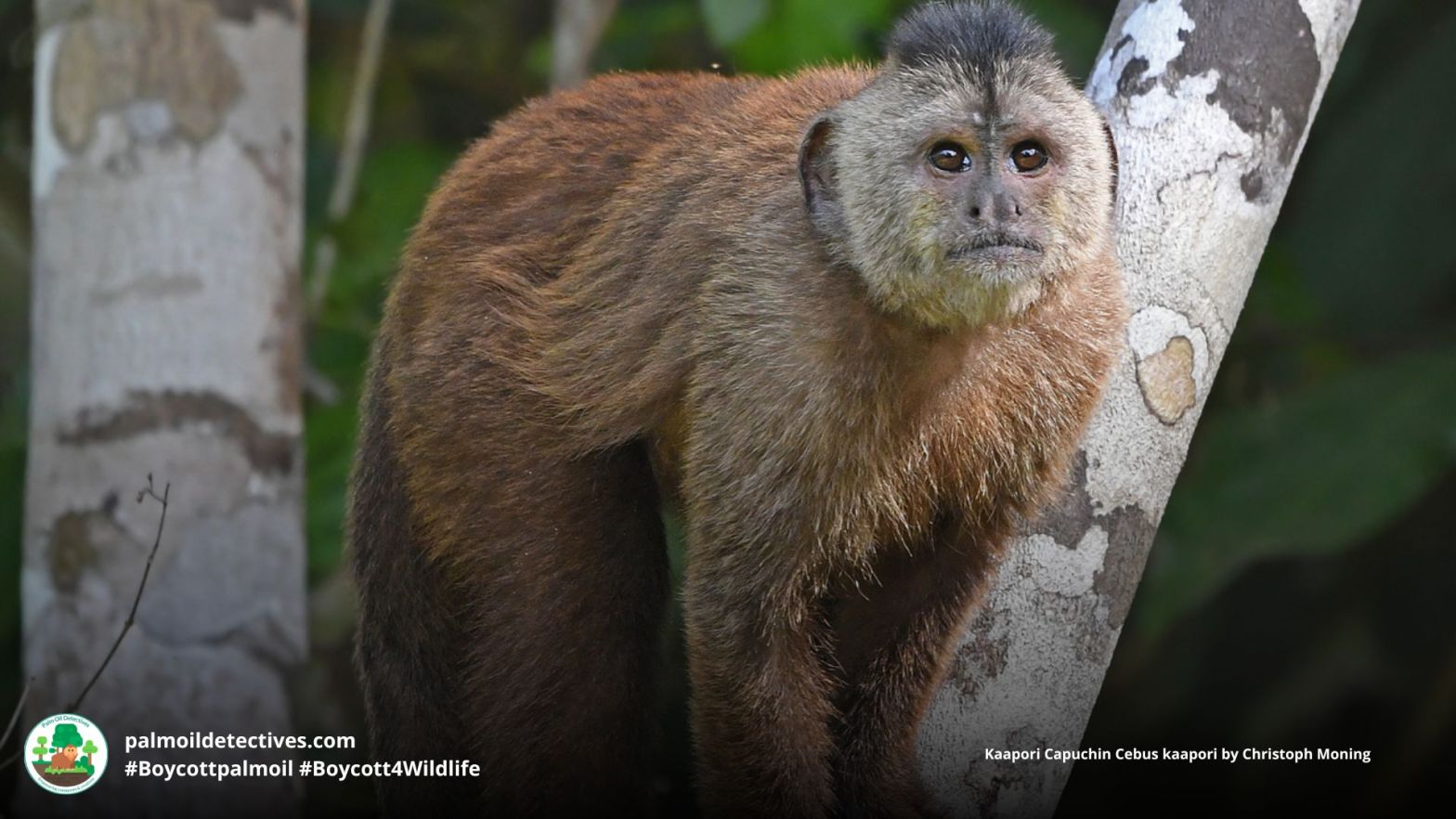
Ecuadorian White-fronted Capuchin Cebus aequatorialis

Ecuadorian White-fronted Capuchins face habitat loss to palm oil, hunting, and mining. Less than 10,000 remain. Support forest defenders. #BoycottPalmOil

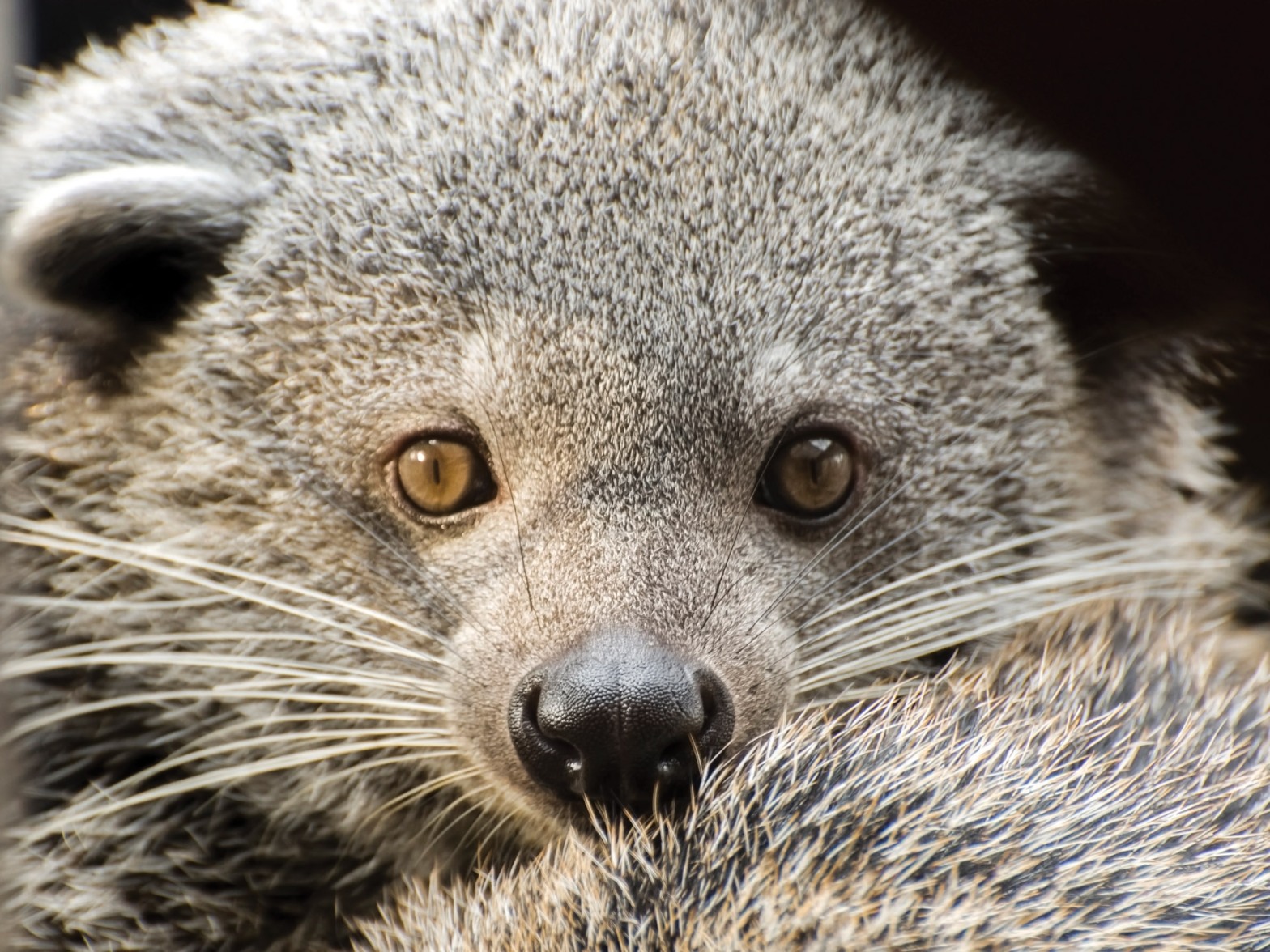
Binturong Arctictis binturong

You may smell a Binturong in the forest before you see them. They give off the aroma of buttered popcorn or cheesy crisps due to the a compound in their urine they use to attract mates. The binturong, Arctictis binturong, is a fascinating and rare mammal who roam the dense rainforests of Southeast Asia. Often called the “bearcat” due to their looks, binturongs are neither bears nor cats, but are more closely related to ferrets. With their prehensile tail, thick wiry fur, and a popcorn-like scent, these unique and irreplacible creatures play vital roles as seed dispersers, particularly for strangler figs (Ficus spp.), making them keystone species in their ecosystem.

Despite their ecological significance, the binturong is now classed as Vulnerable. Populations have plummeted due to habitat destruction, particularly for palm oil deforestation; along with illegal hunting, exploitation for the coffee market and the illegal bushmeat and pet trade. Protecting the majestic binturong requires urgent action to safeguard their rainforest home. Fight for them every time you use your wallet! #BoycottPalmOil #Boycott4Wildlife

Santa Marta White-fronted Capuchin Cebus malitiosus

Santa Marta White Fronted Capuchins are Colombian primates threatened by severe habitat loss from cattle ranching and palm oil. Boycott palm oil and meat!

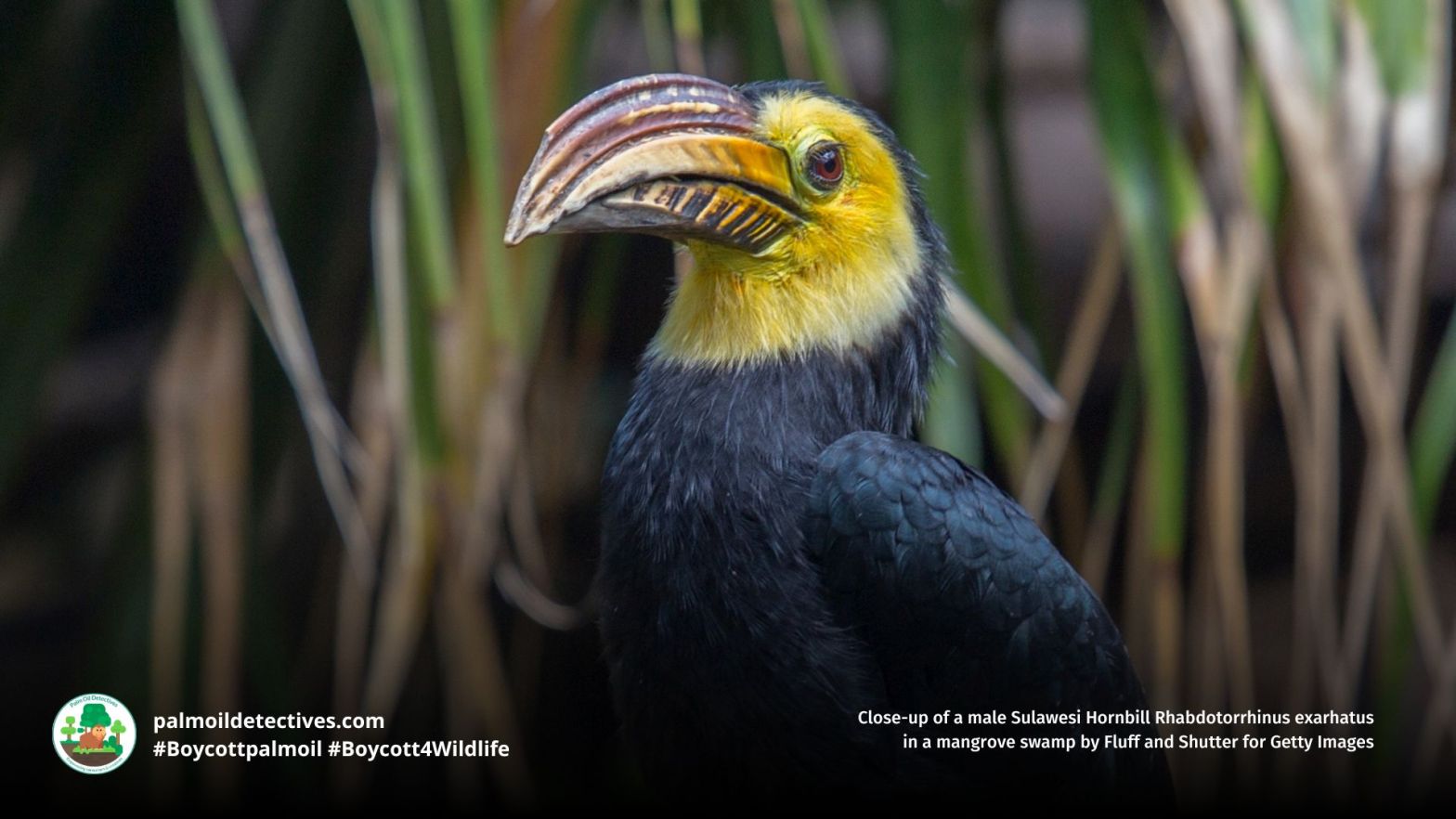
Sulawesi Hornbill Rhabdotorrhinus exarhatus

The Sulawesi hornbill (Rhabdotorrhinus exarhatus) is a striking and large yellow and black bird endemic to Sulawesi, Indonesia. Known for their unique vocalisations and social nature, including communal shared breeding practices, these medium-sized hornbills are integral to the rainforest ecosystem, acting as crucial seed dispersers for many important tree species.

Sadly, the Sulawesi hornbill is classified as Vulnerable due to habitat destruction from logging, agriculture, and palm oil plantations, as well as poaching for the illegal pet trade. Protecting their remaining rainforest habitats is essential to ensuring their survival. Fight for their survival every time you shop. #BoycottPalmOil #Boycott4Wildlife

Pygmy Marmoset Cebuella niveiventris and Cebuella pygmaea

The petite pygmy #marmoset, the world’s tiniest true #monkey, boasts a mix of brownish-gold, grey, and tawny fur. These little wonders, weighing just around 100 grams, communicate uniquely using chemical, vocal, and visual cues to ensure group safety and harmony. Although these #marmosets prefer river-edge forests and can adapt to secondary forests, their homes are under serious threat. Rampant #deforestation for #meat, #goldmining, and #palmoil cultivation are eroding their habitats, pushing the subspecies Cebuella niveiventris towards a “Vulnerable” status. The situation is dire, with an estimated 30% reduction in their population in just 18 years. Protect these delicate creatures and their home – use your wallet as a weapon, be #vegan, #BoycottPalmOil, and #Boycott4Wildlife.🌳🐒

Giant Anteater Myrmecophaga tridactyla

Giant Anteaters have a striking and unforgettable appearance. They are covered in wiry, grey and brown fur with a distinctive black and white stripe running along their bodies. Their elongated snouts and long, sticky tongues are perfectly adapted for feeding on ants and termites. With their bushy tails and long, curved claws, they are supremely strange looking creatures, making them captivating to behold.

The Giant Anteater is classed as Vulnerable due to widespread deforestation and #palmoil, soy, meat, sugarcane and gold mining across their range. They are often victims to frequent deliberate and accidentally lit fires in the Amazon. These gentle creatures are becoming increasingly rare. But there’s a lot of actions you can take. Make sure you #Boycottpalmoil #BoycottGold #Boycottmeat and #Boycott4Wildlife to help them every time you shop.

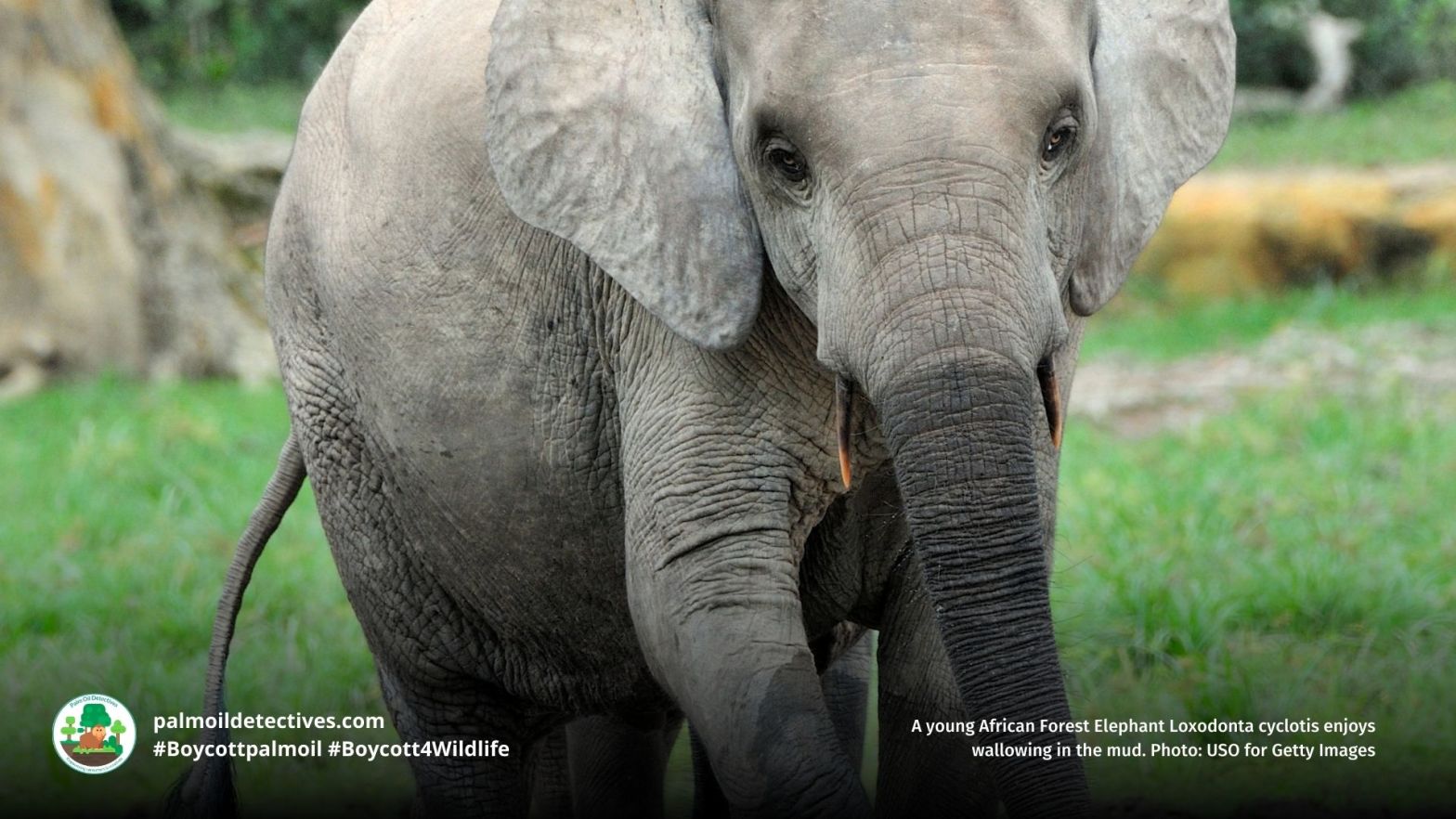
African Forest Elephant Loxodonta cyclotis

Protect African Forest Elephants! These critically endangered ecosystem engineers are vital for rainforest health but face extinction from poaching, ecocide

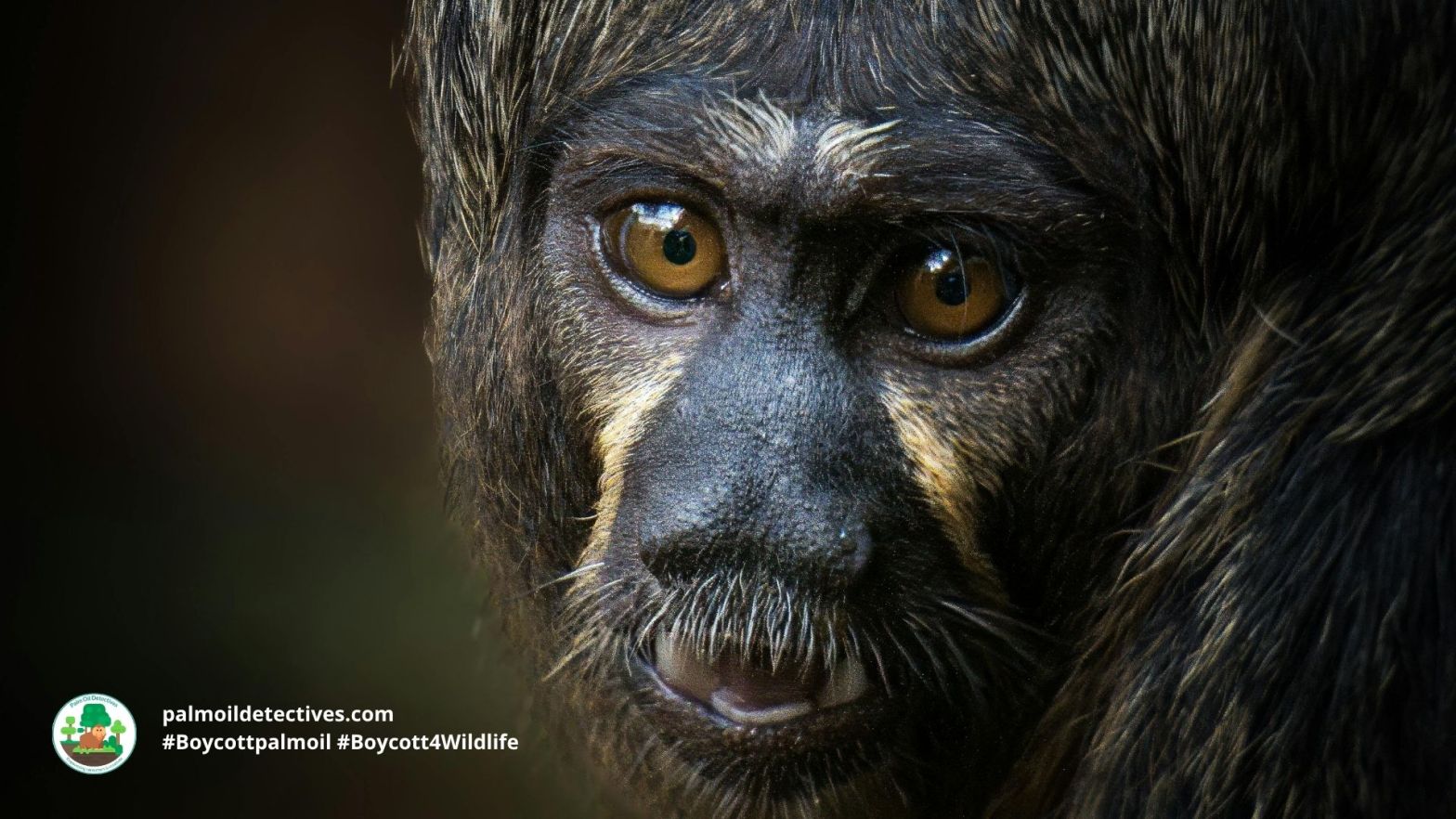
Black Bearded Saki Chiropotes satanas

Beneath the towering canopy of the Amazon’s north-eastern forests, the black bearded saki moves with quiet purpose, their distinctive shaggy beard and robust body a testament to their resilience in a world under siege. The air is thick with the scent of damp earth and the distant calls of unseen creatures, but the forest is changing—#roads, #dams, and #agriculture are carving scars across the landscape, fragmenting the saki’s ancestral home. The black bearded saki’s survival is threatened by relentless deforestation and hunting, their fate bound to the fate of the forest—fight for their survival every time you shop #BoycottPalmOil #Boycott4Wildlife.

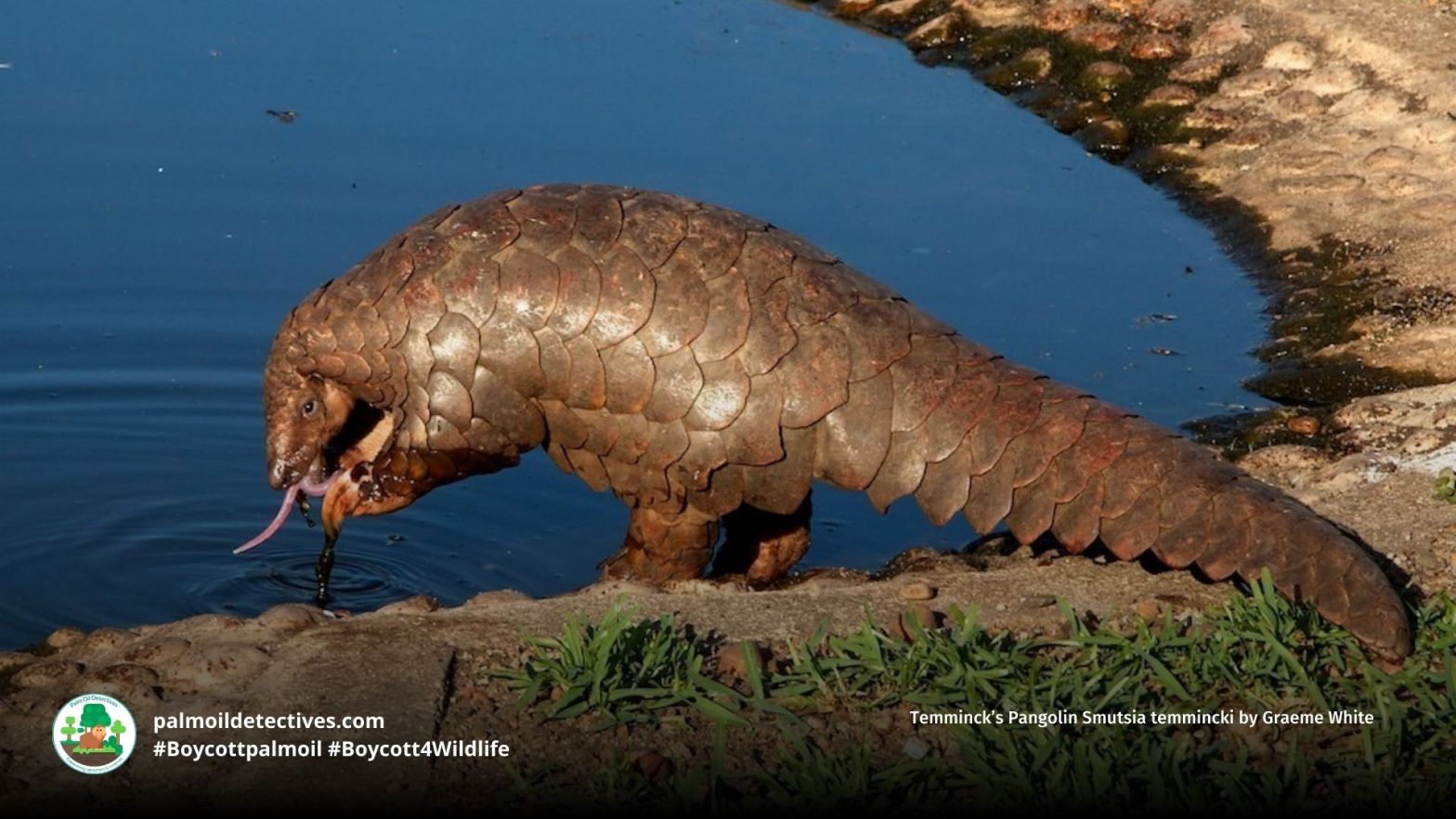
Temminck’s Pangolin Smutsia temminckii

The Temminck’s pangolin Smutsia temminckii is remarkable mammal. They are the second largest of the pangolin species and are reported to weigh between 12.5kg and 21 kilograms. They’re famous for their armour-like keratinous scales and their unique ability to curl into a protective ball when threatened. These elusive creatures are found in the savannahs and woodlands of sub-Saharan Africa and are essential to their ecosystem, controlling insect populations. The word pangolin comes from the Malay word “pengguling” meaning something that rolls up. Owing to their secretive nature and low densities, little is known about the pangolin. The species is killed primarily for Chinese medicine, even though their keratin scales have no medicinal value. All pangolins face a grave threat from trafficking for their meat and scales. Tragically, they are one of the most illegally traded mammals in the world.

Despite their ecological and cultural importance, Temminck’s pangolins are increasingly threatened by habitat destruction and illegal wildlife trade. Habitat loss from palm oil, cocoa and coffee agricultural expansion and mining further compounds their decline. Protect these unique creatures by boycotting palm oil and supporting strong anti-trafficking initiatives. #BoycottPalmOil #Boycott4Wildlife

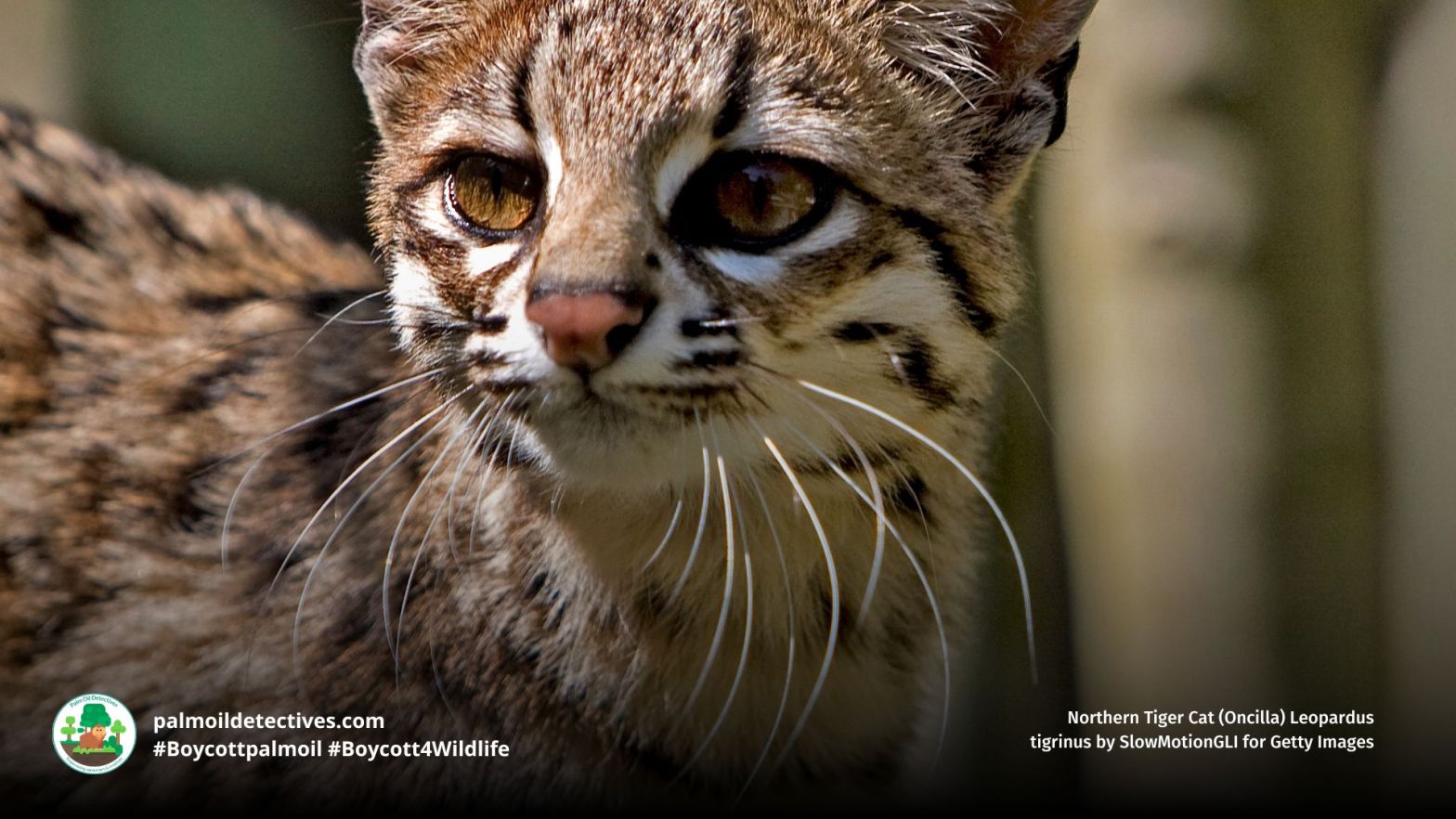
Northern Tiger Cat (Oncilla) Leopardus tigrinus

The northern tiger cat, also known as the oncilla (Leopardus tigrinus), is a captivating small wild cat native to Central and South America. Distinguished by their striking, leopard-like coat marked with dark rosettes and a sleek, agile body, this elusive feline is a master of stealth and survival in the dense forests and grasslands they inhabit.

The northern tiger cat is a tiny predator, weighing only 1.5–3 kg, yet they play a significant role in maintaining ecological balance as a keystone predator. These solitary creatures, though mostly ground-dwelling, are adept climbers. They communicate through purring as kittens and have a unique “gurgle” as adults. Their habitats range from the semi-arid Caatinga to the Andean cloud forests. Tragically, this species is classified as Vulnerable, with populations declining due to habitat destruction for palm oil, soy, meat and mining, poaching, and habitat fragmentation. Indigenous-led conservation efforts are vital to protect their remaining habitats. #BoycottPalmOil #Boycott4Wildlife

Black-Throated monitor Varanus albigularis microstictus

The Black-Throated Monitor is a mighty and large lizard reaching over 2 metres long. They are threatened by agriculture deforestation and #hunting for their leather and meat in Tanzania, Africa. Help them every time you shop and #Boycottpalmoil #Boycott4Wildlife
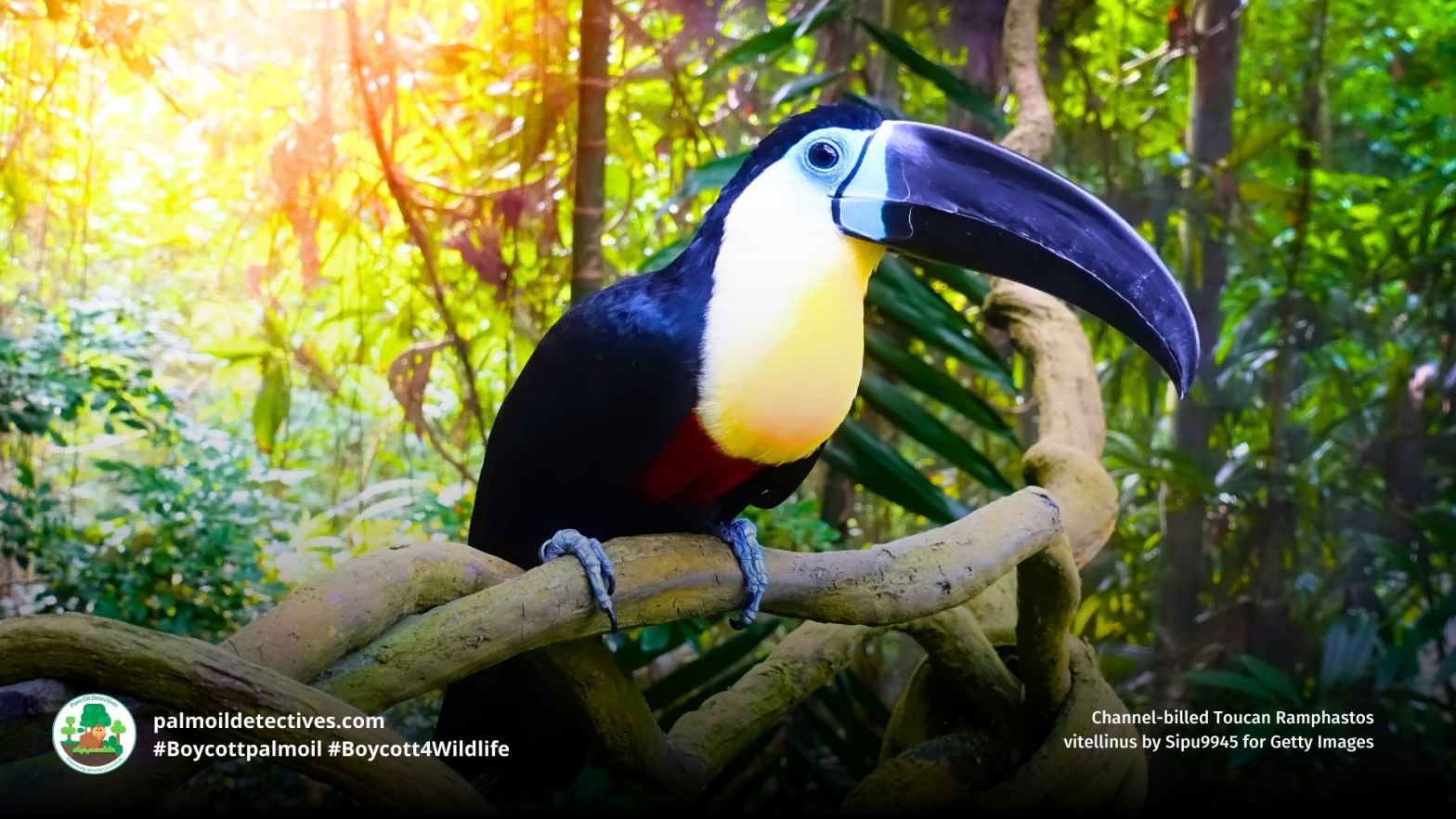
Channel-billed Toucan Ramphastos vitellinus

Deep in the heart of the #Amazon rainforest, a flash of vibrant colour moves between the towering canopy trees. The Channel-billed #Toucan Ramphastos vitellinus is a striking bird endemic to #Colombia, #Venezuela, #Ecuador, #Peru, Brazil and #Bolivia with a massive, curved bill and a raucous voice that echoes through the jungle. With their large, expressive eyes and vivid markings, these toucans are more than just symbols of tropical biodiversity—they are crucial players in the rainforest ecosystem, dispersing seeds that sustain the lush vegetation.

But their world is shrinking. The relentless destruction of the Amazon for cattle ranching, soy production, #palmoil and #goldmining is closing in on them. Habitat loss, hunting, and the wildlife trade are pushing them towards localised declines. In some parts of their range, they are disappearing entirely. Use your wallet as a weapon—fight for their survival. #BoycottPalmOil #Boycott4Wildlife
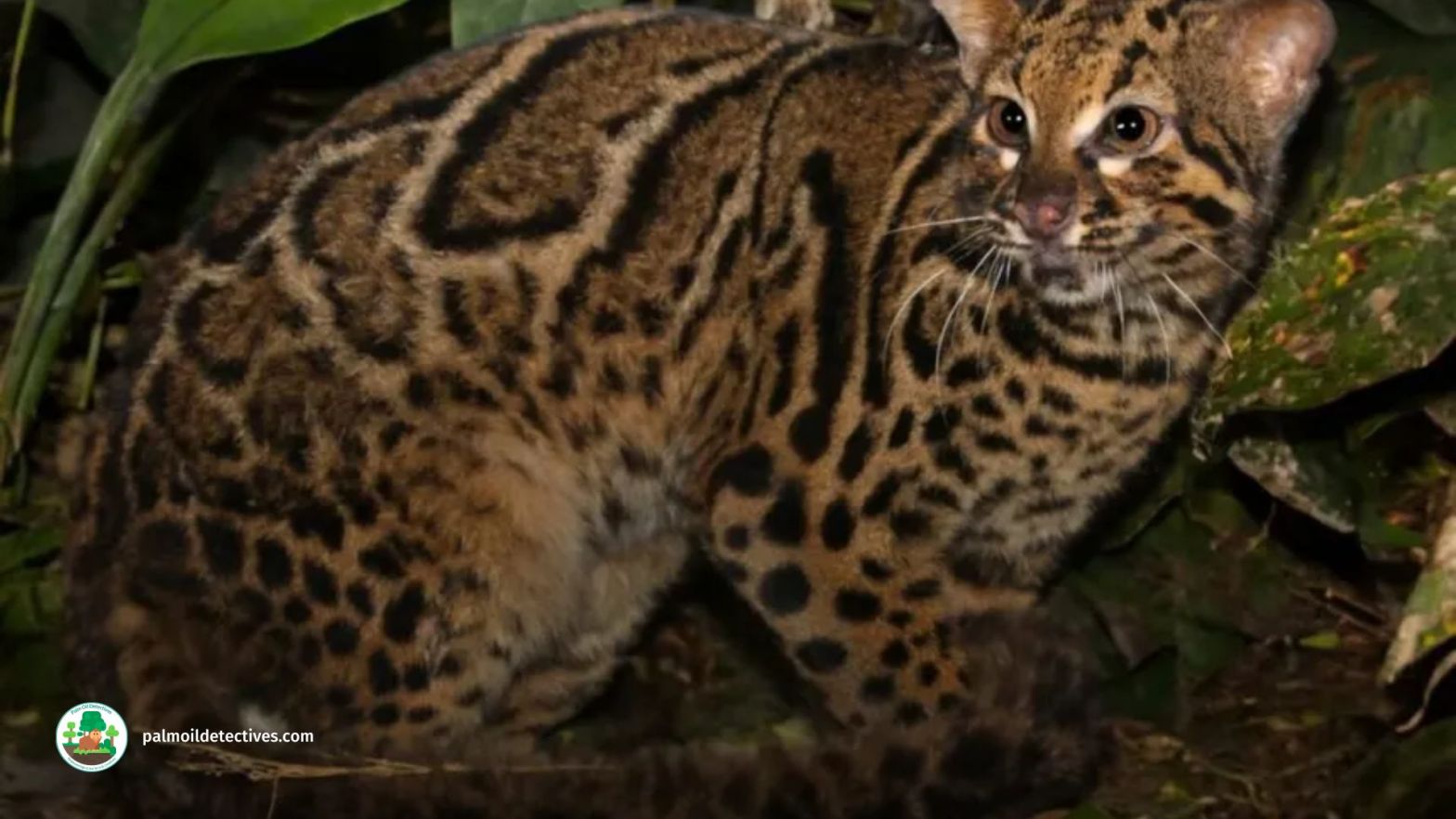
Marbled Cat Pardofelis marmorata

Marbled Cat Pardofelis marmorata IUCN Status: Near Threatened Location: India, Nepal, Bhutan, Bangladesh, Myanmar, Thailand, Laos, Vietnam, Cambodia, Malaysia, Indonesia (Sumatra, Borneo), China (Yunnan, Guangxi, Tibet), Brunei The marbled cat is a small #wildcat that can be found in the eastern part of the Himalayas and southern Asia. They are related to the Asian GoldenContinue reading “Marbled Cat Pardofelis marmorata”

Yellow-tailed Woolly Monkey Lagothrix flavicauda

Yellow-tailed Woolly Monkeys are social and active during daylight hours, living in groups with a dominant male, mature males and females, and young monkeys. They communicate through vocalizations like a loud, barking call. Endemic to the Peruvian Andes, they thrive in montane rainforests and cloud forests. They face an existential threat from habitat loss due to palm oil, soy and meat deforestation. Let’s unite to protect these precious creatures by boycotting palm oil, adopting a vegan lifestyle, and raising awareness for them. Together, we can protect the Peruvian Yellow-tailed Woolly Monkeys and their habitat. 🌳🐒💚 #BoycottPalmOil #Boycott4Wildlife
Western Lowland Gorilla Gorilla gorilla

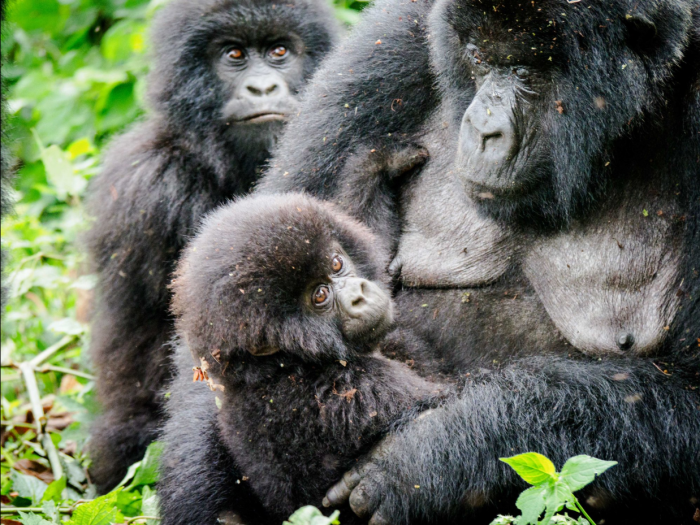
Mighty, intelligent and gentle Western Lowland Gorillas are well-loved apes, they are #critically endangered by #deforestation and habitat loss for #palmoil, cocoa and mining along with disease and illegal poaching in #Congo #Nigeria #Cameroon Help them to survive every time you shop! Join the #Boycott4Wildlife
Forgotten Animals of Secretly Destroyed Forests

Don’t let the forests go silent! 1000’s of forgotten animals are nearing extinction due to palm oil deforestation. Take action and boycott palm oil today!

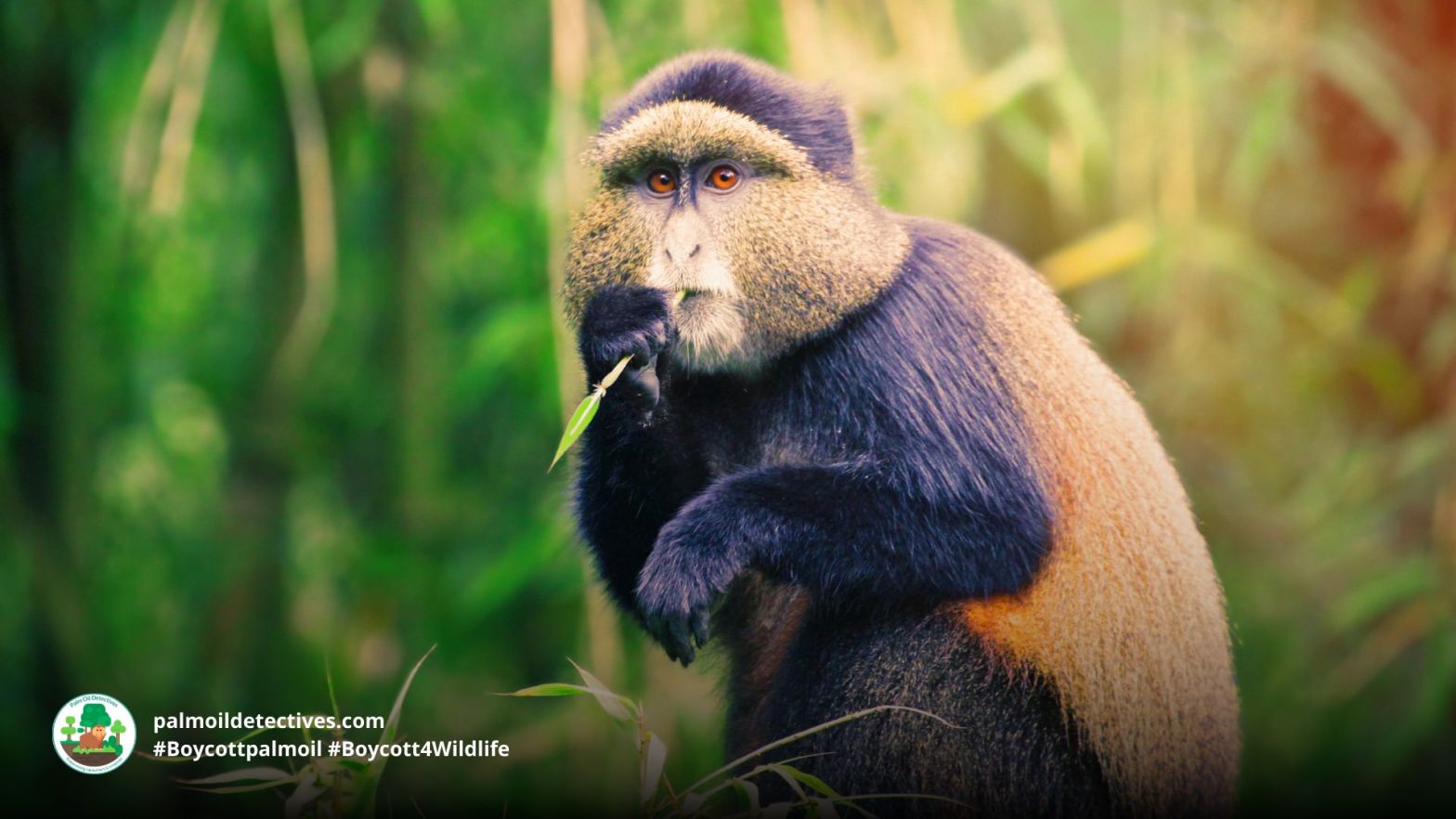
Golden Monkey Cercopithecus mitis kandti

In the mist-laden bamboo forests of the Virunga massif, the golden monkey Cercopithecus mitis kandti darts through dappled sunlight and the tree canopy. This endangered primate is found only in the high-altitude forests of the Albertine Rift, nestled deeply in volcanic mountains. They are found in four national parks: Mgahinga, in south-west Uganda; Volcanoes, in north-west #Rwanda; and Virunga and Kahuzi-Biéga, in the eastern Democratic Republic of #Congo. Like many other animals in the region they are protected and yet human threats including #mining #hunting and #agriculture continue to come dangerously close. Help these sweet-faced and severely threatened #primates every time you shop #BoycottPalmOil #Boycott4Wildlife

Dusky Langur Trachypithecus obscurus

The dusky langur, also known as the spectacled langur or dusky leaf monkey, is one of Southeast Asia’s most charismatic primates. Living in #Thailand, #Myanmar and #Malaysia they have vivid white eye patches that resemble spectacles and a fluffy dark-grey coat, they cut an unmistakable figure against the rustling emerald canopy of the rainforest. These intelligent and agile #monkeys play a crucial role in their ecosystems by dispersing seeds, keeping forests healthy and thriving. Yet, deforestation for agriculture—particularly #palmoil, rubber, and durian plantations—alongside hunting and illegal #wildlifetrade, is pushing them closer to extinction. Without urgent intervention, the forests they call home will be razed, and their populations will continue to plummet. Use your voice to protect them—fight for their survival and #BoycottPalmOil #Boycott4Wildlife every time you shop
Baird’s Tapir Tapirus bairdii

Baird’s tapirs may look like they are relatives of elephants, but they’re actually closer kin to horses, donkeys, zebras, and rhinoceroses. Also known as the Central American tapir, they are the largest land mammals in Central America and a living relic of an ancient lineage.

Their robust, stocky bodies and distinctive trunk-like snout make them unique among mammals. However, they are now Endangered, with fewer than 5,000 individuals left in the wild.

Tragically, palm oil, soy and meat deforestation, hunting, and human encroachment are driving this species toward extinction. Protecting their habitats is critical to ensuring their survival. Use your wallet as a weapon—boycott palm oil and support conservation initiatives. #BoycottPalmOil #Boycott4Wildlife
Varied White-fronted Capuchin Cebus versicolor

The Varied White-Fronted Capuchin Cebus versicolor is an intelligent, tenacious and resourceful small primate endemic to the forests of Colombia. With their pale white faces, reddish-gold coats, they are both striking in appearance and crucial to their ecosystems. These capuchins play an essential role in seed dispersal, ensuring the health and regeneration of their forest homes.

Tragically, their populations are declining due to deforestation, hunting, and the illegal wildlife trade. Protecting these forests is critical to their survival. Support indigenous-led conservation, adopt a vegan lifestyle and #BoycottPalmOil and #Boycott4Wildlife to take meaningful action for these incredible primates.

Crested Capuchin Sapajus robustus

Crested Capuchins are one of Brazil’s most endangered primates. A few thousand remain, facing extinction due to palm oil, mining, soy. Take action for them!

Southern Patas Monkey Erythrocebus baumstarki

The Southern Patas #Monkey (Erythrocebus baumstarki) is an elusive, long-limbed #primate once common across northern #Tanzania and parts of #Kenya and now on the very edge of #extinction. With a lean, agile body built for speed, they are among the fastest-running primates in the world, capable of reaching speeds up to 55 km/h. Once ranging over approximately 66,000 km², their habitat has been decimated by agriculture, human settlements, and bushmeat hunting, reducing their known range by over 85% in recent decades. By 2021, estimates suggested fewer than 200 individuals remained in the wild, restricted to small populations in western Serengeti National Park and its surroundings (de Jong & Butynski, 2021).

Without urgent intervention, this striking species could be the next primate extinction in Africa. Help them every time you shop and campaign for these rare primates, every time you shop go #vegan and #Boycott4Wildlife!

Golden-bellied Mangabey Cercocebus chrysogaster

The golden-bellied mangabey (Cercocebus chrysogaster) is an intriguing and elusive monkey endemic to the Democratic Republic of Congo (DRC). Named for the vibrant golden hue of their undersides, these primates are known for their intelligence, complex social behaviours, and unique ecological role. Found in the remote tropical forests along the Congo River Basin, these monkeys remain poorly studied due to their limited range and secretive nature.

Tragically, the golden-bellied mangabey faces mounting threats from habitat destruction, driven by logging, mining, and agricultural expansion, including palm oil plantations. Their population continues to decline due to hunting and habitat fragmentation. Act now to protect their fragile habitat—boycott palm oil and stand against deforestation. #BoycottPalmOil #Boycott4Wildlife
Saker Falcon Falco cherrug

Saker #Falcons are majestic and powerful birds of prey that have a wide range throughout much of Southern Europe, the Middle East and parts of Africa. Their plumage ranges from chocolate brown in colour to a pale sandy with brown bars or streaks and can be snow white and off-white.

This species has been uplisted to Endangered because a revised population trend analysis indicates that they may be undergoing a very rapid decline. This negative trend is a result of a range of anthropogenic factors including electrocution on power lines, unsustainable capture for the falconry and #pettrade, as well as habitat degradation throughout all three continents but especially in Africa. Help them every time you shop and #Boycott4Wildlife