
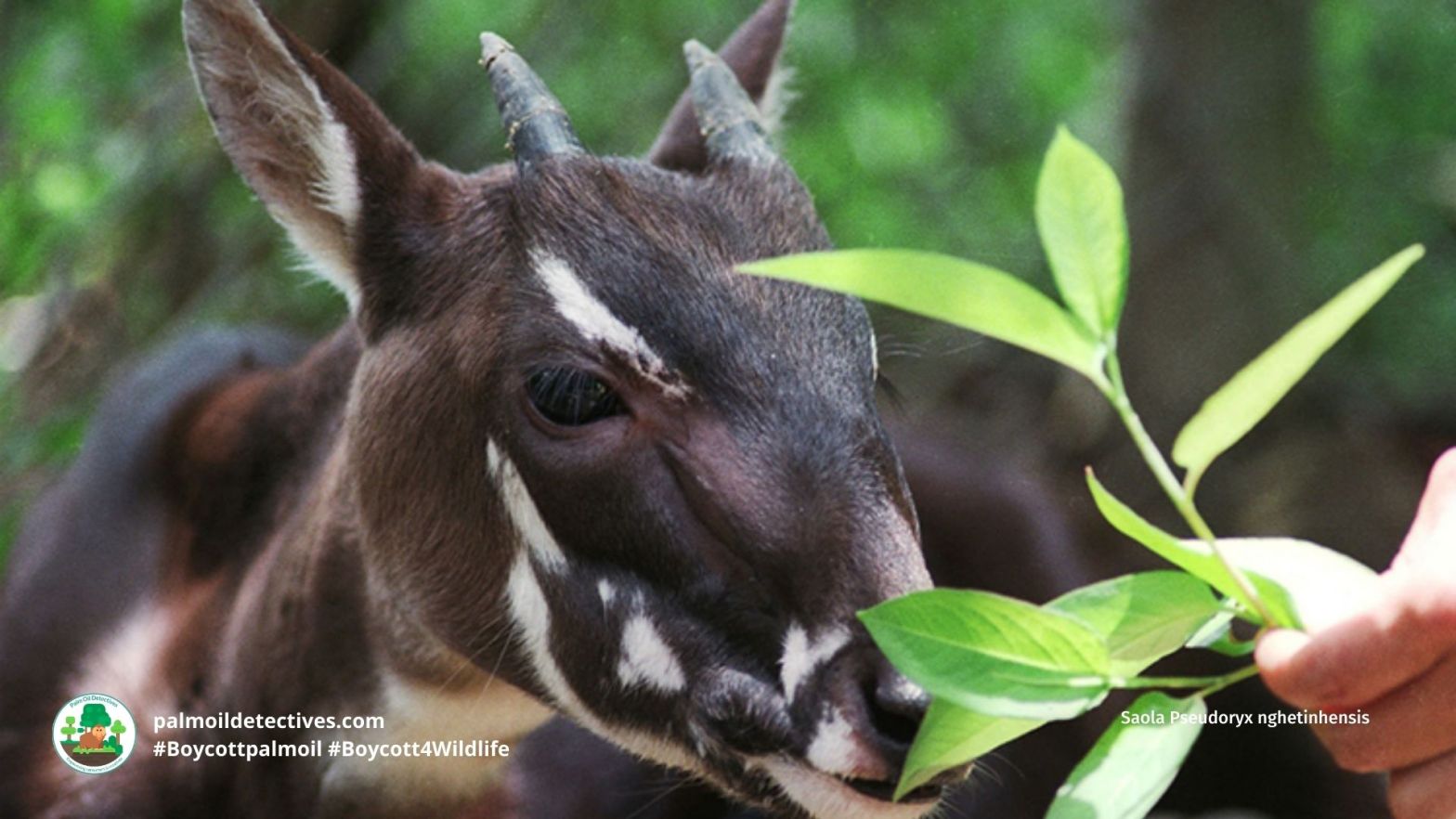
Saolas are rare and considered Southeast Asia’s ‘unicorns’, this Critically Endangered antelope is facing imminent extinction due to hunting and deforestation
Tag Archives: deer
Southern Pudu Pudu puda

Darting around and hiding on the forest floor, the Southern Pudu, known as püdü or püdu in Mapudungun (the language of the indigenous Mapuche people), is the world’s second-smallest #deer species. Weighing just 6.4 to 13.4 kg and standing at 35 to 45 cm at the shoulder, these miniature deer are remarkably adapted to their forested environments and communicate with each other through scent. Their short, spiky antlers curve slightly backward, and their thick chestnut-brown coat provides excellent camouflage in the undergrowth.
Despite their small size, Southern Pudus are resilient #ungulates in one of the world’s most biodiverse but increasingly threatened temperate forests in #Argentina and #Chile. However, habitat destruction for eucalyptus and pine monoculture, predation by invasive species, road collisions and disease transmission from farmed animals are pushing populations to the brink. Help them by raising awareness, it’s the #Boycott4Wildlife
Protected: Private Advocate’s Page
There is no excerpt because this is a protected post.
Sambar deer Rusa unicolor
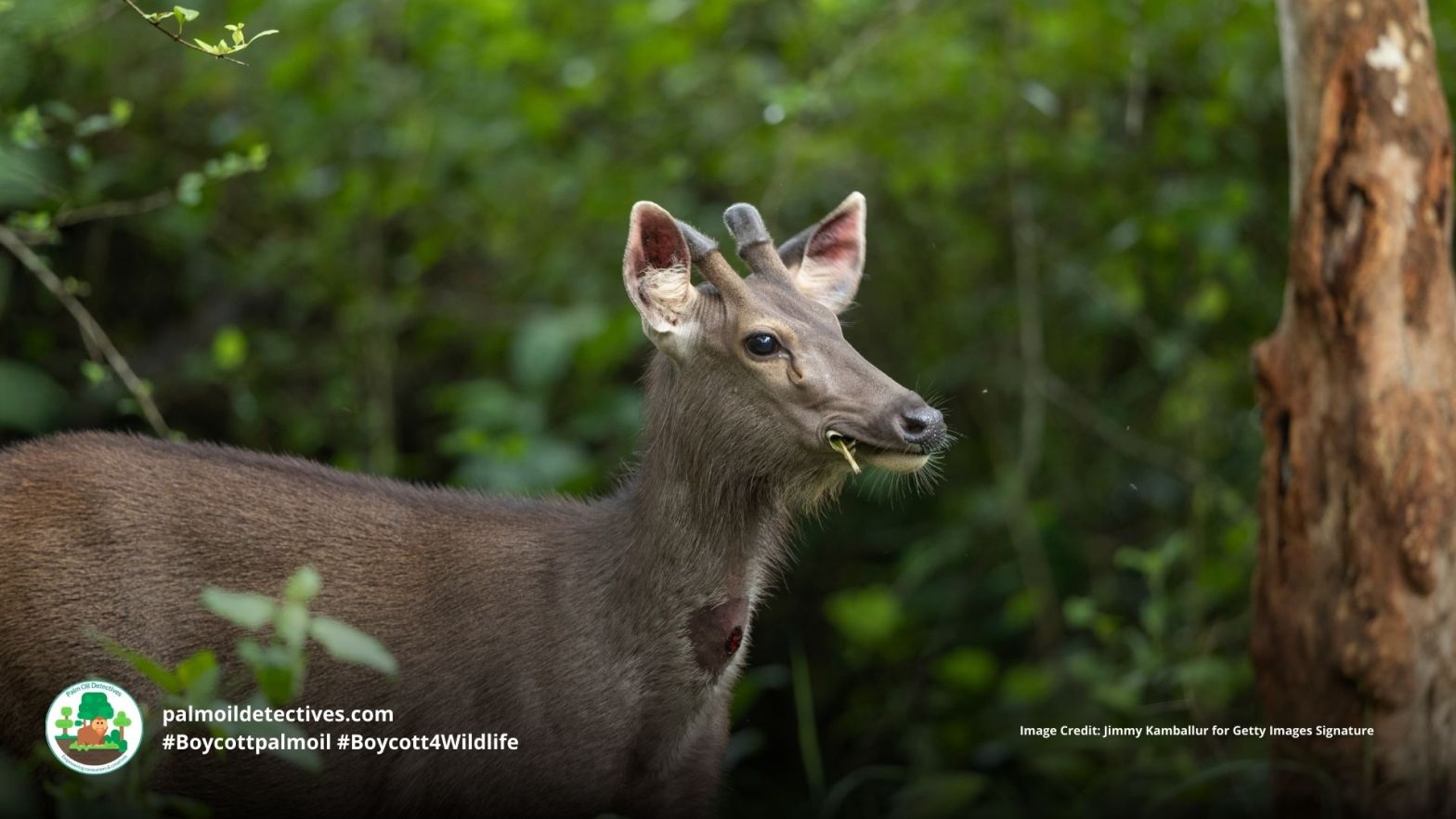
The majestic Sambar deer, cloaked in hues ranging from light brown to dark gray, are distinguished by their rugged antlers and uniquely long tails. Adorned with a coat of coarse hair and marked by a distinctive, blood-red glandular spot on their throats, these deer embody the beauty of the wild. Their adaptability is evident in their alert behavior, silent movements, and the gradual development of their unique spots. Perfectly designed for grazing, these deer use their antlers and feet deftly in defense, relying on their acute senses of hearing and smell to evade predators. To protect these splendid deer and their habitats from the impacts of deforestation and agricultural expansion, especially for palm oil, join the movement: #BoycottPalmOil and #Boycott4Wildlife to aid in their survival.
Marsh Deer Blastocerus dichotomus
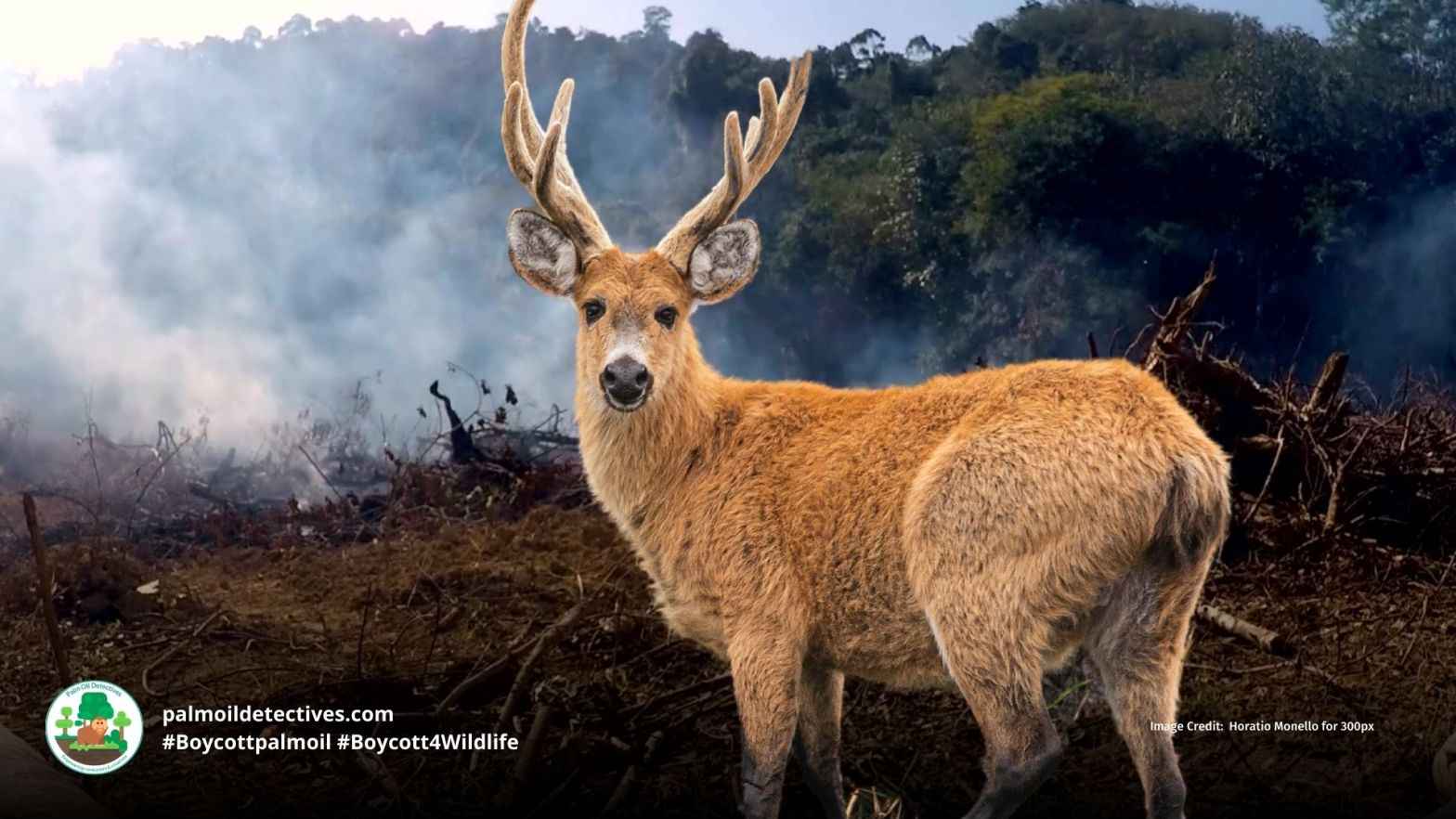
The Marsh deer are South America’s largest deer species, uniquely adapted to wetland life with their web-like hooves and preference for aquatic plants. They are prey animals for jaguars and pumas.
These majestic creatures, once widespread, are now confined to isolated pockets. Their main threat is habitat loss and fragmentation due to palm oil, soy and meat deforestation along with hydroelectric dams and gold mining.
Even as researchers strive to understand their complex and obscure social and mating behaviours, time is running out for these unique creatures. Use your wallet as a weapon and protect the Marsh deer #BoycottPalmOil #BoycottGold4Yanomami #Boycott4Wildlife.
Barasingha Cervus duvauceli
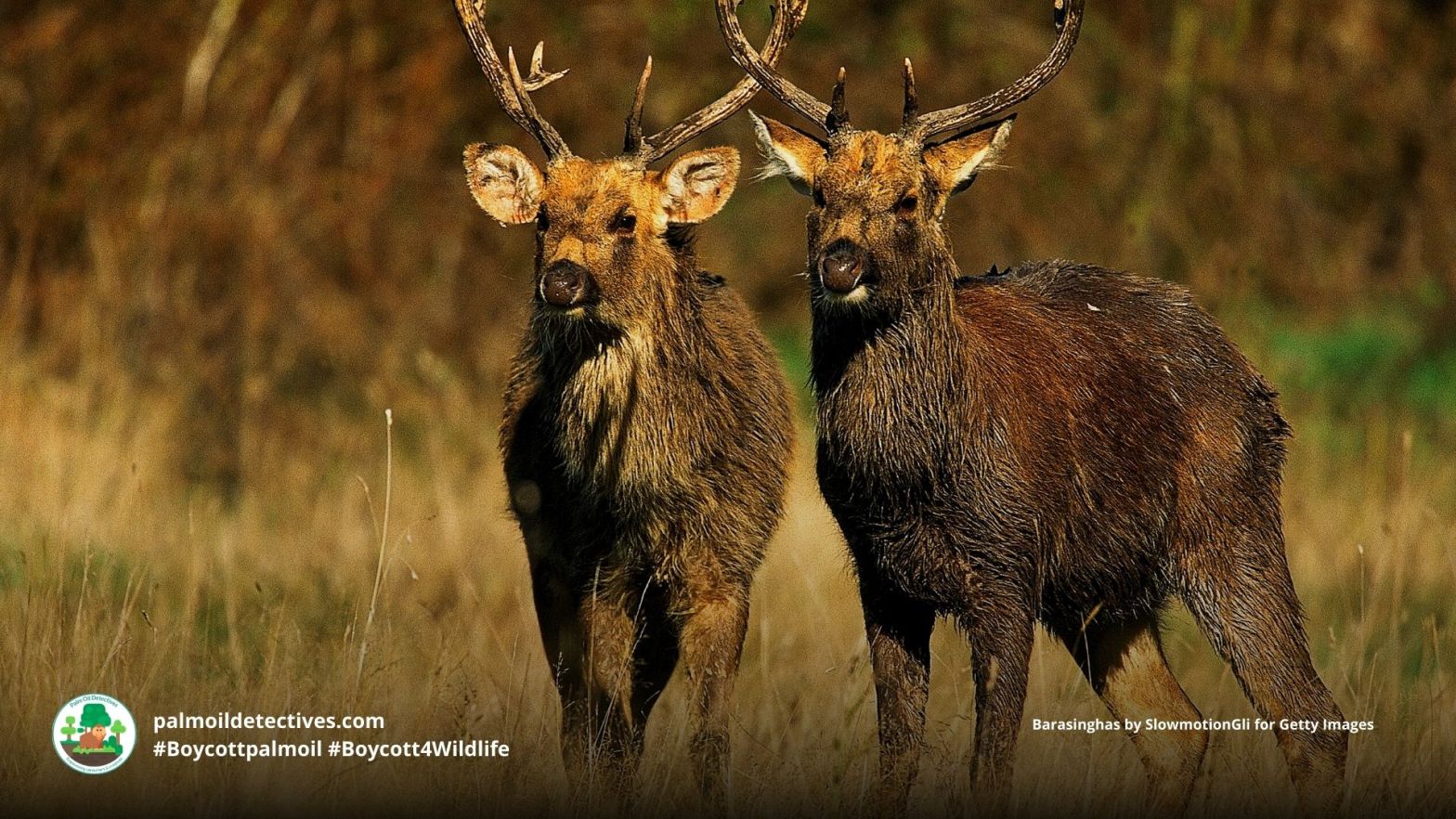
Barasinghas Cervus duvauceli also known as Swamp Deers, are instantly recognisable for their enormous handsome antlers. They can have as many as 12 antlers and their namesake Barasinghas means ’12 antlered deer’ in Hindi. They are now one of the most endangered deer species in the world due to habitat fragmentation for palm oil and beef, along with human persecution and hunting. The only remaining population live in protected sanctuaries in India and Nepal. The herd will be led by a single female and then followed by other females in a procession and then the males follow along at the rear of the group. Despite this, females are not dominant over the herd. These resilient, tough and majestic deer species are classified vulnerable on IUCN Red List. If you want to help them, adopt a #Vegan lifestyle and #BoycottPalmOil #Boycott4Wildlife in the supermarket!
Balabac Mouse Deer Tragulus nigricans
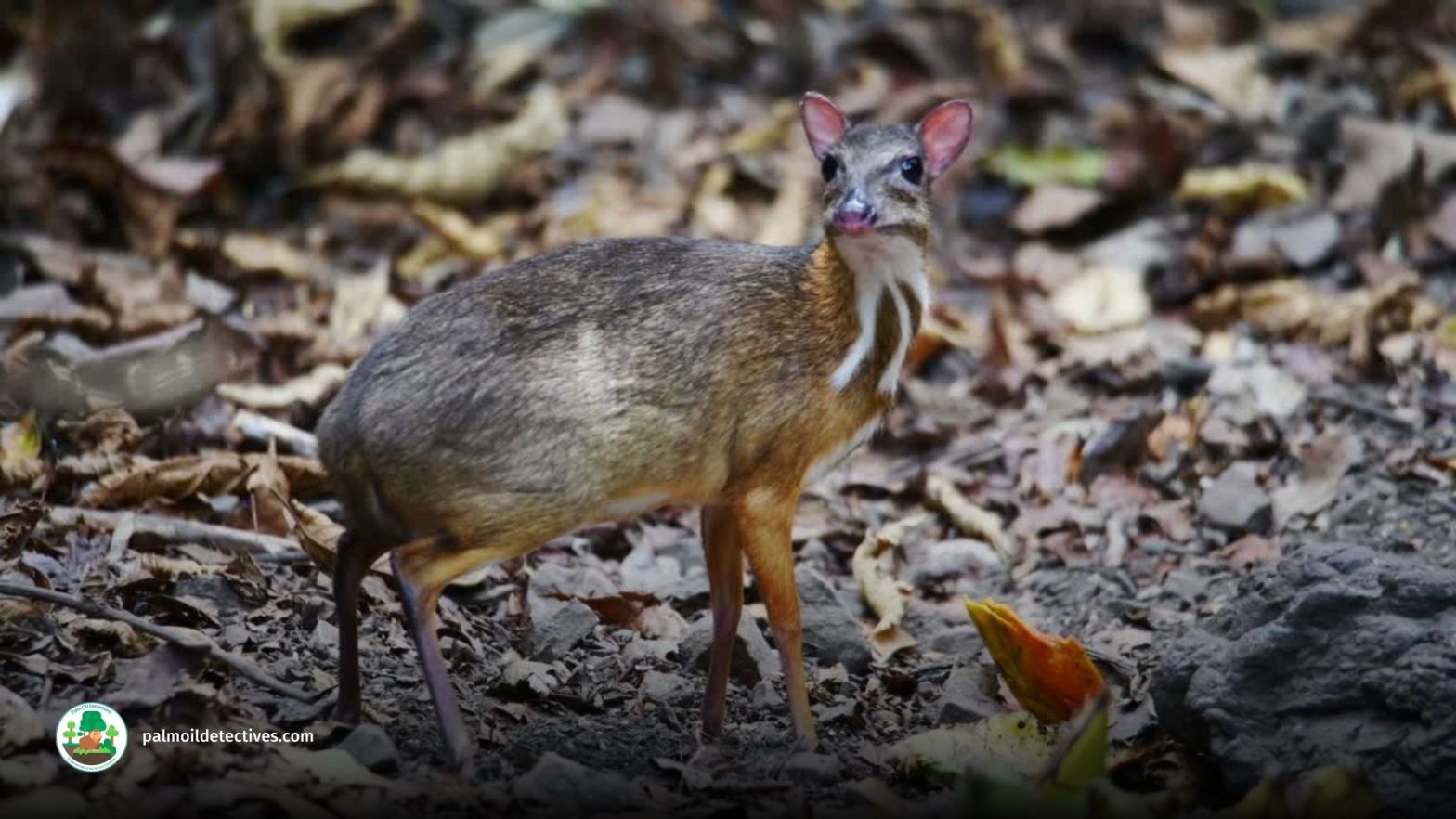
Balabac Mouse Deer Tragulus nigricans Endangered Extant (resident) Philippines; Presence Uncertain: Malaysia The Balabac Mouse-deer, also known as the Philippine Mouse-deer or locally as Pilandok, is a tiny, fragile deer most active at night. They are ruminants endemic to the Balabac Islands in the Philippines. Despite their diminutive size, the deers play a significant roleContinue reading “Balabac Mouse Deer Tragulus nigricans”
 Palm Oil Detectives