
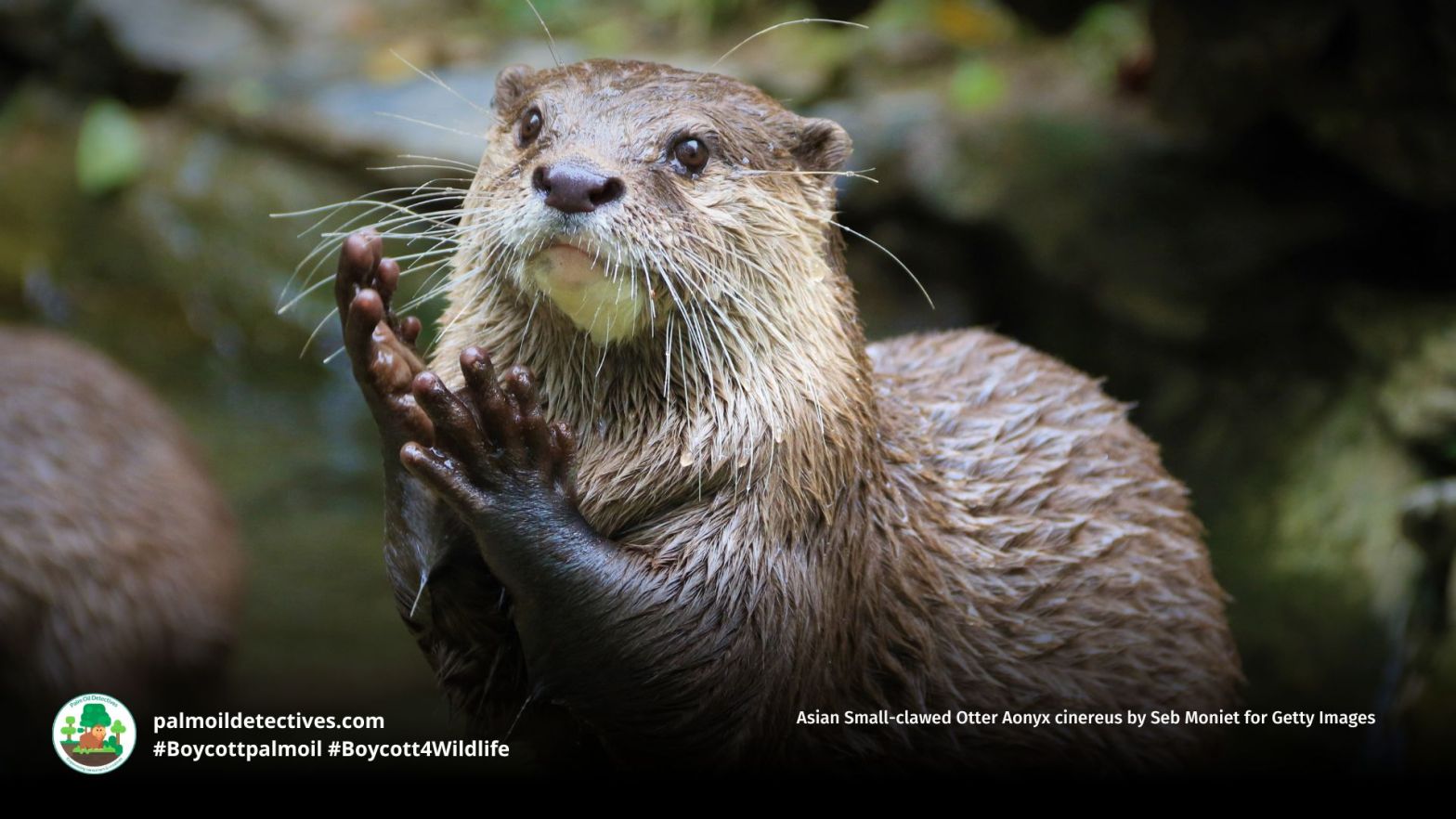
Asian Small-clawed Otters are the world’s smallest otter species and are Vulnerable from palm oil tea and coffee deforestation. Protect them, boycott palm oil!
Tag Archives: Asia
Sunda Flying Lemur Galeopterus variegatus
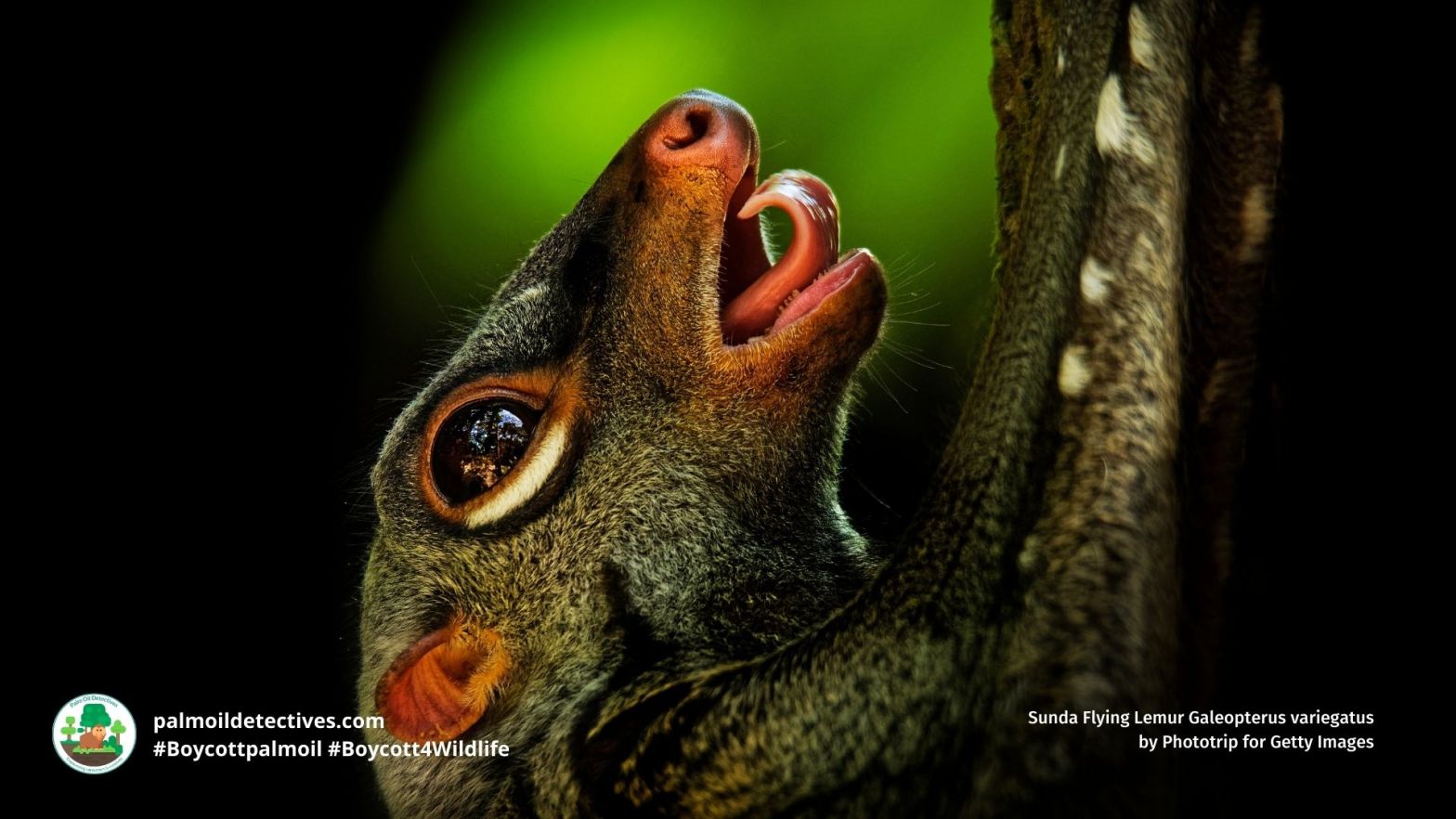
Sunda flying lemurs AKA Malayan colugos rely on ancient forests to survive, despite being skilful gliders, palm oil is a major threat, boycott palm oil!
Why Pangolins Are So Special

Pangolins get their name from the Malay ‘pengguling’ meaning rolling up. These special critically endangered animals deserve a break from savage poaching
How We Save Sumatra’s Last Living Tigers
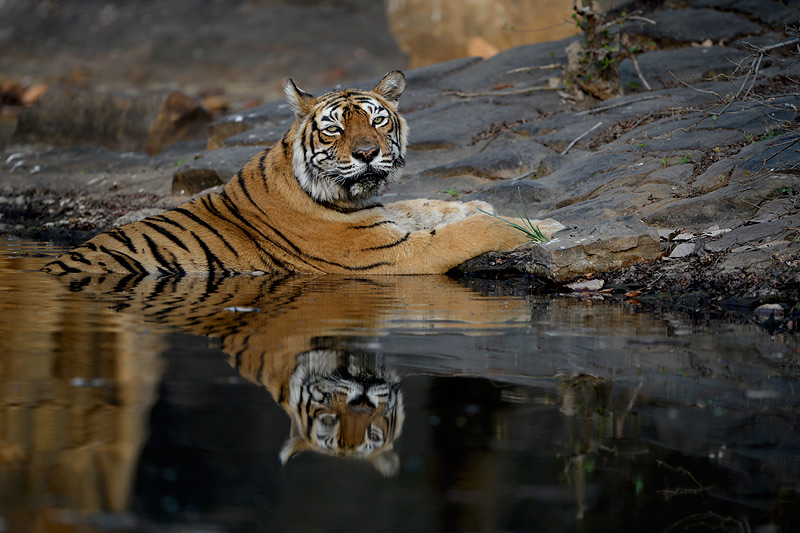
Strict global rainforest laws like #EUDR, enforcement of anti #poaching units, and a consumer boycott of #palmoil, hold the key to protecting #Sumatra’s last living #tigers.
Tanimbar Eclectus Parrot Eclectus riedeli
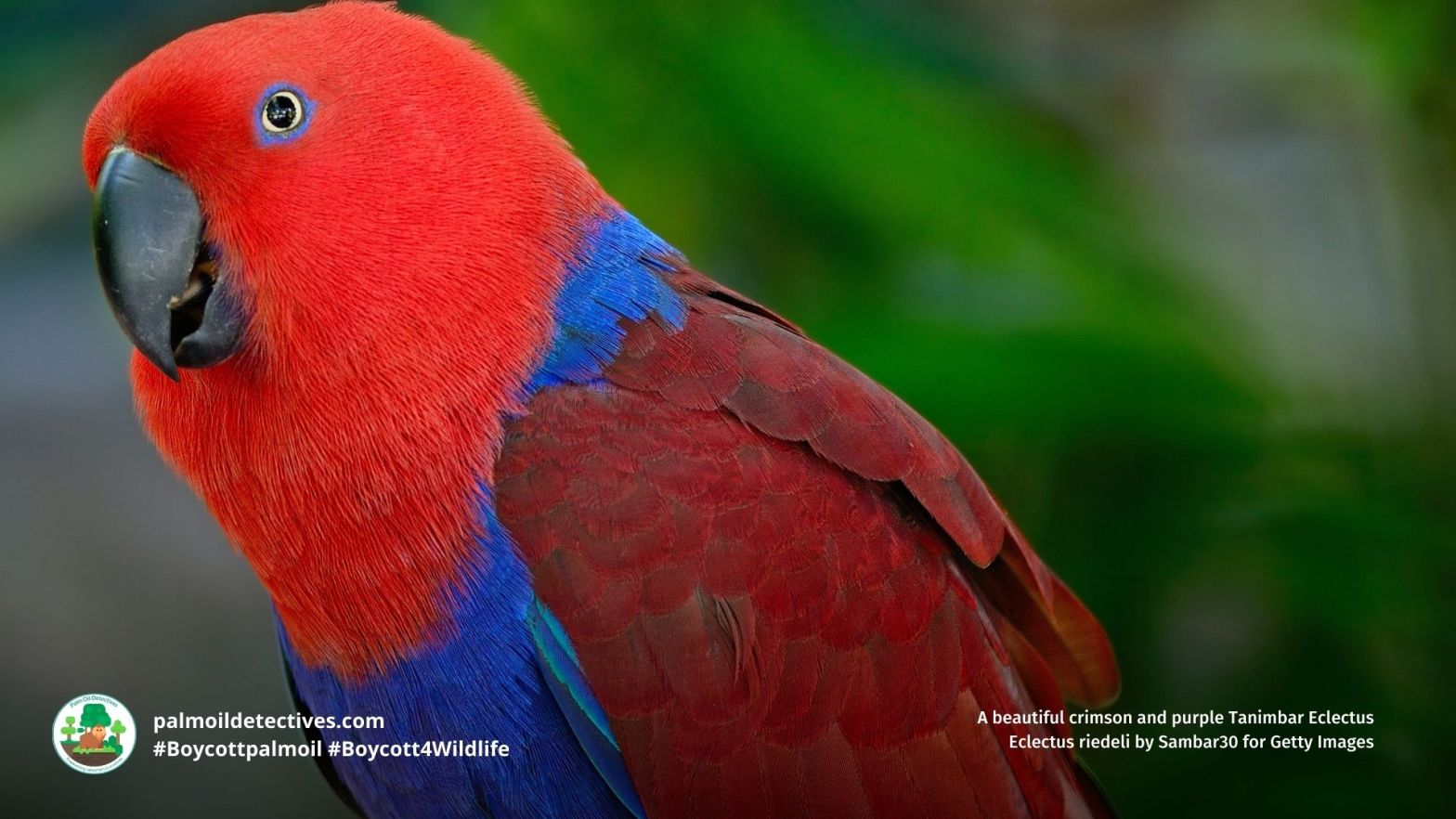
The Tanimbar Eclectus Parrot Eclectus riedeli also known as the Eclectus Parrot or Tanimbar Eclectus is a rare and striking #parrot found only on the #Tanimbar Islands of Indonesian occupied #WestPapua. Males display a brilliant emerald green plumage, while females are adorned in deep crimson and cobalt blue feathers, making them one of the most visually stunning #parrots in the world. These parrots face growing threats from habitat destruction, the pet trade, and climate change.
Forests are disappearing due to timber logging and #palmoil monoculture, while #poaching for the illegal #pettrade continues to remove individuals from the wild, disrupting their populations. #Climatechange also poses an increasing risk, with rising temperatures, storms, and unpredictable weather patterns affecting their habitat and food sources. The best way to protect these parrots is to keep them in the wild, not in cages. Use your wallet as a weapon in the supermarket and choose #PalmOilFree #BoycottPalmOil #Boycott4Wildlife.
Malayan Flying Fox Pteropus vampyrus
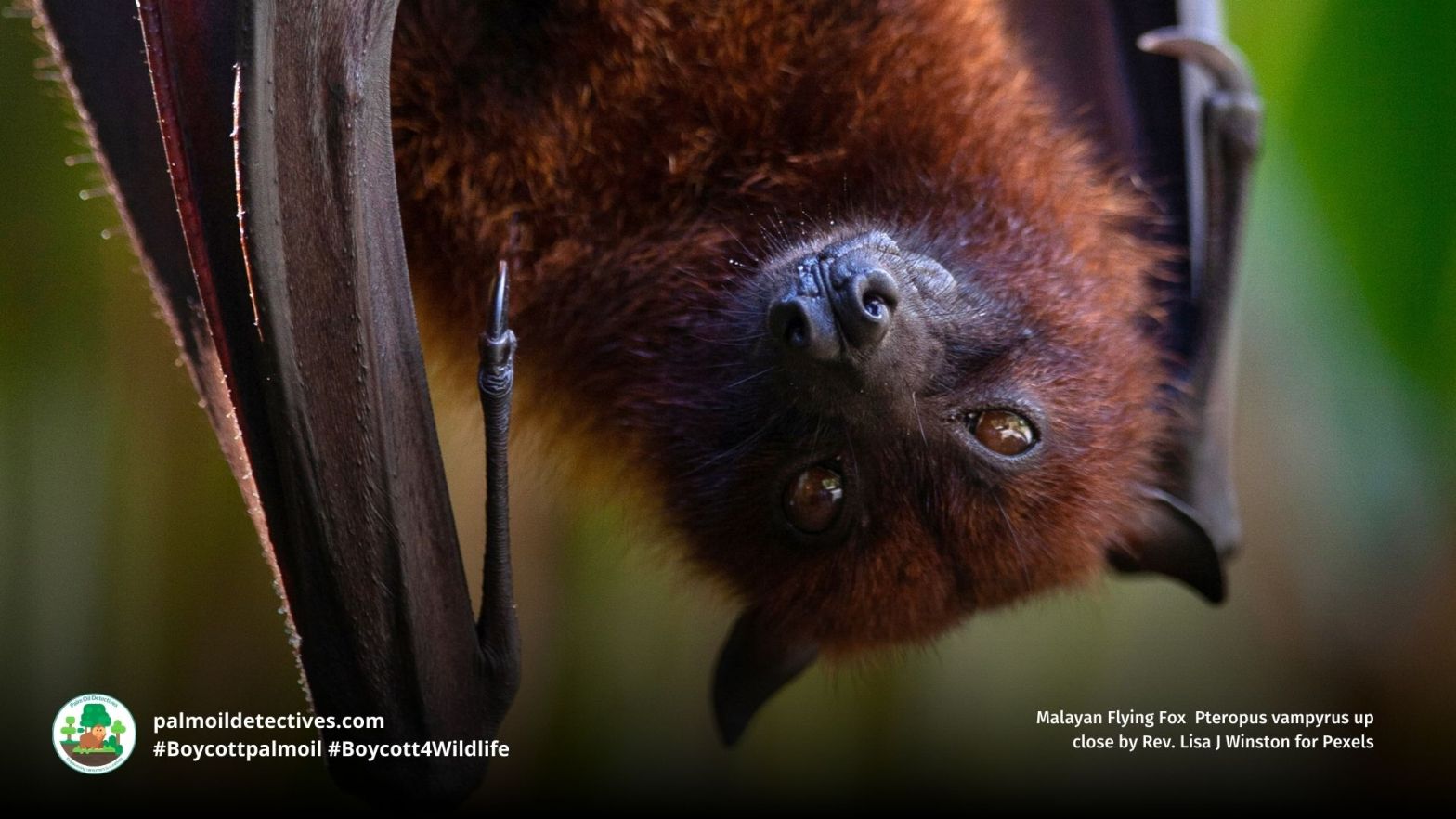
The Malayan Flying Fox, known also as the Large Flying Fox, Giant Fruit Bat, or Kalong, is an ethereal creature of the tropical Asian night. With wingspans reaching 1.7 metres, they are the largest bats in the world and glide silently through the darkness, a graceful presence in South East Asia’s moonlit forests. Their foxy almond shaped eyes and expressive faces are framed by glossy black fur and golden and russet collars, lend them a warm and mythical aura, while their immense wings are awe-inspiring to see in flight.
These nocturnal giants are the architects of tropical forests, scattering seeds and pollinating flowers as they journey across vast landscapes. Yet, despite their importance to ecosystems, they are under siege—hunted mercilessly and displaced by forests that vanish due to palm oil. Their story is a call to action: protect the guardians of the night before it is too late. #BoycottPalmOil #Boycott4Wildlife
The origins of animal words in SE Asia and what this reveals to us about our connection to them
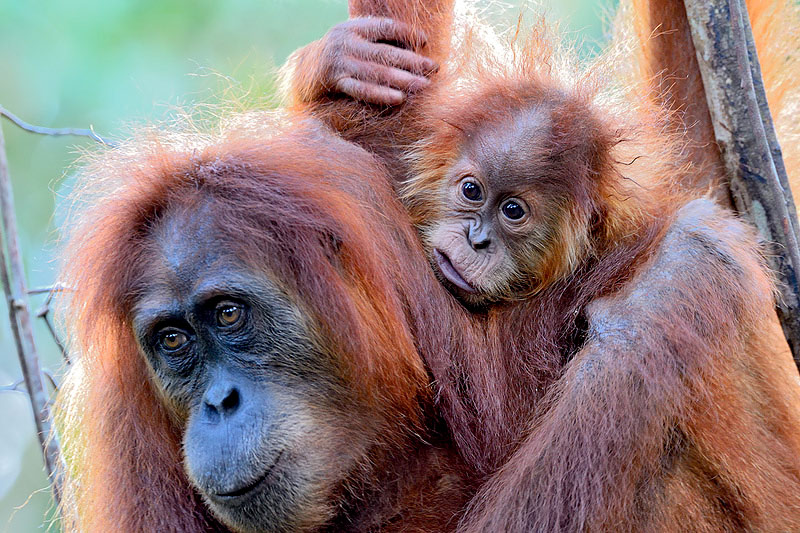
South East Asia is home to many fascinating creatures and rich biodiversity. The secrets of animal origins and ancient legends are revealed in their names: #Orangutan, #Gibbon, #Binturong and #Siamang in South East Asian languages. Help these animals to survive and #Boycottpalmoil
Protected: Private Advocate’s Page
There is no excerpt because this is a protected post.
Irrawaddy Dolphin Orcaella brevirostris
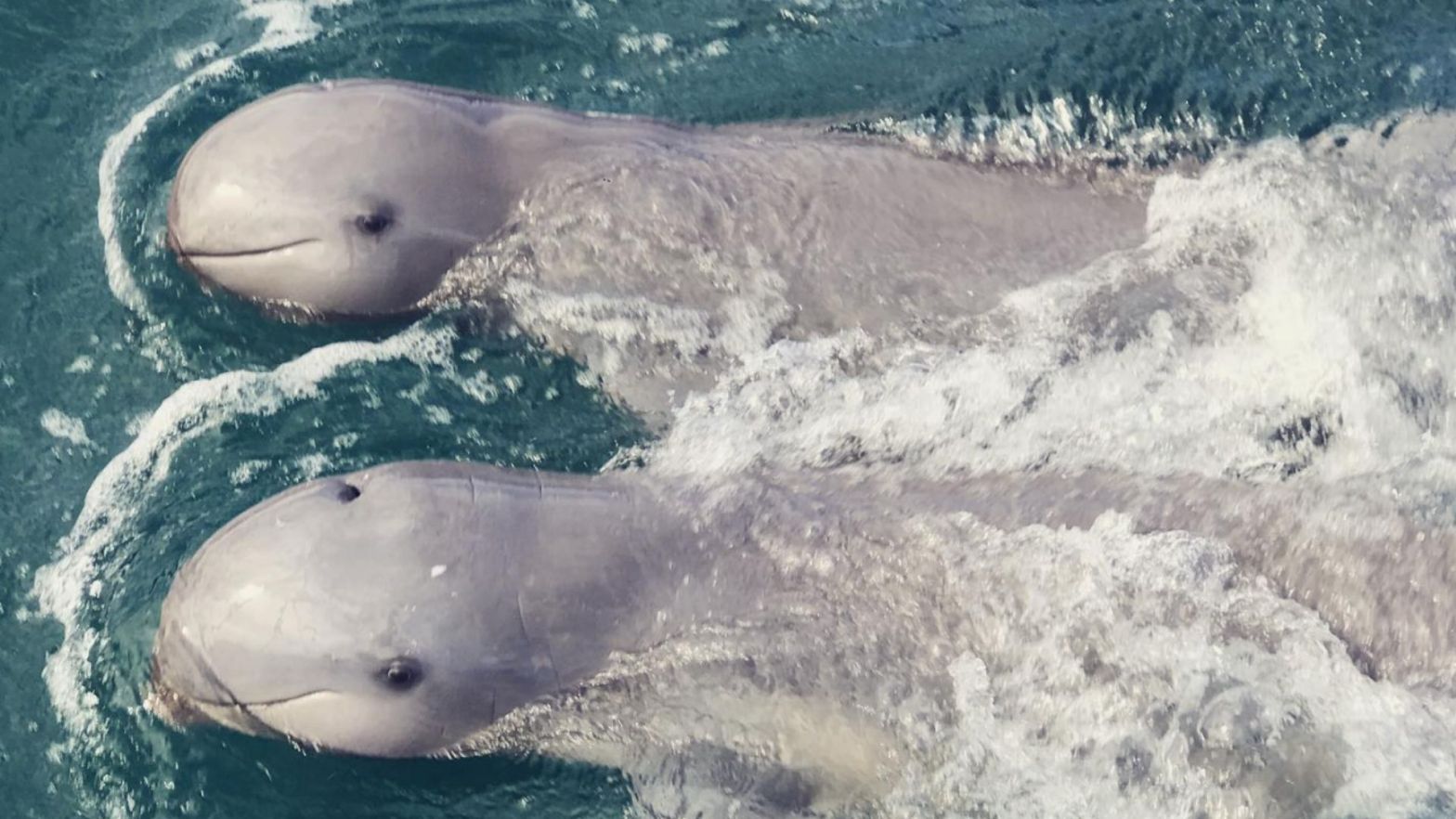
Intelligent and social Irrawaddy dolphins, also known as the Mahakam River dolphins or Ayeyarwady river #dolphins have endearing faces. Only 90 to 300 are estimated to be left living in the wild. Their rounded and expressive looking noses liken them to a baby beluga whale or the Snubfin dolphin of Australia. These shy #cetaceans are found in coastal and freshwater habitats across #SoutheastAsia, they live in small groups. Tragically, Irrawaddy dolphins face many human threats, from entanglement in fishing gear to dam construction. Palm oil deforestation, and #pesticide run-off in rivers is another major threat to their survival.
Protecting the Irrawaddy dolphin is paramount. As a keystone species, they maintain biodiversity in their fragile home. These beautiful animals are classified as endangered on IUCN Red list but are critically endangered in some ecosystems. Fight for their survival when you boycott palm oil and go vegan. Support the Boycott4Wildlife movement by using the hashtags #BoycottPalmOil and #Boycott4Wildlife on social media!
Echoes of the Ancients: The Wisdom and Power of Elephants
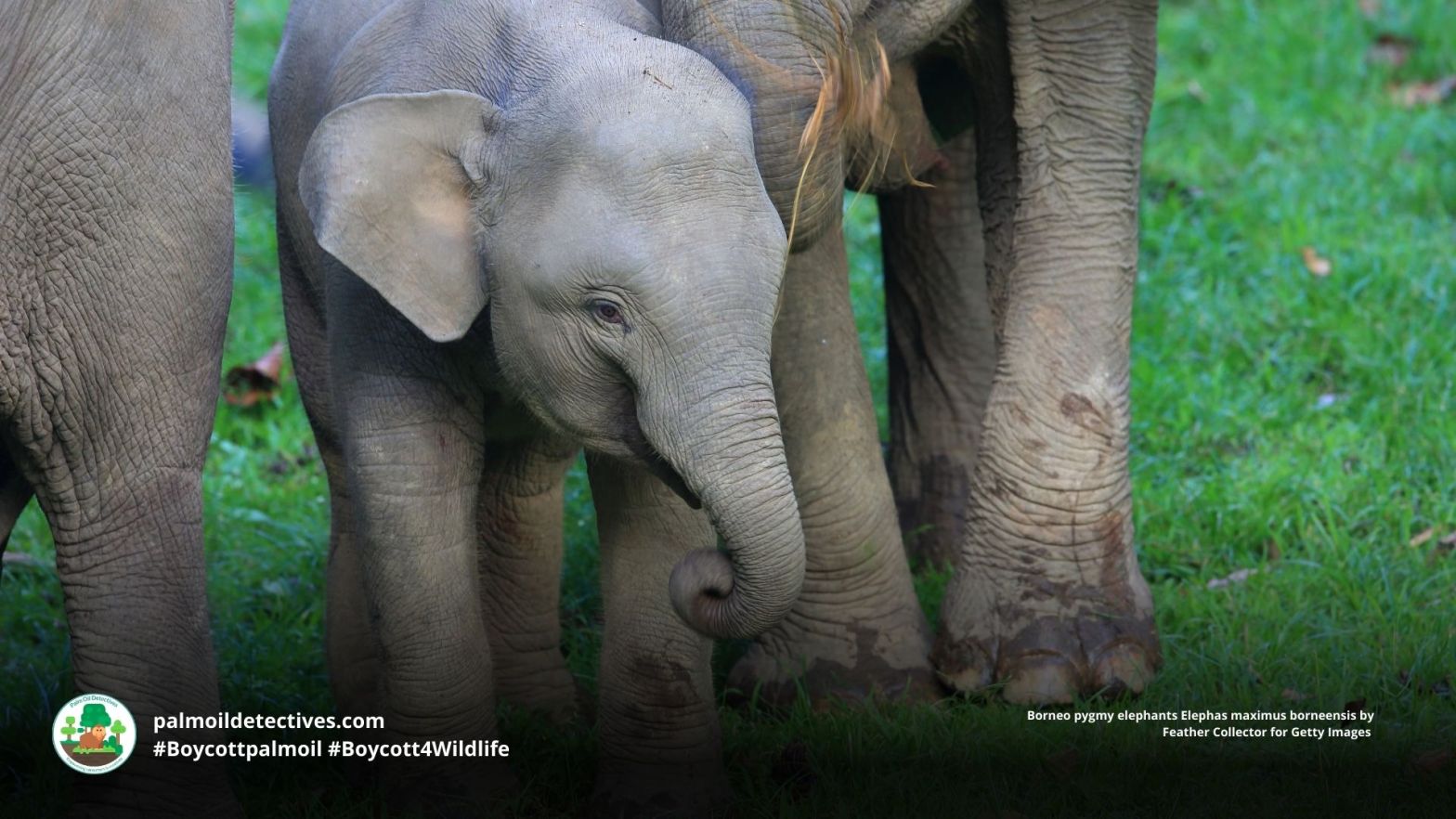
World Elephant Day, celebrated on August 12th, honours the gentle and nurturing giants of Asia and Africa, who are revered for their deep spiritual wisdom, gentle strength, and nurturing natures. Over the past decade, their numbers have plummeted by 62% due to habitat encroachment for palm oil deforestation, other agriculture, infrastructure expansion, mining and the cruel #poaching for ivory. Without radical intervention, these magnificent beings could be near #extinction by the 2060s. Yet, do not despair because hope endures in the form of activism. Explore the extraordinary resilience and intelligence of pachyderms, and discover how you can help safeguard their future with consumer boycotts and supporting organisations fighting wildlife crime. #BoycottPalmOil #Boycott4Wildlife
Indian Rhinoceros (Greater One-horned Rhino) Rhinoceros unicornis
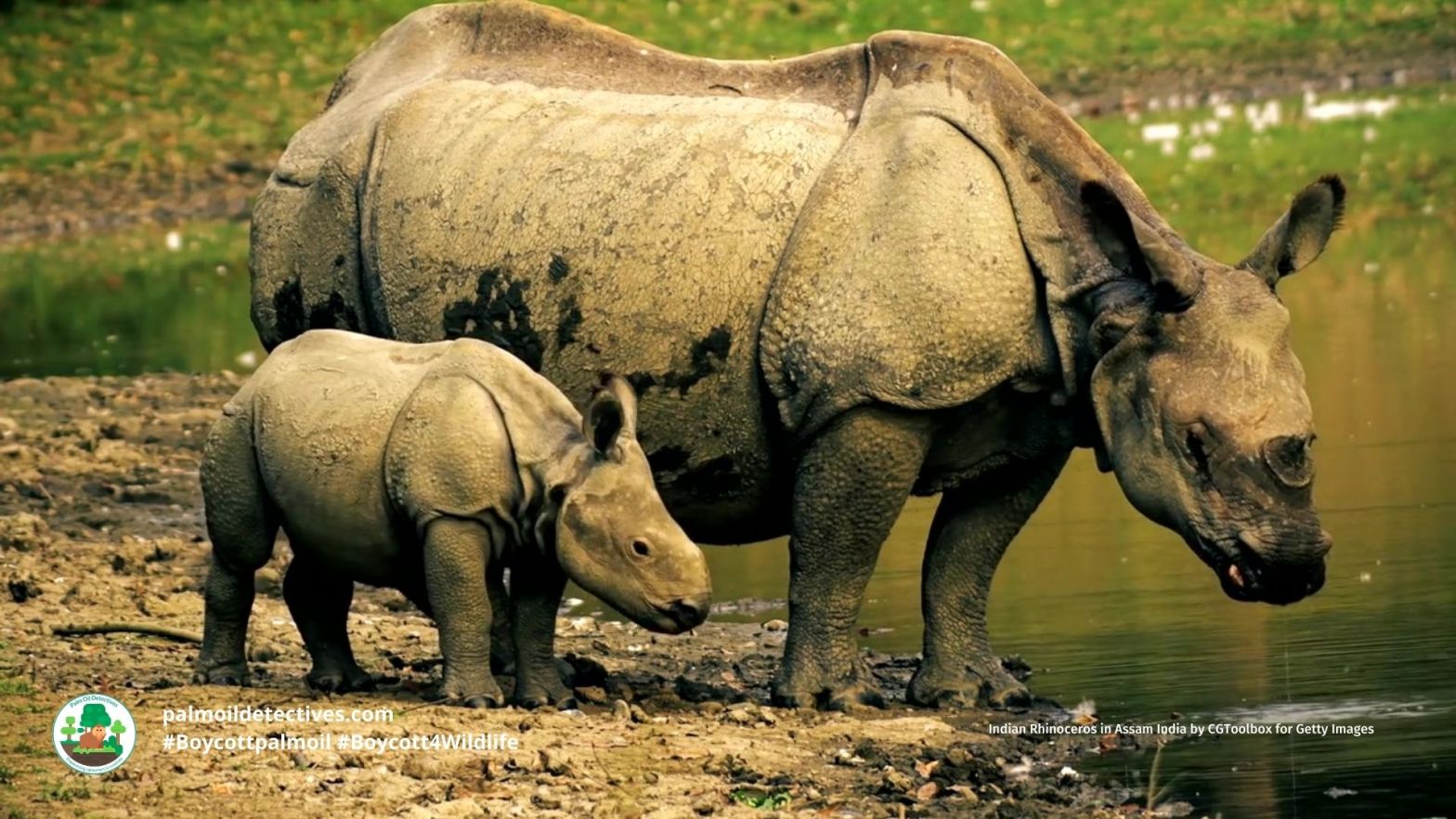
The largest of the three rhino species in Asia, the Indian Rhino has a distinctive and unique armour-plated look which lends them a fairytale quality that has captivated admirers for aeons. Although Indian rhino numbers have climbed over the past decades due to conservation, they are under imminent threat from the expansion of palm oil deforestation in the Assam region of India. A protected national park there is earmarked for destruction. Use your wallet as a weapon every time you shop and #Boycottpalmoil #Boycott4Wildlife
Fishing Cat Prionailurus viverrinus
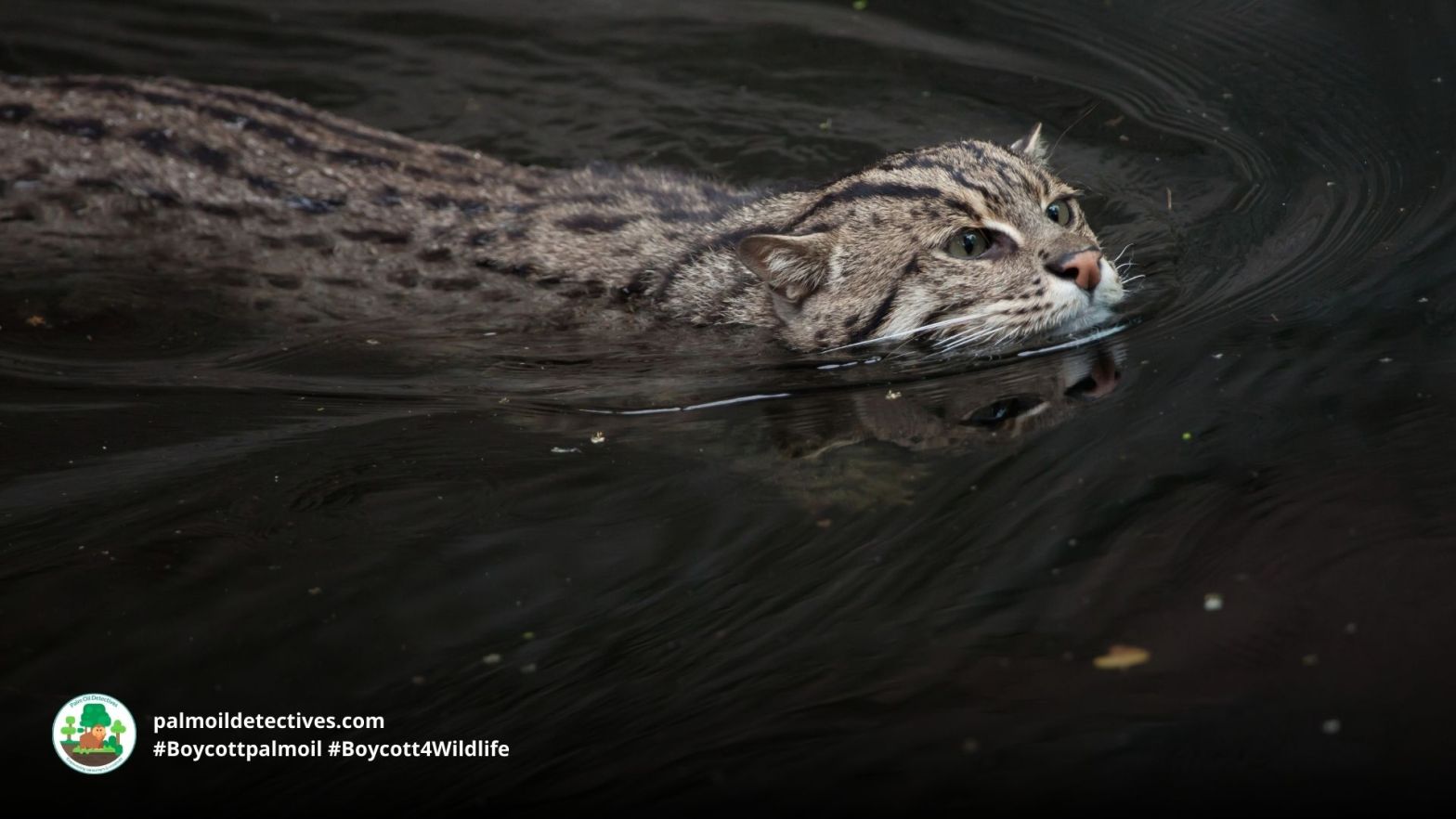
Although they look cute and cuddly, the Fishing #Cat Prionailurus viverrinus has a feisty, firecracker temper. This small to medium sized wild cat can become defensive if approached in the wild. They are around twice the size of a domestic cat and typically weigh around 5-16 kg and have stocky short legs and a short tail.
Their faces are round with elongated noses that gives them a civet-like appearance, which is why their scientific name is viverrine. They are agile and fast hunters and can reach fast speeds in pursuit of prey. They have an average lifespan of approximately 12 years. Ongoing threats include palm oil deforestation, and in Indonesia it is uncertain if their population have remained alive intact due to widespread deforestation and hunting pressures. Help these plucky little #wildcats when you shop and #BoycottPalmOil #Boycott4Wildlife
Procter & Gamble
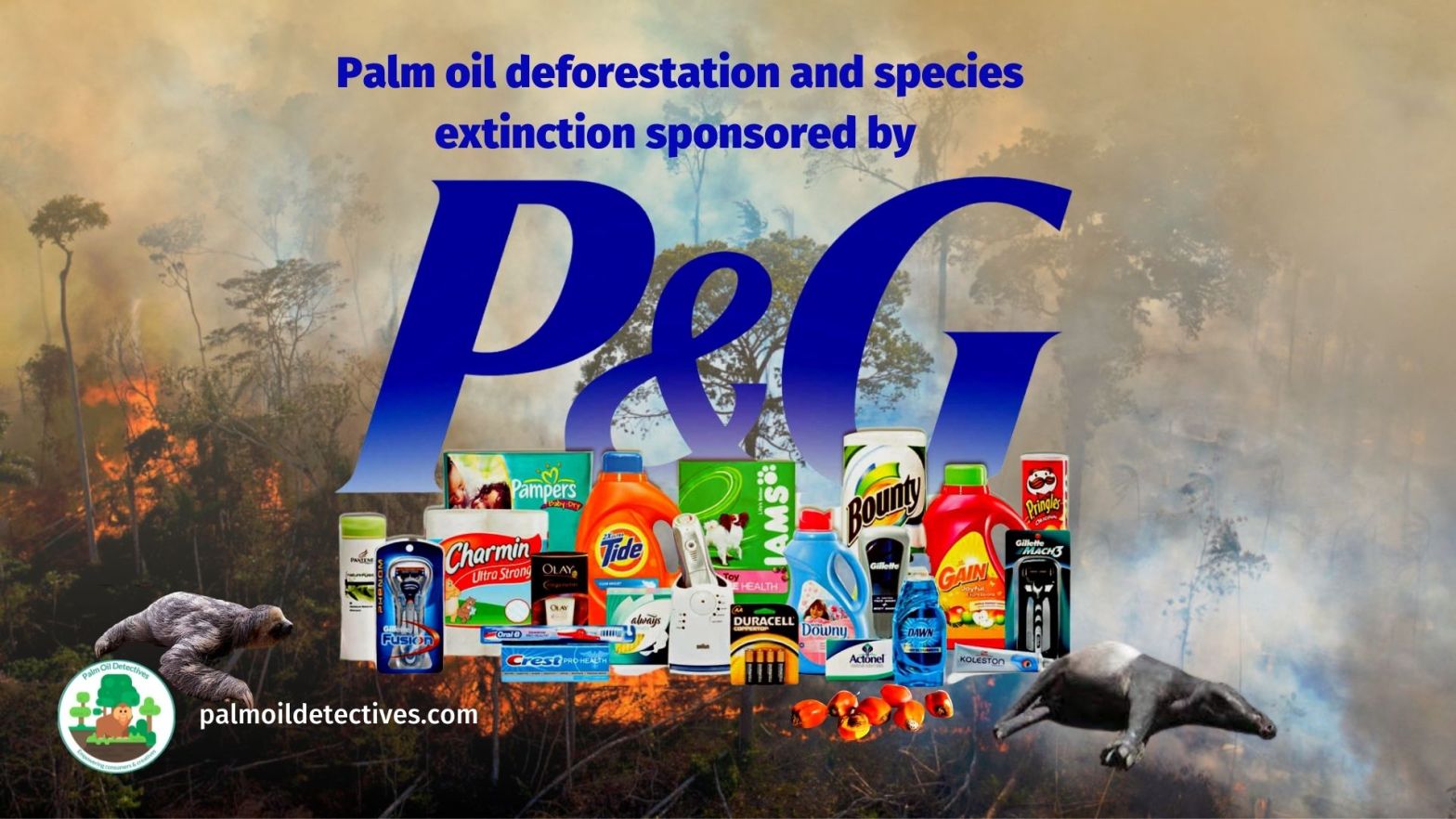
Despite decades of promises to end deforestation for palm oil Procter & Gamble or (P&G as they are also known) have continued sourcing palm oil that causes ecocide, indigenous landgrabbing, and the habitat destruction of the rarest animals on earth. All of these animals are on a knife-edge of survival. It is for this reason,Continue reading “Procter & Gamble”
Research: Small room for compromise between oil palm cultivation and primate conservation in Africa
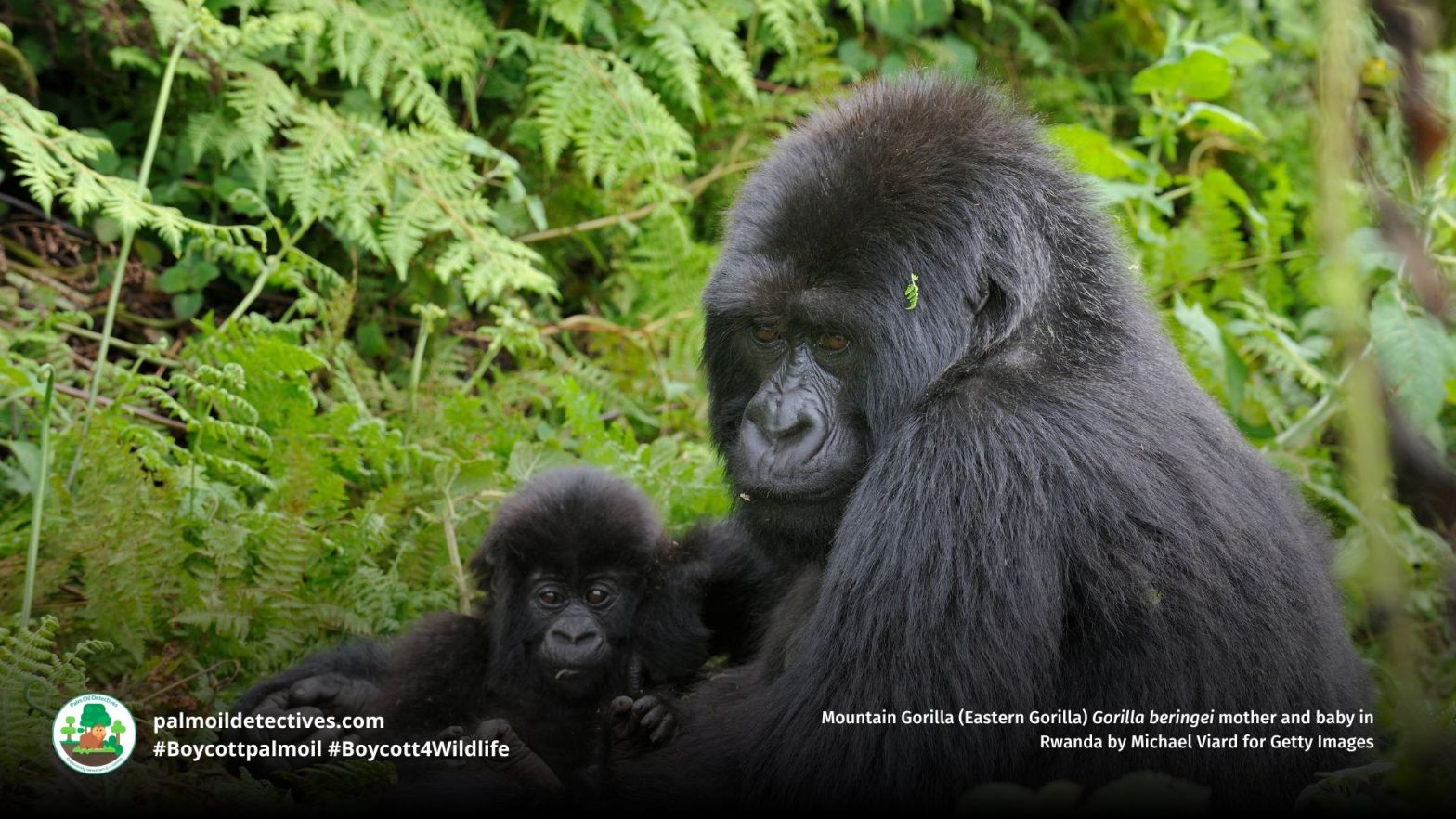
Research shows that future palm oil expansion is a major threat to Africa’s tropical forests and their rich primate biodiversity, Fight back boycott palm oil!
Binturong Arctictis binturong
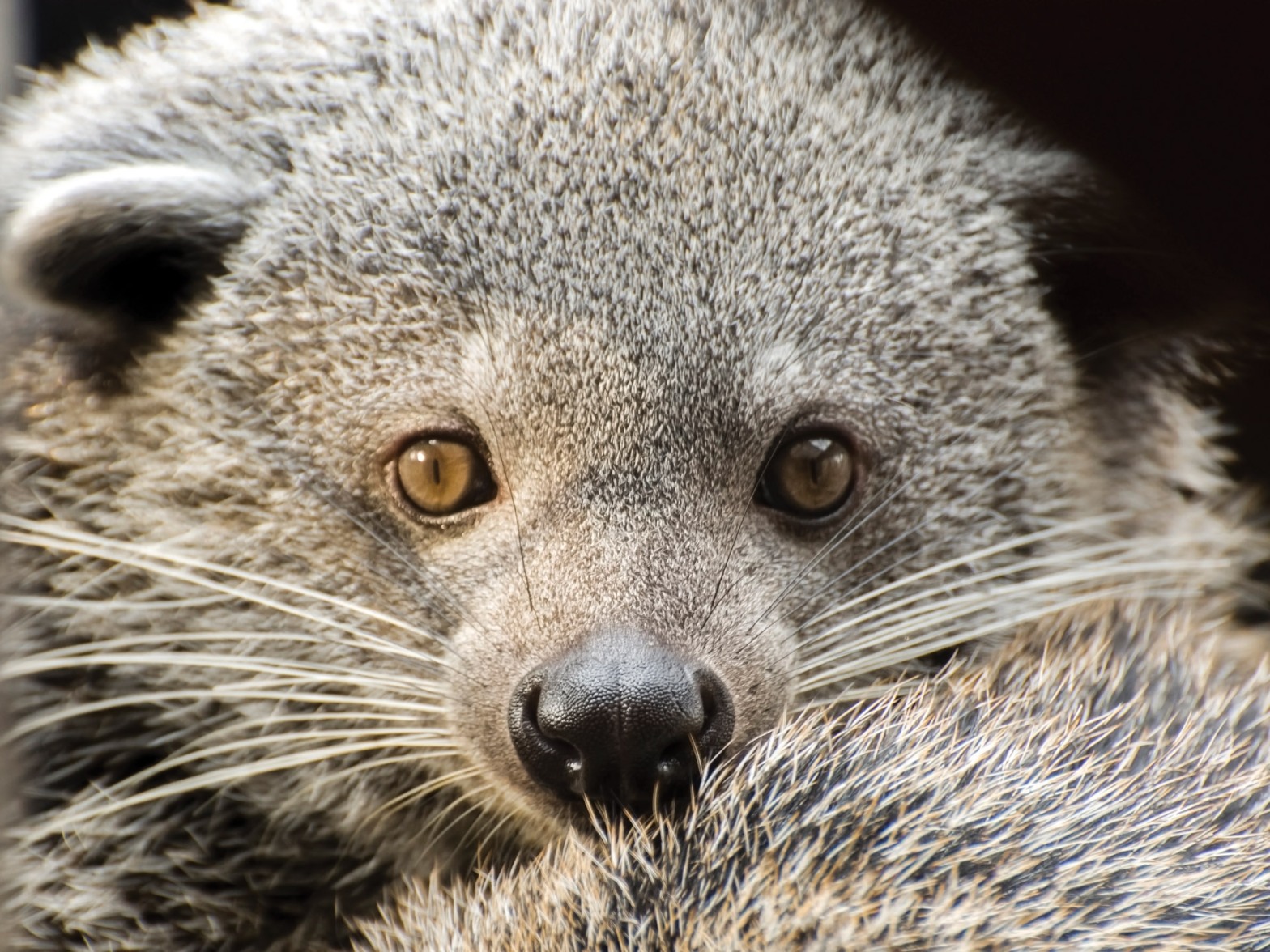
You may smell a Binturong in the forest before you see them. They give off the aroma of buttered popcorn or cheesy crisps due to the a compound in their urine they use to attract mates. The binturong, Arctictis binturong, is a fascinating and rare mammal who roam the dense rainforests of Southeast Asia. Often called the “bearcat” due to their looks, binturongs are neither bears nor cats, but are more closely related to ferrets. With their prehensile tail, thick wiry fur, and a popcorn-like scent, these unique and irreplacible creatures play vital roles as seed dispersers, particularly for strangler figs (Ficus spp.), making them keystone species in their ecosystem.
Despite their ecological significance, the binturong is now classed as Vulnerable. Populations have plummeted due to habitat destruction, particularly for palm oil deforestation; along with illegal hunting, exploitation for the coffee market and the illegal bushmeat and pet trade. Protecting the majestic binturong requires urgent action to safeguard their rainforest home. Fight for them every time you use your wallet! #BoycottPalmOil #Boycott4Wildlife
Marbled Cat Pardofelis marmorata
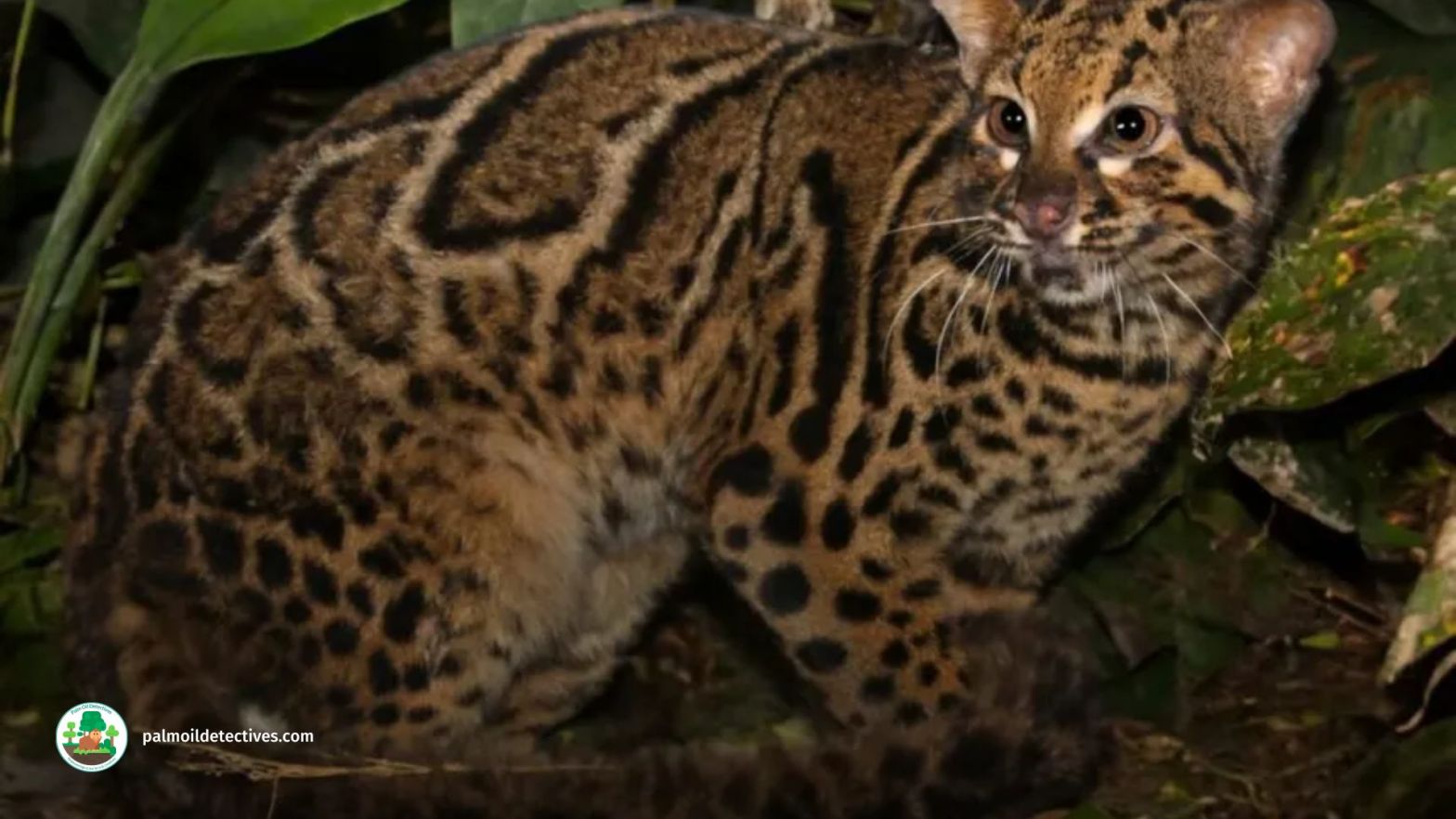
Marbled Cat Pardofelis marmorata IUCN Status: Near Threatened Location: India, Nepal, Bhutan, Bangladesh, Myanmar, Thailand, Laos, Vietnam, Cambodia, Malaysia, Indonesia (Sumatra, Borneo), China (Yunnan, Guangxi, Tibet), Brunei The marbled cat is a small #wildcat that can be found in the eastern part of the Himalayas and southern Asia. They are related to the Asian GoldenContinue reading “Marbled Cat Pardofelis marmorata”
Bearded Pig Sus barbatus
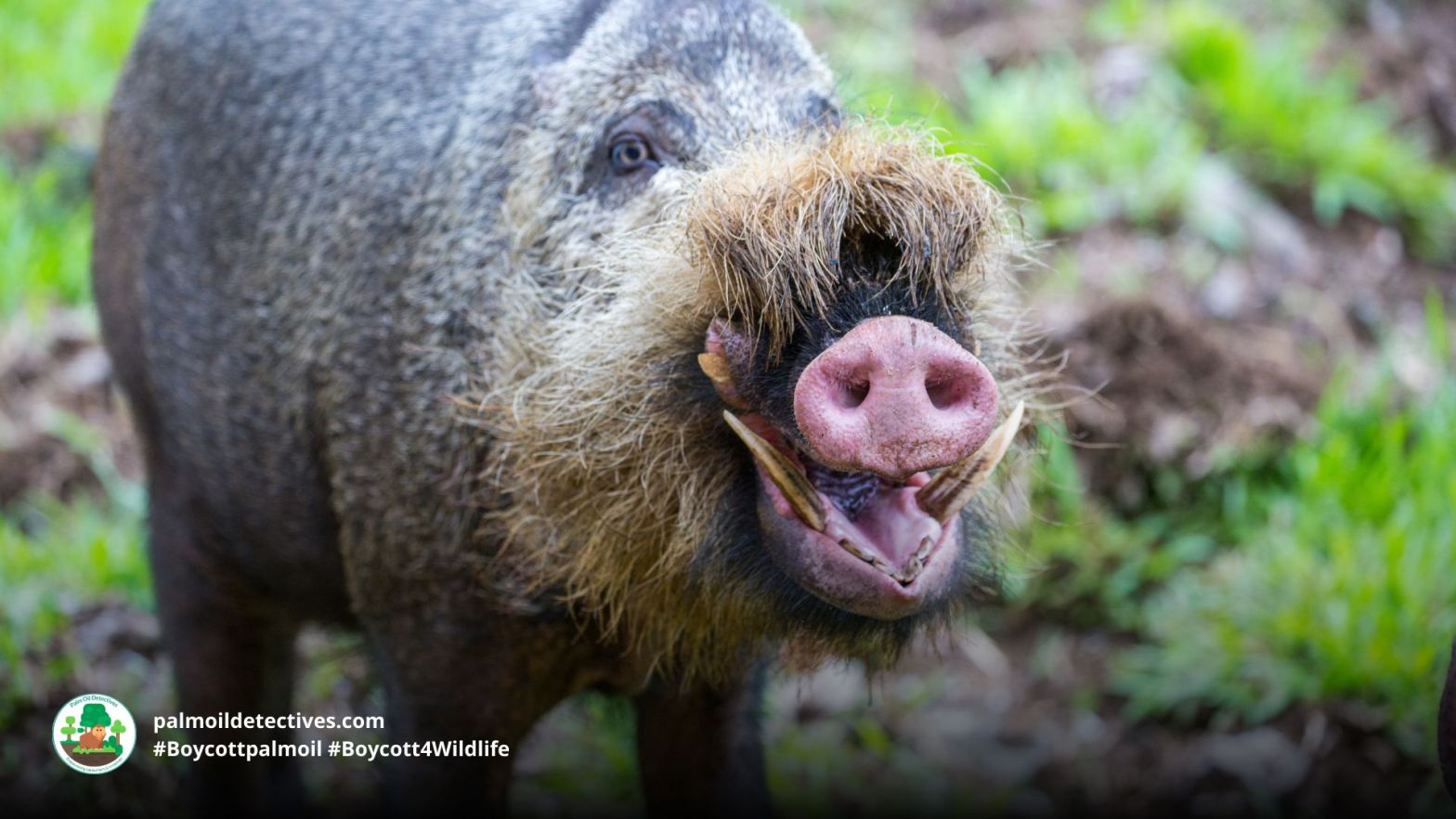
Bearded Pigs have hair which grows along their lower jaws that resembles a beard – giving them their distinctive whiskery appearance and their name. The Bearded Pig is an integral part of Southeast Asia’s tropical ecosystems, known for their unique appearance and critical role as seed dipersers in forest health. They are the only pig species known to migrate, moving in synchrony with fruiting seasons. However, they face mounting threats from habitat loss for palm oil and timber, along with illegal hunting, and disease. Help them to survive and use your wallet as a weapon in the supermarket #BoycottPalmOil #Boycott4Wildlife
Lar Gibbon Hylobates lar
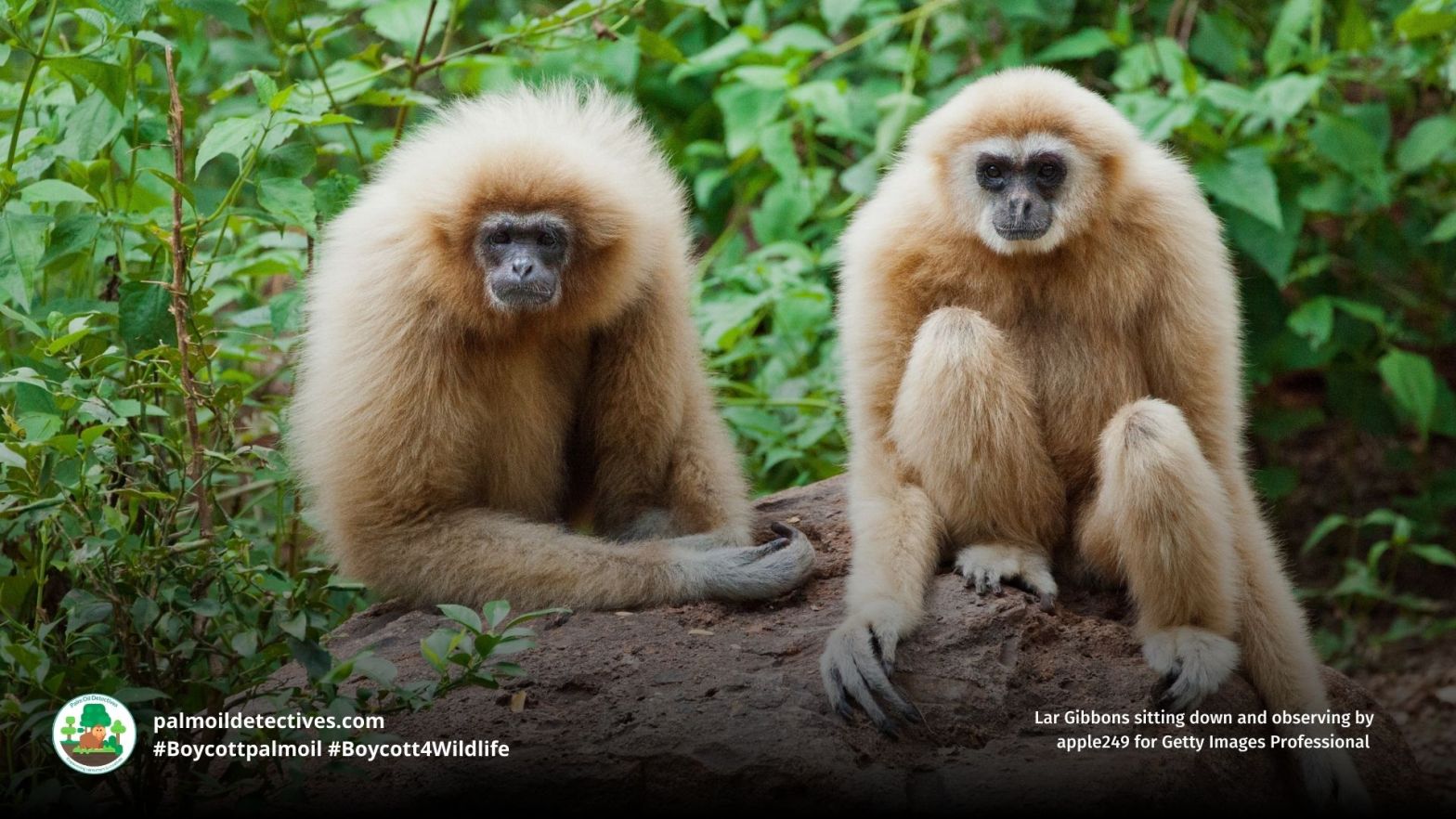
Gibbons, often called “lesser apes,” are no less than awesome! The Lar Gibbon Hylobates lar, also known as the white-handed gibbon, is a charismatic and acrobatic primate renowned for their incredible agility and melodic songs that echo through the rainforests of Southeast Asia. With their striking black or sandy-coloured fur and distinctive white markings on their hands and face, Lar Gibbons are both captivating and vital to their ecosystems.
These gibbons are Endangered according to the IUCN Red List, facing rapid population declines due to habitat loss, poaching, and the illegal wildlife trade. Protecting these extraordinary primates means addressing deforestation, logging, and other threats head-on. Fight for their survival every time you shop. Use your wallet as a weapon, demand palm oil free and #BoycottPalmOil #Boycott4Wildlife.
Wrinkled Hornbill Rhabdotorrhinus corrugatus
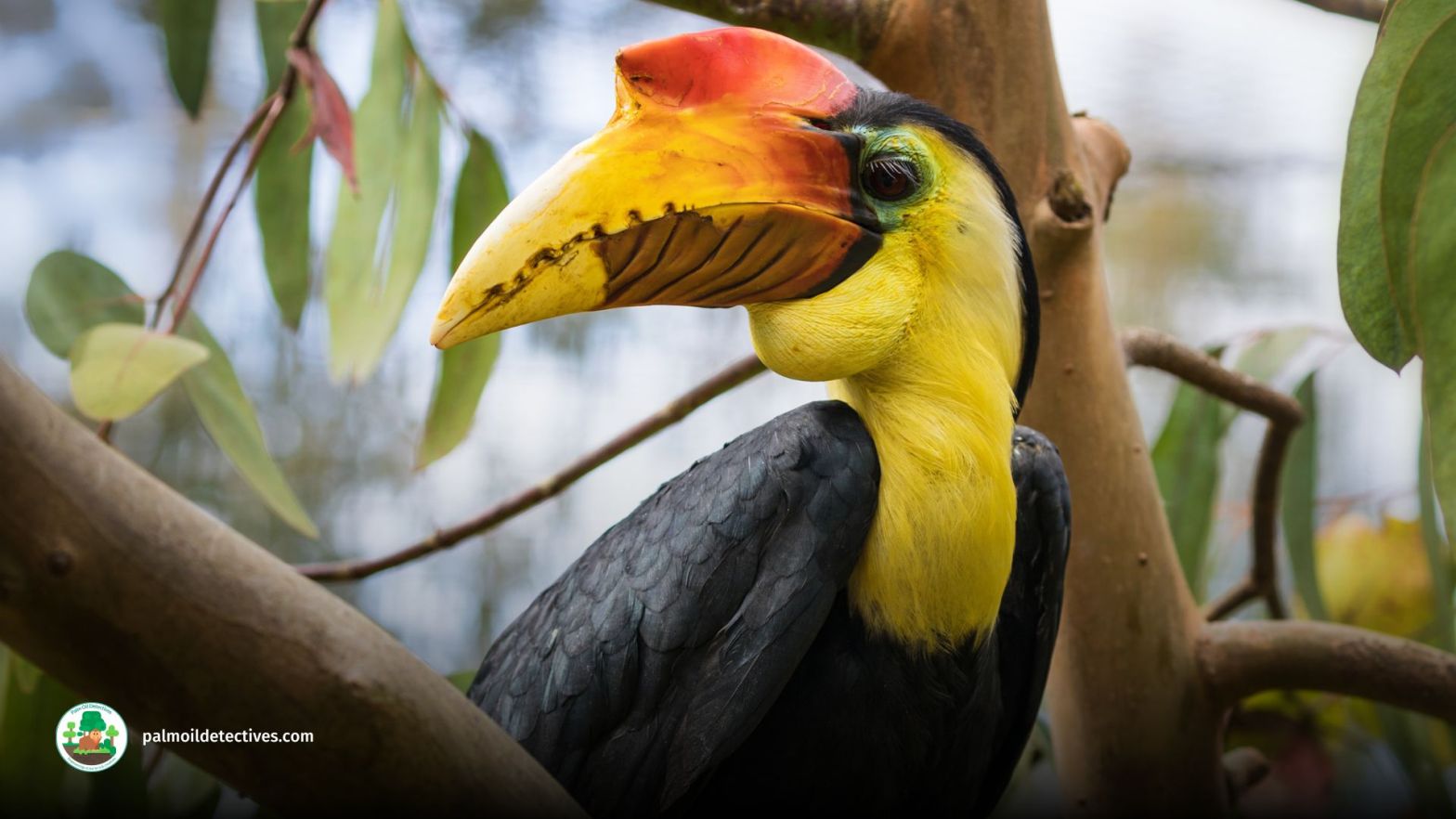
Discover the fascinating world of the Wrinkled Hornbill. These ancient and magnificent birds thriving in lush primary evergreen and swamp forests up to 1,000 meters above sea level. Unfortunately, their habitat faces threats from forest fires and the conversion of lowland forests into large-scale palm oil and rubber plantations, along with small-scale agriculture. These majestic creatures rely on large trees for nesting, putting them at risk due to logging. But we can help! By boycotting palm oil and adopting a #vegan lifestyle, we can protect the Wrinkled Hornbills and their precious home. Let’s come together and make a positive impact for wildlife preservation. 🌳🐦💚 #Boycottpalmoil #Boycott4Wildlife
Painted Terrapin Batagur borneoensis
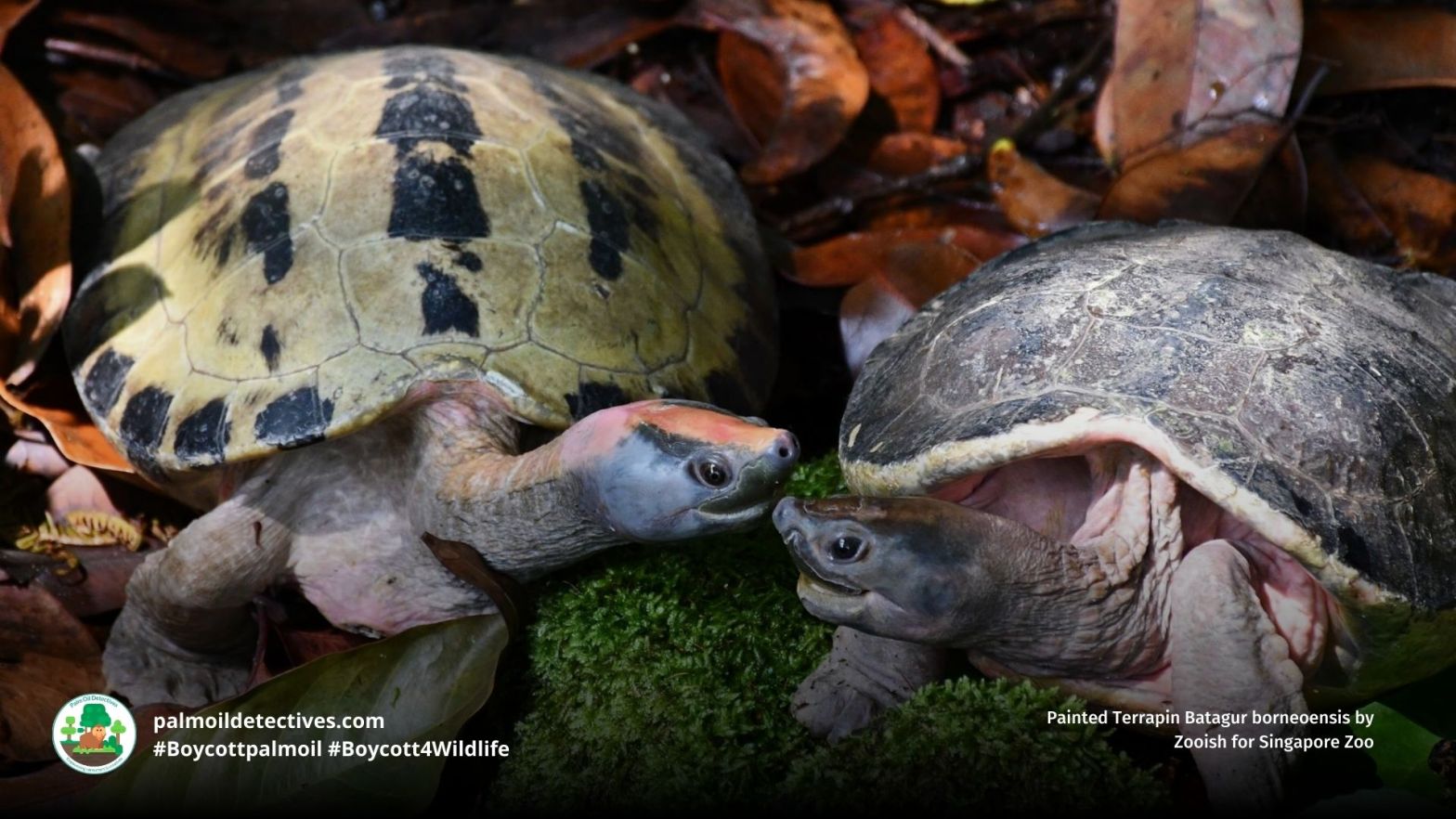
The painted terrapin, or painted river terrapin (Batagur borneoensis), is one of the most beautiful and critically endangered freshwater turtles in the world. Known for the vibrant markings displayed by males during breeding seasons, these terrapins are an integral part of Southeast Asia’s mangrove and river ecosystems.
However, their populations are rapidly declining due to habitat destruction, including deforestation for palm oil plantations, sand mining, and coastal development. With fewer than 1,000 mature individuals left in the wild, immediate action is critical to ensure their survival. Protect these majestic reptiles—boycott palm oil and support conservation efforts. #BoycottPalmOil #Boycott4Wildlife
Malaysian Giant Turtle Orlitia borneensis
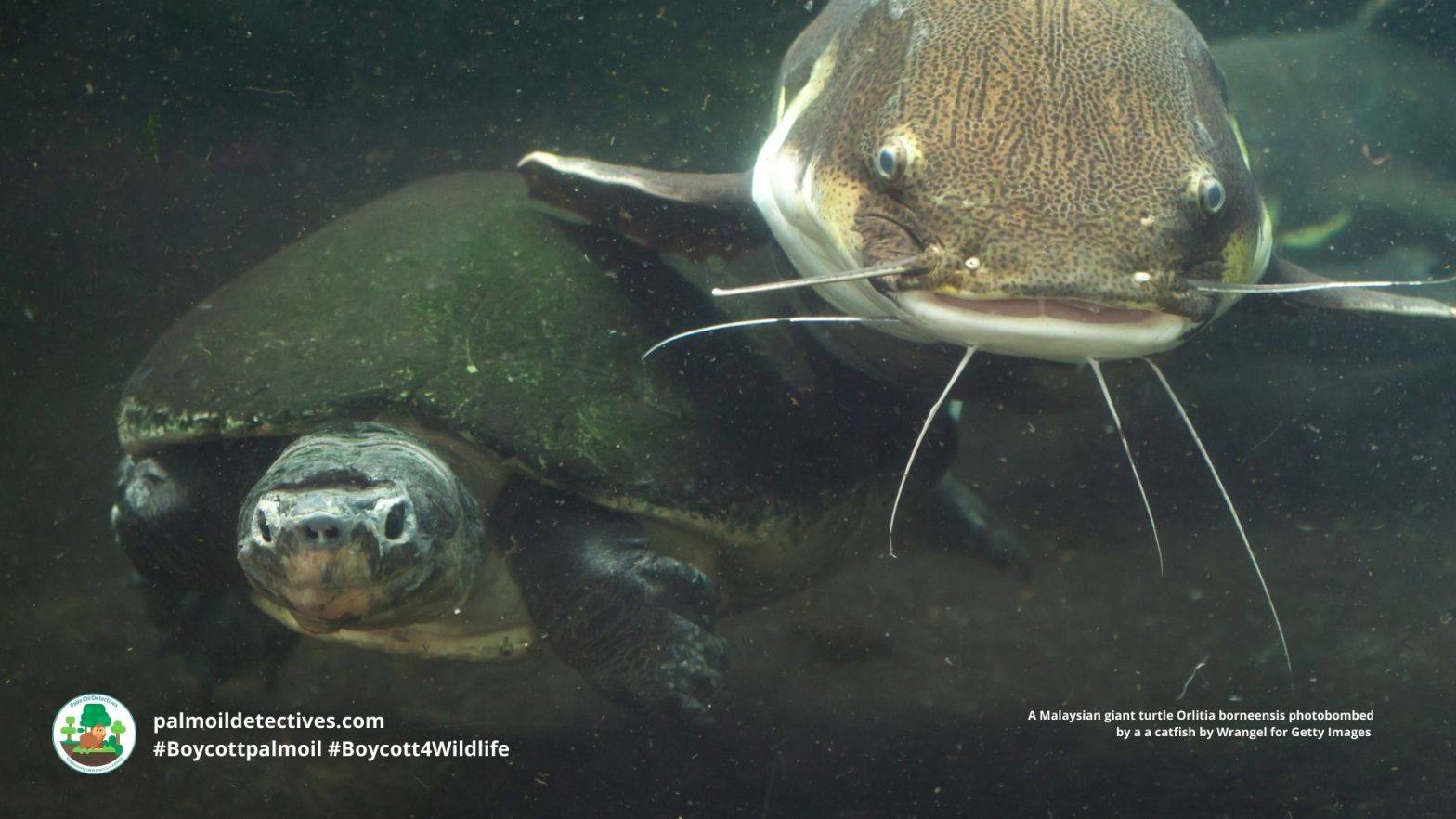
The Malaysian giant turtle, or Bornean river turtle, is Southeast Asia’s largest freshwater turtle. These gentle aquatic giants are critically important for maintaining the balance of their fragile river ecosystems. Their significant size and unique adaptations make them a marvel of evolution, yet they are on the brink of extinction.
Habitat loss driven by palm oil plantations, deforestation, and illegal trade has caused their population to plummet. Protect these critically endangered turtles by using your wallet as a weapon. Boycott palm oil and fight for their survival. #BoycottPalmOil #Boycott4Wildlife
Sun Bear Helarctos malayanus
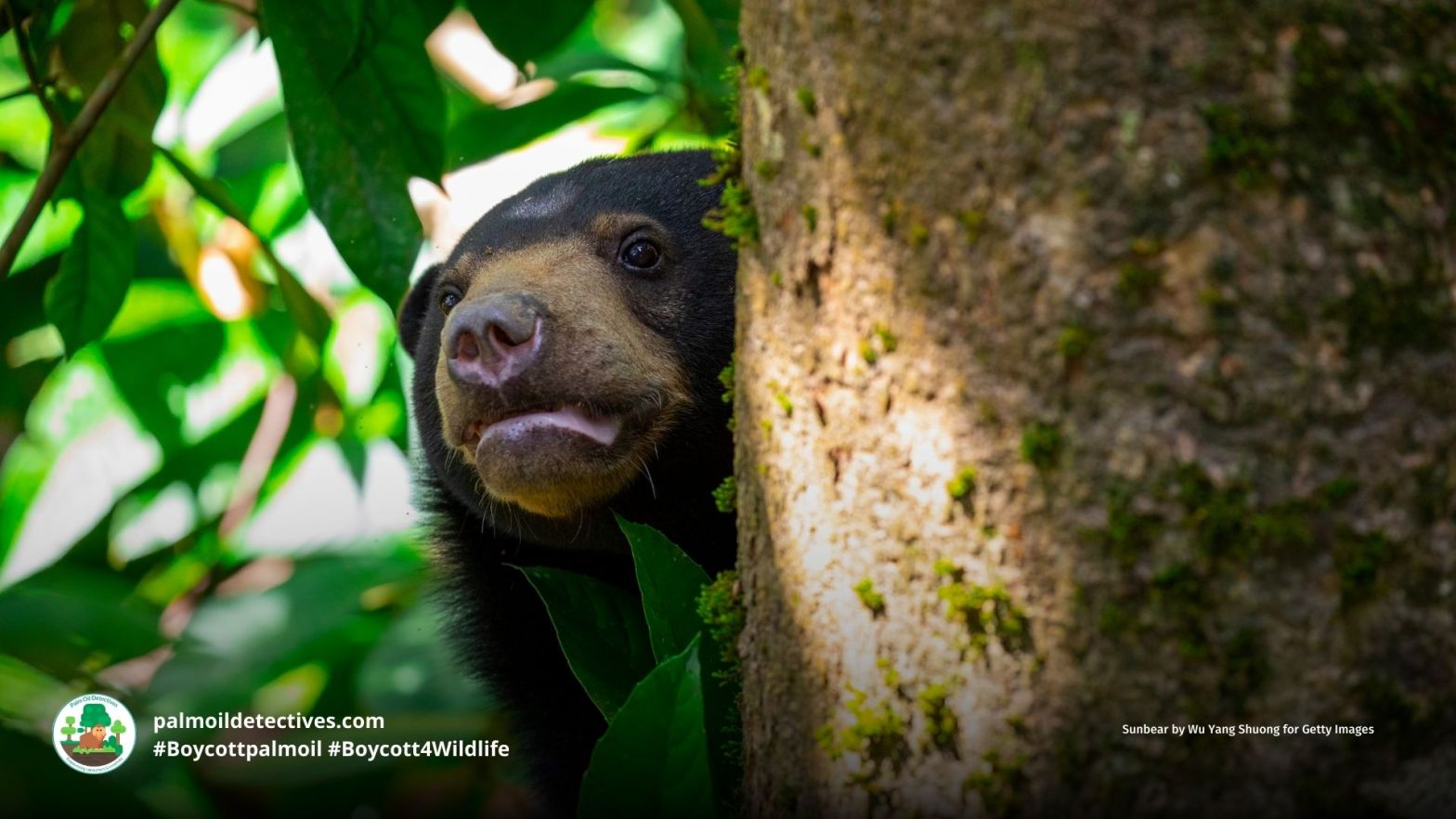
Sun bears are playful and energetic small bear species from South East Asia who are increasingly becoming marginalised by deforestation and trade for their body parts.
With their glistening golden crescent chest markings, these bears embody uniqueness and bold beauty. Despite their tenacity palm oil and timber deforestation is an unmatched threat to their survival. They are now vulnerable from this and other threats and have lost 50-80% of their range. Help to protect them and #Boycottpalmoil #Boycott4Wildlife in the supermarket!
Mainland Serow Capricornis sumatraensis
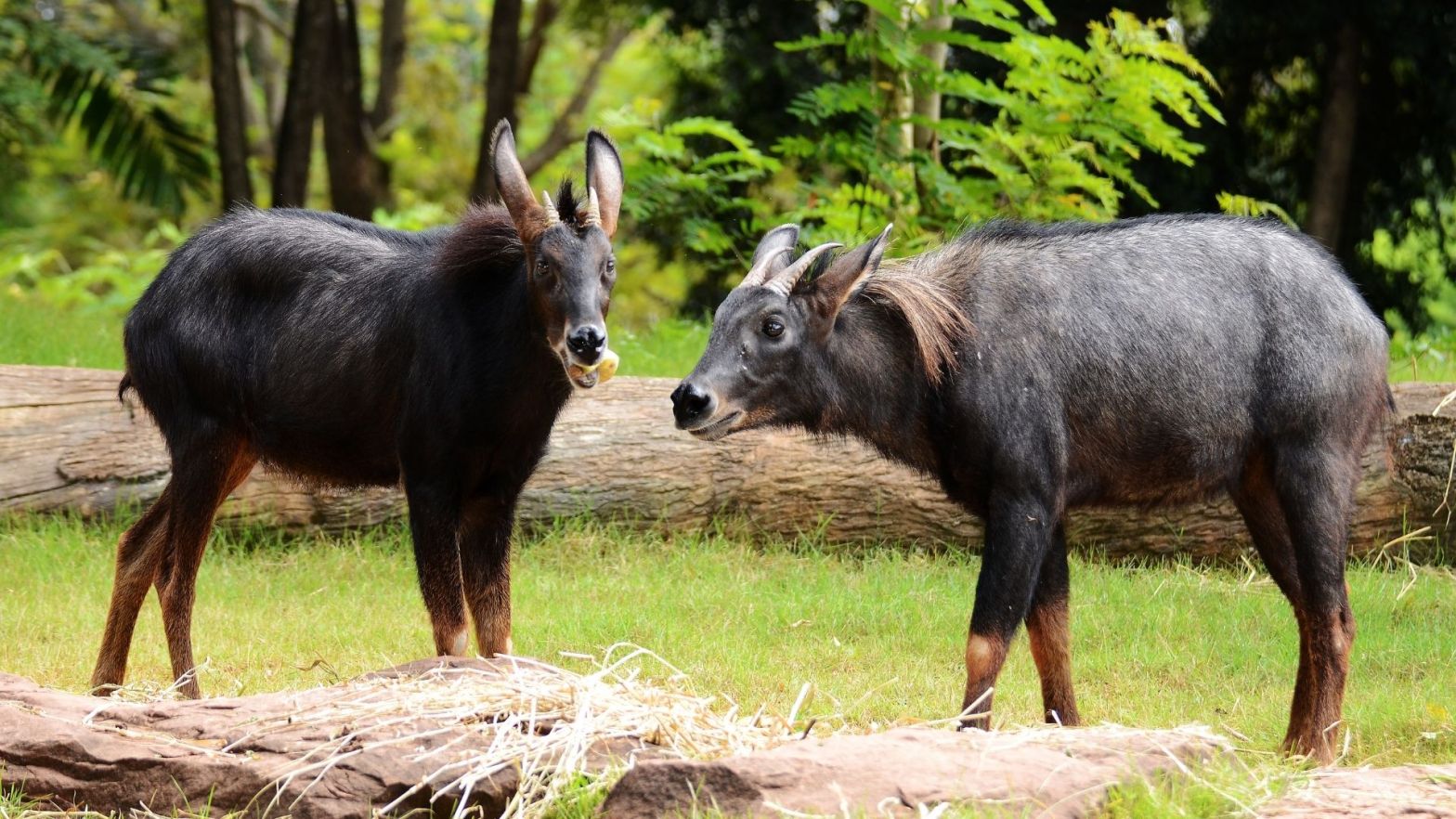
The Mainland serow, a reclusive wild goat-antelope, is a remarkable yet poorly understood resident of Southeast Asia’s rugged terrains. This enigmatic animal, with their coarse black coat and sharply curving horns, has earned a mythical status in local folklore due to their elusiveness and adaptability to steep, rocky landscapes.
However, the Mainland serow like many other ungulates is facing a precarious future. Habitat destruction from palm oil plantations, logging, and agricultural expansion has drastically reduced their numbers, leaving their population fragmented and declining. Protect these remarkable creatures and their fragile home—boycott palm oil and fight for their survival. #BoycottPalmOil #Boycott4Wildlife
Hairy-nosed Otter Lutra sumatrana
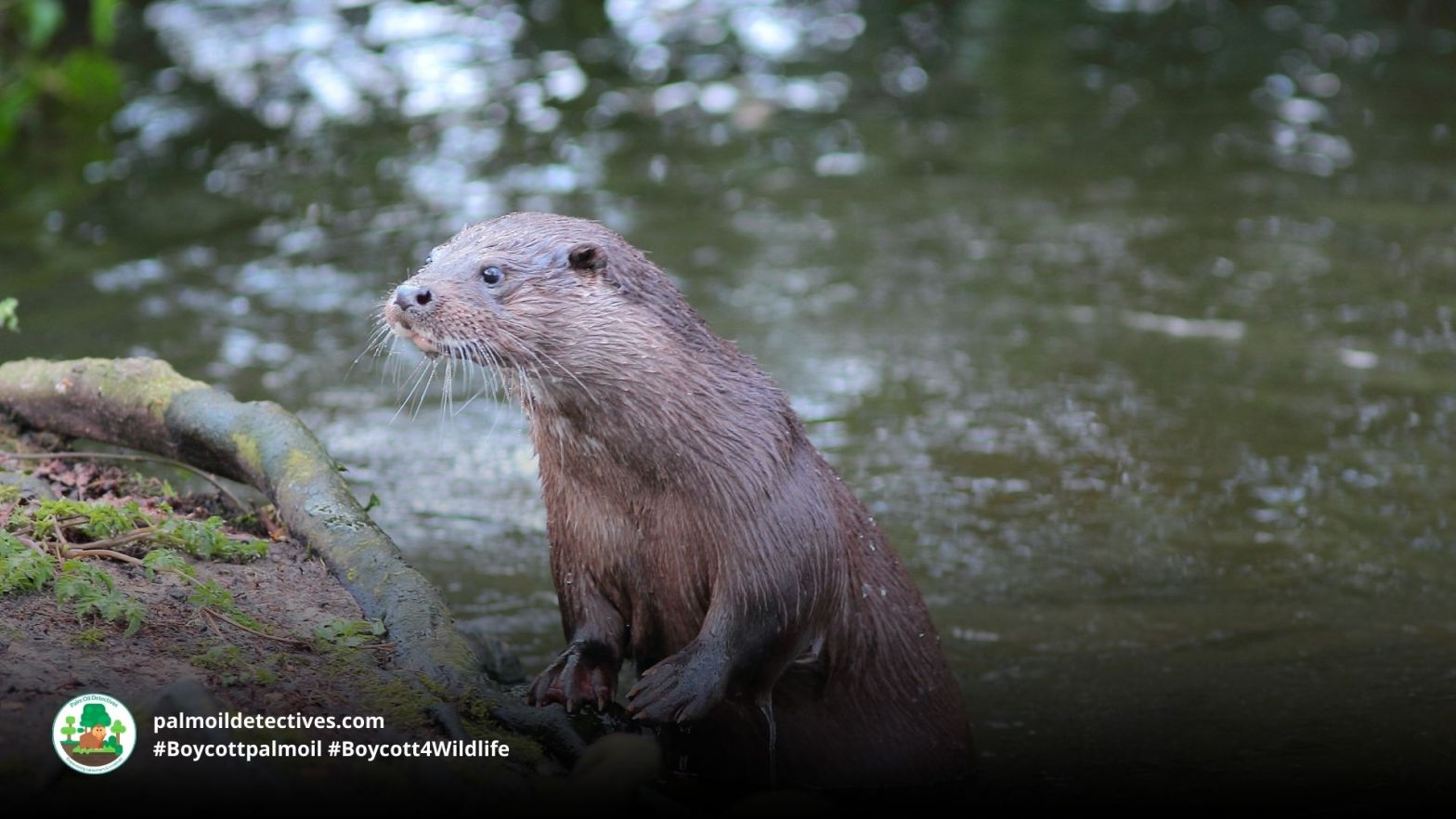
The Hairy-nosed Otter is one of the world’s rarest and least understood otter species, native to Southeast Asia. Distinguished by the unique fur covering its rhinarium (nose), this elusive mammal inhabits freshwater and coastal ecosystems, including mangroves and peat swamp forests. Now extinct in India and Myanmar, their numbers are dropping in other countries. They are severely under threat from habitat destruction for palm oil and illegal hunting. Hairy-nosed Otter have no known conservation projects in place to protect them. We urge you to boycott products linked to deforestation like palm oil and meat. Use your wallet as a weapon to fight for their survival each time you shop #BoycottPalmOil #Boycott4Wildlife!
Asia: Species Endangered by Palm Oil Deforestation
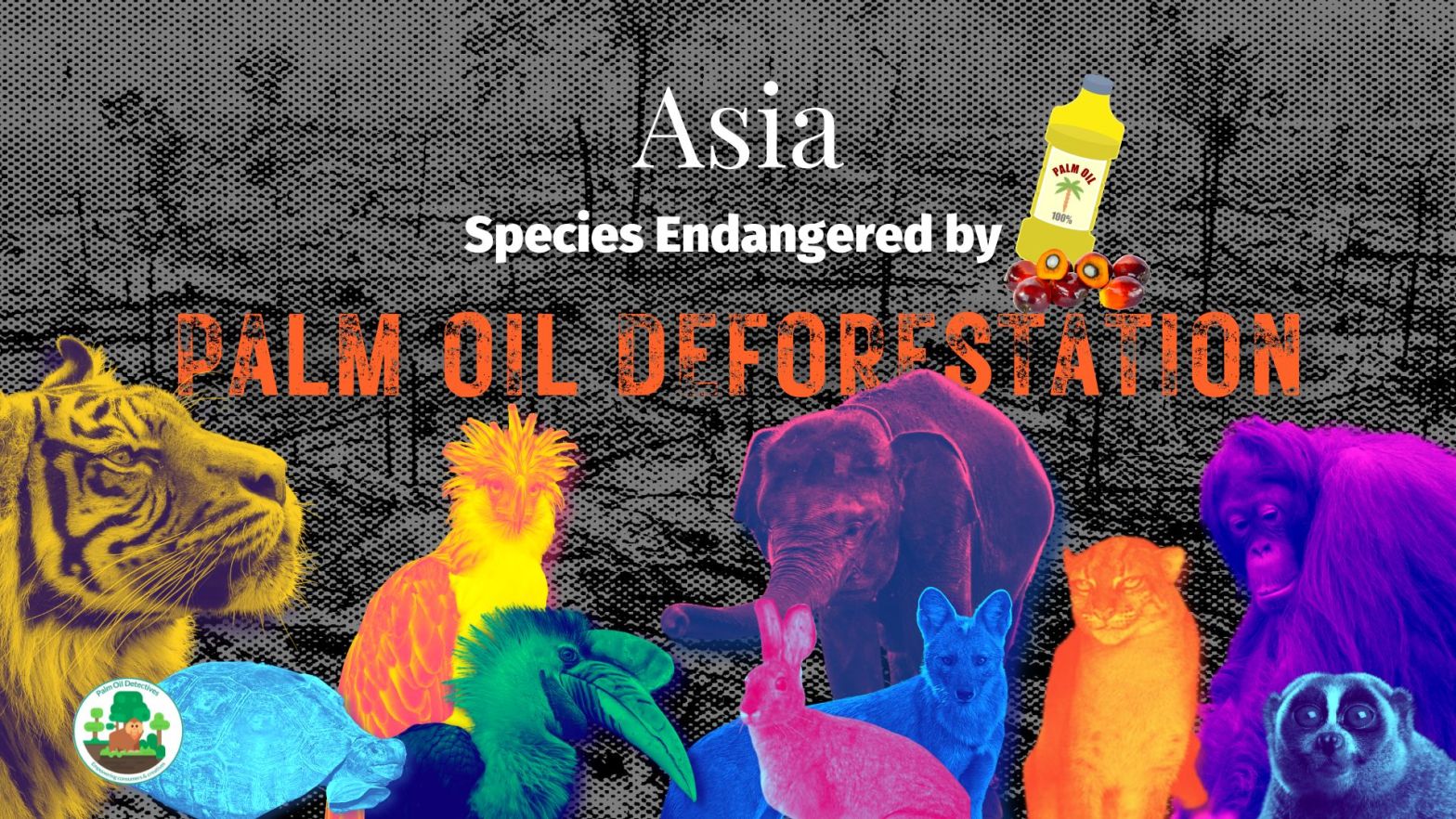
Discover the diverse wildlife of Asia and the devastating effects of palm oil deforestation. Learn how to protect these species and #BoycottPalmOil. #Boycott4Wildlife
 Palm Oil Detectives